


459 Résultats
Classification:
livres
livres
Titre:
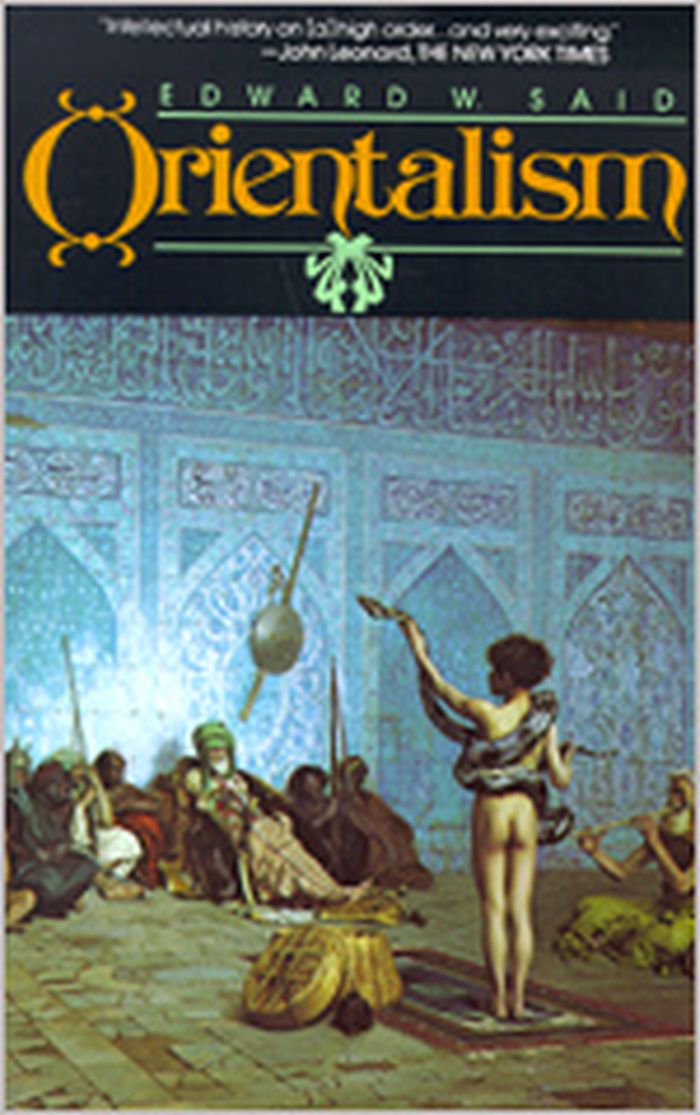
Orientalism
Orientalism
Actions:
Prix:
$19.95
(disponible sur commande)
Résumé:
The noted critic and a Palestinian now teaching at Columbia University,examines the way in which the West observes the Arabs.
$19.95
(disponible sur commande)
Résumé:
The noted critic and a Palestinian now teaching at Columbia University,examines the way in which the West observes the Arabs.
Publication:
juin 2003, New York
juin 2003, New York
Titre:
Orientalism
Actions:
Prix:
$19.95
(disponible sur commande)
Résumé:
The noted critic and a Palestinian now teaching at Columbia University,examines the way in which the West observes the Arabs.
Orientalism
Actions:
Prix:
$19.95
(disponible sur commande)
Résumé:
The noted critic and a Palestinian now teaching at Columbia University,examines the way in which the West observes the Arabs.
Classification:
livres
livres
Publication:
juin 2003, New York
juin 2003, New York
Classification:
périodiques
périodiques
Actions:
Prix:
$49.95
(disponible sur commande)
Résumé:
a+u’s October issue features the recent works of the highly acclaimed Portuguese architect Álvaro Siza Vieira. Active since the late 1960s, Alvaro Siza continues to build across different regions of the world, and each work of architecture reflects consciousness of the collective values of a place. This sensitivity is evident in different scales and material used, such as(...)
$49.95
(disponible sur commande)
Résumé:
a+u’s October issue features the recent works of the highly acclaimed Portuguese architect Álvaro Siza Vieira. Active since the late 1960s, Alvaro Siza continues to build across different regions of the world, and each work of architecture reflects consciousness of the collective values of a place. This sensitivity is evident in different scales and material used, such as(...)
Publication:
octobre 2025
octobre 2025
Titre:
A + U 661 25:10: Álvaro Siza Vieira
Actions:
Prix:
$49.95
(disponible sur commande)
Résumé:
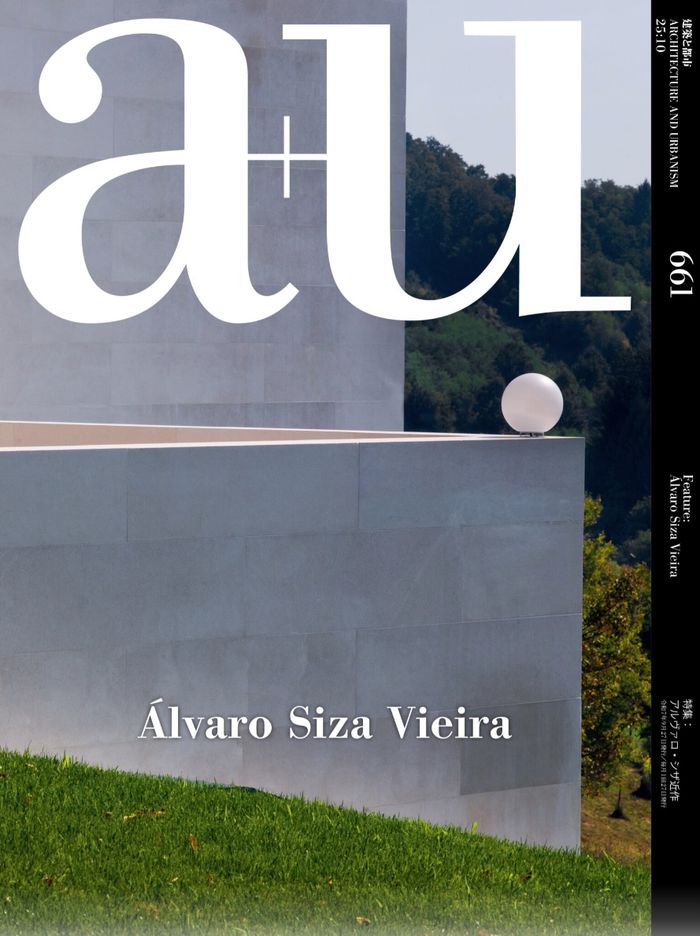
a+u’s October issue features the recent works of the highly acclaimed Portuguese architect Álvaro Siza Vieira. Active since the late 1960s, Alvaro Siza continues to build across different regions of the world, and each work of architecture reflects consciousness of the collective values of a place. This sensitivity is evident in different scales and material used, such as Clay Pavilion in Mexico, which recalls traditional construction techniques, and Renovation of the Manor Dos Magalhães, which sculpturally integrates new landscaped terraces with the critical function of the building, yet makes no unnecessary changes to the façade of the ruin. In addition to 16 recent works, architect and writer Nuno Grande composes a “poem to Porto,” which highlights 5 of the most influential projects by Alvaro Siza in his beloved city.
A + U 661 25:10: Álvaro Siza Vieira
Actions:
Prix:
$49.95
(disponible sur commande)
Résumé:
a+u’s October issue features the recent works of the highly acclaimed Portuguese architect Álvaro Siza Vieira. Active since the late 1960s, Alvaro Siza continues to build across different regions of the world, and each work of architecture reflects consciousness of the collective values of a place. This sensitivity is evident in different scales and material used, such as Clay Pavilion in Mexico, which recalls traditional construction techniques, and Renovation of the Manor Dos Magalhães, which sculpturally integrates new landscaped terraces with the critical function of the building, yet makes no unnecessary changes to the façade of the ruin. In addition to 16 recent works, architect and writer Nuno Grande composes a “poem to Porto,” which highlights 5 of the most influential projects by Alvaro Siza in his beloved city.
Classification:
périodiques
périodiques
Publication:
octobre 2025
octobre 2025
Classification:
livres
livres
Actions:
Prix:
$43.00
(disponible en magasin)
Résumé:
In recent decades, citizens active in urban governance have taken up their roles as autonomous subjects, negotiating with governmental actors on the reuse of vacant buildings while representing the wishes of fellow residents to create self-managed communal spaces that are open to neighbourhood residents. They have appropriated vacant properties — and, where possible,(...)
$43.00
(disponible en magasin)
Résumé:
In recent decades, citizens active in urban governance have taken up their roles as autonomous subjects, negotiating with governmental actors on the reuse of vacant buildings while representing the wishes of fellow residents to create self-managed communal spaces that are open to neighbourhood residents. They have appropriated vacant properties — and, where possible,(...)
Publication:
avril 2026
avril 2026
Titre:
Citizen professional: reclaiming collective spaces
Actions:
Prix:
$43.00
(disponible en magasin)
Résumé:
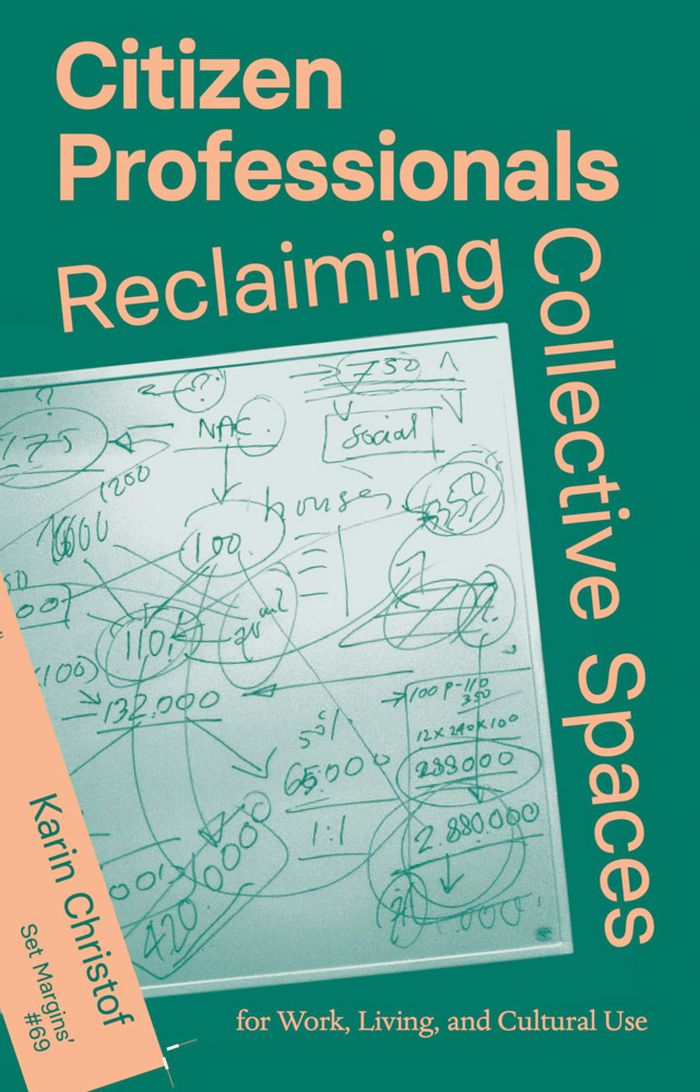
In recent decades, citizens active in urban governance have taken up their roles as autonomous subjects, negotiating with governmental actors on the reuse of vacant buildings while representing the wishes of fellow residents to create self-managed communal spaces that are open to neighbourhood residents. They have appropriated vacant properties — and, where possible, constructed new buildings — in line with their own interests, those of civic groups, and the common good. They work to create affordable working, living, cultural and community places in an increasingly commercialised urban environment. In this publication, these civic actors are referred to as citizen professionals (CPs).
Citizen professional: reclaiming collective spaces
Actions:
Prix:
$43.00
(disponible en magasin)
Résumé:
In recent decades, citizens active in urban governance have taken up their roles as autonomous subjects, negotiating with governmental actors on the reuse of vacant buildings while representing the wishes of fellow residents to create self-managed communal spaces that are open to neighbourhood residents. They have appropriated vacant properties — and, where possible, constructed new buildings — in line with their own interests, those of civic groups, and the common good. They work to create affordable working, living, cultural and community places in an increasingly commercialised urban environment. In this publication, these civic actors are referred to as citizen professionals (CPs).
Classification:
livres
livres
Publication:
avril 2026
avril 2026
Classification:
livres
livres
Actions:
Prix:
$29.95
(disponible en magasin)
Résumé:
Neighbourhoods matter now more than ever before. They sustain fewer social connections, but in an era of great social inequality and high levels of immigration, they have become vital as places for homeowner investment and educational opportunity for children. The Rise of the Neighbourhood in Canada, 1880s–2020s traces the changing character and significance of Canadian(...)
$29.95
(disponible en magasin)
Résumé:
Neighbourhoods matter now more than ever before. They sustain fewer social connections, but in an era of great social inequality and high levels of immigration, they have become vital as places for homeowner investment and educational opportunity for children. The Rise of the Neighbourhood in Canada, 1880s–2020s traces the changing character and significance of Canadian(...)
Titre:
The rise of the neighbourhood in Canada, 1880s-2020s
Actions:
Prix:
$29.95
(disponible en magasin)
Résumé:
Neighbourhoods matter now more than ever before. They sustain fewer social connections, but in an era of great social inequality and high levels of immigration, they have become vital as places for homeowner investment and educational opportunity for children. The Rise of the Neighbourhood in Canada, 1880s–2020s traces the changing character and significance of Canadian urban neighbourhoods, city and suburban, since the 1880s. The book highlights patterns in neighbourhood life, particularly noticeable in larger urban areas, which are especially important for the least mobile people: workers, lower income households, immigrants, women, children, and the elderly. It explores how the physical and social characteristics of neighbourhoods affect public health, crime rates, social capital, and job opportunities while shaping the lifelong prospects of children.
The rise of the neighbourhood in Canada, 1880s-2020s
Actions:
Prix:
$29.95
(disponible en magasin)
Résumé:
Neighbourhoods matter now more than ever before. They sustain fewer social connections, but in an era of great social inequality and high levels of immigration, they have become vital as places for homeowner investment and educational opportunity for children. The Rise of the Neighbourhood in Canada, 1880s–2020s traces the changing character and significance of Canadian urban neighbourhoods, city and suburban, since the 1880s. The book highlights patterns in neighbourhood life, particularly noticeable in larger urban areas, which are especially important for the least mobile people: workers, lower income households, immigrants, women, children, and the elderly. It explores how the physical and social characteristics of neighbourhoods affect public health, crime rates, social capital, and job opportunities while shaping the lifelong prospects of children.
Classification:
livres
livres
Publication:
mai 2025
mai 2025
Classification:
livres
livres
Prix:
$39.95
(disponible en magasin)
Résumé:
A radical new perspective on cities and urbanism Slums, informal settlements, and other unplanned habitats are seen as the antithesis of the metropolis. Matias Echanove and Rahul Srivastava, founders of the design practice ''urbz'', explore how such neighbourhoods and their inhabitants have been unfairly dismissed when they should in fact be under-stood as partners in(...)
$39.95
(disponible en magasin)
Résumé:
A radical new perspective on cities and urbanism Slums, informal settlements, and other unplanned habitats are seen as the antithesis of the metropolis. Matias Echanove and Rahul Srivastava, founders of the design practice ''urbz'', explore how such neighbourhoods and their inhabitants have been unfairly dismissed when they should in fact be under-stood as partners in(...)
Publication:
janvier 2026
janvier 2026
Titre:
Home grown city: Reclaiming the metropolis for its users
Actions:
Prix:
$39.95
(disponible en magasin)
Résumé:
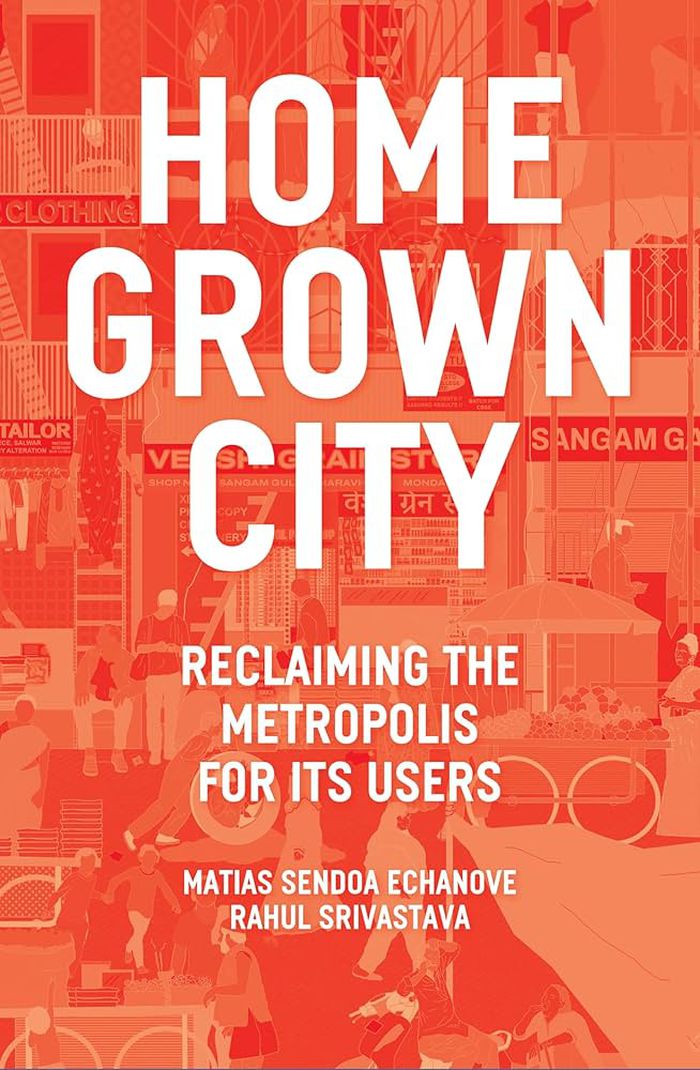
A radical new perspective on cities and urbanism Slums, informal settlements, and other unplanned habitats are seen as the antithesis of the metropolis. Matias Echanove and Rahul Srivastava, founders of the design practice ''urbz'', explore how such neighbourhoods and their inhabitants have been unfairly dismissed when they should in fact be under-stood as partners in the story of cities and urban development.
Home grown city: Reclaiming the metropolis for its users
Actions:
Prix:
$39.95
(disponible en magasin)
Résumé:
A radical new perspective on cities and urbanism Slums, informal settlements, and other unplanned habitats are seen as the antithesis of the metropolis. Matias Echanove and Rahul Srivastava, founders of the design practice ''urbz'', explore how such neighbourhoods and their inhabitants have been unfairly dismissed when they should in fact be under-stood as partners in the story of cities and urban development.
Classification:
livres
livres
Publication:
janvier 2026
janvier 2026
Classification:
livres
livres
Actions:
Prix:
$31.99
(disponible en magasin)
Résumé:
In a garden sit the aged Kublai Khan and the young Marco Polo—Mongol emperor and Venetian traveler. Kublai Khan has sensed the end of his empire coming. Marco Polo diverts his host with stories of the cities he has seen in his travels around the empire: stories about memory and desire, art and creation, life and death. As Marco Polo unspools his tales, the emperor(...)
$31.99
(disponible en magasin)
Résumé:
In a garden sit the aged Kublai Khan and the young Marco Polo—Mongol emperor and Venetian traveler. Kublai Khan has sensed the end of his empire coming. Marco Polo diverts his host with stories of the cities he has seen in his travels around the empire: stories about memory and desire, art and creation, life and death. As Marco Polo unspools his tales, the emperor(...)
Titre:
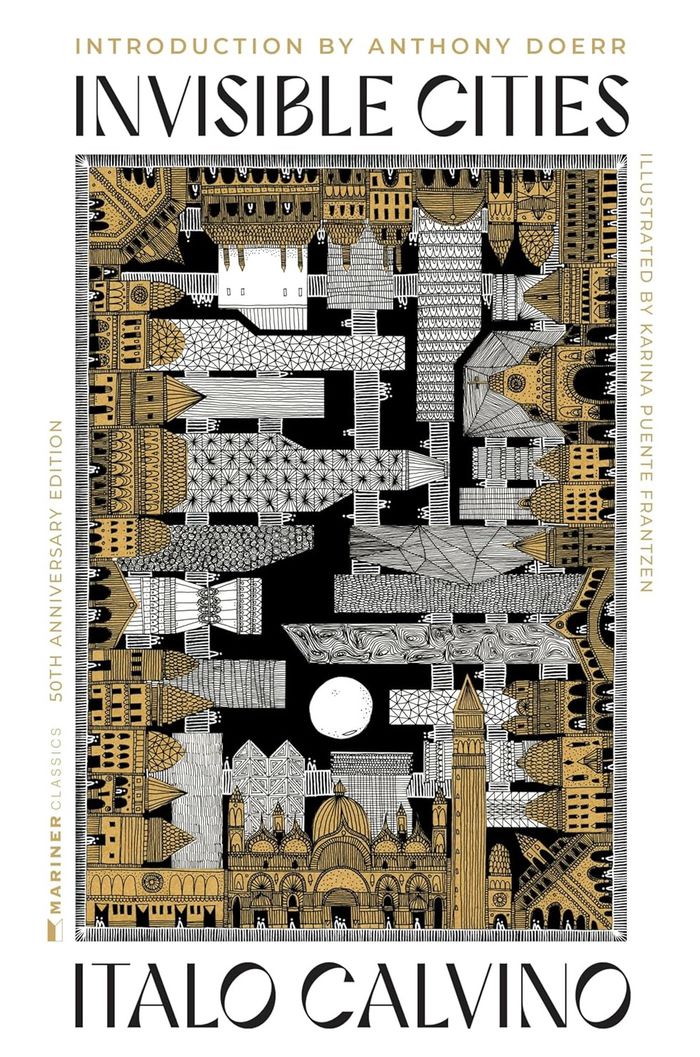
Invisible cities, 50th Anniversary edition
Actions:
Prix:
$31.99
(disponible en magasin)
Résumé:
In a garden sit the aged Kublai Khan and the young Marco Polo—Mongol emperor and Venetian traveler. Kublai Khan has sensed the end of his empire coming. Marco Polo diverts his host with stories of the cities he has seen in his travels around the empire: stories about memory and desire, art and creation, life and death. As Marco Polo unspools his tales, the emperor realizes these fantastic places are more familiar than they appear. With a new introduction from Pulitzer Prize winner Anthony Doerr, and dreamlike illustrations of the cities interspersed throughout, this edition breathes new life into Calvino’s classic, a celebration of the story’s profound invention and enduring insight.
Invisible cities, 50th Anniversary edition
Actions:
Prix:
$31.99
(disponible en magasin)
Résumé:
In a garden sit the aged Kublai Khan and the young Marco Polo—Mongol emperor and Venetian traveler. Kublai Khan has sensed the end of his empire coming. Marco Polo diverts his host with stories of the cities he has seen in his travels around the empire: stories about memory and desire, art and creation, life and death. As Marco Polo unspools his tales, the emperor realizes these fantastic places are more familiar than they appear. With a new introduction from Pulitzer Prize winner Anthony Doerr, and dreamlike illustrations of the cities interspersed throughout, this edition breathes new life into Calvino’s classic, a celebration of the story’s profound invention and enduring insight.
Classification:
livres
livres
Publication:
mars 2025
mars 2025
Sujet:
Expositions en cours
Expositions en cours
Classification:
livres
livres
Titre:
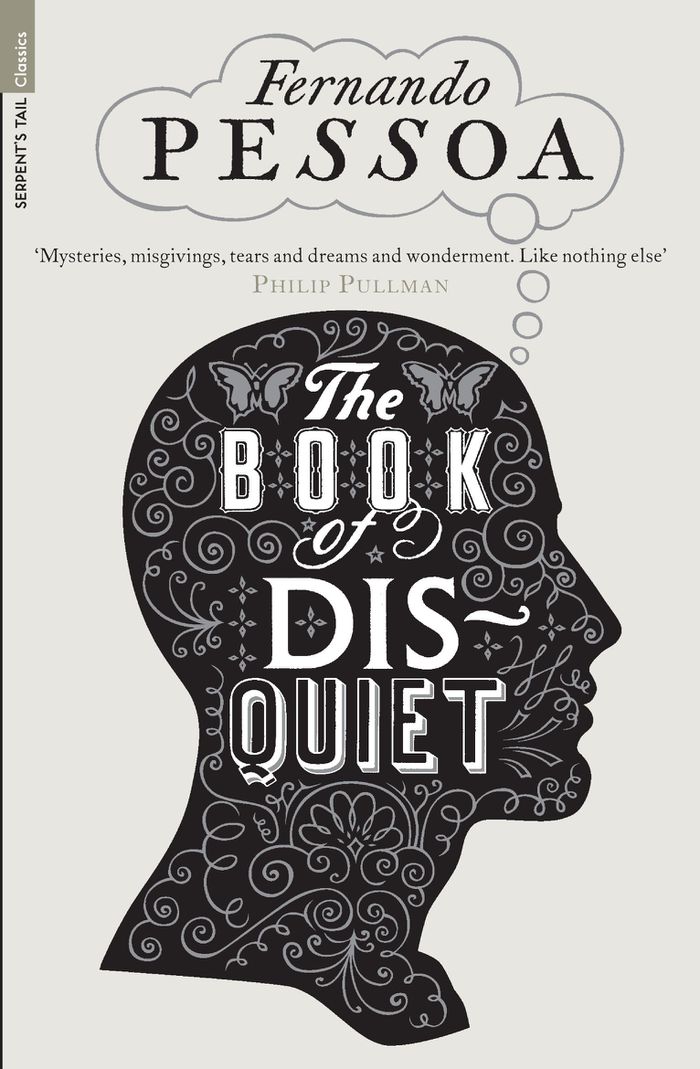
The Book of Disquiet
The Book of Disquiet
Actions:
Prix:
$22.95
(disponible en magasin)
Résumé:
A self-deprecating reflection on the sheer distance between the loftiness of feelings and the humdrum reality of life, The Book of Disquiet is a classic of existentialist literature. Fernando Pessoa, one of the founders of modernism, was born in Lisbon in 1888. Most of Pessoa's writing was not published during his lifetime: The Book of Disquiet was first published in(...)
$22.95
(disponible en magasin)
Résumé:
A self-deprecating reflection on the sheer distance between the loftiness of feelings and the humdrum reality of life, The Book of Disquiet is a classic of existentialist literature. Fernando Pessoa, one of the founders of modernism, was born in Lisbon in 1888. Most of Pessoa's writing was not published during his lifetime: The Book of Disquiet was first published in(...)
Titre:
The Book of Disquiet
Actions:
Prix:
$22.95
(disponible en magasin)
Résumé:
A self-deprecating reflection on the sheer distance between the loftiness of feelings and the humdrum reality of life, The Book of Disquiet is a classic of existentialist literature. Fernando Pessoa, one of the founders of modernism, was born in Lisbon in 1888. Most of Pessoa's writing was not published during his lifetime: The Book of Disquiet was first published in Portugal in 1982.
The Book of Disquiet
Actions:
Prix:
$22.95
(disponible en magasin)
Résumé:
A self-deprecating reflection on the sheer distance between the loftiness of feelings and the humdrum reality of life, The Book of Disquiet is a classic of existentialist literature. Fernando Pessoa, one of the founders of modernism, was born in Lisbon in 1888. Most of Pessoa's writing was not published during his lifetime: The Book of Disquiet was first published in Portugal in 1982.
Classification:
livres
livres
Publication:
janvier 2011
janvier 2011
Sujet:
Expositions en cours
Expositions en cours
Classification:
livres
livres
Prix:
$13.50
(disponible en magasin)
Résumé:
Réalisé sur le modèle des comptines d'enfants, ce recueil de 242 citations de l'écrivain portugais aborde les thèmes appréciés par celui-ci : Dieu, la théosophie, les mythes, l'amour, le manque d'argent...
$13.50
(disponible en magasin)
Résumé:
Réalisé sur le modèle des comptines d'enfants, ce recueil de 242 citations de l'écrivain portugais aborde les thèmes appréciés par celui-ci : Dieu, la théosophie, les mythes, l'amour, le manque d'argent...
Titre:
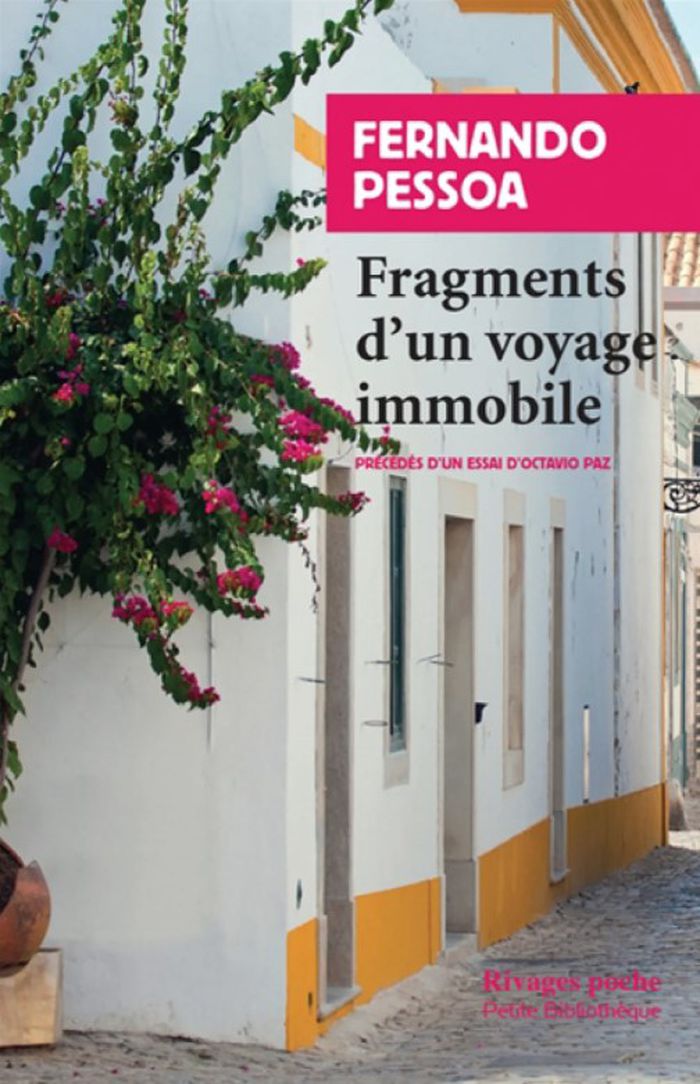
Fragments d'un voyage immobile ; Un inconnu de lui même
Actions:
Prix:
$13.50
(disponible en magasin)
Résumé:
Réalisé sur le modèle des comptines d'enfants, ce recueil de 242 citations de l'écrivain portugais aborde les thèmes appréciés par celui-ci : Dieu, la théosophie, les mythes, l'amour, le manque d'argent...
Fragments d'un voyage immobile ; Un inconnu de lui même
Actions:
Prix:
$13.50
(disponible en magasin)
Résumé:
Réalisé sur le modèle des comptines d'enfants, ce recueil de 242 citations de l'écrivain portugais aborde les thèmes appréciés par celui-ci : Dieu, la théosophie, les mythes, l'amour, le manque d'argent...
Classification:
livres
livres
Publication:
août 2016
août 2016
Sujet:
Expositions en cours
Expositions en cours
Classification:
livres
livres
Titre:
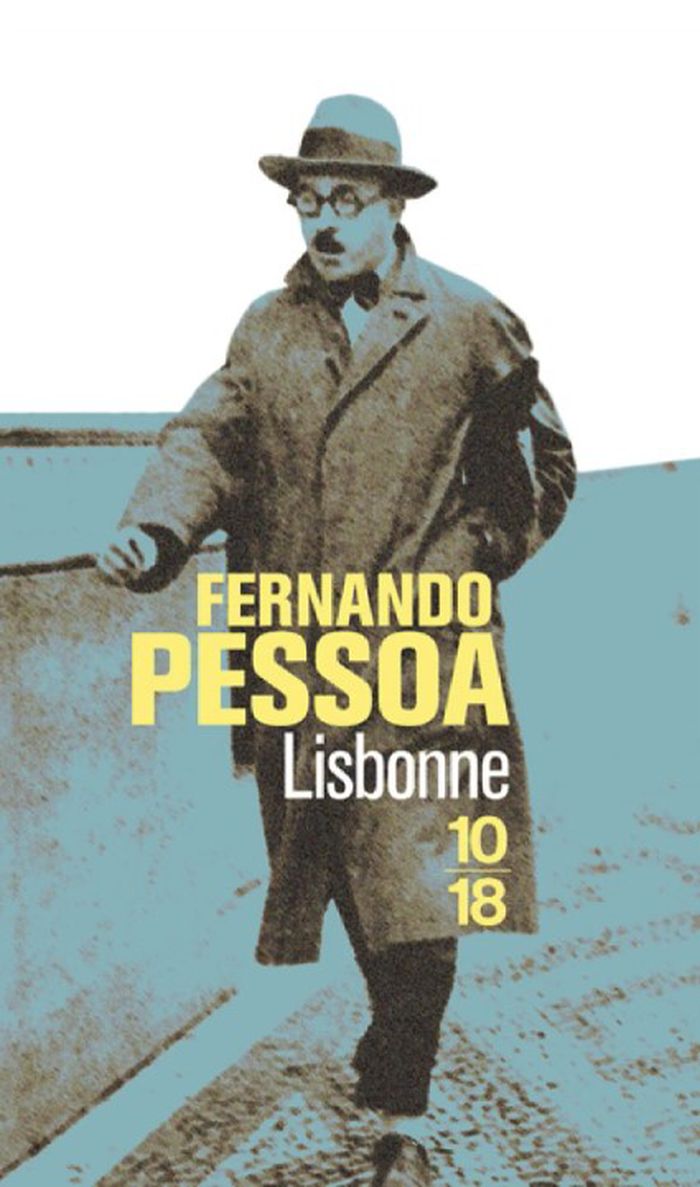
Lisbonne
Lisbonne
Actions:
Prix:
$9.95
(disponible en magasin)
Résumé:
Pessoa avait conçu le projet d'un ensemble de guides sur le Portugal, dont seul ce guide fut écrit. Rédigé autour de 1925 à l'intention des touristes, le poète y invite le lecteur à se rapprocher de ce Portugal méconnu et oublié. Un inédit découvert et publié à Lisbonne en 1992.
$9.95
(disponible en magasin)
Résumé:
Pessoa avait conçu le projet d'un ensemble de guides sur le Portugal, dont seul ce guide fut écrit. Rédigé autour de 1925 à l'intention des touristes, le poète y invite le lecteur à se rapprocher de ce Portugal méconnu et oublié. Un inédit découvert et publié à Lisbonne en 1992.
Titre:
Lisbonne
Actions:
Prix:
$9.95
(disponible en magasin)
Résumé:
Pessoa avait conçu le projet d'un ensemble de guides sur le Portugal, dont seul ce guide fut écrit. Rédigé autour de 1925 à l'intention des touristes, le poète y invite le lecteur à se rapprocher de ce Portugal méconnu et oublié. Un inédit découvert et publié à Lisbonne en 1992.
Lisbonne
Actions:
Prix:
$9.95
(disponible en magasin)
Résumé:
Pessoa avait conçu le projet d'un ensemble de guides sur le Portugal, dont seul ce guide fut écrit. Rédigé autour de 1925 à l'intention des touristes, le poète y invite le lecteur à se rapprocher de ce Portugal méconnu et oublié. Un inédit découvert et publié à Lisbonne en 1992.
Classification:
livres
livres
Publication:
mai 2018
mai 2018
Sujet:
Expositions en cours
Expositions en cours
Classification:
livres
livres
Prix:
$48.00
(disponible en magasin)
Résumé:
Veruska Vasconez is a Brazilian architect and academic whose work spans practice, research, and teaching. This volume gathers seventeen voices – architects, historians, practitioners – who illuminate how housing, design, and infrastructure act as mediators for the most urgent challenges of our time. These essays are not isolated reflections but rather interwoven inquiries(...)
$48.00
(disponible en magasin)
Résumé:
Veruska Vasconez is a Brazilian architect and academic whose work spans practice, research, and teaching. This volume gathers seventeen voices – architects, historians, practitioners – who illuminate how housing, design, and infrastructure act as mediators for the most urgent challenges of our time. These essays are not isolated reflections but rather interwoven inquiries(...)
Publication:
juin 2026
juin 2026
Titre:
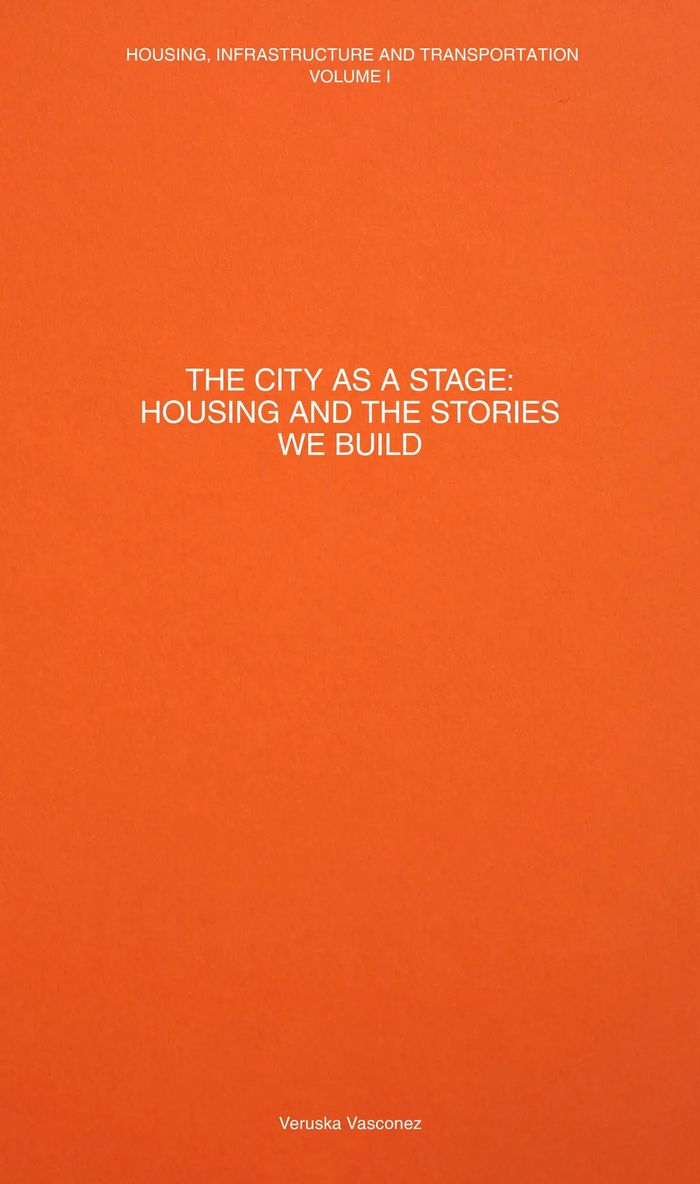
PB 08:Tthe city as a stage: Housing and the stories we build
Actions:
Prix:
$48.00
(disponible en magasin)
Résumé:
Veruska Vasconez is a Brazilian architect and academic whose work spans practice, research, and teaching. This volume gathers seventeen voices – architects, historians, practitioners – who illuminate how housing, design, and infrastructure act as mediators for the most urgent challenges of our time. These essays are not isolated reflections but rather interwoven inquiries into architecture’s capacity as a form of social imagination, a vehicle for justice, and a medium for re-envisioning urban futures. The collection emerges from the graduate seminar Housing, Infrastructure, and Transportation at the University of Miami, originally developed by architect Elizabeth Plater-Zyberk.
PB 08:Tthe city as a stage: Housing and the stories we build
Actions:
Prix:
$48.00
(disponible en magasin)
Résumé:
Veruska Vasconez is a Brazilian architect and academic whose work spans practice, research, and teaching. This volume gathers seventeen voices – architects, historians, practitioners – who illuminate how housing, design, and infrastructure act as mediators for the most urgent challenges of our time. These essays are not isolated reflections but rather interwoven inquiries into architecture’s capacity as a form of social imagination, a vehicle for justice, and a medium for re-envisioning urban futures. The collection emerges from the graduate seminar Housing, Infrastructure, and Transportation at the University of Miami, originally developed by architect Elizabeth Plater-Zyberk.
Classification:
livres
livres
Publication:
juin 2026
juin 2026


