


319 Résultats
Classification:
livres
livres

Actions:
Prix:
$36.00
(disponible sur commande)
Résumé:
In "Design by accident," Alexandra Midal declares the autonomy of design, in and on its own terms. This meticulously researched work proposes not only a counterhistory but a new historiography of design, shedding light on overlooked historical landmarks and figures while reevaluating the legacies of design's established luminaries from the nineteenth century to the(...)
$36.00
(disponible sur commande)
Résumé:
In "Design by accident," Alexandra Midal declares the autonomy of design, in and on its own terms. This meticulously researched work proposes not only a counterhistory but a new historiography of design, shedding light on overlooked historical landmarks and figures while reevaluating the legacies of design's established luminaries from the nineteenth century to the(...)
Titre:
Design by accident: for a new history of design
Actions:
Prix:
$36.00
(disponible sur commande)
Résumé:
In "Design by accident," Alexandra Midal declares the autonomy of design, in and on its own terms. This meticulously researched work proposes not only a counterhistory but a new historiography of design, shedding light on overlooked historical landmarks and figures while reevaluating the legacies of design's established luminaries from the nineteenth century to the present. Midal rejects both linear narratives of progress and the long-held perception of design as a footnote to the histories of fine art and architecture. By weaving critical analysis of the canon of design history and theory together, with special attention to the writings of designers themselves, she draws out the nuances and radical potentials of the discipline—from William Morris's ambivalence toward industry, to Catharine Beecher's proto-feminist household appliances, to the Bauhaus's Expressionist origins, and the influence of Herbert Marcuse on Joe Colombo.
Design by accident: for a new history of design
Actions:
Prix:
$36.00
(disponible sur commande)
Résumé:
In "Design by accident," Alexandra Midal declares the autonomy of design, in and on its own terms. This meticulously researched work proposes not only a counterhistory but a new historiography of design, shedding light on overlooked historical landmarks and figures while reevaluating the legacies of design's established luminaries from the nineteenth century to the present. Midal rejects both linear narratives of progress and the long-held perception of design as a footnote to the histories of fine art and architecture. By weaving critical analysis of the canon of design history and theory together, with special attention to the writings of designers themselves, she draws out the nuances and radical potentials of the discipline—from William Morris's ambivalence toward industry, to Catharine Beecher's proto-feminist household appliances, to the Bauhaus's Expressionist origins, and the influence of Herbert Marcuse on Joe Colombo.
Classification:
livres
livres
Publication:
août 2019
août 2019
Sujet:
Théorie du design
Théorie du design
Classification:
livres
livres

Actions:
Prix:
$23.00
(disponible en magasin)
Résumé:
The daily lives of ordinary people are replete with objects, common things used in commonplace settings. These objects are our constant companions in life. As such, writes Soetsu Yanagi, they should be made with care and built to last, treated with respect and even affection. They should be natural and simple, sturdy and safe - the aesthetic result of wholeheartedly(...)
$23.00
(disponible en magasin)
Résumé:
The daily lives of ordinary people are replete with objects, common things used in commonplace settings. These objects are our constant companions in life. As such, writes Soetsu Yanagi, they should be made with care and built to last, treated with respect and even affection. They should be natural and simple, sturdy and safe - the aesthetic result of wholeheartedly(...)
Titre:
The beauty of everyday things
Actions:
Prix:
$23.00
(disponible en magasin)
Résumé:
The daily lives of ordinary people are replete with objects, common things used in commonplace settings. These objects are our constant companions in life. As such, writes Soetsu Yanagi, they should be made with care and built to last, treated with respect and even affection. They should be natural and simple, sturdy and safe - the aesthetic result of wholeheartedly fulfilling utilitarian needs. They should, in short, be things of beauty.
The beauty of everyday things
Actions:
Prix:
$23.00
(disponible en magasin)
Résumé:
The daily lives of ordinary people are replete with objects, common things used in commonplace settings. These objects are our constant companions in life. As such, writes Soetsu Yanagi, they should be made with care and built to last, treated with respect and even affection. They should be natural and simple, sturdy and safe - the aesthetic result of wholeheartedly fulfilling utilitarian needs. They should, in short, be things of beauty.
Classification:
livres
livres
Publication:
octobre 2019
octobre 2019
Sujet:
Théorie du design
Théorie du design
Classification:
livres
livres

Actions:
Prix:
$31.95
(disponible en magasin)
Résumé:
'Wabi-sabi : pour aller plus loin' est le complément de 'Wabi-sabi à l’usage des artistes, designers, poètes & philosophes'. L’ouvrage cherche à clarifier comment le wabi-sabi est apparu, notamment en lien avec la cérémonie du thé, et à mettre en lumière sa nature. Il traite également de la place du wabi-sabi dans le monde contemporain.
$31.95
(disponible en magasin)
Résumé:
'Wabi-sabi : pour aller plus loin' est le complément de 'Wabi-sabi à l’usage des artistes, designers, poètes & philosophes'. L’ouvrage cherche à clarifier comment le wabi-sabi est apparu, notamment en lien avec la cérémonie du thé, et à mettre en lumière sa nature. Il traite également de la place du wabi-sabi dans le monde contemporain.
Titre:
Wabi-sabi : pour aller plus loin
Actions:
Prix:
$31.95
(disponible en magasin)
Résumé:
'Wabi-sabi : pour aller plus loin' est le complément de 'Wabi-sabi à l’usage des artistes, designers, poètes & philosophes'. L’ouvrage cherche à clarifier comment le wabi-sabi est apparu, notamment en lien avec la cérémonie du thé, et à mettre en lumière sa nature. Il traite également de la place du wabi-sabi dans le monde contemporain.
Wabi-sabi : pour aller plus loin
Actions:
Prix:
$31.95
(disponible en magasin)
Résumé:
'Wabi-sabi : pour aller plus loin' est le complément de 'Wabi-sabi à l’usage des artistes, designers, poètes & philosophes'. L’ouvrage cherche à clarifier comment le wabi-sabi est apparu, notamment en lien avec la cérémonie du thé, et à mettre en lumière sa nature. Il traite également de la place du wabi-sabi dans le monde contemporain.
Classification:
livres
livres
Publication:
juin 2018
juin 2018
Sujet:
Théorie du design
Théorie du design
Classification:
livres
livres
Actions:
Prix:
$50.00
(disponible en magasin)
Résumé:
Fifty years after the first exhibition by the Exhibition Design group, Michele Galluzzo recounts the first experiments of the collective in Pre design 1969: Research on plastic laminate by the Exhibition Design group. Made up of leading Italian graphic designers such as Giulio Confalonieri, Silvio Coppola, Franco Grignani, Bruno Munari and Pino Tovaglia, the ED group was(...)
$50.00
(disponible en magasin)
Résumé:
Fifty years after the first exhibition by the Exhibition Design group, Michele Galluzzo recounts the first experiments of the collective in Pre design 1969: Research on plastic laminate by the Exhibition Design group. Made up of leading Italian graphic designers such as Giulio Confalonieri, Silvio Coppola, Franco Grignani, Bruno Munari and Pino Tovaglia, the ED group was(...)
Titre:
Pre design 1969: plastic laminate
Actions:
Prix:
$50.00
(disponible en magasin)
Résumé:
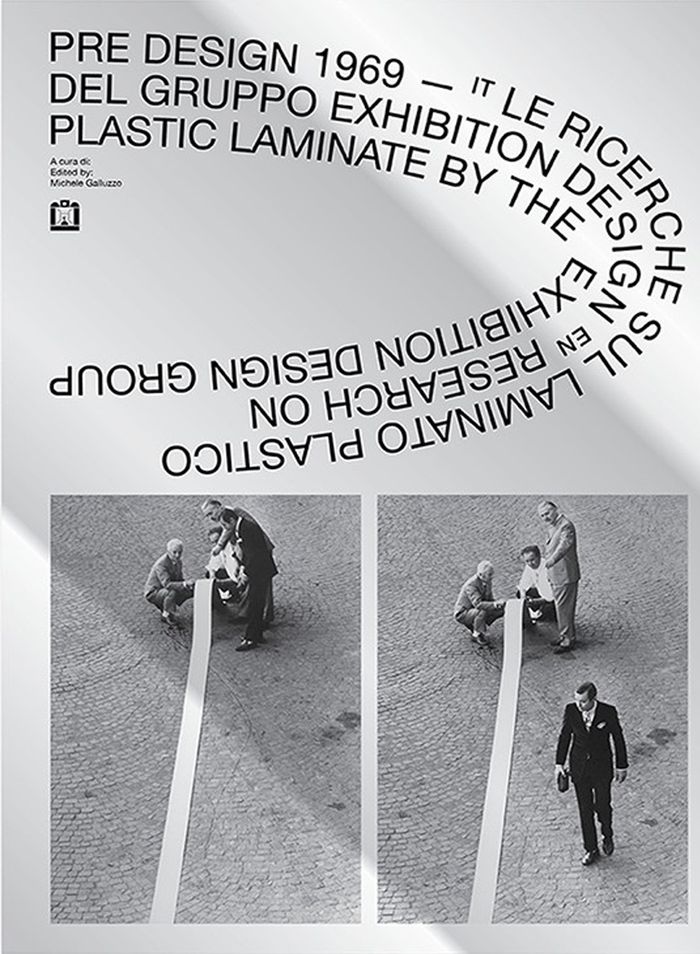
Fifty years after the first exhibition by the Exhibition Design group, Michele Galluzzo recounts the first experiments of the collective in Pre design 1969: Research on plastic laminate by the Exhibition Design group. Made up of leading Italian graphic designers such as Giulio Confalonieri, Silvio Coppola, Franco Grignani, Bruno Munari and Pino Tovaglia, the ED group was formed in the late 1960s in Milan and in less than a decade gave rise to an extremely interesting experience, which until now has only been partially investigated.
Pre design 1969: plastic laminate
Actions:
Prix:
$50.00
(disponible en magasin)
Résumé:
Fifty years after the first exhibition by the Exhibition Design group, Michele Galluzzo recounts the first experiments of the collective in Pre design 1969: Research on plastic laminate by the Exhibition Design group. Made up of leading Italian graphic designers such as Giulio Confalonieri, Silvio Coppola, Franco Grignani, Bruno Munari and Pino Tovaglia, the ED group was formed in the late 1960s in Milan and in less than a decade gave rise to an extremely interesting experience, which until now has only been partially investigated.
Classification:
livres
livres
Publication:
avril 2019
avril 2019
Sujet:
Théorie du design
Théorie du design
Classification:
livres
livres

Actions:
Prix:
$51.95
(disponible sur commande)
Résumé:
An exploration of infographics and data visualization as a cultural phenomenon, from eighteenth-century print culture to today's data journalism. Infographics and data visualization are ubiquitous in our everyday media diet, particularly in news—in print newspapers, on television news, and online. It has been argued that infographics are changing what it means to be(...)
$51.95
(disponible sur commande)
Résumé:
An exploration of infographics and data visualization as a cultural phenomenon, from eighteenth-century print culture to today's data journalism. Infographics and data visualization are ubiquitous in our everyday media diet, particularly in news—in print newspapers, on television news, and online. It has been argued that infographics are changing what it means to be(...)
Titre:
The infographic: a history of data graphics in news and communications
Actions:
Prix:
$51.95
(disponible sur commande)
Résumé:
An exploration of infographics and data visualization as a cultural phenomenon, from eighteenth-century print culture to today's data journalism. Infographics and data visualization are ubiquitous in our everyday media diet, particularly in news—in print newspapers, on television news, and online. It has been argued that infographics are changing what it means to be literate in the twenty-first century—and even that they harmonize uniquely with human cognition. In this first serious exploration of the subject, Murray Dick traces the cultural evolution of the infographic, examining its use in news—and resistance to its use—from eighteenth-century print culture to today's data journalism. He identifies six historical phases of infographics in popular culture: the proto-infographic, the classical, the improving, the commercial, the ideological, and the professional.
The infographic: a history of data graphics in news and communications
Actions:
Prix:
$51.95
(disponible sur commande)
Résumé:
An exploration of infographics and data visualization as a cultural phenomenon, from eighteenth-century print culture to today's data journalism. Infographics and data visualization are ubiquitous in our everyday media diet, particularly in news—in print newspapers, on television news, and online. It has been argued that infographics are changing what it means to be literate in the twenty-first century—and even that they harmonize uniquely with human cognition. In this first serious exploration of the subject, Murray Dick traces the cultural evolution of the infographic, examining its use in news—and resistance to its use—from eighteenth-century print culture to today's data journalism. He identifies six historical phases of infographics in popular culture: the proto-infographic, the classical, the improving, the commercial, the ideological, and the professional.
Classification:
livres
livres
Publication:
mai 2020
mai 2020
Sujet:
Théorie du design
Théorie du design
Classification:
livres
livres

Actions:
Prix:
$39.95
(disponible sur commande)
Résumé:
''Daddy wouldn't buy me a Bauhaus'' collects the writings of legendary British wordsmith Janet Abrams for the first time. From pivotal figures in international modernism to the pioneers of digital medium, Abrams explored the ideas, theories, and emotions that fueled their work. The book's twenty-six profiles, written in Abrams's signature, personal, often hilarious style,(...)
$39.95
(disponible sur commande)
Résumé:
''Daddy wouldn't buy me a Bauhaus'' collects the writings of legendary British wordsmith Janet Abrams for the first time. From pivotal figures in international modernism to the pioneers of digital medium, Abrams explored the ideas, theories, and emotions that fueled their work. The book's twenty-six profiles, written in Abrams's signature, personal, often hilarious style,(...)
Titre:
Daddy wouldn't buy me a Bauhaus: profiles in architecture and design
Actions:
Prix:
$39.95
(disponible sur commande)
Résumé:
''Daddy wouldn't buy me a Bauhaus'' collects the writings of legendary British wordsmith Janet Abrams for the first time. From pivotal figures in international modernism to the pioneers of digital medium, Abrams explored the ideas, theories, and emotions that fueled their work. The book's twenty-six profiles, written in Abrams's signature, personal, often hilarious style, include Reyner Banham, Berthold Lubetkin, Philip Johnson, Paul Rand, Phyllis Lambert, Frank Gehry, Rem Koolhaas, Muriel Cooper, April Greiman, and Michael Bloomberg. Many of the profiles are back in print for the first time, having originally appeared in Blueprint, I.D. magazine, the Independent, and in books and catalogs from the 1980s through the early 2000s. A foreword by Blueprint's founding editor, Deyan Sudjic, and new reflections by Abrams set the stage.
Daddy wouldn't buy me a Bauhaus: profiles in architecture and design
Actions:
Prix:
$39.95
(disponible sur commande)
Résumé:
''Daddy wouldn't buy me a Bauhaus'' collects the writings of legendary British wordsmith Janet Abrams for the first time. From pivotal figures in international modernism to the pioneers of digital medium, Abrams explored the ideas, theories, and emotions that fueled their work. The book's twenty-six profiles, written in Abrams's signature, personal, often hilarious style, include Reyner Banham, Berthold Lubetkin, Philip Johnson, Paul Rand, Phyllis Lambert, Frank Gehry, Rem Koolhaas, Muriel Cooper, April Greiman, and Michael Bloomberg. Many of the profiles are back in print for the first time, having originally appeared in Blueprint, I.D. magazine, the Independent, and in books and catalogs from the 1980s through the early 2000s. A foreword by Blueprint's founding editor, Deyan Sudjic, and new reflections by Abrams set the stage.
Classification:
livres
livres
Publication:
octobre 2020
octobre 2020
Sujet:
Théorie du design
Théorie du design
Classification:
livres
livres

Titre:
Materiality
Materiality
Actions:
Prix:
$38.95
(disponible sur commande)
Résumé:
Throughout history and across social and cultural contexts, most systems of belief—whether religious or secular—have ascribed wisdom to those who see reality as that which transcends the merely material. Yet, as the studies collected here show, the immaterial is not easily separated from the material. Humans are defined, to an extraordinary degree, by their expressions of(...)
$38.95
(disponible sur commande)
Résumé:
Throughout history and across social and cultural contexts, most systems of belief—whether religious or secular—have ascribed wisdom to those who see reality as that which transcends the merely material. Yet, as the studies collected here show, the immaterial is not easily separated from the material. Humans are defined, to an extraordinary degree, by their expressions of(...)
Titre:
Materiality
Actions:
Prix:
$38.95
(disponible sur commande)
Résumé:
Throughout history and across social and cultural contexts, most systems of belief—whether religious or secular—have ascribed wisdom to those who see reality as that which transcends the merely material. Yet, as the studies collected here show, the immaterial is not easily separated from the material. Humans are defined, to an extraordinary degree, by their expressions of immaterial ideals through material forms. The essays in ''Materiality'' explore varied manifestations of materiality from ancient times to the present. In assessing the fundamental role of materiality in shaping humanity, they signal the need to decenter the social within social anthropology in order to make room for the material. Considering topics as diverse as theology, technology, finance, and art, the contributors—most of whom are anthropologists—examine the many different ways in which materiality has been understood and the consequences of these differences.
Materiality
Actions:
Prix:
$38.95
(disponible sur commande)
Résumé:
Throughout history and across social and cultural contexts, most systems of belief—whether religious or secular—have ascribed wisdom to those who see reality as that which transcends the merely material. Yet, as the studies collected here show, the immaterial is not easily separated from the material. Humans are defined, to an extraordinary degree, by their expressions of immaterial ideals through material forms. The essays in ''Materiality'' explore varied manifestations of materiality from ancient times to the present. In assessing the fundamental role of materiality in shaping humanity, they signal the need to decenter the social within social anthropology in order to make room for the material. Considering topics as diverse as theology, technology, finance, and art, the contributors—most of whom are anthropologists—examine the many different ways in which materiality has been understood and the consequences of these differences.
Classification:
livres
livres
Publication:
juillet 2005
juillet 2005
Sujet:
Théorie du design
Théorie du design
Classification:
livres
livres
Actions:
Prix:
$35.00
(disponible sur commande)
Résumé:
Challenging the way we look at, think of and interact with the social world, "Social matter, social design" emphasizes the role of materiality. This enlarged field for engagement demands that design incorporates a more nuanced and complex reading of how the social is intertwined with the material, which confronts the often reductive or simplistic notion of ‘social(...)
$35.00
(disponible sur commande)
Résumé:
Challenging the way we look at, think of and interact with the social world, "Social matter, social design" emphasizes the role of materiality. This enlarged field for engagement demands that design incorporates a more nuanced and complex reading of how the social is intertwined with the material, which confronts the often reductive or simplistic notion of ‘social(...)
Titre:
Social matter, social design: for good or bad, all design is social
Actions:
Prix:
$35.00
(disponible sur commande)
Résumé:
Challenging the way we look at, think of and interact with the social world, "Social matter, social design" emphasizes the role of materiality. This enlarged field for engagement demands that design incorporates a more nuanced and complex reading of how the social is intertwined with the material, which confronts the often reductive or simplistic notion of ‘social design’, and offers novel forms of critical and meaningful engagement at a time of mounting social contradictions. The essays are centered around four major themes: the body; earth; the political; and technology.
Social matter, social design: for good or bad, all design is social
Actions:
Prix:
$35.00
(disponible sur commande)
Résumé:
Challenging the way we look at, think of and interact with the social world, "Social matter, social design" emphasizes the role of materiality. This enlarged field for engagement demands that design incorporates a more nuanced and complex reading of how the social is intertwined with the material, which confronts the often reductive or simplistic notion of ‘social design’, and offers novel forms of critical and meaningful engagement at a time of mounting social contradictions. The essays are centered around four major themes: the body; earth; the political; and technology.
Classification:
livres
livres
Publication:
novembre 2020
novembre 2020
Sujet:
Théorie du design
Théorie du design
Classification:
livres
livres
Actions:
Prix:
$23.00
(disponible sur commande)
Résumé:
Pédagogique, cet ouvrage est destiné à des étuduants en design intéressés par la philosophie. Il est la restitution de sept conférences données à Strate École de design de 2014 à 2016 sur le thème « Philosophie et design ». Chaque chapitre s'ouvre sur la problématisation d'une question qui est analysée à partir de la mise en perspective de textes de trois auteurs. Penser(...)
$23.00
(disponible sur commande)
Résumé:
Pédagogique, cet ouvrage est destiné à des étuduants en design intéressés par la philosophie. Il est la restitution de sept conférences données à Strate École de design de 2014 à 2016 sur le thème « Philosophie et design ». Chaque chapitre s'ouvre sur la problématisation d'une question qui est analysée à partir de la mise en perspective de textes de trois auteurs. Penser(...)
Titre:
Penser le design avec la philosophie
Actions:
Prix:
$23.00
(disponible sur commande)
Résumé:
Pédagogique, cet ouvrage est destiné à des étuduants en design intéressés par la philosophie. Il est la restitution de sept conférences données à Strate École de design de 2014 à 2016 sur le thème « Philosophie et design ». Chaque chapitre s'ouvre sur la problématisation d'une question qui est analysée à partir de la mise en perspective de textes de trois auteurs. Penser l'objet, designer nos existences, la pensée écologique, le cyborg, l'innovation, telles sont quelques-unes des thématiques abordées.
Penser le design avec la philosophie
Actions:
Prix:
$23.00
(disponible sur commande)
Résumé:
Pédagogique, cet ouvrage est destiné à des étuduants en design intéressés par la philosophie. Il est la restitution de sept conférences données à Strate École de design de 2014 à 2016 sur le thème « Philosophie et design ». Chaque chapitre s'ouvre sur la problématisation d'une question qui est analysée à partir de la mise en perspective de textes de trois auteurs. Penser l'objet, designer nos existences, la pensée écologique, le cyborg, l'innovation, telles sont quelques-unes des thématiques abordées.
Classification:
livres
livres
Publication:
juin 2020
juin 2020
Sujet:
Théorie du design
Théorie du design
Classification:
livres
livres

Titre:
Hilde Bouchez: A wild thing
Hilde Bouchez: A wild thing
Actions:
Prix:
$38.00
(disponible sur commande)
Résumé:
Everyday objects can have an extra dimension or quality that has no relation to functionality, form, a concept or a trend. So what is it that gives a particular glass an 'aura'? Why should one thing have more shine, passion and 'mystical allure' than another? 'A Wild Thing' attempts to identify and describe these often intangible qualities. There seems to be an inner(...)
$38.00
(disponible sur commande)
Résumé:
Everyday objects can have an extra dimension or quality that has no relation to functionality, form, a concept or a trend. So what is it that gives a particular glass an 'aura'? Why should one thing have more shine, passion and 'mystical allure' than another? 'A Wild Thing' attempts to identify and describe these often intangible qualities. There seems to be an inner(...)
Titre:
Hilde Bouchez: A wild thing
Actions:
Prix:
$38.00
(disponible sur commande)
Résumé:
Everyday objects can have an extra dimension or quality that has no relation to functionality, form, a concept or a trend. So what is it that gives a particular glass an 'aura'? Why should one thing have more shine, passion and 'mystical allure' than another? 'A Wild Thing' attempts to identify and describe these often intangible qualities. There seems to be an inner light that shines from certain things. Unlike the blinding spotlight of media and marketing, this light is gentle and clear and reflects the methodology and intention of the maker. Ancient craftsmen designed from a place of unity with matter and the cosmos, putting themselves at the service of the making process and thereby creating a moment of transference from maker to thing. In a series of essays, Hilde Bouchez reflects on design history and the latest movements within the design world. She also presents a phenomenological methodology that opens up a new, more poetic approach to everyday objects for both maker and consumer. The texts are linked by the author’s search for a sustainability and meaning that transcends the organic component of materials.
Hilde Bouchez: A wild thing
Actions:
Prix:
$38.00
(disponible sur commande)
Résumé:
Everyday objects can have an extra dimension or quality that has no relation to functionality, form, a concept or a trend. So what is it that gives a particular glass an 'aura'? Why should one thing have more shine, passion and 'mystical allure' than another? 'A Wild Thing' attempts to identify and describe these often intangible qualities. There seems to be an inner light that shines from certain things. Unlike the blinding spotlight of media and marketing, this light is gentle and clear and reflects the methodology and intention of the maker. Ancient craftsmen designed from a place of unity with matter and the cosmos, putting themselves at the service of the making process and thereby creating a moment of transference from maker to thing. In a series of essays, Hilde Bouchez reflects on design history and the latest movements within the design world. She also presents a phenomenological methodology that opens up a new, more poetic approach to everyday objects for both maker and consumer. The texts are linked by the author’s search for a sustainability and meaning that transcends the organic component of materials.
Classification:
livres
livres
Publication:
février 2020
février 2020
Sujet:
Théorie du design
Théorie du design


