


319 Résultats
Classification:
livres
livres
Actions:
Prix:
$39.95
(disponible sur commande)
Résumé:
Le design institue un rapport ambivalent à notre culture matérielle. Il produit à la fois l'objet de série, fini et prêt à l'usage et le prototype mis en oeuvre au sein de l'enchevêtrement de croquis et de maquettes, comme matériau actif et ouvert de développement du geste inventif. Comment une même culture industrielle peut-elle induire deux rapports aux objets si(...)
$39.95
(disponible sur commande)
Résumé:
Le design institue un rapport ambivalent à notre culture matérielle. Il produit à la fois l'objet de série, fini et prêt à l'usage et le prototype mis en oeuvre au sein de l'enchevêtrement de croquis et de maquettes, comme matériau actif et ouvert de développement du geste inventif. Comment une même culture industrielle peut-elle induire deux rapports aux objets si(...)
Titre:
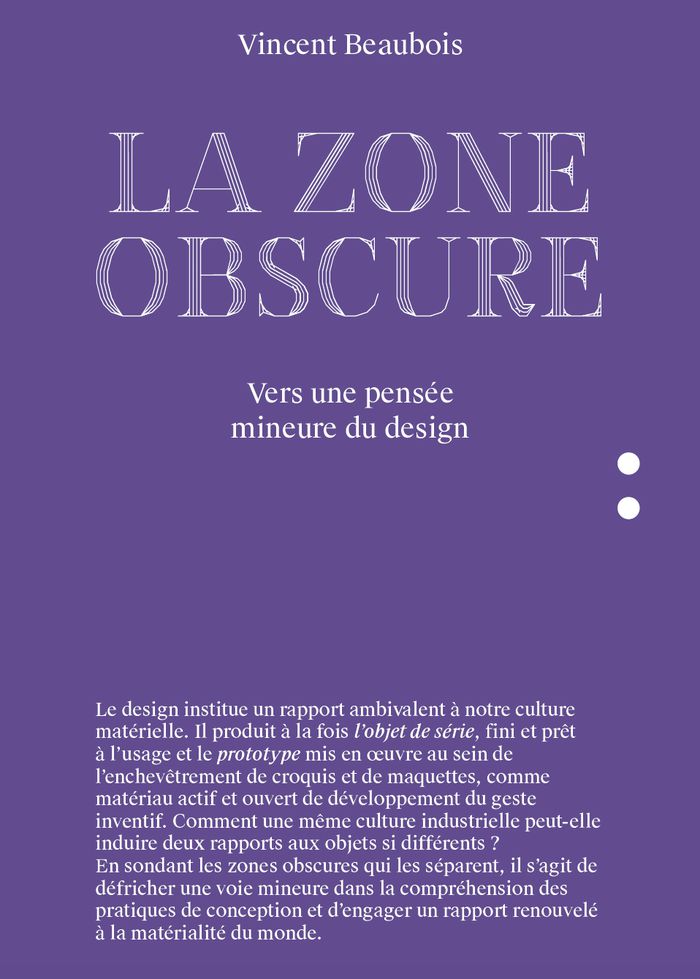
La zone obscure : Vers une pensée mineure du design
Actions:
Prix:
$39.95
(disponible sur commande)
Résumé:
Le design institue un rapport ambivalent à notre culture matérielle. Il produit à la fois l'objet de série, fini et prêt à l'usage et le prototype mis en oeuvre au sein de l'enchevêtrement de croquis et de maquettes, comme matériau actif et ouvert de développement du geste inventif. Comment une même culture industrielle peut-elle induire deux rapports aux objets si différents ? En sondant les zones obscures qui les séparent, il s'agit de défricher une voie mineure dans la compréhension des pratiques de conception et d'engager un rapport renouvelé à la matérialité du monde. La zone obscure (LZO) de Vincent Beaubois interroge la discipline du design à l'aune de la conceptualité de Gilbert Simondon, l'un des rares philosophes français à s'être très tôt intéressé aux objets techniques. Beaubois s'oppose à une pensée majeure du design, d'essence industrielle, pour promouvoir au contraire une « pensée mineure du design » qui, contre l'idéologie du projet, privilégierait les notions de diagramme et de prototype. Il faudra donc « se défaire du design comme simple outil de développement pour en faire un vecteur d'intensification et de problématisation de notre rapport au monde ».
La zone obscure : Vers une pensée mineure du design
Actions:
Prix:
$39.95
(disponible sur commande)
Résumé:
Le design institue un rapport ambivalent à notre culture matérielle. Il produit à la fois l'objet de série, fini et prêt à l'usage et le prototype mis en oeuvre au sein de l'enchevêtrement de croquis et de maquettes, comme matériau actif et ouvert de développement du geste inventif. Comment une même culture industrielle peut-elle induire deux rapports aux objets si différents ? En sondant les zones obscures qui les séparent, il s'agit de défricher une voie mineure dans la compréhension des pratiques de conception et d'engager un rapport renouvelé à la matérialité du monde. La zone obscure (LZO) de Vincent Beaubois interroge la discipline du design à l'aune de la conceptualité de Gilbert Simondon, l'un des rares philosophes français à s'être très tôt intéressé aux objets techniques. Beaubois s'oppose à une pensée majeure du design, d'essence industrielle, pour promouvoir au contraire une « pensée mineure du design » qui, contre l'idéologie du projet, privilégierait les notions de diagramme et de prototype. Il faudra donc « se défaire du design comme simple outil de développement pour en faire un vecteur d'intensification et de problématisation de notre rapport au monde ».
Classification:
livres
livres
Publication:
septembre 2022
septembre 2022
Sujet:
Théorie du design
Théorie du design
Classification:
livres
livres
Actions:
Prix:
$63.50
(disponible sur commande)
Résumé:
A collection of timely new scholarship, ''Repair: Sustainable design futures'' investigates repair as a contemporary expression of empowerment, agency, and resistance to our unmaking of the world and the environment. Repair is an act, metaphor, and foundation for opening up a dialogue about design’s role in proposing radically different social, environmental, and economic(...)
$63.50
(disponible sur commande)
Résumé:
A collection of timely new scholarship, ''Repair: Sustainable design futures'' investigates repair as a contemporary expression of empowerment, agency, and resistance to our unmaking of the world and the environment. Repair is an act, metaphor, and foundation for opening up a dialogue about design’s role in proposing radically different social, environmental, and economic(...)
Titre:
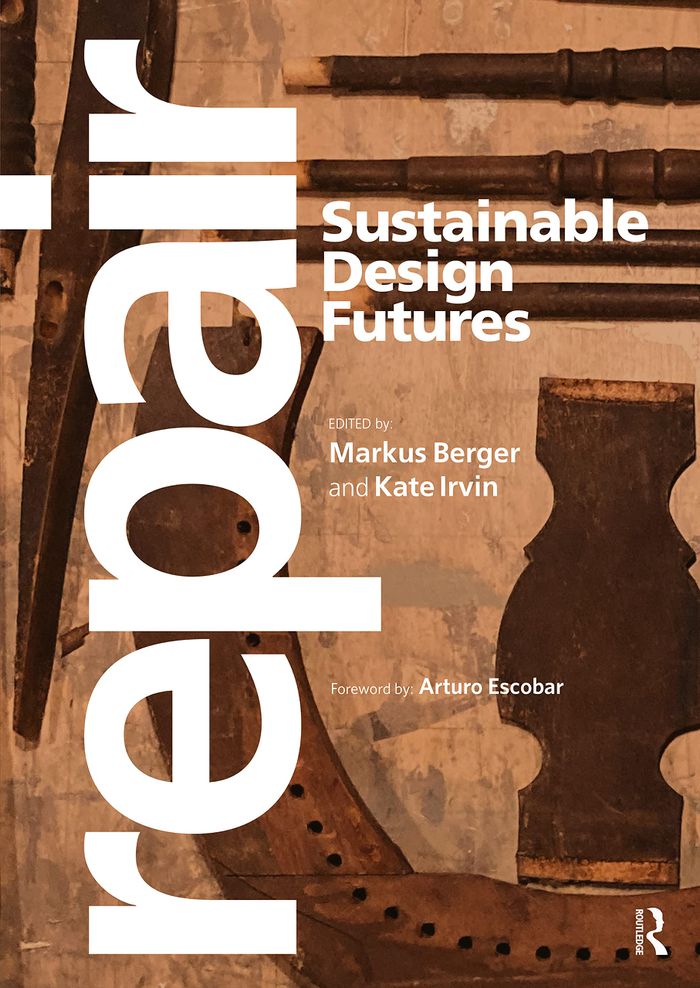
Repair: Sustainable design futures
Actions:
Prix:
$63.50
(disponible sur commande)
Résumé:
A collection of timely new scholarship, ''Repair: Sustainable design futures'' investigates repair as a contemporary expression of empowerment, agency, and resistance to our unmaking of the world and the environment. Repair is an act, metaphor, and foundation for opening up a dialogue about design’s role in proposing radically different social, environmental, and economic futures. Thematically expansive and richly illustrated, with over 125 visuals, this volume features an international, interdisciplinary group of contributors from across the design spectrum whose voices and artwork speak to how we might address our broken social and physical worlds. Organized around reparative thinking and practices, the book includes 30 long and short chapters, photo essays, and interviews that focus on multiple responses to fractured systems, relationships, cities, architecture, objects, and more. ''Repair'' will encourage students, academics, researchers, and practitioners in art, design and architecture practice and theory, cultural studies, environment and sustainability, to discuss, engage, and rethink the act of repair and its impact on our society and environment.
Repair: Sustainable design futures
Actions:
Prix:
$63.50
(disponible sur commande)
Résumé:
A collection of timely new scholarship, ''Repair: Sustainable design futures'' investigates repair as a contemporary expression of empowerment, agency, and resistance to our unmaking of the world and the environment. Repair is an act, metaphor, and foundation for opening up a dialogue about design’s role in proposing radically different social, environmental, and economic futures. Thematically expansive and richly illustrated, with over 125 visuals, this volume features an international, interdisciplinary group of contributors from across the design spectrum whose voices and artwork speak to how we might address our broken social and physical worlds. Organized around reparative thinking and practices, the book includes 30 long and short chapters, photo essays, and interviews that focus on multiple responses to fractured systems, relationships, cities, architecture, objects, and more. ''Repair'' will encourage students, academics, researchers, and practitioners in art, design and architecture practice and theory, cultural studies, environment and sustainability, to discuss, engage, and rethink the act of repair and its impact on our society and environment.
Classification:
livres
livres
Publication:
octobre 2022
octobre 2022
Sujet:
Théorie du design
Théorie du design
Classification:
livres
livres
Titre:
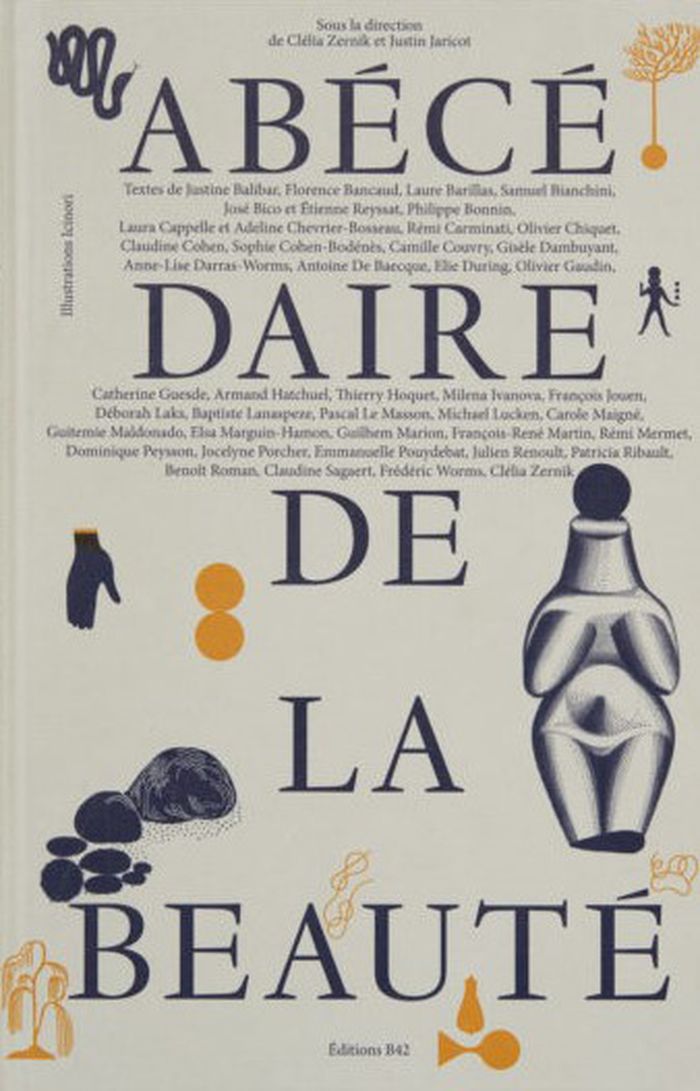
Abécédaire de la beauté
Abécédaire de la beauté
Actions:
Prix:
$48.95
(disponible en magasin)
Résumé:
Qu’est-il advenu de la beauté ? Du charme dissimulé dans le quotidien au régime esthétique atypique de l’imagerie scientifique, de sa capacité inouïe à penser le vivant jusqu’à ses innombrables applications littéraires, philosophiques, techniques, historiques et artistiques, la beauté se révèle être un terrain intellectuel particulièrement fécond. Cet abécédaire croise(...)
$48.95
(disponible en magasin)
Résumé:
Qu’est-il advenu de la beauté ? Du charme dissimulé dans le quotidien au régime esthétique atypique de l’imagerie scientifique, de sa capacité inouïe à penser le vivant jusqu’à ses innombrables applications littéraires, philosophiques, techniques, historiques et artistiques, la beauté se révèle être un terrain intellectuel particulièrement fécond. Cet abécédaire croise(...)
Titre:
Abécédaire de la beauté
Actions:
Prix:
$48.95
(disponible en magasin)
Résumé:
Qu’est-il advenu de la beauté ? Du charme dissimulé dans le quotidien au régime esthétique atypique de l’imagerie scientifique, de sa capacité inouïe à penser le vivant jusqu’à ses innombrables applications littéraires, philosophiques, techniques, historiques et artistiques, la beauté se révèle être un terrain intellectuel particulièrement fécond. Cet abécédaire croise les axes de réflexion autour d’une notion aussi galvaudée qu’insaisissable, mais qui, selon les quarante-trois contributions réunies ici, demeure au centre de nos préoccupations les plus actuelles et les plus vives. Mêlant à la fois une réflexion sur les termes attendus (Grèce, Style, Sublime, Vénus) et d’autres beaucoup plus insolites (Déchets, Robot, Chaos, Pieuvre), la beauté est présente comme un cadre structurant nos pensées mais également comme une lézarde, diffuse et souterraine, dans les interstices de toutes nos modalités d’existence.
Abécédaire de la beauté
Actions:
Prix:
$48.95
(disponible en magasin)
Résumé:
Qu’est-il advenu de la beauté ? Du charme dissimulé dans le quotidien au régime esthétique atypique de l’imagerie scientifique, de sa capacité inouïe à penser le vivant jusqu’à ses innombrables applications littéraires, philosophiques, techniques, historiques et artistiques, la beauté se révèle être un terrain intellectuel particulièrement fécond. Cet abécédaire croise les axes de réflexion autour d’une notion aussi galvaudée qu’insaisissable, mais qui, selon les quarante-trois contributions réunies ici, demeure au centre de nos préoccupations les plus actuelles et les plus vives. Mêlant à la fois une réflexion sur les termes attendus (Grèce, Style, Sublime, Vénus) et d’autres beaucoup plus insolites (Déchets, Robot, Chaos, Pieuvre), la beauté est présente comme un cadre structurant nos pensées mais également comme une lézarde, diffuse et souterraine, dans les interstices de toutes nos modalités d’existence.
Classification:
livres
livres
Publication:
octobre 2022
octobre 2022
Sujet:
Théorie du design
Théorie du design
Classification:
livres
livres
Titre:
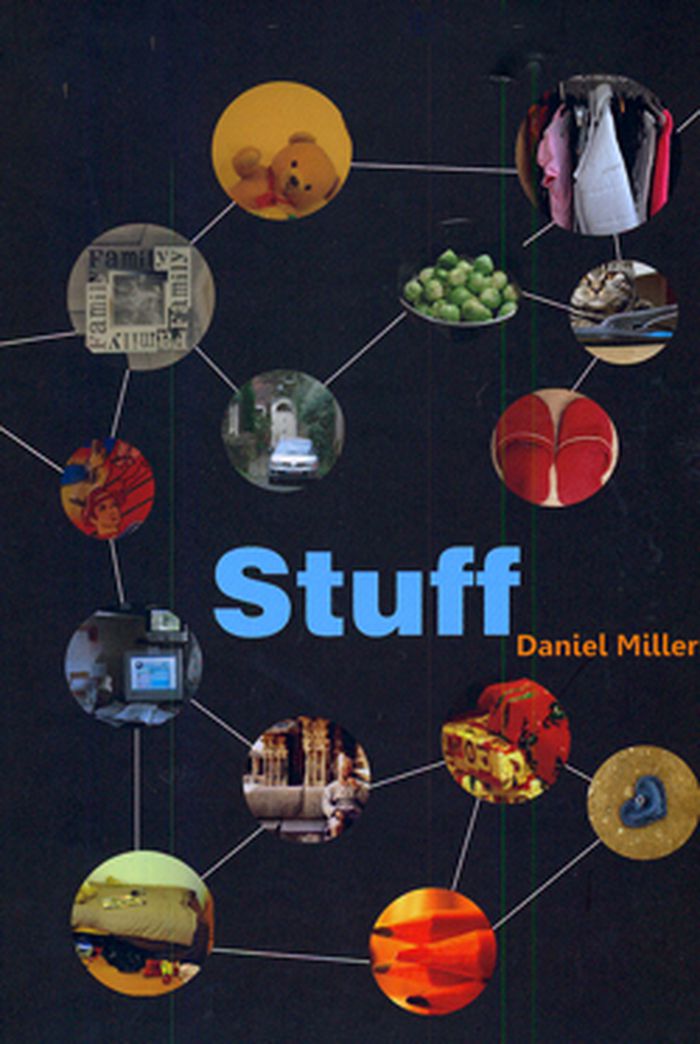
Stuff
Stuff
Actions:
Prix:
$24.95
(disponible sur commande)
Résumé:
Things make us just as much as we make things. And yet, unlike the study of languages or places, there is no discipline devoted to the study of material things. This book shows why it is time to acknowledge and confront this neglect and how much we can learn from focusing our attention on stuff. It presents the theories that are required to understand the way we are(...)
$24.95
(disponible sur commande)
Résumé:
Things make us just as much as we make things. And yet, unlike the study of languages or places, there is no discipline devoted to the study of material things. This book shows why it is time to acknowledge and confront this neglect and how much we can learn from focusing our attention on stuff. It presents the theories that are required to understand the way we are(...)
Titre:
Stuff
Actions:
Prix:
$24.95
(disponible sur commande)
Résumé:
Things make us just as much as we make things. And yet, unlike the study of languages or places, there is no discipline devoted to the study of material things. This book shows why it is time to acknowledge and confront this neglect and how much we can learn from focusing our attention on stuff. It presents the theories that are required to understand the way we are created by material as well as social relations. It takes us inside the very private worlds of our home possessions and our processes of accommodating. It considers issues of materiality in relation to the media, as well as the implications of such an approach in relation, for example, to poverty. Finally, the book considers objects which we use to define what it is to be alive and how we use objects to cope with death.
Stuff
Actions:
Prix:
$24.95
(disponible sur commande)
Résumé:
Things make us just as much as we make things. And yet, unlike the study of languages or places, there is no discipline devoted to the study of material things. This book shows why it is time to acknowledge and confront this neglect and how much we can learn from focusing our attention on stuff. It presents the theories that are required to understand the way we are created by material as well as social relations. It takes us inside the very private worlds of our home possessions and our processes of accommodating. It considers issues of materiality in relation to the media, as well as the implications of such an approach in relation, for example, to poverty. Finally, the book considers objects which we use to define what it is to be alive and how we use objects to cope with death.
Classification:
livres
livres
Publication:
novembre 2009
novembre 2009
Sujet:
Théorie du design
Théorie du design
Classification:
livres
livres
Actions:
Prix:
$34.95
(disponible sur commande)
Résumé:
"Limited Language" is a web-platform, co-founded in 2005 by Colin Davies (University of Wolverhampton) and Monika Parrinder (Royal College of Art, London), for generating writing and discussion about the design process. Over the last four years the site has collected a series of essays and commentary dealing with the key issues which effect and shape visual communication(...)
$34.95
(disponible sur commande)
Résumé:
"Limited Language" is a web-platform, co-founded in 2005 by Colin Davies (University of Wolverhampton) and Monika Parrinder (Royal College of Art, London), for generating writing and discussion about the design process. Over the last four years the site has collected a series of essays and commentary dealing with the key issues which effect and shape visual communication(...)
Titre:
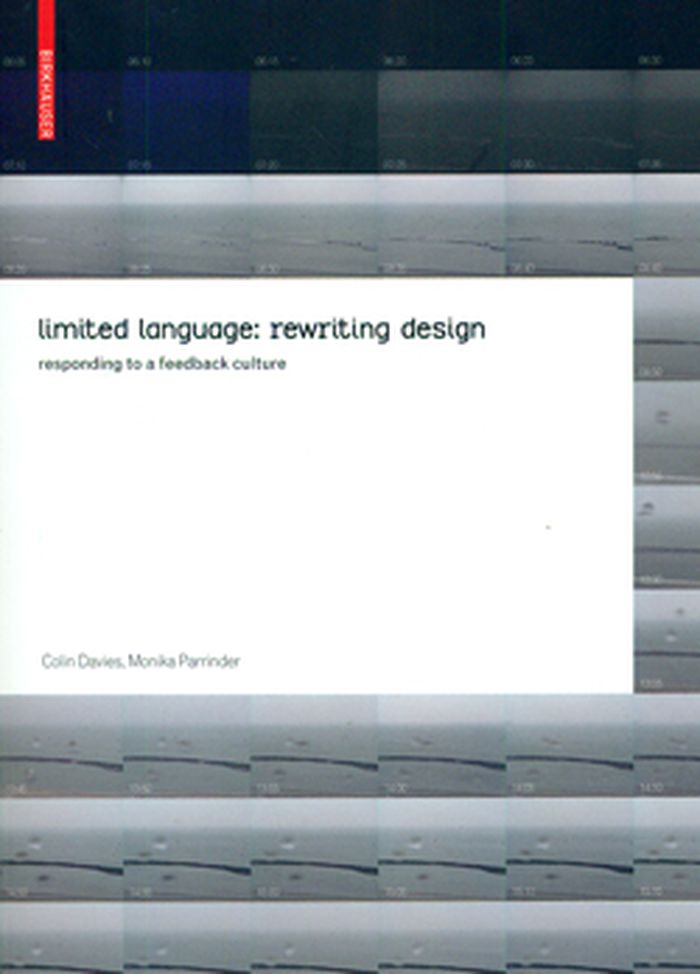
Limited language: rewriting design
Actions:
Prix:
$34.95
(disponible sur commande)
Résumé:
"Limited Language" is a web-platform, co-founded in 2005 by Colin Davies (University of Wolverhampton) and Monika Parrinder (Royal College of Art, London), for generating writing and discussion about the design process. Over the last four years the site has collected a series of essays and commentary dealing with the key issues which effect and shape visual communication today. This book examines the relationship between traditional printed formats (the book) and new digital ones (blogging). Hybrid media forms are already transforming design. How might they be used to rethink design writing? Each of its sub-sections comprises an article from the website, followed by a reflection/response to the topic by the responses raised on limitedlanguage.org, while rich visual imagery in colour illustrates each article/response.
Limited language: rewriting design
Actions:
Prix:
$34.95
(disponible sur commande)
Résumé:
"Limited Language" is a web-platform, co-founded in 2005 by Colin Davies (University of Wolverhampton) and Monika Parrinder (Royal College of Art, London), for generating writing and discussion about the design process. Over the last four years the site has collected a series of essays and commentary dealing with the key issues which effect and shape visual communication today. This book examines the relationship between traditional printed formats (the book) and new digital ones (blogging). Hybrid media forms are already transforming design. How might they be used to rethink design writing? Each of its sub-sections comprises an article from the website, followed by a reflection/response to the topic by the responses raised on limitedlanguage.org, while rich visual imagery in colour illustrates each article/response.
Classification:
livres
livres
Publication:
décembre 2009
décembre 2009
Sujet:
Théorie du design
Théorie du design
Classification:
livres
livres
Titre:
Verbale scritto
Verbale scritto
Actions:
Prix:
$18.50
(disponible en magasin)
Résumé:
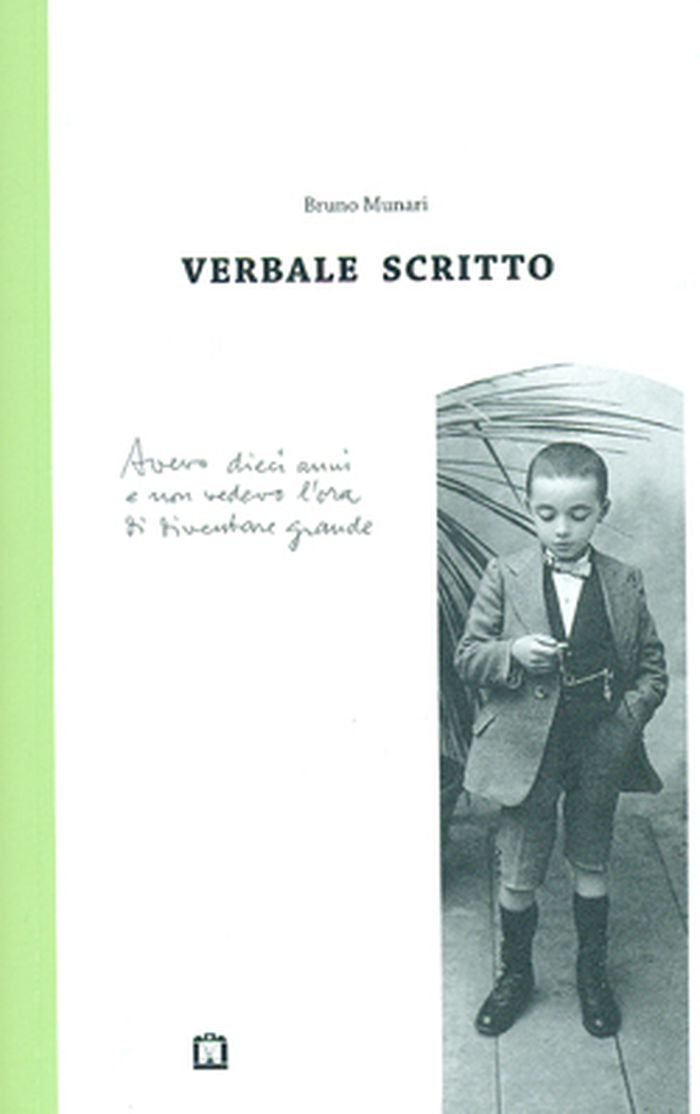
Verbale scritto is a collection of some short texts by Munari, taken from many of hs books. From the aphorisms to the Japanese haiku, Munari’s verbal inventions create sparkles in every direction and about many subjects: from art to design, to common non-usable thing to everyday objects.
$18.50
(disponible en magasin)
Résumé:
Verbale scritto is a collection of some short texts by Munari, taken from many of hs books. From the aphorisms to the Japanese haiku, Munari’s verbal inventions create sparkles in every direction and about many subjects: from art to design, to common non-usable thing to everyday objects.
Titre:
Verbale scritto
Actions:
Prix:
$18.50
(disponible en magasin)
Résumé:
Verbale scritto is a collection of some short texts by Munari, taken from many of hs books. From the aphorisms to the Japanese haiku, Munari’s verbal inventions create sparkles in every direction and about many subjects: from art to design, to common non-usable thing to everyday objects.
Verbale scritto
Actions:
Prix:
$18.50
(disponible en magasin)
Résumé:
Verbale scritto is a collection of some short texts by Munari, taken from many of hs books. From the aphorisms to the Japanese haiku, Munari’s verbal inventions create sparkles in every direction and about many subjects: from art to design, to common non-usable thing to everyday objects.
Classification:
livres
livres
Publication:
septembre 2009
septembre 2009
Sujet:
Théorie du design
Théorie du design
Classification:
livres
livres
Prix:
$29.95
(disponible sur commande)
Résumé:
Castillo closely follows the course of this escalating rivalry between competing consumer cultures through the 1950s, concluding that the Soviet bloc's inability to make good on the claim that it could emulate goods and living standards offered by the West was a contributing factor in communism's eventual demise. Using a mosaic of sources ranging from recently(...)
$29.95
(disponible sur commande)
Résumé:
Castillo closely follows the course of this escalating rivalry between competing consumer cultures through the 1950s, concluding that the Soviet bloc's inability to make good on the claim that it could emulate goods and living standards offered by the West was a contributing factor in communism's eventual demise. Using a mosaic of sources ranging from recently(...)
Titre:
Cold war on the home front, the soft power of midcentury design
Actions:
Prix:
$29.95
(disponible sur commande)
Résumé:
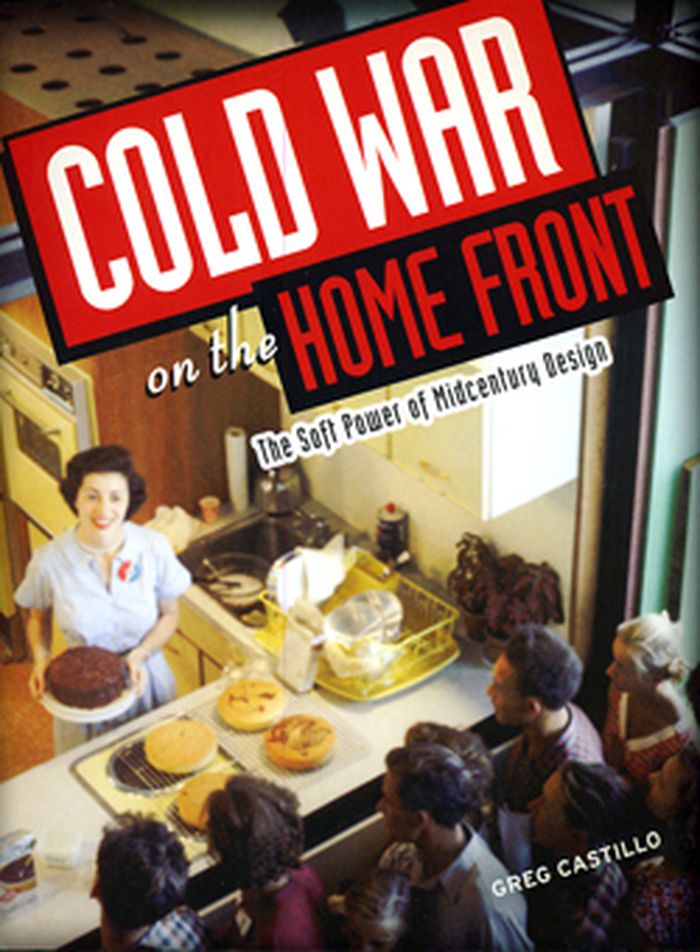
Castillo closely follows the course of this escalating rivalry between competing consumer cultures through the 1950s, concluding that the Soviet bloc's inability to make good on the claim that it could emulate goods and living standards offered by the West was a contributing factor in communism's eventual demise. Using a mosaic of sources ranging from recently declassified government documents to homemaking journals and popular fiction, this book contributes an engaging new perspective on midcentury modernist style and its political uses at the dawn of the cold war.
Cold war on the home front, the soft power of midcentury design
Actions:
Prix:
$29.95
(disponible sur commande)
Résumé:
Castillo closely follows the course of this escalating rivalry between competing consumer cultures through the 1950s, concluding that the Soviet bloc's inability to make good on the claim that it could emulate goods and living standards offered by the West was a contributing factor in communism's eventual demise. Using a mosaic of sources ranging from recently declassified government documents to homemaking journals and popular fiction, this book contributes an engaging new perspective on midcentury modernist style and its political uses at the dawn of the cold war.
Classification:
livres
livres
Publication:
février 2010
février 2010
Sujet:
Théorie du design
Théorie du design
Classification:
livres
livres
Titre:
I miss my pencil
I miss my pencil
Actions:
Prix:
$65.95
(disponible sur commande)
Résumé:
Designers at the ground-breaking firm IDEO the most innovative design company in the world push themselves to ask seemingly outrageous questions. Following twelve design experiments conceived by designers at IDEO, this book takes a voyeuristic look at what designers do daily, might get to do once, and sometimes only hope to do. Each experiment is made real through(...)
$65.95
(disponible sur commande)
Résumé:
Designers at the ground-breaking firm IDEO the most innovative design company in the world push themselves to ask seemingly outrageous questions. Following twelve design experiments conceived by designers at IDEO, this book takes a voyeuristic look at what designers do daily, might get to do once, and sometimes only hope to do. Each experiment is made real through(...)
Titre:
I miss my pencil
Actions:
Prix:
$65.95
(disponible sur commande)
Résumé:
Designers at the ground-breaking firm IDEO the most innovative design company in the world push themselves to ask seemingly outrageous questions. Following twelve design experiments conceived by designers at IDEO, this book takes a voyeuristic look at what designers do daily, might get to do once, and sometimes only hope to do. Each experiment is made real through collaboration, sketching, prototyping, fabrication, and photographing to go beyond the conceptual to the curiously concrete.
I miss my pencil
Actions:
Prix:
$65.95
(disponible sur commande)
Résumé:
Designers at the ground-breaking firm IDEO the most innovative design company in the world push themselves to ask seemingly outrageous questions. Following twelve design experiments conceived by designers at IDEO, this book takes a voyeuristic look at what designers do daily, might get to do once, and sometimes only hope to do. Each experiment is made real through collaboration, sketching, prototyping, fabrication, and photographing to go beyond the conceptual to the curiously concrete.
Classification:
livres
livres
Publication:
juin 2009
juin 2009
Sujet:
Théorie du design
Théorie du design
Classification:
livres
livres
Titre:
Past objects
Past objects
Actions:
Prix:
$37.50
(disponible sur commande)
Résumé:
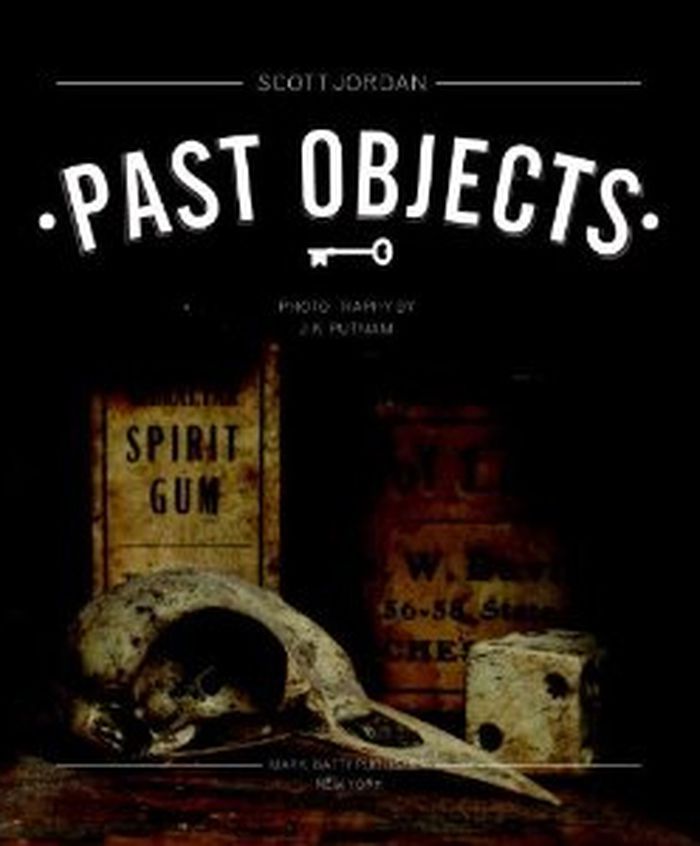
In the space between archaeology and history stand men like Scott Jordan, a New Yorker who has been digging around in the city's soil for several decades. What began as a childhood hobby searching for treasure evolved into a lifestyle that has resulted in Jordan haunting building sites throughout the five boroughs, attempting to recover history before it is paved over forever.
$37.50
(disponible sur commande)
Résumé:
In the space between archaeology and history stand men like Scott Jordan, a New Yorker who has been digging around in the city's soil for several decades. What began as a childhood hobby searching for treasure evolved into a lifestyle that has resulted in Jordan haunting building sites throughout the five boroughs, attempting to recover history before it is paved over forever.
Titre:
Past objects
Actions:
Prix:
$37.50
(disponible sur commande)
Résumé:
In the space between archaeology and history stand men like Scott Jordan, a New Yorker who has been digging around in the city's soil for several decades. What began as a childhood hobby searching for treasure evolved into a lifestyle that has resulted in Jordan haunting building sites throughout the five boroughs, attempting to recover history before it is paved over forever.
Past objects
Actions:
Prix:
$37.50
(disponible sur commande)
Résumé:
In the space between archaeology and history stand men like Scott Jordan, a New Yorker who has been digging around in the city's soil for several decades. What began as a childhood hobby searching for treasure evolved into a lifestyle that has resulted in Jordan haunting building sites throughout the five boroughs, attempting to recover history before it is paved over forever.
Classification:
livres
livres
Publication:
octobre 2009
octobre 2009
Sujet:
Théorie du design
Théorie du design
Classification:
livres
livres
Actions:
Prix:
$71.95
(disponible sur commande)
Résumé:
This book is about the design approach ViP, Vision in Product design. ViP is the label of a method that first and foremost supports innovators of any kind to 'design' the vision - the raison d'être - underlying their design. This vision is firmly rooted in a deliberately constructed future world. Since the vision defines the goal and not the means, the method can be(...)
$71.95
(disponible sur commande)
Résumé:
This book is about the design approach ViP, Vision in Product design. ViP is the label of a method that first and foremost supports innovators of any kind to 'design' the vision - the raison d'être - underlying their design. This vision is firmly rooted in a deliberately constructed future world. Since the vision defines the goal and not the means, the method can be(...)
Titre:
ViP : Vision in product, a guidebook for innovators
Actions:
Prix:
$71.95
(disponible sur commande)
Résumé:
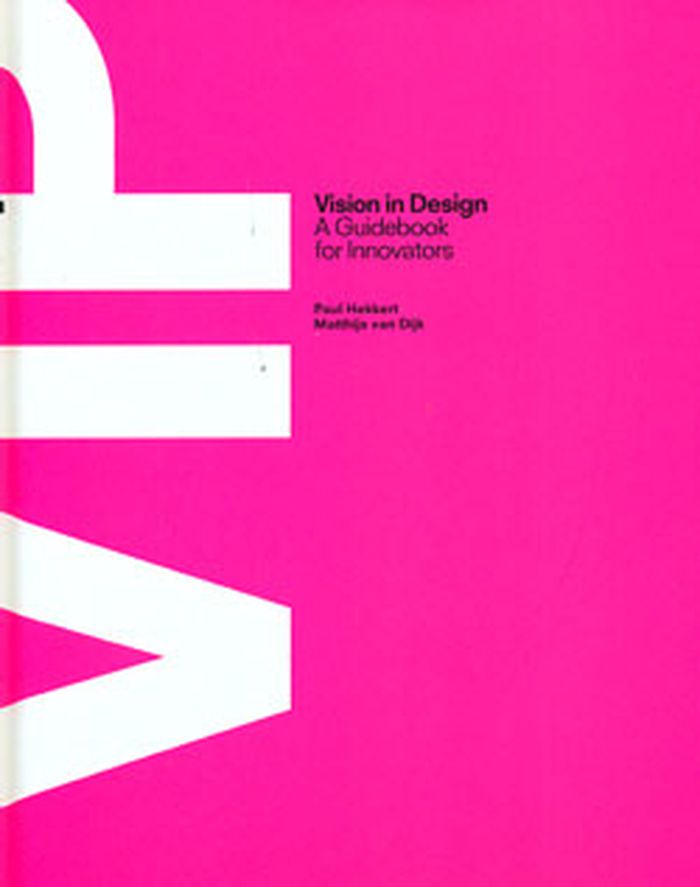
This book is about the design approach ViP, Vision in Product design. ViP is the label of a method that first and foremost supports innovators of any kind to 'design' the vision - the raison d'être - underlying their design. This vision is firmly rooted in a deliberately constructed future world. Since the vision defines the goal and not the means, the method can be applied in innovation processes of any kind. Hence its current title : Vision in Design
ViP : Vision in product, a guidebook for innovators
Actions:
Prix:
$71.95
(disponible sur commande)
Résumé:
This book is about the design approach ViP, Vision in Product design. ViP is the label of a method that first and foremost supports innovators of any kind to 'design' the vision - the raison d'être - underlying their design. This vision is firmly rooted in a deliberately constructed future world. Since the vision defines the goal and not the means, the method can be applied in innovation processes of any kind. Hence its current title : Vision in Design
Classification:
livres
livres
Publication:
avril 2009
avril 2009
Sujet:
Théorie du design
Théorie du design


