


120 Résultats
Classification:
livres
livres
Actions:
Prix:
$25.00
(disponible sur commande)
Résumé:
Echoing architect Louis Kahn's famous question, "What does a brick want?", Turkle asks, "What does simulation want?" Simulations want, even demand, immersion, and the benefits are clear. Architects create buildings unimaginable before virtual design; scientists determine the structure of molecules by manipulating them in virtual space; physicians practice anatomy on(...)
$25.00
(disponible sur commande)
Résumé:
Echoing architect Louis Kahn's famous question, "What does a brick want?", Turkle asks, "What does simulation want?" Simulations want, even demand, immersion, and the benefits are clear. Architects create buildings unimaginable before virtual design; scientists determine the structure of molecules by manipulating them in virtual space; physicians practice anatomy on(...)
Titre:
Simulation and its discontents
Actions:
Prix:
$25.00
(disponible sur commande)
Résumé:
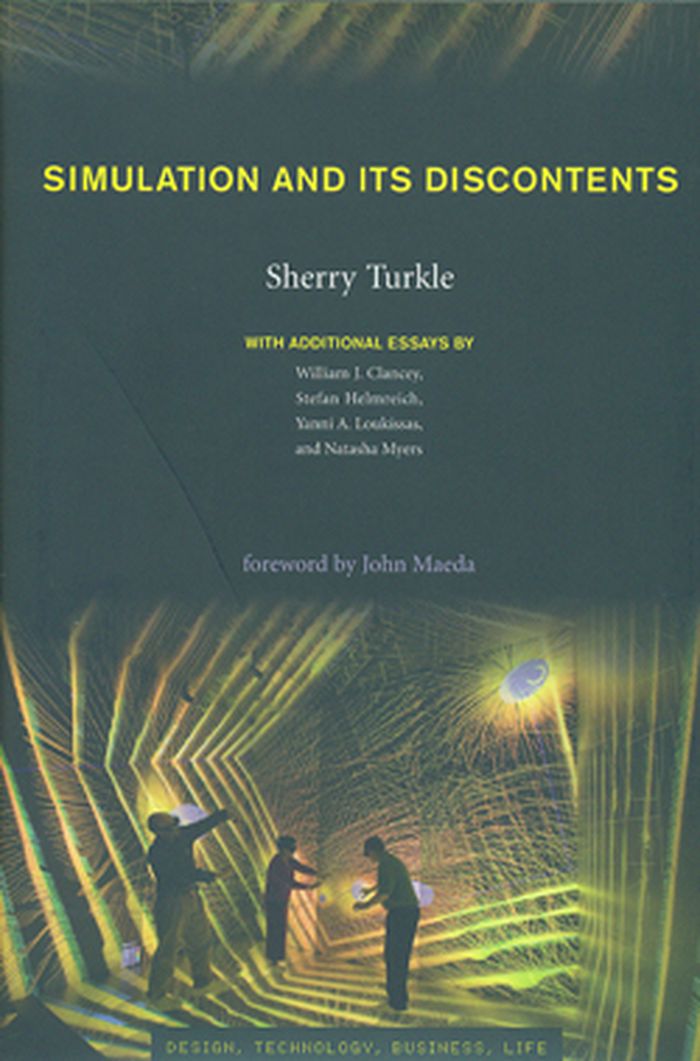
Echoing architect Louis Kahn's famous question, "What does a brick want?", Turkle asks, "What does simulation want?" Simulations want, even demand, immersion, and the benefits are clear. Architects create buildings unimaginable before virtual design; scientists determine the structure of molecules by manipulating them in virtual space; physicians practice anatomy on digitized humans. But immersed in simulation, we are vulnerable. There are losses as well as gains. Older scientists describe a younger generation as "drunk with code." Young scientists, engineers, and designers, full citizens of the virtual, scramble to capture their mentors' tacit knowledge of buildings and bodies. From both sides of a generational divide, there is anxiety that in simulation, something important is slipping away.
Simulation and its discontents
Actions:
Prix:
$25.00
(disponible sur commande)
Résumé:
Echoing architect Louis Kahn's famous question, "What does a brick want?", Turkle asks, "What does simulation want?" Simulations want, even demand, immersion, and the benefits are clear. Architects create buildings unimaginable before virtual design; scientists determine the structure of molecules by manipulating them in virtual space; physicians practice anatomy on digitized humans. But immersed in simulation, we are vulnerable. There are losses as well as gains. Older scientists describe a younger generation as "drunk with code." Young scientists, engineers, and designers, full citizens of the virtual, scramble to capture their mentors' tacit knowledge of buildings and bodies. From both sides of a generational divide, there is anxiety that in simulation, something important is slipping away.
Classification:
livres
livres
Publication:
avril 2009
avril 2009
Sujet:
Architecture numérique
Architecture numérique
Classification:
livres
livres
Prix:
$29.95
(disponible sur commande)
Résumé:
This book celebrates the design ingenuity made possible by digital fabrication techniques. Author Lisa Iwamoto explores the methods architects use to calibrate digital designs with physical forms. The book is organized according to five types of digital fabrication techniques: tessellating, sectioning, folding, contouring, and forming. Projects are shown both in their(...)
$29.95
(disponible sur commande)
Résumé:
This book celebrates the design ingenuity made possible by digital fabrication techniques. Author Lisa Iwamoto explores the methods architects use to calibrate digital designs with physical forms. The book is organized according to five types of digital fabrication techniques: tessellating, sectioning, folding, contouring, and forming. Projects are shown both in their(...)
Titre:
Digital fabrications : architectural and material techniques
Actions:
Prix:
$29.95
(disponible sur commande)
Résumé:
This book celebrates the design ingenuity made possible by digital fabrication techniques. Author Lisa Iwamoto explores the methods architects use to calibrate digital designs with physical forms. The book is organized according to five types of digital fabrication techniques: tessellating, sectioning, folding, contouring, and forming. Projects are shown both in their finished forms and in working drawings, templates, and prototypes, allowing the reader to watch the process of each fantastic construction unfold. The publication also presents projects designed and built by emerging practices that pioneer techniques and experiment with fabrication processes on a small scale with a do-it-yourself attitude. Featured architects include AEDS/Ammar Eloueini, Atelier Manferdini, Brennan Buck, MOS, Office dA, Florencia Pita/MOD, Mafoomby, URBAN A+O, SYSTEMarchitects, Andrew Kudless/Matsys, IwamotoScott, Atelier Hitoshi Abe, Chris Bosse, Tom Wiscombe/EMERGENT, Thom Faulders Architecture, Jeremy Ficca, SPAN, GNUFORM, Heather Roberge, PATTERNS, Ruy Klein, and servo.
Digital fabrications : architectural and material techniques
Actions:
Prix:
$29.95
(disponible sur commande)
Résumé:
This book celebrates the design ingenuity made possible by digital fabrication techniques. Author Lisa Iwamoto explores the methods architects use to calibrate digital designs with physical forms. The book is organized according to five types of digital fabrication techniques: tessellating, sectioning, folding, contouring, and forming. Projects are shown both in their finished forms and in working drawings, templates, and prototypes, allowing the reader to watch the process of each fantastic construction unfold. The publication also presents projects designed and built by emerging practices that pioneer techniques and experiment with fabrication processes on a small scale with a do-it-yourself attitude. Featured architects include AEDS/Ammar Eloueini, Atelier Manferdini, Brennan Buck, MOS, Office dA, Florencia Pita/MOD, Mafoomby, URBAN A+O, SYSTEMarchitects, Andrew Kudless/Matsys, IwamotoScott, Atelier Hitoshi Abe, Chris Bosse, Tom Wiscombe/EMERGENT, Thom Faulders Architecture, Jeremy Ficca, SPAN, GNUFORM, Heather Roberge, PATTERNS, Ruy Klein, and servo.
Classification:
livres
livres
Publication:
janvier 2009
janvier 2009
Classification:
livres
livres
Actions:
Prix:
$82.95
(disponible en magasin)
Résumé:
Hyperbody, initiated by Kas Oosterhuis and headquartered at the Delft University of Technology, is a think tank on new ways of designing and creating non standard and interactive architecture. This huge book is the first time Hyperbody has published it collaborative projects and experiments within the real world of design and construction. The designers of the paradigm(...)
$82.95
(disponible en magasin)
Résumé:
Hyperbody, initiated by Kas Oosterhuis and headquartered at the Delft University of Technology, is a think tank on new ways of designing and creating non standard and interactive architecture. This huge book is the first time Hyperbody has published it collaborative projects and experiments within the real world of design and construction. The designers of the paradigm(...)
Publication:
octobre 2011
octobre 2011
Titre:
Hyperbody : first decade of interactive architecture
Actions:
Prix:
$82.95
(disponible en magasin)
Résumé:
Hyperbody, initiated by Kas Oosterhuis and headquartered at the Delft University of Technology, is a think tank on new ways of designing and creating non standard and interactive architecture. This huge book is the first time Hyperbody has published it collaborative projects and experiments within the real world of design and construction. The designers of the paradigm changing MCAT system of architectural software, Hyperbody continues to play with software design and futurism, creating a broad and influential new dialog. This collection of writings looks at new software tools for real time interaction and parametric design and application of new production techniques file to factory production and mass customization, among other projects, applying cutting edge design methods and theories.
Hyperbody : first decade of interactive architecture
Actions:
Prix:
$82.95
(disponible en magasin)
Résumé:
Hyperbody, initiated by Kas Oosterhuis and headquartered at the Delft University of Technology, is a think tank on new ways of designing and creating non standard and interactive architecture. This huge book is the first time Hyperbody has published it collaborative projects and experiments within the real world of design and construction. The designers of the paradigm changing MCAT system of architectural software, Hyperbody continues to play with software design and futurism, creating a broad and influential new dialog. This collection of writings looks at new software tools for real time interaction and parametric design and application of new production techniques file to factory production and mass customization, among other projects, applying cutting edge design methods and theories.
Classification:
livres
livres
Publication:
octobre 2011
octobre 2011
Classification:
livres
livres
Actions:
Prix:
$24.95
(disponible sur commande)
Résumé:
Entertaining, concise, and relentlessly probing, this book is a comprehensive introduction to a new type of city, an increasingly important system of virtual spaces interconnected by the information superhighway.
$24.95
(disponible sur commande)
Résumé:
Entertaining, concise, and relentlessly probing, this book is a comprehensive introduction to a new type of city, an increasingly important system of virtual spaces interconnected by the information superhighway.
Publication:
septembre 1996, Cambridge, Mass.
septembre 1996, Cambridge, Mass.
Titre:
City of bits : space, place, and the infobahn
Actions:
Prix:
$24.95
(disponible sur commande)
Résumé:
Entertaining, concise, and relentlessly probing, this book is a comprehensive introduction to a new type of city, an increasingly important system of virtual spaces interconnected by the information superhighway.
City of bits : space, place, and the infobahn
Actions:
Prix:
$24.95
(disponible sur commande)
Résumé:
Entertaining, concise, and relentlessly probing, this book is a comprehensive introduction to a new type of city, an increasingly important system of virtual spaces interconnected by the information superhighway.
Classification:
livres
livres
Publication:
septembre 1996, Cambridge, Mass.
septembre 1996, Cambridge, Mass.
Classification:
livres
livres
Titre:
CITA works
CITA works
Actions:
Prix:
$49.95
(disponible sur commande)
Résumé:
The Centre for Information Technology and Architecture (CITA) is an innovative research environment exploring the emergent intersections between architecture and digital technologies. This thoroughly illustrated book documents over 40 projects, events and research collaborations conducted between 2005 and 2014 by CITA.
$49.95
(disponible sur commande)
Résumé:
The Centre for Information Technology and Architecture (CITA) is an innovative research environment exploring the emergent intersections between architecture and digital technologies. This thoroughly illustrated book documents over 40 projects, events and research collaborations conducted between 2005 and 2014 by CITA.
Titre:
CITA works
Actions:
Prix:
$49.95
(disponible sur commande)
Résumé:
The Centre for Information Technology and Architecture (CITA) is an innovative research environment exploring the emergent intersections between architecture and digital technologies. This thoroughly illustrated book documents over 40 projects, events and research collaborations conducted between 2005 and 2014 by CITA.
CITA works
Actions:
Prix:
$49.95
(disponible sur commande)
Résumé:
The Centre for Information Technology and Architecture (CITA) is an innovative research environment exploring the emergent intersections between architecture and digital technologies. This thoroughly illustrated book documents over 40 projects, events and research collaborations conducted between 2005 and 2014 by CITA.
Classification:
livres
livres
Publication:
novembre 2015
novembre 2015
Sujet:
Architecture numérique
Architecture numérique
Classification:
livres
livres
Prix:
$49.95
(disponible sur commande)
Résumé:
Over the last decade, 'parametricism' has been heralded as a new avant-garde in the industries of architecture, urban design, and industrial design, regarded by many as the next grand style in the history of architecture, heir to postmodernism and deconstruction. From buildings to cities, the built environment is increasingly addressed, designed and constructed using(...)
$49.95
(disponible sur commande)
Résumé:
Over the last decade, 'parametricism' has been heralded as a new avant-garde in the industries of architecture, urban design, and industrial design, regarded by many as the next grand style in the history of architecture, heir to postmodernism and deconstruction. From buildings to cities, the built environment is increasingly addressed, designed and constructed using(...)
Titre:
The politics of parametricism digital technologies in architecture
Actions:
Prix:
$49.95
(disponible sur commande)
Résumé:
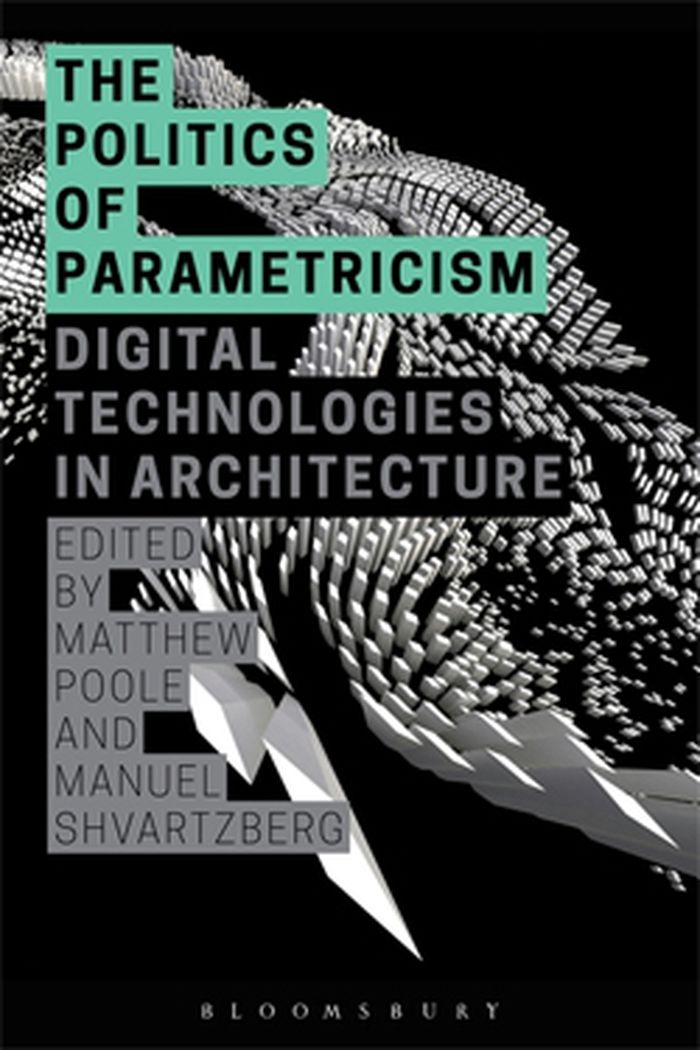
Over the last decade, 'parametricism' has been heralded as a new avant-garde in the industries of architecture, urban design, and industrial design, regarded by many as the next grand style in the history of architecture, heir to postmodernism and deconstruction. From buildings to cities, the built environment is increasingly addressed, designed and constructed using digital software based on parametric scripting platforms which claim to be able to process complex physical and social modelling alike. As more and more digital tools are developed into an apparently infinite repertoire of socio-technical functions, critical questions concerning these cultural and technological shifts are often eclipsed by the seductive aesthetic and the alluring futuristic imaginary that parametric design tools and their architectural products and discourses represent. The Politics of Parametricism addresses these issues, offering a collection of new essays written by leading international thinkers in the fields of digital design, architecture, theory and technology. Exploring the social, political, ethical and philosophical issues at stake in the history, practice and processes of parametric architecture and urbanism, each chapter provides different vantage points to interrogate the challenges and opportunities presented by this latest mode of technological production.
The politics of parametricism digital technologies in architecture
Actions:
Prix:
$49.95
(disponible sur commande)
Résumé:
Over the last decade, 'parametricism' has been heralded as a new avant-garde in the industries of architecture, urban design, and industrial design, regarded by many as the next grand style in the history of architecture, heir to postmodernism and deconstruction. From buildings to cities, the built environment is increasingly addressed, designed and constructed using digital software based on parametric scripting platforms which claim to be able to process complex physical and social modelling alike. As more and more digital tools are developed into an apparently infinite repertoire of socio-technical functions, critical questions concerning these cultural and technological shifts are often eclipsed by the seductive aesthetic and the alluring futuristic imaginary that parametric design tools and their architectural products and discourses represent. The Politics of Parametricism addresses these issues, offering a collection of new essays written by leading international thinkers in the fields of digital design, architecture, theory and technology. Exploring the social, political, ethical and philosophical issues at stake in the history, practice and processes of parametric architecture and urbanism, each chapter provides different vantage points to interrogate the challenges and opportunities presented by this latest mode of technological production.
Classification:
livres
livres
Publication:
décembre 2015
décembre 2015
Sujet:
Architecture numérique
Architecture numérique
Classification:
livres
livres
Prix:
$42.00
(disponible sur commande)
Résumé:
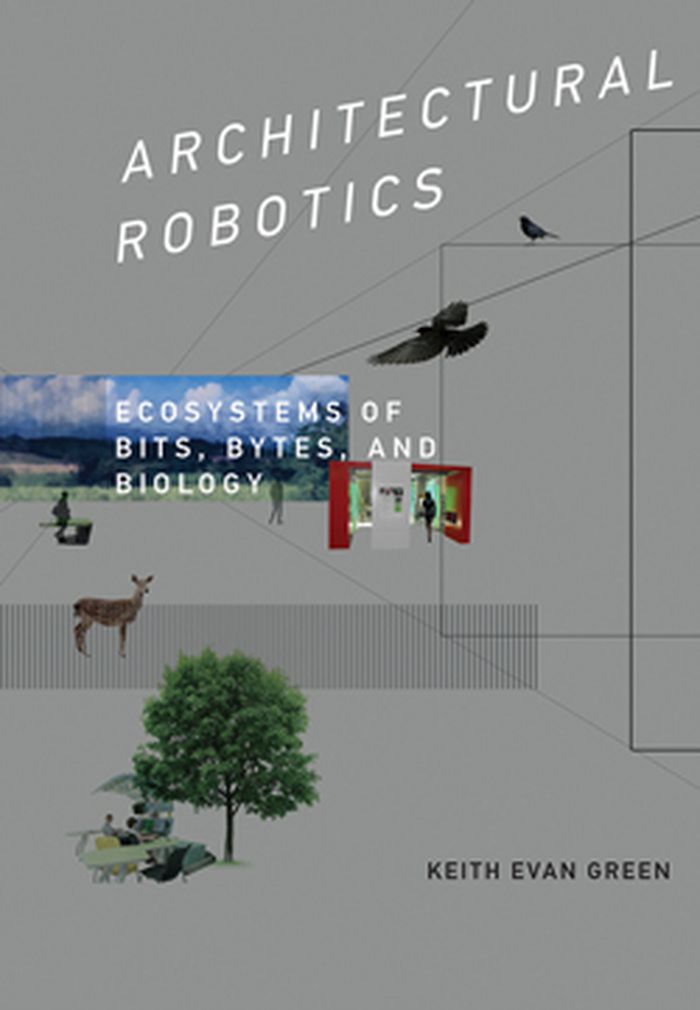
In this book, Keith Evan Green looks toward the next frontier in computing: interactive, partly intelligent, meticulously designed physical environments. Green examines how these "architectural robotic" systems will support and augment us at work, school, and home, as we roam, interconnect, and age.
$42.00
(disponible sur commande)
Résumé:
In this book, Keith Evan Green looks toward the next frontier in computing: interactive, partly intelligent, meticulously designed physical environments. Green examines how these "architectural robotic" systems will support and augment us at work, school, and home, as we roam, interconnect, and age.
Titre:
Architectural Robotics: Ecosystems of Bits, Bytes, and Biology
Actions:
Prix:
$42.00
(disponible sur commande)
Résumé:
In this book, Keith Evan Green looks toward the next frontier in computing: interactive, partly intelligent, meticulously designed physical environments. Green examines how these "architectural robotic" systems will support and augment us at work, school, and home, as we roam, interconnect, and age.
Architectural Robotics: Ecosystems of Bits, Bytes, and Biology
Actions:
Prix:
$42.00
(disponible sur commande)
Résumé:
In this book, Keith Evan Green looks toward the next frontier in computing: interactive, partly intelligent, meticulously designed physical environments. Green examines how these "architectural robotic" systems will support and augment us at work, school, and home, as we roam, interconnect, and age.
Classification:
livres
livres
Publication:
février 2016
février 2016
Sujet:
Architecture numérique
Architecture numérique
Classification:
livres
livres
Actions:
Prix:
$57.50
(disponible en magasin)
Résumé:
How might nanotechnology—the manipulation of matter at the level of atoms and molecules—change buildings and cities in the future? The authors of Barba have imagined one possible future, shaped by a miraculous nanomaterial of the same name, which can be steered and altered in real time, changing its shape and size at will. With Barba, the authors speculate, the built(...)
$57.50
(disponible en magasin)
Résumé:
How might nanotechnology—the manipulation of matter at the level of atoms and molecules—change buildings and cities in the future? The authors of Barba have imagined one possible future, shaped by a miraculous nanomaterial of the same name, which can be steered and altered in real time, changing its shape and size at will. With Barba, the authors speculate, the built(...)
Titre:
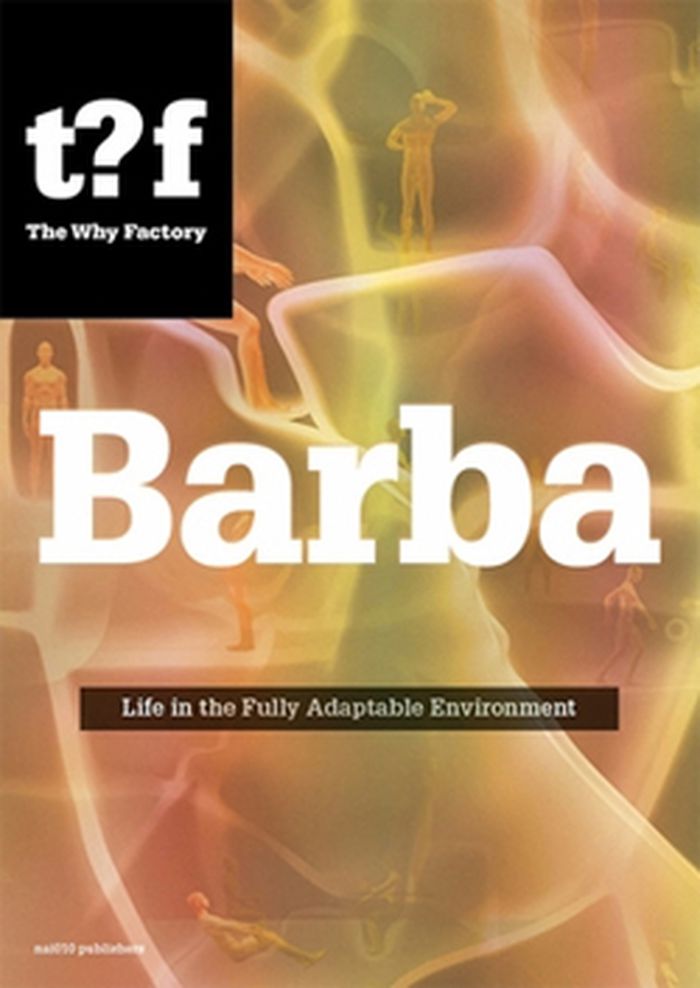
Barba: Life in the Fully Adaptable Environment
Actions:
Prix:
$57.50
(disponible en magasin)
Résumé:
How might nanotechnology—the manipulation of matter at the level of atoms and molecules—change buildings and cities in the future? The authors of Barba have imagined one possible future, shaped by a miraculous nanomaterial of the same name, which can be steered and altered in real time, changing its shape and size at will. With Barba, the authors speculate, the built environment can be adapted almost immediately to every desire and every need. This volume, the latest in The Why Factory’s Future Cities series, envisions the dramatic potential of nanomaterial to change cities and architecture in the not-so-distant future, further explored in a series of interactive experiments and installations. Part speculative architecture, part science fiction, Barba follows an inhabitant of this flexible future world for a day, daring the reader to imagine life in a fully adaptable environment.
Barba: Life in the Fully Adaptable Environment
Actions:
Prix:
$57.50
(disponible en magasin)
Résumé:
How might nanotechnology—the manipulation of matter at the level of atoms and molecules—change buildings and cities in the future? The authors of Barba have imagined one possible future, shaped by a miraculous nanomaterial of the same name, which can be steered and altered in real time, changing its shape and size at will. With Barba, the authors speculate, the built environment can be adapted almost immediately to every desire and every need. This volume, the latest in The Why Factory’s Future Cities series, envisions the dramatic potential of nanomaterial to change cities and architecture in the not-so-distant future, further explored in a series of interactive experiments and installations. Part speculative architecture, part science fiction, Barba follows an inhabitant of this flexible future world for a day, daring the reader to imagine life in a fully adaptable environment.
Classification:
livres
livres
Publication:
février 2016
février 2016
Sujet:
Architecture numérique
Architecture numérique
Classification:
livres
livres

Actions:
Prix:
$60.00
(disponible sur commande)
Résumé:
Artificial Intelligence’s (AI) encounter with architecture is still in its infancy. However, current experiments and applications already are a testimony to their gradual intersection. This book provides an introduction to the topic through the triple lens of History, Application, and Theory. A chronology of architecture’s technological evolution first puts AI back in the(...)
$60.00
(disponible sur commande)
Résumé:
Artificial Intelligence’s (AI) encounter with architecture is still in its infancy. However, current experiments and applications already are a testimony to their gradual intersection. This book provides an introduction to the topic through the triple lens of History, Application, and Theory. A chronology of architecture’s technological evolution first puts AI back in the(...)
Titre:
Artificial intelligence and architecture: From research to practice
Actions:
Prix:
$60.00
(disponible sur commande)
Résumé:
Artificial Intelligence’s (AI) encounter with architecture is still in its infancy. However, current experiments and applications already are a testimony to their gradual intersection. This book provides an introduction to the topic through the triple lens of History, Application, and Theory. A chronology of architecture’s technological evolution first puts AI back in the context of the discipline. The author then presents a collection of AI’s applications in architecture. The book finally gives the stage to contributors working at the forefront of this revolution. From Harvard to Foster & Partners, their perspectives provide a panorama of the discourse surrounding AI’s presence in the field.
Artificial intelligence and architecture: From research to practice
Actions:
Prix:
$60.00
(disponible sur commande)
Résumé:
Artificial Intelligence’s (AI) encounter with architecture is still in its infancy. However, current experiments and applications already are a testimony to their gradual intersection. This book provides an introduction to the topic through the triple lens of History, Application, and Theory. A chronology of architecture’s technological evolution first puts AI back in the context of the discipline. The author then presents a collection of AI’s applications in architecture. The book finally gives the stage to contributors working at the forefront of this revolution. From Harvard to Foster & Partners, their perspectives provide a panorama of the discourse surrounding AI’s presence in the field.
Classification:
livres
livres
Publication:
mai 2022
mai 2022
Sujet:
Architecture numérique
Architecture numérique
Classification:
livres
livres
Actions:
Prix:
$39.50
(disponible sur commande)
Résumé:
The first volume in a two-book series, this book introduces AI for designers and considers its positive potential for the future of architecture and design. Explaining what AI is and how it works, the book examines how different manifestations of AI will impact the discipline and profession of architecture. Highlighting current case-studies as well as near-future(...)
$39.50
(disponible sur commande)
Résumé:
The first volume in a two-book series, this book introduces AI for designers and considers its positive potential for the future of architecture and design. Explaining what AI is and how it works, the book examines how different manifestations of AI will impact the discipline and profession of architecture. Highlighting current case-studies as well as near-future(...)
Titre:
Architecture in the age of artificial intelligence: an introduction to AI for architects
Actions:
Prix:
$39.50
(disponible sur commande)
Résumé:
The first volume in a two-book series, this book introduces AI for designers and considers its positive potential for the future of architecture and design. Explaining what AI is and how it works, the book examines how different manifestations of AI will impact the discipline and profession of architecture. Highlighting current case-studies as well as near-future applications, it shows how AI is already being used as a powerful design tool, and how AI-driven information systems will soon transform the design of buildings and cities.
Architecture in the age of artificial intelligence: an introduction to AI for architects
Actions:
Prix:
$39.50
(disponible sur commande)
Résumé:
The first volume in a two-book series, this book introduces AI for designers and considers its positive potential for the future of architecture and design. Explaining what AI is and how it works, the book examines how different manifestations of AI will impact the discipline and profession of architecture. Highlighting current case-studies as well as near-future applications, it shows how AI is already being used as a powerful design tool, and how AI-driven information systems will soon transform the design of buildings and cities.
Classification:
livres
livres
Publication:
février 2022
février 2022
Sujet:
Architecture numérique
Architecture numérique


