


460 Résultats
Classification:
livres
livres
Titre:
Baku: oil and urbanism
Baku: oil and urbanism
Actions:
Prix:
$75.00
(disponible sur commande)
Résumé:
Baku, the capital of Azerbaijan and formerly part of the Russian Empire and Soviet Union, is the original oil city, with oil and urbanism thoroughly intertwined—economically, politically, and physical—in the city’s fabric. Baku saw its first oil boom in the late nineteenth century, driven by the Russian branch of the Nobel family modernizing the oil fields around Baku as(...)
$75.00
(disponible sur commande)
Résumé:
Baku, the capital of Azerbaijan and formerly part of the Russian Empire and Soviet Union, is the original oil city, with oil and urbanism thoroughly intertwined—economically, politically, and physical—in the city’s fabric. Baku saw its first oil boom in the late nineteenth century, driven by the Russian branch of the Nobel family modernizing the oil fields around Baku as(...)
Publication:
février 2019
février 2019
Titre:
Baku: oil and urbanism
Actions:
Prix:
$75.00
(disponible sur commande)
Résumé:
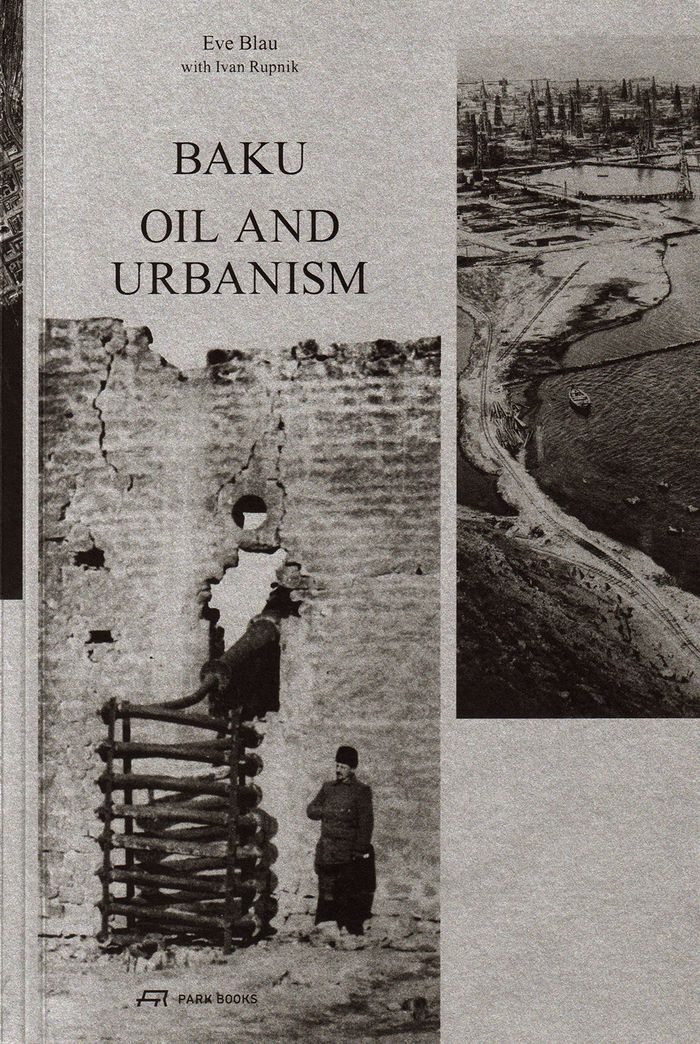
Baku, the capital of Azerbaijan and formerly part of the Russian Empire and Soviet Union, is the original oil city, with oil and urbanism thoroughly intertwined—economically, politically, and physical—in the city’s fabric. Baku saw its first oil boom in the late nineteenth century, driven by the Russian branch of the Nobel family modernizing the oil fields around Baku as local oil barons poured their new wealth into building a cosmopolitan city center. During the Soviet period, Baku became the site of an urban experiment: the shaping of an oil city of socialist man. That project included Neft Dashlari, a city built on trestles in the Caspian Sea and designed to house thousands of workers, schools, shops, gardens, clinics, and cinemas as well as 2,000 oil rigs, pipelines, and collecting stations. Today, as it heads into an uncertain post-oil future, Baku’s planners and business elites regard the legacy of its past as a resource that sustains new aspirations and identities.
Baku: oil and urbanism
Actions:
Prix:
$75.00
(disponible sur commande)
Résumé:
Baku, the capital of Azerbaijan and formerly part of the Russian Empire and Soviet Union, is the original oil city, with oil and urbanism thoroughly intertwined—economically, politically, and physical—in the city’s fabric. Baku saw its first oil boom in the late nineteenth century, driven by the Russian branch of the Nobel family modernizing the oil fields around Baku as local oil barons poured their new wealth into building a cosmopolitan city center. During the Soviet period, Baku became the site of an urban experiment: the shaping of an oil city of socialist man. That project included Neft Dashlari, a city built on trestles in the Caspian Sea and designed to house thousands of workers, schools, shops, gardens, clinics, and cinemas as well as 2,000 oil rigs, pipelines, and collecting stations. Today, as it heads into an uncertain post-oil future, Baku’s planners and business elites regard the legacy of its past as a resource that sustains new aspirations and identities.
Classification:
livres
livres
Publication:
février 2019
février 2019
Classification:
livres
livres
Actions:
Prix:
$29.95
(disponible sur commande)
Résumé:
Peut-on tirer quelque chose de cette institution transformée? S’inspirant, entre autres, de Lyotard, Derrida et Agamben, Bill Readings offre des propositions concrètes pour habiter ses ruines et leur donner un sens nouveau.
$29.95
(disponible sur commande)
Résumé:
Peut-on tirer quelque chose de cette institution transformée? S’inspirant, entre autres, de Lyotard, Derrida et Agamben, Bill Readings offre des propositions concrètes pour habiter ses ruines et leur donner un sens nouveau.
Titre:
Dans les ruines de l'université
Actions:
Prix:
$29.95
(disponible sur commande)
Résumé:
Peut-on tirer quelque chose de cette institution transformée? S’inspirant, entre autres, de Lyotard, Derrida et Agamben, Bill Readings offre des propositions concrètes pour habiter ses ruines et leur donner un sens nouveau.
Dans les ruines de l'université
Actions:
Prix:
$29.95
(disponible sur commande)
Résumé:
Peut-on tirer quelque chose de cette institution transformée? S’inspirant, entre autres, de Lyotard, Derrida et Agamben, Bill Readings offre des propositions concrètes pour habiter ses ruines et leur donner un sens nouveau.
Classification:
livres
livres
Publication:
novembre 2017
novembre 2017
Sujet:
Expositions en cours
Expositions en cours
Classification:
livres
livres
Actions:
Prix:
$35.95
(disponible sur commande)
Résumé:
The Curious Mr. Pettena recounts various steps along a journey, through cities and wide open natural spaces, undertaken by the anarchitect Gianni Pettena at the start of the 1970s across the United States. Architect, artist and critic, professor of the History of Contemporary Architecture at the University of Florence and of Planning at California State University, Gianni(...)
$35.95
(disponible sur commande)
Résumé:
The Curious Mr. Pettena recounts various steps along a journey, through cities and wide open natural spaces, undertaken by the anarchitect Gianni Pettena at the start of the 1970s across the United States. Architect, artist and critic, professor of the History of Contemporary Architecture at the University of Florence and of Planning at California State University, Gianni(...)
Publication:
octobre 2017
octobre 2017
Titre:
The curious Mr. Pettena: rambling around USA 1971-73
Actions:
Prix:
$35.95
(disponible sur commande)
Résumé:
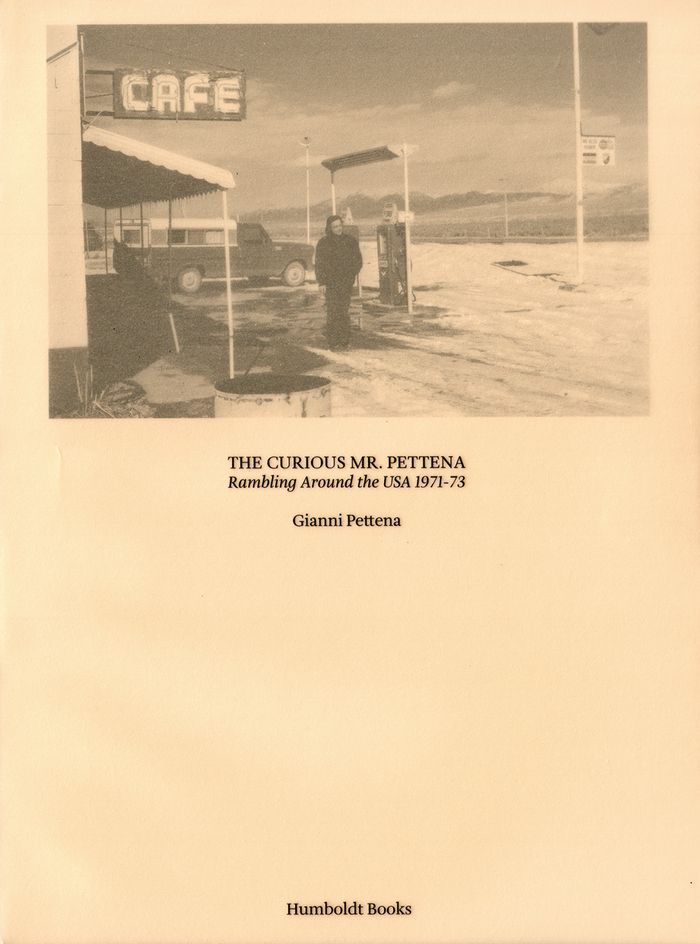
The Curious Mr. Pettena recounts various steps along a journey, through cities and wide open natural spaces, undertaken by the anarchitect Gianni Pettena at the start of the 1970s across the United States. Architect, artist and critic, professor of the History of Contemporary Architecture at the University of Florence and of Planning at California State University, Gianni Pettena (born 1970 in Bolzano) belongs to the original group—along with Archizoom, Superstudio and UFO—of radical Italian architecture. Without denying his background in architecture, he was convinced of the need to rethink the meaning of the discipline, just like the other “radicals”, using the languages of “spatial” research of Conceptual Art and American Land Art, instead of the traditional languages of architectural planning.
The curious Mr. Pettena: rambling around USA 1971-73
Actions:
Prix:
$35.95
(disponible sur commande)
Résumé:
The Curious Mr. Pettena recounts various steps along a journey, through cities and wide open natural spaces, undertaken by the anarchitect Gianni Pettena at the start of the 1970s across the United States. Architect, artist and critic, professor of the History of Contemporary Architecture at the University of Florence and of Planning at California State University, Gianni Pettena (born 1970 in Bolzano) belongs to the original group—along with Archizoom, Superstudio and UFO—of radical Italian architecture. Without denying his background in architecture, he was convinced of the need to rethink the meaning of the discipline, just like the other “radicals”, using the languages of “spatial” research of Conceptual Art and American Land Art, instead of the traditional languages of architectural planning.
Classification:
livres
livres
Publication:
octobre 2017
octobre 2017
Classification:
livres
livres
Prix:
$35.95
(disponible sur commande)
Résumé:
Les essais réunis dans ce volume par Emanuele Quinz contribuent à la définition d'une esthétique de l'interactivité en art, dans une perspective historique et interdisciplinaire. Emanuele Quinz est historien de l'art, maître de conférences à l'Université Paris 8 et enseignant-chercheur à l'École nationale supérieure des Arts décoratifs.
$35.95
(disponible sur commande)
Résumé:
Les essais réunis dans ce volume par Emanuele Quinz contribuent à la définition d'une esthétique de l'interactivité en art, dans une perspective historique et interdisciplinaire. Emanuele Quinz est historien de l'art, maître de conférences à l'Université Paris 8 et enseignant-chercheur à l'École nationale supérieure des Arts décoratifs.
Titre:
Le cercle invisible : environnements, systèmes, dispositifs
Actions:
Prix:
$35.95
(disponible sur commande)
Résumé:
Les essais réunis dans ce volume par Emanuele Quinz contribuent à la définition d'une esthétique de l'interactivité en art, dans une perspective historique et interdisciplinaire. Emanuele Quinz est historien de l'art, maître de conférences à l'Université Paris 8 et enseignant-chercheur à l'École nationale supérieure des Arts décoratifs.
Le cercle invisible : environnements, systèmes, dispositifs
Actions:
Prix:
$35.95
(disponible sur commande)
Résumé:
Les essais réunis dans ce volume par Emanuele Quinz contribuent à la définition d'une esthétique de l'interactivité en art, dans une perspective historique et interdisciplinaire. Emanuele Quinz est historien de l'art, maître de conférences à l'Université Paris 8 et enseignant-chercheur à l'École nationale supérieure des Arts décoratifs.
Classification:
livres
livres
Publication:
novembre 2017
novembre 2017
Classification:
livres
livres
Titre:
Buckminster Fuller
Buckminster Fuller
Actions:
Prix:
$35.95
(disponible sur commande)
Résumé:
Première édition, premier numéros de la collection Carnets d'architectes, bibliographie "Monsieur Fuller n'est heureusement pas architecte. Il n'est heureusement pas non plus ingénieur, mais il a commencé à philosopher sur le logement, sur la machine idéale adaptée à l'habitation, sans les apriorismes formels ni architecturaux du passé." Voilà la façon dont Harvey W.(...)
$35.95
(disponible sur commande)
Résumé:
Première édition, premier numéros de la collection Carnets d'architectes, bibliographie "Monsieur Fuller n'est heureusement pas architecte. Il n'est heureusement pas non plus ingénieur, mais il a commencé à philosopher sur le logement, sur la machine idéale adaptée à l'habitation, sans les apriorismes formels ni architecturaux du passé." Voilà la façon dont Harvey W.(...)
Publication:
octobre 2008, Gollion
octobre 2008, Gollion
Titre:
Buckminster Fuller
Actions:
Prix:
$35.95
(disponible sur commande)
Résumé:
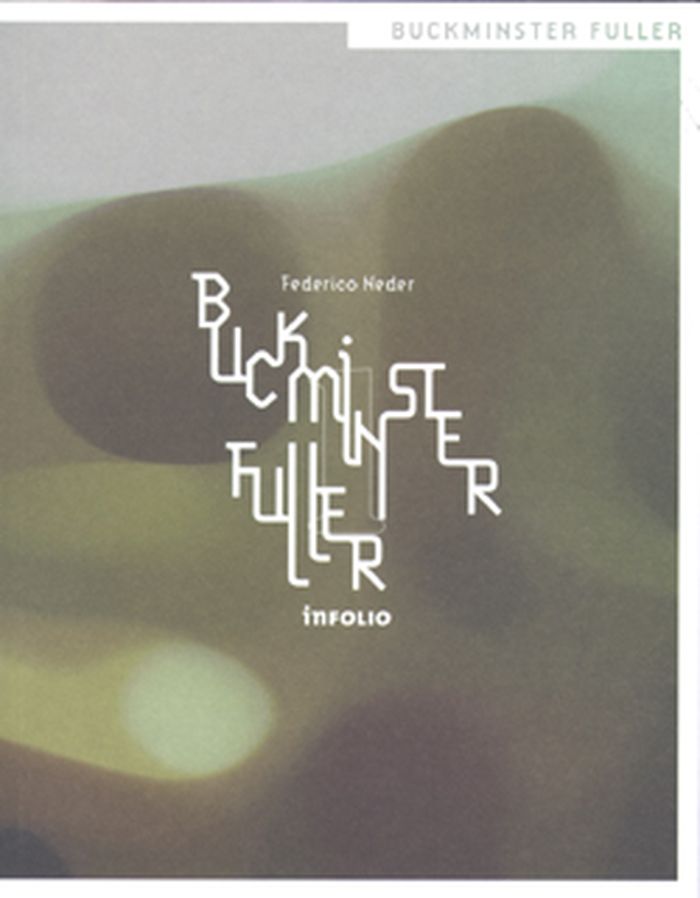
Première édition, premier numéros de la collection Carnets d'architectes, bibliographie "Monsieur Fuller n'est heureusement pas architecte. Il n'est heureusement pas non plus ingénieur, mais il a commencé à philosopher sur le logement, sur la machine idéale adaptée à l'habitation, sans les apriorismes formels ni architecturaux du passé." Voilà la façon dont Harvey W. Corbett président de Architectural League de New York, présente R. Buckminster Fuller ses collègues, l'été 1929. Née comme produit dérivé des icônes de la technologie et de la mobilité, la maison que Buckminster Fuller dévoile ce jour-là cache, un projet d'habitat entendu dans le sens le plus large. Au fil des années, de son atelier d'inventeur nomade, sortiront des prototypes des véhicules, des toilettes portables, du mobilier, des mappemondes et ses célèbres coupoles géodésiques qui lui vaudront sa réputation internationale. Inspiré de la logique d'un album de photos, ce livre articule le récit biographique sur l'œuvre de R. Buckminster Fuller avec quelques uns de ses projets-phare qui ouvrent - par leur forme ou par leur technologie des nouvelles pistes à la réflexion architecturale.
Buckminster Fuller
Actions:
Prix:
$35.95
(disponible sur commande)
Résumé:
Première édition, premier numéros de la collection Carnets d'architectes, bibliographie "Monsieur Fuller n'est heureusement pas architecte. Il n'est heureusement pas non plus ingénieur, mais il a commencé à philosopher sur le logement, sur la machine idéale adaptée à l'habitation, sans les apriorismes formels ni architecturaux du passé." Voilà la façon dont Harvey W. Corbett président de Architectural League de New York, présente R. Buckminster Fuller ses collègues, l'été 1929. Née comme produit dérivé des icônes de la technologie et de la mobilité, la maison que Buckminster Fuller dévoile ce jour-là cache, un projet d'habitat entendu dans le sens le plus large. Au fil des années, de son atelier d'inventeur nomade, sortiront des prototypes des véhicules, des toilettes portables, du mobilier, des mappemondes et ses célèbres coupoles géodésiques qui lui vaudront sa réputation internationale. Inspiré de la logique d'un album de photos, ce livre articule le récit biographique sur l'œuvre de R. Buckminster Fuller avec quelques uns de ses projets-phare qui ouvrent - par leur forme ou par leur technologie des nouvelles pistes à la réflexion architecturale.
Classification:
livres
livres
Publication:
octobre 2008, Gollion
octobre 2008, Gollion
Classification:
livres
livres
Actions:
Prix:
$46.95
(disponible sur commande)
Résumé:
The world is merging into one global system of goods, people and information. This book explores the social, cultural, and economic phenomena of globalization through housing. The Chair of Architecture and Design at the ETH in Zurich examines the last 25 years of housing development. This book is a historical criticism with the built projects as protagonists. Housing(...)
$46.95
(disponible sur commande)
Résumé:
The world is merging into one global system of goods, people and information. This book explores the social, cultural, and economic phenomena of globalization through housing. The Chair of Architecture and Design at the ETH in Zurich examines the last 25 years of housing development. This book is a historical criticism with the built projects as protagonists. Housing(...)
Publication:
septembre 2008, Barcelona
septembre 2008, Barcelona
Titre:
Global housing projects : 25 buildings since 1980
Actions:
Prix:
$46.95
(disponible sur commande)
Résumé:
The world is merging into one global system of goods, people and information. This book explores the social, cultural, and economic phenomena of globalization through housing. The Chair of Architecture and Design at the ETH in Zurich examines the last 25 years of housing development. This book is a historical criticism with the built projects as protagonists. Housing typologies have been chosen as contemporary architectural prototypes. The selection of housing projects reflects the most innovative and influential built housing projects to propose new important guidelines in housing. The ETH Zurich is a renowned European architecture institute.
Global housing projects : 25 buildings since 1980
Actions:
Prix:
$46.95
(disponible sur commande)
Résumé:
The world is merging into one global system of goods, people and information. This book explores the social, cultural, and economic phenomena of globalization through housing. The Chair of Architecture and Design at the ETH in Zurich examines the last 25 years of housing development. This book is a historical criticism with the built projects as protagonists. Housing typologies have been chosen as contemporary architectural prototypes. The selection of housing projects reflects the most innovative and influential built housing projects to propose new important guidelines in housing. The ETH Zurich is a renowned European architecture institute.
Classification:
livres
livres
Publication:
septembre 2008, Barcelona
septembre 2008, Barcelona
Classification:
livres
livres
Actions:
Prix:
$32.95
(disponible sur commande)
Résumé:
This anthology addresses the challenges of curating, presenting, and preserving new-media art—artworks that use digital technologies as media and emphasize process over object. As an art form that is inherently time based, dynamic, interactive, collaborative, customizable, and variable, new-media art resists objectification. It boldly challenges the traditional art(...)
$32.95
(disponible sur commande)
Résumé:
This anthology addresses the challenges of curating, presenting, and preserving new-media art—artworks that use digital technologies as media and emphasize process over object. As an art form that is inherently time based, dynamic, interactive, collaborative, customizable, and variable, new-media art resists objectification. It boldly challenges the traditional art(...)
Titre:
New media in the white cube and beyond
Actions:
Prix:
$32.95
(disponible sur commande)
Résumé:
This anthology addresses the challenges of curating, presenting, and preserving new-media art—artworks that use digital technologies as media and emphasize process over object. As an art form that is inherently time based, dynamic, interactive, collaborative, customizable, and variable, new-media art resists objectification. It boldly challenges the traditional art world's customary methods of presentation and documentation as well as its approach to collection and preservation. Edited and introduced by Christiane Paul and featuring contributions by prominent practitioners—institutional and independent curators, theorists, and conservators—this volume charts developments in an exciting field and addresses the conceptual, philosophical, and practical issues of both curating and presenting new-media art.
New media in the white cube and beyond
Actions:
Prix:
$32.95
(disponible sur commande)
Résumé:
This anthology addresses the challenges of curating, presenting, and preserving new-media art—artworks that use digital technologies as media and emphasize process over object. As an art form that is inherently time based, dynamic, interactive, collaborative, customizable, and variable, new-media art resists objectification. It boldly challenges the traditional art world's customary methods of presentation and documentation as well as its approach to collection and preservation. Edited and introduced by Christiane Paul and featuring contributions by prominent practitioners—institutional and independent curators, theorists, and conservators—this volume charts developments in an exciting field and addresses the conceptual, philosophical, and practical issues of both curating and presenting new-media art.
Classification:
livres
livres
Publication:
octobre 2008
octobre 2008
Classification:
livres
livres
Actions:
Prix:
$57.95
(disponible sur commande)
Résumé:
Nomeda and Gediminas Urbonas produce interactive projects exploring the conflicts and contradictions of former Soviet republics and their recent transition to capitalism. Born in Lithuania and now living in Vilnius, these artists use the city as a catalyst and a starting point for their analysis of the various impacts caused by a new economic, social and political model(...)
$57.95
(disponible sur commande)
Résumé:
Nomeda and Gediminas Urbonas produce interactive projects exploring the conflicts and contradictions of former Soviet republics and their recent transition to capitalism. Born in Lithuania and now living in Vilnius, these artists use the city as a catalyst and a starting point for their analysis of the various impacts caused by a new economic, social and political model(...)
Publication:
mai 2008, Barcelone
mai 2008, Barcelone
Titre:
Nomeda and Gediminas: devices for action
Actions:
Prix:
$57.95
(disponible sur commande)
Résumé:
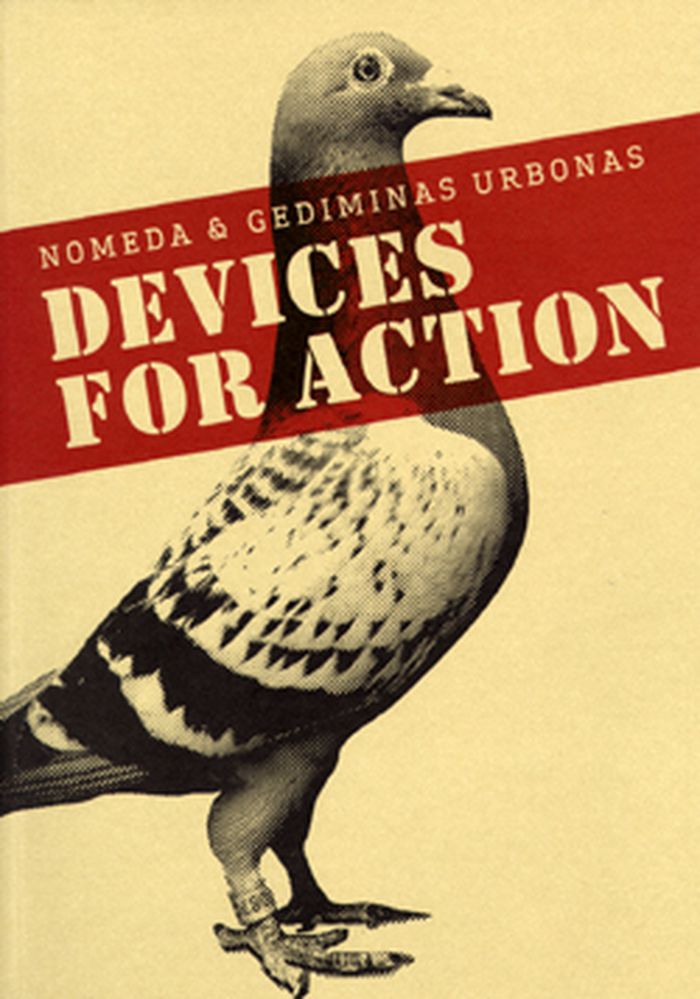
Nomeda and Gediminas Urbonas produce interactive projects exploring the conflicts and contradictions of former Soviet republics and their recent transition to capitalism. Born in Lithuania and now living in Vilnius, these artists use the city as a catalyst and a starting point for their analysis of the various impacts caused by a new economic, social and political model on different sectors and generations in society. Developping over different stages, their projects are characterised by the key role played by the idea of the archive, the engagement of experts in different fields (design, music, architecture), and the participation of diverse communities and collective actions. This catalogue of their recently held first retrospective documents all their projects up to date, includes two essays by Bartomeu Mari and Lars Bang Larsen, a biography, and a list of works in the exhibition.
Nomeda and Gediminas: devices for action
Actions:
Prix:
$57.95
(disponible sur commande)
Résumé:
Nomeda and Gediminas Urbonas produce interactive projects exploring the conflicts and contradictions of former Soviet republics and their recent transition to capitalism. Born in Lithuania and now living in Vilnius, these artists use the city as a catalyst and a starting point for their analysis of the various impacts caused by a new economic, social and political model on different sectors and generations in society. Developping over different stages, their projects are characterised by the key role played by the idea of the archive, the engagement of experts in different fields (design, music, architecture), and the participation of diverse communities and collective actions. This catalogue of their recently held first retrospective documents all their projects up to date, includes two essays by Bartomeu Mari and Lars Bang Larsen, a biography, and a list of works in the exhibition.
Classification:
livres
livres
Publication:
mai 2008, Barcelone
mai 2008, Barcelone
Classification:
livres
livres

Actions:
Prix:
$82.00
(disponible en magasin)
Résumé:
Limited edition . 1500 copies As a model maker Gilian Schrofer must not only take into account the scale and the size of the model, but also the amount of work involved, the desire for details – or lack thereof, and the balance between the physical realisation of a design versus the level of abstraction. Schrofer's dedication to this level of complexity in the(...)
$82.00
(disponible en magasin)
Résumé:
Limited edition . 1500 copies As a model maker Gilian Schrofer must not only take into account the scale and the size of the model, but also the amount of work involved, the desire for details – or lack thereof, and the balance between the physical realisation of a design versus the level of abstraction. Schrofer's dedication to this level of complexity in the(...)
Publication:
juin 2008, Amsterdam
juin 2008, Amsterdam
Titre:
Models of concern: a selection of interior models
Actions:
Prix:
$82.00
(disponible en magasin)
Résumé:
Limited edition . 1500 copies As a model maker Gilian Schrofer must not only take into account the scale and the size of the model, but also the amount of work involved, the desire for details – or lack thereof, and the balance between the physical realisation of a design versus the level of abstraction. Schrofer's dedication to this level of complexity in the realisation of his scale models has brought him a growing group of clients from different creative areas. Here 93 of his models produced between 2003 and the present are documented in full colour, accompanied by production details and an essay.
Models of concern: a selection of interior models
Actions:
Prix:
$82.00
(disponible en magasin)
Résumé:
Limited edition . 1500 copies As a model maker Gilian Schrofer must not only take into account the scale and the size of the model, but also the amount of work involved, the desire for details – or lack thereof, and the balance between the physical realisation of a design versus the level of abstraction. Schrofer's dedication to this level of complexity in the realisation of his scale models has brought him a growing group of clients from different creative areas. Here 93 of his models produced between 2003 and the present are documented in full colour, accompanied by production details and an essay.
Classification:
livres
livres
Publication:
juin 2008, Amsterdam
juin 2008, Amsterdam
Classification:
livres
livres
Titre:
London Orbital
London Orbital
Actions:
Prix:
$20.00
(disponible sur commande)
Résumé:
Encircling London like a noose, the M25 is a road to nowhere, but when Iain Sinclair sets out to walk this asphalt loop - keeping within the 'acoustic footprints' - he is determined to find out where the journey will lead him. Stumbling upon converted asylums, industrial and retail parks, ring-fenced government institutions and lost villages, Sinclair discovers a Britain(...)
$20.00
(disponible sur commande)
Résumé:
Encircling London like a noose, the M25 is a road to nowhere, but when Iain Sinclair sets out to walk this asphalt loop - keeping within the 'acoustic footprints' - he is determined to find out where the journey will lead him. Stumbling upon converted asylums, industrial and retail parks, ring-fenced government institutions and lost villages, Sinclair discovers a Britain(...)
Titre:
London Orbital
Actions:
Prix:
$20.00
(disponible sur commande)
Résumé:
Encircling London like a noose, the M25 is a road to nowhere, but when Iain Sinclair sets out to walk this asphalt loop - keeping within the 'acoustic footprints' - he is determined to find out where the journey will lead him. Stumbling upon converted asylums, industrial and retail parks, ring-fenced government institutions and lost villages, Sinclair discovers a Britain of the fringes, a landscape consumed by developers. London Orbital charts this extraordinary trek and round trip of the soul, revealing the country as you've never seen it before.
London Orbital
Actions:
Prix:
$20.00
(disponible sur commande)
Résumé:
Encircling London like a noose, the M25 is a road to nowhere, but when Iain Sinclair sets out to walk this asphalt loop - keeping within the 'acoustic footprints' - he is determined to find out where the journey will lead him. Stumbling upon converted asylums, industrial and retail parks, ring-fenced government institutions and lost villages, Sinclair discovers a Britain of the fringes, a landscape consumed by developers. London Orbital charts this extraordinary trek and round trip of the soul, revealing the country as you've never seen it before.
Classification:
livres
livres
Publication:
avril 2009, New York
avril 2009, New York


