


496 Résultats
Classification:
livres
livres
Titre:
Merveilleux jardins de Paris
Merveilleux jardins de Paris
Actions:
Prix:
$37.50
(disponible sur commande)
Résumé:
Avec ses 400 parcs, jardins et promenades, Paris passe pour la capitale la plus verte d'Europe. Magnifiés par l'art des paysagistes, les jardins, îlots de tranquillité et de biodiversité, sont indispensables à la ville et à la vie, à plus d'un titre : le citadin y trouve de quoi se ressourcer. S'arrêter dans un jardin exhalant des senteurs délivrées par une averse ou(...)
$37.50
(disponible sur commande)
Résumé:
Avec ses 400 parcs, jardins et promenades, Paris passe pour la capitale la plus verte d'Europe. Magnifiés par l'art des paysagistes, les jardins, îlots de tranquillité et de biodiversité, sont indispensables à la ville et à la vie, à plus d'un titre : le citadin y trouve de quoi se ressourcer. S'arrêter dans un jardin exhalant des senteurs délivrées par une averse ou(...)
Titre:
Merveilleux jardins de Paris
Actions:
Prix:
$37.50
(disponible sur commande)
Résumé:
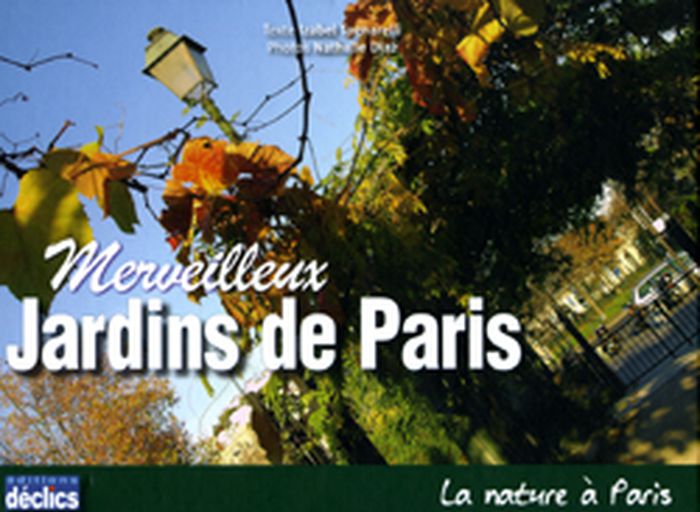
Avec ses 400 parcs, jardins et promenades, Paris passe pour la capitale la plus verte d'Europe. Magnifiés par l'art des paysagistes, les jardins, îlots de tranquillité et de biodiversité, sont indispensables à la ville et à la vie, à plus d'un titre : le citadin y trouve de quoi se ressourcer. S'arrêter dans un jardin exhalant des senteurs délivrées par une averse ou inondé de soleil, partir à la découverte de ses tracés, de son atmosphère, de son histoire, promet toujours des plaisirs inédits, chaque fois renouvelés, et de renouer avec quelque chose de notre enfance. Partout, dans ces lieux d'apaisement, il y a un secret à emporter, une émotion à recueillir. C'est ce que vous propose ce livre, au travers une promenade dans une sélection de ces Merveilleux Jardins de Paris.
Merveilleux jardins de Paris
Actions:
Prix:
$37.50
(disponible sur commande)
Résumé:
Avec ses 400 parcs, jardins et promenades, Paris passe pour la capitale la plus verte d'Europe. Magnifiés par l'art des paysagistes, les jardins, îlots de tranquillité et de biodiversité, sont indispensables à la ville et à la vie, à plus d'un titre : le citadin y trouve de quoi se ressourcer. S'arrêter dans un jardin exhalant des senteurs délivrées par une averse ou inondé de soleil, partir à la découverte de ses tracés, de son atmosphère, de son histoire, promet toujours des plaisirs inédits, chaque fois renouvelés, et de renouer avec quelque chose de notre enfance. Partout, dans ces lieux d'apaisement, il y a un secret à emporter, une émotion à recueillir. C'est ce que vous propose ce livre, au travers une promenade dans une sélection de ces Merveilleux Jardins de Paris.
Classification:
livres
livres
Publication:
août 2008, Paris
août 2008, Paris
Sujet:
Théorie du paysage
Théorie du paysage
Classification:
livres
livres
Actions:
Prix:
$28.95
(disponible sur commande)
Résumé:
The author explores here the history of wilderness preservation politics in the United States. American pioneers originally viewed the wilderness as an enemy to destroy, he recounts, but with the rapid decline in natural resources in the nineteenth century, citizens realized their error and began to enact revolutionary environmental policies.
$28.95
(disponible sur commande)
Résumé:
The author explores here the history of wilderness preservation politics in the United States. American pioneers originally viewed the wilderness as an enemy to destroy, he recounts, but with the rapid decline in natural resources in the nineteenth century, citizens realized their error and began to enact revolutionary environmental policies.
Titre:
The politics of wilderness preservation
Actions:
Prix:
$28.95
(disponible sur commande)
Résumé:
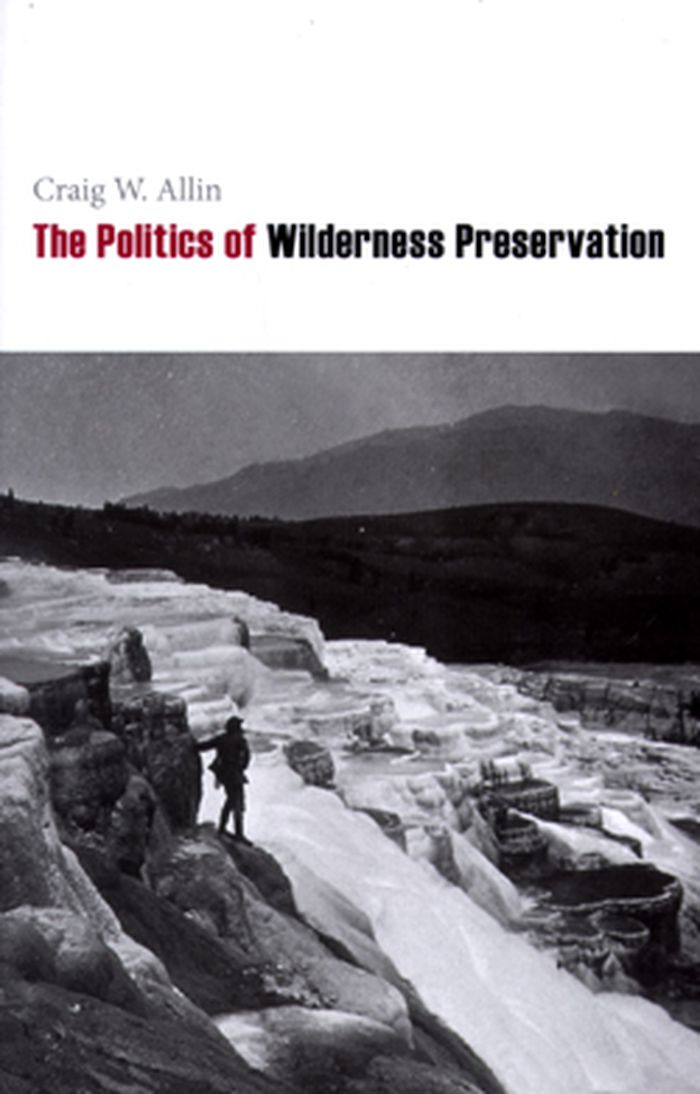
The author explores here the history of wilderness preservation politics in the United States. American pioneers originally viewed the wilderness as an enemy to destroy, he recounts, but with the rapid decline in natural resources in the nineteenth century, citizens realized their error and began to enact revolutionary environmental policies.
The politics of wilderness preservation
Actions:
Prix:
$28.95
(disponible sur commande)
Résumé:
The author explores here the history of wilderness preservation politics in the United States. American pioneers originally viewed the wilderness as an enemy to destroy, he recounts, but with the rapid decline in natural resources in the nineteenth century, citizens realized their error and began to enact revolutionary environmental policies.
Classification:
livres
livres
Publication:
septembre 2008, Fairbanks, Alaska
septembre 2008, Fairbanks, Alaska
Sujet:
Théorie du paysage
Théorie du paysage
Classification:
livres
livres
Prix:
$26.00
(disponible sur commande)
Résumé:
Literary critics frequently portray early Native American writers either as individuals caught between two worlds or as subjects who, even as they defied the colonial world, struggled to exist within it. In counterpoint to these analyses, Lisa Brooks demonstrates the ways in which Native leaders — including Samson Occom, Joseph Brant, Hendrick Aupaumut, and William Apess(...)
$26.00
(disponible sur commande)
Résumé:
Literary critics frequently portray early Native American writers either as individuals caught between two worlds or as subjects who, even as they defied the colonial world, struggled to exist within it. In counterpoint to these analyses, Lisa Brooks demonstrates the ways in which Native leaders — including Samson Occom, Joseph Brant, Hendrick Aupaumut, and William Apess(...)
Titre:
The common pot : the recovery of Native space in the north
Actions:
Prix:
$26.00
(disponible sur commande)
Résumé:
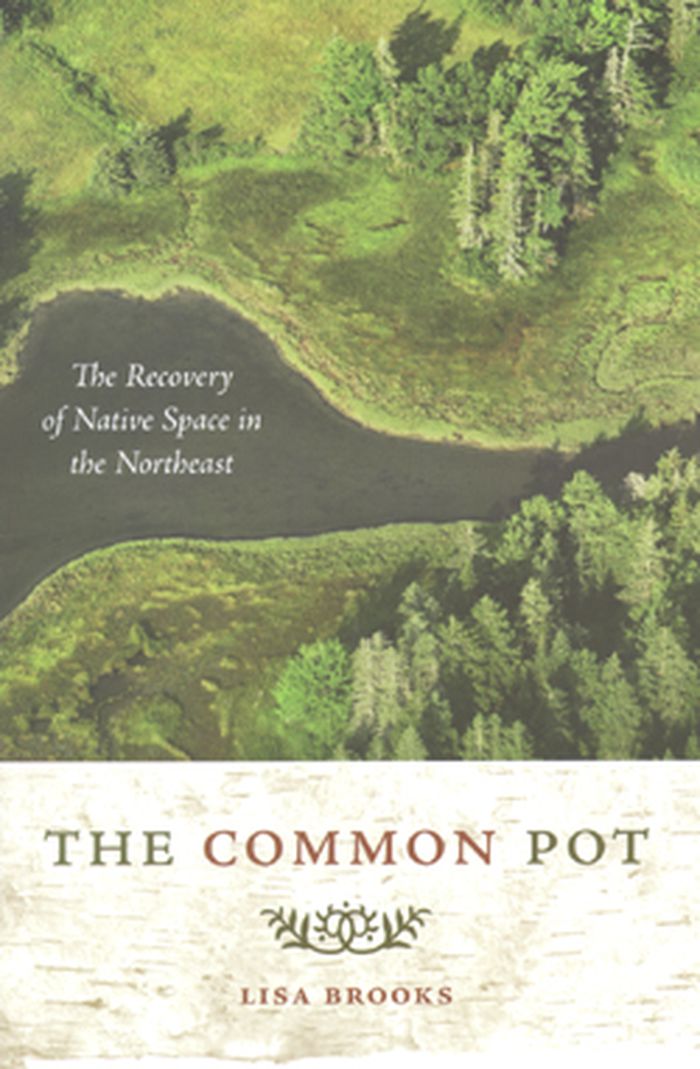
Literary critics frequently portray early Native American writers either as individuals caught between two worlds or as subjects who, even as they defied the colonial world, struggled to exist within it. In counterpoint to these analyses, Lisa Brooks demonstrates the ways in which Native leaders — including Samson Occom, Joseph Brant, Hendrick Aupaumut, and William Apess — adopted writing as a tool to reclaim rights and land in the Native networks of what is now the northeastern United States.
The common pot : the recovery of Native space in the north
Actions:
Prix:
$26.00
(disponible sur commande)
Résumé:
Literary critics frequently portray early Native American writers either as individuals caught between two worlds or as subjects who, even as they defied the colonial world, struggled to exist within it. In counterpoint to these analyses, Lisa Brooks demonstrates the ways in which Native leaders — including Samson Occom, Joseph Brant, Hendrick Aupaumut, and William Apess — adopted writing as a tool to reclaim rights and land in the Native networks of what is now the northeastern United States.
Classification:
livres
livres
Publication:
octobre 2008, Minneapolis, London
octobre 2008, Minneapolis, London
Sujet:
Théorie du paysage
Théorie du paysage
Classification:
livres
livres
Prix:
$27.99
(disponible sur commande)
Résumé:
This titre is an important introduction to this rapidly growing area of aesthetic understanding and appreciation. AlThe author begins by tracing the development of the field's historical background, and then surveys contemporary positions on the aesthetics of nature, such as scientific cognitivism, which holds that certain kinds of scientific knowledge are necessary for a(...)
$27.99
(disponible sur commande)
Résumé:
This titre is an important introduction to this rapidly growing area of aesthetic understanding and appreciation. AlThe author begins by tracing the development of the field's historical background, and then surveys contemporary positions on the aesthetics of nature, such as scientific cognitivism, which holds that certain kinds of scientific knowledge are necessary for a(...)
Titre:
Nature and landscape: an introduction to environmental aesthetics
Actions:
Prix:
$27.99
(disponible sur commande)
Résumé:
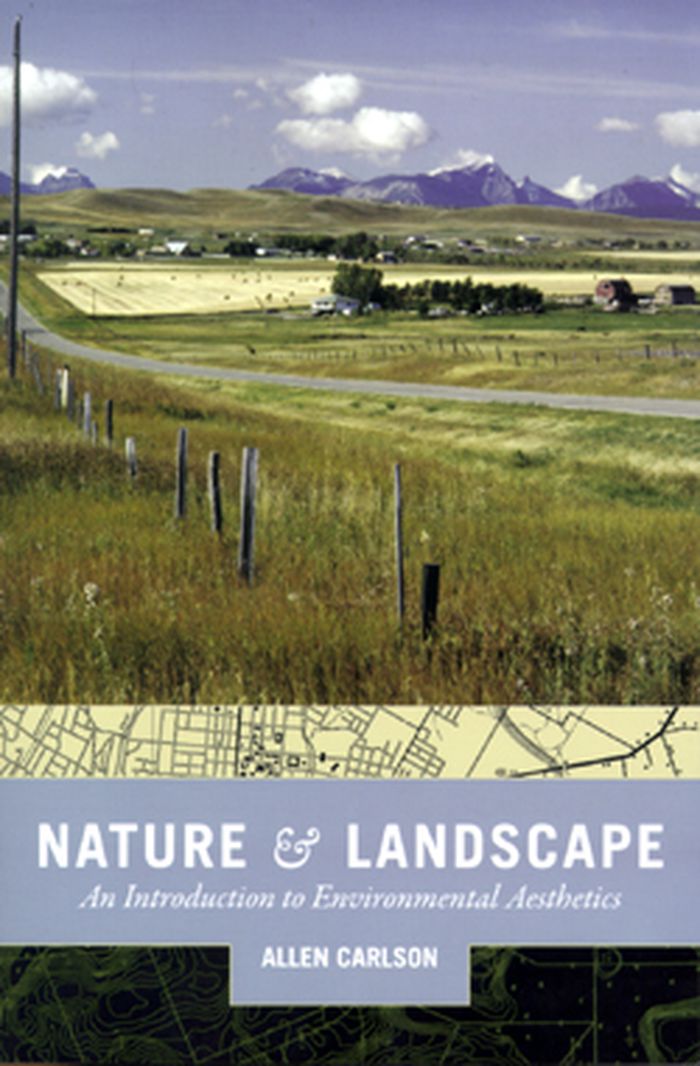
This titre is an important introduction to this rapidly growing area of aesthetic understanding and appreciation. AlThe author begins by tracing the development of the field's historical background, and then surveys contemporary positions on the aesthetics of nature, such as scientific cognitivism, which holds that certain kinds of scientific knowledge are necessary for a full appreciation of natural environments.
Nature and landscape: an introduction to environmental aesthetics
Actions:
Prix:
$27.99
(disponible sur commande)
Résumé:
This titre is an important introduction to this rapidly growing area of aesthetic understanding and appreciation. AlThe author begins by tracing the development of the field's historical background, and then surveys contemporary positions on the aesthetics of nature, such as scientific cognitivism, which holds that certain kinds of scientific knowledge are necessary for a full appreciation of natural environments.
Classification:
livres
livres
Publication:
décembre 2008, New York
décembre 2008, New York
Sujet:
Théorie du paysage
Théorie du paysage
Classification:
livres
livres
Titre:
Against nature (a rebours)
Against nature (a rebours)
Actions:
Prix:
$15.00
(disponible sur commande)
Résumé:
A wildly original fin-de-siècle novel, Against Nature follows its sole character, Des Esseintes, a decadent, ailing aristocrat who retreats to an isolated villa where he indulges his taste for luxury and excess. Veering between nervous excitability and debilitating ennui, he gluts his aesthetic appetites with classical literature and art, exotic jewels (with which he(...)
$15.00
(disponible sur commande)
Résumé:
A wildly original fin-de-siècle novel, Against Nature follows its sole character, Des Esseintes, a decadent, ailing aristocrat who retreats to an isolated villa where he indulges his taste for luxury and excess. Veering between nervous excitability and debilitating ennui, he gluts his aesthetic appetites with classical literature and art, exotic jewels (with which he(...)
Sujet:
Théorie du paysage
Théorie du paysage
Publication:
février 2004, London, New York, Toronto
février 2004, London, New York, Toronto
Titre:
Against nature (a rebours)
Actions:
Prix:
$15.00
(disponible sur commande)
Résumé:
A wildly original fin-de-siècle novel, Against Nature follows its sole character, Des Esseintes, a decadent, ailing aristocrat who retreats to an isolated villa where he indulges his taste for luxury and excess. Veering between nervous excitability and debilitating ennui, he gluts his aesthetic appetites with classical literature and art, exotic jewels (with which he fatally encrusts the shell of his tortoise), rich perfumes, and a kaleidoscope of sensual experiences. The original handbook of decadence, Against Nature exploded “like a grenade” (in the words of its author) and has enjoyed a cult readership from its publication to the present day.
Against nature (a rebours)
Actions:
Prix:
$15.00
(disponible sur commande)
Résumé:
A wildly original fin-de-siècle novel, Against Nature follows its sole character, Des Esseintes, a decadent, ailing aristocrat who retreats to an isolated villa where he indulges his taste for luxury and excess. Veering between nervous excitability and debilitating ennui, he gluts his aesthetic appetites with classical literature and art, exotic jewels (with which he fatally encrusts the shell of his tortoise), rich perfumes, and a kaleidoscope of sensual experiences. The original handbook of decadence, Against Nature exploded “like a grenade” (in the words of its author) and has enjoyed a cult readership from its publication to the present day.
Classification:
livres
livres
Publication:
février 2004, London, New York, Toronto
février 2004, London, New York, Toronto
Sujet:
Théorie du paysage
Théorie du paysage
Classification:
livres
livres
Actions:
Prix:
$15.50
(disponible sur commande)
Résumé:
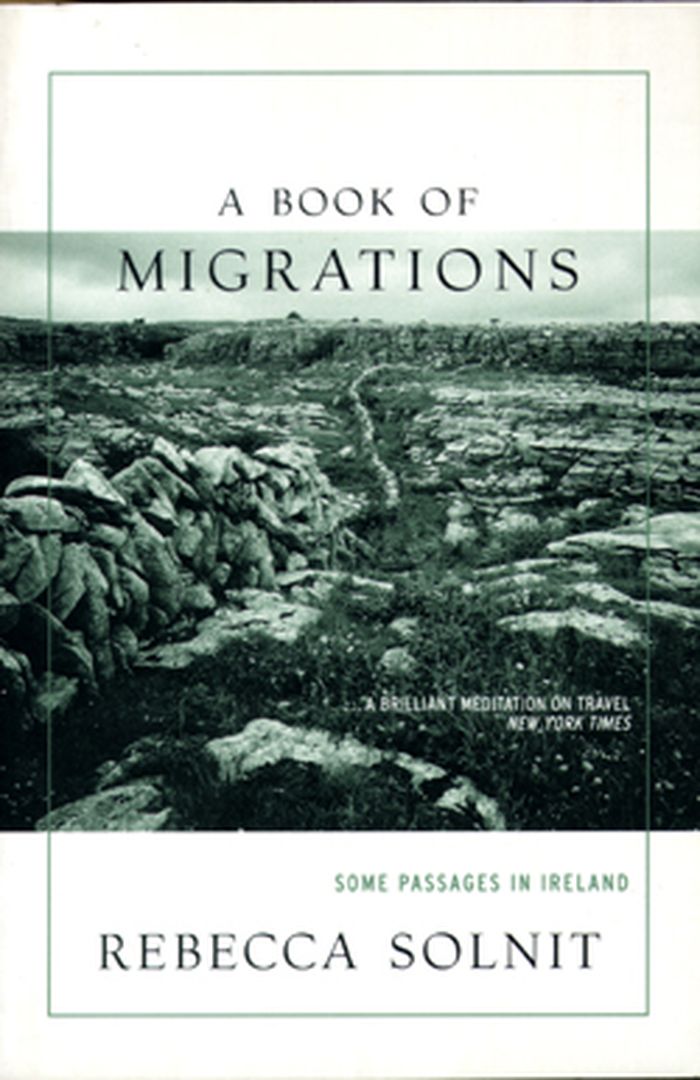
A Book of Migrations is a postcolonial revision of conventional travel literature. In her journey through Ireland, Rebecca Solnit portrays in microcosm a history made up of great tides of invasion, colonization, emigration, nomadism, and tourism. Her observations carve a new route through Ireland's history, literature and landscape.
$15.50
(disponible sur commande)
Résumé:
A Book of Migrations is a postcolonial revision of conventional travel literature. In her journey through Ireland, Rebecca Solnit portrays in microcosm a history made up of great tides of invasion, colonization, emigration, nomadism, and tourism. Her observations carve a new route through Ireland's history, literature and landscape.
Titre:
A book of migrations: some passages in Ireland
Actions:
Prix:
$15.50
(disponible sur commande)
Résumé:
A Book of Migrations is a postcolonial revision of conventional travel literature. In her journey through Ireland, Rebecca Solnit portrays in microcosm a history made up of great tides of invasion, colonization, emigration, nomadism, and tourism. Her observations carve a new route through Ireland's history, literature and landscape.
A book of migrations: some passages in Ireland
Actions:
Prix:
$15.50
(disponible sur commande)
Résumé:
A Book of Migrations is a postcolonial revision of conventional travel literature. In her journey through Ireland, Rebecca Solnit portrays in microcosm a history made up of great tides of invasion, colonization, emigration, nomadism, and tourism. Her observations carve a new route through Ireland's history, literature and landscape.
Classification:
livres
livres
Publication:
juin 1998, London, New York
juin 1998, London, New York
Sujet:
Théorie du paysage
Théorie du paysage
Classification:
livres
livres
Prix:
$23.95
(disponible sur commande)
Résumé:
To Rebecca Solnit, the word 'landscape' implies not only literal places but also the ground on which we invent our lives and confront our innermost troubles and desires. The organic world, to Solnit, gives rise to the social, political, and philosophical landscapes we inhabit. In these nineteen quirky, smart, and wryly humorous pieces, Solnit ranges across disciplines to(...)
$23.95
(disponible sur commande)
Résumé:
To Rebecca Solnit, the word 'landscape' implies not only literal places but also the ground on which we invent our lives and confront our innermost troubles and desires. The organic world, to Solnit, gives rise to the social, political, and philosophical landscapes we inhabit. In these nineteen quirky, smart, and wryly humorous pieces, Solnit ranges across disciplines to(...)
Titre:
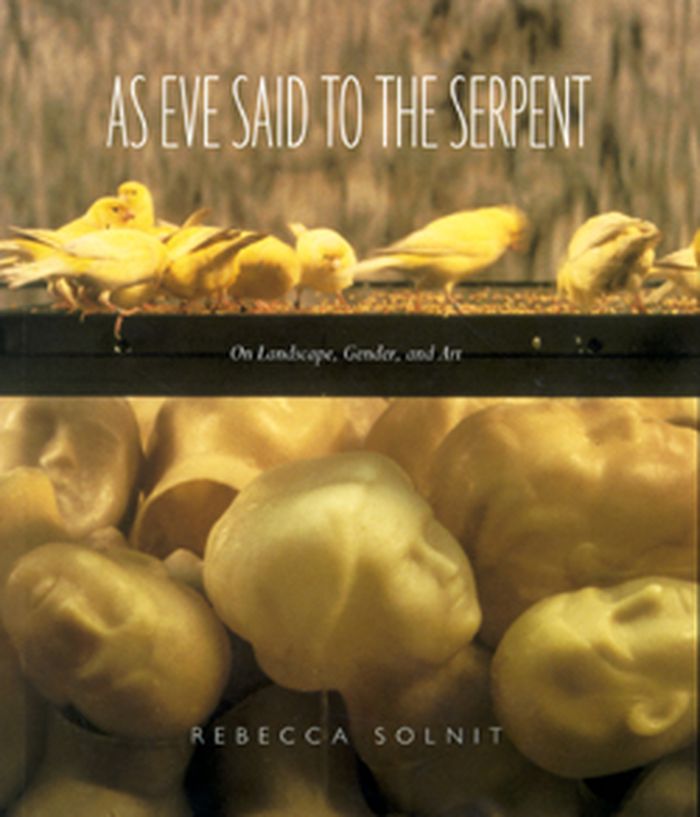
As Eve said to the serpent: on landscape, gender, and art
Actions:
Prix:
$23.95
(disponible sur commande)
Résumé:
To Rebecca Solnit, the word 'landscape' implies not only literal places but also the ground on which we invent our lives and confront our innermost troubles and desires. The organic world, to Solnit, gives rise to the social, political, and philosophical landscapes we inhabit. In these nineteen quirky, smart, and wryly humorous pieces, Solnit ranges across disciplines to explore nuclear test sites, deserts, clouds, caves, and the meaning of national borders - as weel as ideas of the feminine and the sublime as they relate to our physical and psychological terrains.
As Eve said to the serpent: on landscape, gender, and art
Actions:
Prix:
$23.95
(disponible sur commande)
Résumé:
To Rebecca Solnit, the word 'landscape' implies not only literal places but also the ground on which we invent our lives and confront our innermost troubles and desires. The organic world, to Solnit, gives rise to the social, political, and philosophical landscapes we inhabit. In these nineteen quirky, smart, and wryly humorous pieces, Solnit ranges across disciplines to explore nuclear test sites, deserts, clouds, caves, and the meaning of national borders - as weel as ideas of the feminine and the sublime as they relate to our physical and psychological terrains.
Classification:
livres
livres
Publication:
avril 2003
avril 2003
Sujet:
Théorie du paysage
Théorie du paysage
Classification:
livres
livres
Prix:
$68.75
(disponible sur commande)
Résumé:
Diplomatic Tours in the Gardens of Versailles Under Louis XIV is the first book to examine how the vast gardens of Versailles were used for these diplomatic receptions during the reign of the Sun King (1661-1715). The gardens were the final mise en scène of an elaborate ritual, which included the housing of the foreigners in Paris, their journey to Versailles, and their(...)
$68.75
(disponible sur commande)
Résumé:
Diplomatic Tours in the Gardens of Versailles Under Louis XIV is the first book to examine how the vast gardens of Versailles were used for these diplomatic receptions during the reign of the Sun King (1661-1715). The gardens were the final mise en scène of an elaborate ritual, which included the housing of the foreigners in Paris, their journey to Versailles, and their(...)
Sujet:
Théorie du paysage
Théorie du paysage
Publication:
août 2008, Philadelphia
août 2008, Philadelphia
Titre:
Diplomatic tours in the gardens of Versailles under Louis XIV
Actions:
Prix:
$68.75
(disponible sur commande)
Résumé:
Diplomatic Tours in the Gardens of Versailles Under Louis XIV is the first book to examine how the vast gardens of Versailles were used for these diplomatic receptions during the reign of the Sun King (1661-1715). The gardens were the final mise en scène of an elaborate ritual, which included the housing of the foreigners in Paris, their journey to Versailles, and their official audience with the king in the palace. A showcase for the achievements of royal artists, landscape architects, and hydraulic engineers, the gardens were soon regarded as one of the wonders of the modern world, proclaiming the wealth, power, and artistic taste of France and the French monarchy.
Diplomatic tours in the gardens of Versailles under Louis XIV
Actions:
Prix:
$68.75
(disponible sur commande)
Résumé:
Diplomatic Tours in the Gardens of Versailles Under Louis XIV is the first book to examine how the vast gardens of Versailles were used for these diplomatic receptions during the reign of the Sun King (1661-1715). The gardens were the final mise en scène of an elaborate ritual, which included the housing of the foreigners in Paris, their journey to Versailles, and their official audience with the king in the palace. A showcase for the achievements of royal artists, landscape architects, and hydraulic engineers, the gardens were soon regarded as one of the wonders of the modern world, proclaiming the wealth, power, and artistic taste of France and the French monarchy.
Classification:
livres
livres
Publication:
août 2008, Philadelphia
août 2008, Philadelphia
Sujet:
Théorie du paysage
Théorie du paysage
Classification:
livres
livres
Actions:
Prix:
$125.00
(disponible sur commande)
Résumé:
Les jardins sont des lieux de respiration et de beauté qui ont de tout temps réhaussé l'éclat des civilisations. L'eau, source de vie, constitue l'un de leurs ornements majeurs. Retracer l'histoire de l'eau dans les jardins, du monde antique jusqu'aux plus récents, c'est à dire les situer dans l'histoire des mentalités, des sciences et des techniques, et suivre un(...)
$125.00
(disponible sur commande)
Résumé:
Les jardins sont des lieux de respiration et de beauté qui ont de tout temps réhaussé l'éclat des civilisations. L'eau, source de vie, constitue l'un de leurs ornements majeurs. Retracer l'histoire de l'eau dans les jardins, du monde antique jusqu'aux plus récents, c'est à dire les situer dans l'histoire des mentalités, des sciences et des techniques, et suivre un(...)
Sujet:
Théorie du paysage
Théorie du paysage
Publication:
janvier 2008, Wavre
janvier 2008, Wavre
Titre:
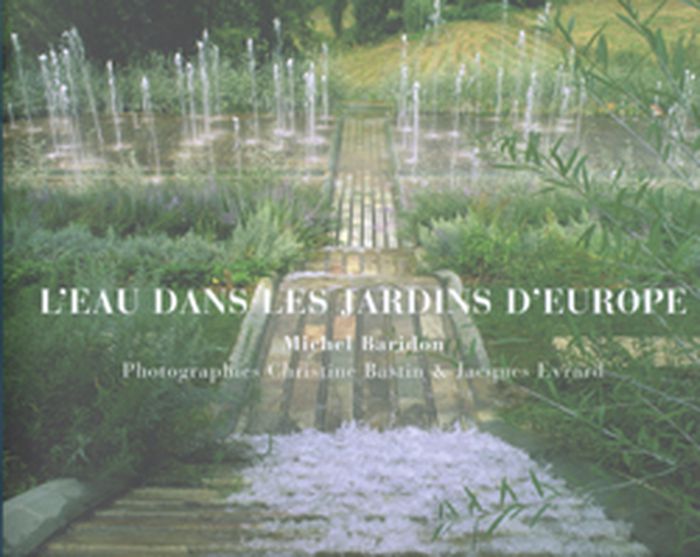
L'eau dans les jardins d'europe
Actions:
Prix:
$125.00
(disponible sur commande)
Résumé:
Les jardins sont des lieux de respiration et de beauté qui ont de tout temps réhaussé l'éclat des civilisations. L'eau, source de vie, constitue l'un de leurs ornements majeurs. Retracer l'histoire de l'eau dans les jardins, du monde antique jusqu'aux plus récents, c'est à dire les situer dans l'histoire des mentalités, des sciences et des techniques, et suivre un parcours qui mène à un bon usage de l'eau. Dans les jardins anciens, les effets produits par des fontaines, par des jets d'eau ou simplement par un ruisseau ou un étang sont nés de rencontres parfois miraculeuses entre une certaine conception du bonheur et une image de la nature où convergent toutes les connaissances d'une époque. Aujourd'hui, les jardins contemporains utilisent toutes les possibilités de la technologie : l'eau fuse ou se faufile, elle apporte partout le mouvement et la lumière grâce à des jets d'eau informatisés, à des cascades recyclées ou à des brumisateurs. A une époque ou nous nous occupons de la gestion durable des ressources naturelles, cette technologie permet de conserver l'agrément des jardins et de tirer les plus beaux effets de l'eau tout en la préservant.
L'eau dans les jardins d'europe
Actions:
Prix:
$125.00
(disponible sur commande)
Résumé:
Les jardins sont des lieux de respiration et de beauté qui ont de tout temps réhaussé l'éclat des civilisations. L'eau, source de vie, constitue l'un de leurs ornements majeurs. Retracer l'histoire de l'eau dans les jardins, du monde antique jusqu'aux plus récents, c'est à dire les situer dans l'histoire des mentalités, des sciences et des techniques, et suivre un parcours qui mène à un bon usage de l'eau. Dans les jardins anciens, les effets produits par des fontaines, par des jets d'eau ou simplement par un ruisseau ou un étang sont nés de rencontres parfois miraculeuses entre une certaine conception du bonheur et une image de la nature où convergent toutes les connaissances d'une époque. Aujourd'hui, les jardins contemporains utilisent toutes les possibilités de la technologie : l'eau fuse ou se faufile, elle apporte partout le mouvement et la lumière grâce à des jets d'eau informatisés, à des cascades recyclées ou à des brumisateurs. A une époque ou nous nous occupons de la gestion durable des ressources naturelles, cette technologie permet de conserver l'agrément des jardins et de tirer les plus beaux effets de l'eau tout en la préservant.
Classification:
livres
livres
Publication:
janvier 2008, Wavre
janvier 2008, Wavre
Sujet:
Théorie du paysage
Théorie du paysage
Classification:
livres
livres
Actions:
Prix:
$49.95
(disponible sur commande)
Résumé:
A garden is more than meets the eye growth from the past growth still to come strolling through a garden is like wandering through a vast memory everything has an origin faraway places always remembered bonds with friends some dead but imoortal here growth rings you are a garden (see page 396)
$49.95
(disponible sur commande)
Résumé:
A garden is more than meets the eye growth from the past growth still to come strolling through a garden is like wandering through a vast memory everything has an origin faraway places always remembered bonds with friends some dead but imoortal here growth rings you are a garden (see page 396)
Titre:
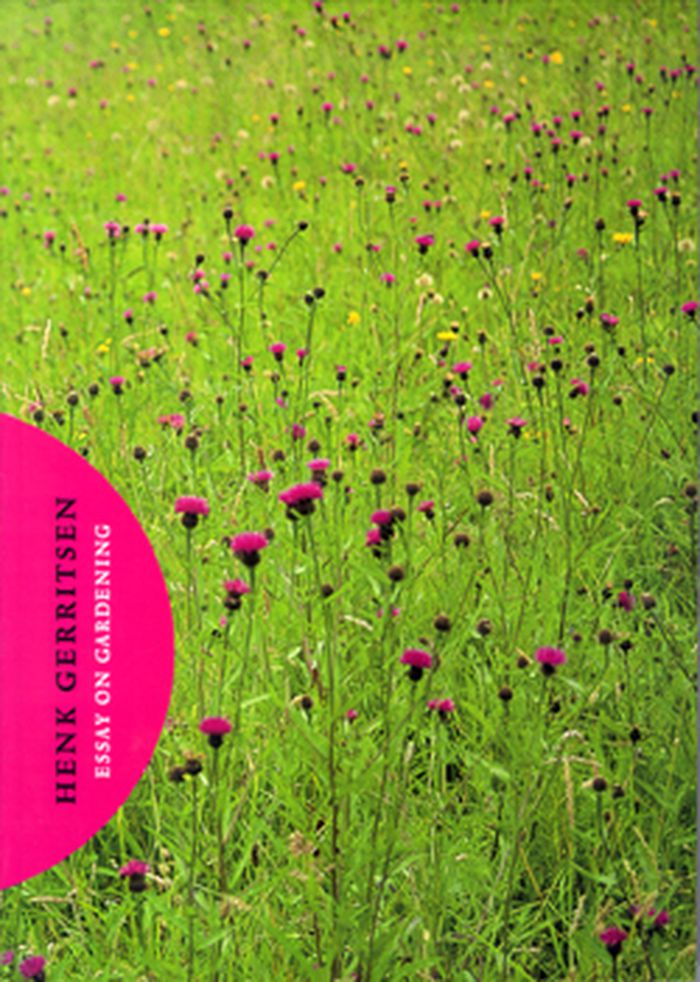
Henk Gerritsen: essay on gardening
Actions:
Prix:
$49.95
(disponible sur commande)
Résumé:
A garden is more than meets the eye growth from the past growth still to come strolling through a garden is like wandering through a vast memory everything has an origin faraway places always remembered bonds with friends some dead but imoortal here growth rings you are a garden (see page 396)
Henk Gerritsen: essay on gardening
Actions:
Prix:
$49.95
(disponible sur commande)
Résumé:
A garden is more than meets the eye growth from the past growth still to come strolling through a garden is like wandering through a vast memory everything has an origin faraway places always remembered bonds with friends some dead but imoortal here growth rings you are a garden (see page 396)
Classification:
livres
livres
Publication:
septembre 2010, Amsterdam
septembre 2010, Amsterdam
Sujet:
Théorie du paysage
Théorie du paysage


