


2950 Résultats
Classification:
livres
livres
Titre:
AV Monographs 284: COBE
AV Monographs 284: COBE
Actions:
Prix:
$90.00
(disponible en magasin)
Résumé:
At the intersection of urban regeneration and the construction of new forms of collective life lies the work of Cobe, established in Copenhagen in 2006 by architect Dan Stubbergaard. With an approach that combines territorial strategy, material finesse, and attention to everyday experience, Cobe’s work operates simultaneously between building, landscape, and public space.(...)
$90.00
(disponible en magasin)
Résumé:
At the intersection of urban regeneration and the construction of new forms of collective life lies the work of Cobe, established in Copenhagen in 2006 by architect Dan Stubbergaard. With an approach that combines territorial strategy, material finesse, and attention to everyday experience, Cobe’s work operates simultaneously between building, landscape, and public space.(...)
Titre:
AV Monographs 284: COBE
Actions:
Prix:
$90.00
(disponible en magasin)
Résumé:
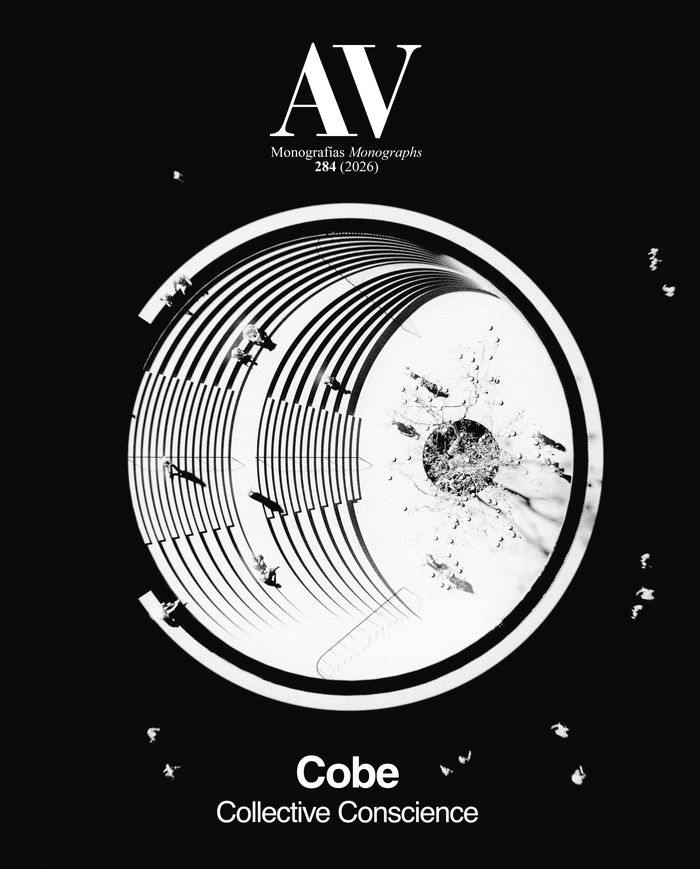
At the intersection of urban regeneration and the construction of new forms of collective life lies the work of Cobe, established in Copenhagen in 2006 by architect Dan Stubbergaard. With an approach that combines territorial strategy, material finesse, and attention to everyday experience, Cobe’s work operates simultaneously between building, landscape, and public space. Marking the firm’s 20th anniversary, the magazine presents a selection of works characterised by the integration of nature and city, attention to the human scale, the creation of shared spaces, and sustainability. Highlights include Ragnarock Museum, Forfatterhuset Kindergarten, and Opera Park.
AV Monographs 284: COBE
Actions:
Prix:
$90.00
(disponible en magasin)
Résumé:
At the intersection of urban regeneration and the construction of new forms of collective life lies the work of Cobe, established in Copenhagen in 2006 by architect Dan Stubbergaard. With an approach that combines territorial strategy, material finesse, and attention to everyday experience, Cobe’s work operates simultaneously between building, landscape, and public space. Marking the firm’s 20th anniversary, the magazine presents a selection of works characterised by the integration of nature and city, attention to the human scale, the creation of shared spaces, and sustainability. Highlights include Ragnarock Museum, Forfatterhuset Kindergarten, and Opera Park.
Classification:
livres
livres
Publication:
mai 2026
mai 2026
Sujet:
Revues
Revues
Classification:
périodiques
périodiques
Actions:
Prix:
$43.00
(disponible en magasin)
Résumé:
Issue 134 offers a sensitive interpretation of contemporary architecture, viewing materials as mediators between the built environment, the human body, and the surrounding landscape. The dossier, preceded by a text of Manuel Bouzas on the importance of fieldwork in architecture, brings together six projects that use natural materials – stone, earth, wood, bamboo, straw,(...)
$43.00
(disponible en magasin)
Résumé:
Issue 134 offers a sensitive interpretation of contemporary architecture, viewing materials as mediators between the built environment, the human body, and the surrounding landscape. The dossier, preceded by a text of Manuel Bouzas on the importance of fieldwork in architecture, brings together six projects that use natural materials – stone, earth, wood, bamboo, straw,(...)
Titre:
AV Proyectos 134: Natural construction
Actions:
Prix:
$43.00
(disponible en magasin)
Résumé:
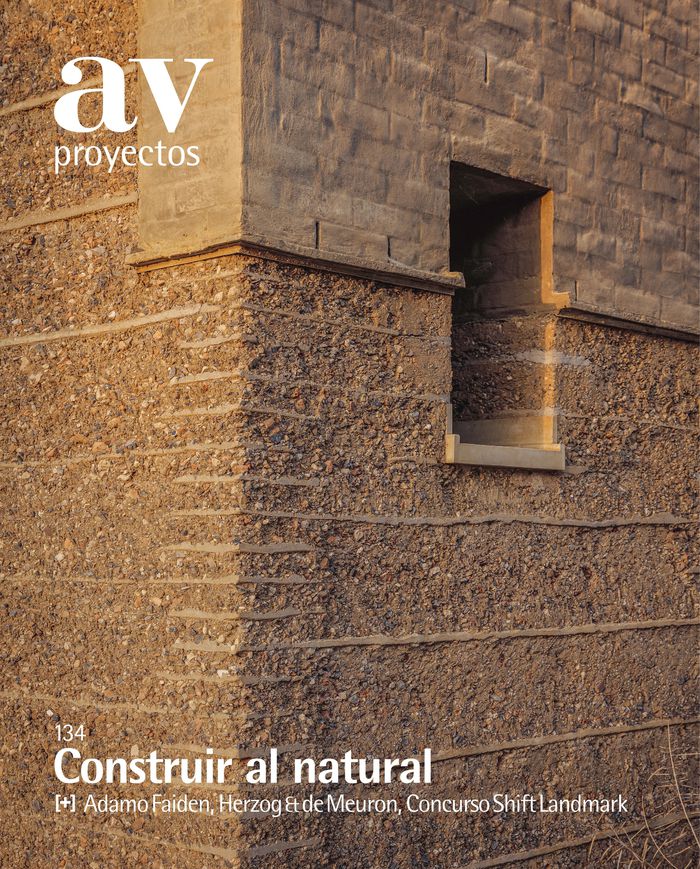
Issue 134 offers a sensitive interpretation of contemporary architecture, viewing materials as mediators between the built environment, the human body, and the surrounding landscape. The dossier, preceded by a text of Manuel Bouzas on the importance of fieldwork in architecture, brings together six projects that use natural materials – stone, earth, wood, bamboo, straw, and fabric – applied without artifice, in a journey ranging from the density of the dwellings by Josep Ferrando or Tuckey Design to the lightness of the temporary structures by Marina Tabassum or Mentrestant.
AV Proyectos 134: Natural construction
Actions:
Prix:
$43.00
(disponible en magasin)
Résumé:
Issue 134 offers a sensitive interpretation of contemporary architecture, viewing materials as mediators between the built environment, the human body, and the surrounding landscape. The dossier, preceded by a text of Manuel Bouzas on the importance of fieldwork in architecture, brings together six projects that use natural materials – stone, earth, wood, bamboo, straw, and fabric – applied without artifice, in a journey ranging from the density of the dwellings by Josep Ferrando or Tuckey Design to the lightness of the temporary structures by Marina Tabassum or Mentrestant.
Classification:
périodiques
périodiques
Publication:
avril 2026
avril 2026
Sujet:
Revues
Revues
Classification:
livres
livres
Titre:
Espaces spéculatif, vol.1
Espaces spéculatif, vol.1
Actions:
Prix:
$20.00
(disponible en magasin)
Résumé:
Territoire en suspens: cartographies, conflits, imaginaires. Le groupe de recherche Espaces spéculatifs, fondé en 2024 au sein de l’École des arts visuels et médiatiques de l’UQAM, vise à étudier et à élargir le champ des connaissances lié à la notion d’espace à partir du champ interdisciplinaire des arts visuels et plastiques ainsi qu’à expérimenter de nouveaux(...)
$20.00
(disponible en magasin)
Résumé:
Territoire en suspens: cartographies, conflits, imaginaires. Le groupe de recherche Espaces spéculatifs, fondé en 2024 au sein de l’École des arts visuels et médiatiques de l’UQAM, vise à étudier et à élargir le champ des connaissances lié à la notion d’espace à partir du champ interdisciplinaire des arts visuels et plastiques ainsi qu’à expérimenter de nouveaux(...)
Titre:
Espaces spéculatif, vol.1
Actions:
Prix:
$20.00
(disponible en magasin)
Résumé:
Territoire en suspens: cartographies, conflits, imaginaires. Le groupe de recherche Espaces spéculatifs, fondé en 2024 au sein de l’École des arts visuels et médiatiques de l’UQAM, vise à étudier et à élargir le champ des connaissances lié à la notion d’espace à partir du champ interdisciplinaire des arts visuels et plastiques ainsi qu’à expérimenter de nouveaux agencements polysensoriels du temps et de l’espace.
Espaces spéculatif, vol.1
Actions:
Prix:
$20.00
(disponible en magasin)
Résumé:
Territoire en suspens: cartographies, conflits, imaginaires. Le groupe de recherche Espaces spéculatifs, fondé en 2024 au sein de l’École des arts visuels et médiatiques de l’UQAM, vise à étudier et à élargir le champ des connaissances lié à la notion d’espace à partir du champ interdisciplinaire des arts visuels et plastiques ainsi qu’à expérimenter de nouveaux agencements polysensoriels du temps et de l’espace.
Classification:
livres
livres
Publication:
juillet 2026
juillet 2026
Sujet:
Revues
Revues
Classification:
périodiques
périodiques
Prix:
$55.95
(disponible en magasin)
Résumé:
Fifty years ago, architects imagined worlds to come. Today, many have ceded the future to market logic, treating global capitalism as inevitable and reality as fixed. This issue of Architectural Design argues that when collective imagination falters, the utopian impulse returns?not as a blueprint for perfection, but as a vital means of reopening what can still be(...)
$55.95
(disponible en magasin)
Résumé:
Fifty years ago, architects imagined worlds to come. Today, many have ceded the future to market logic, treating global capitalism as inevitable and reality as fixed. This issue of Architectural Design argues that when collective imagination falters, the utopian impulse returns?not as a blueprint for perfection, but as a vital means of reopening what can still be(...)
Titre:
AD 96:2 Chimera : The architecture of contemporary utopias
Actions:
Prix:
$55.95
(disponible en magasin)
Résumé:
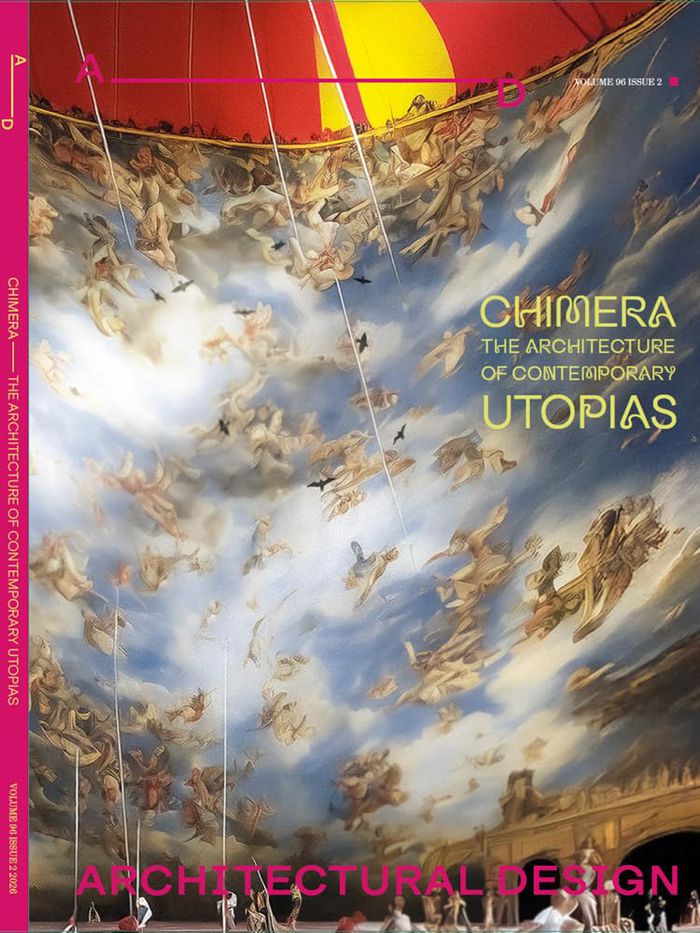
Fifty years ago, architects imagined worlds to come. Today, many have ceded the future to market logic, treating global capitalism as inevitable and reality as fixed. This issue of Architectural Design argues that when collective imagination falters, the utopian impulse returns?not as a blueprint for perfection, but as a vital means of reopening what can still be conceived and made. As planetary computation, climate instability and synthetic cognition converge, utopia becomes a tool for speculative world?building: a way to design new systems, realities and relationalities with the more-than-human. Contributors navigate this shifting terrain from a range of vantages?from those who embrace technological acceleration as an instrument of renewal to others whose address to futurity is aimed at resisting the exhausted capitalist logics of the present.
AD 96:2 Chimera : The architecture of contemporary utopias
Actions:
Prix:
$55.95
(disponible en magasin)
Résumé:
Fifty years ago, architects imagined worlds to come. Today, many have ceded the future to market logic, treating global capitalism as inevitable and reality as fixed. This issue of Architectural Design argues that when collective imagination falters, the utopian impulse returns?not as a blueprint for perfection, but as a vital means of reopening what can still be conceived and made. As planetary computation, climate instability and synthetic cognition converge, utopia becomes a tool for speculative world?building: a way to design new systems, realities and relationalities with the more-than-human. Contributors navigate this shifting terrain from a range of vantages?from those who embrace technological acceleration as an instrument of renewal to others whose address to futurity is aimed at resisting the exhausted capitalist logics of the present.
Classification:
périodiques
périodiques
Publication:
juillet 2026
juillet 2026
Sujet:
Revues
Revues
Classification:
périodiques
périodiques
Actions:
Prix:
$15.00
(disponible en magasin)
Résumé:
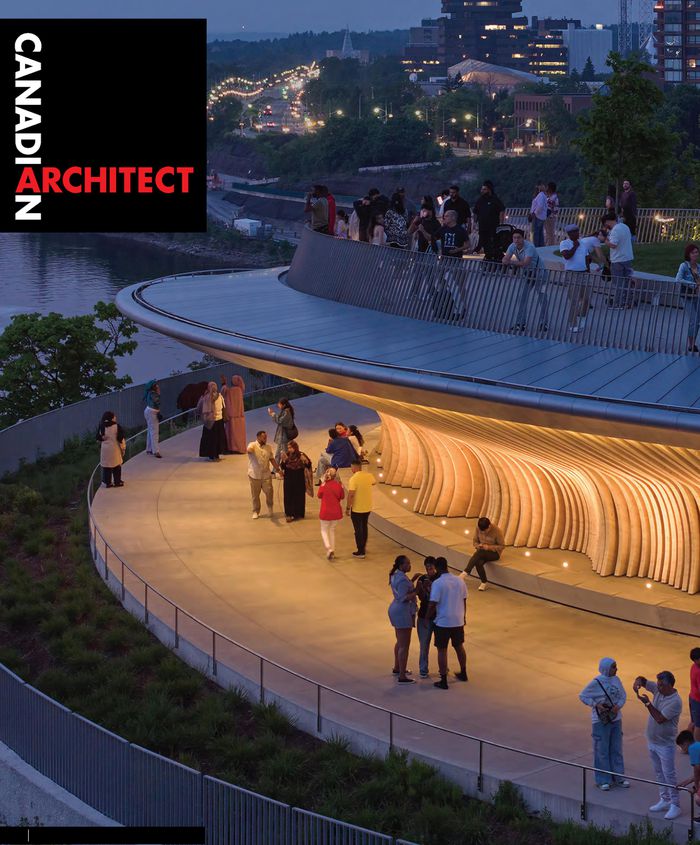
The August issue celebrates the 11 winners of the 2026 Governor General’s Medals in Architecture: Arbour House (Victoria, BC) by Patkau Architects; Parkade of the Future (Calgary, AB) by 5468796 Architecture & Kasian Architecture, Interior Design and Planning; Windermere Fire Station #31 (Edmonton, AB) by gh3* (lead design architect) with S2 Architecture (prime(...)
$15.00
(disponible en magasin)
Résumé:
The August issue celebrates the 11 winners of the 2026 Governor General’s Medals in Architecture: Arbour House (Victoria, BC) by Patkau Architects; Parkade of the Future (Calgary, AB) by 5468796 Architecture & Kasian Architecture, Interior Design and Planning; Windermere Fire Station #31 (Edmonton, AB) by gh3* (lead design architect) with S2 Architecture (prime(...)
Titre:
Canadian Architect v.71 n.05, August 2026
Actions:
Prix:
$15.00
(disponible en magasin)
Résumé:
The August issue celebrates the 11 winners of the 2026 Governor General’s Medals in Architecture: Arbour House (Victoria, BC) by Patkau Architects; Parkade of the Future (Calgary, AB) by 5468796 Architecture & Kasian Architecture, Interior Design and Planning; Windermere Fire Station #31 (Edmonton, AB) by gh3* (lead design architect) with S2 Architecture (prime consultant); O-day’min Park Pavilion (Edmonton, AB) by gh3*; Muscowpetung?Powwow Arbour (Muscowpetung Saulteaux Nation, SK) by Oxbow Architecture with Richard Kroeker; Veil House (Winnipeg, MB) by 5468796 Architecture; Ulster House (Toronto, ON) by LGA Architectural Partners; Ace Hotel Toronto by Shim-Sutcliffe Architects & Atelier Ace; Kìwekì Point (Ottawa, ON) by Patkau Architects and Janet Rosenberg & Studio; 900 Saint-Jacques (Montreal, Quebec) by Chevalier Morales architectes and Brian Eldsen Burrows Architecte – Le Groupe Architex; Hilltop Cottage (New Brunswick) by MacKay-Lyons Sweetapple Architects.
Canadian Architect v.71 n.05, August 2026
Actions:
Prix:
$15.00
(disponible en magasin)
Résumé:
The August issue celebrates the 11 winners of the 2026 Governor General’s Medals in Architecture: Arbour House (Victoria, BC) by Patkau Architects; Parkade of the Future (Calgary, AB) by 5468796 Architecture & Kasian Architecture, Interior Design and Planning; Windermere Fire Station #31 (Edmonton, AB) by gh3* (lead design architect) with S2 Architecture (prime consultant); O-day’min Park Pavilion (Edmonton, AB) by gh3*; Muscowpetung?Powwow Arbour (Muscowpetung Saulteaux Nation, SK) by Oxbow Architecture with Richard Kroeker; Veil House (Winnipeg, MB) by 5468796 Architecture; Ulster House (Toronto, ON) by LGA Architectural Partners; Ace Hotel Toronto by Shim-Sutcliffe Architects & Atelier Ace; Kìwekì Point (Ottawa, ON) by Patkau Architects and Janet Rosenberg & Studio; 900 Saint-Jacques (Montreal, Quebec) by Chevalier Morales architectes and Brian Eldsen Burrows Architecte – Le Groupe Architex; Hilltop Cottage (New Brunswick) by MacKay-Lyons Sweetapple Architects.
Classification:
périodiques
périodiques
Publication:
août 2026
août 2026
Sujet:
Revues
Revues
Classification:
livres
livres
Actions:
Prix:
$54.95
(disponible en magasin)
Résumé:
The moment human fingertips lifted from the ground, upright walking became a privilege rather than a mere posture. The liberated hands could now be used to create tools for defense and hunting. The pupils’ gazes shifted from a level view to a downward perspective, a physical change that also translated into an awareness that overlooked other species. The spine, situated(...)
$54.95
(disponible en magasin)
Résumé:
The moment human fingertips lifted from the ground, upright walking became a privilege rather than a mere posture. The liberated hands could now be used to create tools for defense and hunting. The pupils’ gazes shifted from a level view to a downward perspective, a physical change that also translated into an awareness that overlooked other species. The spine, situated(...)
Titre:
te magazine no.4: Spinal Memory
Actions:
Prix:
$54.95
(disponible en magasin)
Résumé:
The moment human fingertips lifted from the ground, upright walking became a privilege rather than a mere posture. The liberated hands could now be used to create tools for defense and hunting. The pupils’ gazes shifted from a level view to a downward perspective, a physical change that also translated into an awareness that overlooked other species. The spine, situated at the center of the human body, acts like a covert ruler, measuring the scale of evolution and supporting the illusion of being "human-centric." Thus, humans stand, placing themselves far above all other creatures. Following this profound gestural revolution came the imagination and manipulation of non-human animals (the Others), turning them into livestock and companions, as their wildness was rewritten as docility. Their bodies became resources to be medicated and refined, transforming into instruments for milk and nutritious meat production. They became basic knowledge and research data, linking humanity’s ever-expanding and illusory colonial territories.
te magazine no.4: Spinal Memory
Actions:
Prix:
$54.95
(disponible en magasin)
Résumé:
The moment human fingertips lifted from the ground, upright walking became a privilege rather than a mere posture. The liberated hands could now be used to create tools for defense and hunting. The pupils’ gazes shifted from a level view to a downward perspective, a physical change that also translated into an awareness that overlooked other species. The spine, situated at the center of the human body, acts like a covert ruler, measuring the scale of evolution and supporting the illusion of being "human-centric." Thus, humans stand, placing themselves far above all other creatures. Following this profound gestural revolution came the imagination and manipulation of non-human animals (the Others), turning them into livestock and companions, as their wildness was rewritten as docility. Their bodies became resources to be medicated and refined, transforming into instruments for milk and nutritious meat production. They became basic knowledge and research data, linking humanity’s ever-expanding and illusory colonial territories.
Classification:
livres
livres
Publication:
mai 2026
mai 2026
Sujet:
Revues
Revues
Classification:
périodiques
périodiques
Actions:
Prix:
$8.00
(disponible en magasin)
Résumé:
Tight fascia, exhaustion. From the energy spent and drained in the routines of our days—from untangling ourselves from demands and expectations. But energy is also generative. And it emerges in the work of Mariuccia Secol in the textures of presence and absence that the stretching of fabric and skin have in common. Energy also pulses through Marina Vishmidt’s notion of(...)
$8.00
(disponible en magasin)
Résumé:
Tight fascia, exhaustion. From the energy spent and drained in the routines of our days—from untangling ourselves from demands and expectations. But energy is also generative. And it emerges in the work of Mariuccia Secol in the textures of presence and absence that the stretching of fabric and skin have in common. Energy also pulses through Marina Vishmidt’s notion of(...)
Titre:
Arts of the Working Class #41: Energy
Actions:
Prix:
$8.00
(disponible en magasin)
Résumé:
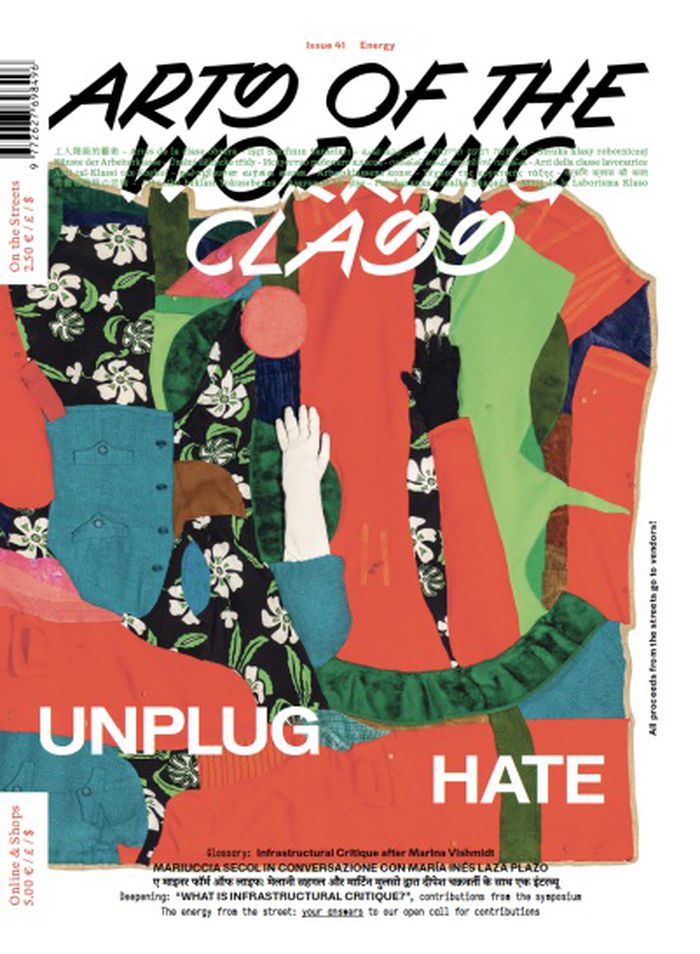
Tight fascia, exhaustion. From the energy spent and drained in the routines of our days—from untangling ourselves from demands and expectations. But energy is also generative. And it emerges in the work of Mariuccia Secol in the textures of presence and absence that the stretching of fabric and skin have in common. Energy also pulses through Marina Vishmidt’s notion of infrastructural critique—and in her tireless hours of writing, teaching, and collaborating. For both Secol and Vishmidt, energy is everything, and this issue owes its impetus to their shared attention to energy’s rhythms and resistances.
Arts of the Working Class #41: Energy
Actions:
Prix:
$8.00
(disponible en magasin)
Résumé:
Tight fascia, exhaustion. From the energy spent and drained in the routines of our days—from untangling ourselves from demands and expectations. But energy is also generative. And it emerges in the work of Mariuccia Secol in the textures of presence and absence that the stretching of fabric and skin have in common. Energy also pulses through Marina Vishmidt’s notion of infrastructural critique—and in her tireless hours of writing, teaching, and collaborating. For both Secol and Vishmidt, energy is everything, and this issue owes its impetus to their shared attention to energy’s rhythms and resistances.
Classification:
périodiques
périodiques
Publication:
mai 2026
mai 2026
Sujet:
Revues
Revues
Classification:
périodiques
périodiques
Actions:
Prix:
$8.00
(disponible en magasin)
Résumé:
Our new editorial cycle, Transformers, begins from the reckoning that transformation in the arts has never been linear. For us at AWC, it flourishes in repetition, meandering, and the subtle work of what often goes unnoticed. Rather than asking what is new, Transformers—not the 2007 blockbuster, but the era it anticipated, a spectacle of war, digitalization, and(...)
$8.00
(disponible en magasin)
Résumé:
Our new editorial cycle, Transformers, begins from the reckoning that transformation in the arts has never been linear. For us at AWC, it flourishes in repetition, meandering, and the subtle work of what often goes unnoticed. Rather than asking what is new, Transformers—not the 2007 blockbuster, but the era it anticipated, a spectacle of war, digitalization, and(...)
Titre:
Arts of the Working Class #40: Synthetics
Actions:
Prix:
$8.00
(disponible en magasin)
Résumé:
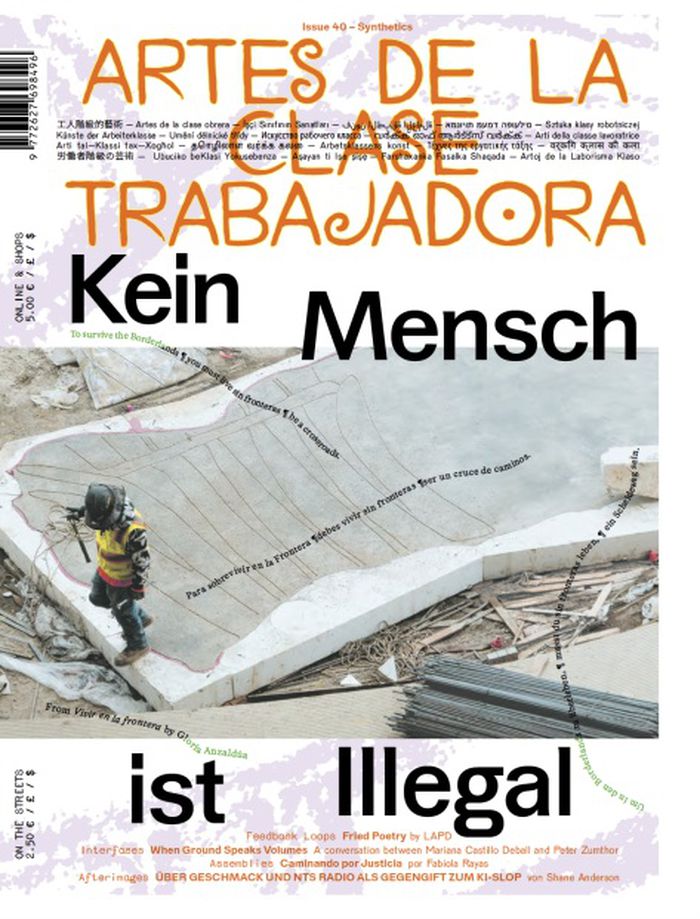
Our new editorial cycle, Transformers, begins from the reckoning that transformation in the arts has never been linear. For us at AWC, it flourishes in repetition, meandering, and the subtle work of what often goes unnoticed. Rather than asking what is new, Transformers—not the 2007 blockbuster, but the era it anticipated, a spectacle of war, digitalization, and profit—attends to what has been quietly shifting as new configurations of power, labor, and life crystallize. The unfolding chronicle of atrocities revealed in the Jeffrey Epstein files exposes how greed underwrites tribalism, and how the dismantling of an already iniquitous globalism has been further engineered to concentrate wealth in the hands of the fewest of the few.
Arts of the Working Class #40: Synthetics
Actions:
Prix:
$8.00
(disponible en magasin)
Résumé:
Our new editorial cycle, Transformers, begins from the reckoning that transformation in the arts has never been linear. For us at AWC, it flourishes in repetition, meandering, and the subtle work of what often goes unnoticed. Rather than asking what is new, Transformers—not the 2007 blockbuster, but the era it anticipated, a spectacle of war, digitalization, and profit—attends to what has been quietly shifting as new configurations of power, labor, and life crystallize. The unfolding chronicle of atrocities revealed in the Jeffrey Epstein files exposes how greed underwrites tribalism, and how the dismantling of an already iniquitous globalism has been further engineered to concentrate wealth in the hands of the fewest of the few.
Classification:
périodiques
périodiques
Publication:
février 2026
février 2026
Sujet:
Revues
Revues
Classification:
périodiques
périodiques
Actions:
Prix:
$8.00
(disponible en magasin)
Résumé:
As this year’s editorial cycle was titled Value Attachment—a poetic and materialist inquiry into how we assign worth to our worlds—the Sumud Flotilla offers a paradigm for what that question truly entails. The Gaza Biennial reasserts, in its own terms, the primacy of relationships as the ground on which politics is built. Not relationships as networks of exchange or(...)
$8.00
(disponible en magasin)
Résumé:
As this year’s editorial cycle was titled Value Attachment—a poetic and materialist inquiry into how we assign worth to our worlds—the Sumud Flotilla offers a paradigm for what that question truly entails. The Gaza Biennial reasserts, in its own terms, the primacy of relationships as the ground on which politics is built. Not relationships as networks of exchange or(...)
Titre:
Arts of the Working Class #39: Relationships
Actions:
Prix:
$8.00
(disponible en magasin)
Résumé:
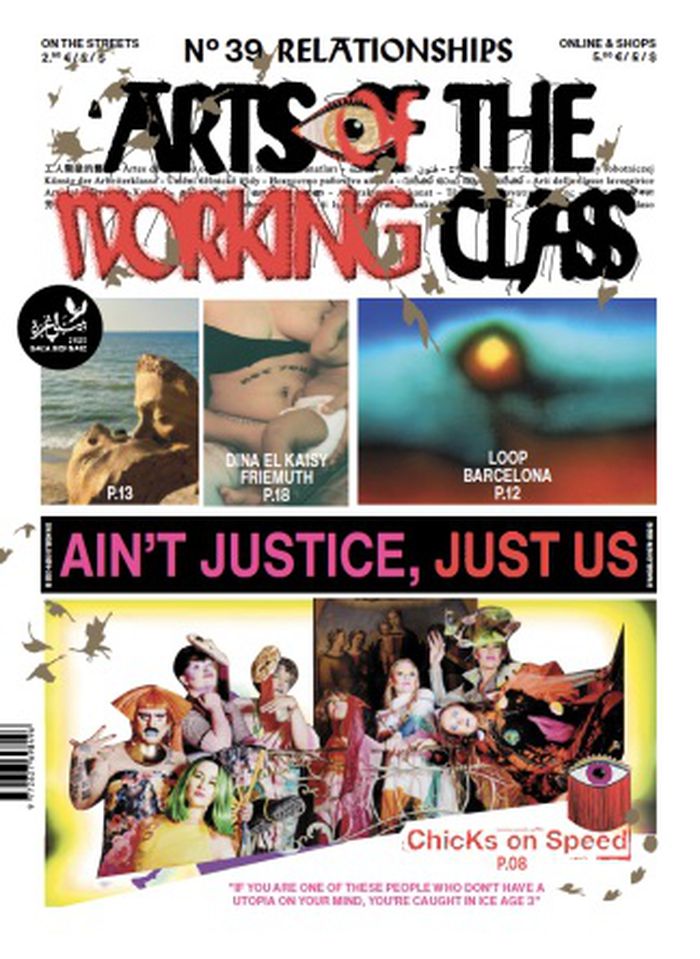
As this year’s editorial cycle was titled Value Attachment—a poetic and materialist inquiry into how we assign worth to our worlds—the Sumud Flotilla offers a paradigm for what that question truly entails. The Gaza Biennial reasserts, in its own terms, the primacy of relationships as the ground on which politics is built. Not relationships as networks of exchange or capital, but as infrastructures of mutual dependence and resistance: fragile, chaotic, complex, indispensable. Across the previous four issues in 2025, we have traced how this question recurs across different registers. Now, we turn to Relationships: to sentimental versions and terrains of struggle. Fascism, in its twenty-first-century iterations, thrives not only on nationalism and exclusion but on dismantling relational life: isolating, atomizing, privatizing it until solidarity becomes suspect and empathy itself a form of dissent. Proximity is policed, intimacy is surveilled. Love is reduced to transaction. Care is outsourced. Trust weaponized. Even friendship, the most basic form of political relation, is co-opted as a tool of influence and control.
Arts of the Working Class #39: Relationships
Actions:
Prix:
$8.00
(disponible en magasin)
Résumé:
As this year’s editorial cycle was titled Value Attachment—a poetic and materialist inquiry into how we assign worth to our worlds—the Sumud Flotilla offers a paradigm for what that question truly entails. The Gaza Biennial reasserts, in its own terms, the primacy of relationships as the ground on which politics is built. Not relationships as networks of exchange or capital, but as infrastructures of mutual dependence and resistance: fragile, chaotic, complex, indispensable. Across the previous four issues in 2025, we have traced how this question recurs across different registers. Now, we turn to Relationships: to sentimental versions and terrains of struggle. Fascism, in its twenty-first-century iterations, thrives not only on nationalism and exclusion but on dismantling relational life: isolating, atomizing, privatizing it until solidarity becomes suspect and empathy itself a form of dissent. Proximity is policed, intimacy is surveilled. Love is reduced to transaction. Care is outsourced. Trust weaponized. Even friendship, the most basic form of political relation, is co-opted as a tool of influence and control.
Classification:
périodiques
périodiques
Publication:
novembre 2025
novembre 2025
Sujet:
Revues
Revues
Classification:
périodiques
périodiques
Actions:
Prix:
$8.00
(disponible en magasin)
Résumé:
Issue 38: Choreography inquires into how memories, histories, and rituals transform individuals into groups, words into policies, threads into textures, notes into dances, gestures into positions. Today, choreography thrives not only on stage but through social media, where short videos compress movement into consumable poses—endlessly repeated and algorithmically(...)
$8.00
(disponible en magasin)
Résumé:
Issue 38: Choreography inquires into how memories, histories, and rituals transform individuals into groups, words into policies, threads into textures, notes into dances, gestures into positions. Today, choreography thrives not only on stage but through social media, where short videos compress movement into consumable poses—endlessly repeated and algorithmically(...)
Titre:
Arts of the Working Class #38: Choreography
Actions:
Prix:
$8.00
(disponible en magasin)
Résumé:
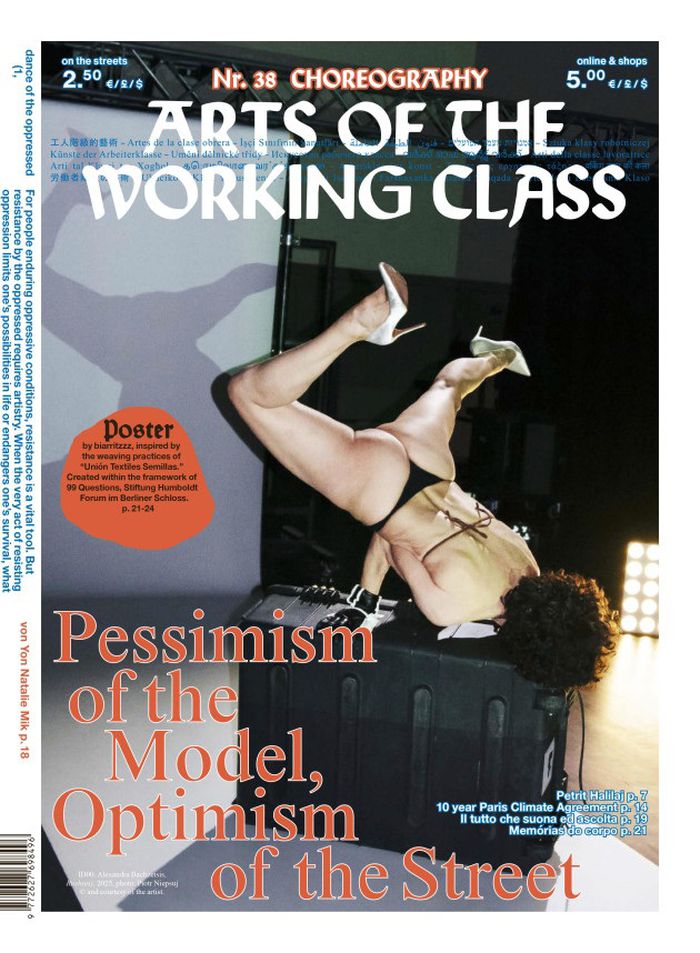
Issue 38: Choreography inquires into how memories, histories, and rituals transform individuals into groups, words into policies, threads into textures, notes into dances, gestures into positions. Today, choreography thrives not only on stage but through social media, where short videos compress movement into consumable poses—endlessly repeated and algorithmically rewarded. Here the body mirrors Mark Fisher’s architecture of capitalist realism: gestures circulate even as they are emptied of meaning, as if there were no alternative but to keep performing. It is a dance of reflexive impotence, where participation feels inevitable and refusal unimaginable.
Arts of the Working Class #38: Choreography
Actions:
Prix:
$8.00
(disponible en magasin)
Résumé:
Issue 38: Choreography inquires into how memories, histories, and rituals transform individuals into groups, words into policies, threads into textures, notes into dances, gestures into positions. Today, choreography thrives not only on stage but through social media, where short videos compress movement into consumable poses—endlessly repeated and algorithmically rewarded. Here the body mirrors Mark Fisher’s architecture of capitalist realism: gestures circulate even as they are emptied of meaning, as if there were no alternative but to keep performing. It is a dance of reflexive impotence, where participation feels inevitable and refusal unimaginable.
Classification:
périodiques
périodiques
Publication:
septembre 2025
septembre 2025
Sujet:
Revues
Revues


