


265 Résultats
Classification:
livres
livres
Prix:
$27.00
(disponible sur commande)
Résumé:
Through a series of detailed historical case studies, Alison Griffiths explores the uncanny and unforgettable visceral power of the medieval cathedral, the panorama, the planetarium, the IMAX theater, and the science museum. Examining these structures as exemplary spaces of immersion and interactivity, Griffiths reveals the sometimes surprising antecedents of modern media(...)
$27.00
(disponible sur commande)
Résumé:
Through a series of detailed historical case studies, Alison Griffiths explores the uncanny and unforgettable visceral power of the medieval cathedral, the panorama, the planetarium, the IMAX theater, and the science museum. Examining these structures as exemplary spaces of immersion and interactivity, Griffiths reveals the sometimes surprising antecedents of modern media(...)
Titre:
Shivers down your spine : cinema, museums, & the immersive view
Actions:
Prix:
$27.00
(disponible sur commande)
Résumé:
Through a series of detailed historical case studies, Alison Griffiths explores the uncanny and unforgettable visceral power of the medieval cathedral, the panorama, the planetarium, the IMAX theater, and the science museum. Examining these structures as exemplary spaces of immersion and interactivity, Griffiths reveals the sometimes surprising antecedents of modern media forms, suggesting the spectator's deep-seated desire to become immersed in a virtual world.
Shivers down your spine : cinema, museums, & the immersive view
Actions:
Prix:
$27.00
(disponible sur commande)
Résumé:
Through a series of detailed historical case studies, Alison Griffiths explores the uncanny and unforgettable visceral power of the medieval cathedral, the panorama, the planetarium, the IMAX theater, and the science museum. Examining these structures as exemplary spaces of immersion and interactivity, Griffiths reveals the sometimes surprising antecedents of modern media forms, suggesting the spectator's deep-seated desire to become immersed in a virtual world.
Classification:
livres
livres
Publication:
avril 2013
avril 2013
Sujet:
Muséologie
Muséologie
Classification:
livres
livres
Prix:
$65.95
(disponible sur commande)
Résumé:
This book provides explicit and comprehensive coverage of the most important museums built in the first ten years of the 21st Century in the United States and Europe. By dissecting and analyzing each case, Ronnie Self allows the reader to get under the skin of each design and fully understand the process behind these remarkable buildings. Richly designed with full(...)
$65.95
(disponible sur commande)
Résumé:
This book provides explicit and comprehensive coverage of the most important museums built in the first ten years of the 21st Century in the United States and Europe. By dissecting and analyzing each case, Ronnie Self allows the reader to get under the skin of each design and fully understand the process behind these remarkable buildings. Richly designed with full(...)
Titre:
The architecture of art museums: a decade of design (2000-2010)
Actions:
Prix:
$65.95
(disponible sur commande)
Résumé:
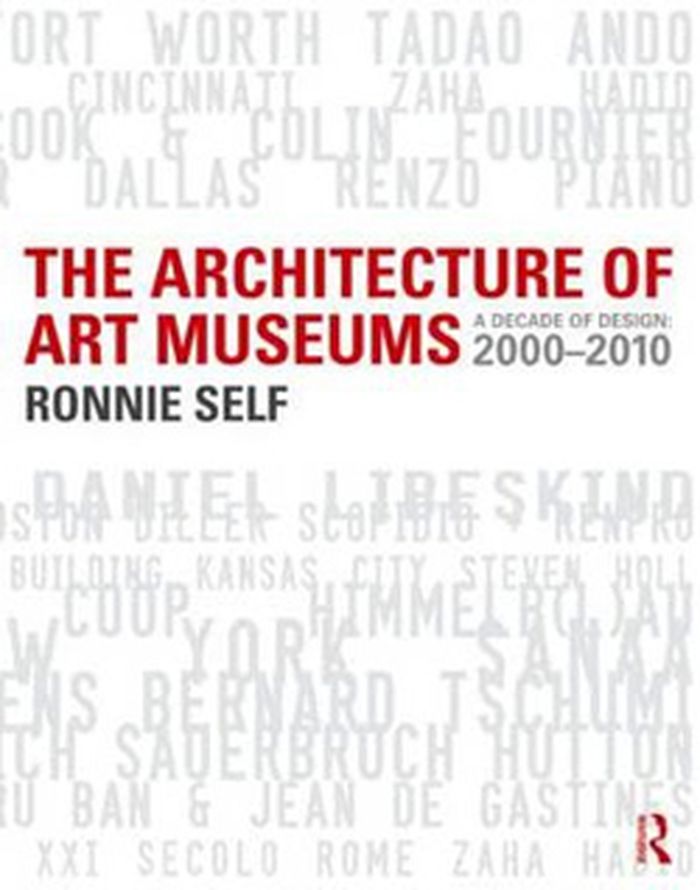
This book provides explicit and comprehensive coverage of the most important museums built in the first ten years of the 21st Century in the United States and Europe. By dissecting and analyzing each case, Ronnie Self allows the reader to get under the skin of each design and fully understand the process behind these remarkable buildings. Richly designed with full technical illustrations and sections the book includes the work of Tadao Ando, Zaha Hadid, Peter Cook & Colin Fournier, Renzo Piano, Yoshi Taniguchi, Herzog & de Meuron, Jean Nouvel, SANAA, Daniel Libeskind, Diller Scofidio & Renfro, Steven Holl, Coop Himmelb(l)au, Bernard Tschumi, Sauerbruch Hutton, and Shigeru Ban & Jean de Gastines.
The architecture of art museums: a decade of design (2000-2010)
Actions:
Prix:
$65.95
(disponible sur commande)
Résumé:
This book provides explicit and comprehensive coverage of the most important museums built in the first ten years of the 21st Century in the United States and Europe. By dissecting and analyzing each case, Ronnie Self allows the reader to get under the skin of each design and fully understand the process behind these remarkable buildings. Richly designed with full technical illustrations and sections the book includes the work of Tadao Ando, Zaha Hadid, Peter Cook & Colin Fournier, Renzo Piano, Yoshi Taniguchi, Herzog & de Meuron, Jean Nouvel, SANAA, Daniel Libeskind, Diller Scofidio & Renfro, Steven Holl, Coop Himmelb(l)au, Bernard Tschumi, Sauerbruch Hutton, and Shigeru Ban & Jean de Gastines.
Classification:
livres
livres
Publication:
février 2014
février 2014
Sujet:
Muséologie
Muséologie
Classification:
livres
livres
Prix:
$34.95
(disponible sur commande)
Résumé:
The essays distill the authors’ decades of experience as practitioners and observers of gallery teaching across the United States and abroad.
$34.95
(disponible sur commande)
Résumé:
The essays distill the authors’ decades of experience as practitioners and observers of gallery teaching across the United States and abroad.
Titre:
Teaching in the art museum : interpretation as experience
Actions:
Prix:
$34.95
(disponible sur commande)
Résumé:
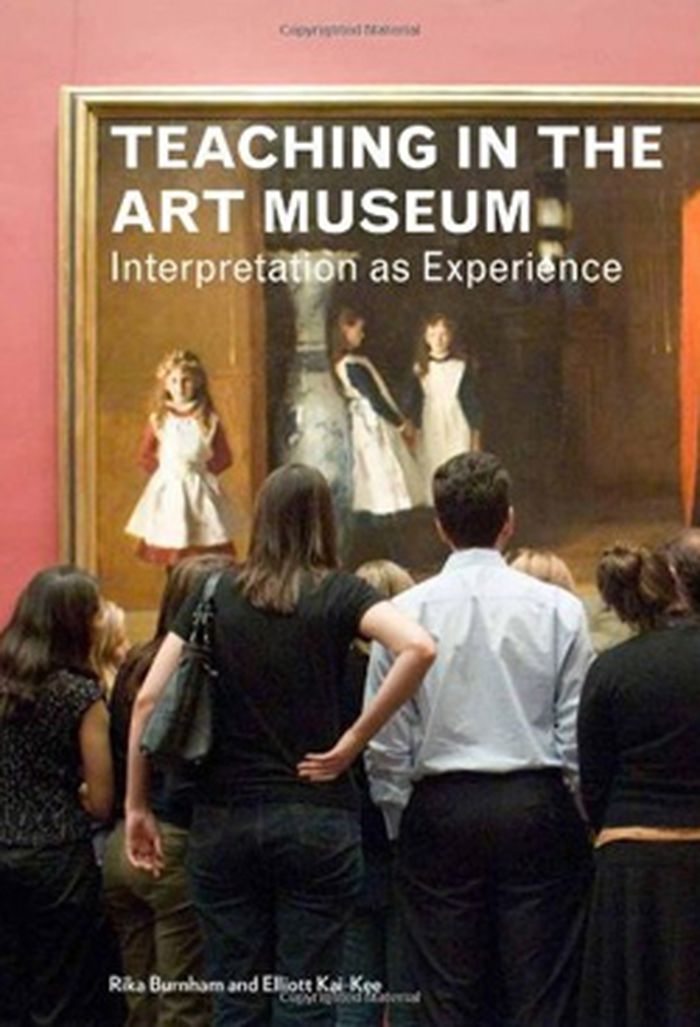
The essays distill the authors’ decades of experience as practitioners and observers of gallery teaching across the United States and abroad.
Teaching in the art museum : interpretation as experience
Actions:
Prix:
$34.95
(disponible sur commande)
Résumé:
The essays distill the authors’ decades of experience as practitioners and observers of gallery teaching across the United States and abroad.
Classification:
livres
livres
Publication:
mars 2011
mars 2011
Sujet:
Muséologie
Muséologie
Classification:
livres
livres
Actions:
Prix:
$49.95
(disponible sur commande)
Résumé:
Imagining the Audience offers an unusual glimpse behind the work of both artist and curator concerning the role of the audience. Part of a research project on viewpoints in aesthetics and film theory applied to contemporary art, this book asks how an artist or curator imagines the experience, movement, and mental processes of the viewer, and how this perspective(...)
$49.95
(disponible sur commande)
Résumé:
Imagining the Audience offers an unusual glimpse behind the work of both artist and curator concerning the role of the audience. Part of a research project on viewpoints in aesthetics and film theory applied to contemporary art, this book asks how an artist or curator imagines the experience, movement, and mental processes of the viewer, and how this perspective(...)
Titre:
Imagining the audience: viewing positions in curatorial and artistic practice
Actions:
Prix:
$49.95
(disponible sur commande)
Résumé:
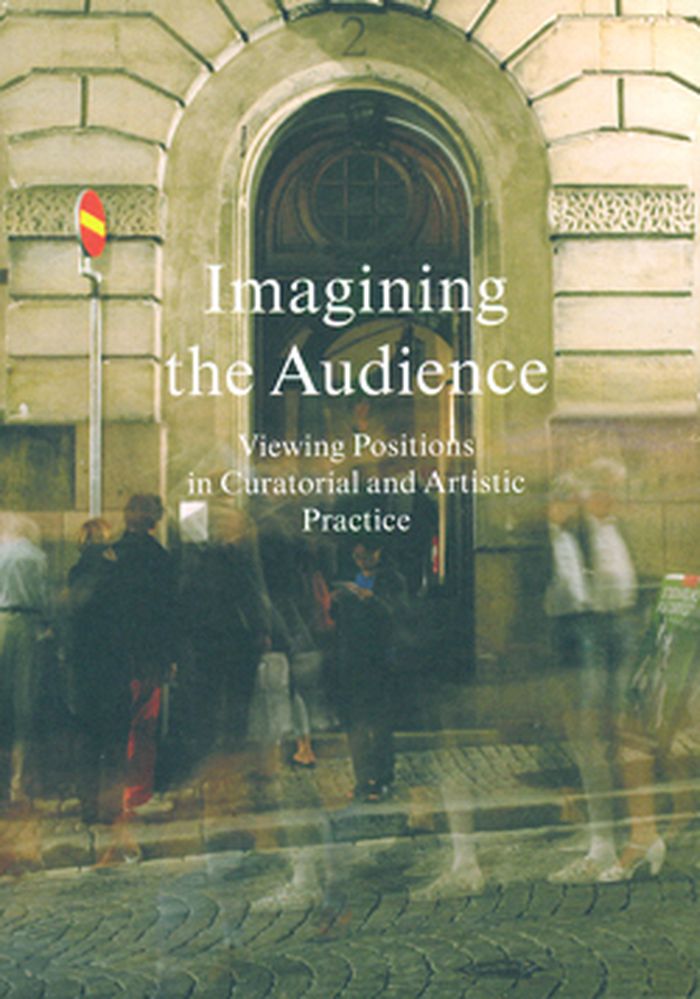
Imagining the Audience offers an unusual glimpse behind the work of both artist and curator concerning the role of the audience. Part of a research project on viewpoints in aesthetics and film theory applied to contemporary art, this book asks how an artist or curator imagines the experience, movement, and mental processes of the viewer, and how this perspective influences the artwork, the way the viewer experiences it.
Imagining the audience: viewing positions in curatorial and artistic practice
Actions:
Prix:
$49.95
(disponible sur commande)
Résumé:
Imagining the Audience offers an unusual glimpse behind the work of both artist and curator concerning the role of the audience. Part of a research project on viewpoints in aesthetics and film theory applied to contemporary art, this book asks how an artist or curator imagines the experience, movement, and mental processes of the viewer, and how this perspective influences the artwork, the way the viewer experiences it.
Classification:
livres
livres
Publication:
décembre 2012
décembre 2012
Sujet:
Muséologie
Muséologie
Classification:
livres
livres
Prix:
$28.95
(disponible sur commande)
Résumé:
What, today, can be understood as a critical modality of spatial practice? This question, and others, were posed to protagonists from the fields of architecture, art, philosophy, and literature by architectural theorists and curators Nikolaus Hirsch and Markus Miessen in September, 2011.
$28.95
(disponible sur commande)
Résumé:
What, today, can be understood as a critical modality of spatial practice? This question, and others, were posed to protagonists from the fields of architecture, art, philosophy, and literature by architectural theorists and curators Nikolaus Hirsch and Markus Miessen in September, 2011.
Titre:
Critical spatial practice 1 : What is critical spatial practice
Actions:
Prix:
$28.95
(disponible sur commande)
Résumé:
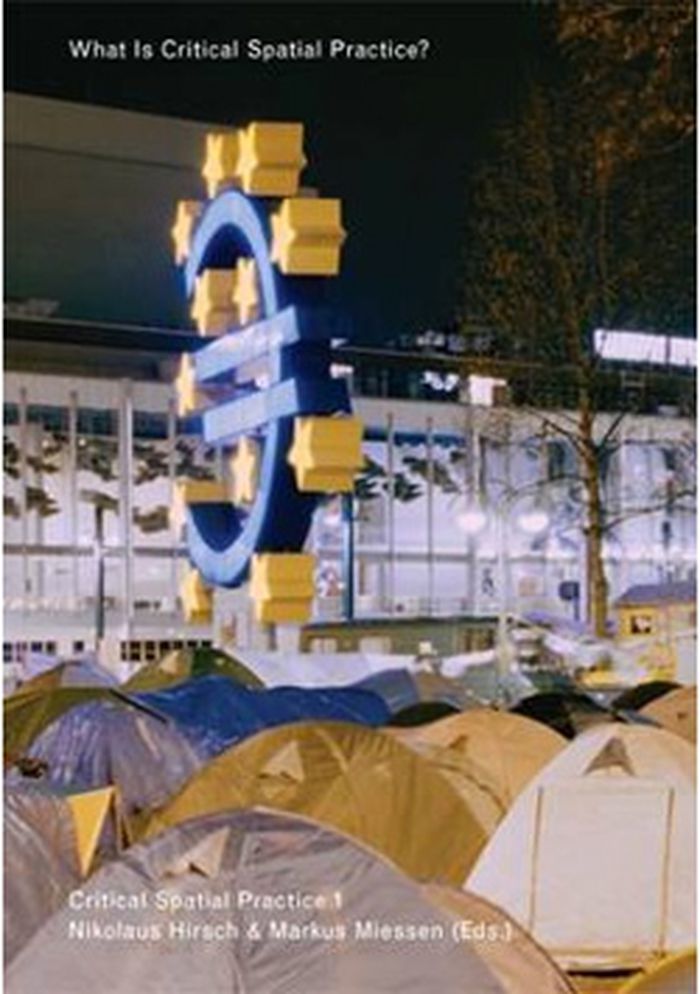
What, today, can be understood as a critical modality of spatial practice? This question, and others, were posed to protagonists from the fields of architecture, art, philosophy, and literature by architectural theorists and curators Nikolaus Hirsch and Markus Miessen in September, 2011.
Critical spatial practice 1 : What is critical spatial practice
Actions:
Prix:
$28.95
(disponible sur commande)
Résumé:
What, today, can be understood as a critical modality of spatial practice? This question, and others, were posed to protagonists from the fields of architecture, art, philosophy, and literature by architectural theorists and curators Nikolaus Hirsch and Markus Miessen in September, 2011.
Classification:
livres
livres
Publication:
mai 2013
mai 2013
Sujet:
Muséologie
Muséologie
Classification:
livres
livres
Titre:
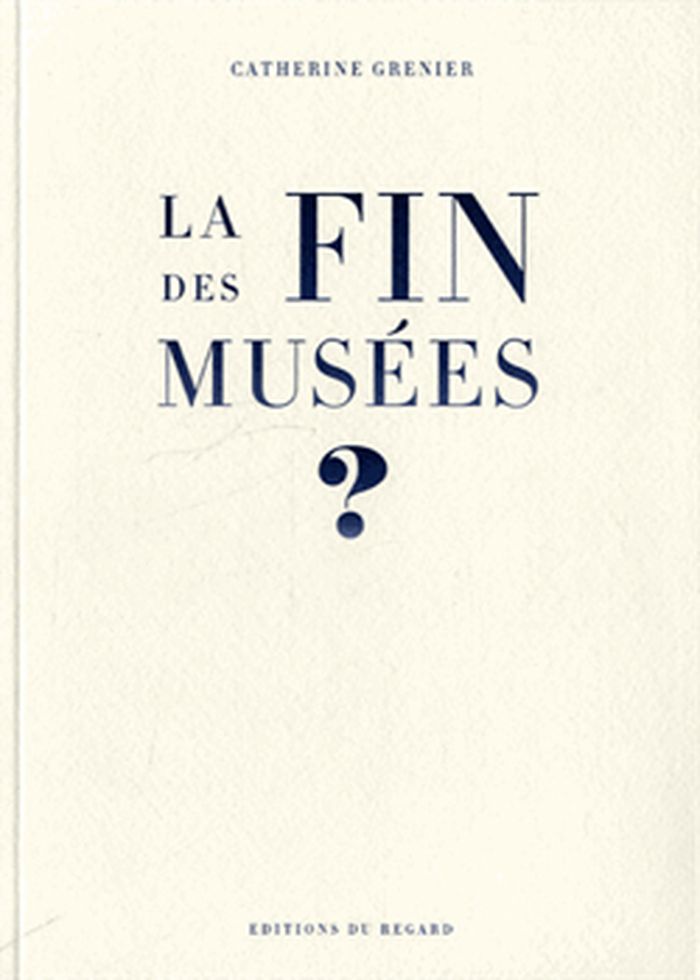
La fin des musées?
La fin des musées?
Actions:
Prix:
$29.95
(disponible sur commande)
Résumé:
Quel est l'avenir des musées, et en particulier des musées d'art moderne ? Menacés par la crise économique, par l'envolée du marché de l'art, par la transformation des pratiques culturelles, les musées doivent aussi affronter les défis de la mondialisation et une concurrence grandissante. Une bonne occasion de repenser ce modèle et de l'adapter aux perspectives futures ?(...)
$29.95
(disponible sur commande)
Résumé:
Quel est l'avenir des musées, et en particulier des musées d'art moderne ? Menacés par la crise économique, par l'envolée du marché de l'art, par la transformation des pratiques culturelles, les musées doivent aussi affronter les défis de la mondialisation et une concurrence grandissante. Une bonne occasion de repenser ce modèle et de l'adapter aux perspectives futures ?(...)
Titre:
La fin des musées?
Actions:
Prix:
$29.95
(disponible sur commande)
Résumé:
Quel est l'avenir des musées, et en particulier des musées d'art moderne ? Menacés par la crise économique, par l'envolée du marché de l'art, par la transformation des pratiques culturelles, les musées doivent aussi affronter les défis de la mondialisation et une concurrence grandissante. Une bonne occasion de repenser ce modèle et de l'adapter aux perspectives futures ? Toutes ces questions sont au coeur de cet ouvrage.
La fin des musées?
Actions:
Prix:
$29.95
(disponible sur commande)
Résumé:
Quel est l'avenir des musées, et en particulier des musées d'art moderne ? Menacés par la crise économique, par l'envolée du marché de l'art, par la transformation des pratiques culturelles, les musées doivent aussi affronter les défis de la mondialisation et une concurrence grandissante. Une bonne occasion de repenser ce modèle et de l'adapter aux perspectives futures ? Toutes ces questions sont au coeur de cet ouvrage.
Classification:
livres
livres
Publication:
mai 2013
mai 2013
Sujet:
Muséologie
Muséologie
Classification:
livres
livres

Prix:
$29.95
(disponible en magasin)
Résumé:
Contestations brings together a range of artists, theorists and other practitioners to consider the state of education and learning in light of political struggle, institutional crisis and new media platforms. Focusing on creative experiments in education, Contestations seeks to instigate a conversation about the future direction of education that challenges existing(...)
$29.95
(disponible en magasin)
Résumé:
Contestations brings together a range of artists, theorists and other practitioners to consider the state of education and learning in light of political struggle, institutional crisis and new media platforms. Focusing on creative experiments in education, Contestations seeks to instigate a conversation about the future direction of education that challenges existing(...)
Titre:
Contestations: learning from critical experiments in education
Actions:
Prix:
$29.95
(disponible en magasin)
Résumé:
Contestations brings together a range of artists, theorists and other practitioners to consider the state of education and learning in light of political struggle, institutional crisis and new media platforms. Focusing on creative experiments in education, Contestations seeks to instigate a conversation about the future direction of education that challenges existing academic models while examining possibilities for strategic intervention and self-organisation.
Contestations: learning from critical experiments in education
Actions:
Prix:
$29.95
(disponible en magasin)
Résumé:
Contestations brings together a range of artists, theorists and other practitioners to consider the state of education and learning in light of political struggle, institutional crisis and new media platforms. Focusing on creative experiments in education, Contestations seeks to instigate a conversation about the future direction of education that challenges existing academic models while examining possibilities for strategic intervention and self-organisation.
Classification:
livres
livres
Publication:
juin 2013
juin 2013
Classification:
livres
livres
Titre:
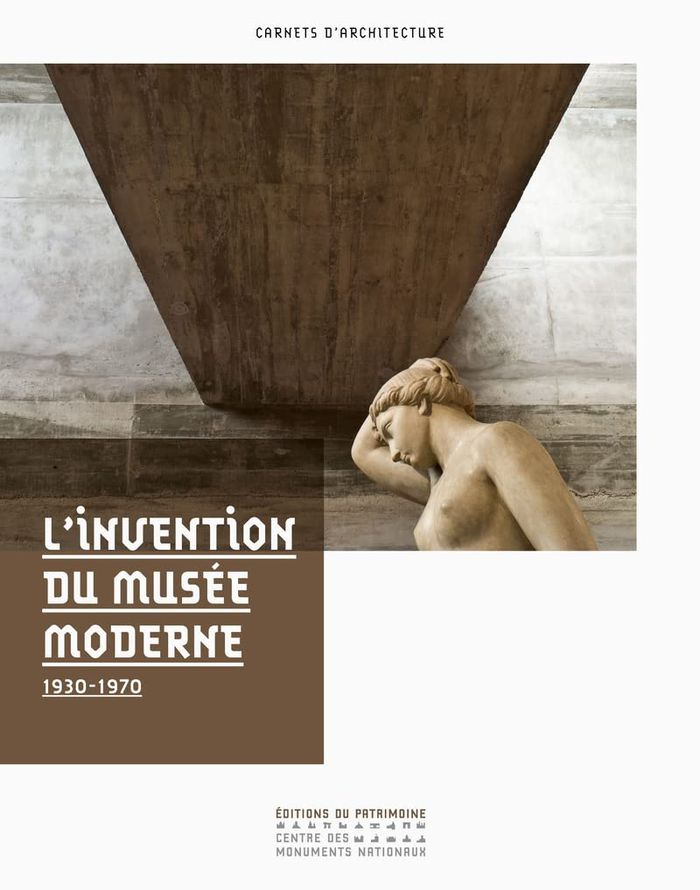
L'invention du musée moderne
L'invention du musée moderne
Actions:
Prix:
$50.95
(disponible en magasin)
Résumé:
A partir de 1930 se joue un moment décisif dans l'histoire des musées et de leur architecture, en France comme en Europe et aux Etats-Unis... A partir de 1930 se joue un moment décisif dans l'histoire des musées et de leur architecture, en France comme en Europe et aux Etats-Unis. A quelques exceptions près, tous les acteurs de ce domaine (conservateurs et architectes au(...)
$50.95
(disponible en magasin)
Résumé:
A partir de 1930 se joue un moment décisif dans l'histoire des musées et de leur architecture, en France comme en Europe et aux Etats-Unis... A partir de 1930 se joue un moment décisif dans l'histoire des musées et de leur architecture, en France comme en Europe et aux Etats-Unis. A quelques exceptions près, tous les acteurs de ce domaine (conservateurs et architectes au(...)
Titre:
L'invention du musée moderne
Actions:
Prix:
$50.95
(disponible en magasin)
Résumé:
A partir de 1930 se joue un moment décisif dans l'histoire des musées et de leur architecture, en France comme en Europe et aux Etats-Unis... A partir de 1930 se joue un moment décisif dans l'histoire des musées et de leur architecture, en France comme en Europe et aux Etats-Unis. A quelques exceptions près, tous les acteurs de ce domaine (conservateurs et architectes au premier chef) considèrent le modèle du musée classique comme caduc. Si l'espace muséal perdure dans nombre d'édifices, celui-ci se modernise et s'adapte à une demande de sobriété et de pédagogie. En France, la perspective de l'Exposition universelle de 1937 accélère les choses et pousse Auguste Perret et Le Corbusier à se positionner, chacun dans un registre spécifique. Leurs projets théoriques ne voient pas le jour mais posent des bases importantes pour la réflexion sur les nouveaux types muséaux.
L'invention du musée moderne
Actions:
Prix:
$50.95
(disponible en magasin)
Résumé:
A partir de 1930 se joue un moment décisif dans l'histoire des musées et de leur architecture, en France comme en Europe et aux Etats-Unis... A partir de 1930 se joue un moment décisif dans l'histoire des musées et de leur architecture, en France comme en Europe et aux Etats-Unis. A quelques exceptions près, tous les acteurs de ce domaine (conservateurs et architectes au premier chef) considèrent le modèle du musée classique comme caduc. Si l'espace muséal perdure dans nombre d'édifices, celui-ci se modernise et s'adapte à une demande de sobriété et de pédagogie. En France, la perspective de l'Exposition universelle de 1937 accélère les choses et pousse Auguste Perret et Le Corbusier à se positionner, chacun dans un registre spécifique. Leurs projets théoriques ne voient pas le jour mais posent des bases importantes pour la réflexion sur les nouveaux types muséaux.
Classification:
livres
livres
Publication:
avril 2023
avril 2023
Sujet:
Muséologie
Muséologie
Classification:
livres
livres

Actions:
Prix:
$43.50
(disponible en magasin)
Résumé:
"A way of life" is an invitation to discover and explore the world of objects with different eyes, inspired by the humble surroundings of Ballenberg. Ballenberg is an open-air museum in the Bernese Oberland in the Swiss Alps, which brings together farmhouses from across the country, spanning the 14th to 19th centuries.
$43.50
(disponible en magasin)
Résumé:
"A way of life" is an invitation to discover and explore the world of objects with different eyes, inspired by the humble surroundings of Ballenberg. Ballenberg is an open-air museum in the Bernese Oberland in the Swiss Alps, which brings together farmhouses from across the country, spanning the 14th to 19th centuries.
Titre:
A way of life: Notes on Ballenberg
Actions:
Prix:
$43.50
(disponible en magasin)
Résumé:
"A way of life" is an invitation to discover and explore the world of objects with different eyes, inspired by the humble surroundings of Ballenberg. Ballenberg is an open-air museum in the Bernese Oberland in the Swiss Alps, which brings together farmhouses from across the country, spanning the 14th to 19th centuries.
A way of life: Notes on Ballenberg
Actions:
Prix:
$43.50
(disponible en magasin)
Résumé:
"A way of life" is an invitation to discover and explore the world of objects with different eyes, inspired by the humble surroundings of Ballenberg. Ballenberg is an open-air museum in the Bernese Oberland in the Swiss Alps, which brings together farmhouses from across the country, spanning the 14th to 19th centuries.
Classification:
livres
livres
Publication:
octobre 2023
octobre 2023
Sujet:
Muséologie
Muséologie
Classification:
livres
livres
Actions:
Prix:
$66.99
(disponible en magasin)
Résumé:
Nina Mö ntmann's timely book extends the decolonisation debate to the institutions of contemporary art. In a thoughtfully articulated text, illustrated with pertinent examples of best practice, she argues that museums and galleries of contemporary art have a responsibility to "decenter" their institutions, removing from their collections, exhibition policies and(...)
$66.99
(disponible en magasin)
Résumé:
Nina Mö ntmann's timely book extends the decolonisation debate to the institutions of contemporary art. In a thoughtfully articulated text, illustrated with pertinent examples of best practice, she argues that museums and galleries of contemporary art have a responsibility to "decenter" their institutions, removing from their collections, exhibition policies and(...)
Titre:
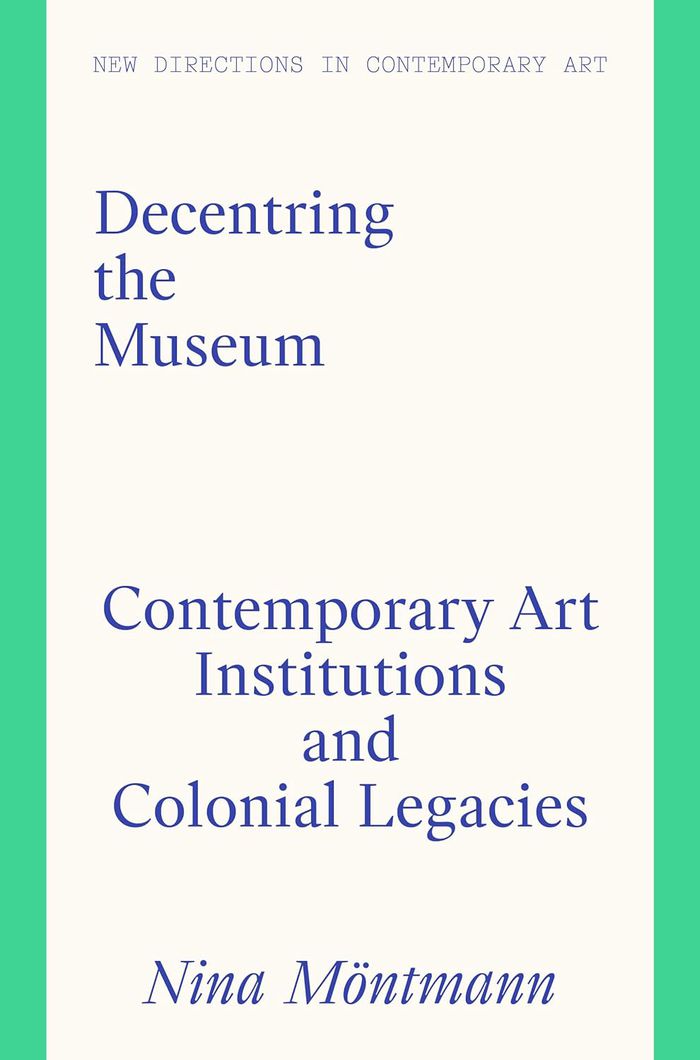
Decentring the museum: Contemporary art institutions and colonial legacies
Actions:
Prix:
$66.99
(disponible en magasin)
Résumé:
Nina Mö ntmann's timely book extends the decolonisation debate to the institutions of contemporary art. In a thoughtfully articulated text, illustrated with pertinent examples of best practice, she argues that museums and galleries of contemporary art have a responsibility to "decenter" their institutions, removing from their collections, exhibition policies and infrastructures a deeply embedded Euro-centric cultural focus with roots in the history of colonialism. In this, she argues, they can learn from the example both of anthropological museums (such as the Humboldt Forum in Berlin and the British Museum), which are engaged in debates about the colonial histories of their collections, and of small-scale art spaces (such as La Colonie in Paris or Savvy Contemporary in Berlin), which have the flexibility to initiate different kinds of conversation – for example, by programming exhibitions and events in collaboration with local diasporic communities from the global south.
Decentring the museum: Contemporary art institutions and colonial legacies
Actions:
Prix:
$66.99
(disponible en magasin)
Résumé:
Nina Mö ntmann's timely book extends the decolonisation debate to the institutions of contemporary art. In a thoughtfully articulated text, illustrated with pertinent examples of best practice, she argues that museums and galleries of contemporary art have a responsibility to "decenter" their institutions, removing from their collections, exhibition policies and infrastructures a deeply embedded Euro-centric cultural focus with roots in the history of colonialism. In this, she argues, they can learn from the example both of anthropological museums (such as the Humboldt Forum in Berlin and the British Museum), which are engaged in debates about the colonial histories of their collections, and of small-scale art spaces (such as La Colonie in Paris or Savvy Contemporary in Berlin), which have the flexibility to initiate different kinds of conversation – for example, by programming exhibitions and events in collaboration with local diasporic communities from the global south.
Classification:
livres
livres
Publication:
décembre 2023
décembre 2023
Sujet:
Muséologie
Muséologie


