


265 Résultats
Classification:
livres
livres
Actions:
Prix:
$24.95
(disponible sur commande)
Résumé:
What begins as a meditation on "the museum" becomes, in this book, a far-reaching critical examination of how art history and museums have guided and controlled not only the way we look at art but the ways in which we understand modernity itself. Originally delivered as the 2001 Slade Lectures in the Fine Arts at Oxford University, the book makes its deeply complex(...)
$24.95
(disponible sur commande)
Résumé:
What begins as a meditation on "the museum" becomes, in this book, a far-reaching critical examination of how art history and museums have guided and controlled not only the way we look at art but the ways in which we understand modernity itself. Originally delivered as the 2001 Slade Lectures in the Fine Arts at Oxford University, the book makes its deeply complex(...)
Titre:
Brain of the earth's body : art, museums and the phantasms of modernity
Actions:
Prix:
$24.95
(disponible sur commande)
Résumé:
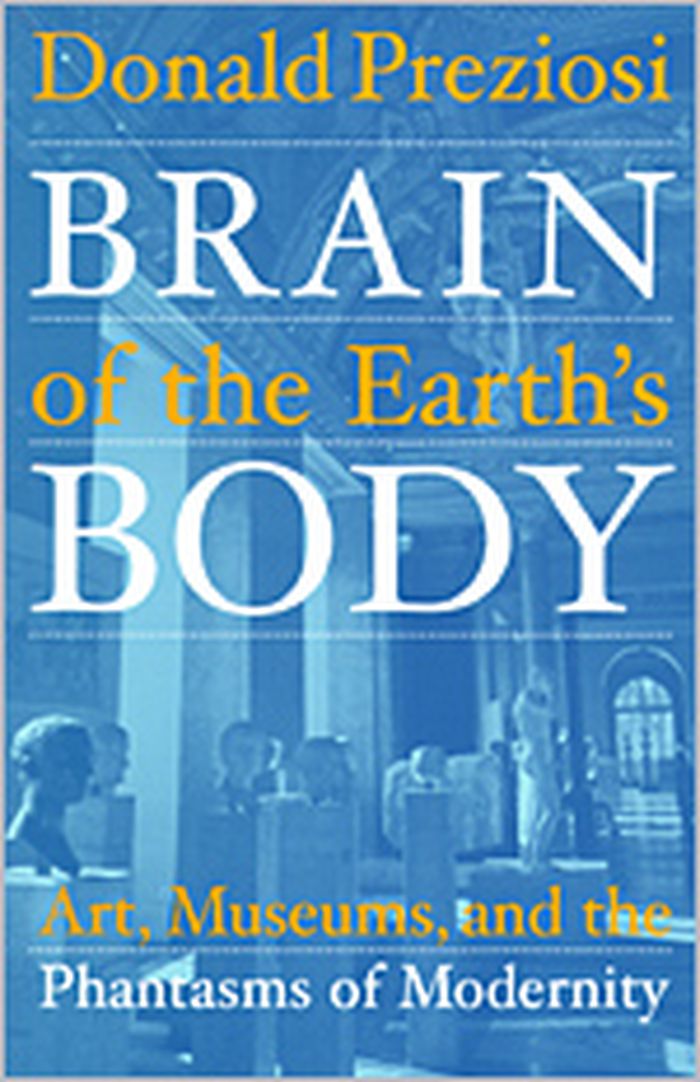
What begins as a meditation on "the museum" becomes, in this book, a far-reaching critical examination of how art history and museums have guided and controlled not only the way we look at art but the ways in which we understand modernity itself. Originally delivered as the 2001 Slade Lectures in the Fine Arts at Oxford University, the book makes its deeply complex argument remarkably accessible and powerfully clear. Concentrating on a period from the beginning of the nineteenth century to the beginning of the twentieth, Donald Preziosi presents case studies of major institutions that, he argues, have defined--and are still defining--the possible limits of museological and art historical theory and practice. These include Sir John Soane's Museum in London, preserved in its 1837 state; the Crystal Palace Exhibition of 1851; and four museums founded by Europeans in Egypt in the late nineteenth century, which divided up that country's history into "ethnically marked" aesthetic hierarchies and genealogies that accorded with Europe's construction of itself as the present of the world's past, and the "brain of the earth's body." Through this epistemological and institutional archaeology, Preziosi unearths the outlines of the more radical Enlightenment project that academic art history, professional museology, and art criticism have rendered marginal or invisible. Finally, he sketches a new theory about art, artifice, and visual signification in the cracks and around the margins of the "secular theologisms" of the globalized imperial capital called modernity.
Brain of the earth's body : art, museums and the phantasms of modernity
Actions:
Prix:
$24.95
(disponible sur commande)
Résumé:
What begins as a meditation on "the museum" becomes, in this book, a far-reaching critical examination of how art history and museums have guided and controlled not only the way we look at art but the ways in which we understand modernity itself. Originally delivered as the 2001 Slade Lectures in the Fine Arts at Oxford University, the book makes its deeply complex argument remarkably accessible and powerfully clear. Concentrating on a period from the beginning of the nineteenth century to the beginning of the twentieth, Donald Preziosi presents case studies of major institutions that, he argues, have defined--and are still defining--the possible limits of museological and art historical theory and practice. These include Sir John Soane's Museum in London, preserved in its 1837 state; the Crystal Palace Exhibition of 1851; and four museums founded by Europeans in Egypt in the late nineteenth century, which divided up that country's history into "ethnically marked" aesthetic hierarchies and genealogies that accorded with Europe's construction of itself as the present of the world's past, and the "brain of the earth's body." Through this epistemological and institutional archaeology, Preziosi unearths the outlines of the more radical Enlightenment project that academic art history, professional museology, and art criticism have rendered marginal or invisible. Finally, he sketches a new theory about art, artifice, and visual signification in the cracks and around the margins of the "secular theologisms" of the globalized imperial capital called modernity.
Classification:
livres
livres
Publication:
juillet 2003, Minneapolis
juillet 2003, Minneapolis
Sujet:
Muséologie
Muséologie
Classification:
livres
livres
Actions:
Prix:
$30.00
(disponible sur commande)
Résumé:
We owe our idea of the contemporary exhibition to Harald Szeemann--the first of the jet-setting international curators. From 1961 to 1969, he was Curator of the Kunsthalle Bern, where in 1968 he had the foresight to give Christo and Jeanne-Claude the opportunity to wrap the entire museum building. Szeemann's groundbreaking 1969 exhibition When Attitudes Become Form, also(...)
$30.00
(disponible sur commande)
Résumé:
We owe our idea of the contemporary exhibition to Harald Szeemann--the first of the jet-setting international curators. From 1961 to 1969, he was Curator of the Kunsthalle Bern, where in 1968 he had the foresight to give Christo and Jeanne-Claude the opportunity to wrap the entire museum building. Szeemann's groundbreaking 1969 exhibition When Attitudes Become Form, also(...)
Sujet:
Muséologie
Muséologie
Publication:
mars 2008, Berlin, Dijon, New York, Manchester
mars 2008, Berlin, Dijon, New York, Manchester
Titre:
Harald Szeemann Individual Methodology
Actions:
Prix:
$30.00
(disponible sur commande)
Résumé:
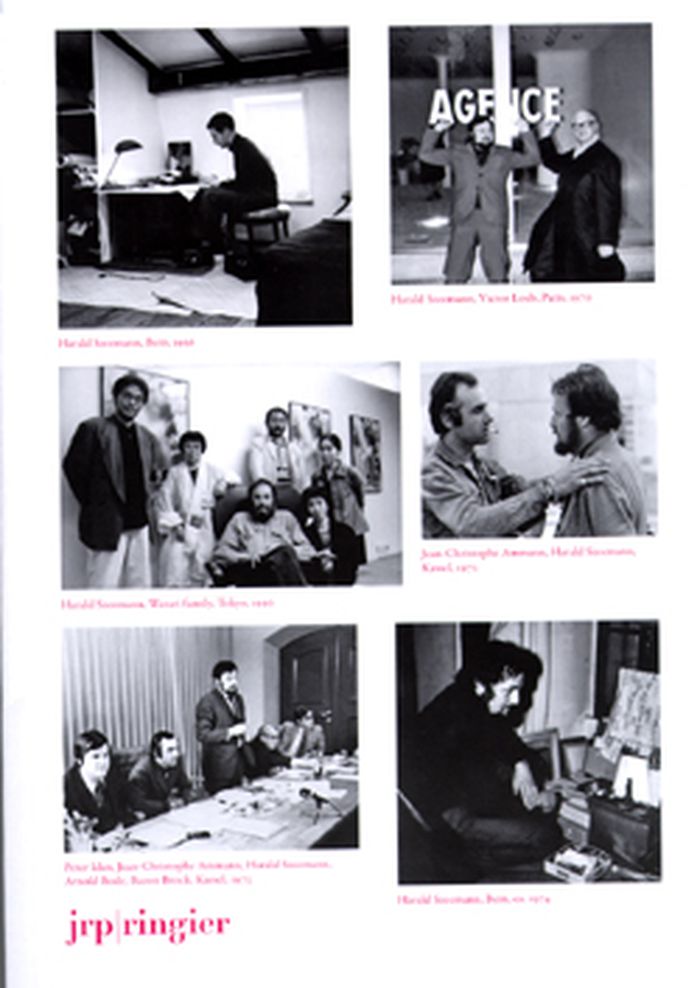
We owe our idea of the contemporary exhibition to Harald Szeemann--the first of the jet-setting international curators. From 1961 to 1969, he was Curator of the Kunsthalle Bern, where in 1968 he had the foresight to give Christo and Jeanne-Claude the opportunity to wrap the entire museum building. Szeemann's groundbreaking 1969 exhibition When Attitudes Become Form, also at the Kunsthalle, introduced European audiences to artists like Joseph Beuys, Eva Hesse, Richard Serra and Lawrence Weiner. It also introduced the now-commonplace practice of curating an exhibition around a theme. Since Szeemann's death in 2005, there has been research underway at his archive in Tessin, Switzerland. An invaluable resource, this volume provides access to previously unpublished plans, documents and photographs from the archive, along with important essays by Hal Foster and Jean-Marc Poinsot. There is also an informative interview with Tobia Bezzola--curator at the Kunsthauz Zurich and Szeemann's collaborator for many years. Two of Szeemann's most ambitious exhibitions are presented as case studies: Documenta V (1972) and L'Autre, the 4th Lyon Biennial (1997). A biography, an illustrated chronology of Szeemann's exhibitions and a selection of his writings complete this exhaustive survey.
Harald Szeemann Individual Methodology
Actions:
Prix:
$30.00
(disponible sur commande)
Résumé:
We owe our idea of the contemporary exhibition to Harald Szeemann--the first of the jet-setting international curators. From 1961 to 1969, he was Curator of the Kunsthalle Bern, where in 1968 he had the foresight to give Christo and Jeanne-Claude the opportunity to wrap the entire museum building. Szeemann's groundbreaking 1969 exhibition When Attitudes Become Form, also at the Kunsthalle, introduced European audiences to artists like Joseph Beuys, Eva Hesse, Richard Serra and Lawrence Weiner. It also introduced the now-commonplace practice of curating an exhibition around a theme. Since Szeemann's death in 2005, there has been research underway at his archive in Tessin, Switzerland. An invaluable resource, this volume provides access to previously unpublished plans, documents and photographs from the archive, along with important essays by Hal Foster and Jean-Marc Poinsot. There is also an informative interview with Tobia Bezzola--curator at the Kunsthauz Zurich and Szeemann's collaborator for many years. Two of Szeemann's most ambitious exhibitions are presented as case studies: Documenta V (1972) and L'Autre, the 4th Lyon Biennial (1997). A biography, an illustrated chronology of Szeemann's exhibitions and a selection of his writings complete this exhaustive survey.
Classification:
livres
livres
Publication:
mars 2008, Berlin, Dijon, New York, Manchester
mars 2008, Berlin, Dijon, New York, Manchester
Sujet:
Muséologie
Muséologie
Classification:
livres
livres
Titre:
Hans Ulrich Obrist : Everything you always wanted to know about curating (but were afraid to ask)
Hans Ulrich Obrist : Everything you always wanted to know about curating (but were afraid to ask)
Actions:
Prix:
$27.00
(disponible sur commande)
Résumé:
Everything you ever wanted to know about Hans Ulrich Obrist butwere afraid to ask has now been asked, revealing the truth from the beginning of his career as a young curator in his Zurich kitchen to his recent position as co-director of the Serpentine in London. This book is a "production of reality conversations", otherwise known as interviews. It undertakes the(...)
$27.00
(disponible sur commande)
Résumé:
Everything you ever wanted to know about Hans Ulrich Obrist butwere afraid to ask has now been asked, revealing the truth from the beginning of his career as a young curator in his Zurich kitchen to his recent position as co-director of the Serpentine in London. This book is a "production of reality conversations", otherwise known as interviews. It undertakes the(...)
Titre:
Hans Ulrich Obrist : Everything you always wanted to know about curating (but were afraid to ask)
Actions:
Prix:
$27.00
(disponible sur commande)
Résumé:
Everything you ever wanted to know about Hans Ulrich Obrist butwere afraid to ask has now been asked, revealing the truth from the beginning of his career as a young curator in his Zurich kitchen to his recent position as co-director of the Serpentine in London. This book is a "production of reality conversations", otherwise known as interviews. It undertakes the impossible: pinning down this peripatetic curator, and affirming the wisdom of an artist who told Obrist "don't go" when he contemplated leaving the art world for other fields. Interviews by Jean Max Colard, Robert Fleck, Jefferson Hack, Nav Haq, Sophia Krzys Acord, Brendan McGetrick, Ingo Niermann, Paul O'Neill,Philippe Parreno & Alex Poots, Juri Steiner, Gavin Wade, et al. Foreword by Tino Sehgal, afterword by Yona Friedman.
Hans Ulrich Obrist : Everything you always wanted to know about curating (but were afraid to ask)
Actions:
Prix:
$27.00
(disponible sur commande)
Résumé:
Everything you ever wanted to know about Hans Ulrich Obrist butwere afraid to ask has now been asked, revealing the truth from the beginning of his career as a young curator in his Zurich kitchen to his recent position as co-director of the Serpentine in London. This book is a "production of reality conversations", otherwise known as interviews. It undertakes the impossible: pinning down this peripatetic curator, and affirming the wisdom of an artist who told Obrist "don't go" when he contemplated leaving the art world for other fields. Interviews by Jean Max Colard, Robert Fleck, Jefferson Hack, Nav Haq, Sophia Krzys Acord, Brendan McGetrick, Ingo Niermann, Paul O'Neill,Philippe Parreno & Alex Poots, Juri Steiner, Gavin Wade, et al. Foreword by Tino Sehgal, afterword by Yona Friedman.
Classification:
livres
livres
Publication:
mars 2011
mars 2011
Sujet:
Muséologie
Muséologie
Classification:
livres
livres
Titre:
Institutional critique
Institutional critique
Actions:
Prix:
$29.00
(disponible sur commande)
Résumé:
This contemporary reassessment of the Institutional Critique movement, launched in the late 1960s by artists including Michael Asher and Hans Haacke, grew out of a symposium held at the Los Angeles County Museum of Art. It looks at Institutional Critique's central aim, the exposure and ironization of the structures and logic of museums and art galleries, and recent(...)
$29.00
(disponible sur commande)
Résumé:
This contemporary reassessment of the Institutional Critique movement, launched in the late 1960s by artists including Michael Asher and Hans Haacke, grew out of a symposium held at the Los Angeles County Museum of Art. It looks at Institutional Critique's central aim, the exposure and ironization of the structures and logic of museums and art galleries, and recent(...)
Titre:
Institutional critique
Actions:
Prix:
$29.00
(disponible sur commande)
Résumé:
This contemporary reassessment of the Institutional Critique movement, launched in the late 1960s by artists including Michael Asher and Hans Haacke, grew out of a symposium held at the Los Angeles County Museum of Art. It looks at Institutional Critique's central aim, the exposure and ironization of the structures and logic of museums and art galleries, and recent developments that engage with and echo it. IC has been raised again by Andrea Fraser, Renee Green and Fred Wilson, among others, and has been vigorously reoriented in recent years to address issues such as globalization. Contributors include Alexander Alberro, Mike Kelley, Hans Haacke, Lauri Firstenberg, Andrea Fraser, Renee Green and others.
Institutional critique
Actions:
Prix:
$29.00
(disponible sur commande)
Résumé:
This contemporary reassessment of the Institutional Critique movement, launched in the late 1960s by artists including Michael Asher and Hans Haacke, grew out of a symposium held at the Los Angeles County Museum of Art. It looks at Institutional Critique's central aim, the exposure and ironization of the structures and logic of museums and art galleries, and recent developments that engage with and echo it. IC has been raised again by Andrea Fraser, Renee Green and Fred Wilson, among others, and has been vigorously reoriented in recent years to address issues such as globalization. Contributors include Alexander Alberro, Mike Kelley, Hans Haacke, Lauri Firstenberg, Andrea Fraser, Renee Green and others.
Classification:
livres
livres
Publication:
octobre 2007, Zurich
octobre 2007, Zurich
Sujet:
Muséologie
Muséologie
Classification:
livres
livres
Titre:
L'Art d'aimer les objets
L'Art d'aimer les objets
Actions:
Prix:
$29.95
(disponible sur commande)
Résumé:
L’écriture du patrimoine français a longtemps hésité entre la glorification des collections nationales et la critique de la perte du contexte des œuvres – aux dépens d’une approche du processus de patrimonialisation, de ses acteurs et de ses pratiques. On fait ici le pari d’une histoire de l’art d’aimer certains objets, en croisant les savoirs et les émotions, les(...)
$29.95
(disponible sur commande)
Résumé:
L’écriture du patrimoine français a longtemps hésité entre la glorification des collections nationales et la critique de la perte du contexte des œuvres – aux dépens d’une approche du processus de patrimonialisation, de ses acteurs et de ses pratiques. On fait ici le pari d’une histoire de l’art d’aimer certains objets, en croisant les savoirs et les émotions, les(...)
Titre:
L'Art d'aimer les objets
Actions:
Prix:
$29.95
(disponible sur commande)
Résumé:
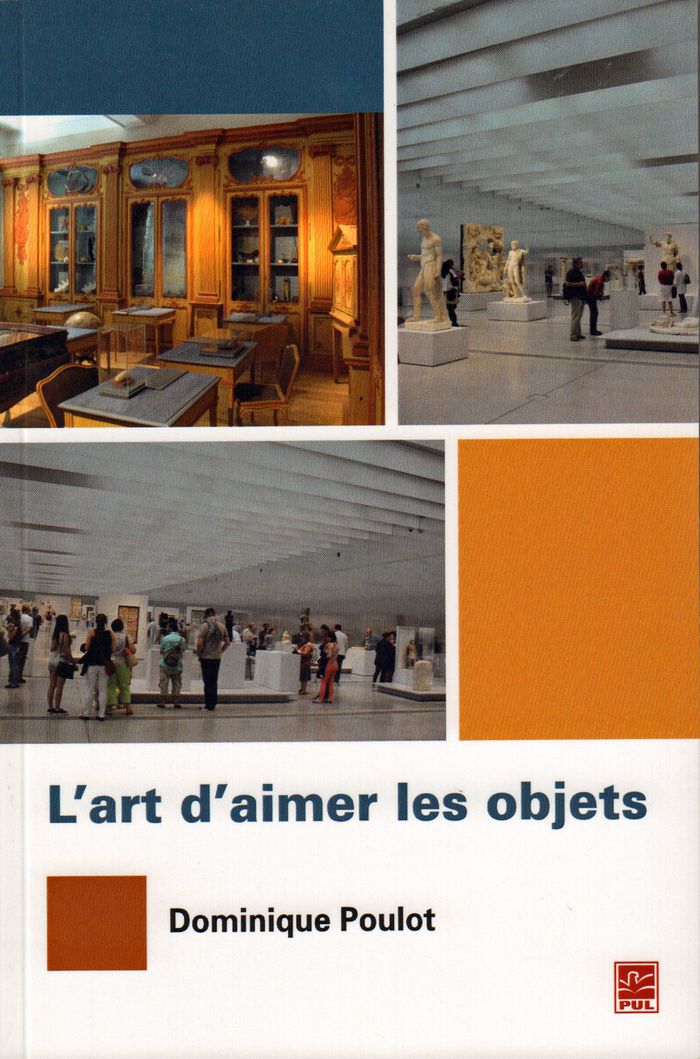
L’écriture du patrimoine français a longtemps hésité entre la glorification des collections nationales et la critique de la perte du contexte des œuvres – aux dépens d’une approche du processus de patrimonialisation, de ses acteurs et de ses pratiques. On fait ici le pari d’une histoire de l’art d’aimer certains objets, en croisant les savoirs et les émotions, les investissements personnels et les disciplines institutionnelles, les projections et les appropriations. Les exemples choisis vont de la Révolution à nos jours et envisagent aussi bien les chefs-d’œuvre de l’art au musée que l’inscription de la société dans les dispositifs patrimoniaux contemporains. On constate chaque fois que l’attachement pour des choses jugées précieuses accroît leur profondeur et leur densité, engage des identifications de leurs " amis " et travaille enfin à différentes représentations collectives. La cristallisation patrimoniale autorise ainsi, sinon une unité imaginée des héritages, au moins l’ambition de leur construction commune.
L'Art d'aimer les objets
Actions:
Prix:
$29.95
(disponible sur commande)
Résumé:
L’écriture du patrimoine français a longtemps hésité entre la glorification des collections nationales et la critique de la perte du contexte des œuvres – aux dépens d’une approche du processus de patrimonialisation, de ses acteurs et de ses pratiques. On fait ici le pari d’une histoire de l’art d’aimer certains objets, en croisant les savoirs et les émotions, les investissements personnels et les disciplines institutionnelles, les projections et les appropriations. Les exemples choisis vont de la Révolution à nos jours et envisagent aussi bien les chefs-d’œuvre de l’art au musée que l’inscription de la société dans les dispositifs patrimoniaux contemporains. On constate chaque fois que l’attachement pour des choses jugées précieuses accroît leur profondeur et leur densité, engage des identifications de leurs " amis " et travaille enfin à différentes représentations collectives. La cristallisation patrimoniale autorise ainsi, sinon une unité imaginée des héritages, au moins l’ambition de leur construction commune.
Classification:
livres
livres
Publication:
octobre 2016
octobre 2016
Sujet:
Muséologie
Muséologie
Classification:
livres
livres
Titre:
The keeper
The keeper
Actions:
Prix:
$64.95
(disponible sur commande)
Résumé:
The Keeper accompanies an exhibition dedicated to the act of preserving objects, artworks and images. Through a variety of imaginary museums, personal collections and unusual assemblages, it offers a reflection on the impulse to save both the most precious and the apparently valueless, and reveals the devotion with which artists, collectors, scholars and hoarders have(...)
$64.95
(disponible sur commande)
Résumé:
The Keeper accompanies an exhibition dedicated to the act of preserving objects, artworks and images. Through a variety of imaginary museums, personal collections and unusual assemblages, it offers a reflection on the impulse to save both the most precious and the apparently valueless, and reveals the devotion with which artists, collectors, scholars and hoarders have(...)
Titre:
The keeper
Actions:
Prix:
$64.95
(disponible sur commande)
Résumé:
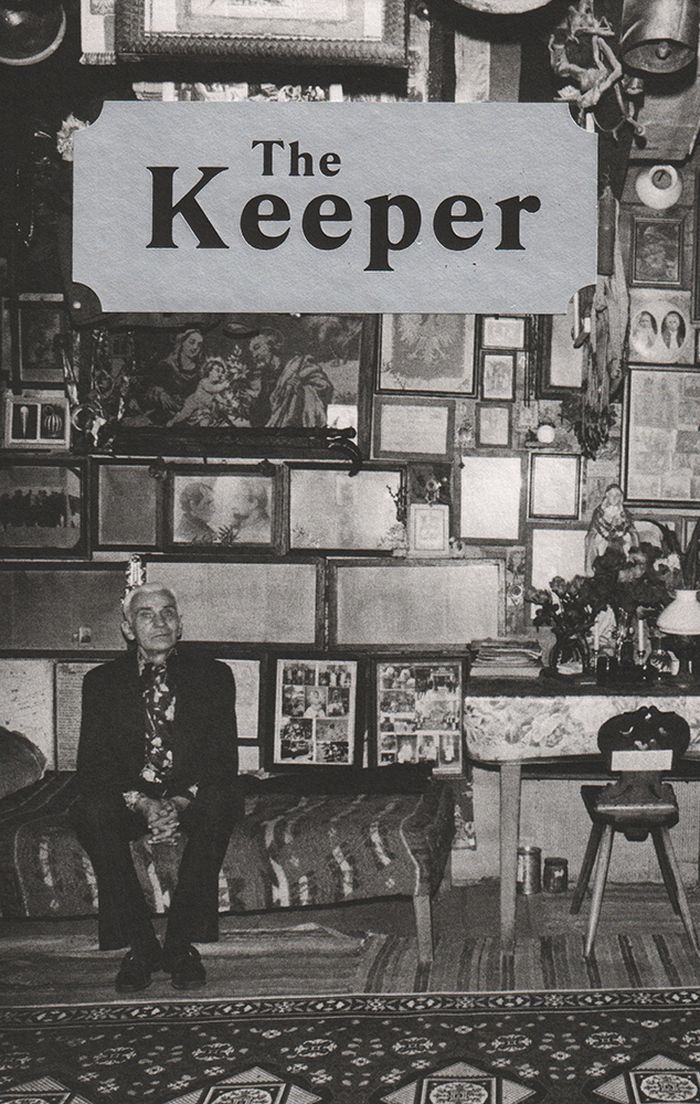
The Keeper accompanies an exhibition dedicated to the act of preserving objects, artworks and images. Through a variety of imaginary museums, personal collections and unusual assemblages, it offers a reflection on the impulse to save both the most precious and the apparently valueless, and reveals the devotion with which artists, collectors, scholars and hoarders have created sanctuaries for endangered images and artifacts. Through works spanning the 20th century, The Keeper tells the stories of various individuals through the objects they chose to safeguard.
The keeper
Actions:
Prix:
$64.95
(disponible sur commande)
Résumé:
The Keeper accompanies an exhibition dedicated to the act of preserving objects, artworks and images. Through a variety of imaginary museums, personal collections and unusual assemblages, it offers a reflection on the impulse to save both the most precious and the apparently valueless, and reveals the devotion with which artists, collectors, scholars and hoarders have created sanctuaries for endangered images and artifacts. Through works spanning the 20th century, The Keeper tells the stories of various individuals through the objects they chose to safeguard.
Classification:
livres
livres
Publication:
août 2016
août 2016
Sujet:
Muséologie
Muséologie
Classification:
livres
livres
Prix:
$50.00
(disponible sur commande)
Résumé:
The category of the museum, as it has been understood by museums of contemporary art over the last 30 years, is in need of a reassessment. This volume reflects on the museum of contemporary art in all its paradoxical characteristics. Over four chapters consisting of three theoretical essays and a section dedicated to discussion, questions regarding the roles and tasks of(...)
$50.00
(disponible sur commande)
Résumé:
The category of the museum, as it has been understood by museums of contemporary art over the last 30 years, is in need of a reassessment. This volume reflects on the museum of contemporary art in all its paradoxical characteristics. Over four chapters consisting of three theoretical essays and a section dedicated to discussion, questions regarding the roles and tasks of(...)
Titre:
Now-Tomorrow-Flux: an anthrology on the Museum of Contemporary Art
Actions:
Prix:
$50.00
(disponible sur commande)
Résumé:
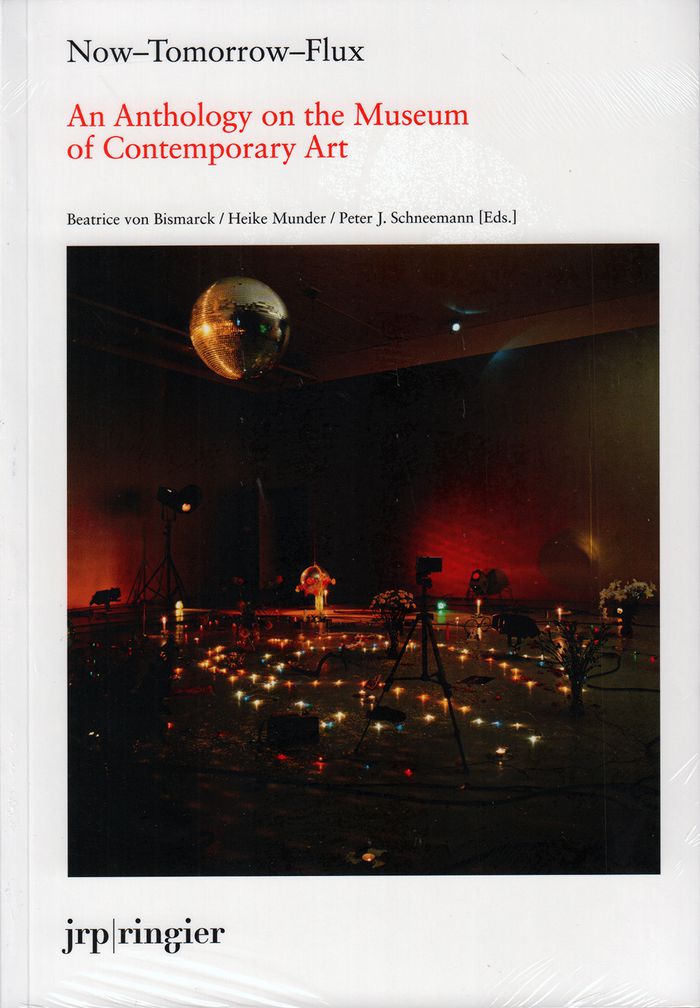
The category of the museum, as it has been understood by museums of contemporary art over the last 30 years, is in need of a reassessment. This volume reflects on the museum of contemporary art in all its paradoxical characteristics. Over four chapters consisting of three theoretical essays and a section dedicated to discussion, questions regarding the roles and tasks of the museum of contemporary art are addressed. The anthology discusses the museum of contemporary art’s double character as a site of production as well as conservation, and emphasizes its relation to different public spheres, also exploring ways of dealing with the standards that emerge from the practices of collecting, organizing and educating. Included are contributions from art historians and cultural experts Claire Bishop, Büro trafo.K, Martha Buskirk, Beatriz Colomina, Bettina Funcke, Adrian Heathfield, Christian Kravagna, Oliver Marchart, Donald Preziosi, Sophia Prinz, Beat Wyss and Artur Zmijewski.
Now-Tomorrow-Flux: an anthrology on the Museum of Contemporary Art
Actions:
Prix:
$50.00
(disponible sur commande)
Résumé:
The category of the museum, as it has been understood by museums of contemporary art over the last 30 years, is in need of a reassessment. This volume reflects on the museum of contemporary art in all its paradoxical characteristics. Over four chapters consisting of three theoretical essays and a section dedicated to discussion, questions regarding the roles and tasks of the museum of contemporary art are addressed. The anthology discusses the museum of contemporary art’s double character as a site of production as well as conservation, and emphasizes its relation to different public spheres, also exploring ways of dealing with the standards that emerge from the practices of collecting, organizing and educating. Included are contributions from art historians and cultural experts Claire Bishop, Büro trafo.K, Martha Buskirk, Beatriz Colomina, Bettina Funcke, Adrian Heathfield, Christian Kravagna, Oliver Marchart, Donald Preziosi, Sophia Prinz, Beat Wyss and Artur Zmijewski.
Classification:
livres
livres
Publication:
mai 2017
mai 2017
Sujet:
Muséologie
Muséologie
Classification:
livres
livres
Actions:
Prix:
$70.50
(disponible sur commande)
Résumé:
What is the role of the museum in society today? In this time of fundamental economic and social change, should museums be safe civic spaces or open a floor for challenge and change? Can museums contribute to the economic development of communities? If so, how best to guard against the effects of gentrification so that they do not further limit opportunity for low-income(...)
$70.50
(disponible sur commande)
Résumé:
What is the role of the museum in society today? In this time of fundamental economic and social change, should museums be safe civic spaces or open a floor for challenge and change? Can museums contribute to the economic development of communities? If so, how best to guard against the effects of gentrification so that they do not further limit opportunity for low-income(...)
Titre:
New museums: intentions, expectations, challenges
Actions:
Prix:
$70.50
(disponible sur commande)
Résumé:
What is the role of the museum in society today? In this time of fundamental economic and social change, should museums be safe civic spaces or open a floor for challenge and change? Can museums contribute to the economic development of communities? If so, how best to guard against the effects of gentrification so that they do not further limit opportunity for low-income residents? How should museums respond to concerns about environmental sustainability? These are just a few of the questions museum professionals, planners, and architects must carefully consider when developing plans and choosing a location for a new museum. "New museums" explores these questions by talking to the people behind twenty different museums on six continents, both realized projects and speculative design proposals. Among the museums discussed in the book are the Smithsonian Institute’s National Museum of African American History and Culture in Washington, DC, by Adjaye Associates; the Guggenheim Helsinki by Moreau Kusunoki Architectes; the Comic and Animation Museum in Hangzhou by MVRDV; the Munch Museum in Oslo by Estudio Herreros, the Zeitz Museum of Contemporary Art Africa in Cape Town by Heatherwick Studio; the Long Museum West Bund in Shanghai by Atelier Deshaus; and the recent extension of the Art Gallery of New South Wales in Sydney by SANAA. With more than 250 color illustrations and contributions by leading museum and architecture experts, the book sheds light on current trends and the state-of-the-art technological advances in architecture, while also providing insight into the careful thought and decision processes that go into the development of new museums.
New museums: intentions, expectations, challenges
Actions:
Prix:
$70.50
(disponible sur commande)
Résumé:
What is the role of the museum in society today? In this time of fundamental economic and social change, should museums be safe civic spaces or open a floor for challenge and change? Can museums contribute to the economic development of communities? If so, how best to guard against the effects of gentrification so that they do not further limit opportunity for low-income residents? How should museums respond to concerns about environmental sustainability? These are just a few of the questions museum professionals, planners, and architects must carefully consider when developing plans and choosing a location for a new museum. "New museums" explores these questions by talking to the people behind twenty different museums on six continents, both realized projects and speculative design proposals. Among the museums discussed in the book are the Smithsonian Institute’s National Museum of African American History and Culture in Washington, DC, by Adjaye Associates; the Guggenheim Helsinki by Moreau Kusunoki Architectes; the Comic and Animation Museum in Hangzhou by MVRDV; the Munch Museum in Oslo by Estudio Herreros, the Zeitz Museum of Contemporary Art Africa in Cape Town by Heatherwick Studio; the Long Museum West Bund in Shanghai by Atelier Deshaus; and the recent extension of the Art Gallery of New South Wales in Sydney by SANAA. With more than 250 color illustrations and contributions by leading museum and architecture experts, the book sheds light on current trends and the state-of-the-art technological advances in architecture, while also providing insight into the careful thought and decision processes that go into the development of new museums.
Classification:
livres
livres
Publication:
août 2017
août 2017
Sujet:
Muséologie
Muséologie
Classification:
livres
livres
Actions:
Prix:
$19.95
(disponible sur commande)
Résumé:
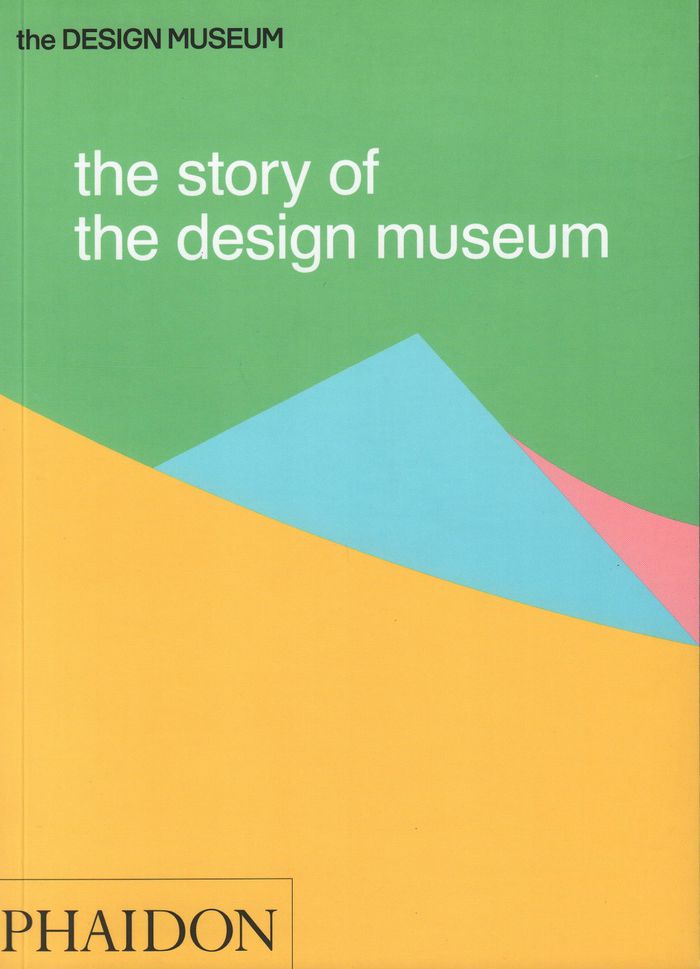
London's Design Museum is entering an exciting period in its life as it prepares to move to the former Commonwealth Institute in Kensington. The Story of the Design Museum charts the story of the museum's life from its inception as the Boilerhouse Project to twenty-five years of groundbreaking exhibitions at Shad Thames. The book begins with a foreword by the founder of(...)
$19.95
(disponible sur commande)
Résumé:
London's Design Museum is entering an exciting period in its life as it prepares to move to the former Commonwealth Institute in Kensington. The Story of the Design Museum charts the story of the museum's life from its inception as the Boilerhouse Project to twenty-five years of groundbreaking exhibitions at Shad Thames. The book begins with a foreword by the founder of(...)
Titre:
The story of the Design Museum
Actions:
Prix:
$19.95
(disponible sur commande)
Résumé:
London's Design Museum is entering an exciting period in its life as it prepares to move to the former Commonwealth Institute in Kensington. The Story of the Design Museum charts the story of the museum's life from its inception as the Boilerhouse Project to twenty-five years of groundbreaking exhibitions at Shad Thames. The book begins with a foreword by the founder of the Design Museum Sir Terence Conran, and concludes with an essay from the museum's architect, John Pawson, accompanied by stunning images of the iconic and newly renovated Commonwealth Institute Building, the museum's new home.
The story of the Design Museum
Actions:
Prix:
$19.95
(disponible sur commande)
Résumé:
London's Design Museum is entering an exciting period in its life as it prepares to move to the former Commonwealth Institute in Kensington. The Story of the Design Museum charts the story of the museum's life from its inception as the Boilerhouse Project to twenty-five years of groundbreaking exhibitions at Shad Thames. The book begins with a foreword by the founder of the Design Museum Sir Terence Conran, and concludes with an essay from the museum's architect, John Pawson, accompanied by stunning images of the iconic and newly renovated Commonwealth Institute Building, the museum's new home.
Classification:
livres
livres
Publication:
mars 2017
mars 2017
Sujet:
Muséologie
Muséologie
Classification:
livres
livres

Actions:
Prix:
$64.95
(disponible sur commande)
Résumé:
The museum is constantly a target for criticism, whether it comes from artists, thinkers, curators, or even the public. From the avant-gardes of the twentieth century up until our contemporary era, the museum s suspect position has generated countless gestures, iconoclastic actions, scathing attacks, utopias, and alternative exhibition spaces. For the first time, this(...)
$64.95
(disponible sur commande)
Résumé:
The museum is constantly a target for criticism, whether it comes from artists, thinkers, curators, or even the public. From the avant-gardes of the twentieth century up until our contemporary era, the museum s suspect position has generated countless gestures, iconoclastic actions, scathing attacks, utopias, and alternative exhibition spaces. For the first time, this(...)
Titre:
The anti-museum - an anthology
Actions:
Prix:
$64.95
(disponible sur commande)
Résumé:
The museum is constantly a target for criticism, whether it comes from artists, thinkers, curators, or even the public. From the avant-gardes of the twentieth century up until our contemporary era, the museum s suspect position has generated countless gestures, iconoclastic actions, scathing attacks, utopias, and alternative exhibition spaces. For the first time, this anthology is devoted to the anti-museum, through anti-art, the anti-artist, anti-exhibition, as well as anti-architecture, anti-philosophy, anti-religion, anti-cinema and anti-music. This notion - unpatented but regularly reappropriated - traces the erratic, fractured, and sometimes paradoxical counter-history of the contestation of artistic institutions. From the first anti-exhibition to the first catalog retracing the history of "Closed Exhibitions" from Dada to Noise music, from "Everything is Art" to NO!art, the Japanese avant-gardes to Lettrist cinema, and not forgetting such major protest figures as Gustav Metzger, Henry Flynt, Graciela Carnevale, and Lydia Lunch, "The anti-museum" sketches a polyphonic panorama where negation is accompanied by a powerful breath of life.
The anti-museum - an anthology
Actions:
Prix:
$64.95
(disponible sur commande)
Résumé:
The museum is constantly a target for criticism, whether it comes from artists, thinkers, curators, or even the public. From the avant-gardes of the twentieth century up until our contemporary era, the museum s suspect position has generated countless gestures, iconoclastic actions, scathing attacks, utopias, and alternative exhibition spaces. For the first time, this anthology is devoted to the anti-museum, through anti-art, the anti-artist, anti-exhibition, as well as anti-architecture, anti-philosophy, anti-religion, anti-cinema and anti-music. This notion - unpatented but regularly reappropriated - traces the erratic, fractured, and sometimes paradoxical counter-history of the contestation of artistic institutions. From the first anti-exhibition to the first catalog retracing the history of "Closed Exhibitions" from Dada to Noise music, from "Everything is Art" to NO!art, the Japanese avant-gardes to Lettrist cinema, and not forgetting such major protest figures as Gustav Metzger, Henry Flynt, Graciela Carnevale, and Lydia Lunch, "The anti-museum" sketches a polyphonic panorama where negation is accompanied by a powerful breath of life.
Classification:
livres
livres
Publication:
juin 2017
juin 2017
Sujet:
Muséologie
Muséologie


