


270 Résultats
Classification:
livres
livres
Actions:
Prix:
$44.95
(disponible sur commande)
Résumé:
Essays, plans and projects by various artists,including Max Bill, Heinrich Dunst, Helmut Federle, Per Kirkeby, Katarina Fritsch, Erwin Heerich, Gerhard Merz, Gottfried Honegger, Walther Pichler, Ulrich Rückriem, Bernar Venet, Daniel Buren, Christoph Haerle, Peter Wigglesworth, Donald Judd, Markus Lüpertz, Arnulf Rainer, Richard Serra among others showing their ideas for(...)
Titre:
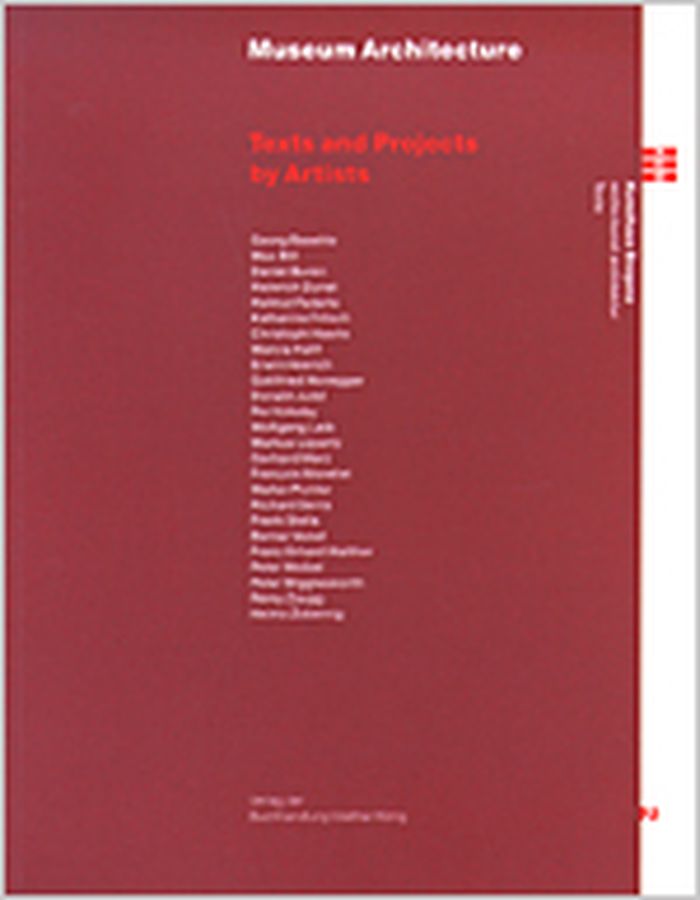
Museum architecture : texts and projects by artists
Actions:
Prix:
$44.95
(disponible sur commande)
Résumé:
Essays, plans and projects by various artists,including Max Bill, Heinrich Dunst, Helmut Federle, Per Kirkeby, Katarina Fritsch, Erwin Heerich, Gerhard Merz, Gottfried Honegger, Walther Pichler, Ulrich Rückriem, Bernar Venet, Daniel Buren, Christoph Haerle, Peter Wigglesworth, Donald Judd, Markus Lüpertz, Arnulf Rainer, Richard Serra among others showing their ideas for how museums should be constructed. When discussing the increasing number of museums and exhibition spaces for modern art which have come into being in recent years, the deep-seated differences of opinion between architects and artists keep coming to the fore. The discussion seems to be almost exclusively dominated by the point of view of the architect and defined by his/her interests. The needs of the art itself are being widely neglected and the voice of the artist is simply not being heard. Donald Judd, the American sculptor and minimalist artist, once noted that museums are so rarely built on functional lines these days, the trend being more towards the creation of a showpiece for the architect. Why are painters and sculptors not asked for their input? The very obvious question was addressed by the Espace de l’art concret when in 1997, it asked a number of well-known artists to come up with ideas and projects for a museum for concrete art. They were invited to submit their ideal utopian suggestions as well as very concrete and architectural proposals and written statements. These are documented in this publication, supplemented with the material for the collection owned by the Kunsthaus in Bregenz and expanded with an extensive anthology of texts by artists on this subject. The résumé of the contributions presents a searing criticism of contemporary museum architecture by its most important users. Their voice will at last find an ear in the current architectural discussion about the new cathedrals of the post-industrial society.
Classification:
livres
livres
Publication:
janvier 1900, Cologne
janvier 1900, Cologne
Sujet:
Muséologie
Muséologie
Classification:
livres
livres
Actions:
Prix:
$24.95
(disponible sur commande)
Résumé:
What begins as a meditation on "the museum" becomes, in this book, a far-reaching critical examination of how art history and museums have guided and controlled not only the way we look at art but the ways in which we understand modernity itself. Originally delivered as the 2001 Slade Lectures in the Fine Arts at Oxford University, the book makes its deeply complex(...)
Titre:
Brain of the earth's body : art, museums and the phantasms of modernity
Actions:
Prix:
$24.95
(disponible sur commande)
Résumé:
What begins as a meditation on "the museum" becomes, in this book, a far-reaching critical examination of how art history and museums have guided and controlled not only the way we look at art but the ways in which we understand modernity itself. Originally delivered as the 2001 Slade Lectures in the Fine Arts at Oxford University, the book makes its deeply complex argument remarkably accessible and powerfully clear. Concentrating on a period from the beginning of the nineteenth century to the beginning of the twentieth, Donald Preziosi presents case studies of major institutions that, he argues, have defined--and are still defining--the possible limits of museological and art historical theory and practice. These include Sir John Soane's Museum in London, preserved in its 1837 state; the Crystal Palace Exhibition of 1851; and four museums founded by Europeans in Egypt in the late nineteenth century, which divided up that country's history into "ethnically marked" aesthetic hierarchies and genealogies that accorded with Europe's construction of itself as the present of the world's past, and the "brain of the earth's body." Through this epistemological and institutional archaeology, Preziosi unearths the outlines of the more radical Enlightenment project that academic art history, professional museology, and art criticism have rendered marginal or invisible. Finally, he sketches a new theory about art, artifice, and visual signification in the cracks and around the margins of the "secular theologisms" of the globalized imperial capital called modernity.
Classification:
livres
livres
Publication:
juillet 2003, Minneapolis
juillet 2003, Minneapolis
Sujet:
Muséologie
Muséologie
Classification:
livres
livres
Actions:
Prix:
$53.95
(disponible sur commande)
Résumé:
'The Exhibitionist: Journal on Exhibition Making' is an anthology of the first 12 issues of the journal about contemporary curating that bears the same name. Established in 2009 as a forum for critical reflection on exhibition-making and curatorial practice, The Exhibitionist has always defined itself as “by curators, for curators.” Modeled after the iconic French film(...)
Titre:
The Exhibitionist: journal on exhibition making. The first six years
Actions:
Prix:
$53.95
(disponible sur commande)
Résumé:
'The Exhibitionist: Journal on Exhibition Making' is an anthology of the first 12 issues of the journal about contemporary curating that bears the same name. Established in 2009 as a forum for critical reflection on exhibition-making and curatorial practice, The Exhibitionist has always defined itself as “by curators, for curators.” Modeled after the iconic French film journal Cahiers du cinéma, The Exhibitionist has served a critical role in examining current curatorial practices by focusing specifically on the exhibition format as a site of experimentation and inquiry. The Exhibitionist has historicized, analyzed and critiqued a phenomenon it is itself symptomatic of—the rise of the curator since the 1960s, the ensuing explosion of curatorial creativity and the growing fascination with the discipline of curating.
Classification:
livres
livres
Publication:
février 2017
février 2017
Sujet:
Muséologie
Muséologie
Classification:
livres
livres
Prix:
$45.95
(disponible sur commande)
Résumé:
In 1968, Robert Smithson reacted to Michael Fried’s influential essay “Art and Objecthood” with a series of works called non-sites. While Fried described the spectator’s connection with a work of art as a momentary visual engagement, Smithson’s non-sites asked spectators to do something more: to take time looking, walking, seeing, reading, and thinking about the(...)
Titre:
Beyond objecthood: the exhibition as a critical form since 1968
Actions:
Prix:
$45.95
(disponible sur commande)
Résumé:
In 1968, Robert Smithson reacted to Michael Fried’s influential essay “Art and Objecthood” with a series of works called non-sites. While Fried described the spectator’s connection with a work of art as a momentary visual engagement, Smithson’s non-sites asked spectators to do something more: to take time looking, walking, seeing, reading, and thinking about the combination of objects, images, and texts installed in a gallery. In Beyond Objecthood, James Voorhies traces a genealogy of spectatorship through the rise of the exhibition as a critical form—and artistic medium. Artists like Smithson, Group Material, and Michael Asher sought to reconfigure and expand the exhibition and the museum into something more active, open, and democratic, by inviting spectators into new and unexpected encounters with works of art and institutions. This practice was sharply critical of the ingrained characteristics long associated with art institutions and conventional exhibition-making; and yet, Voorhies finds, over time the critique has been diluted by efforts of the very institutions that now gravitate to the “participatory.”
Classification:
livres
livres
Publication:
février 2017
février 2017
Sujet:
Muséologie
Muséologie
Classification:
livres
livres
Titre:
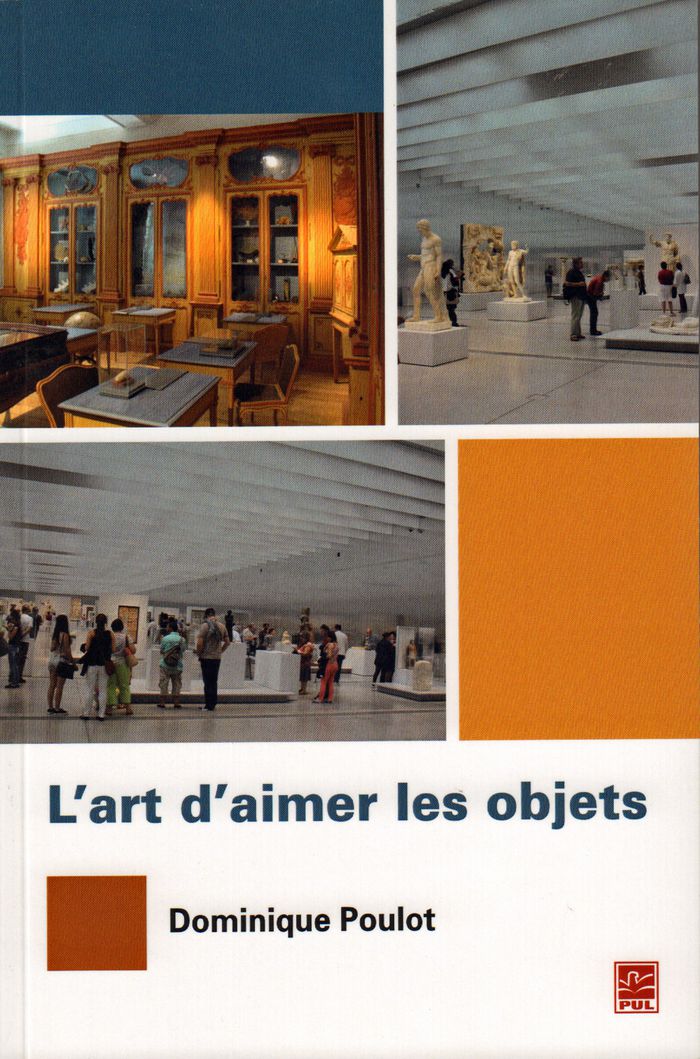
L'Art d'aimer les objets
L'Art d'aimer les objets
Actions:
Prix:
$29.95
(disponible sur commande)
Résumé:
L’écriture du patrimoine français a longtemps hésité entre la glorification des collections nationales et la critique de la perte du contexte des œuvres – aux dépens d’une approche du processus de patrimonialisation, de ses acteurs et de ses pratiques. On fait ici le pari d’une histoire de l’art d’aimer certains objets, en croisant les savoirs et les émotions, les(...)
Titre:
L'Art d'aimer les objets
Actions:
Prix:
$29.95
(disponible sur commande)
Résumé:
L’écriture du patrimoine français a longtemps hésité entre la glorification des collections nationales et la critique de la perte du contexte des œuvres – aux dépens d’une approche du processus de patrimonialisation, de ses acteurs et de ses pratiques. On fait ici le pari d’une histoire de l’art d’aimer certains objets, en croisant les savoirs et les émotions, les investissements personnels et les disciplines institutionnelles, les projections et les appropriations. Les exemples choisis vont de la Révolution à nos jours et envisagent aussi bien les chefs-d’œuvre de l’art au musée que l’inscription de la société dans les dispositifs patrimoniaux contemporains. On constate chaque fois que l’attachement pour des choses jugées précieuses accroît leur profondeur et leur densité, engage des identifications de leurs " amis " et travaille enfin à différentes représentations collectives. La cristallisation patrimoniale autorise ainsi, sinon une unité imaginée des héritages, au moins l’ambition de leur construction commune.
Classification:
livres
livres
Publication:
octobre 2016
octobre 2016
Sujet:
Muséologie
Muséologie
Classification:
livres
livres
Titre:
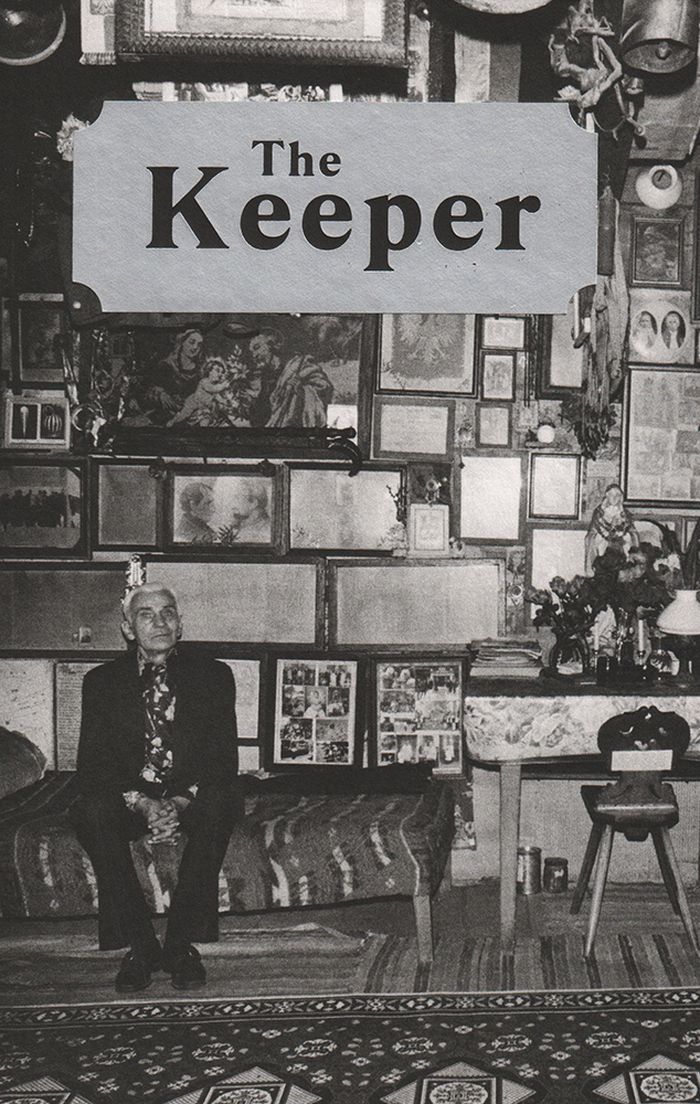
The keeper
The keeper
Actions:
Prix:
$64.95
(disponible sur commande)
Résumé:
The Keeper accompanies an exhibition dedicated to the act of preserving objects, artworks and images. Through a variety of imaginary museums, personal collections and unusual assemblages, it offers a reflection on the impulse to save both the most precious and the apparently valueless, and reveals the devotion with which artists, collectors, scholars and hoarders have(...)
Titre:
The keeper
Actions:
Prix:
$64.95
(disponible sur commande)
Résumé:
The Keeper accompanies an exhibition dedicated to the act of preserving objects, artworks and images. Through a variety of imaginary museums, personal collections and unusual assemblages, it offers a reflection on the impulse to save both the most precious and the apparently valueless, and reveals the devotion with which artists, collectors, scholars and hoarders have created sanctuaries for endangered images and artifacts. Through works spanning the 20th century, The Keeper tells the stories of various individuals through the objects they chose to safeguard.
Classification:
livres
livres
Publication:
août 2016
août 2016
Sujet:
Muséologie
Muséologie
Classification:
livres
livres
Prix:
$50.00
(disponible sur commande)
Résumé:
The category of the museum, as it has been understood by museums of contemporary art over the last 30 years, is in need of a reassessment. This volume reflects on the museum of contemporary art in all its paradoxical characteristics. Over four chapters consisting of three theoretical essays and a section dedicated to discussion, questions regarding the roles and tasks of(...)
Titre:
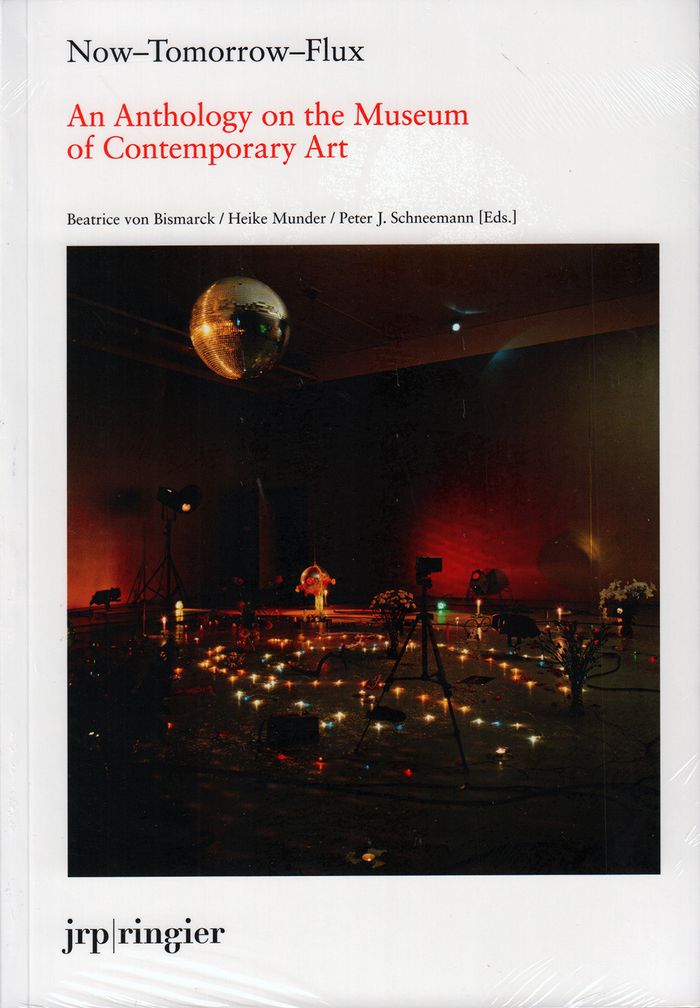
Now-Tomorrow-Flux: an anthrology on the Museum of Contemporary Art
Actions:
Prix:
$50.00
(disponible sur commande)
Résumé:
The category of the museum, as it has been understood by museums of contemporary art over the last 30 years, is in need of a reassessment. This volume reflects on the museum of contemporary art in all its paradoxical characteristics. Over four chapters consisting of three theoretical essays and a section dedicated to discussion, questions regarding the roles and tasks of the museum of contemporary art are addressed. The anthology discusses the museum of contemporary art’s double character as a site of production as well as conservation, and emphasizes its relation to different public spheres, also exploring ways of dealing with the standards that emerge from the practices of collecting, organizing and educating. Included are contributions from art historians and cultural experts Claire Bishop, Büro trafo.K, Martha Buskirk, Beatriz Colomina, Bettina Funcke, Adrian Heathfield, Christian Kravagna, Oliver Marchart, Donald Preziosi, Sophia Prinz, Beat Wyss and Artur Zmijewski.
Classification:
livres
livres
Publication:
mai 2017
mai 2017
Sujet:
Muséologie
Muséologie
Classification:
livres
livres
Actions:
Prix:
$70.50
(disponible sur commande)
Résumé:
What is the role of the museum in society today? In this time of fundamental economic and social change, should museums be safe civic spaces or open a floor for challenge and change? Can museums contribute to the economic development of communities? If so, how best to guard against the effects of gentrification so that they do not further limit opportunity for low-income(...)
Titre:
New museums: intentions, expectations, challenges
Actions:
Prix:
$70.50
(disponible sur commande)
Résumé:
What is the role of the museum in society today? In this time of fundamental economic and social change, should museums be safe civic spaces or open a floor for challenge and change? Can museums contribute to the economic development of communities? If so, how best to guard against the effects of gentrification so that they do not further limit opportunity for low-income residents? How should museums respond to concerns about environmental sustainability? These are just a few of the questions museum professionals, planners, and architects must carefully consider when developing plans and choosing a location for a new museum. "New museums" explores these questions by talking to the people behind twenty different museums on six continents, both realized projects and speculative design proposals. Among the museums discussed in the book are the Smithsonian Institute’s National Museum of African American History and Culture in Washington, DC, by Adjaye Associates; the Guggenheim Helsinki by Moreau Kusunoki Architectes; the Comic and Animation Museum in Hangzhou by MVRDV; the Munch Museum in Oslo by Estudio Herreros, the Zeitz Museum of Contemporary Art Africa in Cape Town by Heatherwick Studio; the Long Museum West Bund in Shanghai by Atelier Deshaus; and the recent extension of the Art Gallery of New South Wales in Sydney by SANAA. With more than 250 color illustrations and contributions by leading museum and architecture experts, the book sheds light on current trends and the state-of-the-art technological advances in architecture, while also providing insight into the careful thought and decision processes that go into the development of new museums.
Classification:
livres
livres
Publication:
août 2017
août 2017
Sujet:
Muséologie
Muséologie
Classification:
livres
livres
Actions:
Prix:
$19.95
(disponible sur commande)
Résumé:
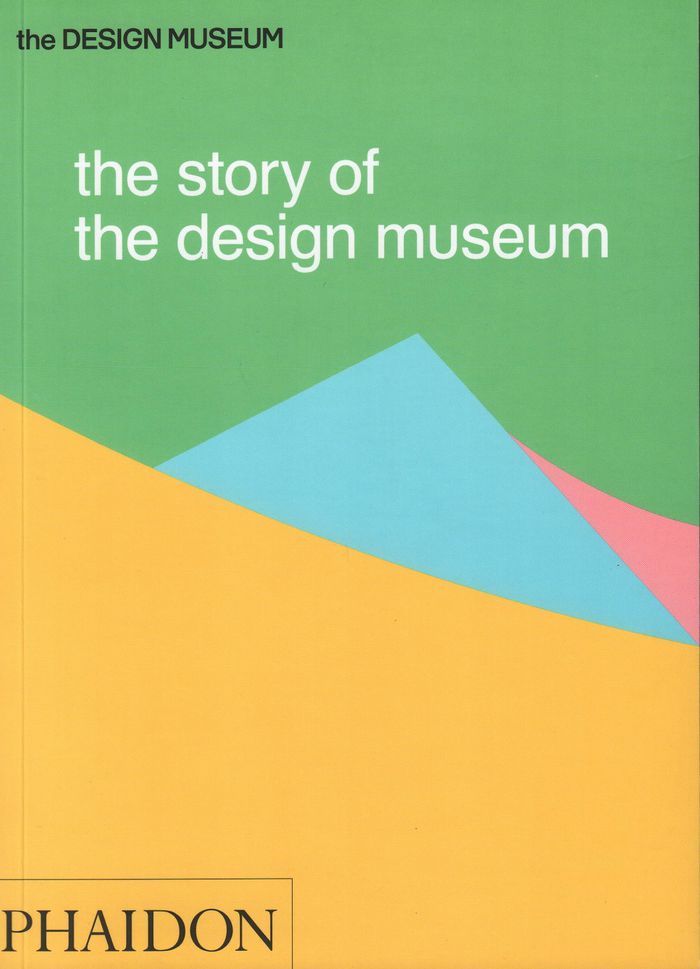
London's Design Museum is entering an exciting period in its life as it prepares to move to the former Commonwealth Institute in Kensington. The Story of the Design Museum charts the story of the museum's life from its inception as the Boilerhouse Project to twenty-five years of groundbreaking exhibitions at Shad Thames. The book begins with a foreword by the founder of(...)
Titre:
The story of the Design Museum
Actions:
Prix:
$19.95
(disponible sur commande)
Résumé:
London's Design Museum is entering an exciting period in its life as it prepares to move to the former Commonwealth Institute in Kensington. The Story of the Design Museum charts the story of the museum's life from its inception as the Boilerhouse Project to twenty-five years of groundbreaking exhibitions at Shad Thames. The book begins with a foreword by the founder of the Design Museum Sir Terence Conran, and concludes with an essay from the museum's architect, John Pawson, accompanied by stunning images of the iconic and newly renovated Commonwealth Institute Building, the museum's new home.
Classification:
livres
livres
Publication:
mars 2017
mars 2017
Sujet:
Muséologie
Muséologie
Classification:
livres
livres
Actions:
Prix:
$64.95
(disponible sur commande)
Résumé:
The museum is constantly a target for criticism, whether it comes from artists, thinkers, curators, or even the public. From the avant-gardes of the twentieth century up until our contemporary era, the museum s suspect position has generated countless gestures, iconoclastic actions, scathing attacks, utopias, and alternative exhibition spaces. For the first time, this(...)
Titre:
The anti-museum - an anthology
Actions:
Prix:
$64.95
(disponible sur commande)
Résumé:
The museum is constantly a target for criticism, whether it comes from artists, thinkers, curators, or even the public. From the avant-gardes of the twentieth century up until our contemporary era, the museum s suspect position has generated countless gestures, iconoclastic actions, scathing attacks, utopias, and alternative exhibition spaces. For the first time, this anthology is devoted to the anti-museum, through anti-art, the anti-artist, anti-exhibition, as well as anti-architecture, anti-philosophy, anti-religion, anti-cinema and anti-music. This notion - unpatented but regularly reappropriated - traces the erratic, fractured, and sometimes paradoxical counter-history of the contestation of artistic institutions. From the first anti-exhibition to the first catalog retracing the history of "Closed Exhibitions" from Dada to Noise music, from "Everything is Art" to NO!art, the Japanese avant-gardes to Lettrist cinema, and not forgetting such major protest figures as Gustav Metzger, Henry Flynt, Graciela Carnevale, and Lydia Lunch, "The anti-museum" sketches a polyphonic panorama where negation is accompanied by a powerful breath of life.
Classification:
livres
livres
Publication:
juin 2017
juin 2017
Sujet:
Muséologie
Muséologie


