


265 Résultats
Classification:
livres
livres
Titre:
Photogénie de l'exposition
Photogénie de l'exposition
Actions:
Prix:
$29.95
(disponible sur commande)
Résumé:
L'exposition d'œuvres d'art est caractérisée par son aspect éphémère, elle finit toujours par disparaître pour ne rester dans la mémoire qu'à travers les traces que sont les catalogues et les archives. Parmi ces archives les vues d'expositions jouent un rôle à la fois singulier, transparent et déterminant. Photographie et Exposition sont étroitement liées, toutes deux(...)
$29.95
(disponible sur commande)
Résumé:
L'exposition d'œuvres d'art est caractérisée par son aspect éphémère, elle finit toujours par disparaître pour ne rester dans la mémoire qu'à travers les traces que sont les catalogues et les archives. Parmi ces archives les vues d'expositions jouent un rôle à la fois singulier, transparent et déterminant. Photographie et Exposition sont étroitement liées, toutes deux(...)
Titre:
Photogénie de l'exposition
Actions:
Prix:
$29.95
(disponible sur commande)
Résumé:
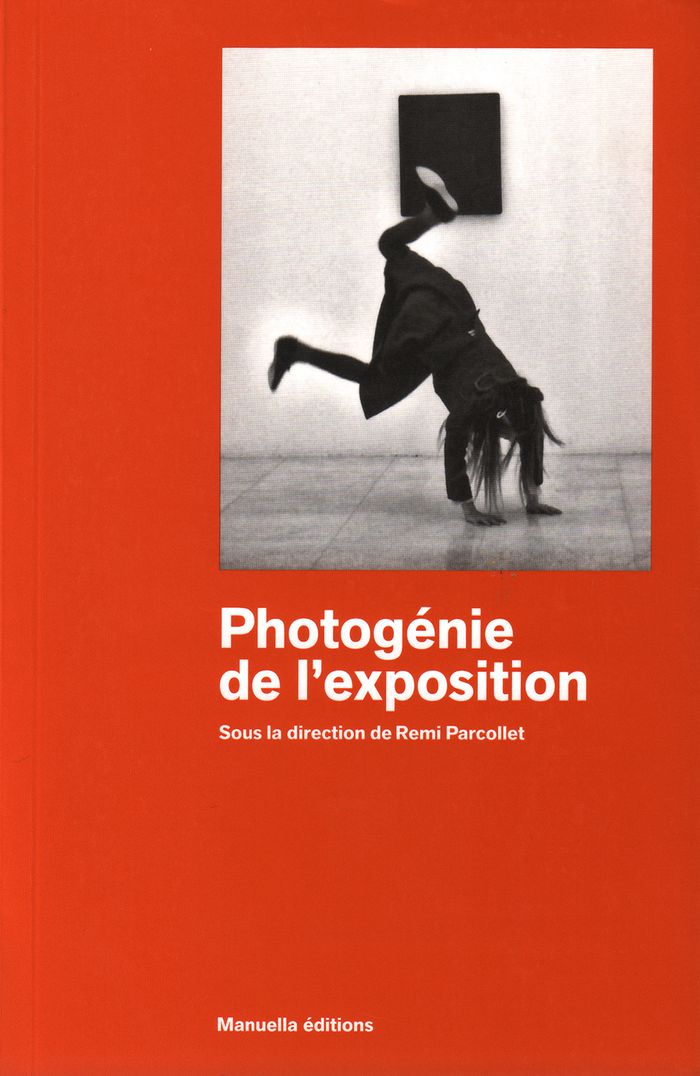
L'exposition d'œuvres d'art est caractérisée par son aspect éphémère, elle finit toujours par disparaître pour ne rester dans la mémoire qu'à travers les traces que sont les catalogues et les archives. Parmi ces archives les vues d'expositions jouent un rôle à la fois singulier, transparent et déterminant. Photographie et Exposition sont étroitement liées, toutes deux consistent à « montrer » et surtout à « mettre en lumière». Cet ouvrage fait le point sur le nouveau statut des photographies de vues d’exposition : fonction documentaire complexe, entre archive et support de représentation, elles n’ont pas qu’une valeur testimoniale, mais s’inscrivent aussi dans le contexte postmoderne comme des outils artistiques et curatoriaux.
Photogénie de l'exposition
Actions:
Prix:
$29.95
(disponible sur commande)
Résumé:
L'exposition d'œuvres d'art est caractérisée par son aspect éphémère, elle finit toujours par disparaître pour ne rester dans la mémoire qu'à travers les traces que sont les catalogues et les archives. Parmi ces archives les vues d'expositions jouent un rôle à la fois singulier, transparent et déterminant. Photographie et Exposition sont étroitement liées, toutes deux consistent à « montrer » et surtout à « mettre en lumière». Cet ouvrage fait le point sur le nouveau statut des photographies de vues d’exposition : fonction documentaire complexe, entre archive et support de représentation, elles n’ont pas qu’une valeur testimoniale, mais s’inscrivent aussi dans le contexte postmoderne comme des outils artistiques et curatoriaux.
Classification:
livres
livres
Publication:
août 2018
août 2018
Sujet:
Muséologie
Muséologie
Classification:
livres
livres

Actions:
Prix:
$39.95
(disponible en magasin)
Résumé:
Museums are frequently sites of struggle and negotiation. They are key cultural institutions that occupy an oftentimes uncomfortable place at the crossroads of the arts, culture, various levels of government, corporate ventures, and the public. Because of this, museums are targeted by political action but can also provide support for contentious politics. Though protests(...)
$39.95
(disponible en magasin)
Résumé:
Museums are frequently sites of struggle and negotiation. They are key cultural institutions that occupy an oftentimes uncomfortable place at the crossroads of the arts, culture, various levels of government, corporate ventures, and the public. Because of this, museums are targeted by political action but can also provide support for contentious politics. Though protests(...)
Titre:
Tear gas epiphanies: protest, culture, museums
Actions:
Prix:
$39.95
(disponible en magasin)
Résumé:
Museums are frequently sites of struggle and negotiation. They are key cultural institutions that occupy an oftentimes uncomfortable place at the crossroads of the arts, culture, various levels of government, corporate ventures, and the public. Because of this, museums are targeted by political action but can also provide support for contentious politics. Though protests at museums are understudied, they are far from anomalous. "Tear Gas Epiphanies" traces the as-yet-untold story of political action at museums in Canada from the early twentieth century to the present. The book looks at how museums do or do not archive protest ephemera, examining a range of responses to actions taking place at their thresholds, from active encouragement to belligerent dismissal. Drawing together extensive primary-source research and analysis, Robertson questions widespread perceptions of museums, strongly arguing for a reconsideration of their role in contemporary society that takes into account political conflict and protest as key ingredients in museum life.
Tear gas epiphanies: protest, culture, museums
Actions:
Prix:
$39.95
(disponible en magasin)
Résumé:
Museums are frequently sites of struggle and negotiation. They are key cultural institutions that occupy an oftentimes uncomfortable place at the crossroads of the arts, culture, various levels of government, corporate ventures, and the public. Because of this, museums are targeted by political action but can also provide support for contentious politics. Though protests at museums are understudied, they are far from anomalous. "Tear Gas Epiphanies" traces the as-yet-untold story of political action at museums in Canada from the early twentieth century to the present. The book looks at how museums do or do not archive protest ephemera, examining a range of responses to actions taking place at their thresholds, from active encouragement to belligerent dismissal. Drawing together extensive primary-source research and analysis, Robertson questions widespread perceptions of museums, strongly arguing for a reconsideration of their role in contemporary society that takes into account political conflict and protest as key ingredients in museum life.
Classification:
livres
livres
Publication:
juin 2019
juin 2019
Sujet:
Muséologie
Muséologie
Classification:
livres
livres

Actions:
Prix:
$20.00
(disponible sur commande)
Résumé:
Muséologies, Les cahiers d’études supérieures, est la première publication universitaire en muséologie au Québec. Elle a pour mission la diffusion et la promotion des travaux issus des programmes supérieurs en muséologie afin d’assurer une meilleure visibilité à la recherche dans cette discipline.
$20.00
(disponible sur commande)
Résumé:
Muséologies, Les cahiers d’études supérieures, est la première publication universitaire en muséologie au Québec. Elle a pour mission la diffusion et la promotion des travaux issus des programmes supérieurs en muséologie afin d’assurer une meilleure visibilité à la recherche dans cette discipline.
Titre:
Muséologies: les cahiers d'études supérieures, volume 4, automne 2009
Actions:
Prix:
$20.00
(disponible sur commande)
Résumé:
Muséologies, Les cahiers d’études supérieures, est la première publication universitaire en muséologie au Québec. Elle a pour mission la diffusion et la promotion des travaux issus des programmes supérieurs en muséologie afin d’assurer une meilleure visibilité à la recherche dans cette discipline.
Muséologies: les cahiers d'études supérieures, volume 4, automne 2009
Actions:
Prix:
$20.00
(disponible sur commande)
Résumé:
Muséologies, Les cahiers d’études supérieures, est la première publication universitaire en muséologie au Québec. Elle a pour mission la diffusion et la promotion des travaux issus des programmes supérieurs en muséologie afin d’assurer une meilleure visibilité à la recherche dans cette discipline.
Classification:
livres
livres
Publication:
janvier 2009
janvier 2009
Classification:
livres
livres
Actions:
Prix:
$39.95
(disponible sur commande)
Résumé:
New media artworks are difficult to classify according to the traditional art museum categories determined by medium, geography, and chronology. These works present the curator with novel challenges involving interpretation, exhibition, and dissemination. This book views these challenges as opportunities to rethink curatorial practice. Rethinking Curating explores the(...)
$39.95
(disponible sur commande)
Résumé:
New media artworks are difficult to classify according to the traditional art museum categories determined by medium, geography, and chronology. These works present the curator with novel challenges involving interpretation, exhibition, and dissemination. This book views these challenges as opportunities to rethink curatorial practice. Rethinking Curating explores the(...)
Titre:
Rethinking curating: art after new media
Actions:
Prix:
$39.95
(disponible sur commande)
Résumé:
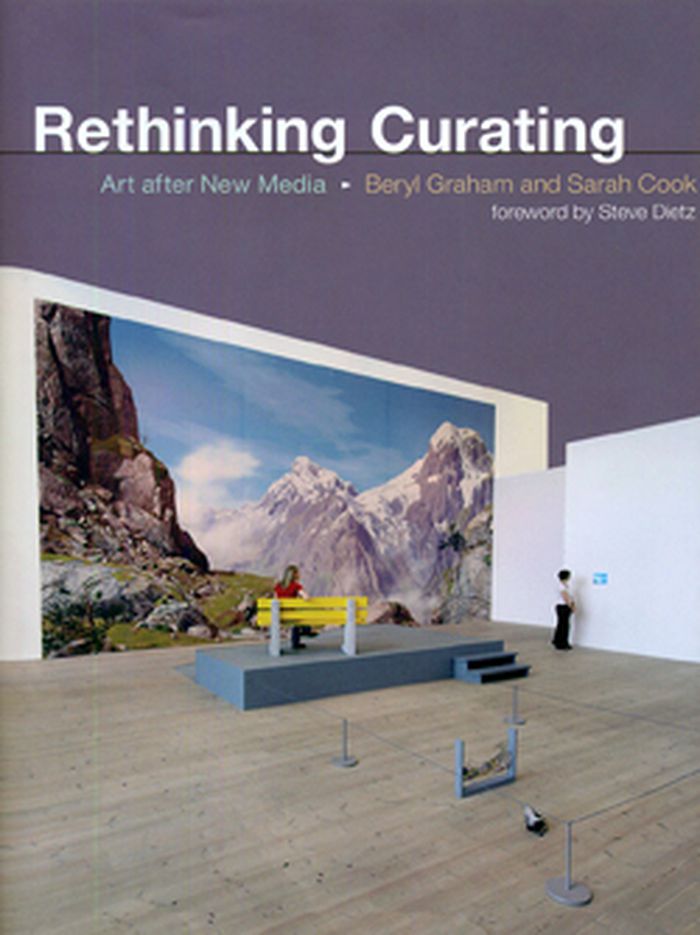
New media artworks are difficult to classify according to the traditional art museum categories determined by medium, geography, and chronology. These works present the curator with novel challenges involving interpretation, exhibition, and dissemination. This book views these challenges as opportunities to rethink curatorial practice. Rethinking Curating explores the characteristics distinctive to new media art, including its immateriality and its questioning of time and space, and relates them to such contemporary art forms as video art, conceptual art, socially engaged art, and performance art.
Rethinking curating: art after new media
Actions:
Prix:
$39.95
(disponible sur commande)
Résumé:
New media artworks are difficult to classify according to the traditional art museum categories determined by medium, geography, and chronology. These works present the curator with novel challenges involving interpretation, exhibition, and dissemination. This book views these challenges as opportunities to rethink curatorial practice. Rethinking Curating explores the characteristics distinctive to new media art, including its immateriality and its questioning of time and space, and relates them to such contemporary art forms as video art, conceptual art, socially engaged art, and performance art.
Classification:
livres
livres
Publication:
mars 2010
mars 2010
Classification:
livres
livres
Actions:
Prix:
$35.00
(disponible sur commande)
Résumé:
In recent years there has been increased debate on the incorporation of pedagogy into curatorial practice — on what has been termed "the educational turn" ("turn" in the sense of a paradigmatic reorientation, within the arts). In this new volume, artists, curators, critics and academics respond to this widely recognized turn in contemporary art. Consisting primarily of(...)
$35.00
(disponible sur commande)
Résumé:
In recent years there has been increased debate on the incorporation of pedagogy into curatorial practice — on what has been termed "the educational turn" ("turn" in the sense of a paradigmatic reorientation, within the arts). In this new volume, artists, curators, critics and academics respond to this widely recognized turn in contemporary art. Consisting primarily of(...)
Titre:
Curating and the educational turn
Actions:
Prix:
$35.00
(disponible sur commande)
Résumé:
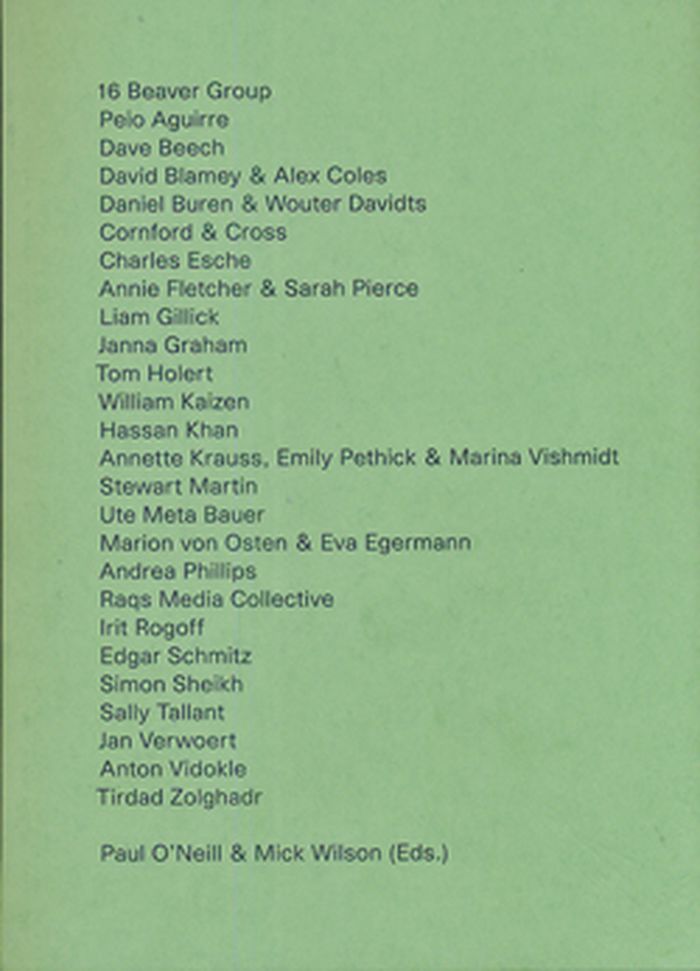
In recent years there has been increased debate on the incorporation of pedagogy into curatorial practice — on what has been termed "the educational turn" ("turn" in the sense of a paradigmatic reorientation, within the arts). In this new volume, artists, curators, critics and academics respond to this widely recognized turn in contemporary art. Consisting primarily of newly commissioned texts, from interviews and position statements to performative text and dialogue, this book also includes a number of previously published writings that have proved primary in the debate so far. Contributors include David Aguirre, Dave Beech, Cornford & Cross, Charles Esche, Liam Gillick, Tom Holert and Emily Pethick.
Curating and the educational turn
Actions:
Prix:
$35.00
(disponible sur commande)
Résumé:
In recent years there has been increased debate on the incorporation of pedagogy into curatorial practice — on what has been termed "the educational turn" ("turn" in the sense of a paradigmatic reorientation, within the arts). In this new volume, artists, curators, critics and academics respond to this widely recognized turn in contemporary art. Consisting primarily of newly commissioned texts, from interviews and position statements to performative text and dialogue, this book also includes a number of previously published writings that have proved primary in the debate so far. Contributors include David Aguirre, Dave Beech, Cornford & Cross, Charles Esche, Liam Gillick, Tom Holert and Emily Pethick.
Classification:
livres
livres
Publication:
février 2010
février 2010
Sujet:
Muséologie
Muséologie
Classification:
livres
livres
Titre:
Le facteur C
Le facteur C
Actions:
Prix:
$26.95
(disponible sur commande)
Résumé:
Fruits des observations et réflexions d'un des leaders les plus en vue du secteur culturel, Simon Brault, Le Facteur C explique l'émergence spectaculaire des préoccupations culturelles dans l'arène publique au cours de la dernière décennie. L'auteur soutient qu'il sera désormais de plus en plus risqué de les ignorer sur le plan politique et dans la réalisation de tout(...)
$26.95
(disponible sur commande)
Résumé:
Fruits des observations et réflexions d'un des leaders les plus en vue du secteur culturel, Simon Brault, Le Facteur C explique l'émergence spectaculaire des préoccupations culturelles dans l'arène publique au cours de la dernière décennie. L'auteur soutient qu'il sera désormais de plus en plus risqué de les ignorer sur le plan politique et dans la réalisation de tout(...)
Titre:
Le facteur C
Actions:
Prix:
$26.95
(disponible sur commande)
Résumé:
Fruits des observations et réflexions d'un des leaders les plus en vue du secteur culturel, Simon Brault, Le Facteur C explique l'émergence spectaculaire des préoccupations culturelles dans l'arène publique au cours de la dernière décennie. L'auteur soutient qu'il sera désormais de plus en plus risqué de les ignorer sur le plan politique et dans la réalisation de tout projet collectif. Après avoir examiné l'impact économique et questionné différents aspects du fonctionnement du secteur culturel, il insiste sur l'importance des arts et de la culture comme dimension essentielle de la vie des individus et des communautés.
Le facteur C
Actions:
Prix:
$26.95
(disponible sur commande)
Résumé:
Fruits des observations et réflexions d'un des leaders les plus en vue du secteur culturel, Simon Brault, Le Facteur C explique l'émergence spectaculaire des préoccupations culturelles dans l'arène publique au cours de la dernière décennie. L'auteur soutient qu'il sera désormais de plus en plus risqué de les ignorer sur le plan politique et dans la réalisation de tout projet collectif. Après avoir examiné l'impact économique et questionné différents aspects du fonctionnement du secteur culturel, il insiste sur l'importance des arts et de la culture comme dimension essentielle de la vie des individus et des communautés.
Classification:
livres
livres
Publication:
septembre 2009
septembre 2009
Sujet:
Muséologie
Muséologie
Classification:
livres
livres
Titre:
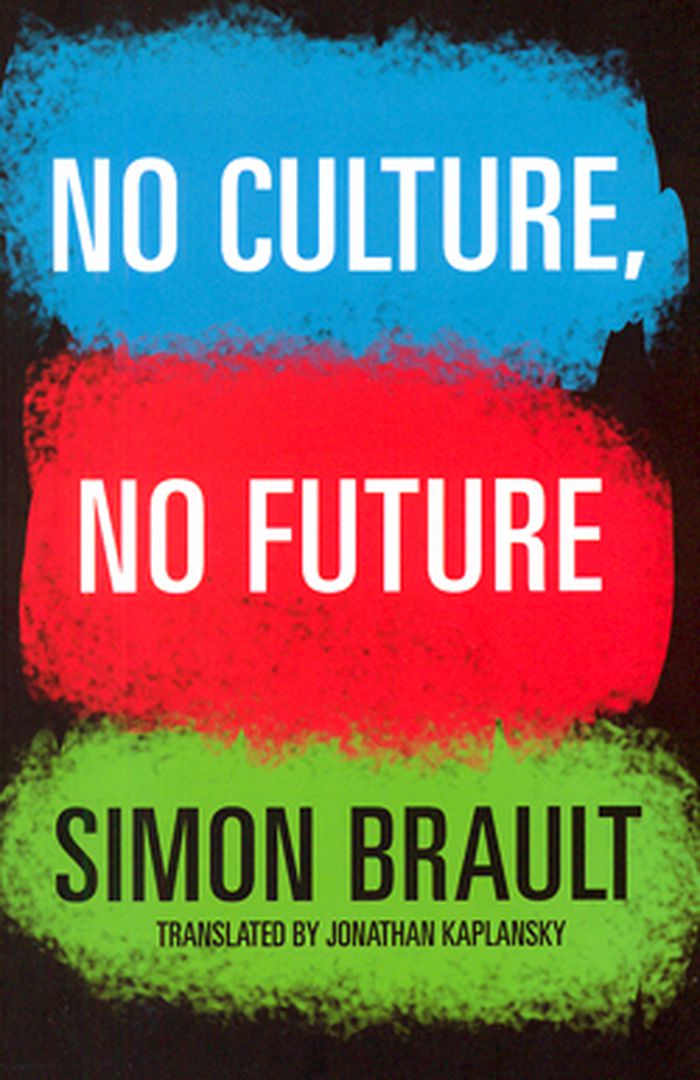
No culture, no future
No culture, no future
Actions:
Prix:
$21.00
(disponible sur commande)
Résumé:
In No Culture, No Future, Simon Brault establishes that arts are not just a right but a necessity. A longtime advocate of the arts in Montreal, Brault has taken action to re-establish that city as one of the most culturally accomplished communities in Canada. No Culture, No Future is part of his campaign to convince the people and governments of cities across Canada that(...)
$21.00
(disponible sur commande)
Résumé:
In No Culture, No Future, Simon Brault establishes that arts are not just a right but a necessity. A longtime advocate of the arts in Montreal, Brault has taken action to re-establish that city as one of the most culturally accomplished communities in Canada. No Culture, No Future is part of his campaign to convince the people and governments of cities across Canada that(...)
Titre:
No culture, no future
Actions:
Prix:
$21.00
(disponible sur commande)
Résumé:
In No Culture, No Future, Simon Brault establishes that arts are not just a right but a necessity. A longtime advocate of the arts in Montreal, Brault has taken action to re-establish that city as one of the most culturally accomplished communities in Canada. No Culture, No Future is part of his campaign to convince the people and governments of cities across Canada that investment in the arts benefits all citizens.
No culture, no future
Actions:
Prix:
$21.00
(disponible sur commande)
Résumé:
In No Culture, No Future, Simon Brault establishes that arts are not just a right but a necessity. A longtime advocate of the arts in Montreal, Brault has taken action to re-establish that city as one of the most culturally accomplished communities in Canada. No Culture, No Future is part of his campaign to convince the people and governments of cities across Canada that investment in the arts benefits all citizens.
Classification:
livres
livres
Publication:
juin 2010
juin 2010
Sujet:
Muséologie
Muséologie
Classification:
livres
livres
Actions:
Prix:
$50.00
(disponible sur commande)
Résumé:
This book assess the present trajectory of arts institutions by explicating various issues, each of which is associated with an imaginary room. Readers journey from the reception to the roof terrace via rooms dedicated to temporary exhibitions, site-specific commissions and collections displays, taking in the bookshop, café, auditorium and education spaces along the way.(...)
$50.00
(disponible sur commande)
Résumé:
This book assess the present trajectory of arts institutions by explicating various issues, each of which is associated with an imaginary room. Readers journey from the reception to the roof terrace via rooms dedicated to temporary exhibitions, site-specific commissions and collections displays, taking in the bookshop, café, auditorium and education spaces along the way.(...)
Titre:
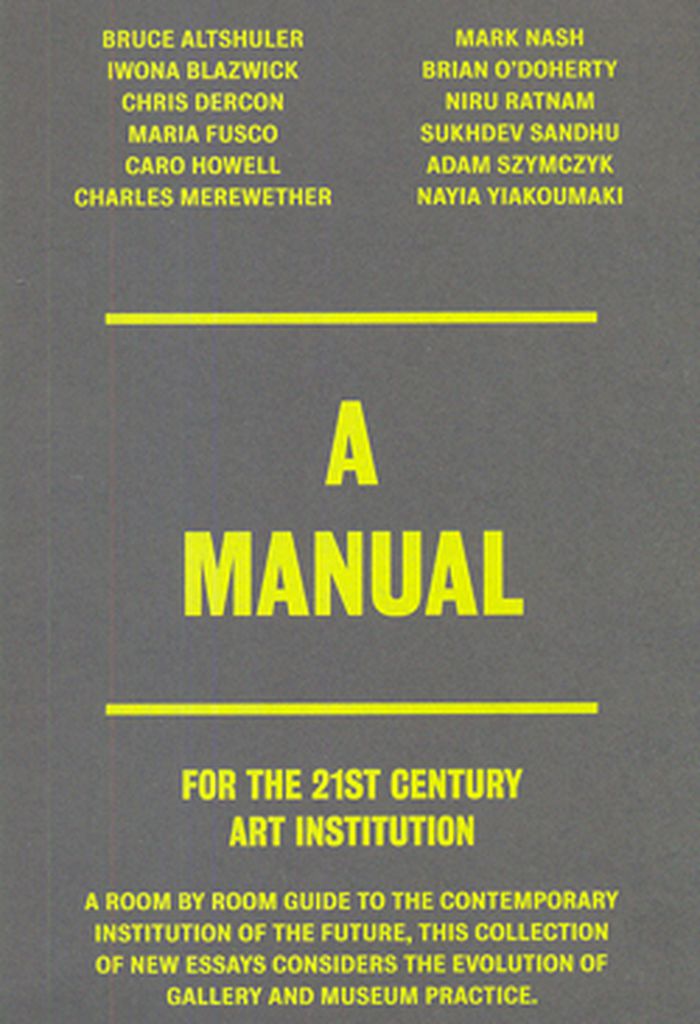
A manual for the 21st century art institution
Actions:
Prix:
$50.00
(disponible sur commande)
Résumé:
This book assess the present trajectory of arts institutions by explicating various issues, each of which is associated with an imaginary room. Readers journey from the reception to the roof terrace via rooms dedicated to temporary exhibitions, site-specific commissions and collections displays, taking in the bookshop, café, auditorium and education spaces along the way. Bruce Altshuler,Chris Dercon, Maria Fusco, Caro Howell, Charles Merewether, Mark Nash, Niru Ratnam, Sukhdev Sandhu, Adam Szymczyk and Nayia Yiakoumaki are our guides to this inviting theater. The result is an indispensable handbook for art professionals, students and anyone curious about today's art world.
A manual for the 21st century art institution
Actions:
Prix:
$50.00
(disponible sur commande)
Résumé:
This book assess the present trajectory of arts institutions by explicating various issues, each of which is associated with an imaginary room. Readers journey from the reception to the roof terrace via rooms dedicated to temporary exhibitions, site-specific commissions and collections displays, taking in the bookshop, café, auditorium and education spaces along the way. Bruce Altshuler,Chris Dercon, Maria Fusco, Caro Howell, Charles Merewether, Mark Nash, Niru Ratnam, Sukhdev Sandhu, Adam Szymczyk and Nayia Yiakoumaki are our guides to this inviting theater. The result is an indispensable handbook for art professionals, students and anyone curious about today's art world.
Classification:
livres
livres
Publication:
février 2010
février 2010
Sujet:
Muséologie
Muséologie
Classification:
livres
livres
Actions:
Prix:
$25.95
(disponible sur commande)
Résumé:
Pur produit de l'Occident qui s'exporte aujourd'hui avec fracas, le musée est en réalité une institution coupée de la vie, qui s'est constituée en mythologie, voire en uchronie (monde privé d'histoire). S'il témoigne de notre besoin d'une référence identitaire stable, il n'en est pas moins en porte-à-faux avec les réalités sociales contemporaines. Doit-il fermer ses(...)
$25.95
(disponible sur commande)
Résumé:
Pur produit de l'Occident qui s'exporte aujourd'hui avec fracas, le musée est en réalité une institution coupée de la vie, qui s'est constituée en mythologie, voire en uchronie (monde privé d'histoire). S'il témoigne de notre besoin d'une référence identitaire stable, il n'en est pas moins en porte-à-faux avec les réalités sociales contemporaines. Doit-il fermer ses(...)
Titre:
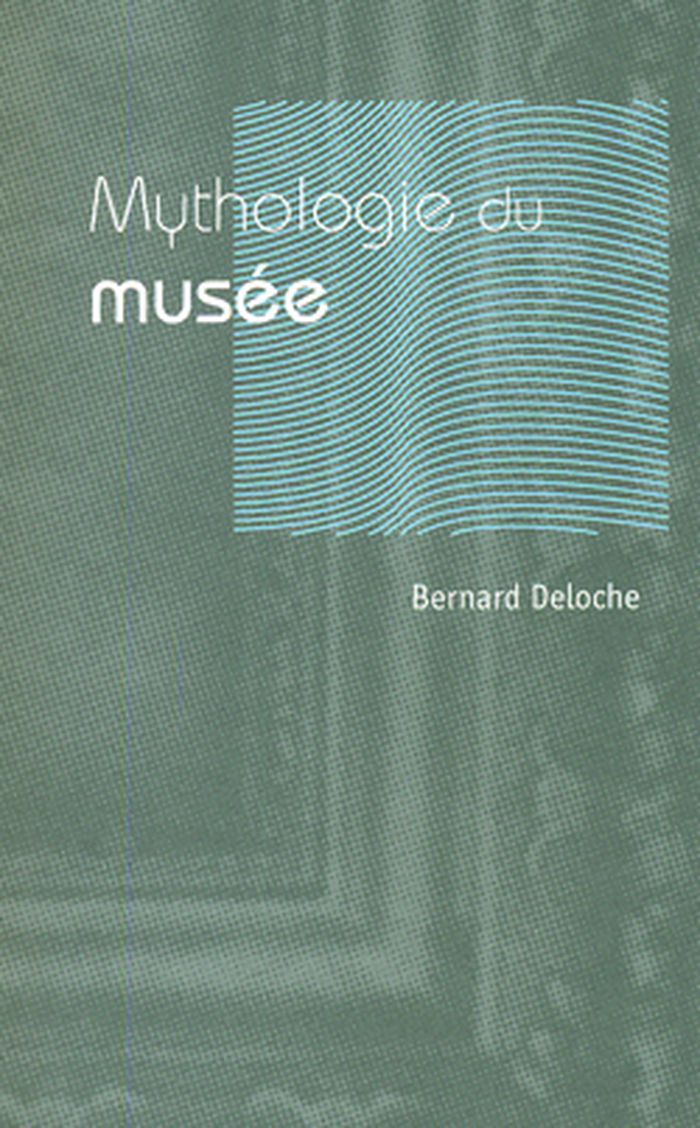
Mythologie du musée : de l'uchronie à l'utopie
Actions:
Prix:
$25.95
(disponible sur commande)
Résumé:
Pur produit de l'Occident qui s'exporte aujourd'hui avec fracas, le musée est en réalité une institution coupée de la vie, qui s'est constituée en mythologie, voire en uchronie (monde privé d'histoire). S'il témoigne de notre besoin d'une référence identitaire stable, il n'en est pas moins en porte-à-faux avec les réalités sociales contemporaines. Doit-il fermer ses portes ou peut-il se rénover ? Dans le sillage des différentes utopies proposées à la fin du XXe siècle, les récents musées de société tentent d'échapper à toute forme de dogmatisme en pratiquant l'ouverture et la mise en question délibérée.
Mythologie du musée : de l'uchronie à l'utopie
Actions:
Prix:
$25.95
(disponible sur commande)
Résumé:
Pur produit de l'Occident qui s'exporte aujourd'hui avec fracas, le musée est en réalité une institution coupée de la vie, qui s'est constituée en mythologie, voire en uchronie (monde privé d'histoire). S'il témoigne de notre besoin d'une référence identitaire stable, il n'en est pas moins en porte-à-faux avec les réalités sociales contemporaines. Doit-il fermer ses portes ou peut-il se rénover ? Dans le sillage des différentes utopies proposées à la fin du XXe siècle, les récents musées de société tentent d'échapper à toute forme de dogmatisme en pratiquant l'ouverture et la mise en question délibérée.
Classification:
livres
livres
Publication:
avril 2010
avril 2010
Sujet:
Muséologie
Muséologie
Classification:
livres
livres
Actions:
Prix:
$24.95
(disponible sur commande)
Résumé:
This publication offers a reappraisal of archives and a look at the challenges they face in a time when issues of freedom of information, privacy, technology, and digitization are increasingly important. The contributors argue that archives are essential to contemporary debates about public policy and make a case for more status, funding, and influence within public(...)
$24.95
(disponible sur commande)
Résumé:
This publication offers a reappraisal of archives and a look at the challenges they face in a time when issues of freedom of information, privacy, technology, and digitization are increasingly important. The contributors argue that archives are essential to contemporary debates about public policy and make a case for more status, funding, and influence within public(...)
Titre:
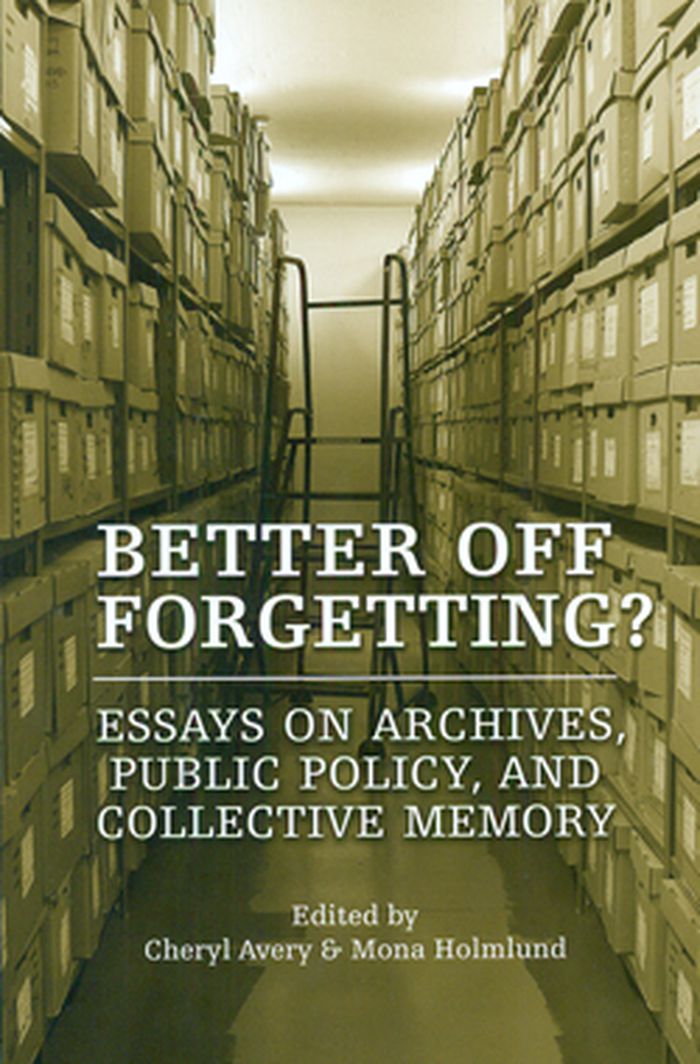
Better off forgetting? Essays on archives, public policy, and collective memory
Actions:
Prix:
$24.95
(disponible sur commande)
Résumé:
This publication offers a reappraisal of archives and a look at the challenges they face in a time when issues of freedom of information, privacy, technology, and digitization are increasingly important. The contributors argue that archives are essential to contemporary debates about public policy and make a case for more status, funding, and influence within public bureaucracies. While stimulating debate about our rapidly changing information environment, this book focus on the continuing role of archives in gathering and preserving our collective memory.
Better off forgetting? Essays on archives, public policy, and collective memory
Actions:
Prix:
$24.95
(disponible sur commande)
Résumé:
This publication offers a reappraisal of archives and a look at the challenges they face in a time when issues of freedom of information, privacy, technology, and digitization are increasingly important. The contributors argue that archives are essential to contemporary debates about public policy and make a case for more status, funding, and influence within public bureaucracies. While stimulating debate about our rapidly changing information environment, this book focus on the continuing role of archives in gathering and preserving our collective memory.
Classification:
livres
livres
Publication:
septembre 2010
septembre 2010
Sujet:
Muséologie
Muséologie


