


265 Résultats
Classification:
livres
livres
Titre:
IN/Search RE/Search
IN/Search RE/Search
Actions:
Prix:
$38.95
(disponible sur commande)
Résumé:
Art-school students learn that research skills are essential if they are to contribute alternative ways of thinking, not least to counter the neoliberal forces influencing the globe. How can these research skills unique to art academies find wider application? The essays and projects presented here look at art-school research practices that can inform the worlds of(...)
$38.95
(disponible sur commande)
Résumé:
Art-school students learn that research skills are essential if they are to contribute alternative ways of thinking, not least to counter the neoliberal forces influencing the globe. How can these research skills unique to art academies find wider application? The essays and projects presented here look at art-school research practices that can inform the worlds of(...)
Titre:
IN/Search RE/Search
Actions:
Prix:
$38.95
(disponible sur commande)
Résumé:
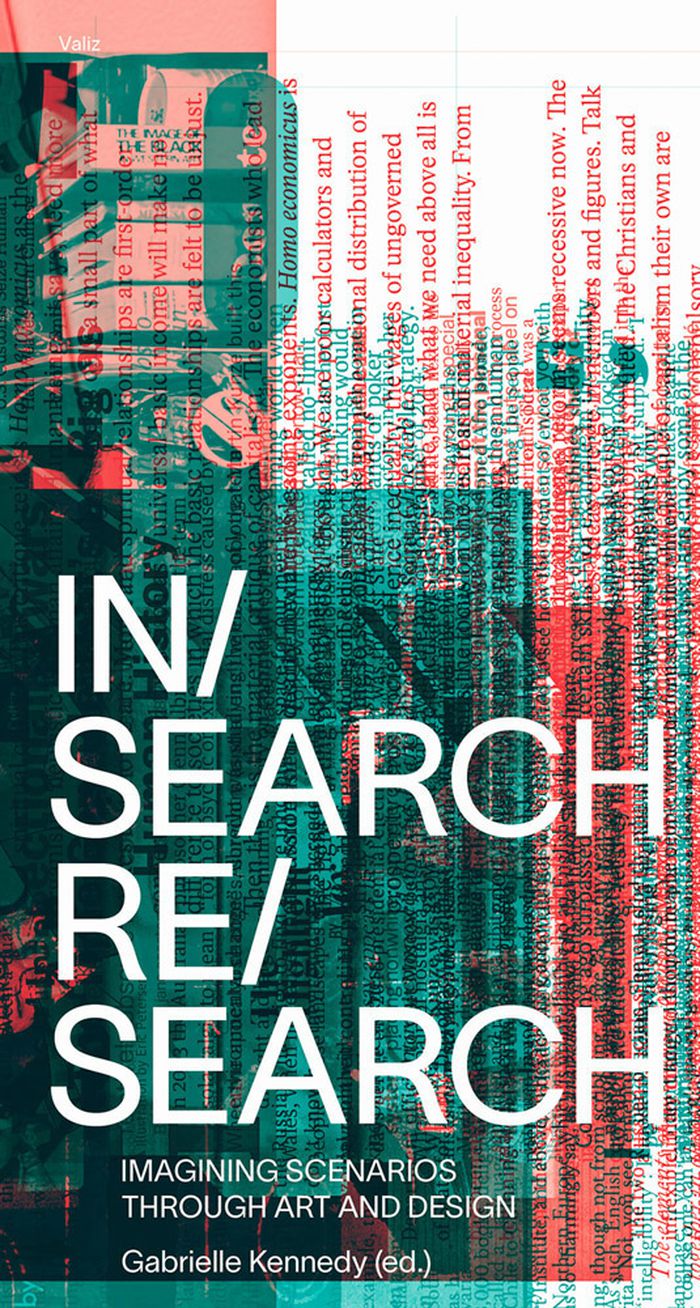
Art-school students learn that research skills are essential if they are to contribute alternative ways of thinking, not least to counter the neoliberal forces influencing the globe. How can these research skills unique to art academies find wider application? The essays and projects presented here look at art-school research practices that can inform the worlds of culture, industry, housing, education, politics, public space, advertising and science. The projects are structured into 12 themes ranging from ''The climate crisis'' to ''Politics of public space.'' Each is embedded in a recent news story that positions how that topic is discussed in the press. Each chapter ends with a response from an academic.
IN/Search RE/Search
Actions:
Prix:
$38.95
(disponible sur commande)
Résumé:
Art-school students learn that research skills are essential if they are to contribute alternative ways of thinking, not least to counter the neoliberal forces influencing the globe. How can these research skills unique to art academies find wider application? The essays and projects presented here look at art-school research practices that can inform the worlds of culture, industry, housing, education, politics, public space, advertising and science. The projects are structured into 12 themes ranging from ''The climate crisis'' to ''Politics of public space.'' Each is embedded in a recent news story that positions how that topic is discussed in the press. Each chapter ends with a response from an academic.
Classification:
livres
livres
Publication:
février 2021
février 2021
Sujet:
Muséologie
Muséologie
Classification:
livres
livres

Prix:
$44.95
(disponible sur commande)
Résumé:
Focusing on black Americans' participation in world's fairs, Emancipation expositions, and early black grassroots museums, ''Negro building'' traces the evolution of black public history from the Civil War through the civil rights movement of the 1960s. Mabel O. Wilson gives voice to the figures who conceived the curatorial content: Booker T. Washington, W.B. Du Bois, Ida(...)
$44.95
(disponible sur commande)
Résumé:
Focusing on black Americans' participation in world's fairs, Emancipation expositions, and early black grassroots museums, ''Negro building'' traces the evolution of black public history from the Civil War through the civil rights movement of the 1960s. Mabel O. Wilson gives voice to the figures who conceived the curatorial content: Booker T. Washington, W.B. Du Bois, Ida(...)
Titre:
Negro building: Black Americans in the world of fairs and museums
Actions:
Prix:
$44.95
(disponible sur commande)
Résumé:
Focusing on black Americans' participation in world's fairs, Emancipation expositions, and early black grassroots museums, ''Negro building'' traces the evolution of black public history from the Civil War through the civil rights movement of the 1960s. Mabel O. Wilson gives voice to the figures who conceived the curatorial content: Booker T. Washington, W.B. Du Bois, Ida B. Wells, A. Philip Randolph, Horace Cayton, and Margaret Burroughs. Originally published in 2012, the book reveals why the black cities of Chicago and Detroit became the sites of major black historical museums rather than the nation's capital, which would eventually become home for the Smithsonian's National Museum of African American History and Culture, which opened in 2016.
Negro building: Black Americans in the world of fairs and museums
Actions:
Prix:
$44.95
(disponible sur commande)
Résumé:
Focusing on black Americans' participation in world's fairs, Emancipation expositions, and early black grassroots museums, ''Negro building'' traces the evolution of black public history from the Civil War through the civil rights movement of the 1960s. Mabel O. Wilson gives voice to the figures who conceived the curatorial content: Booker T. Washington, W.B. Du Bois, Ida B. Wells, A. Philip Randolph, Horace Cayton, and Margaret Burroughs. Originally published in 2012, the book reveals why the black cities of Chicago and Detroit became the sites of major black historical museums rather than the nation's capital, which would eventually become home for the Smithsonian's National Museum of African American History and Culture, which opened in 2016.
Classification:
livres
livres
Publication:
février 2021
février 2021
Sujet:
Muséologie
Muséologie
Classification:
livres
livres
Actions:
Prix:
$25.95
(disponible sur commande)
Résumé:
If we ask where the curating of art occurs these days--in which places, which kinds of place, and how--apparent answers immediately appear: everywhere, expanding as if to ubiquity. Yet at the same time, we sense, with fragile purpose. In this, his newest book, Terry Smith explores the contemporary contexts of curating, looking for less apparent answers. It will map the(...)
$25.95
(disponible sur commande)
Résumé:
If we ask where the curating of art occurs these days--in which places, which kinds of place, and how--apparent answers immediately appear: everywhere, expanding as if to ubiquity. Yet at the same time, we sense, with fragile purpose. In this, his newest book, Terry Smith explores the contemporary contexts of curating, looking for less apparent answers. It will map the(...)
Titre:
Curating the complex and the open strike
Actions:
Prix:
$25.95
(disponible sur commande)
Résumé:
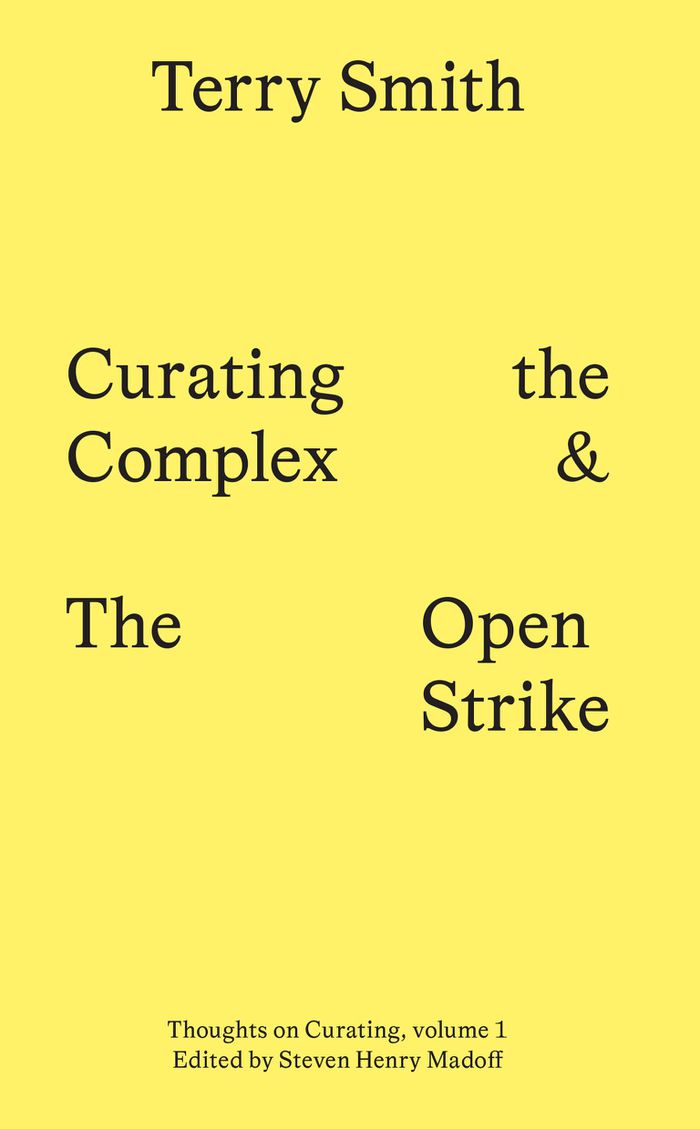
If we ask where the curating of art occurs these days--in which places, which kinds of place, and how--apparent answers immediately appear: everywhere, expanding as if to ubiquity. Yet at the same time, we sense, with fragile purpose. In this, his newest book, Terry Smith explores the contemporary contexts of curating, looking for less apparent answers. It will map the dimensions of the visual arts exhibitionary complex, including its dialectical dance between institutionalization and deinstitutionalization; the persistence of professional classifications of curatorship; the given and changing categories of art exhibitions; the increasing variety of curatorial styles; the underthinking about publics; and (undistracted by curationism) the changing roles of art making and exhibiting art within an exhibitory iconomy that is at once viral and consumptive. A mapping of this kind might help us towards some answers to the more important questions: why curate art these days and in the name of which interests?
Curating the complex and the open strike
Actions:
Prix:
$25.95
(disponible sur commande)
Résumé:
If we ask where the curating of art occurs these days--in which places, which kinds of place, and how--apparent answers immediately appear: everywhere, expanding as if to ubiquity. Yet at the same time, we sense, with fragile purpose. In this, his newest book, Terry Smith explores the contemporary contexts of curating, looking for less apparent answers. It will map the dimensions of the visual arts exhibitionary complex, including its dialectical dance between institutionalization and deinstitutionalization; the persistence of professional classifications of curatorship; the given and changing categories of art exhibitions; the increasing variety of curatorial styles; the underthinking about publics; and (undistracted by curationism) the changing roles of art making and exhibiting art within an exhibitory iconomy that is at once viral and consumptive. A mapping of this kind might help us towards some answers to the more important questions: why curate art these days and in the name of which interests?
Classification:
livres
livres
Publication:
mai 2021
mai 2021
Sujet:
Muséologie
Muséologie
Classification:
livres
livres
Titre:
Logic of the collection
Logic of the collection
Actions:
Prix:
$39.00
(disponible sur commande)
Résumé:
In modernity, the museum was the institution that made art accessible to the broader public. An artwork was collected if it was considered beautiful, passionate, engaged, or critical—and primarily if it was deemed historically relevant. But today, with the total availability and saturation of images, the museum has lost its privileged status as the exclusive place for the(...)
$39.00
(disponible sur commande)
Résumé:
In modernity, the museum was the institution that made art accessible to the broader public. An artwork was collected if it was considered beautiful, passionate, engaged, or critical—and primarily if it was deemed historically relevant. But today, with the total availability and saturation of images, the museum has lost its privileged status as the exclusive place for the(...)
Titre:
Logic of the collection
Actions:
Prix:
$39.00
(disponible sur commande)
Résumé:
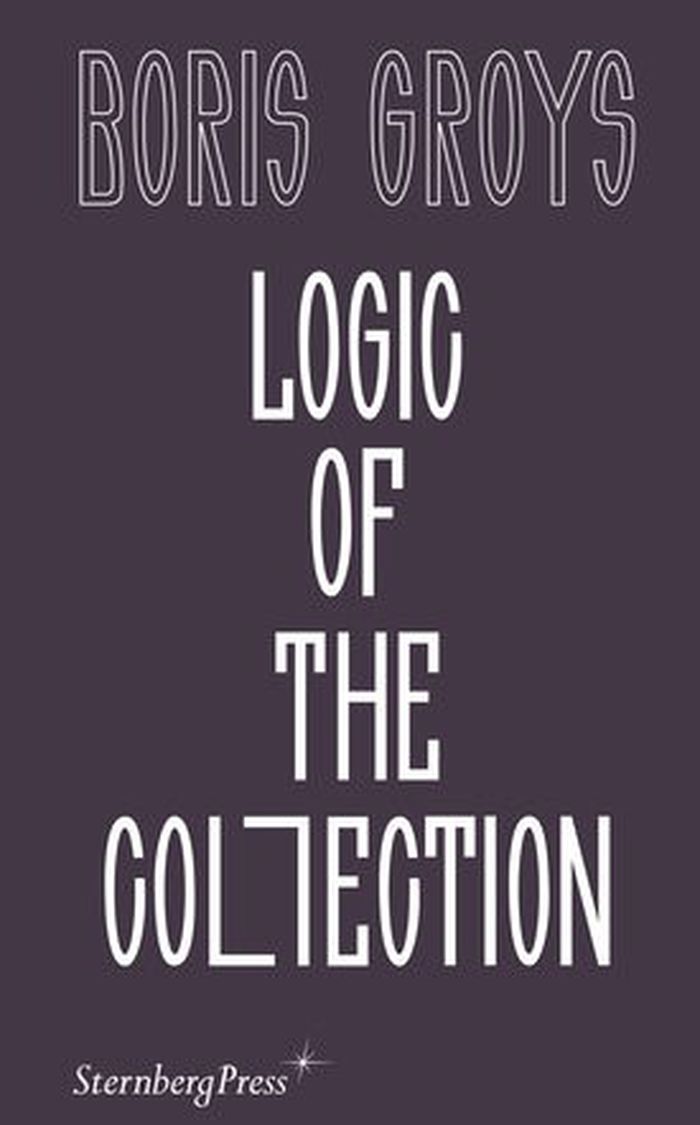
In modernity, the museum was the institution that made art accessible to the broader public. An artwork was collected if it was considered beautiful, passionate, engaged, or critical—and primarily if it was deemed historically relevant. But today, with the total availability and saturation of images, the museum has lost its privileged status as the exclusive place for the display of art. In our age of digital media, how does a particular artwork get selected for a museum collection? Which symbolic criteria must this artwork satisfy for it to obtain value? And in what ways does the institution of the museum remain relevant? 'Logic of the Collection' is framed by Boris Groys’s original and provocative proposition: an artwork is considered historically relevant if it fits the logic of the museum collection. In these critical essays, the philosopher and theorist of art and media analyzes the relationship between the logic of the collection and various modern ideologies. He reflects on the explosion of art production and distribution through the ascendency of digital media as well as the ways in which the accumulated artworks will be collected and preserved in the future, as the potential limits of public and private collections are reached.
Logic of the collection
Actions:
Prix:
$39.00
(disponible sur commande)
Résumé:
In modernity, the museum was the institution that made art accessible to the broader public. An artwork was collected if it was considered beautiful, passionate, engaged, or critical—and primarily if it was deemed historically relevant. But today, with the total availability and saturation of images, the museum has lost its privileged status as the exclusive place for the display of art. In our age of digital media, how does a particular artwork get selected for a museum collection? Which symbolic criteria must this artwork satisfy for it to obtain value? And in what ways does the institution of the museum remain relevant? 'Logic of the Collection' is framed by Boris Groys’s original and provocative proposition: an artwork is considered historically relevant if it fits the logic of the museum collection. In these critical essays, the philosopher and theorist of art and media analyzes the relationship between the logic of the collection and various modern ideologies. He reflects on the explosion of art production and distribution through the ascendency of digital media as well as the ways in which the accumulated artworks will be collected and preserved in the future, as the potential limits of public and private collections are reached.
Classification:
livres
livres
Publication:
août 2021
août 2021
Sujet:
Muséologie
Muséologie
Classification:
livres
livres
Actions:
Prix:
$32.95
(disponible sur commande)
Résumé:
How does material culture become data? Why does this matter, and for whom? As the cultures of Indigenous peoples in North America were mined for scientific knowledge, years of organizing, classifying, and cataloguing hardened into accepted categories, naming conventions, and tribal affiliations – much of it wrong. 'Cataloguing Culture' examines how colonialism operates(...)
$32.95
(disponible sur commande)
Résumé:
How does material culture become data? Why does this matter, and for whom? As the cultures of Indigenous peoples in North America were mined for scientific knowledge, years of organizing, classifying, and cataloguing hardened into accepted categories, naming conventions, and tribal affiliations – much of it wrong. 'Cataloguing Culture' examines how colonialism operates(...)
Titre:
Cataloguing culture: legacies of colonialism in museum documentation
Actions:
Prix:
$32.95
(disponible sur commande)
Résumé:
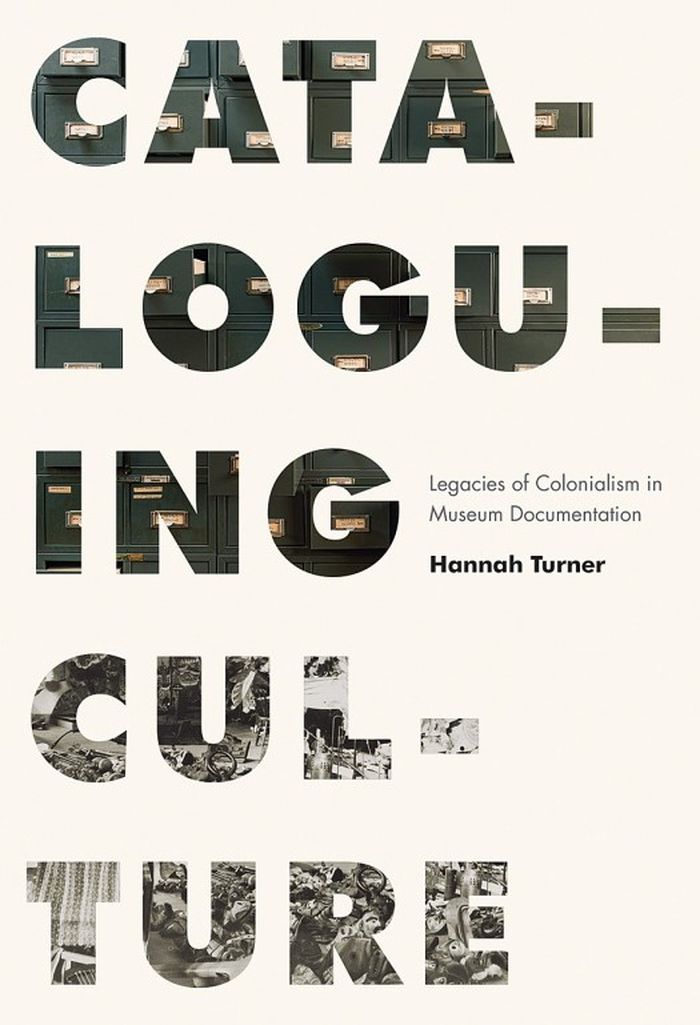
How does material culture become data? Why does this matter, and for whom? As the cultures of Indigenous peoples in North America were mined for scientific knowledge, years of organizing, classifying, and cataloguing hardened into accepted categories, naming conventions, and tribal affiliations – much of it wrong. 'Cataloguing Culture' examines how colonialism operates in museum bureaucracies. Using the Smithsonian’s National Museum of Natural History as her reference, Hannah Turner organizes her study by the technologies framing museum work over two hundred years: field records, the ledger, the card catalogue, the punch card, and eventually the database. She examines how categories were applied to ethnographic material culture and became routine throughout federal collecting institutions. As Indigenous communities encounter the documentary traces of imperialism while attempting to reclaim what is theirs, this publication shines a light on access to and return of cultural heritage.
Cataloguing culture: legacies of colonialism in museum documentation
Actions:
Prix:
$32.95
(disponible sur commande)
Résumé:
How does material culture become data? Why does this matter, and for whom? As the cultures of Indigenous peoples in North America were mined for scientific knowledge, years of organizing, classifying, and cataloguing hardened into accepted categories, naming conventions, and tribal affiliations – much of it wrong. 'Cataloguing Culture' examines how colonialism operates in museum bureaucracies. Using the Smithsonian’s National Museum of Natural History as her reference, Hannah Turner organizes her study by the technologies framing museum work over two hundred years: field records, the ledger, the card catalogue, the punch card, and eventually the database. She examines how categories were applied to ethnographic material culture and became routine throughout federal collecting institutions. As Indigenous communities encounter the documentary traces of imperialism while attempting to reclaim what is theirs, this publication shines a light on access to and return of cultural heritage.
Classification:
livres
livres
Publication:
décembre 2020
décembre 2020
Sujet:
Muséologie
Muséologie
Classification:
livres
livres
Actions:
Prix:
$53.50
(disponible en magasin)
Résumé:
"The new curator: exhibiting architecture and design" examines the challenges inherent in exhibiting design ideas. Traditionally, exhibitions of architecture and design have predominantly focused on displaying finished outcomes or communicating a work through representation. In this ground-breaking new book, Fleur Watson unveils the emergence of the 'new curator'. Instead(...)
$53.50
(disponible en magasin)
Résumé:
"The new curator: exhibiting architecture and design" examines the challenges inherent in exhibiting design ideas. Traditionally, exhibitions of architecture and design have predominantly focused on displaying finished outcomes or communicating a work through representation. In this ground-breaking new book, Fleur Watson unveils the emergence of the 'new curator'. Instead(...)
Titre:
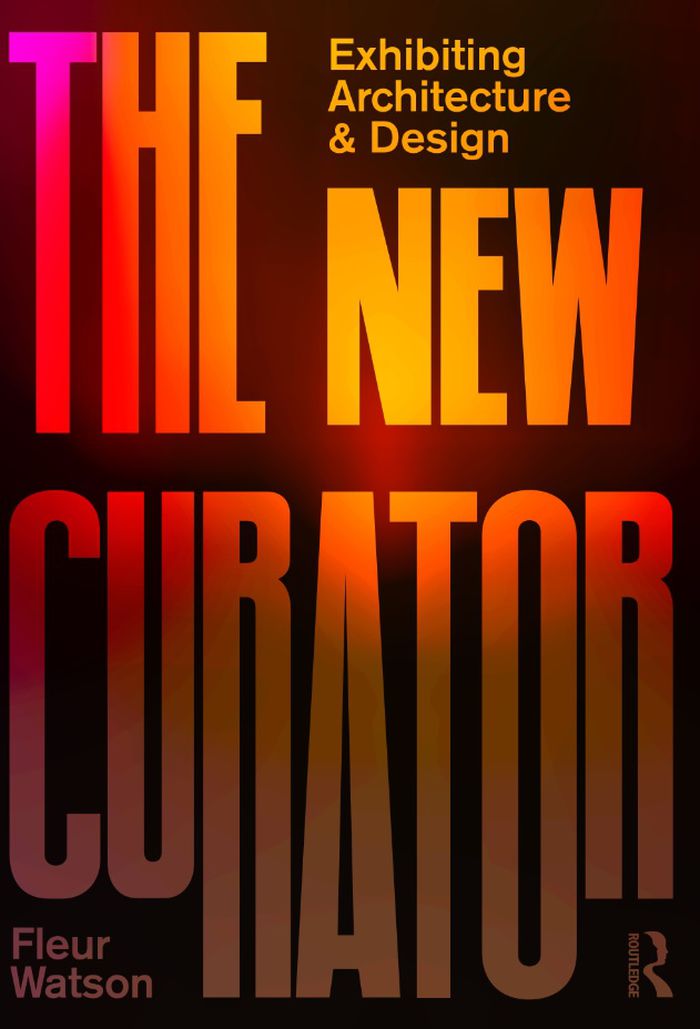
The new curator: exhibition architecture and design
Actions:
Prix:
$53.50
(disponible en magasin)
Résumé:
"The new curator: exhibiting architecture and design" examines the challenges inherent in exhibiting design ideas. Traditionally, exhibitions of architecture and design have predominantly focused on displaying finished outcomes or communicating a work through representation. In this ground-breaking new book, Fleur Watson unveils the emergence of the 'new curator'. Instead of exhibiting finished works or artefacts, the rise of 'performative curation' provides a space where experimental methods for encountering design ideas are being tested. Here, the role of the curator is not that of 'custodian' or 'expert' but with the intent to create a shared space of encounter with audiences. To illustrate this phenomenon, the book explores a diverse, international range of exhibitions. Divided into six themes, a series of project profiles are contextualized through conversations with influential curators and cultural producers such as Paola Antonelli, Kayoko Ota, Mimi Zeiger, Catherine Ince, Aric Chen, Zoë Ryan, Beatrice Leanza, Prem Krishnamurthy, Marina Otero Verzier, Brook Andrew, Carroll Go-Sam, Rory Hyde, Eva Franch i Gilabert, Patti Anahory and Paula Nascimento.
The new curator: exhibition architecture and design
Actions:
Prix:
$53.50
(disponible en magasin)
Résumé:
"The new curator: exhibiting architecture and design" examines the challenges inherent in exhibiting design ideas. Traditionally, exhibitions of architecture and design have predominantly focused on displaying finished outcomes or communicating a work through representation. In this ground-breaking new book, Fleur Watson unveils the emergence of the 'new curator'. Instead of exhibiting finished works or artefacts, the rise of 'performative curation' provides a space where experimental methods for encountering design ideas are being tested. Here, the role of the curator is not that of 'custodian' or 'expert' but with the intent to create a shared space of encounter with audiences. To illustrate this phenomenon, the book explores a diverse, international range of exhibitions. Divided into six themes, a series of project profiles are contextualized through conversations with influential curators and cultural producers such as Paola Antonelli, Kayoko Ota, Mimi Zeiger, Catherine Ince, Aric Chen, Zoë Ryan, Beatrice Leanza, Prem Krishnamurthy, Marina Otero Verzier, Brook Andrew, Carroll Go-Sam, Rory Hyde, Eva Franch i Gilabert, Patti Anahory and Paula Nascimento.
Classification:
livres
livres
Publication:
mai 2021
mai 2021
Sujet:
Muséologie
Muséologie
Classification:
livres
livres
Actions:
Prix:
$45.00
(disponible en magasin)
Résumé:
In recent years, the specific formats and challenges of exhibiting architecture and design, both built and speculative, have often been used as critical devices for identifying, communicating, and convening the public around shared matters of concern. These have increasingly included urgent questions of equity and justice, labor, gender, race, class, community, and(...)
$45.00
(disponible en magasin)
Résumé:
In recent years, the specific formats and challenges of exhibiting architecture and design, both built and speculative, have often been used as critical devices for identifying, communicating, and convening the public around shared matters of concern. These have increasingly included urgent questions of equity and justice, labor, gender, race, class, community, and(...)
Titre:
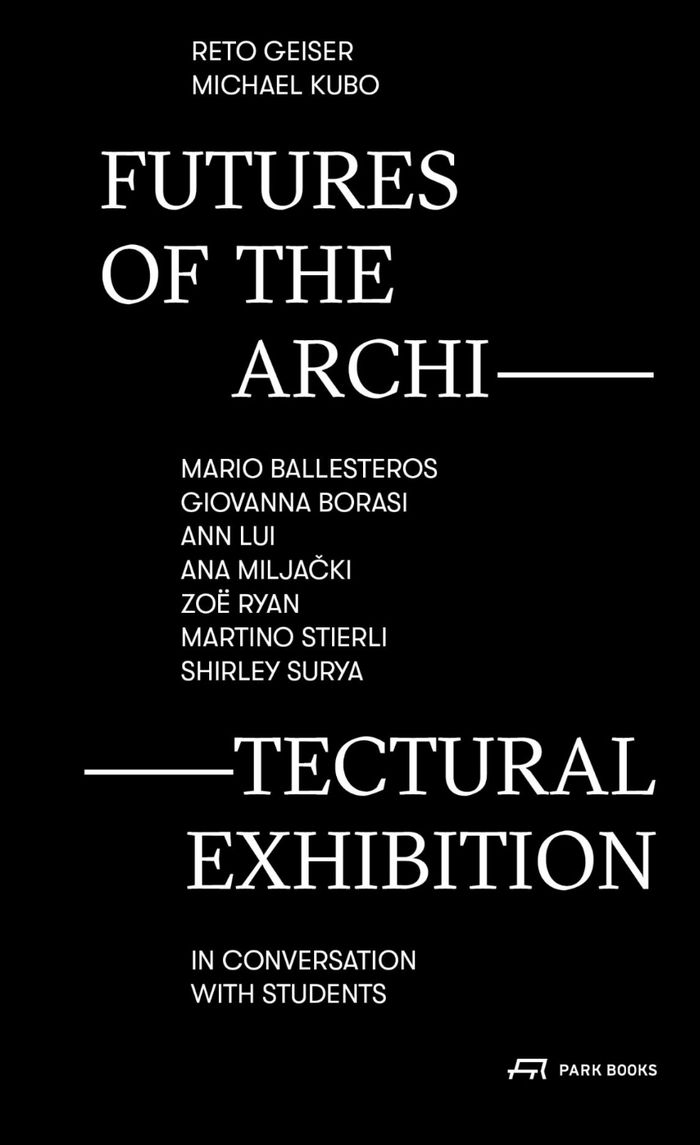
Futures of the architectural exhibition: Five conversations on the display of space
Actions:
Prix:
$45.00
(disponible en magasin)
Résumé:
In recent years, the specific formats and challenges of exhibiting architecture and design, both built and speculative, have often been used as critical devices for identifying, communicating, and convening the public around shared matters of concern. These have increasingly included urgent questions of equity and justice, labor, gender, race, class, community, and lifestyle in relation to spatial issues of density, economy, policy, infrastructure, climate, and sustainability. This book records a discussion of critical approaches to the representation of architecture through conversations with seven contemporary curators working inside and outside of the museum. Mario Ballesteros (Archivo Diseño y Arquitectura), Giovanna Borasi (Canadian Center for Architecture), Ann Lui (Future Firm), Ana Miljacki (Critical Broadcasting Lab, MIT), Zoë Ryan (ICA, University of Pennsylvania), Martino Stierli (Museum of Modern Art), and Shirley Surya (M+, Hong Kong) speculate on the specific challenges and potentials of exhibiting space.
Futures of the architectural exhibition: Five conversations on the display of space
Actions:
Prix:
$45.00
(disponible en magasin)
Résumé:
In recent years, the specific formats and challenges of exhibiting architecture and design, both built and speculative, have often been used as critical devices for identifying, communicating, and convening the public around shared matters of concern. These have increasingly included urgent questions of equity and justice, labor, gender, race, class, community, and lifestyle in relation to spatial issues of density, economy, policy, infrastructure, climate, and sustainability. This book records a discussion of critical approaches to the representation of architecture through conversations with seven contemporary curators working inside and outside of the museum. Mario Ballesteros (Archivo Diseño y Arquitectura), Giovanna Borasi (Canadian Center for Architecture), Ann Lui (Future Firm), Ana Miljacki (Critical Broadcasting Lab, MIT), Zoë Ryan (ICA, University of Pennsylvania), Martino Stierli (Museum of Modern Art), and Shirley Surya (M+, Hong Kong) speculate on the specific challenges and potentials of exhibiting space.
Classification:
livres
livres
Publication:
septembre 2022
septembre 2022
Sujet:
Muséologie
Muséologie
Classification:
livres
livres
Actions:
Prix:
$46.99
(disponible sur commande)
Résumé:
"Biennials: The exhibitions we love to hate" examines one of the most significant recent transitions in the contemporary art world: the proliferation of large-scale international recurrent survey shows of contemporary art, commonly referred to as contemporary biennials. Since the mid-1980s biennials have been instrumental in shaping curating as an autonomous practice.(...)
$46.99
(disponible sur commande)
Résumé:
"Biennials: The exhibitions we love to hate" examines one of the most significant recent transitions in the contemporary art world: the proliferation of large-scale international recurrent survey shows of contemporary art, commonly referred to as contemporary biennials. Since the mid-1980s biennials have been instrumental in shaping curating as an autonomous practice.(...)
Titre:
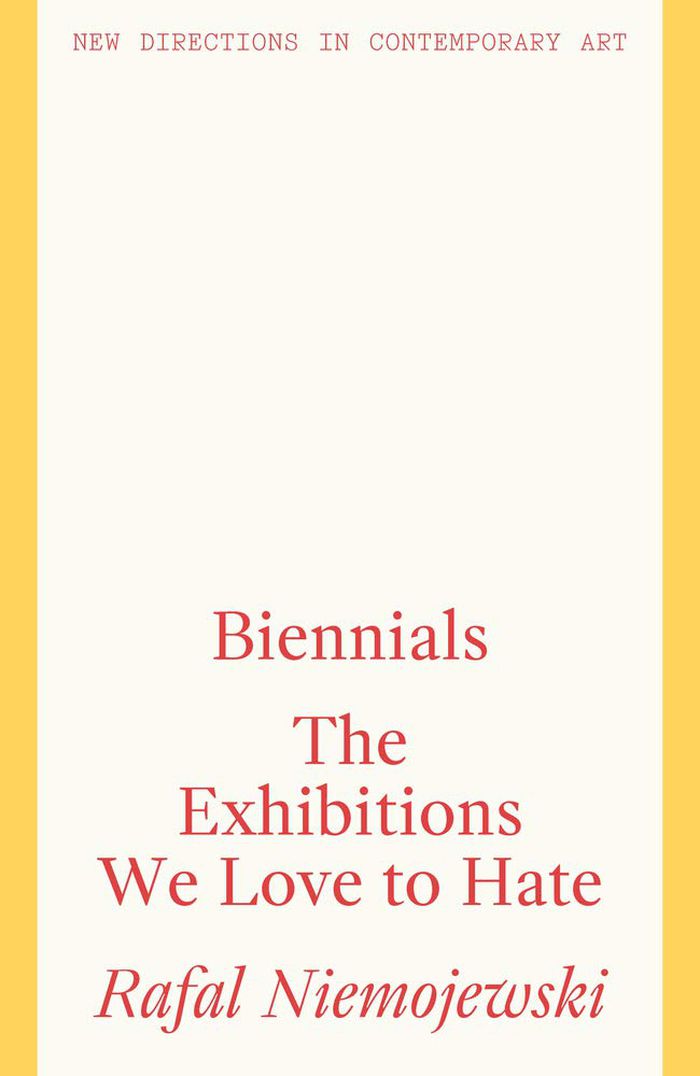
Biennials: The exhibitions we love to hate
Actions:
Prix:
$46.99
(disponible sur commande)
Résumé:
"Biennials: The exhibitions we love to hate" examines one of the most significant recent transitions in the contemporary art world: the proliferation of large-scale international recurrent survey shows of contemporary art, commonly referred to as contemporary biennials. Since the mid-1980s biennials have been instrumental in shaping curating as an autonomous practice. These exhibitions are also said to have provided increased visibility for certain types of new art practices, notably those that are socially and politically committed, research-based and site-specific, and to have undermined some of the more traditional art media, such as painting, drawing or sculpture. They have been responsible for substantially reshaping the contemporary art world and disrupting the existing value chain of the art market, which now relies on biennials as much as it does on major museums’ acquisitions and exhibitions. Rafal Niemojewski, Director of the Biennial Foundation, deftly unpicks the critical discussion and controversy surrounding contemporary biennials. Branded by some critics as showcases of neo-liberalism run amok, in which culture has become synonymous with the dollar-generating leisure industry, biennials have also been associated with the production of monumental artworks which are both highly consumable and photogenic (Instagrammable). The exhibitions we love to hate? This engaging publication makes an essential contribution to a fascinating cultural debate.
Biennials: The exhibitions we love to hate
Actions:
Prix:
$46.99
(disponible sur commande)
Résumé:
"Biennials: The exhibitions we love to hate" examines one of the most significant recent transitions in the contemporary art world: the proliferation of large-scale international recurrent survey shows of contemporary art, commonly referred to as contemporary biennials. Since the mid-1980s biennials have been instrumental in shaping curating as an autonomous practice. These exhibitions are also said to have provided increased visibility for certain types of new art practices, notably those that are socially and politically committed, research-based and site-specific, and to have undermined some of the more traditional art media, such as painting, drawing or sculpture. They have been responsible for substantially reshaping the contemporary art world and disrupting the existing value chain of the art market, which now relies on biennials as much as it does on major museums’ acquisitions and exhibitions. Rafal Niemojewski, Director of the Biennial Foundation, deftly unpicks the critical discussion and controversy surrounding contemporary biennials. Branded by some critics as showcases of neo-liberalism run amok, in which culture has become synonymous with the dollar-generating leisure industry, biennials have also been associated with the production of monumental artworks which are both highly consumable and photogenic (Instagrammable). The exhibitions we love to hate? This engaging publication makes an essential contribution to a fascinating cultural debate.
Classification:
livres
livres
Publication:
mai 2021
mai 2021
Sujet:
Muséologie
Muséologie
Classification:
livres
livres

Actions:
Prix:
$34.50
(disponible sur commande)
Résumé:
As museums worldwide shuttered in 2020 because of the coronavirus, New York-based cultural strategist András Szántó conducted a series of interviews with an international group of museum leaders. In a moment when economic, political, and cultural shifts are signaling the start of a new era, the directors speak candidly about the historical limitations and untapped(...)
$34.50
(disponible sur commande)
Résumé:
As museums worldwide shuttered in 2020 because of the coronavirus, New York-based cultural strategist András Szántó conducted a series of interviews with an international group of museum leaders. In a moment when economic, political, and cultural shifts are signaling the start of a new era, the directors speak candidly about the historical limitations and untapped(...)
Titre:
The future of the museum: 28 Dialogues
Actions:
Prix:
$34.50
(disponible sur commande)
Résumé:
As museums worldwide shuttered in 2020 because of the coronavirus, New York-based cultural strategist András Szántó conducted a series of interviews with an international group of museum leaders. In a moment when economic, political, and cultural shifts are signaling the start of a new era, the directors speak candidly about the historical limitations and untapped potential of art museums. Each of the twenty-eight conversations in this book explores a particular topic of relevance to art institutions today and tomorrow. What emerges from the series of in-depth conversations is a composite portrait of a generation of museum leaders working to make institutions more open, democratic, inclusive, experimental and experiential, technologically savvy, culturally polyphonic, attuned to the needs of their visitors and communities, and concerned with addressing the defining issues of the societies around them. The dialogues offer glimpses of how museums around the globe are undergoing an accelerated phase of reappraisal and reinvention.
The future of the museum: 28 Dialogues
Actions:
Prix:
$34.50
(disponible sur commande)
Résumé:
As museums worldwide shuttered in 2020 because of the coronavirus, New York-based cultural strategist András Szántó conducted a series of interviews with an international group of museum leaders. In a moment when economic, political, and cultural shifts are signaling the start of a new era, the directors speak candidly about the historical limitations and untapped potential of art museums. Each of the twenty-eight conversations in this book explores a particular topic of relevance to art institutions today and tomorrow. What emerges from the series of in-depth conversations is a composite portrait of a generation of museum leaders working to make institutions more open, democratic, inclusive, experimental and experiential, technologically savvy, culturally polyphonic, attuned to the needs of their visitors and communities, and concerned with addressing the defining issues of the societies around them. The dialogues offer glimpses of how museums around the globe are undergoing an accelerated phase of reappraisal and reinvention.
Classification:
livres
livres
Publication:
janvier 2021
janvier 2021
Sujet:
Muséologie
Muséologie
Classification:
livres
livres
Actions:
Prix:
$39.95
(disponible sur commande)
Résumé:
Gathering together fresh perspectives from 28 leading art and museum figures—including artists, architects, curators, and museum directors—from all over the world, this collection of interviews and contributions shares idiosyncratic views, feedback, and visions of what is and what should or should not be a museum in the 21stcentury, both inherently and in our(...)
$39.95
(disponible sur commande)
Résumé:
Gathering together fresh perspectives from 28 leading art and museum figures—including artists, architects, curators, and museum directors—from all over the world, this collection of interviews and contributions shares idiosyncratic views, feedback, and visions of what is and what should or should not be a museum in the 21stcentury, both inherently and in our(...)
Titre:
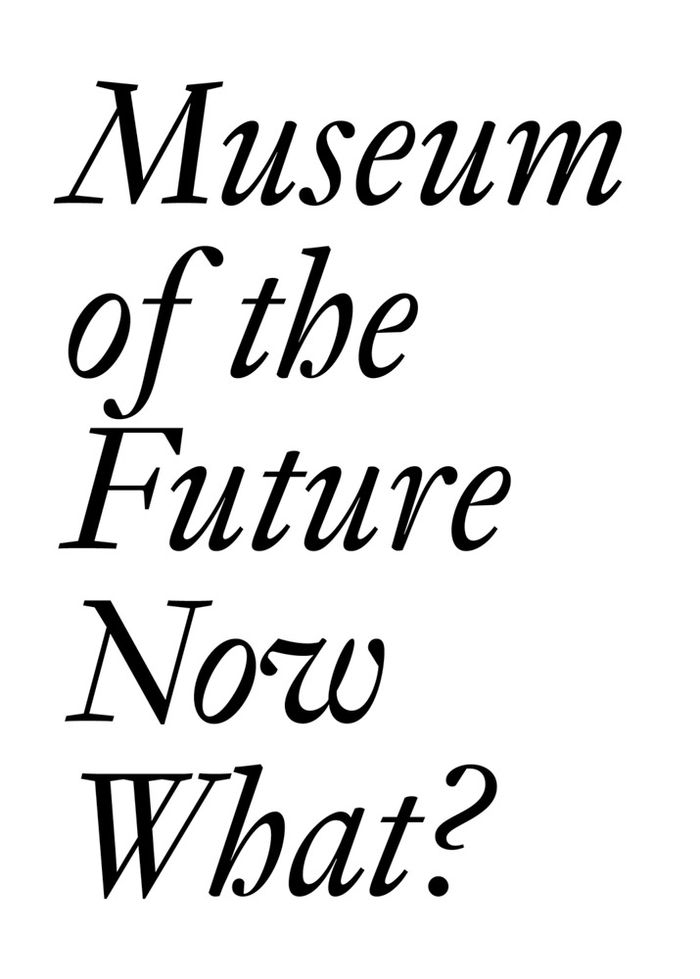
Museum of the future: Now what?
Actions:
Prix:
$39.95
(disponible sur commande)
Résumé:
Gathering together fresh perspectives from 28 leading art and museum figures—including artists, architects, curators, and museum directors—from all over the world, this collection of interviews and contributions shares idiosyncratic views, feedback, and visions of what is and what should or should not be a museum in the 21stcentury, both inherently and in our fast-changing cultural ecosystem. Showing the diversity of today’s thinking about the museum, this tome constitutes a valuable handbook to navigate its ever-evolving landscape.
Museum of the future: Now what?
Actions:
Prix:
$39.95
(disponible sur commande)
Résumé:
Gathering together fresh perspectives from 28 leading art and museum figures—including artists, architects, curators, and museum directors—from all over the world, this collection of interviews and contributions shares idiosyncratic views, feedback, and visions of what is and what should or should not be a museum in the 21stcentury, both inherently and in our fast-changing cultural ecosystem. Showing the diversity of today’s thinking about the museum, this tome constitutes a valuable handbook to navigate its ever-evolving landscape.
Classification:
livres
livres
Publication:
octobre 2021
octobre 2021
Sujet:
Muséologie
Muséologie


