


263 Résultats
Classification:
livres
livres
Actions:
Prix:
$42.95
(disponible sur commande)
Résumé:
Using a wide number of case studies Eilean Hooper-Greenhill uses a multi-disciplinary approach to analyzing museums. Drawing on material culture studies and art history she studies the collections and how they were collected; using cultural studies and sociology she examines the social and cultural role of museums today and in the past; applying deduction theory she(...)
$42.95
(disponible sur commande)
Résumé:
Using a wide number of case studies Eilean Hooper-Greenhill uses a multi-disciplinary approach to analyzing museums. Drawing on material culture studies and art history she studies the collections and how they were collected; using cultural studies and sociology she examines the social and cultural role of museums today and in the past; applying deduction theory she(...)
Titre:
Museums and the interpretation of visual culture
Actions:
Prix:
$42.95
(disponible sur commande)
Résumé:
Using a wide number of case studies Eilean Hooper-Greenhill uses a multi-disciplinary approach to analyzing museums. Drawing on material culture studies and art history she studies the collections and how they were collected; using cultural studies and sociology she examines the social and cultural role of museums today and in the past; applying deduction theory she addresses the production of knowledge though exhibitions; and finally touching on psychology she explores the experience of museum visitors.
Museums and the interpretation of visual culture
Actions:
Prix:
$42.95
(disponible sur commande)
Résumé:
Using a wide number of case studies Eilean Hooper-Greenhill uses a multi-disciplinary approach to analyzing museums. Drawing on material culture studies and art history she studies the collections and how they were collected; using cultural studies and sociology she examines the social and cultural role of museums today and in the past; applying deduction theory she addresses the production of knowledge though exhibitions; and finally touching on psychology she explores the experience of museum visitors.
Classification:
livres
livres
Publication:
février 2001, New York
février 2001, New York
Sujet:
Muséologie
Muséologie
Classification:
livres
livres
Actions:
Prix:
$34.50
(disponible en magasin)
Résumé:
This volume presents the ''Circle of Doing Research'' : a model to get you started in art and design research. Conceived within the contextual setting of the art school, it is holistic, multidisciplinary and prioritizes practice. It consists of six actions. The basis of the circle is formed by the following: research by making, research of context and participatory(...)
$34.50
(disponible en magasin)
Résumé:
This volume presents the ''Circle of Doing Research'' : a model to get you started in art and design research. Conceived within the contextual setting of the art school, it is holistic, multidisciplinary and prioritizes practice. It consists of six actions. The basis of the circle is formed by the following: research by making, research of context and participatory(...)
Titre:
Hands on research for artists, designers & educators
Actions:
Prix:
$34.50
(disponible en magasin)
Résumé:
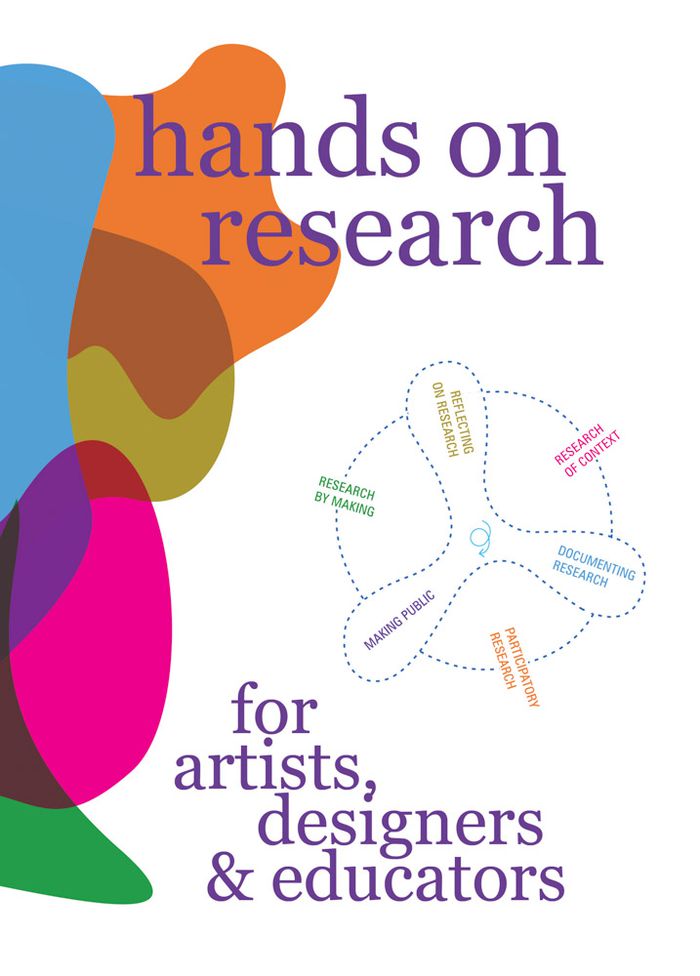
This volume presents the ''Circle of Doing Research'' : a model to get you started in art and design research. Conceived within the contextual setting of the art school, it is holistic, multidisciplinary and prioritizes practice. It consists of six actions. The basis of the circle is formed by the following: research by making, research of context and participatory research, where information, prototypes, encounters and experiences are gathered and produced. The remaining three actions are concerned with documenting research, publicizing research and reflecting on research. The ''Circle of Doing Research'' is an open, accessible and non-linear model. Each action can be an entry point, whether you want to start with material experiments, conversations with others, or in the library. All actions are connected and inform each other which encourages a process of iteration and constant reflection. The ''Circle'' can be enriched with methods, sources and focal points according to specific disciplines and needs. The book contains research trajectories of art and design students throughout, illustrating the rich possibilities to be uncovered in the unfolding of a research project. This illuminating model can be useful to all, from those beginning to learn about research in art and design to more advanced practitioners.
Hands on research for artists, designers & educators
Actions:
Prix:
$34.50
(disponible en magasin)
Résumé:
This volume presents the ''Circle of Doing Research'' : a model to get you started in art and design research. Conceived within the contextual setting of the art school, it is holistic, multidisciplinary and prioritizes practice. It consists of six actions. The basis of the circle is formed by the following: research by making, research of context and participatory research, where information, prototypes, encounters and experiences are gathered and produced. The remaining three actions are concerned with documenting research, publicizing research and reflecting on research. The ''Circle of Doing Research'' is an open, accessible and non-linear model. Each action can be an entry point, whether you want to start with material experiments, conversations with others, or in the library. All actions are connected and inform each other which encourages a process of iteration and constant reflection. The ''Circle'' can be enriched with methods, sources and focal points according to specific disciplines and needs. The book contains research trajectories of art and design students throughout, illustrating the rich possibilities to be uncovered in the unfolding of a research project. This illuminating model can be useful to all, from those beginning to learn about research in art and design to more advanced practitioners.
Classification:
livres
livres
Publication:
décembre 2024
décembre 2024
Sujet:
Muséologie
Muséologie
Classification:
livres
livres
Actions:
Prix:
$49.95
(disponible sur commande)
Résumé:
Les animaux de zoo sont aujourd'hui tous nés en captivité. Vestiges vivants d'un monde sauvage perdu, archives génétiques ou ambassadeurs de leur espèce, ils sont gérés en collections et exposés comme au musée. De quels patrimoines sont-ils les restes ? Par son approche ethnographique, l'auteure invite à une réflexion en forme de promenade au zoo. Des allées aux enclos,(...)
$49.95
(disponible sur commande)
Résumé:
Les animaux de zoo sont aujourd'hui tous nés en captivité. Vestiges vivants d'un monde sauvage perdu, archives génétiques ou ambassadeurs de leur espèce, ils sont gérés en collections et exposés comme au musée. De quels patrimoines sont-ils les restes ? Par son approche ethnographique, l'auteure invite à une réflexion en forme de promenade au zoo. Des allées aux enclos,(...)
Titre:
L'animal captif et la nature sauvage : Une ethnographie du Parc zoologique de Paris
Actions:
Prix:
$49.95
(disponible sur commande)
Résumé:
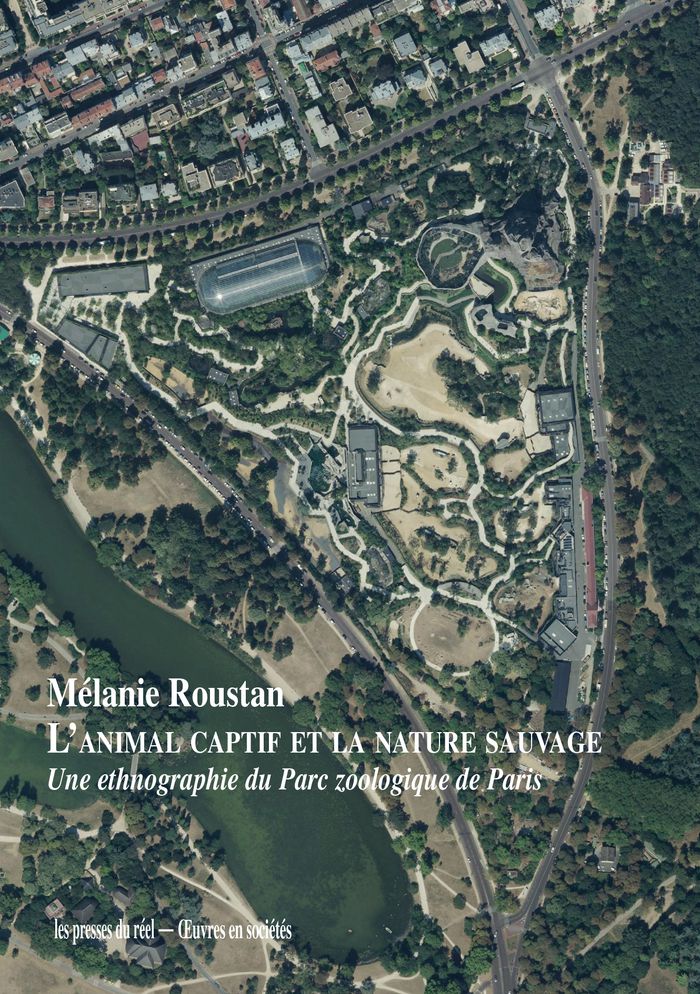
Les animaux de zoo sont aujourd'hui tous nés en captivité. Vestiges vivants d'un monde sauvage perdu, archives génétiques ou ambassadeurs de leur espèce, ils sont gérés en collections et exposés comme au musée. De quels patrimoines sont-ils les restes ? Par son approche ethnographique, l'auteure invite à une réflexion en forme de promenade au zoo. Des allées aux enclos, des bureaux à la clinique, l'anthropologue observe, interroge, cherche à comprendre les logiques à l'œuvre, les plaisirs à voir, les dilemmes à lever. Car pour conserver la biodiversité avec des collections vivantes, pour maintenir captifs des animaux en assurant leur bien-être, pour divertir les publics tout en les sensibilisant, des choix doivent être faits : comme au musée, de sélection, d'inventaire et de mise en scène ; comme dans un élevage, de gestion des corps et des espaces, de sécurité sanitaire et de reproduction.
L'animal captif et la nature sauvage : Une ethnographie du Parc zoologique de Paris
Actions:
Prix:
$49.95
(disponible sur commande)
Résumé:
Les animaux de zoo sont aujourd'hui tous nés en captivité. Vestiges vivants d'un monde sauvage perdu, archives génétiques ou ambassadeurs de leur espèce, ils sont gérés en collections et exposés comme au musée. De quels patrimoines sont-ils les restes ? Par son approche ethnographique, l'auteure invite à une réflexion en forme de promenade au zoo. Des allées aux enclos, des bureaux à la clinique, l'anthropologue observe, interroge, cherche à comprendre les logiques à l'œuvre, les plaisirs à voir, les dilemmes à lever. Car pour conserver la biodiversité avec des collections vivantes, pour maintenir captifs des animaux en assurant leur bien-être, pour divertir les publics tout en les sensibilisant, des choix doivent être faits : comme au musée, de sélection, d'inventaire et de mise en scène ; comme dans un élevage, de gestion des corps et des espaces, de sécurité sanitaire et de reproduction.
Classification:
livres
livres
Publication:
avril 2025
avril 2025
Sujet:
Muséologie
Muséologie
Classification:
livres
livres
Prix:
$38.00
(disponible en magasin)
Résumé:
The Western museum is a battleground - a terrain of ideological, political and economic contestation. Almost everyone today wants to rethink the museum, but how many have the audacity to question the idea of the universal museum itself? In "A programme of absolute disorder," Françoise Vergès puts the museum in its place. Exploring the Louvre's history, she uncovers the(...)
$38.00
(disponible en magasin)
Résumé:
The Western museum is a battleground - a terrain of ideological, political and economic contestation. Almost everyone today wants to rethink the museum, but how many have the audacity to question the idea of the universal museum itself? In "A programme of absolute disorder," Françoise Vergès puts the museum in its place. Exploring the Louvre's history, she uncovers the(...)
Titre:
A programme of absolute disorder: Decolonizing the museum
Actions:
Prix:
$38.00
(disponible en magasin)
Résumé:
The Western museum is a battleground - a terrain of ideological, political and economic contestation. Almost everyone today wants to rethink the museum, but how many have the audacity to question the idea of the universal museum itself? In "A programme of absolute disorder," Françoise Vergès puts the museum in its place. Exploring the Louvre's history, she uncovers the context in which the universal museum emerged: as a product of colonialism, and of Europe's self-appointed claim to be the guardian of global heritage. Vergès outlines a radical horizon: to truly decolonize the museum is to implement a 'programme of absolute disorder', inventing other ways of apprehending the human and non-human world that nourish collective creativity and bring justice and dignity to the dispossessed.
A programme of absolute disorder: Decolonizing the museum
Actions:
Prix:
$38.00
(disponible en magasin)
Résumé:
The Western museum is a battleground - a terrain of ideological, political and economic contestation. Almost everyone today wants to rethink the museum, but how many have the audacity to question the idea of the universal museum itself? In "A programme of absolute disorder," Françoise Vergès puts the museum in its place. Exploring the Louvre's history, she uncovers the context in which the universal museum emerged: as a product of colonialism, and of Europe's self-appointed claim to be the guardian of global heritage. Vergès outlines a radical horizon: to truly decolonize the museum is to implement a 'programme of absolute disorder', inventing other ways of apprehending the human and non-human world that nourish collective creativity and bring justice and dignity to the dispossessed.
Classification:
livres
livres
Publication:
juillet 2024
juillet 2024
Sujet:
Muséologie
Muséologie
Classification:
livres
livres
Actions:
Prix:
$59.95
(disponible en magasin)
Résumé:
"The New Design Museum" brings together theories and voices from leading international institutions and independent initiatives addressing the transformed––and continually transforming––nature of design in the twenty-first century and its planetary scope in both practical and discursive dimensions. By mapping a new landscape of institutional practices across different(...)
$59.95
(disponible en magasin)
Résumé:
"The New Design Museum" brings together theories and voices from leading international institutions and independent initiatives addressing the transformed––and continually transforming––nature of design in the twenty-first century and its planetary scope in both practical and discursive dimensions. By mapping a new landscape of institutional practices across different(...)
Titre:
The new design museum: Co-creating the present, prototyping the future
Actions:
Prix:
$59.95
(disponible en magasin)
Résumé:
"The New Design Museum" brings together theories and voices from leading international institutions and independent initiatives addressing the transformed––and continually transforming––nature of design in the twenty-first century and its planetary scope in both practical and discursive dimensions. By mapping a new landscape of institutional practices across different geographical locations, it reveals how spaces of culture dedicated to design need transformation—of their missions, programs, and outreach platforms—to respond to an ever-expanding outlook on design as a field that is moving beyond its traditional presentation as an object-based practice. This book ultimately examines the critical role of cultural institutions as engines for knowledge production, where a democratic politics of mutual care and shared purpose can be explored and exercised.
The new design museum: Co-creating the present, prototyping the future
Actions:
Prix:
$59.95
(disponible en magasin)
Résumé:
"The New Design Museum" brings together theories and voices from leading international institutions and independent initiatives addressing the transformed––and continually transforming––nature of design in the twenty-first century and its planetary scope in both practical and discursive dimensions. By mapping a new landscape of institutional practices across different geographical locations, it reveals how spaces of culture dedicated to design need transformation—of their missions, programs, and outreach platforms—to respond to an ever-expanding outlook on design as a field that is moving beyond its traditional presentation as an object-based practice. This book ultimately examines the critical role of cultural institutions as engines for knowledge production, where a democratic politics of mutual care and shared purpose can be explored and exercised.
Classification:
livres
livres
Publication:
août 2025
août 2025
Sujet:
Muséologie
Muséologie
Classification:
livres
livres
Titre:
Ways of Curating
Ways of Curating
Actions:
Prix:
$35.95
(disponible en magasin)
Résumé:
Hans Ulrich Obrist curated his first exhibit in his kitchen when he was twenty-three years old. Since then he has staged more than 250 shows internationally, many of them among the most influential exhibits of our age. ''Ways of Curating'' is a compendium of the insights Obrist has gained from his years of extraordinary work in the art world. It skips between centuries(...)
$35.95
(disponible en magasin)
Résumé:
Hans Ulrich Obrist curated his first exhibit in his kitchen when he was twenty-three years old. Since then he has staged more than 250 shows internationally, many of them among the most influential exhibits of our age. ''Ways of Curating'' is a compendium of the insights Obrist has gained from his years of extraordinary work in the art world. It skips between centuries(...)
Titre:
Ways of Curating
Actions:
Prix:
$35.95
(disponible en magasin)
Résumé:
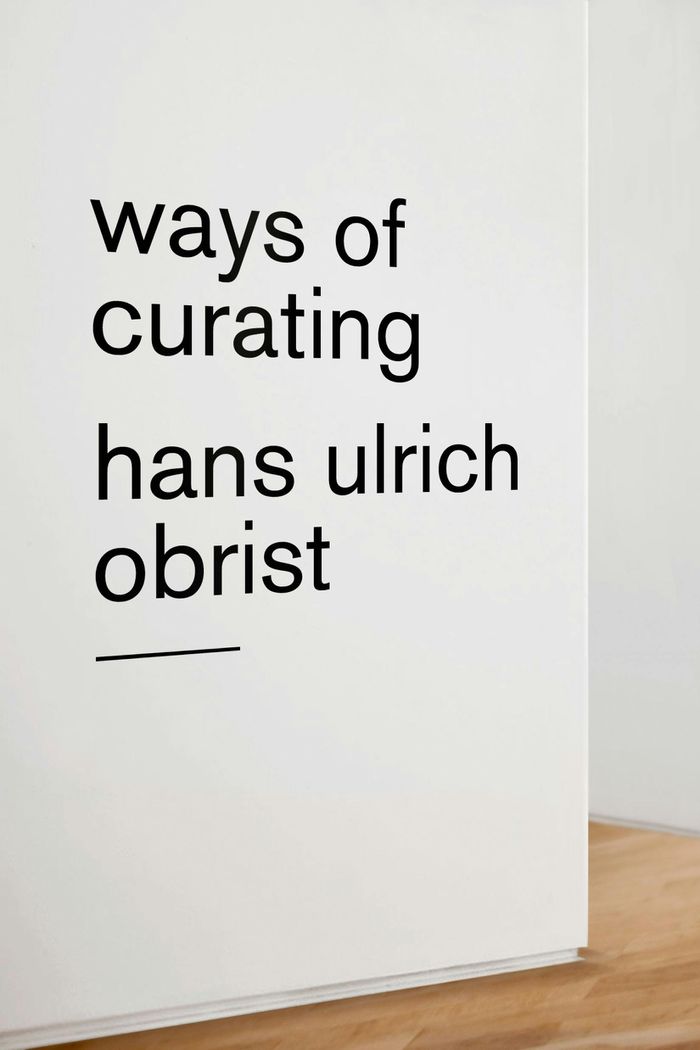
Hans Ulrich Obrist curated his first exhibit in his kitchen when he was twenty-three years old. Since then he has staged more than 250 shows internationally, many of them among the most influential exhibits of our age. ''Ways of Curating'' is a compendium of the insights Obrist has gained from his years of extraordinary work in the art world. It skips between centuries and continents, flitting from meetings with the artists who have inspired him (including Gerhard Richter, Louise Bourgeois, and Gilbert and George) to biographies of influential figures such as Diaghilev and Walter Hopps. It describes some of the greatest exhibitions in history, as well as some of the greatest exhibitions never realized. It traces the evolution of collections from Athanasius Kircher's seventeenth-century Wunderkammer to modern museums, and points the way for projects yet to come. Obrist has rescued the word "curate" from wine stores and playlists to remind us of the power inherent in looking at art--and at the world--in a new way.
Ways of Curating
Actions:
Prix:
$35.95
(disponible en magasin)
Résumé:
Hans Ulrich Obrist curated his first exhibit in his kitchen when he was twenty-three years old. Since then he has staged more than 250 shows internationally, many of them among the most influential exhibits of our age. ''Ways of Curating'' is a compendium of the insights Obrist has gained from his years of extraordinary work in the art world. It skips between centuries and continents, flitting from meetings with the artists who have inspired him (including Gerhard Richter, Louise Bourgeois, and Gilbert and George) to biographies of influential figures such as Diaghilev and Walter Hopps. It describes some of the greatest exhibitions in history, as well as some of the greatest exhibitions never realized. It traces the evolution of collections from Athanasius Kircher's seventeenth-century Wunderkammer to modern museums, and points the way for projects yet to come. Obrist has rescued the word "curate" from wine stores and playlists to remind us of the power inherent in looking at art--and at the world--in a new way.
Classification:
livres
livres
Publication:
juillet 2025
juillet 2025
Sujet:
Muséologie
Muséologie
Classification:
livres
livres
Titre:
Collecting Otherwise Manuals
Collecting Otherwise Manuals
Actions:
Prix:
$28.95
(disponible en magasin)
Résumé:
Since 2020, Collecting Otherwise, initiated by the Nieuwe Instituut in Rotterdam, has explored how archives and their policies shape institutional memory, urban history, and public heritage, challenging the idea that heritage is “neutral”. It aims to change institutional culture to recognise and champion under-represented roles, practices, and perspectives in archives.(...)
$28.95
(disponible en magasin)
Résumé:
Since 2020, Collecting Otherwise, initiated by the Nieuwe Instituut in Rotterdam, has explored how archives and their policies shape institutional memory, urban history, and public heritage, challenging the idea that heritage is “neutral”. It aims to change institutional culture to recognise and champion under-represented roles, practices, and perspectives in archives.(...)
Titre:
Collecting Otherwise Manuals
Actions:
Prix:
$28.95
(disponible en magasin)
Résumé:
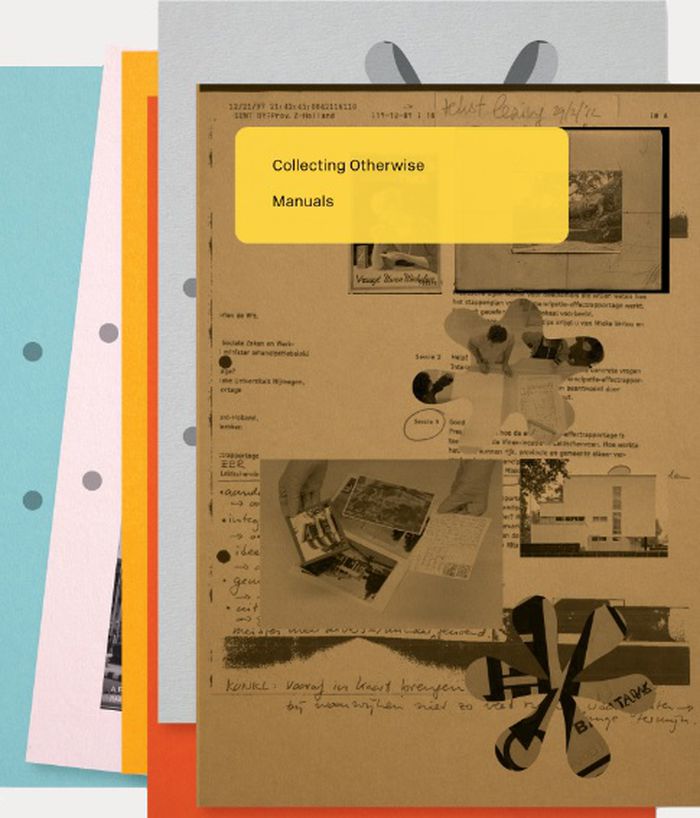
Since 2020, Collecting Otherwise, initiated by the Nieuwe Instituut in Rotterdam, has explored how archives and their policies shape institutional memory, urban history, and public heritage, challenging the idea that heritage is “neutral”. It aims to change institutional culture to recognise and champion under-represented roles, practices, and perspectives in archives. Besides rethinking archival practices in case studies from the National Collection, the project addresses annual themes on collecting and develops collaborative tools. The manuals invite engagement with these tools to support reparative archival work and deepen reflections on the responsibilities of memory.
Collecting Otherwise Manuals
Actions:
Prix:
$28.95
(disponible en magasin)
Résumé:
Since 2020, Collecting Otherwise, initiated by the Nieuwe Instituut in Rotterdam, has explored how archives and their policies shape institutional memory, urban history, and public heritage, challenging the idea that heritage is “neutral”. It aims to change institutional culture to recognise and champion under-represented roles, practices, and perspectives in archives. Besides rethinking archival practices in case studies from the National Collection, the project addresses annual themes on collecting and develops collaborative tools. The manuals invite engagement with these tools to support reparative archival work and deepen reflections on the responsibilities of memory.
Classification:
livres
livres
Publication:
juillet 2025
juillet 2025
Sujet:
Muséologie
Muséologie
Classification:
livres
livres
Titre:
A model
A model
Actions:
Prix:
$62.00
(disponible en magasin)
Résumé:
This book, "A model", parallels an exhibition at Mudam Luxembourg – Musée d’Art Moderne Grand-Duc Jean. The museum’s director Bettina Steinbrügge conceived this exhibition as a conversation with the ever evolving contemporary art museum. This publication, with an essay about the roles museums can take, in theory, in practice, and in use, enacts how Steinbrügge engages the(...)
$62.00
(disponible en magasin)
Résumé:
This book, "A model", parallels an exhibition at Mudam Luxembourg – Musée d’Art Moderne Grand-Duc Jean. The museum’s director Bettina Steinbrügge conceived this exhibition as a conversation with the ever evolving contemporary art museum. This publication, with an essay about the roles museums can take, in theory, in practice, and in use, enacts how Steinbrügge engages the(...)
Titre:
A model
Actions:
Prix:
$62.00
(disponible en magasin)
Résumé:
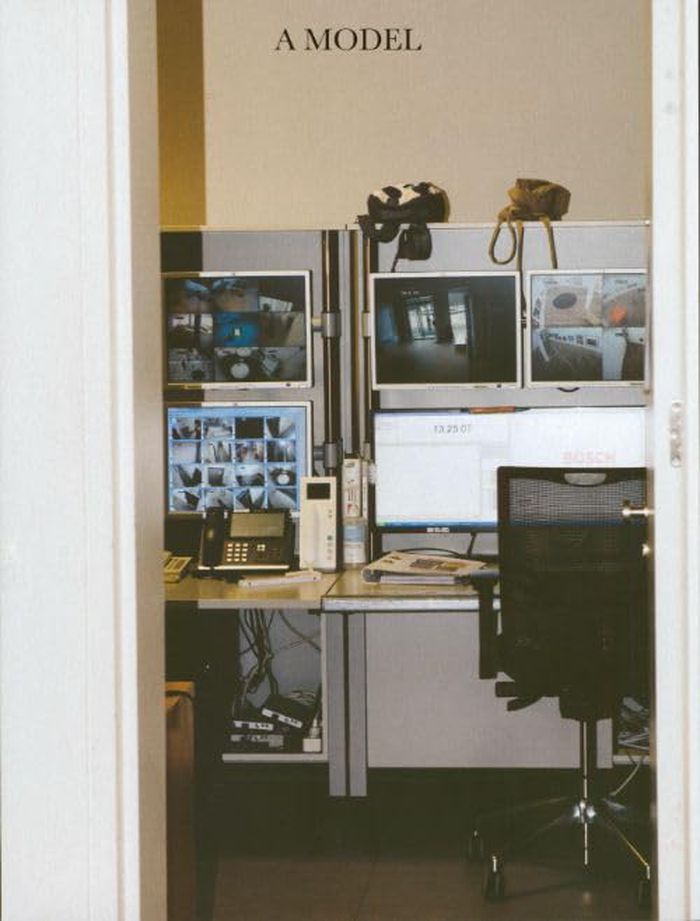
This book, "A model", parallels an exhibition at Mudam Luxembourg – Musée d’Art Moderne Grand-Duc Jean. The museum’s director Bettina Steinbrügge conceived this exhibition as a conversation with the ever evolving contemporary art museum. This publication, with an essay about the roles museums can take, in theory, in practice, and in use, enacts how Steinbrügge engages the artists in the exhibition to sit with this shifting idea. Commissioning major works by Nina Beier & Bob Kil, Rayyane Tabet, Oscar Murillo, or Claire Fontaine and historical works by Alvar Aalto and Tomaso Binga the exhibition uses the format of prologue, body, and epilogue to overlap gestures in the museum space. Likewise, this book engages the designer Julie Peeters, photographer Adrianna Glaviano, and artist Jason Dodge as editor to stage a publication that makes a new exhibition, "A model", between these pages.
A model
Actions:
Prix:
$62.00
(disponible en magasin)
Résumé:
This book, "A model", parallels an exhibition at Mudam Luxembourg – Musée d’Art Moderne Grand-Duc Jean. The museum’s director Bettina Steinbrügge conceived this exhibition as a conversation with the ever evolving contemporary art museum. This publication, with an essay about the roles museums can take, in theory, in practice, and in use, enacts how Steinbrügge engages the artists in the exhibition to sit with this shifting idea. Commissioning major works by Nina Beier & Bob Kil, Rayyane Tabet, Oscar Murillo, or Claire Fontaine and historical works by Alvar Aalto and Tomaso Binga the exhibition uses the format of prologue, body, and epilogue to overlap gestures in the museum space. Likewise, this book engages the designer Julie Peeters, photographer Adrianna Glaviano, and artist Jason Dodge as editor to stage a publication that makes a new exhibition, "A model", between these pages.
Classification:
livres
livres
Publication:
juillet 2025
juillet 2025
Sujet:
Muséologie
Muséologie
Classification:
livres
livres
Prix:
$54.00
(disponible en magasin)
Résumé:
This book presents the work of artists, curators, collectives and scholars who address contemporary art as a site of learning in the 21st century. Building on earlier histories of education as civic service for the common good, it focuses on the last 25 years, as well as the question of the future of art education—as a practice that unfolds both in and beyond school. The(...)
$54.00
(disponible en magasin)
Résumé:
This book presents the work of artists, curators, collectives and scholars who address contemporary art as a site of learning in the 21st century. Building on earlier histories of education as civic service for the common good, it focuses on the last 25 years, as well as the question of the future of art education—as a practice that unfolds both in and beyond school. The(...)
Titre:
Living to learn: Art and education for the common good
Actions:
Prix:
$54.00
(disponible en magasin)
Résumé:
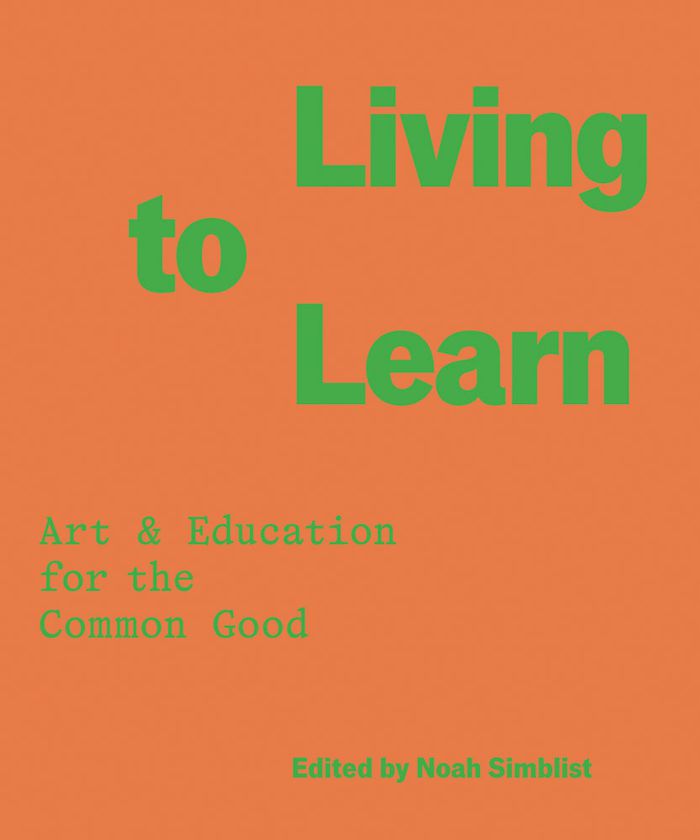
This book presents the work of artists, curators, collectives and scholars who address contemporary art as a site of learning in the 21st century. Building on earlier histories of education as civic service for the common good, it focuses on the last 25 years, as well as the question of the future of art education—as a practice that unfolds both in and beyond school. The book constructs an impressionistic constellation of case studies to see how innovations in education have had a dynamic relationship with artistic practice, alternative arts organizations, universities and museums.
Living to learn: Art and education for the common good
Actions:
Prix:
$54.00
(disponible en magasin)
Résumé:
This book presents the work of artists, curators, collectives and scholars who address contemporary art as a site of learning in the 21st century. Building on earlier histories of education as civic service for the common good, it focuses on the last 25 years, as well as the question of the future of art education—as a practice that unfolds both in and beyond school. The book constructs an impressionistic constellation of case studies to see how innovations in education have had a dynamic relationship with artistic practice, alternative arts organizations, universities and museums.
Classification:
livres
livres
Publication:
mars 2026
mars 2026
Sujet:
Muséologie
Muséologie
Classification:
livres
livres
Actions:
Prix:
$28.00
(disponible en magasin)
Résumé:
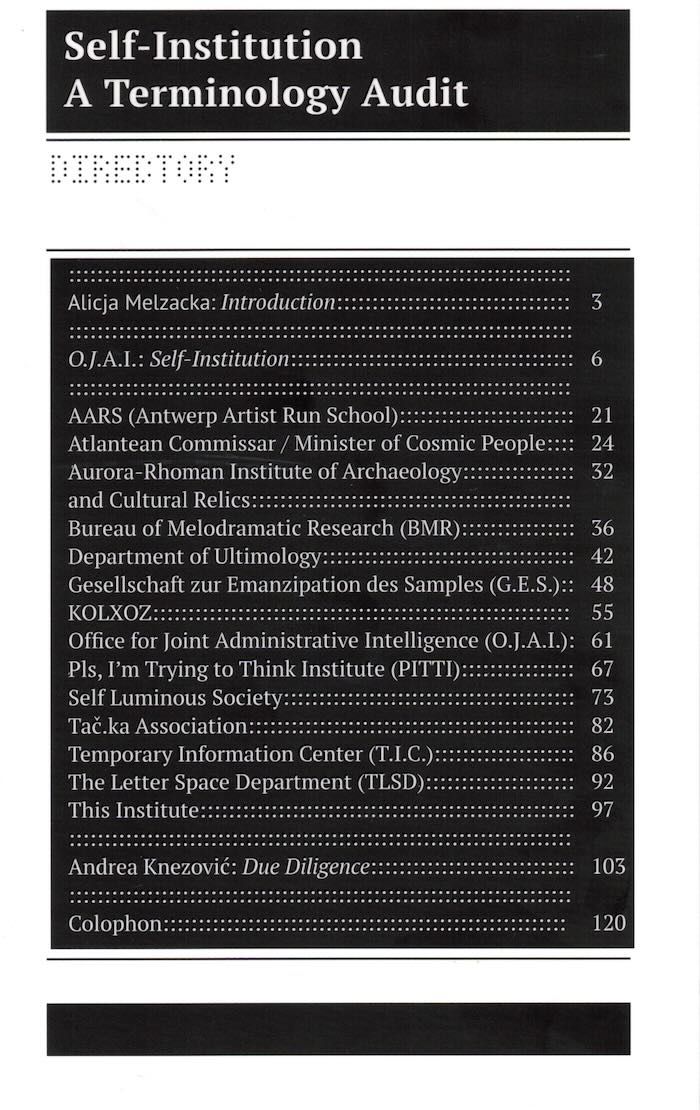
''Self-Institution/Terminology Audit'' is a collection of profiles and lexicons documenting artistic practices that operate as self-declared institutions. It examines the act of self-institution as both a conceptual and operational approach, focusing on how these practices structure themselves and engage with their contexts. Initiated by the Office for Joint(...)
$28.00
(disponible en magasin)
Résumé:
''Self-Institution/Terminology Audit'' is a collection of profiles and lexicons documenting artistic practices that operate as self-declared institutions. It examines the act of self-institution as both a conceptual and operational approach, focusing on how these practices structure themselves and engage with their contexts. Initiated by the Office for Joint(...)
Titre:
Self-Institution: Terminology Audit
Actions:
Prix:
$28.00
(disponible en magasin)
Résumé:
''Self-Institution/Terminology Audit'' is a collection of profiles and lexicons documenting artistic practices that operate as self-declared institutions. It examines the act of self-institution as both a conceptual and operational approach, focusing on how these practices structure themselves and engage with their contexts. Initiated by the Office for Joint Administrative Intelligence (O.J.A.I.), this publication investigates artist offices, bureaus, departments, ministries, societies, centres, and other explicitly institutional invocations. The Terminology Audit reveals language and jargon unique to each practice. The case studies, currently active in the field, represent a broad range of approaches, including research-based, performance-driven, pragmatic, materially motivated, counter-institutional, esoteric, and absurd facsimiles of institutionhood.
Self-Institution: Terminology Audit
Actions:
Prix:
$28.00
(disponible en magasin)
Résumé:
''Self-Institution/Terminology Audit'' is a collection of profiles and lexicons documenting artistic practices that operate as self-declared institutions. It examines the act of self-institution as both a conceptual and operational approach, focusing on how these practices structure themselves and engage with their contexts. Initiated by the Office for Joint Administrative Intelligence (O.J.A.I.), this publication investigates artist offices, bureaus, departments, ministries, societies, centres, and other explicitly institutional invocations. The Terminology Audit reveals language and jargon unique to each practice. The case studies, currently active in the field, represent a broad range of approaches, including research-based, performance-driven, pragmatic, materially motivated, counter-institutional, esoteric, and absurd facsimiles of institutionhood.
Classification:
livres
livres
Publication:
septembre 2025
septembre 2025
Sujet:
Muséologie
Muséologie


