


328 Résultats
Classification:
livres
livres

Titre:
À propos d'amour
À propos d'amour
Actions:
Prix:
$29.95
(disponible sur commande)
Résumé:
Parmi les livres les plus appréciés de bell hooks, « À propos d’amour » est un texte singulier. Avec sa perspicacité habituelle et ses talents de vulgarisatrice, l’autrice afroféministe s’y attaque à une thématique rarement abordée de front en théorie politique. Définissant l’amour comme un acte et non comme un sentiment, bell hooks démonte tous les obstacles que la(...)
$29.95
(disponible sur commande)
Résumé:
Parmi les livres les plus appréciés de bell hooks, « À propos d’amour » est un texte singulier. Avec sa perspicacité habituelle et ses talents de vulgarisatrice, l’autrice afroféministe s’y attaque à une thématique rarement abordée de front en théorie politique. Définissant l’amour comme un acte et non comme un sentiment, bell hooks démonte tous les obstacles que la(...)
Titre:
À propos d'amour
Actions:
Prix:
$29.95
(disponible sur commande)
Résumé:
Parmi les livres les plus appréciés de bell hooks, « À propos d’amour » est un texte singulier. Avec sa perspicacité habituelle et ses talents de vulgarisatrice, l’autrice afroféministe s’y attaque à une thématique rarement abordée de front en théorie politique. Définissant l’amour comme un acte et non comme un sentiment, bell hooks démonte tous les obstacles que la culture patriarcale oppose à des relations d’amour saines, et envisage un art d’aimer qui ne se résume pas au frisson de l’attraction ou à la simple tendresse. Recourant à la philosophie morale comme à la psychologie, elle s’en prend au cynisme narquois qui entoure les discussions au sujet de l’amour, et s’attache à redonner toute sa noblesse à la possibilité de l’amour, dans une perspective féministe.
À propos d'amour
Actions:
Prix:
$29.95
(disponible sur commande)
Résumé:
Parmi les livres les plus appréciés de bell hooks, « À propos d’amour » est un texte singulier. Avec sa perspicacité habituelle et ses talents de vulgarisatrice, l’autrice afroféministe s’y attaque à une thématique rarement abordée de front en théorie politique. Définissant l’amour comme un acte et non comme un sentiment, bell hooks démonte tous les obstacles que la culture patriarcale oppose à des relations d’amour saines, et envisage un art d’aimer qui ne se résume pas au frisson de l’attraction ou à la simple tendresse. Recourant à la philosophie morale comme à la psychologie, elle s’en prend au cynisme narquois qui entoure les discussions au sujet de l’amour, et s’attache à redonner toute sa noblesse à la possibilité de l’amour, dans une perspective féministe.
Classification:
livres
livres
Publication:
octobre 2022
octobre 2022
Sujet:
Social
Social
Classification:
livres
livres

Prix:
$48.00
(disponible sur commande)
Résumé:
Online privacy is under constant attack by social media and big data technologies. But we cannot rely on individual actions to remedy this—it is a matter of social justice. Alice E. Marwick offers a new way of understanding how privacy is jeopardized, particularly for marginalized and disadvantaged communities—including immigrants, the poor, people of color, LGBTQ+(...)
$48.00
(disponible sur commande)
Résumé:
Online privacy is under constant attack by social media and big data technologies. But we cannot rely on individual actions to remedy this—it is a matter of social justice. Alice E. Marwick offers a new way of understanding how privacy is jeopardized, particularly for marginalized and disadvantaged communities—including immigrants, the poor, people of color, LGBTQ+(...)
Titre:
The private is political: networked privacy and social media
Actions:
Prix:
$48.00
(disponible sur commande)
Résumé:
Online privacy is under constant attack by social media and big data technologies. But we cannot rely on individual actions to remedy this—it is a matter of social justice. Alice E. Marwick offers a new way of understanding how privacy is jeopardized, particularly for marginalized and disadvantaged communities—including immigrants, the poor, people of color, LGBTQ+ populations, and victims of online harassment. Marwick shows that few resources or regulations for preventing personal information from spreading on the internet. Through a new theory of ''networked privacy,'' she reveals how current legal and technological frameworks are woefully inadequate in addressing issues of privacy—often by design. Drawing from interviews and focus groups encompassing a diverse group of Americans, Marwick shows that even heavy social media users care deeply about privacy and engage in extensive ''privacy work'' to protect it. But people are up against the violation machine of the modern internet. Safeguarding privacy must happen at the collective level.
The private is political: networked privacy and social media
Actions:
Prix:
$48.00
(disponible sur commande)
Résumé:
Online privacy is under constant attack by social media and big data technologies. But we cannot rely on individual actions to remedy this—it is a matter of social justice. Alice E. Marwick offers a new way of understanding how privacy is jeopardized, particularly for marginalized and disadvantaged communities—including immigrants, the poor, people of color, LGBTQ+ populations, and victims of online harassment. Marwick shows that few resources or regulations for preventing personal information from spreading on the internet. Through a new theory of ''networked privacy,'' she reveals how current legal and technological frameworks are woefully inadequate in addressing issues of privacy—often by design. Drawing from interviews and focus groups encompassing a diverse group of Americans, Marwick shows that even heavy social media users care deeply about privacy and engage in extensive ''privacy work'' to protect it. But people are up against the violation machine of the modern internet. Safeguarding privacy must happen at the collective level.
Classification:
livres
livres
Publication:
mai 2023
mai 2023
Sujet:
Social
Social
Classification:
livres
livres

Titre:
Radical sympathy
Radical sympathy
Actions:
Prix:
$25.00
(disponible sur commande)
Résumé:
This publication gathers a diversity of voices and perspectives with the aim of capturing methods and expressions of care and communal effort, as well as theoretical reflections on sympathy as a position of caring-for. While sympathy may carry connotations of charity, as that which acts from a distance, the publication underscores sympathy as what also enables forms of(...)
$25.00
(disponible sur commande)
Résumé:
This publication gathers a diversity of voices and perspectives with the aim of capturing methods and expressions of care and communal effort, as well as theoretical reflections on sympathy as a position of caring-for. While sympathy may carry connotations of charity, as that which acts from a distance, the publication underscores sympathy as what also enables forms of(...)
Titre:
Radical sympathy
Actions:
Prix:
$25.00
(disponible sur commande)
Résumé:
This publication gathers a diversity of voices and perspectives with the aim of capturing methods and expressions of care and communal effort, as well as theoretical reflections on sympathy as a position of caring-for. While sympathy may carry connotations of charity, as that which acts from a distance, the publication underscores sympathy as what also enables forms of action and imagination. It is by way of sympathy that interconnectivity and interdependency are felt as well as made categorical, articulating a position of concern and collaboration especially beyond one's immediate relational circles. From interpersonal care to rhythms of collaboration and resistance, the publication offers reflections on how personal compassion and impersonal force can be deployed, lending to a disposition of solidarity and the crafting of unlikely companionships.
Radical sympathy
Actions:
Prix:
$25.00
(disponible sur commande)
Résumé:
This publication gathers a diversity of voices and perspectives with the aim of capturing methods and expressions of care and communal effort, as well as theoretical reflections on sympathy as a position of caring-for. While sympathy may carry connotations of charity, as that which acts from a distance, the publication underscores sympathy as what also enables forms of action and imagination. It is by way of sympathy that interconnectivity and interdependency are felt as well as made categorical, articulating a position of concern and collaboration especially beyond one's immediate relational circles. From interpersonal care to rhythms of collaboration and resistance, the publication offers reflections on how personal compassion and impersonal force can be deployed, lending to a disposition of solidarity and the crafting of unlikely companionships.
Classification:
livres
livres
Publication:
février 2023
février 2023
Sujet:
Social
Social
Classification:
livres
livres

Actions:
Prix:
$56.00
(disponible en magasin)
Résumé:
Now in a new edition with updated statistics, texts and other materials, ''Handbook of tyranny'' portrays the routine cruelties of the 21st century through a series of detailed nonfictional graphic illustrations. None of these cruelties represent extraordinary violence?they reflect day-to-day implementation of laws and regulations around the globe. Every page of the book(...)
$56.00
(disponible en magasin)
Résumé:
Now in a new edition with updated statistics, texts and other materials, ''Handbook of tyranny'' portrays the routine cruelties of the 21st century through a series of detailed nonfictional graphic illustrations. None of these cruelties represent extraordinary violence?they reflect day-to-day implementation of laws and regulations around the globe. Every page of the book(...)
Titre:
Theo Deutinger: Handbook of tyranny
Actions:
Prix:
$56.00
(disponible en magasin)
Résumé:
Now in a new edition with updated statistics, texts and other materials, ''Handbook of tyranny'' portrays the routine cruelties of the 21st century through a series of detailed nonfictional graphic illustrations. None of these cruelties represent extraordinary violence?they reflect day-to-day implementation of laws and regulations around the globe. Every page of the book questions our current world of walls and fences, police tactics and prison cells, crowd control and refugee camps. The dry and factual style of storytelling through technical drawings is the graphic equivalent of bureaucratic rigidity, just as the detailed illustrations mirror the repressive efforts of global authorities. The 21st century shows a general striving for an ever-more-regulated and protected society. ''Handbook of tyranny'' gives a profound insight into the relationship between political power, territoriality and systematic cruelties.
Theo Deutinger: Handbook of tyranny
Actions:
Prix:
$56.00
(disponible en magasin)
Résumé:
Now in a new edition with updated statistics, texts and other materials, ''Handbook of tyranny'' portrays the routine cruelties of the 21st century through a series of detailed nonfictional graphic illustrations. None of these cruelties represent extraordinary violence?they reflect day-to-day implementation of laws and regulations around the globe. Every page of the book questions our current world of walls and fences, police tactics and prison cells, crowd control and refugee camps. The dry and factual style of storytelling through technical drawings is the graphic equivalent of bureaucratic rigidity, just as the detailed illustrations mirror the repressive efforts of global authorities. The 21st century shows a general striving for an ever-more-regulated and protected society. ''Handbook of tyranny'' gives a profound insight into the relationship between political power, territoriality and systematic cruelties.
Classification:
livres
livres
Publication:
juin 2023
juin 2023
Sujet:
Social
Social
Classification:
livres
livres

Titre:
Des Îles, v. 02
Des Îles, v. 02
Actions:
Prix:
$38.95
(disponible sur commande)
Résumé:
Que fait la politique d’immigration européenne aux liens, aux familles et aux corps?? Comment permettre aux enfants arrivés sur le territoire européen de rejoindre les leurs, comment permettre aux familles des morts en exil de les pleurer et de leur choisir une sépulture ? Les enfants et les morts nous posent les mêmes questions et révèlent les choix politiques d’une(...)
$38.95
(disponible sur commande)
Résumé:
Que fait la politique d’immigration européenne aux liens, aux familles et aux corps?? Comment permettre aux enfants arrivés sur le territoire européen de rejoindre les leurs, comment permettre aux familles des morts en exil de les pleurer et de leur choisir une sépulture ? Les enfants et les morts nous posent les mêmes questions et révèlent les choix politiques d’une(...)
Titre:
Des Îles, v. 02
Actions:
Prix:
$38.95
(disponible sur commande)
Résumé:
Que fait la politique d’immigration européenne aux liens, aux familles et aux corps?? Comment permettre aux enfants arrivés sur le territoire européen de rejoindre les leurs, comment permettre aux familles des morts en exil de les pleurer et de leur choisir une sépulture ? Les enfants et les morts nous posent les mêmes questions et révèlent les choix politiques d’une époque qui violent les droits humains les plus élémentaires. Et c’est à ces histoires de familles, à ces enfants des Canaries et à ces morts de l’île des Faisans et du Pays basque où elle réside, que Marie Cosnay consacre ce deuxième volume de Des iles.
Des Îles, v. 02
Actions:
Prix:
$38.95
(disponible sur commande)
Résumé:
Que fait la politique d’immigration européenne aux liens, aux familles et aux corps?? Comment permettre aux enfants arrivés sur le territoire européen de rejoindre les leurs, comment permettre aux familles des morts en exil de les pleurer et de leur choisir une sépulture ? Les enfants et les morts nous posent les mêmes questions et révèlent les choix politiques d’une époque qui violent les droits humains les plus élémentaires. Et c’est à ces histoires de familles, à ces enfants des Canaries et à ces morts de l’île des Faisans et du Pays basque où elle réside, que Marie Cosnay consacre ce deuxième volume de Des iles.
Classification:
livres
livres
Publication:
février 2023
février 2023
Sujet:
Social
Social
Classification:
livres
livres
Titre:
Le futur de la diversité
Le futur de la diversité
Actions:
Prix:
$45.00
(disponible en magasin)
Résumé:
Ce livre offre de nouvelles perspectives sur le concept de la diversité et le rôle que la diversité peut jouer dans le monde du travail de demain. Des universitaires et des praticiens et praticiennes de diverses disciplines et origines réfléchissent aux interventions les plus appropriées pour créer un marché du travail plus inclusif pour tout le monde. Ils explorent les(...)
$45.00
(disponible en magasin)
Résumé:
Ce livre offre de nouvelles perspectives sur le concept de la diversité et le rôle que la diversité peut jouer dans le monde du travail de demain. Des universitaires et des praticiens et praticiennes de diverses disciplines et origines réfléchissent aux interventions les plus appropriées pour créer un marché du travail plus inclusif pour tout le monde. Ils explorent les(...)
Titre:
Le futur de la diversité
Actions:
Prix:
$45.00
(disponible en magasin)
Résumé:
Ce livre offre de nouvelles perspectives sur le concept de la diversité et le rôle que la diversité peut jouer dans le monde du travail de demain. Des universitaires et des praticiens et praticiennes de diverses disciplines et origines réfléchissent aux interventions les plus appropriées pour créer un marché du travail plus inclusif pour tout le monde. Ils explorent les arguments économiques en faveur de la diversité et des stratégies de gestion de la diversité, en constatant que la diversité et l'inclusion sont indissociables. Les auteurs et autrices montrent que les préjugés et les stéréotypes qui conduisent à la discrimination et à la violence constituent un obstacle majeur à la diversité. Toutefois, le changement culturel sur le lieu de travail ne peut être obtenu par des politiques ponctuelles et l'efficacité des initiatives en faveur de la diversité peut dépendre de variables extérieures au marché du travail. L'ouvrage met également en lumière le dilemme politique entre le respect des individus avec toutes leurs particularités et la lutte contre les inégalités structurelles, qui nécessite souvent une catégorisation en groupes.
Le futur de la diversité
Actions:
Prix:
$45.00
(disponible en magasin)
Résumé:
Ce livre offre de nouvelles perspectives sur le concept de la diversité et le rôle que la diversité peut jouer dans le monde du travail de demain. Des universitaires et des praticiens et praticiennes de diverses disciplines et origines réfléchissent aux interventions les plus appropriées pour créer un marché du travail plus inclusif pour tout le monde. Ils explorent les arguments économiques en faveur de la diversité et des stratégies de gestion de la diversité, en constatant que la diversité et l'inclusion sont indissociables. Les auteurs et autrices montrent que les préjugés et les stéréotypes qui conduisent à la discrimination et à la violence constituent un obstacle majeur à la diversité. Toutefois, le changement culturel sur le lieu de travail ne peut être obtenu par des politiques ponctuelles et l'efficacité des initiatives en faveur de la diversité peut dépendre de variables extérieures au marché du travail. L'ouvrage met également en lumière le dilemme politique entre le respect des individus avec toutes leurs particularités et la lutte contre les inégalités structurelles, qui nécessite souvent une catégorisation en groupes.
Classification:
livres
livres
Publication:
février 2023
février 2023
Sujet:
Social
Social
Classification:
livres
livres

Actions:
Prix:
$38.99
(disponible sur commande)
Résumé:
In her first book, ''How to do nothing,'' Jenny Odell wrote about the importance of disconnecting from the ''attention economy'' to spend time in quiet contemplation. But what if you don’t have time to spend? In order to answer this seemingly simple question, Odell took a deep dive into the fundamental structure of our society and found that the clock we live by was(...)
$38.99
(disponible sur commande)
Résumé:
In her first book, ''How to do nothing,'' Jenny Odell wrote about the importance of disconnecting from the ''attention economy'' to spend time in quiet contemplation. But what if you don’t have time to spend? In order to answer this seemingly simple question, Odell took a deep dive into the fundamental structure of our society and found that the clock we live by was(...)
Titre:
Saving time: discovering a life beyond the clock
Actions:
Prix:
$38.99
(disponible sur commande)
Résumé:
In her first book, ''How to do nothing,'' Jenny Odell wrote about the importance of disconnecting from the ''attention economy'' to spend time in quiet contemplation. But what if you don’t have time to spend? In order to answer this seemingly simple question, Odell took a deep dive into the fundamental structure of our society and found that the clock we live by was built for profit, not people. This is why our lives, even in leisure, have come to seem like a series of moments to be bought, sold, and processed ever more efficiently. Odell shows us how our painful relationship to time is inextricably connected not only to persisting social inequities but to the climate crisis, existential dread, and a lethal fatalism. This book offers us different ways to experience time—inspired by pre-industrial cultures, ecological cues, and geological timescales—that can bring within reach a more humane, responsive way of living.
Saving time: discovering a life beyond the clock
Actions:
Prix:
$38.99
(disponible sur commande)
Résumé:
In her first book, ''How to do nothing,'' Jenny Odell wrote about the importance of disconnecting from the ''attention economy'' to spend time in quiet contemplation. But what if you don’t have time to spend? In order to answer this seemingly simple question, Odell took a deep dive into the fundamental structure of our society and found that the clock we live by was built for profit, not people. This is why our lives, even in leisure, have come to seem like a series of moments to be bought, sold, and processed ever more efficiently. Odell shows us how our painful relationship to time is inextricably connected not only to persisting social inequities but to the climate crisis, existential dread, and a lethal fatalism. This book offers us different ways to experience time—inspired by pre-industrial cultures, ecological cues, and geological timescales—that can bring within reach a more humane, responsive way of living.
Classification:
livres
livres
Publication:
mars 2023
mars 2023
Sujet:
Social
Social
Classification:
livres
livres
Titre:
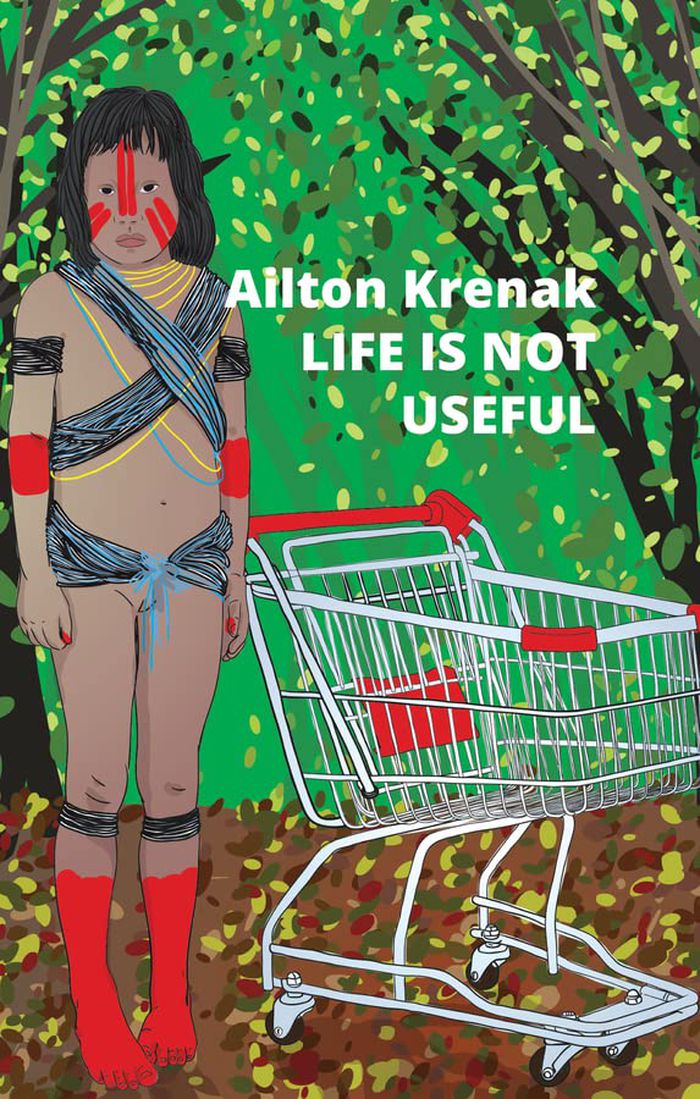
Life is not useful
Life is not useful
Actions:
Prix:
$17.95
(disponible en magasin)
Résumé:
Indigenous leader and activist Ailton Krenak reminds us that we must awaken from the comatose senselessness we have been immersed in since the beginning of the modern colonial project, where order, progress, development, consumerism, and capitalism have taken over our entire existence, leaving us only very partially alive, and, in fact, almost dead. To awaken from the(...)
$17.95
(disponible en magasin)
Résumé:
Indigenous leader and activist Ailton Krenak reminds us that we must awaken from the comatose senselessness we have been immersed in since the beginning of the modern colonial project, where order, progress, development, consumerism, and capitalism have taken over our entire existence, leaving us only very partially alive, and, in fact, almost dead. To awaken from the(...)
Titre:
Life is not useful
Actions:
Prix:
$17.95
(disponible en magasin)
Résumé:
Indigenous leader and activist Ailton Krenak reminds us that we must awaken from the comatose senselessness we have been immersed in since the beginning of the modern colonial project, where order, progress, development, consumerism, and capitalism have taken over our entire existence, leaving us only very partially alive, and, in fact, almost dead. To awaken from the coma of modernity is, for Krenak, to awaken to the possibility of becoming attuned to “the cosmic sense of life.” He points out that the COVID-19 pandemic affects all so-called “human” lives and that the time is ripe for us all to reflect on and undo the exclusivity and distinction that have characterized the concept of humanity throughout Western modernity.
Life is not useful
Actions:
Prix:
$17.95
(disponible en magasin)
Résumé:
Indigenous leader and activist Ailton Krenak reminds us that we must awaken from the comatose senselessness we have been immersed in since the beginning of the modern colonial project, where order, progress, development, consumerism, and capitalism have taken over our entire existence, leaving us only very partially alive, and, in fact, almost dead. To awaken from the coma of modernity is, for Krenak, to awaken to the possibility of becoming attuned to “the cosmic sense of life.” He points out that the COVID-19 pandemic affects all so-called “human” lives and that the time is ripe for us all to reflect on and undo the exclusivity and distinction that have characterized the concept of humanity throughout Western modernity.
Classification:
livres
livres
Publication:
mai 2023
mai 2023
Sujet:
Social
Social
Classification:
livres
livres

Actions:
Prix:
$32.95
(disponible sur commande)
Résumé:
Ce livre fait entendre des paroles de femmes qui luttent et œuvrent, depuis l’Amérique latine, pour la liberté et pour la vie. Il réunit des textes d’approche théorique ou militante ou encore des poèmes dont l’unité réside dans le terme englobant d’«?écoféminisme?». Ce terme permet de montrer la proximité entre les mouvements de femmes et ceux de protection de la nature,(...)
$32.95
(disponible sur commande)
Résumé:
Ce livre fait entendre des paroles de femmes qui luttent et œuvrent, depuis l’Amérique latine, pour la liberté et pour la vie. Il réunit des textes d’approche théorique ou militante ou encore des poèmes dont l’unité réside dans le terme englobant d’«?écoféminisme?». Ce terme permet de montrer la proximité entre les mouvements de femmes et ceux de protection de la nature,(...)
Titre:
Vivantes : des femmes qui luttent en Amérique Latine
Actions:
Prix:
$32.95
(disponible sur commande)
Résumé:
Ce livre fait entendre des paroles de femmes qui luttent et œuvrent, depuis l’Amérique latine, pour la liberté et pour la vie. Il réunit des textes d’approche théorique ou militante ou encore des poèmes dont l’unité réside dans le terme englobant d’«?écoféminisme?». Ce terme permet de montrer la proximité entre les mouvements de femmes et ceux de protection de la nature, tous deux inscrits, dans l’espace latino-américain, dans des processus de décolonisation. Ainsi, en dénonçant l’organisation sexiste de la société, ces femmes mettent en lumière les rapports d’appropriation, d’oppression et de destruction qui organisent le monde actuel et qui affectent, d’une façon ou d’une autre, tous les territoires et tous les corps.
Vivantes : des femmes qui luttent en Amérique Latine
Actions:
Prix:
$32.95
(disponible sur commande)
Résumé:
Ce livre fait entendre des paroles de femmes qui luttent et œuvrent, depuis l’Amérique latine, pour la liberté et pour la vie. Il réunit des textes d’approche théorique ou militante ou encore des poèmes dont l’unité réside dans le terme englobant d’«?écoféminisme?». Ce terme permet de montrer la proximité entre les mouvements de femmes et ceux de protection de la nature, tous deux inscrits, dans l’espace latino-américain, dans des processus de décolonisation. Ainsi, en dénonçant l’organisation sexiste de la société, ces femmes mettent en lumière les rapports d’appropriation, d’oppression et de destruction qui organisent le monde actuel et qui affectent, d’une façon ou d’une autre, tous les territoires et tous les corps.
Classification:
livres
livres
Publication:
mai 2023
mai 2023
Sujet:
Social
Social
Classification:
livres
livres

Actions:
Prix:
$45.00
(disponible sur commande)
Résumé:
Ouvrage collectif issu d'un projet de recherche mené par Sophie Orlando et Katrin Ströbel qui prend pour point de départ la manière dont les changements géopolitiques, économiques et sociaux actuels induisent un renouvellement et un ajustement des stratégies artistiques, en investissant, dans une perspective intersectionnelle, la pensée des contextes (économie de travail,(...)
$45.00
(disponible sur commande)
Résumé:
Ouvrage collectif issu d'un projet de recherche mené par Sophie Orlando et Katrin Ströbel qui prend pour point de départ la manière dont les changements géopolitiques, économiques et sociaux actuels induisent un renouvellement et un ajustement des stratégies artistiques, en investissant, dans une perspective intersectionnelle, la pensée des contextes (économie de travail,(...)
Titre:
Les fourmis courent en deux sens
Actions:
Prix:
$45.00
(disponible sur commande)
Résumé:
Ouvrage collectif issu d'un projet de recherche mené par Sophie Orlando et Katrin Ströbel qui prend pour point de départ la manière dont les changements géopolitiques, économiques et sociaux actuels induisent un renouvellement et un ajustement des stratégies artistiques, en investissant, dans une perspective intersectionnelle, la pensée des contextes (économie de travail, réseaux, publics, modes de production, stratégies, outils, ressources) et la pensée féministe, queer et postcoloniale de manière artistique et conceptuelle.
Les fourmis courent en deux sens
Actions:
Prix:
$45.00
(disponible sur commande)
Résumé:
Ouvrage collectif issu d'un projet de recherche mené par Sophie Orlando et Katrin Ströbel qui prend pour point de départ la manière dont les changements géopolitiques, économiques et sociaux actuels induisent un renouvellement et un ajustement des stratégies artistiques, en investissant, dans une perspective intersectionnelle, la pensée des contextes (économie de travail, réseaux, publics, modes de production, stratégies, outils, ressources) et la pensée féministe, queer et postcoloniale de manière artistique et conceptuelle.
Classification:
livres
livres
Publication:
janvier 2024
janvier 2024
Sujet:
Social
Social


