


315 Résultats
Classification:
livres
livres

Prix:
$38.00
(disponible sur commande)
Résumé:
'Until Proven Safe' tracks the history and future of quarantine around the globe, chasing the story of emergency isolation through time and space - from the crumbling lazarettos of the Mediterranean, built to contain the Black Death, to an experimental Ebola unit in London, and from the hallways of the CDC to closed-door simulations where pharmaceutical execs and(...)
$38.00
(disponible sur commande)
Résumé:
'Until Proven Safe' tracks the history and future of quarantine around the globe, chasing the story of emergency isolation through time and space - from the crumbling lazarettos of the Mediterranean, built to contain the Black Death, to an experimental Ebola unit in London, and from the hallways of the CDC to closed-door simulations where pharmaceutical execs and(...)
Titre:
Until proven safe: the history and future of quarantine
Actions:
Prix:
$38.00
(disponible sur commande)
Résumé:
'Until Proven Safe' tracks the history and future of quarantine around the globe, chasing the story of emergency isolation through time and space - from the crumbling lazarettos of the Mediterranean, built to contain the Black Death, to an experimental Ebola unit in London, and from the hallways of the CDC to closed-door simulations where pharmaceutical execs and epidemiologists prepare for the outbreak of a novel coronavirus.
Until proven safe: the history and future of quarantine
Actions:
Prix:
$38.00
(disponible sur commande)
Résumé:
'Until Proven Safe' tracks the history and future of quarantine around the globe, chasing the story of emergency isolation through time and space - from the crumbling lazarettos of the Mediterranean, built to contain the Black Death, to an experimental Ebola unit in London, and from the hallways of the CDC to closed-door simulations where pharmaceutical execs and epidemiologists prepare for the outbreak of a novel coronavirus.
Classification:
livres
livres
Publication:
juillet 2021
juillet 2021
Sujet:
Social
Social
Classification:
livres
livres
Actions:
Prix:
$25.00
(disponible sur commande)
Résumé:
From social get-together to scenes of delirium, this publication aims to unpack the party as a complex, vertiginous construct that provides a dynamic view onto questions of community. If the party functions as an intensification of togetherness, what lessons might it provide in negotiating a given social order? This first volume on the topic considers the house party,(...)
$25.00
(disponible sur commande)
Résumé:
From social get-together to scenes of delirium, this publication aims to unpack the party as a complex, vertiginous construct that provides a dynamic view onto questions of community. If the party functions as an intensification of togetherness, what lessons might it provide in negotiating a given social order? This first volume on the topic considers the house party,(...)
Titre:
Party studies: Home gatherings, flat events, festive pedagogy and refiguring the hangover
Actions:
Prix:
$25.00
(disponible sur commande)
Résumé:
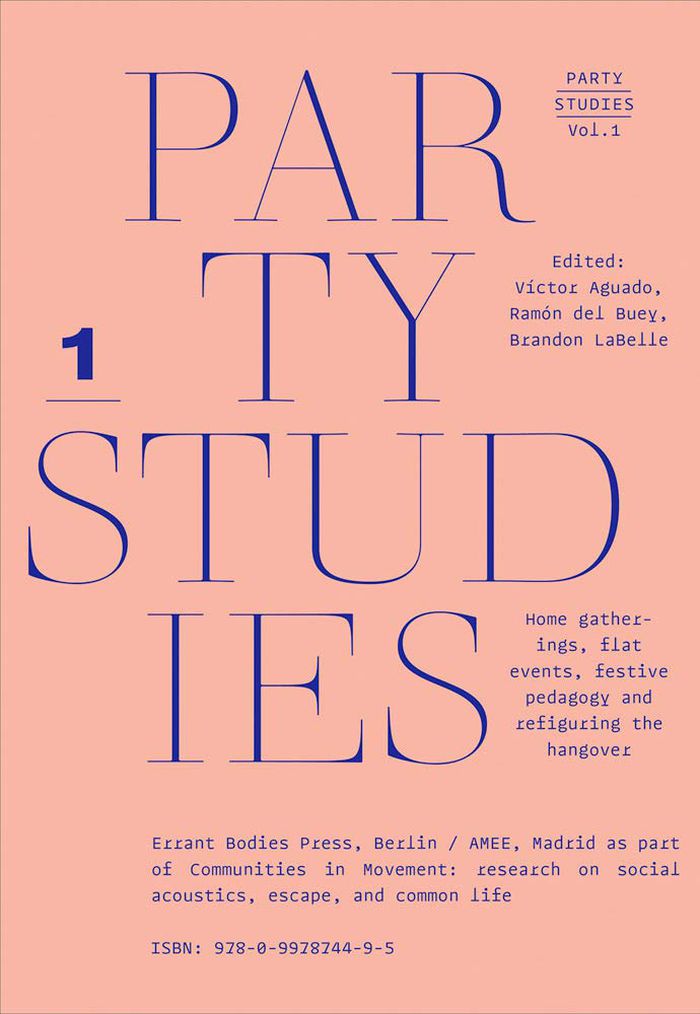
From social get-together to scenes of delirium, this publication aims to unpack the party as a complex, vertiginous construct that provides a dynamic view onto questions of community. If the party functions as an intensification of togetherness, what lessons might it provide in negotiating a given social order? This first volume on the topic considers the house party, and in what ways domestic space is reworked in support of an extension of the family unit. Including a series of interviews with those active in flat events in Budapest during the communist regime and today, essays on hospitality, the politics of rest, and erotic knowledge, and documentation on Sala 603, an informal house-theater in Curitiba. The publication is the first in a new Errant Bodies series developed in parallel to a set of party-workshops initiated by the artist Brandon LaBelle held in different locations in Madrid, each of which performatively investigates states of partying, posing the party as a scene of study.
Party studies: Home gatherings, flat events, festive pedagogy and refiguring the hangover
Actions:
Prix:
$25.00
(disponible sur commande)
Résumé:
From social get-together to scenes of delirium, this publication aims to unpack the party as a complex, vertiginous construct that provides a dynamic view onto questions of community. If the party functions as an intensification of togetherness, what lessons might it provide in negotiating a given social order? This first volume on the topic considers the house party, and in what ways domestic space is reworked in support of an extension of the family unit. Including a series of interviews with those active in flat events in Budapest during the communist regime and today, essays on hospitality, the politics of rest, and erotic knowledge, and documentation on Sala 603, an informal house-theater in Curitiba. The publication is the first in a new Errant Bodies series developed in parallel to a set of party-workshops initiated by the artist Brandon LaBelle held in different locations in Madrid, each of which performatively investigates states of partying, posing the party as a scene of study.
Classification:
livres
livres
Publication:
août 2021
août 2021
Sujet:
Social
Social
Classification:
livres
livres
Actions:
Prix:
$20.00
(disponible en magasin)
Résumé:
''Before I was a critic I was a human being'' is the debut collection of essays by Amy Fung. In it, Fung takes a closer examination at Canada’s mythologies of multiculturalism, settler colonialism, and identity through the lens of a national art critic. Following the tangents of a foreign-born perspective and the complexities and complicities in participating in ongoing(...)
$20.00
(disponible en magasin)
Résumé:
''Before I was a critic I was a human being'' is the debut collection of essays by Amy Fung. In it, Fung takes a closer examination at Canada’s mythologies of multiculturalism, settler colonialism, and identity through the lens of a national art critic. Following the tangents of a foreign-born perspective and the complexities and complicities in participating in ongoing(...)
Titre:
Before I was a critic I was a human being
Actions:
Prix:
$20.00
(disponible en magasin)
Résumé:
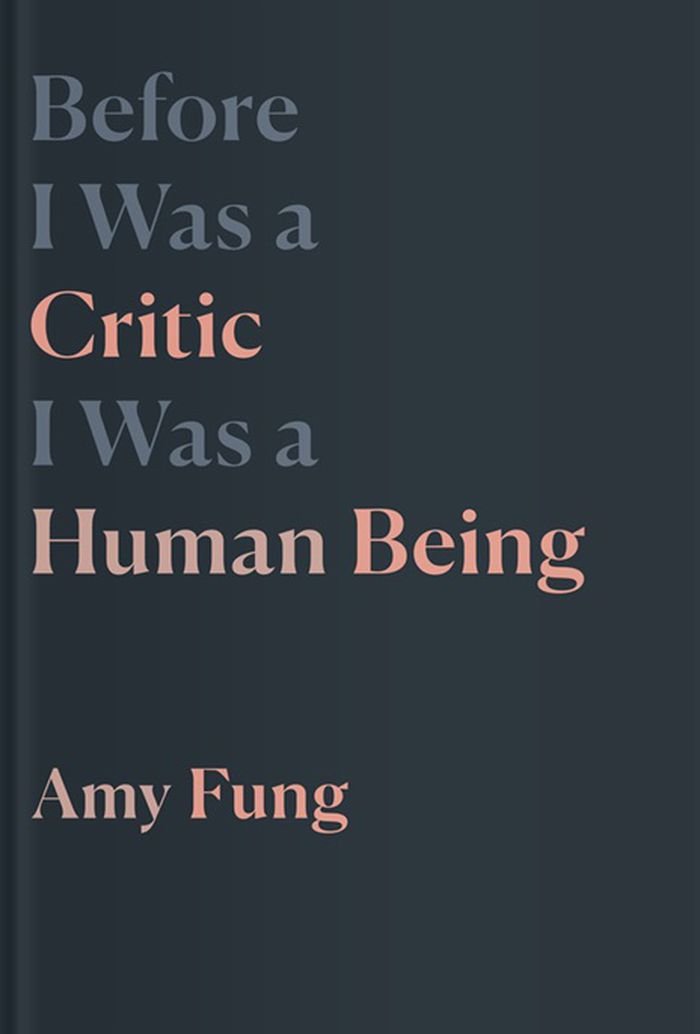
''Before I was a critic I was a human being'' is the debut collection of essays by Amy Fung. In it, Fung takes a closer examination at Canada’s mythologies of multiculturalism, settler colonialism, and identity through the lens of a national art critic. Following the tangents of a foreign-born perspective and the complexities and complicities in participating in ongoing acts of colonial violence, the book as a whole takes the form of a very long land acknowledgement. Taken individually, each piece roots itself in the learning and unlearning process of a first generation settler immigrant as she unfurls each region’s sense of place and identity.
Before I was a critic I was a human being
Actions:
Prix:
$20.00
(disponible en magasin)
Résumé:
''Before I was a critic I was a human being'' is the debut collection of essays by Amy Fung. In it, Fung takes a closer examination at Canada’s mythologies of multiculturalism, settler colonialism, and identity through the lens of a national art critic. Following the tangents of a foreign-born perspective and the complexities and complicities in participating in ongoing acts of colonial violence, the book as a whole takes the form of a very long land acknowledgement. Taken individually, each piece roots itself in the learning and unlearning process of a first generation settler immigrant as she unfurls each region’s sense of place and identity.
Classification:
livres
livres
Publication:
mai 2019
mai 2019
Sujet:
Social
Social
Classification:
livres
livres
Prix:
$36.95
(disponible en magasin)
Résumé:
We are on the verge of sharing our cities with autonomous vehicles. Recent developments in driverless technologies are having an impact on our urban environment, raising questions about how self-driving vehicles could be integrated into our daily lives. Automotive and technological industries are not only developing the vehicles but also envisioning the future of our(...)
$36.95
(disponible en magasin)
Résumé:
We are on the verge of sharing our cities with autonomous vehicles. Recent developments in driverless technologies are having an impact on our urban environment, raising questions about how self-driving vehicles could be integrated into our daily lives. Automotive and technological industries are not only developing the vehicles but also envisioning the future of our(...)
Publication:
janvier 2021
janvier 2021
Titre:
Learning to live together: cars, humans, and kerbs in solidarity
Actions:
Prix:
$36.95
(disponible en magasin)
Résumé:
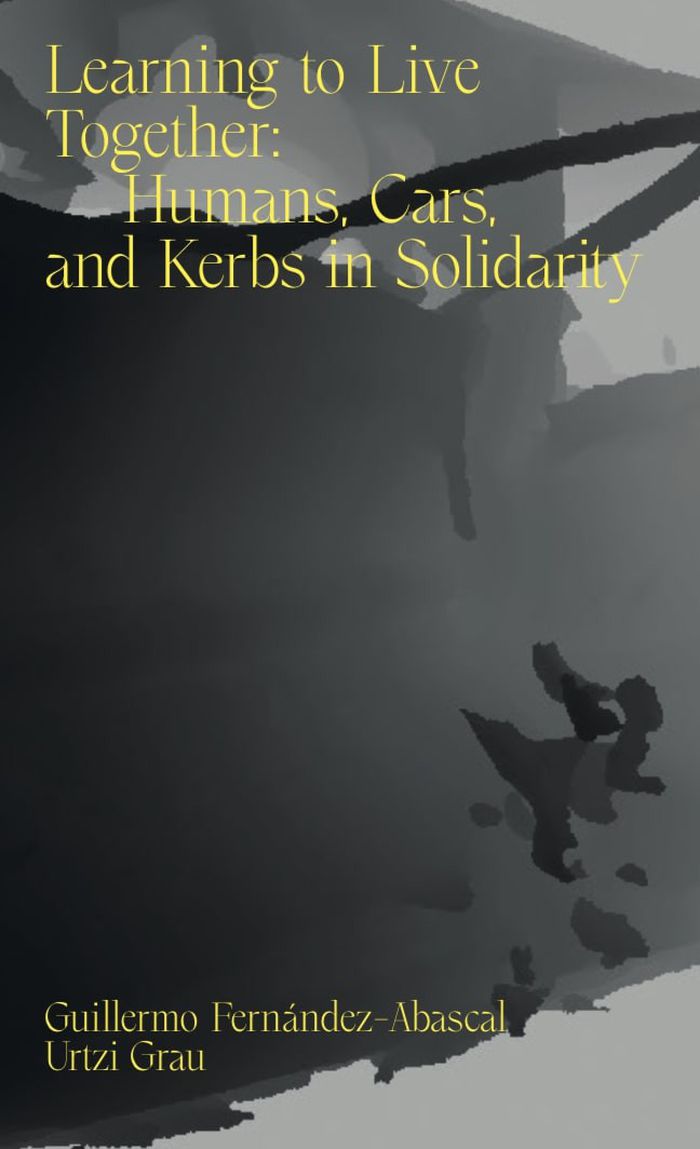
We are on the verge of sharing our cities with autonomous vehicles. Recent developments in driverless technologies are having an impact on our urban environment, raising questions about how self-driving vehicles could be integrated into our daily lives. Automotive and technological industries are not only developing the vehicles but also envisioning the future of our cities, a future where streets have seamlessly integrated driverless technologies and humans wander about, unconcerned by the presence of new automated machines circulating at high speeds through public space. These visions skip to a distant time and ignore the issues that these vehicles raise in the immediate future. In response to such an oversight, this essay and the accompanying meditations explore the conflicts soon to be unleashed by this new technology and the transformation of our streets it will trigger. The current implementations of driverless technology, which are fast and disruptive, do not suggest an eventual integrated urban solution. Yet this book allows us to imagine how humans and cars might collectively influence the urban environment.
Learning to live together: cars, humans, and kerbs in solidarity
Actions:
Prix:
$36.95
(disponible en magasin)
Résumé:
We are on the verge of sharing our cities with autonomous vehicles. Recent developments in driverless technologies are having an impact on our urban environment, raising questions about how self-driving vehicles could be integrated into our daily lives. Automotive and technological industries are not only developing the vehicles but also envisioning the future of our cities, a future where streets have seamlessly integrated driverless technologies and humans wander about, unconcerned by the presence of new automated machines circulating at high speeds through public space. These visions skip to a distant time and ignore the issues that these vehicles raise in the immediate future. In response to such an oversight, this essay and the accompanying meditations explore the conflicts soon to be unleashed by this new technology and the transformation of our streets it will trigger. The current implementations of driverless technology, which are fast and disruptive, do not suggest an eventual integrated urban solution. Yet this book allows us to imagine how humans and cars might collectively influence the urban environment.
Classification:
livres
livres
Publication:
janvier 2021
janvier 2021
Classification:
livres
livres
Actions:
Prix:
$25.95
(disponible sur commande)
Résumé:
Silicon Valley titans, politicians, techno-futurists and social critics have united in arguing that we are living on the cusp of an era of rapid technological automation, heralding the end of work as we know it. But does the much-discussed ''rise of the robots'' really explain the jobs crisis that awaits us on the other side of the coronavirus? In ''Automation and the(...)
$25.95
(disponible sur commande)
Résumé:
Silicon Valley titans, politicians, techno-futurists and social critics have united in arguing that we are living on the cusp of an era of rapid technological automation, heralding the end of work as we know it. But does the much-discussed ''rise of the robots'' really explain the jobs crisis that awaits us on the other side of the coronavirus? In ''Automation and the(...)
Titre:
Automation and the future of work
Actions:
Prix:
$25.95
(disponible sur commande)
Résumé:
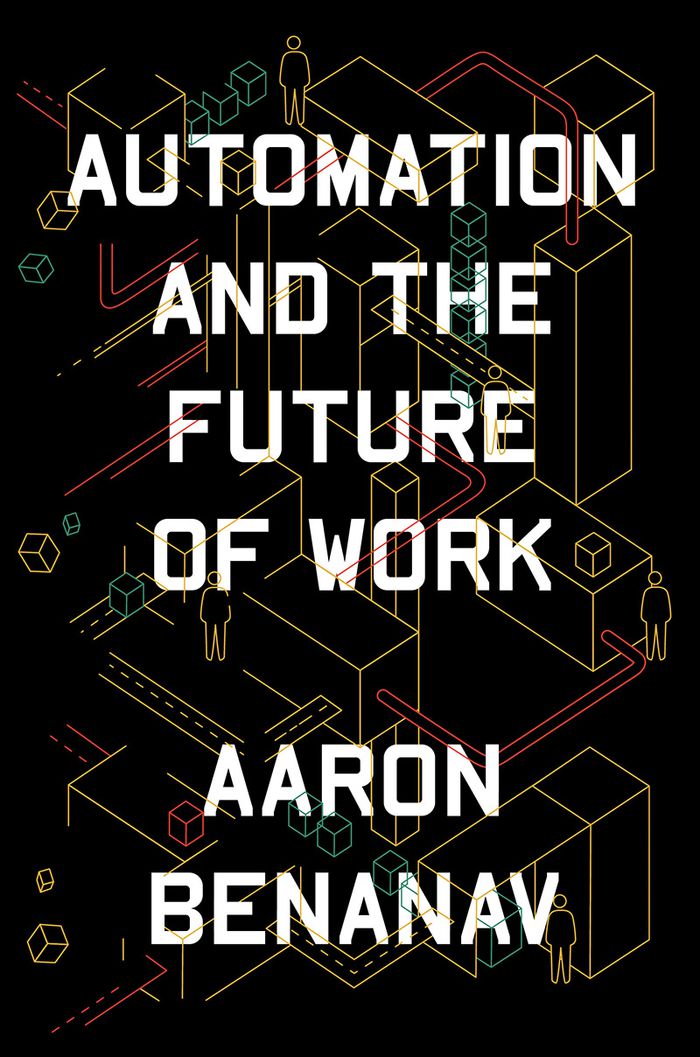
Silicon Valley titans, politicians, techno-futurists and social critics have united in arguing that we are living on the cusp of an era of rapid technological automation, heralding the end of work as we know it. But does the much-discussed ''rise of the robots'' really explain the jobs crisis that awaits us on the other side of the coronavirus? In ''Automation and the future of work,'' Aaron Benanav uncovers the structural economic trends that will shape our working lives far into the future. What social movements, he asks, are required to propel us into post-scarcity, if technological innovation alone can’t deliver it? In response to calls for a universal basic income that would maintain a growing army of redundant workers, he offers a counter-proposal.
Automation and the future of work
Actions:
Prix:
$25.95
(disponible sur commande)
Résumé:
Silicon Valley titans, politicians, techno-futurists and social critics have united in arguing that we are living on the cusp of an era of rapid technological automation, heralding the end of work as we know it. But does the much-discussed ''rise of the robots'' really explain the jobs crisis that awaits us on the other side of the coronavirus? In ''Automation and the future of work,'' Aaron Benanav uncovers the structural economic trends that will shape our working lives far into the future. What social movements, he asks, are required to propel us into post-scarcity, if technological innovation alone can’t deliver it? In response to calls for a universal basic income that would maintain a growing army of redundant workers, he offers a counter-proposal.
Classification:
livres
livres
Publication:
décembre 2020
décembre 2020
Sujet:
Social
Social
Classification:
livres
livres

Prix:
$21.95
(disponible sur commande)
Résumé:
We live an age of nostalgia, incarnated by populist fantasies of "taking back control" and making nations "great again". In the long aftermath of the 2007-08 economic crisis, nostalgia has been established as the cultural zeitgeist of Western society. Populist fantasies of nostalgia represent a cry for help against the demise of the societal model of the postwar era,(...)
$21.95
(disponible sur commande)
Résumé:
We live an age of nostalgia, incarnated by populist fantasies of "taking back control" and making nations "great again". In the long aftermath of the 2007-08 economic crisis, nostalgia has been established as the cultural zeitgeist of Western society. Populist fantasies of nostalgia represent a cry for help against the demise of the societal model of the postwar era,(...)
Titre:
Zeitgeist nostalgia: On populism, work and the 'Good Life'
Actions:
Prix:
$21.95
(disponible sur commande)
Résumé:
We live an age of nostalgia, incarnated by populist fantasies of "taking back control" and making nations "great again". In the long aftermath of the 2007-08 economic crisis, nostalgia has been established as the cultural zeitgeist of Western society. Populist fantasies of nostalgia represent a cry for help against the demise of the societal model of the postwar era, based on stable employment and mass consumption. The promise of an impossible return to the "good life" of the 20th century, Gandini contends, particularly appeals to the older generations, who are incapable of making sense of the evolution of Western societies after decades of globalization and neoliberal policies. The younger generations, in the meantime, are instead trying to build a new "good life" based on another form of return, this time to old practices of craft production and consumption.
Zeitgeist nostalgia: On populism, work and the 'Good Life'
Actions:
Prix:
$21.95
(disponible sur commande)
Résumé:
We live an age of nostalgia, incarnated by populist fantasies of "taking back control" and making nations "great again". In the long aftermath of the 2007-08 economic crisis, nostalgia has been established as the cultural zeitgeist of Western society. Populist fantasies of nostalgia represent a cry for help against the demise of the societal model of the postwar era, based on stable employment and mass consumption. The promise of an impossible return to the "good life" of the 20th century, Gandini contends, particularly appeals to the older generations, who are incapable of making sense of the evolution of Western societies after decades of globalization and neoliberal policies. The younger generations, in the meantime, are instead trying to build a new "good life" based on another form of return, this time to old practices of craft production and consumption.
Classification:
livres
livres
Publication:
janvier 2021
janvier 2021
Sujet:
Social
Social
Classification:
livres
livres

Titre:
Atlas of AI
Atlas of AI
Actions:
Prix:
$39.95
(disponible sur commande)
Résumé:
What happens when artificial intelligence saturates political life and depletes the planet? How is AI shaping our understanding of ourselves and our societies? Drawing on more than a decade of research, award-winning scholar Kate Crawford reveals how AI is a technology of extraction: from the minerals drawn from the earth, to the labor pulled from low-wage information(...)
$39.95
(disponible sur commande)
Résumé:
What happens when artificial intelligence saturates political life and depletes the planet? How is AI shaping our understanding of ourselves and our societies? Drawing on more than a decade of research, award-winning scholar Kate Crawford reveals how AI is a technology of extraction: from the minerals drawn from the earth, to the labor pulled from low-wage information(...)
Titre:
Atlas of AI
Actions:
Prix:
$39.95
(disponible sur commande)
Résumé:
What happens when artificial intelligence saturates political life and depletes the planet? How is AI shaping our understanding of ourselves and our societies? Drawing on more than a decade of research, award-winning scholar Kate Crawford reveals how AI is a technology of extraction: from the minerals drawn from the earth, to the labor pulled from low-wage information workers, to the data taken from every action and expression. This book reveals how this planetary network is fueling a shift toward undemocratic governance and increased inequity. Rather than taking a narrow focus on code and algorithms, Crawford offers us a material and political perspective on what it takes to make AI and how it centralizes power. This is an urgent account of what is at stake as technology companies use artificial intelligence to reshape the world.
Atlas of AI
Actions:
Prix:
$39.95
(disponible sur commande)
Résumé:
What happens when artificial intelligence saturates political life and depletes the planet? How is AI shaping our understanding of ourselves and our societies? Drawing on more than a decade of research, award-winning scholar Kate Crawford reveals how AI is a technology of extraction: from the minerals drawn from the earth, to the labor pulled from low-wage information workers, to the data taken from every action and expression. This book reveals how this planetary network is fueling a shift toward undemocratic governance and increased inequity. Rather than taking a narrow focus on code and algorithms, Crawford offers us a material and political perspective on what it takes to make AI and how it centralizes power. This is an urgent account of what is at stake as technology companies use artificial intelligence to reshape the world.
Classification:
livres
livres
Publication:
avril 2021
avril 2021
Classification:
livres
livres

Actions:
Prix:
$20.95
(disponible sur commande)
Résumé:
A glimpse into the genesis of Harun Farocki’s film Images of the World and the Inscription of War (1988), which evolved from the unrealized project ''On the history of labor'' between 1985 and 1988. The booklet contains the project draft that Farocki wrote to apply for funding in the spring of 1986, a letter to Radio Free Berlin (SFB) editors Jürgen Tomm and Bernd(...)
$20.95
(disponible sur commande)
Résumé:
A glimpse into the genesis of Harun Farocki’s film Images of the World and the Inscription of War (1988), which evolved from the unrealized project ''On the history of labor'' between 1985 and 1988. The booklet contains the project draft that Farocki wrote to apply for funding in the spring of 1986, a letter to Radio Free Berlin (SFB) editors Jürgen Tomm and Bernd(...)
Titre:
HaFI 013 - Harun Farocki: On the history of labor
Actions:
Prix:
$20.95
(disponible sur commande)
Résumé:
A glimpse into the genesis of Harun Farocki’s film Images of the World and the Inscription of War (1988), which evolved from the unrealized project ''On the history of labor'' between 1985 and 1988. The booklet contains the project draft that Farocki wrote to apply for funding in the spring of 1986, a letter to Radio Free Berlin (SFB) editors Jürgen Tomm and Bernd Schauer, a list of research locations, a short report to ''Filmbüro NRW'' (Film office North Rhine-Westphalia), a newspaper article by Farocki on the ''Technology of vision'', and a research bibliography that Farocki drew on during this period. A commentary by Volker Pantenburg outlines how ''On the history of labor'' evolved into ''Images / History'', then Images-War (1987) and finally Images of the World. Stills from Images of the World and from unused footage make palpable how the focus of the project shifted and how, in the process, the 1944 aerial photographs of Auschwitz-Birkenau taken by the Allies increasingly attracted Farocki’s attention.
HaFI 013 - Harun Farocki: On the history of labor
Actions:
Prix:
$20.95
(disponible sur commande)
Résumé:
A glimpse into the genesis of Harun Farocki’s film Images of the World and the Inscription of War (1988), which evolved from the unrealized project ''On the history of labor'' between 1985 and 1988. The booklet contains the project draft that Farocki wrote to apply for funding in the spring of 1986, a letter to Radio Free Berlin (SFB) editors Jürgen Tomm and Bernd Schauer, a list of research locations, a short report to ''Filmbüro NRW'' (Film office North Rhine-Westphalia), a newspaper article by Farocki on the ''Technology of vision'', and a research bibliography that Farocki drew on during this period. A commentary by Volker Pantenburg outlines how ''On the history of labor'' evolved into ''Images / History'', then Images-War (1987) and finally Images of the World. Stills from Images of the World and from unused footage make palpable how the focus of the project shifted and how, in the process, the 1944 aerial photographs of Auschwitz-Birkenau taken by the Allies increasingly attracted Farocki’s attention.
Classification:
livres
livres
Publication:
janvier 2020
janvier 2020
Sujet:
Social
Social
Classification:
livres
livres
Prix:
$36.95
(disponible en magasin)
Résumé:
'Oggetti Socievoli' is a project that investigates home objects that have been discovered, re-discovered and re-interpreted during social isolation due to the Covid-19 pandemic. Prisca Arosio and Vittoria Rossi are joined by artists, writers, designers, academics in a social study of home objects in relation to people’s lockdown experiences. The book showcases the(...)
$36.95
(disponible en magasin)
Résumé:
'Oggetti Socievoli' is a project that investigates home objects that have been discovered, re-discovered and re-interpreted during social isolation due to the Covid-19 pandemic. Prisca Arosio and Vittoria Rossi are joined by artists, writers, designers, academics in a social study of home objects in relation to people’s lockdown experiences. The book showcases the(...)
Titre:
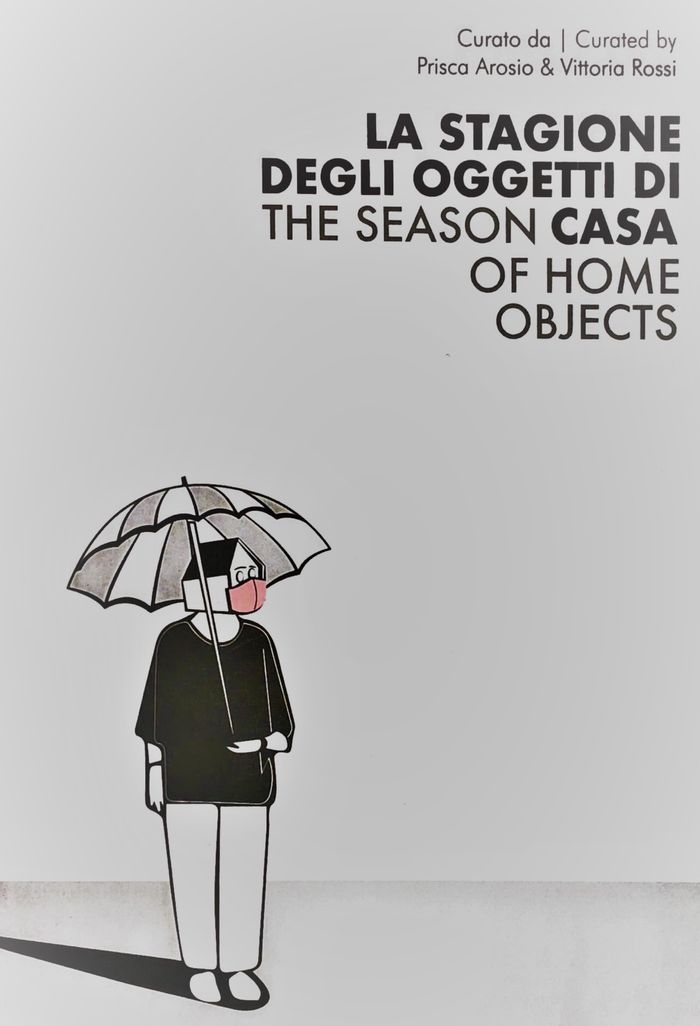
The season of home objects / La stagione degli Oggetti di casa
Actions:
Prix:
$36.95
(disponible en magasin)
Résumé:
'Oggetti Socievoli' is a project that investigates home objects that have been discovered, re-discovered and re-interpreted during social isolation due to the Covid-19 pandemic. Prisca Arosio and Vittoria Rossi are joined by artists, writers, designers, academics in a social study of home objects in relation to people’s lockdown experiences. The book showcases the participatory project’s photos and texts and artisans' production process of household objects. It contains compared and inspiring ideas and design concepts to stimulate the next generation of home-made activities. The content of this book aims at creating a common ground where similarities and differences among countries as well as its contexts come together harmoniously.
The season of home objects / La stagione degli Oggetti di casa
Actions:
Prix:
$36.95
(disponible en magasin)
Résumé:
'Oggetti Socievoli' is a project that investigates home objects that have been discovered, re-discovered and re-interpreted during social isolation due to the Covid-19 pandemic. Prisca Arosio and Vittoria Rossi are joined by artists, writers, designers, academics in a social study of home objects in relation to people’s lockdown experiences. The book showcases the participatory project’s photos and texts and artisans' production process of household objects. It contains compared and inspiring ideas and design concepts to stimulate the next generation of home-made activities. The content of this book aims at creating a common ground where similarities and differences among countries as well as its contexts come together harmoniously.
Classification:
livres
livres
Publication:
décembre 2020
décembre 2020
Sujet:
Social
Social
Classification:
livres
livres

Prix:
$59.95
(disponible en magasin)
Résumé:
While birth often brings great joy, making babies is a knotty enterprise. The designed objects that surround us when it comes to menstruation, birth control, conception, pregnancy, childbirth, and early motherhood vary as oddly, messily, and dramatically as the stereotypes suggest. This smart, image-rich, fashion-forward, and design-driven book explores more than eighty(...)
$59.95
(disponible en magasin)
Résumé:
While birth often brings great joy, making babies is a knotty enterprise. The designed objects that surround us when it comes to menstruation, birth control, conception, pregnancy, childbirth, and early motherhood vary as oddly, messily, and dramatically as the stereotypes suggest. This smart, image-rich, fashion-forward, and design-driven book explores more than eighty(...)
Titre:
Designing motherhood: things that make and break our births
Actions:
Prix:
$59.95
(disponible en magasin)
Résumé:
While birth often brings great joy, making babies is a knotty enterprise. The designed objects that surround us when it comes to menstruation, birth control, conception, pregnancy, childbirth, and early motherhood vary as oddly, messily, and dramatically as the stereotypes suggest. This smart, image-rich, fashion-forward, and design-driven book explores more than eighty designs--iconic, conceptual, archaic, titillating, emotionally charged, or just plain strange--that have defined the relationships between people and babies during the past century. Each object tells a story. "Designing motherhood" unfolds the compelling design histories and real-world uses of the objects that shape our reproductive experiences. The authors investigate the baby carrier, from the Snugli to BabyBjörn, and the (re)discovery of the varied traditions of baby wearing; the tie-waist skirt, famously worn by a pregnant Lucille Ball on I Love Lucy, and essential for camouflaging and slowly normalizing a public pregnancy; the home pregnancy kit, and its threat to the authority of male gynecologists; and more. Memorable images--including historical ads, found photos, and drawings--illustrate the crucial role design and material culture plays throughout the arc of human reproduction.
Designing motherhood: things that make and break our births
Actions:
Prix:
$59.95
(disponible en magasin)
Résumé:
While birth often brings great joy, making babies is a knotty enterprise. The designed objects that surround us when it comes to menstruation, birth control, conception, pregnancy, childbirth, and early motherhood vary as oddly, messily, and dramatically as the stereotypes suggest. This smart, image-rich, fashion-forward, and design-driven book explores more than eighty designs--iconic, conceptual, archaic, titillating, emotionally charged, or just plain strange--that have defined the relationships between people and babies during the past century. Each object tells a story. "Designing motherhood" unfolds the compelling design histories and real-world uses of the objects that shape our reproductive experiences. The authors investigate the baby carrier, from the Snugli to BabyBjörn, and the (re)discovery of the varied traditions of baby wearing; the tie-waist skirt, famously worn by a pregnant Lucille Ball on I Love Lucy, and essential for camouflaging and slowly normalizing a public pregnancy; the home pregnancy kit, and its threat to the authority of male gynecologists; and more. Memorable images--including historical ads, found photos, and drawings--illustrate the crucial role design and material culture plays throughout the arc of human reproduction.
Classification:
livres
livres
Publication:
septembre 2021
septembre 2021
Sujet:
Social
Social


