


884 Résultats
Classification:
livres
livres
Titre:
Maintenant
Maintenant
Actions:
Prix:
$17.95
(disponible en magasin)
Résumé:
Dix ans apre`s L’insurrection qui vient' – dont il partage la vivacite´ de style et le statut de texte d’intervention –, 'Maintenant' parai^t lui aussi dans un contexte e´lectoral. A` ceci pre`s qu’en dix ans les espoirs de salut place´s dans la politique ont acheve´ de s’e´teindre. Tout candidat en est re´duit a` promettre une « re´volution » qu’il ne pourra pas faire.(...)
$17.95
(disponible en magasin)
Résumé:
Dix ans apre`s L’insurrection qui vient' – dont il partage la vivacite´ de style et le statut de texte d’intervention –, 'Maintenant' parai^t lui aussi dans un contexte e´lectoral. A` ceci pre`s qu’en dix ans les espoirs de salut place´s dans la politique ont acheve´ de s’e´teindre. Tout candidat en est re´duit a` promettre une « re´volution » qu’il ne pourra pas faire.(...)
Titre:
Maintenant
Actions:
Prix:
$17.95
(disponible en magasin)
Résumé:
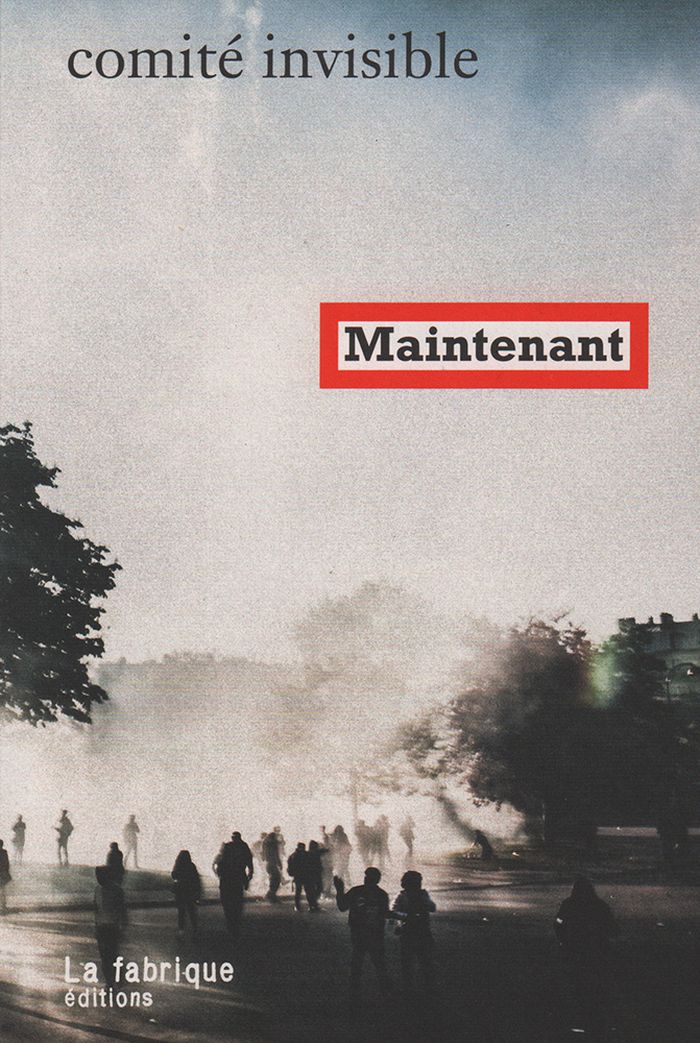
Dix ans apre`s L’insurrection qui vient' – dont il partage la vivacite´ de style et le statut de texte d’intervention –, 'Maintenant' parai^t lui aussi dans un contexte e´lectoral. A` ceci pre`s qu’en dix ans les espoirs de salut place´s dans la politique ont acheve´ de s’e´teindre. Tout candidat en est re´duit a` promettre une « re´volution » qu’il ne pourra pas faire. Les moyens de la politique sont bien trop superficiels au vu de la profondeur de la « crise » qui frappe en tout domaine. C’est pourquoi la politique donne d’elle-me^me un spectacle si lamentable. Il n’y a pas de « solution » au proble`me du pre´sent, pas de solution qui nous laisse indemnes en tout cas. Mais il y a d’autres voies, d’autres voies que l’alternative entre restauration de l’unite´ nationale et globalisation ne´olibe´rale, entre maintien et refonte des institutions, entre option autoritaire et option citoyenne.
Maintenant
Actions:
Prix:
$17.95
(disponible en magasin)
Résumé:
Dix ans apre`s L’insurrection qui vient' – dont il partage la vivacite´ de style et le statut de texte d’intervention –, 'Maintenant' parai^t lui aussi dans un contexte e´lectoral. A` ceci pre`s qu’en dix ans les espoirs de salut place´s dans la politique ont acheve´ de s’e´teindre. Tout candidat en est re´duit a` promettre une « re´volution » qu’il ne pourra pas faire. Les moyens de la politique sont bien trop superficiels au vu de la profondeur de la « crise » qui frappe en tout domaine. C’est pourquoi la politique donne d’elle-me^me un spectacle si lamentable. Il n’y a pas de « solution » au proble`me du pre´sent, pas de solution qui nous laisse indemnes en tout cas. Mais il y a d’autres voies, d’autres voies que l’alternative entre restauration de l’unite´ nationale et globalisation ne´olibe´rale, entre maintien et refonte des institutions, entre option autoritaire et option citoyenne.
Classification:
livres
livres
Publication:
avril 2017
avril 2017
Sujet:
Théorie/ philosophie
Théorie/ philosophie
Classification:
livres
livres
Actions:
Prix:
$30.70
(disponible sur commande)
Résumé:
'Television: Technology and Cultural Form' was first published in 1974, long before the dawn of multi-channel TV, or the reality and celebrity shows that now pack the schedules. Yet Williams' analysis of television's history, its institutions, programmes and practices, and its future prospects, remains remarkably prescient. Williams stresses the importance of(...)
$30.70
(disponible sur commande)
Résumé:
'Television: Technology and Cultural Form' was first published in 1974, long before the dawn of multi-channel TV, or the reality and celebrity shows that now pack the schedules. Yet Williams' analysis of television's history, its institutions, programmes and practices, and its future prospects, remains remarkably prescient. Williams stresses the importance of(...)
Titre:
Television: technology and cultural form
Actions:
Prix:
$30.70
(disponible sur commande)
Résumé:
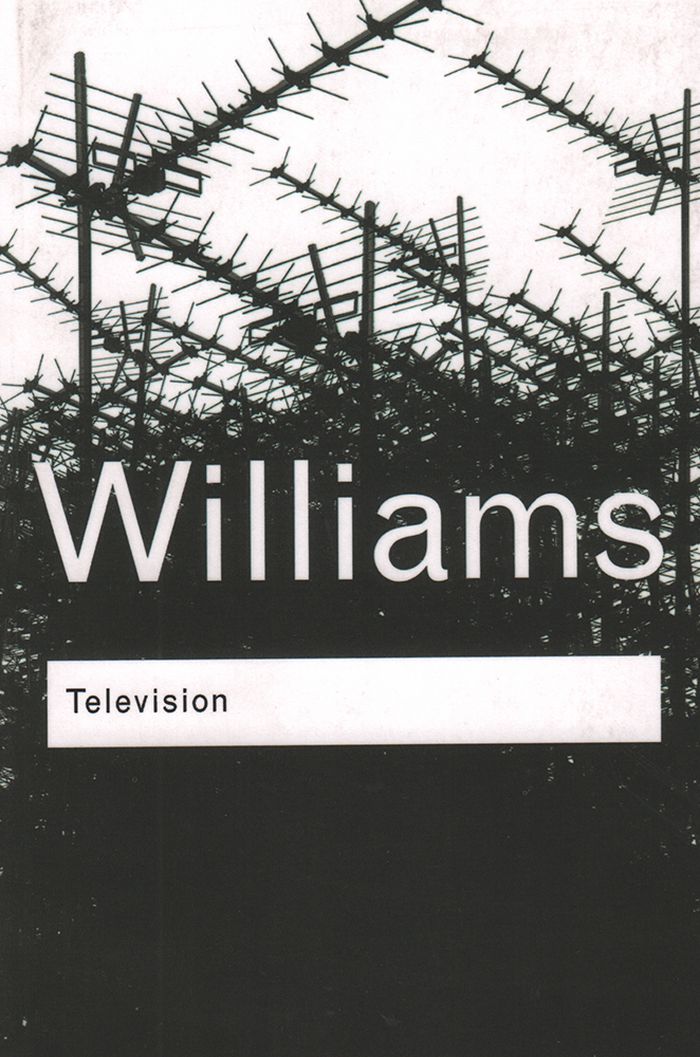
'Television: Technology and Cultural Form' was first published in 1974, long before the dawn of multi-channel TV, or the reality and celebrity shows that now pack the schedules. Yet Williams' analysis of television's history, its institutions, programmes and practices, and its future prospects, remains remarkably prescient. Williams stresses the importance of technology in shaping the cultural form of television, while always resisting the determinism of McLuhan's dictum that 'the medium is the message'. If the medium really is the message, Williams asks, what is left for us to do or say? Williams argues that, on the contrary, we as viewers have the power to disturb, disrupt and to distract the otherwise cold logic of history and technology - not just because television is part of the fabric of our daily lives, but because new technologies continue to offer opportunities, momentarily outside the sway of transnational corporations or the grasp of media moguls, for new forms of self and political expression.
Television: technology and cultural form
Actions:
Prix:
$30.70
(disponible sur commande)
Résumé:
'Television: Technology and Cultural Form' was first published in 1974, long before the dawn of multi-channel TV, or the reality and celebrity shows that now pack the schedules. Yet Williams' analysis of television's history, its institutions, programmes and practices, and its future prospects, remains remarkably prescient. Williams stresses the importance of technology in shaping the cultural form of television, while always resisting the determinism of McLuhan's dictum that 'the medium is the message'. If the medium really is the message, Williams asks, what is left for us to do or say? Williams argues that, on the contrary, we as viewers have the power to disturb, disrupt and to distract the otherwise cold logic of history and technology - not just because television is part of the fabric of our daily lives, but because new technologies continue to offer opportunities, momentarily outside the sway of transnational corporations or the grasp of media moguls, for new forms of self and political expression.
Classification:
livres
livres
Publication:
juin 2003
juin 2003
Sujet:
Théorie/ philosophie
Théorie/ philosophie
Classification:
livres
livres
Prix:
$35.95
(disponible sur commande)
Résumé:
De quand date la naissance de l’observateur moderne? L’histoire culturelle et la théorie de l’art ont souvent identifié deux points d’origine : la révolution picturale des années 1860 et l’invention de la photographie quelques décennies plus tôt. Pour Jonathan Crary, c’est au tournant du XIXe siècle que s’opère, non pas une mutation de l’imagerie, mais une transformation(...)
$35.95
(disponible sur commande)
Résumé:
De quand date la naissance de l’observateur moderne? L’histoire culturelle et la théorie de l’art ont souvent identifié deux points d’origine : la révolution picturale des années 1860 et l’invention de la photographie quelques décennies plus tôt. Pour Jonathan Crary, c’est au tournant du XIXe siècle que s’opère, non pas une mutation de l’imagerie, mais une transformation(...)
Titre:
Techniques de l'observateur: vision et modernité au XIXe siècle
Actions:
Prix:
$35.95
(disponible sur commande)
Résumé:
De quand date la naissance de l’observateur moderne? L’histoire culturelle et la théorie de l’art ont souvent identifié deux points d’origine : la révolution picturale des années 1860 et l’invention de la photographie quelques décennies plus tôt. Pour Jonathan Crary, c’est au tournant du XIXe siècle que s’opère, non pas une mutation de l’imagerie, mais une transformation de la subjectivité, lorsque la figure de l’observateur investit le champ esthétique, la médecine et la philosophie. Bien que vieille de deux siècles, cette discrète révolution dans la culture visuelle occidentale est encore la nôtre. Elle accompagne l’essor de la société disciplinaire tout en préparant l’avènement de la société du spectacle – ainsi que de leurs prolongements actuels. En relisant Michel Foucault, Guy Debord et les penseurs critiques de la modernité, Crary nous invite à un voyage intellectuel érudit et provoquant parmi les arts et les savoirs qui l’ont construite. 'Techniques de l’observateur' opère un retour aux sources historiques de notre attention visuelle et de ses enjeux subjectifs et politiques.
Techniques de l'observateur: vision et modernité au XIXe siècle
Actions:
Prix:
$35.95
(disponible sur commande)
Résumé:
De quand date la naissance de l’observateur moderne? L’histoire culturelle et la théorie de l’art ont souvent identifié deux points d’origine : la révolution picturale des années 1860 et l’invention de la photographie quelques décennies plus tôt. Pour Jonathan Crary, c’est au tournant du XIXe siècle que s’opère, non pas une mutation de l’imagerie, mais une transformation de la subjectivité, lorsque la figure de l’observateur investit le champ esthétique, la médecine et la philosophie. Bien que vieille de deux siècles, cette discrète révolution dans la culture visuelle occidentale est encore la nôtre. Elle accompagne l’essor de la société disciplinaire tout en préparant l’avènement de la société du spectacle – ainsi que de leurs prolongements actuels. En relisant Michel Foucault, Guy Debord et les penseurs critiques de la modernité, Crary nous invite à un voyage intellectuel érudit et provoquant parmi les arts et les savoirs qui l’ont construite. 'Techniques de l’observateur' opère un retour aux sources historiques de notre attention visuelle et de ses enjeux subjectifs et politiques.
Classification:
livres
livres
Publication:
octobre 2016
octobre 2016
Sujet:
Théorie/ philosophie
Théorie/ philosophie
Classification:
livres
livres
Prix:
$41.95
(disponible sur commande)
Résumé:
L’œuvre de Stuart Hall, pionnier des cultural studies et figure majeure de la pensée critique, se joue des frontières disciplinaires pour inventer de nouveaux langages de contestation. Articulant le matérialisme et le structuralisme, elle souligne l’importance de la culture comme catégorie analytique, dans un contexte de réorganisation complète de ses formes, de ses(...)
$41.95
(disponible sur commande)
Résumé:
L’œuvre de Stuart Hall, pionnier des cultural studies et figure majeure de la pensée critique, se joue des frontières disciplinaires pour inventer de nouveaux langages de contestation. Articulant le matérialisme et le structuralisme, elle souligne l’importance de la culture comme catégorie analytique, dans un contexte de réorganisation complète de ses formes, de ses(...)
Titre:
Identités et cultures : politiques des cultural studies
Actions:
Prix:
$41.95
(disponible sur commande)
Résumé:
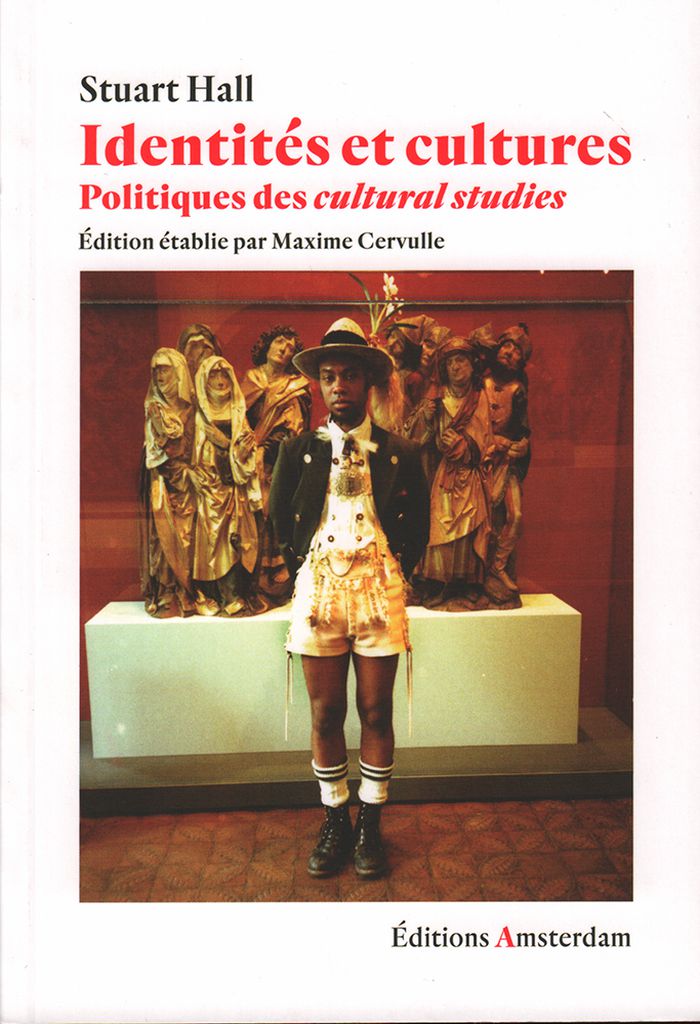
L’œuvre de Stuart Hall, pionnier des cultural studies et figure majeure de la pensée critique, se joue des frontières disciplinaires pour inventer de nouveaux langages de contestation. Articulant le matérialisme et le structuralisme, elle souligne l’importance de la culture comme catégorie analytique, dans un contexte de réorganisation complète de ses formes, de ses usages et de son déploiement économique. C’est en particulier la lutte idéologique qui se déploie sur le terrain de la culture que Hall nous donne à penser. Son écriture subtile, qui ne cède jamais au réductionnisme, en donne à voir toute la complexité : du rôle actif que jouent les représentations médiatiques dans la formation des identités aux conflits discursifs au travers desquels se forgent les antagonismes politiques, en passant par l’hybridité culturelle propre au « moment » postcolonial. La nouvelle édition de ce recueil propose dix-sept textes désormais classiques, ainsi qu’une préface inédite dans laquelle Maxime Cervulle retrace le parcours personnel, intellectuel et politique de Stuart Hall.
Identités et cultures : politiques des cultural studies
Actions:
Prix:
$41.95
(disponible sur commande)
Résumé:
L’œuvre de Stuart Hall, pionnier des cultural studies et figure majeure de la pensée critique, se joue des frontières disciplinaires pour inventer de nouveaux langages de contestation. Articulant le matérialisme et le structuralisme, elle souligne l’importance de la culture comme catégorie analytique, dans un contexte de réorganisation complète de ses formes, de ses usages et de son déploiement économique. C’est en particulier la lutte idéologique qui se déploie sur le terrain de la culture que Hall nous donne à penser. Son écriture subtile, qui ne cède jamais au réductionnisme, en donne à voir toute la complexité : du rôle actif que jouent les représentations médiatiques dans la formation des identités aux conflits discursifs au travers desquels se forgent les antagonismes politiques, en passant par l’hybridité culturelle propre au « moment » postcolonial. La nouvelle édition de ce recueil propose dix-sept textes désormais classiques, ainsi qu’une préface inédite dans laquelle Maxime Cervulle retrace le parcours personnel, intellectuel et politique de Stuart Hall.
Classification:
livres
livres
Publication:
mai 2017
mai 2017
Sujet:
Théorie/ philosophie
Théorie/ philosophie
Classification:
livres
livres
Titre:
Bark
Bark
Actions:
Prix:
$23.00
(disponible sur commande)
Résumé:
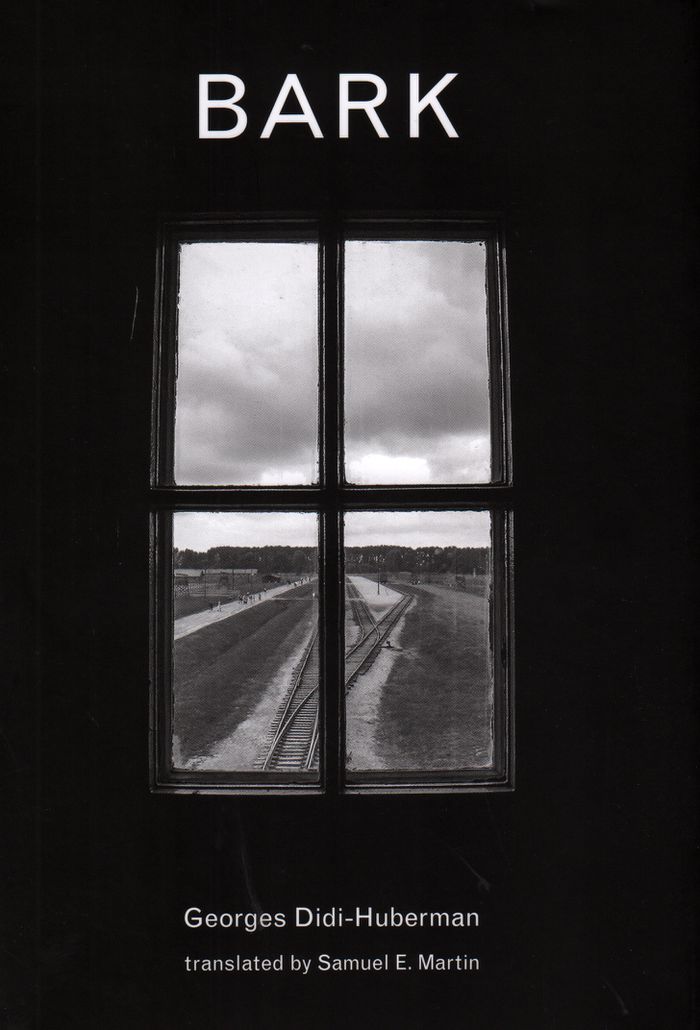
On a visit to Auschwitz-Birkenau, Georges Didi-Huberman tears three pieces of bark from birch trees on the edge of the site. Looking at these pieces after his return home, he sees them as letters, a flood, a path, time, memory, flesh. The bark serves as a springboard to Didi-Huberman’s meditations on his visit, recorded in this spare, poetic, and powerful book. Bark is a(...)
$23.00
(disponible sur commande)
Résumé:
On a visit to Auschwitz-Birkenau, Georges Didi-Huberman tears three pieces of bark from birch trees on the edge of the site. Looking at these pieces after his return home, he sees them as letters, a flood, a path, time, memory, flesh. The bark serves as a springboard to Didi-Huberman’s meditations on his visit, recorded in this spare, poetic, and powerful book. Bark is a(...)
Titre:
Bark
Actions:
Prix:
$23.00
(disponible sur commande)
Résumé:
On a visit to Auschwitz-Birkenau, Georges Didi-Huberman tears three pieces of bark from birch trees on the edge of the site. Looking at these pieces after his return home, he sees them as letters, a flood, a path, time, memory, flesh. The bark serves as a springboard to Didi-Huberman’s meditations on his visit, recorded in this spare, poetic, and powerful book. Bark is a personal account, drawing not on the theoretical apparatus of scholarship but on Didi-Huberman’s own history, memory, and knowledge. The text proceeds as a series of reflections, accompanied by Didi-Huberman’s photographs of the visit. The photographs are not meant to be art—Didi-Huberman confesses that he “photographed practically everything without looking”—but approach it nevertheless. Didi-Huberman tells us that his grandparents died at Auschwitz, but his account is more universal than biographical. As he walks from place to place, he observes that in German birches are birken; Birkenau designates the meadow where the birches grow. Didi-Huberman sees and photographs the “reconstructed” execution wall; the floors of the crematorium, forgotten witnesses to killing; and the birch trees, lovely but also resembling prison bars. Taking his own photographs, he thinks of the famous photographs taken in 1944 by a member of the Sonderkommando, the only photographic documentation of the camp before the Germans destroyed it, hoping to hide the evidence of their crimes. Didi-Huberman notices a “bizarre proliferation of white flowers on the exact spot of the cremation pits.” The dead are not departed.
Bark
Actions:
Prix:
$23.00
(disponible sur commande)
Résumé:
On a visit to Auschwitz-Birkenau, Georges Didi-Huberman tears three pieces of bark from birch trees on the edge of the site. Looking at these pieces after his return home, he sees them as letters, a flood, a path, time, memory, flesh. The bark serves as a springboard to Didi-Huberman’s meditations on his visit, recorded in this spare, poetic, and powerful book. Bark is a personal account, drawing not on the theoretical apparatus of scholarship but on Didi-Huberman’s own history, memory, and knowledge. The text proceeds as a series of reflections, accompanied by Didi-Huberman’s photographs of the visit. The photographs are not meant to be art—Didi-Huberman confesses that he “photographed practically everything without looking”—but approach it nevertheless. Didi-Huberman tells us that his grandparents died at Auschwitz, but his account is more universal than biographical. As he walks from place to place, he observes that in German birches are birken; Birkenau designates the meadow where the birches grow. Didi-Huberman sees and photographs the “reconstructed” execution wall; the floors of the crematorium, forgotten witnesses to killing; and the birch trees, lovely but also resembling prison bars. Taking his own photographs, he thinks of the famous photographs taken in 1944 by a member of the Sonderkommando, the only photographic documentation of the camp before the Germans destroyed it, hoping to hide the evidence of their crimes. Didi-Huberman notices a “bizarre proliferation of white flowers on the exact spot of the cremation pits.” The dead are not departed.
Classification:
livres
livres
Publication:
octobre 2017
octobre 2017
Sujet:
Théorie/ philosophie
Théorie/ philosophie
Classification:
livres
livres
Actions:
Prix:
$41.95
(disponible sur commande)
Résumé:
This volume from Goldsmiths Press examines the career of the cultural studies pioneer Stuart Hall, investigating his influence and revealing lesser-known facets of his work. These essays evaluate the legacies of his particular brand of cultural studies and demonstrate how other scholars and activists have utilized his thinking in their own research. In her contribution,(...)
$41.95
(disponible sur commande)
Résumé:
This volume from Goldsmiths Press examines the career of the cultural studies pioneer Stuart Hall, investigating his influence and revealing lesser-known facets of his work. These essays evaluate the legacies of his particular brand of cultural studies and demonstrate how other scholars and activists have utilized his thinking in their own research. In her contribution,(...)
Sujet:
Théorie/ philosophie
Théorie/ philosophie
Publication:
novembre 2017
novembre 2017
Titre:
Stuart Hall: conversations, projects and legacies
Actions:
Prix:
$41.95
(disponible sur commande)
Résumé:
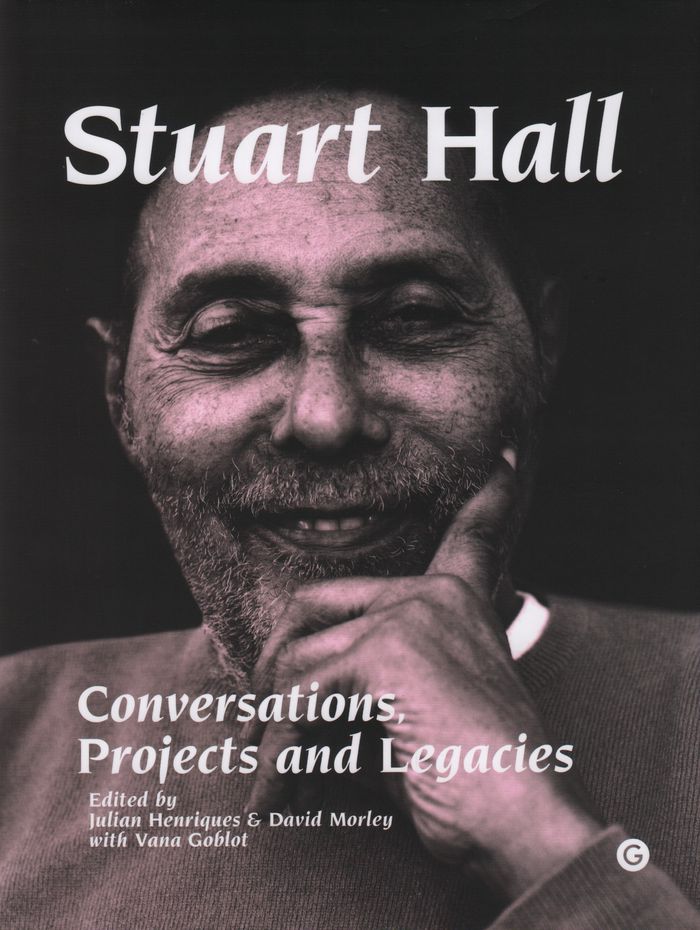
This volume from Goldsmiths Press examines the career of the cultural studies pioneer Stuart Hall, investigating his influence and revealing lesser-known facets of his work. These essays evaluate the legacies of his particular brand of cultural studies and demonstrate how other scholars and activists have utilized his thinking in their own research. In her contribution, Angela Davis argues that the model of politics, ideology, and race initially developed by Hall and his colleagues in England continues to resonate when applied to America’s racialized policing. This book provides a comprehensive look at how, under Hall’s intellectual leadership, British cultural studies transformed itself from a form of “local” knowledge to the international field of study we know today.
Stuart Hall: conversations, projects and legacies
Actions:
Prix:
$41.95
(disponible sur commande)
Résumé:
This volume from Goldsmiths Press examines the career of the cultural studies pioneer Stuart Hall, investigating his influence and revealing lesser-known facets of his work. These essays evaluate the legacies of his particular brand of cultural studies and demonstrate how other scholars and activists have utilized his thinking in their own research. In her contribution, Angela Davis argues that the model of politics, ideology, and race initially developed by Hall and his colleagues in England continues to resonate when applied to America’s racialized policing. This book provides a comprehensive look at how, under Hall’s intellectual leadership, British cultural studies transformed itself from a form of “local” knowledge to the international field of study we know today.
Classification:
livres
livres
Publication:
novembre 2017
novembre 2017
Sujet:
Théorie/ philosophie
Théorie/ philosophie
Classification:
livres
livres
Titre:
Now
Now
Actions:
Prix:
$19.95
(disponible en magasin)
Résumé:
Now is the phantom chapter to the Invisible Committee's previous book, To Our Friends: a new critique from the anonymous collective that establishes their opposition to the world of capital and its law of labor, addresses current anti-terrorist rhetoric and the ferocious repression that comes with it, and clarifies the end of social democracy and the growing rumors of the(...)
$19.95
(disponible en magasin)
Résumé:
Now is the phantom chapter to the Invisible Committee's previous book, To Our Friends: a new critique from the anonymous collective that establishes their opposition to the world of capital and its law of labor, addresses current anti-terrorist rhetoric and the ferocious repression that comes with it, and clarifies the end of social democracy and the growing rumors of the(...)
Titre:
Now
Actions:
Prix:
$19.95
(disponible en magasin)
Résumé:
Now is the phantom chapter to the Invisible Committee's previous book, To Our Friends: a new critique from the anonymous collective that establishes their opposition to the world of capital and its law of labor, addresses current anti-terrorist rhetoric and the ferocious repression that comes with it, and clarifies the end of social democracy and the growing rumors of the need for a coming “civil war.” Now emerges at a time when the Invisible Committee’s contestation has found echoes throughout the West, with a collapse of trust in the police, an inept weariness on the part of the political system, a growing urgency for opposition, a return of the theme of the Commune, a vanishing distinction between radicals and citizens, and a widespread refusal on the part of the citizen to be governed. As farcical political elections continue to unfold worldwide like a line of tumbling dominoes, and governments increasingly struggle to reclaim a legitimacy that has already slipped out of their grasp, Now clarifies the Invisible Committee’s attitude toward all such elections and their outcome: one of utter indifference. Now proposes a “destituent process” that charts out a different path to be taken, a path of outright refusal that simply ignores elections altogether. It is a path that calls for taking over the world and not taking power, for exploring new forms of life and not a new constitution, and for desertion and silence as alternatives to proclamations and crashes. It is also a call for an unprecedented communism—a communism stronger than nation and country.
Now
Actions:
Prix:
$19.95
(disponible en magasin)
Résumé:
Now is the phantom chapter to the Invisible Committee's previous book, To Our Friends: a new critique from the anonymous collective that establishes their opposition to the world of capital and its law of labor, addresses current anti-terrorist rhetoric and the ferocious repression that comes with it, and clarifies the end of social democracy and the growing rumors of the need for a coming “civil war.” Now emerges at a time when the Invisible Committee’s contestation has found echoes throughout the West, with a collapse of trust in the police, an inept weariness on the part of the political system, a growing urgency for opposition, a return of the theme of the Commune, a vanishing distinction between radicals and citizens, and a widespread refusal on the part of the citizen to be governed. As farcical political elections continue to unfold worldwide like a line of tumbling dominoes, and governments increasingly struggle to reclaim a legitimacy that has already slipped out of their grasp, Now clarifies the Invisible Committee’s attitude toward all such elections and their outcome: one of utter indifference. Now proposes a “destituent process” that charts out a different path to be taken, a path of outright refusal that simply ignores elections altogether. It is a path that calls for taking over the world and not taking power, for exploring new forms of life and not a new constitution, and for desertion and silence as alternatives to proclamations and crashes. It is also a call for an unprecedented communism—a communism stronger than nation and country.
Classification:
livres
livres
Publication:
novembre 2017
novembre 2017
Sujet:
Théorie/ philosophie
Théorie/ philosophie
Classification:
livres
livres
Titre:
Carceral capitalism
Carceral capitalism
Actions:
Prix:
$19.95
(disponible en magasin)
Résumé:
In this collection of essays in Semiotext(e)’s Intervention series, Jackie Wang examines the contemporary incarceration techniques that have emerged since the 1990s. The essays illustrate various aspects of the carceral continuum, including the biopolitics of juvenile delinquency, predatory policing, the political economy of fees and fines, cybernetic governance, and(...)
$19.95
(disponible en magasin)
Résumé:
In this collection of essays in Semiotext(e)’s Intervention series, Jackie Wang examines the contemporary incarceration techniques that have emerged since the 1990s. The essays illustrate various aspects of the carceral continuum, including the biopolitics of juvenile delinquency, predatory policing, the political economy of fees and fines, cybernetic governance, and(...)
Titre:
Carceral capitalism
Actions:
Prix:
$19.95
(disponible en magasin)
Résumé:
In this collection of essays in Semiotext(e)’s Intervention series, Jackie Wang examines the contemporary incarceration techniques that have emerged since the 1990s. The essays illustrate various aspects of the carceral continuum, including the biopolitics of juvenile delinquency, predatory policing, the political economy of fees and fines, cybernetic governance, and algorithmic policing. Included in this volume is Wang’s influential critique of liberal anti-racist politics, “Against Innocence,” as well as essays on RoboCop, techno-policing, and the aesthetic problem of making invisible forms of power legible.
Carceral capitalism
Actions:
Prix:
$19.95
(disponible en magasin)
Résumé:
In this collection of essays in Semiotext(e)’s Intervention series, Jackie Wang examines the contemporary incarceration techniques that have emerged since the 1990s. The essays illustrate various aspects of the carceral continuum, including the biopolitics of juvenile delinquency, predatory policing, the political economy of fees and fines, cybernetic governance, and algorithmic policing. Included in this volume is Wang’s influential critique of liberal anti-racist politics, “Against Innocence,” as well as essays on RoboCop, techno-policing, and the aesthetic problem of making invisible forms of power legible.
Classification:
livres
livres
Publication:
février 2018
février 2018
Sujet:
Théorie/ philosophie
Théorie/ philosophie
Classification:
livres
livres
Titre:
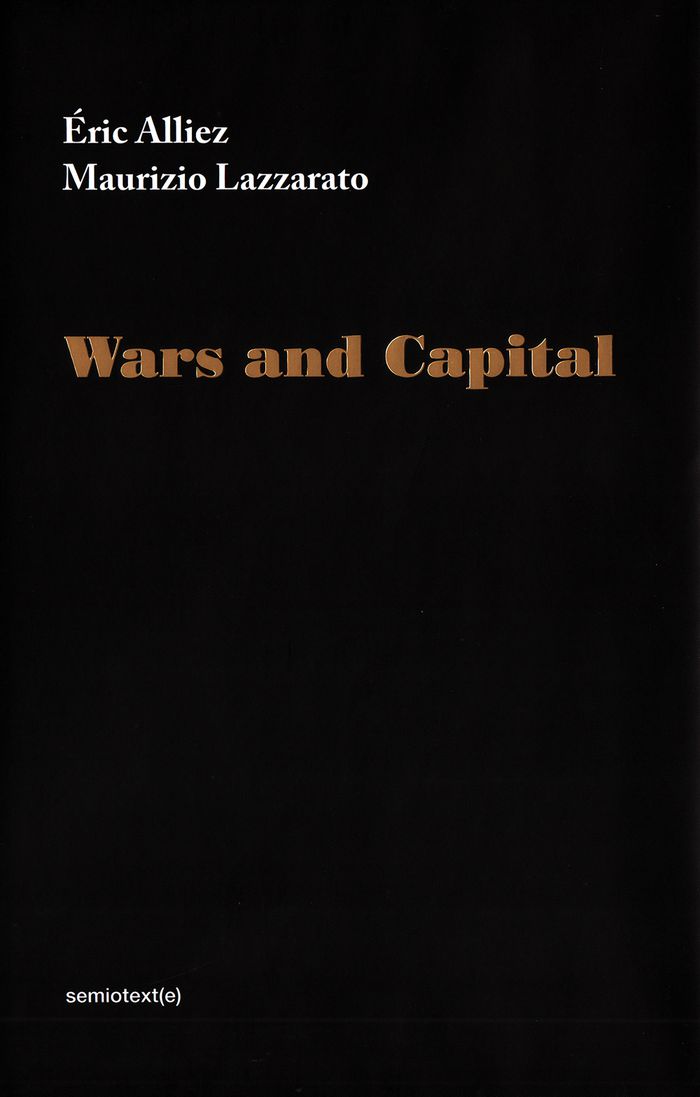
Wars and capital
Wars and capital
Actions:
Prix:
$37.50
(disponible sur commande)
Résumé:
In "Wars and Capital", Éric Alliez and Maurizio Lazzarato propose a counter-history of capitalism to recover the reality of the wars that are inflicted on us and denied to us. We experience not the ideal war of philosophers, but wars of class, race, sex, and gender; wars of civilization and the environment; wars of subjectivity that are raging within populations and that(...)
$37.50
(disponible sur commande)
Résumé:
In "Wars and Capital", Éric Alliez and Maurizio Lazzarato propose a counter-history of capitalism to recover the reality of the wars that are inflicted on us and denied to us. We experience not the ideal war of philosophers, but wars of class, race, sex, and gender; wars of civilization and the environment; wars of subjectivity that are raging within populations and that(...)
Titre:
Wars and capital
Actions:
Prix:
$37.50
(disponible sur commande)
Résumé:
In "Wars and Capital", Éric Alliez and Maurizio Lazzarato propose a counter-history of capitalism to recover the reality of the wars that are inflicted on us and denied to us. We experience not the ideal war of philosophers, but wars of class, race, sex, and gender; wars of civilization and the environment; wars of subjectivity that are raging within populations and that constitute the secret motor of liberal governmentality. By naming the enemy (refugees, migrants, Muslims), the new fascisms establish their hegemony on the processes of political subjectivation by reducing them to racist, sexist, and xenophobic slogans, fanning the flames of war among the poor and maintaining the total war philosophy of neoliberalism.
Wars and capital
Actions:
Prix:
$37.50
(disponible sur commande)
Résumé:
In "Wars and Capital", Éric Alliez and Maurizio Lazzarato propose a counter-history of capitalism to recover the reality of the wars that are inflicted on us and denied to us. We experience not the ideal war of philosophers, but wars of class, race, sex, and gender; wars of civilization and the environment; wars of subjectivity that are raging within populations and that constitute the secret motor of liberal governmentality. By naming the enemy (refugees, migrants, Muslims), the new fascisms establish their hegemony on the processes of political subjectivation by reducing them to racist, sexist, and xenophobic slogans, fanning the flames of war among the poor and maintaining the total war philosophy of neoliberalism.
Classification:
livres
livres
Publication:
mai 2018
mai 2018
Sujet:
Théorie/ philosophie
Théorie/ philosophie
Classification:
livres
livres
Titre:
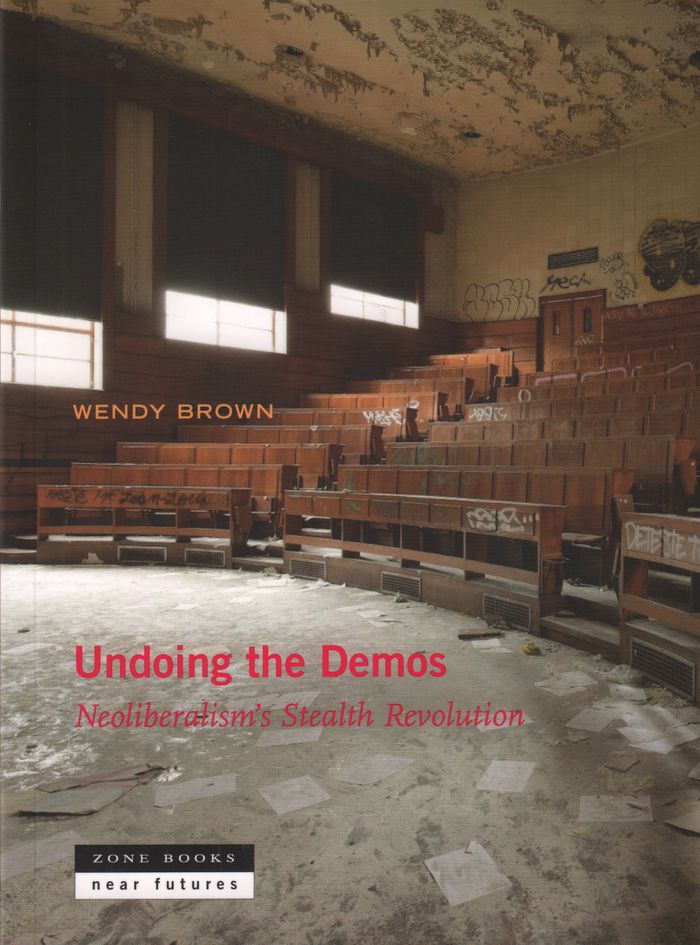
Undoing the Demos
Undoing the Demos
Actions:
Prix:
$25.50
(disponible sur commande)
Résumé:
In Undoing the Demos, Wendy Brown explains how democracy itself is imperiled. The demos disintegrates into bits of human capital; concerns with justice bow to the mandates of growth rates, credit ratings, and investment climates; liberty submits to the imperative of human capital appreciation; equality dissolves into market competition; and popular sovereignty grows(...)
$25.50
(disponible sur commande)
Résumé:
In Undoing the Demos, Wendy Brown explains how democracy itself is imperiled. The demos disintegrates into bits of human capital; concerns with justice bow to the mandates of growth rates, credit ratings, and investment climates; liberty submits to the imperative of human capital appreciation; equality dissolves into market competition; and popular sovereignty grows(...)
Titre:
Undoing the Demos
Actions:
Prix:
$25.50
(disponible sur commande)
Résumé:
In Undoing the Demos, Wendy Brown explains how democracy itself is imperiled. The demos disintegrates into bits of human capital; concerns with justice bow to the mandates of growth rates, credit ratings, and investment climates; liberty submits to the imperative of human capital appreciation; equality dissolves into market competition; and popular sovereignty grows incoherent. Liberal democratic practices may not survive these transformations. Radical democratic dreams may not either.
Undoing the Demos
Actions:
Prix:
$25.50
(disponible sur commande)
Résumé:
In Undoing the Demos, Wendy Brown explains how democracy itself is imperiled. The demos disintegrates into bits of human capital; concerns with justice bow to the mandates of growth rates, credit ratings, and investment climates; liberty submits to the imperative of human capital appreciation; equality dissolves into market competition; and popular sovereignty grows incoherent. Liberal democratic practices may not survive these transformations. Radical democratic dreams may not either.
Classification:
livres
livres
Publication:
août 2017
août 2017
Sujet:
Théorie/ philosophie
Théorie/ philosophie


