


884 Résultats
Classification:
livres
livres
Titre:
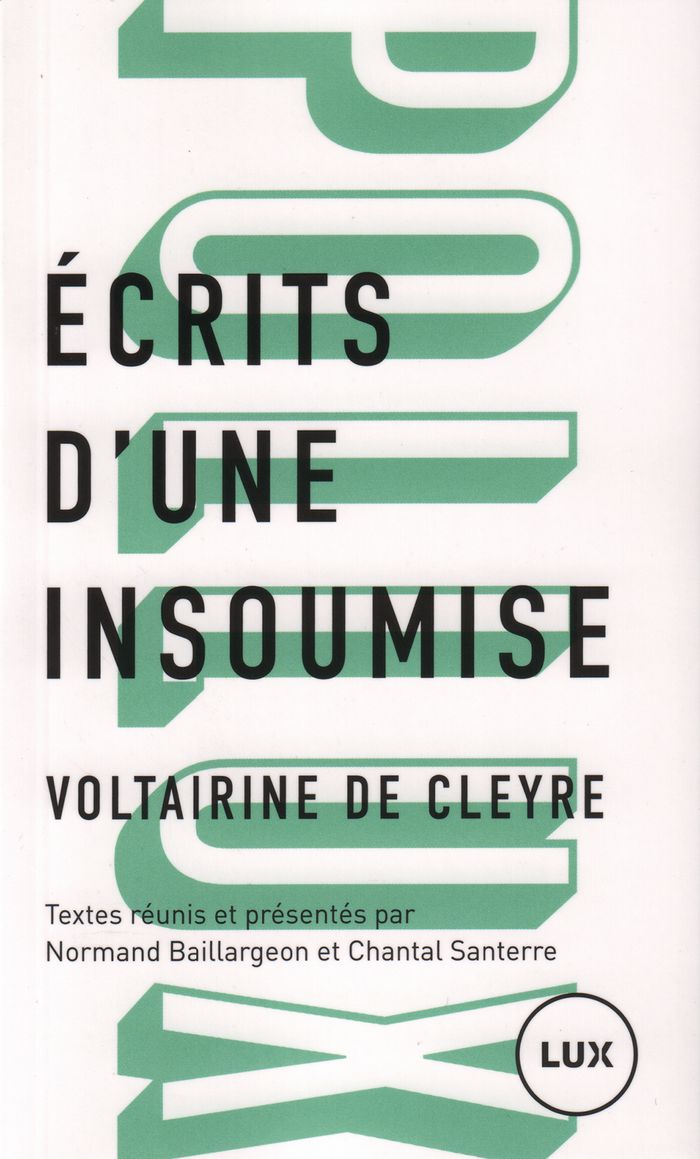
Écrits d'une insoumise
Écrits d'une insoumise
Actions:
Prix:
$16.95
(disponible sur commande)
Résumé:
Pionnière du féminisme américain, poétesse, musicienne, celle qui se définissait comme une « anarchiste sans qualificatif » propose une réflexion originale qui touche à un très large éventail de sujets – notamment l’économie, la libre pensée, la philosophie, la religion, la criminologie, la littérature et l’action directe non violente.
$16.95
(disponible sur commande)
Résumé:
Pionnière du féminisme américain, poétesse, musicienne, celle qui se définissait comme une « anarchiste sans qualificatif » propose une réflexion originale qui touche à un très large éventail de sujets – notamment l’économie, la libre pensée, la philosophie, la religion, la criminologie, la littérature et l’action directe non violente.
Titre:
Écrits d'une insoumise
Actions:
Prix:
$16.95
(disponible sur commande)
Résumé:
Pionnière du féminisme américain, poétesse, musicienne, celle qui se définissait comme une « anarchiste sans qualificatif » propose une réflexion originale qui touche à un très large éventail de sujets – notamment l’économie, la libre pensée, la philosophie, la religion, la criminologie, la littérature et l’action directe non violente.
Écrits d'une insoumise
Actions:
Prix:
$16.95
(disponible sur commande)
Résumé:
Pionnière du féminisme américain, poétesse, musicienne, celle qui se définissait comme une « anarchiste sans qualificatif » propose une réflexion originale qui touche à un très large éventail de sujets – notamment l’économie, la libre pensée, la philosophie, la religion, la criminologie, la littérature et l’action directe non violente.
Classification:
livres
livres
Publication:
janvier 2018
janvier 2018
Sujet:
Théorie/ philosophie
Théorie/ philosophie
Classification:
livres
livres
Titre:
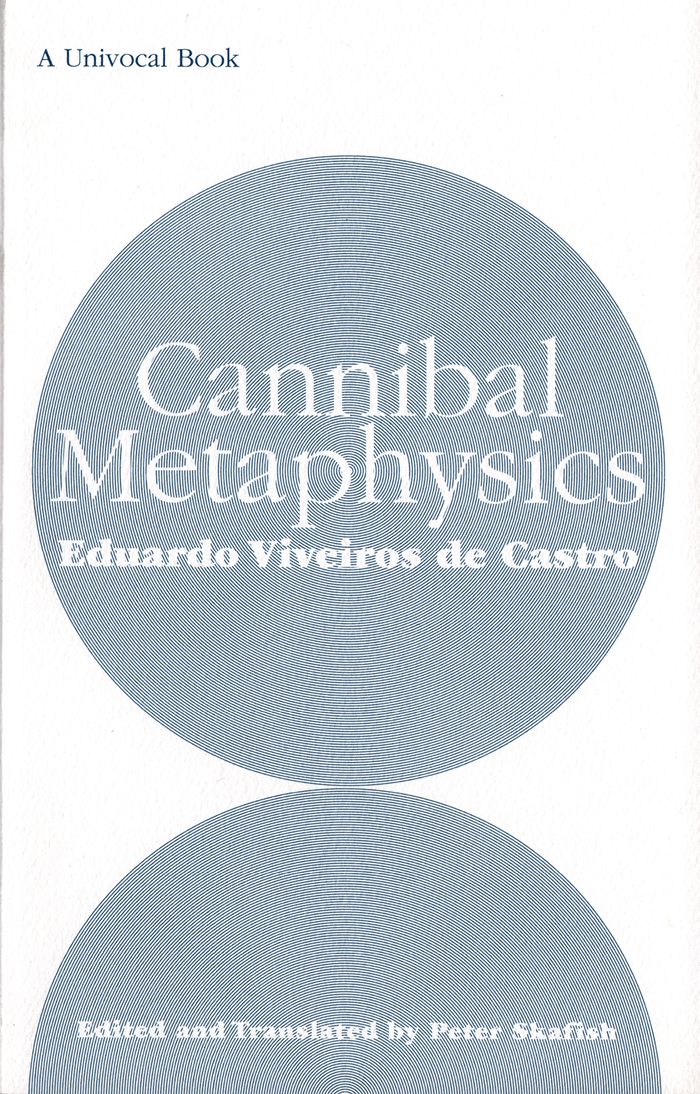
Cannibal metaphysics
Cannibal metaphysics
Actions:
Prix:
$40.00
(disponible sur commande)
Résumé:
The iconoclastic Brazilian anthropologist and theoretician Eduardo Viveiros de Castro, well known in his discipline for helping initiate its “ontological turn,” offers a vision of anthropology as “the practice of the permanent decolonization of thought.” After showing that Amazonian and other Amerindian groups inhabit a radically different conceptual universe than ours—in(...)
$40.00
(disponible sur commande)
Résumé:
The iconoclastic Brazilian anthropologist and theoretician Eduardo Viveiros de Castro, well known in his discipline for helping initiate its “ontological turn,” offers a vision of anthropology as “the practice of the permanent decolonization of thought.” After showing that Amazonian and other Amerindian groups inhabit a radically different conceptual universe than ours—in(...)
Titre:
Cannibal metaphysics
Actions:
Prix:
$40.00
(disponible sur commande)
Résumé:
The iconoclastic Brazilian anthropologist and theoretician Eduardo Viveiros de Castro, well known in his discipline for helping initiate its “ontological turn,” offers a vision of anthropology as “the practice of the permanent decolonization of thought.” After showing that Amazonian and other Amerindian groups inhabit a radically different conceptual universe than ours—in which nature and culture, human and nonhuman, subject and object are conceived in terms that reverse our own—he presents the case for anthropology as the study of such “other” metaphysical schemes, and as the corresponding critique of the concepts imposed on them by the human sciences.
Cannibal metaphysics
Actions:
Prix:
$40.00
(disponible sur commande)
Résumé:
The iconoclastic Brazilian anthropologist and theoretician Eduardo Viveiros de Castro, well known in his discipline for helping initiate its “ontological turn,” offers a vision of anthropology as “the practice of the permanent decolonization of thought.” After showing that Amazonian and other Amerindian groups inhabit a radically different conceptual universe than ours—in which nature and culture, human and nonhuman, subject and object are conceived in terms that reverse our own—he presents the case for anthropology as the study of such “other” metaphysical schemes, and as the corresponding critique of the concepts imposed on them by the human sciences.
Classification:
livres
livres
Publication:
octobre 2017
octobre 2017
Sujet:
Théorie/ philosophie
Théorie/ philosophie
Classification:
livres
livres
Prix:
$44.95
(disponible sur commande)
Résumé:
In "Atmospheric Things" Derek P. McCormack explores how atmospheres are imagined, understood, and experienced through experiments with a deceptively simple object: the balloon. Since the invention of balloon flight in the late eighteenth century, balloons have drawn crowds at fairs and expositions, inspired the visions of artists and writers, and driven technological(...)
$44.95
(disponible sur commande)
Résumé:
In "Atmospheric Things" Derek P. McCormack explores how atmospheres are imagined, understood, and experienced through experiments with a deceptively simple object: the balloon. Since the invention of balloon flight in the late eighteenth century, balloons have drawn crowds at fairs and expositions, inspired the visions of artists and writers, and driven technological(...)
Titre:
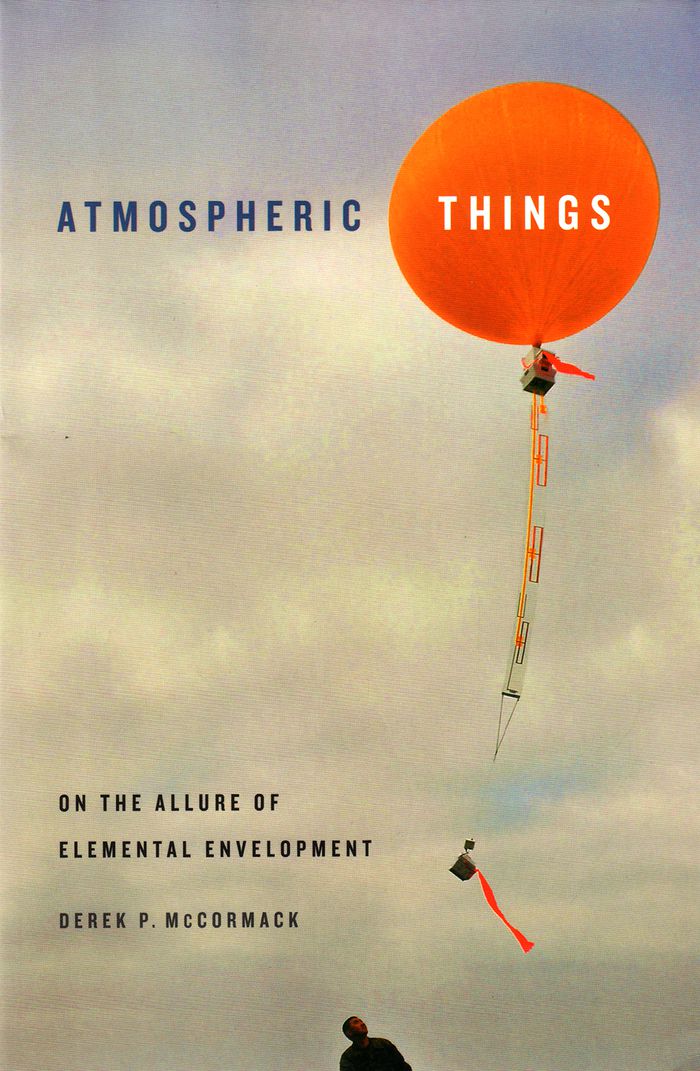
Atmospheric things: on the allure of elemental envelopment
Actions:
Prix:
$44.95
(disponible sur commande)
Résumé:
In "Atmospheric Things" Derek P. McCormack explores how atmospheres are imagined, understood, and experienced through experiments with a deceptively simple object: the balloon. Since the invention of balloon flight in the late eighteenth century, balloons have drawn crowds at fairs and expositions, inspired the visions of artists and writers, and driven technological development from meteorology to military surveillance. By foregrounding the distinctive properties of the balloon, McCormack reveals its remarkable capacity to disclose the affective and meteorological dimensions of atmospheres. Drawing together different senses of the object, the elements, and experience, McCormack uses the balloon to show how practices and technologies of envelopment allow atmospheres to be generated, made meaningful, and modified.
Atmospheric things: on the allure of elemental envelopment
Actions:
Prix:
$44.95
(disponible sur commande)
Résumé:
In "Atmospheric Things" Derek P. McCormack explores how atmospheres are imagined, understood, and experienced through experiments with a deceptively simple object: the balloon. Since the invention of balloon flight in the late eighteenth century, balloons have drawn crowds at fairs and expositions, inspired the visions of artists and writers, and driven technological development from meteorology to military surveillance. By foregrounding the distinctive properties of the balloon, McCormack reveals its remarkable capacity to disclose the affective and meteorological dimensions of atmospheres. Drawing together different senses of the object, the elements, and experience, McCormack uses the balloon to show how practices and technologies of envelopment allow atmospheres to be generated, made meaningful, and modified.
Classification:
livres
livres
Publication:
juillet 2018
juillet 2018
Sujet:
Théorie/ philosophie
Théorie/ philosophie
Classification:
livres
livres

Titre:
La personne et le sacré
La personne et le sacré
Actions:
Prix:
$5.95
(disponible sur commande)
Résumé:
Rédigé quelques mois avant son décès, cet essai de Simone Weil est le condensé des réflexions d’une vie, l’aboutissement d’une pensée extraordinairement lucide. Se penchant sur la part de sacré qui réside en tout un chacun, Simone Weil remet en question le concept même de personne. Nul n’est sacré. Le sacré est à chercher en l’homme, dans l’impersonnel. À l’heure où la(...)
$5.95
(disponible sur commande)
Résumé:
Rédigé quelques mois avant son décès, cet essai de Simone Weil est le condensé des réflexions d’une vie, l’aboutissement d’une pensée extraordinairement lucide. Se penchant sur la part de sacré qui réside en tout un chacun, Simone Weil remet en question le concept même de personne. Nul n’est sacré. Le sacré est à chercher en l’homme, dans l’impersonnel. À l’heure où la(...)
Titre:
La personne et le sacré
Actions:
Prix:
$5.95
(disponible sur commande)
Résumé:
Rédigé quelques mois avant son décès, cet essai de Simone Weil est le condensé des réflexions d’une vie, l’aboutissement d’une pensée extraordinairement lucide. Se penchant sur la part de sacré qui réside en tout un chacun, Simone Weil remet en question le concept même de personne. Nul n’est sacré. Le sacré est à chercher en l’homme, dans l’impersonnel. À l’heure où la notion de personne est au centre des discours politiques, des campagnes de marketing et des questions morales, cet essai opère un renversement de perspective salvateur. Il en découle la recherche de principes, au-delà des libertés démocratiques et des institutions, capables de limiter et d’orienter ces dernières. Il est urgent, selon elle, d’inventer des institutions qui ne se limiteraient pas à protéger nos droits mais qui seraient capables d’abolir ce qui écrase les hommes et entraîne l’injustice.
La personne et le sacré
Actions:
Prix:
$5.95
(disponible sur commande)
Résumé:
Rédigé quelques mois avant son décès, cet essai de Simone Weil est le condensé des réflexions d’une vie, l’aboutissement d’une pensée extraordinairement lucide. Se penchant sur la part de sacré qui réside en tout un chacun, Simone Weil remet en question le concept même de personne. Nul n’est sacré. Le sacré est à chercher en l’homme, dans l’impersonnel. À l’heure où la notion de personne est au centre des discours politiques, des campagnes de marketing et des questions morales, cet essai opère un renversement de perspective salvateur. Il en découle la recherche de principes, au-delà des libertés démocratiques et des institutions, capables de limiter et d’orienter ces dernières. Il est urgent, selon elle, d’inventer des institutions qui ne se limiteraient pas à protéger nos droits mais qui seraient capables d’abolir ce qui écrase les hommes et entraîne l’injustice.
Classification:
livres
livres
Publication:
janvier 2018
janvier 2018
Sujet:
Théorie/ philosophie
Théorie/ philosophie
Classification:
livres
livres
Titre:
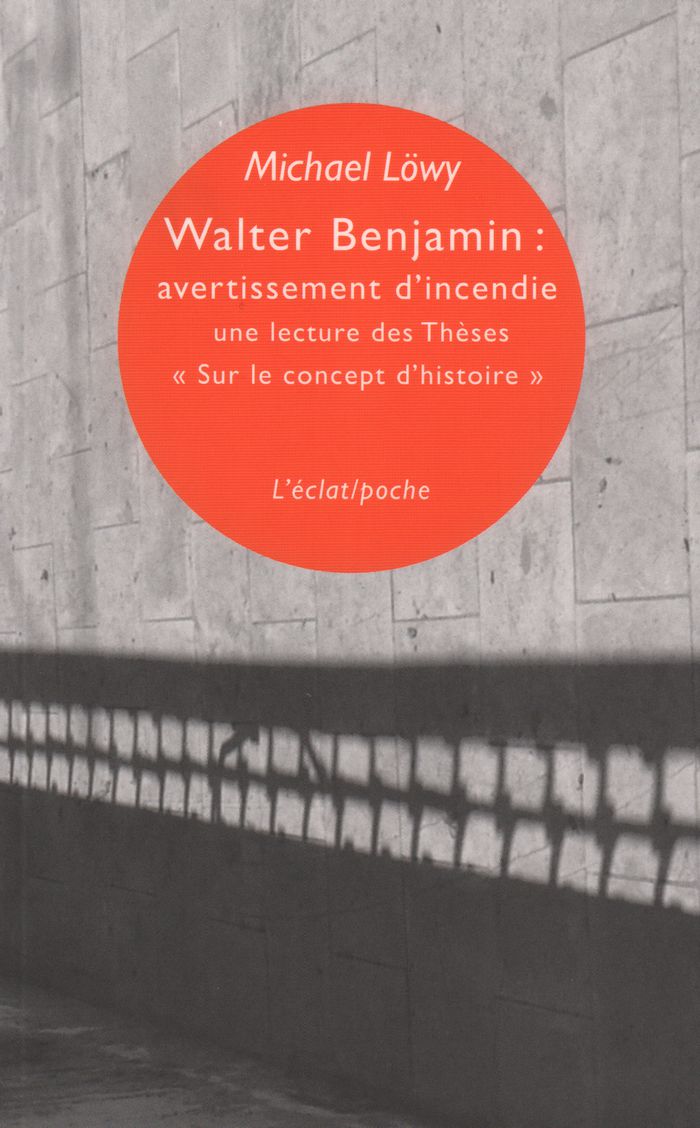
Walter Benjamin : avertissement d'incendie, une lecture des thèses « Sur le concept d'histoire »
Walter Benjamin : avertissement d'incendie, une lecture des thèses « Sur le concept d'histoire »
Actions:
Prix:
$15.95
(disponible sur commande)
Résumé:
Les Thèses « Sur le concept d'histoire » de 1940 sont le dernier écrit de Walter Benjamin et constituent peut-être le document le plus significatif dans la pensée critique du XXe siècle. Texte allusif, sybillin, dont l'hermétisme est constellé d'images et d'allégories, semé de paradoxes, traversé d'intuitions. Ce livre en propose une étude au mot à mot. Là où d'autres ne(...)
$15.95
(disponible sur commande)
Résumé:
Les Thèses « Sur le concept d'histoire » de 1940 sont le dernier écrit de Walter Benjamin et constituent peut-être le document le plus significatif dans la pensée critique du XXe siècle. Texte allusif, sybillin, dont l'hermétisme est constellé d'images et d'allégories, semé de paradoxes, traversé d'intuitions. Ce livre en propose une étude au mot à mot. Là où d'autres ne(...)
Titre:
Walter Benjamin : avertissement d'incendie, une lecture des thèses « Sur le concept d'histoire »
Actions:
Prix:
$15.95
(disponible sur commande)
Résumé:
Les Thèses « Sur le concept d'histoire » de 1940 sont le dernier écrit de Walter Benjamin et constituent peut-être le document le plus significatif dans la pensée critique du XXe siècle. Texte allusif, sybillin, dont l'hermétisme est constellé d'images et d'allégories, semé de paradoxes, traversé d'intuitions. Ce livre en propose une étude au mot à mot. Là où d'autres ne voient que contradiction ou ambiguïté, il met en évidence une cohérence fondamentale, dont la clé est constituée par la fusion de trois discours hétérogènes: le romantisme allemand, le messianisme juif, le marxisme révolutionnaire.
Walter Benjamin : avertissement d'incendie, une lecture des thèses « Sur le concept d'histoire »
Actions:
Prix:
$15.95
(disponible sur commande)
Résumé:
Les Thèses « Sur le concept d'histoire » de 1940 sont le dernier écrit de Walter Benjamin et constituent peut-être le document le plus significatif dans la pensée critique du XXe siècle. Texte allusif, sybillin, dont l'hermétisme est constellé d'images et d'allégories, semé de paradoxes, traversé d'intuitions. Ce livre en propose une étude au mot à mot. Là où d'autres ne voient que contradiction ou ambiguïté, il met en évidence une cohérence fondamentale, dont la clé est constituée par la fusion de trois discours hétérogènes: le romantisme allemand, le messianisme juif, le marxisme révolutionnaire.
Classification:
livres
livres
Publication:
mars 2018
mars 2018
Sujet:
Théorie/ philosophie
Théorie/ philosophie
Classification:
livres
livres

Prix:
$31.00
(disponible sur commande)
Résumé:
Greil Marcus, author of Mystery Train, widely acclaimed as the best book ever written about America as seen through its music, began work on this new book out of a fascination with the Sex Pistols: that scandalous antimusical group, invented in London in 1975 and dead within two years, which sparked the emergence of the culture called punk. "I am an antichrist!" shouted(...)
$31.00
(disponible sur commande)
Résumé:
Greil Marcus, author of Mystery Train, widely acclaimed as the best book ever written about America as seen through its music, began work on this new book out of a fascination with the Sex Pistols: that scandalous antimusical group, invented in London in 1975 and dead within two years, which sparked the emergence of the culture called punk. "I am an antichrist!" shouted(...)
Titre:
Lipstick traces: a secret history of the twentieth century
Actions:
Prix:
$31.00
(disponible sur commande)
Résumé:
Greil Marcus, author of Mystery Train, widely acclaimed as the best book ever written about America as seen through its music, began work on this new book out of a fascination with the Sex Pistols: that scandalous antimusical group, invented in London in 1975 and dead within two years, which sparked the emergence of the culture called punk. "I am an antichrist!" shouted singer Johnny Rotten--where in the world of pop music did that come from? Looking for an answer, with a high sense
Lipstick traces: a secret history of the twentieth century
Actions:
Prix:
$31.00
(disponible sur commande)
Résumé:
Greil Marcus, author of Mystery Train, widely acclaimed as the best book ever written about America as seen through its music, began work on this new book out of a fascination with the Sex Pistols: that scandalous antimusical group, invented in London in 1975 and dead within two years, which sparked the emergence of the culture called punk. "I am an antichrist!" shouted singer Johnny Rotten--where in the world of pop music did that come from? Looking for an answer, with a high sense
Classification:
livres
livres
Publication:
septembre 1960, Cambridge
septembre 1960, Cambridge
Sujet:
Théorie/ philosophie
Théorie/ philosophie
Classification:
livres
livres
Actions:
Prix:
$29.95
(disponible sur commande)
Résumé:
Winner of the 2006 Zia Award from the New Mexico Press Women With a strong, distinctive voice, Roberta Price recalls the years she spent in the Huerfano ("Orphan") Valley when it was a petrie dish of countercultural experiments. Documenting her story with photos as well as words, and placing it in the larger context of the times, she describes her participation in the(...)
$29.95
(disponible sur commande)
Résumé:
Winner of the 2006 Zia Award from the New Mexico Press Women With a strong, distinctive voice, Roberta Price recalls the years she spent in the Huerfano ("Orphan") Valley when it was a petrie dish of countercultural experiments. Documenting her story with photos as well as words, and placing it in the larger context of the times, she describes her participation in the(...)
Titre:
Huerfano: a memoir of life in the counterculture
Actions:
Prix:
$29.95
(disponible sur commande)
Résumé:
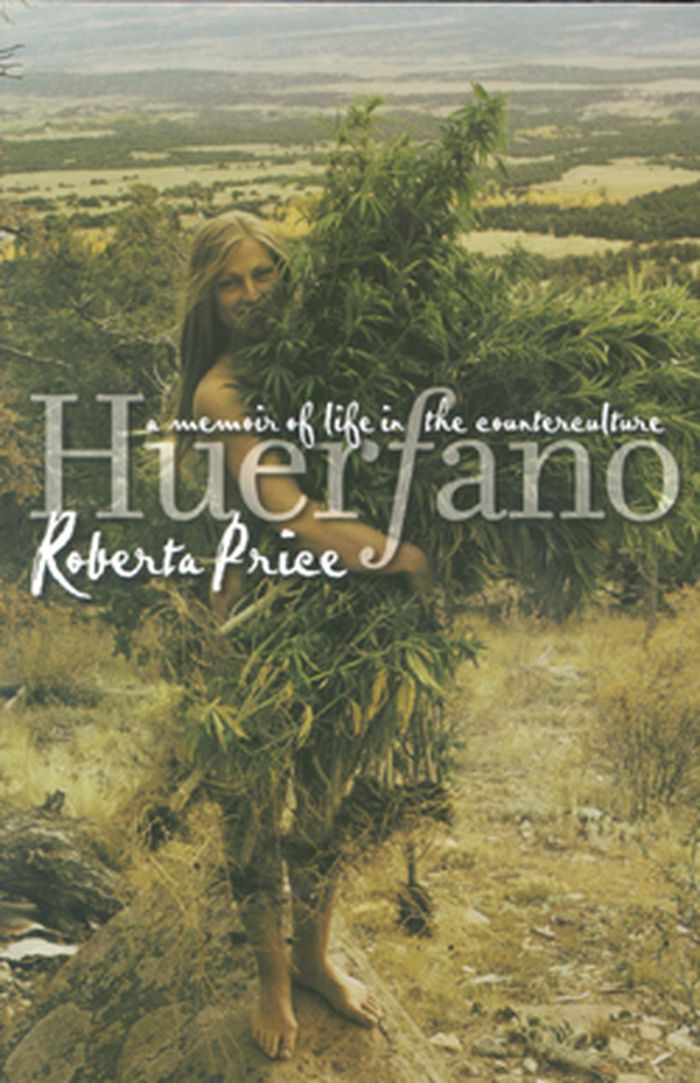
Winner of the 2006 Zia Award from the New Mexico Press Women With a strong, distinctive voice, Roberta Price recalls the years she spent in the Huerfano ("Orphan") Valley when it was a petrie dish of countercultural experiments. Documenting her story with photos as well as words, and placing it in the larger context of the times, she describes her participation in the antiwar movement, the advent of the women's movement, and her encounters with such icons as Ken Kesey, Gary Snyder, Abbie Hoffman, Stewart Brand, Allen Ginsburg, and Baba Ram Dass.
Huerfano: a memoir of life in the counterculture
Actions:
Prix:
$29.95
(disponible sur commande)
Résumé:
Winner of the 2006 Zia Award from the New Mexico Press Women With a strong, distinctive voice, Roberta Price recalls the years she spent in the Huerfano ("Orphan") Valley when it was a petrie dish of countercultural experiments. Documenting her story with photos as well as words, and placing it in the larger context of the times, she describes her participation in the antiwar movement, the advent of the women's movement, and her encounters with such icons as Ken Kesey, Gary Snyder, Abbie Hoffman, Stewart Brand, Allen Ginsburg, and Baba Ram Dass.
Classification:
livres
livres
Publication:
septembre 2006, Amherst, Boston
septembre 2006, Amherst, Boston
Sujet:
Théorie/ philosophie
Théorie/ philosophie
Classification:
livres
livres
Prix:
$40.00
(disponible sur commande)
Résumé:
This nostalgic tour-de-force celebrates the alternative news-papers that forever influenced culture, politics, and society. Taking the collective name from the wartime 'underground press' of Europe's anti-Nazi resistance, the rebellious countercultural publications examined here were all members of the Underground Press Syndicate (later renamed the Alternative Press(...)
$40.00
(disponible sur commande)
Résumé:
This nostalgic tour-de-force celebrates the alternative news-papers that forever influenced culture, politics, and society. Taking the collective name from the wartime 'underground press' of Europe's anti-Nazi resistance, the rebellious countercultural publications examined here were all members of the Underground Press Syndicate (later renamed the Alternative Press(...)
Titre:
Free press: underground & alternative publications 1965-1975
Actions:
Prix:
$40.00
(disponible sur commande)
Résumé:
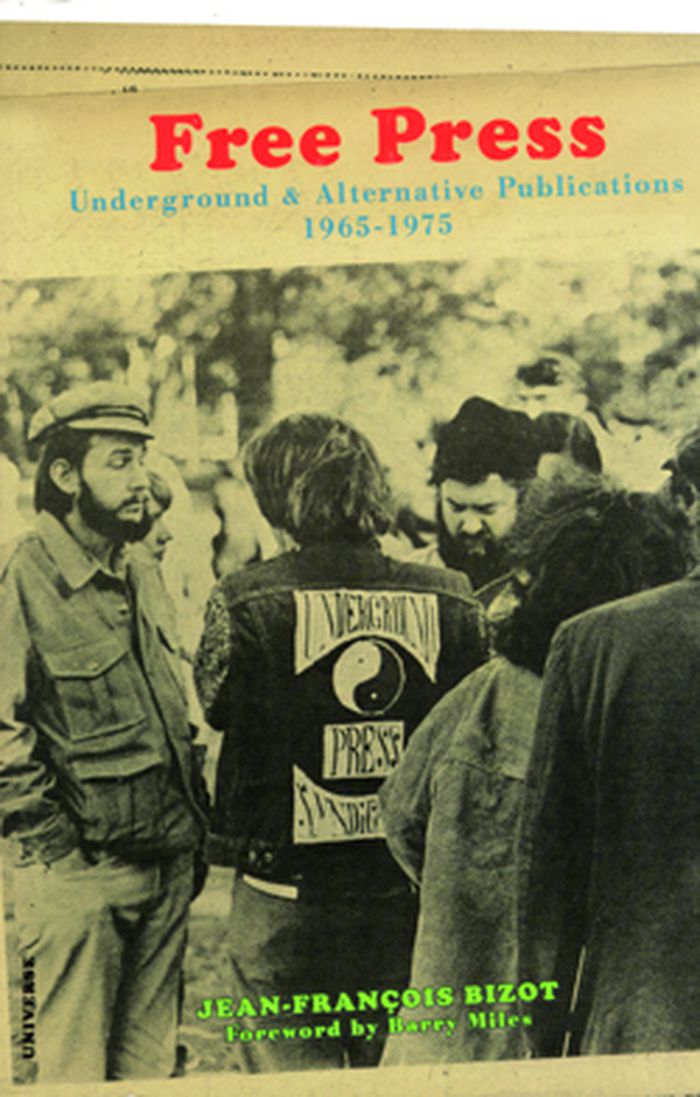
This nostalgic tour-de-force celebrates the alternative news-papers that forever influenced culture, politics, and society. Taking the collective name from the wartime 'underground press' of Europe's anti-Nazi resistance, the rebellious countercultural publications examined here were all members of the Underground Press Syndicate (later renamed the Alternative Press Syndicate), which was founded in 1967 so that member papers could freely share material. This utopian model perfectly suited the times. The work of soon to be famous writers and artists such as Hunter S. Thompson, T. Coraghessan Boyle, Ken Kesey, T. Crumb, and Art Spiegelman was soon widely available from coast to coast.
Free press: underground & alternative publications 1965-1975
Actions:
Prix:
$40.00
(disponible sur commande)
Résumé:
This nostalgic tour-de-force celebrates the alternative news-papers that forever influenced culture, politics, and society. Taking the collective name from the wartime 'underground press' of Europe's anti-Nazi resistance, the rebellious countercultural publications examined here were all members of the Underground Press Syndicate (later renamed the Alternative Press Syndicate), which was founded in 1967 so that member papers could freely share material. This utopian model perfectly suited the times. The work of soon to be famous writers and artists such as Hunter S. Thompson, T. Coraghessan Boyle, Ken Kesey, T. Crumb, and Art Spiegelman was soon widely available from coast to coast.
Classification:
livres
livres
Publication:
octobre 2006, New York
octobre 2006, New York
Sujet:
Théorie/ philosophie
Théorie/ philosophie
Classification:
livres
livres

Actions:
Prix:
$17.00
(disponible sur commande)
Résumé:
This essential document gathers more than 100 provocative artists, cultural critics, and activists to reflect on the historical roots and current manifestations of democracy in the United States.
$17.00
(disponible sur commande)
Résumé:
This essential document gathers more than 100 provocative artists, cultural critics, and activists to reflect on the historical roots and current manifestations of democracy in the United States.
Titre:
A guide to democracy in America
Actions:
Prix:
$17.00
(disponible sur commande)
Résumé:
This essential document gathers more than 100 provocative artists, cultural critics, and activists to reflect on the historical roots and current manifestations of democracy in the United States.
A guide to democracy in America
Actions:
Prix:
$17.00
(disponible sur commande)
Résumé:
This essential document gathers more than 100 provocative artists, cultural critics, and activists to reflect on the historical roots and current manifestations of democracy in the United States.
Classification:
livres
livres
Publication:
novembre 2008, New York
novembre 2008, New York
Sujet:
Théorie/ philosophie
Théorie/ philosophie
Classification:
livres
livres
Prix:
$18.95
(disponible sur commande)
Résumé:
In 2004 and 2005, Antonio Negri held ten workshops at the Collège International de Philosophie in Paris to formulate a new political grammar of the postmodern. Postmodernity, Negri suggests, can be described as a "porcelain workshop": a delicate and fragile construction that could be destroyed through one clumsy act. Looking across twentieth century history, Negri warns(...)
$18.95
(disponible sur commande)
Résumé:
In 2004 and 2005, Antonio Negri held ten workshops at the Collège International de Philosophie in Paris to formulate a new political grammar of the postmodern. Postmodernity, Negri suggests, can be described as a "porcelain workshop": a delicate and fragile construction that could be destroyed through one clumsy act. Looking across twentieth century history, Negri warns(...)
Titre:
The porcelain workshop: for a new grammar of politics
Actions:
Prix:
$18.95
(disponible sur commande)
Résumé:
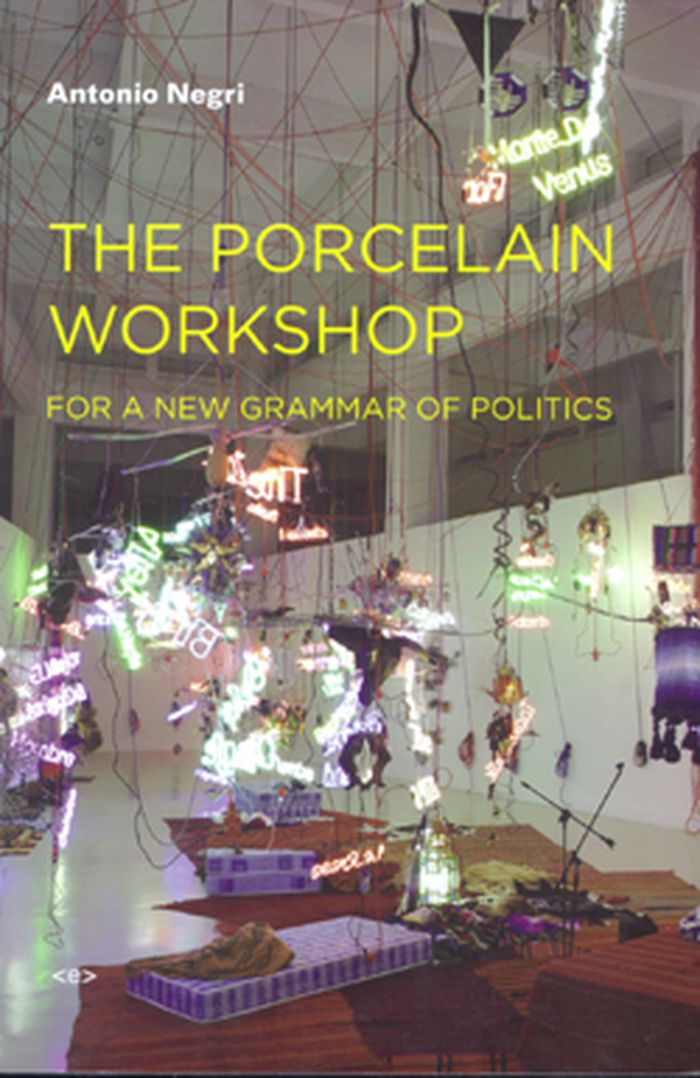
In 2004 and 2005, Antonio Negri held ten workshops at the Collège International de Philosophie in Paris to formulate a new political grammar of the postmodern. Postmodernity, Negri suggests, can be described as a "porcelain workshop": a delicate and fragile construction that could be destroyed through one clumsy act. Looking across twentieth century history, Negri warns that our inability to anticipate future developments has already placed coming generations in serious jeopardy. Describing the years 1917-1968 as the "short century," Negri suggests that by the end of it, all of the familiar markers of modernity (including that of socialism) had lost their relevance. Confronted with an intolerable reality, indignation and the revolutionary will to transform the world have both taken new forms and must be understood anew, free of modernist assumptions. In the impassioned debates recounted in this book, Antonio Negri attempts to describe the formation of an alternative political horizon and looks for a way to define the practices and modes of expression that democracy could take.
The porcelain workshop: for a new grammar of politics
Actions:
Prix:
$18.95
(disponible sur commande)
Résumé:
In 2004 and 2005, Antonio Negri held ten workshops at the Collège International de Philosophie in Paris to formulate a new political grammar of the postmodern. Postmodernity, Negri suggests, can be described as a "porcelain workshop": a delicate and fragile construction that could be destroyed through one clumsy act. Looking across twentieth century history, Negri warns that our inability to anticipate future developments has already placed coming generations in serious jeopardy. Describing the years 1917-1968 as the "short century," Negri suggests that by the end of it, all of the familiar markers of modernity (including that of socialism) had lost their relevance. Confronted with an intolerable reality, indignation and the revolutionary will to transform the world have both taken new forms and must be understood anew, free of modernist assumptions. In the impassioned debates recounted in this book, Antonio Negri attempts to describe the formation of an alternative political horizon and looks for a way to define the practices and modes of expression that democracy could take.
Classification:
livres
livres
Publication:
août 2008, Cambridge, London
août 2008, Cambridge, London
Sujet:
Théorie/ philosophie
Théorie/ philosophie


