


884 Résultats
Classification:
livres
livres
Actions:
Prix:
$49.95
(disponible sur commande)
Résumé:
Ce livre offre une introduction plurielle et approfondie aux travaux d’Andrew Abbott, l’une des figures majeures de la sociologie contemporaine. En deux volumes, il présente un panorama inédit des propositions théoriques et méthodologiques de cette oeuvre foisonnante, en les rapportant à leurs contextes de production. L’ensemble révèle les importants chantiers théoriques(...)
$49.95
(disponible sur commande)
Résumé:
Ce livre offre une introduction plurielle et approfondie aux travaux d’Andrew Abbott, l’une des figures majeures de la sociologie contemporaine. En deux volumes, il présente un panorama inédit des propositions théoriques et méthodologiques de cette oeuvre foisonnante, en les rapportant à leurs contextes de production. L’ensemble révèle les importants chantiers théoriques(...)
Titre:
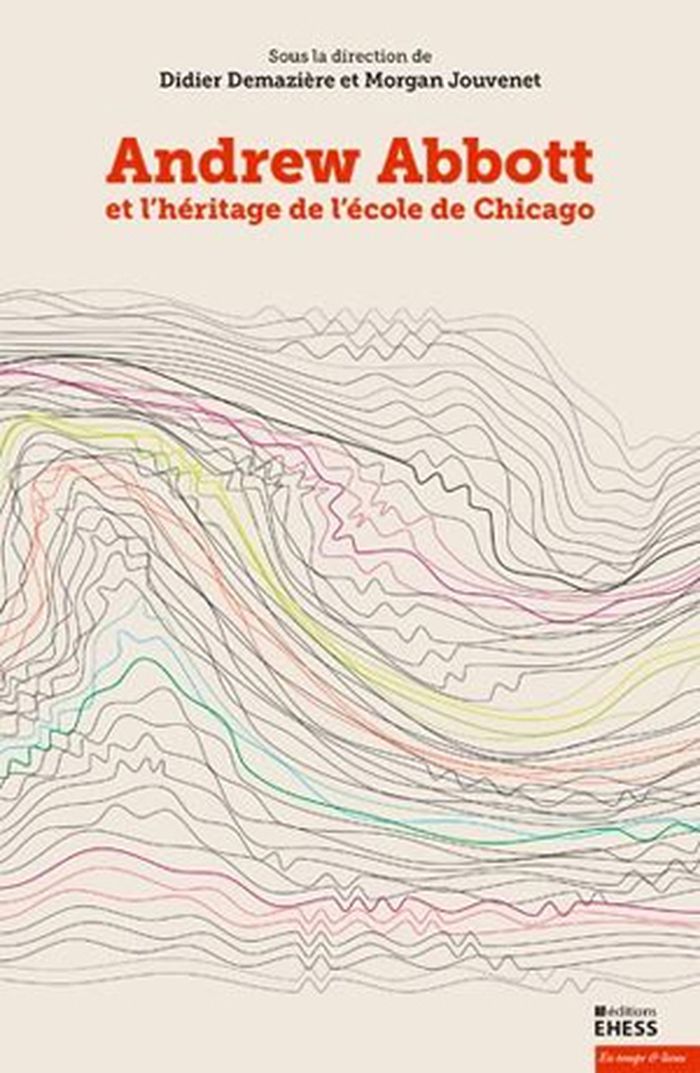
Andrew Abbott et l'héritage de l'école de Chicago
Actions:
Prix:
$49.95
(disponible sur commande)
Résumé:
Ce livre offre une introduction plurielle et approfondie aux travaux d’Andrew Abbott, l’une des figures majeures de la sociologie contemporaine. En deux volumes, il présente un panorama inédit des propositions théoriques et méthodologiques de cette oeuvre foisonnante, en les rapportant à leurs contextes de production. L’ensemble révèle les importants chantiers théoriques et empiriques ouverts par Abbott, et discute des thèses originales - et souvent provocantes - qui apparaissent ici comme les prolongements d’un héritage quelque peu oublié de l’école de Chicago. Ce volume rassemble des traductions de textes majeurs d’Abbott, des contributions de spécialistes clarifiant ses apports, ainsi qu’une réponse inédite esquissant un bilan et de nouvelles perspectives. Il présente enfin une bibliographie complète de ses travaux, permettant de se repérer dans une oeuvre jusqu’à présent très peu traduite en français.
Andrew Abbott et l'héritage de l'école de Chicago
Actions:
Prix:
$49.95
(disponible sur commande)
Résumé:
Ce livre offre une introduction plurielle et approfondie aux travaux d’Andrew Abbott, l’une des figures majeures de la sociologie contemporaine. En deux volumes, il présente un panorama inédit des propositions théoriques et méthodologiques de cette oeuvre foisonnante, en les rapportant à leurs contextes de production. L’ensemble révèle les importants chantiers théoriques et empiriques ouverts par Abbott, et discute des thèses originales - et souvent provocantes - qui apparaissent ici comme les prolongements d’un héritage quelque peu oublié de l’école de Chicago. Ce volume rassemble des traductions de textes majeurs d’Abbott, des contributions de spécialistes clarifiant ses apports, ainsi qu’une réponse inédite esquissant un bilan et de nouvelles perspectives. Il présente enfin une bibliographie complète de ses travaux, permettant de se repérer dans une oeuvre jusqu’à présent très peu traduite en français.
Classification:
livres
livres
Publication:
avril 2016
avril 2016
Sujet:
Théorie/ philosophie
Théorie/ philosophie
Classification:
livres
livres
Actions:
Prix:
$30.95
(disponible sur commande)
Résumé:
Depuis 1966, une part importante de l’enseignement du philosophe Alain Badiou, a pris la forme d’un séminaire, lieu de libre parole et laboratoire de pensée. Les éditions Fayard publient l’ensemble de ces Séminaires de 1983 à aujourd'hui, période où la documentation est abondante et continue. Ce volume est le septième de la série.
$30.95
(disponible sur commande)
Résumé:
Depuis 1966, une part importante de l’enseignement du philosophe Alain Badiou, a pris la forme d’un séminaire, lieu de libre parole et laboratoire de pensée. Les éditions Fayard publient l’ensemble de ces Séminaires de 1983 à aujourd'hui, période où la documentation est abondante et continue. Ce volume est le septième de la série.
Titre:
L'un : Descartes, Platon, Kant, 1983-1984
Actions:
Prix:
$30.95
(disponible sur commande)
Résumé:
Depuis 1966, une part importante de l’enseignement du philosophe Alain Badiou, a pris la forme d’un séminaire, lieu de libre parole et laboratoire de pensée. Les éditions Fayard publient l’ensemble de ces Séminaires de 1983 à aujourd'hui, période où la documentation est abondante et continue. Ce volume est le septième de la série.
L'un : Descartes, Platon, Kant, 1983-1984
Actions:
Prix:
$30.95
(disponible sur commande)
Résumé:
Depuis 1966, une part importante de l’enseignement du philosophe Alain Badiou, a pris la forme d’un séminaire, lieu de libre parole et laboratoire de pensée. Les éditions Fayard publient l’ensemble de ces Séminaires de 1983 à aujourd'hui, période où la documentation est abondante et continue. Ce volume est le septième de la série.
Classification:
livres
livres
Publication:
avril 2016
avril 2016
Sujet:
Théorie/ philosophie
Théorie/ philosophie
Classification:
livres
livres
Prix:
$32.50
(disponible sur commande)
Résumé:
Having set global warming in irreversible motion, we are facing the possibility of ecological catastrophe. But the environmental emergency is also a crisis for our philosophical habits of thought, confronting us with a problem that seems to defy not only our control but also our understanding. Global warming is perhaps the most dramatic example of what Timothy Morton(...)
$32.50
(disponible sur commande)
Résumé:
Having set global warming in irreversible motion, we are facing the possibility of ecological catastrophe. But the environmental emergency is also a crisis for our philosophical habits of thought, confronting us with a problem that seems to defy not only our control but also our understanding. Global warming is perhaps the most dramatic example of what Timothy Morton(...)
Titre:
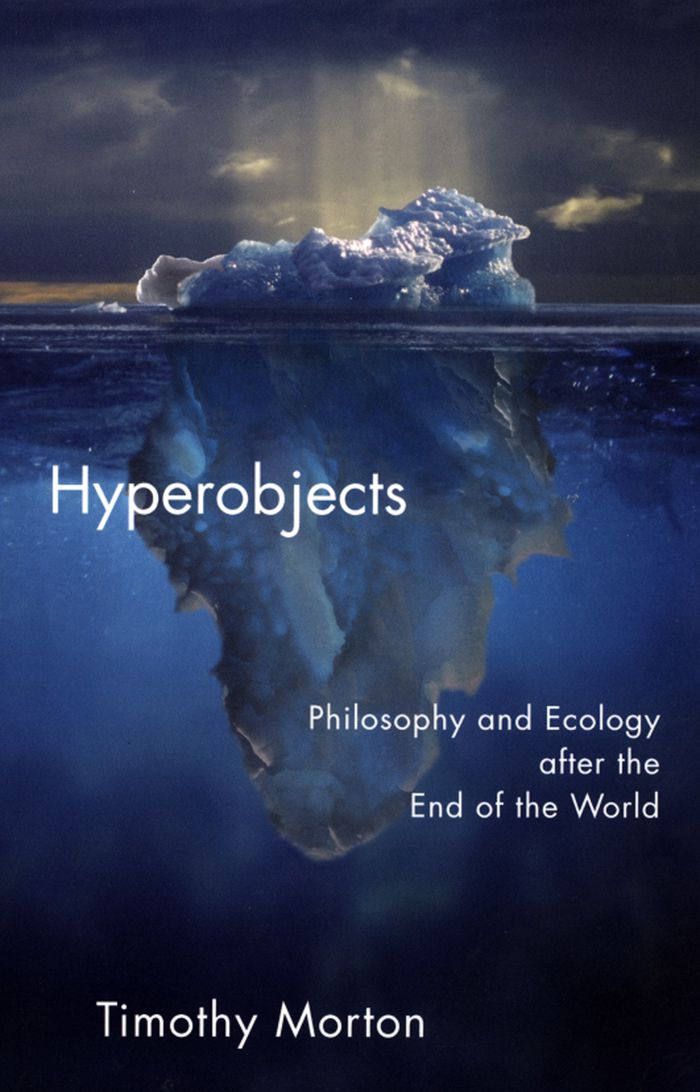
Hyperobjects: philosophy and ecology after the end of the world
Actions:
Prix:
$32.50
(disponible sur commande)
Résumé:
Having set global warming in irreversible motion, we are facing the possibility of ecological catastrophe. But the environmental emergency is also a crisis for our philosophical habits of thought, confronting us with a problem that seems to defy not only our control but also our understanding. Global warming is perhaps the most dramatic example of what Timothy Morton calls hyperobjects entities of such vast temporal and spatial dimensions that they defeat traditional ideas about what a thing is in the first place. In this book, Morton explains what hyperobjects are and their impact on how we think, how we coexist with one another and with nonhumans, and how we experience our politics, ethics, and art.
Hyperobjects: philosophy and ecology after the end of the world
Actions:
Prix:
$32.50
(disponible sur commande)
Résumé:
Having set global warming in irreversible motion, we are facing the possibility of ecological catastrophe. But the environmental emergency is also a crisis for our philosophical habits of thought, confronting us with a problem that seems to defy not only our control but also our understanding. Global warming is perhaps the most dramatic example of what Timothy Morton calls hyperobjects entities of such vast temporal and spatial dimensions that they defeat traditional ideas about what a thing is in the first place. In this book, Morton explains what hyperobjects are and their impact on how we think, how we coexist with one another and with nonhumans, and how we experience our politics, ethics, and art.
Classification:
livres
livres
Publication:
mai 2016
mai 2016
Sujet:
Théorie/ philosophie
Théorie/ philosophie
Classification:
livres
livres

Titre:
Post-démocratie
Post-démocratie
Actions:
Prix:
$24.95
(disponible sur commande)
Résumé:
Cet essai propose d'explorer les forces sociales et économiques en jeu dans les démocraties modernes. L'auteur analyse les causes de la crise de confiance des peuples vis-à-vis des états et des gouvernements de plus en plus dépendants des conglomérats et des entreprises privées. L'auteur propose des pistes pour redonner aux citoyens les moyens d'agir dans un système(...)
$24.95
(disponible sur commande)
Résumé:
Cet essai propose d'explorer les forces sociales et économiques en jeu dans les démocraties modernes. L'auteur analyse les causes de la crise de confiance des peuples vis-à-vis des états et des gouvernements de plus en plus dépendants des conglomérats et des entreprises privées. L'auteur propose des pistes pour redonner aux citoyens les moyens d'agir dans un système(...)
Titre:
Post-démocratie
Actions:
Prix:
$24.95
(disponible sur commande)
Résumé:
Cet essai propose d'explorer les forces sociales et économiques en jeu dans les démocraties modernes. L'auteur analyse les causes de la crise de confiance des peuples vis-à-vis des états et des gouvernements de plus en plus dépendants des conglomérats et des entreprises privées. L'auteur propose des pistes pour redonner aux citoyens les moyens d'agir dans un système réellement démocratique.
Post-démocratie
Actions:
Prix:
$24.95
(disponible sur commande)
Résumé:
Cet essai propose d'explorer les forces sociales et économiques en jeu dans les démocraties modernes. L'auteur analyse les causes de la crise de confiance des peuples vis-à-vis des états et des gouvernements de plus en plus dépendants des conglomérats et des entreprises privées. L'auteur propose des pistes pour redonner aux citoyens les moyens d'agir dans un système réellement démocratique.
Classification:
livres
livres
Publication:
juin 2016
juin 2016
Sujet:
Théorie/ philosophie
Théorie/ philosophie
Classification:
livres
livres
Actions:
Prix:
$32.95
(disponible sur commande)
Résumé:
L'auteur retrace l'histoire des affrontements idéologiques entre keynésiens et néolibéraux afin de démontrer que ces débats ont abouti à l'hégémonie des très grandes entreprises, qui contrôlent à la foi l'Etat et les marchés. Il invite à repenser le rôle de la société civile pour faire face à ce nouveau pouvoir.
$32.95
(disponible sur commande)
Résumé:
L'auteur retrace l'histoire des affrontements idéologiques entre keynésiens et néolibéraux afin de démontrer que ces débats ont abouti à l'hégémonie des très grandes entreprises, qui contrôlent à la foi l'Etat et les marchés. Il invite à repenser le rôle de la société civile pour faire face à ce nouveau pouvoir.
Titre:
L'étrange survie du néolibéralisme
Actions:
Prix:
$32.95
(disponible sur commande)
Résumé:
L'auteur retrace l'histoire des affrontements idéologiques entre keynésiens et néolibéraux afin de démontrer que ces débats ont abouti à l'hégémonie des très grandes entreprises, qui contrôlent à la foi l'Etat et les marchés. Il invite à repenser le rôle de la société civile pour faire face à ce nouveau pouvoir.
L'étrange survie du néolibéralisme
Actions:
Prix:
$32.95
(disponible sur commande)
Résumé:
L'auteur retrace l'histoire des affrontements idéologiques entre keynésiens et néolibéraux afin de démontrer que ces débats ont abouti à l'hégémonie des très grandes entreprises, qui contrôlent à la foi l'Etat et les marchés. Il invite à repenser le rôle de la société civile pour faire face à ce nouveau pouvoir.
Classification:
livres
livres
Publication:
juin 2016
juin 2016
Sujet:
Théorie/ philosophie
Théorie/ philosophie
Classification:
livres
livres
Actions:
Prix:
$41.95
(disponible sur commande)
Résumé:
Cette anthologie propose une promenade dans la ville à travers la littérature. Celle-ci, en donnant consistance à l’espace qu’elle nomme, décrit, évoque, invoque, nous en offre une précieuse intelligence sensible. Ce n’est pas un panorama, mais une sélection personnelle, donc subjective. Depuis le début des années 1980, au gré de ses lectures Jean-Charles Depaule a(...)
$41.95
(disponible sur commande)
Résumé:
Cette anthologie propose une promenade dans la ville à travers la littérature. Celle-ci, en donnant consistance à l’espace qu’elle nomme, décrit, évoque, invoque, nous en offre une précieuse intelligence sensible. Ce n’est pas un panorama, mais une sélection personnelle, donc subjective. Depuis le début des années 1980, au gré de ses lectures Jean-Charles Depaule a(...)
Titre:
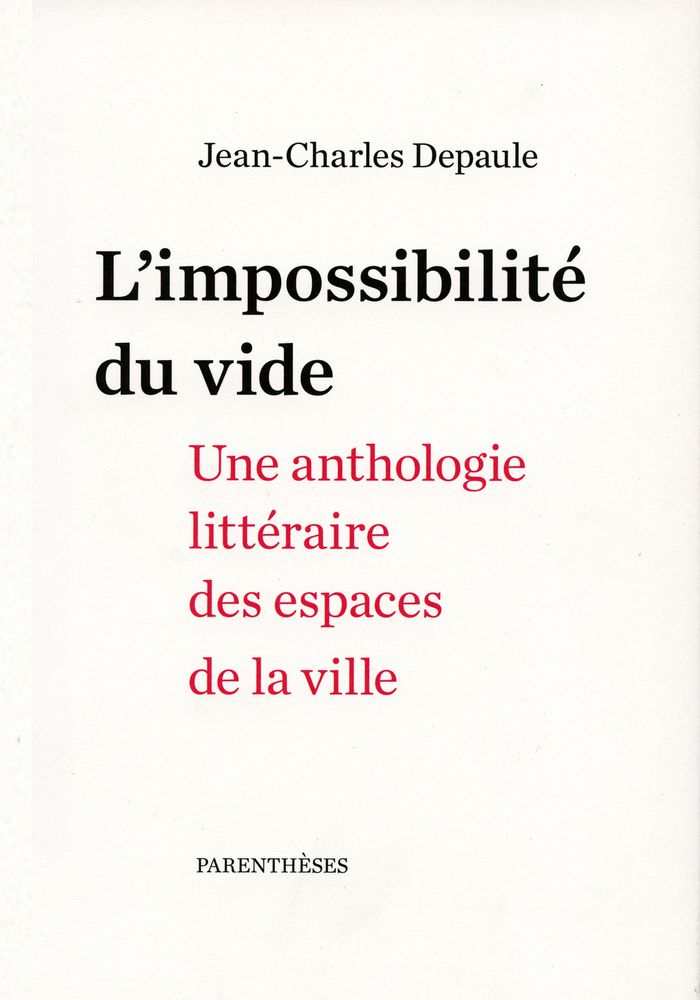
L'impossibilité du vide : une anthologie littéraire des espaces de la ville
Actions:
Prix:
$41.95
(disponible sur commande)
Résumé:
Cette anthologie propose une promenade dans la ville à travers la littérature. Celle-ci, en donnant consistance à l’espace qu’elle nomme, décrit, évoque, invoque, nous en offre une précieuse intelligence sensible. Ce n’est pas un panorama, mais une sélection personnelle, donc subjective. Depuis le début des années 1980, au gré de ses lectures Jean-Charles Depaule a recueilli ces textes qui, de James Agee à Émile Zola, en passant par Marguerite Duras, Jean Echenoz, William Faulkner, Barbara Pym, Francis Ponge ou Georges Simenon, « disent » des lieux, des gestes, parfois microscopiques, des rituels, des moments ou des objets de la vie urbaine. Plutôt qu’à des idées morales ou techniques, voire à des théories urbanistiques, ils s’attachent à toute sorte de manières d’habiter et de percevoir la ville et ses territoires quotidiens, de les découvrir, de les redécouvrir, de se les remémorer ou les oublier, de les nommer et les imaginer, de les quitter et d’y revenir. Le lecteur est invité à cheminer de texte en texte, de mot en mot, à identifier et rapprocher des thèmes, à dessiner des paysages. Et à prolonger sa promenade littéraire.
L'impossibilité du vide : une anthologie littéraire des espaces de la ville
Actions:
Prix:
$41.95
(disponible sur commande)
Résumé:
Cette anthologie propose une promenade dans la ville à travers la littérature. Celle-ci, en donnant consistance à l’espace qu’elle nomme, décrit, évoque, invoque, nous en offre une précieuse intelligence sensible. Ce n’est pas un panorama, mais une sélection personnelle, donc subjective. Depuis le début des années 1980, au gré de ses lectures Jean-Charles Depaule a recueilli ces textes qui, de James Agee à Émile Zola, en passant par Marguerite Duras, Jean Echenoz, William Faulkner, Barbara Pym, Francis Ponge ou Georges Simenon, « disent » des lieux, des gestes, parfois microscopiques, des rituels, des moments ou des objets de la vie urbaine. Plutôt qu’à des idées morales ou techniques, voire à des théories urbanistiques, ils s’attachent à toute sorte de manières d’habiter et de percevoir la ville et ses territoires quotidiens, de les découvrir, de les redécouvrir, de se les remémorer ou les oublier, de les nommer et les imaginer, de les quitter et d’y revenir. Le lecteur est invité à cheminer de texte en texte, de mot en mot, à identifier et rapprocher des thèmes, à dessiner des paysages. Et à prolonger sa promenade littéraire.
Classification:
livres
livres
Publication:
mai 2016
mai 2016
Sujet:
Théorie/ philosophie
Théorie/ philosophie
Classification:
livres
livres
Titre:
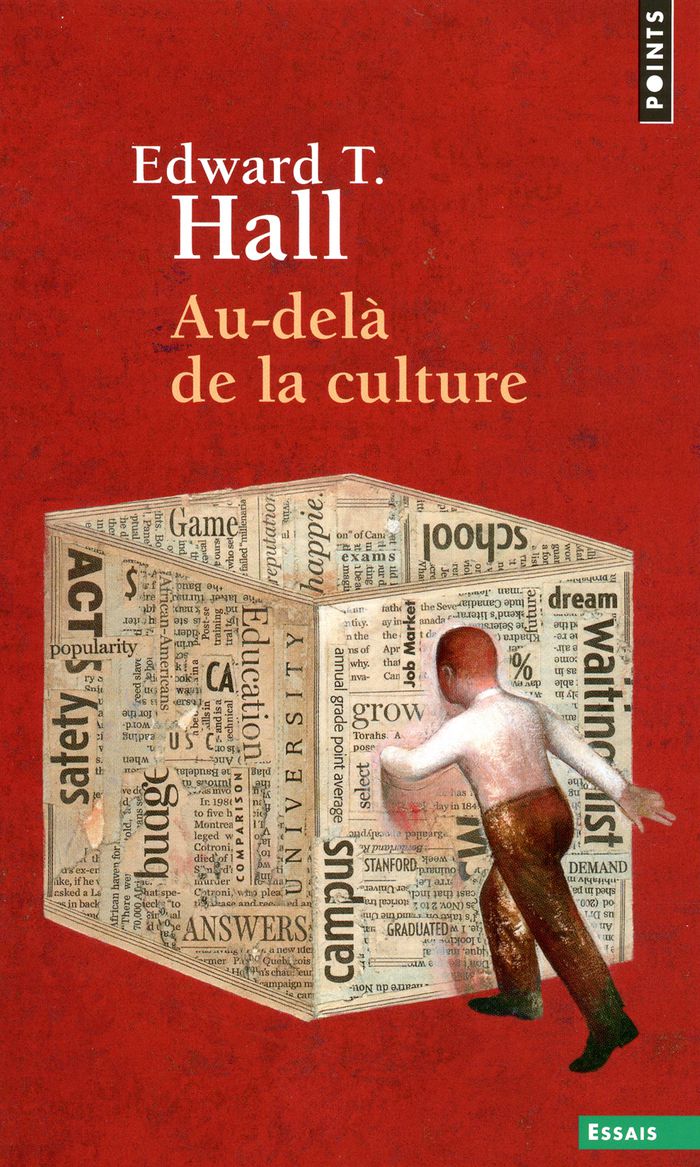
Au-delà de la culture
Au-delà de la culture
Actions:
Prix:
$16.95
(disponible sur commande)
Résumé:
Montrer que les institutions culturelles finissent par acquérir une existence autonome et par se retourner contre l’homme, tel est, ici, le propos de l’auteur de La Dimension cachée. Ce livre refuse le recours trop rapide à des explications politiques, sociologiques ou psychanalytiques. Loin des discours dominants, il remet discrètement en cause certaines idées reçues :(...)
$16.95
(disponible sur commande)
Résumé:
Montrer que les institutions culturelles finissent par acquérir une existence autonome et par se retourner contre l’homme, tel est, ici, le propos de l’auteur de La Dimension cachée. Ce livre refuse le recours trop rapide à des explications politiques, sociologiques ou psychanalytiques. Loin des discours dominants, il remet discrètement en cause certaines idées reçues :(...)
Titre:
Au-delà de la culture
Actions:
Prix:
$16.95
(disponible sur commande)
Résumé:
Montrer que les institutions culturelles finissent par acquérir une existence autonome et par se retourner contre l’homme, tel est, ici, le propos de l’auteur de La Dimension cachée. Ce livre refuse le recours trop rapide à des explications politiques, sociologiques ou psychanalytiques. Loin des discours dominants, il remet discrètement en cause certaines idées reçues : il s’agit pour l’individu de dépasser les schémas culturels et les institutions qui le privent de la compréhension de ses possibilités et de ses limites, et l’enferment dans cette dureté à l’égard de l’autre et de lui-même.
Au-delà de la culture
Actions:
Prix:
$16.95
(disponible sur commande)
Résumé:
Montrer que les institutions culturelles finissent par acquérir une existence autonome et par se retourner contre l’homme, tel est, ici, le propos de l’auteur de La Dimension cachée. Ce livre refuse le recours trop rapide à des explications politiques, sociologiques ou psychanalytiques. Loin des discours dominants, il remet discrètement en cause certaines idées reçues : il s’agit pour l’individu de dépasser les schémas culturels et les institutions qui le privent de la compréhension de ses possibilités et de ses limites, et l’enferment dans cette dureté à l’égard de l’autre et de lui-même.
Classification:
livres
livres
Publication:
mai 2016
mai 2016
Sujet:
Théorie/ philosophie
Théorie/ philosophie
Classification:
livres
livres
Prix:
$25.00
(disponible sur commande)
Résumé:
Benjamin H. Bratton's kaleidoscopic theory-fiction links the utopian fantasies of political violence with the equally utopian programs of security and control. Equal parts Borges, Burroughs, Baudrillard, and Black Ops, ''Dispute Plan to Prevent Future Luxury Constitution'' charts a treacherous landscape filled with paranoid master plans, failed schemes, and dubious histories.
$25.00
(disponible sur commande)
Résumé:
Benjamin H. Bratton's kaleidoscopic theory-fiction links the utopian fantasies of political violence with the equally utopian programs of security and control. Equal parts Borges, Burroughs, Baudrillard, and Black Ops, ''Dispute Plan to Prevent Future Luxury Constitution'' charts a treacherous landscape filled with paranoid master plans, failed schemes, and dubious histories.
Titre:
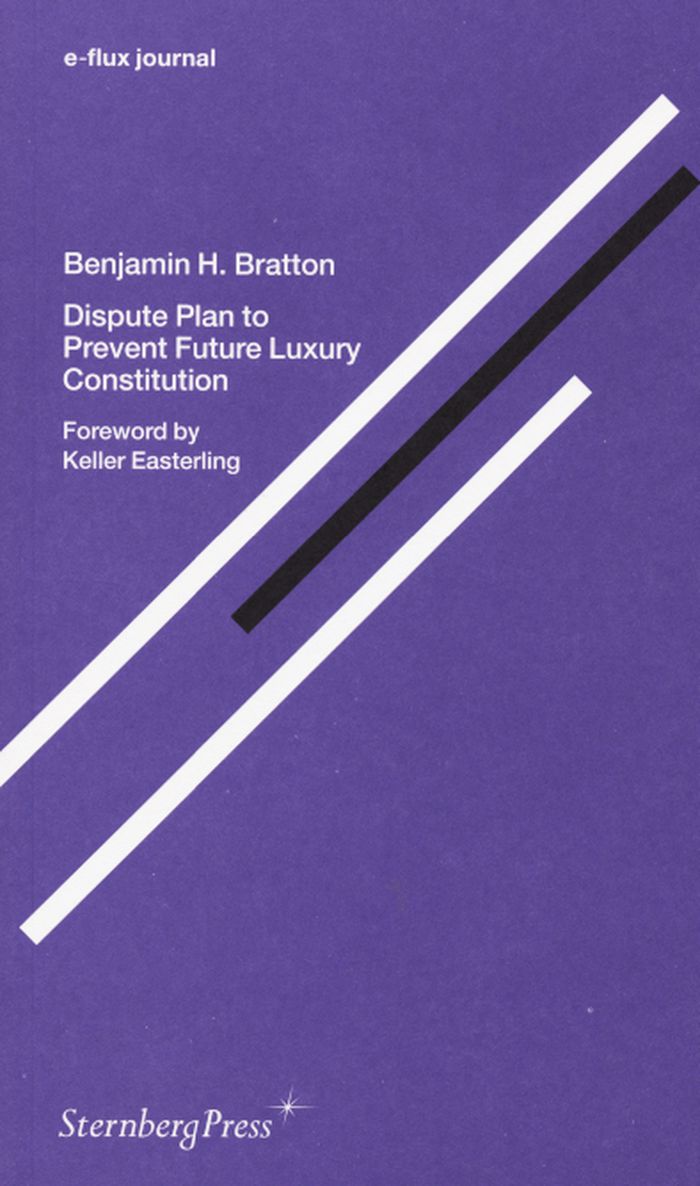
E-Flux journal: Dispute plan to prevent future luxury constitution
Actions:
Prix:
$25.00
(disponible sur commande)
Résumé:
Benjamin H. Bratton's kaleidoscopic theory-fiction links the utopian fantasies of political violence with the equally utopian programs of security and control. Equal parts Borges, Burroughs, Baudrillard, and Black Ops, ''Dispute Plan to Prevent Future Luxury Constitution'' charts a treacherous landscape filled with paranoid master plans, failed schemes, and dubious histories.
E-Flux journal: Dispute plan to prevent future luxury constitution
Actions:
Prix:
$25.00
(disponible sur commande)
Résumé:
Benjamin H. Bratton's kaleidoscopic theory-fiction links the utopian fantasies of political violence with the equally utopian programs of security and control. Equal parts Borges, Burroughs, Baudrillard, and Black Ops, ''Dispute Plan to Prevent Future Luxury Constitution'' charts a treacherous landscape filled with paranoid master plans, failed schemes, and dubious histories.
Classification:
livres
livres
Publication:
juillet 2016
juillet 2016
Sujet:
Théorie/ philosophie
Théorie/ philosophie
Classification:
livres
livres

Prix:
$61.95
(disponible sur commande)
Résumé:
"Experience" offers a reading experience like no other. A heat-sensitive cover by Olafur Eliasson reveals words, colors, and a drawing when touched by human hands. Endpapers designed by Carsten Höller are printed in ink containing carefully calibrated quantities of the synthesized human pheromones estratetraenol and androstadienone, evoking the suggestibility of human(...)
$61.95
(disponible sur commande)
Résumé:
"Experience" offers a reading experience like no other. A heat-sensitive cover by Olafur Eliasson reveals words, colors, and a drawing when touched by human hands. Endpapers designed by Carsten Höller are printed in ink containing carefully calibrated quantities of the synthesized human pheromones estratetraenol and androstadienone, evoking the suggestibility of human(...)
Sujet:
Théorie/ philosophie
Théorie/ philosophie
Publication:
septembre 2016
septembre 2016
Titre:
Experience : culture, cognition, and the common sense
Actions:
Prix:
$61.95
(disponible sur commande)
Résumé:
"Experience" offers a reading experience like no other. A heat-sensitive cover by Olafur Eliasson reveals words, colors, and a drawing when touched by human hands. Endpapers designed by Carsten Höller are printed in ink containing carefully calibrated quantities of the synthesized human pheromones estratetraenol and androstadienone, evoking the suggestibility of human desire. The margins and edges of the book are designed by Tauba Auerbach in complementary colors that create a dynamically shifting effect when the book is shifted or closed. When the book is opened, bookmarks cascade from the center, emerging from spider web prints by Tomás Saraceno. Experience produces experience while bringing the concept itself into relief as an object of contemplation. The sensory experience of the book as a physical object resonates with the intellectual experience of the book as a container of ideas.
Experience : culture, cognition, and the common sense
Actions:
Prix:
$61.95
(disponible sur commande)
Résumé:
"Experience" offers a reading experience like no other. A heat-sensitive cover by Olafur Eliasson reveals words, colors, and a drawing when touched by human hands. Endpapers designed by Carsten Höller are printed in ink containing carefully calibrated quantities of the synthesized human pheromones estratetraenol and androstadienone, evoking the suggestibility of human desire. The margins and edges of the book are designed by Tauba Auerbach in complementary colors that create a dynamically shifting effect when the book is shifted or closed. When the book is opened, bookmarks cascade from the center, emerging from spider web prints by Tomás Saraceno. Experience produces experience while bringing the concept itself into relief as an object of contemplation. The sensory experience of the book as a physical object resonates with the intellectual experience of the book as a container of ideas.
Classification:
livres
livres
Publication:
septembre 2016
septembre 2016
Sujet:
Théorie/ philosophie
Théorie/ philosophie
Classification:
livres
livres
Titre:
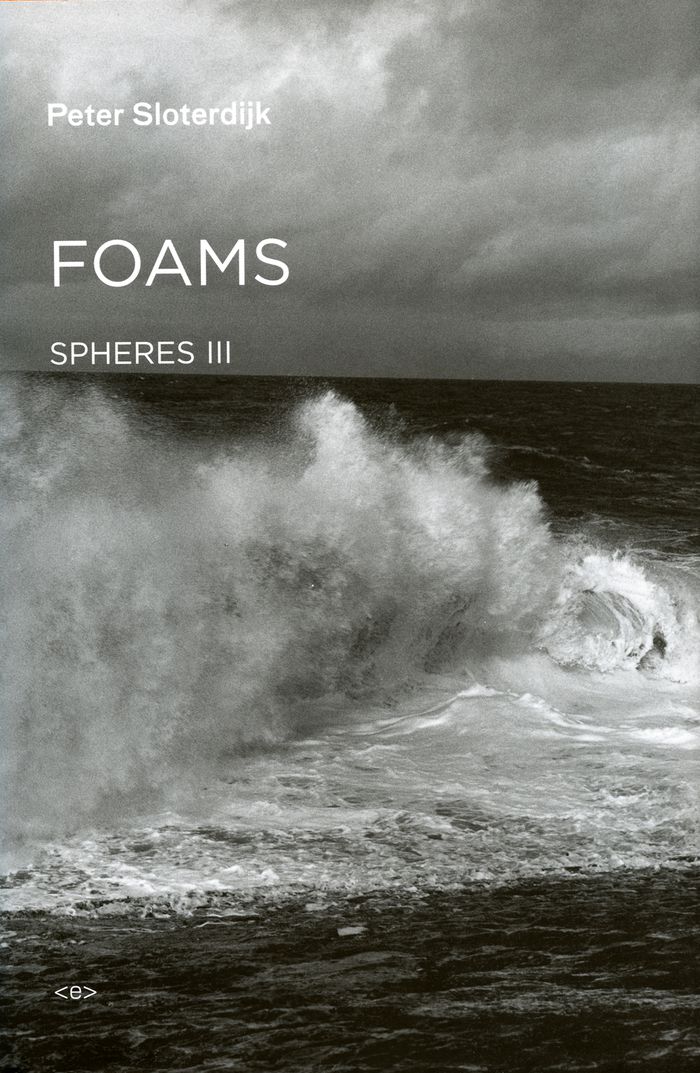
Foams
Foams
Actions:
Prix:
$53.95
(disponible sur commande)
Résumé:
Foams completes Peter Sloterdijk's celebrated Spheres trilogy: his 2,500-page "grand narrative" retelling of the history of humanity, as related through the anthropological concept of the "Sphere." For Sloterdijk, life is a matter of form and, in life, sphere formation and thought are two different labels for the same thing. The trilogy also offers his corrective answer(...)
$53.95
(disponible sur commande)
Résumé:
Foams completes Peter Sloterdijk's celebrated Spheres trilogy: his 2,500-page "grand narrative" retelling of the history of humanity, as related through the anthropological concept of the "Sphere." For Sloterdijk, life is a matter of form and, in life, sphere formation and thought are two different labels for the same thing. The trilogy also offers his corrective answer(...)
Titre:
Foams
Actions:
Prix:
$53.95
(disponible sur commande)
Résumé:
Foams completes Peter Sloterdijk's celebrated Spheres trilogy: his 2,500-page "grand narrative" retelling of the history of humanity, as related through the anthropological concept of the "Sphere." For Sloterdijk, life is a matter of form and, in life, sphere formation and thought are two different labels for the same thing. The trilogy also offers his corrective answer to Martin Heidegger's Being and Time, reformulating it into a lengthy meditation on Being and Space -- a shifting of the question of who we are to a more fundamental question of where we are.
Foams
Actions:
Prix:
$53.95
(disponible sur commande)
Résumé:
Foams completes Peter Sloterdijk's celebrated Spheres trilogy: his 2,500-page "grand narrative" retelling of the history of humanity, as related through the anthropological concept of the "Sphere." For Sloterdijk, life is a matter of form and, in life, sphere formation and thought are two different labels for the same thing. The trilogy also offers his corrective answer to Martin Heidegger's Being and Time, reformulating it into a lengthy meditation on Being and Space -- a shifting of the question of who we are to a more fundamental question of where we are.
Classification:
livres
livres
Publication:
août 2016
août 2016
Sujet:
Théorie/ philosophie
Théorie/ philosophie


