


884 Résultats
Classification:
livres
livres
Actions:
Prix:
$32.50
(disponible sur commande)
Résumé:
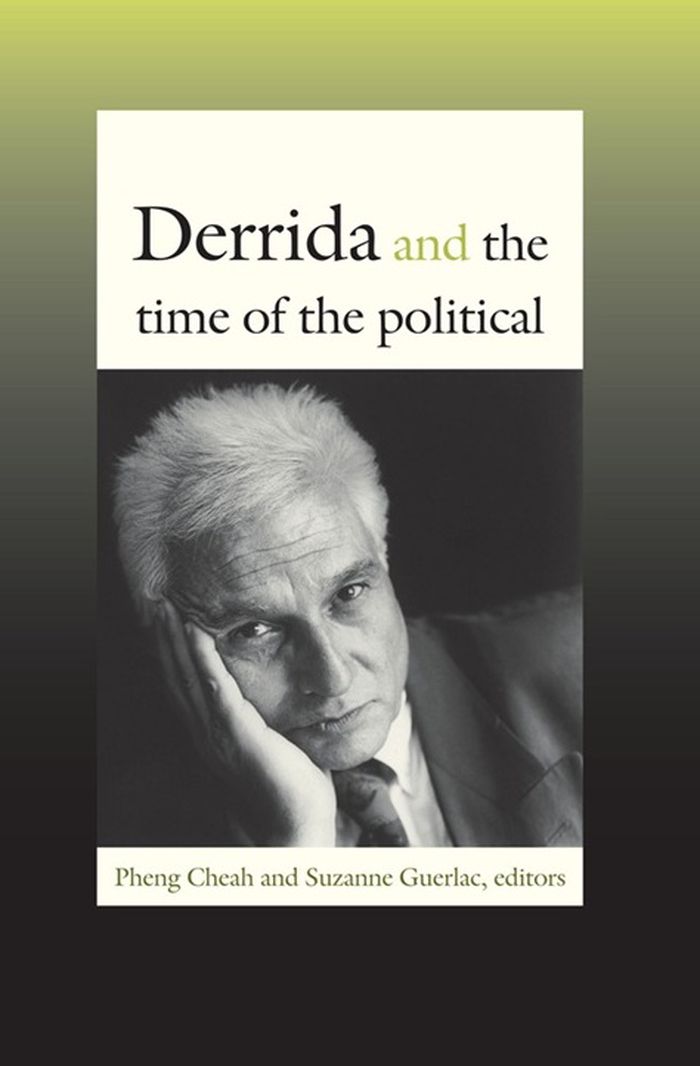
An intellectual event, Derrida and the Time of the Political marks the first time since Jacques Derrida’s death in 2004 that leading scholars have come together to critically assess the philosopher’s political and ethical writings. Skepticism about the import of deconstruction for political thought has been widespread among American critics since Derrida’s work became(...)
$32.50
(disponible sur commande)
Résumé:
An intellectual event, Derrida and the Time of the Political marks the first time since Jacques Derrida’s death in 2004 that leading scholars have come together to critically assess the philosopher’s political and ethical writings. Skepticism about the import of deconstruction for political thought has been widespread among American critics since Derrida’s work became(...)
Sujet:
Théorie/ philosophie
Théorie/ philosophie
Publication:
janvier 2009, Durham, London
janvier 2009, Durham, London
Titre:
Derrida and the time of the political
Actions:
Prix:
$32.50
(disponible sur commande)
Résumé:
An intellectual event, Derrida and the Time of the Political marks the first time since Jacques Derrida’s death in 2004 that leading scholars have come together to critically assess the philosopher’s political and ethical writings. Skepticism about the import of deconstruction for political thought has been widespread among American critics since Derrida’s work became widely available in English in the late 1970s.
Derrida and the time of the political
Actions:
Prix:
$32.50
(disponible sur commande)
Résumé:
An intellectual event, Derrida and the Time of the Political marks the first time since Jacques Derrida’s death in 2004 that leading scholars have come together to critically assess the philosopher’s political and ethical writings. Skepticism about the import of deconstruction for political thought has been widespread among American critics since Derrida’s work became widely available in English in the late 1970s.
Classification:
livres
livres
Publication:
janvier 2009, Durham, London
janvier 2009, Durham, London
Sujet:
Théorie/ philosophie
Théorie/ philosophie
Classification:
livres
livres
Actions:
Prix:
$20.00
(disponible sur commande)
Résumé:
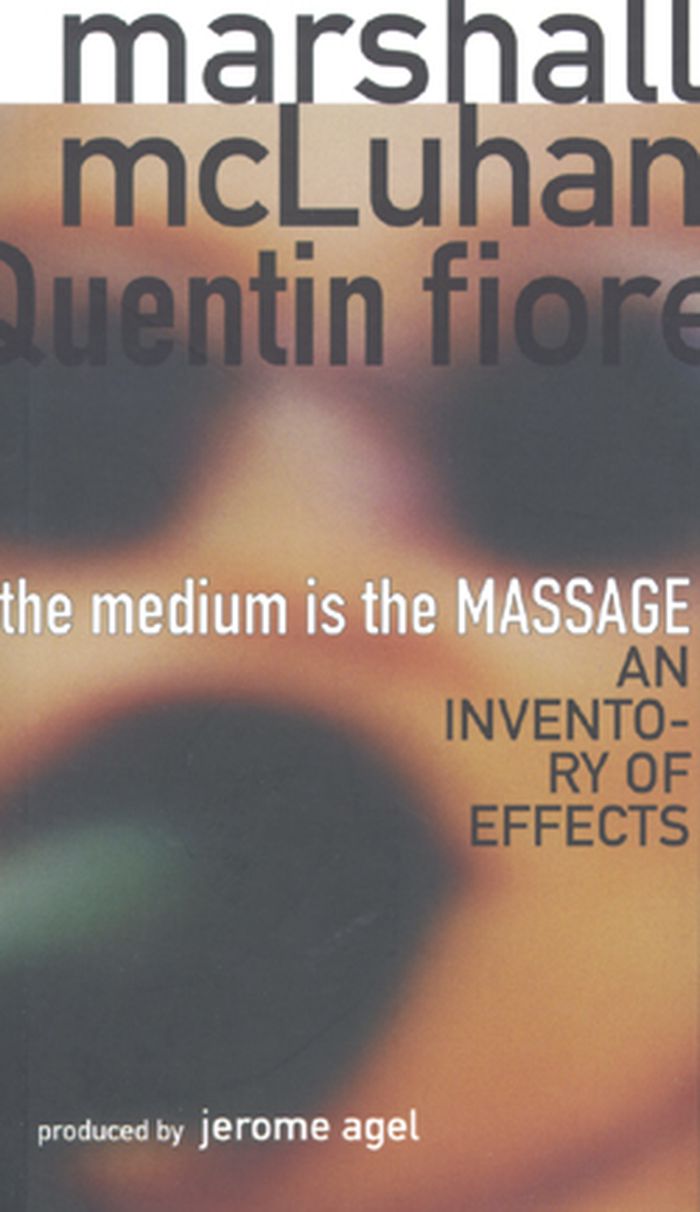
The Medium is the Massage remains Marshall McLuhan's most popular book, perhaps as influential as Understanding Media.
$20.00
(disponible sur commande)
Résumé:
The Medium is the Massage remains Marshall McLuhan's most popular book, perhaps as influential as Understanding Media.
Publication:
janvier 2009, Berkeley
janvier 2009, Berkeley
Titre:
The medium is the massage: an inventory of effects
Actions:
Prix:
$20.00
(disponible sur commande)
Résumé:
The Medium is the Massage remains Marshall McLuhan's most popular book, perhaps as influential as Understanding Media.
The medium is the massage: an inventory of effects
Actions:
Prix:
$20.00
(disponible sur commande)
Résumé:
The Medium is the Massage remains Marshall McLuhan's most popular book, perhaps as influential as Understanding Media.
Classification:
livres
livres
Publication:
janvier 2009, Berkeley
janvier 2009, Berkeley
Classification:
livres
livres
Actions:
Prix:
$32.95
(disponible sur commande)
Résumé:
This is the devastating book which first established Marshall McLuhan’s reputation as the foremost critic of modern mass communications. The Mechanical Bride is vintage McLuhan — so aptly illustrated by dozens of examples from ads, comic strips, columnists, etc., that those who were stung by McLuhan were hard put for rebuttals. It shows how sex was first used to sell(...)
$32.95
(disponible sur commande)
Résumé:
This is the devastating book which first established Marshall McLuhan’s reputation as the foremost critic of modern mass communications. The Mechanical Bride is vintage McLuhan — so aptly illustrated by dozens of examples from ads, comic strips, columnists, etc., that those who were stung by McLuhan were hard put for rebuttals. It shows how sex was first used to sell(...)
Titre:
The mechanical bride: folklore of industrial man
Actions:
Prix:
$32.95
(disponible sur commande)
Résumé:
This is the devastating book which first established Marshall McLuhan’s reputation as the foremost critic of modern mass communications. The Mechanical Bride is vintage McLuhan — so aptly illustrated by dozens of examples from ads, comic strips, columnists, etc., that those who were stung by McLuhan were hard put for rebuttals. It shows how sex was first used to sell industrial hardware, how Orphan Annie still keeps the world on track, and how an Arabian Nights wonderland of mass entertainment and suggestion makes information irrelevant, and sends us to bed at night too dazed to question whether we’re happy or not. We live in an age in which legions of highly educated professionals dedicate themselves to the task of getting inside the collective public mind with the object of manipulating, exploiting and controlling.
The mechanical bride: folklore of industrial man
Actions:
Prix:
$32.95
(disponible sur commande)
Résumé:
This is the devastating book which first established Marshall McLuhan’s reputation as the foremost critic of modern mass communications. The Mechanical Bride is vintage McLuhan — so aptly illustrated by dozens of examples from ads, comic strips, columnists, etc., that those who were stung by McLuhan were hard put for rebuttals. It shows how sex was first used to sell industrial hardware, how Orphan Annie still keeps the world on track, and how an Arabian Nights wonderland of mass entertainment and suggestion makes information irrelevant, and sends us to bed at night too dazed to question whether we’re happy or not. We live in an age in which legions of highly educated professionals dedicate themselves to the task of getting inside the collective public mind with the object of manipulating, exploiting and controlling.
Classification:
livres
livres
Publication:
janvier 2005
janvier 2005
Sujet:
Théorie/ philosophie
Théorie/ philosophie
Classification:
livres
livres

Actions:
Prix:
$39.95
(disponible sur commande)
Résumé:
Les médias constituent un système qui sert à communiquer des messages et des symboles à la population. Ils ont vocation à distraire, amuser, informer, et à inculquer aux individus les croyances et codes comportementaux qui les intégreront aux structures sociales au sens large. Dans un monde où les richesses sont fortement concentrées et où les intérêts de classe entrent(...)
$39.95
(disponible sur commande)
Résumé:
Les médias constituent un système qui sert à communiquer des messages et des symboles à la population. Ils ont vocation à distraire, amuser, informer, et à inculquer aux individus les croyances et codes comportementaux qui les intégreront aux structures sociales au sens large. Dans un monde où les richesses sont fortement concentrées et où les intérêts de classe entrent(...)
Titre:
La fabrication du consentement de la propagande médiatique en démocratie
Actions:
Prix:
$39.95
(disponible sur commande)
Résumé:
Les médias constituent un système qui sert à communiquer des messages et des symboles à la population. Ils ont vocation à distraire, amuser, informer, et à inculquer aux individus les croyances et codes comportementaux qui les intégreront aux structures sociales au sens large. Dans un monde où les richesses sont fortement concentrées et où les intérêts de classe entrent en conflit, accomplir cette intégration nécessite une propagande systématique. Une modélisation de la propagande se focalise sur la prodigieuse inégalité dans la capacité de contrôle des moyens de production ; et ce qu'elle implique tant du point de vue de l'accès à un système de médias privés que de leurs choix et fonctionnements. Le modèle permet de reconstituer par quels processus le pouvoir et l'argent sélectionnent les informations.
La fabrication du consentement de la propagande médiatique en démocratie
Actions:
Prix:
$39.95
(disponible sur commande)
Résumé:
Les médias constituent un système qui sert à communiquer des messages et des symboles à la population. Ils ont vocation à distraire, amuser, informer, et à inculquer aux individus les croyances et codes comportementaux qui les intégreront aux structures sociales au sens large. Dans un monde où les richesses sont fortement concentrées et où les intérêts de classe entrent en conflit, accomplir cette intégration nécessite une propagande systématique. Une modélisation de la propagande se focalise sur la prodigieuse inégalité dans la capacité de contrôle des moyens de production ; et ce qu'elle implique tant du point de vue de l'accès à un système de médias privés que de leurs choix et fonctionnements. Le modèle permet de reconstituer par quels processus le pouvoir et l'argent sélectionnent les informations.
Classification:
livres
livres
Publication:
octobre 2008, Marseille
octobre 2008, Marseille
Sujet:
Théorie/ philosophie
Théorie/ philosophie
Classification:
livres
livres
Titre:
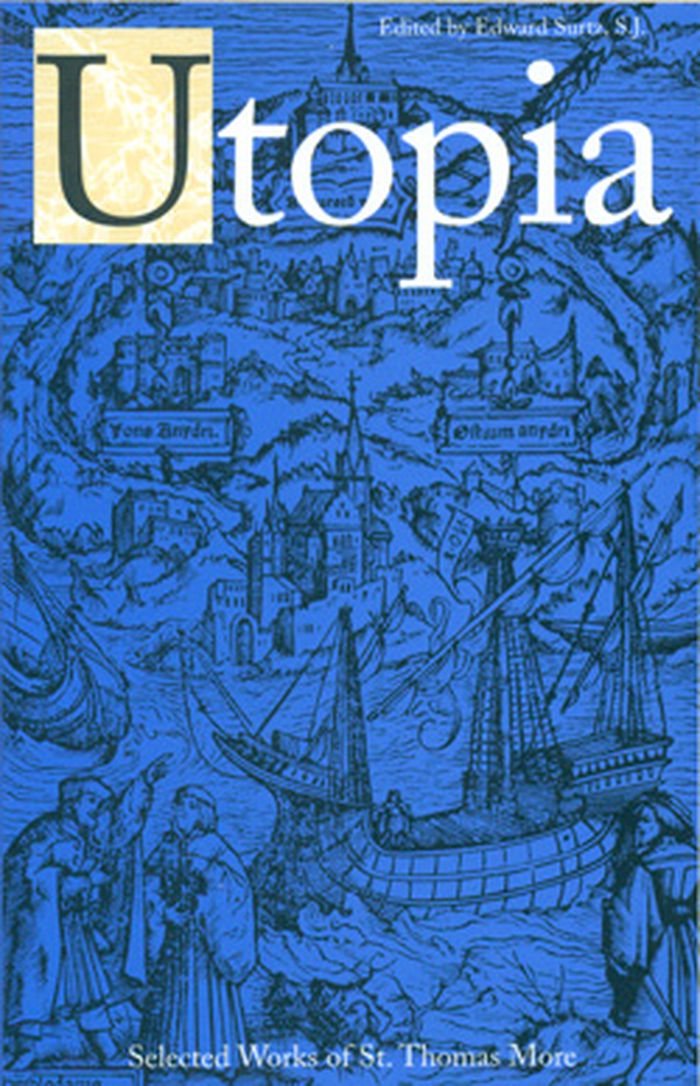
Utopia
Utopia
Actions:
Prix:
$17.25
(disponible sur commande)
Résumé:
Based on Volume 4 of the Yale Edition of the Complete Works of St. Thomas More, this edition includes an Introduction and Notes by Father Surtz. The accuracy of the translation ensures that the volume can be used by the historian, literary scholar, the social and political scientist, and the student of utopian thought.
$17.25
(disponible sur commande)
Résumé:
Based on Volume 4 of the Yale Edition of the Complete Works of St. Thomas More, this edition includes an Introduction and Notes by Father Surtz. The accuracy of the translation ensures that the volume can be used by the historian, literary scholar, the social and political scientist, and the student of utopian thought.
Titre:
Utopia
Actions:
Prix:
$17.25
(disponible sur commande)
Résumé:
Based on Volume 4 of the Yale Edition of the Complete Works of St. Thomas More, this edition includes an Introduction and Notes by Father Surtz. The accuracy of the translation ensures that the volume can be used by the historian, literary scholar, the social and political scientist, and the student of utopian thought.
Utopia
Actions:
Prix:
$17.25
(disponible sur commande)
Résumé:
Based on Volume 4 of the Yale Edition of the Complete Works of St. Thomas More, this edition includes an Introduction and Notes by Father Surtz. The accuracy of the translation ensures that the volume can be used by the historian, literary scholar, the social and political scientist, and the student of utopian thought.
Classification:
livres
livres
Publication:
décembre 1964, New Haven, London
décembre 1964, New Haven, London
Sujet:
Théorie/ philosophie
Théorie/ philosophie
Classification:
livres
livres
Prix:
$28.95
(disponible en magasin)
Résumé:
Les Mots et les Choses valut à Michel Foucault une réputation internationale. Ensuite, ses autres ouvrages ne feront que développer une seule et même thèse : celle de la mort de l'homme et de l'humanisme classique qui concevait le sujet pensant comme une exception dans l'ordre de la nature. Avec l'avènement des sciences humaines, l'homme est devenu un objet d'étude au(...)
$28.95
(disponible en magasin)
Résumé:
Les Mots et les Choses valut à Michel Foucault une réputation internationale. Ensuite, ses autres ouvrages ne feront que développer une seule et même thèse : celle de la mort de l'homme et de l'humanisme classique qui concevait le sujet pensant comme une exception dans l'ordre de la nature. Avec l'avènement des sciences humaines, l'homme est devenu un objet d'étude au(...)
Titre:
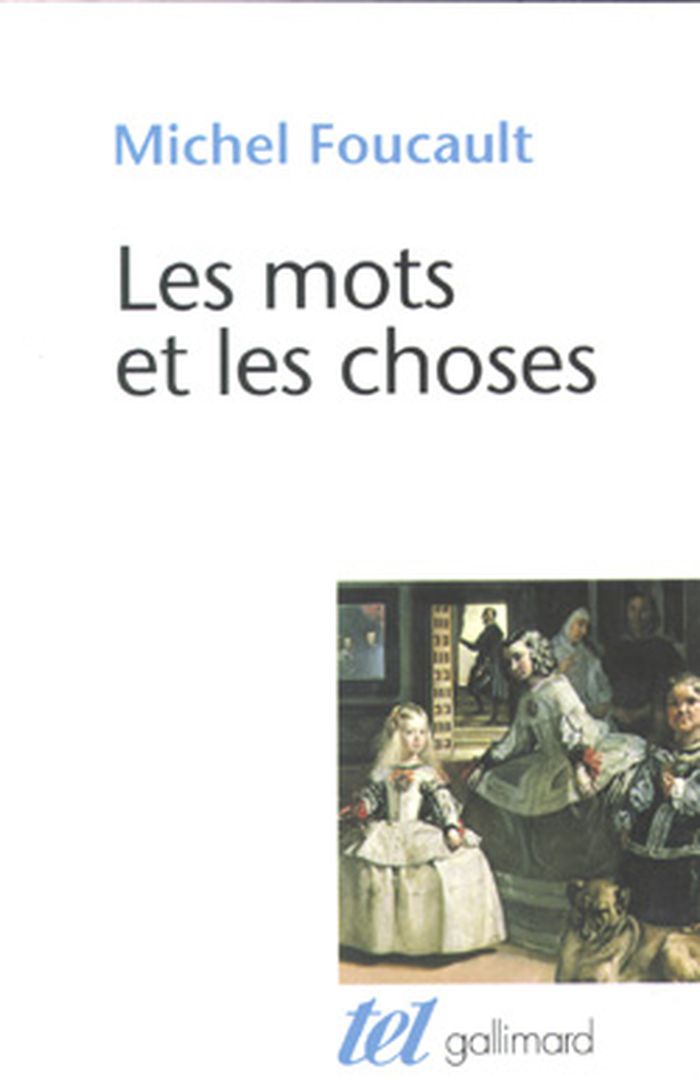
Les mots et les choses: une archéologie des sciences humaines
Actions:
Prix:
$28.95
(disponible en magasin)
Résumé:
Les Mots et les Choses valut à Michel Foucault une réputation internationale. Ensuite, ses autres ouvrages ne feront que développer une seule et même thèse : celle de la mort de l'homme et de l'humanisme classique qui concevait le sujet pensant comme une exception dans l'ordre de la nature. Avec l'avènement des sciences humaines, l'homme est devenu un objet d'étude au même titre que les phénomènes naturels. Cette objectivation de l'homme a en même temps rendu possible sa maîtrise. Ainsi, Michel Foucault, parce qu'il nous a délivrés de l'illusion de leur "naïveté positive", a été la mauvaise conscience des sciences de l'homme. Leur élaboration a en effet accompagné le triomphe de cette technique du pouvoir qui consiste à classifier les comportements humains pour mieux les manipuler. D'un abord plus difficile que la plupart des autres livres de Michel Foucault, Les Mots et les Choses constitue de toute évidence un des grands textes de la philosophie contemporaine dont un lecteur averti ne saurait faire l'économie. --Paul Klein
Les mots et les choses: une archéologie des sciences humaines
Actions:
Prix:
$28.95
(disponible en magasin)
Résumé:
Les Mots et les Choses valut à Michel Foucault une réputation internationale. Ensuite, ses autres ouvrages ne feront que développer une seule et même thèse : celle de la mort de l'homme et de l'humanisme classique qui concevait le sujet pensant comme une exception dans l'ordre de la nature. Avec l'avènement des sciences humaines, l'homme est devenu un objet d'étude au même titre que les phénomènes naturels. Cette objectivation de l'homme a en même temps rendu possible sa maîtrise. Ainsi, Michel Foucault, parce qu'il nous a délivrés de l'illusion de leur "naïveté positive", a été la mauvaise conscience des sciences de l'homme. Leur élaboration a en effet accompagné le triomphe de cette technique du pouvoir qui consiste à classifier les comportements humains pour mieux les manipuler. D'un abord plus difficile que la plupart des autres livres de Michel Foucault, Les Mots et les Choses constitue de toute évidence un des grands textes de la philosophie contemporaine dont un lecteur averti ne saurait faire l'économie. --Paul Klein
Classification:
livres
livres
Publication:
janvier 1900, Paris
janvier 1900, Paris
Sujet:
Théorie/ philosophie
Théorie/ philosophie
Classification:
livres
livres
Titre:
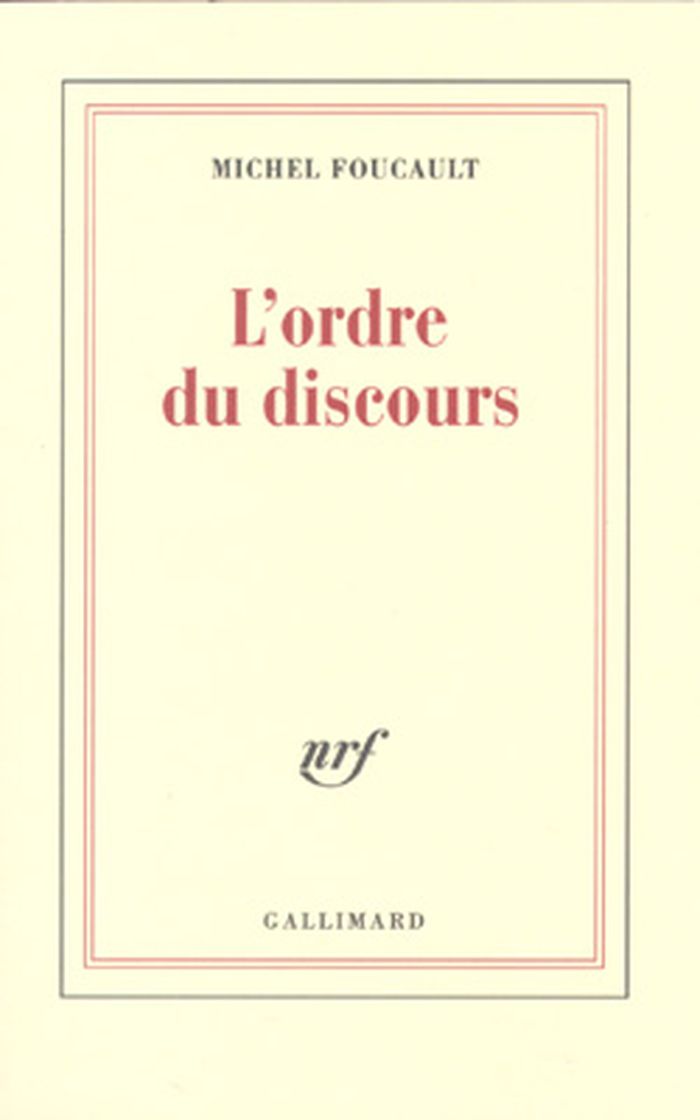
L'ordre du discours
L'ordre du discours
Actions:
Prix:
$18.95
(disponible sur commande)
Résumé:
L'ordre du discours est la leçon inaugurale de Michel Foucault au Collège de France, prononcée le 2 décembre 1970.
$18.95
(disponible sur commande)
Résumé:
L'ordre du discours est la leçon inaugurale de Michel Foucault au Collège de France, prononcée le 2 décembre 1970.
Titre:
L'ordre du discours
Actions:
Prix:
$18.95
(disponible sur commande)
Résumé:
L'ordre du discours est la leçon inaugurale de Michel Foucault au Collège de France, prononcée le 2 décembre 1970.
L'ordre du discours
Actions:
Prix:
$18.95
(disponible sur commande)
Résumé:
L'ordre du discours est la leçon inaugurale de Michel Foucault au Collège de France, prononcée le 2 décembre 1970.
Classification:
livres
livres
Publication:
janvier 1900, Paris
janvier 1900, Paris
Sujet:
Théorie/ philosophie
Théorie/ philosophie
Classification:
livres
livres
Actions:
Prix:
$21.95
(disponible sur commande)
Résumé:
This new edition of Soft Subversions expands, reorganizes, and develops the original 1996 publication, offering a carefully organized arrangement of essays, interviews, and short texts that present a fuller scope to Guattari's thinking from 1977 to 1985. This period encompasses what Guattari himself called the "Winter Years" of the early 1980s—the imprisonment of Italian(...)
$21.95
(disponible sur commande)
Résumé:
This new edition of Soft Subversions expands, reorganizes, and develops the original 1996 publication, offering a carefully organized arrangement of essays, interviews, and short texts that present a fuller scope to Guattari's thinking from 1977 to 1985. This period encompasses what Guattari himself called the "Winter Years" of the early 1980s—the imprisonment of Italian(...)
Titre:
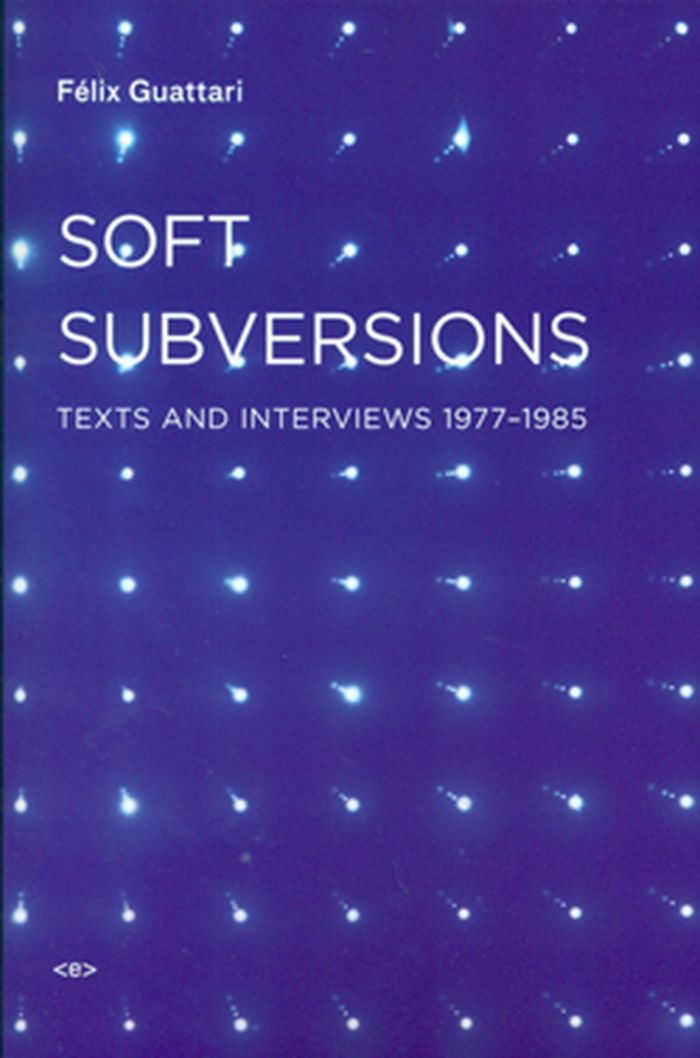
Soft subversions: texts and interviews 1977-1985
Actions:
Prix:
$21.95
(disponible sur commande)
Résumé:
This new edition of Soft Subversions expands, reorganizes, and develops the original 1996 publication, offering a carefully organized arrangement of essays, interviews, and short texts that present a fuller scope to Guattari's thinking from 1977 to 1985. This period encompasses what Guattari himself called the "Winter Years" of the early 1980s—the imprisonment of Italian radicals, the disillusion with the socialists in power, the backlash against post-'68 thinking, the spread of environmental catastrophe, and the establishment of a postmodernist ideology aimed at adaptation rather than change—a period with discernible echoes twenty years later.
Soft subversions: texts and interviews 1977-1985
Actions:
Prix:
$21.95
(disponible sur commande)
Résumé:
This new edition of Soft Subversions expands, reorganizes, and develops the original 1996 publication, offering a carefully organized arrangement of essays, interviews, and short texts that present a fuller scope to Guattari's thinking from 1977 to 1985. This period encompasses what Guattari himself called the "Winter Years" of the early 1980s—the imprisonment of Italian radicals, the disillusion with the socialists in power, the backlash against post-'68 thinking, the spread of environmental catastrophe, and the establishment of a postmodernist ideology aimed at adaptation rather than change—a period with discernible echoes twenty years later.
Classification:
livres
livres
Publication:
avril 2009
avril 2009
Sujet:
Théorie/ philosophie
Théorie/ philosophie
Classification:
livres
livres

Titre:
Terror from the air
Terror from the air
Actions:
(disponible sur commande)
Résumé:
According to Peter Sloterdijk, the twentieth century started on a specific day and place: April 22, 1915, at Ypres in Northern France. That day, the German army used a chlorine gas meant to exterminate indiscriminately. Until then, war, as described by Clausewitz and practiced by Napoleon, involved attacking the adversary's vital function first. Using poison gas signaled(...)
Titre:
Terror from the air
Actions:
(disponible sur commande)
Résumé:
According to Peter Sloterdijk, the twentieth century started on a specific day and place: April 22, 1915, at Ypres in Northern France. That day, the German army used a chlorine gas meant to exterminate indiscriminately. Until then, war, as described by Clausewitz and practiced by Napoleon, involved attacking the adversary's vital function first. Using poison gas signaled the passage from classical war to terrorism. This terror from the air inaugurated an era in which the main idea was no longer to target the enemy's body, but their environment. From then on, what would be attacked in wartime as well as in peacetime would be the very conditions necessary for life.
Terror from the air
Actions:
(disponible sur commande)
Résumé:
According to Peter Sloterdijk, the twentieth century started on a specific day and place: April 22, 1915, at Ypres in Northern France. That day, the German army used a chlorine gas meant to exterminate indiscriminately. Until then, war, as described by Clausewitz and practiced by Napoleon, involved attacking the adversary's vital function first. Using poison gas signaled the passage from classical war to terrorism. This terror from the air inaugurated an era in which the main idea was no longer to target the enemy's body, but their environment. From then on, what would be attacked in wartime as well as in peacetime would be the very conditions necessary for life.
Classification:
livres
livres
Publication:
mars 2009
mars 2009
Sujet:
Théorie/ philosophie
Théorie/ philosophie
Classification:
livres
livres
Actions:
Prix:
$34.50
(disponible sur commande)
Résumé:
In this corner, philosopher Slavoj Žižek, who represents the critical-materialist stance against religion's illusions; in the other corner, "radical orthodox" theologian John Milbank, an influential and provocative thinker who argues that theology is the only foundation upon which knowledge, politics, and ethics can stand. In this book, the authors go head to head for(...)
$34.50
(disponible sur commande)
Résumé:
In this corner, philosopher Slavoj Žižek, who represents the critical-materialist stance against religion's illusions; in the other corner, "radical orthodox" theologian John Milbank, an influential and provocative thinker who argues that theology is the only foundation upon which knowledge, politics, and ethics can stand. In this book, the authors go head to head for(...)
Titre:
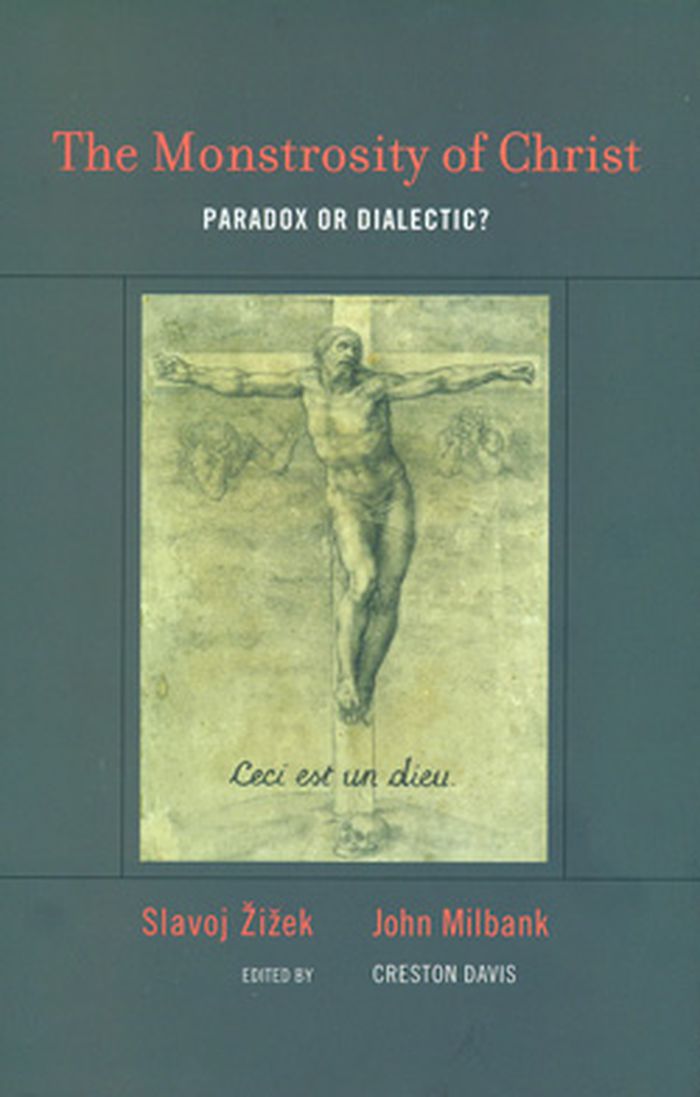
The monstrosity of Christ: paradox or dialectic?
Actions:
Prix:
$34.50
(disponible sur commande)
Résumé:
In this corner, philosopher Slavoj Žižek, who represents the critical-materialist stance against religion's illusions; in the other corner, "radical orthodox" theologian John Milbank, an influential and provocative thinker who argues that theology is the only foundation upon which knowledge, politics, and ethics can stand. In this book, the authors go head to head for three rounds, employing an impressive arsenal of moves to advance their positions and press their respective advantages. By the closing bell, they have proven themselves worthy adversaries--and have also shown that faith and reason are not simply and intractably opposed.
The monstrosity of Christ: paradox or dialectic?
Actions:
Prix:
$34.50
(disponible sur commande)
Résumé:
In this corner, philosopher Slavoj Žižek, who represents the critical-materialist stance against religion's illusions; in the other corner, "radical orthodox" theologian John Milbank, an influential and provocative thinker who argues that theology is the only foundation upon which knowledge, politics, and ethics can stand. In this book, the authors go head to head for three rounds, employing an impressive arsenal of moves to advance their positions and press their respective advantages. By the closing bell, they have proven themselves worthy adversaries--and have also shown that faith and reason are not simply and intractably opposed.
Classification:
livres
livres
Publication:
avril 2009, Cambridge
avril 2009, Cambridge
Sujet:
Théorie/ philosophie
Théorie/ philosophie


