


884 Résultats
Classification:
livres
livres
Actions:
Prix:
$36.95
(disponible en magasin)
Résumé:
This new book by Luc Boltanski and Arnaud Esquerre is a highly original analysis of the two key processes that shape the contemporary public sphere. On the one hand, there are the processes of news provision which select out a range of facts and events and bring them to the attention of a large number of people who have not, for the most part, experienced them directly.(...)
$36.95
(disponible en magasin)
Résumé:
This new book by Luc Boltanski and Arnaud Esquerre is a highly original analysis of the two key processes that shape the contemporary public sphere. On the one hand, there are the processes of news provision which select out a range of facts and events and bring them to the attention of a large number of people who have not, for the most part, experienced them directly.(...)
Titre:
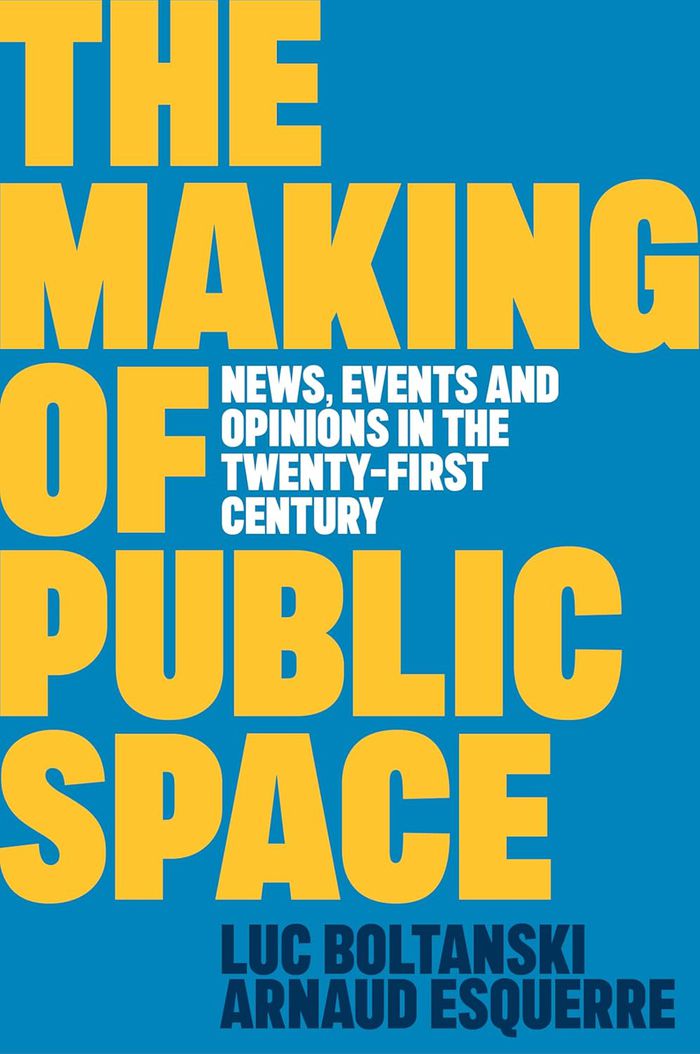
The making of public space: News, events, and opinions in the twenty-first century
Actions:
Prix:
$36.95
(disponible en magasin)
Résumé:
This new book by Luc Boltanski and Arnaud Esquerre is a highly original analysis of the two key processes that shape the contemporary public sphere. On the one hand, there are the processes of news provision which select out a range of facts and events and bring them to the attention of a large number of people who have not, for the most part, experienced them directly. On the other hand, there are processes of politicization which problematize the facts made known by news provision and treat them as issues that concern citizens and the state. Politicization is typically characterized by a diversity of interpretations which, in turn, gives rise to a proliferation of commentary, discussion, polemic and division.
The making of public space: News, events, and opinions in the twenty-first century
Actions:
Prix:
$36.95
(disponible en magasin)
Résumé:
This new book by Luc Boltanski and Arnaud Esquerre is a highly original analysis of the two key processes that shape the contemporary public sphere. On the one hand, there are the processes of news provision which select out a range of facts and events and bring them to the attention of a large number of people who have not, for the most part, experienced them directly. On the other hand, there are processes of politicization which problematize the facts made known by news provision and treat them as issues that concern citizens and the state. Politicization is typically characterized by a diversity of interpretations which, in turn, gives rise to a proliferation of commentary, discussion, polemic and division.
Classification:
livres
livres
Publication:
février 2025
février 2025
Sujet:
Théorie/ philosophie
Théorie/ philosophie
Classification:
livres
livres

Titre:
Quantum dreaming
Quantum dreaming
Actions:
Prix:
$15.95
(disponible sur commande)
Résumé:
Exploring the reality of the dream and the dream of reality over many decades has led IONE to appreciate the quantum nature of dreams. Weaving science and dream traditions from around the world together with her own memories and the dreams of her friends and community members, ''Quantum Dreaming'' shows that as we start practising awareness, our consciousness also(...)
$15.95
(disponible sur commande)
Résumé:
Exploring the reality of the dream and the dream of reality over many decades has led IONE to appreciate the quantum nature of dreams. Weaving science and dream traditions from around the world together with her own memories and the dreams of her friends and community members, ''Quantum Dreaming'' shows that as we start practising awareness, our consciousness also(...)
Titre:
Quantum dreaming
Actions:
Prix:
$15.95
(disponible sur commande)
Résumé:
Exploring the reality of the dream and the dream of reality over many decades has led IONE to appreciate the quantum nature of dreams. Weaving science and dream traditions from around the world together with her own memories and the dreams of her friends and community members, ''Quantum Dreaming'' shows that as we start practising awareness, our consciousness also deepens. IONE and Pauline Oliveros’s shared vision of a harmonious, self-sustaining network of artists and dreamers led to the founding of the ''Deep Listening Institute''. ''Quantum Dreaming'' similarly seeks a radical shift in our collective consciousness, across all states of dreaming and waking.
Quantum dreaming
Actions:
Prix:
$15.95
(disponible sur commande)
Résumé:
Exploring the reality of the dream and the dream of reality over many decades has led IONE to appreciate the quantum nature of dreams. Weaving science and dream traditions from around the world together with her own memories and the dreams of her friends and community members, ''Quantum Dreaming'' shows that as we start practising awareness, our consciousness also deepens. IONE and Pauline Oliveros’s shared vision of a harmonious, self-sustaining network of artists and dreamers led to the founding of the ''Deep Listening Institute''. ''Quantum Dreaming'' similarly seeks a radical shift in our collective consciousness, across all states of dreaming and waking.
Classification:
livres
livres
Publication:
septembre 2025
septembre 2025
Sujet:
Théorie/ philosophie
Théorie/ philosophie
Classification:
livres
livres

Actions:
Prix:
$54.95
(disponible en magasin)
Résumé:
Ce sont les formes avec lesquelles nous redessinons notre visage : chaque jour, peau contre peau sur notre corps, elles esquissent une vie dont elles incarnent un secret qui ne peut qu’être vécu. Les formes de la mode ne sont pas seulement des outils de connaissance du monde et de nous-mêmes. Ce sont aussi des amulettes qui nous servent à inventer et à expérimenter de(...)
$54.95
(disponible en magasin)
Résumé:
Ce sont les formes avec lesquelles nous redessinons notre visage : chaque jour, peau contre peau sur notre corps, elles esquissent une vie dont elles incarnent un secret qui ne peut qu’être vécu. Les formes de la mode ne sont pas seulement des outils de connaissance du monde et de nous-mêmes. Ce sont aussi des amulettes qui nous servent à inventer et à expérimenter de(...)
Titre:
La vie des formes: philosophie du réenchantement
Actions:
Prix:
$54.95
(disponible en magasin)
Résumé:
Ce sont les formes avec lesquelles nous redessinons notre visage : chaque jour, peau contre peau sur notre corps, elles esquissent une vie dont elles incarnent un secret qui ne peut qu’être vécu. Les formes de la mode ne sont pas seulement des outils de connaissance du monde et de nous-mêmes. Ce sont aussi des amulettes qui nous servent à inventer et à expérimenter de nouvelles libertés. Liberté de ressusciter des possibles. Liberté de construire des significations inédites. Liberté de choisir ce que nous voulons être.
La vie des formes: philosophie du réenchantement
Actions:
Prix:
$54.95
(disponible en magasin)
Résumé:
Ce sont les formes avec lesquelles nous redessinons notre visage : chaque jour, peau contre peau sur notre corps, elles esquissent une vie dont elles incarnent un secret qui ne peut qu’être vécu. Les formes de la mode ne sont pas seulement des outils de connaissance du monde et de nous-mêmes. Ce sont aussi des amulettes qui nous servent à inventer et à expérimenter de nouvelles libertés. Liberté de ressusciter des possibles. Liberté de construire des significations inédites. Liberté de choisir ce que nous voulons être.
Classification:
livres
livres
Publication:
juin 2025
juin 2025
Sujet:
Théorie/ philosophie
Théorie/ philosophie
Classification:
livres
livres

Titre:
On Cosmogonic Eros
On Cosmogonic Eros
Actions:
Prix:
$19.00
(disponible en magasin)
Résumé:
Ludwig Klages' 1922 book, ''On Cosmogonic Eros'' ( ''Vom kosmogonischen Eros''), delves into the realms of mythology, the esotericism of ancient mystery cults, and the science of consciousness to construct a profound metaphysics of life. At its core, Klages presents Eros as an "Eros of distance," from which springs forth the essence of ecstasy and de-selfing. This(...)
$19.00
(disponible en magasin)
Résumé:
Ludwig Klages' 1922 book, ''On Cosmogonic Eros'' ( ''Vom kosmogonischen Eros''), delves into the realms of mythology, the esotericism of ancient mystery cults, and the science of consciousness to construct a profound metaphysics of life. At its core, Klages presents Eros as an "Eros of distance," from which springs forth the essence of ecstasy and de-selfing. This(...)
Titre:
On Cosmogonic Eros
Actions:
Prix:
$19.00
(disponible en magasin)
Résumé:
Ludwig Klages' 1922 book, ''On Cosmogonic Eros'' ( ''Vom kosmogonischen Eros''), delves into the realms of mythology, the esotericism of ancient mystery cults, and the science of consciousness to construct a profound metaphysics of life. At its core, Klages presents Eros as an "Eros of distance," from which springs forth the essence of ecstasy and de-selfing. This intriguing concept suggests that experiencing separation and distance can lead to extraordinary states of transcendent bliss and a dissolution of the self. Furthermore, Klages argues that this ecstatic experience serves as the foundation for the emergence of symbolism, the cult of the dead, ancestor worship, as well as the creation of original poetry and art. Klages' work offers a concise and engaging exploration of these key concepts, intertwining mythology, esoteric knowledge, and the study of consciousness to illuminate the enigmatic nature of life and the transformative power of Eros.
On Cosmogonic Eros
Actions:
Prix:
$19.00
(disponible en magasin)
Résumé:
Ludwig Klages' 1922 book, ''On Cosmogonic Eros'' ( ''Vom kosmogonischen Eros''), delves into the realms of mythology, the esotericism of ancient mystery cults, and the science of consciousness to construct a profound metaphysics of life. At its core, Klages presents Eros as an "Eros of distance," from which springs forth the essence of ecstasy and de-selfing. This intriguing concept suggests that experiencing separation and distance can lead to extraordinary states of transcendent bliss and a dissolution of the self. Furthermore, Klages argues that this ecstatic experience serves as the foundation for the emergence of symbolism, the cult of the dead, ancestor worship, as well as the creation of original poetry and art. Klages' work offers a concise and engaging exploration of these key concepts, intertwining mythology, esoteric knowledge, and the study of consciousness to illuminate the enigmatic nature of life and the transformative power of Eros.
Classification:
livres
livres
Publication:
juin 2025
juin 2025
Sujet:
Théorie/ philosophie
Théorie/ philosophie
Classification:
livres
livres

Actions:
Prix:
$13.99
(disponible en magasin)
Résumé:
"Three economies of transcendence" offers a sharp critique of how transcendence underpins the symbolic, economic, and environmental crises of the modern world. Andrea Righi identifies three distinct “economies of transcendence” that sustain neoliberal systems of power. Termed the economy of rank, the economy of infinite valorization, and the phallic economy of time, these(...)
$13.99
(disponible en magasin)
Résumé:
"Three economies of transcendence" offers a sharp critique of how transcendence underpins the symbolic, economic, and environmental crises of the modern world. Andrea Righi identifies three distinct “economies of transcendence” that sustain neoliberal systems of power. Termed the economy of rank, the economy of infinite valorization, and the phallic economy of time, these(...)
Titre:
Three economies of transcendence
Actions:
Prix:
$13.99
(disponible en magasin)
Résumé:
"Three economies of transcendence" offers a sharp critique of how transcendence underpins the symbolic, economic, and environmental crises of the modern world. Andrea Righi identifies three distinct “economies of transcendence” that sustain neoliberal systems of power. Termed the economy of rank, the economy of infinite valorization, and the phallic economy of time, these economies perpetuate hierarchies, sacrifices, and ecological destruction. Through this framework, Righi not only diagnoses the crisis but also proposes an immanent model of economy that fosters solidarity and is expressly pro-social and ecologically responsible.
Three economies of transcendence
Actions:
Prix:
$13.99
(disponible en magasin)
Résumé:
"Three economies of transcendence" offers a sharp critique of how transcendence underpins the symbolic, economic, and environmental crises of the modern world. Andrea Righi identifies three distinct “economies of transcendence” that sustain neoliberal systems of power. Termed the economy of rank, the economy of infinite valorization, and the phallic economy of time, these economies perpetuate hierarchies, sacrifices, and ecological destruction. Through this framework, Righi not only diagnoses the crisis but also proposes an immanent model of economy that fosters solidarity and is expressly pro-social and ecologically responsible.
Classification:
livres
livres
Publication:
août 2025
août 2025
Sujet:
Théorie/ philosophie
Théorie/ philosophie
Classification:
livres
livres

Actions:
Prix:
$22.99
(disponible sur commande)
Résumé:
What is it to be Black in America? It is to be constantly given unsolicited advice on how to run your life by people of all stripes, cultures, races, and opinions, so that the message is, by its very design, inconsistent with itself. However, there is one common feature that unites them all, besides their arrogant insistence to respond to what no one has asked of them:(...)
$22.99
(disponible sur commande)
Résumé:
What is it to be Black in America? It is to be constantly given unsolicited advice on how to run your life by people of all stripes, cultures, races, and opinions, so that the message is, by its very design, inconsistent with itself. However, there is one common feature that unites them all, besides their arrogant insistence to respond to what no one has asked of them:(...)
Titre:
The revolt eclipses whatever the world has to offer
Actions:
Prix:
$22.99
(disponible sur commande)
Résumé:
What is it to be Black in America? It is to be constantly given unsolicited advice on how to run your life by people of all stripes, cultures, races, and opinions, so that the message is, by its very design, inconsistent with itself. However, there is one common feature that unites them all, besides their arrogant insistence to respond to what no one has asked of them: you can be sure that not one of these philistines has read—let alone understood—a single line of Plato. It is with this guiding insight that the author seeks to think his own material existence and resolves that philosophy must implicate itself in the utter demise of the alienated and oppressive wasteland in which he has been thrown.
The revolt eclipses whatever the world has to offer
Actions:
Prix:
$22.99
(disponible sur commande)
Résumé:
What is it to be Black in America? It is to be constantly given unsolicited advice on how to run your life by people of all stripes, cultures, races, and opinions, so that the message is, by its very design, inconsistent with itself. However, there is one common feature that unites them all, besides their arrogant insistence to respond to what no one has asked of them: you can be sure that not one of these philistines has read—let alone understood—a single line of Plato. It is with this guiding insight that the author seeks to think his own material existence and resolves that philosophy must implicate itself in the utter demise of the alienated and oppressive wasteland in which he has been thrown.
Classification:
livres
livres
Publication:
décembre 2025
décembre 2025
Sujet:
Théorie/ philosophie
Théorie/ philosophie
Classification:
livres
livres
Prix:
$64.95
(disponible en magasin)
Résumé:
Dans son étude magistrale de 1948, Sigfried Giedion propose d'ausculter la vie moderne à partir de ses objets les plus insignifiants. Les protagonistes de cette « histoire anonyme » sont des machines à pain, des moissonneuses-batteuses, des tapis roulants et des fauteuils de barbier. En s'intéressant ainsi moins à ses créateurs illustres qu'aux processus de(...)
$64.95
(disponible en magasin)
Résumé:
Dans son étude magistrale de 1948, Sigfried Giedion propose d'ausculter la vie moderne à partir de ses objets les plus insignifiants. Les protagonistes de cette « histoire anonyme » sont des machines à pain, des moissonneuses-batteuses, des tapis roulants et des fauteuils de barbier. En s'intéressant ainsi moins à ses créateurs illustres qu'aux processus de(...)
Titre:
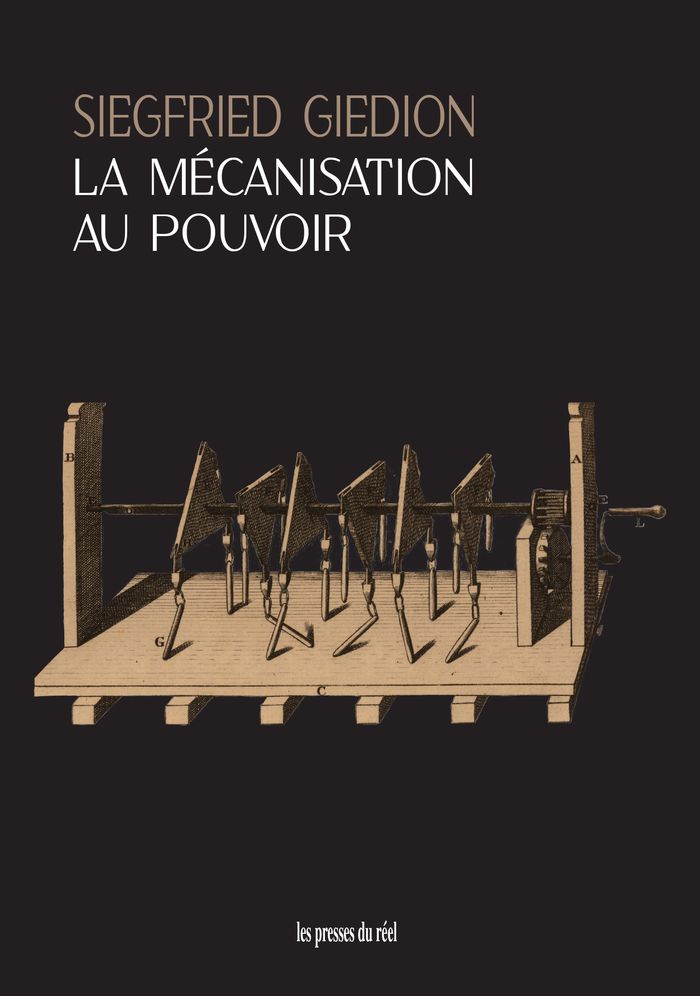
La mécanisation au pouvoir : Une contribution à l'histoire anonyme
Actions:
Prix:
$64.95
(disponible en magasin)
Résumé:
Dans son étude magistrale de 1948, Sigfried Giedion propose d'ausculter la vie moderne à partir de ses objets les plus insignifiants. Les protagonistes de cette « histoire anonyme » sont des machines à pain, des moissonneuses-batteuses, des tapis roulants et des fauteuils de barbier. En s'intéressant ainsi moins à ses créateurs illustres qu'aux processus de standardisation et de mécanisation, Giedion prouve que la modernité est autant une affaire de singularité que de numéro de série. Référence incontournable pour l'histoire des techniques, la sociologie du quotidien, la théorie du design et l'étude des médias, « La mécanisation au pouvoir » est de ces livres dont on n'a toujours pas assimilé toutes les fulgurances. Epuisée depuis longtemps, cette édition nouvelle restitue enfin toute l'importance du montage visuel qui fascina tant de lecteurs de Giedion, de Walter Benjamin à Marshall McLuhan. Avec une préface d'Emmanuel Alloa et une postface d'Emanuele Quinz.
La mécanisation au pouvoir : Une contribution à l'histoire anonyme
Actions:
Prix:
$64.95
(disponible en magasin)
Résumé:
Dans son étude magistrale de 1948, Sigfried Giedion propose d'ausculter la vie moderne à partir de ses objets les plus insignifiants. Les protagonistes de cette « histoire anonyme » sont des machines à pain, des moissonneuses-batteuses, des tapis roulants et des fauteuils de barbier. En s'intéressant ainsi moins à ses créateurs illustres qu'aux processus de standardisation et de mécanisation, Giedion prouve que la modernité est autant une affaire de singularité que de numéro de série. Référence incontournable pour l'histoire des techniques, la sociologie du quotidien, la théorie du design et l'étude des médias, « La mécanisation au pouvoir » est de ces livres dont on n'a toujours pas assimilé toutes les fulgurances. Epuisée depuis longtemps, cette édition nouvelle restitue enfin toute l'importance du montage visuel qui fascina tant de lecteurs de Giedion, de Walter Benjamin à Marshall McLuhan. Avec une préface d'Emmanuel Alloa et une postface d'Emanuele Quinz.
Classification:
livres
livres
Publication:
septembre 2025
septembre 2025
Sujet:
Théorie/ philosophie
Théorie/ philosophie
Classification:
livres
livres

Actions:
Prix:
$21.99
(disponible en magasin)
Résumé:
At the start of the twenty-first century, globalization forced a rethinking of some of the categories—such as “the people”—that had been traditionally associated with the now-eroding state. Virno argues that the category of “multitude,” elaborated by Spinoza and for the most part left fallow since the seventeenth century, is a far better tool to analyze contemporary(...)
$21.99
(disponible en magasin)
Résumé:
At the start of the twenty-first century, globalization forced a rethinking of some of the categories—such as “the people”—that had been traditionally associated with the now-eroding state. Virno argues that the category of “multitude,” elaborated by Spinoza and for the most part left fallow since the seventeenth century, is a far better tool to analyze contemporary(...)
Titre:
A grammar of the multitude: For an analysis of contemporary forms of life
Actions:
Prix:
$21.99
(disponible en magasin)
Résumé:
At the start of the twenty-first century, globalization forced a rethinking of some of the categories—such as “the people”—that had been traditionally associated with the now-eroding state. Virno argues that the category of “multitude,” elaborated by Spinoza and for the most part left fallow since the seventeenth century, is a far better tool to analyze contemporary issues than the Hobbesian concept of “people” favored by classical political philosophy. Hobbes, who detested the notion of multitude, defined it as shunning political unity, resisting authority, and never entering into lasting agreements. “When they rebel against the state,” Hobbes wrote, “the citizens are the multitude against the people.” But the multitude isn't just a negative notion; it is a rich concept that allows us to examine anew plural experiences and forms of nonrepresentative democracy. Drawing from philosophy of language, political economics, and ethics, Virno shows that being foreign, “not-feeling-at-home-anywhere,” is a condition that forces the multitude to place its trust in the intellect. In conclusion, Virno suggests that the metamorphosis of the social systems in the West during the 1980s and 1990s precipitated a paradoxical “Communism of the Capital.”
A grammar of the multitude: For an analysis of contemporary forms of life
Actions:
Prix:
$21.99
(disponible en magasin)
Résumé:
At the start of the twenty-first century, globalization forced a rethinking of some of the categories—such as “the people”—that had been traditionally associated with the now-eroding state. Virno argues that the category of “multitude,” elaborated by Spinoza and for the most part left fallow since the seventeenth century, is a far better tool to analyze contemporary issues than the Hobbesian concept of “people” favored by classical political philosophy. Hobbes, who detested the notion of multitude, defined it as shunning political unity, resisting authority, and never entering into lasting agreements. “When they rebel against the state,” Hobbes wrote, “the citizens are the multitude against the people.” But the multitude isn't just a negative notion; it is a rich concept that allows us to examine anew plural experiences and forms of nonrepresentative democracy. Drawing from philosophy of language, political economics, and ethics, Virno shows that being foreign, “not-feeling-at-home-anywhere,” is a condition that forces the multitude to place its trust in the intellect. In conclusion, Virno suggests that the metamorphosis of the social systems in the West during the 1980s and 1990s precipitated a paradoxical “Communism of the Capital.”
Classification:
livres
livres
Publication:
septembre 2025
septembre 2025
Sujet:
Théorie/ philosophie
Théorie/ philosophie
Classification:
livres
livres
Actions:
Prix:
$18.00
(disponible en magasin)
Résumé:
In ''Passivity'', Ukrainian curator Alexandra Tryanova and Belgian sociologist Pascal Gielen (born 1970) engage in a dialogue about Europe’s responses to the war in Ukraine and how it has shaken up value systems around pacifism and economic motives.
$18.00
(disponible en magasin)
Résumé:
In ''Passivity'', Ukrainian curator Alexandra Tryanova and Belgian sociologist Pascal Gielen (born 1970) engage in a dialogue about Europe’s responses to the war in Ukraine and how it has shaken up value systems around pacifism and economic motives.
Titre:
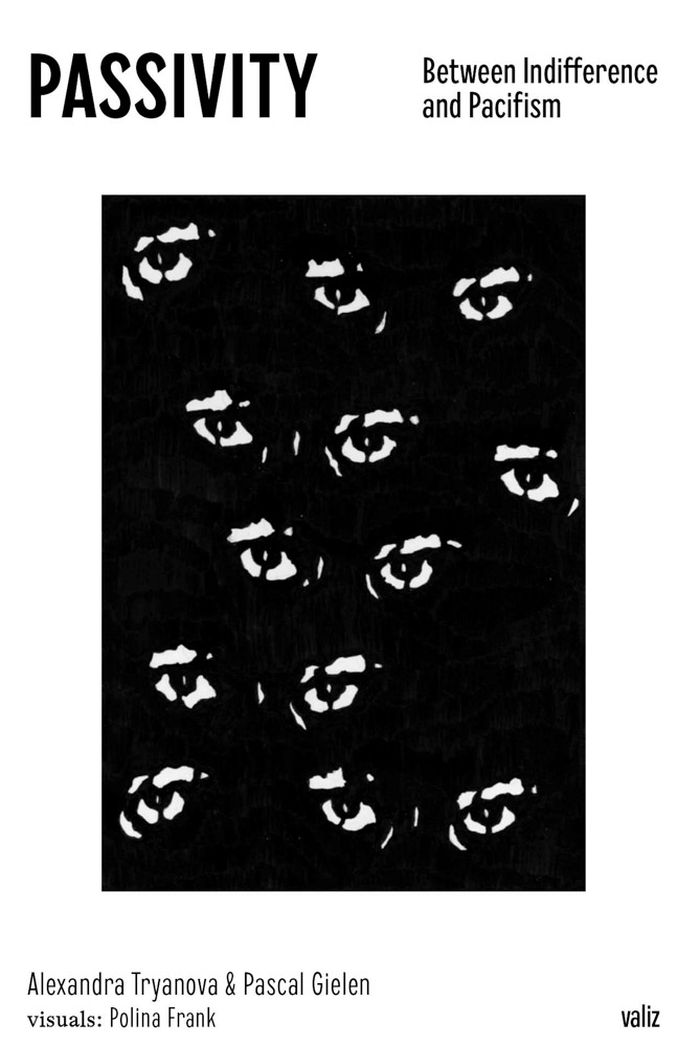
Passivity : Between indifference and pacifism
Actions:
Prix:
$18.00
(disponible en magasin)
Résumé:
In ''Passivity'', Ukrainian curator Alexandra Tryanova and Belgian sociologist Pascal Gielen (born 1970) engage in a dialogue about Europe’s responses to the war in Ukraine and how it has shaken up value systems around pacifism and economic motives.
Passivity : Between indifference and pacifism
Actions:
Prix:
$18.00
(disponible en magasin)
Résumé:
In ''Passivity'', Ukrainian curator Alexandra Tryanova and Belgian sociologist Pascal Gielen (born 1970) engage in a dialogue about Europe’s responses to the war in Ukraine and how it has shaken up value systems around pacifism and economic motives.
Classification:
livres
livres
Publication:
mars 2023
mars 2023
Sujet:
Théorie/ philosophie
Théorie/ philosophie
Classification:
livres
livres
Actions:
Prix:
$26.95
(disponible sur commande)
Résumé:
Le paradoxe est frappant : alors que le pouvoir d’achat culmine en tête des préoccupations de nos contemporains, nous consommons beaucoup trop au regard de nos besoins réels et des limites planétaires. Samuel Sauvage décrypte les rouages de cette addiction généralisée et de son corollaire, la production de masse. Une spirale implacable qu’il analyse à travers les(...)
$26.95
(disponible sur commande)
Résumé:
Le paradoxe est frappant : alors que le pouvoir d’achat culmine en tête des préoccupations de nos contemporains, nous consommons beaucoup trop au regard de nos besoins réels et des limites planétaires. Samuel Sauvage décrypte les rouages de cette addiction généralisée et de son corollaire, la production de masse. Une spirale implacable qu’il analyse à travers les(...)
Titre:
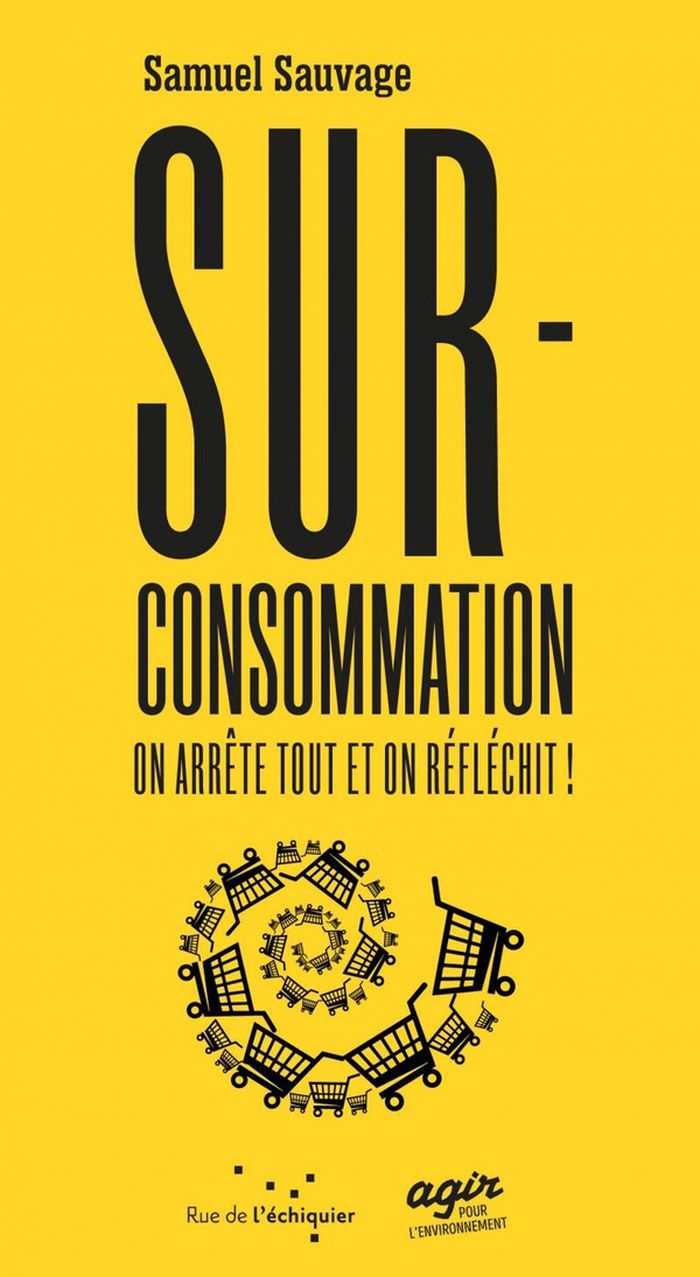
Surconsommation : On arrête tout et on réfléchit !
Actions:
Prix:
$26.95
(disponible sur commande)
Résumé:
Le paradoxe est frappant : alors que le pouvoir d’achat culmine en tête des préoccupations de nos contemporains, nous consommons beaucoup trop au regard de nos besoins réels et des limites planétaires. Samuel Sauvage décrypte les rouages de cette addiction généralisée et de son corollaire, la production de masse. Une spirale implacable qu’il analyse à travers les mécanismes du « Bémol » : Besoins artificiels, Extension des marchés, Marchandisation de la société, Obsolescence programmée et "Low cost." Pour sortir de cette spirale, la voie de l’action individuelle – la fameuse « consommation responsable » – doit être repensée et surtout intégrée à une démarche collective et systémique pour mettre un terme à la surconsommation. Face au Bémol, l’auteur appelle à un « Dièse » résolument politique : Désarmer la publicité, Impulser un nouvel imaginaire, Encadrer la production, Soutenir les alternatives, Embarquer les acteurs.
Surconsommation : On arrête tout et on réfléchit !
Actions:
Prix:
$26.95
(disponible sur commande)
Résumé:
Le paradoxe est frappant : alors que le pouvoir d’achat culmine en tête des préoccupations de nos contemporains, nous consommons beaucoup trop au regard de nos besoins réels et des limites planétaires. Samuel Sauvage décrypte les rouages de cette addiction généralisée et de son corollaire, la production de masse. Une spirale implacable qu’il analyse à travers les mécanismes du « Bémol » : Besoins artificiels, Extension des marchés, Marchandisation de la société, Obsolescence programmée et "Low cost." Pour sortir de cette spirale, la voie de l’action individuelle – la fameuse « consommation responsable » – doit être repensée et surtout intégrée à une démarche collective et systémique pour mettre un terme à la surconsommation. Face au Bémol, l’auteur appelle à un « Dièse » résolument politique : Désarmer la publicité, Impulser un nouvel imaginaire, Encadrer la production, Soutenir les alternatives, Embarquer les acteurs.
Classification:
livres
livres
Publication:
octobre 2025
octobre 2025
Sujet:
Théorie/ philosophie
Théorie/ philosophie


