


884 Résultats
Classification:
livres
livres
Actions:
Prix:
$54.95
(disponible sur commande)
Résumé:
Questions d'échelle « Sans aucun doute les philosophes ont raison de nous dire que rien n'est grand ni petit sauf par comparaison. » Cette phrase, que Swift fait prononcer à Gulliver, est sans conteste le noyau invisible autour duquel est construit cet ouvrage. Cette anthologie présente un corpus de textes variés qui examine les aspects pluriels des questions d'échelle.(...)
$54.95
(disponible sur commande)
Résumé:
Questions d'échelle « Sans aucun doute les philosophes ont raison de nous dire que rien n'est grand ni petit sauf par comparaison. » Cette phrase, que Swift fait prononcer à Gulliver, est sans conteste le noyau invisible autour duquel est construit cet ouvrage. Cette anthologie présente un corpus de textes variés qui examine les aspects pluriels des questions d'échelle.(...)
Titre:
Questions d'échelle sans commune mesure
Actions:
Prix:
$54.95
(disponible sur commande)
Résumé:
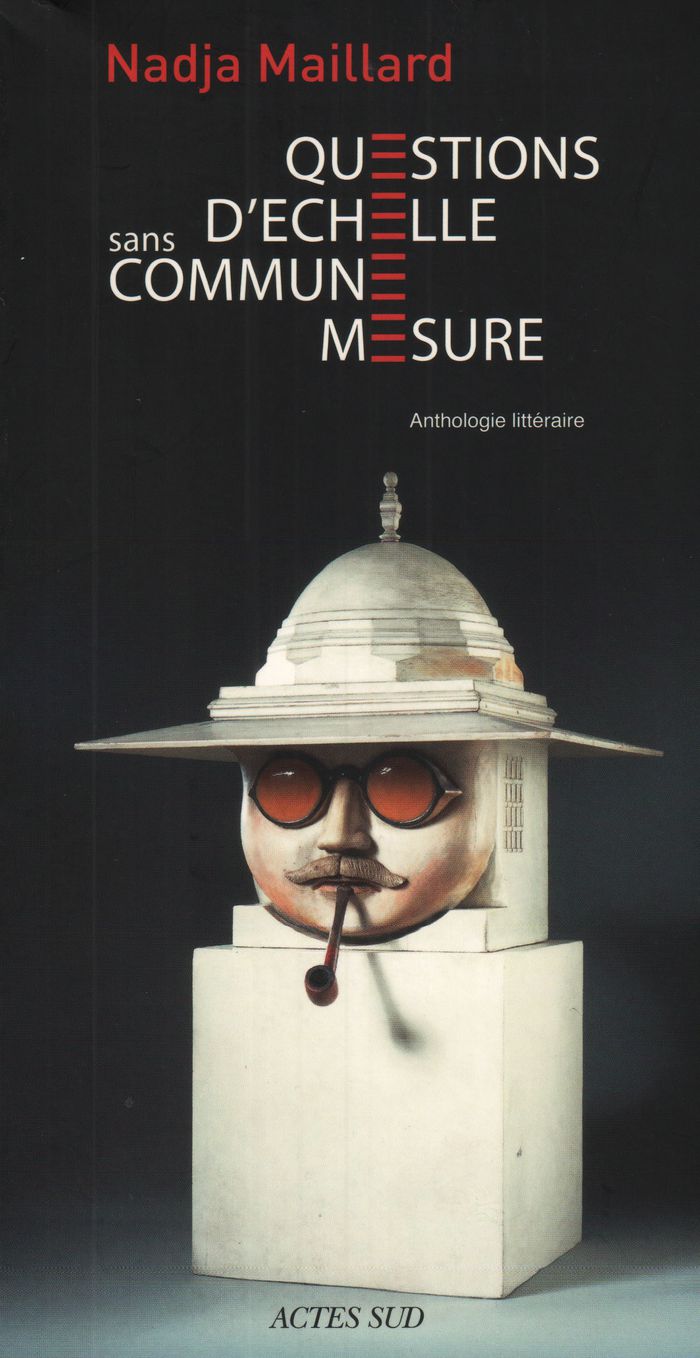
Questions d'échelle « Sans aucun doute les philosophes ont raison de nous dire que rien n'est grand ni petit sauf par comparaison. » Cette phrase, que Swift fait prononcer à Gulliver, est sans conteste le noyau invisible autour duquel est construit cet ouvrage. Cette anthologie présente un corpus de textes variés qui examine les aspects pluriels des questions d'échelle. Plus de cent auteurs (philosophes, écrivains, plasticiens, metteurs en scène, anthropologues, photographes, architectes, maquettistes, etc.) sont ainsi convoqués pour s'exprimer sur la réduction, comme objet et comme symbole, sur la miniature comme jouet ou comme dispositif cognitif, sur le modèle réduit et la maquette, sur la relativité des ordres de grandeur.S'il est bien un dénominateur commun à tous ces textes, quel que soit leur registre, leur ambition, leur provenance, c'est le fait qu'en traitant des questions d'échelle, leurs auteurs interrogent immanquablement la condition humaine, prise entre l'infiniment grand et l'infiniment petit, pour paraphraser Pascal ou Voltaire, et questionnent ainsi notre manière d'être au monde et de l'habiter.
Questions d'échelle sans commune mesure
Actions:
Prix:
$54.95
(disponible sur commande)
Résumé:
Questions d'échelle « Sans aucun doute les philosophes ont raison de nous dire que rien n'est grand ni petit sauf par comparaison. » Cette phrase, que Swift fait prononcer à Gulliver, est sans conteste le noyau invisible autour duquel est construit cet ouvrage. Cette anthologie présente un corpus de textes variés qui examine les aspects pluriels des questions d'échelle. Plus de cent auteurs (philosophes, écrivains, plasticiens, metteurs en scène, anthropologues, photographes, architectes, maquettistes, etc.) sont ainsi convoqués pour s'exprimer sur la réduction, comme objet et comme symbole, sur la miniature comme jouet ou comme dispositif cognitif, sur le modèle réduit et la maquette, sur la relativité des ordres de grandeur.S'il est bien un dénominateur commun à tous ces textes, quel que soit leur registre, leur ambition, leur provenance, c'est le fait qu'en traitant des questions d'échelle, leurs auteurs interrogent immanquablement la condition humaine, prise entre l'infiniment grand et l'infiniment petit, pour paraphraser Pascal ou Voltaire, et questionnent ainsi notre manière d'être au monde et de l'habiter.
Classification:
livres
livres
Publication:
février 2018
février 2018
Sujet:
Théorie/ philosophie
Théorie/ philosophie
Classification:
livres
livres
Actions:
Prix:
$17.95
(disponible sur commande)
Résumé:
An argument for "the contemporary contemporary" as the point of departure for any anachronic relationship with time today. Taking its point of departure in an "anachronic" exhibition, Soulèvements (2016-18), this book is a theoretical exploration of how the notion of contemporaneity--understood as the coming together of different times in the same historical(...)
$17.95
(disponible sur commande)
Résumé:
An argument for "the contemporary contemporary" as the point of departure for any anachronic relationship with time today. Taking its point of departure in an "anachronic" exhibition, Soulèvements (2016-18), this book is a theoretical exploration of how the notion of contemporaneity--understood as the coming together of different times in the same historical(...)
Titre:
Anachrony, contemporaneity amd historical imagination: the contemporary condition
Actions:
Prix:
$17.95
(disponible sur commande)
Résumé:
An argument for "the contemporary contemporary" as the point of departure for any anachronic relationship with time today. Taking its point of departure in an "anachronic" exhibition, Soulèvements (2016-18), this book is a theoretical exploration of how the notion of contemporaneity--understood as the coming together of different times in the same historical present--relates to the end of a certain history of art. Critical of hitherto dominant chronological, ahistorical, and/or culturally restricted notions of the contemporary, Lund's overall aim is to make an argument for "the contemporary contemporary" as the point of departure for any anachronic relationship with time today, and as the inescapable point of departure for any possible historical imagination.
Anachrony, contemporaneity amd historical imagination: the contemporary condition
Actions:
Prix:
$17.95
(disponible sur commande)
Résumé:
An argument for "the contemporary contemporary" as the point of departure for any anachronic relationship with time today. Taking its point of departure in an "anachronic" exhibition, Soulèvements (2016-18), this book is a theoretical exploration of how the notion of contemporaneity--understood as the coming together of different times in the same historical present--relates to the end of a certain history of art. Critical of hitherto dominant chronological, ahistorical, and/or culturally restricted notions of the contemporary, Lund's overall aim is to make an argument for "the contemporary contemporary" as the point of departure for any anachronic relationship with time today, and as the inescapable point of departure for any possible historical imagination.
Classification:
livres
livres
Publication:
septembre 2019
septembre 2019
Sujet:
Théorie/ philosophie
Théorie/ philosophie
Classification:
livres
livres

Actions:
Prix:
$31.95
(disponible sur commande)
Résumé:
Qu’est-ce qu’un lieu, et qu’est-ce que la philosophie peut en dire ? En mobilisant la géographie, la littérature, l’anthropologie et l’histoire pour comprendre cet objet négligé de la philosophie occidentale, Étienne Helmer montre combien les lieux sont bien plus que les simples cadres physiques de nos existences : tout à la fois matrices identitaires et formes(...)
$31.95
(disponible sur commande)
Résumé:
Qu’est-ce qu’un lieu, et qu’est-ce que la philosophie peut en dire ? En mobilisant la géographie, la littérature, l’anthropologie et l’histoire pour comprendre cet objet négligé de la philosophie occidentale, Étienne Helmer montre combien les lieux sont bien plus que les simples cadres physiques de nos existences : tout à la fois matrices identitaires et formes(...)
Titre:
Ici et là : une philosophie des lieux
Actions:
Prix:
$31.95
(disponible sur commande)
Résumé:
Qu’est-ce qu’un lieu, et qu’est-ce que la philosophie peut en dire ? En mobilisant la géographie, la littérature, l’anthropologie et l’histoire pour comprendre cet objet négligé de la philosophie occidentale, Étienne Helmer montre combien les lieux sont bien plus que les simples cadres physiques de nos existences : tout à la fois matrices identitaires et formes événementielles, ils engagent le rapport politique que les individus et les groupes entretiennent avec l’universel dans ses aspects théoriques et pratiques.
Ici et là : une philosophie des lieux
Actions:
Prix:
$31.95
(disponible sur commande)
Résumé:
Qu’est-ce qu’un lieu, et qu’est-ce que la philosophie peut en dire ? En mobilisant la géographie, la littérature, l’anthropologie et l’histoire pour comprendre cet objet négligé de la philosophie occidentale, Étienne Helmer montre combien les lieux sont bien plus que les simples cadres physiques de nos existences : tout à la fois matrices identitaires et formes événementielles, ils engagent le rapport politique que les individus et les groupes entretiennent avec l’universel dans ses aspects théoriques et pratiques.
Classification:
livres
livres
Publication:
octobre 2019
octobre 2019
Sujet:
Théorie/ philosophie
Théorie/ philosophie
Classification:
livres
livres
Titre:
The poetics of space
The poetics of space
Actions:
Prix:
$25.99
(disponible en magasin)
Résumé:
Since its initial publication in 1958, The Poetics of Space has been a muse to philosophers, architects, writers, psychologists, critics, and readers alike. The rare work of irresistibly inviting philosophy, Bachelard’s seminal work brims with quiet revelations and stirring, mysterious imagery. This lyrical journey takes as its premise the emergence of the poetic image(...)
$25.99
(disponible en magasin)
Résumé:
Since its initial publication in 1958, The Poetics of Space has been a muse to philosophers, architects, writers, psychologists, critics, and readers alike. The rare work of irresistibly inviting philosophy, Bachelard’s seminal work brims with quiet revelations and stirring, mysterious imagery. This lyrical journey takes as its premise the emergence of the poetic image(...)
Titre:
The poetics of space
Actions:
Prix:
$25.99
(disponible en magasin)
Résumé:
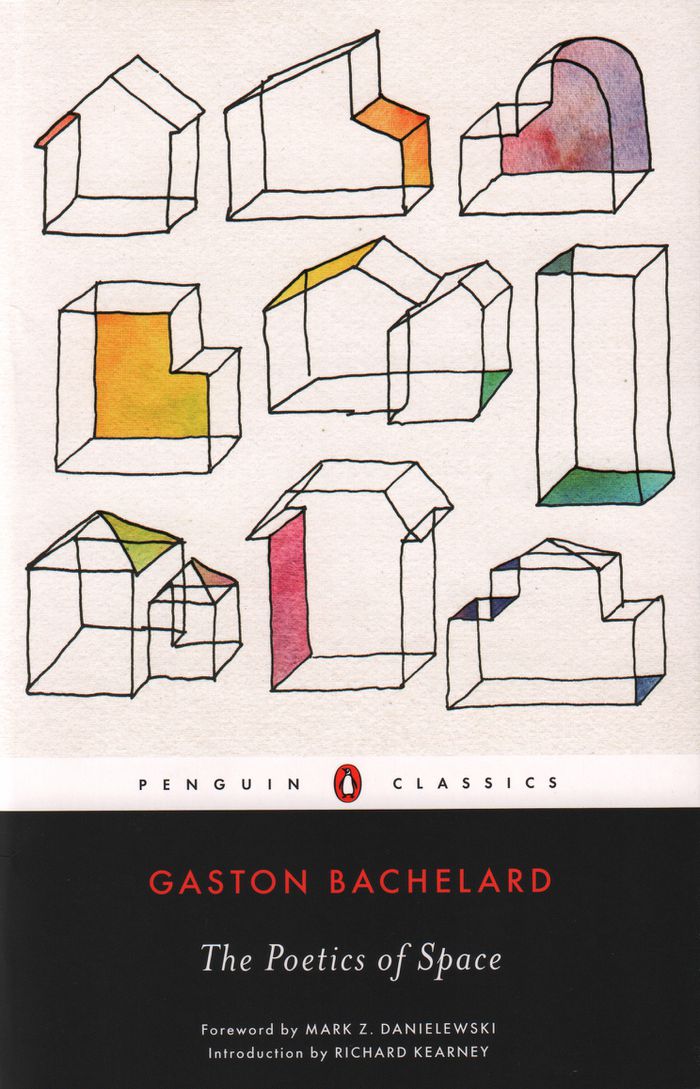
Since its initial publication in 1958, The Poetics of Space has been a muse to philosophers, architects, writers, psychologists, critics, and readers alike. The rare work of irresistibly inviting philosophy, Bachelard’s seminal work brims with quiet revelations and stirring, mysterious imagery. This lyrical journey takes as its premise the emergence of the poetic image and finds an ideal metaphor in the intimate spaces of our homes. Guiding us through a stream of meditations on poetry, art, and the blooming of consciousness itself, Bachelard examines the domestic places that shape and hold our dreams and memories. Houses and rooms; cellars and attics; drawers, chests, and wardrobes; nests and shells; nooks and corners: No space is too vast or too small to be filled by our thoughts and our reveries. In Bachelard’s enchanting spaces, “We are never real historians, but always near poets, and our emotion is perhaps nothing but an expression of a poetry that was lost.”
The poetics of space
Actions:
Prix:
$25.99
(disponible en magasin)
Résumé:
Since its initial publication in 1958, The Poetics of Space has been a muse to philosophers, architects, writers, psychologists, critics, and readers alike. The rare work of irresistibly inviting philosophy, Bachelard’s seminal work brims with quiet revelations and stirring, mysterious imagery. This lyrical journey takes as its premise the emergence of the poetic image and finds an ideal metaphor in the intimate spaces of our homes. Guiding us through a stream of meditations on poetry, art, and the blooming of consciousness itself, Bachelard examines the domestic places that shape and hold our dreams and memories. Houses and rooms; cellars and attics; drawers, chests, and wardrobes; nests and shells; nooks and corners: No space is too vast or too small to be filled by our thoughts and our reveries. In Bachelard’s enchanting spaces, “We are never real historians, but always near poets, and our emotion is perhaps nothing but an expression of a poetry that was lost.”
Classification:
livres
livres
Publication:
décembre 2014
décembre 2014
Sujet:
Théorie/ philosophie
Théorie/ philosophie
Classification:
livres
livres
Actions:
Prix:
$26.00
(disponible sur commande)
Résumé:
A fresh interpretation of Jeremy Bentham, finding that his “radical foolery” embodied a social ethics that was revolutionary for its time. Jeremy Bentham (1748–1832) is best remembered today as the founder of utilitarianism (a philosophy infamously abused by the Victorians) and the conceiver of the Panopticon, the circular prison house in which all prisoners could be(...)
$26.00
(disponible sur commande)
Résumé:
A fresh interpretation of Jeremy Bentham, finding that his “radical foolery” embodied a social ethics that was revolutionary for its time. Jeremy Bentham (1748–1832) is best remembered today as the founder of utilitarianism (a philosophy infamously abused by the Victorians) and the conceiver of the Panopticon, the circular prison house in which all prisoners could be(...)
Titre:
The radical fool of capitalism: on Jeremy Bentham, the Panopticon, and the auto-icon
Actions:
Prix:
$26.00
(disponible sur commande)
Résumé:
A fresh interpretation of Jeremy Bentham, finding that his “radical foolery” embodied a social ethics that was revolutionary for its time. Jeremy Bentham (1748–1832) is best remembered today as the founder of utilitarianism (a philosophy infamously abused by the Victorians) and the conceiver of the Panopticon, the circular prison house in which all prisoners could be seen by an unseen observer—later seized upon by Michel Foucault as the apotheosis of the neoliberal control society. In this volume in the Untimely Meditation series, Christian Welzbacher offers a new interpretation of Bentham, arguing that his “radical foolery” (paraphrasing Goethe's characterization of Bentham) actually embodied a social ethics that was new for its time and demands proper historical contextualization rather than retroactive analysis from the vantage point of late capitalism. Welzbacher provides just such an analysis, offering an account of the two great utilitarian projects that occupied Bentham all his life: the Panopticon and the Auto-Icon.
The radical fool of capitalism: on Jeremy Bentham, the Panopticon, and the auto-icon
Actions:
Prix:
$26.00
(disponible sur commande)
Résumé:
A fresh interpretation of Jeremy Bentham, finding that his “radical foolery” embodied a social ethics that was revolutionary for its time. Jeremy Bentham (1748–1832) is best remembered today as the founder of utilitarianism (a philosophy infamously abused by the Victorians) and the conceiver of the Panopticon, the circular prison house in which all prisoners could be seen by an unseen observer—later seized upon by Michel Foucault as the apotheosis of the neoliberal control society. In this volume in the Untimely Meditation series, Christian Welzbacher offers a new interpretation of Bentham, arguing that his “radical foolery” (paraphrasing Goethe's characterization of Bentham) actually embodied a social ethics that was new for its time and demands proper historical contextualization rather than retroactive analysis from the vantage point of late capitalism. Welzbacher provides just such an analysis, offering an account of the two great utilitarian projects that occupied Bentham all his life: the Panopticon and the Auto-Icon.
Classification:
livres
livres
Publication:
avril 2018
avril 2018
Sujet:
Théorie/ philosophie
Théorie/ philosophie
Classification:
livres
livres
Prix:
$31.50
(disponible sur commande)
Résumé:
In this new book, Bruno Latour offers answers to questions raised in "We Have Never Been Modern", a work that interrogated the connections between nature and culture. If not modern, he asked, what have we been, and what values should we inherit? Over the last twenty-five years, Latour has developed a research protocol different from the actor-network theory with which his(...)
$31.50
(disponible sur commande)
Résumé:
In this new book, Bruno Latour offers answers to questions raised in "We Have Never Been Modern", a work that interrogated the connections between nature and culture. If not modern, he asked, what have we been, and what values should we inherit? Over the last twenty-five years, Latour has developed a research protocol different from the actor-network theory with which his(...)
Titre:
An inquiry into modes of existence: an anthropology of the moderns
Actions:
Prix:
$31.50
(disponible sur commande)
Résumé:
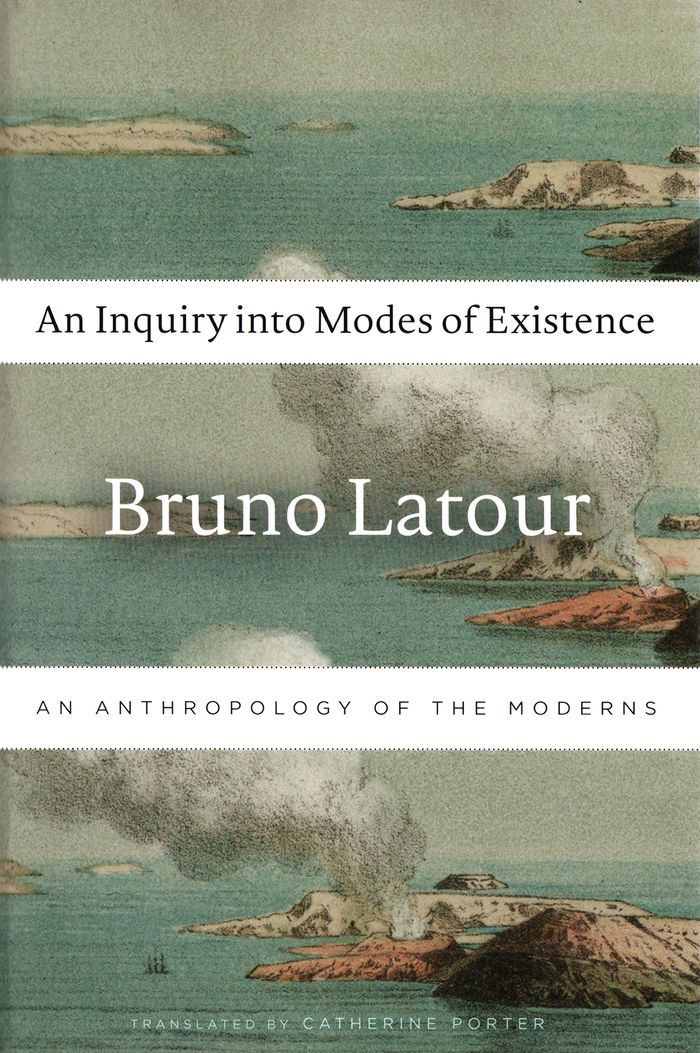
In this new book, Bruno Latour offers answers to questions raised in "We Have Never Been Modern", a work that interrogated the connections between nature and culture. If not modern, he asked, what have we been, and what values should we inherit? Over the last twenty-five years, Latour has developed a research protocol different from the actor-network theory with which his name is now associated—a research protocol that follows the different types of connectors that provide specific truth conditions. These are the connectors that prompt a climate scientist challenged by a captain of industry to appeal to the "institution" of science, with its army of researchers and mountains of data, rather than to “capital-S Science” as a higher authority. Such modes of extension—or modes of existence, Latour argues here—account for the many differences between law, science, politics, and other domains of knowledge.
An inquiry into modes of existence: an anthropology of the moderns
Actions:
Prix:
$31.50
(disponible sur commande)
Résumé:
In this new book, Bruno Latour offers answers to questions raised in "We Have Never Been Modern", a work that interrogated the connections between nature and culture. If not modern, he asked, what have we been, and what values should we inherit? Over the last twenty-five years, Latour has developed a research protocol different from the actor-network theory with which his name is now associated—a research protocol that follows the different types of connectors that provide specific truth conditions. These are the connectors that prompt a climate scientist challenged by a captain of industry to appeal to the "institution" of science, with its army of researchers and mountains of data, rather than to “capital-S Science” as a higher authority. Such modes of extension—or modes of existence, Latour argues here—account for the many differences between law, science, politics, and other domains of knowledge.
Classification:
livres
livres
Publication:
juin 2018
juin 2018
Sujet:
Théorie/ philosophie
Théorie/ philosophie
Classification:
livres
livres
Titre:
The adventure
The adventure
Actions:
Prix:
$17.00
(disponible sur commande)
Résumé:
An ancient legend identifies Demon, Chance, Love, and Necessity as the four gods who preside over the birth of every human being. We must all pay tribute to these deities and should not try to elude or dupe them. To accept them, Giorgio Agamben suggests, is to live one’s life as an adventure—not in the trivial sense of the term, with lightness and disenchantment, but with(...)
$17.00
(disponible sur commande)
Résumé:
An ancient legend identifies Demon, Chance, Love, and Necessity as the four gods who preside over the birth of every human being. We must all pay tribute to these deities and should not try to elude or dupe them. To accept them, Giorgio Agamben suggests, is to live one’s life as an adventure—not in the trivial sense of the term, with lightness and disenchantment, but with(...)
Titre:
The adventure
Actions:
Prix:
$17.00
(disponible sur commande)
Résumé:
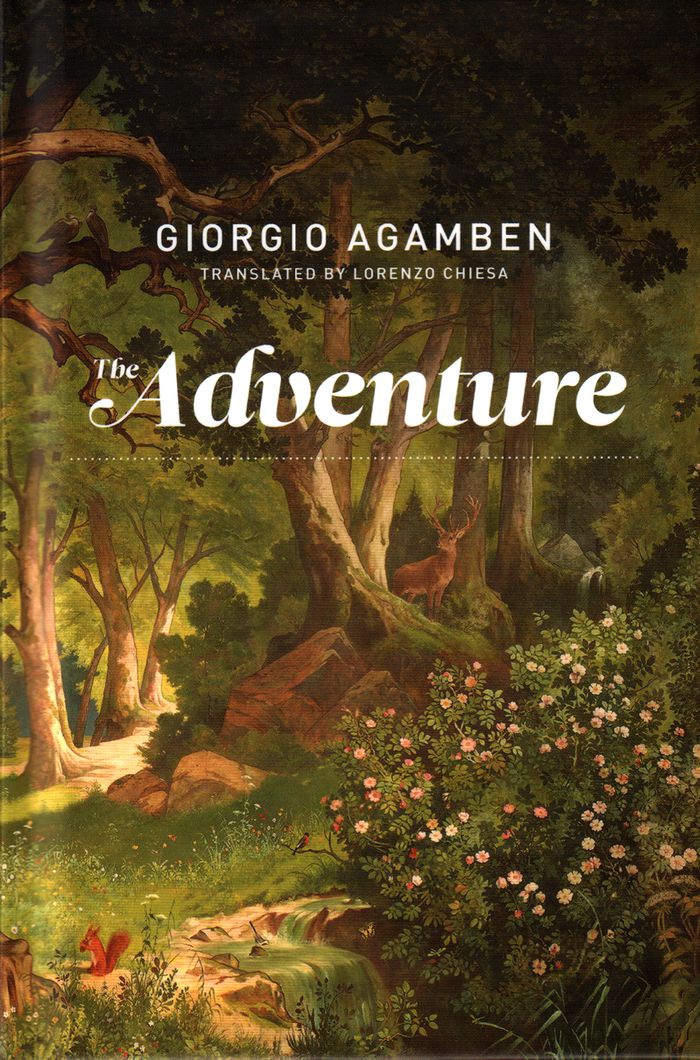
An ancient legend identifies Demon, Chance, Love, and Necessity as the four gods who preside over the birth of every human being. We must all pay tribute to these deities and should not try to elude or dupe them. To accept them, Giorgio Agamben suggests, is to live one’s life as an adventure—not in the trivial sense of the term, with lightness and disenchantment, but with the understanding that adventure, as a specific way of being, is the most profound experience in our human existence. In this pithy, poetic, and compelling book, Agamben maps a journey from poems of chivalry to philosophy, from Yvain to Hegel, from Beatrice to Heidegger. The four gods of legend are joined at the end by a goddess, the most elusive and mysterious of all: Elpis, Hope. In Greek mythology, Hope remains in Pandora's box, not because it postpones its fulfillment to an invisible beyond but because somehow it has always been already satisfied. Here, Agamben presents Hope as the ultimate gift of the human adventure on Earth.
The adventure
Actions:
Prix:
$17.00
(disponible sur commande)
Résumé:
An ancient legend identifies Demon, Chance, Love, and Necessity as the four gods who preside over the birth of every human being. We must all pay tribute to these deities and should not try to elude or dupe them. To accept them, Giorgio Agamben suggests, is to live one’s life as an adventure—not in the trivial sense of the term, with lightness and disenchantment, but with the understanding that adventure, as a specific way of being, is the most profound experience in our human existence. In this pithy, poetic, and compelling book, Agamben maps a journey from poems of chivalry to philosophy, from Yvain to Hegel, from Beatrice to Heidegger. The four gods of legend are joined at the end by a goddess, the most elusive and mysterious of all: Elpis, Hope. In Greek mythology, Hope remains in Pandora's box, not because it postpones its fulfillment to an invisible beyond but because somehow it has always been already satisfied. Here, Agamben presents Hope as the ultimate gift of the human adventure on Earth.
Classification:
livres
livres
Publication:
mars 2018
mars 2018
Sujet:
Théorie/ philosophie
Théorie/ philosophie
Classification:
livres
livres

Titre:
Topology of violence
Topology of violence
Actions:
Prix:
$24.95
(disponible sur commande)
Résumé:
One of today's most widely read philosophers considers the shift in violence from visible to invisible, from negativity to excess of positivity. Some things never disappear—violence, for example. Violence is ubiquitous and incessant but protean, varying its outward form according to the social constellation at hand. In Topology of Violence, the philosopher Byung-Chul(...)
$24.95
(disponible sur commande)
Résumé:
One of today's most widely read philosophers considers the shift in violence from visible to invisible, from negativity to excess of positivity. Some things never disappear—violence, for example. Violence is ubiquitous and incessant but protean, varying its outward form according to the social constellation at hand. In Topology of Violence, the philosopher Byung-Chul(...)
Titre:
Topology of violence
Actions:
Prix:
$24.95
(disponible sur commande)
Résumé:
One of today's most widely read philosophers considers the shift in violence from visible to invisible, from negativity to excess of positivity. Some things never disappear—violence, for example. Violence is ubiquitous and incessant but protean, varying its outward form according to the social constellation at hand. In Topology of Violence, the philosopher Byung-Chul Han considers the shift in violence from the visible to the invisible, from the frontal to the viral to the self-inflicted, from brute force to mediated force, from the real to the virtual. Violence, Han tells us, has gone from the negative—explosive, massive, and martial—to the positive, wielded without enmity or domination. This, he says, creates the false impression that violence has disappeared. Anonymized, desubjectified, systemic, violence conceals itself because it has become one with society.
Topology of violence
Actions:
Prix:
$24.95
(disponible sur commande)
Résumé:
One of today's most widely read philosophers considers the shift in violence from visible to invisible, from negativity to excess of positivity. Some things never disappear—violence, for example. Violence is ubiquitous and incessant but protean, varying its outward form according to the social constellation at hand. In Topology of Violence, the philosopher Byung-Chul Han considers the shift in violence from the visible to the invisible, from the frontal to the viral to the self-inflicted, from brute force to mediated force, from the real to the virtual. Violence, Han tells us, has gone from the negative—explosive, massive, and martial—to the positive, wielded without enmity or domination. This, he says, creates the false impression that violence has disappeared. Anonymized, desubjectified, systemic, violence conceals itself because it has become one with society.
Classification:
livres
livres
Publication:
avril 2018
avril 2018
Sujet:
Théorie/ philosophie
Théorie/ philosophie
Classification:
livres
livres
Prix:
$31.50
(disponible sur commande)
Résumé:
Imagine a world without things. There would be nothing to describe, explain, remark on, interpret, or complain about. Without things, we would, in short, stop speaking; we would become as mute as objects are alleged to be. In nine original essays, internationally renowned historians of art and of science seek to understand how objects become charged with significance(...)
$31.50
(disponible sur commande)
Résumé:
Imagine a world without things. There would be nothing to describe, explain, remark on, interpret, or complain about. Without things, we would, in short, stop speaking; we would become as mute as objects are alleged to be. In nine original essays, internationally renowned historians of art and of science seek to understand how objects become charged with significance(...)
Titre:
Things that talk: object lessons from art and science
Actions:
Prix:
$31.50
(disponible sur commande)
Résumé:
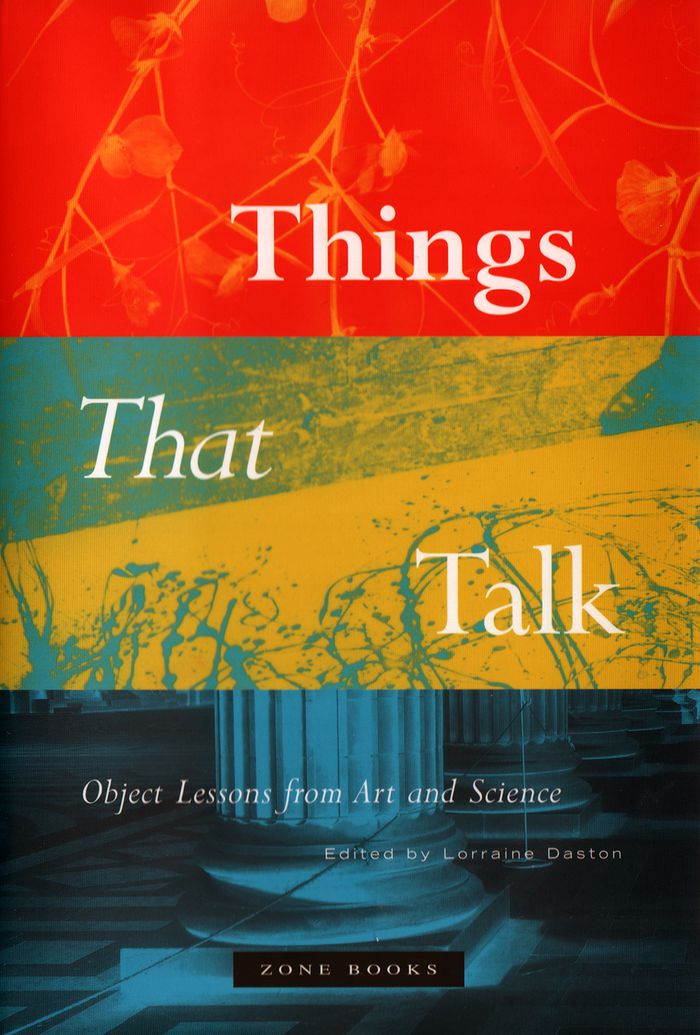
Imagine a world without things. There would be nothing to describe, explain, remark on, interpret, or complain about. Without things, we would, in short, stop speaking; we would become as mute as objects are alleged to be. In nine original essays, internationally renowned historians of art and of science seek to understand how objects become charged with significance without losing their gritty materiality. Things That Talk aims to escape the opposition between positivist facts and cultural readings that bifurcates the current historiography of both art and science.
Things that talk: object lessons from art and science
Actions:
Prix:
$31.50
(disponible sur commande)
Résumé:
Imagine a world without things. There would be nothing to describe, explain, remark on, interpret, or complain about. Without things, we would, in short, stop speaking; we would become as mute as objects are alleged to be. In nine original essays, internationally renowned historians of art and of science seek to understand how objects become charged with significance without losing their gritty materiality. Things That Talk aims to escape the opposition between positivist facts and cultural readings that bifurcates the current historiography of both art and science.
Classification:
livres
livres
Publication:
juin 2004
juin 2004
Sujet:
Théorie/ philosophie
Théorie/ philosophie
Classification:
livres
livres
Titre:
Walter Benjamin 1892-1940
Walter Benjamin 1892-1940
Actions:
Prix:
$11.95
(disponible sur commande)
Résumé:
La gloire posthume est le lot des inclassables. On n’a mesuré l’importance de Walter Benjamin qu’après sa mort. Au croisement de la biographie, de la philosophie politique et de la critique littéraire, Hannah Arendt retrace dans cet essai daté de 1971 le destin individuel et l’itinéraire spirituel d’un homme pris dans “les sombres temps”. La vie de Benjamin ne fut qu’un(...)
$11.95
(disponible sur commande)
Résumé:
La gloire posthume est le lot des inclassables. On n’a mesuré l’importance de Walter Benjamin qu’après sa mort. Au croisement de la biographie, de la philosophie politique et de la critique littéraire, Hannah Arendt retrace dans cet essai daté de 1971 le destin individuel et l’itinéraire spirituel d’un homme pris dans “les sombres temps”. La vie de Benjamin ne fut qu’un(...)
Titre:
Walter Benjamin 1892-1940
Actions:
Prix:
$11.95
(disponible sur commande)
Résumé:
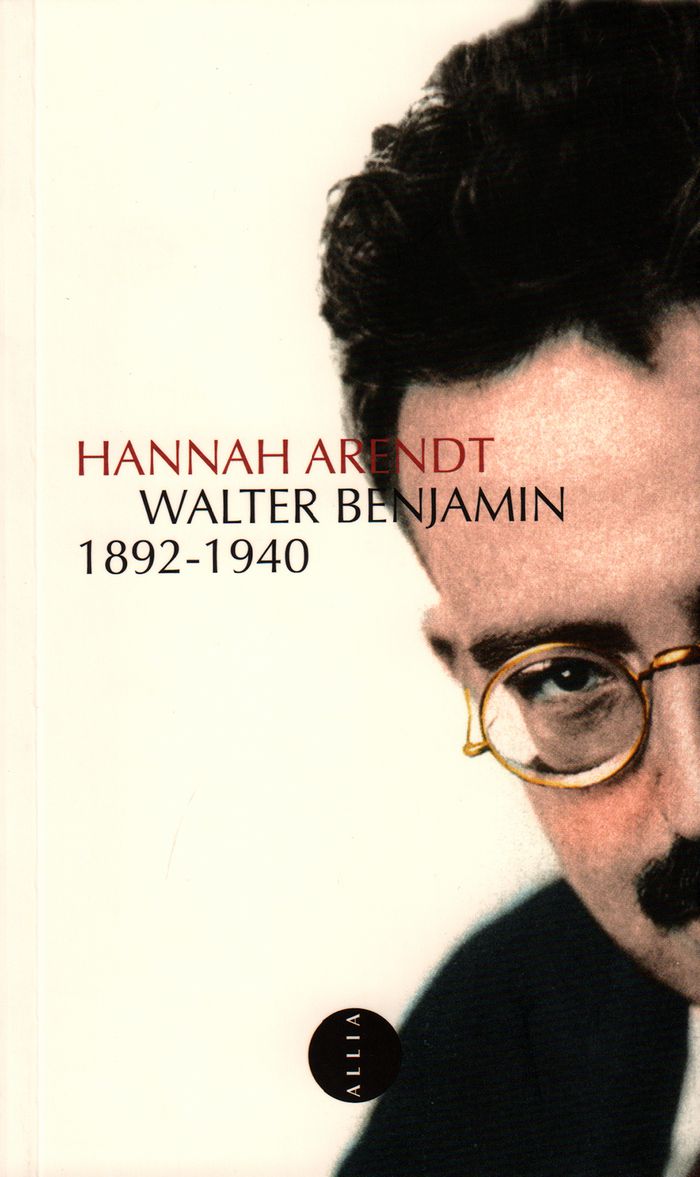
La gloire posthume est le lot des inclassables. On n’a mesuré l’importance de Walter Benjamin qu’après sa mort. Au croisement de la biographie, de la philosophie politique et de la critique littéraire, Hannah Arendt retrace dans cet essai daté de 1971 le destin individuel et l’itinéraire spirituel d’un homme pris dans “les sombres temps”. La vie de Benjamin ne fut qu’un “entassement de débris”, placée sous le signe de la malchance. Ce mélange de faiblesse et de génie le rendait totalement incapable de faire face aux difficultés de l’existence. Arendt, fidèle aux grands thèmes qui structurent sa pensée, analyse ses rapports tourmentés avec la judéité et le marxisme, son amour de Paris et de la flânerie ainsi que ses relations complexes avec les intellectuels de son temps. Plongeant au plus intime de l’œuvre, elle décortique la façon unique en son genre qu’il avait de “penser poétiquement”. Philosophe elle-même inclassable, Hannah Arendt était la mieux à même de saisir la subtilité de la figure de Walter Benjamin. Le portrait sensible qu’elle dresse de cet homme constitue sans conteste la meilleure introduction à son œuvre.
Walter Benjamin 1892-1940
Actions:
Prix:
$11.95
(disponible sur commande)
Résumé:
La gloire posthume est le lot des inclassables. On n’a mesuré l’importance de Walter Benjamin qu’après sa mort. Au croisement de la biographie, de la philosophie politique et de la critique littéraire, Hannah Arendt retrace dans cet essai daté de 1971 le destin individuel et l’itinéraire spirituel d’un homme pris dans “les sombres temps”. La vie de Benjamin ne fut qu’un “entassement de débris”, placée sous le signe de la malchance. Ce mélange de faiblesse et de génie le rendait totalement incapable de faire face aux difficultés de l’existence. Arendt, fidèle aux grands thèmes qui structurent sa pensée, analyse ses rapports tourmentés avec la judéité et le marxisme, son amour de Paris et de la flânerie ainsi que ses relations complexes avec les intellectuels de son temps. Plongeant au plus intime de l’œuvre, elle décortique la façon unique en son genre qu’il avait de “penser poétiquement”. Philosophe elle-même inclassable, Hannah Arendt était la mieux à même de saisir la subtilité de la figure de Walter Benjamin. Le portrait sensible qu’elle dresse de cet homme constitue sans conteste la meilleure introduction à son œuvre.
Classification:
livres
livres
Publication:
février 2014
février 2014
Sujet:
Théorie/ philosophie
Théorie/ philosophie


