


884 Résultats
Classification:
livres
livres

Prix:
$28.95
(disponible sur commande)
Résumé:
Raymond Tallis shows that it is easy to underestimate the influence of small things in determining what manner of creatures humans are. He argues that the independent movement of the human index finger is one such easily overlooked factor. Tallis argues that it is through pointing that the index finger made a significant contribution to the development of humans and(...)
$28.95
(disponible sur commande)
Résumé:
Raymond Tallis shows that it is easy to underestimate the influence of small things in determining what manner of creatures humans are. He argues that the independent movement of the human index finger is one such easily overlooked factor. Tallis argues that it is through pointing that the index finger made a significant contribution to the development of humans and(...)
Titre:
Michelangelo's finger: An exploration of everyday transcendence
Actions:
Prix:
$28.95
(disponible sur commande)
Résumé:
Raymond Tallis shows that it is easy to underestimate the influence of small things in determining what manner of creatures humans are. He argues that the independent movement of the human index finger is one such easily overlooked factor. Tallis argues that it is through pointing that the index finger made a significant contribution to the development of humans and to the creation of a human world separate from the rest of the natural world. Observing the ceiling of the Sistine Chapel and the hugely familiar and awkward encounter between Michelangelo’s God and Man through their index fingers, Tallis identifies the artist’s intuitive awareness of the central role of the index finger in making us unique. Just as the reaching index fingers of God and Man are here made central to the creation of our kind, so Tallis believes that the seemingly simple act of pointing, which is used in a wide variety of ways, is central to our extraordinary evolution.
Michelangelo's finger: An exploration of everyday transcendence
Actions:
Prix:
$28.95
(disponible sur commande)
Résumé:
Raymond Tallis shows that it is easy to underestimate the influence of small things in determining what manner of creatures humans are. He argues that the independent movement of the human index finger is one such easily overlooked factor. Tallis argues that it is through pointing that the index finger made a significant contribution to the development of humans and to the creation of a human world separate from the rest of the natural world. Observing the ceiling of the Sistine Chapel and the hugely familiar and awkward encounter between Michelangelo’s God and Man through their index fingers, Tallis identifies the artist’s intuitive awareness of the central role of the index finger in making us unique. Just as the reaching index fingers of God and Man are here made central to the creation of our kind, so Tallis believes that the seemingly simple act of pointing, which is used in a wide variety of ways, is central to our extraordinary evolution.
Classification:
livres
livres
Publication:
septembre 2010
septembre 2010
Sujet:
Théorie/ philosophie
Théorie/ philosophie
Classification:
livres
livres
Titre:
Tramp
Tramp
Actions:
Prix:
$25.95
(disponible sur commande)
Résumé:
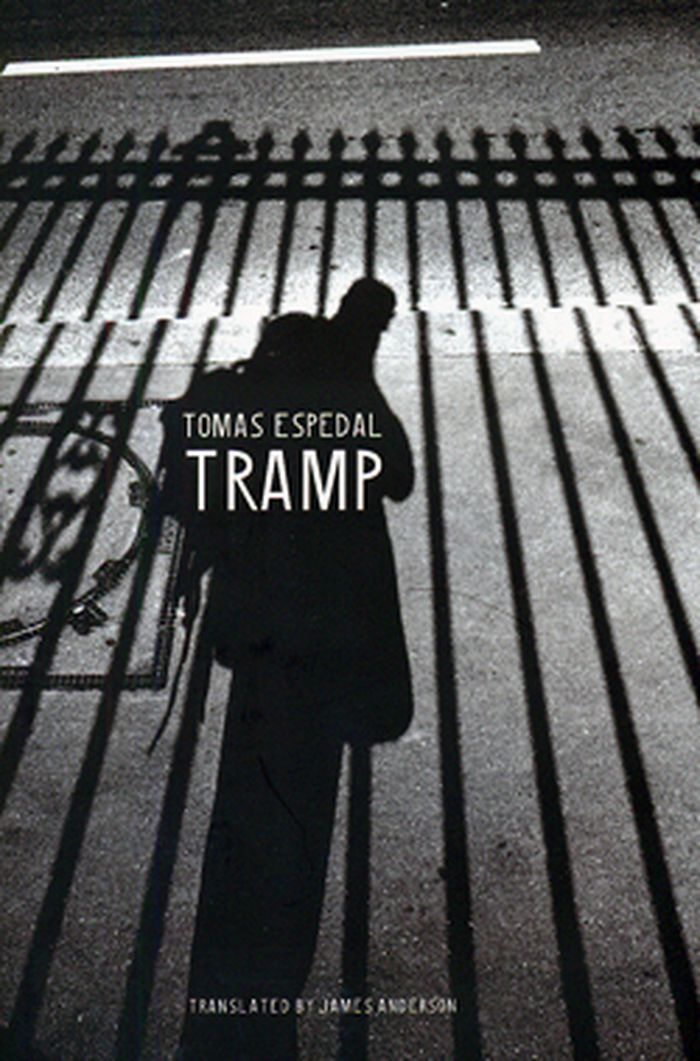
Tomas Espedal contemplates what walking has meant for great artists and thinkers: Rousseau, Kant, Hazlitt, Thoreau, Rimbaud, Whitman, Giacometti and Stevenson; and dissects his own inability to write from a fixed abode, or to banish the temptation to become permanently itinerant.
$25.95
(disponible sur commande)
Résumé:
Tomas Espedal contemplates what walking has meant for great artists and thinkers: Rousseau, Kant, Hazlitt, Thoreau, Rimbaud, Whitman, Giacometti and Stevenson; and dissects his own inability to write from a fixed abode, or to banish the temptation to become permanently itinerant.
Titre:
Tramp
Actions:
Prix:
$25.95
(disponible sur commande)
Résumé:
Tomas Espedal contemplates what walking has meant for great artists and thinkers: Rousseau, Kant, Hazlitt, Thoreau, Rimbaud, Whitman, Giacometti and Stevenson; and dissects his own inability to write from a fixed abode, or to banish the temptation to become permanently itinerant.
Tramp
Actions:
Prix:
$25.95
(disponible sur commande)
Résumé:
Tomas Espedal contemplates what walking has meant for great artists and thinkers: Rousseau, Kant, Hazlitt, Thoreau, Rimbaud, Whitman, Giacometti and Stevenson; and dissects his own inability to write from a fixed abode, or to banish the temptation to become permanently itinerant.
Classification:
livres
livres
Publication:
novembre 2010
novembre 2010
Sujet:
Théorie/ philosophie
Théorie/ philosophie
Classification:
livres
livres
Actions:
Prix:
$16.50
(disponible sur commande)
Résumé:
F.R David- a journal published twice-yearly by de Appel arts centre, Amsterdam- focuses on the 'status' of writing in contemporary art practice. This seventh issue considers the compression of letter-writing as cybernetic translation- vs. redundant delivery of intention- from one form to another, “With Love,”.
$16.50
(disponible sur commande)
Résumé:
F.R David- a journal published twice-yearly by de Appel arts centre, Amsterdam- focuses on the 'status' of writing in contemporary art practice. This seventh issue considers the compression of letter-writing as cybernetic translation- vs. redundant delivery of intention- from one form to another, “With Love,”.
Sujet:
Théorie/ philosophie
Théorie/ philosophie
Publication:
juillet 2010
juillet 2010
Titre:
F.R. David: The 'with love,' issue
Actions:
Prix:
$16.50
(disponible sur commande)
Résumé:
F.R David- a journal published twice-yearly by de Appel arts centre, Amsterdam- focuses on the 'status' of writing in contemporary art practice. This seventh issue considers the compression of letter-writing as cybernetic translation- vs. redundant delivery of intention- from one form to another, “With Love,”.
F.R. David: The 'with love,' issue
Actions:
Prix:
$16.50
(disponible sur commande)
Résumé:
F.R David- a journal published twice-yearly by de Appel arts centre, Amsterdam- focuses on the 'status' of writing in contemporary art practice. This seventh issue considers the compression of letter-writing as cybernetic translation- vs. redundant delivery of intention- from one form to another, “With Love,”.
Classification:
livres
livres
Publication:
juillet 2010
juillet 2010
Sujet:
Théorie/ philosophie
Théorie/ philosophie
Classification:
livres
livres
Actions:
Prix:
$46.95
(disponible sur commande)
Résumé:
From the dawn of European civilization to the twentieth century, the automaton—better known today as the robot—has captured the Western imagination and provided a vital lens into the nature of humanity. Historian Minsoo Kang argues that to properly understand the human-as-machine and the human-as-fundamentally-different-from-machine, we must trace the origins of these(...)
$46.95
(disponible sur commande)
Résumé:
From the dawn of European civilization to the twentieth century, the automaton—better known today as the robot—has captured the Western imagination and provided a vital lens into the nature of humanity. Historian Minsoo Kang argues that to properly understand the human-as-machine and the human-as-fundamentally-different-from-machine, we must trace the origins of these(...)
Titre:
Sublime dreams of living machines: The automaton in the European imagination
Actions:
Prix:
$46.95
(disponible sur commande)
Résumé:
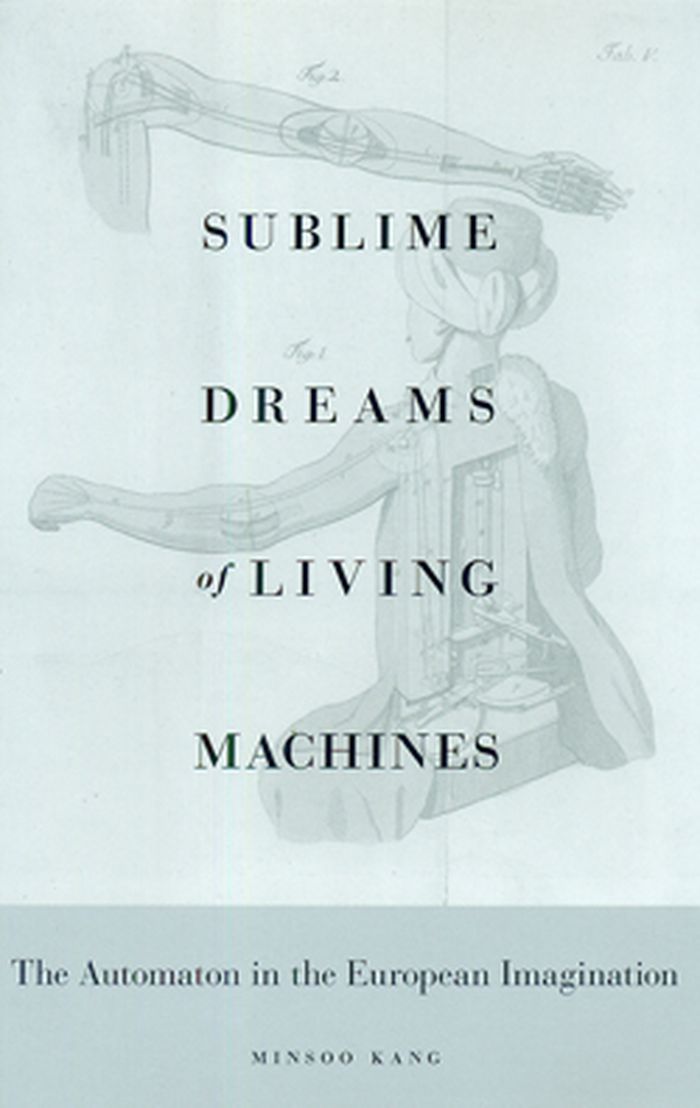
From the dawn of European civilization to the twentieth century, the automaton—better known today as the robot—has captured the Western imagination and provided a vital lens into the nature of humanity. Historian Minsoo Kang argues that to properly understand the human-as-machine and the human-as-fundamentally-different-from-machine, we must trace the origins of these ideas and examine how they were transformed by intellectual, cultural, and artistic appearances of the automaton throughout the history of the West. Kang tracks the first appearance of the automaton in ancient myths through the medieval and Renaissance periods, marks the proliferation of the automaton as a central intellectual concept in the Scientific Revolution and the subsequent backlash during the Enlightenment, and details appearances in Romantic literature and the introduction of the living machine in the Industrial Age.
Sublime dreams of living machines: The automaton in the European imagination
Actions:
Prix:
$46.95
(disponible sur commande)
Résumé:
From the dawn of European civilization to the twentieth century, the automaton—better known today as the robot—has captured the Western imagination and provided a vital lens into the nature of humanity. Historian Minsoo Kang argues that to properly understand the human-as-machine and the human-as-fundamentally-different-from-machine, we must trace the origins of these ideas and examine how they were transformed by intellectual, cultural, and artistic appearances of the automaton throughout the history of the West. Kang tracks the first appearance of the automaton in ancient myths through the medieval and Renaissance periods, marks the proliferation of the automaton as a central intellectual concept in the Scientific Revolution and the subsequent backlash during the Enlightenment, and details appearances in Romantic literature and the introduction of the living machine in the Industrial Age.
Classification:
livres
livres
Publication:
février 2011
février 2011
Sujet:
Théorie/ philosophie
Théorie/ philosophie
Classification:
livres
livres
Titre:
Objectivity
Objectivity
Actions:
Prix:
$38.00
(disponible sur commande)
Résumé:
Objectivity has a history, and it is full of surprises. In Objectivity, Lorraine Daston and Peter Galison chart the emergence of objectivity in the mid-nineteenth-century sciences—and show how the concept differs from its alternatives, truth-to-nature and trained judgment. This is a story of lofty epistemic ideals fused with workaday practices in the making of scientific(...)
$38.00
(disponible sur commande)
Résumé:
Objectivity has a history, and it is full of surprises. In Objectivity, Lorraine Daston and Peter Galison chart the emergence of objectivity in the mid-nineteenth-century sciences—and show how the concept differs from its alternatives, truth-to-nature and trained judgment. This is a story of lofty epistemic ideals fused with workaday practices in the making of scientific(...)
Publication:
octobre 2010
octobre 2010
Titre:
Objectivity
Actions:
Prix:
$38.00
(disponible sur commande)
Résumé:
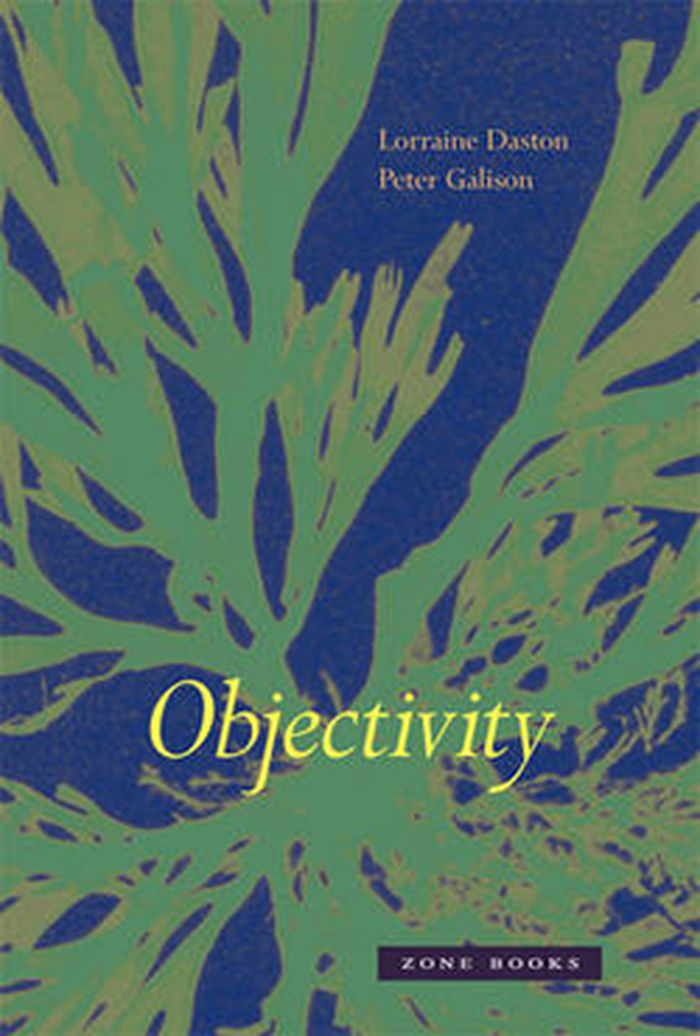
Objectivity has a history, and it is full of surprises. In Objectivity, Lorraine Daston and Peter Galison chart the emergence of objectivity in the mid-nineteenth-century sciences—and show how the concept differs from its alternatives, truth-to-nature and trained judgment. This is a story of lofty epistemic ideals fused with workaday practices in the making of scientific images. From the eighteenth through the early twenty-first centuries, the images that reveal the deepest commitments of the empirical sciences—from anatomy to crystallography—are those featured in scientific atlases, the compendia that teach practitioners what is worth looking at and how to look at it. Galison and Daston use atlas images to uncover a hidden history of scientific objectivity and its rivals. Whether an atlas maker idealizes an image to capture the essentials in the name of truth-to-nature or refuses to erase even the most incidental detail in the name of objectivity or highlights patterns in the name of trained judgment is a decision enforced by an ethos as well as by an epistemology.
Objectivity
Actions:
Prix:
$38.00
(disponible sur commande)
Résumé:
Objectivity has a history, and it is full of surprises. In Objectivity, Lorraine Daston and Peter Galison chart the emergence of objectivity in the mid-nineteenth-century sciences—and show how the concept differs from its alternatives, truth-to-nature and trained judgment. This is a story of lofty epistemic ideals fused with workaday practices in the making of scientific images. From the eighteenth through the early twenty-first centuries, the images that reveal the deepest commitments of the empirical sciences—from anatomy to crystallography—are those featured in scientific atlases, the compendia that teach practitioners what is worth looking at and how to look at it. Galison and Daston use atlas images to uncover a hidden history of scientific objectivity and its rivals. Whether an atlas maker idealizes an image to capture the essentials in the name of truth-to-nature or refuses to erase even the most incidental detail in the name of objectivity or highlights patterns in the name of trained judgment is a decision enforced by an ethos as well as by an epistemology.
Classification:
livres
livres
Publication:
octobre 2010
octobre 2010
Classification:
livres
livres
Actions:
Prix:
$18.50
(disponible sur commande)
Résumé:
One overcast weekend in October 1974, Georges Perec set out in quest of the "infraordinary": the humdrum, the non-event, the everyday--"what happens," as he put it, "when nothing happens." His choice of locale was Place Saint-Sulpice, where, ensconced behind first one café window, then another, he spent three days recording everything to pass through his field of vision:(...)
$18.50
(disponible sur commande)
Résumé:
One overcast weekend in October 1974, Georges Perec set out in quest of the "infraordinary": the humdrum, the non-event, the everyday--"what happens," as he put it, "when nothing happens." His choice of locale was Place Saint-Sulpice, where, ensconced behind first one café window, then another, he spent three days recording everything to pass through his field of vision:(...)
Titre:
An attempt at exhausting a place in Paris
Actions:
Prix:
$18.50
(disponible sur commande)
Résumé:
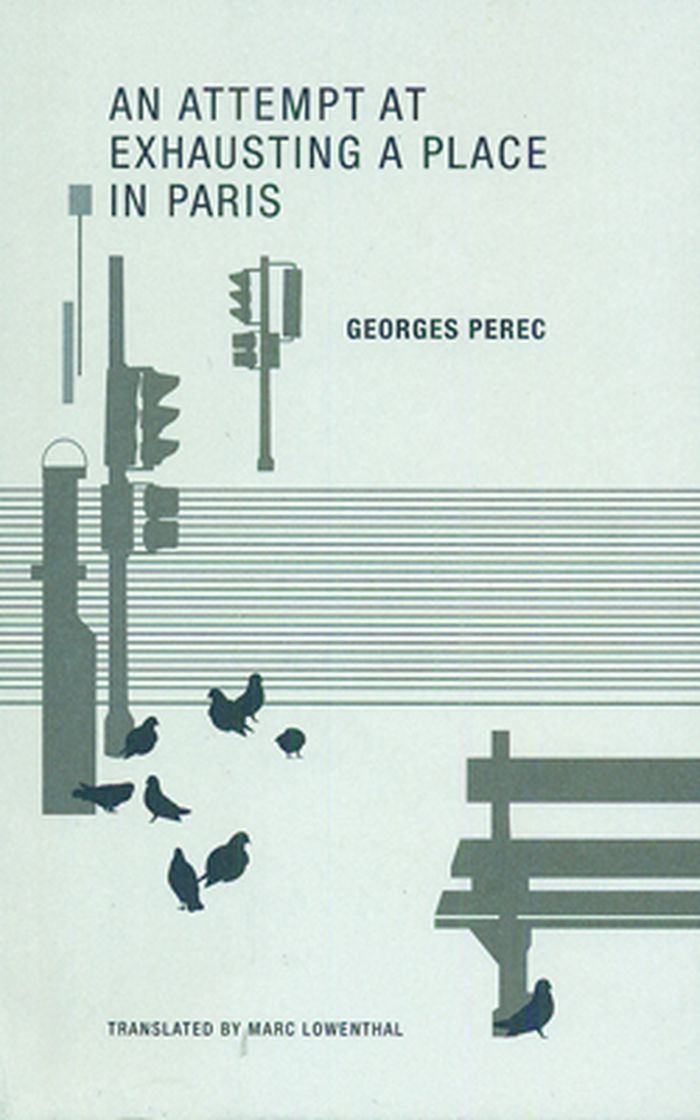
One overcast weekend in October 1974, Georges Perec set out in quest of the "infraordinary": the humdrum, the non-event, the everyday--"what happens," as he put it, "when nothing happens." His choice of locale was Place Saint-Sulpice, where, ensconced behind first one café window, then another, he spent three days recording everything to pass through his field of vision: the people walking by; the buses and driving-school cars caught in their routes; the pigeons moving suddenly en masse; a wedding (and then a funeral) at the church in the center of the square; the signs, symbols and slogans littering everything; and the darkness that finally absorbs it all. In An Attempt at Exhausting a Place in Paris, Perec compiled a melancholic, slightly eerie and oddly touching document in which existence boils down to rhythm, writing turns into time and the line between the empirical and the surreal grows surprisingly thin.
An attempt at exhausting a place in Paris
Actions:
Prix:
$18.50
(disponible sur commande)
Résumé:
One overcast weekend in October 1974, Georges Perec set out in quest of the "infraordinary": the humdrum, the non-event, the everyday--"what happens," as he put it, "when nothing happens." His choice of locale was Place Saint-Sulpice, where, ensconced behind first one café window, then another, he spent three days recording everything to pass through his field of vision: the people walking by; the buses and driving-school cars caught in their routes; the pigeons moving suddenly en masse; a wedding (and then a funeral) at the church in the center of the square; the signs, symbols and slogans littering everything; and the darkness that finally absorbs it all. In An Attempt at Exhausting a Place in Paris, Perec compiled a melancholic, slightly eerie and oddly touching document in which existence boils down to rhythm, writing turns into time and the line between the empirical and the surreal grows surprisingly thin.
Classification:
livres
livres
Publication:
septembre 2010
septembre 2010
Classification:
livres
livres
Actions:
Prix:
$36.00
(disponible sur commande)
Résumé:
In this publication, Christian Höller, of the interdisciplinary Critical Curatorial Cybermedia program at the University of Art and Design in Geneva, conducts 12 conversations on the topics of cultural studies, postcolonialism, globalization, activism and cultural participation.
$36.00
(disponible sur commande)
Résumé:
In this publication, Christian Höller, of the interdisciplinary Critical Curatorial Cybermedia program at the University of Art and Design in Geneva, conducts 12 conversations on the topics of cultural studies, postcolonialism, globalization, activism and cultural participation.
Titre:
Time action vision: conversations in cultural studies, theory, and activism
Actions:
Prix:
$36.00
(disponible sur commande)
Résumé:
In this publication, Christian Höller, of the interdisciplinary Critical Curatorial Cybermedia program at the University of Art and Design in Geneva, conducts 12 conversations on the topics of cultural studies, postcolonialism, globalization, activism and cultural participation.
Time action vision: conversations in cultural studies, theory, and activism
Actions:
Prix:
$36.00
(disponible sur commande)
Résumé:
In this publication, Christian Höller, of the interdisciplinary Critical Curatorial Cybermedia program at the University of Art and Design in Geneva, conducts 12 conversations on the topics of cultural studies, postcolonialism, globalization, activism and cultural participation.
Classification:
livres
livres
Publication:
septembre 2010
septembre 2010
Sujet:
Théorie/ philosophie
Théorie/ philosophie
Classification:
livres
livres
Actions:
Prix:
$38.95
(disponible sur commande)
Résumé:
What are the limits of freedom and how can freedom be imagined anew? Drawing upon her experience as a native of St. Petersburg, Russia transplanted to the United States, the author dares to ask whether American freedom can be transported across national borders. With these questions in mind, Boym attempts to reinvent freedom as something "infinitely improbable"—yet(...)
$38.95
(disponible sur commande)
Résumé:
What are the limits of freedom and how can freedom be imagined anew? Drawing upon her experience as a native of St. Petersburg, Russia transplanted to the United States, the author dares to ask whether American freedom can be transported across national borders. With these questions in mind, Boym attempts to reinvent freedom as something "infinitely improbable"—yet(...)
Titre:
Another freedom: the alternative history of an idea
Actions:
Prix:
$38.95
(disponible sur commande)
Résumé:
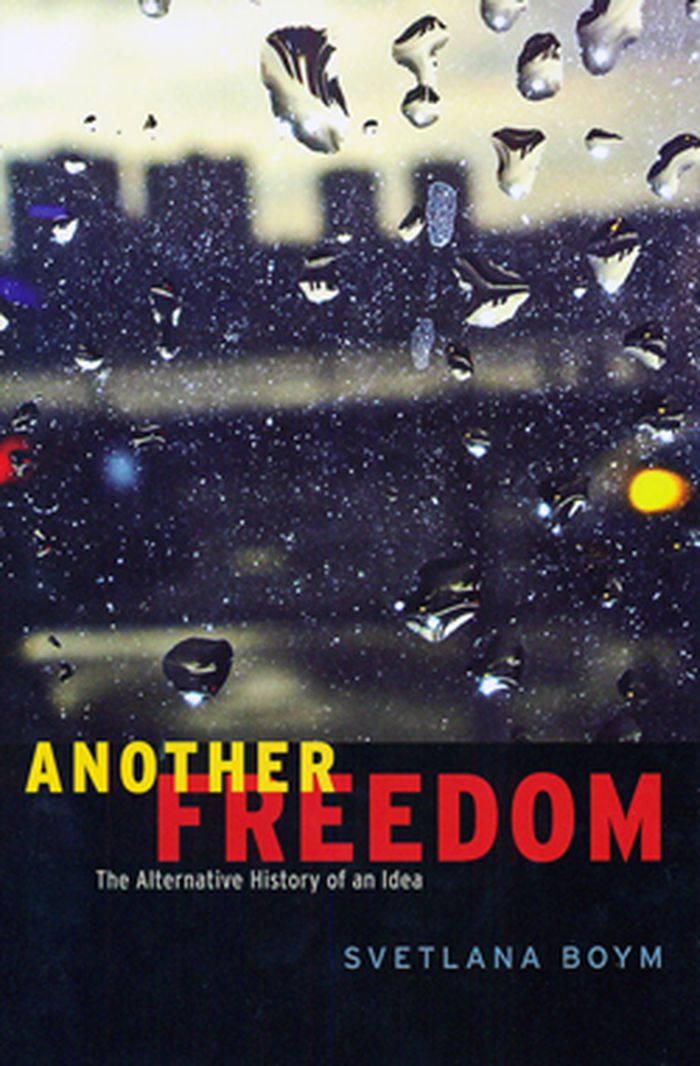
What are the limits of freedom and how can freedom be imagined anew? Drawing upon her experience as a native of St. Petersburg, Russia transplanted to the United States, the author dares to ask whether American freedom can be transported across national borders. With these questions in mind, Boym attempts to reinvent freedom as something "infinitely improbable"—yet nevertheless still possible.
Another freedom: the alternative history of an idea
Actions:
Prix:
$38.95
(disponible sur commande)
Résumé:
What are the limits of freedom and how can freedom be imagined anew? Drawing upon her experience as a native of St. Petersburg, Russia transplanted to the United States, the author dares to ask whether American freedom can be transported across national borders. With these questions in mind, Boym attempts to reinvent freedom as something "infinitely improbable"—yet nevertheless still possible.
Classification:
livres
livres
Publication:
août 2010
août 2010
Sujet:
Théorie/ philosophie
Théorie/ philosophie
Classification:
livres
livres
Prix:
$42.95
(disponible sur commande)
Résumé:
Contributions rendant hommage à l'architecte André Corboz et à sa posture originale dans le milieu scientifique. Une posture qui favorise le savoir autodidacte, qui refuse les frontières disciplinaires pour jouir d'une totale liberté de penser et dériver d'un champ à l'autre au gré de ses intérêts et interrogations.
$42.95
(disponible sur commande)
Résumé:
Contributions rendant hommage à l'architecte André Corboz et à sa posture originale dans le milieu scientifique. Une posture qui favorise le savoir autodidacte, qui refuse les frontières disciplinaires pour jouir d'une totale liberté de penser et dériver d'un champ à l'autre au gré de ses intérêts et interrogations.
Publication:
août 2010
août 2010
Titre:
Pour une poétique du détour: rencontre autour d'André Corboz
Actions:
Prix:
$42.95
(disponible sur commande)
Résumé:
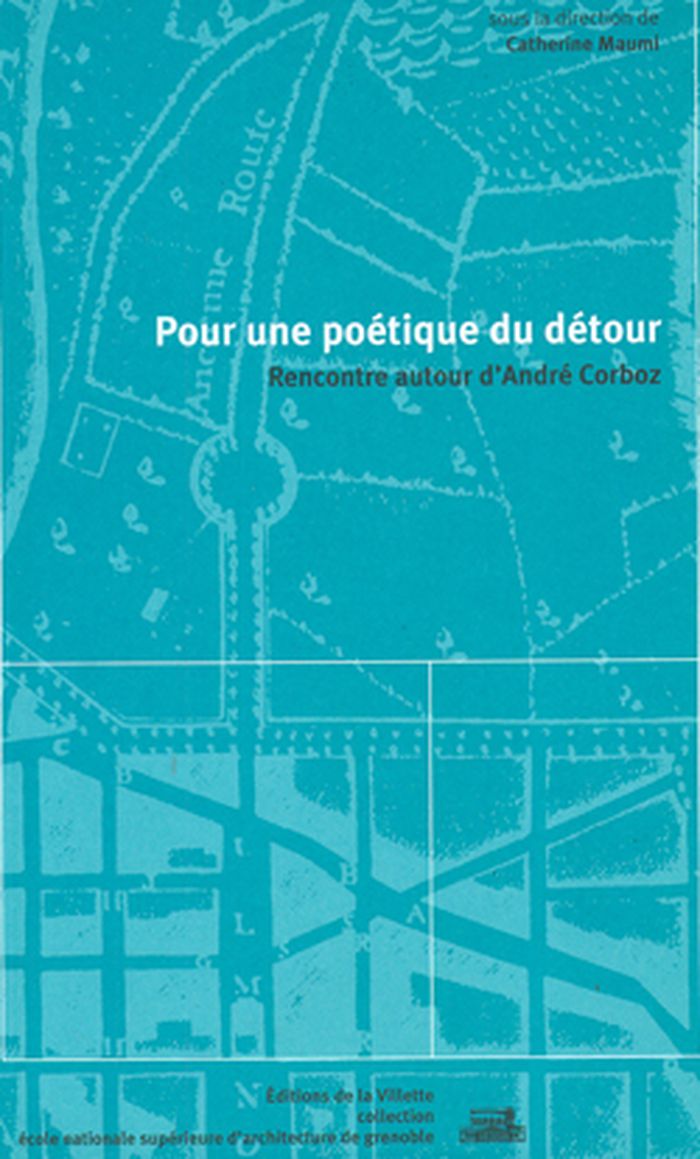
Contributions rendant hommage à l'architecte André Corboz et à sa posture originale dans le milieu scientifique. Une posture qui favorise le savoir autodidacte, qui refuse les frontières disciplinaires pour jouir d'une totale liberté de penser et dériver d'un champ à l'autre au gré de ses intérêts et interrogations.
Pour une poétique du détour: rencontre autour d'André Corboz
Actions:
Prix:
$42.95
(disponible sur commande)
Résumé:
Contributions rendant hommage à l'architecte André Corboz et à sa posture originale dans le milieu scientifique. Une posture qui favorise le savoir autodidacte, qui refuse les frontières disciplinaires pour jouir d'une totale liberté de penser et dériver d'un champ à l'autre au gré de ses intérêts et interrogations.
Classification:
livres
livres
Publication:
août 2010
août 2010
Classification:
livres
livres
Actions:
Prix:
$12.95
(disponible en magasin)
Résumé:
Dans son discours, prononcé en 1848 devant l'Association démocratique de Bruxelles, Karl Marx dissèque les effets de la théorie du libre-échange, après la suppression, en 1846, des Corn Laws en Angleterre, lois qui protégeaient les cultures locales de céréales. “L’ouvrier périra avant le capitaliste”, dit-il. La question du libre-échange, au XXIème siècle, se pose de(...)
$12.95
(disponible en magasin)
Résumé:
Dans son discours, prononcé en 1848 devant l'Association démocratique de Bruxelles, Karl Marx dissèque les effets de la théorie du libre-échange, après la suppression, en 1846, des Corn Laws en Angleterre, lois qui protégeaient les cultures locales de céréales. “L’ouvrier périra avant le capitaliste”, dit-il. La question du libre-échange, au XXIème siècle, se pose de(...)
Titre:
Discours sur la question du libre-échange
Actions:
Prix:
$12.95
(disponible en magasin)
Résumé:
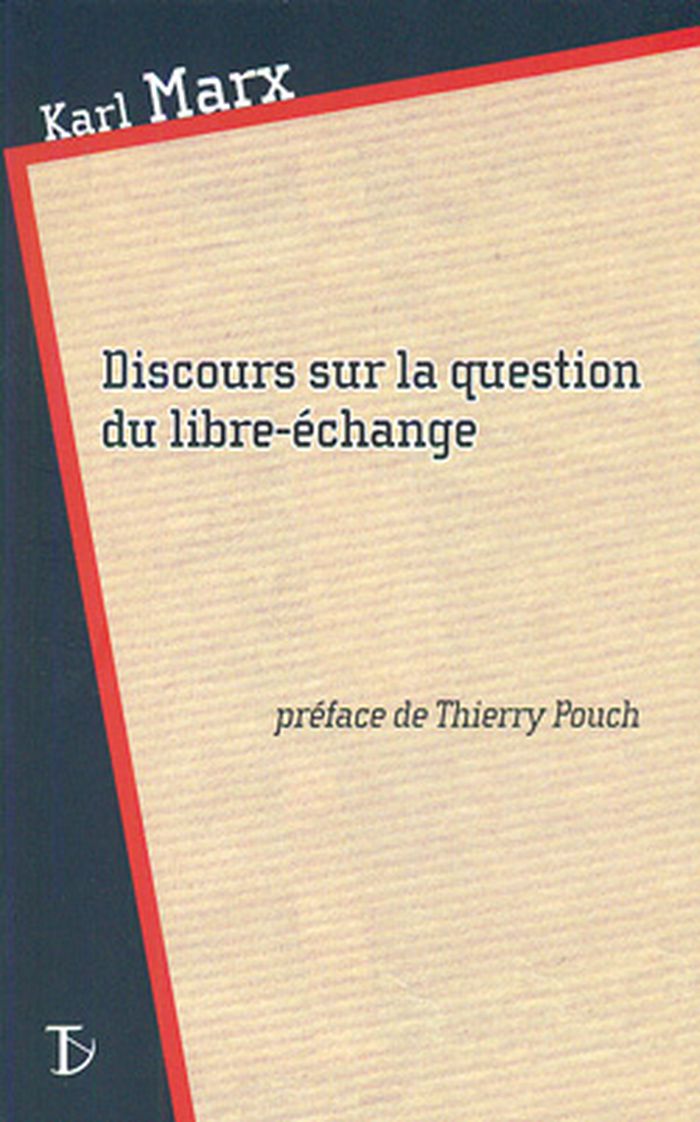
Dans son discours, prononcé en 1848 devant l'Association démocratique de Bruxelles, Karl Marx dissèque les effets de la théorie du libre-échange, après la suppression, en 1846, des Corn Laws en Angleterre, lois qui protégeaient les cultures locales de céréales. “L’ouvrier périra avant le capitaliste”, dit-il. La question du libre-échange, au XXIème siècle, se pose de manière toujours plus aiguë, comme l’analyse l’économiste Thierry Pouch dans sa préface.
Discours sur la question du libre-échange
Actions:
Prix:
$12.95
(disponible en magasin)
Résumé:
Dans son discours, prononcé en 1848 devant l'Association démocratique de Bruxelles, Karl Marx dissèque les effets de la théorie du libre-échange, après la suppression, en 1846, des Corn Laws en Angleterre, lois qui protégeaient les cultures locales de céréales. “L’ouvrier périra avant le capitaliste”, dit-il. La question du libre-échange, au XXIème siècle, se pose de manière toujours plus aiguë, comme l’analyse l’économiste Thierry Pouch dans sa préface.
Classification:
livres
livres
Publication:
septembre 2014
septembre 2014
Sujet:
Théorie/ philosophie
Théorie/ philosophie


