


2221 Résultats
Classification:
livres
livres
Actions:
Prix:
$35.00
(disponible en magasin)
Résumé:
Contrairement à d'autres univers culturels qui auront plutôt cherché à se faire peur, Mai 68 n'aura pas été qu'une métaphore dans la formation des architectes. Sans jamais atterrir à l'Université, alors en ébullition, « 68 » aura posé, entre Culture et Équipement, les cadres d'une nouvelle réalité : fin d'une « grande école » (des Beaux-Arts) ; extinction volontaire de(...)
$35.00
(disponible en magasin)
Résumé:
Contrairement à d'autres univers culturels qui auront plutôt cherché à se faire peur, Mai 68 n'aura pas été qu'une métaphore dans la formation des architectes. Sans jamais atterrir à l'Université, alors en ébullition, « 68 » aura posé, entre Culture et Équipement, les cadres d'une nouvelle réalité : fin d'une « grande école » (des Beaux-Arts) ; extinction volontaire de(...)
Titre:
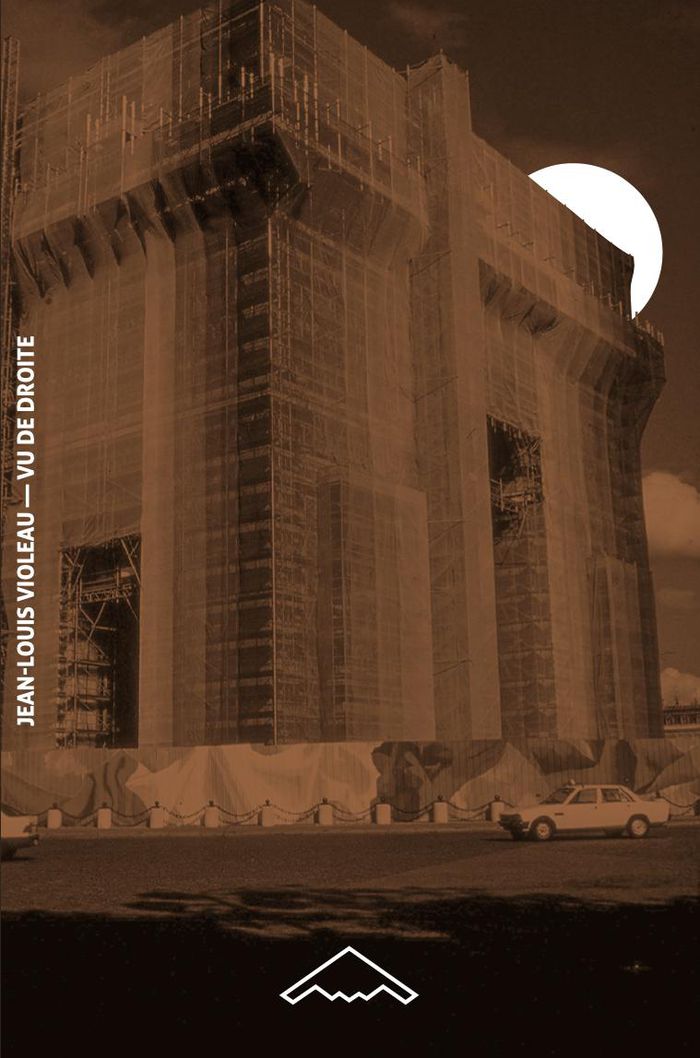
Vu de droite : Le testament de mai 68 et mai 81
Actions:
Prix:
$35.00
(disponible en magasin)
Résumé:
Contrairement à d'autres univers culturels qui auront plutôt cherché à se faire peur, Mai 68 n'aura pas été qu'une métaphore dans la formation des architectes. Sans jamais atterrir à l'Université, alors en ébullition, « 68 » aura posé, entre Culture et Équipement, les cadres d'une nouvelle réalité : fin d'une « grande école » (des Beaux-Arts) ; extinction volontaire de traditions séculaires ; suppression du droit d'entrée (l'admission) ; disparition des avantages liés au Prix de Rome. Déjà maintes fois racontée par la bouche des vainqueurs, que reste-t-il de cette histoire dans la mémoire des vaincus ? Après Les architectes et mai 68 (2005) et Les architectes et mai 81 (2011), l'auteur cherche à éclairer les pièces aveugles de ses travaux de jeunesse...
Vu de droite : Le testament de mai 68 et mai 81
Actions:
Prix:
$35.00
(disponible en magasin)
Résumé:
Contrairement à d'autres univers culturels qui auront plutôt cherché à se faire peur, Mai 68 n'aura pas été qu'une métaphore dans la formation des architectes. Sans jamais atterrir à l'Université, alors en ébullition, « 68 » aura posé, entre Culture et Équipement, les cadres d'une nouvelle réalité : fin d'une « grande école » (des Beaux-Arts) ; extinction volontaire de traditions séculaires ; suppression du droit d'entrée (l'admission) ; disparition des avantages liés au Prix de Rome. Déjà maintes fois racontée par la bouche des vainqueurs, que reste-t-il de cette histoire dans la mémoire des vaincus ? Après Les architectes et mai 68 (2005) et Les architectes et mai 81 (2011), l'auteur cherche à éclairer les pièces aveugles de ses travaux de jeunesse...
Classification:
livres
livres
Publication:
mai 2026
mai 2026
Sujet:
Théorie de l’architecture
Théorie de l’architecture
Classification:
livres
livres
Actions:
Prix:
$60.00
(disponible en magasin)
Résumé:
Drawing on his pioneering expertise in the relationship between graphic satire and architecture, Gabriele Neri retraces Alan Dunn’s path from painter to renowned cartoonist, offering an unconventional perspective on architectural and urban transformations—and on their perception within society. Featuring 200 carefully selected images, including Dunn’s correspondence,(...)
$60.00
(disponible en magasin)
Résumé:
Drawing on his pioneering expertise in the relationship between graphic satire and architecture, Gabriele Neri retraces Alan Dunn’s path from painter to renowned cartoonist, offering an unconventional perspective on architectural and urban transformations—and on their perception within society. Featuring 200 carefully selected images, including Dunn’s correspondence,(...)
Titre:
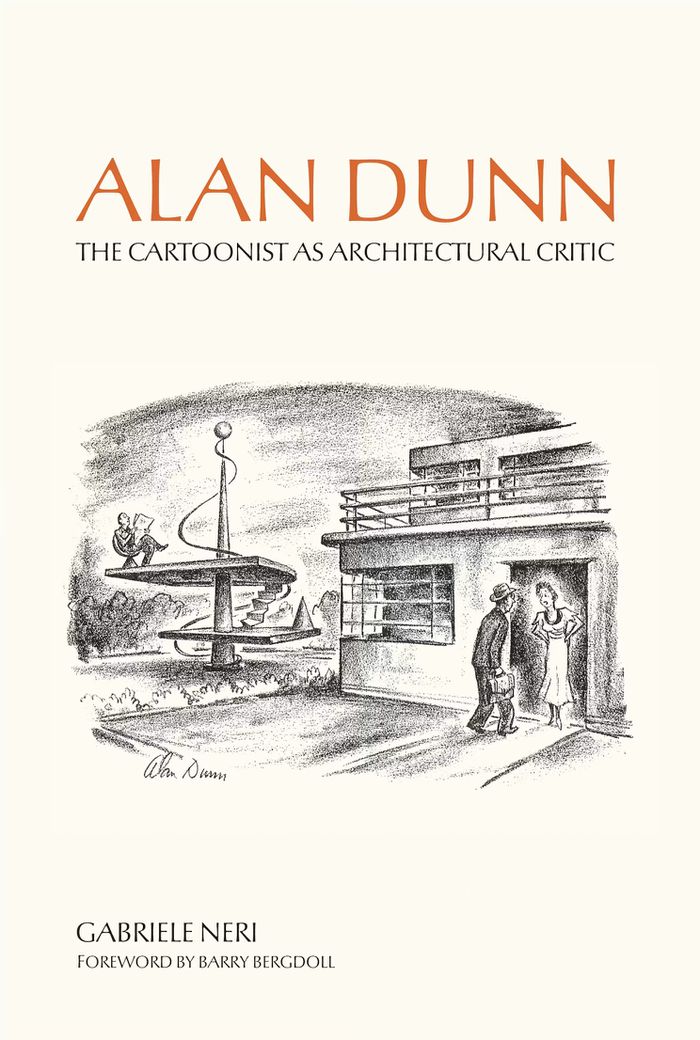
Alan Dunn: The cartoonist as architecttural critic
Actions:
Prix:
$60.00
(disponible en magasin)
Résumé:
Drawing on his pioneering expertise in the relationship between graphic satire and architecture, Gabriele Neri retraces Alan Dunn’s path from painter to renowned cartoonist, offering an unconventional perspective on architectural and urban transformations—and on their perception within society. Featuring 200 carefully selected images, including Dunn’s correspondence, unpublished cartoons, preliminary sketches, watercolors, and rare photographs, Alan Dunn demonstrates the critical potential of caricature and cartoons for architectural history. Through Neri’s deft analysis, the book also reveals the complex intersections of architecture with media, publishing, commerce, society, art, and politics.
Alan Dunn: The cartoonist as architecttural critic
Actions:
Prix:
$60.00
(disponible en magasin)
Résumé:
Drawing on his pioneering expertise in the relationship between graphic satire and architecture, Gabriele Neri retraces Alan Dunn’s path from painter to renowned cartoonist, offering an unconventional perspective on architectural and urban transformations—and on their perception within society. Featuring 200 carefully selected images, including Dunn’s correspondence, unpublished cartoons, preliminary sketches, watercolors, and rare photographs, Alan Dunn demonstrates the critical potential of caricature and cartoons for architectural history. Through Neri’s deft analysis, the book also reveals the complex intersections of architecture with media, publishing, commerce, society, art, and politics.
Classification:
livres
livres
Publication:
mai 2026
mai 2026
Sujet:
Théorie de l’architecture
Théorie de l’architecture
Classification:
livres
livres
Actions:
Prix:
$73.00
(disponible en magasin)
Résumé:
Giancarlo De Carlo’s academic and professional career combined two seemingly opposed terms in a single vocation: architecture and anarchy. But this was a vocation that avoided the utopian fantasies of the 1960s and 1970s and instead strove for rigor. In the essays collected in this book, De Carlo shows how the idea of participatory architecture can open the way to a(...)
$73.00
(disponible en magasin)
Résumé:
Giancarlo De Carlo’s academic and professional career combined two seemingly opposed terms in a single vocation: architecture and anarchy. But this was a vocation that avoided the utopian fantasies of the 1960s and 1970s and instead strove for rigor. In the essays collected in this book, De Carlo shows how the idea of participatory architecture can open the way to a(...)
Titre:
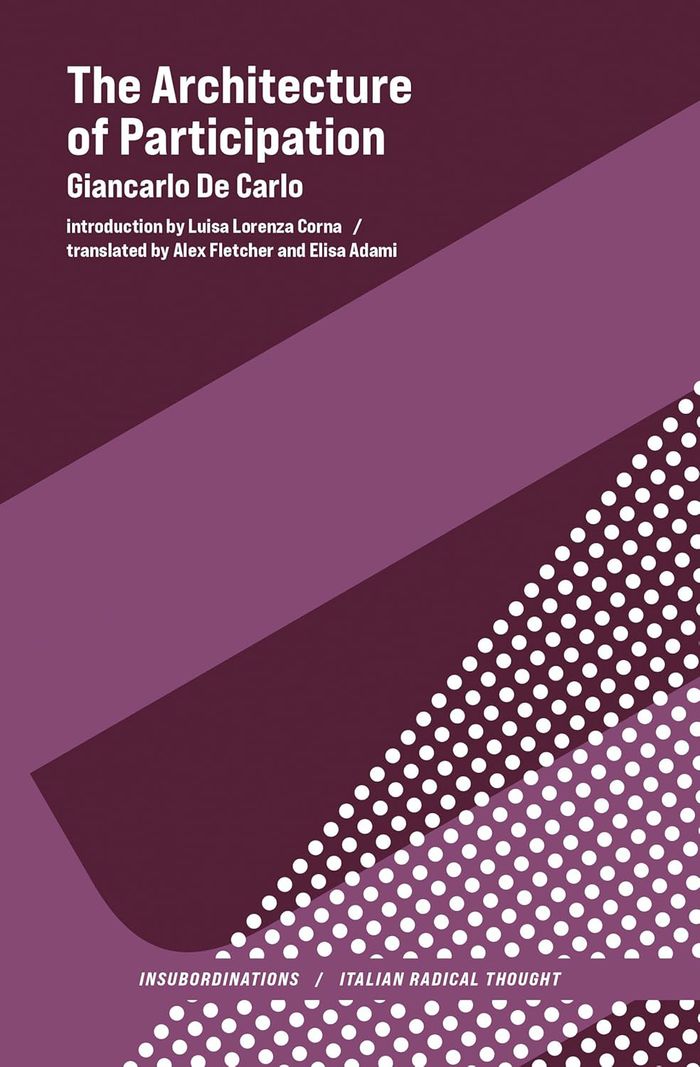
The architecture of participation
Actions:
Prix:
$73.00
(disponible en magasin)
Résumé:
Giancarlo De Carlo’s academic and professional career combined two seemingly opposed terms in a single vocation: architecture and anarchy. But this was a vocation that avoided the utopian fantasies of the 1960s and 1970s and instead strove for rigor. In the essays collected in this book, De Carlo shows how the idea of participatory architecture can open the way to a realistic, fully realizable utopia—in theory, but also in practice: in his urban planning of the city center of Rimini and in his architectural plan for the village of Matteotti in Terni.
The architecture of participation
Actions:
Prix:
$73.00
(disponible en magasin)
Résumé:
Giancarlo De Carlo’s academic and professional career combined two seemingly opposed terms in a single vocation: architecture and anarchy. But this was a vocation that avoided the utopian fantasies of the 1960s and 1970s and instead strove for rigor. In the essays collected in this book, De Carlo shows how the idea of participatory architecture can open the way to a realistic, fully realizable utopia—in theory, but also in practice: in his urban planning of the city center of Rimini and in his architectural plan for the village of Matteotti in Terni.
Classification:
livres
livres
Publication:
mai 2026
mai 2026
Sujet:
Théorie de l’architecture
Théorie de l’architecture
Classification:
livres
livres
Actions:
Prix:
$39.95
(disponible en magasin)
Résumé:
Chaque seconde, 150 tonnes de béton sont coulées dans le monde. Pas de béton sans ciment, dont la production émet près de trois fois plus de CO2 que le transport aérien. Pas de béton sans sable, deuxième ressource naturelle à être pillée, après l'eau. Pas de bétonisation sans artificialisation des sols, fatale pour la biodiversité et qui dévore les terres agricoles. C'est(...)
$39.95
(disponible en magasin)
Résumé:
Chaque seconde, 150 tonnes de béton sont coulées dans le monde. Pas de béton sans ciment, dont la production émet près de trois fois plus de CO2 que le transport aérien. Pas de béton sans sable, deuxième ressource naturelle à être pillée, après l'eau. Pas de bétonisation sans artificialisation des sols, fatale pour la biodiversité et qui dévore les terres agricoles. C'est(...)
Titre:
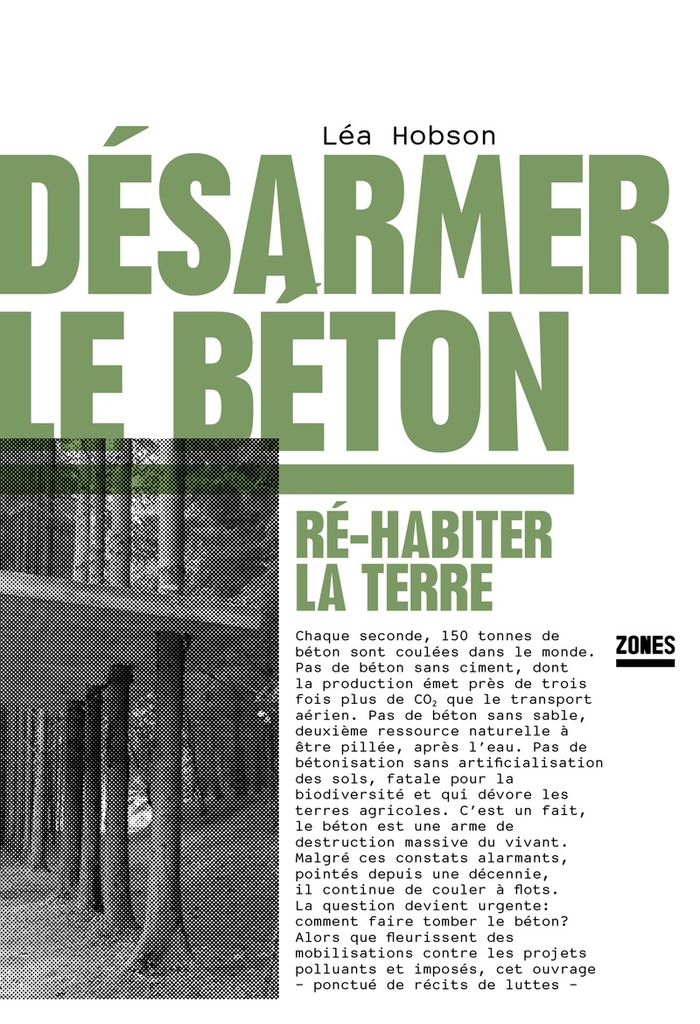
Désarmer le béton: Re-habiter la terre
Actions:
Prix:
$39.95
(disponible en magasin)
Résumé:
Chaque seconde, 150 tonnes de béton sont coulées dans le monde. Pas de béton sans ciment, dont la production émet près de trois fois plus de CO2 que le transport aérien. Pas de béton sans sable, deuxième ressource naturelle à être pillée, après l'eau. Pas de bétonisation sans artificialisation des sols, fatale pour la biodiversité et qui dévore les terres agricoles. C'est un fait, le béton est une arme de destruction massive du vivant. Malgré ces constats alarmants, pointés depuis une décennie, il continue de couler à flots. La question devient urgente: comment faire tomber le béton ? Alors que fleurissent des mobilisations contre les projets polluants et imposés, cet ouvrage - ponctué de récits de luttes - décortique la filière, expose le rôle actif des bétonneurs français et pointe les liaisons dangereuses tissées entre industriels et pouvoir d'État.
Désarmer le béton: Re-habiter la terre
Actions:
Prix:
$39.95
(disponible en magasin)
Résumé:
Chaque seconde, 150 tonnes de béton sont coulées dans le monde. Pas de béton sans ciment, dont la production émet près de trois fois plus de CO2 que le transport aérien. Pas de béton sans sable, deuxième ressource naturelle à être pillée, après l'eau. Pas de bétonisation sans artificialisation des sols, fatale pour la biodiversité et qui dévore les terres agricoles. C'est un fait, le béton est une arme de destruction massive du vivant. Malgré ces constats alarmants, pointés depuis une décennie, il continue de couler à flots. La question devient urgente: comment faire tomber le béton ? Alors que fleurissent des mobilisations contre les projets polluants et imposés, cet ouvrage - ponctué de récits de luttes - décortique la filière, expose le rôle actif des bétonneurs français et pointe les liaisons dangereuses tissées entre industriels et pouvoir d'État.
Classification:
livres
livres
Publication:
octobre 2025
octobre 2025
Sujet:
Théorie de l’architecture
Théorie de l’architecture
Classification:
livres
livres
Prix:
$52.50
(disponible en magasin)
Résumé:
"Breathing Space" is a compelling and wide-ranging analysis of pneumatic phenomena in modern culture. Architect and historian Tim Altenhof brilliantly explores the physiology of breathing and its reciprocal relationship to bodies and buildings, both of which share a common atmosphere. Because breathing is controlled by the autonomic nervous system and cannot be willfully(...)
$52.50
(disponible en magasin)
Résumé:
"Breathing Space" is a compelling and wide-ranging analysis of pneumatic phenomena in modern culture. Architect and historian Tim Altenhof brilliantly explores the physiology of breathing and its reciprocal relationship to bodies and buildings, both of which share a common atmosphere. Because breathing is controlled by the autonomic nervous system and cannot be willfully(...)
Titre:
Breathing space: The architecture of pneumatic beings
Actions:
Prix:
$52.50
(disponible en magasin)
Résumé:
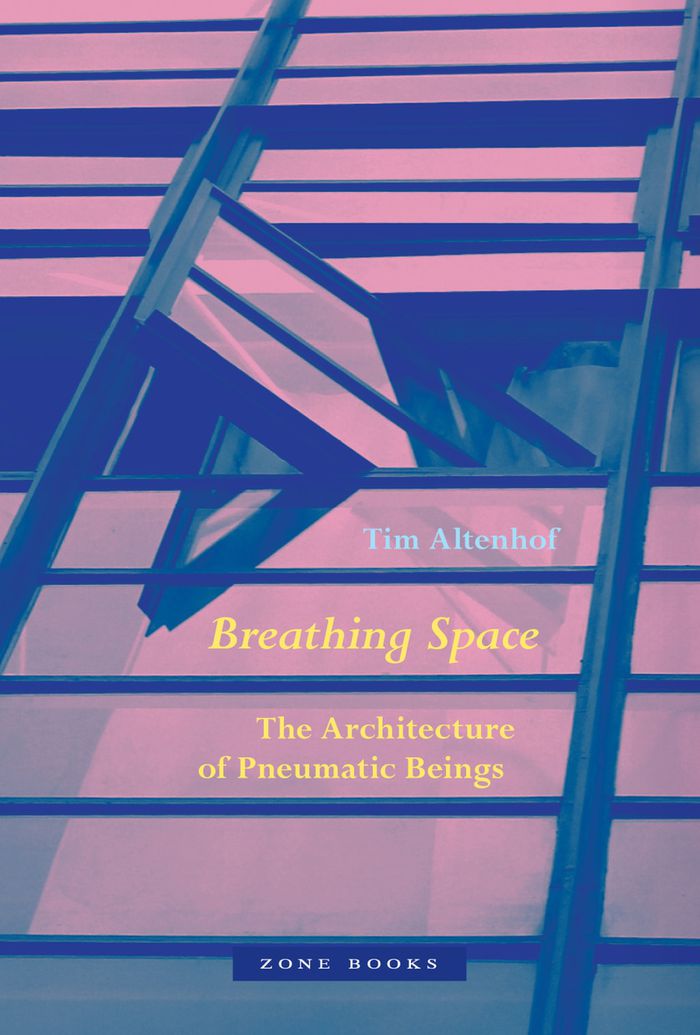
"Breathing Space" is a compelling and wide-ranging analysis of pneumatic phenomena in modern culture. Architect and historian Tim Altenhof brilliantly explores the physiology of breathing and its reciprocal relationship to bodies and buildings, both of which share a common atmosphere. Because breathing is controlled by the autonomic nervous system and cannot be willfully overridden, it takes place unconsciously and involuntarily—most of the time. However, beginning in the mid-nineteenth century, attitudes toward breathing changed significantly. Breathing became a widely investigated cultural and physiological phenomenon and was the basis for techniques and bodily practices that heightened pulmonary awareness. New understandings of air pollution and disease stimulated a widespread preoccupation with ventilation, impacting architecture in countless ways. Altenhof’s close readings of built structures show how the science of breathing was incorporated into architecture, whether in the design of factories, residences, or medical facilities. The lungs form a major part of the respiratory system and like no other organ tie the living body directly to its surroundings. Yet the role of lungs also poses a topological problem: engaging in atmospheric transfer, they dissolve the division between inside and outside, and despite being an internal organ, they sustain a permanent and living connection to the external world. This ambiguity and permeability constitute the spatial dimension of breathing.
Breathing space: The architecture of pneumatic beings
Actions:
Prix:
$52.50
(disponible en magasin)
Résumé:
"Breathing Space" is a compelling and wide-ranging analysis of pneumatic phenomena in modern culture. Architect and historian Tim Altenhof brilliantly explores the physiology of breathing and its reciprocal relationship to bodies and buildings, both of which share a common atmosphere. Because breathing is controlled by the autonomic nervous system and cannot be willfully overridden, it takes place unconsciously and involuntarily—most of the time. However, beginning in the mid-nineteenth century, attitudes toward breathing changed significantly. Breathing became a widely investigated cultural and physiological phenomenon and was the basis for techniques and bodily practices that heightened pulmonary awareness. New understandings of air pollution and disease stimulated a widespread preoccupation with ventilation, impacting architecture in countless ways. Altenhof’s close readings of built structures show how the science of breathing was incorporated into architecture, whether in the design of factories, residences, or medical facilities. The lungs form a major part of the respiratory system and like no other organ tie the living body directly to its surroundings. Yet the role of lungs also poses a topological problem: engaging in atmospheric transfer, they dissolve the division between inside and outside, and despite being an internal organ, they sustain a permanent and living connection to the external world. This ambiguity and permeability constitute the spatial dimension of breathing.
Classification:
livres
livres
Publication:
mars 2026
mars 2026
Sujet:
Théorie de l’architecture
Théorie de l’architecture
Classification:
livres
livres
Prix:
$42.95
(disponible en magasin)
Résumé:
La crise environnementale actuelle confronte les architectes à la nécessité de redéfinir leurs positions éthiques, donnant ainsi un rôle renouvelé à la critique architecturale. Mais ce lien entre crise et critique, au-delà d’une étymologie commune, reste équivoque. La critique réagit-elle aux crises ou les suscite-t-elle ? Les crises internes qui traversent régulièrement(...)
$42.95
(disponible en magasin)
Résumé:
La crise environnementale actuelle confronte les architectes à la nécessité de redéfinir leurs positions éthiques, donnant ainsi un rôle renouvelé à la critique architecturale. Mais ce lien entre crise et critique, au-delà d’une étymologie commune, reste équivoque. La critique réagit-elle aux crises ou les suscite-t-elle ? Les crises internes qui traversent régulièrement(...)
Titre:
La critique à l'oeuvre : Fragments d'un discours architectural
Actions:
Prix:
$42.95
(disponible en magasin)
Résumé:
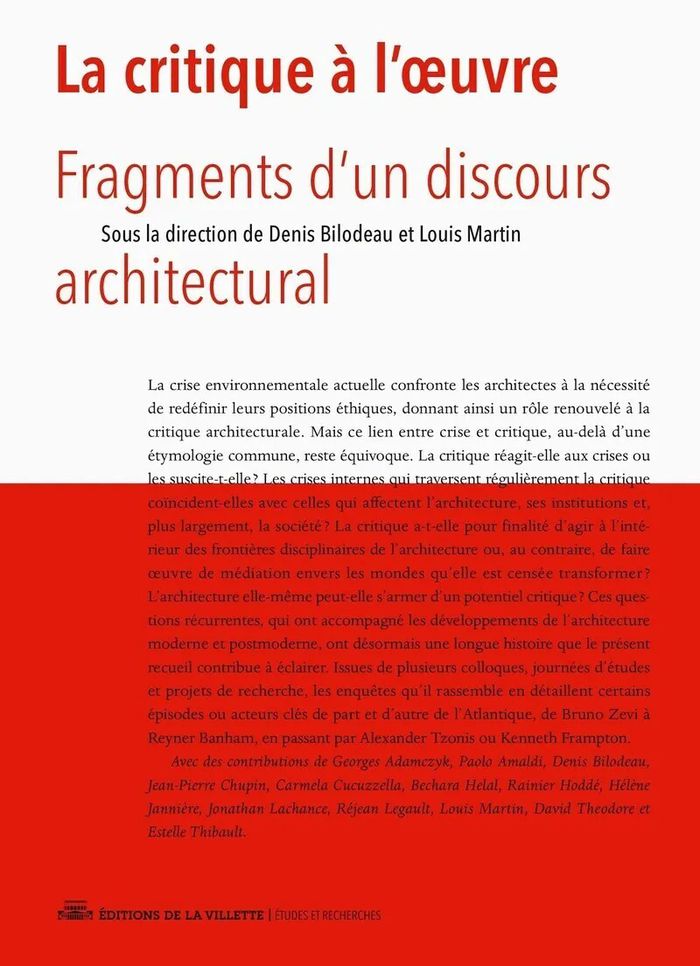
La crise environnementale actuelle confronte les architectes à la nécessité de redéfinir leurs positions éthiques, donnant ainsi un rôle renouvelé à la critique architecturale. Mais ce lien entre crise et critique, au-delà d’une étymologie commune, reste équivoque. La critique réagit-elle aux crises ou les suscite-t-elle ? Les crises internes qui traversent régulièrement la critique coïncident-elles avec celles qui affectent l’architecture, ses institutions et, plus largement, la société ? La critique a-t-elle pour finalité d’agir à l’intérieur des frontières disciplinaires de l’architecture ou, au contraire, de faire oeuvre de médiation envers les mondes qu’elle est censée transformer ? L’architecture elle-même peut-elle s’armer d’un potentiel critique ? Ces questions récurrentes, qui ont accompagné les développements de l’architecture moderne et postmoderne, ont désormais une longue histoire que le présent recueil contribue à éclairer. Issues de plusieurs colloques, journées d’études et projets de recherche, les enquêtes qu’il rassemble en détaillent certains épisodes ou acteurs clés de part et d’autre de l’Atlantique, de Bruno Zevi à Reyner Banham, en passant par Alexander Tzonis ou Kenneth Frampton.
La critique à l'oeuvre : Fragments d'un discours architectural
Actions:
Prix:
$42.95
(disponible en magasin)
Résumé:
La crise environnementale actuelle confronte les architectes à la nécessité de redéfinir leurs positions éthiques, donnant ainsi un rôle renouvelé à la critique architecturale. Mais ce lien entre crise et critique, au-delà d’une étymologie commune, reste équivoque. La critique réagit-elle aux crises ou les suscite-t-elle ? Les crises internes qui traversent régulièrement la critique coïncident-elles avec celles qui affectent l’architecture, ses institutions et, plus largement, la société ? La critique a-t-elle pour finalité d’agir à l’intérieur des frontières disciplinaires de l’architecture ou, au contraire, de faire oeuvre de médiation envers les mondes qu’elle est censée transformer ? L’architecture elle-même peut-elle s’armer d’un potentiel critique ? Ces questions récurrentes, qui ont accompagné les développements de l’architecture moderne et postmoderne, ont désormais une longue histoire que le présent recueil contribue à éclairer. Issues de plusieurs colloques, journées d’études et projets de recherche, les enquêtes qu’il rassemble en détaillent certains épisodes ou acteurs clés de part et d’autre de l’Atlantique, de Bruno Zevi à Reyner Banham, en passant par Alexander Tzonis ou Kenneth Frampton.
Classification:
livres
livres
Publication:
mai 2025
mai 2025
Sujet:
Théorie de l’architecture
Théorie de l’architecture
Classification:
livres
livres

Actions:
Prix:
$25.00
(disponible en magasin)
Résumé:
Entre vision et réalisation, le « Tribunal des Utopies » en fait le procès. L’utopie est accusée : les utopies menacent-elles notre bonheur ? Présumons d’abord les architectes, les politiques, les promoteurs, les habitants innocents. Présumons les utopies elles mêmes innocentes. « Utopies. Un nom qu’on voudrait presque verbe. Les utopies donnent à voir, pour demain,(...)
$25.00
(disponible en magasin)
Résumé:
Entre vision et réalisation, le « Tribunal des Utopies » en fait le procès. L’utopie est accusée : les utopies menacent-elles notre bonheur ? Présumons d’abord les architectes, les politiques, les promoteurs, les habitants innocents. Présumons les utopies elles mêmes innocentes. « Utopies. Un nom qu’on voudrait presque verbe. Les utopies donnent à voir, pour demain,(...)
Titre:
Le Tribunal des Utopies #1 : Les utopies menacent-elles notre bonheur?
Actions:
Prix:
$25.00
(disponible en magasin)
Résumé:
Entre vision et réalisation, le « Tribunal des Utopies » en fait le procès. L’utopie est accusée : les utopies menacent-elles notre bonheur ? Présumons d’abord les architectes, les politiques, les promoteurs, les habitants innocents. Présumons les utopies elles mêmes innocentes. « Utopies. Un nom qu’on voudrait presque verbe. Les utopies donnent à voir, pour demain, ce qui n’est pas là aujourd’hui. Ce sont des tentatives de rééquilibrage. Penser l’utopie, c’est faire le constat aujourd’hui qu’un « mieux » est possible ; ou, à défaut de mieux, qu’un « autre » est possible. L’utopie se pratique. Elle s’expérimente. Elle fait l’épreuve du temps. Elle raconte une histoire, faite d’aspirations communes ou contradictoires. Elle est l’expression concrète d’une succession d’ambitions politiques appliquées sur le territoire. Elle autorise la critique, parfois même elle l’invite, afin d’en tirer des leçons. Si l’utopie nous permet de regarder en arrière, elle est indispensable comme exercice de projet. L’utopie est à la fois un exercice de formulation et un exercice d’analyse du présent. En faire l’exercice, c’est se positionner comme individu capable – empowered – agissant en responsabilité, au sein du monde. L’utopie se réalise parfois. Malgré la bienveillance qu’on lui prête, l’utopie confrontée au réel s’altère, évolue, guidée par l’imprévisible, le temps qui passe, ou de simples changements d’hypothèses.»
Le Tribunal des Utopies #1 : Les utopies menacent-elles notre bonheur?
Actions:
Prix:
$25.00
(disponible en magasin)
Résumé:
Entre vision et réalisation, le « Tribunal des Utopies » en fait le procès. L’utopie est accusée : les utopies menacent-elles notre bonheur ? Présumons d’abord les architectes, les politiques, les promoteurs, les habitants innocents. Présumons les utopies elles mêmes innocentes. « Utopies. Un nom qu’on voudrait presque verbe. Les utopies donnent à voir, pour demain, ce qui n’est pas là aujourd’hui. Ce sont des tentatives de rééquilibrage. Penser l’utopie, c’est faire le constat aujourd’hui qu’un « mieux » est possible ; ou, à défaut de mieux, qu’un « autre » est possible. L’utopie se pratique. Elle s’expérimente. Elle fait l’épreuve du temps. Elle raconte une histoire, faite d’aspirations communes ou contradictoires. Elle est l’expression concrète d’une succession d’ambitions politiques appliquées sur le territoire. Elle autorise la critique, parfois même elle l’invite, afin d’en tirer des leçons. Si l’utopie nous permet de regarder en arrière, elle est indispensable comme exercice de projet. L’utopie est à la fois un exercice de formulation et un exercice d’analyse du présent. En faire l’exercice, c’est se positionner comme individu capable – empowered – agissant en responsabilité, au sein du monde. L’utopie se réalise parfois. Malgré la bienveillance qu’on lui prête, l’utopie confrontée au réel s’altère, évolue, guidée par l’imprévisible, le temps qui passe, ou de simples changements d’hypothèses.»
Classification:
livres
livres
Publication:
avril 2026
avril 2026
Sujet:
Théorie de l’architecture
Théorie de l’architecture
Classification:
livres
livres
Actions:
Prix:
$25.00
(disponible en magasin)
Résumé:
Un monde à plusieurs peut-il s'imaginer seul ? « Entre vision et réalisation, le Tribunal des Utopies en fait le procès, avec des experts invités à la barre. Pour cette deuxième édition, Antoine Aubinais (architecte), Stéphanie Sense (élue locale), Luc Gwiazdzinski (géographe), Elisa Dumay (urbaniste culturelle), Marc-André Selosse (biologiste) et Simon Laisney(...)
$25.00
(disponible en magasin)
Résumé:
Un monde à plusieurs peut-il s'imaginer seul ? « Entre vision et réalisation, le Tribunal des Utopies en fait le procès, avec des experts invités à la barre. Pour cette deuxième édition, Antoine Aubinais (architecte), Stéphanie Sense (élue locale), Luc Gwiazdzinski (géographe), Elisa Dumay (urbaniste culturelle), Marc-André Selosse (biologiste) et Simon Laisney(...)
Titre:
Le Tribunal des Utopies #2 : Un monde à plusieurs peut-il s’imaginer seul?
Actions:
Prix:
$25.00
(disponible en magasin)
Résumé:
Un monde à plusieurs peut-il s'imaginer seul ? « Entre vision et réalisation, le Tribunal des Utopies en fait le procès, avec des experts invités à la barre. Pour cette deuxième édition, Antoine Aubinais (architecte), Stéphanie Sense (élue locale), Luc Gwiazdzinski (géographe), Elisa Dumay (urbaniste culturelle), Marc-André Selosse (biologiste) et Simon Laisney (urbaniste) reviennent sur la nécessité d’une rencontre apaisée et sur les conditions de cette rencontre. Quelles sont les stratégies mises en place pour créer des entre-deux, des territoires communs, des terrains d’entente ? Si « seul on va plus vite, mais qu’ensemble on va plus loin », ne pouvons-nous pas nous prendre alors à rêver d’horizon ? »
Le Tribunal des Utopies #2 : Un monde à plusieurs peut-il s’imaginer seul?
Actions:
Prix:
$25.00
(disponible en magasin)
Résumé:
Un monde à plusieurs peut-il s'imaginer seul ? « Entre vision et réalisation, le Tribunal des Utopies en fait le procès, avec des experts invités à la barre. Pour cette deuxième édition, Antoine Aubinais (architecte), Stéphanie Sense (élue locale), Luc Gwiazdzinski (géographe), Elisa Dumay (urbaniste culturelle), Marc-André Selosse (biologiste) et Simon Laisney (urbaniste) reviennent sur la nécessité d’une rencontre apaisée et sur les conditions de cette rencontre. Quelles sont les stratégies mises en place pour créer des entre-deux, des territoires communs, des terrains d’entente ? Si « seul on va plus vite, mais qu’ensemble on va plus loin », ne pouvons-nous pas nous prendre alors à rêver d’horizon ? »
Classification:
livres
livres
Publication:
avril 2026
avril 2026
Sujet:
Théorie de l’architecture
Théorie de l’architecture
Classification:
livres
livres
Titre:
The House at Capo d'Orso
The House at Capo d'Orso
Actions:
Prix:
$33.95
(disponible en magasin)
Résumé:
How does a house shape experience? How does architecture establish a practice of living? Architect Sebastiano Brandolini invites readers on a meditative tour of his family’s house on the Sardinian coast, describing everything from the geology of the rocks beneath, to the history of the surrounding villages, to the way the shifting light measures the day. More than the(...)
$33.95
(disponible en magasin)
Résumé:
How does a house shape experience? How does architecture establish a practice of living? Architect Sebastiano Brandolini invites readers on a meditative tour of his family’s house on the Sardinian coast, describing everything from the geology of the rocks beneath, to the history of the surrounding villages, to the way the shifting light measures the day. More than the(...)
Titre:
The House at Capo d'Orso
Actions:
Prix:
$33.95
(disponible en magasin)
Résumé:
How does a house shape experience? How does architecture establish a practice of living? Architect Sebastiano Brandolini invites readers on a meditative tour of his family’s house on the Sardinian coast, describing everything from the geology of the rocks beneath, to the history of the surrounding villages, to the way the shifting light measures the day. More than the story of a single summer home written by an accomplished architect, this is a study of how place, the built environment, and daily practice make up our lives, at the most minute level of detail. Recalling the essays of Walter Benjamin, Bill Bryson, Rebecca Solnit, and Lawrence Weschler, Brandolini’s writing weaves literature, art history, and the transformation of Sardinia since the 1960s into a single fabric. "The House at Capo d’Orso" is not only a study of architecture and life in the built environment, but of family life, and the way the Brandolini family adapted themselves to the house they built.
The House at Capo d'Orso
Actions:
Prix:
$33.95
(disponible en magasin)
Résumé:
How does a house shape experience? How does architecture establish a practice of living? Architect Sebastiano Brandolini invites readers on a meditative tour of his family’s house on the Sardinian coast, describing everything from the geology of the rocks beneath, to the history of the surrounding villages, to the way the shifting light measures the day. More than the story of a single summer home written by an accomplished architect, this is a study of how place, the built environment, and daily practice make up our lives, at the most minute level of detail. Recalling the essays of Walter Benjamin, Bill Bryson, Rebecca Solnit, and Lawrence Weschler, Brandolini’s writing weaves literature, art history, and the transformation of Sardinia since the 1960s into a single fabric. "The House at Capo d’Orso" is not only a study of architecture and life in the built environment, but of family life, and the way the Brandolini family adapted themselves to the house they built.
Classification:
livres
livres
Publication:
mai 2023
mai 2023
Sujet:
Théorie de l’architecture
Théorie de l’architecture
Classification:
livres
livres
Actions:
Prix:
$30.00
(disponible en magasin)
Résumé:
"What is architecture?" Many great architects, from Ludwig Mies van der Rohe to Etienne-Louis Boullée, have grappled with this question. This book has emerged from a process of personal reflection of the author on the practice of architecture and is, in essence, a collection of thoughts on how to understand architecture and architectural design. It does not aim to provide(...)
$30.00
(disponible en magasin)
Résumé:
"What is architecture?" Many great architects, from Ludwig Mies van der Rohe to Etienne-Louis Boullée, have grappled with this question. This book has emerged from a process of personal reflection of the author on the practice of architecture and is, in essence, a collection of thoughts on how to understand architecture and architectural design. It does not aim to provide(...)
Titre:
Architecture as a historical discipline
Actions:
Prix:
$30.00
(disponible en magasin)
Résumé:
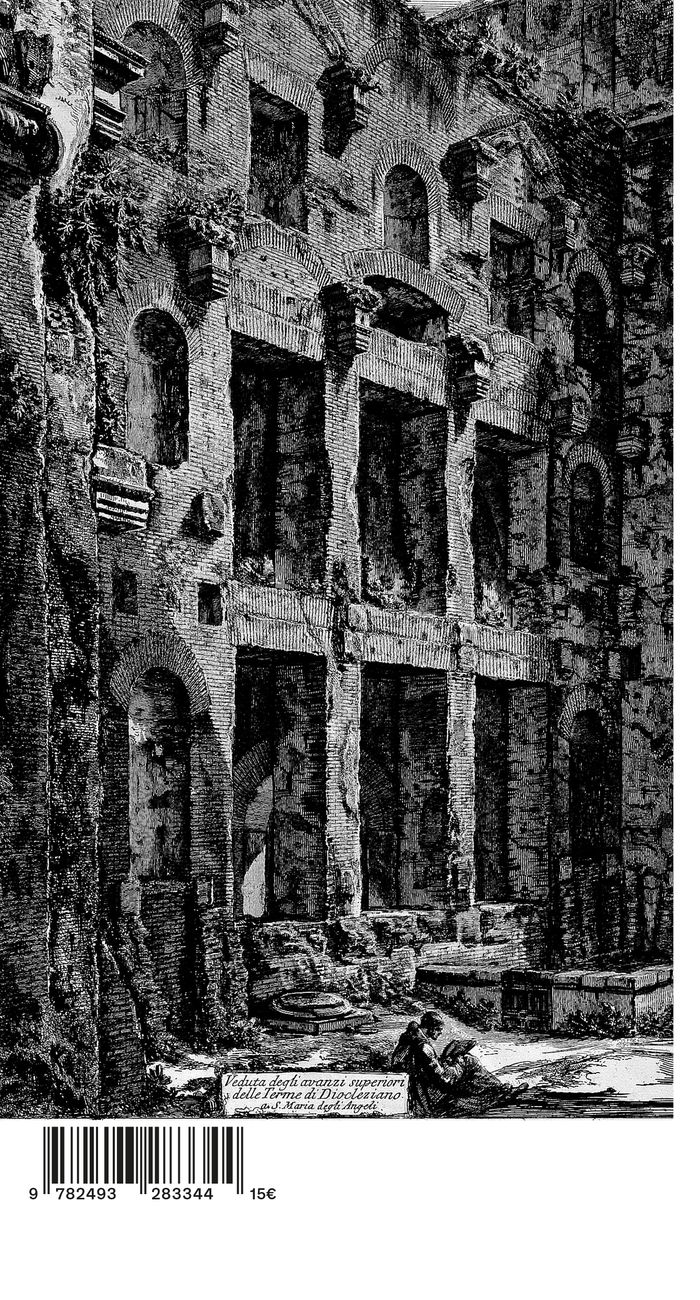
"What is architecture?" Many great architects, from Ludwig Mies van der Rohe to Etienne-Louis Boullée, have grappled with this question. This book has emerged from a process of personal reflection of the author on the practice of architecture and is, in essence, a collection of thoughts on how to understand architecture and architectural design. It does not aim to provide an exhaustive or systematic treatment. These reflections—shaped through teaching—remain personal, even if they aspire to be shared by others. The crux of the argument made here is that the history of architecture should be recognised as the foundational matrix of architectural identity. Starting from this premise, the inquiry delves into the essence of architecture and design; it asks how this discipline can be taught and learned, what constitutes a theoretical text on design, and what defines architectural research. The book addresses those who, much like an architecture student, wish to "understand better".
Architecture as a historical discipline
Actions:
Prix:
$30.00
(disponible en magasin)
Résumé:
"What is architecture?" Many great architects, from Ludwig Mies van der Rohe to Etienne-Louis Boullée, have grappled with this question. This book has emerged from a process of personal reflection of the author on the practice of architecture and is, in essence, a collection of thoughts on how to understand architecture and architectural design. It does not aim to provide an exhaustive or systematic treatment. These reflections—shaped through teaching—remain personal, even if they aspire to be shared by others. The crux of the argument made here is that the history of architecture should be recognised as the foundational matrix of architectural identity. Starting from this premise, the inquiry delves into the essence of architecture and design; it asks how this discipline can be taught and learned, what constitutes a theoretical text on design, and what defines architectural research. The book addresses those who, much like an architecture student, wish to "understand better".
Classification:
livres
livres
Publication:
mars 2026
mars 2026
Sujet:
Théorie de l’architecture
Théorie de l’architecture


