


2244 Résultats
Classification:
livres
livres
Titre:
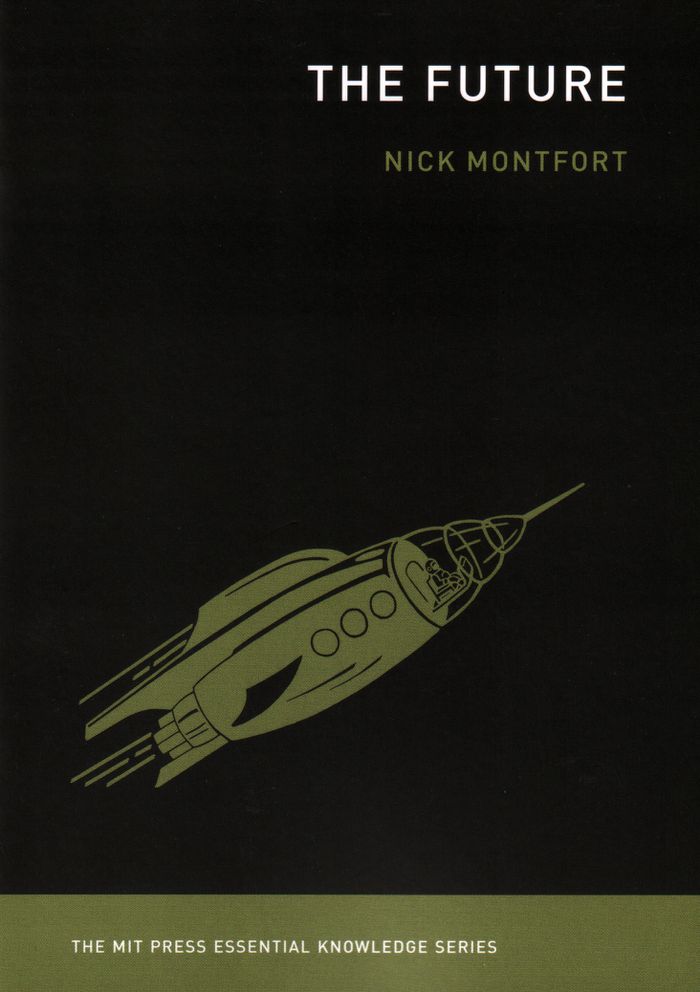
The future
The future
Actions:
Prix:
$21.95
(disponible sur commande)
Résumé:
The future is like an unwritten book. It is not something we see in a crystal ball, or can only hope to predict, like the weather. In this volume of the MIT Press's Essential Knowledge series, Nick Montfort argues that the future is something to be made, not predicted. Montfort offers what he considers essential knowledge about the future, as seen in the work of writers,(...)
Titre:
The future
Actions:
Prix:
$21.95
(disponible sur commande)
Résumé:
The future is like an unwritten book. It is not something we see in a crystal ball, or can only hope to predict, like the weather. In this volume of the MIT Press's Essential Knowledge series, Nick Montfort argues that the future is something to be made, not predicted. Montfort offers what he considers essential knowledge about the future, as seen in the work of writers, artists, inventors, and designers (mainly in Western culture) who developed and described the core components of the futures they envisioned. Montfort's approach is not that of futurology or scenario planning; instead, he reports on the work of making the future -- the thinkers who devoted themselves to writing pages in the unwritten book.
Classification:
livres
livres
Publication:
décembre 2017
décembre 2017
Sujet:
Théorie de l’architecture
Théorie de l’architecture
Classification:
livres
livres
Prix:
$66.00
(disponible sur commande)
Résumé:
"Plaster monuments" unsettles conventional thinking about copies and originals. As Mari Lending shows, casts were used to restore wholeness to buildings that in reality lay in ruin, or to isolate specific features of monuments to illustrate what was typical of a particular building, style, or era. Arranged in galleries and published in exhibition catalogues, these often(...)
Titre:
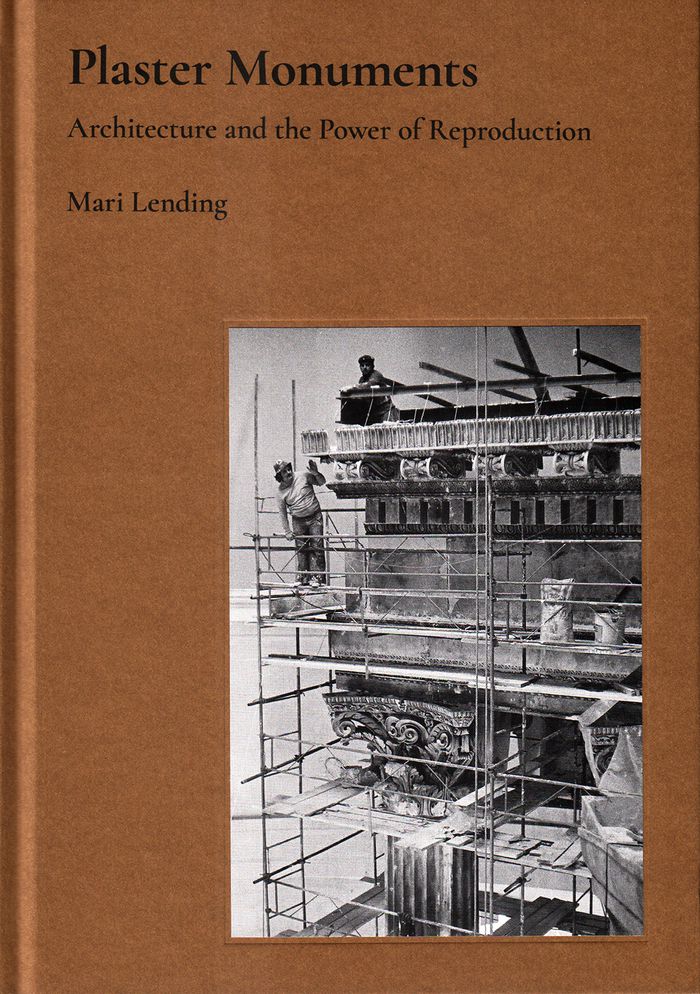
Plaster monuments: architecture and the power of reproduction
Actions:
Prix:
$66.00
(disponible sur commande)
Résumé:
"Plaster monuments" unsettles conventional thinking about copies and originals. As Mari Lending shows, casts were used to restore wholeness to buildings that in reality lay in ruin, or to isolate specific features of monuments to illustrate what was typical of a particular building, style, or era. Arranged in galleries and published in exhibition catalogues, these often enormous objects were staged to suggest the sweep of history, synthesizing structures from vastly different regions and time periods into coherent narratives. The first comprehensive history of these full-scale replicas, "Plaster monuments" examines how they were produced, marketed, sold, and displayed, and how their significance can be understood today.
Classification:
livres
livres
Publication:
décembre 2017
décembre 2017
Sujet:
Théorie de l’architecture
Théorie de l’architecture
Classification:
livres
livres
Actions:
Prix:
$22.95
(disponible sur commande)
Résumé:
Why do walls marking national boundaries proliferate amid widespread proclamations of global connectedness and despite anticipation of a world without borders? Why are barricades built of concrete, steel, and barbed wire when threats to the nation today are so often miniaturized, vaporous, clandestine, dispersed, or networked? In "Walled states, waning sovereignty", Wendy(...)
Titre:
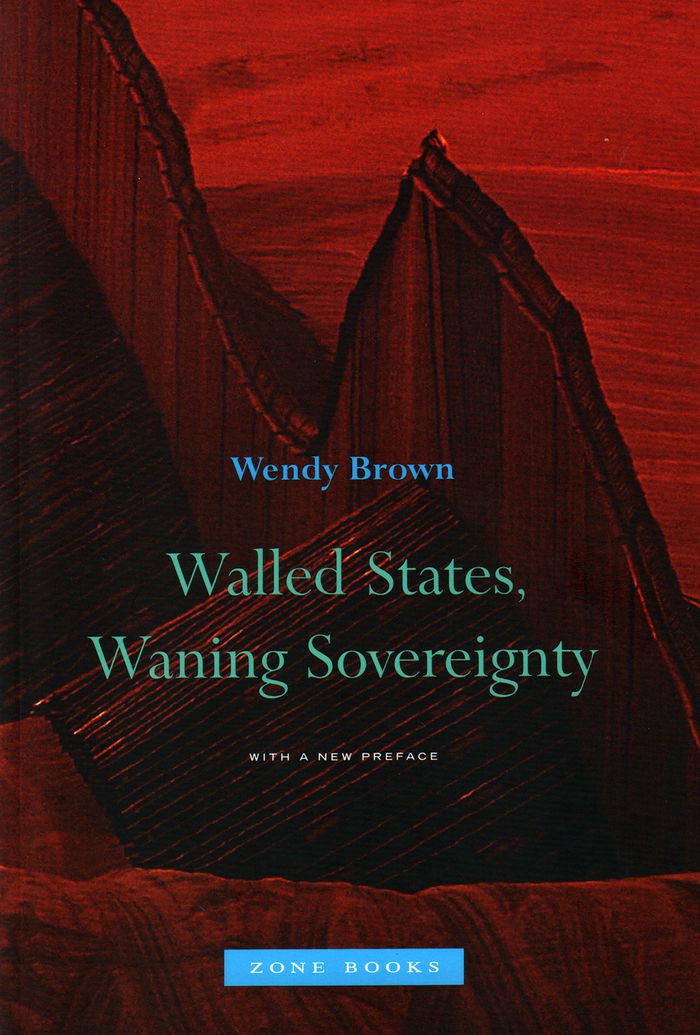
Walled states, waning sovereignty, New edition
Actions:
Prix:
$22.95
(disponible sur commande)
Résumé:
Why do walls marking national boundaries proliferate amid widespread proclamations of global connectedness and despite anticipation of a world without borders? Why are barricades built of concrete, steel, and barbed wire when threats to the nation today are so often miniaturized, vaporous, clandestine, dispersed, or networked? In "Walled states, waning sovereignty", Wendy Brown considers the recent spate of wall building in contrast to the erosion of nation-state sovereignty. Drawing on classical and contemporary political theories of state sovereignty in order to understand how state power and national identity persist amid its decline, Brown considers both the need of the state for legitimacy and the popular desires that incite the contemporary building of walls. The new walls—dividing Texas from Mexico, Israel from Palestine, South Africa from Zimbabwe—consecrate the broken boundaries they would seem to contest and signify the ungovernability of a range of forces unleashed by globalization. Yet these same walls often amount to little more than theatrical props, frequently breached, and blur the distinction between law and lawlessness that they are intended to represent. But if today’s walls fail to resolve the conflicts between globalization and national identity, they nonetheless project a stark image of sovereign power. Walls, Brown argues, address human desires for containment and protection in a world increasingly without these provisions. Walls respond to the wish for horizons even as horizons are vanquished.
Classification:
livres
livres
Publication:
avril 2017
avril 2017
Sujet:
Théorie de l’architecture
Théorie de l’architecture
Classification:
livres
livres
Actions:
Prix:
$39.95
(disponible sur commande)
Résumé:
The peculiar arrangement of the psychoanalyst’s office for an analytic session seems inexplicable. The analyst sits in a chair out of sight while the patient lies on a couch facing away. It has been this way since Freud, although, as Nathan Kravis points out in On the Couch, this practice is grounded more in the cultural history of reclining posture than in empirical(...)
Titre:
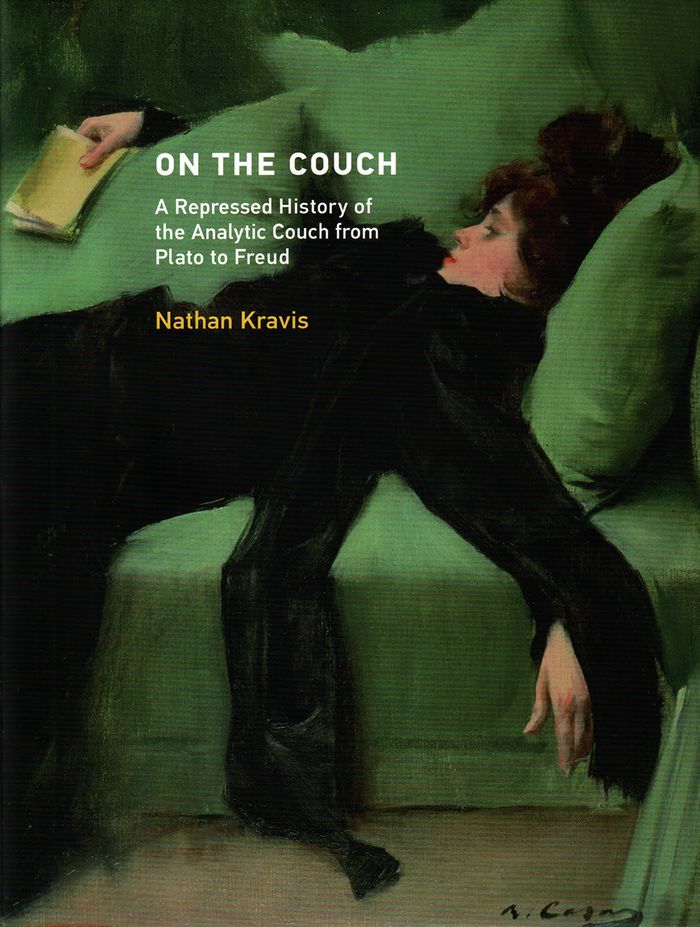
On the couch : a repressed history of the analytic couch from Plato to Freud
Actions:
Prix:
$39.95
(disponible sur commande)
Résumé:
The peculiar arrangement of the psychoanalyst’s office for an analytic session seems inexplicable. The analyst sits in a chair out of sight while the patient lies on a couch facing away. It has been this way since Freud, although, as Nathan Kravis points out in On the Couch, this practice is grounded more in the cultural history of reclining posture than in empirical research. Kravis, himself a practicing psychoanalyst, shows that the tradition of recumbent speech wasn’t dreamed up by Freud but can be traced back to ancient Greece, where guests reclined on couches at the symposion (a gathering for upper-class males to discuss philosophy and drink wine), and to the Roman convivium (a banquet at which men and women reclined together). From bed to bench to settee to chaise-longue to sofa: Kravis tells how the couch became an icon of self-knowledge and self-reflection as well as a site for pleasure, privacy, transgression, and healing.
Classification:
livres
livres
Publication:
août 2017
août 2017
Classification:
livres
livres
Titre:
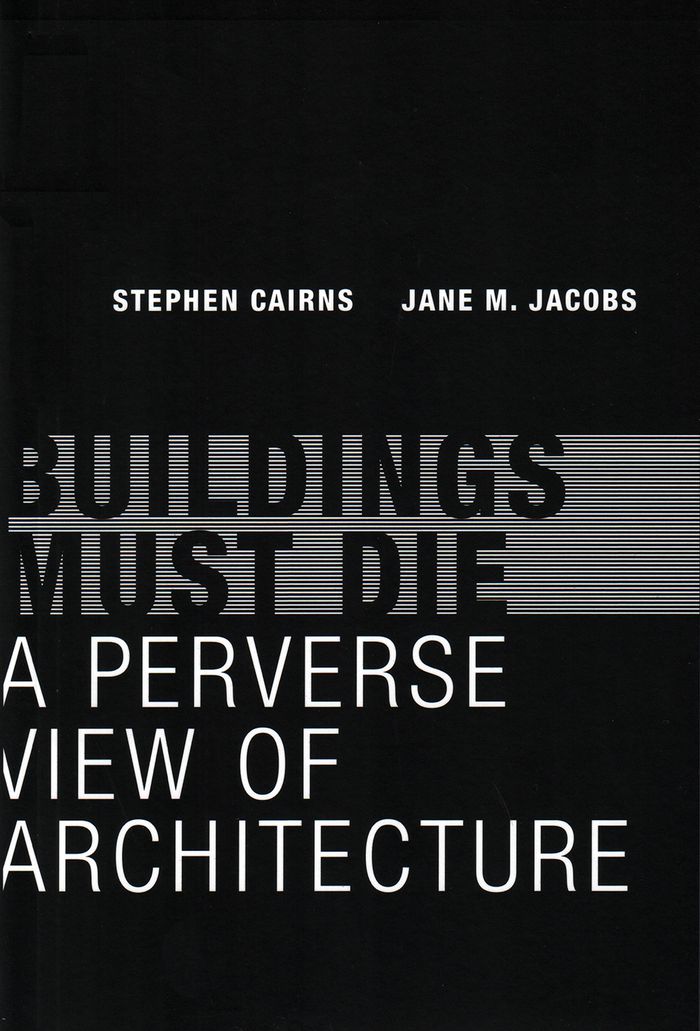
Buildings must die
Buildings must die
Actions:
Prix:
$38.95
(disponible sur commande)
Résumé:
Buildings, although inanimate, are often assumed to have “life.” And the architect, through the act of design, is assumed to be their conceiver and creator. But what of the “death” of buildings? What of the decay, deterioration, and destruction to which they are inevitably subject? And what might such endings mean for architecture’s sense of itself? In Buildings Must Die,(...)
Titre:
Buildings must die
Actions:
Prix:
$38.95
(disponible sur commande)
Résumé:
Buildings, although inanimate, are often assumed to have “life.” And the architect, through the act of design, is assumed to be their conceiver and creator. But what of the “death” of buildings? What of the decay, deterioration, and destruction to which they are inevitably subject? And what might such endings mean for architecture’s sense of itself? In Buildings Must Die, Stephen Cairns and Jane Jacobs look awry at core architectural concerns. They examine spalling concrete and creeping rust, contemplate ruins old and new, and pick through the rubble of earthquake-shattered churches, imploded housing projects, and demolished Brutalist office buildings. Their investigation of the death of buildings reorders architectural notions of creativity, reshapes architecture’s preoccupation with good form, loosens its vanities of durability, and expands its sense of value. It does so not to kill off architecture as we know it, but to rethink its agency and its capacity to make worlds differently. Cairns and Jacobs offer an original contemplation of architecture that draws on theories of waste and value. Their richly illustrated case studies of building “deaths” include the planned and the unintended, the lamented and the celebrated. They take us from Moline to Christchurch, from London to Bangkok, from Tokyo to Paris. And they feature the work of such architects as Eero Saarinen, Carlo Scarpa, Cedric Price, Arata Isozaki, Rem Koolhaas and François Roche.
Classification:
livres
livres
Publication:
août 2017
août 2017
Sujet:
Théorie de l’architecture
Théorie de l’architecture
Classification:
livres
livres

Prix:
$56.00
(disponible en magasin)
Résumé:
'Go field and towers' is the result of the conversations that occurred in studios taught by Guillaume Othenin-Girard and Nigel Peake between 2012-2014 as part of the first-year course in architectural design directed by the Atelier de la Conception de l’Espace (ALICE) at the Swiss Federal Institute of Technology in Lausanne (EPFL). By the nature of tutorials, their(...)
Sujet:
Théorie de l’architecture
Théorie de l’architecture
Publication:
août 2017
août 2017
Titre:
Go field and towers: Guillaume Othenin-Girard, Nigel Peake
Actions:
Prix:
$56.00
(disponible en magasin)
Résumé:
'Go field and towers' is the result of the conversations that occurred in studios taught by Guillaume Othenin-Girard and Nigel Peake between 2012-2014 as part of the first-year course in architectural design directed by the Atelier de la Conception de l’Espace (ALICE) at the Swiss Federal Institute of Technology in Lausanne (EPFL). By the nature of tutorials, their conversation would often stray to other fields – academic and artistic and in-between. As they worked on this book, they invited guests to make contributions, some of which appear as short essays, others as notes from a conversation.
Classification:
livres
livres
Publication:
août 2017
août 2017
Sujet:
Théorie de l’architecture
Théorie de l’architecture
Classification:
livres
livres

Titre:
Power / architecture
Power / architecture
Actions:
Prix:
$50.00
(disponible en magasin)
Résumé:
Power and architecture are fundamental to the question of how contemporary society and architecture work together. Since power lacks a comprehensive logic, coherence and instrumentalization capability, the question refers both to the autonomous powers of the architectural forms and to a set of external powers represented through architecture. Through eight essays by(...)
Sujet:
Théorie de l’architecture
Théorie de l’architecture
Publication:
mars 2018
mars 2018
Titre:
Power / architecture
Actions:
Prix:
$50.00
(disponible en magasin)
Résumé:
Power and architecture are fundamental to the question of how contemporary society and architecture work together. Since power lacks a comprehensive logic, coherence and instrumentalization capability, the question refers both to the autonomous powers of the architectural forms and to a set of external powers represented through architecture. Through eight essays by contributors, along with images, drawings and documents, the book renders visible a set of entities, informal conventions, stakeholders and means involved in the creation of architecture; that is, the dynamics of the collective that ceaselessly tests the architectural composition of the common world. With selected projects by Herzog & de Meuron, Rem Koolhaas, Eduardo Souto de Moura and many more.
Classification:
livres
livres
Publication:
mars 2018
mars 2018
Sujet:
Théorie de l’architecture
Théorie de l’architecture
Classification:
livres
livres

Titre:
Chaos sublime
Chaos sublime
Actions:
Prix:
$15.95
(disponible sur commande)
Résumé:
« Il faut accepter d’emblée la logique du désordre urbain. D’où le chaos. Un chaos sublime ». Ce livre est l’histoire d’une amitié, puisqu’il est issu de vingt ans de conversations avec Paolo Conti, écrivain et journaliste italien. Il est né aussi du besoin de comprendre les processus de création contemporains, en tenant compte des passions politiques et sociales de notre(...)
Titre:
Chaos sublime
Actions:
Prix:
$15.95
(disponible sur commande)
Résumé:
« Il faut accepter d’emblée la logique du désordre urbain. D’où le chaos. Un chaos sublime ». Ce livre est l’histoire d’une amitié, puisqu’il est issu de vingt ans de conversations avec Paolo Conti, écrivain et journaliste italien. Il est né aussi du besoin de comprendre les processus de création contemporains, en tenant compte des passions politiques et sociales de notre temps qui ont bouleversé et bouleverseront notre façon d’habiter la ville. C’est à travers cette vision de l’architecture que sont abordés tous les grands thèmes contemporains des croissances des villes, des banlieues, des œuvres d’art comme des faillites de l’architecture.
Classification:
livres
livres
Publication:
août 2017
août 2017
Sujet:
Théorie de l’architecture
Théorie de l’architecture
Classification:
livres
livres
Prix:
$57.95
(disponible sur commande)
Résumé:
The striking inequalities in living conditions in today's cities and metropolises reveal one of the greatest humanitarian challenges of our time. Ascertaining that architecture can never be neutral, those involved in this field of design are called on to recognize and to act on their social responsibility – not only – in the city-making process. Their work should(...)
Sujet:
Théorie de l’architecture
Théorie de l’architecture
Publication:
avril 2018
avril 2018
Titre:
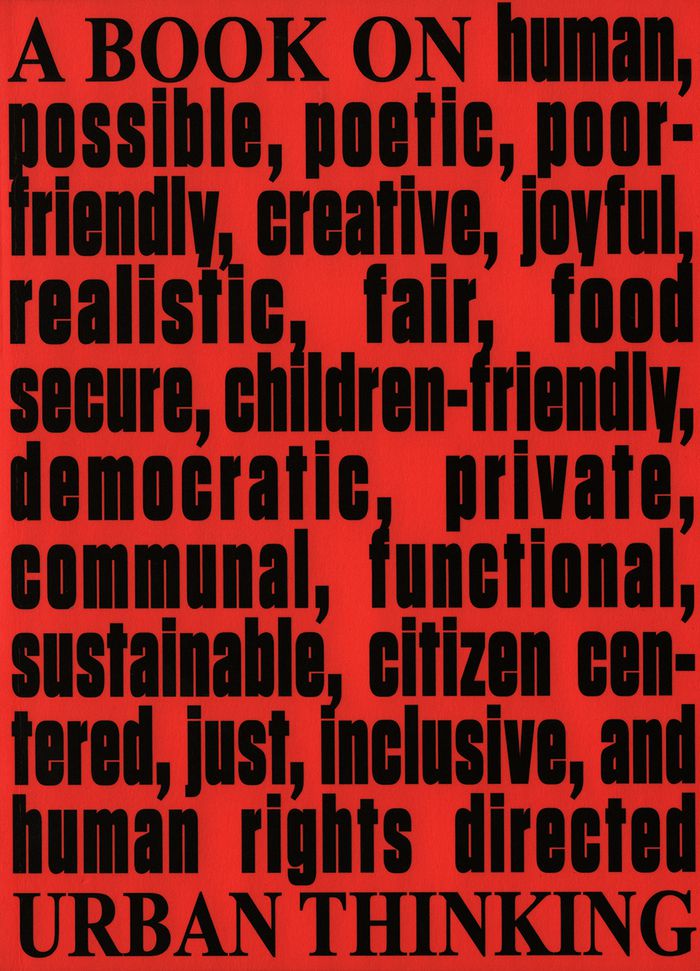
A book on urban thinking: architecture and human rights
Actions:
Prix:
$57.95
(disponible sur commande)
Résumé:
The striking inequalities in living conditions in today's cities and metropolises reveal one of the greatest humanitarian challenges of our time. Ascertaining that architecture can never be neutral, those involved in this field of design are called on to recognize and to act on their social responsibility – not only – in the city-making process. Their work should therefore not be limited to creating living space as questions of the distribution of resources, so closely interwoven with architectural design, must also play a role. This book is conceived as a collage of narratives, photos and critical conversations on the link between human rights and architecture. In its hybrid form, all of the people involved at every level are given a voice and encouraged to question whether the architecture of the towns, streets and buildings for which they are responsible contributes to the protection and advancement of human rights. The ultimate goal is that the consideration of human rights become an architect's powerful tool for better and fairer urban planning.
Classification:
livres
livres
Publication:
avril 2018
avril 2018
Sujet:
Théorie de l’architecture
Théorie de l’architecture
Classification:
livres
livres

Titre:
Juger l'architecture
Juger l'architecture
Actions:
Prix:
$55.95
(disponible sur commande)
Résumé:
Dans cet essai inédit en français, paru initialement à Londres en 1971, l’auteur s’attache à établir des analogies entre le jugement qui relève du droit anglo-saxon et le jugement en matière d’architecture. En établissant d’étonnants parallèles entre ces deux champs, il entend conforter l’une des ambitions majeures qui traversent l’ensemble de son oeuvre, à savoir montrer(...)
Titre:
Juger l'architecture
Actions:
Prix:
$55.95
(disponible sur commande)
Résumé:
Dans cet essai inédit en français, paru initialement à Londres en 1971, l’auteur s’attache à établir des analogies entre le jugement qui relève du droit anglo-saxon et le jugement en matière d’architecture. En établissant d’étonnants parallèles entre ces deux champs, il entend conforter l’une des ambitions majeures qui traversent l’ensemble de son oeuvre, à savoir montrer que l’architecture est fondamentalement un métier qui, s’il entretient des rapports avec les arts plastiques, a pour destination essentielle de répondre à des besoins sociaux et des exigences pratiques. En cela, estime Collins, l’architecture a plus à voir avec les professions qui relèvent du droit ou de la médecine qu’avec les pratiques artistiques des peintres ou des sculpteurs.
Classification:
livres
livres
Publication:
août 2017
août 2017
Sujet:
Théorie de l’architecture
Théorie de l’architecture


