


2221 Résultats
Classification:
livres
livres
Prix:
$19.50
(disponible sur commande)
Résumé:
The seminal work by one of the most important thinkers of the twentieth century, Physics and Philosophy is Werner Heisenberg's concise and accessible narrative of the revolution in modern physics, in which he played a towering role. The outgrowth of a celebrated lecture series, this book remains as relevant, provocative, and fascinating as when it was first published in(...)
$19.50
(disponible sur commande)
Résumé:
The seminal work by one of the most important thinkers of the twentieth century, Physics and Philosophy is Werner Heisenberg's concise and accessible narrative of the revolution in modern physics, in which he played a towering role. The outgrowth of a celebrated lecture series, this book remains as relevant, provocative, and fascinating as when it was first published in(...)
Titre:
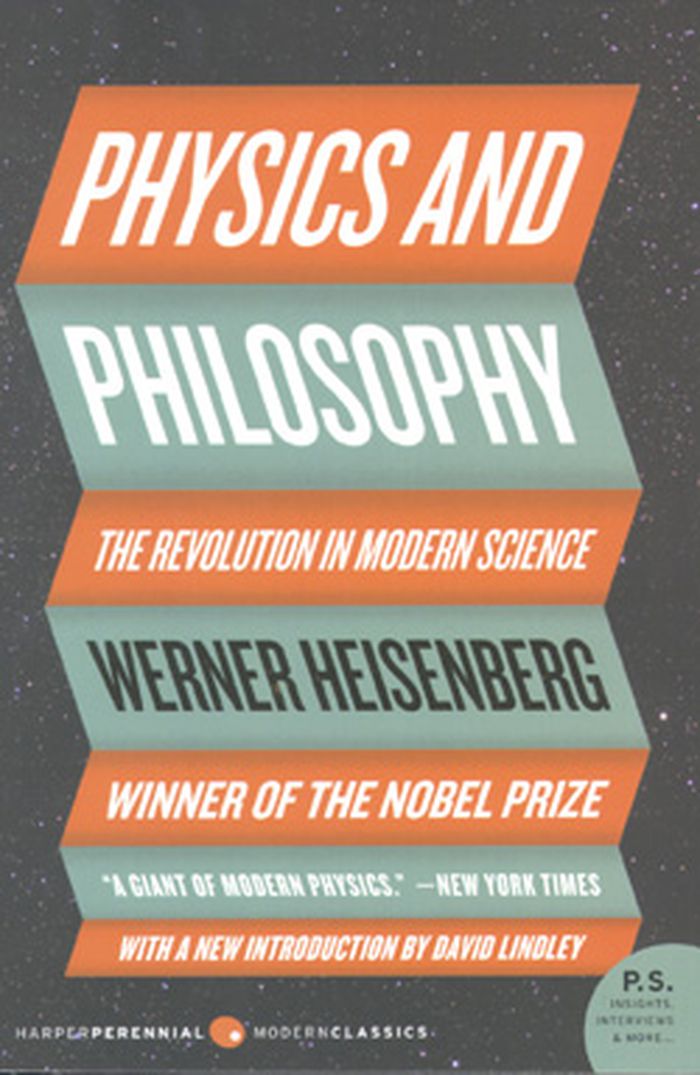
Physics and philosophy: the revolution of modern science
Actions:
Prix:
$19.50
(disponible sur commande)
Résumé:
The seminal work by one of the most important thinkers of the twentieth century, Physics and Philosophy is Werner Heisenberg's concise and accessible narrative of the revolution in modern physics, in which he played a towering role. The outgrowth of a celebrated lecture series, this book remains as relevant, provocative, and fascinating as when it was first published in 1958. A brilliant scientist whose ideas altered our perception of the universe, Heisenberg is considered the father of quantum physics; he is most famous for the Uncertainty Principle, which states that quantum particles do not occupy a fixed, measurable position. His contributions remain a cornerstone of contemporary physics theory and application.
Physics and philosophy: the revolution of modern science
Actions:
Prix:
$19.50
(disponible sur commande)
Résumé:
The seminal work by one of the most important thinkers of the twentieth century, Physics and Philosophy is Werner Heisenberg's concise and accessible narrative of the revolution in modern physics, in which he played a towering role. The outgrowth of a celebrated lecture series, this book remains as relevant, provocative, and fascinating as when it was first published in 1958. A brilliant scientist whose ideas altered our perception of the universe, Heisenberg is considered the father of quantum physics; he is most famous for the Uncertainty Principle, which states that quantum particles do not occupy a fixed, measurable position. His contributions remain a cornerstone of contemporary physics theory and application.
Classification:
livres
livres
Publication:
mai 2007, New York
mai 2007, New York
Sujet:
Théorie de l’architecture
Théorie de l’architecture
Classification:
livres
livres
Actions:
Prix:
$7.50
(disponible sur commande)
Résumé:
In Discourse on Method, Descartes rejects the limitations of traditional philosophy and theology in favor of the certainty of logic, geometry, and algebra. He proposes a method of thought that combines the rigor of a scientific approach comprising four principles: to accept only what reason recognizes as 'clear and distinct' to analyse complex ideas by dividing them into(...)
$7.50
(disponible sur commande)
Résumé:
In Discourse on Method, Descartes rejects the limitations of traditional philosophy and theology in favor of the certainty of logic, geometry, and algebra. He proposes a method of thought that combines the rigor of a scientific approach comprising four principles: to accept only what reason recognizes as 'clear and distinct' to analyse complex ideas by dividing them into(...)
Titre:
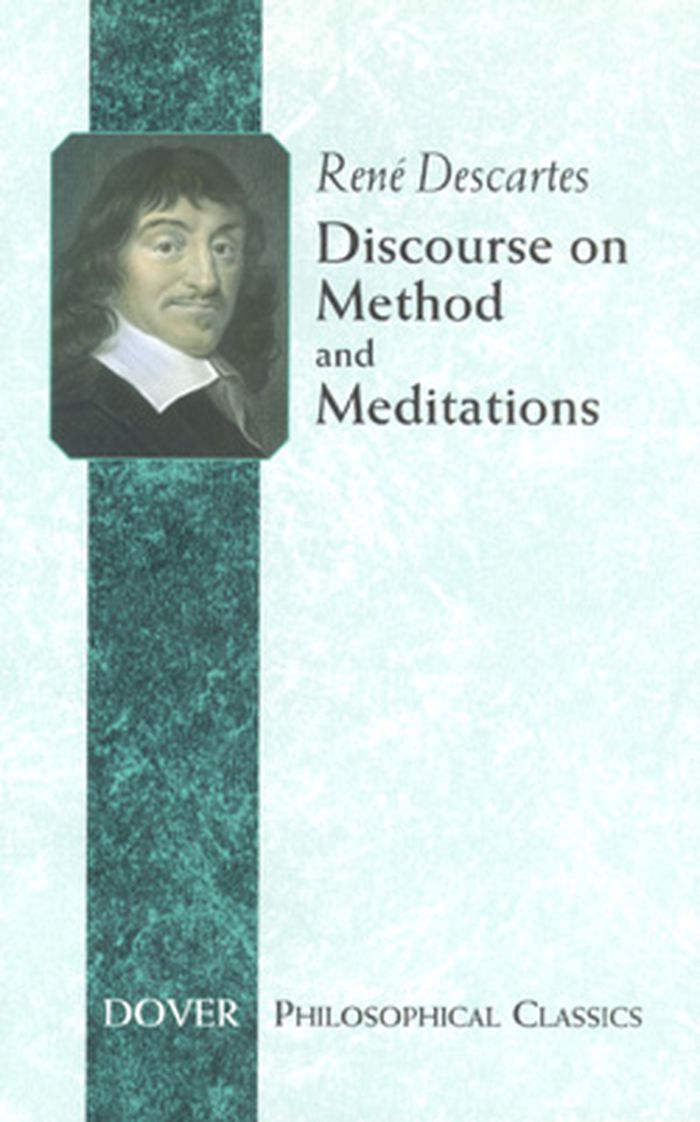
Discourse on method and meditations
Actions:
Prix:
$7.50
(disponible sur commande)
Résumé:
In Discourse on Method, Descartes rejects the limitations of traditional philosophy and theology in favor of the certainty of logic, geometry, and algebra. He proposes a method of thought that combines the rigor of a scientific approach comprising four principles: to accept only what reason recognizes as 'clear and distinct' to analyse complex ideas by dividing them into smaller elements; to reconstruct the ideas; and to make accurate and complete enumerations of the data.
Discourse on method and meditations
Actions:
Prix:
$7.50
(disponible sur commande)
Résumé:
In Discourse on Method, Descartes rejects the limitations of traditional philosophy and theology in favor of the certainty of logic, geometry, and algebra. He proposes a method of thought that combines the rigor of a scientific approach comprising four principles: to accept only what reason recognizes as 'clear and distinct' to analyse complex ideas by dividing them into smaller elements; to reconstruct the ideas; and to make accurate and complete enumerations of the data.
Classification:
livres
livres
Publication:
décembre 2003, Minneola
décembre 2003, Minneola
Sujet:
Théorie de l’architecture
Théorie de l’architecture
Classification:
livres
livres
Titre:
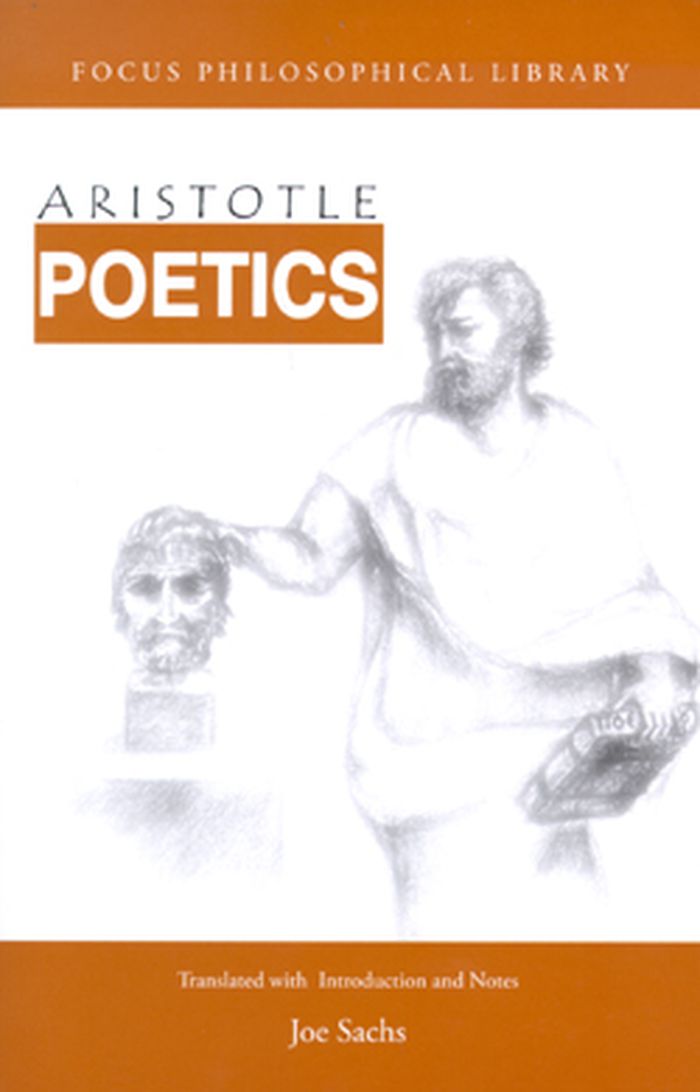
Aristotle poetics
Aristotle poetics
Actions:
Prix:
$12.95
(disponible sur commande)
Résumé:
Modern students can now appreciate the wisdom of the world's greatest thinkers. Though clear, faithful translations by Joe Sachs. This modern and classical philosophical texts accessible and inspirational.
$12.95
(disponible sur commande)
Résumé:
Modern students can now appreciate the wisdom of the world's greatest thinkers. Though clear, faithful translations by Joe Sachs. This modern and classical philosophical texts accessible and inspirational.
Titre:
Aristotle poetics
Actions:
Prix:
$12.95
(disponible sur commande)
Résumé:
Modern students can now appreciate the wisdom of the world's greatest thinkers. Though clear, faithful translations by Joe Sachs. This modern and classical philosophical texts accessible and inspirational.
Aristotle poetics
Actions:
Prix:
$12.95
(disponible sur commande)
Résumé:
Modern students can now appreciate the wisdom of the world's greatest thinkers. Though clear, faithful translations by Joe Sachs. This modern and classical philosophical texts accessible and inspirational.
Classification:
livres
livres
Publication:
août 2006, Newburyport
août 2006, Newburyport
Sujet:
Théorie de l’architecture
Théorie de l’architecture
Classification:
livres
livres
Titre:
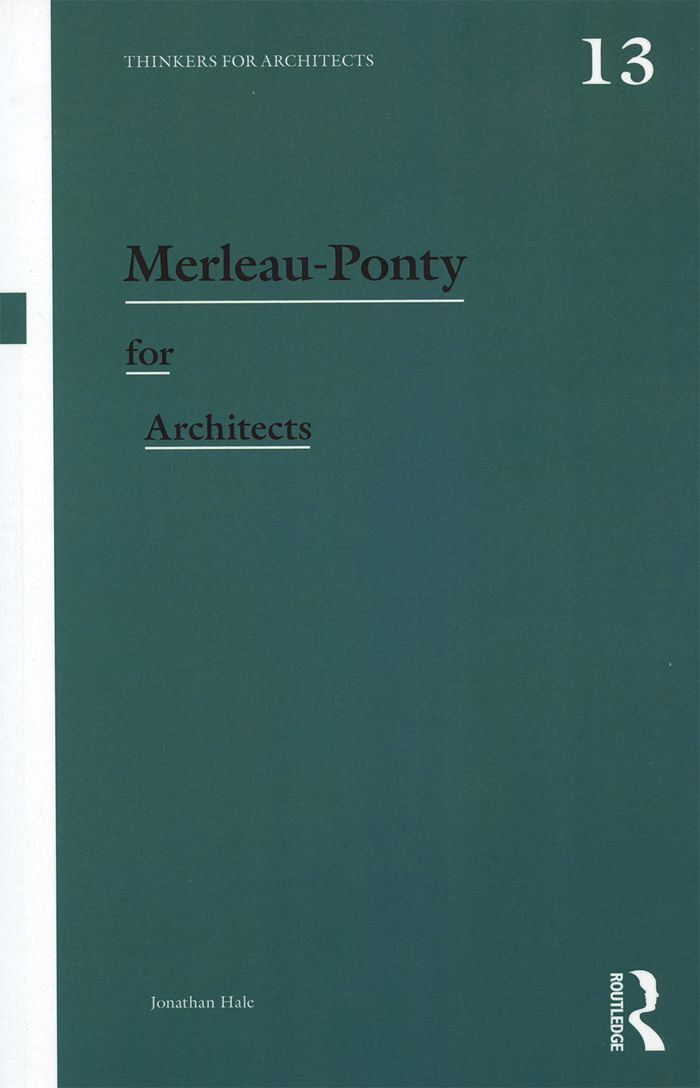
Merleau-Ponty for architects
Merleau-Ponty for architects
Actions:
Prix:
$46.10
(disponible sur commande)
Résumé:
The philosophy of Maurice Merleau-Ponty (1908–1961) has influenced the design work of architects as diverse as Steven Holl and Peter Zumthor, as well as informing renowned schools of architectural theory, notably those around Dalibor Vesely at Cambridge, Kenneth Frampton, David Leatherbarrow and Alberto Pérez-Gómez in North America and Juhani Pallasmaa in Finland.(...)
$46.10
(disponible sur commande)
Résumé:
The philosophy of Maurice Merleau-Ponty (1908–1961) has influenced the design work of architects as diverse as Steven Holl and Peter Zumthor, as well as informing renowned schools of architectural theory, notably those around Dalibor Vesely at Cambridge, Kenneth Frampton, David Leatherbarrow and Alberto Pérez-Gómez in North America and Juhani Pallasmaa in Finland.(...)
Titre:
Merleau-Ponty for architects
Actions:
Prix:
$46.10
(disponible sur commande)
Résumé:
The philosophy of Maurice Merleau-Ponty (1908–1961) has influenced the design work of architects as diverse as Steven Holl and Peter Zumthor, as well as informing renowned schools of architectural theory, notably those around Dalibor Vesely at Cambridge, Kenneth Frampton, David Leatherbarrow and Alberto Pérez-Gómez in North America and Juhani Pallasmaa in Finland. Merleau-Ponty suggested that the value of people’s experience of the world gained through their immediate bodily engagement with it remains greater than the value of understanding gleaned through abstract mathematical, scientific or technological systems. This book summarizes what Merleau-Ponty’s philosophy has to offer specifically for architects. It locates architectural thinking in the context of his work, placing it in relation to themes such as space, movement, materiality and creativity, introduces key texts, helps decode difficult terms and provides quick reference for further reading.
Merleau-Ponty for architects
Actions:
Prix:
$46.10
(disponible sur commande)
Résumé:
The philosophy of Maurice Merleau-Ponty (1908–1961) has influenced the design work of architects as diverse as Steven Holl and Peter Zumthor, as well as informing renowned schools of architectural theory, notably those around Dalibor Vesely at Cambridge, Kenneth Frampton, David Leatherbarrow and Alberto Pérez-Gómez in North America and Juhani Pallasmaa in Finland. Merleau-Ponty suggested that the value of people’s experience of the world gained through their immediate bodily engagement with it remains greater than the value of understanding gleaned through abstract mathematical, scientific or technological systems. This book summarizes what Merleau-Ponty’s philosophy has to offer specifically for architects. It locates architectural thinking in the context of his work, placing it in relation to themes such as space, movement, materiality and creativity, introduces key texts, helps decode difficult terms and provides quick reference for further reading.
Classification:
livres
livres
Publication:
juin 2018
juin 2018
Sujet:
Théorie de l’architecture
Théorie de l’architecture
Classification:
livres
livres
Titre:
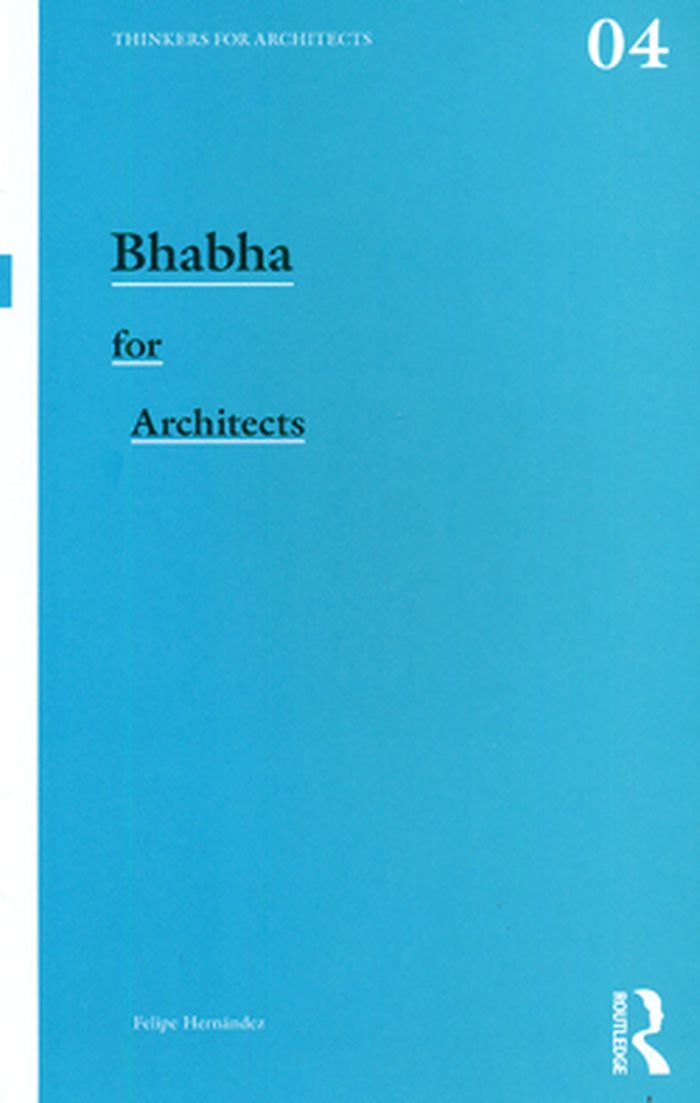
Bhabha for architects
Bhabha for architects
Actions:
Prix:
$37.50
(disponible en magasin)
Résumé:
The work of Homi K. Bhabha has permeated into numerous publications which use postcolonial discourse as a means to analyze architectural practices in previously colonized contexts, particularly in Africa, Asia, the Middle-East, South-East Asia and, Latin America. Bhabha's use of the concept of ‘space’ has made his work highly appealing to architects and architectural(...)
$37.50
(disponible en magasin)
Résumé:
The work of Homi K. Bhabha has permeated into numerous publications which use postcolonial discourse as a means to analyze architectural practices in previously colonized contexts, particularly in Africa, Asia, the Middle-East, South-East Asia and, Latin America. Bhabha's use of the concept of ‘space’ has made his work highly appealing to architects and architectural(...)
Titre:
Bhabha for architects
Actions:
Prix:
$37.50
(disponible en magasin)
Résumé:
The work of Homi K. Bhabha has permeated into numerous publications which use postcolonial discourse as a means to analyze architectural practices in previously colonized contexts, particularly in Africa, Asia, the Middle-East, South-East Asia and, Latin America. Bhabha's use of the concept of ‘space’ has made his work highly appealing to architects and architectural theorists. This introductory book, specifically for architects, focuses on Bhabha’s seminal book The Location of Culture and reveals how his work contributes to architectural theory and the study of contemporary architectures in general, not only in colonial and postcolonial contexts.
Bhabha for architects
Actions:
Prix:
$37.50
(disponible en magasin)
Résumé:
The work of Homi K. Bhabha has permeated into numerous publications which use postcolonial discourse as a means to analyze architectural practices in previously colonized contexts, particularly in Africa, Asia, the Middle-East, South-East Asia and, Latin America. Bhabha's use of the concept of ‘space’ has made his work highly appealing to architects and architectural theorists. This introductory book, specifically for architects, focuses on Bhabha’s seminal book The Location of Culture and reveals how his work contributes to architectural theory and the study of contemporary architectures in general, not only in colonial and postcolonial contexts.
Classification:
livres
livres
Publication:
août 2009
août 2009
Sujet:
Théorie de l’architecture
Théorie de l’architecture
Classification:
livres
livres
Titre:
Basic writings
Basic writings
Actions:
Prix:
$18.95
(disponible sur commande)
Résumé:
Basic Writings is the finest single-volume anthology of the work of Martin Heidegger, widely considered one of the most important modern philosophers. Its selections offer a full range of the influential author's writings—including "The Origin of the Work of Art," the introduction to Being and Time, "What Is Metaphysics?," "Letter on Humanism," "The Question Concerning(...)
$18.95
(disponible sur commande)
Résumé:
Basic Writings is the finest single-volume anthology of the work of Martin Heidegger, widely considered one of the most important modern philosophers. Its selections offer a full range of the influential author's writings—including "The Origin of the Work of Art," the introduction to Being and Time, "What Is Metaphysics?," "Letter on Humanism," "The Question Concerning(...)
Sujet:
Théorie de l’architecture
Théorie de l’architecture
Publication:
novembre 2008, London, Toronto, Sydney
novembre 2008, London, Toronto, Sydney
Titre:
Basic writings
Actions:
Prix:
$18.95
(disponible sur commande)
Résumé:
Basic Writings is the finest single-volume anthology of the work of Martin Heidegger, widely considered one of the most important modern philosophers. Its selections offer a full range of the influential author's writings—including "The Origin of the Work of Art," the introduction to Being and Time, "What Is Metaphysics?," "Letter on Humanism," "The Question Concerning Technology," "The Way to Language," and "The End of Philosophy." Featuring a foreword by Heidegger scholar Taylor Carman, this essential collection provides readers with a concise introduction to the groundbreaking philosophy of this brilliant and essential thinker.
Basic writings
Actions:
Prix:
$18.95
(disponible sur commande)
Résumé:
Basic Writings is the finest single-volume anthology of the work of Martin Heidegger, widely considered one of the most important modern philosophers. Its selections offer a full range of the influential author's writings—including "The Origin of the Work of Art," the introduction to Being and Time, "What Is Metaphysics?," "Letter on Humanism," "The Question Concerning Technology," "The Way to Language," and "The End of Philosophy." Featuring a foreword by Heidegger scholar Taylor Carman, this essential collection provides readers with a concise introduction to the groundbreaking philosophy of this brilliant and essential thinker.
Classification:
livres
livres
Publication:
novembre 2008, London, Toronto, Sydney
novembre 2008, London, Toronto, Sydney
Sujet:
Théorie de l’architecture
Théorie de l’architecture
Classification:
livres
livres
Actions:
Prix:
$71.95
(disponible en magasin)
Résumé:
Nicolas Malebranche is now recognised as a major figure in the history of philosophy, occupying a crucial place in the Rationalist tradition of Descartes, Spinoza and Leibniz. The Search after Truth is his first, longest and most important work; this volume also presents the Elucidations which accompanied its third edition, the result of comments that Malebranche(...)
$71.95
(disponible en magasin)
Résumé:
Nicolas Malebranche is now recognised as a major figure in the history of philosophy, occupying a crucial place in the Rationalist tradition of Descartes, Spinoza and Leibniz. The Search after Truth is his first, longest and most important work; this volume also presents the Elucidations which accompanied its third edition, the result of comments that Malebranche(...)
Publication:
mars 1997, Cambridge
mars 1997, Cambridge
Titre:
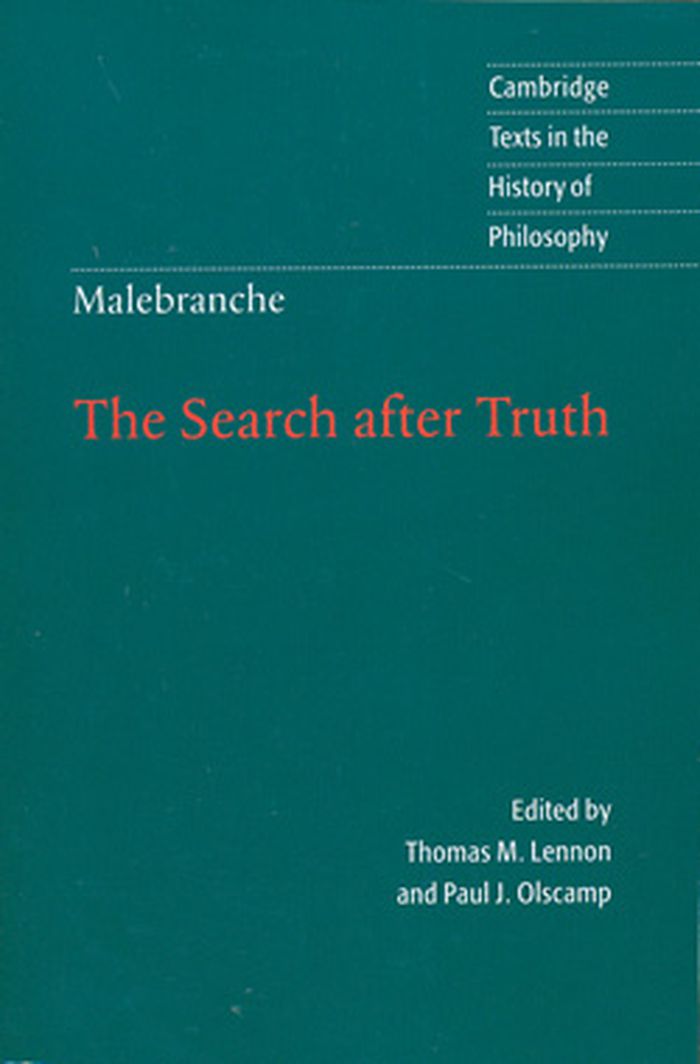
Malebranche the search after truth
Actions:
Prix:
$71.95
(disponible en magasin)
Résumé:
Nicolas Malebranche is now recognised as a major figure in the history of philosophy, occupying a crucial place in the Rationalist tradition of Descartes, Spinoza and Leibniz. The Search after Truth is his first, longest and most important work; this volume also presents the Elucidations which accompanied its third edition, the result of comments that Malebranche solicited on the original work and an important repository of his theories of ideas and causation.
Malebranche the search after truth
Actions:
Prix:
$71.95
(disponible en magasin)
Résumé:
Nicolas Malebranche is now recognised as a major figure in the history of philosophy, occupying a crucial place in the Rationalist tradition of Descartes, Spinoza and Leibniz. The Search after Truth is his first, longest and most important work; this volume also presents the Elucidations which accompanied its third edition, the result of comments that Malebranche solicited on the original work and an important repository of his theories of ideas and causation.
Classification:
livres
livres
Publication:
mars 1997, Cambridge
mars 1997, Cambridge
Classification:
livres
livres
Actions:
Prix:
$16.95
(disponible sur commande)
Résumé:
Number 9 tells the story of Enjil, a boy mathematician who is challenged by a spirit to solve the riddle, "What is the fixed point of the wind?" As Enjil searches for the answer, he and the reader embark on a journey through myth, legend, and religion. Enjilís adventures lead readers to an appreciation of symmetry within asymmetry, classical ideas, and modern impulses.
$16.95
(disponible sur commande)
Résumé:
Number 9 tells the story of Enjil, a boy mathematician who is challenged by a spirit to solve the riddle, "What is the fixed point of the wind?" As Enjil searches for the answer, he and the reader embark on a journey through myth, legend, and religion. Enjilís adventures lead readers to an appreciation of symmetry within asymmetry, classical ideas, and modern impulses.
Sujet:
Théorie de l’architecture
Théorie de l’architecture
Publication:
novembre 2008, Munich, Berlin, London, New York
novembre 2008, Munich, Berlin, London, New York
Titre:
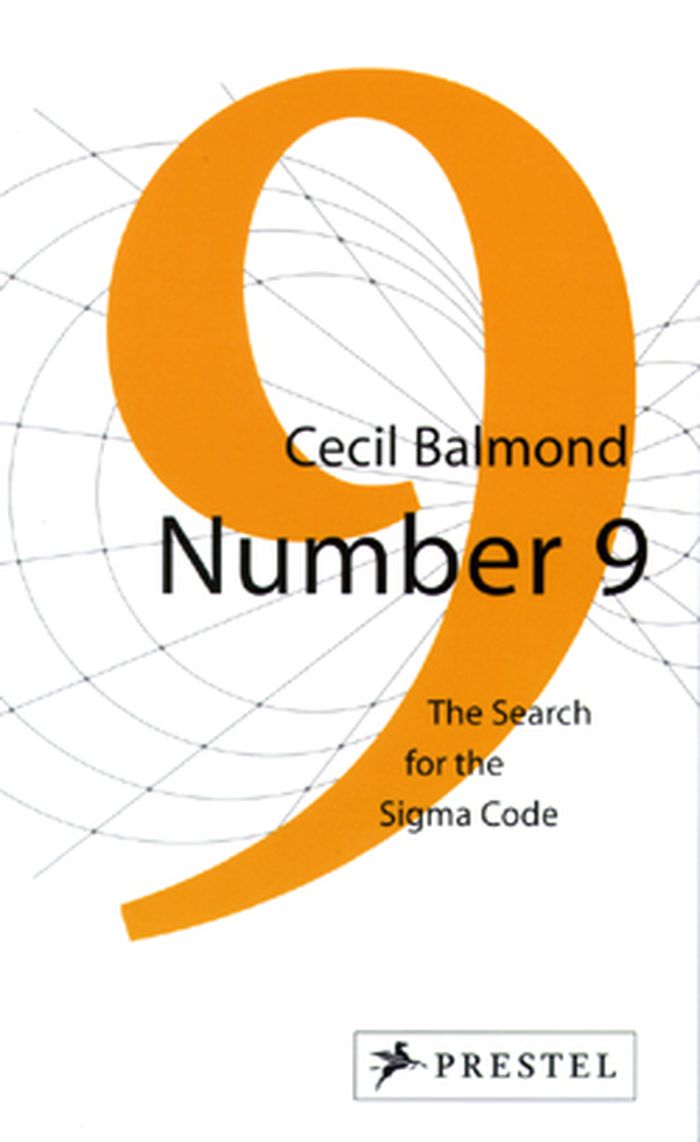
Number 9 : the search for the Sigma Code
Actions:
Prix:
$16.95
(disponible sur commande)
Résumé:
Number 9 tells the story of Enjil, a boy mathematician who is challenged by a spirit to solve the riddle, "What is the fixed point of the wind?" As Enjil searches for the answer, he and the reader embark on a journey through myth, legend, and religion. Enjilís adventures lead readers to an appreciation of symmetry within asymmetry, classical ideas, and modern impulses.
Number 9 : the search for the Sigma Code
Actions:
Prix:
$16.95
(disponible sur commande)
Résumé:
Number 9 tells the story of Enjil, a boy mathematician who is challenged by a spirit to solve the riddle, "What is the fixed point of the wind?" As Enjil searches for the answer, he and the reader embark on a journey through myth, legend, and religion. Enjilís adventures lead readers to an appreciation of symmetry within asymmetry, classical ideas, and modern impulses.
Classification:
livres
livres
Publication:
novembre 2008, Munich, Berlin, London, New York
novembre 2008, Munich, Berlin, London, New York
Sujet:
Théorie de l’architecture
Théorie de l’architecture
Classification:
livres
livres
Actions:
Prix:
$37.95
(disponible sur commande)
Résumé:
The twentieth-century architect Mies van der Rohe once declared that 'Architecture starts when you carefully put two bricks together'. In "Travels in the History of Architecture", renowned architectural writer Robert Harbison looks closely at these bricks, taking us on a journey through the great themes and movements of architecture, from antiquity to the present day.(...)
$37.95
(disponible sur commande)
Résumé:
The twentieth-century architect Mies van der Rohe once declared that 'Architecture starts when you carefully put two bricks together'. In "Travels in the History of Architecture", renowned architectural writer Robert Harbison looks closely at these bricks, taking us on a journey through the great themes and movements of architecture, from antiquity to the present day.(...)
Titre:
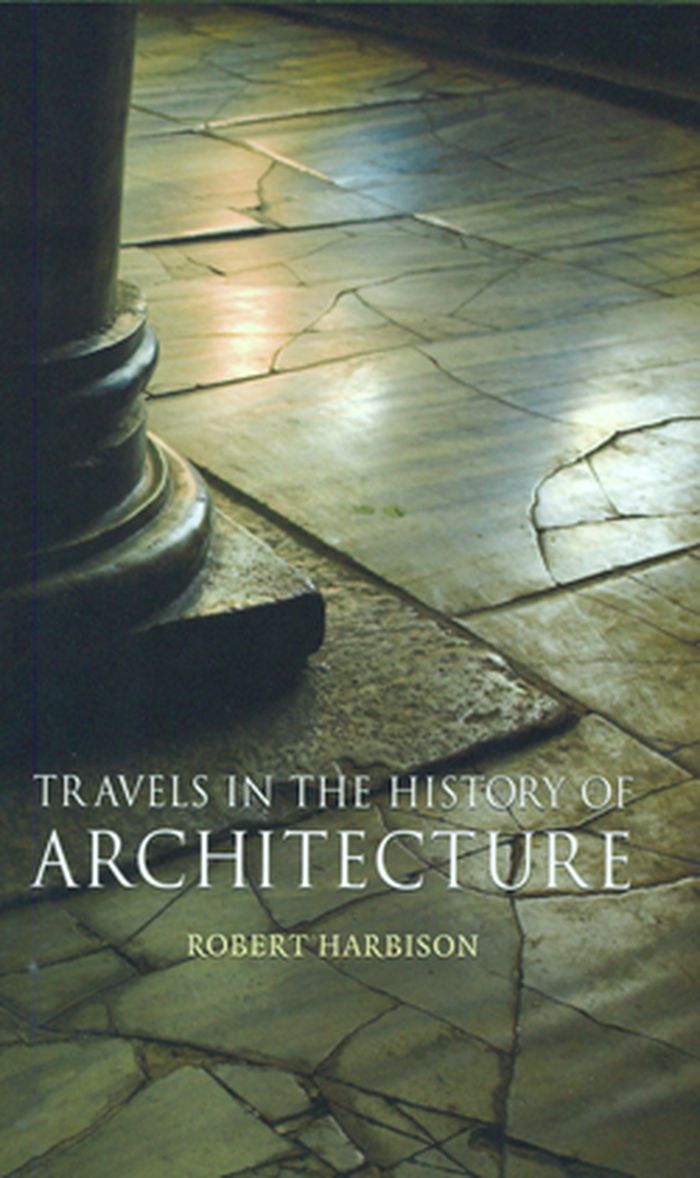
Travels in the history of architecture
Actions:
Prix:
$37.95
(disponible sur commande)
Résumé:
The twentieth-century architect Mies van der Rohe once declared that 'Architecture starts when you carefully put two bricks together'. In "Travels in the History of Architecture", renowned architectural writer Robert Harbison looks closely at these bricks, taking us on a journey through the great themes and movements of architecture, from antiquity to the present day. Taking as a starting place his own experience of the physical fabric of buildings, Harbison interprets the conceptions of the original architects and makers, pointing out carefully crafted detail and inspiring form along the way. Beginning with the great temples and tombs of the Egyptians, and the monuments and shrines of Greek and Roman architecture, and concluding with the museums of the twenty-first century, each chapter of his Travels focuses on a moment in architectural history, including Byzantine, Baroque, Mannerism, Historicism, Functionalism and Decon structionism.
Travels in the history of architecture
Actions:
Prix:
$37.95
(disponible sur commande)
Résumé:
The twentieth-century architect Mies van der Rohe once declared that 'Architecture starts when you carefully put two bricks together'. In "Travels in the History of Architecture", renowned architectural writer Robert Harbison looks closely at these bricks, taking us on a journey through the great themes and movements of architecture, from antiquity to the present day. Taking as a starting place his own experience of the physical fabric of buildings, Harbison interprets the conceptions of the original architects and makers, pointing out carefully crafted detail and inspiring form along the way. Beginning with the great temples and tombs of the Egyptians, and the monuments and shrines of Greek and Roman architecture, and concluding with the museums of the twenty-first century, each chapter of his Travels focuses on a moment in architectural history, including Byzantine, Baroque, Mannerism, Historicism, Functionalism and Decon structionism.
Classification:
livres
livres
Publication:
mai 2009
mai 2009
Sujet:
Théorie de l’architecture
Théorie de l’architecture
Classification:
livres
livres
Actions:
Prix:
$31.95
(disponible sur commande)
Résumé:
In the spring of 1900, British archaeologist Arthur Evans began to excavate the palace of Knossos on Crete, bringing ancient Greek legends to life just as a new century dawned amid far-reaching questions about human history, art, and culture. Over the next three decades, Evans engaged in an unprecedented reconstruction project, creating a complex of concrete buildings on(...)
$31.95
(disponible sur commande)
Résumé:
In the spring of 1900, British archaeologist Arthur Evans began to excavate the palace of Knossos on Crete, bringing ancient Greek legends to life just as a new century dawned amid far-reaching questions about human history, art, and culture. Over the next three decades, Evans engaged in an unprecedented reconstruction project, creating a complex of concrete buildings on(...)
Titre:
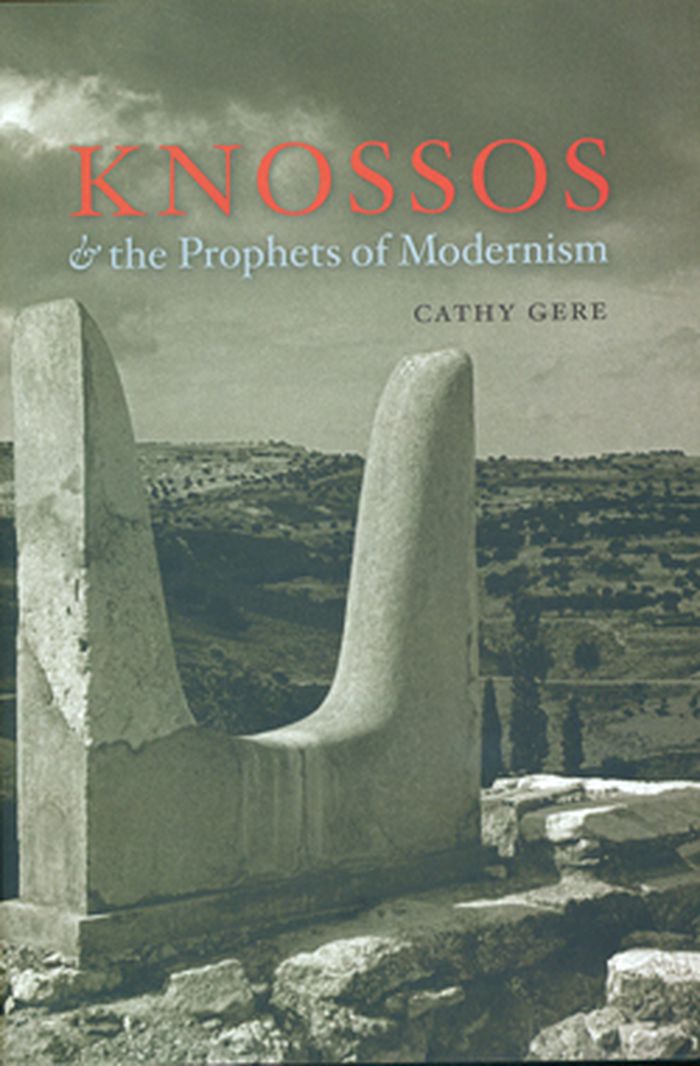
Knossos & the prophets of modernism
Actions:
Prix:
$31.95
(disponible sur commande)
Résumé:
In the spring of 1900, British archaeologist Arthur Evans began to excavate the palace of Knossos on Crete, bringing ancient Greek legends to life just as a new century dawned amid far-reaching questions about human history, art, and culture. Over the next three decades, Evans engaged in an unprecedented reconstruction project, creating a complex of concrete buildings on the site that owed at least as much to modernist architecture as they did to Bronze Age remains. In the process, he fired the imaginations of a whole generation of intellectuals and artists, whose work would drive movements as disparate as fascism and pacifism, feminism and psychoanalysis. With Knossos and the Prophets of Modernism, Cathy Gere relates the fascinating story of Evans’s excavation and its long-term effects on Western culture.
Knossos & the prophets of modernism
Actions:
Prix:
$31.95
(disponible sur commande)
Résumé:
In the spring of 1900, British archaeologist Arthur Evans began to excavate the palace of Knossos on Crete, bringing ancient Greek legends to life just as a new century dawned amid far-reaching questions about human history, art, and culture. Over the next three decades, Evans engaged in an unprecedented reconstruction project, creating a complex of concrete buildings on the site that owed at least as much to modernist architecture as they did to Bronze Age remains. In the process, he fired the imaginations of a whole generation of intellectuals and artists, whose work would drive movements as disparate as fascism and pacifism, feminism and psychoanalysis. With Knossos and the Prophets of Modernism, Cathy Gere relates the fascinating story of Evans’s excavation and its long-term effects on Western culture.
Classification:
livres
livres
Publication:
mai 2009
mai 2009
Sujet:
Théorie de l’architecture
Théorie de l’architecture


