


2221 Résultats
Classification:
livres
livres
Actions:
Prix:
$36.95
(disponible sur commande)
Résumé:
Le temple dorique, qui ouvre l’histoire de l’architecture et de la cité, n’a pas été érigé pour se protéger des prédateurs et de l’intempérie : pour répondre à ce besoin légitime, l’édifice suffit. L’architecture, elle, révèle l’élément premier, l’ordre. L’architecture grave-t-elle dans le marbre tout le fondement de la civilisation occidentale ? C'est à cette(...)
$36.95
(disponible sur commande)
Résumé:
Le temple dorique, qui ouvre l’histoire de l’architecture et de la cité, n’a pas été érigé pour se protéger des prédateurs et de l’intempérie : pour répondre à ce besoin légitime, l’édifice suffit. L’architecture, elle, révèle l’élément premier, l’ordre. L’architecture grave-t-elle dans le marbre tout le fondement de la civilisation occidentale ? C'est à cette(...)
Titre:
Le temple : l'ordre de la terre et du ciel
Actions:
Prix:
$36.95
(disponible sur commande)
Résumé:
Le temple dorique, qui ouvre l’histoire de l’architecture et de la cité, n’a pas été érigé pour se protéger des prédateurs et de l’intempérie : pour répondre à ce besoin légitime, l’édifice suffit. L’architecture, elle, révèle l’élément premier, l’ordre. L’architecture grave-t-elle dans le marbre tout le fondement de la civilisation occidentale ? C'est à cette question que le livre s’attache à répondre.
Le temple : l'ordre de la terre et du ciel
Actions:
Prix:
$36.95
(disponible sur commande)
Résumé:
Le temple dorique, qui ouvre l’histoire de l’architecture et de la cité, n’a pas été érigé pour se protéger des prédateurs et de l’intempérie : pour répondre à ce besoin légitime, l’édifice suffit. L’architecture, elle, révèle l’élément premier, l’ordre. L’architecture grave-t-elle dans le marbre tout le fondement de la civilisation occidentale ? C'est à cette question que le livre s’attache à répondre.
Classification:
livres
livres
Publication:
avril 2003, Paris
avril 2003, Paris
Sujet:
Théorie de l’architecture
Théorie de l’architecture
Classification:
livres
livres
Prix:
$39.95
(disponible sur commande)
Résumé:
Nicholas Howe contemplates how places create and gather their stories and how, in turn, a sense of place locates the stories of our own lives. Howe begins with a description of Buffalo, that city on an inland sea where he grew up. He gives us a fresh Paris, viewed from the river below. And he depicts Oklahoma as a site of open lands and dislocation--a place of coming(...)
$39.95
(disponible sur commande)
Résumé:
Nicholas Howe contemplates how places create and gather their stories and how, in turn, a sense of place locates the stories of our own lives. Howe begins with a description of Buffalo, that city on an inland sea where he grew up. He gives us a fresh Paris, viewed from the river below. And he depicts Oklahoma as a site of open lands and dislocation--a place of coming(...)
Sujet:
Théorie de l’architecture
Théorie de l’architecture
Publication:
janvier 1900, Princeton and Oxford
janvier 1900, Princeton and Oxford
Titre:
Across an inland sea : writing in place form Buffalo to Berlin
Actions:
Prix:
$39.95
(disponible sur commande)
Résumé:
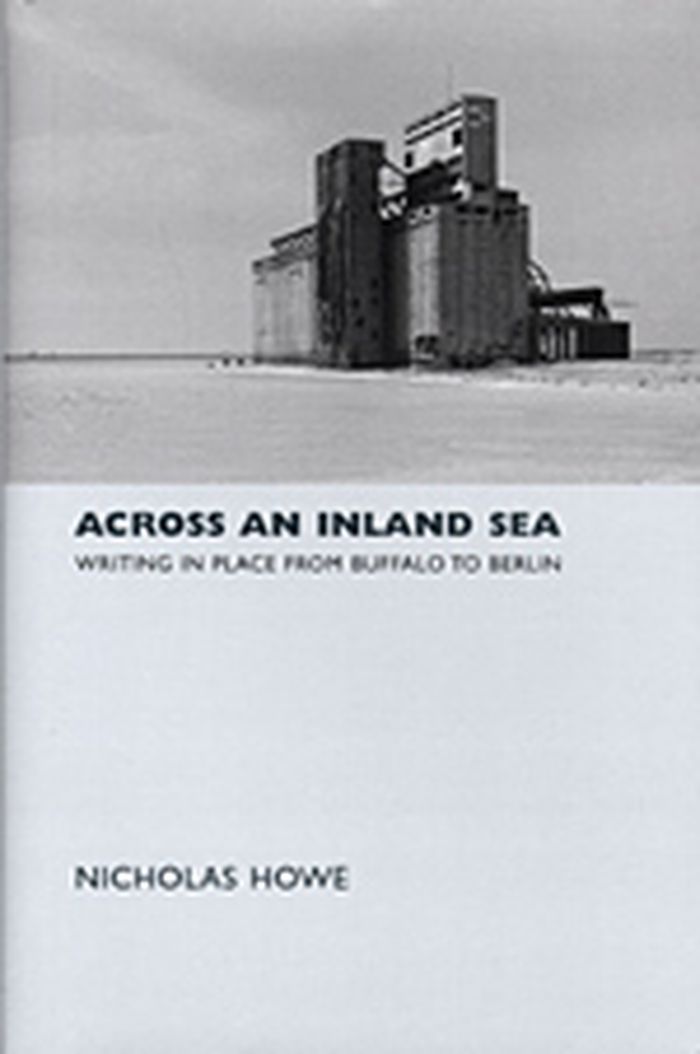
Nicholas Howe contemplates how places create and gather their stories and how, in turn, a sense of place locates the stories of our own lives. Howe begins with a description of Buffalo, that city on an inland sea where he grew up. He gives us a fresh Paris, viewed from the river below. And he depicts Oklahoma as a site of open lands and dislocation--a place of coming and going. Howe then turns to Chartres, a traditional location of pilgrimage, to ask what other sites might still be capable of compelling visitors in secular time. He portrays Berlin as a scene of twentieth-century history--and a city that helped him make sense of his American life. Finally, he writes about Columbus, Ohio, as home. Vividly rendering the places he has known, Howe meditates on the weight of home, the temptations of the metropolis, the fact of dislocation, the unraveling of history, the desire to remake ourselves through voyage, and the wonder of the familiar. In ways that too often elude travel writers, it is place that holds our imagination, that inspires much of our art and literature. Across an Inland Sea evokes the various senses of place that can fill and haunt a life--and ultimately give life its form and meaning.
Across an inland sea : writing in place form Buffalo to Berlin
Actions:
Prix:
$39.95
(disponible sur commande)
Résumé:
Nicholas Howe contemplates how places create and gather their stories and how, in turn, a sense of place locates the stories of our own lives. Howe begins with a description of Buffalo, that city on an inland sea where he grew up. He gives us a fresh Paris, viewed from the river below. And he depicts Oklahoma as a site of open lands and dislocation--a place of coming and going. Howe then turns to Chartres, a traditional location of pilgrimage, to ask what other sites might still be capable of compelling visitors in secular time. He portrays Berlin as a scene of twentieth-century history--and a city that helped him make sense of his American life. Finally, he writes about Columbus, Ohio, as home. Vividly rendering the places he has known, Howe meditates on the weight of home, the temptations of the metropolis, the fact of dislocation, the unraveling of history, the desire to remake ourselves through voyage, and the wonder of the familiar. In ways that too often elude travel writers, it is place that holds our imagination, that inspires much of our art and literature. Across an Inland Sea evokes the various senses of place that can fill and haunt a life--and ultimately give life its form and meaning.
Classification:
livres
livres
Publication:
janvier 1900, Princeton and Oxford
janvier 1900, Princeton and Oxford
Sujet:
Théorie de l’architecture
Théorie de l’architecture
Classification:
livres
livres
Prix:
$37.95
(disponible sur commande)
Résumé:
Cet ouvrage rassemble une vingtaine d'articles et de conférences. Le groupement est thématique. «Perception de l'architecture, matériaux, avant-gardes, maison de l'architecte, contruction du lieu par l'architecture, fondation d'une école à Lausanne», ainsi s'articule la table des matières. Disséminés dans des revues et des catalogues d'exposition, les textes sont repris(...)
$37.95
(disponible sur commande)
Résumé:
Cet ouvrage rassemble une vingtaine d'articles et de conférences. Le groupement est thématique. «Perception de l'architecture, matériaux, avant-gardes, maison de l'architecte, contruction du lieu par l'architecture, fondation d'une école à Lausanne», ainsi s'articule la table des matières. Disséminés dans des revues et des catalogues d'exposition, les textes sont repris(...)
Titre:
Motion, émotions : thèmes d'histoire et d'architecture
Actions:
Prix:
$37.95
(disponible sur commande)
Résumé:
Cet ouvrage rassemble une vingtaine d'articles et de conférences. Le groupement est thématique. «Perception de l'architecture, matériaux, avant-gardes, maison de l'architecte, contruction du lieu par l'architecture, fondation d'une école à Lausanne», ainsi s'articule la table des matières. Disséminés dans des revues et des catalogues d'exposition, les textes sont repris sans retouche ni complément bibliographique. Le livre vise moins un effet de fragmentation qu'un témoignage obsessif à l'état brut.
Motion, émotions : thèmes d'histoire et d'architecture
Actions:
Prix:
$37.95
(disponible sur commande)
Résumé:
Cet ouvrage rassemble une vingtaine d'articles et de conférences. Le groupement est thématique. «Perception de l'architecture, matériaux, avant-gardes, maison de l'architecte, contruction du lieu par l'architecture, fondation d'une école à Lausanne», ainsi s'articule la table des matières. Disséminés dans des revues et des catalogues d'exposition, les textes sont repris sans retouche ni complément bibliographique. Le livre vise moins un effet de fragmentation qu'un témoignage obsessif à l'état brut.
Classification:
livres
livres
Publication:
octobre 2003, Gollion
octobre 2003, Gollion
Sujet:
Théorie de l’architecture
Théorie de l’architecture
Classification:
livres
livres
Titre:
The space of appearance
The space of appearance
Actions:
Prix:
$41.95
(disponible sur commande)
Résumé:
What is architecture's place in the world? Combining history, theory, and polemic, George Baird probes into the conceptual lineage and current expressions of postmodernism and the critique of postmodern architecture over the past four decades, revealing the general failure of these theories to develop an architecture that is politically engaged and affirmative of the(...)
$41.95
(disponible sur commande)
Résumé:
What is architecture's place in the world? Combining history, theory, and polemic, George Baird probes into the conceptual lineage and current expressions of postmodernism and the critique of postmodern architecture over the past four decades, revealing the general failure of these theories to develop an architecture that is politically engaged and affirmative of the(...)
Titre:
The space of appearance
Actions:
Prix:
$41.95
(disponible sur commande)
Résumé:
What is architecture's place in the world? Combining history, theory, and polemic, George Baird probes into the conceptual lineage and current expressions of postmodernism and the critique of postmodern architecture over the past four decades, revealing the general failure of these theories to develop an architecture that is politically engaged and affirmative of the public sphere. Hannah Arendt's imperative of worldliness plays a pivotal role in Baird's reading of what has come to be called architecture's belief system. It is not enough, he argues, to reject the totalizing models of publicness that have been typical both of modernism and of many of its postmodern successors. Rather, he insists, it is necessary to construct a "space of appearance" that is large and diverse enough to make places for all of us. Baird stakes out clearly and sharply the recent history of ideas that bear on the field, recovering influences and ideas that have been omitted from standard histories of modernism and building an understanding of our present dilemmas that is constructive and critically informed. The period from 1960 to the present has seen the collapse of the conditions that shored up modern architecture, as conventionally understood, and has also seen modernism succeeded by a whole series of tentative alternatives, none of which has successfully achieved the decisive legitimization modernism once held. After an extended introduction that situates architecture's current dilemmas within the broader currents of cultural theory, The Space of Appearance focuses on specific historical episodes or developments. Each chapter outlines a different controversy or series of controversies, or depicts the gradual and insidious erosion of certain firmly held beliefs. Each chapter is also structured around a conceptual account of issues that have evolved in the trajectory of contemporary cultural theory since the key interventions of Arendt in the 1950s. (first edition : 1995.)
The space of appearance
Actions:
Prix:
$41.95
(disponible sur commande)
Résumé:
What is architecture's place in the world? Combining history, theory, and polemic, George Baird probes into the conceptual lineage and current expressions of postmodernism and the critique of postmodern architecture over the past four decades, revealing the general failure of these theories to develop an architecture that is politically engaged and affirmative of the public sphere. Hannah Arendt's imperative of worldliness plays a pivotal role in Baird's reading of what has come to be called architecture's belief system. It is not enough, he argues, to reject the totalizing models of publicness that have been typical both of modernism and of many of its postmodern successors. Rather, he insists, it is necessary to construct a "space of appearance" that is large and diverse enough to make places for all of us. Baird stakes out clearly and sharply the recent history of ideas that bear on the field, recovering influences and ideas that have been omitted from standard histories of modernism and building an understanding of our present dilemmas that is constructive and critically informed. The period from 1960 to the present has seen the collapse of the conditions that shored up modern architecture, as conventionally understood, and has also seen modernism succeeded by a whole series of tentative alternatives, none of which has successfully achieved the decisive legitimization modernism once held. After an extended introduction that situates architecture's current dilemmas within the broader currents of cultural theory, The Space of Appearance focuses on specific historical episodes or developments. Each chapter outlines a different controversy or series of controversies, or depicts the gradual and insidious erosion of certain firmly held beliefs. Each chapter is also structured around a conceptual account of issues that have evolved in the trajectory of contemporary cultural theory since the key interventions of Arendt in the 1950s. (first edition : 1995.)
Classification:
livres
livres
Publication:
avril 2003, Cambridge / London
avril 2003, Cambridge / London
Sujet:
Théorie de l’architecture
Théorie de l’architecture
Classification:
livres
livres
Prix:
$21.00
(disponible sur commande)
Résumé:
The concrete objects that Francastel examines are for the most part from the architecture and design of the late nineteenth to mid-twentieth century. Through them he engages his central problem: the abrupt historical collision between traditional symbol-making activities of human society and the appearance in the nineteenth century of unprecedented technological and(...)
$21.00
(disponible sur commande)
Résumé:
The concrete objects that Francastel examines are for the most part from the architecture and design of the late nineteenth to mid-twentieth century. Through them he engages his central problem: the abrupt historical collision between traditional symbol-making activities of human society and the appearance in the nineteenth century of unprecedented technological and(...)
Titre:
Art & technology in the nineteenth and twentieth centuries
Actions:
Prix:
$21.00
(disponible sur commande)
Résumé:
The concrete objects that Francastel examines are for the most part from the architecture and design of the late nineteenth to mid-twentieth century. Through them he engages his central problem: the abrupt historical collision between traditional symbol-making activities of human society and the appearance in the nineteenth century of unprecedented technological and industrial capabilities and forms.
Art & technology in the nineteenth and twentieth centuries
Actions:
Prix:
$21.00
(disponible sur commande)
Résumé:
The concrete objects that Francastel examines are for the most part from the architecture and design of the late nineteenth to mid-twentieth century. Through them he engages his central problem: the abrupt historical collision between traditional symbol-making activities of human society and the appearance in the nineteenth century of unprecedented technological and industrial capabilities and forms.
Classification:
livres
livres
Publication:
mars 2003, New York
mars 2003, New York
Sujet:
Théorie de l’architecture
Théorie de l’architecture
Classification:
livres
livres
Titre:
The accident of art
The accident of art
Actions:
Prix:
$18.95
(disponible sur commande)
Résumé:
Urbanist and technological theorist Paul Virilio trained as a painter, studying under Henri Matisse, Georges Braque, Bazaine and de Stael. In The Accident of Art, his third extended conversation with Sylvère Lotringer, Virilio addresses the situation of art within technological society for the first time. This book completes a collaborative trilogy the two began in 1982(...)
$18.95
(disponible sur commande)
Résumé:
Urbanist and technological theorist Paul Virilio trained as a painter, studying under Henri Matisse, Georges Braque, Bazaine and de Stael. In The Accident of Art, his third extended conversation with Sylvère Lotringer, Virilio addresses the situation of art within technological society for the first time. This book completes a collaborative trilogy the two began in 1982(...)
Sujet:
Théorie de l’architecture
Théorie de l’architecture
Publication:
mai 2003, Cambridge, Mass.
mai 2003, Cambridge, Mass.
Titre:
The accident of art
Actions:
Prix:
$18.95
(disponible sur commande)
Résumé:
Urbanist and technological theorist Paul Virilio trained as a painter, studying under Henri Matisse, Georges Braque, Bazaine and de Stael. In The Accident of Art, his third extended conversation with Sylvère Lotringer, Virilio addresses the situation of art within technological society for the first time. This book completes a collaborative trilogy the two began in 1982 with Pure War and continued with Crepuscular Dawn, their 2002 work on architecture and biotechnology. In The Accident of Art, Virilio and Lotringer argue that a direct relation exists between war trauma and art. Why has art failed to reinvent itself in the face of technology, unlike performing art? Why has art simply retreated into painting, or surrendered to digital technology? Accidents, Virilio claims, can free us from speed's inertia. As technological catastrophes, accidents are inventions in their own right.
The accident of art
Actions:
Prix:
$18.95
(disponible sur commande)
Résumé:
Urbanist and technological theorist Paul Virilio trained as a painter, studying under Henri Matisse, Georges Braque, Bazaine and de Stael. In The Accident of Art, his third extended conversation with Sylvère Lotringer, Virilio addresses the situation of art within technological society for the first time. This book completes a collaborative trilogy the two began in 1982 with Pure War and continued with Crepuscular Dawn, their 2002 work on architecture and biotechnology. In The Accident of Art, Virilio and Lotringer argue that a direct relation exists between war trauma and art. Why has art failed to reinvent itself in the face of technology, unlike performing art? Why has art simply retreated into painting, or surrendered to digital technology? Accidents, Virilio claims, can free us from speed's inertia. As technological catastrophes, accidents are inventions in their own right.
Classification:
livres
livres
Publication:
mai 2003, Cambridge, Mass.
mai 2003, Cambridge, Mass.
Sujet:
Théorie de l’architecture
Théorie de l’architecture
Classification:
livres
livres
Titre:
Factory
Factory
Actions:
Prix:
$29.95
(disponible sur commande)
Résumé:
This book examines the factory in a number of incarnations; as image, as icon, as innovator and as laboratory. It traces the history of the modern factory from the utopian schemes of Robert Owen or Claude Ledoux in the early 19th century, through the great modernist ‘cathedrals of industry’ of Peter Behrens, Albert Kahn and Frank Lloyd Wright, to the post-industrial(...)
$29.95
(disponible sur commande)
Résumé:
This book examines the factory in a number of incarnations; as image, as icon, as innovator and as laboratory. It traces the history of the modern factory from the utopian schemes of Robert Owen or Claude Ledoux in the early 19th century, through the great modernist ‘cathedrals of industry’ of Peter Behrens, Albert Kahn and Frank Lloyd Wright, to the post-industrial(...)
Titre:
Factory
Actions:
Prix:
$29.95
(disponible sur commande)
Résumé:
This book examines the factory in a number of incarnations; as image, as icon, as innovator and as laboratory. It traces the history of the modern factory from the utopian schemes of Robert Owen or Claude Ledoux in the early 19th century, through the great modernist ‘cathedrals of industry’ of Peter Behrens, Albert Kahn and Frank Lloyd Wright, to the post-industrial revival of former factories, such as Renzo Piano’s reconstruction of the Fiat Lingotto factory in Turin, or the landscaped industrial parks created out of former steel mills in the Ruhr area of Germany.
Factory
Actions:
Prix:
$29.95
(disponible sur commande)
Résumé:
This book examines the factory in a number of incarnations; as image, as icon, as innovator and as laboratory. It traces the history of the modern factory from the utopian schemes of Robert Owen or Claude Ledoux in the early 19th century, through the great modernist ‘cathedrals of industry’ of Peter Behrens, Albert Kahn and Frank Lloyd Wright, to the post-industrial revival of former factories, such as Renzo Piano’s reconstruction of the Fiat Lingotto factory in Turin, or the landscaped industrial parks created out of former steel mills in the Ruhr area of Germany.
Classification:
livres
livres
Publication:
mai 2003, London
mai 2003, London
Sujet:
Théorie de l’architecture
Théorie de l’architecture
Classification:
livres
livres
Prix:
$41.95
(disponible sur commande)
Résumé:
Les chrétiens n'ont pas inventé le culte des images, mais une adoration fondée sur une équivalence entre corps et figure de surface. Tout au long des premiers siècles du christianisme, des récits mettent en scène des images qui s'animent: elles se déplacent de leur support, interpellent les spectateurs, les bénissent ou les agressent, perdent leurs humeurs et leur(...)
$41.95
(disponible sur commande)
Résumé:
Les chrétiens n'ont pas inventé le culte des images, mais une adoration fondée sur une équivalence entre corps et figure de surface. Tout au long des premiers siècles du christianisme, des récits mettent en scène des images qui s'animent: elles se déplacent de leur support, interpellent les spectateurs, les bénissent ou les agressent, perdent leurs humeurs et leur(...)
Titre:
Le peuple des images :essai d'anthropologie figurative
Actions:
Prix:
$41.95
(disponible sur commande)
Résumé:
Les chrétiens n'ont pas inventé le culte des images, mais une adoration fondée sur une équivalence entre corps et figure de surface. Tout au long des premiers siècles du christianisme, des récits mettent en scène des images qui s'animent: elles se déplacent de leur support, interpellent les spectateurs, les bénissent ou les agressent, perdent leurs humeurs et leur sang... On invente alors un ensemble de procédures symboliques et rituelles de " décorporation ", capables de transformer, par la prière, l'extase ou la mortification, les espèces charnelles en espèces figurales. Les trois essais qui composent cette étude explorent, en des lieux et des temps différents de l'Antiquité tardive (Byzance au VIIIe siècle, la Syrie du Ve siècle, Carthage au IIIe siècle), la manière dont s'est construit entre l'homme et l'image un espace de transaction, espace dont la culture visuelle contemporaine n'est pas tout à fait sortie.
Le peuple des images :essai d'anthropologie figurative
Actions:
Prix:
$41.95
(disponible sur commande)
Résumé:
Les chrétiens n'ont pas inventé le culte des images, mais une adoration fondée sur une équivalence entre corps et figure de surface. Tout au long des premiers siècles du christianisme, des récits mettent en scène des images qui s'animent: elles se déplacent de leur support, interpellent les spectateurs, les bénissent ou les agressent, perdent leurs humeurs et leur sang... On invente alors un ensemble de procédures symboliques et rituelles de " décorporation ", capables de transformer, par la prière, l'extase ou la mortification, les espèces charnelles en espèces figurales. Les trois essais qui composent cette étude explorent, en des lieux et des temps différents de l'Antiquité tardive (Byzance au VIIIe siècle, la Syrie du Ve siècle, Carthage au IIIe siècle), la manière dont s'est construit entre l'homme et l'image un espace de transaction, espace dont la culture visuelle contemporaine n'est pas tout à fait sortie.
Classification:
livres
livres
Publication:
janvier 2002, Paris
janvier 2002, Paris
Sujet:
Théorie de l’architecture
Théorie de l’architecture
Classification:
livres
livres
Actions:
Prix:
$52.50
(disponible sur commande)
Résumé:
A refugee from Nazi Germany, Nikolaus Pevsner became a central player in the intellectual and cultural life of his adopted country. Almost impossibly energetic, efficient and effective, his contribution both to scholarship and to the public appreciation of art and architecture was immense. In addition to the famous Buildings of England series - known commonly as(...)
$52.50
(disponible sur commande)
Résumé:
A refugee from Nazi Germany, Nikolaus Pevsner became a central player in the intellectual and cultural life of his adopted country. Almost impossibly energetic, efficient and effective, his contribution both to scholarship and to the public appreciation of art and architecture was immense. In addition to the famous Buildings of England series - known commonly as(...)
Sujet:
Théorie de l’architecture
Théorie de l’architecture
Publication:
janvier 2003, London
janvier 2003, London
Titre:
Pevsner on art and architecture : the radio talks
Actions:
Prix:
$52.50
(disponible sur commande)
Résumé:
A refugee from Nazi Germany, Nikolaus Pevsner became a central player in the intellectual and cultural life of his adopted country. Almost impossibly energetic, efficient and effective, his contribution both to scholarship and to the public appreciation of art and architecture was immense. In addition to the famous Buildings of England series - known commonly as "Pevsner" - he wrote standard textbooks, held professorships, delivered the Reith lectures, promoted with equal fervour Victorian and Bauhaus architecture; and for over twenty-five years from the end of the war was a regular broadcaster for the BBC. Here his talks ranged from a discussion of Breughel's art to the buildings of Gaudi; from a series on Englishmen's castles to meditations on modern town planning; from Elizabethan mannerism to contemporary American architecture - and of course to his ground-breaking series of Reith Lectures on "The Englishness of English Art".
Pevsner on art and architecture : the radio talks
Actions:
Prix:
$52.50
(disponible sur commande)
Résumé:
A refugee from Nazi Germany, Nikolaus Pevsner became a central player in the intellectual and cultural life of his adopted country. Almost impossibly energetic, efficient and effective, his contribution both to scholarship and to the public appreciation of art and architecture was immense. In addition to the famous Buildings of England series - known commonly as "Pevsner" - he wrote standard textbooks, held professorships, delivered the Reith lectures, promoted with equal fervour Victorian and Bauhaus architecture; and for over twenty-five years from the end of the war was a regular broadcaster for the BBC. Here his talks ranged from a discussion of Breughel's art to the buildings of Gaudi; from a series on Englishmen's castles to meditations on modern town planning; from Elizabethan mannerism to contemporary American architecture - and of course to his ground-breaking series of Reith Lectures on "The Englishness of English Art".
Classification:
livres
livres
Publication:
janvier 2003, London
janvier 2003, London
Sujet:
Théorie de l’architecture
Théorie de l’architecture
Classification:
livres
livres
Actions:
Prix:
$41.95
(disponible en magasin)
Résumé:
"Architectures : modernism and after" surveys the history of the building from the advent of industrialization to the cultural imperatives of the present moment. Brings together international art and architectural historians to consider a range of topics that have influenced the shape, profile, and aesthetics of the built environment. Presents crucial "moments" in(...)
$41.95
(disponible en magasin)
Résumé:
"Architectures : modernism and after" surveys the history of the building from the advent of industrialization to the cultural imperatives of the present moment. Brings together international art and architectural historians to consider a range of topics that have influenced the shape, profile, and aesthetics of the built environment. Presents crucial "moments" in(...)
Sujet:
Théorie de l’architecture
Théorie de l’architecture
Publication:
novembre 2003, Malden / Oxford / Carlton
novembre 2003, Malden / Oxford / Carlton
Titre:
Architectures : modernism and after
Actions:
Prix:
$41.95
(disponible en magasin)
Résumé:
"Architectures : modernism and after" surveys the history of the building from the advent of industrialization to the cultural imperatives of the present moment. Brings together international art and architectural historians to consider a range of topics that have influenced the shape, profile, and aesthetics of the built environment. Presents crucial "moments" in the history of the field when the architecture of the past is made to respond to new and changing cultural circumstances. Provides a view of architectural history as a part of a continuing dialogue between aesthetic criteria and social and cultural imperatives.
Architectures : modernism and after
Actions:
Prix:
$41.95
(disponible en magasin)
Résumé:
"Architectures : modernism and after" surveys the history of the building from the advent of industrialization to the cultural imperatives of the present moment. Brings together international art and architectural historians to consider a range of topics that have influenced the shape, profile, and aesthetics of the built environment. Presents crucial "moments" in the history of the field when the architecture of the past is made to respond to new and changing cultural circumstances. Provides a view of architectural history as a part of a continuing dialogue between aesthetic criteria and social and cultural imperatives.
Classification:
livres
livres
Publication:
novembre 2003, Malden / Oxford / Carlton
novembre 2003, Malden / Oxford / Carlton
Sujet:
Théorie de l’architecture
Théorie de l’architecture


