


1200 Résultats
Classification:
livres
livres
Titre:
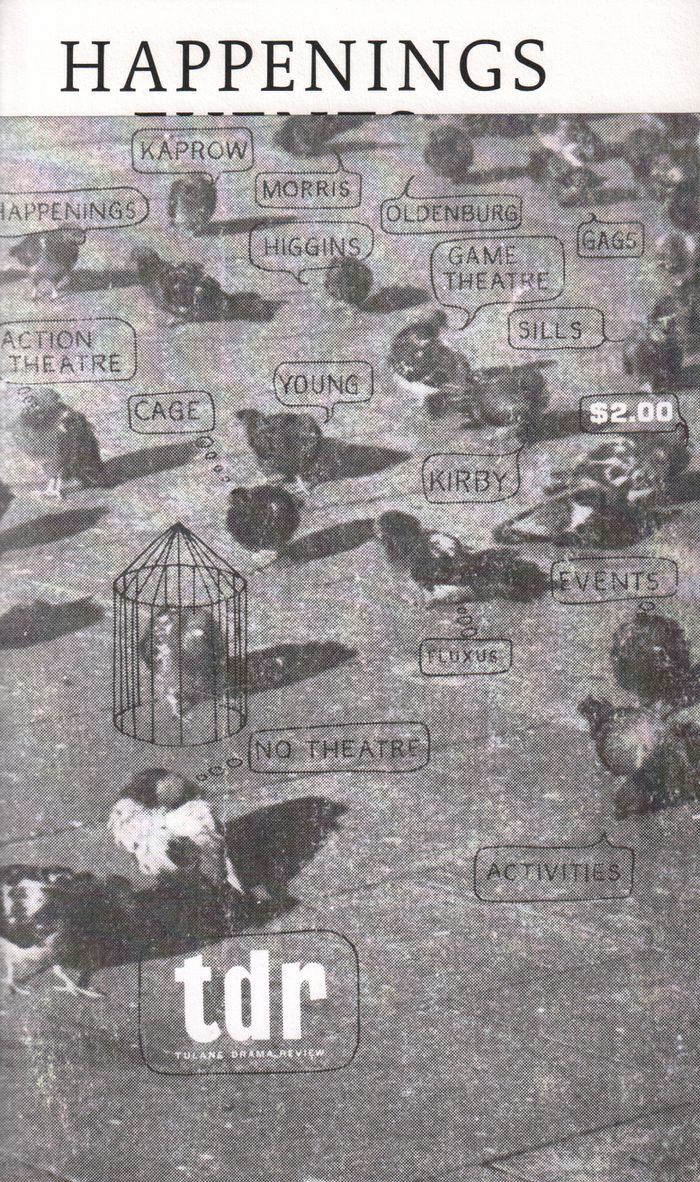
Happenings and events
Happenings and events
Actions:
Prix:
$44.95
(disponible sur commande)
Résumé:
Édition critique, annotée et augmentée du numéro de la Tulane Drama Review consacré au happening, traduit pour la première fois en français. Paru en 1965, ce volume de référence comprend notamment les contributions prestigieuses de John Cage, Dick Higgins, Allan Kaprow, George Maciunas, Robert Morris, Claes Oldenburg, Yvonne Rainer, La Monte Young…
$44.95
(disponible sur commande)
Résumé:
Édition critique, annotée et augmentée du numéro de la Tulane Drama Review consacré au happening, traduit pour la première fois en français. Paru en 1965, ce volume de référence comprend notamment les contributions prestigieuses de John Cage, Dick Higgins, Allan Kaprow, George Maciunas, Robert Morris, Claes Oldenburg, Yvonne Rainer, La Monte Young…
Titre:
Happenings and events
Actions:
Prix:
$44.95
(disponible sur commande)
Résumé:
Édition critique, annotée et augmentée du numéro de la Tulane Drama Review consacré au happening, traduit pour la première fois en français. Paru en 1965, ce volume de référence comprend notamment les contributions prestigieuses de John Cage, Dick Higgins, Allan Kaprow, George Maciunas, Robert Morris, Claes Oldenburg, Yvonne Rainer, La Monte Young…
Happenings and events
Actions:
Prix:
$44.95
(disponible sur commande)
Résumé:
Édition critique, annotée et augmentée du numéro de la Tulane Drama Review consacré au happening, traduit pour la première fois en français. Paru en 1965, ce volume de référence comprend notamment les contributions prestigieuses de John Cage, Dick Higgins, Allan Kaprow, George Maciunas, Robert Morris, Claes Oldenburg, Yvonne Rainer, La Monte Young…
Classification:
livres
livres
Publication:
novembre 2017
novembre 2017
Sujet:
Théorie de l’art
Théorie de l’art
Classification:
livres
livres
Actions:
Prix:
$52.00
(disponible en magasin)
Résumé:
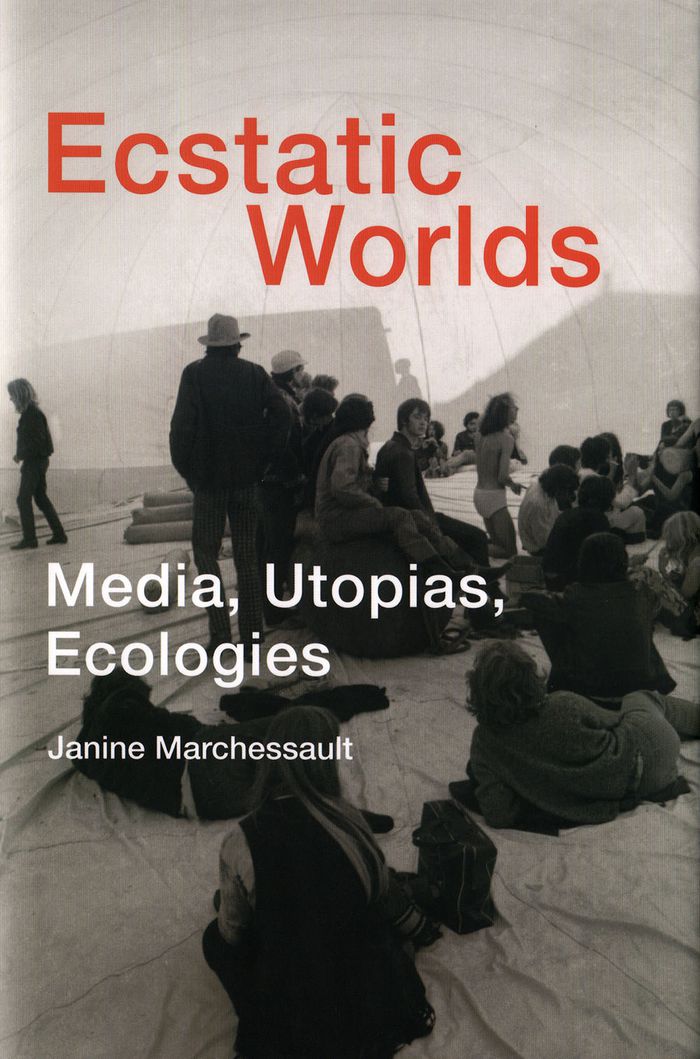
Postwar artists and architects have used photography, film, and other media to imagine and record the world as a wonder of collaborative entanglement—to translate the world for the world. In this book, Janine Marchessault examines a series of utopian media events that opened up and expanded the cosmos, creating ecstatic collective experiences for spectators and participants.
$52.00
(disponible en magasin)
Résumé:
Postwar artists and architects have used photography, film, and other media to imagine and record the world as a wonder of collaborative entanglement—to translate the world for the world. In this book, Janine Marchessault examines a series of utopian media events that opened up and expanded the cosmos, creating ecstatic collective experiences for spectators and participants.
Titre:
Ecstatic worlds: media, utopias, ecologies
Actions:
Prix:
$52.00
(disponible en magasin)
Résumé:
Postwar artists and architects have used photography, film, and other media to imagine and record the world as a wonder of collaborative entanglement—to translate the world for the world. In this book, Janine Marchessault examines a series of utopian media events that opened up and expanded the cosmos, creating ecstatic collective experiences for spectators and participants.
Ecstatic worlds: media, utopias, ecologies
Actions:
Prix:
$52.00
(disponible en magasin)
Résumé:
Postwar artists and architects have used photography, film, and other media to imagine and record the world as a wonder of collaborative entanglement—to translate the world for the world. In this book, Janine Marchessault examines a series of utopian media events that opened up and expanded the cosmos, creating ecstatic collective experiences for spectators and participants.
Classification:
livres
livres
Publication:
août 2017
août 2017
Sujet:
Théorie de l’art
Théorie de l’art
Classification:
livres
livres
Actions:
Prix:
$37.50
(disponible sur commande)
Résumé:
A small town in the vast desert of West Texas, Marfa attracts visitors from around the world to its art foundations and galleries, film and music festivals, and design and architecture symposiums. While newcomers sometimes see it as "another Santa Fe," long-time residents often take a bemused, even disapproving attitude toward the changes that Marfa has undergone since(...)
$37.50
(disponible sur commande)
Résumé:
A small town in the vast desert of West Texas, Marfa attracts visitors from around the world to its art foundations and galleries, film and music festivals, and design and architecture symposiums. While newcomers sometimes see it as "another Santa Fe," long-time residents often take a bemused, even disapproving attitude toward the changes that Marfa has undergone since(...)
Titre:
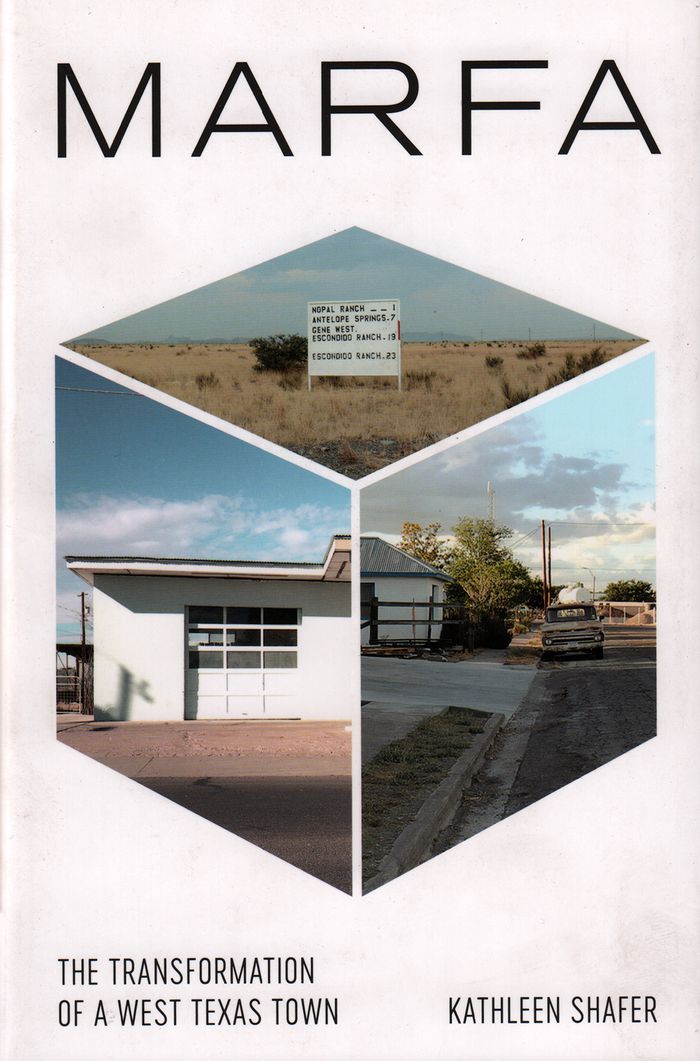
Marfa: the transformation of a West Texas town
Actions:
Prix:
$37.50
(disponible sur commande)
Résumé:
A small town in the vast desert of West Texas, Marfa attracts visitors from around the world to its art foundations and galleries, film and music festivals, and design and architecture symposiums. While newcomers sometimes see it as "another Santa Fe," long-time residents often take a bemused, even disapproving attitude toward the changes that Marfa has undergone since artist Donald Judd came to town in the 1970s and began creating spaces for his own and other artists' work. They remember when ranching and the military formed the basis of the town's economy, even as they acknowledge that tourist dollars are now essential to Marfa's sustainability.
Marfa: the transformation of a West Texas town
Actions:
Prix:
$37.50
(disponible sur commande)
Résumé:
A small town in the vast desert of West Texas, Marfa attracts visitors from around the world to its art foundations and galleries, film and music festivals, and design and architecture symposiums. While newcomers sometimes see it as "another Santa Fe," long-time residents often take a bemused, even disapproving attitude toward the changes that Marfa has undergone since artist Donald Judd came to town in the 1970s and began creating spaces for his own and other artists' work. They remember when ranching and the military formed the basis of the town's economy, even as they acknowledge that tourist dollars are now essential to Marfa's sustainability.
Classification:
livres
livres
Publication:
novembre 2017
novembre 2017
Sujet:
Théorie de l’art
Théorie de l’art
Classification:
livres
livres
Prix:
$182.95
(disponible sur commande)
Résumé:
In "Landscape into eco art", Mark Cheetham systematically examines connections and divergences between contemporary eco art, land art of the 1960s and 1970s, and the historical genre of landscape painting. Through eight thematic case studies that illuminate what eco art means in practice, reception, and history, Cheetham places the form in a longer and broader(...)
$182.95
(disponible sur commande)
Résumé:
In "Landscape into eco art", Mark Cheetham systematically examines connections and divergences between contemporary eco art, land art of the 1960s and 1970s, and the historical genre of landscape painting. Through eight thematic case studies that illuminate what eco art means in practice, reception, and history, Cheetham places the form in a longer and broader(...)
Titre:
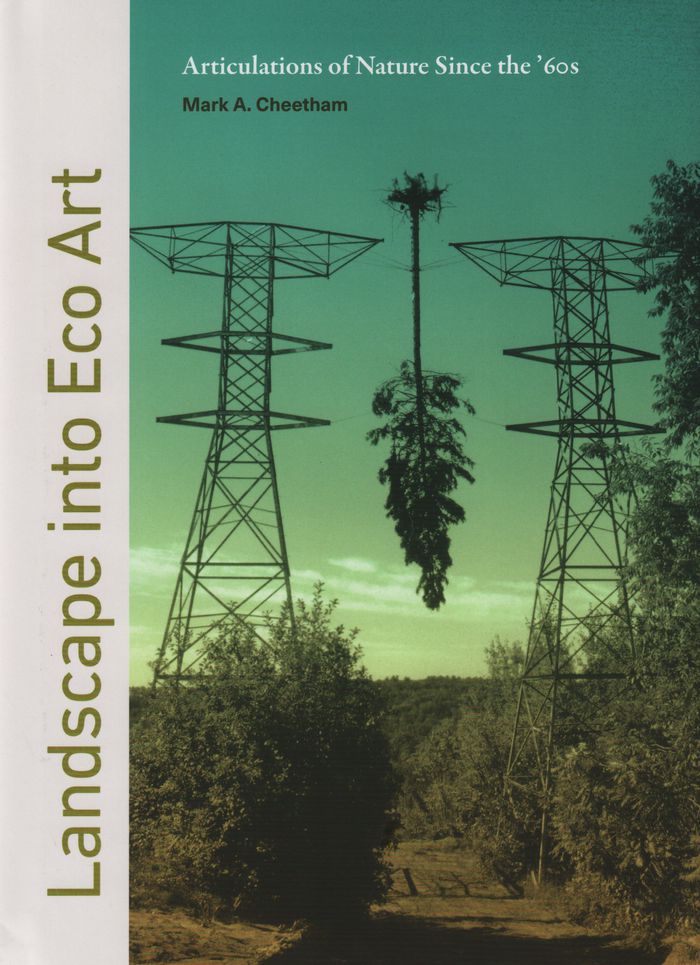
Landscape into Eco Art: Articulations of nature since the '60s
Actions:
Prix:
$182.95
(disponible sur commande)
Résumé:
In "Landscape into eco art", Mark Cheetham systematically examines connections and divergences between contemporary eco art, land art of the 1960s and 1970s, and the historical genre of landscape painting. Through eight thematic case studies that illuminate what eco art means in practice, reception, and history, Cheetham places the form in a longer and broader art-historical context. He considers a wide range of media—from painting, sculpture, and photography to artists’ films, video, sound work, animation, and installation—and analyzes the work of internationally prominent artists such as Olafur Eliasson, Nancy Holt, Mark Dion, and Robert Smithson. In doing so, Cheetham reveals eco art to be a dynamic extension of a long tradition of landscape depiction in the West that boldly enters into today’s debates on climate science, government policy, and our collective and individual responsibility to the planet
Landscape into Eco Art: Articulations of nature since the '60s
Actions:
Prix:
$182.95
(disponible sur commande)
Résumé:
In "Landscape into eco art", Mark Cheetham systematically examines connections and divergences between contemporary eco art, land art of the 1960s and 1970s, and the historical genre of landscape painting. Through eight thematic case studies that illuminate what eco art means in practice, reception, and history, Cheetham places the form in a longer and broader art-historical context. He considers a wide range of media—from painting, sculpture, and photography to artists’ films, video, sound work, animation, and installation—and analyzes the work of internationally prominent artists such as Olafur Eliasson, Nancy Holt, Mark Dion, and Robert Smithson. In doing so, Cheetham reveals eco art to be a dynamic extension of a long tradition of landscape depiction in the West that boldly enters into today’s debates on climate science, government policy, and our collective and individual responsibility to the planet
Classification:
livres
livres
Publication:
février 2018
février 2018
Sujet:
Théorie de l’art
Théorie de l’art
Classification:
livres
livres
Prix:
$39.95
(disponible sur commande)
Résumé:
A sweeping look at the lives and work of two important English Romantic painters. Stanley Plumly explores immortality in art through the work of two impressive landscape artists: John Constable and J.M.W. Turner. Seeking the transcendent aesthetic awe of the sublime and reeling from personal tragedy, these painters portrayed the terrible beauty of the natural world from(...)
$39.95
(disponible sur commande)
Résumé:
A sweeping look at the lives and work of two important English Romantic painters. Stanley Plumly explores immortality in art through the work of two impressive landscape artists: John Constable and J.M.W. Turner. Seeking the transcendent aesthetic awe of the sublime and reeling from personal tragedy, these painters portrayed the terrible beauty of the natural world from(...)
Titre:
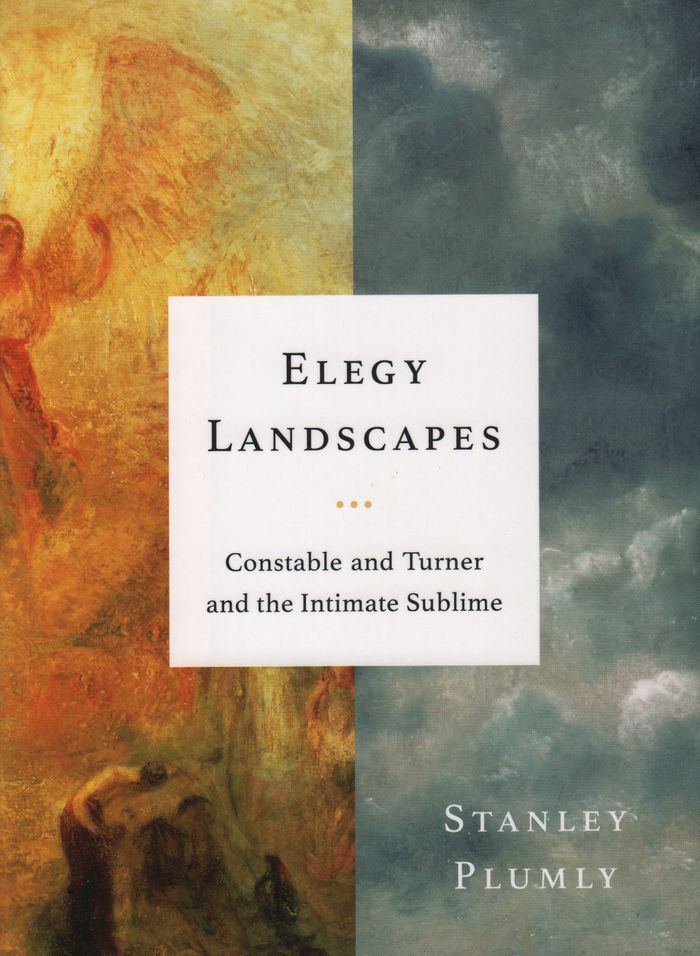
Elegy landscapes: Constable, Turner and the intimate sublime
Actions:
Prix:
$39.95
(disponible sur commande)
Résumé:
A sweeping look at the lives and work of two important English Romantic painters. Stanley Plumly explores immortality in art through the work of two impressive landscape artists: John Constable and J.M.W. Turner. Seeking the transcendent aesthetic awe of the sublime and reeling from personal tragedy, these painters portrayed the terrible beauty of the natural world from an intimate, close-up perspective. Plumly studies the paintings against the pull of the artists' lives, probing how each finds the sublime in different, though connected, worlds. At once a meditation on the difficulties in achieving truly immortal works of art and an exploration of the relationship between artist and artwork, ''Elegy Landscapes'' takes a wide-angled look at the philosophy of the sublime.
Elegy landscapes: Constable, Turner and the intimate sublime
Actions:
Prix:
$39.95
(disponible sur commande)
Résumé:
A sweeping look at the lives and work of two important English Romantic painters. Stanley Plumly explores immortality in art through the work of two impressive landscape artists: John Constable and J.M.W. Turner. Seeking the transcendent aesthetic awe of the sublime and reeling from personal tragedy, these painters portrayed the terrible beauty of the natural world from an intimate, close-up perspective. Plumly studies the paintings against the pull of the artists' lives, probing how each finds the sublime in different, though connected, worlds. At once a meditation on the difficulties in achieving truly immortal works of art and an exploration of the relationship between artist and artwork, ''Elegy Landscapes'' takes a wide-angled look at the philosophy of the sublime.
Classification:
livres
livres
Publication:
septembre 2018
septembre 2018
Sujet:
Théorie de l’art
Théorie de l’art
Classification:
livres
livres
Titre:
Constable's skies
Constable's skies
Actions:
Prix:
$25.95
(disponible sur commande)
Résumé:
John Constable was one of the supreme painters of the weather, and his depictions of the sky are essential components of all his landscape paintings, from famous works such as The Hay Wain and Salisbury Cathedral from the Meadows to his numerous cloud studies painted on Hampstead Heath, culminating in paintings that are all sky; the landscape beneath is completely absent.(...)
$25.95
(disponible sur commande)
Résumé:
John Constable was one of the supreme painters of the weather, and his depictions of the sky are essential components of all his landscape paintings, from famous works such as The Hay Wain and Salisbury Cathedral from the Meadows to his numerous cloud studies painted on Hampstead Heath, culminating in paintings that are all sky; the landscape beneath is completely absent.(...)
Titre:
Constable's skies
Actions:
Prix:
$25.95
(disponible sur commande)
Résumé:
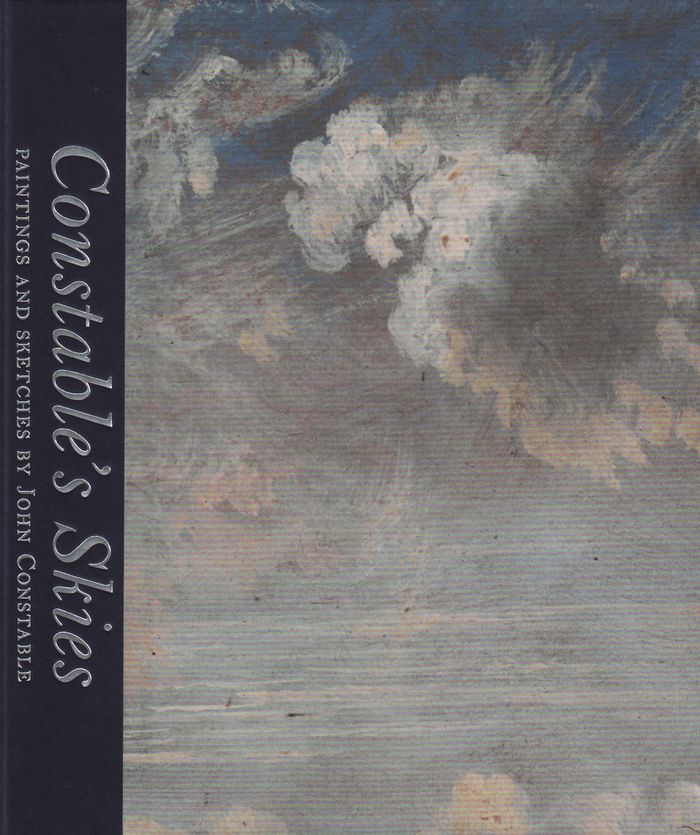
John Constable was one of the supreme painters of the weather, and his depictions of the sky are essential components of all his landscape paintings, from famous works such as The Hay Wain and Salisbury Cathedral from the Meadows to his numerous cloud studies painted on Hampstead Heath, culminating in paintings that are all sky; the landscape beneath is completely absent. Written by Mark Evans, a leading authority on the work of John Constable, ''Constable’s Skies'' captures the artist’s fascination with the sky and brings together his depictions of the English weather from throughout his career. The unprecedented fidelity of Constable’s painted skies is proven by reference to contemporary weather diaries. The book also includes a guide to where to find Constable’s work around the world.
Constable's skies
Actions:
Prix:
$25.95
(disponible sur commande)
Résumé:
John Constable was one of the supreme painters of the weather, and his depictions of the sky are essential components of all his landscape paintings, from famous works such as The Hay Wain and Salisbury Cathedral from the Meadows to his numerous cloud studies painted on Hampstead Heath, culminating in paintings that are all sky; the landscape beneath is completely absent. Written by Mark Evans, a leading authority on the work of John Constable, ''Constable’s Skies'' captures the artist’s fascination with the sky and brings together his depictions of the English weather from throughout his career. The unprecedented fidelity of Constable’s painted skies is proven by reference to contemporary weather diaries. The book also includes a guide to where to find Constable’s work around the world.
Classification:
livres
livres
Publication:
août 2018
août 2018
Sujet:
Théorie de l’art
Théorie de l’art
Classification:
livres
livres
Actions:
Prix:
$42.00
(disponible sur commande)
Résumé:
"On knowledge production : a critical reader in contemporary art" presents a selection of newly commissioned and anthologized texts by a diverse group of artists, art historians, philosophers, and theorists who have engaged with thinking critically about the field of art as a site for the production of knowledge. The body of contributions in this reader comprise a series(...)
$42.00
(disponible sur commande)
Résumé:
"On knowledge production : a critical reader in contemporary art" presents a selection of newly commissioned and anthologized texts by a diverse group of artists, art historians, philosophers, and theorists who have engaged with thinking critically about the field of art as a site for the production of knowledge. The body of contributions in this reader comprise a series(...)
Sujet:
Théorie de l’art
Théorie de l’art
Publication:
janvier 1900, Utrecht, Frankfurt am Main
janvier 1900, Utrecht, Frankfurt am Main
Titre:
On knowledge production : a critical reader in contemporary art (BAK critical reader series)
Actions:
Prix:
$42.00
(disponible sur commande)
Résumé:
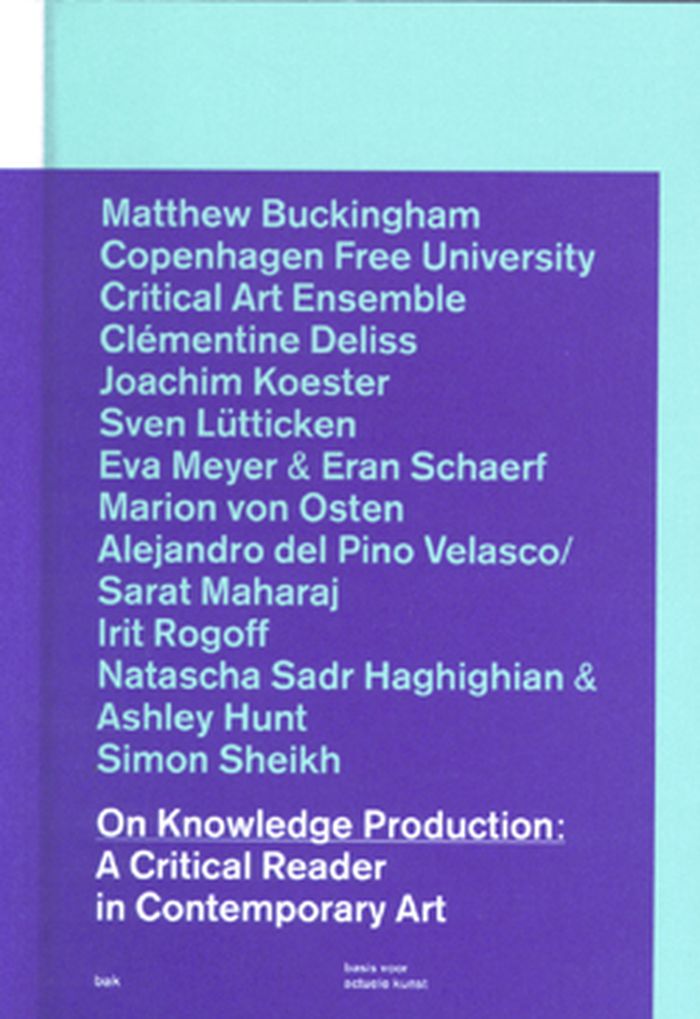
"On knowledge production : a critical reader in contemporary art" presents a selection of newly commissioned and anthologized texts by a diverse group of artists, art historians, philosophers, and theorists who have engaged with thinking critically about the field of art as a site for the production of knowledge. The body of contributions in this reader comprise a series of critical inquiries, thought experiments, documents of practices, and tentative propositions about the status of producing knowledge in contemporary art, which vary widely in perspective, approach, and form. This selection unfolds different entry points and layers, unwrapping the (often) uncritically adopted notion of "art producing knowledge" and casting diverse views on the context, meaning, and potential of this understanding of art practices today.
On knowledge production : a critical reader in contemporary art (BAK critical reader series)
Actions:
Prix:
$42.00
(disponible sur commande)
Résumé:
"On knowledge production : a critical reader in contemporary art" presents a selection of newly commissioned and anthologized texts by a diverse group of artists, art historians, philosophers, and theorists who have engaged with thinking critically about the field of art as a site for the production of knowledge. The body of contributions in this reader comprise a series of critical inquiries, thought experiments, documents of practices, and tentative propositions about the status of producing knowledge in contemporary art, which vary widely in perspective, approach, and form. This selection unfolds different entry points and layers, unwrapping the (often) uncritically adopted notion of "art producing knowledge" and casting diverse views on the context, meaning, and potential of this understanding of art practices today.
Classification:
livres
livres
Publication:
janvier 1900, Utrecht, Frankfurt am Main
janvier 1900, Utrecht, Frankfurt am Main
Sujet:
Théorie de l’art
Théorie de l’art
Classification:
livres
livres
Titre:
Curating critique :
Curating critique :
Actions:
Prix:
$58.00
(disponible sur commande)
Résumé:
"Our interest in research lies in mediating the complexity of what we define as art in the widest sense of the term, in other words in developing an ´operating system´ that attempts in all its facets to balance order and change, old and new, theory and practice."
$58.00
(disponible sur commande)
Résumé:
"Our interest in research lies in mediating the complexity of what we define as art in the widest sense of the term, in other words in developing an ´operating system´ that attempts in all its facets to balance order and change, old and new, theory and practice."
Sujet:
Théorie de l’art
Théorie de l’art
Publication:
janvier 1900, Frankfurt am Main
janvier 1900, Frankfurt am Main
Titre:
Curating critique :
Actions:
Prix:
$58.00
(disponible sur commande)
Résumé:
"Our interest in research lies in mediating the complexity of what we define as art in the widest sense of the term, in other words in developing an ´operating system´ that attempts in all its facets to balance order and change, old and new, theory and practice."
Curating critique :
Actions:
Prix:
$58.00
(disponible sur commande)
Résumé:
"Our interest in research lies in mediating the complexity of what we define as art in the widest sense of the term, in other words in developing an ´operating system´ that attempts in all its facets to balance order and change, old and new, theory and practice."
Classification:
livres
livres
Publication:
janvier 1900, Frankfurt am Main
janvier 1900, Frankfurt am Main
Sujet:
Théorie de l’art
Théorie de l’art
Classification:
livres
livres
Actions:
Prix:
$12.99
(disponible sur commande)
Résumé:
La présente collection prolonge l'activité éditoriale de la revue Documents sur l'art, fondée en 1992. Elle rassemble textes et entretiens avec les acteurs du champ artistique actuel: critiques, artistes, commissaires, collectionneurs... Les artistes actuels évoluent dans un univers de produits en vente, de formes préexistantes, de signaux déjà émis, de bâtiments déjà(...)
$12.99
(disponible sur commande)
Résumé:
La présente collection prolonge l'activité éditoriale de la revue Documents sur l'art, fondée en 1992. Elle rassemble textes et entretiens avec les acteurs du champ artistique actuel: critiques, artistes, commissaires, collectionneurs... Les artistes actuels évoluent dans un univers de produits en vente, de formes préexistantes, de signaux déjà émis, de bâtiments déjà(...)
Titre:
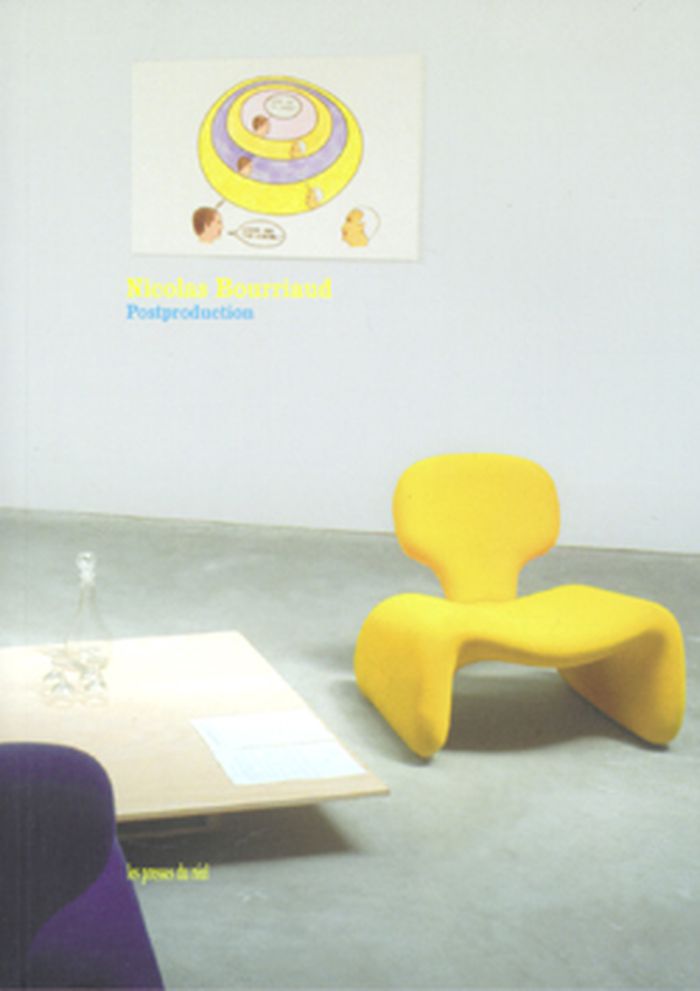
Nicolas Bourriaud postproduction
Actions:
Prix:
$12.99
(disponible sur commande)
Résumé:
La présente collection prolonge l'activité éditoriale de la revue Documents sur l'art, fondée en 1992. Elle rassemble textes et entretiens avec les acteurs du champ artistique actuel: critiques, artistes, commissaires, collectionneurs... Les artistes actuels évoluent dans un univers de produits en vente, de formes préexistantes, de signaux déjà émis, de bâtiments déjà construits, d’itinéraires balisés par leurs devanciers. Ils ou elles ne considèrent plus le champ artistique comme un musée contenant des œuvres qu’il faudrait citer ou "dépasser", ainsi que le voudrait l’idéologie moderniste du nouveau, mais comme autant de magasins remplis d’outils à utiliser, de stocks de données à manipuler, à rejouer et à mettre en scène. Version française de Postproduction, parue en anglais en 2001.
Nicolas Bourriaud postproduction
Actions:
Prix:
$12.99
(disponible sur commande)
Résumé:
La présente collection prolonge l'activité éditoriale de la revue Documents sur l'art, fondée en 1992. Elle rassemble textes et entretiens avec les acteurs du champ artistique actuel: critiques, artistes, commissaires, collectionneurs... Les artistes actuels évoluent dans un univers de produits en vente, de formes préexistantes, de signaux déjà émis, de bâtiments déjà construits, d’itinéraires balisés par leurs devanciers. Ils ou elles ne considèrent plus le champ artistique comme un musée contenant des œuvres qu’il faudrait citer ou "dépasser", ainsi que le voudrait l’idéologie moderniste du nouveau, mais comme autant de magasins remplis d’outils à utiliser, de stocks de données à manipuler, à rejouer et à mettre en scène. Version française de Postproduction, parue en anglais en 2001.
Classification:
livres
livres
Publication:
janvier 1900, Dijon
janvier 1900, Dijon
Sujet:
Théorie de l’art
Théorie de l’art
Classification:
livres
livres
Titre:
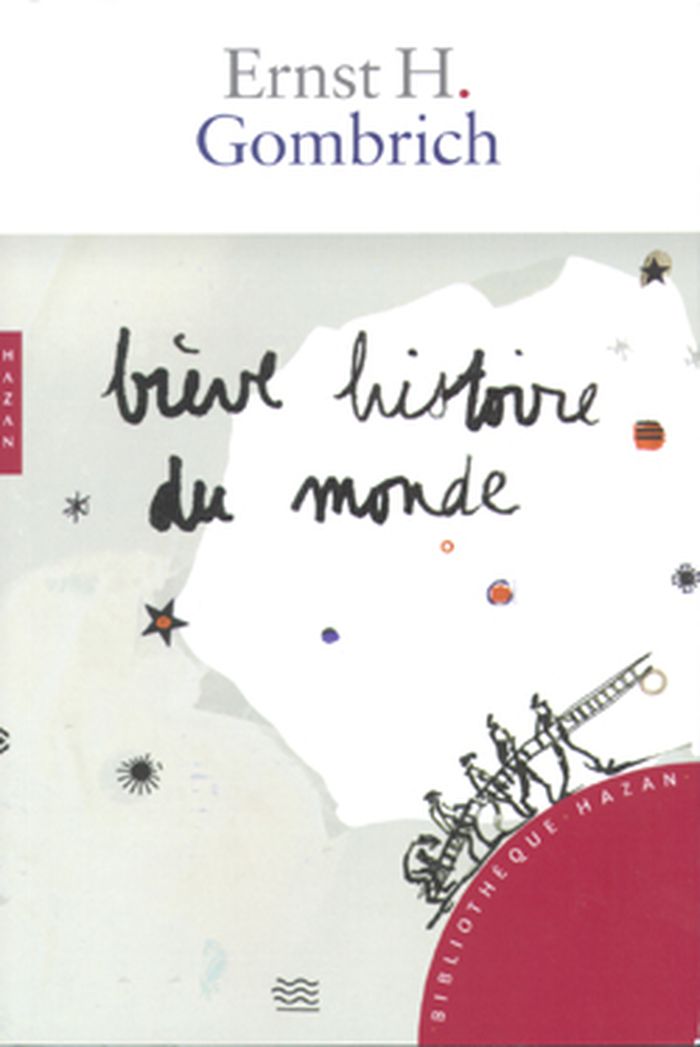
Brève histoire du monde
Brève histoire du monde
Actions:
Prix:
$24.95
(disponible sur commande)
Résumé:
L'histoire de l'humanité racontée en quelque trois cents pages? Aussi audacieux que cela puisse paraître, c'est le pari que s'est lancé Ernst Gombrich, et qu'il a relevé avec brio. Il choisit de tutoyer ses lecteurs, tel un grand frère qui s'adresserait à ses cadets et, considérant que ceux-ci savent réfléchir par eux-mêmes, il ne les encombre pas d'explications(...)
$24.95
(disponible sur commande)
Résumé:
L'histoire de l'humanité racontée en quelque trois cents pages? Aussi audacieux que cela puisse paraître, c'est le pari que s'est lancé Ernst Gombrich, et qu'il a relevé avec brio. Il choisit de tutoyer ses lecteurs, tel un grand frère qui s'adresserait à ses cadets et, considérant que ceux-ci savent réfléchir par eux-mêmes, il ne les encombre pas d'explications(...)
Titre:
Brève histoire du monde
Actions:
Prix:
$24.95
(disponible sur commande)
Résumé:
L'histoire de l'humanité racontée en quelque trois cents pages? Aussi audacieux que cela puisse paraître, c'est le pari que s'est lancé Ernst Gombrich, et qu'il a relevé avec brio. Il choisit de tutoyer ses lecteurs, tel un grand frère qui s'adresserait à ses cadets et, considérant que ceux-ci savent réfléchir par eux-mêmes, il ne les encombre pas d'explications simplistes. II leur présente les personnages historiques emblématiques de leur temps et raconte les faits dans leur continuité, comme s'il ne s'arrêtait pas de parler, insufflant au récit un sens du rapprochement et de la contemporanéité des événements. Un ouvrage formidable pour apprendre l'histoire sans en avoir l'air. Membre de l'école viennoise d'histoire de l'art, Sir Ernst Gombrich (1909-2001) a dirigé l'Institut Warburg à Londres de 1959 à 1976. Historien de l'art réputé pour ses travaux sur l'iconographie, la psychologie de l'art et les problèmes de méthodologie propre à sa discipline, il a publié deux synthèses au succès ininterrompu : Brève Histoire du monde et une Histoire de l'art traduite en dix-huit langues.
Brève histoire du monde
Actions:
Prix:
$24.95
(disponible sur commande)
Résumé:
L'histoire de l'humanité racontée en quelque trois cents pages? Aussi audacieux que cela puisse paraître, c'est le pari que s'est lancé Ernst Gombrich, et qu'il a relevé avec brio. Il choisit de tutoyer ses lecteurs, tel un grand frère qui s'adresserait à ses cadets et, considérant que ceux-ci savent réfléchir par eux-mêmes, il ne les encombre pas d'explications simplistes. II leur présente les personnages historiques emblématiques de leur temps et raconte les faits dans leur continuité, comme s'il ne s'arrêtait pas de parler, insufflant au récit un sens du rapprochement et de la contemporanéité des événements. Un ouvrage formidable pour apprendre l'histoire sans en avoir l'air. Membre de l'école viennoise d'histoire de l'art, Sir Ernst Gombrich (1909-2001) a dirigé l'Institut Warburg à Londres de 1959 à 1976. Historien de l'art réputé pour ses travaux sur l'iconographie, la psychologie de l'art et les problèmes de méthodologie propre à sa discipline, il a publié deux synthèses au succès ininterrompu : Brève Histoire du monde et une Histoire de l'art traduite en dix-huit langues.
Classification:
livres
livres
Publication:
janvier 1900, Paris
janvier 1900, Paris
Sujet:
Théorie de l’art
Théorie de l’art


