


1193 Résultats
Classification:
livres
livres
Titre:
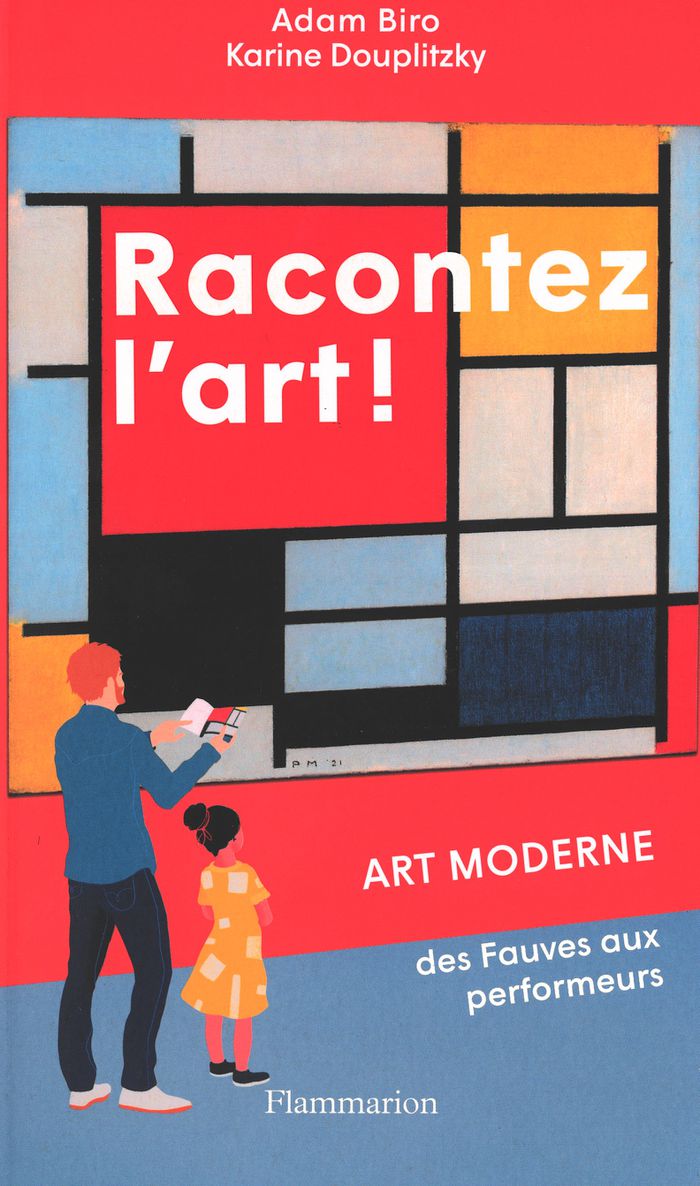
Racontez l'art
Racontez l'art
Actions:
Prix:
$58.95
(disponible sur commande)
Résumé:
Cette histoire de l’art originale, remplie d’anecdotes, peut se lire à la maison, à l’école comme au musée. Anecdotes et analyses sont centrées autour d’un artiste, d’un mouvement ou d’un événement, classés chronologiquement et géographiquement, exactement comme au musée. Une frise chronologique permet de situer les œuvres dans un contexte historique et cinématographique,(...)
$58.95
(disponible sur commande)
Résumé:
Cette histoire de l’art originale, remplie d’anecdotes, peut se lire à la maison, à l’école comme au musée. Anecdotes et analyses sont centrées autour d’un artiste, d’un mouvement ou d’un événement, classés chronologiquement et géographiquement, exactement comme au musée. Une frise chronologique permet de situer les œuvres dans un contexte historique et cinématographique,(...)
Titre:
Racontez l'art
Actions:
Prix:
$58.95
(disponible sur commande)
Résumé:
Cette histoire de l’art originale, remplie d’anecdotes, peut se lire à la maison, à l’école comme au musée. Anecdotes et analyses sont centrées autour d’un artiste, d’un mouvement ou d’un événement, classés chronologiquement et géographiquement, exactement comme au musée. Une frise chronologique permet de situer les œuvres dans un contexte historique et cinématographique, enfin une liste des œuvres, classées par musée, permet d’organiser sa visite.
Racontez l'art
Actions:
Prix:
$58.95
(disponible sur commande)
Résumé:
Cette histoire de l’art originale, remplie d’anecdotes, peut se lire à la maison, à l’école comme au musée. Anecdotes et analyses sont centrées autour d’un artiste, d’un mouvement ou d’un événement, classés chronologiquement et géographiquement, exactement comme au musée. Une frise chronologique permet de situer les œuvres dans un contexte historique et cinématographique, enfin une liste des œuvres, classées par musée, permet d’organiser sa visite.
Classification:
livres
livres
Publication:
décembre 2022
décembre 2022
Sujet:
Théorie de l’art
Théorie de l’art
Classification:
livres
livres
Titre:
Letters to a young painter
Letters to a young painter
Actions:
Prix:
$20.00
(disponible sur commande)
Résumé:
Never before translated into English, Rainer Maria Rilke’s fascinating "Letters to a Young Painter", written toward the end of his life between 1920 and 1926. In these eight intimate letters written to a teenage Balthus—who would go on to become one of the leading artists of his generation—Rilke describes the challenges he faced, while opening the door for the young(...)
$20.00
(disponible sur commande)
Résumé:
Never before translated into English, Rainer Maria Rilke’s fascinating "Letters to a Young Painter", written toward the end of his life between 1920 and 1926. In these eight intimate letters written to a teenage Balthus—who would go on to become one of the leading artists of his generation—Rilke describes the challenges he faced, while opening the door for the young(...)
Sujet:
Théorie de l’art
Théorie de l’art
Publication:
novembre 2017
novembre 2017
Titre:
Letters to a young painter
Actions:
Prix:
$20.00
(disponible sur commande)
Résumé:
Never before translated into English, Rainer Maria Rilke’s fascinating "Letters to a Young Painter", written toward the end of his life between 1920 and 1926. In these eight intimate letters written to a teenage Balthus—who would go on to become one of the leading artists of his generation—Rilke describes the challenges he faced, while opening the door for the young painter to take himself and his work seriously. Rilke’s constant warmth, his ability to sense in advance his correspondent’s difficulties and propose solutions to them, and his sensitivity as a person and an artist come across in these charming and honest letters.
Letters to a young painter
Actions:
Prix:
$20.00
(disponible sur commande)
Résumé:
Never before translated into English, Rainer Maria Rilke’s fascinating "Letters to a Young Painter", written toward the end of his life between 1920 and 1926. In these eight intimate letters written to a teenage Balthus—who would go on to become one of the leading artists of his generation—Rilke describes the challenges he faced, while opening the door for the young painter to take himself and his work seriously. Rilke’s constant warmth, his ability to sense in advance his correspondent’s difficulties and propose solutions to them, and his sensitivity as a person and an artist come across in these charming and honest letters.
Classification:
livres
livres
Publication:
novembre 2017
novembre 2017
Sujet:
Théorie de l’art
Théorie de l’art
Classification:
livres
livres
Prix:
$59.95
(disponible en magasin)
Résumé:
In "The Polyhedrists", Noam Andrews unfolds a history of the relationship between art and geometry in early modern Europe, told largely through a collective of ground-breaking artisan-artists (among them, Luca Pacioli, Albrecht Dürer, Wenzel Jamnitzer, and Lorentz Stöer) and by detailed analysis of a rich visual panoply of their work, featuring paintings, prints,(...)
$59.95
(disponible en magasin)
Résumé:
In "The Polyhedrists", Noam Andrews unfolds a history of the relationship between art and geometry in early modern Europe, told largely through a collective of ground-breaking artisan-artists (among them, Luca Pacioli, Albrecht Dürer, Wenzel Jamnitzer, and Lorentz Stöer) and by detailed analysis of a rich visual panoply of their work, featuring paintings, prints,(...)
Titre:
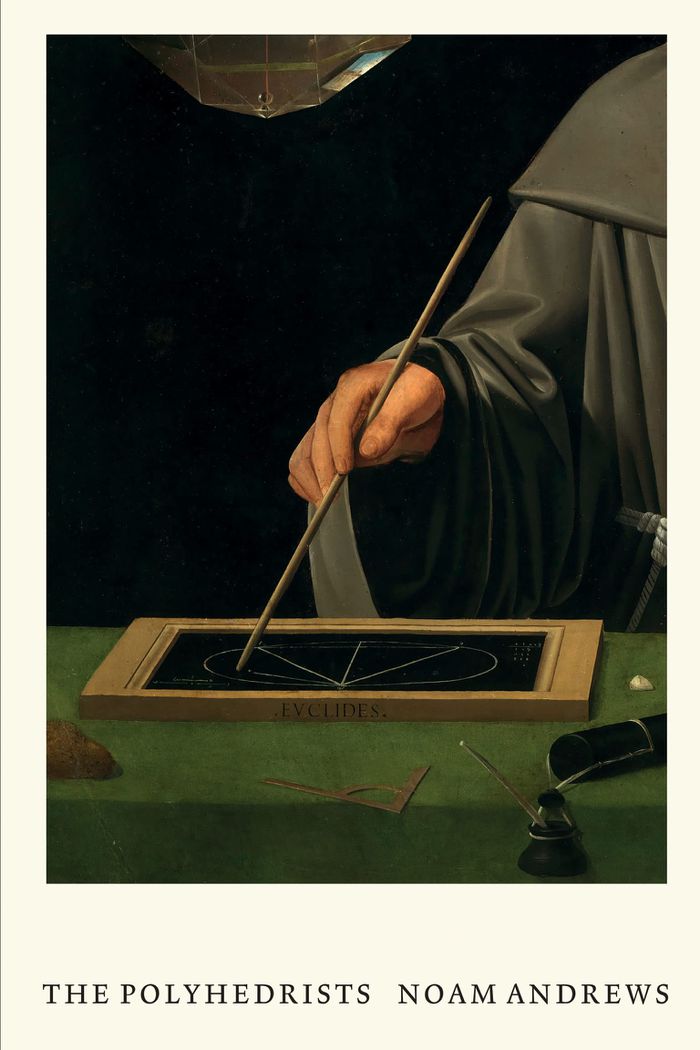
The polyhedrists: Art and geometry in the long sixteenth century
Actions:
Prix:
$59.95
(disponible en magasin)
Résumé:
In "The Polyhedrists", Noam Andrews unfolds a history of the relationship between art and geometry in early modern Europe, told largely through a collective of ground-breaking artisan-artists (among them, Luca Pacioli, Albrecht Dürer, Wenzel Jamnitzer, and Lorentz Stöer) and by detailed analysis of a rich visual panoply of their work, featuring paintings, prints, decorative arts, cabinetry, and lavishly illustrated treatises. But this is also an art history of the polyhedra themselves, emblems of an evolving artistic intelligence, which include a varied set of geometrical figures—both Platonic, or regular, like the simple tetrahedron, and Archimedean, or irregular, like the complex yet beguiling rhombicosidodecahedron.
The polyhedrists: Art and geometry in the long sixteenth century
Actions:
Prix:
$59.95
(disponible en magasin)
Résumé:
In "The Polyhedrists", Noam Andrews unfolds a history of the relationship between art and geometry in early modern Europe, told largely through a collective of ground-breaking artisan-artists (among them, Luca Pacioli, Albrecht Dürer, Wenzel Jamnitzer, and Lorentz Stöer) and by detailed analysis of a rich visual panoply of their work, featuring paintings, prints, decorative arts, cabinetry, and lavishly illustrated treatises. But this is also an art history of the polyhedra themselves, emblems of an evolving artistic intelligence, which include a varied set of geometrical figures—both Platonic, or regular, like the simple tetrahedron, and Archimedean, or irregular, like the complex yet beguiling rhombicosidodecahedron.
Classification:
livres
livres
Publication:
mai 2022
mai 2022
Sujet:
Théorie de l’art
Théorie de l’art
Classification:
livres
livres
Actions:
Prix:
$24.95
(disponible en magasin)
Résumé:
In this book, Brian Dillon explores images and artists he is drawn to and analyzes the attraction. What does it mean to claim affinity with a picture? What do feelings of affinity imply about the experience of art and of the world? Affinities is a critical and personal study of a sensation that is not exactly taste, desire, or solidarity, but has aspects of all three.(...)
$24.95
(disponible en magasin)
Résumé:
In this book, Brian Dillon explores images and artists he is drawn to and analyzes the attraction. What does it mean to claim affinity with a picture? What do feelings of affinity imply about the experience of art and of the world? Affinities is a critical and personal study of a sensation that is not exactly taste, desire, or solidarity, but has aspects of all three.(...)
Titre:
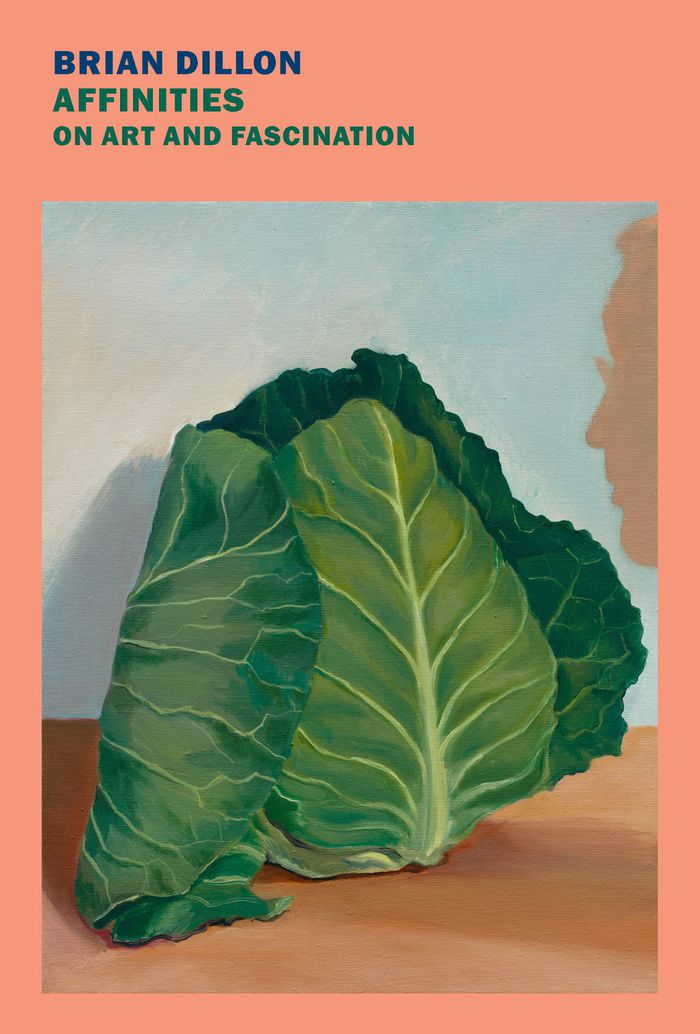
Affinities: on art and fascination
Actions:
Prix:
$24.95
(disponible en magasin)
Résumé:
In this book, Brian Dillon explores images and artists he is drawn to and analyzes the attraction. What does it mean to claim affinity with a picture? What do feelings of affinity imply about the experience of art and of the world? Affinities is a critical and personal study of a sensation that is not exactly taste, desire, or solidarity, but has aspects of all three. Approaching this subject via discrete examples, Dillon examines works by artists such as Dora Maar and Andy Warhol, Rinko Kawauchi and Susan Hiller, as well as scientific or vernacular images of sea creatures and migraine auras. Written as a series of linked essays, "Affinities" completes a trilogy, with "Essayism" and "Suppose a Sentence", about the intimate and abstract pleasures of reading and looking.
Affinities: on art and fascination
Actions:
Prix:
$24.95
(disponible en magasin)
Résumé:
In this book, Brian Dillon explores images and artists he is drawn to and analyzes the attraction. What does it mean to claim affinity with a picture? What do feelings of affinity imply about the experience of art and of the world? Affinities is a critical and personal study of a sensation that is not exactly taste, desire, or solidarity, but has aspects of all three. Approaching this subject via discrete examples, Dillon examines works by artists such as Dora Maar and Andy Warhol, Rinko Kawauchi and Susan Hiller, as well as scientific or vernacular images of sea creatures and migraine auras. Written as a series of linked essays, "Affinities" completes a trilogy, with "Essayism" and "Suppose a Sentence", about the intimate and abstract pleasures of reading and looking.
Classification:
livres
livres
Publication:
avril 2023
avril 2023
Sujet:
Théorie de l’art
Théorie de l’art
Classification:
livres
livres
Titre:
What are our supports?
What are our supports?
Actions:
Prix:
$58.00
(disponible sur commande)
Résumé:
Faced with environmental, social, and political precarity, what are our supports? Five artist groups inhabiting an in-between public space in downtown Vancouver offer a response to these questions. Their projects made forms of connection, self-organisation and mutual aid, friendship as a medium, and collective, critically engaged pleasure activism visible. ''What are our(...)
$58.00
(disponible sur commande)
Résumé:
Faced with environmental, social, and political precarity, what are our supports? Five artist groups inhabiting an in-between public space in downtown Vancouver offer a response to these questions. Their projects made forms of connection, self-organisation and mutual aid, friendship as a medium, and collective, critically engaged pleasure activism visible. ''What are our(...)
Sujet:
Théorie de l’art
Théorie de l’art
Publication:
janvier 2023
janvier 2023
Titre:
What are our supports?
Actions:
Prix:
$58.00
(disponible sur commande)
Résumé:
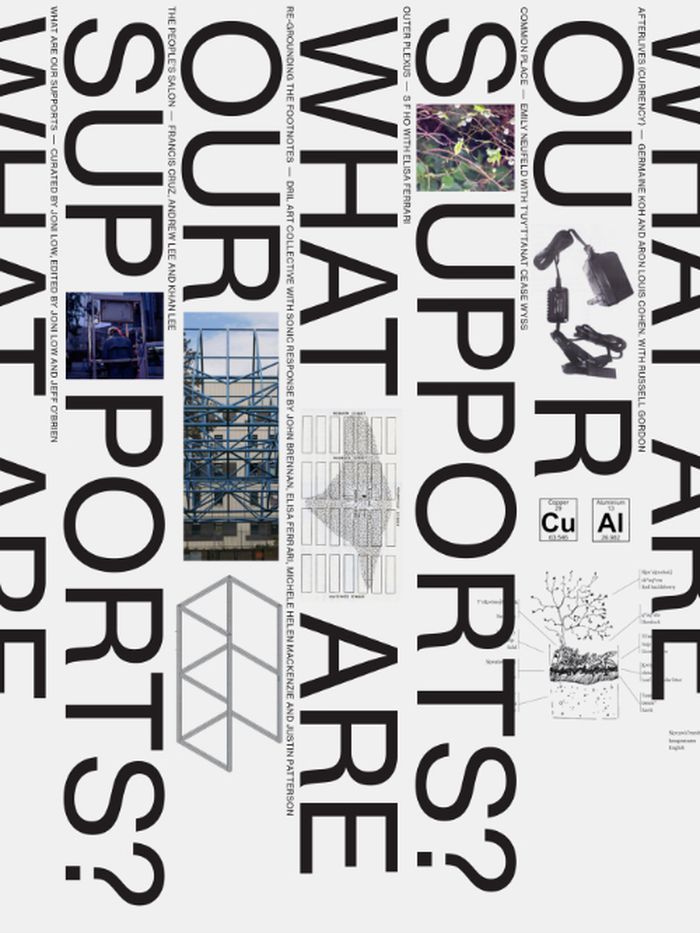
Faced with environmental, social, and political precarity, what are our supports? Five artist groups inhabiting an in-between public space in downtown Vancouver offer a response to these questions. Their projects made forms of connection, self-organisation and mutual aid, friendship as a medium, and collective, critically engaged pleasure activism visible. ''What are our supports?'' looks at the frameworks artists propose in working to create change in a city rampant with urban development and regulation. It chronicles documentation from each project and presents critical essays, poetry, and reprinted texts by Leanne Betasamosake Simpson and Celine Condorelli.
What are our supports?
Actions:
Prix:
$58.00
(disponible sur commande)
Résumé:
Faced with environmental, social, and political precarity, what are our supports? Five artist groups inhabiting an in-between public space in downtown Vancouver offer a response to these questions. Their projects made forms of connection, self-organisation and mutual aid, friendship as a medium, and collective, critically engaged pleasure activism visible. ''What are our supports?'' looks at the frameworks artists propose in working to create change in a city rampant with urban development and regulation. It chronicles documentation from each project and presents critical essays, poetry, and reprinted texts by Leanne Betasamosake Simpson and Celine Condorelli.
Classification:
livres
livres
Publication:
janvier 2023
janvier 2023
Sujet:
Théorie de l’art
Théorie de l’art
Classification:
livres
livres
Actions:
Prix:
$52.95
(disponible sur commande)
Résumé:
Comment répondre aux défis multiples de la crise climatique ? De quelle façon inclure toutes les créatrices et tous les créateurs dans le monde de l’art ? De quelle manière replacer le vivant au centre de la pratique artistique ? En remontant le fil de l’histoire de l’art, l’autrice montre comme les préoccupations de préservation des ressources, de transmission des(...)
$52.95
(disponible sur commande)
Résumé:
Comment répondre aux défis multiples de la crise climatique ? De quelle façon inclure toutes les créatrices et tous les créateurs dans le monde de l’art ? De quelle manière replacer le vivant au centre de la pratique artistique ? En remontant le fil de l’histoire de l’art, l’autrice montre comme les préoccupations de préservation des ressources, de transmission des(...)
Titre:
L'Artiste et le vivant : Pour un art écologique, inclusif et engagé
Actions:
Prix:
$52.95
(disponible sur commande)
Résumé:
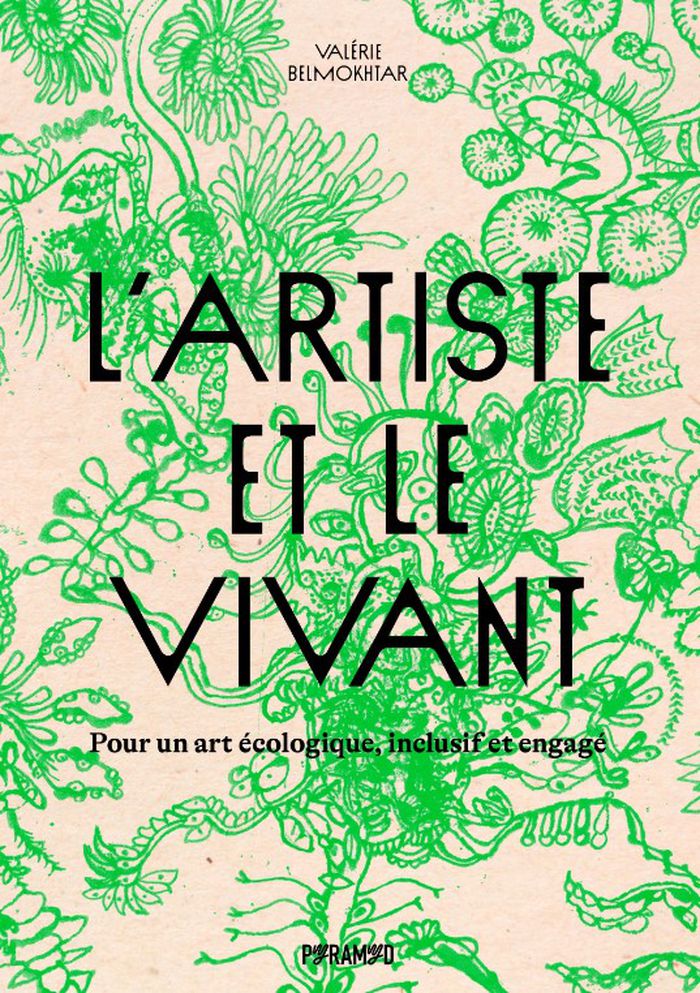
Comment répondre aux défis multiples de la crise climatique ? De quelle façon inclure toutes les créatrices et tous les créateurs dans le monde de l’art ? De quelle manière replacer le vivant au centre de la pratique artistique ? En remontant le fil de l’histoire de l’art, l’autrice montre comme les préoccupations de préservation des ressources, de transmission des savoir-faire et de réenchantement du monde ont pu exister depuis des siècles dans le travail de nombreuses et nombreux artistes. Elle dresse un panorama enthousiaste de la création contemporaine, en présentant le travail de femmes et d’hommes dont l’art peut être défini comme écologique. Land art, récupération de matériaux, création en circuits courts, travail collaboratif : les pistes de réflexion sont nombreuses et stimulantes.
L'Artiste et le vivant : Pour un art écologique, inclusif et engagé
Actions:
Prix:
$52.95
(disponible sur commande)
Résumé:
Comment répondre aux défis multiples de la crise climatique ? De quelle façon inclure toutes les créatrices et tous les créateurs dans le monde de l’art ? De quelle manière replacer le vivant au centre de la pratique artistique ? En remontant le fil de l’histoire de l’art, l’autrice montre comme les préoccupations de préservation des ressources, de transmission des savoir-faire et de réenchantement du monde ont pu exister depuis des siècles dans le travail de nombreuses et nombreux artistes. Elle dresse un panorama enthousiaste de la création contemporaine, en présentant le travail de femmes et d’hommes dont l’art peut être défini comme écologique. Land art, récupération de matériaux, création en circuits courts, travail collaboratif : les pistes de réflexion sont nombreuses et stimulantes.
Classification:
livres
livres
Publication:
janvier 2023
janvier 2023
Sujet:
Théorie de l’art
Théorie de l’art
Classification:
livres
livres
Titre:
Meaning Liam Gillick
Meaning Liam Gillick
Actions:
Prix:
$27.99
(disponible sur commande)
Résumé:
Liam Gillick emerged as part of the generation of "Young British Artists" who energized the British art scene in the 1980s and 1990s. He is now one of the most influential (and perplexing) artists in all of contemporary art. Gillick's discursive mode of art practice—often associated with "relational aesthetics"—complicates object production, embraces the exhibition as(...)
$27.99
(disponible sur commande)
Résumé:
Liam Gillick emerged as part of the generation of "Young British Artists" who energized the British art scene in the 1980s and 1990s. He is now one of the most influential (and perplexing) artists in all of contemporary art. Gillick's discursive mode of art practice—often associated with "relational aesthetics"—complicates object production, embraces the exhibition as(...)
Titre:
Meaning Liam Gillick
Actions:
Prix:
$27.99
(disponible sur commande)
Résumé:
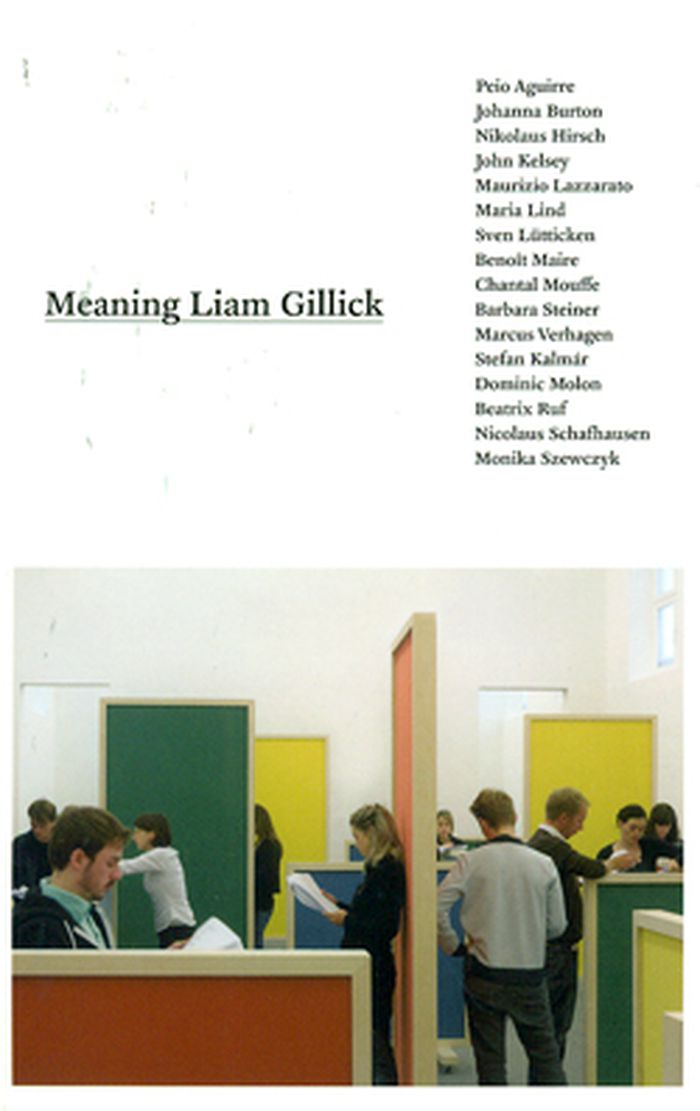
Liam Gillick emerged as part of the generation of "Young British Artists" who energized the British art scene in the 1980s and 1990s. He is now one of the most influential (and perplexing) artists in all of contemporary art. Gillick's discursive mode of art practice—often associated with "relational aesthetics"—complicates object production, embraces the exhibition as medium, and explores the social role and function of art. This reader coincides with a year-long, multi-venue, mid-career retrospective that serves both as a continuous investigation into Gillick's practice and an in-depth study of his work to date. The book offers a range of critical perspectives on artist's work. Introduction by Monika Szewczyk.
Meaning Liam Gillick
Actions:
Prix:
$27.99
(disponible sur commande)
Résumé:
Liam Gillick emerged as part of the generation of "Young British Artists" who energized the British art scene in the 1980s and 1990s. He is now one of the most influential (and perplexing) artists in all of contemporary art. Gillick's discursive mode of art practice—often associated with "relational aesthetics"—complicates object production, embraces the exhibition as medium, and explores the social role and function of art. This reader coincides with a year-long, multi-venue, mid-career retrospective that serves both as a continuous investigation into Gillick's practice and an in-depth study of his work to date. The book offers a range of critical perspectives on artist's work. Introduction by Monika Szewczyk.
Classification:
livres
livres
Publication:
septembre 2009
septembre 2009
Sujet:
Théorie de l’art
Théorie de l’art
Classification:
périodiques
périodiques
Titre:
F. R. David, spring 2009 :
F. R. David, spring 2009 :
Actions:
Prix:
$19.99
(disponible sur commande)
Résumé:
The fifth issue of F.R. David continues its exploration of the borders between art and language and the question of whether the tension that exists between the two is real or imagined. Texts and images intersperse one another with contributions from, among others, Mungo Thomson, Monika Szewczyk, Pierre Bal-Blanc, Stephen Miller, Thomas Pynchon, Dexter Sinister, Christine(...)
$19.99
(disponible sur commande)
Résumé:
The fifth issue of F.R. David continues its exploration of the borders between art and language and the question of whether the tension that exists between the two is real or imagined. Texts and images intersperse one another with contributions from, among others, Mungo Thomson, Monika Szewczyk, Pierre Bal-Blanc, Stephen Miller, Thomas Pynchon, Dexter Sinister, Christine(...)
Titre:
F. R. David, spring 2009 :
Actions:
Prix:
$19.99
(disponible sur commande)
Résumé:
The fifth issue of F.R. David continues its exploration of the borders between art and language and the question of whether the tension that exists between the two is real or imagined. Texts and images intersperse one another with contributions from, among others, Mungo Thomson, Monika Szewczyk, Pierre Bal-Blanc, Stephen Miller, Thomas Pynchon, Dexter Sinister, Christine Kenneally and John Baldessari.
F. R. David, spring 2009 :
Actions:
Prix:
$19.99
(disponible sur commande)
Résumé:
The fifth issue of F.R. David continues its exploration of the borders between art and language and the question of whether the tension that exists between the two is real or imagined. Texts and images intersperse one another with contributions from, among others, Mungo Thomson, Monika Szewczyk, Pierre Bal-Blanc, Stephen Miller, Thomas Pynchon, Dexter Sinister, Christine Kenneally and John Baldessari.
Classification:
périodiques
périodiques
Publication:
juin 2009
juin 2009
Classification:
livres
livres
Actions:
Prix:
$9.95
(disponible sur commande)
Résumé:
En 1964, à l'occasion de l'inauguration d'une exposition de sculptures, Heidegger prononce une allocution où il s'attache à préciser les relations entre la sculpture et l'espace, l'art et l'espace, l'homme et l'espace. Dans une langue très simple, il tente de capter et de décrire le mouvement par lequel l'espace se fait espace, par lequel l'homme s'aménage un espace et(...)
$9.95
(disponible sur commande)
Résumé:
En 1964, à l'occasion de l'inauguration d'une exposition de sculptures, Heidegger prononce une allocution où il s'attache à préciser les relations entre la sculpture et l'espace, l'art et l'espace, l'homme et l'espace. Dans une langue très simple, il tente de capter et de décrire le mouvement par lequel l'espace se fait espace, par lequel l'homme s'aménage un espace et(...)
Titre:
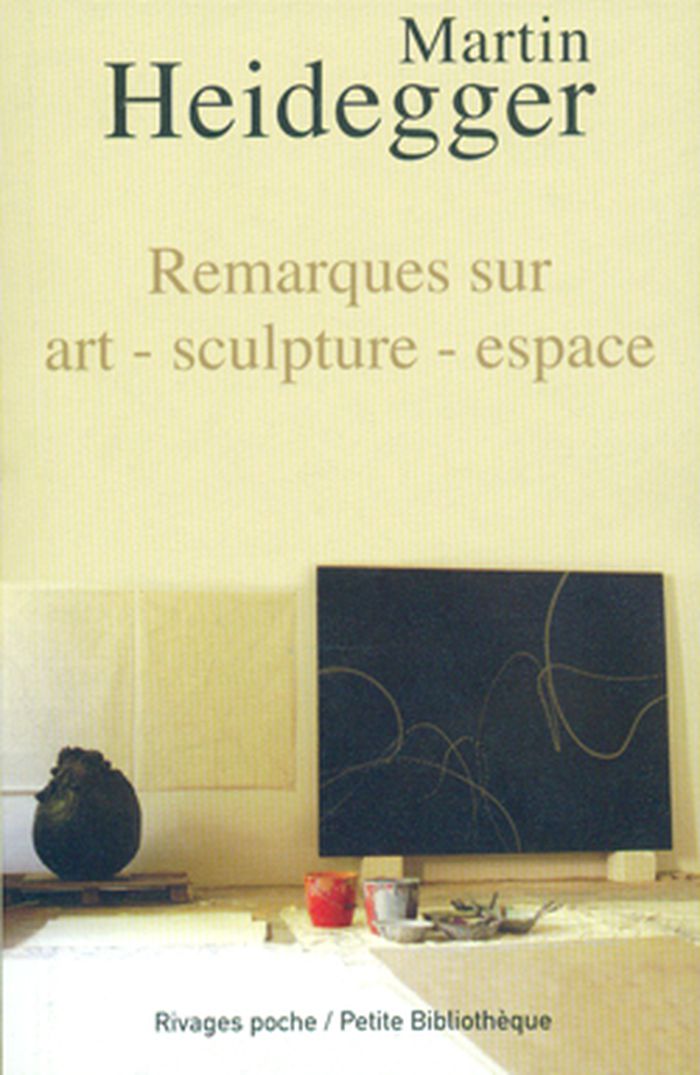
Remarques sur art-sculpture-espace
Actions:
Prix:
$9.95
(disponible sur commande)
Résumé:
En 1964, à l'occasion de l'inauguration d'une exposition de sculptures, Heidegger prononce une allocution où il s'attache à préciser les relations entre la sculpture et l'espace, l'art et l'espace, l'homme et l'espace. Dans une langue très simple, il tente de capter et de décrire le mouvement par lequel l'espace se fait espace, par lequel l'homme s'aménage un espace et aménage l'espace. Chemin faisant, il précise également les relations entre le lieu et l'espace, le lieu et l'étendue, le lieu et la distance mesurable. Cette description où chacun ne pourra manquer de reconnaître sa propre expérience possède en outre le mérite d'introduire aussi clairement que possible au cœur de la pensée de Heidegger, à savoir au rapport de l'homme à l'être et de l'être à l'homme.
Remarques sur art-sculpture-espace
Actions:
Prix:
$9.95
(disponible sur commande)
Résumé:
En 1964, à l'occasion de l'inauguration d'une exposition de sculptures, Heidegger prononce une allocution où il s'attache à préciser les relations entre la sculpture et l'espace, l'art et l'espace, l'homme et l'espace. Dans une langue très simple, il tente de capter et de décrire le mouvement par lequel l'espace se fait espace, par lequel l'homme s'aménage un espace et aménage l'espace. Chemin faisant, il précise également les relations entre le lieu et l'espace, le lieu et l'étendue, le lieu et la distance mesurable. Cette description où chacun ne pourra manquer de reconnaître sa propre expérience possède en outre le mérite d'introduire aussi clairement que possible au cœur de la pensée de Heidegger, à savoir au rapport de l'homme à l'être et de l'être à l'homme.
Classification:
livres
livres
Publication:
juin 2009
juin 2009
Sujet:
Théorie de l’art
Théorie de l’art
Classification:
livres
livres
Prix:
$50.95
(disponible sur commande)
Résumé:
Countering the standard view of Futurism as naïvely bellicose, author Christine Poggi argues that Futurist artists and writers were far more ambivalent in their responses to the shocks of industrial modernity than Marinetti's incendiary pronouncements would suggest. She closely examines Futurist literature, art, and politics within the broader context of Italian social(...)
$50.95
(disponible sur commande)
Résumé:
Countering the standard view of Futurism as naïvely bellicose, author Christine Poggi argues that Futurist artists and writers were far more ambivalent in their responses to the shocks of industrial modernity than Marinetti's incendiary pronouncements would suggest. She closely examines Futurist literature, art, and politics within the broader context of Italian social(...)
Titre:
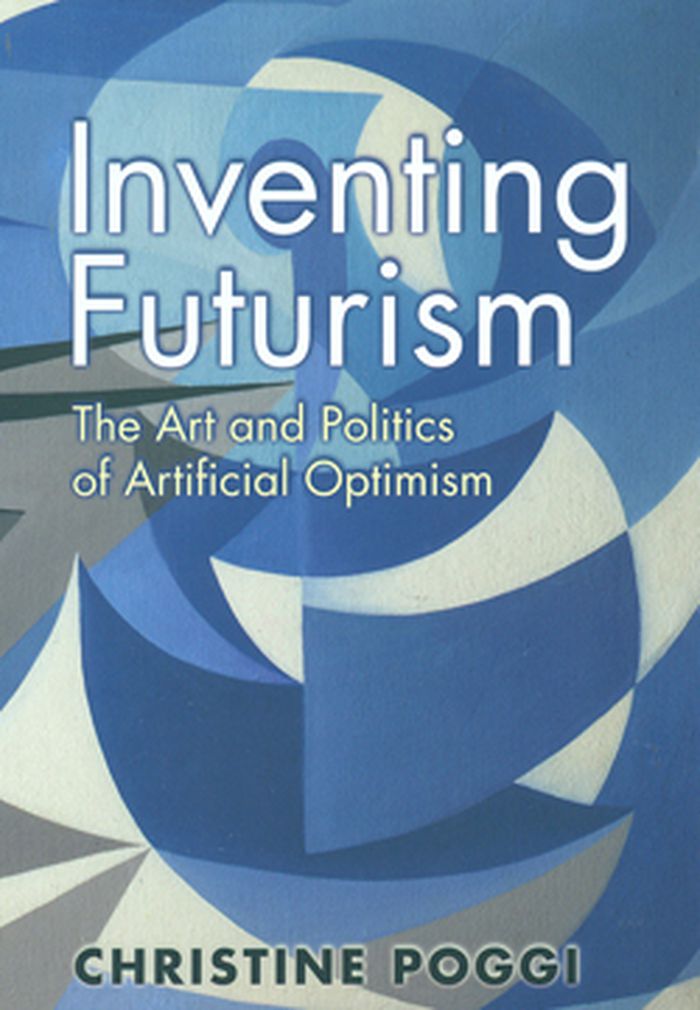
Inventing Futurism : the art and politics of artificial optimism
Actions:
Prix:
$50.95
(disponible sur commande)
Résumé:
Countering the standard view of Futurism as naïvely bellicose, author Christine Poggi argues that Futurist artists and writers were far more ambivalent in their responses to the shocks of industrial modernity than Marinetti's incendiary pronouncements would suggest. She closely examines Futurist literature, art, and politics within the broader context of Italian social history, revealing a surprisingly powerful undercurrent of anxiety among the Futurists -toward the accelerated rhythms of urban life, the rising influence of the masses, changing gender roles, and the destructiveness of war. Poggi traces the movement from its explosive beginnings through its transformations under Fascism to offer completely new insights into familiar Futurist themes, such as the thrill and trauma of velocity, the psychology of urban crowds, and the fantasy of flesh fused with metal, among others. Lavishly illustrated and unparalleled in scope, Inventing Futurism demonstrates that beneath Futurism's belligerent avant-garde posturing lay complex and contradictory attitudes toward an always-deferred utopian future.
Inventing Futurism : the art and politics of artificial optimism
Actions:
Prix:
$50.95
(disponible sur commande)
Résumé:
Countering the standard view of Futurism as naïvely bellicose, author Christine Poggi argues that Futurist artists and writers were far more ambivalent in their responses to the shocks of industrial modernity than Marinetti's incendiary pronouncements would suggest. She closely examines Futurist literature, art, and politics within the broader context of Italian social history, revealing a surprisingly powerful undercurrent of anxiety among the Futurists -toward the accelerated rhythms of urban life, the rising influence of the masses, changing gender roles, and the destructiveness of war. Poggi traces the movement from its explosive beginnings through its transformations under Fascism to offer completely new insights into familiar Futurist themes, such as the thrill and trauma of velocity, the psychology of urban crowds, and the fantasy of flesh fused with metal, among others. Lavishly illustrated and unparalleled in scope, Inventing Futurism demonstrates that beneath Futurism's belligerent avant-garde posturing lay complex and contradictory attitudes toward an always-deferred utopian future.
Classification:
livres
livres
Publication:
juillet 2009
juillet 2009
Sujet:
Théorie de l’art
Théorie de l’art


