


1193 Résultats
Classification:
livres
livres
Prix:
$11.00
(disponible sur commande)
Résumé:
What is it that makes notebooks so fascinating? Anthropologist Michael Taussig, for whom fieldwork notebooks are indispensable, discusses notorious notetakers Walter Benjamin, Roland Barthes, Le Corbusier and Joan Didion among others.
$11.00
(disponible sur commande)
Résumé:
What is it that makes notebooks so fascinating? Anthropologist Michael Taussig, for whom fieldwork notebooks are indispensable, discusses notorious notetakers Walter Benjamin, Roland Barthes, Le Corbusier and Joan Didion among others.
Titre:
Documenta series 01: Michael Taussig, fieldwork notebooks
Actions:
Prix:
$11.00
(disponible sur commande)
Résumé:
What is it that makes notebooks so fascinating? Anthropologist Michael Taussig, for whom fieldwork notebooks are indispensable, discusses notorious notetakers Walter Benjamin, Roland Barthes, Le Corbusier and Joan Didion among others.
Documenta series 01: Michael Taussig, fieldwork notebooks
Actions:
Prix:
$11.00
(disponible sur commande)
Résumé:
What is it that makes notebooks so fascinating? Anthropologist Michael Taussig, for whom fieldwork notebooks are indispensable, discusses notorious notetakers Walter Benjamin, Roland Barthes, Le Corbusier and Joan Didion among others.
Classification:
livres
livres
Publication:
août 2011
août 2011
Sujet:
Théorie de l’art
Théorie de l’art
Classification:
livres
livres

Prix:
$11.00
(disponible sur commande)
Résumé:
The first Documenta took place in Kassel in 1955. In this lecture from 1987, Vancouver artist Ian Wallace discusses the occasion as an expression of the postwar cultural and political climate.
$11.00
(disponible sur commande)
Résumé:
The first Documenta took place in Kassel in 1955. In this lecture from 1987, Vancouver artist Ian Wallace discusses the occasion as an expression of the postwar cultural and political climate.
Titre:
Documenta series 02: Ian Wallace, the first documenta 1955
Actions:
Prix:
$11.00
(disponible sur commande)
Résumé:
The first Documenta took place in Kassel in 1955. In this lecture from 1987, Vancouver artist Ian Wallace discusses the occasion as an expression of the postwar cultural and political climate.
Documenta series 02: Ian Wallace, the first documenta 1955
Actions:
Prix:
$11.00
(disponible sur commande)
Résumé:
The first Documenta took place in Kassel in 1955. In this lecture from 1987, Vancouver artist Ian Wallace discusses the occasion as an expression of the postwar cultural and political climate.
Classification:
livres
livres
Publication:
août 2011
août 2011
Sujet:
Théorie de l’art
Théorie de l’art
Classification:
livres
livres

Actions:
Prix:
$11.00
(disponible sur commande)
Résumé:
Through stories, diaries, critical reflection and letters, Documenta 13's artistic director Carolyn Christov-Bakargiev describes some of the key issues around the 2012 exhibition.
$11.00
(disponible sur commande)
Résumé:
Through stories, diaries, critical reflection and letters, Documenta 13's artistic director Carolyn Christov-Bakargiev describes some of the key issues around the 2012 exhibition.
Titre:
Documenta series 03: Carolyn Christov-Bakargiev, letter to a friend
Actions:
Prix:
$11.00
(disponible sur commande)
Résumé:
Through stories, diaries, critical reflection and letters, Documenta 13's artistic director Carolyn Christov-Bakargiev describes some of the key issues around the 2012 exhibition.
Documenta series 03: Carolyn Christov-Bakargiev, letter to a friend
Actions:
Prix:
$11.00
(disponible sur commande)
Résumé:
Through stories, diaries, critical reflection and letters, Documenta 13's artistic director Carolyn Christov-Bakargiev describes some of the key issues around the 2012 exhibition.
Classification:
livres
livres
Publication:
août 2011
août 2011
Sujet:
Théorie de l’art
Théorie de l’art
Classification:
livres
livres

Actions:
Prix:
$11.00
(disponible sur commande)
Résumé:
For this series, artist Lawrence Weiner has made an artist's book of new statements and instructions, in exactly the same format (A6) and with the same number of pages (24) as his first contribution to Documenta, in 1972.
$11.00
(disponible sur commande)
Résumé:
For this series, artist Lawrence Weiner has made an artist's book of new statements and instructions, in exactly the same format (A6) and with the same number of pages (24) as his first contribution to Documenta, in 1972.
Titre:
Documenta series 08: Lawrence Weiner, if in fact there is a context
Actions:
Prix:
$11.00
(disponible sur commande)
Résumé:
For this series, artist Lawrence Weiner has made an artist's book of new statements and instructions, in exactly the same format (A6) and with the same number of pages (24) as his first contribution to Documenta, in 1972.
Documenta series 08: Lawrence Weiner, if in fact there is a context
Actions:
Prix:
$11.00
(disponible sur commande)
Résumé:
For this series, artist Lawrence Weiner has made an artist's book of new statements and instructions, in exactly the same format (A6) and with the same number of pages (24) as his first contribution to Documenta, in 1972.
Classification:
livres
livres
Publication:
août 2011
août 2011
Sujet:
Théorie de l’art
Théorie de l’art
Classification:
livres
livres
Actions:
Prix:
$11.00
(disponible sur commande)
Résumé:
In this notebook, artist William Kentridge and science historian and filmmaker Peter L. Galison preview their Documenta 13 collaboration on the subject of non-standardized temporality, realized in drawing, text, music and film.
$11.00
(disponible sur commande)
Résumé:
In this notebook, artist William Kentridge and science historian and filmmaker Peter L. Galison preview their Documenta 13 collaboration on the subject of non-standardized temporality, realized in drawing, text, music and film.
Titre:
Documenta series 09: William Kentridge and Peter L. Galison, the refusal of time
Actions:
Prix:
$11.00
(disponible sur commande)
Résumé:
In this notebook, artist William Kentridge and science historian and filmmaker Peter L. Galison preview their Documenta 13 collaboration on the subject of non-standardized temporality, realized in drawing, text, music and film.
Documenta series 09: William Kentridge and Peter L. Galison, the refusal of time
Actions:
Prix:
$11.00
(disponible sur commande)
Résumé:
In this notebook, artist William Kentridge and science historian and filmmaker Peter L. Galison preview their Documenta 13 collaboration on the subject of non-standardized temporality, realized in drawing, text, music and film.
Classification:
livres
livres
Publication:
août 2011
août 2011
Sujet:
Théorie de l’art
Théorie de l’art
Classification:
livres
livres
Prix:
$25.00
(disponible sur commande)
Résumé:
Since the mid-1960s when he started out as a fledgling critic, Dan Graham has carved out a unique role for himself, expanding the scope of the Conceptual artist to incorporate art criticism, music criticism, photography and architecture. For this volume, curator Hans Ulrich Obrist met with Graham on several occasions to discuss the artist's work, life and the numerous(...)
$25.00
(disponible sur commande)
Résumé:
Since the mid-1960s when he started out as a fledgling critic, Dan Graham has carved out a unique role for himself, expanding the scope of the Conceptual artist to incorporate art criticism, music criticism, photography and architecture. For this volume, curator Hans Ulrich Obrist met with Graham on several occasions to discuss the artist's work, life and the numerous(...)
Titre:
Hans Ulrich Obrist, the conversation series 25 : Dan Graham
Actions:
Prix:
$25.00
(disponible sur commande)
Résumé:
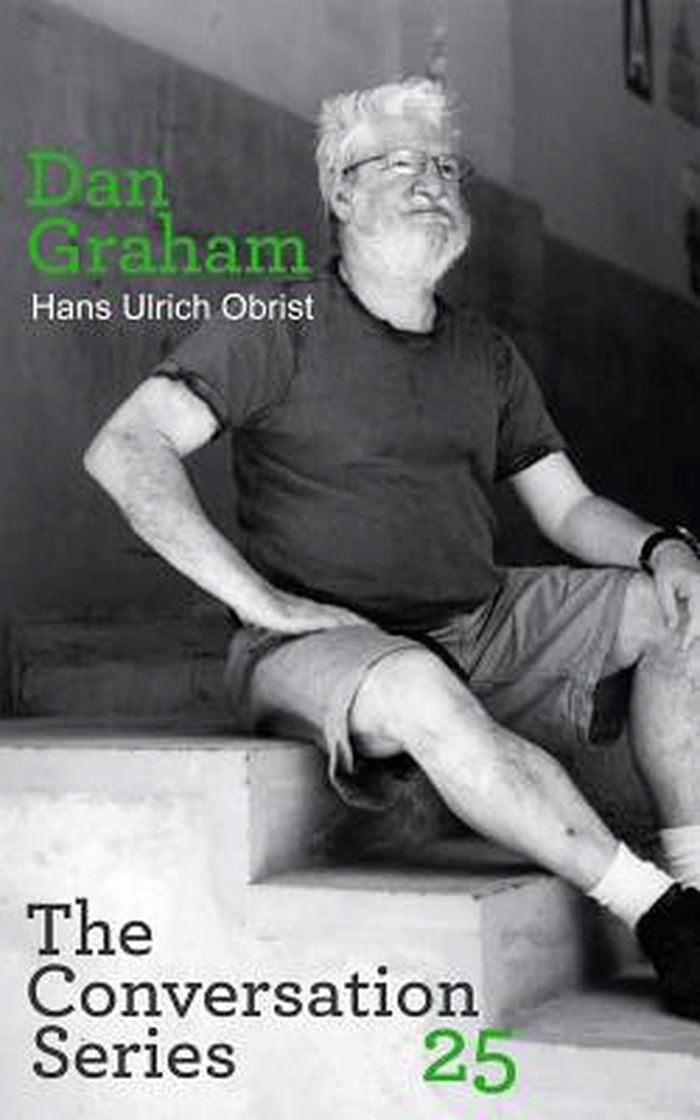
Since the mid-1960s when he started out as a fledgling critic, Dan Graham has carved out a unique role for himself, expanding the scope of the Conceptual artist to incorporate art criticism, music criticism, photography and architecture. For this volume, curator Hans Ulrich Obrist met with Graham on several occasions to discuss the artist's work, life and the numerous interests he passionately follows. The conversation thus wanders seamlessly from architecture to rock and roll, philosophy to astrology, Graham's early performance pieces, photography and articles, to the films and glass pavilions for which he is best known today. A fountain of art folklore, Graham offers recollections of friends and colleagues, art work and influences, providing an invaluable insight not only into the New York art scene of the 60s and 70s, but also one of its most influential representatives.
Hans Ulrich Obrist, the conversation series 25 : Dan Graham
Actions:
Prix:
$25.00
(disponible sur commande)
Résumé:
Since the mid-1960s when he started out as a fledgling critic, Dan Graham has carved out a unique role for himself, expanding the scope of the Conceptual artist to incorporate art criticism, music criticism, photography and architecture. For this volume, curator Hans Ulrich Obrist met with Graham on several occasions to discuss the artist's work, life and the numerous interests he passionately follows. The conversation thus wanders seamlessly from architecture to rock and roll, philosophy to astrology, Graham's early performance pieces, photography and articles, to the films and glass pavilions for which he is best known today. A fountain of art folklore, Graham offers recollections of friends and colleagues, art work and influences, providing an invaluable insight not only into the New York art scene of the 60s and 70s, but also one of its most influential representatives.
Classification:
livres
livres
Publication:
juillet 2011
juillet 2011
Sujet:
Théorie de l’art
Théorie de l’art
Classification:
livres
livres
Actions:
Prix:
$24.95
(disponible sur commande)
Résumé:
Spanning 1989 to 2009, this anthology collects the influential writings of American artist, musician and critic John Miller (born 1954), which have been lauded by Bruce Hainley in Artforum as “a pungent intervention into the ideologies of beauty, representation and looking.” Ranging from reviews and cultural essays to theory and artist's statements, Miller's writings(...)
$24.95
(disponible sur commande)
Résumé:
Spanning 1989 to 2009, this anthology collects the influential writings of American artist, musician and critic John Miller (born 1954), which have been lauded by Bruce Hainley in Artforum as “a pungent intervention into the ideologies of beauty, representation and looking.” Ranging from reviews and cultural essays to theory and artist's statements, Miller's writings(...)
Titre:
The ruin of exchange and other writings on art
Actions:
Prix:
$24.95
(disponible sur commande)
Résumé:
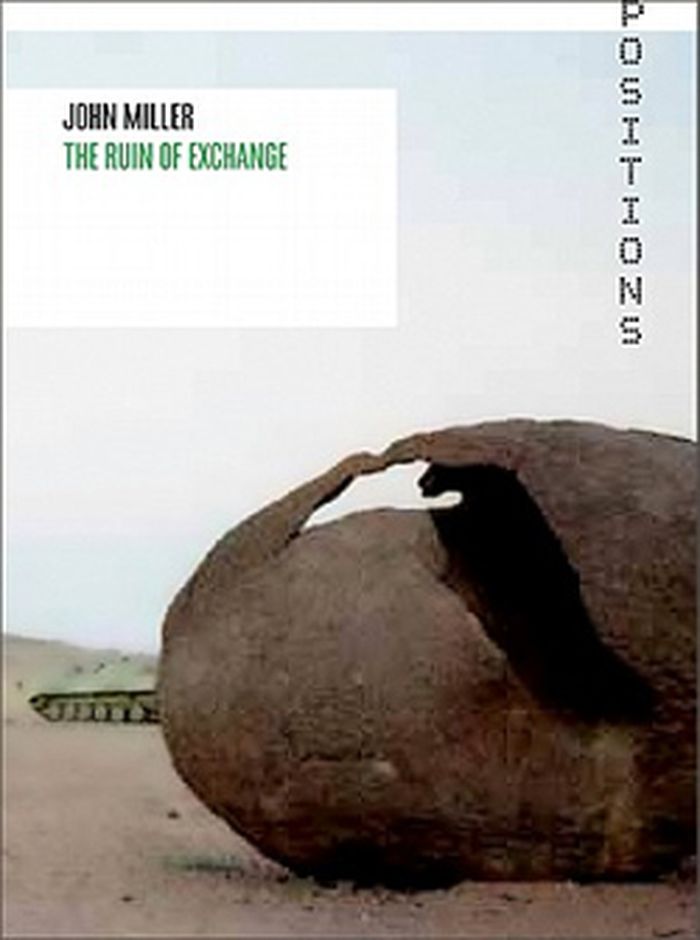
Spanning 1989 to 2009, this anthology collects the influential writings of American artist, musician and critic John Miller (born 1954), which have been lauded by Bruce Hainley in Artforum as “a pungent intervention into the ideologies of beauty, representation and looking.” Ranging from reviews and cultural essays to theory and artist's statements, Miller's writings distinguish themselves from other styles of art criticism insofar as they relate to his larger artistic concerns with the social context of the art object and its sociopolitical ramifications as a commodity (as the title of this volume implies); they are also deeply informed by Miller's vast knowledge of art history and popular culture. More recently, Miller has entered into close dialogue with Dan Graham, Bob Nickas and Nicolas Guagnini. Many of the essays collected here - such as his contributions to the German magazine Texte zur Kunst - appear in English for the first time.
The ruin of exchange and other writings on art
Actions:
Prix:
$24.95
(disponible sur commande)
Résumé:
Spanning 1989 to 2009, this anthology collects the influential writings of American artist, musician and critic John Miller (born 1954), which have been lauded by Bruce Hainley in Artforum as “a pungent intervention into the ideologies of beauty, representation and looking.” Ranging from reviews and cultural essays to theory and artist's statements, Miller's writings distinguish themselves from other styles of art criticism insofar as they relate to his larger artistic concerns with the social context of the art object and its sociopolitical ramifications as a commodity (as the title of this volume implies); they are also deeply informed by Miller's vast knowledge of art history and popular culture. More recently, Miller has entered into close dialogue with Dan Graham, Bob Nickas and Nicolas Guagnini. Many of the essays collected here - such as his contributions to the German magazine Texte zur Kunst - appear in English for the first time.
Classification:
livres
livres
Publication:
décembre 2011
décembre 2011
Sujet:
Théorie de l’art
Théorie de l’art
Classification:
livres
livres
Actions:
Prix:
$16.00
(disponible sur commande)
Résumé:
George Bernard Shaw once wrote: “If you have an apple and I have an apple and we exchange these apples then you and I will still each have one apple. But if you have an idea and I have an idea and we exchange these ideas, then each of us will have two ideas.” Open Field is the Walker Art Center's ongoing experiment in participation and public space. Taking place outdoors(...)
$16.00
(disponible sur commande)
Résumé:
George Bernard Shaw once wrote: “If you have an apple and I have an apple and we exchange these apples then you and I will still each have one apple. But if you have an idea and I have an idea and we exchange these ideas, then each of us will have two ideas.” Open Field is the Walker Art Center's ongoing experiment in participation and public space. Taking place outdoors(...)
Titre:
Open fields : conversations on the commons
Actions:
Prix:
$16.00
(disponible sur commande)
Résumé:
George Bernard Shaw once wrote: “If you have an apple and I have an apple and we exchange these apples then you and I will still each have one apple. But if you have an idea and I have an idea and we exchange these ideas, then each of us will have two ideas.” Open Field is the Walker Art Center's ongoing experiment in participation and public space. Taking place outdoors in the summer months, the project invites artists and visitors to imagine and inhabit the museum's campus as a cultural commons - a shared space for idea exchange, creative gatherings and unexpected interactions. In 2010, the Walker's backyard was home to numerous activities from conversations to performances and temporary sculptures. This volume discusses Open Field's genesis, exploring the meaning and impact of public practice for institutions.
Open fields : conversations on the commons
Actions:
Prix:
$16.00
(disponible sur commande)
Résumé:
George Bernard Shaw once wrote: “If you have an apple and I have an apple and we exchange these apples then you and I will still each have one apple. But if you have an idea and I have an idea and we exchange these ideas, then each of us will have two ideas.” Open Field is the Walker Art Center's ongoing experiment in participation and public space. Taking place outdoors in the summer months, the project invites artists and visitors to imagine and inhabit the museum's campus as a cultural commons - a shared space for idea exchange, creative gatherings and unexpected interactions. In 2010, the Walker's backyard was home to numerous activities from conversations to performances and temporary sculptures. This volume discusses Open Field's genesis, exploring the meaning and impact of public practice for institutions.
Classification:
livres
livres
Publication:
décembre 2011
décembre 2011
Sujet:
Théorie de l’art
Théorie de l’art
Classification:
livres
livres
Actions:
Prix:
$22.00
(disponible sur commande)
Résumé:
"The Expendable Reader" collects the key writings of John McHale (1922-1978): artist, theorist, graphic designer, sociologist, cofounder of the Independent Group and (according to Lawrence Alloway) "the father of Pop." It compiles over a dozen key texts from a range of rare magazines, bringing unavailable material back into the hands of a broader audience. In addition to(...)
$22.00
(disponible sur commande)
Résumé:
"The Expendable Reader" collects the key writings of John McHale (1922-1978): artist, theorist, graphic designer, sociologist, cofounder of the Independent Group and (according to Lawrence Alloway) "the father of Pop." It compiles over a dozen key texts from a range of rare magazines, bringing unavailable material back into the hands of a broader audience. In addition to(...)
Titre:
John McHale: The expendable reader
Actions:
Prix:
$22.00
(disponible sur commande)
Résumé:
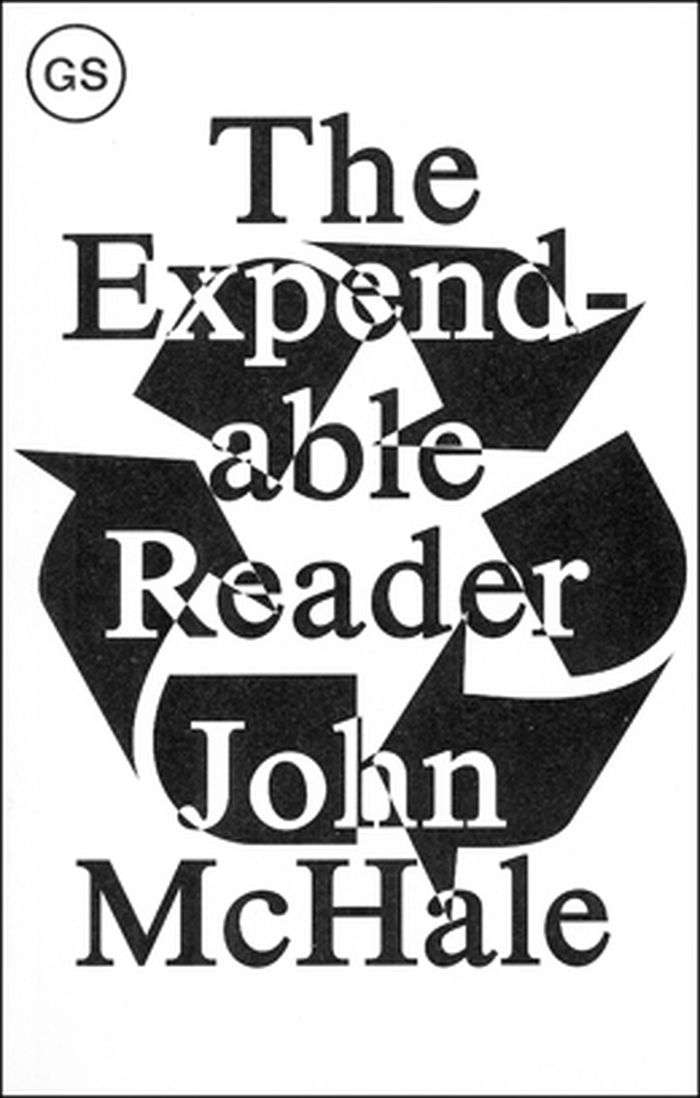
"The Expendable Reader" collects the key writings of John McHale (1922-1978): artist, theorist, graphic designer, sociologist, cofounder of the Independent Group and (according to Lawrence Alloway) "the father of Pop." It compiles over a dozen key texts from a range of rare magazines, bringing unavailable material back into the hands of a broader audience. In addition to these writings, "The Expendable Reader" reproduces samples of the dynamic page layouts deployed in McHale's texts. All of McHale's writings wrestle with questions of expendability and the future, and the way these phenomena affect traditional conceptions of culture. While many of the terms he dwells on, such as "expendability," "lifestyle" and "network," have become central terms of contemporary cultural criticism, McHale's voice is strangely missing from the debate.
John McHale: The expendable reader
Actions:
Prix:
$22.00
(disponible sur commande)
Résumé:
"The Expendable Reader" collects the key writings of John McHale (1922-1978): artist, theorist, graphic designer, sociologist, cofounder of the Independent Group and (according to Lawrence Alloway) "the father of Pop." It compiles over a dozen key texts from a range of rare magazines, bringing unavailable material back into the hands of a broader audience. In addition to these writings, "The Expendable Reader" reproduces samples of the dynamic page layouts deployed in McHale's texts. All of McHale's writings wrestle with questions of expendability and the future, and the way these phenomena affect traditional conceptions of culture. While many of the terms he dwells on, such as "expendability," "lifestyle" and "network," have become central terms of contemporary cultural criticism, McHale's voice is strangely missing from the debate.
Classification:
livres
livres
Publication:
novembre 2011
novembre 2011
Sujet:
Théorie de l’art
Théorie de l’art
Classification:
livres
livres
Actions:
Prix:
$32.00
(disponible sur commande)
Résumé:
Italian philosopher Antonio Negri has declared that “Every kind of change belongs to a form of community art,” inverting the convention that community art can be an integral component of social change and extending the rubric of art to propose a commons of all those striving to effect change in social, economic, technological and ecological arenas. So how do these(...)
$32.00
(disponible sur commande)
Résumé:
Italian philosopher Antonio Negri has declared that “Every kind of change belongs to a form of community art,” inverting the convention that community art can be an integral component of social change and extending the rubric of art to propose a commons of all those striving to effect change in social, economic, technological and ecological arenas. So how do these(...)
Titre:
Community art : the politics of trespassing
Actions:
Prix:
$32.00
(disponible sur commande)
Résumé:
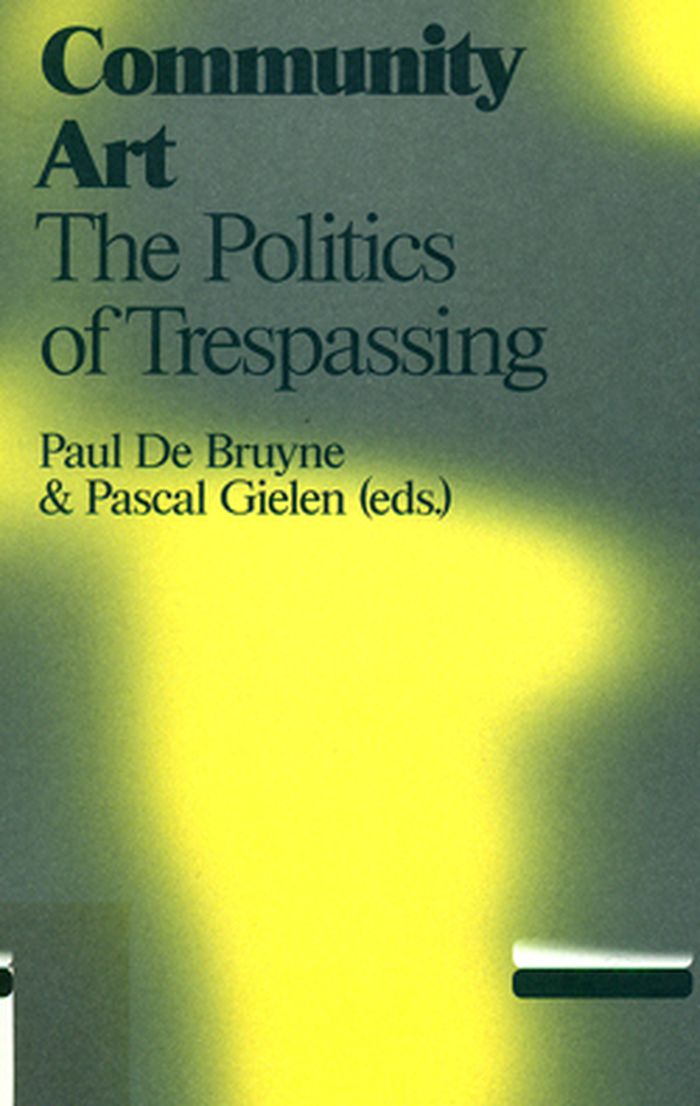
Italian philosopher Antonio Negri has declared that “Every kind of change belongs to a form of community art,” inverting the convention that community art can be an integral component of social change and extending the rubric of art to propose a commons of all those striving to effect change in social, economic, technological and ecological arenas. So how do these endeavors influence and act upon one another? In Community Art, artists and theorists explore the practices of artistic and social movements in western and non-western societies.
Community art : the politics of trespassing
Actions:
Prix:
$32.00
(disponible sur commande)
Résumé:
Italian philosopher Antonio Negri has declared that “Every kind of change belongs to a form of community art,” inverting the convention that community art can be an integral component of social change and extending the rubric of art to propose a commons of all those striving to effect change in social, economic, technological and ecological arenas. So how do these endeavors influence and act upon one another? In Community Art, artists and theorists explore the practices of artistic and social movements in western and non-western societies.
Classification:
livres
livres
Publication:
août 2011
août 2011
Sujet:
Théorie de l’art
Théorie de l’art


