


1193 Résultats
Classification:
livres
livres
Actions:
Prix:
$18.95
(disponible sur commande)
Résumé:
This pocket-sized book by young Estonian artist Triin Tamm was published as a contribution to the exhibition ‘If it’s part broke, half fix it.’ at the Contemporary Art Centre, Vilnius, in 2011. Known for embracing simultaneity, incoherence, multiplicity, and clumsiness juxtaposed with perfection, Tamm participates in the production of small crafts, minute actions and(...)
$18.95
(disponible sur commande)
Résumé:
This pocket-sized book by young Estonian artist Triin Tamm was published as a contribution to the exhibition ‘If it’s part broke, half fix it.’ at the Contemporary Art Centre, Vilnius, in 2011. Known for embracing simultaneity, incoherence, multiplicity, and clumsiness juxtaposed with perfection, Tamm participates in the production of small crafts, minute actions and(...)
Titre:
A stack of books as well as it is a book of stacks
Actions:
Prix:
$18.95
(disponible sur commande)
Résumé:
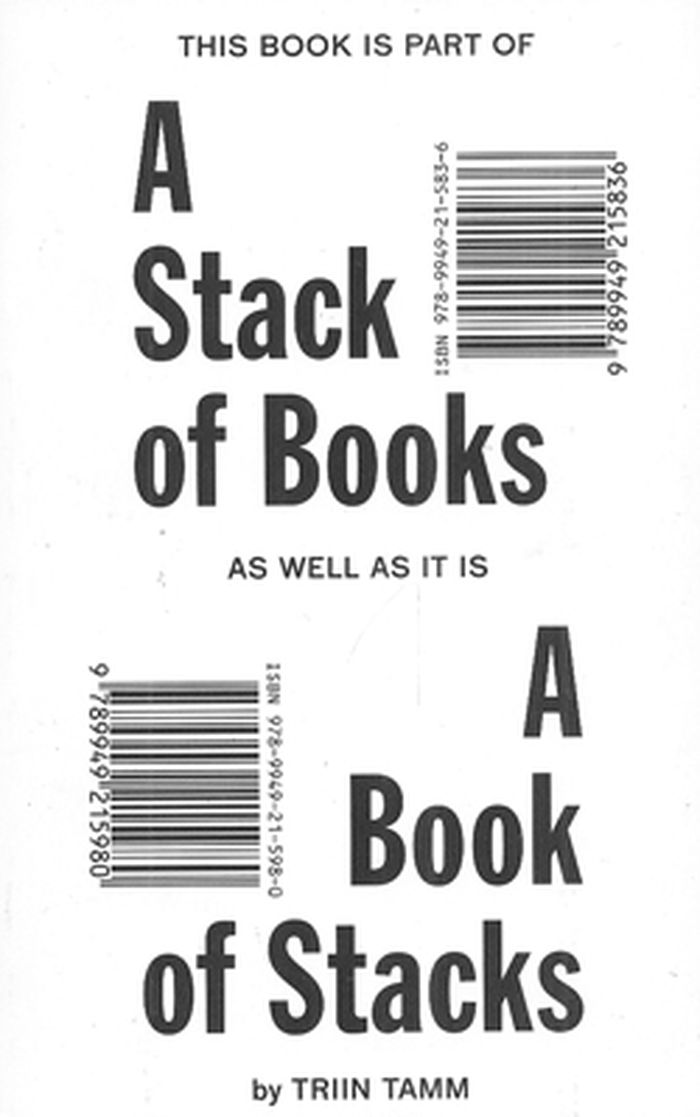
This pocket-sized book by young Estonian artist Triin Tamm was published as a contribution to the exhibition ‘If it’s part broke, half fix it.’ at the Contemporary Art Centre, Vilnius, in 2011. Known for embracing simultaneity, incoherence, multiplicity, and clumsiness juxtaposed with perfection, Tamm participates in the production of small crafts, minute actions and simple writings to express a sense of freedom in both the mundane and the paths less travelled. Here she explores the contents of an eclectic selection of books encompassing an assortment of divergent but related themes, from typography to linguistics and from spirituality to symbolism.
A stack of books as well as it is a book of stacks
Actions:
Prix:
$18.95
(disponible sur commande)
Résumé:
This pocket-sized book by young Estonian artist Triin Tamm was published as a contribution to the exhibition ‘If it’s part broke, half fix it.’ at the Contemporary Art Centre, Vilnius, in 2011. Known for embracing simultaneity, incoherence, multiplicity, and clumsiness juxtaposed with perfection, Tamm participates in the production of small crafts, minute actions and simple writings to express a sense of freedom in both the mundane and the paths less travelled. Here she explores the contents of an eclectic selection of books encompassing an assortment of divergent but related themes, from typography to linguistics and from spirituality to symbolism.
Classification:
livres
livres
Publication:
janvier 2013
janvier 2013
Sujet:
Théorie de l’art
Théorie de l’art
Classification:
livres
livres
Titre:
Do it: the compendium
Do it: the compendium
Actions:
Prix:
$35.00
(disponible sur commande)
Résumé:
This publication includes an archive of artists’ instructions, essays contextualizing Do It, documentation from the history of the exhibition and instructions by 200 artists from all over the world selected by Obrist, among them Carl Andre, Jimmie Durham, Dan Graham, Yoko Ono, Christian Marclay and Rosemarie Trockel, including 60 new instructions from Matias Faldbakken,(...)
$35.00
(disponible sur commande)
Résumé:
This publication includes an archive of artists’ instructions, essays contextualizing Do It, documentation from the history of the exhibition and instructions by 200 artists from all over the world selected by Obrist, among them Carl Andre, Jimmie Durham, Dan Graham, Yoko Ono, Christian Marclay and Rosemarie Trockel, including 60 new instructions from Matias Faldbakken,(...)
Titre:
Do it: the compendium
Actions:
Prix:
$35.00
(disponible sur commande)
Résumé:
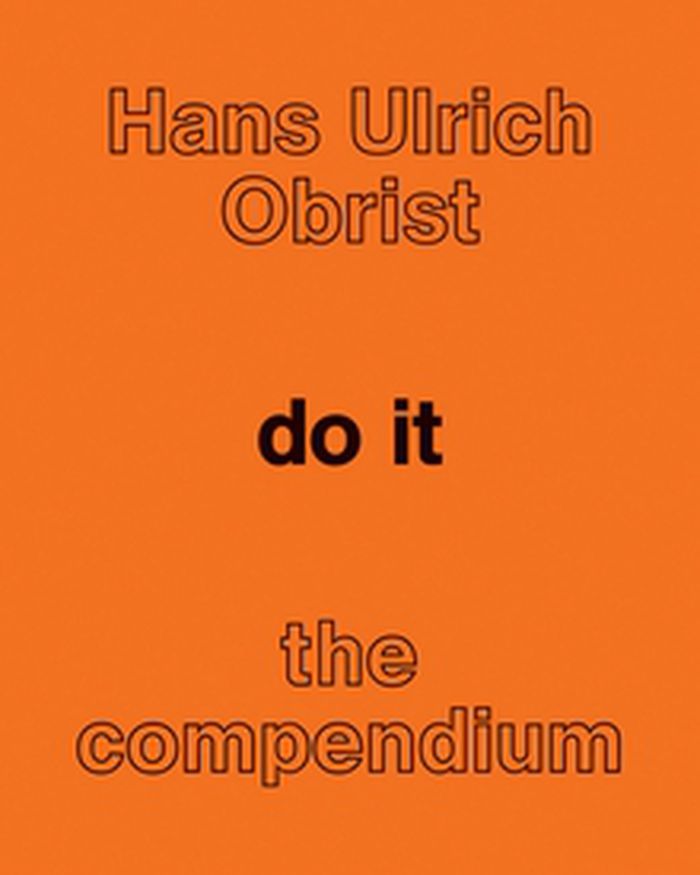
This publication includes an archive of artists’ instructions, essays contextualizing Do It, documentation from the history of the exhibition and instructions by 200 artists from all over the world selected by Obrist, among them Carl Andre, Jimmie Durham, Dan Graham, Yoko Ono, Christian Marclay and Rosemarie Trockel, including 60 new instructions from Matias Faldbakken, Theaster Gates, Sarah Lucas, David Lynch, Rivane Neuenschwander and Ai Weiwei, among many others.
Do it: the compendium
Actions:
Prix:
$35.00
(disponible sur commande)
Résumé:
This publication includes an archive of artists’ instructions, essays contextualizing Do It, documentation from the history of the exhibition and instructions by 200 artists from all over the world selected by Obrist, among them Carl Andre, Jimmie Durham, Dan Graham, Yoko Ono, Christian Marclay and Rosemarie Trockel, including 60 new instructions from Matias Faldbakken, Theaster Gates, Sarah Lucas, David Lynch, Rivane Neuenschwander and Ai Weiwei, among many others.
Classification:
livres
livres
Publication:
janvier 2013
janvier 2013
Sujet:
Théorie de l’art
Théorie de l’art
Classification:
livres
livres
Actions:
Prix:
$39.95
(disponible sur commande)
Résumé:
Être conçue pour ne pas être : tel est le destin de l’utopie. Cette impossibilité à exister dans l’espace réel, est le critère de qualification de l’utopie dans l’espace imaginaire. Par définition, une utopie n’a donc pas de lieu sur terre, et ce qui y a trouvé une place durable n’a pas la qualité d’utopie. Le projet dont l’histoire est racontée dans ce livre,(...)
$39.95
(disponible sur commande)
Résumé:
Être conçue pour ne pas être : tel est le destin de l’utopie. Cette impossibilité à exister dans l’espace réel, est le critère de qualification de l’utopie dans l’espace imaginaire. Par définition, une utopie n’a donc pas de lieu sur terre, et ce qui y a trouvé une place durable n’a pas la qualité d’utopie. Le projet dont l’histoire est racontée dans ce livre,(...)
Titre:
L'impératif utopique, souvenirs d'un pédagogue
Actions:
Prix:
$39.95
(disponible sur commande)
Résumé:
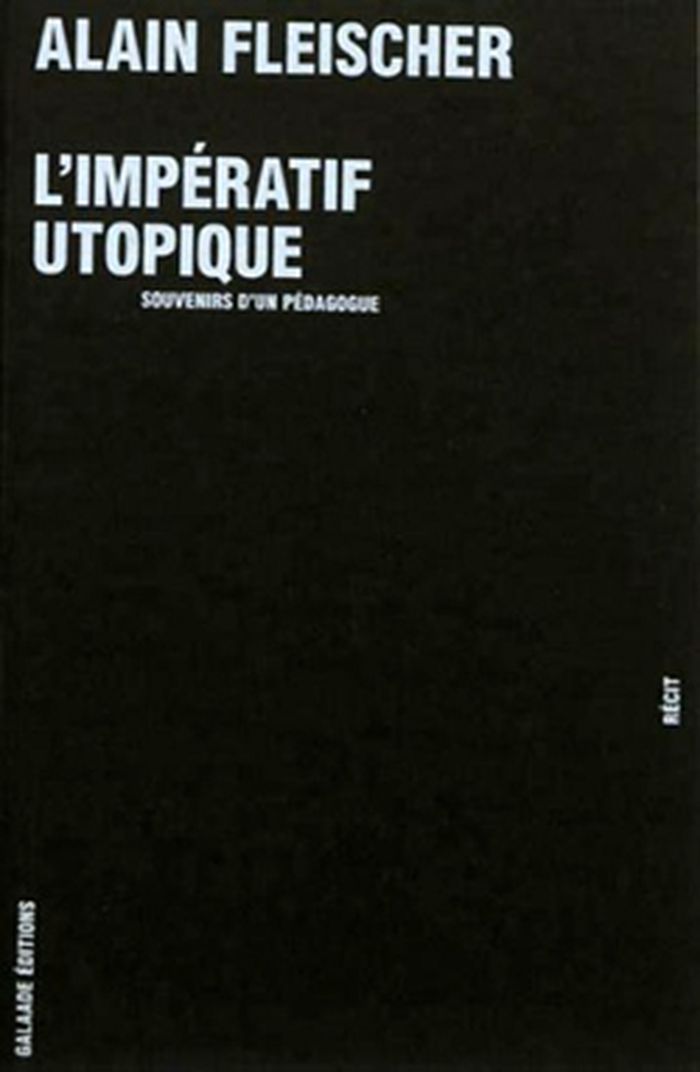
Être conçue pour ne pas être : tel est le destin de l’utopie. Cette impossibilité à exister dans l’espace réel, est le critère de qualification de l’utopie dans l’espace imaginaire. Par définition, une utopie n’a donc pas de lieu sur terre, et ce qui y a trouvé une place durable n’a pas la qualité d’utopie. Le projet dont l’histoire est racontée dans ce livre, celui du Fresnoy-Studio national des arts contemporains, s’est réalisé grâce au caractère utopique dont il s’était fait un impératif : paradoxe ? exception à la règle ? En tout cas, il ne fait aucun doute que toute inflexion du projet pour le rendre réalisable, l’aurait condamné à n’être jamais réalisé. Cela pose la question du moment, de la circonstance historique, où le politique, face auquel l’utopie se détermine en s’y opposant, a adopté comme critère de ses choix, et comme règle de son action, non plus l’économie mais l’esthétique. Ephémère moment d’une esthétique du politique. Écrit à la première personne, ce récit d’une grande réalisation publique s’appuie souvent sur des anecdotes et sur les relations entre individus singuliers, chères à la micro-histoire. Outre la genèse du Fresnoy-Studio national sur dix ans, entre 1987 et 1997, est ici brossé par touches un tableau des orientations nouvelles en matière de pédagogie de l’art et de formation des jeunes artistes (en France, en Europe et ailleurs), en fonction de la révolution des techniques, des langages artistiques, des moyens d’expression et de communication, à la fin du XXe siècle.
L'impératif utopique, souvenirs d'un pédagogue
Actions:
Prix:
$39.95
(disponible sur commande)
Résumé:
Être conçue pour ne pas être : tel est le destin de l’utopie. Cette impossibilité à exister dans l’espace réel, est le critère de qualification de l’utopie dans l’espace imaginaire. Par définition, une utopie n’a donc pas de lieu sur terre, et ce qui y a trouvé une place durable n’a pas la qualité d’utopie. Le projet dont l’histoire est racontée dans ce livre, celui du Fresnoy-Studio national des arts contemporains, s’est réalisé grâce au caractère utopique dont il s’était fait un impératif : paradoxe ? exception à la règle ? En tout cas, il ne fait aucun doute que toute inflexion du projet pour le rendre réalisable, l’aurait condamné à n’être jamais réalisé. Cela pose la question du moment, de la circonstance historique, où le politique, face auquel l’utopie se détermine en s’y opposant, a adopté comme critère de ses choix, et comme règle de son action, non plus l’économie mais l’esthétique. Ephémère moment d’une esthétique du politique. Écrit à la première personne, ce récit d’une grande réalisation publique s’appuie souvent sur des anecdotes et sur les relations entre individus singuliers, chères à la micro-histoire. Outre la genèse du Fresnoy-Studio national sur dix ans, entre 1987 et 1997, est ici brossé par touches un tableau des orientations nouvelles en matière de pédagogie de l’art et de formation des jeunes artistes (en France, en Europe et ailleurs), en fonction de la révolution des techniques, des langages artistiques, des moyens d’expression et de communication, à la fin du XXe siècle.
Classification:
livres
livres
Publication:
janvier 2013
janvier 2013
Sujet:
Théorie de l’art
Théorie de l’art
Classification:
livres
livres
Actions:
Prix:
$24.95
(disponible sur commande)
Résumé:
By many art history accounts, the art of the twentieth century was decided by Pablo Picasso and Marcel Duchamp. In these versions, Picasso stands for prolific production, a fierce expressionism, endless research of the picture plane and a sense of voracious creativity; whereas Duchamp stands for cerebral brilliance, rejection of optical pleasure and a subtle but(...)
$24.95
(disponible sur commande)
Résumé:
By many art history accounts, the art of the twentieth century was decided by Pablo Picasso and Marcel Duchamp. In these versions, Picasso stands for prolific production, a fierce expressionism, endless research of the picture plane and a sense of voracious creativity; whereas Duchamp stands for cerebral brilliance, rejection of optical pleasure and a subtle but(...)
Titre:
Duchamp & Picasso: He Was Wrong
Actions:
Prix:
$24.95
(disponible sur commande)
Résumé:
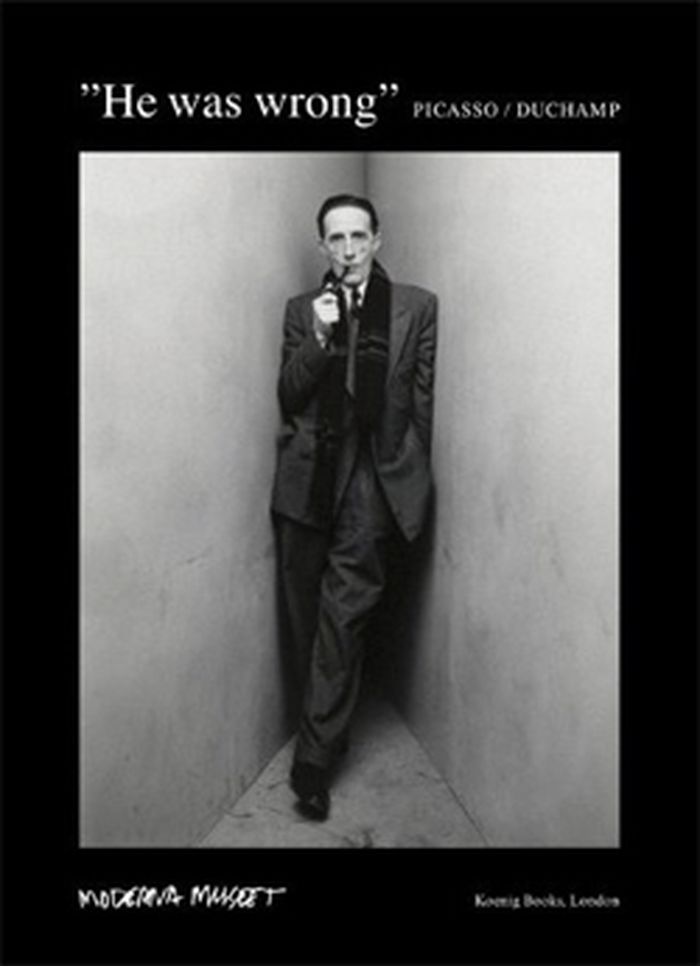
By many art history accounts, the art of the twentieth century was decided by Pablo Picasso and Marcel Duchamp. In these versions, Picasso stands for prolific production, a fierce expressionism, endless research of the picture plane and a sense of voracious creativity; whereas Duchamp stands for cerebral brilliance, rejection of optical pleasure and a subtle but all-pervasive conceptual sabotage and irony. (Of course, they shared as many traits, including an appetite for provocation and the recognition of eros as a fundamental, animating life principle.) So who was right? This volume, published for a show at the Moderna Museet in Stockholm, argues for both sides of the coin, looking at various aspects of both oeuvres, including Picasso’s fascination with the Minotaur and Duchamp’s Rrose Selavy alter ego. The book is appropriately divided in two halves separated by a reverse binding.
Duchamp & Picasso: He Was Wrong
Actions:
Prix:
$24.95
(disponible sur commande)
Résumé:
By many art history accounts, the art of the twentieth century was decided by Pablo Picasso and Marcel Duchamp. In these versions, Picasso stands for prolific production, a fierce expressionism, endless research of the picture plane and a sense of voracious creativity; whereas Duchamp stands for cerebral brilliance, rejection of optical pleasure and a subtle but all-pervasive conceptual sabotage and irony. (Of course, they shared as many traits, including an appetite for provocation and the recognition of eros as a fundamental, animating life principle.) So who was right? This volume, published for a show at the Moderna Museet in Stockholm, argues for both sides of the coin, looking at various aspects of both oeuvres, including Picasso’s fascination with the Minotaur and Duchamp’s Rrose Selavy alter ego. The book is appropriately divided in two halves separated by a reverse binding.
Classification:
livres
livres
Publication:
janvier 2013
janvier 2013
Sujet:
Théorie de l’art
Théorie de l’art
Classification:
livres
livres
Titre:
What art is
What art is
Actions:
Prix:
$26.95
(disponible sur commande)
Résumé:
What is it to be a work of art? Renowned author and critic Arthur C. Danto addresses this fundamental, complex question. Part philosophical monograph and part memoiristic meditation, What Art Is challenges the popular interpretation that art is an indefinable concept, instead bringing to light the properties that constitute universal meaning. Danto argues that despite(...)
$26.95
(disponible sur commande)
Résumé:
What is it to be a work of art? Renowned author and critic Arthur C. Danto addresses this fundamental, complex question. Part philosophical monograph and part memoiristic meditation, What Art Is challenges the popular interpretation that art is an indefinable concept, instead bringing to light the properties that constitute universal meaning. Danto argues that despite(...)
Titre:
What art is
Actions:
Prix:
$26.95
(disponible sur commande)
Résumé:
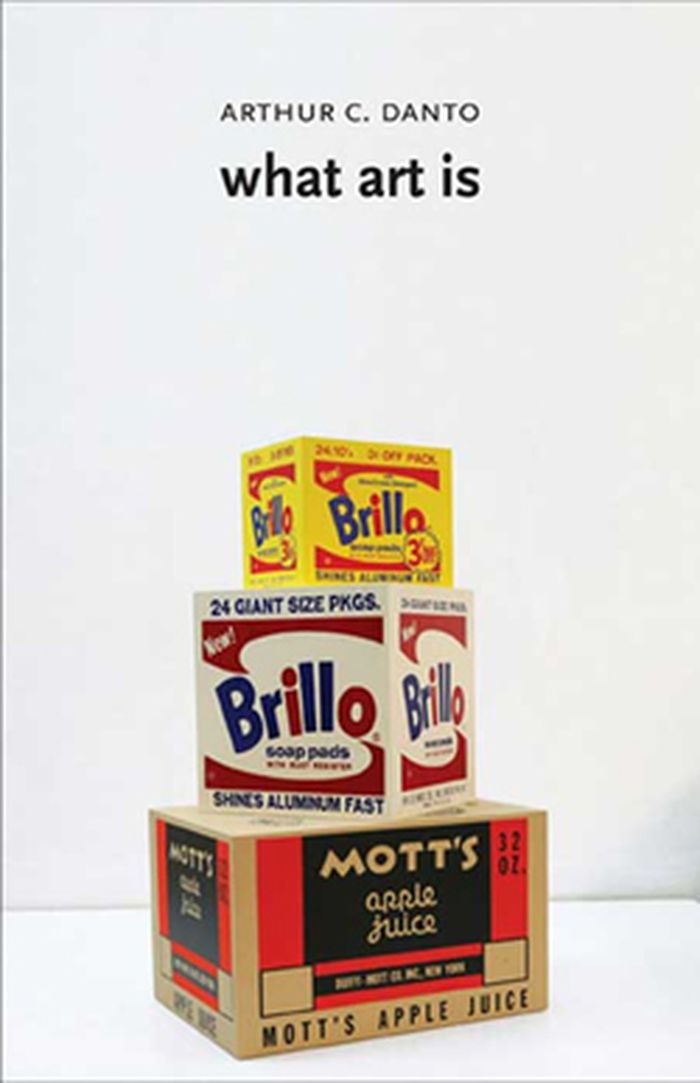
What is it to be a work of art? Renowned author and critic Arthur C. Danto addresses this fundamental, complex question. Part philosophical monograph and part memoiristic meditation, What Art Is challenges the popular interpretation that art is an indefinable concept, instead bringing to light the properties that constitute universal meaning. Danto argues that despite varied approaches, a work of art is always defined by two essential criteria: meaning and embodiment, as well as one additional criterion contributed by the viewer: interpretation. Danto crafts his argument in an accessible manner that engages with both philosophy and art across genres and eras, beginning with Plato’s definition of art in The Republic, and continuing through the progress of art as a series of discoveries, including such innovations as perspective, chiaroscuro, and physiognomy. Danto concludes with a fascinating discussion of Andy Warhol’s famous shipping cartons, which are visually indistinguishable from the everyday objects they represent.
What art is
Actions:
Prix:
$26.95
(disponible sur commande)
Résumé:
What is it to be a work of art? Renowned author and critic Arthur C. Danto addresses this fundamental, complex question. Part philosophical monograph and part memoiristic meditation, What Art Is challenges the popular interpretation that art is an indefinable concept, instead bringing to light the properties that constitute universal meaning. Danto argues that despite varied approaches, a work of art is always defined by two essential criteria: meaning and embodiment, as well as one additional criterion contributed by the viewer: interpretation. Danto crafts his argument in an accessible manner that engages with both philosophy and art across genres and eras, beginning with Plato’s definition of art in The Republic, and continuing through the progress of art as a series of discoveries, including such innovations as perspective, chiaroscuro, and physiognomy. Danto concludes with a fascinating discussion of Andy Warhol’s famous shipping cartons, which are visually indistinguishable from the everyday objects they represent.
Classification:
livres
livres
Publication:
mars 2013
mars 2013
Sujet:
Théorie de l’art
Théorie de l’art
Classification:
livres
livres
Actions:
Prix:
$25.00
(disponible sur commande)
Résumé:
Over the course of about ten years, Hans Ulrich Obrist and Matthew Barney met several times to discuss Barney's past work, current projects and his plans for the future. The resulting collection of interviews provides a rare insight into how the work and working method of one of the most prominent artists of a generation has developed over time, and uncovers the ideas,(...)
$25.00
(disponible sur commande)
Résumé:
Over the course of about ten years, Hans Ulrich Obrist and Matthew Barney met several times to discuss Barney's past work, current projects and his plans for the future. The resulting collection of interviews provides a rare insight into how the work and working method of one of the most prominent artists of a generation has developed over time, and uncovers the ideas,(...)
Titre:
Matthew Barney & Hans Ulrich Obrist
Actions:
Prix:
$25.00
(disponible sur commande)
Résumé:
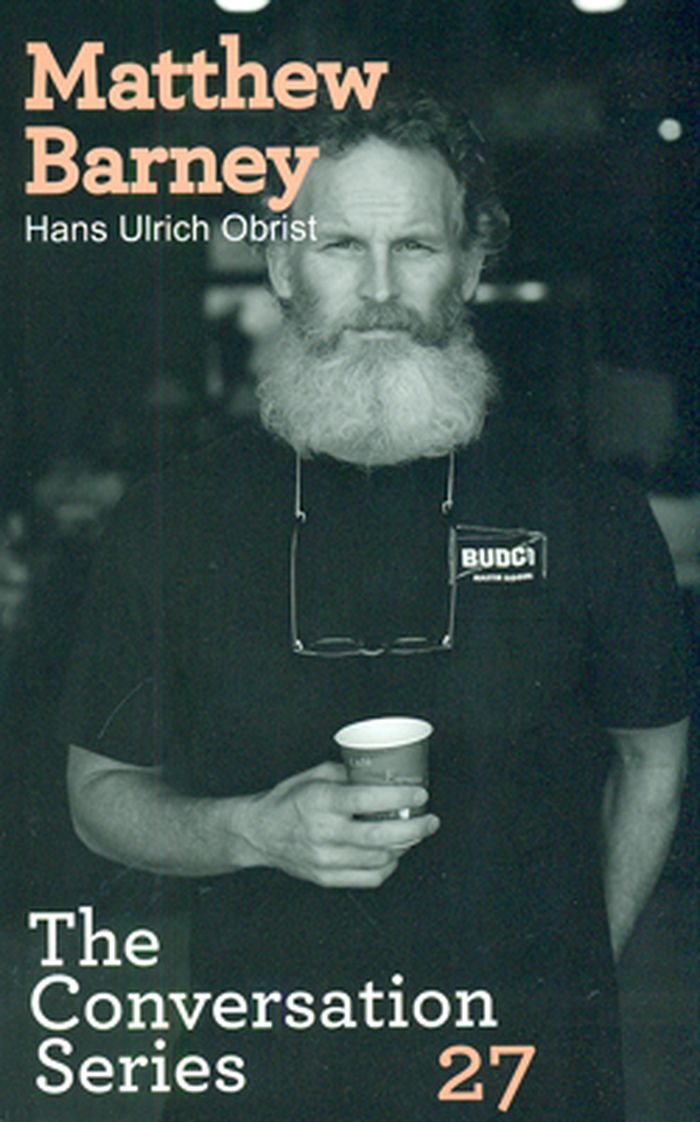
Over the course of about ten years, Hans Ulrich Obrist and Matthew Barney met several times to discuss Barney's past work, current projects and his plans for the future. The resulting collection of interviews provides a rare insight into how the work and working method of one of the most prominent artists of a generation has developed over time, and uncovers the ideas, influences and collaborations that lie behind his multi-layered and multimedia creative output. The conversation covers all of his major pieces to date, from the internationally acclaimed "Cremaster" cycle to the somewhat less well-known "Drawing Restraint" series, as well as looking at particular projects in more detail, such as the recent "Khu" performance and Barney's participation in "Il Tempo del Postino," curated by Obrist at the 2007 Manchester International Festival.
Matthew Barney & Hans Ulrich Obrist
Actions:
Prix:
$25.00
(disponible sur commande)
Résumé:
Over the course of about ten years, Hans Ulrich Obrist and Matthew Barney met several times to discuss Barney's past work, current projects and his plans for the future. The resulting collection of interviews provides a rare insight into how the work and working method of one of the most prominent artists of a generation has developed over time, and uncovers the ideas, influences and collaborations that lie behind his multi-layered and multimedia creative output. The conversation covers all of his major pieces to date, from the internationally acclaimed "Cremaster" cycle to the somewhat less well-known "Drawing Restraint" series, as well as looking at particular projects in more detail, such as the recent "Khu" performance and Barney's participation in "Il Tempo del Postino," curated by Obrist at the 2007 Manchester International Festival.
Classification:
livres
livres
Publication:
janvier 2013
janvier 2013
Sujet:
Théorie de l’art
Théorie de l’art
Classification:
livres
livres
Titre:
Unsitely aesthetics
Unsitely aesthetics
Actions:
Prix:
$22.00
(disponible sur commande)
Résumé:
The book aims to theorize current dynamics in media and sound art practice, and includes interviews and conversations with Barbara Campbell, Linda Carroli, Hugh Davies, Bec Dean, Renate Ferro, John Craig Freeman, Jo-Anne Green, Teri Hoskin, Lucas Ihlein, Yao Jui-Chung, kanarinka (a.k.a. Catherine D'Ignazio), Scott Kildall, Deborah Kelly, Natalie Loveless, Michael Takeo(...)
$22.00
(disponible sur commande)
Résumé:
The book aims to theorize current dynamics in media and sound art practice, and includes interviews and conversations with Barbara Campbell, Linda Carroli, Hugh Davies, Bec Dean, Renate Ferro, John Craig Freeman, Jo-Anne Green, Teri Hoskin, Lucas Ihlein, Yao Jui-Chung, kanarinka (a.k.a. Catherine D'Ignazio), Scott Kildall, Deborah Kelly, Natalie Loveless, Michael Takeo(...)
Titre:
Unsitely aesthetics
Actions:
Prix:
$22.00
(disponible sur commande)
Résumé:
The book aims to theorize current dynamics in media and sound art practice, and includes interviews and conversations with Barbara Campbell, Linda Carroli, Hugh Davies, Bec Dean, Renate Ferro, John Craig Freeman, Jo-Anne Green, Teri Hoskin, Lucas Ihlein, Yao Jui-Chung, kanarinka (a.k.a. Catherine D'Ignazio), Scott Kildall, Deborah Kelly, Natalie Loveless, Michael Takeo Magruder, Timothy Conway Murray, Norie Neumark, Victoria Scott, Brooke Singer, Igor Štromajer, Helen Thorington and Darren Tofts.
Unsitely aesthetics
Actions:
Prix:
$22.00
(disponible sur commande)
Résumé:
The book aims to theorize current dynamics in media and sound art practice, and includes interviews and conversations with Barbara Campbell, Linda Carroli, Hugh Davies, Bec Dean, Renate Ferro, John Craig Freeman, Jo-Anne Green, Teri Hoskin, Lucas Ihlein, Yao Jui-Chung, kanarinka (a.k.a. Catherine D'Ignazio), Scott Kildall, Deborah Kelly, Natalie Loveless, Michael Takeo Magruder, Timothy Conway Murray, Norie Neumark, Victoria Scott, Brooke Singer, Igor Štromajer, Helen Thorington and Darren Tofts.
Classification:
livres
livres
Publication:
janvier 2013
janvier 2013
Sujet:
Théorie de l’art
Théorie de l’art
Classification:
livres
livres
Titre:
Fictions of art history
Fictions of art history
Actions:
Prix:
$26.95
(disponible sur commande)
Résumé:
This publication addresses art history’s complex relationships with fiction, poetry, and creative writing. It examines art historians’ viewing practices and modes of writing. How, the contributors ask, are we to unravel the supposed facts of history from the fictions constructed in works of art? How do art historians employ or resist devices of fiction, and what are the(...)
$26.95
(disponible sur commande)
Résumé:
This publication addresses art history’s complex relationships with fiction, poetry, and creative writing. It examines art historians’ viewing practices and modes of writing. How, the contributors ask, are we to unravel the supposed facts of history from the fictions constructed in works of art? How do art historians employ or resist devices of fiction, and what are the(...)
Titre:
Fictions of art history
Actions:
Prix:
$26.95
(disponible sur commande)
Résumé:
This publication addresses art history’s complex relationships with fiction, poetry, and creative writing. It examines art historians’ viewing practices and modes of writing. How, the contributors ask, are we to unravel the supposed facts of history from the fictions constructed in works of art? How do art historians employ or resist devices of fiction, and what are the effects of those choices on the reader?
Fictions of art history
Actions:
Prix:
$26.95
(disponible sur commande)
Résumé:
This publication addresses art history’s complex relationships with fiction, poetry, and creative writing. It examines art historians’ viewing practices and modes of writing. How, the contributors ask, are we to unravel the supposed facts of history from the fictions constructed in works of art? How do art historians employ or resist devices of fiction, and what are the effects of those choices on the reader?
Classification:
livres
livres
Publication:
mars 2013
mars 2013
Sujet:
Théorie de l’art
Théorie de l’art
Classification:
livres
livres
Prix:
$56.95
(disponible sur commande)
Résumé:
The geography of the visual arts changed with the end of the Cold War. Contemporary art was no longer defined, exhibited, interpreted, and acquired according to a blueprint drawn up in New York, London, Paris, or Berlin. With the emergence of new art scenes in Asia and the Middle East and the explosion of biennials, the visual arts have become globalized as surely as the(...)
$56.95
(disponible sur commande)
Résumé:
The geography of the visual arts changed with the end of the Cold War. Contemporary art was no longer defined, exhibited, interpreted, and acquired according to a blueprint drawn up in New York, London, Paris, or Berlin. With the emergence of new art scenes in Asia and the Middle East and the explosion of biennials, the visual arts have become globalized as surely as the(...)
Titre:
The global contemporary and the rise of new art worlds
Actions:
Prix:
$56.95
(disponible sur commande)
Résumé:
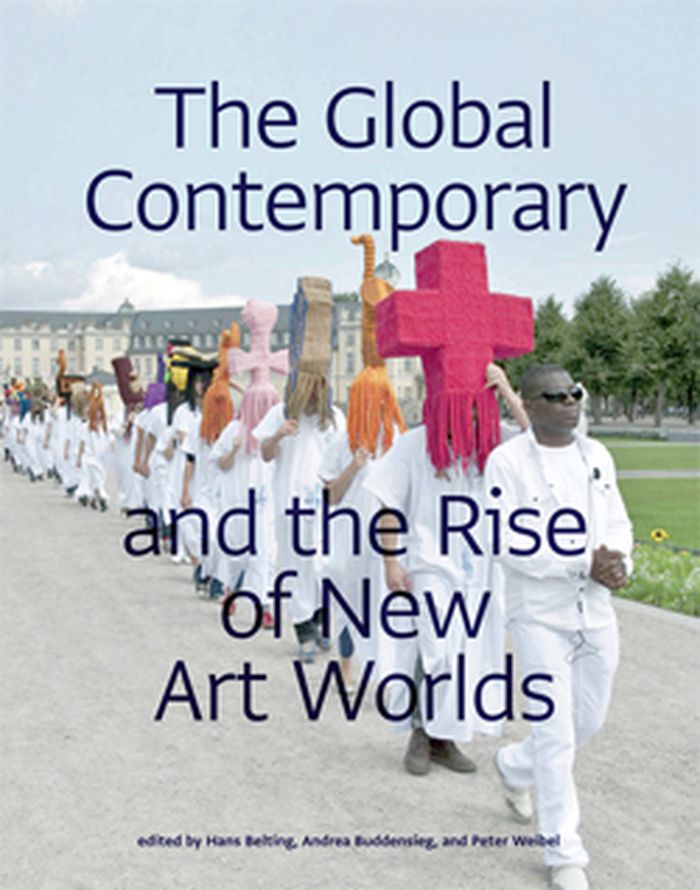
The geography of the visual arts changed with the end of the Cold War. Contemporary art was no longer defined, exhibited, interpreted, and acquired according to a blueprint drawn up in New York, London, Paris, or Berlin. With the emergence of new art scenes in Asia and the Middle East and the explosion of biennials, the visual arts have become globalized as surely as the world economy has. The Global Contemporary and the Rise of New Art Worlds documents the globalization of the visual arts and the rise of the contemporary over the last twenty years.
The global contemporary and the rise of new art worlds
Actions:
Prix:
$56.95
(disponible sur commande)
Résumé:
The geography of the visual arts changed with the end of the Cold War. Contemporary art was no longer defined, exhibited, interpreted, and acquired according to a blueprint drawn up in New York, London, Paris, or Berlin. With the emergence of new art scenes in Asia and the Middle East and the explosion of biennials, the visual arts have become globalized as surely as the world economy has. The Global Contemporary and the Rise of New Art Worlds documents the globalization of the visual arts and the rise of the contemporary over the last twenty years.
Classification:
livres
livres
Publication:
mars 2013
mars 2013
Sujet:
Théorie de l’art
Théorie de l’art
Classification:
livres
livres
Titre:
What was contemporary art?
What was contemporary art?
Actions:
Prix:
$38.95
(disponible sur commande)
Résumé:
Contemporary art in the early twenty-first century is often discussed as though it were a radically new phenomenon unmoored from history. Yet all works of art were once contemporary to the artist and culture that produced them. In What Was Contemporary Art? Richard Meyer reclaims the contemporary from historical amnesia, exploring episodes in the study, exhibition, and(...)
$38.95
(disponible sur commande)
Résumé:
Contemporary art in the early twenty-first century is often discussed as though it were a radically new phenomenon unmoored from history. Yet all works of art were once contemporary to the artist and culture that produced them. In What Was Contemporary Art? Richard Meyer reclaims the contemporary from historical amnesia, exploring episodes in the study, exhibition, and(...)
Titre:
What was contemporary art?
Actions:
Prix:
$38.95
(disponible sur commande)
Résumé:
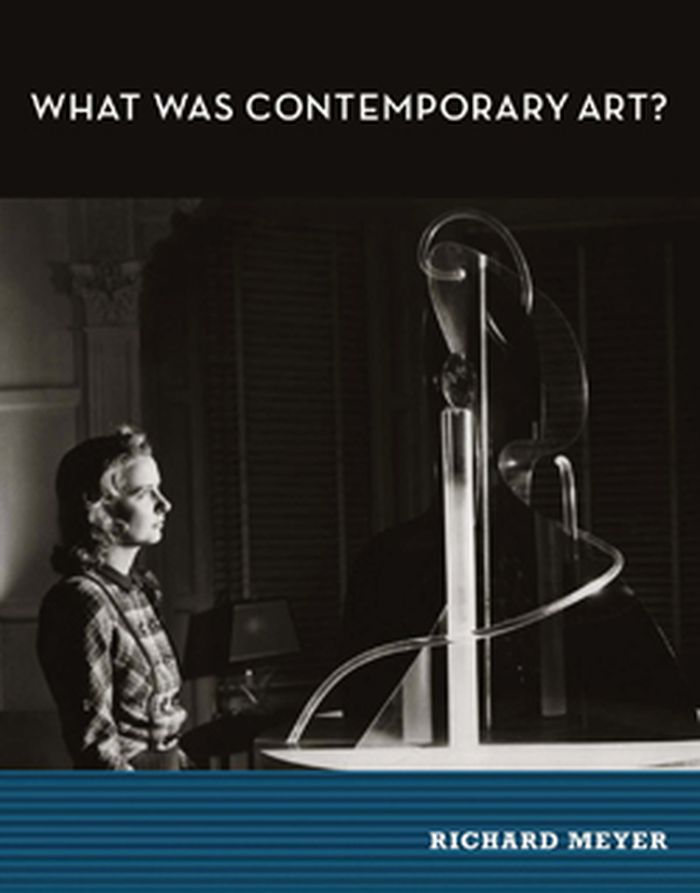
Contemporary art in the early twenty-first century is often discussed as though it were a radically new phenomenon unmoored from history. Yet all works of art were once contemporary to the artist and culture that produced them. In What Was Contemporary Art? Richard Meyer reclaims the contemporary from historical amnesia, exploring episodes in the study, exhibition, and reception of early twentieth-century art and visual culture.
What was contemporary art?
Actions:
Prix:
$38.95
(disponible sur commande)
Résumé:
Contemporary art in the early twenty-first century is often discussed as though it were a radically new phenomenon unmoored from history. Yet all works of art were once contemporary to the artist and culture that produced them. In What Was Contemporary Art? Richard Meyer reclaims the contemporary from historical amnesia, exploring episodes in the study, exhibition, and reception of early twentieth-century art and visual culture.
Classification:
livres
livres
Publication:
mars 2013
mars 2013
Sujet:
Théorie de l’art
Théorie de l’art


