


319 Résultats
Classification:
livres
livres
Titre:
Talks about money
Talks about money
Actions:
Prix:
$22.00
(disponible sur commande)
Résumé:
What does it mean to do something for free versus asking a lot? How much can we ask? Graphic design does not have any intrinsic value. Money is important, but also not an openly discussed topic. Even though guidelines for charging exist, we often have to negotiate our prices. The texts in this book are based on interviews made in 2006/2007 with freelance graphic(...)
$22.00
(disponible sur commande)
Résumé:
What does it mean to do something for free versus asking a lot? How much can we ask? Graphic design does not have any intrinsic value. Money is important, but also not an openly discussed topic. Even though guidelines for charging exist, we often have to negotiate our prices. The texts in this book are based on interviews made in 2006/2007 with freelance graphic(...)
Titre:
Talks about money
Actions:
Prix:
$22.00
(disponible sur commande)
Résumé:
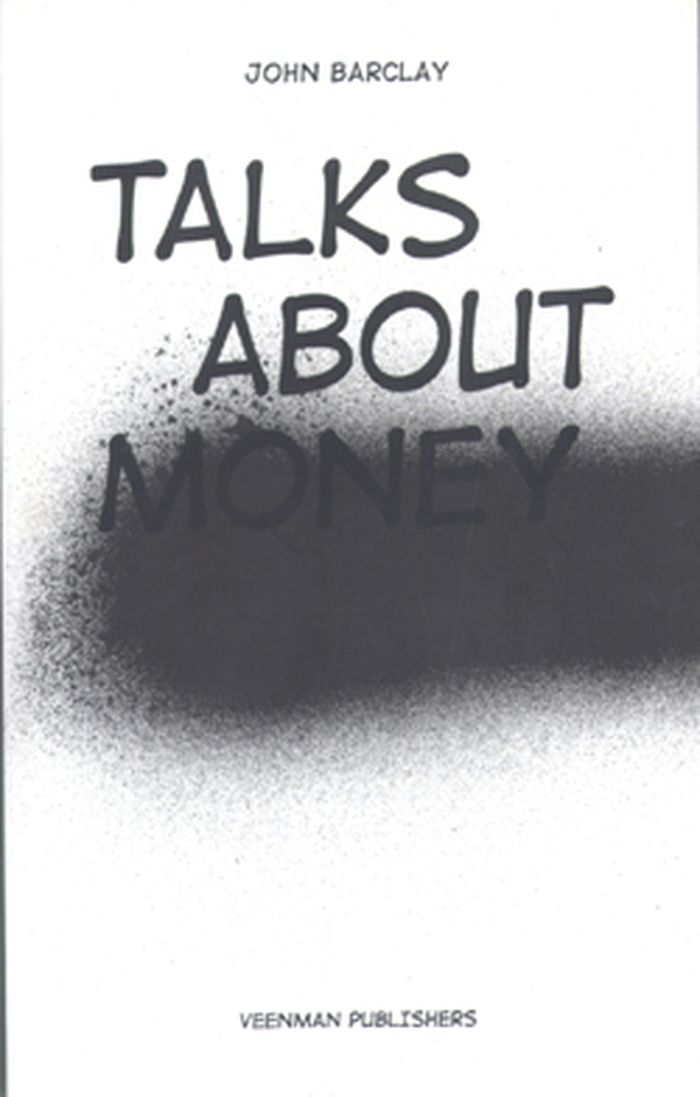
What does it mean to do something for free versus asking a lot? How much can we ask? Graphic design does not have any intrinsic value. Money is important, but also not an openly discussed topic. Even though guidelines for charging exist, we often have to negotiate our prices. The texts in this book are based on interviews made in 2006/2007 with freelance graphic designers. They range from students and beginners to designers with many years of professional experience, from a one-man ste-up tp a bigger studio with employees. Inside you'll find a wild, wide range of prices, different ways of calculating a price, problems, strategies, principles, numbers and a lot of zeros.
Talks about money
Actions:
Prix:
$22.00
(disponible sur commande)
Résumé:
What does it mean to do something for free versus asking a lot? How much can we ask? Graphic design does not have any intrinsic value. Money is important, but also not an openly discussed topic. Even though guidelines for charging exist, we often have to negotiate our prices. The texts in this book are based on interviews made in 2006/2007 with freelance graphic designers. They range from students and beginners to designers with many years of professional experience, from a one-man ste-up tp a bigger studio with employees. Inside you'll find a wild, wide range of prices, different ways of calculating a price, problems, strategies, principles, numbers and a lot of zeros.
Classification:
livres
livres
Publication:
mars 2008, London, Amsterdam, New York
mars 2008, London, Amsterdam, New York
Sujet:
Théorie du design
Théorie du design
Classification:
livres
livres
Titre:
Wouldn't It be nice
Wouldn't It be nice
Actions:
Prix:
$45.00
(disponible sur commande)
Résumé:
« Wouldnt it be nice... » explore les processus intellectuels et les méthodes de travail qui aboutissent à diverses attitudes et pratiques créatives, oscillant entre divers champs de tension. D`une part, la dichotomie entre activisme et résignation, ainsi que entre préoccupations sociales et contôle social. Dautre part, l`écart entre les grands projets et les dures(...)
$45.00
(disponible sur commande)
Résumé:
« Wouldnt it be nice... » explore les processus intellectuels et les méthodes de travail qui aboutissent à diverses attitudes et pratiques créatives, oscillant entre divers champs de tension. D`une part, la dichotomie entre activisme et résignation, ainsi que entre préoccupations sociales et contôle social. Dautre part, l`écart entre les grands projets et les dures(...)
Titre:
Wouldn't It be nice
Actions:
Prix:
$45.00
(disponible sur commande)
Résumé:
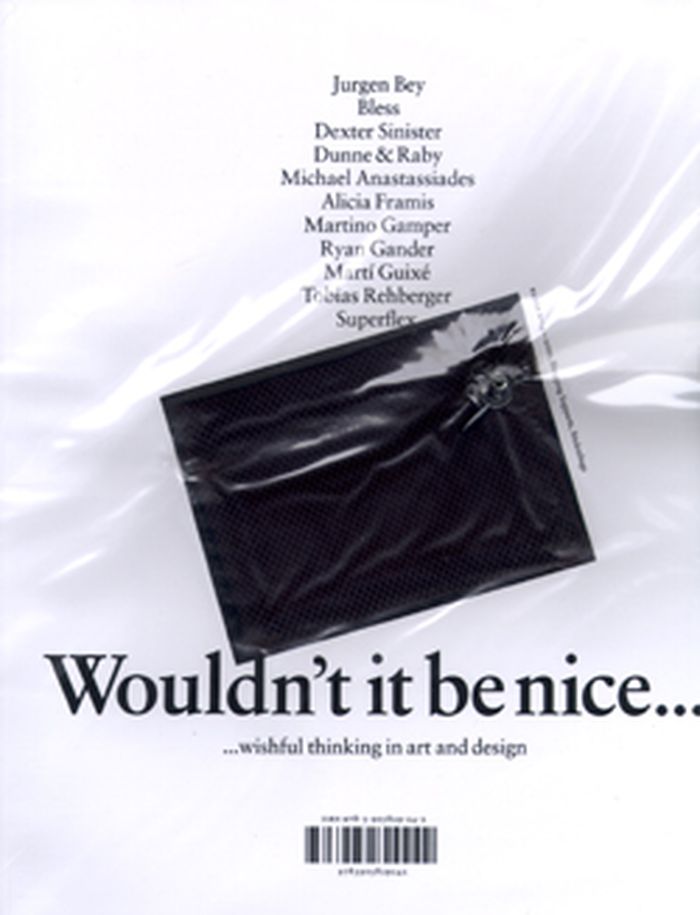
« Wouldnt it be nice... » explore les processus intellectuels et les méthodes de travail qui aboutissent à diverses attitudes et pratiques créatives, oscillant entre divers champs de tension. D`une part, la dichotomie entre activisme et résignation, ainsi que entre préoccupations sociales et contôle social. Dautre part, l`écart entre les grands projets et les dures réalités, lopposition entre esprit de conciliation et esprit de confrontation.
Wouldn't It be nice
Actions:
Prix:
$45.00
(disponible sur commande)
Résumé:
« Wouldnt it be nice... » explore les processus intellectuels et les méthodes de travail qui aboutissent à diverses attitudes et pratiques créatives, oscillant entre divers champs de tension. D`une part, la dichotomie entre activisme et résignation, ainsi que entre préoccupations sociales et contôle social. Dautre part, l`écart entre les grands projets et les dures réalités, lopposition entre esprit de conciliation et esprit de confrontation.
Classification:
livres
livres
Publication:
janvier 2008, Genève
janvier 2008, Genève
Sujet:
Théorie du design
Théorie du design
Classification:
livres
livres
Titre:
Pre-Specifics
Pre-Specifics
Actions:
Prix:
$40.00
(disponible sur commande)
Résumé:
The demand for design competence crosses almost all disciplinary boundaries, making the designers of today particularly ubiquitous in their influence. Pre-Specifics argues that the most promising strategies for the design disciplines of tomorrow can be forecast in the common codes of "virtual relations" shared by material, biological, technological, cognitive and media(...)
$40.00
(disponible sur commande)
Résumé:
The demand for design competence crosses almost all disciplinary boundaries, making the designers of today particularly ubiquitous in their influence. Pre-Specifics argues that the most promising strategies for the design disciplines of tomorrow can be forecast in the common codes of "virtual relations" shared by material, biological, technological, cognitive and media(...)
Titre:
Pre-Specifics
Actions:
Prix:
$40.00
(disponible sur commande)
Résumé:
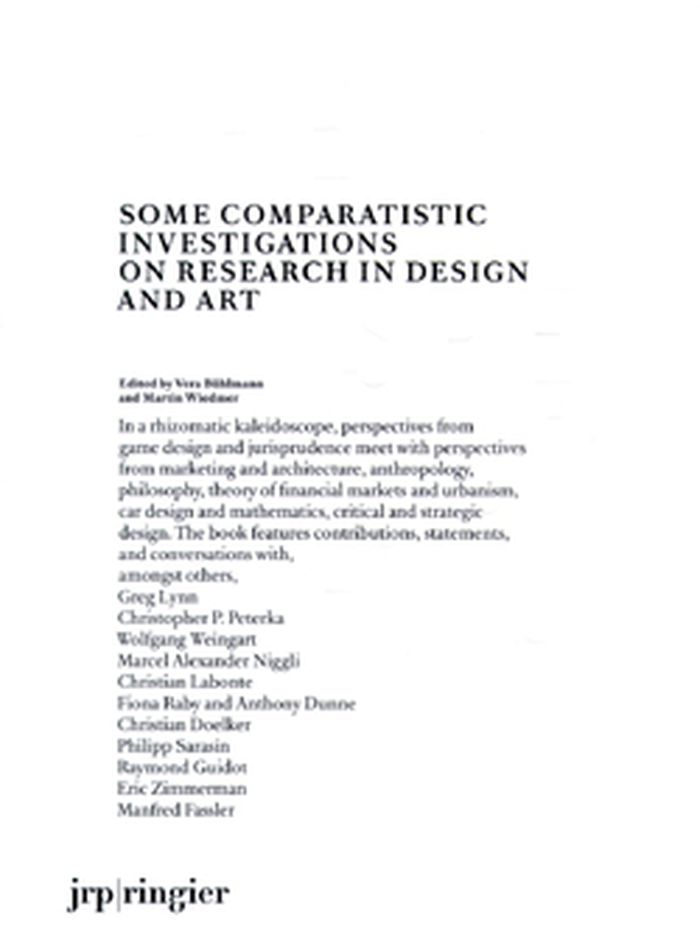
The demand for design competence crosses almost all disciplinary boundaries, making the designers of today particularly ubiquitous in their influence. Pre-Specifics argues that the most promising strategies for the design disciplines of tomorrow can be forecast in the common codes of "virtual relations" shared by material, biological, technological, cognitive and media perspectives. The book features contributions, statements, and conversations with internationally renowned authors such as Greg Lynn, Christopher Peterka, Wolfgang Weingart, Marcel Alexander Niggli, Christian Labonte, Fiona Raby and Anthony Dunne, Christian Doelker, Philipp Sarasin, Raymond Guidot, Eric Zimmerman and Manfred Fassler among others. It is designed by Ludovic Balland, and published with the Institute for Research in Art and Design HGK FHNW in Basel.
Pre-Specifics
Actions:
Prix:
$40.00
(disponible sur commande)
Résumé:
The demand for design competence crosses almost all disciplinary boundaries, making the designers of today particularly ubiquitous in their influence. Pre-Specifics argues that the most promising strategies for the design disciplines of tomorrow can be forecast in the common codes of "virtual relations" shared by material, biological, technological, cognitive and media perspectives. The book features contributions, statements, and conversations with internationally renowned authors such as Greg Lynn, Christopher Peterka, Wolfgang Weingart, Marcel Alexander Niggli, Christian Labonte, Fiona Raby and Anthony Dunne, Christian Doelker, Philipp Sarasin, Raymond Guidot, Eric Zimmerman and Manfred Fassler among others. It is designed by Ludovic Balland, and published with the Institute for Research in Art and Design HGK FHNW in Basel.
Classification:
livres
livres
Publication:
février 2008, Zurich
février 2008, Zurich
Sujet:
Théorie du design
Théorie du design
Classification:
livres
livres
Actions:
Prix:
$39.50
(disponible sur commande)
Résumé:
Today, we live in an economic system that revolves around producing and consuming objects made of plastic and metal, electronics, synthetic textiles and other things that do not decompose within a foreseeable amount of time. We start to review the role of these objects in a series of challenges that lie ahead of us. In the design discipline, sustainability and social(...)
$39.50
(disponible sur commande)
Résumé:
Today, we live in an economic system that revolves around producing and consuming objects made of plastic and metal, electronics, synthetic textiles and other things that do not decompose within a foreseeable amount of time. We start to review the role of these objects in a series of challenges that lie ahead of us. In the design discipline, sustainability and social(...)
Titre:
The responsible object; a history of the design ideology for the future
Actions:
Prix:
$39.50
(disponible sur commande)
Résumé:
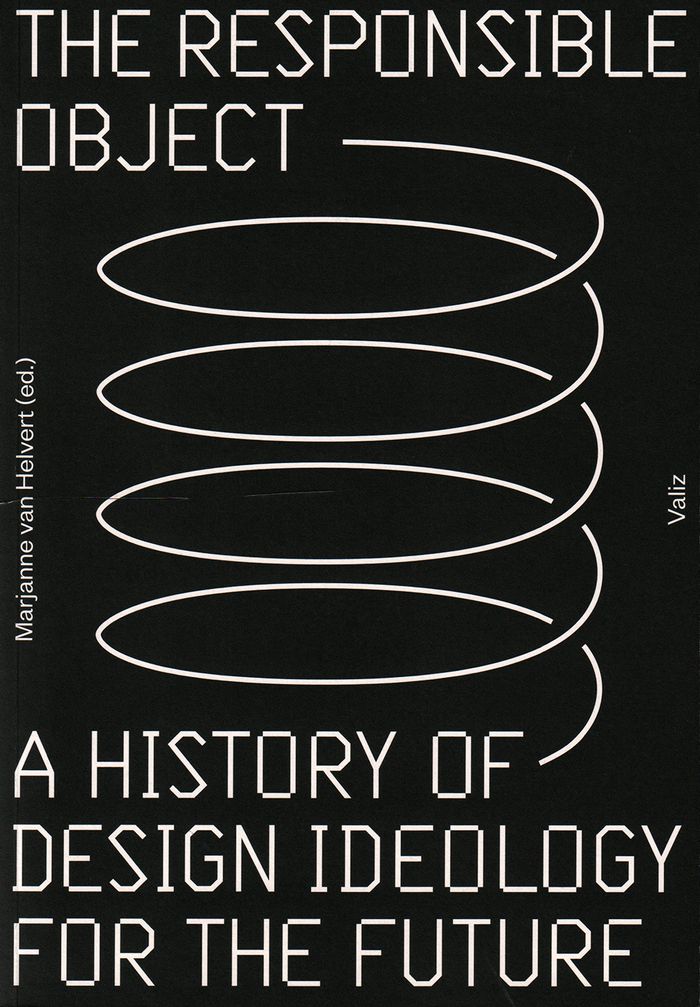
Today, we live in an economic system that revolves around producing and consuming objects made of plastic and metal, electronics, synthetic textiles and other things that do not decompose within a foreseeable amount of time. We start to review the role of these objects in a series of challenges that lie ahead of us. In the design discipline, sustainability and social responsibility have become prolific epithets, generating new products, materials, and technologies, designed to change the course of our future. The intrinsic design ideologies are often not new, but form a fundamental part of design history, reappearing throughout the previous centuries. This book presents a history of socially committed design strategies within the western design tradition, from William Morris to Victor Papanek, and from VKhUTEMAS to FabLab. A critical resource for designers, students, cultural critics, and anyone interested in building a sustainable future.
The responsible object; a history of the design ideology for the future
Actions:
Prix:
$39.50
(disponible sur commande)
Résumé:
Today, we live in an economic system that revolves around producing and consuming objects made of plastic and metal, electronics, synthetic textiles and other things that do not decompose within a foreseeable amount of time. We start to review the role of these objects in a series of challenges that lie ahead of us. In the design discipline, sustainability and social responsibility have become prolific epithets, generating new products, materials, and technologies, designed to change the course of our future. The intrinsic design ideologies are often not new, but form a fundamental part of design history, reappearing throughout the previous centuries. This book presents a history of socially committed design strategies within the western design tradition, from William Morris to Victor Papanek, and from VKhUTEMAS to FabLab. A critical resource for designers, students, cultural critics, and anyone interested in building a sustainable future.
Classification:
livres
livres
Publication:
janvier 2017
janvier 2017
Sujet:
Théorie du design
Théorie du design
Classification:
livres
livres
Prix:
$55.00
(disponible sur commande)
Résumé:
Assignments can give instructions, describe an exercise, present a problem, set out rules, propose a game, stimulate a process, or simply throw out questions. "Taking a line for a walk" brings attention to something that is often neglected: the assignment as a pedagogical element and verbal artefact of design education. This book is a compendium of 224 assignments, edited(...)
$55.00
(disponible sur commande)
Résumé:
Assignments can give instructions, describe an exercise, present a problem, set out rules, propose a game, stimulate a process, or simply throw out questions. "Taking a line for a walk" brings attention to something that is often neglected: the assignment as a pedagogical element and verbal artefact of design education. This book is a compendium of 224 assignments, edited(...)
Titre:
Taking a line for walk: assignments in design education
Actions:
Prix:
$55.00
(disponible sur commande)
Résumé:
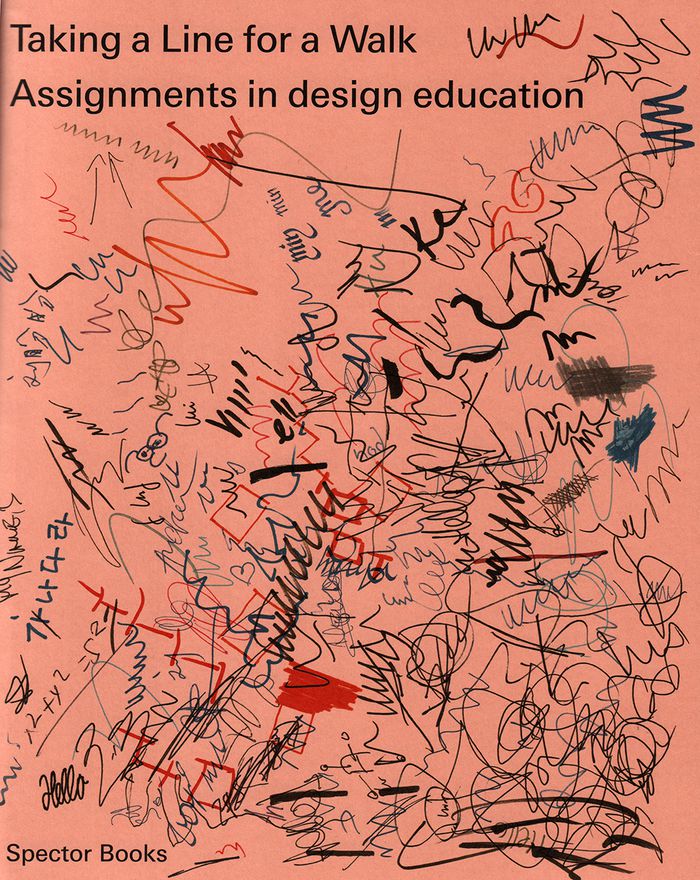
Assignments can give instructions, describe an exercise, present a problem, set out rules, propose a game, stimulate a process, or simply throw out questions. "Taking a line for a walk" brings attention to something that is often neglected: the assignment as a pedagogical element and verbal artefact of design education. This book is a compendium of 224 assignments, edited by Nina Paim and coedited by Emilia Bergmark. A reference book for educators, researchers, and students alike, it includes both contemporary and historical examples and offers a space for different lines of design pedagogy to converge and converse. An accompanying essay by Corinne Gisel takes a closer look at the various forms assignments can take and the educational contexts they exist within. Taking a Line for a Walk derived from an exhibition of the same name at the International Biennial of Graphic Design Brno 2014.
Taking a line for walk: assignments in design education
Actions:
Prix:
$55.00
(disponible sur commande)
Résumé:
Assignments can give instructions, describe an exercise, present a problem, set out rules, propose a game, stimulate a process, or simply throw out questions. "Taking a line for a walk" brings attention to something that is often neglected: the assignment as a pedagogical element and verbal artefact of design education. This book is a compendium of 224 assignments, edited by Nina Paim and coedited by Emilia Bergmark. A reference book for educators, researchers, and students alike, it includes both contemporary and historical examples and offers a space for different lines of design pedagogy to converge and converse. An accompanying essay by Corinne Gisel takes a closer look at the various forms assignments can take and the educational contexts they exist within. Taking a Line for a Walk derived from an exhibition of the same name at the International Biennial of Graphic Design Brno 2014.
Classification:
livres
livres
Publication:
octobre 2016
octobre 2016
Sujet:
Théorie du design
Théorie du design
Classification:
livres
livres
Actions:
Prix:
$22.99
(disponible sur commande)
Résumé:
Have you ever wondered where rocking chairs came from, or why cheap plastic chairs are suddenly everywhere? In "Now I sit me down", the distinguished architect and writer Witold Rybczynski chronicles the history of the chair from the folding stools of pharaonic Egypt to the ubiquitous stackable monobloc chairs of today. He tells the stories of the inventor of the bentwood(...)
$22.99
(disponible sur commande)
Résumé:
Have you ever wondered where rocking chairs came from, or why cheap plastic chairs are suddenly everywhere? In "Now I sit me down", the distinguished architect and writer Witold Rybczynski chronicles the history of the chair from the folding stools of pharaonic Egypt to the ubiquitous stackable monobloc chairs of today. He tells the stories of the inventor of the bentwood(...)
Titre:
Now I sit me down: from klismos to plastic chair, a natural history
Actions:
Prix:
$22.99
(disponible sur commande)
Résumé:
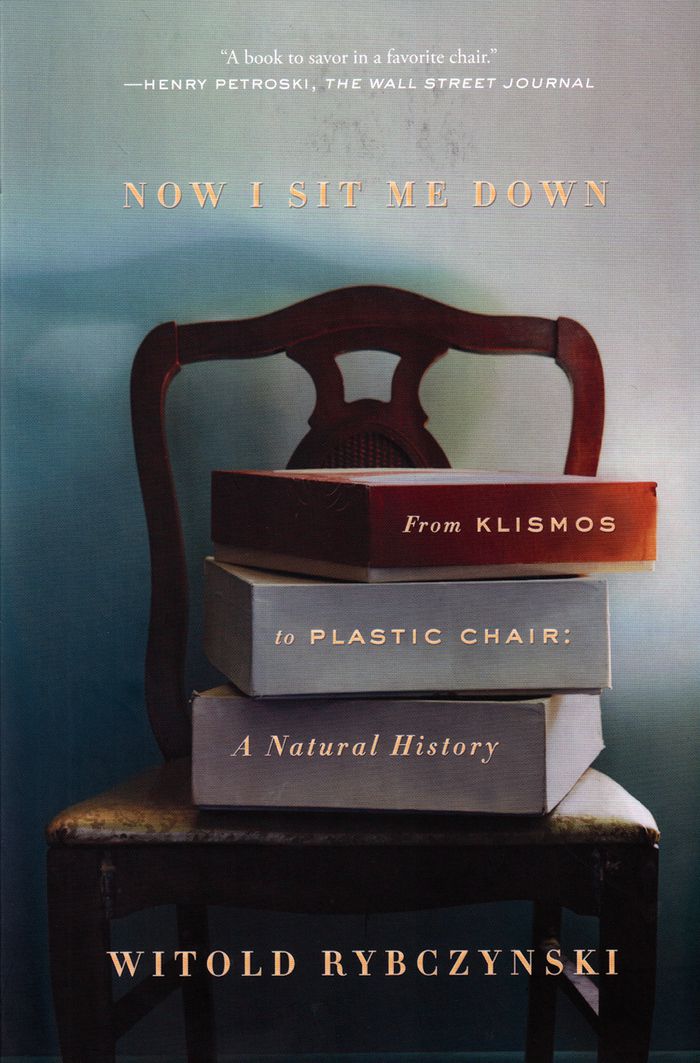
Have you ever wondered where rocking chairs came from, or why cheap plastic chairs are suddenly everywhere? In "Now I sit me down", the distinguished architect and writer Witold Rybczynski chronicles the history of the chair from the folding stools of pharaonic Egypt to the ubiquitous stackable monobloc chairs of today. He tells the stories of the inventor of the bentwood chair, Michael Thonet, and of the creators of the first molded-plywood chair, Charles and Ray Eames. He reveals the history of chairs to be a social history—of different ways of sitting, of changing manners and attitudes, and of varying tastes. The history of chairs is the history of who we are. We learn how the ancient Chinese switched from sitting on the floor to sitting in a chair, and how the iconic chair of Middle America—the BarcaLounger—traces its roots back to the Bauhaus. Rybczynski weaves a rich tapestry that draws on art and design history, personal experience, and historical accounts. And he pairs these stories with his own delightful hand-drawn illustrations: colonial rockers and English cabrioles, languorous chaise longues and no-nonsense ergonomic task chairs—they’re all here. The famous Danish furniture designer Hans Wegner once remarked, “A chair is only finished when someone sits in it.” As Rybczynski tells it, the way we choose to sit and what we choose to sit on speak volumes about our values, our tastes, and the things we hold dear.
Now I sit me down: from klismos to plastic chair, a natural history
Actions:
Prix:
$22.99
(disponible sur commande)
Résumé:
Have you ever wondered where rocking chairs came from, or why cheap plastic chairs are suddenly everywhere? In "Now I sit me down", the distinguished architect and writer Witold Rybczynski chronicles the history of the chair from the folding stools of pharaonic Egypt to the ubiquitous stackable monobloc chairs of today. He tells the stories of the inventor of the bentwood chair, Michael Thonet, and of the creators of the first molded-plywood chair, Charles and Ray Eames. He reveals the history of chairs to be a social history—of different ways of sitting, of changing manners and attitudes, and of varying tastes. The history of chairs is the history of who we are. We learn how the ancient Chinese switched from sitting on the floor to sitting in a chair, and how the iconic chair of Middle America—the BarcaLounger—traces its roots back to the Bauhaus. Rybczynski weaves a rich tapestry that draws on art and design history, personal experience, and historical accounts. And he pairs these stories with his own delightful hand-drawn illustrations: colonial rockers and English cabrioles, languorous chaise longues and no-nonsense ergonomic task chairs—they’re all here. The famous Danish furniture designer Hans Wegner once remarked, “A chair is only finished when someone sits in it.” As Rybczynski tells it, the way we choose to sit and what we choose to sit on speak volumes about our values, our tastes, and the things we hold dear.
Classification:
livres
livres
Publication:
août 2017
août 2017
Sujet:
Théorie du design
Théorie du design
Classification:
livres
livres
Titre:
Design d'aujourd'hui
Design d'aujourd'hui
Actions:
Prix:
$50.95
(disponible sur commande)
Résumé:
Design de produits, d’espaces, d’interaction, de service… Le design est omniprésent. Il évolue sans cesse, s’adapte à nos vies, à nos envies, à nos besoins qu’il anticipe parfois. À la fois enjeu économique, culturel et de civilisation, le design est un vecteur de croissance et de différenciation pour les entreprises, un formidable moyen d’expression pour les créateurs et(...)
$50.95
(disponible sur commande)
Résumé:
Design de produits, d’espaces, d’interaction, de service… Le design est omniprésent. Il évolue sans cesse, s’adapte à nos vies, à nos envies, à nos besoins qu’il anticipe parfois. À la fois enjeu économique, culturel et de civilisation, le design est un vecteur de croissance et de différenciation pour les entreprises, un formidable moyen d’expression pour les créateurs et(...)
Titre:
Design d'aujourd'hui
Actions:
Prix:
$50.95
(disponible sur commande)
Résumé:
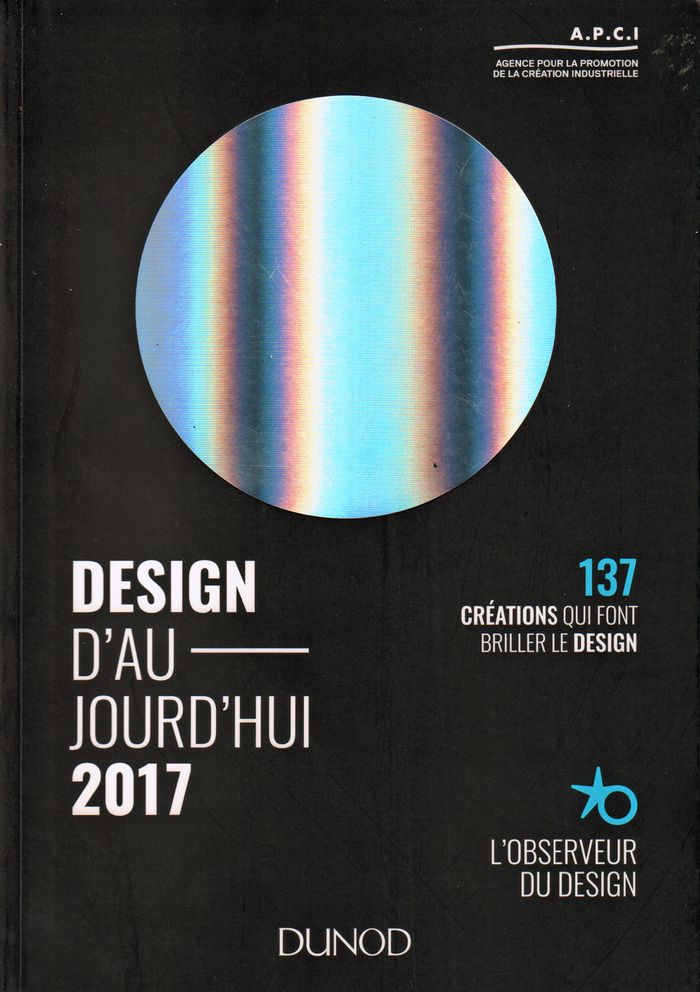
Design de produits, d’espaces, d’interaction, de service… Le design est omniprésent. Il évolue sans cesse, s’adapte à nos vies, à nos envies, à nos besoins qu’il anticipe parfois. À la fois enjeu économique, culturel et de civilisation, le design est un vecteur de croissance et de différenciation pour les entreprises, un formidable moyen d’expression pour les créateurs et un outil indispensable à toute démarche visant à concilier progrès et respect de l’environnement. Après avoir donné la parole à quelques acteurs importants du design, cet ouvrage présente 137 créations issues du savoir-faire et de l’imagination des designers d’aujourd’hui. 137 designs étonnants, pratiques, ludiques ou performants, qui témoignent de l’importance du design et de ce qu’il nous réserve de plus beau.
Design d'aujourd'hui
Actions:
Prix:
$50.95
(disponible sur commande)
Résumé:
Design de produits, d’espaces, d’interaction, de service… Le design est omniprésent. Il évolue sans cesse, s’adapte à nos vies, à nos envies, à nos besoins qu’il anticipe parfois. À la fois enjeu économique, culturel et de civilisation, le design est un vecteur de croissance et de différenciation pour les entreprises, un formidable moyen d’expression pour les créateurs et un outil indispensable à toute démarche visant à concilier progrès et respect de l’environnement. Après avoir donné la parole à quelques acteurs importants du design, cet ouvrage présente 137 créations issues du savoir-faire et de l’imagination des designers d’aujourd’hui. 137 designs étonnants, pratiques, ludiques ou performants, qui témoignent de l’importance du design et de ce qu’il nous réserve de plus beau.
Classification:
livres
livres
Publication:
janvier 2017
janvier 2017
Sujet:
Théorie du design
Théorie du design
Classification:
livres
livres
Actions:
Prix:
$39.99
(disponible sur commande)
Résumé:
In this excavation of our Information Age, Adam Greenfield forces us to reconsider our relationship with the networked objects, services and spaces that define us. It is time to re-evaluate the Silicon Valley consensus determining the future. Having successfully colonized everyday life, these radical technologies are now conditioning the choices available to us in the(...)
$39.99
(disponible sur commande)
Résumé:
In this excavation of our Information Age, Adam Greenfield forces us to reconsider our relationship with the networked objects, services and spaces that define us. It is time to re-evaluate the Silicon Valley consensus determining the future. Having successfully colonized everyday life, these radical technologies are now conditioning the choices available to us in the(...)
Titre:
Radical technologies: the design of everyday life
Actions:
Prix:
$39.99
(disponible sur commande)
Résumé:
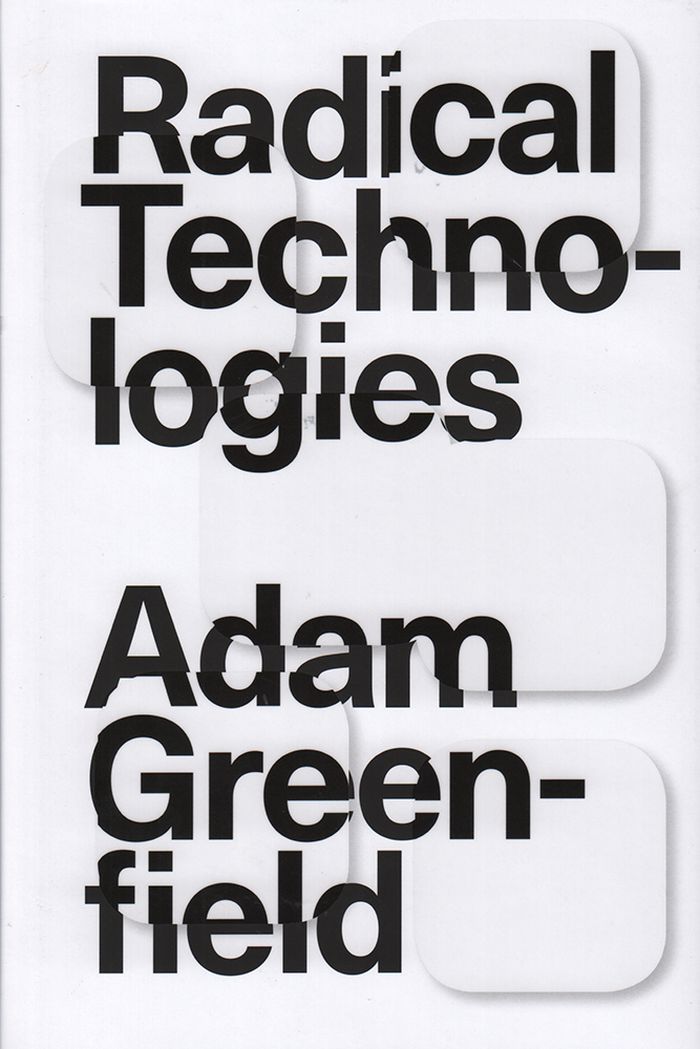
In this excavation of our Information Age, Adam Greenfield forces us to reconsider our relationship with the networked objects, services and spaces that define us. It is time to re-evaluate the Silicon Valley consensus determining the future. Having successfully colonized everyday life, these radical technologies are now conditioning the choices available to us in the years to come. How do they work? What challenges do they present to us, as individuals and societies? Who benefits from their adoption? In answering these questions, Greenfield’s timely guide clarifies the scale and nature of the crisis we now confront —and offers ways to reclaim our stake in the future.
Radical technologies: the design of everyday life
Actions:
Prix:
$39.99
(disponible sur commande)
Résumé:
In this excavation of our Information Age, Adam Greenfield forces us to reconsider our relationship with the networked objects, services and spaces that define us. It is time to re-evaluate the Silicon Valley consensus determining the future. Having successfully colonized everyday life, these radical technologies are now conditioning the choices available to us in the years to come. How do they work? What challenges do they present to us, as individuals and societies? Who benefits from their adoption? In answering these questions, Greenfield’s timely guide clarifies the scale and nature of the crisis we now confront —and offers ways to reclaim our stake in the future.
Classification:
livres
livres
Publication:
juin 2017
juin 2017
Sujet:
Théorie du design
Théorie du design
Classification:
livres
livres

Titre:
On things as ideas
On things as ideas
Actions:
Prix:
$32.50
(disponible sur commande)
Résumé:
This collection of more than thirty texts, which were originally published between 1790 and the present day, explores man’s rich relationship with material things. Devised largely in response to the gradual breakdown of the divide between art and design that began over a century ago, this book sheds light on the ways that the concept of the thing as idea has been(...)
$32.50
(disponible sur commande)
Résumé:
This collection of more than thirty texts, which were originally published between 1790 and the present day, explores man’s rich relationship with material things. Devised largely in response to the gradual breakdown of the divide between art and design that began over a century ago, this book sheds light on the ways that the concept of the thing as idea has been(...)
Titre:
On things as ideas
Actions:
Prix:
$32.50
(disponible sur commande)
Résumé:
This collection of more than thirty texts, which were originally published between 1790 and the present day, explores man’s rich relationship with material things. Devised largely in response to the gradual breakdown of the divide between art and design that began over a century ago, this book sheds light on the ways that the concept of the thing as idea has been considered over time. Writers from different fields explore how things interact with materials, structures, and production processes while defining and registering the intangible qualities of the material world. Each author considers the different relationships between the context of a thing and its thingness, describing the ways in which things and ideas intersect. Contributions by Carl Andre, Charles Baudelaire, Walter Benjamin, Barbara Bloemink, Jan Boelen, Louise Bourgeois, Sheldon Cheney and Martha Candler Cheney, Alex Coles, Anthony Dunne and Fiona Raby, Hal Foster, Sigmund Freud, Dan Graham, Isabelle Graw, Sebastian Hackenschmidt and Dietmar Rübel, Graham Harman, G. W. F. Hegel, Martin Heidegger, Dave Hickey, Matthew Higgs, Donald Judd, Immanuel Kant, Frederick J. Kiesler, Sven Lütticken, Alessandro Mendini, W. J. T. Mitchell, Jasper Morrison, Bruno Munari, Robert Nickas, Alice Rawsthorn, Jeff Rian, Richard Rinehart, Anthony Vidler.
On things as ideas
Actions:
Prix:
$32.50
(disponible sur commande)
Résumé:
This collection of more than thirty texts, which were originally published between 1790 and the present day, explores man’s rich relationship with material things. Devised largely in response to the gradual breakdown of the divide between art and design that began over a century ago, this book sheds light on the ways that the concept of the thing as idea has been considered over time. Writers from different fields explore how things interact with materials, structures, and production processes while defining and registering the intangible qualities of the material world. Each author considers the different relationships between the context of a thing and its thingness, describing the ways in which things and ideas intersect. Contributions by Carl Andre, Charles Baudelaire, Walter Benjamin, Barbara Bloemink, Jan Boelen, Louise Bourgeois, Sheldon Cheney and Martha Candler Cheney, Alex Coles, Anthony Dunne and Fiona Raby, Hal Foster, Sigmund Freud, Dan Graham, Isabelle Graw, Sebastian Hackenschmidt and Dietmar Rübel, Graham Harman, G. W. F. Hegel, Martin Heidegger, Dave Hickey, Matthew Higgs, Donald Judd, Immanuel Kant, Frederick J. Kiesler, Sven Lütticken, Alessandro Mendini, W. J. T. Mitchell, Jasper Morrison, Bruno Munari, Robert Nickas, Alice Rawsthorn, Jeff Rian, Richard Rinehart, Anthony Vidler.
Classification:
livres
livres
Publication:
février 2017
février 2017
Sujet:
Théorie du design
Théorie du design
Classification:
livres
livres
Titre:
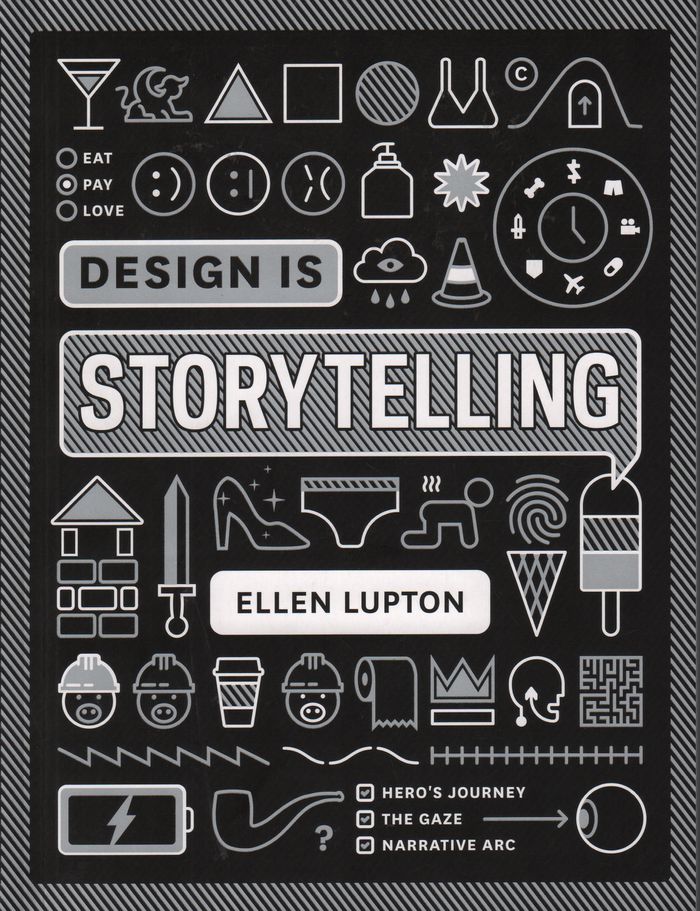
Design is storytelling
Design is storytelling
Actions:
Prix:
$25.50
(disponible sur commande)
Résumé:
Design Is Storytelling explores the psychology of visual perception from a narrative point of view. Presenting dozens of tools and concepts in a lively, visual manner, this book will help any designer amplify the narrative power of their work. Use this book to stir emotions, build empathy, articulate values and convey action; to construct narrative arcs and create paths(...)
$25.50
(disponible sur commande)
Résumé:
Design Is Storytelling explores the psychology of visual perception from a narrative point of view. Presenting dozens of tools and concepts in a lively, visual manner, this book will help any designer amplify the narrative power of their work. Use this book to stir emotions, build empathy, articulate values and convey action; to construct narrative arcs and create paths(...)
Titre:
Design is storytelling
Actions:
Prix:
$25.50
(disponible sur commande)
Résumé:
Design Is Storytelling explores the psychology of visual perception from a narrative point of view. Presenting dozens of tools and concepts in a lively, visual manner, this book will help any designer amplify the narrative power of their work. Use this book to stir emotions, build empathy, articulate values and convey action; to construct narrative arcs and create paths through space; integrate form and language; evaluate a project’s storytelling power; and to write and deliver strong narratives.
Design is storytelling
Actions:
Prix:
$25.50
(disponible sur commande)
Résumé:
Design Is Storytelling explores the psychology of visual perception from a narrative point of view. Presenting dozens of tools and concepts in a lively, visual manner, this book will help any designer amplify the narrative power of their work. Use this book to stir emotions, build empathy, articulate values and convey action; to construct narrative arcs and create paths through space; integrate form and language; evaluate a project’s storytelling power; and to write and deliver strong narratives.
Classification:
livres
livres
Publication:
novembre 2017
novembre 2017
Sujet:
Théorie du design
Théorie du design


