


496 Résultats
Classification:
livres
livres
Titre:
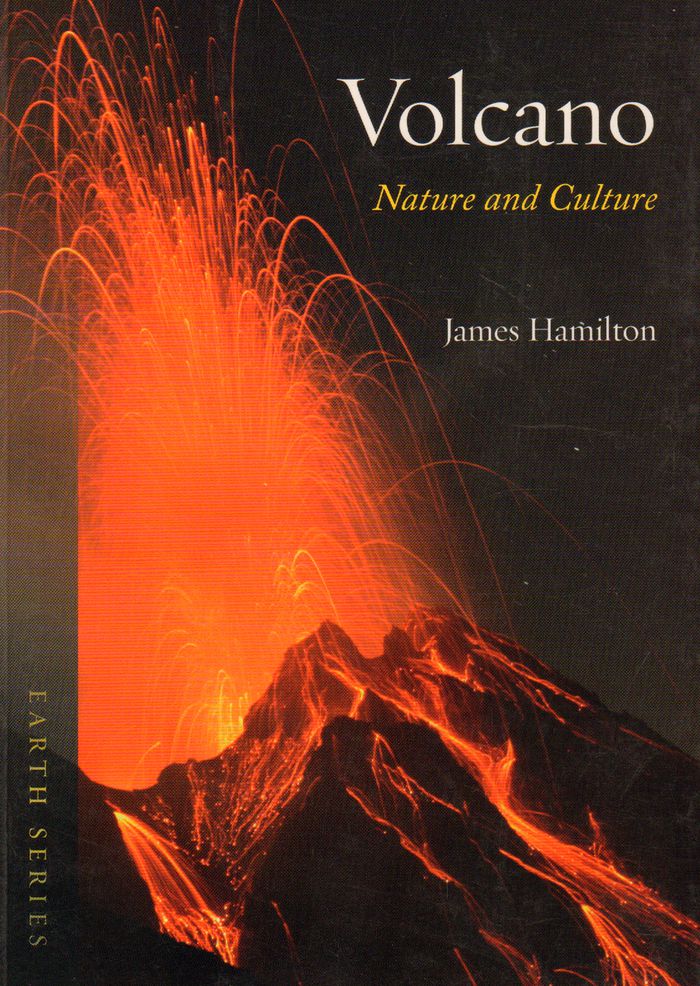
Volcano: nature and culture
Volcano: nature and culture
Actions:
Prix:
$35.50
(disponible sur commande)
Résumé:
For years, tourists have trekked across cracked rock at Hawaii’s Kilauea volcano to witness the inspiring sight of creeping lava and its devastating effects on the landscape. In 2010, Eyjafjallajökull erupted in Iceland, stranding travelers as a cloud of ash covered western and northern Europe, causing the largest disruption of air travel since World War II. And just a(...)
Titre:
Volcano: nature and culture
Actions:
Prix:
$35.50
(disponible sur commande)
Résumé:
For years, tourists have trekked across cracked rock at Hawaii’s Kilauea volcano to witness the inspiring sight of creeping lava and its devastating effects on the landscape. In 2010, Eyjafjallajökull erupted in Iceland, stranding travelers as a cloud of ash covered western and northern Europe, causing the largest disruption of air travel since World War II. And just a few months later, Mount Merapi blew in Indonesia, killing over 350 people and displacing over 350,000 others, awakening people once more to the dangerous potential of these sleeping giants. Though today largely dormant, volcanoes continue to erupt across the world, reminding us of their sheer physical power. In Volcano, James Hamilton explores the cultural history generated by the violence and terrifying beauty of volcanoes. He describes the reverberations of early eruptions of Vesuvius and Etna in Greek and Roman myth. He also examines the depiction of volcanoes in art—from the earliest known wall painting of an erupting volcano in 6200 BCE to the distinctive colors of Andy Warhol and Michael Sandle’s exploding mountains. Surveying a number of twenty-first-century works, Hamilton shows that volcanoes continue to influence the artistic imagination.
Classification:
livres
livres
Publication:
juin 2012
juin 2012
Sujet:
Théorie du paysage
Théorie du paysage
Classification:
livres
livres

Actions:
Prix:
$37.95
(disponible sur commande)
Résumé:
While the influence of Alexander von Humboldt (1769–1859) looms large over the natural sciences, his legacy reaches far beyond the field notebooks of naturalists. Humboldt’s 1799–1804 research expedition to Central and South America with botanist Aimé Bonpland not only set the course for the great scientific surveys of the nineteenth century, but also served as the raw(...)
Titre:
Views of nature: Alexander von Humboldt
Actions:
Prix:
$37.95
(disponible sur commande)
Résumé:
While the influence of Alexander von Humboldt (1769–1859) looms large over the natural sciences, his legacy reaches far beyond the field notebooks of naturalists. Humboldt’s 1799–1804 research expedition to Central and South America with botanist Aimé Bonpland not only set the course for the great scientific surveys of the nineteenth century, but also served as the raw material for his many volumes—works of both scientific rigor and aesthetic beauty that inspired such essayists and artists as Emerson, Goethe, Thoreau, Poe, and Frederic Edwin Church.
Classification:
livres
livres
Publication:
octobre 2016
octobre 2016
Sujet:
Théorie du paysage
Théorie du paysage
Classification:
livres
livres
Titre:
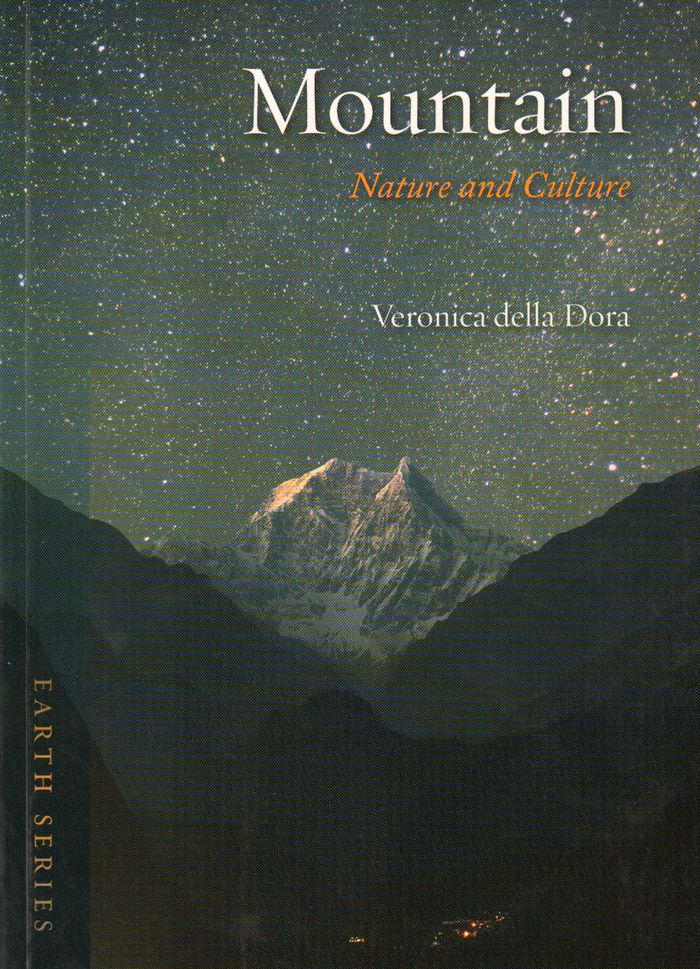
Mountain: nature and culture
Mountain: nature and culture
Actions:
Prix:
$35.50
(disponible sur commande)
Résumé:
Majestic and inspiring, there is nothing like the sight of a mountain on the horizon. Throughout all of human history mountains have been linked to the eternal, attracting us to their dizzying heights, stunning us with their natural beauty, and often threatening us with their dangers. Through a compelling journey to both real and imaginary peaks, this book explores how(...)
Titre:
Mountain: nature and culture
Actions:
Prix:
$35.50
(disponible sur commande)
Résumé:
Majestic and inspiring, there is nothing like the sight of a mountain on the horizon. Throughout all of human history mountains have been linked to the eternal, attracting us to their dizzying heights, stunning us with their natural beauty, and often threatening us with their dangers. Through a compelling journey to both real and imaginary peaks, this book explores how the mountain has figured in our history, culture, and maginations. Veronica della Dora explores the ways mountains have functioned spiritually as a boundary between life and death, a bridge between the earth and the heavens. Interlacing science, culture, and religion, she sketches the mountain as a geological phenomenon that has profoundly influenced and been influenced by the human imagination, shaping our environmental consciousness and helping us understand our—quite small indeed—place in the world. She also explores their significance as objects of human feats, as prizes of adventure and sport, and as places of serene beauty for vacationers. Magnificently illustrated and showcasing famous peaks from all around the world, Mountain offers a fascinating dual portrait of these giants in nature and culture.
Classification:
livres
livres
Publication:
septembre 2016
septembre 2016
Sujet:
Théorie du paysage
Théorie du paysage
Classification:
livres
livres

Prix:
$37.95
(disponible sur commande)
Résumé:
Forests—and the trees within them—have always been a central resource for the development of technology, culture, and the expansion of humans as a species. Examining and challenging our historical and modern attitudes toward wooded environments, this engaging book explores how our understanding of forests has transformed in recent years and how it fits in our continuing(...)
Titre:
Trees, woods and forests: a social and cultural history
Actions:
Prix:
$37.95
(disponible sur commande)
Résumé:
Forests—and the trees within them—have always been a central resource for the development of technology, culture, and the expansion of humans as a species. Examining and challenging our historical and modern attitudes toward wooded environments, this engaging book explores how our understanding of forests has transformed in recent years and how it fits in our continuing anxiety about our impact on the natural world.
Classification:
livres
livres
Publication:
septembre 2016
septembre 2016
Sujet:
Théorie du paysage
Théorie du paysage
Classification:
livres
livres
Titre:
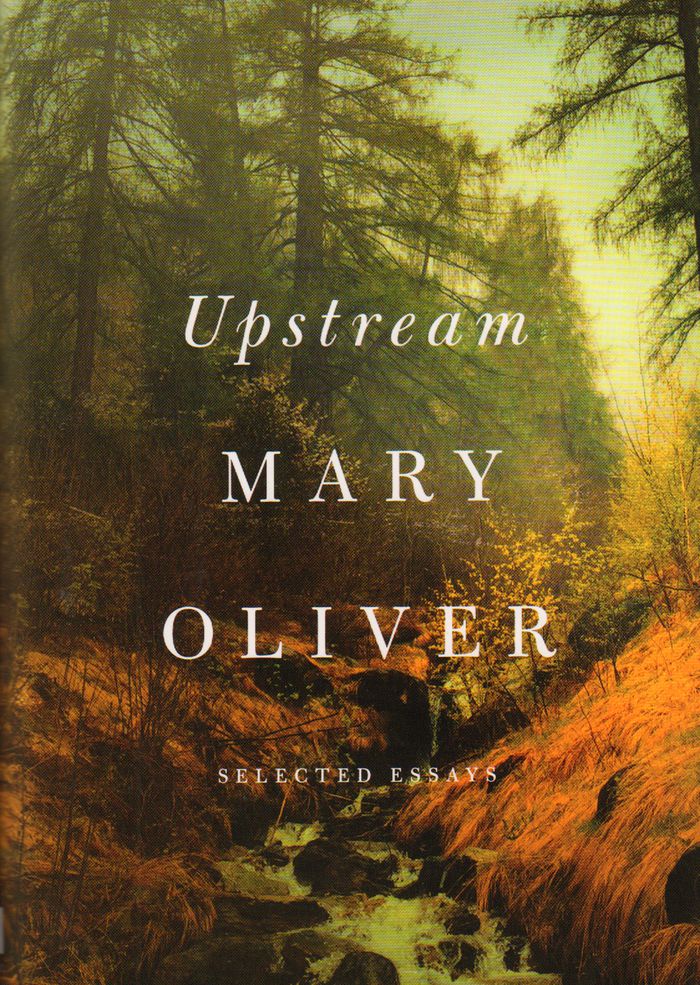
Upstream
Upstream
Actions:
Prix:
$35.00
(disponible sur commande)
Résumé:
A collection of essays in which revered poet Mary Oliver reflects on her willingness, as a young child and as an adult, to lose herself within the beauty and mysteries of both the natural world and the world of literature. Emphasizing the significance of her childhood “friend” Walt Whitman, through whose work she first understood that a poem is a temple, “a place to(...)
Titre:
Upstream
Actions:
Prix:
$35.00
(disponible sur commande)
Résumé:
A collection of essays in which revered poet Mary Oliver reflects on her willingness, as a young child and as an adult, to lose herself within the beauty and mysteries of both the natural world and the world of literature. Emphasizing the significance of her childhood “friend” Walt Whitman, through whose work she first understood that a poem is a temple, “a place to enter, and in which to feel,” and who encouraged her to vanish into the world of her writing, Oliver meditates on the forces that allowed her to create a life for herself out of work and love. As she writes, “I could not be a poet without the natural world. Someone else could. But not me. For me the door to the woods is the door to the temple.” "Upstream" follows Oliver as she contemplates the pleasure of artistic labor, her boundless curiosity for the flora and fauna that surround her, and the responsibility she has inherited from Shelley, Wordsworth, Emerson, Poe, and Frost, the great thinkers and writers of the past, to live thoughtfully, intelligently, and to observe with passion. Throughout this collection, Oliver positions not just herself upstream but us as well as she encourages us all to keep moving, to lose ourselves in the awe of the unknown, and to give power and time to the creative and whimsical urges that live within us.
Classification:
livres
livres
Publication:
octobre 2016
octobre 2016
Sujet:
Théorie du paysage
Théorie du paysage
Classification:
livres
livres
Titre:
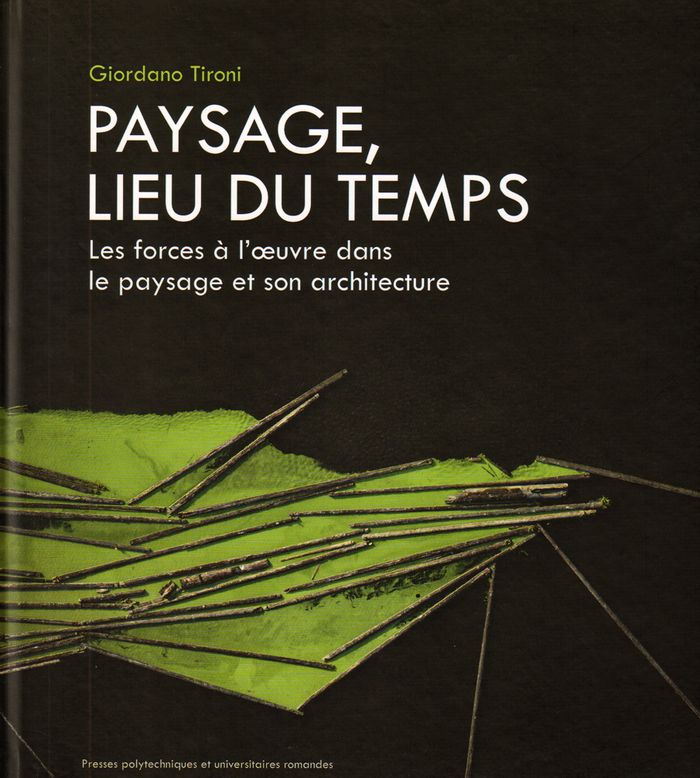
Paysage, lieu et temps
Paysage, lieu et temps
Actions:
Prix:
$93.00
(disponible sur commande)
Résumé:
«Lorsque nous détruisons un paysage nous sommes un peu plus perdus, car notre rapport au temps, et donc avec nous-mêmes, s’en trouve appauvri et comme effiloché» affirme le poète-écrivain Giorgio Todde. Face à une société effrénée où tout le monde veut gagner du temps, alors que le réel défi consisterait à gagner un autre rapport au temps, cet ouvrage tente de calmer le(...)
Titre:
Paysage, lieu et temps
Actions:
Prix:
$93.00
(disponible sur commande)
Résumé:
«Lorsque nous détruisons un paysage nous sommes un peu plus perdus, car notre rapport au temps, et donc avec nous-mêmes, s’en trouve appauvri et comme effiloché» affirme le poète-écrivain Giorgio Todde. Face à une société effrénée où tout le monde veut gagner du temps, alors que le réel défi consisterait à gagner un autre rapport au temps, cet ouvrage tente de calmer le jeu en repositionnant les fondements d’une pensée de l’espace développée à partir du paysage et de son architecture. Dans ce contexte, l’auteur tisse des échanges privilégiés avec les travaux de l’Agence Latz+Partner. Temps et histoire, corps et tactilité, lieu et parcours, matériaux et restes, sol et profondeur, accueil et ouverture, seuils et limites ainsi qu’avenir du paysage postindustriel sont autant de thématiques alimentant une réflexion autour de cette pensée de l’espace et du projet. Cette approche spécifique prend ses distances du chant des sirènes et des éblouissements passagers qui nous guettent à tout moment. S’opposant à l’effilochement regretté par Todde, les points d’ancrage proposés dans cet ouvrage permettent d’appréhender les forces qui agissent sur l’espace des hommes et concourent à sa transformation. L’auteur montre par cet essai qu’il appartient au groupe restreint de ceux qui écrivent à la fois sur le paysage et sur l’architecture, et dont les réflexions contribuent au nécessaire rapprochement des deux versants d’une même pensée.
Classification:
livres
livres
Publication:
mai 2016
mai 2016
Sujet:
Théorie du paysage
Théorie du paysage
Classification:
livres
livres
Actions:
Prix:
$19.95
(disponible sur commande)
Résumé:
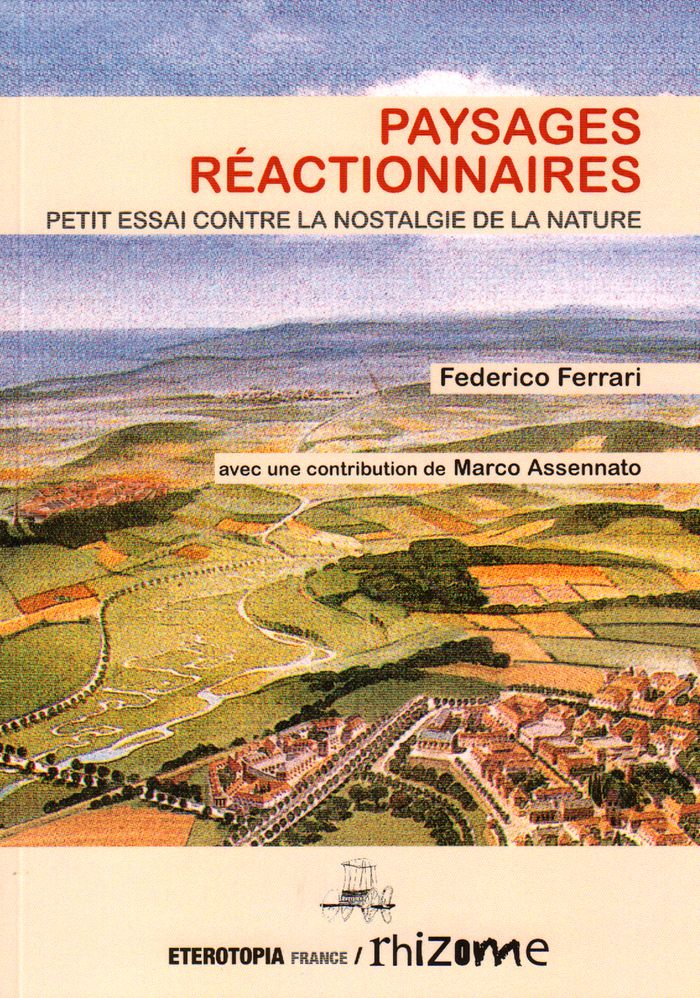
Dans le champ du projet, la nature est aujourd’hui sans cesse évoquée. Invoquant l’impératif environnemental et écologique, les architectes promettent de rendre la ville de demain plus accueillante et agréable, grâce à une architecture de plus en plus « végétale ». Des images séduisantes et « verdoyantes », associées à un vocabulaire étranger au champ lexical du projet,(...)
Titre:
Paysages réactionnaires : nostalgie de la nature et projet néolibéral
Actions:
Prix:
$19.95
(disponible sur commande)
Résumé:
Dans le champ du projet, la nature est aujourd’hui sans cesse évoquée. Invoquant l’impératif environnemental et écologique, les architectes promettent de rendre la ville de demain plus accueillante et agréable, grâce à une architecture de plus en plus « végétale ». Des images séduisantes et « verdoyantes », associées à un vocabulaire étranger au champ lexical du projet, cachent l’architecture en tant qu’objet minéral. L’hégémonie et l’abus de la notion de paysage révèlent en réalité des problématiques culturelles profondes. Le retour à l’identité, aux racines, au lieu : un triptyque hégémonique chez les architectes et le grand public, qu’il convient de remettre en question. Politiquement très ambigus dans leurs implications, ces nouveaux mots d’ordres instrumentalisent une version banalisée de la beauté. C’est en ce sens que nous parlons ici de paysages réactionnaires. L’acception esthétisante et nostalgique du paysage transforme l’impératif écologiste en une idéologie dénuée de toute l’urgence politique que la question mériterait. Cet ouvrage, en dressant une histoire synthétique du « dispositif visuel » structurant une certaine idée de Modernité, entend montrer comment cette dérive contemplative du paysage est révélatrice d’une crise de la notion de projet, entendu dans son sens le plus profondément politique. Nous entendons au contraire affirmer une conception du paysage complexe et évolutive, synthétisant plusieurs questions (d’échelle, de temps, d’objectivité/subjectivité), contre toute rhétorique nostalgique de la « belle intégralité perdue ».
Classification:
livres
livres
Publication:
septembre 2016
septembre 2016
Sujet:
Théorie du paysage
Théorie du paysage
Classification:
livres
livres
Actions:
Prix:
$32.50
(disponible sur commande)
Résumé:
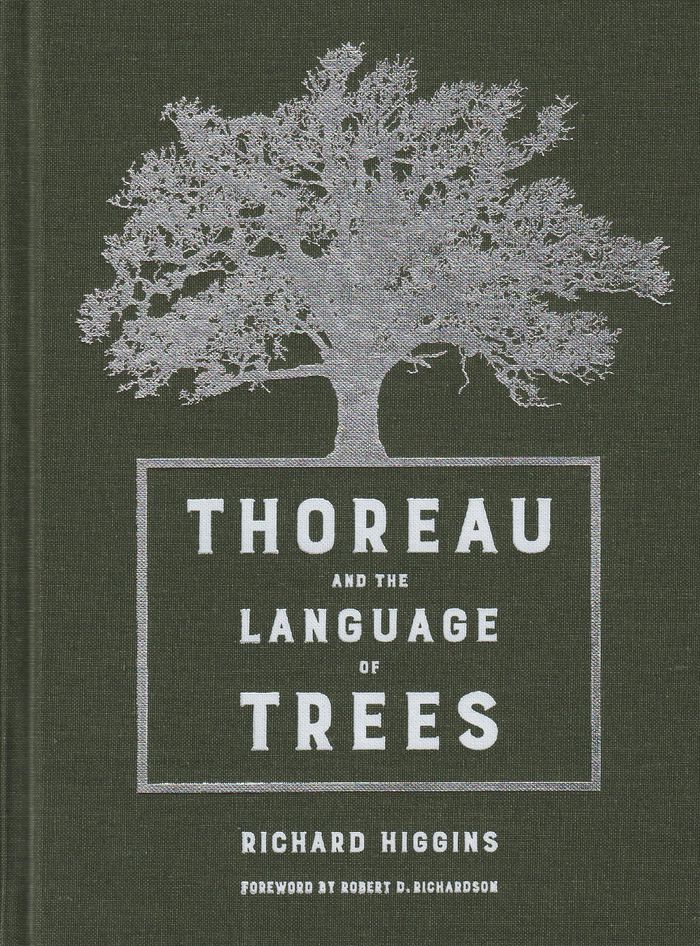
In this original book, Richard Higgins explores Thoreau’s deep connections to trees: his keen perception of them, the joy they gave him, the poetry he saw in them, his philosophical view of them, and how they fed his soul. His lively essays show that trees were a thread connecting all parts of Thoreau’s being—heart, mind, and spirit. Included are one hundred excerpts from(...)
Titre:
Thoreau and the language of trees
Actions:
Prix:
$32.50
(disponible sur commande)
Résumé:
In this original book, Richard Higgins explores Thoreau’s deep connections to trees: his keen perception of them, the joy they gave him, the poetry he saw in them, his philosophical view of them, and how they fed his soul. His lively essays show that trees were a thread connecting all parts of Thoreau’s being—heart, mind, and spirit. Included are one hundred excerpts from Thoreau’s writings about trees, paired with over sixty of the author’s photographs.
Classification:
livres
livres
Publication:
avril 2017
avril 2017
Sujet:
Théorie du paysage
Théorie du paysage
Classification:
livres
livres
Titre:
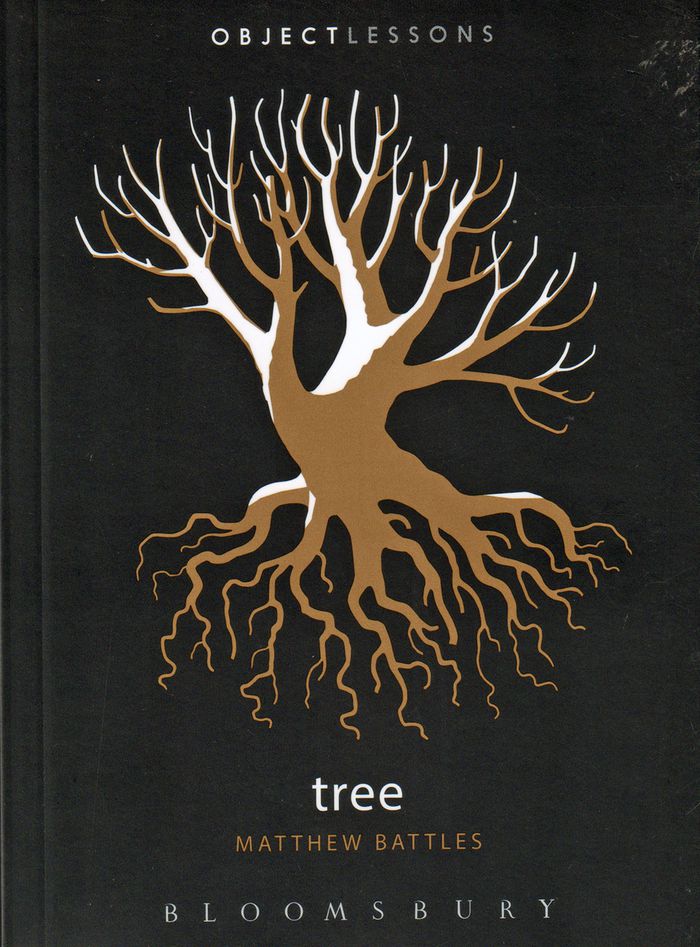
Tree (object lessons)
Tree (object lessons)
Actions:
Prix:
$21.95
(disponible en magasin)
Résumé:
Tree explores the forms, uses, and alliances of this living object's entanglement with humanity, from antiquity to the present. Trees tower over us and yet fade into background. Their lifespan outstrips ours, and yet their wisdom remains inscrutable, treasured up in the heartwood. They serve us in many ways-as keel, lodgepole, and execution site-and yet to become human,(...)
Titre:
Tree (object lessons)
Actions:
Prix:
$21.95
(disponible en magasin)
Résumé:
Tree explores the forms, uses, and alliances of this living object's entanglement with humanity, from antiquity to the present. Trees tower over us and yet fade into background. Their lifespan outstrips ours, and yet their wisdom remains inscrutable, treasured up in the heartwood. They serve us in many ways-as keel, lodgepole, and execution site-and yet to become human, we had to come down from their limbs. In this book Matthew Battles follows the tree's branches across art, poetry, and landscape, marking the edges of imagination with wildness and shadow.
Classification:
livres
livres
Publication:
mars 2017
mars 2017
Sujet:
Théorie du paysage
Théorie du paysage
Classification:
livres
livres

Actions:
Prix:
$40.00
(disponible sur commande)
Résumé:
Au pied des tours et à côté de l'université de Nanterre, plus de 2500 mêtres carrés d'une occupation artistique: la Ferme du Bonheur que Roger des Prés habite depuis plus de quatorze ans.
$40.00
(disponible sur commande)
Résumé:
Au pied des tours et à côté de l'université de Nanterre, plus de 2500 mêtres carrés d'une occupation artistique: la Ferme du Bonheur que Roger des Prés habite depuis plus de quatorze ans.
Titre:
La ferme du bonheur: reconquête d'un délaissé
Actions:
Prix:
$40.00
(disponible sur commande)
Résumé:
Au pied des tours et à côté de l'université de Nanterre, plus de 2500 mêtres carrés d'une occupation artistique: la Ferme du Bonheur que Roger des Prés habite depuis plus de quatorze ans.
La ferme du bonheur: reconquête d'un délaissé
Actions:
Prix:
$40.00
(disponible sur commande)
Résumé:
Au pied des tours et à côté de l'université de Nanterre, plus de 2500 mêtres carrés d'une occupation artistique: la Ferme du Bonheur que Roger des Prés habite depuis plus de quatorze ans.
Classification:
livres
livres
Publication:
octobre 2007, Arles
octobre 2007, Arles
Sujet:
Théorie du paysage
Théorie du paysage


