


84 Résultats
Classification:
livres
livres
Actions:
Prix:
$42.95
(disponible en magasin)
Résumé:
Franck Michel, anthropologue, spécialiste du voyage et de l'Asie, enseigne à l'Université de Corse et anime l'association Déroutes et Détours (www.deroutes.com).
$42.95
(disponible en magasin)
Résumé:
Franck Michel, anthropologue, spécialiste du voyage et de l'Asie, enseigne à l'Université de Corse et anime l'association Déroutes et Détours (www.deroutes.com).
Publication:
mars 2009, Les Presses de l'Université de Laval
mars 2009, Les Presses de l'Université de Laval
Titre:
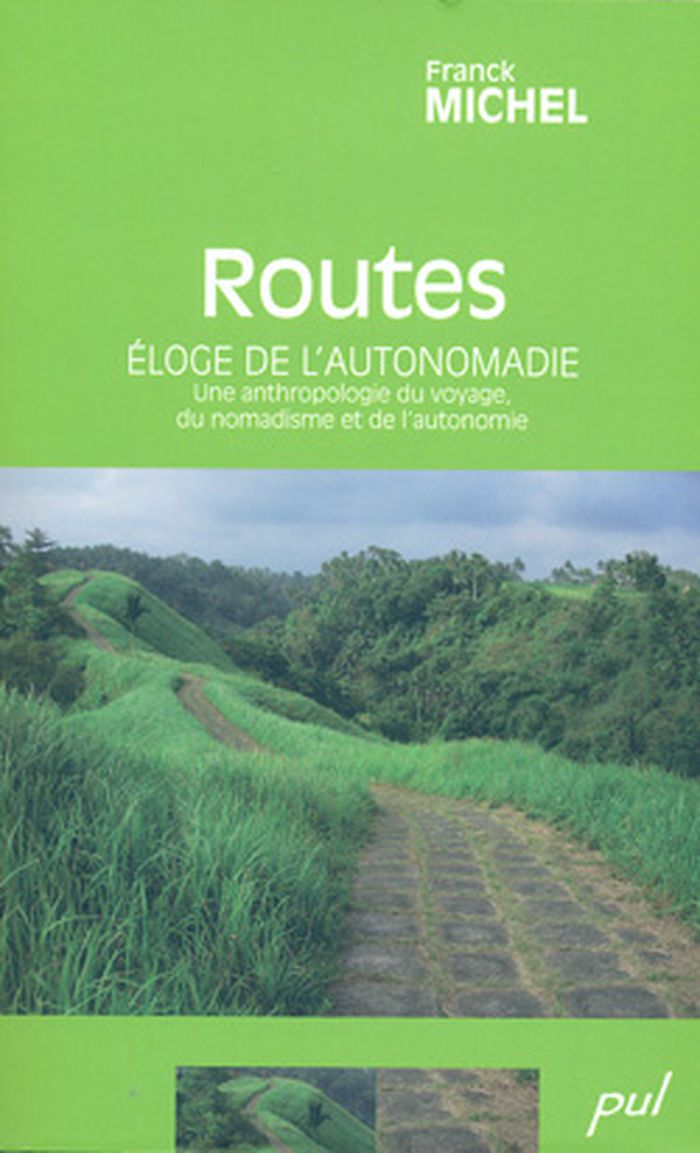
Routes: éloge de l'autonomadie. Une anthropologie du voyage, du nomadisme et de l'autonomie
Actions:
Prix:
$42.95
(disponible en magasin)
Résumé:
Franck Michel, anthropologue, spécialiste du voyage et de l'Asie, enseigne à l'Université de Corse et anime l'association Déroutes et Détours (www.deroutes.com).
Routes: éloge de l'autonomadie. Une anthropologie du voyage, du nomadisme et de l'autonomie
Actions:
Prix:
$42.95
(disponible en magasin)
Résumé:
Franck Michel, anthropologue, spécialiste du voyage et de l'Asie, enseigne à l'Université de Corse et anime l'association Déroutes et Détours (www.deroutes.com).
Classification:
livres
livres
Publication:
mars 2009, Les Presses de l'Université de Laval
mars 2009, Les Presses de l'Université de Laval
Classification:
livres
livres
Actions:
Prix:
$56.95
(disponible sur commande)
Résumé:
''MigraTouriSpace'' is an artistic examination of travelling as an approach to the phenomena of migration and tourism, and of the many ways in which they overlap. Understanding that when people travel they also take with them spaces and images means that tourism no longer inevitably refers to the vacation as an exceptional state. Brought back home, the tourist’s gaze has(...)
$56.95
(disponible sur commande)
Résumé:
''MigraTouriSpace'' is an artistic examination of travelling as an approach to the phenomena of migration and tourism, and of the many ways in which they overlap. Understanding that when people travel they also take with them spaces and images means that tourism no longer inevitably refers to the vacation as an exceptional state. Brought back home, the tourist’s gaze has(...)
Titre:
Migratourispace: migrating spaces and tourism
Actions:
Prix:
$56.95
(disponible sur commande)
Résumé:
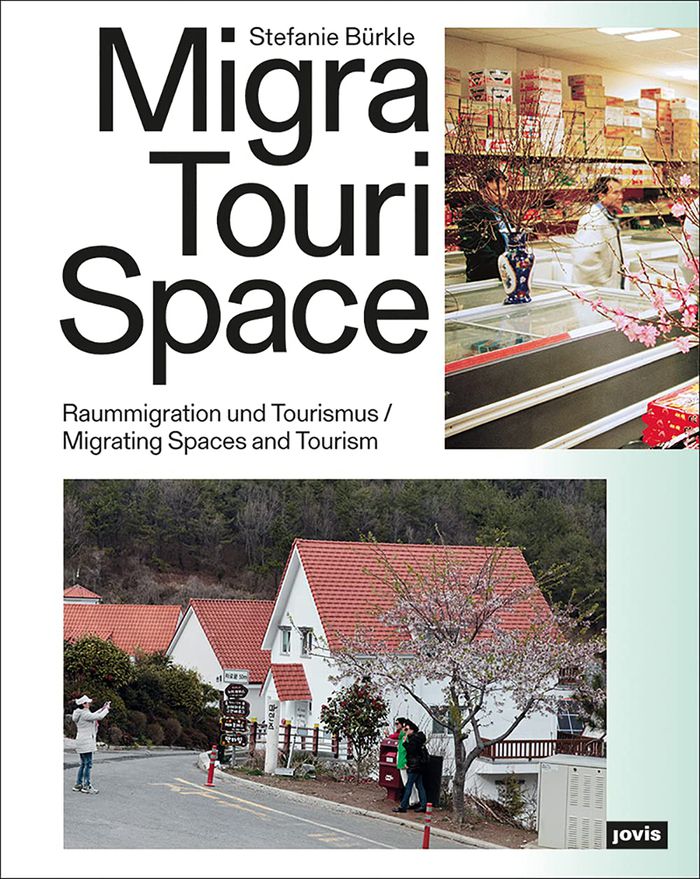
''MigraTouriSpace'' is an artistic examination of travelling as an approach to the phenomena of migration and tourism, and of the many ways in which they overlap. Understanding that when people travel they also take with them spaces and images means that tourism no longer inevitably refers to the vacation as an exceptional state. Brought back home, the tourist’s gaze has long operated to shape everyday life. For three years, artist Stefanie Bürkle and her interdisciplinary team travelled between Berlin and South Korea, photographing and filming. The result of this research is an atlas of images, with places such as the Vietnamese wholesale market Dong Xuan Center in Berlin Lichtenberg and the German Village, Dogil Maeul, in South Korea, that demonstrates the tension between a migration of culturally coded spatial contexts and post-touristic practices. With a preface by Martina Löw.
Migratourispace: migrating spaces and tourism
Actions:
Prix:
$56.95
(disponible sur commande)
Résumé:
''MigraTouriSpace'' is an artistic examination of travelling as an approach to the phenomena of migration and tourism, and of the many ways in which they overlap. Understanding that when people travel they also take with them spaces and images means that tourism no longer inevitably refers to the vacation as an exceptional state. Brought back home, the tourist’s gaze has long operated to shape everyday life. For three years, artist Stefanie Bürkle and her interdisciplinary team travelled between Berlin and South Korea, photographing and filming. The result of this research is an atlas of images, with places such as the Vietnamese wholesale market Dong Xuan Center in Berlin Lichtenberg and the German Village, Dogil Maeul, in South Korea, that demonstrates the tension between a migration of culturally coded spatial contexts and post-touristic practices. With a preface by Martina Löw.
Classification:
livres
livres
Publication:
juillet 2021
juillet 2021
Sujet:
Trajets
Trajets
Classification:
livres
livres
Titre:
Roma 1968
Roma 1968
Actions:
Prix:
$36.95
(disponible sur commande)
Résumé:
There are many apparently contradictory black-and-white images of Rome that Ludovico Quaroni took around the eternal city. The baroque is to be found side by side with shacks, while the explosion of consumer society – during Italy's economic boom – does little to erase the traces of a city that seems to have come straight out of a Vittorio De Sica or Roberto Rossellini(...)
$36.95
(disponible sur commande)
Résumé:
There are many apparently contradictory black-and-white images of Rome that Ludovico Quaroni took around the eternal city. The baroque is to be found side by side with shacks, while the explosion of consumer society – during Italy's economic boom – does little to erase the traces of a city that seems to have come straight out of a Vittorio De Sica or Roberto Rossellini(...)
Titre:
Roma 1968
Actions:
Prix:
$36.95
(disponible sur commande)
Résumé:
There are many apparently contradictory black-and-white images of Rome that Ludovico Quaroni took around the eternal city. The baroque is to be found side by side with shacks, while the explosion of consumer society – during Italy's economic boom – does little to erase the traces of a city that seems to have come straight out of a Vittorio De Sica or Roberto Rossellini film. And then there are the fountains of Rome and the banks of the Tiber, Franco Albini's Rinascente and Castel Sant'Angelo, the EUR and the Vatican, right up to the market in Piazza Vittorio and the ancient Appian Way. Layers of civilisations intertwining, and in between them, the people of Rome, seemingly indifferent to the passing of the centuries. The architect's eye brings to life an unpublished and surprising book that may also be considered – and this is the common thread—an act of love towards the city where he was born. A text by the writer Francesco Pecoraro, himself a student of Quaroni, pays homage to the great architect's Rome.
Roma 1968
Actions:
Prix:
$36.95
(disponible sur commande)
Résumé:
There are many apparently contradictory black-and-white images of Rome that Ludovico Quaroni took around the eternal city. The baroque is to be found side by side with shacks, while the explosion of consumer society – during Italy's economic boom – does little to erase the traces of a city that seems to have come straight out of a Vittorio De Sica or Roberto Rossellini film. And then there are the fountains of Rome and the banks of the Tiber, Franco Albini's Rinascente and Castel Sant'Angelo, the EUR and the Vatican, right up to the market in Piazza Vittorio and the ancient Appian Way. Layers of civilisations intertwining, and in between them, the people of Rome, seemingly indifferent to the passing of the centuries. The architect's eye brings to life an unpublished and surprising book that may also be considered – and this is the common thread—an act of love towards the city where he was born. A text by the writer Francesco Pecoraro, himself a student of Quaroni, pays homage to the great architect's Rome.
Classification:
livres
livres
Publication:
octobre 2021
octobre 2021
Sujet:
Trajets
Trajets
Classification:
livres
livres

Titre:
Two cities
Two cities
Actions:
Prix:
$20.00
(disponible sur commande)
Résumé:
Here we encounter a writer deeply engaged with narrative in situ—a traveler moving through beloved streets, sometimes accompanied, sometimes solo. With her, we see, anew, the Venice Biennale, the Lagoon, and San Michele, the island of the dead; the Piazza di Spagna, the Tiber, the view from the Gianicolo; the pigeons at San Marco and the parrots in the Doria Pamphili. As(...)
$20.00
(disponible sur commande)
Résumé:
Here we encounter a writer deeply engaged with narrative in situ—a traveler moving through beloved streets, sometimes accompanied, sometimes solo. With her, we see, anew, the Venice Biennale, the Lagoon, and San Michele, the island of the dead; the Piazza di Spagna, the Tiber, the view from the Gianicolo; the pigeons at San Marco and the parrots in the Doria Pamphili. As(...)
Titre:
Two cities
Actions:
Prix:
$20.00
(disponible sur commande)
Résumé:
Here we encounter a writer deeply engaged with narrative in situ—a traveler moving through beloved streets, sometimes accompanied, sometimes solo. With her, we see, anew, the Venice Biennale, the Lagoon, and San Michele, the island of the dead; the Piazza di Spagna, the Tiber, the view from the Gianicolo; the pigeons at San Marco and the parrots in the Doria Pamphili. As a poet first and foremost, Zarin’s attention to the smallest details, the loveliest gesture, brings Venice and Rome vividly to life for the reader. The sixteenth book in the expanding, renowned ekphrasis series, ''Two cities'' creates space for these two historic cities to become characters themselves, their relationship to the writer as real as any love affair.
Two cities
Actions:
Prix:
$20.00
(disponible sur commande)
Résumé:
Here we encounter a writer deeply engaged with narrative in situ—a traveler moving through beloved streets, sometimes accompanied, sometimes solo. With her, we see, anew, the Venice Biennale, the Lagoon, and San Michele, the island of the dead; the Piazza di Spagna, the Tiber, the view from the Gianicolo; the pigeons at San Marco and the parrots in the Doria Pamphili. As a poet first and foremost, Zarin’s attention to the smallest details, the loveliest gesture, brings Venice and Rome vividly to life for the reader. The sixteenth book in the expanding, renowned ekphrasis series, ''Two cities'' creates space for these two historic cities to become characters themselves, their relationship to the writer as real as any love affair.
Classification:
livres
livres
Publication:
août 2020
août 2020
Sujet:
Trajets
Trajets
Classification:
livres
livres
Prix:
$26.95
(disponible sur commande)
Résumé:
Depuis les années 60, différents courants se sont succédés pour explorer la ville, ses envers, ses limites, invitant à tout un imaginaire insolite, alternatif, brut. Dans ce livre, l'auteur cherche à analyser ces différents courants, à les comparer pour mieux situer sa propre pratique avec le groupe du Grand Lustucru établit dans l'agglomération de Clermont-Ferrand. (...)
$26.95
(disponible sur commande)
Résumé:
Depuis les années 60, différents courants se sont succédés pour explorer la ville, ses envers, ses limites, invitant à tout un imaginaire insolite, alternatif, brut. Dans ce livre, l'auteur cherche à analyser ces différents courants, à les comparer pour mieux situer sa propre pratique avec le groupe du Grand Lustucru établit dans l'agglomération de Clermont-Ferrand. (...)
Titre:
Explorations urbaines : analyse et récits du Grang Lustucru
Actions:
Prix:
$26.95
(disponible sur commande)
Résumé:
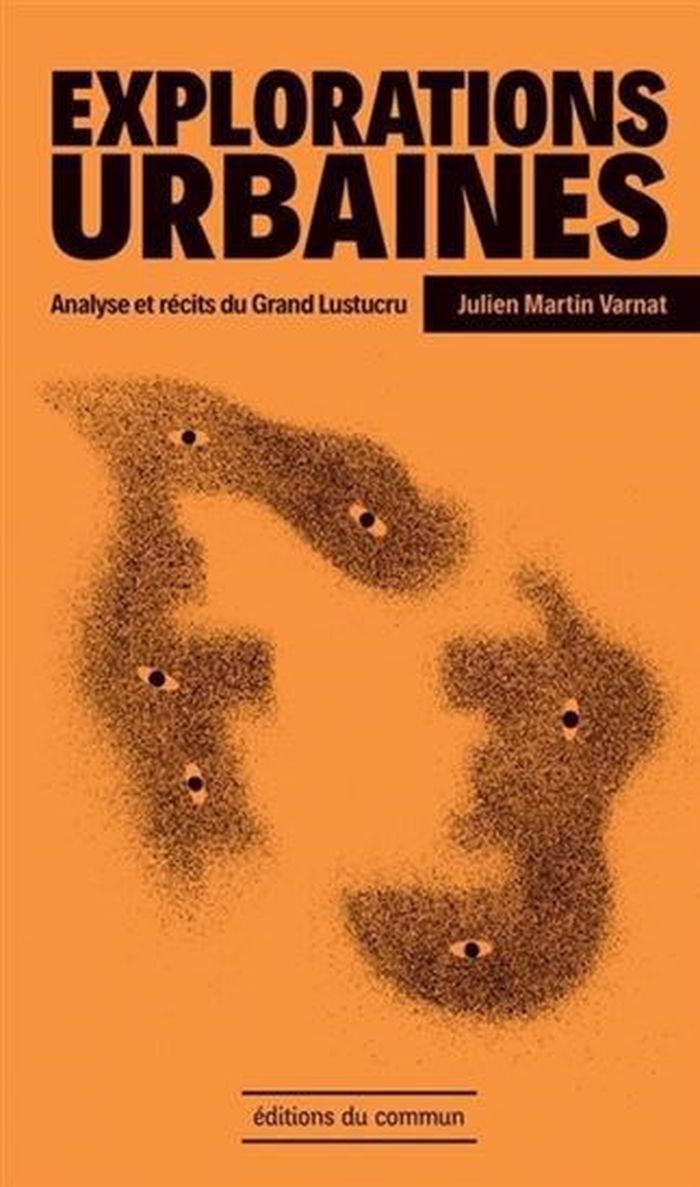
Depuis les années 60, différents courants se sont succédés pour explorer la ville, ses envers, ses limites, invitant à tout un imaginaire insolite, alternatif, brut. Dans ce livre, l'auteur cherche à analyser ces différents courants, à les comparer pour mieux situer sa propre pratique avec le groupe du Grand Lustucru établit dans l'agglomération de Clermont-Ferrand. Le livre est divisé en deux grandes parties, la première est un essai, une analyse comparative qui emmène le lecteur de Londres à Rome, de Paris à Marseille en passant par New York puis Clermont-Ferrand. La deuxième partie du livre réunit des récits des explorations du Grand Lustucru. À la manière de l'exploration urbaine, le lecteur peut ici trouver différents passages et chemins de traverse pour se balader dans le livre et se laisser porter par l'expérience et la pratique de l'auteur.
Explorations urbaines : analyse et récits du Grang Lustucru
Actions:
Prix:
$26.95
(disponible sur commande)
Résumé:
Depuis les années 60, différents courants se sont succédés pour explorer la ville, ses envers, ses limites, invitant à tout un imaginaire insolite, alternatif, brut. Dans ce livre, l'auteur cherche à analyser ces différents courants, à les comparer pour mieux situer sa propre pratique avec le groupe du Grand Lustucru établit dans l'agglomération de Clermont-Ferrand. Le livre est divisé en deux grandes parties, la première est un essai, une analyse comparative qui emmène le lecteur de Londres à Rome, de Paris à Marseille en passant par New York puis Clermont-Ferrand. La deuxième partie du livre réunit des récits des explorations du Grand Lustucru. À la manière de l'exploration urbaine, le lecteur peut ici trouver différents passages et chemins de traverse pour se balader dans le livre et se laisser porter par l'expérience et la pratique de l'auteur.
Classification:
livres
livres
Publication:
janvier 2022
janvier 2022
Sujet:
Trajets
Trajets
Classification:
livres
livres
Titre:
Philosophy for passengers
Philosophy for passengers
Actions:
Prix:
$21.95
(disponible sur commande)
Résumé:
While there are entire bookstore sections—and even entire bookstores—devoted to travel, there have been few books on the universal experience of being a passenger. With this book, philosopher Michael Marder fills the gap, offering a philosophical guide to passengerhood. He takes readers from ticketing and preboarding (preface and introduction) through a series of stops(...)
$21.95
(disponible sur commande)
Résumé:
While there are entire bookstore sections—and even entire bookstores—devoted to travel, there have been few books on the universal experience of being a passenger. With this book, philosopher Michael Marder fills the gap, offering a philosophical guide to passengerhood. He takes readers from ticketing and preboarding (preface and introduction) through a series of stops(...)
Titre:
Philosophy for passengers
Actions:
Prix:
$21.95
(disponible sur commande)
Résumé:
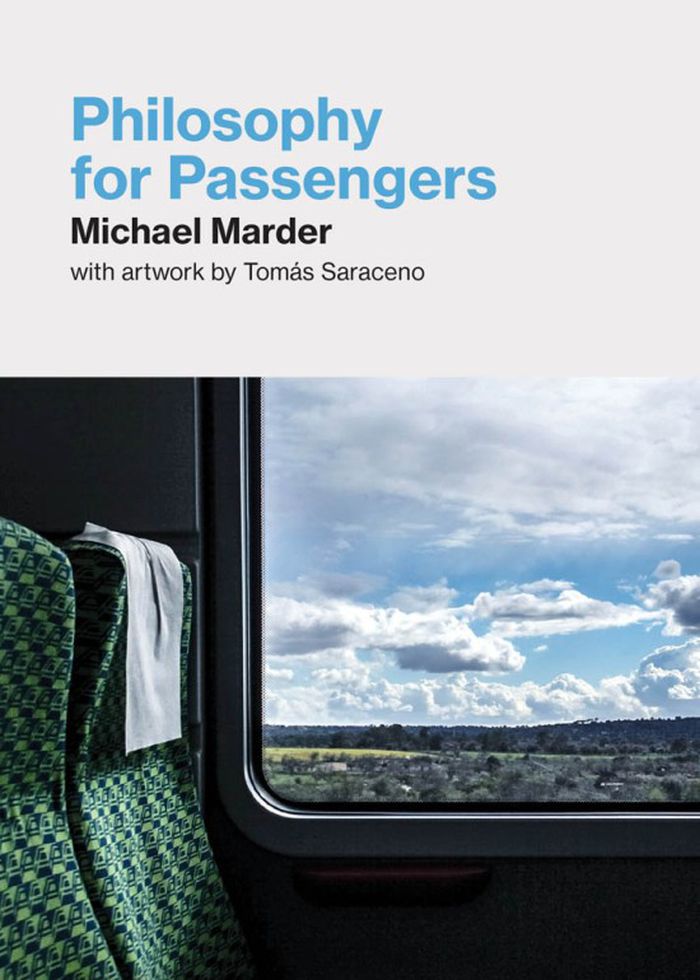
While there are entire bookstore sections—and even entire bookstores—devoted to travel, there have been few books on the universal experience of being a passenger. With this book, philosopher Michael Marder fills the gap, offering a philosophical guide to passengerhood. He takes readers from ticketing and preboarding (preface and introduction) through a series of stops and detours (reflections on topics including time, space, existence, boredom, our sense of self, and our sense of the senses), to destination and disembarking (conclusion).
Philosophy for passengers
Actions:
Prix:
$21.95
(disponible sur commande)
Résumé:
While there are entire bookstore sections—and even entire bookstores—devoted to travel, there have been few books on the universal experience of being a passenger. With this book, philosopher Michael Marder fills the gap, offering a philosophical guide to passengerhood. He takes readers from ticketing and preboarding (preface and introduction) through a series of stops and detours (reflections on topics including time, space, existence, boredom, our sense of self, and our sense of the senses), to destination and disembarking (conclusion).
Classification:
livres
livres
Publication:
mai 2022
mai 2022
Sujet:
Trajets
Trajets
Classification:
livres
livres
Actions:
Prix:
$22.95
(disponible sur commande)
Résumé:
What would be of contemporary culture if we did not recognize the impact of migration in cultural and socio-economic crossings? This book explores human migration in different times, contexts, and geographies surrounding the Aegean Sea. Through an assemblage of voices, lived experiences, historical documents, urban and rural dislocations, this publication examines(...)
$22.95
(disponible sur commande)
Résumé:
What would be of contemporary culture if we did not recognize the impact of migration in cultural and socio-economic crossings? This book explores human migration in different times, contexts, and geographies surrounding the Aegean Sea. Through an assemblage of voices, lived experiences, historical documents, urban and rural dislocations, this publication examines(...)
Titre:
(Forced) movement: Across the Aegean Archipelago
Actions:
Prix:
$22.95
(disponible sur commande)
Résumé:
What would be of contemporary culture if we did not recognize the impact of migration in cultural and socio-economic crossings? This book explores human migration in different times, contexts, and geographies surrounding the Aegean Sea. Through an assemblage of voices, lived experiences, historical documents, urban and rural dislocations, this publication examines responses to mobility of the ones on the move, and of the ones living in the destinations the former are heading to. It speaks of the sacrifices one is forced to make en route and at its antipode; the implications of voluntary migration to a place, steered by investment in real estate.
(Forced) movement: Across the Aegean Archipelago
Actions:
Prix:
$22.95
(disponible sur commande)
Résumé:
What would be of contemporary culture if we did not recognize the impact of migration in cultural and socio-economic crossings? This book explores human migration in different times, contexts, and geographies surrounding the Aegean Sea. Through an assemblage of voices, lived experiences, historical documents, urban and rural dislocations, this publication examines responses to mobility of the ones on the move, and of the ones living in the destinations the former are heading to. It speaks of the sacrifices one is forced to make en route and at its antipode; the implications of voluntary migration to a place, steered by investment in real estate.
Classification:
livres
livres
Publication:
décembre 2021
décembre 2021
Sujet:
Trajets
Trajets
Classification:
livres
livres

Titre:
Zickzack
Zickzack
Actions:
Prix:
$39.95
(disponible sur commande)
Résumé:
"Zickzack" is the German word for "zigzag": hopping around, moving back and forth, never following a straight line, avoiding the monotony of one thing following another. This book is William Firebrace's zigzagging exploration of six places on the edges of the German-speaking world. Deploying essays, narration, conversations, descriptions, and lists, Firebrace celebrates(...)
$39.95
(disponible sur commande)
Résumé:
"Zickzack" is the German word for "zigzag": hopping around, moving back and forth, never following a straight line, avoiding the monotony of one thing following another. This book is William Firebrace's zigzagging exploration of six places on the edges of the German-speaking world. Deploying essays, narration, conversations, descriptions, and lists, Firebrace celebrates(...)
Titre:
Zickzack
Actions:
Prix:
$39.95
(disponible sur commande)
Résumé:
"Zickzack" is the German word for "zigzag": hopping around, moving back and forth, never following a straight line, avoiding the monotony of one thing following another. This book is William Firebrace's zigzagging exploration of six places on the edges of the German-speaking world. Deploying essays, narration, conversations, descriptions, and lists, Firebrace celebrates locations on defined and undefined borders, where cultures, languages, and histories mix. In his nonlinear wandering, he touches on ethnicity, topography, history, film, literature, myth, languages, and gastronomy.
Zickzack
Actions:
Prix:
$39.95
(disponible sur commande)
Résumé:
"Zickzack" is the German word for "zigzag": hopping around, moving back and forth, never following a straight line, avoiding the monotony of one thing following another. This book is William Firebrace's zigzagging exploration of six places on the edges of the German-speaking world. Deploying essays, narration, conversations, descriptions, and lists, Firebrace celebrates locations on defined and undefined borders, where cultures, languages, and histories mix. In his nonlinear wandering, he touches on ethnicity, topography, history, film, literature, myth, languages, and gastronomy.
Classification:
livres
livres
Publication:
octobre 2022
octobre 2022
Sujet:
Trajets
Trajets
Classification:
livres
livres

Titre:
Marseille mix
Marseille mix
Actions:
Prix:
$39.95
(disponible sur commande)
Résumé:
There are many Marseilles, or at least many versions of Marseille: seaside village, haven of gangsters, gateway to the East, city of immigrants and outcasts. It is by turns the dull bourgeois provincial town where nothing ever happens and the mysterious unknowable city of the Mediterranean. In this book, William Firebrace explores the many Marseilles, the invented and the(...)
$39.95
(disponible sur commande)
Résumé:
There are many Marseilles, or at least many versions of Marseille: seaside village, haven of gangsters, gateway to the East, city of immigrants and outcasts. It is by turns the dull bourgeois provincial town where nothing ever happens and the mysterious unknowable city of the Mediterranean. In this book, William Firebrace explores the many Marseilles, the invented and the(...)
Titre:
Marseille mix
Actions:
Prix:
$39.95
(disponible sur commande)
Résumé:
There are many Marseilles, or at least many versions of Marseille: seaside village, haven of gangsters, gateway to the East, city of immigrants and outcasts. It is by turns the dull bourgeois provincial town where nothing ever happens and the mysterious unknowable city of the Mediterranean. In this book, William Firebrace explores the many Marseilles, the invented and the actual. Leading readers down narrow streets, through undulating terrain that seems at once, or serially, Italian, Greek, Levantine, and North African, Firebrace traces the history and culture of Marseille through landscapes, buildings, food, films, literature, and criminology.
Marseille mix
Actions:
Prix:
$39.95
(disponible sur commande)
Résumé:
There are many Marseilles, or at least many versions of Marseille: seaside village, haven of gangsters, gateway to the East, city of immigrants and outcasts. It is by turns the dull bourgeois provincial town where nothing ever happens and the mysterious unknowable city of the Mediterranean. In this book, William Firebrace explores the many Marseilles, the invented and the actual. Leading readers down narrow streets, through undulating terrain that seems at once, or serially, Italian, Greek, Levantine, and North African, Firebrace traces the history and culture of Marseille through landscapes, buildings, food, films, literature, and criminology.
Classification:
livres
livres
Publication:
octobre 2022
octobre 2022
Sujet:
Trajets
Trajets
Classification:
livres
livres
Titre:
Memo for Nemo
Memo for Nemo
Actions:
Prix:
$39.95
(disponible sur commande)
Résumé:
In this book, William Firebrace investigates human inhabitation of the undersea, both fictional and real. Beginning with Jules Verne's Captain Nemo—an undersea Renaissance man with a library of 12,000 volumes on his submarine—and proceeding through aquariums, undersea photography, artificial seas on land, nuclear-powered submarines, undersea film epics, giant squid, and(...)
$39.95
(disponible sur commande)
Résumé:
In this book, William Firebrace investigates human inhabitation of the undersea, both fictional and real. Beginning with Jules Verne's Captain Nemo—an undersea Renaissance man with a library of 12,000 volumes on his submarine—and proceeding through aquariums, undersea photography, artificial seas on land, nuclear-powered submarines, undersea film epics, giant squid, and(...)
Titre:
Memo for Nemo
Actions:
Prix:
$39.95
(disponible sur commande)
Résumé:
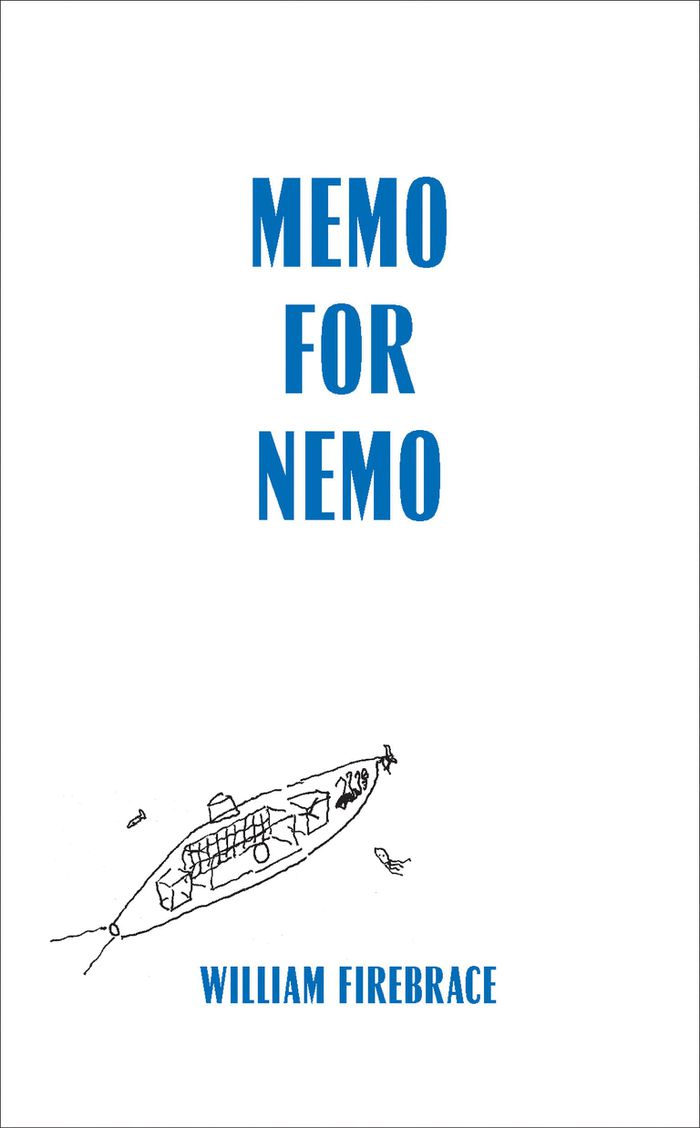
In this book, William Firebrace investigates human inhabitation of the undersea, both fictional and real. Beginning with Jules Verne's Captain Nemo—an undersea Renaissance man with a library of 12,000 volumes on his submarine—and proceeding through aquariums, undersea photography, artificial seas on land, nuclear-powered submarines, undersea film epics, giant squid, and NASA satellites, Firebrace examines the undersea as a zone created by exploration and invention. Throughout, the history of undersea life is accompanied by an imagined undersea, envisioned by cultural figures ranging from Verne and Herman Melville to Orson Welles and Jimi Hendrix.
Memo for Nemo
Actions:
Prix:
$39.95
(disponible sur commande)
Résumé:
In this book, William Firebrace investigates human inhabitation of the undersea, both fictional and real. Beginning with Jules Verne's Captain Nemo—an undersea Renaissance man with a library of 12,000 volumes on his submarine—and proceeding through aquariums, undersea photography, artificial seas on land, nuclear-powered submarines, undersea film epics, giant squid, and NASA satellites, Firebrace examines the undersea as a zone created by exploration and invention. Throughout, the history of undersea life is accompanied by an imagined undersea, envisioned by cultural figures ranging from Verne and Herman Melville to Orson Welles and Jimi Hendrix.
Classification:
livres
livres
Publication:
octobre 2022
octobre 2022
Sujet:
Trajets
Trajets


