


1923 Résultats
Classification:
livres
livres
Actions:
Prix:
$47.95
(disponible sur commande)
Résumé:
The world is rapidly urbanizing, and experts predict that up to 80 percent of the population will live in cities by 2050. To accommodate that growth while ensuring quality of life for all residents, cities are increasingly turning to technology. From apps that make it easier for citizens to pitch in on civic improvement projects to comprehensive plans for smarter streets(...)
$47.95
(disponible sur commande)
Résumé:
The world is rapidly urbanizing, and experts predict that up to 80 percent of the population will live in cities by 2050. To accommodate that growth while ensuring quality of life for all residents, cities are increasingly turning to technology. From apps that make it easier for citizens to pitch in on civic improvement projects to comprehensive plans for smarter streets(...)
Titre:
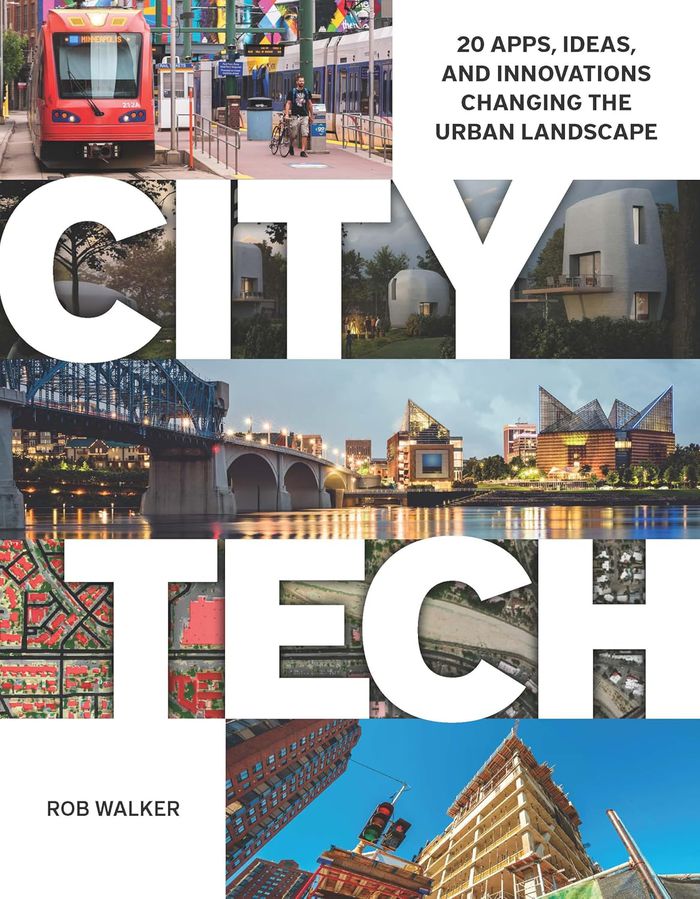
City tech: 20 apps, ideas, and innovations changing the urban landscape
Actions:
Prix:
$47.95
(disponible sur commande)
Résumé:
The world is rapidly urbanizing, and experts predict that up to 80 percent of the population will live in cities by 2050. To accommodate that growth while ensuring quality of life for all residents, cities are increasingly turning to technology. From apps that make it easier for citizens to pitch in on civic improvement projects to comprehensive plans for smarter streets and neighborhoods, new tools and approaches are taking root across the United States and around the world. In this thoughtful, inquisitive collection, Rob Walker—former New York Times columnist and author of the City Tech column for Land Lines magazine—investigates the new technologies afoot and their implications for planners, policymakers, residents, and the virtual and literal landscapes of the cities we call home.
City tech: 20 apps, ideas, and innovations changing the urban landscape
Actions:
Prix:
$47.95
(disponible sur commande)
Résumé:
The world is rapidly urbanizing, and experts predict that up to 80 percent of the population will live in cities by 2050. To accommodate that growth while ensuring quality of life for all residents, cities are increasingly turning to technology. From apps that make it easier for citizens to pitch in on civic improvement projects to comprehensive plans for smarter streets and neighborhoods, new tools and approaches are taking root across the United States and around the world. In this thoughtful, inquisitive collection, Rob Walker—former New York Times columnist and author of the City Tech column for Land Lines magazine—investigates the new technologies afoot and their implications for planners, policymakers, residents, and the virtual and literal landscapes of the cities we call home.
Classification:
livres
livres
Publication:
octobre 2024
octobre 2024
Sujet:
Théorie de l’urbanisme
Théorie de l’urbanisme
Classification:
livres
livres
Actions:
Prix:
$27.95
(disponible en magasin)
Résumé:
Les organisateurs des Jeux olympiques et paralympiques de Paris 2024 ont obtenu carte blanche pour fabriquer en Seine-Saint-Denis la ville rêvée des promoteurs et investisseurs : moderne, innovante, lucrative. Sans pauvre, sans cité à la dérive, sans caillassage de voiture de police, un merveilleux produit d'appel pour nouveaux habitants bankable au pays de Vinci,(...)
$27.95
(disponible en magasin)
Résumé:
Les organisateurs des Jeux olympiques et paralympiques de Paris 2024 ont obtenu carte blanche pour fabriquer en Seine-Saint-Denis la ville rêvée des promoteurs et investisseurs : moderne, innovante, lucrative. Sans pauvre, sans cité à la dérive, sans caillassage de voiture de police, un merveilleux produit d'appel pour nouveaux habitants bankable au pays de Vinci,(...)
Titre:
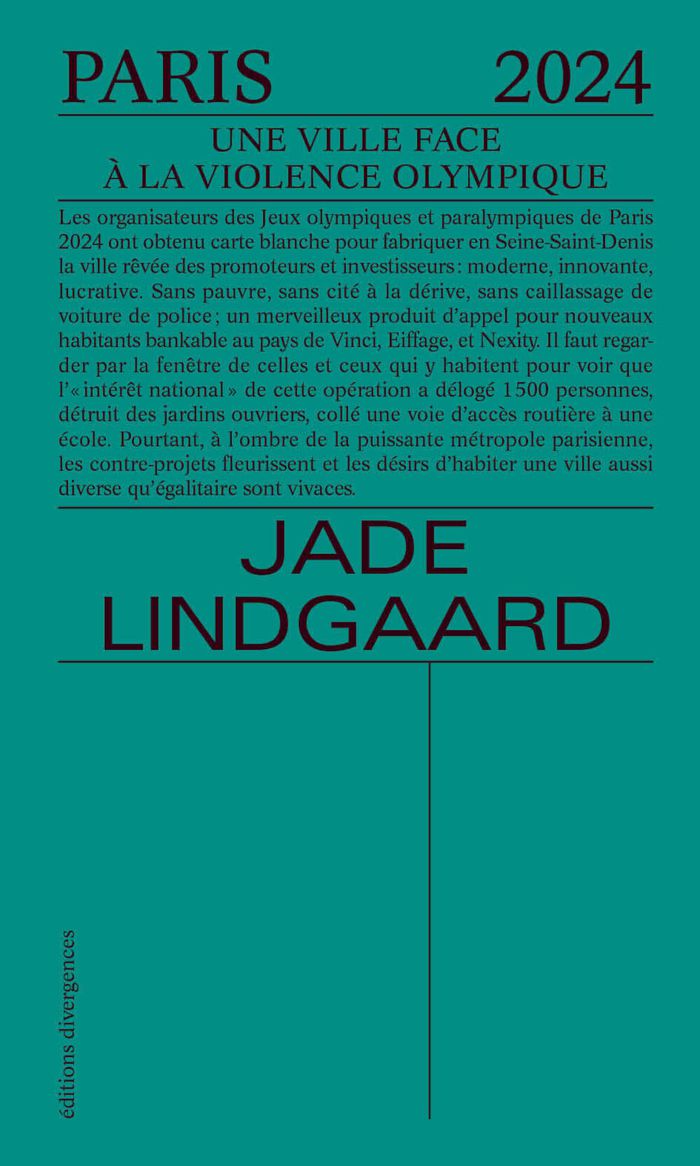
Paris 2024 : Une ville face à la violence olympique
Actions:
Prix:
$27.95
(disponible en magasin)
Résumé:
Les organisateurs des Jeux olympiques et paralympiques de Paris 2024 ont obtenu carte blanche pour fabriquer en Seine-Saint-Denis la ville rêvée des promoteurs et investisseurs : moderne, innovante, lucrative. Sans pauvre, sans cité à la dérive, sans caillassage de voiture de police, un merveilleux produit d'appel pour nouveaux habitants bankable au pays de Vinci, Eiffage, et Nexity. Il faut regarder par la fenêtre de celles et ceux qui y habitent pour voir que l'« intérêt national » de cette opération a délogé 1500 personnes, détruit des jardins ouvriers, collé une voie d'accès routière à une école. Pourtant, à l'ombre de la puissante métropole parisienne, les contre-projets fleurissent et les désirs d'habiter une ville aussi diverse qu'égalitaire sont vivaces.
Paris 2024 : Une ville face à la violence olympique
Actions:
Prix:
$27.95
(disponible en magasin)
Résumé:
Les organisateurs des Jeux olympiques et paralympiques de Paris 2024 ont obtenu carte blanche pour fabriquer en Seine-Saint-Denis la ville rêvée des promoteurs et investisseurs : moderne, innovante, lucrative. Sans pauvre, sans cité à la dérive, sans caillassage de voiture de police, un merveilleux produit d'appel pour nouveaux habitants bankable au pays de Vinci, Eiffage, et Nexity. Il faut regarder par la fenêtre de celles et ceux qui y habitent pour voir que l'« intérêt national » de cette opération a délogé 1500 personnes, détruit des jardins ouvriers, collé une voie d'accès routière à une école. Pourtant, à l'ombre de la puissante métropole parisienne, les contre-projets fleurissent et les désirs d'habiter une ville aussi diverse qu'égalitaire sont vivaces.
Classification:
livres
livres
Publication:
mars 2024
mars 2024
Sujet:
Théorie de l’urbanisme
Théorie de l’urbanisme
Classification:
livres
livres
Titre:
Inventing future cities
Inventing future cities
Actions:
Prix:
$35.95
(disponible sur commande)
Résumé:
We cannot predict future cities, but we can invent them. Cities are largely unpredictable because they are complex systems that are more like organisms than machines. Neither the laws of economics nor the laws of mechanics apply; cities are the product of countless individual and collective decisions that do not conform to any grand plan. They are the product of our(...)
$35.95
(disponible sur commande)
Résumé:
We cannot predict future cities, but we can invent them. Cities are largely unpredictable because they are complex systems that are more like organisms than machines. Neither the laws of economics nor the laws of mechanics apply; cities are the product of countless individual and collective decisions that do not conform to any grand plan. They are the product of our(...)
Titre:
Inventing future cities
Actions:
Prix:
$35.95
(disponible sur commande)
Résumé:
We cannot predict future cities, but we can invent them. Cities are largely unpredictable because they are complex systems that are more like organisms than machines. Neither the laws of economics nor the laws of mechanics apply; cities are the product of countless individual and collective decisions that do not conform to any grand plan. They are the product of our inventions; they evolve. In Inventing Future Cities, Michael Batty explores what we need to understand about cities in order to invent their future. Batty outlines certain themes—principles—that apply to all cities. He investigates not the invention of artifacts but inventive processes. Today form is becoming ever more divorced from function; information networks now shape the traditional functions of cities as places of exchange and innovation. By the end of this century, most of the world's population will live in cities, large or small, sometimes contiguous, and always connected; in an urbanized world, it will be increasingly difficult to define a city by its physical boundaries.
Inventing future cities
Actions:
Prix:
$35.95
(disponible sur commande)
Résumé:
We cannot predict future cities, but we can invent them. Cities are largely unpredictable because they are complex systems that are more like organisms than machines. Neither the laws of economics nor the laws of mechanics apply; cities are the product of countless individual and collective decisions that do not conform to any grand plan. They are the product of our inventions; they evolve. In Inventing Future Cities, Michael Batty explores what we need to understand about cities in order to invent their future. Batty outlines certain themes—principles—that apply to all cities. He investigates not the invention of artifacts but inventive processes. Today form is becoming ever more divorced from function; information networks now shape the traditional functions of cities as places of exchange and innovation. By the end of this century, most of the world's population will live in cities, large or small, sometimes contiguous, and always connected; in an urbanized world, it will be increasingly difficult to define a city by its physical boundaries.
Classification:
livres
livres
Publication:
juin 2024
juin 2024
Sujet:
Théorie de l’urbanisme
Théorie de l’urbanisme
Classification:
livres
livres
Titre:
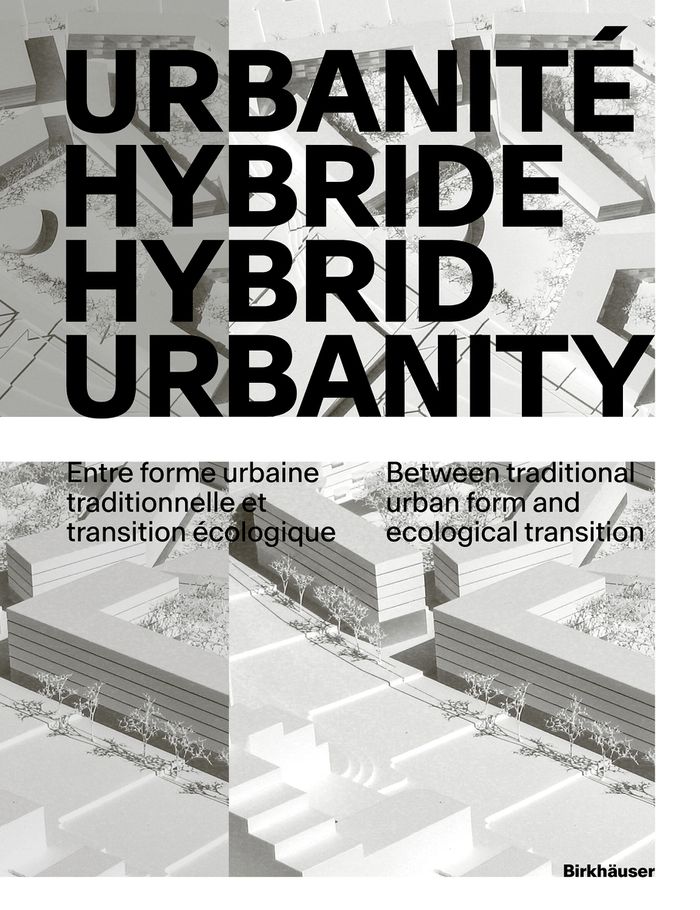
Urbanité hybride / Hybrid urbanity. Entre forme urbaine traditionelle et transition écologique
Urbanité hybride / Hybrid urbanity. Entre forme urbaine traditionelle et transition écologique
Actions:
Prix:
$75.00
(disponible sur commande)
Résumé:
Countering the phenomenon of sprawl in the often anonymous or chaotic urban periphery, the Oassis neighborhood in Lausanne takes a unique approach based on urbanity and hybridization. Located on a former industrial wasteland in the west of the city, Oassis reflects the compositional principles of the traditional city, while also engaging in the dynamics of ecological(...)
$75.00
(disponible sur commande)
Résumé:
Countering the phenomenon of sprawl in the often anonymous or chaotic urban periphery, the Oassis neighborhood in Lausanne takes a unique approach based on urbanity and hybridization. Located on a former industrial wasteland in the west of the city, Oassis reflects the compositional principles of the traditional city, while also engaging in the dynamics of ecological(...)
Titre:
Urbanité hybride / Hybrid urbanity. Entre forme urbaine traditionelle et transition écologique
Actions:
Prix:
$75.00
(disponible sur commande)
Résumé:
Countering the phenomenon of sprawl in the often anonymous or chaotic urban periphery, the Oassis neighborhood in Lausanne takes a unique approach based on urbanity and hybridization. Located on a former industrial wasteland in the west of the city, Oassis reflects the compositional principles of the traditional city, while also engaging in the dynamics of ecological transition and climate resilience. This ‘'urban fragment'’ is both an urban fabric, compatible with future developments in the neighborhood, and an architectural object characterized by urbanity. The contemporary challenges of regenerating suburban areas are addressed here through diverse development programs and a profusion of gardens.
Urbanité hybride / Hybrid urbanity. Entre forme urbaine traditionelle et transition écologique
Actions:
Prix:
$75.00
(disponible sur commande)
Résumé:
Countering the phenomenon of sprawl in the often anonymous or chaotic urban periphery, the Oassis neighborhood in Lausanne takes a unique approach based on urbanity and hybridization. Located on a former industrial wasteland in the west of the city, Oassis reflects the compositional principles of the traditional city, while also engaging in the dynamics of ecological transition and climate resilience. This ‘'urban fragment'’ is both an urban fabric, compatible with future developments in the neighborhood, and an architectural object characterized by urbanity. The contemporary challenges of regenerating suburban areas are addressed here through diverse development programs and a profusion of gardens.
Classification:
livres
livres
Publication:
septembre 2024
septembre 2024
Sujet:
Théorie de l’urbanisme
Théorie de l’urbanisme
Classification:
livres
livres
Actions:
Prix:
$33.95
(disponible sur commande)
Résumé:
Is the capital of Latin America a small island at the mouth of the Hudson River? Will California soon hold the balance of power in Mexican national politics? Will Latinos reinvigorate the US labor movement? These are some of the provocative questions that Mike Davis explores in this fascinating account of the Latinization of the US urban landscape. As he forefully shows,(...)
$33.95
(disponible sur commande)
Résumé:
Is the capital of Latin America a small island at the mouth of the Hudson River? Will California soon hold the balance of power in Mexican national politics? Will Latinos reinvigorate the US labor movement? These are some of the provocative questions that Mike Davis explores in this fascinating account of the Latinization of the US urban landscape. As he forefully shows,(...)
Titre:
Magical urbanism: Latinos reinvent the US city
Actions:
Prix:
$33.95
(disponible sur commande)
Résumé:
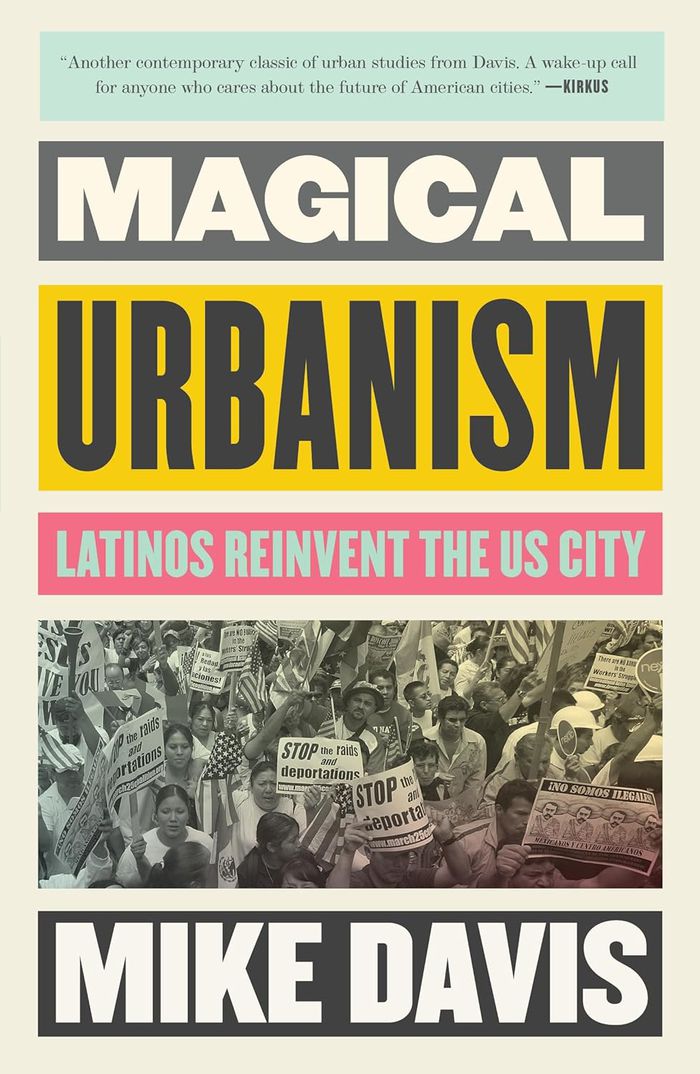
Is the capital of Latin America a small island at the mouth of the Hudson River? Will California soon hold the balance of power in Mexican national politics? Will Latinos reinvigorate the US labor movement? These are some of the provocative questions that Mike Davis explores in this fascinating account of the Latinization of the US urban landscape. As he forefully shows, this is a demographic and cultural revolution with extraordinary implications. With Spanish surnames increasing five times faster than the general population, salsa is becoming the predominant ethnic rhythm (and flavor) of contemporary city life. In Los Angeles, Houston, San Antonio, and (shortly) Dallas, Latinos outnumber non-Hispanic whites; in New York, San Diego and Phoenix they outnumber Blacks. According to the Bureau of the Census, Latinos will supply fully two-thirds of the nation’s population growth between now and the middle of the 21st century when nearly 100 millions Americans will boast Latin American ancestry.
Magical urbanism: Latinos reinvent the US city
Actions:
Prix:
$33.95
(disponible sur commande)
Résumé:
Is the capital of Latin America a small island at the mouth of the Hudson River? Will California soon hold the balance of power in Mexican national politics? Will Latinos reinvigorate the US labor movement? These are some of the provocative questions that Mike Davis explores in this fascinating account of the Latinization of the US urban landscape. As he forefully shows, this is a demographic and cultural revolution with extraordinary implications. With Spanish surnames increasing five times faster than the general population, salsa is becoming the predominant ethnic rhythm (and flavor) of contemporary city life. In Los Angeles, Houston, San Antonio, and (shortly) Dallas, Latinos outnumber non-Hispanic whites; in New York, San Diego and Phoenix they outnumber Blacks. According to the Bureau of the Census, Latinos will supply fully two-thirds of the nation’s population growth between now and the middle of the 21st century when nearly 100 millions Americans will boast Latin American ancestry.
Classification:
livres
livres
Publication:
juin 2024
juin 2024
Sujet:
Théorie de l’urbanisme
Théorie de l’urbanisme
Classification:
livres
livres
Actions:
Prix:
$39.95
(disponible en magasin)
Résumé:
In "The Zone," Justinien Tribillon takes the reader on a tour of an eponymous Parisian hinterland. The site of dreams and nightmares, from Van Gogh’s paintings to the cinematic violence of La Haine, the Zone, so often misunderstood, is the key to understanding today’s Paris, and even France itself. Originally the site of defensive walls, alongside which mushroomed(...)
$39.95
(disponible en magasin)
Résumé:
In "The Zone," Justinien Tribillon takes the reader on a tour of an eponymous Parisian hinterland. The site of dreams and nightmares, from Van Gogh’s paintings to the cinematic violence of La Haine, the Zone, so often misunderstood, is the key to understanding today’s Paris, and even France itself. Originally the site of defensive walls, alongside which mushroomed(...)
Titre:
The zone: An alternative history of Paris
Actions:
Prix:
$39.95
(disponible en magasin)
Résumé:
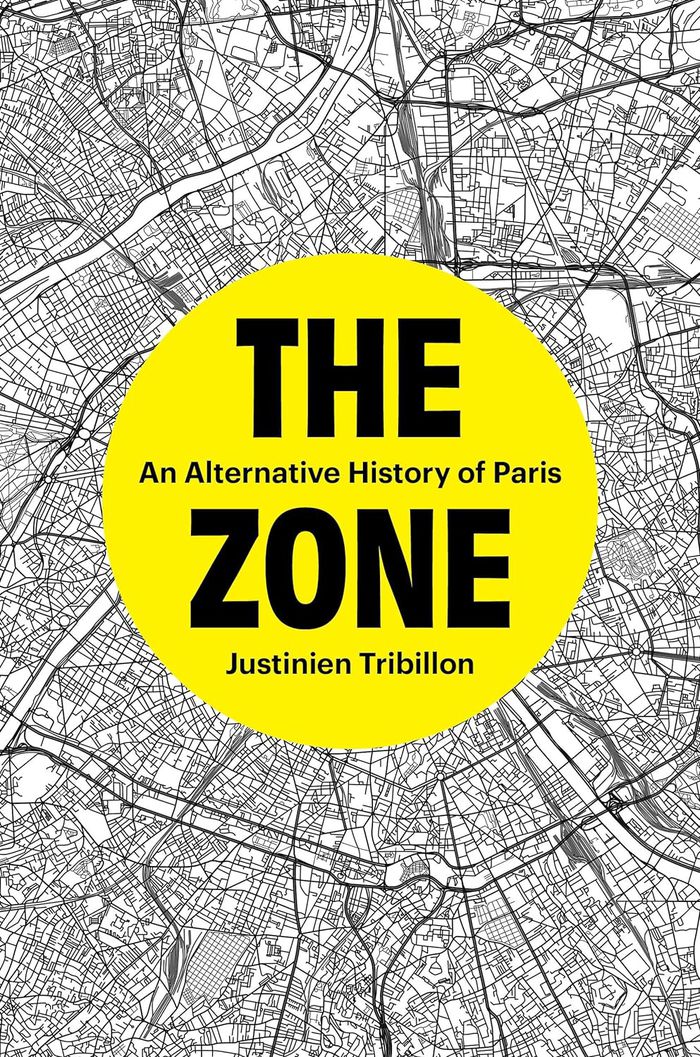
In "The Zone," Justinien Tribillon takes the reader on a tour of an eponymous Parisian hinterland. The site of dreams and nightmares, from Van Gogh’s paintings to the cinematic violence of La Haine, the Zone, so often misunderstood, is the key to understanding today’s Paris, and even France itself. Originally the site of defensive walls, alongside which mushroomed makeshift housing, allotments, and dancehalls in the nineteenth century, the Zone has performed many functions and been a place of contention for two centuries. Dismantled in the 1920s, the fortifications were first replaced with gardens, stadia and homes. After the war came the Boulevard Périphérique, a ring road promising seamless travel in a futuristic car-centric Paris. With the ring road came new dreams of modernity in reinvented suburbs: new towns, high-rise architecture and social housing built at record speed. Yesterday’s Paris made way for tomorrow’s banlieue. But the metropolitan dream was never realised. The Zone became a symbol of division: between inner and outer cities; between the bourgeois centre and the working-class immigrant outskirts; between ‘us’ and ‘them’. The Zone, both a physical space and a powerful myth, came to crystallise the social, spatial and ethno-racial differences between Paris and the banlieue.
The zone: An alternative history of Paris
Actions:
Prix:
$39.95
(disponible en magasin)
Résumé:
In "The Zone," Justinien Tribillon takes the reader on a tour of an eponymous Parisian hinterland. The site of dreams and nightmares, from Van Gogh’s paintings to the cinematic violence of La Haine, the Zone, so often misunderstood, is the key to understanding today’s Paris, and even France itself. Originally the site of defensive walls, alongside which mushroomed makeshift housing, allotments, and dancehalls in the nineteenth century, the Zone has performed many functions and been a place of contention for two centuries. Dismantled in the 1920s, the fortifications were first replaced with gardens, stadia and homes. After the war came the Boulevard Périphérique, a ring road promising seamless travel in a futuristic car-centric Paris. With the ring road came new dreams of modernity in reinvented suburbs: new towns, high-rise architecture and social housing built at record speed. Yesterday’s Paris made way for tomorrow’s banlieue. But the metropolitan dream was never realised. The Zone became a symbol of division: between inner and outer cities; between the bourgeois centre and the working-class immigrant outskirts; between ‘us’ and ‘them’. The Zone, both a physical space and a powerful myth, came to crystallise the social, spatial and ethno-racial differences between Paris and the banlieue.
Classification:
livres
livres
Publication:
juillet 2024
juillet 2024
Sujet:
Théorie de l’urbanisme
Théorie de l’urbanisme
Classification:
livres
livres

Actions:
Prix:
$52.95
(disponible en magasin)
Résumé:
En s'appuyant sur deux rassemblements publics observés dans la ville de Tianjin, l'auteure montre comment les citoyens s'accordent sur des compréhensions et des savoir-faire partagés, sur des types de jugement et de discernement, dans une situation où les distinctions entre vérité et mensonge, justice et injustice, réel et imaginaire, sont déterminés.
$52.95
(disponible en magasin)
Résumé:
En s'appuyant sur deux rassemblements publics observés dans la ville de Tianjin, l'auteure montre comment les citoyens s'accordent sur des compréhensions et des savoir-faire partagés, sur des types de jugement et de discernement, dans une situation où les distinctions entre vérité et mensonge, justice et injustice, réel et imaginaire, sont déterminés.
Titre:
Des lieux en commun :Une ethnographie des rassemblements publics en Chine
Actions:
Prix:
$52.95
(disponible en magasin)
Résumé:
En s'appuyant sur deux rassemblements publics observés dans la ville de Tianjin, l'auteure montre comment les citoyens s'accordent sur des compréhensions et des savoir-faire partagés, sur des types de jugement et de discernement, dans une situation où les distinctions entre vérité et mensonge, justice et injustice, réel et imaginaire, sont déterminés.
Des lieux en commun :Une ethnographie des rassemblements publics en Chine
Actions:
Prix:
$52.95
(disponible en magasin)
Résumé:
En s'appuyant sur deux rassemblements publics observés dans la ville de Tianjin, l'auteure montre comment les citoyens s'accordent sur des compréhensions et des savoir-faire partagés, sur des types de jugement et de discernement, dans une situation où les distinctions entre vérité et mensonge, justice et injustice, réel et imaginaire, sont déterminés.
Classification:
livres
livres
Publication:
août 2020
août 2020
Sujet:
Théorie de l’urbanisme
Théorie de l’urbanisme
Classification:
livres
livres
Actions:
Prix:
$32.95
(disponible sur commande)
Résumé:
In "The surrounds" renowned urbanist AbdouMaliq Simone offers a new theorization of the interface of the urban and the political. Working at the intersection of Black studies, urban theory, and decolonial and Islamic thought, Simone centers the surrounds—those urban spaces beyond control and capture that exist as a locus of rebellion and invention. He shows that even in(...)
$32.95
(disponible sur commande)
Résumé:
In "The surrounds" renowned urbanist AbdouMaliq Simone offers a new theorization of the interface of the urban and the political. Working at the intersection of Black studies, urban theory, and decolonial and Islamic thought, Simone centers the surrounds—those urban spaces beyond control and capture that exist as a locus of rebellion and invention. He shows that even in(...)
Titre:
The surrounds: Urban life within and beyond capture
Actions:
Prix:
$32.95
(disponible sur commande)
Résumé:
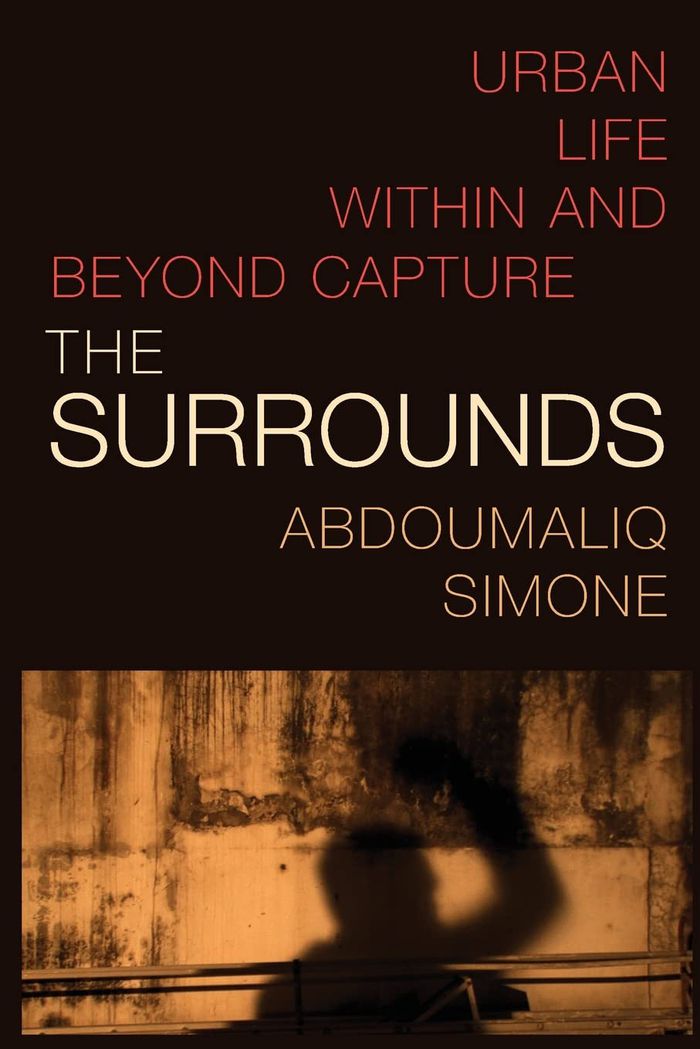
In "The surrounds" renowned urbanist AbdouMaliq Simone offers a new theorization of the interface of the urban and the political. Working at the intersection of Black studies, urban theory, and decolonial and Islamic thought, Simone centers the surrounds—those urban spaces beyond control and capture that exist as a locus of rebellion and invention. He shows that even in clearly defined city environments, whether industrial, carceral, administrative, or domestic, residents use spaces for purposes they were not designed for: schools become housing, markets turn into classrooms, tax offices transform into repair shops. The surrounds, Simone contends, are where nothing fits according to design. They are where forgotten and marginalized populations invent new relations and ways of living and being, continuously reshaping what individuals and collectives can do. Focusing less on what new worlds may come to be and more on what people are creating now, Simone shows how the surrounds are an integral part of the expansiveness of urban imagination.
The surrounds: Urban life within and beyond capture
Actions:
Prix:
$32.95
(disponible sur commande)
Résumé:
In "The surrounds" renowned urbanist AbdouMaliq Simone offers a new theorization of the interface of the urban and the political. Working at the intersection of Black studies, urban theory, and decolonial and Islamic thought, Simone centers the surrounds—those urban spaces beyond control and capture that exist as a locus of rebellion and invention. He shows that even in clearly defined city environments, whether industrial, carceral, administrative, or domestic, residents use spaces for purposes they were not designed for: schools become housing, markets turn into classrooms, tax offices transform into repair shops. The surrounds, Simone contends, are where nothing fits according to design. They are where forgotten and marginalized populations invent new relations and ways of living and being, continuously reshaping what individuals and collectives can do. Focusing less on what new worlds may come to be and more on what people are creating now, Simone shows how the surrounds are an integral part of the expansiveness of urban imagination.
Classification:
livres
livres
Publication:
juin 2022
juin 2022
Sujet:
Théorie de l’urbanisme
Théorie de l’urbanisme
Classification:
livres
livres

Prix:
$32.95
(disponible sur commande)
Résumé:
How can urban housing, and the land underneath, now account for half of all global wealth? According to Patrick Condon in ''Broken City'', the simple answer is that land has become an asset rather than a utility. If the rich only indulged themselves with gold, jewels, and art, we wouldn’t have a global housing crisis. But once global capital markets realized land was a(...)
$32.95
(disponible sur commande)
Résumé:
How can urban housing, and the land underneath, now account for half of all global wealth? According to Patrick Condon in ''Broken City'', the simple answer is that land has become an asset rather than a utility. If the rich only indulged themselves with gold, jewels, and art, we wouldn’t have a global housing crisis. But once global capital markets realized land was a(...)
Titre:
Broken city: Land speculation, inequality, and urban crisis
Actions:
Prix:
$32.95
(disponible sur commande)
Résumé:
How can urban housing, and the land underneath, now account for half of all global wealth? According to Patrick Condon in ''Broken City'', the simple answer is that land has become an asset rather than a utility. If the rich only indulged themselves with gold, jewels, and art, we wouldn’t have a global housing crisis. But once global capital markets realized land was a good speculative investment, runaway housing costs ensued. For example, in Vancouver, land prices increased by six hundred percent between 2008 and 2016. How much wealth have investors extracted from urban land? In this engaging, readable, and insightful treatise, Patrick Condon explains how we have let land, our most durable resource, shift away from the common good and proposes bold strategies for how cities in North America can shift it back.
Broken city: Land speculation, inequality, and urban crisis
Actions:
Prix:
$32.95
(disponible sur commande)
Résumé:
How can urban housing, and the land underneath, now account for half of all global wealth? According to Patrick Condon in ''Broken City'', the simple answer is that land has become an asset rather than a utility. If the rich only indulged themselves with gold, jewels, and art, we wouldn’t have a global housing crisis. But once global capital markets realized land was a good speculative investment, runaway housing costs ensued. For example, in Vancouver, land prices increased by six hundred percent between 2008 and 2016. How much wealth have investors extracted from urban land? In this engaging, readable, and insightful treatise, Patrick Condon explains how we have let land, our most durable resource, shift away from the common good and proposes bold strategies for how cities in North America can shift it back.
Classification:
livres
livres
Publication:
mai 2024
mai 2024
Sujet:
Théorie de l’urbanisme
Théorie de l’urbanisme
Classification:
livres
livres
Actions:
Prix:
$49.95
(disponible en magasin)
Résumé:
In the final days before the fall of Saigon in 1975, 125,000 Vietnamese who were evacuated or who made their own way out of the country resettled in the United States. Finding themselves in unfamiliar places yet still connected in exile, these refugees began building their own communities as memorials to a lost homeland. Known both officially and unofficially as Little(...)
$49.95
(disponible en magasin)
Résumé:
In the final days before the fall of Saigon in 1975, 125,000 Vietnamese who were evacuated or who made their own way out of the country resettled in the United States. Finding themselves in unfamiliar places yet still connected in exile, these refugees began building their own communities as memorials to a lost homeland. Known both officially and unofficially as Little(...)
Titre:
Building Little Saigon: Refugee urbanism in American cities and suburbs
Actions:
Prix:
$49.95
(disponible en magasin)
Résumé:
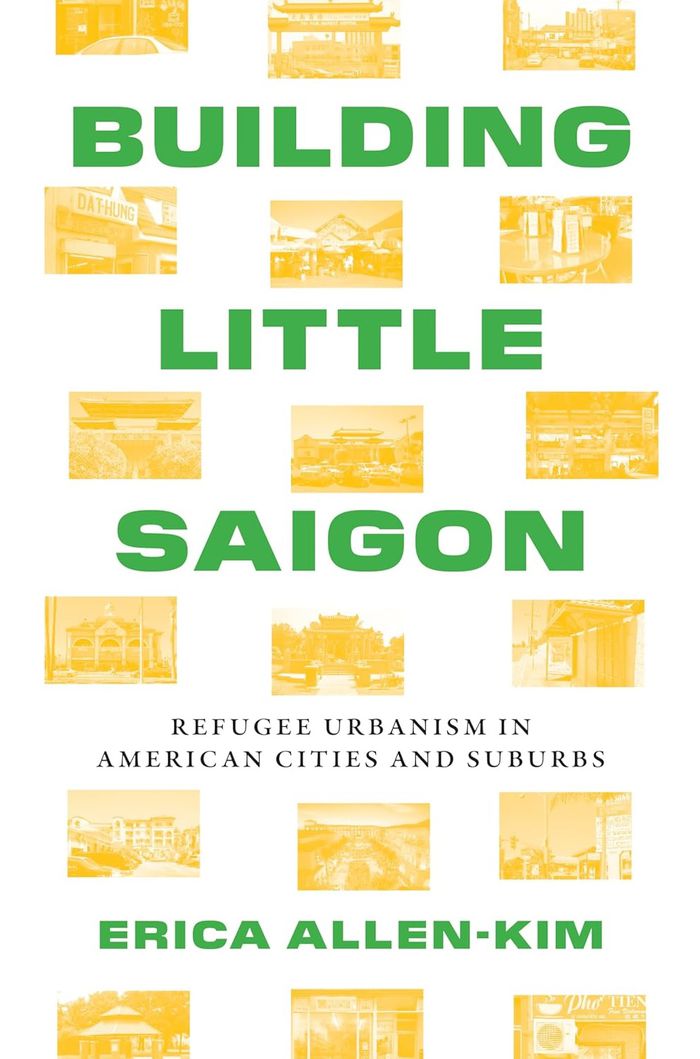
In the final days before the fall of Saigon in 1975, 125,000 Vietnamese who were evacuated or who made their own way out of the country resettled in the United States. Finding themselves in unfamiliar places yet still connected in exile, these refugees began building their own communities as memorials to a lost homeland. Known both officially and unofficially as Little Saigons, these built landscapes offer space for everyday activities as well as the staging of cultural heritage and political events. "Building Little Saigon" examines nearly fifty years of city building by Vietnamese Americans-who number over 2.2 million today. Author Erica Allen-Kim highlights architecture and planning ideas adapted by the Vietnamese communities who, in turn, have influenced planning policies and mainstream practices. Allen-Kim traveled to ten Little Saigons in the United States to visit archives, buildings, and public art and to converse with developers, community planners, artists, business owners, and Vietnam veterans. By examining everyday buildings-who made them and what they mean for those who know them-"Building Little Saigon" shows us the complexities of migration unfolding across lifetimes and generations.
Building Little Saigon: Refugee urbanism in American cities and suburbs
Actions:
Prix:
$49.95
(disponible en magasin)
Résumé:
In the final days before the fall of Saigon in 1975, 125,000 Vietnamese who were evacuated or who made their own way out of the country resettled in the United States. Finding themselves in unfamiliar places yet still connected in exile, these refugees began building their own communities as memorials to a lost homeland. Known both officially and unofficially as Little Saigons, these built landscapes offer space for everyday activities as well as the staging of cultural heritage and political events. "Building Little Saigon" examines nearly fifty years of city building by Vietnamese Americans-who number over 2.2 million today. Author Erica Allen-Kim highlights architecture and planning ideas adapted by the Vietnamese communities who, in turn, have influenced planning policies and mainstream practices. Allen-Kim traveled to ten Little Saigons in the United States to visit archives, buildings, and public art and to converse with developers, community planners, artists, business owners, and Vietnam veterans. By examining everyday buildings-who made them and what they mean for those who know them-"Building Little Saigon" shows us the complexities of migration unfolding across lifetimes and generations.
Classification:
livres
livres
Publication:
juillet 2024
juillet 2024
Sujet:
Théorie de l’urbanisme
Théorie de l’urbanisme


