


64 Résultats
Classification:
livres
livres
Prix:
$30.00
(disponible en magasin)
Résumé:
Inuit Qaujimajatuqangit — meaning all the extensive knowledge and experience passed from generation to generation — is a collection of contributions by well-known and respected Inuit Elders. The book functions as a way of preserving important knowledge and tradition, contextualizing that knowledge within Canada’s colonial legacy and providing an Inuit perspective on how(...)
$30.00
(disponible en magasin)
Résumé:
Inuit Qaujimajatuqangit — meaning all the extensive knowledge and experience passed from generation to generation — is a collection of contributions by well-known and respected Inuit Elders. The book functions as a way of preserving important knowledge and tradition, contextualizing that knowledge within Canada’s colonial legacy and providing an Inuit perspective on how(...)
Titre:
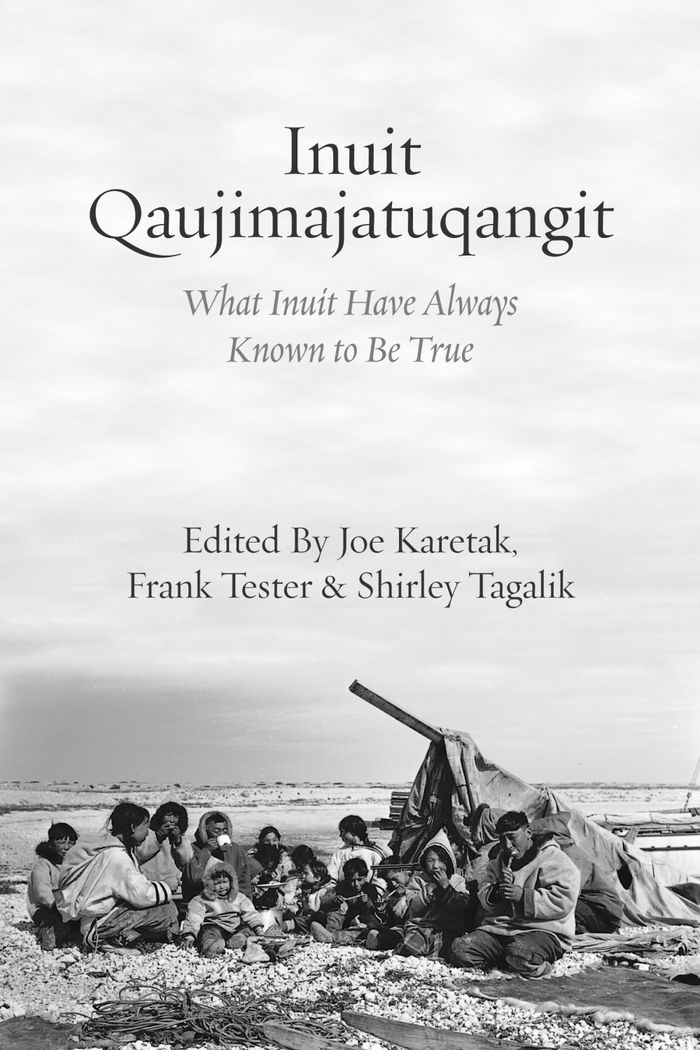
Inuit Qaujimajatuqangit: What Inuit have always known to be true
Actions:
Prix:
$30.00
(disponible en magasin)
Résumé:
Inuit Qaujimajatuqangit — meaning all the extensive knowledge and experience passed from generation to generation — is a collection of contributions by well-known and respected Inuit Elders. The book functions as a way of preserving important knowledge and tradition, contextualizing that knowledge within Canada’s colonial legacy and providing an Inuit perspective on how we relate to each other, to other living beings and the environment.
Inuit Qaujimajatuqangit: What Inuit have always known to be true
Actions:
Prix:
$30.00
(disponible en magasin)
Résumé:
Inuit Qaujimajatuqangit — meaning all the extensive knowledge and experience passed from generation to generation — is a collection of contributions by well-known and respected Inuit Elders. The book functions as a way of preserving important knowledge and tradition, contextualizing that knowledge within Canada’s colonial legacy and providing an Inuit perspective on how we relate to each other, to other living beings and the environment.
Classification:
livres
livres
Publication:
mai 2017
mai 2017
Classification:
livres
livres

Actions:
Prix:
$32.95
(disponible sur commande)
Résumé:
In 2015, writer and journalist Paul Seesequasis found himself grappling with the devastating findings of Canada's Truth and Reconciliation Commission report on the residential school system. He sought understanding and inspiration in the stories of his mother, herself a residential school survivor. Gradually, Paul realized that another, mostly untold history existed(...)
$32.95
(disponible sur commande)
Résumé:
In 2015, writer and journalist Paul Seesequasis found himself grappling with the devastating findings of Canada's Truth and Reconciliation Commission report on the residential school system. He sought understanding and inspiration in the stories of his mother, herself a residential school survivor. Gradually, Paul realized that another, mostly untold history existed(...)
Titre:
Blanket toss under midnight sun
Actions:
Prix:
$32.95
(disponible sur commande)
Résumé:
In 2015, writer and journalist Paul Seesequasis found himself grappling with the devastating findings of Canada's Truth and Reconciliation Commission report on the residential school system. He sought understanding and inspiration in the stories of his mother, herself a residential school survivor. Gradually, Paul realized that another, mostly untold history existed alongside the official one: that of how Indigenous peoples and communities had held together during even the most difficult times. He embarked on a social media project to collect archival photos capturing everyday life in First Nations, Metis and Inuit communities from the 1920s through the 1970s. As he scoured archives and libraries, Paul uncovered a trove of candid images and began to post these on social media, where they sparked an extraordinary reaction. Friends and relatives of the individuals in the photographs commented online, and through this dialogue, rich histories came to light for the first time. ''Blanket toss under midnight sun'' collects some of the most arresting images and stories from Paul's project. While many of the photographs live in public archives, most have never been shown to the people in the communities they represent. As such, ''Blanket Toss'' is not only an invaluable historical record, it is a meaningful act of reclamation, showing the ongoing resilience of Indigenous communities, past, present--and future.
Blanket toss under midnight sun
Actions:
Prix:
$32.95
(disponible sur commande)
Résumé:
In 2015, writer and journalist Paul Seesequasis found himself grappling with the devastating findings of Canada's Truth and Reconciliation Commission report on the residential school system. He sought understanding and inspiration in the stories of his mother, herself a residential school survivor. Gradually, Paul realized that another, mostly untold history existed alongside the official one: that of how Indigenous peoples and communities had held together during even the most difficult times. He embarked on a social media project to collect archival photos capturing everyday life in First Nations, Metis and Inuit communities from the 1920s through the 1970s. As he scoured archives and libraries, Paul uncovered a trove of candid images and began to post these on social media, where they sparked an extraordinary reaction. Friends and relatives of the individuals in the photographs commented online, and through this dialogue, rich histories came to light for the first time. ''Blanket toss under midnight sun'' collects some of the most arresting images and stories from Paul's project. While many of the photographs live in public archives, most have never been shown to the people in the communities they represent. As such, ''Blanket Toss'' is not only an invaluable historical record, it is a meaningful act of reclamation, showing the ongoing resilience of Indigenous communities, past, present--and future.
Classification:
livres
livres
Publication:
octobre 2019
octobre 2019
Sujet:
Autochtone
Autochtone
Classification:
livres
livres
Titre:
Sanaaq
Sanaaq
Actions:
Prix:
$34.95
(disponible sur commande)
Résumé:
Un roman atypique. Sur la vie. Au jour le jour. Les joies et les peines d’une petite communauté inuit du nord du Canada. On y apprend à construire en toute hâte un iglou, à repérer la glace traîtresse, à chasser l’ours avec des chiens de traîneau, à préparer de la viande séchée de phoque et à interpréter les signes de la présence de Tuurngaq, un esprit auxiliaire de(...)
$34.95
(disponible sur commande)
Résumé:
Un roman atypique. Sur la vie. Au jour le jour. Les joies et les peines d’une petite communauté inuit du nord du Canada. On y apprend à construire en toute hâte un iglou, à repérer la glace traîtresse, à chasser l’ours avec des chiens de traîneau, à préparer de la viande séchée de phoque et à interpréter les signes de la présence de Tuurngaq, un esprit auxiliaire de(...)
Titre:
Sanaaq
Actions:
Prix:
$34.95
(disponible sur commande)
Résumé:
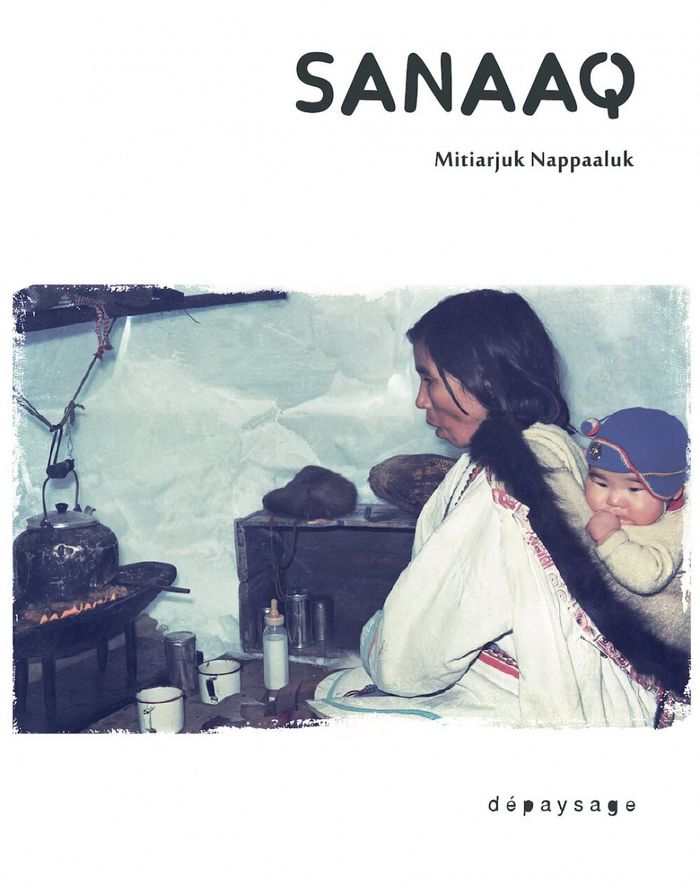
Un roman atypique. Sur la vie. Au jour le jour. Les joies et les peines d’une petite communauté inuit du nord du Canada. On y apprend à construire en toute hâte un iglou, à repérer la glace traîtresse, à chasser l’ours avec des chiens de traîneau, à préparer de la viande séchée de phoque et à interpréter les signes de la présence de Tuurngaq, un esprit auxiliaire de chamane que n’apprécient guère les premiers missionnaires chrétiens. Surtout, une expérience rare est ici offerte, celle de voir le monde singulier des Inuit avec les yeux de l’héroïne, Sanaaq. Une femme qui, à l’image de Mitiarjuk Nappaaluk, l’auteure du roman, écrivaine analphabète et docteure sans cursus scolaire, ne s’en laisse jamais conter…
Sanaaq
Actions:
Prix:
$34.95
(disponible sur commande)
Résumé:
Un roman atypique. Sur la vie. Au jour le jour. Les joies et les peines d’une petite communauté inuit du nord du Canada. On y apprend à construire en toute hâte un iglou, à repérer la glace traîtresse, à chasser l’ours avec des chiens de traîneau, à préparer de la viande séchée de phoque et à interpréter les signes de la présence de Tuurngaq, un esprit auxiliaire de chamane que n’apprécient guère les premiers missionnaires chrétiens. Surtout, une expérience rare est ici offerte, celle de voir le monde singulier des Inuit avec les yeux de l’héroïne, Sanaaq. Une femme qui, à l’image de Mitiarjuk Nappaaluk, l’auteure du roman, écrivaine analphabète et docteure sans cursus scolaire, ne s’en laisse jamais conter…
Classification:
livres
livres
Publication:
mai 2022
mai 2022
Sujet:
Autochtone
Autochtone
Classification:
livres
livres
Actions:
Prix:
$36.95
(disponible sur commande)
Résumé:
In this volume, Lisa E. Bloom considers the ways artists, filmmakers, and activists engaged with the Arctic and Antarctic to represent our current environmental crises and reconstruct public understandings of them. Bloom engages feminist, Black, Indigenous, and non-Western perspectives to address the exigencies of the experience of the Anthropocene and its attendant(...)
$36.95
(disponible sur commande)
Résumé:
In this volume, Lisa E. Bloom considers the ways artists, filmmakers, and activists engaged with the Arctic and Antarctic to represent our current environmental crises and reconstruct public understandings of them. Bloom engages feminist, Black, Indigenous, and non-Western perspectives to address the exigencies of the experience of the Anthropocene and its attendant(...)
Titre:
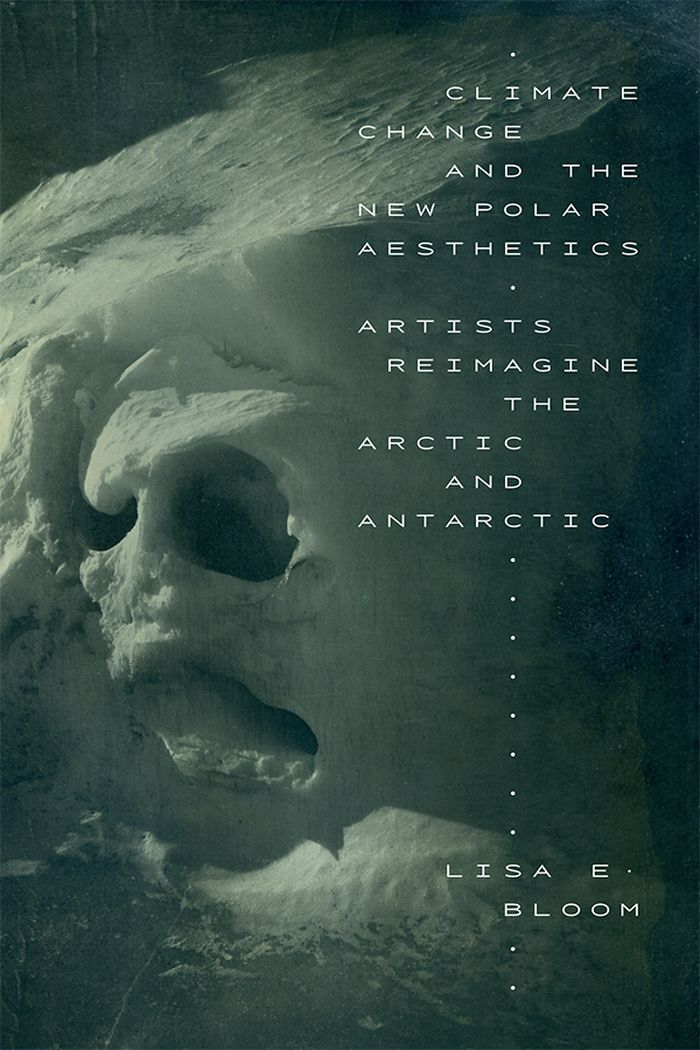
Climate change and the new polar aesthetics: Artists reimagine the Arctic and Antarctic
Actions:
Prix:
$36.95
(disponible sur commande)
Résumé:
In this volume, Lisa E. Bloom considers the ways artists, filmmakers, and activists engaged with the Arctic and Antarctic to represent our current environmental crises and reconstruct public understandings of them. Bloom engages feminist, Black, Indigenous, and non-Western perspectives to address the exigencies of the experience of the Anthropocene and its attendant ecosystem failures, rising sea levels, and climate-led migrations. As opposed to mainstream media depictions of climate change that feature apocalyptic spectacles of distant melting ice and desperate polar bears, artists such as Katja Aglert, Subhankar Banerjee, Joyce Campbell, Judit Hersko, Roni Horn, Isaac Julien, Zacharias Kunuk, Connie Samaras, and activist art collectives take a more complex poetic and political approach. Bloom’s examination and contextualization of new polar aesthetics makes environmental degradation more legible while demonstrating that our own political agency is central to imagining and constructing a better world.
Climate change and the new polar aesthetics: Artists reimagine the Arctic and Antarctic
Actions:
Prix:
$36.95
(disponible sur commande)
Résumé:
In this volume, Lisa E. Bloom considers the ways artists, filmmakers, and activists engaged with the Arctic and Antarctic to represent our current environmental crises and reconstruct public understandings of them. Bloom engages feminist, Black, Indigenous, and non-Western perspectives to address the exigencies of the experience of the Anthropocene and its attendant ecosystem failures, rising sea levels, and climate-led migrations. As opposed to mainstream media depictions of climate change that feature apocalyptic spectacles of distant melting ice and desperate polar bears, artists such as Katja Aglert, Subhankar Banerjee, Joyce Campbell, Judit Hersko, Roni Horn, Isaac Julien, Zacharias Kunuk, Connie Samaras, and activist art collectives take a more complex poetic and political approach. Bloom’s examination and contextualization of new polar aesthetics makes environmental degradation more legible while demonstrating that our own political agency is central to imagining and constructing a better world.
Classification:
livres
livres
Publication:
octobre 2022
octobre 2022
Sujet:
Autochtone
Autochtone


