


103 Résultats
Classification:
livres
livres
Titre:
Charles Rose, architect
Charles Rose, architect
Actions:
Prix:
$52.00
(disponible sur commande)
Résumé:
Charles Rose embraces the vast and varied panorama of the American landscape. Sensitive to his sites, the architect recognizes the poetry of every locale and uses his fascination with place as a central character in his designs. Regionalism, a term at times used to underrate architecture that is seen as too parochial or that eschews universal "truths" (most often those of(...)
$52.00
(disponible sur commande)
Résumé:
Charles Rose embraces the vast and varied panorama of the American landscape. Sensitive to his sites, the architect recognizes the poetry of every locale and uses his fascination with place as a central character in his designs. Regionalism, a term at times used to underrate architecture that is seen as too parochial or that eschews universal "truths" (most often those of(...)
Titre:
Charles Rose, architect
Actions:
Prix:
$52.00
(disponible sur commande)
Résumé:
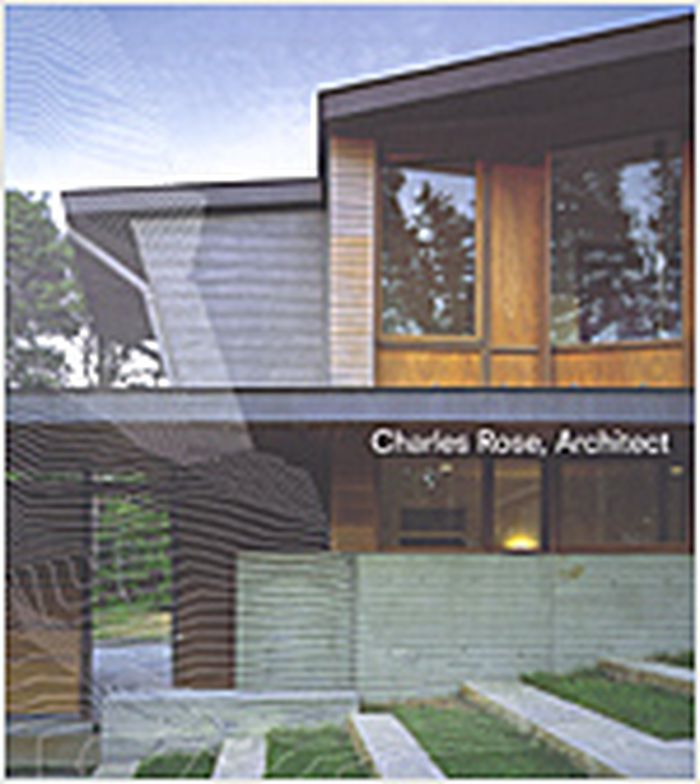
Charles Rose embraces the vast and varied panorama of the American landscape. Sensitive to his sites, the architect recognizes the poetry of every locale and uses his fascination with place as a central character in his designs. Regionalism, a term at times used to underrate architecture that is seen as too parochial or that eschews universal "truths" (most often those of modernism) in favor of a local style, becomes a practice of the highest order in the hands of Rose, one of America's most accomplished young architects. With both the rigor of geometry and a commitment to ecosensitivity, his work is as attuned to the dense urban fabric of New York City as it is to the rural outback of Wyoming. The profile of his award-winning Camp Paint Rock in Hyattville, Wyoming, follows the contours of a nearby canyon; Roses's adaptive reuse of an industrial structure in New York City's Chelsea neighborhood preserves the existing streetscape while creating a seamless flow between inside and out; and the shape of his United States Port of Entry project in Del Rio, Texas, was determined by the scorching Texan sun and features sustainable landscapes. With surprising use of volumes, materials, and geometries, agile movement of spaces, and an active language of planes and lines, Rose creates dynamic, expressive architecture that reminds us that buildings can be both sensitive to their locale and embrace the timeless principles of geometry, material, light, and shadow.
Charles Rose, architect
Actions:
Prix:
$52.00
(disponible sur commande)
Résumé:
Charles Rose embraces the vast and varied panorama of the American landscape. Sensitive to his sites, the architect recognizes the poetry of every locale and uses his fascination with place as a central character in his designs. Regionalism, a term at times used to underrate architecture that is seen as too parochial or that eschews universal "truths" (most often those of modernism) in favor of a local style, becomes a practice of the highest order in the hands of Rose, one of America's most accomplished young architects. With both the rigor of geometry and a commitment to ecosensitivity, his work is as attuned to the dense urban fabric of New York City as it is to the rural outback of Wyoming. The profile of his award-winning Camp Paint Rock in Hyattville, Wyoming, follows the contours of a nearby canyon; Roses's adaptive reuse of an industrial structure in New York City's Chelsea neighborhood preserves the existing streetscape while creating a seamless flow between inside and out; and the shape of his United States Port of Entry project in Del Rio, Texas, was determined by the scorching Texan sun and features sustainable landscapes. With surprising use of volumes, materials, and geometries, agile movement of spaces, and an active language of planes and lines, Rose creates dynamic, expressive architecture that reminds us that buildings can be both sensitive to their locale and embrace the timeless principles of geometry, material, light, and shadow.
Classification:
livres
livres
Publication:
février 2006, New York
février 2006, New York
Sujet:
livres soldés
livres soldés
Classification:
livres
livres
Titre:
Architecture goes wild
Architecture goes wild
Actions:
Prix:
$29.95
(disponible sur commande)
Résumé:
In his writings, architect Kas Oosterhuis bridges the gap between theory and practice. His observations are based on the principle of concrete science fiction. He is convinced that every construct - hardware or software - that can be formulated as a consistent set of rules is realizable within the social constraints of our present-day culture. In his essay(...)
$29.95
(disponible sur commande)
Résumé:
In his writings, architect Kas Oosterhuis bridges the gap between theory and practice. His observations are based on the principle of concrete science fiction. He is convinced that every construct - hardware or software - that can be formulated as a consistent set of rules is realizable within the social constraints of our present-day culture. In his essay(...)
Titre:
Architecture goes wild
Actions:
Prix:
$29.95
(disponible sur commande)
Résumé:
In his writings, architect Kas Oosterhuis bridges the gap between theory and practice. His observations are based on the principle of concrete science fiction. He is convinced that every construct - hardware or software - that can be formulated as a consistent set of rules is realizable within the social constraints of our present-day culture. In his essay 'Space_Time_Volume' Kas Oosterhuis places himself in the local and temporary delamination point between the micro- and macroworlds. He speculates on a seamless continuity of these worlds where the instrumental human position is only one of many possible positions. Our perception of the universe is based on observations made by instruments. Language is seen as such an instrument. In 'Wild Bodies' Oosterhuis asserts that all true architecture inevitably will be programmed to perform in real time. This point of view is based on the observation that traditional fixed and static architecture is a highly unlikely state among all possible ones. An architectural construct is regarded as a body with real-time behaviour that is always in motion. Computer programs speak the new instrumental language in which potential new worlds are described. 'Automotive Styling' declares the human driver of the automobile to be the voluntary prisoner of the physical car-road communications network. In 'Vectorial Bodies' the human driver is nothing less than fuzzy software programming the car to lead it to his destinations. There is no place for romantic ideas such as freedom of movement, but there is the overwhelming desire of carbon-based life forms to exchange data with industrial and digital life forms.
Architecture goes wild
Actions:
Prix:
$29.95
(disponible sur commande)
Résumé:
In his writings, architect Kas Oosterhuis bridges the gap between theory and practice. His observations are based on the principle of concrete science fiction. He is convinced that every construct - hardware or software - that can be formulated as a consistent set of rules is realizable within the social constraints of our present-day culture. In his essay 'Space_Time_Volume' Kas Oosterhuis places himself in the local and temporary delamination point between the micro- and macroworlds. He speculates on a seamless continuity of these worlds where the instrumental human position is only one of many possible positions. Our perception of the universe is based on observations made by instruments. Language is seen as such an instrument. In 'Wild Bodies' Oosterhuis asserts that all true architecture inevitably will be programmed to perform in real time. This point of view is based on the observation that traditional fixed and static architecture is a highly unlikely state among all possible ones. An architectural construct is regarded as a body with real-time behaviour that is always in motion. Computer programs speak the new instrumental language in which potential new worlds are described. 'Automotive Styling' declares the human driver of the automobile to be the voluntary prisoner of the physical car-road communications network. In 'Vectorial Bodies' the human driver is nothing less than fuzzy software programming the car to lead it to his destinations. There is no place for romantic ideas such as freedom of movement, but there is the overwhelming desire of carbon-based life forms to exchange data with industrial and digital life forms.
Classification:
livres
livres
Publication:
mars 2001, Rotterdam
mars 2001, Rotterdam
Sujet:
Théorie de l’architecture
Théorie de l’architecture
Classification:
audio
audio
Actions:
Description:
1 online resource.
Auteur:
Sujet:
Publication:
[Place of publication not identified] : Lateral Addition, 2018.
[Place of publication not identified] : Lateral Addition, 2018.
Classification:
audio
audio
Publication:
[Place of publication not identified] : Lateral Addition, 2018.
[Place of publication not identified] : Lateral Addition, 2018.
Auteur:
Sujet:


