


1067 Résultats
Classification:
livres
livres
Actions:
Prix:
$45.50
(disponible sur commande)
Résumé:
Despite his tragically short career, the influence of Gordon Matta-Clark (1943-1978) is ever more pervasive. Central to the explosion of creativity in New York's SoHo in the 1970s, Matta-Clark turned his focus on the city itself, slicing through abandoned buildings to create works that were at once large-scale sculptural environments, social commentary and urban(...)
$45.50
(disponible sur commande)
Résumé:
Despite his tragically short career, the influence of Gordon Matta-Clark (1943-1978) is ever more pervasive. Central to the explosion of creativity in New York's SoHo in the 1970s, Matta-Clark turned his focus on the city itself, slicing through abandoned buildings to create works that were at once large-scale sculptural environments, social commentary and urban(...)
Publication:
janvier 1900, Tucson
janvier 1900, Tucson
Titre:
Gordon Matta-Clark : the space between
Actions:
Prix:
$45.50
(disponible sur commande)
Résumé:
Despite his tragically short career, the influence of Gordon Matta-Clark (1943-1978) is ever more pervasive. Central to the explosion of creativity in New York's SoHo in the 1970s, Matta-Clark turned his focus on the city itself, slicing through abandoned buildings to create works that were at once large-scale sculptural environments, social commentary and urban performance pieces. His aim was to unravel the grammar of architecture and "turn a building into a state of mind". The 'building cuts' remain Matta-Clark’s best-known works, although today they exist only through film and photographic documentation. Armed with a movie camera, he explored the hidden spaces beneath Paris and London. He handed out free food and 'fresh air' on the streets, created architecture from refuse, and planned visionary architectural projects. His engagement with the urban landscape also led him to set up an artist-run restaurant, Food. This elegant produced book complements an exhibition at the Centre for Contemporary Art, Glasgow and the Architectural Association, London.
Gordon Matta-Clark : the space between
Actions:
Prix:
$45.50
(disponible sur commande)
Résumé:
Despite his tragically short career, the influence of Gordon Matta-Clark (1943-1978) is ever more pervasive. Central to the explosion of creativity in New York's SoHo in the 1970s, Matta-Clark turned his focus on the city itself, slicing through abandoned buildings to create works that were at once large-scale sculptural environments, social commentary and urban performance pieces. His aim was to unravel the grammar of architecture and "turn a building into a state of mind". The 'building cuts' remain Matta-Clark’s best-known works, although today they exist only through film and photographic documentation. Armed with a movie camera, he explored the hidden spaces beneath Paris and London. He handed out free food and 'fresh air' on the streets, created architecture from refuse, and planned visionary architectural projects. His engagement with the urban landscape also led him to set up an artist-run restaurant, Food. This elegant produced book complements an exhibition at the Centre for Contemporary Art, Glasgow and the Architectural Association, London.
Classification:
livres
livres
Publication:
janvier 1900, Tucson
janvier 1900, Tucson
Classification:
livres
livres
Titre:
Against urbanism
Against urbanism
Actions:
Prix:
$17.95
(disponible sur commande)
Résumé:
After demolishing the myth of the rock star architect with his book "Against architecture," Franco La Cecla now explores the decisive challenges that cities are going to have to confront in the near future. Urban planning and development has become increasingly inadequate in response to the daily realities of life in our cities. Human, economic, ethnic, and environmental(...)
$17.95
(disponible sur commande)
Résumé:
After demolishing the myth of the rock star architect with his book "Against architecture," Franco La Cecla now explores the decisive challenges that cities are going to have to confront in the near future. Urban planning and development has become increasingly inadequate in response to the daily realities of life in our cities. Human, economic, ethnic, and environmental(...)
Titre:
Against urbanism
Actions:
Prix:
$17.95
(disponible sur commande)
Résumé:
After demolishing the myth of the rock star architect with his book "Against architecture," Franco La Cecla now explores the decisive challenges that cities are going to have to confront in the near future. Urban planning and development has become increasingly inadequate in response to the daily realities of life in our cities. Human, economic, ethnic, and environmental factors are systematically overlooked in city planning and housing development, and anachronistic, sterile, and formalistic architecture almost invariably prevails. Never more than today has democracy played itself out in public spaces, sidewalks, and streets. Urban planners and developers, however, are still prisoners of an obsolete vision of passivity which betrays actual city needs and demands. A new urban science is required which can, first of all, guarantee a civil, dignified life for all—urban development which ensures the right to a humane mode of daily living, which has been and still is completely ignored.
Against urbanism
Actions:
Prix:
$17.95
(disponible sur commande)
Résumé:
After demolishing the myth of the rock star architect with his book "Against architecture," Franco La Cecla now explores the decisive challenges that cities are going to have to confront in the near future. Urban planning and development has become increasingly inadequate in response to the daily realities of life in our cities. Human, economic, ethnic, and environmental factors are systematically overlooked in city planning and housing development, and anachronistic, sterile, and formalistic architecture almost invariably prevails. Never more than today has democracy played itself out in public spaces, sidewalks, and streets. Urban planners and developers, however, are still prisoners of an obsolete vision of passivity which betrays actual city needs and demands. A new urban science is required which can, first of all, guarantee a civil, dignified life for all—urban development which ensures the right to a humane mode of daily living, which has been and still is completely ignored.
Classification:
livres
livres
Publication:
mars 2020
mars 2020
Sujet:
Théorie de l’urbanisme
Théorie de l’urbanisme
Classification:
périodiques
périodiques
Titre:
DOMa issue 10: AgwA, Langarita Navarro, Atelierdacosta, Kwong Von Glinow, Co.Creation.Architects
DOMa issue 10: AgwA, Langarita Navarro, Atelierdacosta, Kwong Von Glinow, Co.Creation.Architects
Actions:
Prix:
$50.00
(disponible sur commande)
Résumé:
In DOMa 10, AgwA share tools and strategies for reusing an office building, from structure to materials, and transforming it into the school complex "Karreveld". Langarita Navarro document the two lives, ephemeral and temporary, of their installation ‘Red Bull Music Academy – Nave de Música' in the Matadero warehouse. Atelierdacosta provide a detailed overview of the(...)
$50.00
(disponible sur commande)
Résumé:
In DOMa 10, AgwA share tools and strategies for reusing an office building, from structure to materials, and transforming it into the school complex "Karreveld". Langarita Navarro document the two lives, ephemeral and temporary, of their installation ‘Red Bull Music Academy – Nave de Música' in the Matadero warehouse. Atelierdacosta provide a detailed overview of the(...)
Sujet:
Revues
Revues
Publication:
octobre 2024
octobre 2024
Titre:
DOMa issue 10: AgwA, Langarita Navarro, Atelierdacosta, Kwong Von Glinow, Co.Creation.Architects
Actions:
Prix:
$50.00
(disponible sur commande)
Résumé:
In DOMa 10, AgwA share tools and strategies for reusing an office building, from structure to materials, and transforming it into the school complex "Karreveld". Langarita Navarro document the two lives, ephemeral and temporary, of their installation ‘Red Bull Music Academy – Nave de Música' in the Matadero warehouse. Atelierdacosta provide a detailed overview of the production of "Casa Crespo", questioning both their work and the discipline of architecture itself. Kwong Von Glinow reproduce the microcosm of "Ardmore House" as a transformation of the typical wooden frame house into a complex alternative in terms of space and programme. Co.Creation.Architects present their community work that precedes their built projects, called the co-creation process, focusing on the case of "Urban River Spaces".
DOMa issue 10: AgwA, Langarita Navarro, Atelierdacosta, Kwong Von Glinow, Co.Creation.Architects
Actions:
Prix:
$50.00
(disponible sur commande)
Résumé:
In DOMa 10, AgwA share tools and strategies for reusing an office building, from structure to materials, and transforming it into the school complex "Karreveld". Langarita Navarro document the two lives, ephemeral and temporary, of their installation ‘Red Bull Music Academy – Nave de Música' in the Matadero warehouse. Atelierdacosta provide a detailed overview of the production of "Casa Crespo", questioning both their work and the discipline of architecture itself. Kwong Von Glinow reproduce the microcosm of "Ardmore House" as a transformation of the typical wooden frame house into a complex alternative in terms of space and programme. Co.Creation.Architects present their community work that precedes their built projects, called the co-creation process, focusing on the case of "Urban River Spaces".
Classification:
périodiques
périodiques
Publication:
octobre 2024
octobre 2024
Sujet:
Revues
Revues
Classification:
livres
livres
Titre:
Chandigarh is in India
Chandigarh is in India
Actions:
Prix:
$84.00
(disponible sur commande)
Résumé:
Chandigarh is in India tells the stories of the city of Chandigarh through the works of Indian and Western artists. The Swiss-French architect Le Corbusier's weathered buildings have long circulated as the dominant image of Chandigarh. However, there is much else that is of importance behind and alongside his buildings.Seeking to present differing articulations by artists(...)
$84.00
(disponible sur commande)
Résumé:
Chandigarh is in India tells the stories of the city of Chandigarh through the works of Indian and Western artists. The Swiss-French architect Le Corbusier's weathered buildings have long circulated as the dominant image of Chandigarh. However, there is much else that is of importance behind and alongside his buildings.Seeking to present differing articulations by artists(...)
Titre:
Chandigarh is in India
Actions:
Prix:
$84.00
(disponible sur commande)
Résumé:
Chandigarh is in India tells the stories of the city of Chandigarh through the works of Indian and Western artists. The Swiss-French architect Le Corbusier's weathered buildings have long circulated as the dominant image of Chandigarh. However, there is much else that is of importance behind and alongside his buildings.Seeking to present differing articulations by artists about Chandigarh, the book consciously makes room for all the freely associative, fantastical and complex responses that make this city so beguiling. It explores how the architecture and the city itself have been used, adopted and adapted in the creative process. Featured artists include Cyprien Gaillard, Dominique Gonzalez-Foerster, Gavin Hipkins, Madan Mahatta, Manuel Bougot, Pradeep Dalal, Seher Shah, Shezad Dawood, Thukral and Tagra, and Yamini Nayar.
Chandigarh is in India
Actions:
Prix:
$84.00
(disponible sur commande)
Résumé:
Chandigarh is in India tells the stories of the city of Chandigarh through the works of Indian and Western artists. The Swiss-French architect Le Corbusier's weathered buildings have long circulated as the dominant image of Chandigarh. However, there is much else that is of importance behind and alongside his buildings.Seeking to present differing articulations by artists about Chandigarh, the book consciously makes room for all the freely associative, fantastical and complex responses that make this city so beguiling. It explores how the architecture and the city itself have been used, adopted and adapted in the creative process. Featured artists include Cyprien Gaillard, Dominique Gonzalez-Foerster, Gavin Hipkins, Madan Mahatta, Manuel Bougot, Pradeep Dalal, Seher Shah, Shezad Dawood, Thukral and Tagra, and Yamini Nayar.
Classification:
livres
livres
Publication:
avril 2016
avril 2016
Sujet:
Arch Moyen-Orient
Arch Moyen-Orient
Classification:
livres
livres
Actions:
Prix:
$32.95
(disponible sur commande)
Résumé:
What is a horizon? A line where land meets sky? The end of the world or the beginning of perception? In this brilliant, engaging, and stimulating history, Didier Maleuvre journeys to the outer reaches of human experience and explores philosophy, religion, and art to understand our struggle and fascination with limits—of life, knowledge, existence, and death. Maleuvre(...)
$32.95
(disponible sur commande)
Résumé:
What is a horizon? A line where land meets sky? The end of the world or the beginning of perception? In this brilliant, engaging, and stimulating history, Didier Maleuvre journeys to the outer reaches of human experience and explores philosophy, religion, and art to understand our struggle and fascination with limits—of life, knowledge, existence, and death. Maleuvre(...)
Titre:
The horizon: A history of our infinite longing
Actions:
Prix:
$32.95
(disponible sur commande)
Résumé:
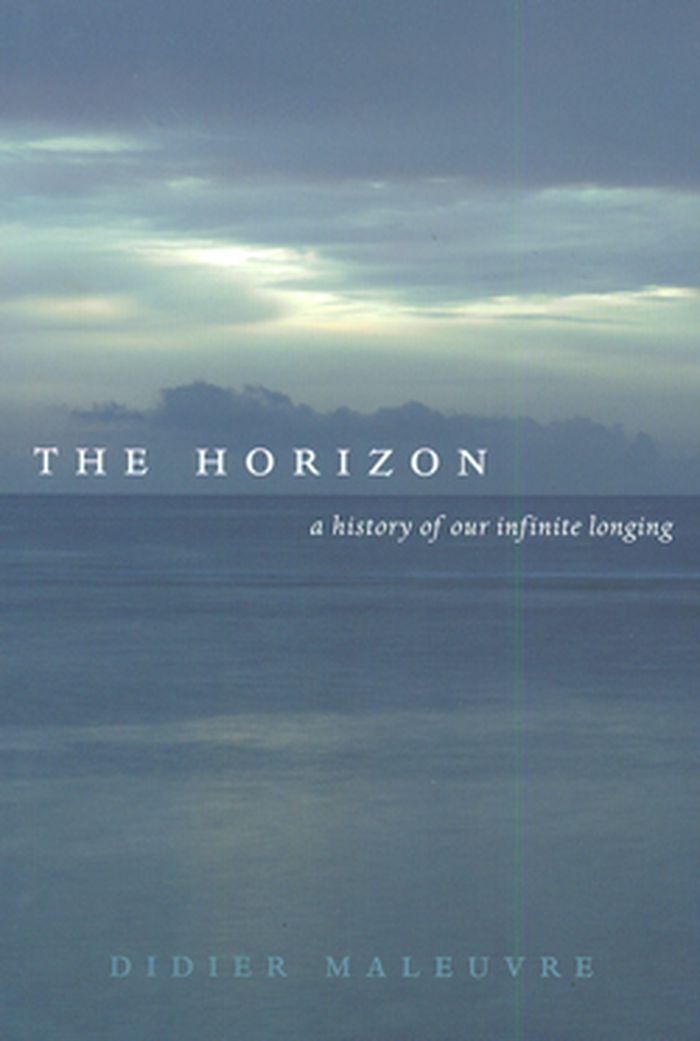
What is a horizon? A line where land meets sky? The end of the world or the beginning of perception? In this brilliant, engaging, and stimulating history, Didier Maleuvre journeys to the outer reaches of human experience and explores philosophy, religion, and art to understand our struggle and fascination with limits—of life, knowledge, existence, and death. Maleuvre sweeps us through a vast cultural landscape, enabling us to experience each stopping place as the cusp of a limitless journey, whether he is discussing the works of Picasso, Gothic architecture, Beethoven, or General Relativity. If, as Aristotle said, philosophy begins in wonder, then this remarkable book shows us how wonder—the urge to know beyond the conceivable—is itself the engine of culture.
The horizon: A history of our infinite longing
Actions:
Prix:
$32.95
(disponible sur commande)
Résumé:
What is a horizon? A line where land meets sky? The end of the world or the beginning of perception? In this brilliant, engaging, and stimulating history, Didier Maleuvre journeys to the outer reaches of human experience and explores philosophy, religion, and art to understand our struggle and fascination with limits—of life, knowledge, existence, and death. Maleuvre sweeps us through a vast cultural landscape, enabling us to experience each stopping place as the cusp of a limitless journey, whether he is discussing the works of Picasso, Gothic architecture, Beethoven, or General Relativity. If, as Aristotle said, philosophy begins in wonder, then this remarkable book shows us how wonder—the urge to know beyond the conceivable—is itself the engine of culture.
Classification:
livres
livres
Publication:
janvier 2011
janvier 2011
Sujet:
Théorie de l’art
Théorie de l’art
Classification:
livres
livres
Actions:
Prix:
$74.95
(disponible en magasin)
Résumé:
A photo-collage of past and present street visuals in Asia, Aestheticizing Public Space explores the domestic, regional, and global nexus of East Asian cities through their graffiti, street art, and other visual forms in public space. Attempting to unfold the complex positions of these images in the urban spatial politics of their respective regions, Lu Pan explores how(...)
$74.95
(disponible en magasin)
Résumé:
A photo-collage of past and present street visuals in Asia, Aestheticizing Public Space explores the domestic, regional, and global nexus of East Asian cities through their graffiti, street art, and other visual forms in public space. Attempting to unfold the complex positions of these images in the urban spatial politics of their respective regions, Lu Pan explores how(...)
Titre:
Aestheticizing Public Space: street visual politics in east asian cities
Actions:
Prix:
$74.95
(disponible en magasin)
Résumé:
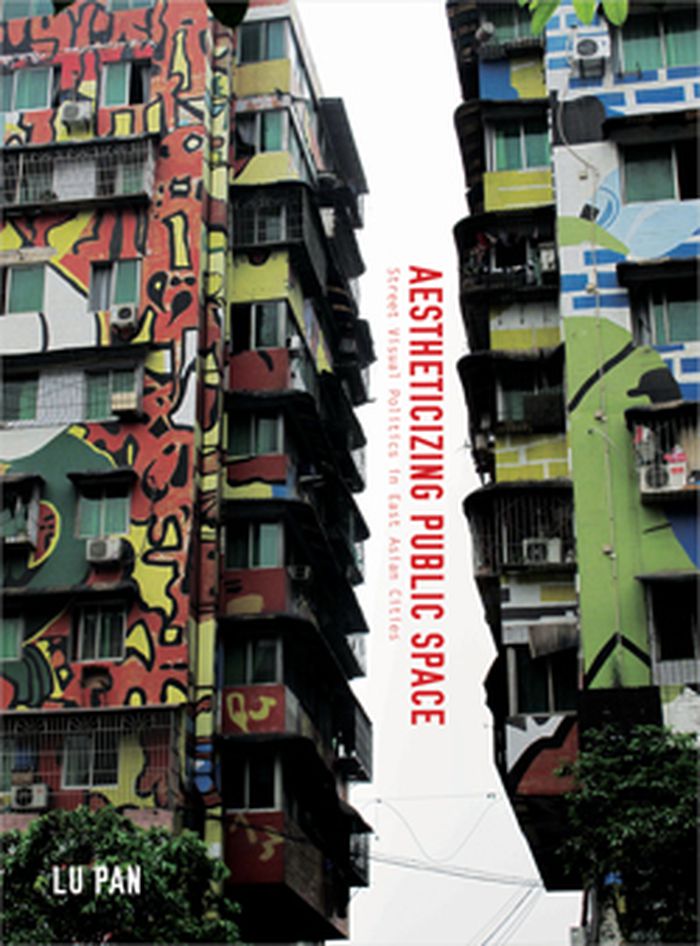
A photo-collage of past and present street visuals in Asia, Aestheticizing Public Space explores the domestic, regional, and global nexus of East Asian cities through their graffiti, street art, and other visual forms in public space. Attempting to unfold the complex positions of these images in the urban spatial politics of their respective regions, Lu Pan explores how graffiti in East Asia reflects the relationship between aesthetics and politics. The book situates itself in a contested dynamic relationship among human bodies, visual modernity, social or moral norms, styles, and historical experiences and narratives. On a broader level, this book aims to shed light on how aesthetics and politics are mobilized in different contested spaces and media forms, in which the producer and the spectator change and exchange their identities.
Aestheticizing Public Space: street visual politics in east asian cities
Actions:
Prix:
$74.95
(disponible en magasin)
Résumé:
A photo-collage of past and present street visuals in Asia, Aestheticizing Public Space explores the domestic, regional, and global nexus of East Asian cities through their graffiti, street art, and other visual forms in public space. Attempting to unfold the complex positions of these images in the urban spatial politics of their respective regions, Lu Pan explores how graffiti in East Asia reflects the relationship between aesthetics and politics. The book situates itself in a contested dynamic relationship among human bodies, visual modernity, social or moral norms, styles, and historical experiences and narratives. On a broader level, this book aims to shed light on how aesthetics and politics are mobilized in different contested spaces and media forms, in which the producer and the spectator change and exchange their identities.
Classification:
livres
livres
Publication:
novembre 2015
novembre 2015
Classification:
livres
livres
Titre:
The architectural model: histories of the miniature and the prototype, the exemplar and the muse
The architectural model: histories of the miniature and the prototype, the exemplar and the muse
Actions:
Prix:
$60.00
(disponible sur commande)
Résumé:
For more than five hundred years, architects have employed three-dimensional models as tools to test, refine, and illustrate their ideas. But, as Matthew Mindrup shows, the uses of physical architectural models extend beyond mere representation. An architectural model can also simulate, instruct, inspire, and generate architectural designs. It can be, among other things,(...)
$60.00
(disponible sur commande)
Résumé:
For more than five hundred years, architects have employed three-dimensional models as tools to test, refine, and illustrate their ideas. But, as Matthew Mindrup shows, the uses of physical architectural models extend beyond mere representation. An architectural model can also simulate, instruct, inspire, and generate architectural designs. It can be, among other things,(...)
Titre:
The architectural model: histories of the miniature and the prototype, the exemplar and the muse
Actions:
Prix:
$60.00
(disponible sur commande)
Résumé:
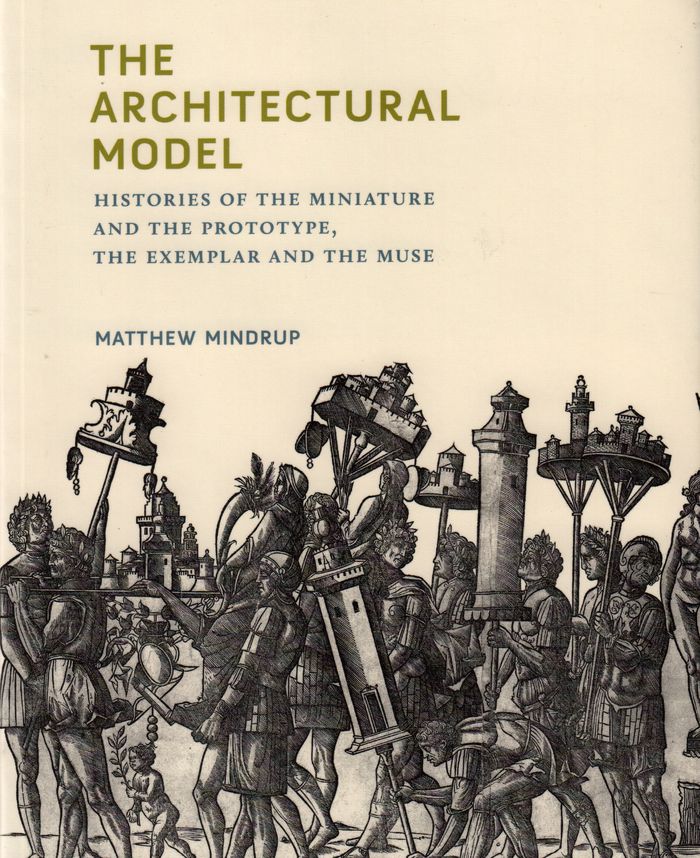
For more than five hundred years, architects have employed three-dimensional models as tools to test, refine, and illustrate their ideas. But, as Matthew Mindrup shows, the uses of physical architectural models extend beyond mere representation. An architectural model can also simulate, instruct, inspire, and generate architectural designs. It can be, among other things, sign, souvenir, toy, funerary object, didactic tool, medium, or muse. In this book, Mindrup surveys the history of architectural models by investigating their uses, both theoretical and practical. Tracing the architectural model's development from antiquity to the present, Mindrup also offers an interpretive framework for understanding each of its applications in the context of time and place. He first examines models meant to portray extant, fantastic, or proposed structures, describing their use in ancient funerary or dedicatory practices, in which models are endowed with magical power; as a medium for architectural reverie and inspiration; and as prototypes for twentieth-century experimental designs. Mindrup then considers models that exemplify certain architectural uses, exploring the influence of Leon Battista Alberti's dictum that models be simple, lest they distract from the architect's ideas; analyzing the model as a generative tool; and investigating allegorical, analogical, and anagogical interpretations of models. Mindrup's histories show how the model can be a surrogate for the architectural structure itself, or for the experience of its formal, tactile, and sensory complexity; and beyond that, that the manipulation, play, experimentation, and dreaming enabled by models allow us to imagine architecture in new ways.
The architectural model: histories of the miniature and the prototype, the exemplar and the muse
Actions:
Prix:
$60.00
(disponible sur commande)
Résumé:
For more than five hundred years, architects have employed three-dimensional models as tools to test, refine, and illustrate their ideas. But, as Matthew Mindrup shows, the uses of physical architectural models extend beyond mere representation. An architectural model can also simulate, instruct, inspire, and generate architectural designs. It can be, among other things, sign, souvenir, toy, funerary object, didactic tool, medium, or muse. In this book, Mindrup surveys the history of architectural models by investigating their uses, both theoretical and practical. Tracing the architectural model's development from antiquity to the present, Mindrup also offers an interpretive framework for understanding each of its applications in the context of time and place. He first examines models meant to portray extant, fantastic, or proposed structures, describing their use in ancient funerary or dedicatory practices, in which models are endowed with magical power; as a medium for architectural reverie and inspiration; and as prototypes for twentieth-century experimental designs. Mindrup then considers models that exemplify certain architectural uses, exploring the influence of Leon Battista Alberti's dictum that models be simple, lest they distract from the architect's ideas; analyzing the model as a generative tool; and investigating allegorical, analogical, and anagogical interpretations of models. Mindrup's histories show how the model can be a surrogate for the architectural structure itself, or for the experience of its formal, tactile, and sensory complexity; and beyond that, that the manipulation, play, experimentation, and dreaming enabled by models allow us to imagine architecture in new ways.
Classification:
livres
livres
Publication:
octobre 2019
octobre 2019
Sujet:
Théorie de l’architecture
Théorie de l’architecture
Classification:
livres
livres
Actions:
Prix:
$25.00
(disponible sur commande)
Résumé:
From Gordon Matta-Clark to Lawrence Weiner, Bruce Nauman to Alison Knowles, the question of site locates itself in issues of public space, at the intersection of the imagined and the real, at the juncture of performance and architectural production. By anthologizing essays, documents, and interviews by leading critics, historians, and artists on issues of(...)
$25.00
(disponible sur commande)
Résumé:
From Gordon Matta-Clark to Lawrence Weiner, Bruce Nauman to Alison Knowles, the question of site locates itself in issues of public space, at the intersection of the imagined and the real, at the juncture of performance and architectural production. By anthologizing essays, documents, and interviews by leading critics, historians, and artists on issues of(...)
Titre:
Surface tension : problematics of site
Actions:
Prix:
$25.00
(disponible sur commande)
Résumé:
From Gordon Matta-Clark to Lawrence Weiner, Bruce Nauman to Alison Knowles, the question of site locates itself in issues of public space, at the intersection of the imagined and the real, at the juncture of performance and architectural production. By anthologizing essays, documents, and interviews by leading critics, historians, and artists on issues of site-specificity, conceptualism, feminism, and architecture practice, "Surface Tension" reveals the connections between cultural production and the very spaces in which such work functions. These textual explorations are complemented by extensive documentation of related projects, both historical and contemporary, by artists, architects, and performance artists, including 'Coughing Piece', a never-before released 1961 audio work by Yoko Ono; an obscure audio work by Nauman from 1969; projects by Suzanne Lacy, a leading figure in the development of conceptual practice and public art; and an experimental text by Jane Rendell on psychic architectures. Conversations occur between the pages of "Surface Tension", between theoretical analysis and modes of practice, that activate the publication as a site itself, one participating in a broad field of knowledge. Includes an audio CD of the sound art pieces. Artists Include: Gordon Matta-Clark, Lawrence Weiner,Jan Hofer, Melissa Dyne, Kim Abeles, Carol Brown, Christof Migone, Michael Rakowitz, Eyal Weizman, Rafael Lazano-Hemmer, Tanja Jordan, Lizzie Scott, Tim Durfee, Lize Mogel, Suzanne Lacy, Michael Asher, Bruce Nauman, Lucky Kitchen, Michael Prime, Alison Knowles, and Yoko Ono, amongst others.
Surface tension : problematics of site
Actions:
Prix:
$25.00
(disponible sur commande)
Résumé:
From Gordon Matta-Clark to Lawrence Weiner, Bruce Nauman to Alison Knowles, the question of site locates itself in issues of public space, at the intersection of the imagined and the real, at the juncture of performance and architectural production. By anthologizing essays, documents, and interviews by leading critics, historians, and artists on issues of site-specificity, conceptualism, feminism, and architecture practice, "Surface Tension" reveals the connections between cultural production and the very spaces in which such work functions. These textual explorations are complemented by extensive documentation of related projects, both historical and contemporary, by artists, architects, and performance artists, including 'Coughing Piece', a never-before released 1961 audio work by Yoko Ono; an obscure audio work by Nauman from 1969; projects by Suzanne Lacy, a leading figure in the development of conceptual practice and public art; and an experimental text by Jane Rendell on psychic architectures. Conversations occur between the pages of "Surface Tension", between theoretical analysis and modes of practice, that activate the publication as a site itself, one participating in a broad field of knowledge. Includes an audio CD of the sound art pieces. Artists Include: Gordon Matta-Clark, Lawrence Weiner,Jan Hofer, Melissa Dyne, Kim Abeles, Carol Brown, Christof Migone, Michael Rakowitz, Eyal Weizman, Rafael Lazano-Hemmer, Tanja Jordan, Lizzie Scott, Tim Durfee, Lize Mogel, Suzanne Lacy, Michael Asher, Bruce Nauman, Lucky Kitchen, Michael Prime, Alison Knowles, and Yoko Ono, amongst others.
Classification:
livres
livres
Publication:
décembre 2002, Los Angeles
décembre 2002, Los Angeles
Sujet:
Acoustique
Acoustique
Classification:
livres
livres
Titre:
Benrath Palace and park
Benrath Palace and park
Actions:
Prix:
$52.50
(disponible en magasin)
Résumé:
The Benrath Palace and Park ensemble harmoniously unites apparent opposites. Completed in 1770 according to plans drawn up by Nicolas de Pigage, architecture and landscape merge, complementing and enhancing one another. And so it is not surprising that the palace and gardens not only have landmark status, but that the park has also been declared a nature sanctuary. The(...)
$52.50
(disponible en magasin)
Résumé:
The Benrath Palace and Park ensemble harmoniously unites apparent opposites. Completed in 1770 according to plans drawn up by Nicolas de Pigage, architecture and landscape merge, complementing and enhancing one another. And so it is not surprising that the palace and gardens not only have landmark status, but that the park has also been declared a nature sanctuary. The(...)
Titre:
Benrath Palace and park
Actions:
Prix:
$52.50
(disponible en magasin)
Résumé:
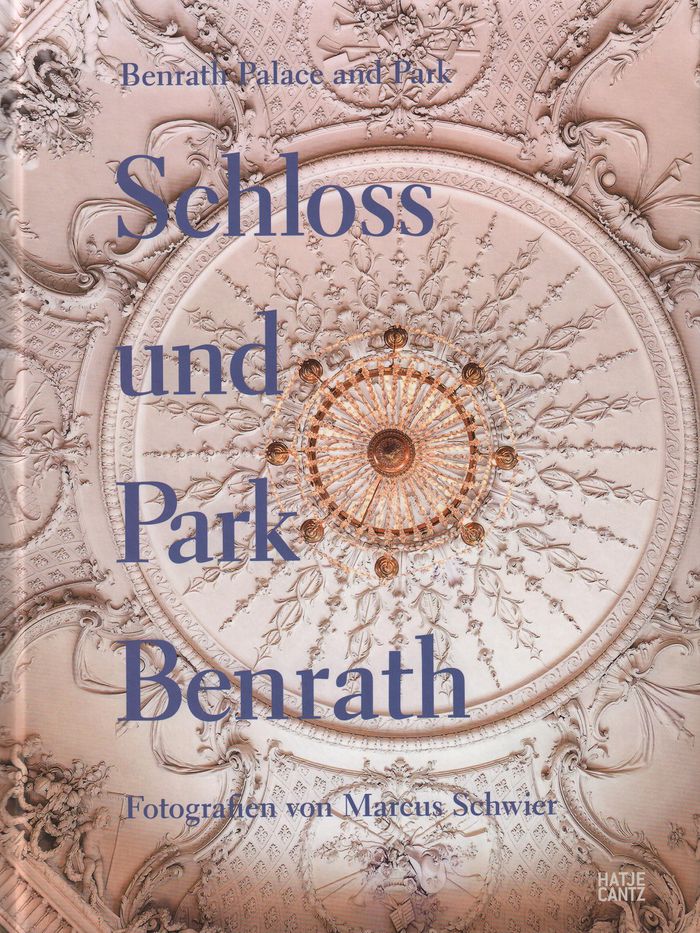
The Benrath Palace and Park ensemble harmoniously unites apparent opposites. Completed in 1770 according to plans drawn up by Nicolas de Pigage, architecture and landscape merge, complementing and enhancing one another. And so it is not surprising that the palace and gardens not only have landmark status, but that the park has also been declared a nature sanctuary. The Benrath Palace and Park Foundation has dedicated itself to the preservation of this unique symbiosis. It colorfully stages the encounter between the present and the past with its museums and events. Besides the history of the building and its use, this volume presents the work performed by the foundation at this exceptional site. Texts and magnificent pictures by the architectural photographer Marcus Schwier take readers on an extraordinary stroll through space and time.
Benrath Palace and park
Actions:
Prix:
$52.50
(disponible en magasin)
Résumé:
The Benrath Palace and Park ensemble harmoniously unites apparent opposites. Completed in 1770 according to plans drawn up by Nicolas de Pigage, architecture and landscape merge, complementing and enhancing one another. And so it is not surprising that the palace and gardens not only have landmark status, but that the park has also been declared a nature sanctuary. The Benrath Palace and Park Foundation has dedicated itself to the preservation of this unique symbiosis. It colorfully stages the encounter between the present and the past with its museums and events. Besides the history of the building and its use, this volume presents the work performed by the foundation at this exceptional site. Texts and magnificent pictures by the architectural photographer Marcus Schwier take readers on an extraordinary stroll through space and time.
Classification:
livres
livres
Publication:
février 2017
février 2017
Sujet:
Histoire jusqu’à 1900
Histoire jusqu’à 1900
Classification:
livres
livres
Actions:
Prix:
$55.00
(disponible sur commande)
Résumé:
Tokyo 1955–1970: A New Avant-Garde explores the extraordinary convergence of artists and other creators in Japan’s capital city during the radically transformative postwar period. Examining works from a range of media--painting, sculpture, photography, drawing, printmaking, video and film, as well as graphic design, architecture, musical composition and dance--this is the(...)
$55.00
(disponible sur commande)
Résumé:
Tokyo 1955–1970: A New Avant-Garde explores the extraordinary convergence of artists and other creators in Japan’s capital city during the radically transformative postwar period. Examining works from a range of media--painting, sculpture, photography, drawing, printmaking, video and film, as well as graphic design, architecture, musical composition and dance--this is the(...)
Titre:
Tokyo 1955-1970: a new avant-garde
Actions:
Prix:
$55.00
(disponible sur commande)
Résumé:
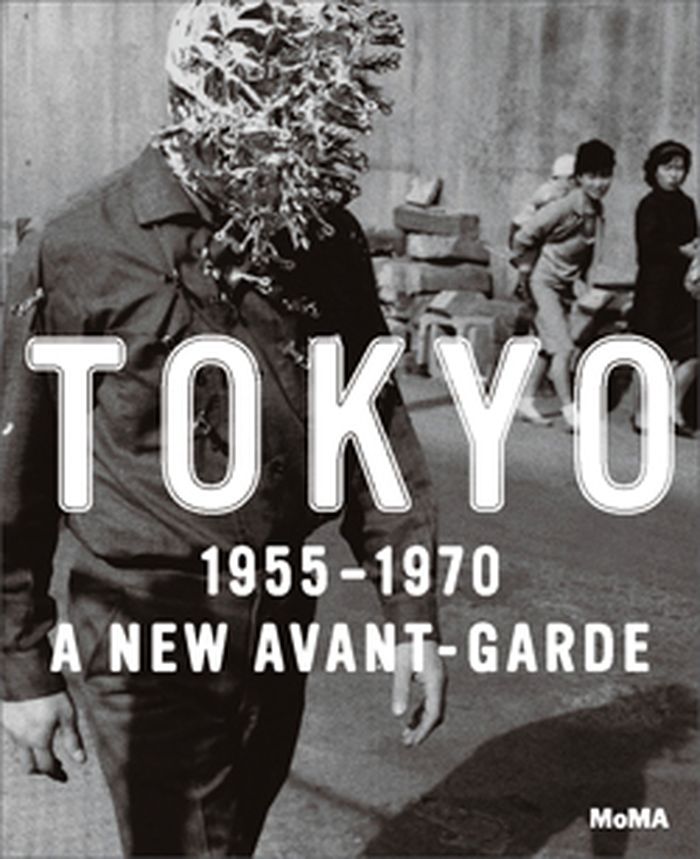
Tokyo 1955–1970: A New Avant-Garde explores the extraordinary convergence of artists and other creators in Japan’s capital city during the radically transformative postwar period. Examining works from a range of media--painting, sculpture, photography, drawing, printmaking, video and film, as well as graphic design, architecture, musical composition and dance--this is the first publication in English to focus in depth on the full scope of postwar art in Japan. Essays by scholars Hayashi Michio and Miryam Sas and curator Mika Yoshitake discuss critical concepts in art and culture at this time, including “graphism,” which manifested itself across various mediums; the development of new sculptural languages; and the “intermedia” tendency that engendered provocative cross-pollination among artistic genres. Masatoshi Nakajima provides an illustrated chronology and Yuri Mitsuda supplies artist biographies.
Tokyo 1955-1970: a new avant-garde
Actions:
Prix:
$55.00
(disponible sur commande)
Résumé:
Tokyo 1955–1970: A New Avant-Garde explores the extraordinary convergence of artists and other creators in Japan’s capital city during the radically transformative postwar period. Examining works from a range of media--painting, sculpture, photography, drawing, printmaking, video and film, as well as graphic design, architecture, musical composition and dance--this is the first publication in English to focus in depth on the full scope of postwar art in Japan. Essays by scholars Hayashi Michio and Miryam Sas and curator Mika Yoshitake discuss critical concepts in art and culture at this time, including “graphism,” which manifested itself across various mediums; the development of new sculptural languages; and the “intermedia” tendency that engendered provocative cross-pollination among artistic genres. Masatoshi Nakajima provides an illustrated chronology and Yuri Mitsuda supplies artist biographies.
Classification:
livres
livres
Publication:
octobre 2012
octobre 2012


