


35831 Résultats
Niveau de description archivistique:
Projet
Projet
Numéro de référence:
AP013.S1.D441
Description:
File documents an executed project for a psychiatric hospital in Campbellton, New Brunswick. Material in this file was produced between 1955 and 1959. File contains index cards, survey drawings, preliminary and design development drawings, working drawings, detail drawings, schedules, structural sketches and drawings, structural drawings, mechanical drawings, electrical drawings, and textual documents.
AP013.S1.D441
Description:
File documents an executed project for a psychiatric hospital in Campbellton, New Brunswick. Material in this file was produced between 1955 and 1959. File contains index cards, survey drawings, preliminary and design development drawings, working drawings, detail drawings, schedules, structural sketches and drawings, structural drawings, mechanical drawings, electrical drawings, and textual documents.
Personnes et institutions:
Date:
1955-1959
1955-1959
Titre:
Campbellton Mental Hospital - Phase III
Actions:
AP013.S1.D441
Description:
File documents an executed project for a psychiatric hospital in Campbellton, New Brunswick. Material in this file was produced between 1955 and 1959. File contains index cards, survey drawings, preliminary and design development drawings, working drawings, detail drawings, schedules, structural sketches and drawings, structural drawings, mechanical drawings, electrical drawings, and textual documents.
Campbellton Mental Hospital - Phase III
Actions:
AP013.S1.D441
Description:
File documents an executed project for a psychiatric hospital in Campbellton, New Brunswick. Material in this file was produced between 1955 and 1959. File contains index cards, survey drawings, preliminary and design development drawings, working drawings, detail drawings, schedules, structural sketches and drawings, structural drawings, mechanical drawings, electrical drawings, and textual documents.
Niveau de description archivistique:
Project
Project
Date:
1955-1959
1955-1959
Personnes et institutions:
Niveau de description archivistique:
Projet
Projet
Numéro de référence:
AP046.S1.1983.PR02
Description:
This project documents Rose’s involvement with the design phase of the Old Port of Montreal Master Plan, Montréal, Québec and consists mainly of sketches, studies and presentation drawings for the redevelopment project with very few as built or architectural plans. The project materials reflect a Romantic design aesthetic and landscape development through numerous architectural design drawings for public amenities such as park benches, pedestrian walkways, various lighting sources, pavilions and fountains. This project also includes some of Rose’s submissions to the Faubourg Quebec development project which ran concurrent with the Old Port project. For the redevelopment of the Old Port of Montréal, Master Plan, Rose worked with the following firms: Cardinal Hardy e Associes, Chan Krieger & Associates, and Jodoin Lamarre Pratt. Rose was awarded a Progressive Architecture Urban Design Award (1992) and a Prix d’excellence for Urban Design from the Ordre des architectes du Québec (1993) for the realization of this urban project. The textual records in this project include budgets, correspondence, consultation documents, and intra office communiques as well as extensive research material on the history of the Old Port of Montreal including reproductions of historical photographs. The photographs in this project largely reflect the condition of the Old Port and Rue de la Commune prior to redevelopment and were used for reference and in presentation materials.
AP046.S1.1983.PR02
Description:
This project documents Rose’s involvement with the design phase of the Old Port of Montreal Master Plan, Montréal, Québec and consists mainly of sketches, studies and presentation drawings for the redevelopment project with very few as built or architectural plans. The project materials reflect a Romantic design aesthetic and landscape development through numerous architectural design drawings for public amenities such as park benches, pedestrian walkways, various lighting sources, pavilions and fountains. This project also includes some of Rose’s submissions to the Faubourg Quebec development project which ran concurrent with the Old Port project. For the redevelopment of the Old Port of Montréal, Master Plan, Rose worked with the following firms: Cardinal Hardy e Associes, Chan Krieger & Associates, and Jodoin Lamarre Pratt. Rose was awarded a Progressive Architecture Urban Design Award (1992) and a Prix d’excellence for Urban Design from the Ordre des architectes du Québec (1993) for the realization of this urban project. The textual records in this project include budgets, correspondence, consultation documents, and intra office communiques as well as extensive research material on the history of the Old Port of Montreal including reproductions of historical photographs. The photographs in this project largely reflect the condition of the Old Port and Rue de la Commune prior to redevelopment and were used for reference and in presentation materials.
Personnes et institutions:
Date:
1983-1992
1983-1992
Titre:
Old Port of Montreal Master Plan, Montréal, Québec
Actions:
AP046.S1.1983.PR02
Description:
This project documents Rose’s involvement with the design phase of the Old Port of Montreal Master Plan, Montréal, Québec and consists mainly of sketches, studies and presentation drawings for the redevelopment project with very few as built or architectural plans. The project materials reflect a Romantic design aesthetic and landscape development through numerous architectural design drawings for public amenities such as park benches, pedestrian walkways, various lighting sources, pavilions and fountains. This project also includes some of Rose’s submissions to the Faubourg Quebec development project which ran concurrent with the Old Port project. For the redevelopment of the Old Port of Montréal, Master Plan, Rose worked with the following firms: Cardinal Hardy e Associes, Chan Krieger & Associates, and Jodoin Lamarre Pratt. Rose was awarded a Progressive Architecture Urban Design Award (1992) and a Prix d’excellence for Urban Design from the Ordre des architectes du Québec (1993) for the realization of this urban project. The textual records in this project include budgets, correspondence, consultation documents, and intra office communiques as well as extensive research material on the history of the Old Port of Montreal including reproductions of historical photographs. The photographs in this project largely reflect the condition of the Old Port and Rue de la Commune prior to redevelopment and were used for reference and in presentation materials.
Old Port of Montreal Master Plan, Montréal, Québec
Actions:
AP046.S1.1983.PR02
Description:
This project documents Rose’s involvement with the design phase of the Old Port of Montreal Master Plan, Montréal, Québec and consists mainly of sketches, studies and presentation drawings for the redevelopment project with very few as built or architectural plans. The project materials reflect a Romantic design aesthetic and landscape development through numerous architectural design drawings for public amenities such as park benches, pedestrian walkways, various lighting sources, pavilions and fountains. This project also includes some of Rose’s submissions to the Faubourg Quebec development project which ran concurrent with the Old Port project. For the redevelopment of the Old Port of Montréal, Master Plan, Rose worked with the following firms: Cardinal Hardy e Associes, Chan Krieger & Associates, and Jodoin Lamarre Pratt. Rose was awarded a Progressive Architecture Urban Design Award (1992) and a Prix d’excellence for Urban Design from the Ordre des architectes du Québec (1993) for the realization of this urban project. The textual records in this project include budgets, correspondence, consultation documents, and intra office communiques as well as extensive research material on the history of the Old Port of Montreal including reproductions of historical photographs. The photographs in this project largely reflect the condition of the Old Port and Rue de la Commune prior to redevelopment and were used for reference and in presentation materials.
Niveau de description archivistique:
Project
Project
Date:
1983-1992
1983-1992
Personnes et institutions:
Classification:
expositions
expositions
Actions:
Description:
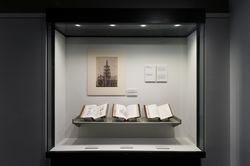
L’anatomie du livre d’architecture, une exposition présentée dans le cadre du lancement de The Anatomy of the Architectural Book d’ André Tavares, traite de la relation entre la culture du livre et celle du bâtiment, mettant au jour les axes de diffusion de la connaissance architecturale, qui vont du livre au bâti et vice-versa. À travers sept thèmes – texture, mise en(...)
L’anatomie du livre d’architecture, une exposition présentée dans le cadre du lancement de The Anatomy of the Architectural Book d’ André Tavares, traite de la relation entre la culture du livre et celle du bâtiment, mettant au jour les axes de diffusion de la connaissance architecturale, qui vont du livre au bâti et vice-versa. À travers sept thèmes – texture, mise en(...)
Date:
10 mai 2016 au 20 novembre 2016
10 mai 2016 au 20 novembre 2016
Titre:
L’anatomie du livre d’architecture
Actions:
Description:
L’anatomie du livre d’architecture, une exposition présentée dans le cadre du lancement de The Anatomy of the Architectural Book d’ André Tavares, traite de la relation entre la culture du livre et celle du bâtiment, mettant au jour les axes de diffusion de la connaissance architecturale, qui vont du livre au bâti et vice-versa. À travers sept thèmes – texture, mise en(...)
L’anatomie du livre d’architecture
Actions:
Description:
L’anatomie du livre d’architecture, une exposition présentée dans le cadre du lancement de The Anatomy of the Architectural Book d’ André Tavares, traite de la relation entre la culture du livre et celle du bâtiment, mettant au jour les axes de diffusion de la connaissance architecturale, qui vont du livre au bâti et vice-versa. À travers sept thèmes – texture, mise en(...)
Classification:
expositions
expositions
Date:
10 mai 2016 au
20 novembre 2016
10 mai 2016 au
20 novembre 2016
Niveau de description archivistique:
Projet
Projet
Numéro de référence:
AP164.S1.2002.D11
Description:
The project series documents the public commission for a project of the hotel, clubhouse and golf course ''El Toyo'', in Almería, Spain. The promoter was Alboran Golf U.T.E. The firm identified this project as number 155. The hotel has 90 double rooms including 3 suites, storage room, and a technical space underground. The roof was designed as an ecological green space, including a running path and the club house was arranged as a pavillion. "Making use of the differences in height created by the terraces proposed for the hotels Gran Terrace with the swimming pool, the Club-House will appear as a fold in the terrain, practically a topographic accident since it will be constructed by inclined concrete slabs which generate the interior space. The roof is accessible turning itself into a viewing platform for the whole complex, a strategy which gives the club a strong landscaping character.” (ARCH270975) Abalos & Herreros worked with José Maria Ezquiaga, Ángel Jaramillo Esteban, Elena Jaramillo Sánchez, Ángel Jaramillo Sánchez, Ramón Espinosa Garcia-Bermúdez, Leopoldo Espinosa Herraiz and OMA, Agustí Obiol y Luis Moya. The team won first prize for their project. It was not built, but was approved. Documenting the project are design development, presentation and working drawings, digital and reference materials, minutes, clippings, resumes, presentation documents, and project descriptions.
AP164.S1.2002.D11
Description:
The project series documents the public commission for a project of the hotel, clubhouse and golf course ''El Toyo'', in Almería, Spain. The promoter was Alboran Golf U.T.E. The firm identified this project as number 155. The hotel has 90 double rooms including 3 suites, storage room, and a technical space underground. The roof was designed as an ecological green space, including a running path and the club house was arranged as a pavillion. "Making use of the differences in height created by the terraces proposed for the hotels Gran Terrace with the swimming pool, the Club-House will appear as a fold in the terrain, practically a topographic accident since it will be constructed by inclined concrete slabs which generate the interior space. The roof is accessible turning itself into a viewing platform for the whole complex, a strategy which gives the club a strong landscaping character.” (ARCH270975) Abalos & Herreros worked with José Maria Ezquiaga, Ángel Jaramillo Esteban, Elena Jaramillo Sánchez, Ángel Jaramillo Sánchez, Ramón Espinosa Garcia-Bermúdez, Leopoldo Espinosa Herraiz and OMA, Agustí Obiol y Luis Moya. The team won first prize for their project. It was not built, but was approved. Documenting the project are design development, presentation and working drawings, digital and reference materials, minutes, clippings, resumes, presentation documents, and project descriptions.
Personnes et institutions:
Date:
2000-2005
2000-2005
Titre:
Hotel Toyo, Almería, Spain (2002)
Actions:
AP164.S1.2002.D11
Description:
The project series documents the public commission for a project of the hotel, clubhouse and golf course ''El Toyo'', in Almería, Spain. The promoter was Alboran Golf U.T.E. The firm identified this project as number 155. The hotel has 90 double rooms including 3 suites, storage room, and a technical space underground. The roof was designed as an ecological green space, including a running path and the club house was arranged as a pavillion. "Making use of the differences in height created by the terraces proposed for the hotels Gran Terrace with the swimming pool, the Club-House will appear as a fold in the terrain, practically a topographic accident since it will be constructed by inclined concrete slabs which generate the interior space. The roof is accessible turning itself into a viewing platform for the whole complex, a strategy which gives the club a strong landscaping character.” (ARCH270975) Abalos & Herreros worked with José Maria Ezquiaga, Ángel Jaramillo Esteban, Elena Jaramillo Sánchez, Ángel Jaramillo Sánchez, Ramón Espinosa Garcia-Bermúdez, Leopoldo Espinosa Herraiz and OMA, Agustí Obiol y Luis Moya. The team won first prize for their project. It was not built, but was approved. Documenting the project are design development, presentation and working drawings, digital and reference materials, minutes, clippings, resumes, presentation documents, and project descriptions.
Hotel Toyo, Almería, Spain (2002)
Actions:
AP164.S1.2002.D11
Description:
The project series documents the public commission for a project of the hotel, clubhouse and golf course ''El Toyo'', in Almería, Spain. The promoter was Alboran Golf U.T.E. The firm identified this project as number 155. The hotel has 90 double rooms including 3 suites, storage room, and a technical space underground. The roof was designed as an ecological green space, including a running path and the club house was arranged as a pavillion. "Making use of the differences in height created by the terraces proposed for the hotels Gran Terrace with the swimming pool, the Club-House will appear as a fold in the terrain, practically a topographic accident since it will be constructed by inclined concrete slabs which generate the interior space. The roof is accessible turning itself into a viewing platform for the whole complex, a strategy which gives the club a strong landscaping character.” (ARCH270975) Abalos & Herreros worked with José Maria Ezquiaga, Ángel Jaramillo Esteban, Elena Jaramillo Sánchez, Ángel Jaramillo Sánchez, Ramón Espinosa Garcia-Bermúdez, Leopoldo Espinosa Herraiz and OMA, Agustí Obiol y Luis Moya. The team won first prize for their project. It was not built, but was approved. Documenting the project are design development, presentation and working drawings, digital and reference materials, minutes, clippings, resumes, presentation documents, and project descriptions.
Niveau de description archivistique:
Project
Project
Date:
2000-2005
2000-2005
Personnes et institutions:
Classification:
documents textuels
documents textuels
Numéro de référence:
ARCH258885
Description:
Correspondance avec le Ministère des travaux publics et avec des fournisseurs, incluant des dessins de détails, des coupures de presse, et des calculs d'Ernest Cormier.
ARCH258885
Description:
Correspondance avec le Ministère des travaux publics et avec des fournisseurs, incluant des dessins de détails, des coupures de presse, et des calculs d'Ernest Cormier.
Personnes et institutions:
Date:
1941, 1950
1941, 1950
Titre:
Correspondance avec ministère et fournisseurs, coupures de presse et calculs
Actions:
ARCH258885
Description:
Correspondance avec le Ministère des travaux publics et avec des fournisseurs, incluant des dessins de détails, des coupures de presse, et des calculs d'Ernest Cormier.
Correspondance avec ministère et fournisseurs, coupures de presse et calculs
Actions:
ARCH258885
Description:
Correspondance avec le Ministère des travaux publics et avec des fournisseurs, incluant des dessins de détails, des coupures de presse, et des calculs d'Ernest Cormier.
Classification:
documents textuels
documents textuels
Date:
1941, 1950
1941, 1950
Personnes et institutions:
Classification:
dessins
dessins
Numéro de référence:
DR1995:0166:016
Description:
Includes presentation drawings for Oldham Pub, one with annotations, including plans, sections, elevations, details, measured sketches, perspectives, sketch, and site plan. The project for Oldham Pub includes a public pub, bar-related facilities, and boarding facilities such as sitting rooms, bedrooms, and a common kitchen and dining area. Materials and construction details for the interior are indicated on a detailed plan and section of the cocktail bar. The exterior of the pub is shown to be constructed of brick with concrete banding. A long covered colonnade at the front provides a sheltered entrance. A housing complex, garden, shops, and parking, are adjacent to the pub.
DR1995:0166:016
Description:
Includes presentation drawings for Oldham Pub, one with annotations, including plans, sections, elevations, details, measured sketches, perspectives, sketch, and site plan. The project for Oldham Pub includes a public pub, bar-related facilities, and boarding facilities such as sitting rooms, bedrooms, and a common kitchen and dining area. Materials and construction details for the interior are indicated on a detailed plan and section of the cocktail bar. The exterior of the pub is shown to be constructed of brick with concrete banding. A long covered colonnade at the front provides a sheltered entrance. A housing complex, garden, shops, and parking, are adjacent to the pub.
Personnes et institutions:
Titre:
Presentation drawings for Oldham Pub, one with annotations
Actions:
DR1995:0166:016
Description:
Includes presentation drawings for Oldham Pub, one with annotations, including plans, sections, elevations, details, measured sketches, perspectives, sketch, and site plan. The project for Oldham Pub includes a public pub, bar-related facilities, and boarding facilities such as sitting rooms, bedrooms, and a common kitchen and dining area. Materials and construction details for the interior are indicated on a detailed plan and section of the cocktail bar. The exterior of the pub is shown to be constructed of brick with concrete banding. A long covered colonnade at the front provides a sheltered entrance. A housing complex, garden, shops, and parking, are adjacent to the pub.
Presentation drawings for Oldham Pub, one with annotations
Actions:
DR1995:0166:016
Description:
Includes presentation drawings for Oldham Pub, one with annotations, including plans, sections, elevations, details, measured sketches, perspectives, sketch, and site plan. The project for Oldham Pub includes a public pub, bar-related facilities, and boarding facilities such as sitting rooms, bedrooms, and a common kitchen and dining area. Materials and construction details for the interior are indicated on a detailed plan and section of the cocktail bar. The exterior of the pub is shown to be constructed of brick with concrete banding. A long covered colonnade at the front provides a sheltered entrance. A housing complex, garden, shops, and parking, are adjacent to the pub.
Classification:
dessins
dessins
Personnes et institutions:
Niveau de description archivistique:
Projet
Projet
Titre:
Applausi [Applause] (1968)
Applausi [Applause] (1968)
Numéro de référence:
AP207.S1.1968.PR05
Description:
This project series documents Pettena's design for "Applausi", a suitcase split in half to create two flashing signs with the word "Applausi". The signs were designed for the music performance by Vittorio Gelmetti, "La descrittione del gran paese" a post-pop opera for which Pettena was also in charge of the scene direction. The performance was presented at the 6th Festival of Avant-Garde Music at the Teatro Biondo, in Palermo, in December 1968. The signs were placed on each side of the stage, toward the audience. "The text, together with others that indicated the piano, the singer and the cello, reminded the audience of the habits of an illiterate public participating in a televised show." [1] The "Applausi" signs were also presented in the exhibition "The living currency" in Varsaw, at the Teatr Dramatyczny in 2010, and at the 6th Berlin Biennale at the Hau1, Die lebende Münze, in 2010. The project series contains photographs of the 'Applausi' signs, a drawing of the sign, and a draft poster showing the display of the stage for Vittorio Gelmetti performance at the 6th Festival of Avant-Garde Music. The project series also includes photographs of the music performance, a video of Pettena and the sign at the Berlin Biennale in 2010, and project descriptions in English and Italian. Source: [1] Marco Scotini, editor. Non-conscious architecture: Gianni Pettena, Sternberg Press, 2018, 235 pages. p. 102.
AP207.S1.1968.PR05
Description:
This project series documents Pettena's design for "Applausi", a suitcase split in half to create two flashing signs with the word "Applausi". The signs were designed for the music performance by Vittorio Gelmetti, "La descrittione del gran paese" a post-pop opera for which Pettena was also in charge of the scene direction. The performance was presented at the 6th Festival of Avant-Garde Music at the Teatro Biondo, in Palermo, in December 1968. The signs were placed on each side of the stage, toward the audience. "The text, together with others that indicated the piano, the singer and the cello, reminded the audience of the habits of an illiterate public participating in a televised show." [1] The "Applausi" signs were also presented in the exhibition "The living currency" in Varsaw, at the Teatr Dramatyczny in 2010, and at the 6th Berlin Biennale at the Hau1, Die lebende Münze, in 2010. The project series contains photographs of the 'Applausi' signs, a drawing of the sign, and a draft poster showing the display of the stage for Vittorio Gelmetti performance at the 6th Festival of Avant-Garde Music. The project series also includes photographs of the music performance, a video of Pettena and the sign at the Berlin Biennale in 2010, and project descriptions in English and Italian. Source: [1] Marco Scotini, editor. Non-conscious architecture: Gianni Pettena, Sternberg Press, 2018, 235 pages. p. 102.
Personnes et institutions:
Date:
circa 1968-2015
circa 1968-2015
Titre:
Applausi [Applause] (1968)
Actions:
AP207.S1.1968.PR05
Description:
This project series documents Pettena's design for "Applausi", a suitcase split in half to create two flashing signs with the word "Applausi". The signs were designed for the music performance by Vittorio Gelmetti, "La descrittione del gran paese" a post-pop opera for which Pettena was also in charge of the scene direction. The performance was presented at the 6th Festival of Avant-Garde Music at the Teatro Biondo, in Palermo, in December 1968. The signs were placed on each side of the stage, toward the audience. "The text, together with others that indicated the piano, the singer and the cello, reminded the audience of the habits of an illiterate public participating in a televised show." [1] The "Applausi" signs were also presented in the exhibition "The living currency" in Varsaw, at the Teatr Dramatyczny in 2010, and at the 6th Berlin Biennale at the Hau1, Die lebende Münze, in 2010. The project series contains photographs of the 'Applausi' signs, a drawing of the sign, and a draft poster showing the display of the stage for Vittorio Gelmetti performance at the 6th Festival of Avant-Garde Music. The project series also includes photographs of the music performance, a video of Pettena and the sign at the Berlin Biennale in 2010, and project descriptions in English and Italian. Source: [1] Marco Scotini, editor. Non-conscious architecture: Gianni Pettena, Sternberg Press, 2018, 235 pages. p. 102.
Applausi [Applause] (1968)
Actions:
AP207.S1.1968.PR05
Description:
This project series documents Pettena's design for "Applausi", a suitcase split in half to create two flashing signs with the word "Applausi". The signs were designed for the music performance by Vittorio Gelmetti, "La descrittione del gran paese" a post-pop opera for which Pettena was also in charge of the scene direction. The performance was presented at the 6th Festival of Avant-Garde Music at the Teatro Biondo, in Palermo, in December 1968. The signs were placed on each side of the stage, toward the audience. "The text, together with others that indicated the piano, the singer and the cello, reminded the audience of the habits of an illiterate public participating in a televised show." [1] The "Applausi" signs were also presented in the exhibition "The living currency" in Varsaw, at the Teatr Dramatyczny in 2010, and at the 6th Berlin Biennale at the Hau1, Die lebende Münze, in 2010. The project series contains photographs of the 'Applausi' signs, a drawing of the sign, and a draft poster showing the display of the stage for Vittorio Gelmetti performance at the 6th Festival of Avant-Garde Music. The project series also includes photographs of the music performance, a video of Pettena and the sign at the Berlin Biennale in 2010, and project descriptions in English and Italian. Source: [1] Marco Scotini, editor. Non-conscious architecture: Gianni Pettena, Sternberg Press, 2018, 235 pages. p. 102.
Niveau de description archivistique:
Project
Project
Date:
circa 1968-2015
circa 1968-2015
Personnes et institutions:
Classification:
documents textuels, photographies
documents textuels, photographies
Titre:
Documentation et intentions
Documentation et intentions
Numéro de référence:
ARCH167188
Description:
Documentation et intentions 4 feuillets: "Projet de l'esplanade du Faubourg Québec" texte de Jacques Rousseau 1 feuillet: Lettre de Pierre-Luc Dumas (SHDM), 24 août 1994 1 feuillet: Notes manuscrites d'une réunion avec Pierre-Luc Dumas 9 feuillets: Documentation préparatoire pour un document intitulé: "Possibilités ouvertes par le plan; Aménagement du front maritime" 4 photographies couleurs: Vues de la maquette, 10 x 15 cm 34 pages: Rapport préparé pour la SHDM intitulé: "Le paysage du Faubourg Québec, Énoncé du projet d'espace public: secteur ouest" par Ph. Poullaouec-Gonidec & als. mars 1994 1 enveloppe scellée avec notes manuscrites à l'endos
ARCH167188
Description:
Documentation et intentions 4 feuillets: "Projet de l'esplanade du Faubourg Québec" texte de Jacques Rousseau 1 feuillet: Lettre de Pierre-Luc Dumas (SHDM), 24 août 1994 1 feuillet: Notes manuscrites d'une réunion avec Pierre-Luc Dumas 9 feuillets: Documentation préparatoire pour un document intitulé: "Possibilités ouvertes par le plan; Aménagement du front maritime" 4 photographies couleurs: Vues de la maquette, 10 x 15 cm 34 pages: Rapport préparé pour la SHDM intitulé: "Le paysage du Faubourg Québec, Énoncé du projet d'espace public: secteur ouest" par Ph. Poullaouec-Gonidec & als. mars 1994 1 enveloppe scellée avec notes manuscrites à l'endos
Personnes et institutions:
Date:
août 1994 - mars 1995
août 1994 - mars 1995
Titre:
Documentation et intentions
Actions:
ARCH167188
Description:
Documentation et intentions 4 feuillets: "Projet de l'esplanade du Faubourg Québec" texte de Jacques Rousseau 1 feuillet: Lettre de Pierre-Luc Dumas (SHDM), 24 août 1994 1 feuillet: Notes manuscrites d'une réunion avec Pierre-Luc Dumas 9 feuillets: Documentation préparatoire pour un document intitulé: "Possibilités ouvertes par le plan; Aménagement du front maritime" 4 photographies couleurs: Vues de la maquette, 10 x 15 cm 34 pages: Rapport préparé pour la SHDM intitulé: "Le paysage du Faubourg Québec, Énoncé du projet d'espace public: secteur ouest" par Ph. Poullaouec-Gonidec & als. mars 1994 1 enveloppe scellée avec notes manuscrites à l'endos
Documentation et intentions
Actions:
ARCH167188
Description:
Documentation et intentions 4 feuillets: "Projet de l'esplanade du Faubourg Québec" texte de Jacques Rousseau 1 feuillet: Lettre de Pierre-Luc Dumas (SHDM), 24 août 1994 1 feuillet: Notes manuscrites d'une réunion avec Pierre-Luc Dumas 9 feuillets: Documentation préparatoire pour un document intitulé: "Possibilités ouvertes par le plan; Aménagement du front maritime" 4 photographies couleurs: Vues de la maquette, 10 x 15 cm 34 pages: Rapport préparé pour la SHDM intitulé: "Le paysage du Faubourg Québec, Énoncé du projet d'espace public: secteur ouest" par Ph. Poullaouec-Gonidec & als. mars 1994 1 enveloppe scellée avec notes manuscrites à l'endos
Classification:
documents textuels, photographies
documents textuels, photographies
Date:
août 1994 - mars 1995
août 1994 - mars 1995
Personnes et institutions:
Niveau de description archivistique:
Série(s)
Série(s)
Numéro de référence:
AP162.S9
Description:
Series documents the contribution of architect Max Taut to the correspondence circle of Die gläserne Kette, with Max Taut writing under the pseudonym Kein Name. Born in 1884 in Königsberg, Germany, Max Taut trained in carpentry and building before working in an architectural firm in Karlsruhe, Germany. In 1911, he worked independently, and later shared a practice with his brother Bruno Taut and Franz Hoffman (who joined them after 1914). His first architectural projects consisted primarily of schools. After his military service from 1914 to 1918, Max Taut joined the Arbeisrat für Kunst and the Novembersgruppe. After the First World War, he undertook several architectural projects, both private and public commissions such as housing and office buildings (mainly in Berlin), and also worked on projects for exhibitions. Unable to pratice during the Nazi Regime and the Second World War, Max Taut return to his architectural practice after the war and taught as a professor of architecture at the Hochschule für bildende Kunst in Berlin from 1945 to 1954. He undertook mainly housing development projects during this period. He died in Berlin in 1967. (Source: Ian Boyd Whyte, Bruno Taut and the Architecture of Activism. Cambridge: Cambridge University Press, 1982) The series comprises part of the correspondence of Max Taut to the Die gläserne Kette circle and related drawings. The series also includes photographic materials of some of his architectural projects.
AP162.S9
Description:
Series documents the contribution of architect Max Taut to the correspondence circle of Die gläserne Kette, with Max Taut writing under the pseudonym Kein Name. Born in 1884 in Königsberg, Germany, Max Taut trained in carpentry and building before working in an architectural firm in Karlsruhe, Germany. In 1911, he worked independently, and later shared a practice with his brother Bruno Taut and Franz Hoffman (who joined them after 1914). His first architectural projects consisted primarily of schools. After his military service from 1914 to 1918, Max Taut joined the Arbeisrat für Kunst and the Novembersgruppe. After the First World War, he undertook several architectural projects, both private and public commissions such as housing and office buildings (mainly in Berlin), and also worked on projects for exhibitions. Unable to pratice during the Nazi Regime and the Second World War, Max Taut return to his architectural practice after the war and taught as a professor of architecture at the Hochschule für bildende Kunst in Berlin from 1945 to 1954. He undertook mainly housing development projects during this period. He died in Berlin in 1967. (Source: Ian Boyd Whyte, Bruno Taut and the Architecture of Activism. Cambridge: Cambridge University Press, 1982) The series comprises part of the correspondence of Max Taut to the Die gläserne Kette circle and related drawings. The series also includes photographic materials of some of his architectural projects.
Personnes et institutions:
Date:
circa 1919 -1920
circa 1919 -1920
Titre:
Max Taut
Actions:
AP162.S9
Description:
Series documents the contribution of architect Max Taut to the correspondence circle of Die gläserne Kette, with Max Taut writing under the pseudonym Kein Name. Born in 1884 in Königsberg, Germany, Max Taut trained in carpentry and building before working in an architectural firm in Karlsruhe, Germany. In 1911, he worked independently, and later shared a practice with his brother Bruno Taut and Franz Hoffman (who joined them after 1914). His first architectural projects consisted primarily of schools. After his military service from 1914 to 1918, Max Taut joined the Arbeisrat für Kunst and the Novembersgruppe. After the First World War, he undertook several architectural projects, both private and public commissions such as housing and office buildings (mainly in Berlin), and also worked on projects for exhibitions. Unable to pratice during the Nazi Regime and the Second World War, Max Taut return to his architectural practice after the war and taught as a professor of architecture at the Hochschule für bildende Kunst in Berlin from 1945 to 1954. He undertook mainly housing development projects during this period. He died in Berlin in 1967. (Source: Ian Boyd Whyte, Bruno Taut and the Architecture of Activism. Cambridge: Cambridge University Press, 1982) The series comprises part of the correspondence of Max Taut to the Die gläserne Kette circle and related drawings. The series also includes photographic materials of some of his architectural projects.
Max Taut
Actions:
AP162.S9
Description:
Series documents the contribution of architect Max Taut to the correspondence circle of Die gläserne Kette, with Max Taut writing under the pseudonym Kein Name. Born in 1884 in Königsberg, Germany, Max Taut trained in carpentry and building before working in an architectural firm in Karlsruhe, Germany. In 1911, he worked independently, and later shared a practice with his brother Bruno Taut and Franz Hoffman (who joined them after 1914). His first architectural projects consisted primarily of schools. After his military service from 1914 to 1918, Max Taut joined the Arbeisrat für Kunst and the Novembersgruppe. After the First World War, he undertook several architectural projects, both private and public commissions such as housing and office buildings (mainly in Berlin), and also worked on projects for exhibitions. Unable to pratice during the Nazi Regime and the Second World War, Max Taut return to his architectural practice after the war and taught as a professor of architecture at the Hochschule für bildende Kunst in Berlin from 1945 to 1954. He undertook mainly housing development projects during this period. He died in Berlin in 1967. (Source: Ian Boyd Whyte, Bruno Taut and the Architecture of Activism. Cambridge: Cambridge University Press, 1982) The series comprises part of the correspondence of Max Taut to the Die gläserne Kette circle and related drawings. The series also includes photographic materials of some of his architectural projects.
Niveau de description archivistique:
series
series
Date:
circa 1919 -1920
circa 1919 -1920
Personnes et institutions:
Classification:
expositions
expositions
Titre:
Miroirs / Mirrors
Miroirs / Mirrors
Actions:
Description:
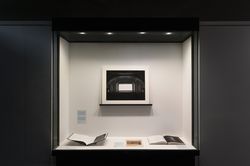
Miroirs/ Mirrors prend forme à travers un dialogue indirect avec l’exposition L’histoire, par ailleurs: Go Hasegawa, Kersten Geers, David Van Severen, qui prend racine dans les références et les résonnances partagées entre les travaux de deux pratiques contemporaines mises en présence de l’histoire. Alors que L’histoire, par ailleurs se fonde sur limpression que lon a du(...)
Miroirs/ Mirrors prend forme à travers un dialogue indirect avec l’exposition L’histoire, par ailleurs: Go Hasegawa, Kersten Geers, David Van Severen, qui prend racine dans les références et les résonnances partagées entre les travaux de deux pratiques contemporaines mises en présence de l’histoire. Alors que L’histoire, par ailleurs se fonde sur limpression que lon a du(...)
Localisation:
Vitrines
Vitrines
Date:
22 juin 2017 au 14 janvier 2018
22 juin 2017 au 14 janvier 2018
Titre:
Miroirs / Mirrors
Actions:
Description:
Miroirs/ Mirrors prend forme à travers un dialogue indirect avec l’exposition L’histoire, par ailleurs: Go Hasegawa, Kersten Geers, David Van Severen, qui prend racine dans les références et les résonnances partagées entre les travaux de deux pratiques contemporaines mises en présence de l’histoire. Alors que L’histoire, par ailleurs se fonde sur limpression que lon a du(...)
Miroirs / Mirrors
Actions:
Description:
Miroirs/ Mirrors prend forme à travers un dialogue indirect avec l’exposition L’histoire, par ailleurs: Go Hasegawa, Kersten Geers, David Van Severen, qui prend racine dans les références et les résonnances partagées entre les travaux de deux pratiques contemporaines mises en présence de l’histoire. Alors que L’histoire, par ailleurs se fonde sur limpression que lon a du(...)
Classification:
expositions
expositions
Date:
22 juin 2017 au
14 janvier 2018
22 juin 2017 au
14 janvier 2018
Localisation:
Vitrines
Vitrines


