


1067 Résultats
Classification:
livres
livres
Actions:
Prix:
$49.95
(disponible sur commande)
Résumé:
Observation is the most pervasive and fundamental practice of all the modern sciences, both natural and human. Its instruments include not only the naked senses but also tools such as the telescope and microscope, the questionnaire, the photographic plate, the notebook, the glassed-in beehive, and myriad other ingenious inventions designed to make the invisible visible,(...)
$49.95
(disponible sur commande)
Résumé:
Observation is the most pervasive and fundamental practice of all the modern sciences, both natural and human. Its instruments include not only the naked senses but also tools such as the telescope and microscope, the questionnaire, the photographic plate, the notebook, the glassed-in beehive, and myriad other ingenious inventions designed to make the invisible visible,(...)
Sujet:
Théorie de l’architecture
Théorie de l’architecture
Publication:
février 2011
février 2011
Titre:
Histories of scientific observation
Actions:
Prix:
$49.95
(disponible sur commande)
Résumé:
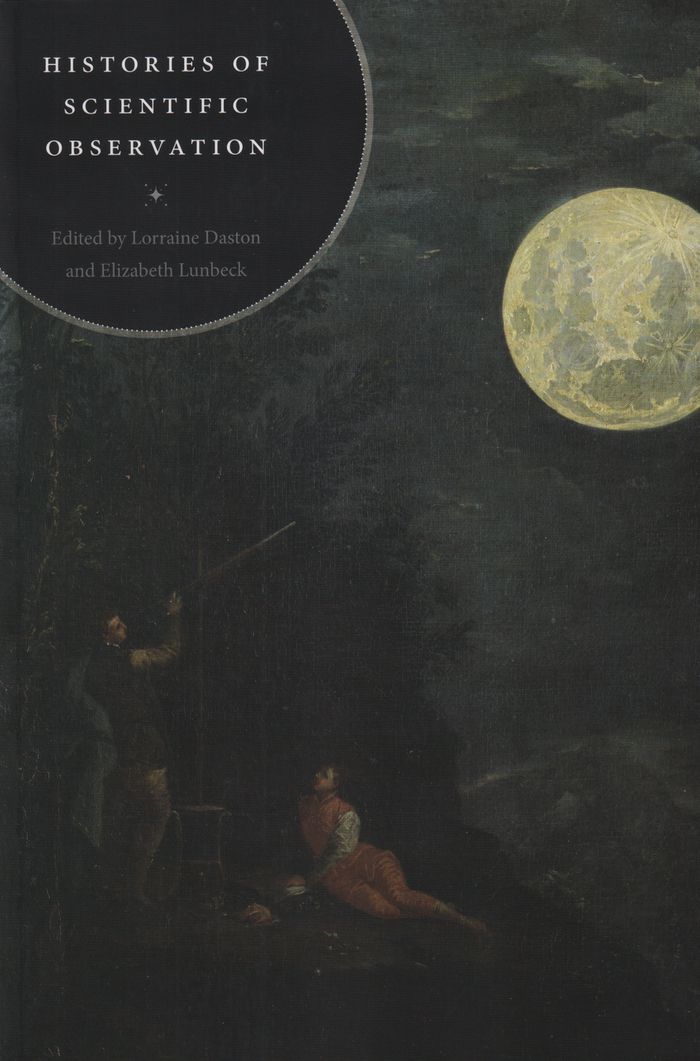
Observation is the most pervasive and fundamental practice of all the modern sciences, both natural and human. Its instruments include not only the naked senses but also tools such as the telescope and microscope, the questionnaire, the photographic plate, the notebook, the glassed-in beehive, and myriad other ingenious inventions designed to make the invisible visible, the evanescent permanent, the abstract concrete. Yet observation has almost never been considered as an object of historical inquiry in itself. This wide-ranging collection offers the first examination of the history of scientific observation in its own right, as both epistemic category and scientific practice. Histories of Scientific Observation features engaging episodes drawn from across the spectrum of the natural and human sciences, ranging from meteorology, medicine, and natural history to economics, astronomy, and psychology.
Histories of scientific observation
Actions:
Prix:
$49.95
(disponible sur commande)
Résumé:
Observation is the most pervasive and fundamental practice of all the modern sciences, both natural and human. Its instruments include not only the naked senses but also tools such as the telescope and microscope, the questionnaire, the photographic plate, the notebook, the glassed-in beehive, and myriad other ingenious inventions designed to make the invisible visible, the evanescent permanent, the abstract concrete. Yet observation has almost never been considered as an object of historical inquiry in itself. This wide-ranging collection offers the first examination of the history of scientific observation in its own right, as both epistemic category and scientific practice. Histories of Scientific Observation features engaging episodes drawn from across the spectrum of the natural and human sciences, ranging from meteorology, medicine, and natural history to economics, astronomy, and psychology.
Classification:
livres
livres
Publication:
février 2011
février 2011
Sujet:
Théorie de l’architecture
Théorie de l’architecture
Classification:
livres
livres
Actions:
Prix:
$38.95
(disponible sur commande)
Résumé:
Before skyscrapers forever transformed the landscape of the modern metropolis, the conveyance that made them possible had to be created. Invented in New York in the 1850s, the elevator became an urban fact of life on both sides of the Atlantic by the early twentieth century. While it may at first glance seem a modest innovation, it had wide-ranging effects, from(...)
$38.95
(disponible sur commande)
Résumé:
Before skyscrapers forever transformed the landscape of the modern metropolis, the conveyance that made them possible had to be created. Invented in New York in the 1850s, the elevator became an urban fact of life on both sides of the Atlantic by the early twentieth century. While it may at first glance seem a modest innovation, it had wide-ranging effects, from(...)
Titre:
Lifted: a cultural history of the elevator
Actions:
Prix:
$38.95
(disponible sur commande)
Résumé:
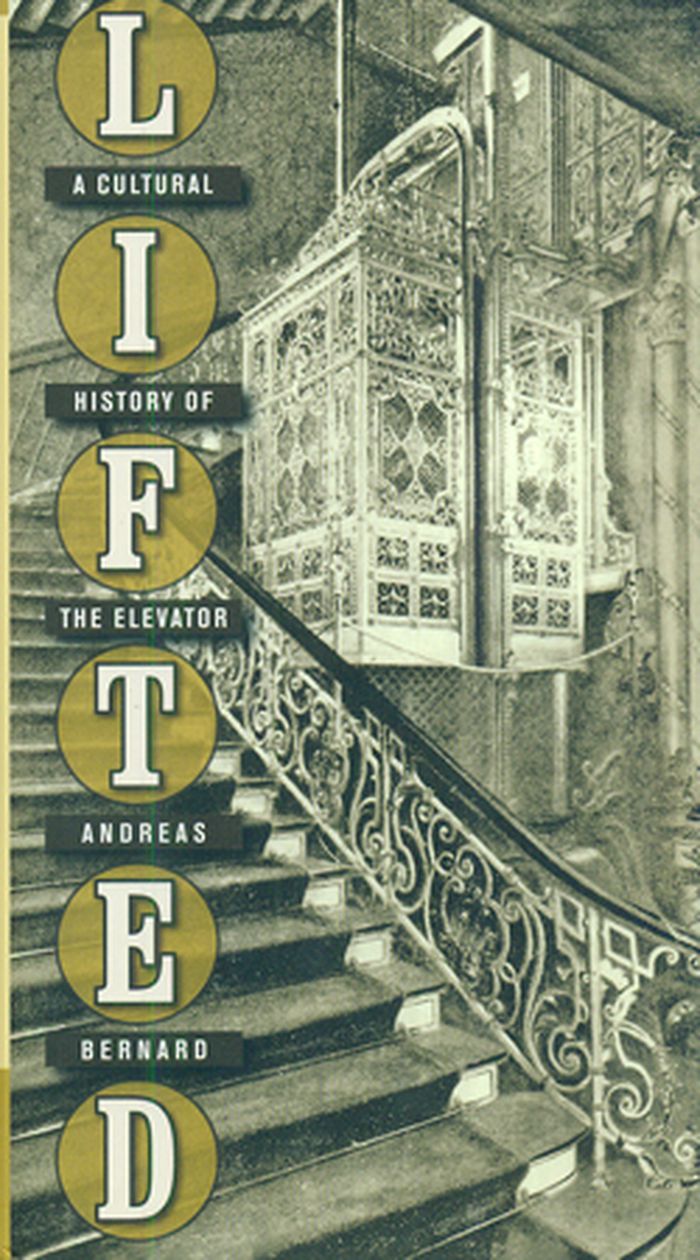
Before skyscrapers forever transformed the landscape of the modern metropolis, the conveyance that made them possible had to be created. Invented in New York in the 1850s, the elevator became an urban fact of life on both sides of the Atlantic by the early twentieth century. While it may at first glance seem a modest innovation, it had wide-ranging effects, from fundamentally restructuring building design to reinforcing social class hierarchies by moving luxury apartments to upper levels, previously the domain of the lower classes. The cramped elevator cabin itself served as a reflection of life in modern growing cities, as a space of simultaneous intimacy and anonymity, constantly in motion. In this book, Andreas Bernard explores how the appearance of this new element changed notions of verticality and urban space.
Lifted: a cultural history of the elevator
Actions:
Prix:
$38.95
(disponible sur commande)
Résumé:
Before skyscrapers forever transformed the landscape of the modern metropolis, the conveyance that made them possible had to be created. Invented in New York in the 1850s, the elevator became an urban fact of life on both sides of the Atlantic by the early twentieth century. While it may at first glance seem a modest innovation, it had wide-ranging effects, from fundamentally restructuring building design to reinforcing social class hierarchies by moving luxury apartments to upper levels, previously the domain of the lower classes. The cramped elevator cabin itself served as a reflection of life in modern growing cities, as a space of simultaneous intimacy and anonymity, constantly in motion. In this book, Andreas Bernard explores how the appearance of this new element changed notions of verticality and urban space.
Classification:
livres
livres
Publication:
février 2014
février 2014
Sujet:
Théorie de l’architecture
Théorie de l’architecture
Classification:
livres
livres
Prix:
$24.95
(disponible sur commande)
Résumé:
In The Aura of a Hole explores the work of A Laurie Palmer an ar tist, writer, and teacher. Her work is concerned, most immediately, with resistance to privatisation, and more generally, with theoretical and material explorations of matter's active nature as it asserts itself on different scales and at different speeds. Her work takes various forms - as sculpture,(...)
$24.95
(disponible sur commande)
Résumé:
In The Aura of a Hole explores the work of A Laurie Palmer an ar tist, writer, and teacher. Her work is concerned, most immediately, with resistance to privatisation, and more generally, with theoretical and material explorations of matter's active nature as it asserts itself on different scales and at different speeds. Her work takes various forms - as sculpture,(...)
Titre:
In the aura of a hole : exploring sites of material extraction
Actions:
Prix:
$24.95
(disponible sur commande)
Résumé:
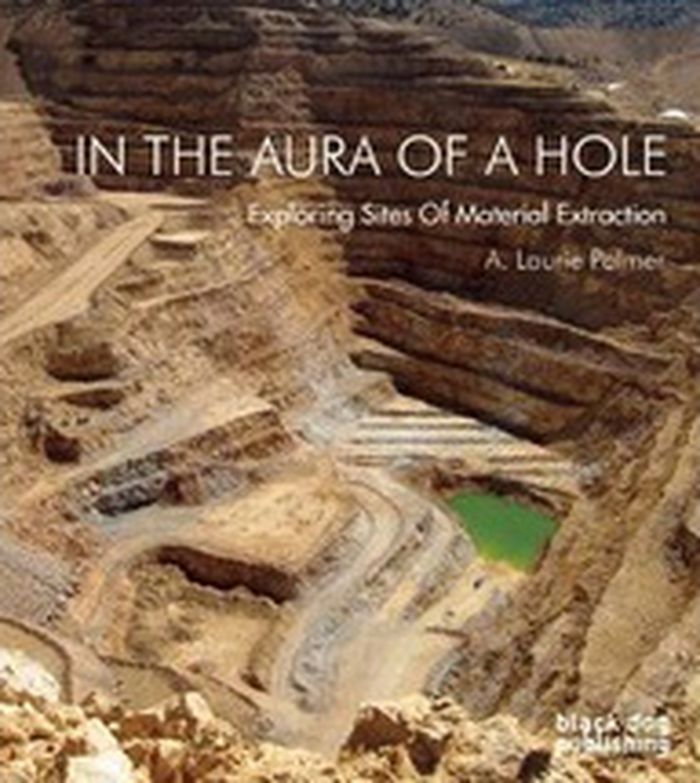
In The Aura of a Hole explores the work of A Laurie Palmer an ar tist, writer, and teacher. Her work is concerned, most immediately, with resistance to privatisation, and more generally, with theoretical and material explorations of matter's active nature as it asserts itself on different scales and at different speeds. Her work takes various forms - as sculpture, installation, public projects, and writing. This publication focuses specifically on a decade-long project Palmer undertook - an extended exploration of mineral extraction sites in the US. Through her narration, the project discusses themes of the raw scientific and mechanical aspects of the industry, alongside environmental justice, First Nation rights, industrial agriculture, chemical weapons, low temperature physics, the Cold War, the Iraq War, biotechnology, bio geochronology, nanotechnology, Homeland Security, globalised trade, global warming and unemployment.
In the aura of a hole : exploring sites of material extraction
Actions:
Prix:
$24.95
(disponible sur commande)
Résumé:
In The Aura of a Hole explores the work of A Laurie Palmer an ar tist, writer, and teacher. Her work is concerned, most immediately, with resistance to privatisation, and more generally, with theoretical and material explorations of matter's active nature as it asserts itself on different scales and at different speeds. Her work takes various forms - as sculpture, installation, public projects, and writing. This publication focuses specifically on a decade-long project Palmer undertook - an extended exploration of mineral extraction sites in the US. Through her narration, the project discusses themes of the raw scientific and mechanical aspects of the industry, alongside environmental justice, First Nation rights, industrial agriculture, chemical weapons, low temperature physics, the Cold War, the Iraq War, biotechnology, bio geochronology, nanotechnology, Homeland Security, globalised trade, global warming and unemployment.
Classification:
livres
livres
Publication:
juillet 2014
juillet 2014
Sujet:
Théorie de l’architecture
Théorie de l’architecture
Classification:
livres
livres
Actions:
Prix:
$67.50
(disponible sur commande)
Résumé:
Design is changing rapidly. The ideological freedom gained over the past ten or fifteen years, combined with new insights in all design related fields, leads to playful experimentation and unprecedented proposals in design, architecture and art. You could say that design is spreading its wings to explore all opportunities for putting human creativity to good use. In(...)
$67.50
(disponible sur commande)
Résumé:
Design is changing rapidly. The ideological freedom gained over the past ten or fifteen years, combined with new insights in all design related fields, leads to playful experimentation and unprecedented proposals in design, architecture and art. You could say that design is spreading its wings to explore all opportunities for putting human creativity to good use. In(...)
Titre:
Less + more : droog design in context
Actions:
Prix:
$67.50
(disponible sur commande)
Résumé:
Design is changing rapidly. The ideological freedom gained over the past ten or fifteen years, combined with new insights in all design related fields, leads to playful experimentation and unprecedented proposals in design, architecture and art. You could say that design is spreading its wings to explore all opportunities for putting human creativity to good use. In addition the new emphasis on sound, image simulation, electronic services, product context as well as corporate image, opens up an inspiring panorama of gradually decreasing materiality. In many cases objects are no longer the aim of the design process. Rather they become illustrations of intentions, use and everything that may happen around them. This way of thinking is spreading across all disciplines of applied as well as fine arts. Design is evolving into the skill of controlling the immaterial, evoking experiences and establishing identities. This richly illustrated new publication by Renny Ramakers, co-founder of Droog Design, describes and unravels all these new developments in applied expression, using examples from design, art, architecture and of course Droog Design itself.
Less + more : droog design in context
Actions:
Prix:
$67.50
(disponible sur commande)
Résumé:
Design is changing rapidly. The ideological freedom gained over the past ten or fifteen years, combined with new insights in all design related fields, leads to playful experimentation and unprecedented proposals in design, architecture and art. You could say that design is spreading its wings to explore all opportunities for putting human creativity to good use. In addition the new emphasis on sound, image simulation, electronic services, product context as well as corporate image, opens up an inspiring panorama of gradually decreasing materiality. In many cases objects are no longer the aim of the design process. Rather they become illustrations of intentions, use and everything that may happen around them. This way of thinking is spreading across all disciplines of applied as well as fine arts. Design is evolving into the skill of controlling the immaterial, evoking experiences and establishing identities. This richly illustrated new publication by Renny Ramakers, co-founder of Droog Design, describes and unravels all these new developments in applied expression, using examples from design, art, architecture and of course Droog Design itself.
Classification:
livres
livres
Publication:
avril 2002, Rotterdam
avril 2002, Rotterdam
Sujet:
Design, monographies
Design, monographies
Classification:
livres
livres
Actions:
Prix:
$44.95
(disponible sur commande)
Résumé:
CIAM (Congrès Internationaux d'Architecture Moderne), founded in Switzerland in 1928, was an avant-garde association of architects intended to advance both modernism and internationalism in architecture. CIAM saw itself as an elite group revolutionizing architecture to serve the interests of society. Its members included some of the best-known architects of the twentieth(...)
$44.95
(disponible sur commande)
Résumé:
CIAM (Congrès Internationaux d'Architecture Moderne), founded in Switzerland in 1928, was an avant-garde association of architects intended to advance both modernism and internationalism in architecture. CIAM saw itself as an elite group revolutionizing architecture to serve the interests of society. Its members included some of the best-known architects of the twentieth(...)
Sujet:
Théorie de l’urbanisme
Théorie de l’urbanisme
Publication:
octobre 2002, Cambridge, Massachusetts
octobre 2002, Cambridge, Massachusetts
Titre:
The CIAM discourse on urbanism, 1928-1960
Actions:
Prix:
$44.95
(disponible sur commande)
Résumé:
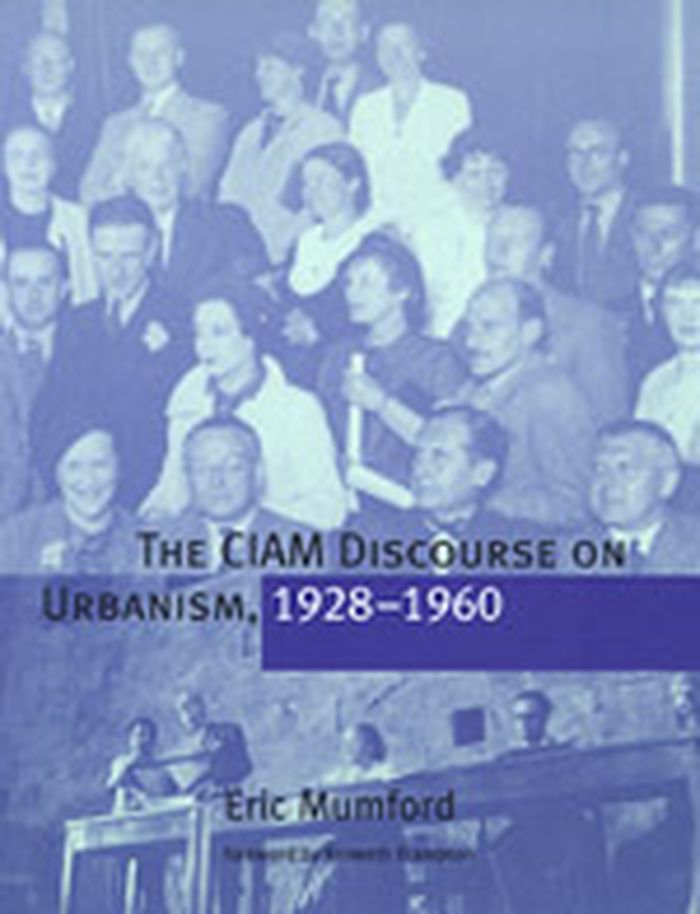
CIAM (Congrès Internationaux d'Architecture Moderne), founded in Switzerland in 1928, was an avant-garde association of architects intended to advance both modernism and internationalism in architecture. CIAM saw itself as an elite group revolutionizing architecture to serve the interests of society. Its members included some of the best-known architects of the twentieth century, such as Le Corbusier, Walter Gropius, and Richard Neutra, but also hundreds of others who looked to it for doctrines on how to shape the urban environment in a rapidly changing world. In this first book-length history of the organization, architectural historian Eric Mumford focuses on CIAM's discourse to trace the development and promotion of its influential concept of the "Functional City." He views official doctrines and pronouncements in relation to the changing circumstances of the members, revealing how CIAM in the 1930s began to resemble a kind of syndicalist party oriented toward winning over any suitable authority, regardless of political orientation. Mumford also looks at CIAM's efforts after World War II to find a new basis for a socially engaged architecture and describes the attempts by the group of younger members called Team 10 to radically revise CIAM's mission in the 1950s, efforts that led to the organization's dissolution in 1959.
The CIAM discourse on urbanism, 1928-1960
Actions:
Prix:
$44.95
(disponible sur commande)
Résumé:
CIAM (Congrès Internationaux d'Architecture Moderne), founded in Switzerland in 1928, was an avant-garde association of architects intended to advance both modernism and internationalism in architecture. CIAM saw itself as an elite group revolutionizing architecture to serve the interests of society. Its members included some of the best-known architects of the twentieth century, such as Le Corbusier, Walter Gropius, and Richard Neutra, but also hundreds of others who looked to it for doctrines on how to shape the urban environment in a rapidly changing world. In this first book-length history of the organization, architectural historian Eric Mumford focuses on CIAM's discourse to trace the development and promotion of its influential concept of the "Functional City." He views official doctrines and pronouncements in relation to the changing circumstances of the members, revealing how CIAM in the 1930s began to resemble a kind of syndicalist party oriented toward winning over any suitable authority, regardless of political orientation. Mumford also looks at CIAM's efforts after World War II to find a new basis for a socially engaged architecture and describes the attempts by the group of younger members called Team 10 to radically revise CIAM's mission in the 1950s, efforts that led to the organization's dissolution in 1959.
Classification:
livres
livres
Publication:
octobre 2002, Cambridge, Massachusetts
octobre 2002, Cambridge, Massachusetts
Sujet:
Théorie de l’urbanisme
Théorie de l’urbanisme
Classification:
livres
livres
Actions:
Prix:
$50.00
(disponible sur commande)
Résumé:
In landscape architecture, representation has become the subject of contention and much discussion. While computer techniques have been a catalyst for change across the field of design as a whole, nowhere have the conventions of representation been called into question more than in landscape architecture – which in itself is undergoing a process of reinvention. With the(...)
$50.00
(disponible sur commande)
Résumé:
In landscape architecture, representation has become the subject of contention and much discussion. While computer techniques have been a catalyst for change across the field of design as a whole, nowhere have the conventions of representation been called into question more than in landscape architecture – which in itself is undergoing a process of reinvention. With the(...)
Titre:
Drawing and reinventing landscape
Actions:
Prix:
$50.00
(disponible sur commande)
Résumé:
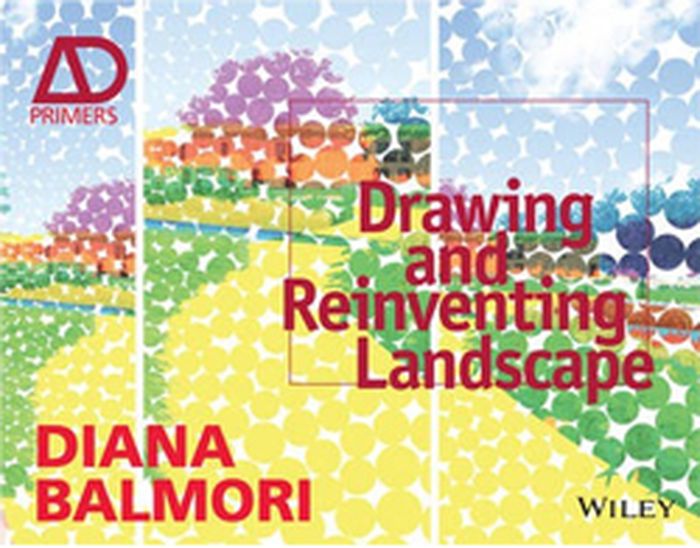
In landscape architecture, representation has become the subject of contention and much discussion. While computer techniques have been a catalyst for change across the field of design as a whole, nowhere have the conventions of representation been called into question more than in landscape architecture – which in itself is undergoing a process of reinvention. With the onset of rapid urbanisation and our shifting relationship with nature, landscape architecture has proved a potent lens for expressing a wider dialogue taking place in the world. It is, however, only through the introduction of innovative forms of representation – whether digital, analogue or hybrid – that one most vividly sees the emergence of the new. In this book, Diana Balmori explores notions of representation in the discipline at large and across time. She takes us back to landscape design’s roots in the seventeenth century in France and the eighteenth century in England, when it first grappled with questions of imagined exterior space. She explores the discipline’s relationship to painting and the influence of cartography with its bird's-eye views, topographic sections and perspectives. She highlights how new attempts at representation by modern landscape artists such as Patricia Johanson, Ian Hamilton Finlay and David Hockney continue to wrestle with the depiction of landscape.
Drawing and reinventing landscape
Actions:
Prix:
$50.00
(disponible sur commande)
Résumé:
In landscape architecture, representation has become the subject of contention and much discussion. While computer techniques have been a catalyst for change across the field of design as a whole, nowhere have the conventions of representation been called into question more than in landscape architecture – which in itself is undergoing a process of reinvention. With the onset of rapid urbanisation and our shifting relationship with nature, landscape architecture has proved a potent lens for expressing a wider dialogue taking place in the world. It is, however, only through the introduction of innovative forms of representation – whether digital, analogue or hybrid – that one most vividly sees the emergence of the new. In this book, Diana Balmori explores notions of representation in the discipline at large and across time. She takes us back to landscape design’s roots in the seventeenth century in France and the eighteenth century in England, when it first grappled with questions of imagined exterior space. She explores the discipline’s relationship to painting and the influence of cartography with its bird's-eye views, topographic sections and perspectives. She highlights how new attempts at representation by modern landscape artists such as Patricia Johanson, Ian Hamilton Finlay and David Hockney continue to wrestle with the depiction of landscape.
Classification:
livres
livres
Publication:
janvier 2015
janvier 2015
Sujet:
Théorie du paysage
Théorie du paysage
Classification:
livres
livres
Titre:
Venice and the East
Venice and the East
Actions:
Prix:
$96.00
(disponible sur commande)
Résumé:
This lively and richly illustrated book investigates the influence of oriental trade and travel on medieval Venice and its architecture. Architectural historian Deborah Howard examines the experiences of Venetian merchants overseas, focusing on links (...)
$96.00
(disponible sur commande)
Résumé:
This lively and richly illustrated book investigates the influence of oriental trade and travel on medieval Venice and its architecture. Architectural historian Deborah Howard examines the experiences of Venetian merchants overseas, focusing on links (...)
Publication:
octobre 2000, New Haven
octobre 2000, New Haven
Titre:
Venice and the East
Actions:
Prix:
$96.00
(disponible sur commande)
Résumé:
This lively and richly illustrated book investigates the influence of oriental trade and travel on medieval Venice and its architecture. Architectural historian Deborah Howard examines the experiences of Venetian merchants overseas, focusing on links with Egypt, Syria, and Palestine, as well as with Persia and the Silk Route. She argues that many Venetians gained insight into Islamic culture through personal contacts with their Muslim trading partners. Based on wide-ranging multidisciplinary research, this book examines the mechanisms that governed the exchange of visual culture across ideological boundaries before the age of printing. Howard explores a range of building types that reflect the impact of Islamic imagery, paying special attention to two icon buildings, San Marco and the Palazzo Ducale. She considers the complexities of importing Muslim ideas to an unambiguously Christian city, itself the point of embarkation for pilgrims to the Holy Land.
Venice and the East
Actions:
Prix:
$96.00
(disponible sur commande)
Résumé:
This lively and richly illustrated book investigates the influence of oriental trade and travel on medieval Venice and its architecture. Architectural historian Deborah Howard examines the experiences of Venetian merchants overseas, focusing on links with Egypt, Syria, and Palestine, as well as with Persia and the Silk Route. She argues that many Venetians gained insight into Islamic culture through personal contacts with their Muslim trading partners. Based on wide-ranging multidisciplinary research, this book examines the mechanisms that governed the exchange of visual culture across ideological boundaries before the age of printing. Howard explores a range of building types that reflect the impact of Islamic imagery, paying special attention to two icon buildings, San Marco and the Palazzo Ducale. She considers the complexities of importing Muslim ideas to an unambiguously Christian city, itself the point of embarkation for pilgrims to the Holy Land.
Classification:
livres
livres
Publication:
octobre 2000, New Haven
octobre 2000, New Haven
Classification:
périodiques
périodiques
Actions:
Prix:
$15.00
(disponible sur commande)
Résumé:
The first issue of 2026 opens with a tribute to the late Frank Owen Gehry (1929-2025). Larry Wayne Richards looks at how Frank’s legacy intersected with his hometown of Toronto, beyond the AGO and in-construction Forma towers; The editorial parses the news that the Ontario Place Protectors case is heading to the Supreme Court. A coalition is challenging the provincial(...)
$15.00
(disponible sur commande)
Résumé:
The first issue of 2026 opens with a tribute to the late Frank Owen Gehry (1929-2025). Larry Wayne Richards looks at how Frank’s legacy intersected with his hometown of Toronto, beyond the AGO and in-construction Forma towers; The editorial parses the news that the Ontario Place Protectors case is heading to the Supreme Court. A coalition is challenging the provincial(...)
Titre:
Canadian Architect v.71 n.01 : February 2026
Actions:
Prix:
$15.00
(disponible sur commande)
Résumé:
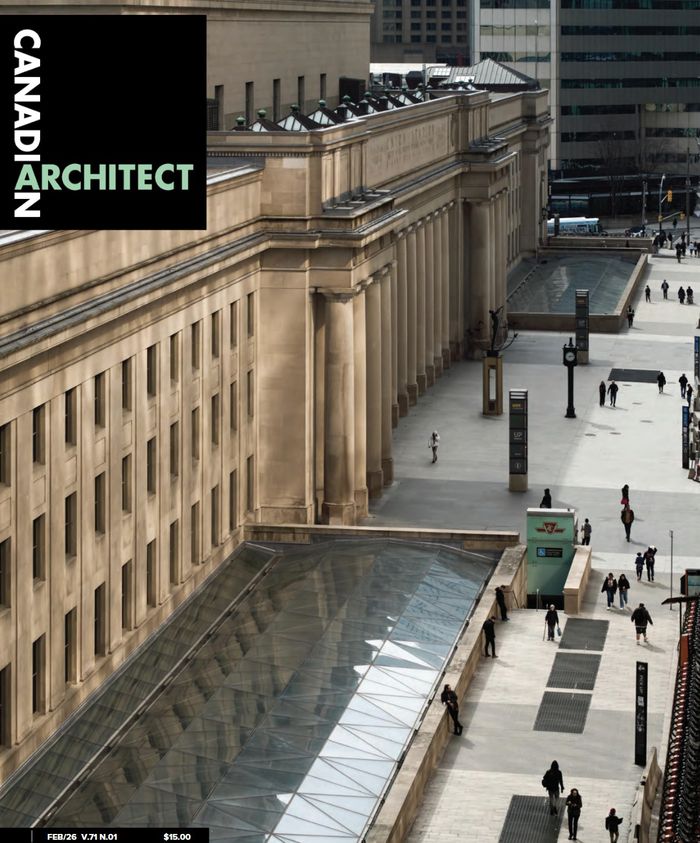
The first issue of 2026 opens with a tribute to the late Frank Owen Gehry (1929-2025). Larry Wayne Richards looks at how Frank’s legacy intersected with his hometown of Toronto, beyond the AGO and in-construction Forma towers; The editorial parses the news that the Ontario Place Protectors case is heading to the Supreme Court. A coalition is challenging the provincial government’s ability to exempt the waterfront land from environmental and heritage requirements, and to broadly indemnify itself against civil litigation related to the development. This month’s cover story is the redevelopment of Toronto’s Union Station, a 14-year-long project led by NORR Architects & Engineers with heritage architect EVOQ Architecture. Pamela Young examines the comprehensive overhaul, which vastly increases and improves the public realm within Canada’s largest multi-modal transportation hub, equipping it to handle 130 million passengers annually.
Canadian Architect v.71 n.01 : February 2026
Actions:
Prix:
$15.00
(disponible sur commande)
Résumé:
The first issue of 2026 opens with a tribute to the late Frank Owen Gehry (1929-2025). Larry Wayne Richards looks at how Frank’s legacy intersected with his hometown of Toronto, beyond the AGO and in-construction Forma towers; The editorial parses the news that the Ontario Place Protectors case is heading to the Supreme Court. A coalition is challenging the provincial government’s ability to exempt the waterfront land from environmental and heritage requirements, and to broadly indemnify itself against civil litigation related to the development. This month’s cover story is the redevelopment of Toronto’s Union Station, a 14-year-long project led by NORR Architects & Engineers with heritage architect EVOQ Architecture. Pamela Young examines the comprehensive overhaul, which vastly increases and improves the public realm within Canada’s largest multi-modal transportation hub, equipping it to handle 130 million passengers annually.
Classification:
périodiques
périodiques
Publication:
février 2026
février 2026
Sujet:
Revues
Revues
Classification:
livres
livres
Actions:
Prix:
$69.95
(disponible sur commande)
Résumé:
How does the world’s fifth largest population express itself in terms of architecture? Is there any common language when it comes to planning and construction? For the past seven decades, both Indonesian and international architects have developed new ideas in order to fulfill the demands of the country’s 250 million inhabitants, in line with economic progress. Imelda(...)
$69.95
(disponible sur commande)
Résumé:
How does the world’s fifth largest population express itself in terms of architecture? Is there any common language when it comes to planning and construction? For the past seven decades, both Indonesian and international architects have developed new ideas in order to fulfill the demands of the country’s 250 million inhabitants, in line with economic progress. Imelda(...)
Titre:
Indonesia architectural guide
Actions:
Prix:
$69.95
(disponible sur commande)
Résumé:
How does the world’s fifth largest population express itself in terms of architecture? Is there any common language when it comes to planning and construction? For the past seven decades, both Indonesian and international architects have developed new ideas in order to fulfill the demands of the country’s 250 million inhabitants, in line with economic progress. Imelda Akmal’s Architectural Guide Indonesia presents over one hundred must-visit buildings which date from the post-independence era, starting in 1945, to the present day. This book explores buildings that still embrace traditional Indonesian architectural heritage as well as those whose design is based on practical considerations, thus offering a valuable insight into the works of emerging and established architects. In total the guide features carefully selected buildings with all salient information as to their dates of construction, architects and locality by way of QR codes.
Indonesia architectural guide
Actions:
Prix:
$69.95
(disponible sur commande)
Résumé:
How does the world’s fifth largest population express itself in terms of architecture? Is there any common language when it comes to planning and construction? For the past seven decades, both Indonesian and international architects have developed new ideas in order to fulfill the demands of the country’s 250 million inhabitants, in line with economic progress. Imelda Akmal’s Architectural Guide Indonesia presents over one hundred must-visit buildings which date from the post-independence era, starting in 1945, to the present day. This book explores buildings that still embrace traditional Indonesian architectural heritage as well as those whose design is based on practical considerations, thus offering a valuable insight into the works of emerging and established architects. In total the guide features carefully selected buildings with all salient information as to their dates of construction, architects and locality by way of QR codes.
Classification:
livres
livres
Publication:
octobre 2015
octobre 2015
Sujet:
Guides des villes
Guides des villes
Classification:
livres
livres
Actions:
Prix:
$53.95
(disponible sur commande)
Résumé:
An essay collection exploring the board game's relationship to the built environment, revealing the unexpected ways that play reflects perceptions of space. Although board games are often recreational objects, their mythologies and infrastructure do not exist in a vacuum—rather, they echo and reproduce prevalent cultural landscapes. This thesis forms the throughline of(...)
$53.95
(disponible sur commande)
Résumé:
An essay collection exploring the board game's relationship to the built environment, revealing the unexpected ways that play reflects perceptions of space. Although board games are often recreational objects, their mythologies and infrastructure do not exist in a vacuum—rather, they echo and reproduce prevalent cultural landscapes. This thesis forms the throughline of(...)
Titre:
Playing place: Board games, popular culture, space
Actions:
Prix:
$53.95
(disponible sur commande)
Résumé:
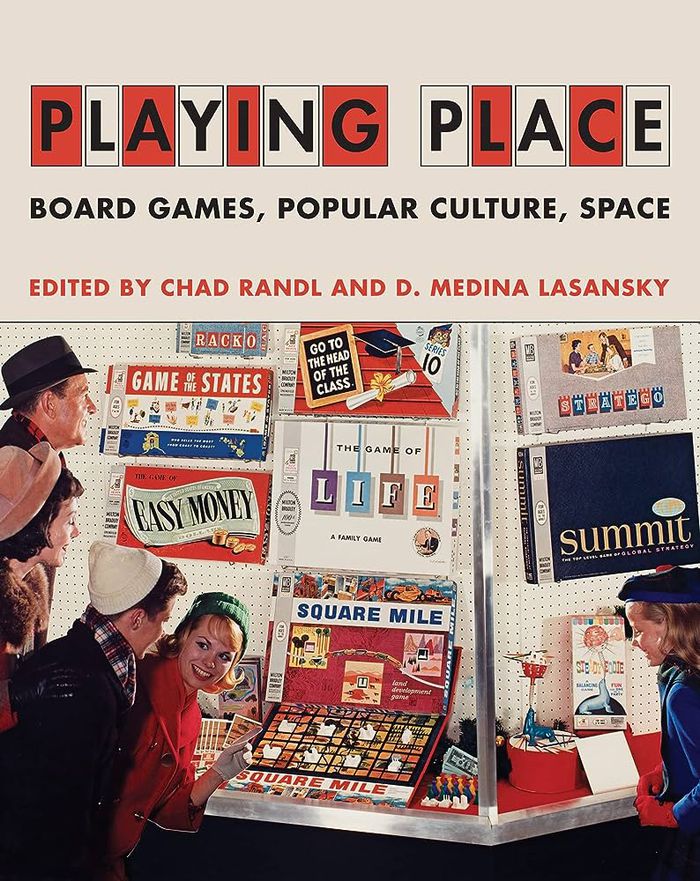
An essay collection exploring the board game's relationship to the built environment, revealing the unexpected ways that play reflects perceptions of space. Although board games are often recreational objects, their mythologies and infrastructure do not exist in a vacuum—rather, they echo and reproduce prevalent cultural landscapes. This thesis forms the throughline of pieces reflecting on subjects as diverse as the rigidly gendered fantasies of classic mass-market games; the imperial convictions embedded in games that position player-protagonists as conquerors establishing dominion over their “discoveries”; and even the uncanny prescience of games that have players responding to a global pandemic. Representing a thrilling convergence of historiography, architectural history, and media studies scholarship, Playing Place suggests not only that tabletop games should be taken seriously but also that the medium itself is uniquely capable of facilitating our critical consideration of structures that are often taken for granted.
Playing place: Board games, popular culture, space
Actions:
Prix:
$53.95
(disponible sur commande)
Résumé:
An essay collection exploring the board game's relationship to the built environment, revealing the unexpected ways that play reflects perceptions of space. Although board games are often recreational objects, their mythologies and infrastructure do not exist in a vacuum—rather, they echo and reproduce prevalent cultural landscapes. This thesis forms the throughline of pieces reflecting on subjects as diverse as the rigidly gendered fantasies of classic mass-market games; the imperial convictions embedded in games that position player-protagonists as conquerors establishing dominion over their “discoveries”; and even the uncanny prescience of games that have players responding to a global pandemic. Representing a thrilling convergence of historiography, architectural history, and media studies scholarship, Playing Place suggests not only that tabletop games should be taken seriously but also that the medium itself is uniquely capable of facilitating our critical consideration of structures that are often taken for granted.
Classification:
livres
livres
Publication:
août 2023
août 2023
Sujet:
Théorie de l’architecture
Théorie de l’architecture


