


1070 Résultats
Classification:
livres
livres
Actions:
Prix:
$20.00
(disponible sur commande)
Résumé:
In the 1920s, the urban theory of Ludwig Hilberseimer (1885–1967) redefined architecture’s relationship to the city. His proposal for a high-rise city, where leisure, labor and circulation would be vertically integrated, both frightened his contemporaries and offered a trenchant critique of the dynamics of the capitalist metropolis. Hilberseimer’s Groszstadt-architektur(...)
$20.00
(disponible sur commande)
Résumé:
In the 1920s, the urban theory of Ludwig Hilberseimer (1885–1967) redefined architecture’s relationship to the city. His proposal for a high-rise city, where leisure, labor and circulation would be vertically integrated, both frightened his contemporaries and offered a trenchant critique of the dynamics of the capitalist metropolis. Hilberseimer’s Groszstadt-architektur(...)
Titre:
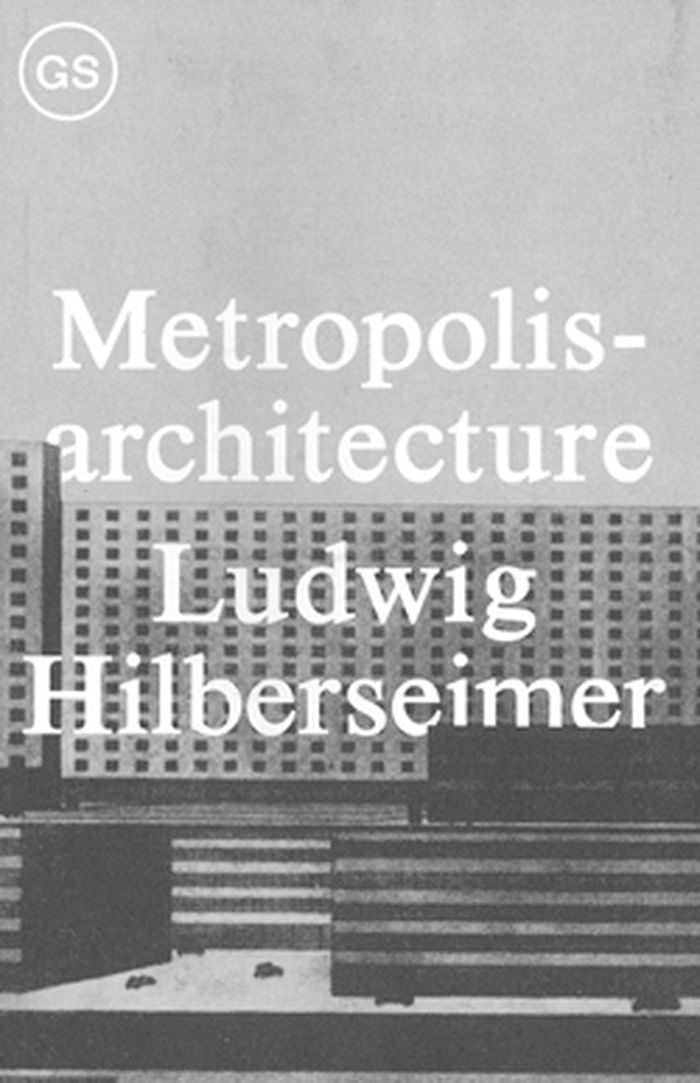
Metropolisarchitecture and selected essays
Actions:
Prix:
$20.00
(disponible sur commande)
Résumé:
In the 1920s, the urban theory of Ludwig Hilberseimer (1885–1967) redefined architecture’s relationship to the city. His proposal for a high-rise city, where leisure, labor and circulation would be vertically integrated, both frightened his contemporaries and offered a trenchant critique of the dynamics of the capitalist metropolis. Hilberseimer’s Groszstadt-architektur (Metropolisarchitecture) is presented here for the first time in English translation. Two additional essays frame this international cross-section of metropolitan architecture: “Der Wille zur Architektur” (The Will to Architecture) and “Vorschlag zur City-Bebauung” (Proposal for City-Building). The propositions assembled here encourage us to reconsider mobility, concentration and the scale of architectural intervention in our own era of urban expansion. This is the second title in the GSAPP Sourcebooks series, devoted to recovering and translating overlooked texts on architecture and the city.
Metropolisarchitecture and selected essays
Actions:
Prix:
$20.00
(disponible sur commande)
Résumé:
In the 1920s, the urban theory of Ludwig Hilberseimer (1885–1967) redefined architecture’s relationship to the city. His proposal for a high-rise city, where leisure, labor and circulation would be vertically integrated, both frightened his contemporaries and offered a trenchant critique of the dynamics of the capitalist metropolis. Hilberseimer’s Groszstadt-architektur (Metropolisarchitecture) is presented here for the first time in English translation. Two additional essays frame this international cross-section of metropolitan architecture: “Der Wille zur Architektur” (The Will to Architecture) and “Vorschlag zur City-Bebauung” (Proposal for City-Building). The propositions assembled here encourage us to reconsider mobility, concentration and the scale of architectural intervention in our own era of urban expansion. This is the second title in the GSAPP Sourcebooks series, devoted to recovering and translating overlooked texts on architecture and the city.
Classification:
livres
livres
Publication:
octobre 2012
octobre 2012
Sujet:
Théorie de l’architecture
Théorie de l’architecture
Classification:
livres
livres
Titre:
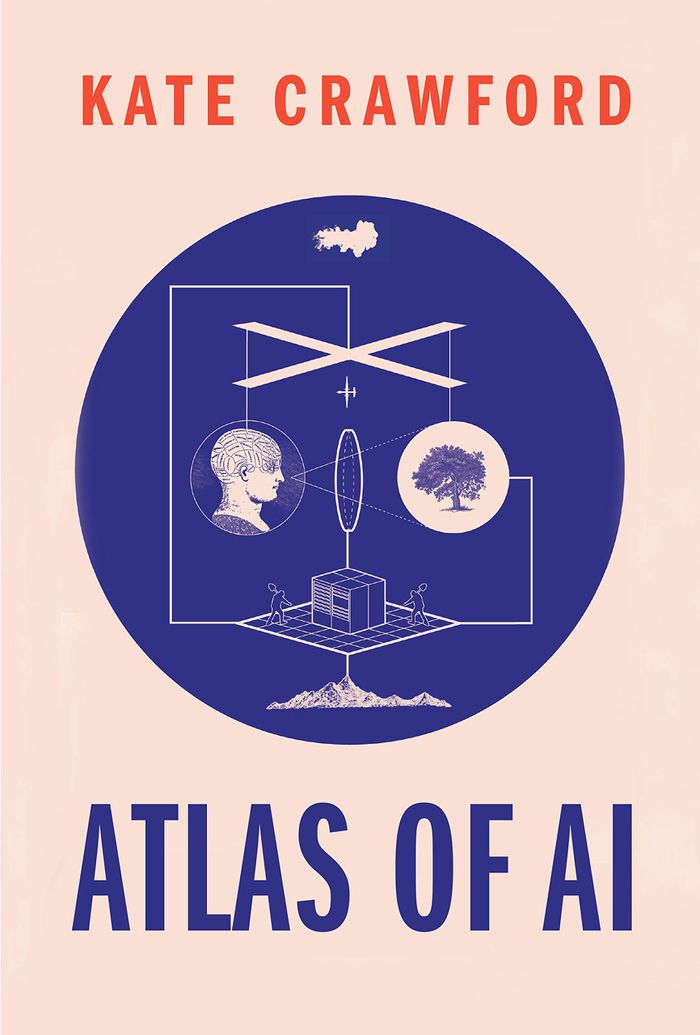
Atlas of AI
Atlas of AI
Actions:
Prix:
$39.95
(disponible sur commande)
Résumé:
What happens when artificial intelligence saturates political life and depletes the planet? How is AI shaping our understanding of ourselves and our societies? Drawing on more than a decade of research, award-winning scholar Kate Crawford reveals how AI is a technology of extraction: from the minerals drawn from the earth, to the labor pulled from low-wage information(...)
$39.95
(disponible sur commande)
Résumé:
What happens when artificial intelligence saturates political life and depletes the planet? How is AI shaping our understanding of ourselves and our societies? Drawing on more than a decade of research, award-winning scholar Kate Crawford reveals how AI is a technology of extraction: from the minerals drawn from the earth, to the labor pulled from low-wage information(...)
Titre:
Atlas of AI
Actions:
Prix:
$39.95
(disponible sur commande)
Résumé:
What happens when artificial intelligence saturates political life and depletes the planet? How is AI shaping our understanding of ourselves and our societies? Drawing on more than a decade of research, award-winning scholar Kate Crawford reveals how AI is a technology of extraction: from the minerals drawn from the earth, to the labor pulled from low-wage information workers, to the data taken from every action and expression. This book reveals how this planetary network is fueling a shift toward undemocratic governance and increased inequity. Rather than taking a narrow focus on code and algorithms, Crawford offers us a material and political perspective on what it takes to make AI and how it centralizes power. This is an urgent account of what is at stake as technology companies use artificial intelligence to reshape the world.
Atlas of AI
Actions:
Prix:
$39.95
(disponible sur commande)
Résumé:
What happens when artificial intelligence saturates political life and depletes the planet? How is AI shaping our understanding of ourselves and our societies? Drawing on more than a decade of research, award-winning scholar Kate Crawford reveals how AI is a technology of extraction: from the minerals drawn from the earth, to the labor pulled from low-wage information workers, to the data taken from every action and expression. This book reveals how this planetary network is fueling a shift toward undemocratic governance and increased inequity. Rather than taking a narrow focus on code and algorithms, Crawford offers us a material and political perspective on what it takes to make AI and how it centralizes power. This is an urgent account of what is at stake as technology companies use artificial intelligence to reshape the world.
Classification:
livres
livres
Publication:
avril 2021
avril 2021
Classification:
livres
livres
Actions:
Exemplaires:
Description:
193 pages : illustrations, maps ; 23 cm.
Description:
193 pages : illustrations, maps ; 23 cm.
Auteur:
Sujet:
Publication:
Evanston, Illinois : Northwestern University Press, 2017., ©2017
Evanston, Illinois : Northwestern University Press, 2017., ©2017
Titre:
The tunnel under the lake : the engineering marvel that saved Chicago / Benjamin Sells.
Actions:
Exemplaires:
Description:
193 pages : illustrations, maps ; 23 cm.
The tunnel under the lake : the engineering marvel that saved Chicago / Benjamin Sells.
Actions:
Exemplaires:
Description:
193 pages : illustrations, maps ; 23 cm.
Classification:
livres
livres
Publication:
Evanston, Illinois : Northwestern University Press, 2017., ©2017
Evanston, Illinois : Northwestern University Press, 2017., ©2017
Auteur:
Sujet:
Classification:
périodiques
périodiques
Prix:
$16.95
(disponible en magasin)
Résumé:
Welcome to the 60th issue of The Funambulist, which concludes the tenth year of publishing the magazine! On August 6th and 9th, The Funambulist will commemorate the 80th anniversary of the devastating US nuclear bombing of the cities of Hiroshima and Nagasaki. Our contribution to the significance of these two massacres consists in convoking Indigenous perspectives from(...)
$16.95
(disponible en magasin)
Résumé:
Welcome to the 60th issue of The Funambulist, which concludes the tenth year of publishing the magazine! On August 6th and 9th, The Funambulist will commemorate the 80th anniversary of the devastating US nuclear bombing of the cities of Hiroshima and Nagasaki. Our contribution to the significance of these two massacres consists in convoking Indigenous perspectives from(...)
Titre:
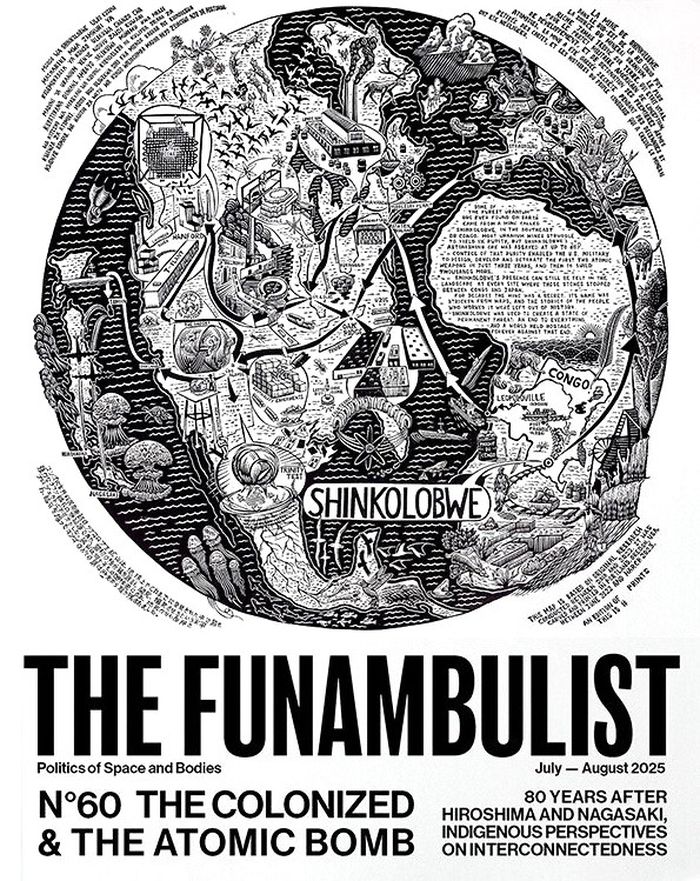
The Funambulist n. 60: The colonized & the atomic bomb
Actions:
Prix:
$16.95
(disponible en magasin)
Résumé:
Welcome to the 60th issue of The Funambulist, which concludes the tenth year of publishing the magazine! On August 6th and 9th, The Funambulist will commemorate the 80th anniversary of the devastating US nuclear bombing of the cities of Hiroshima and Nagasaki. Our contribution to the significance of these two massacres consists in convoking Indigenous perspectives from lands that have been exploited for these two bombings. The idea for it came from listening to Glen Sean Coulthard in Dene Country (in what the Canadian settler colony designates as Northwest Territories) about the uranium extracted from his nation’s land to fabricate the atomic bomb and three decades later, the visit of a Dene delegation to Hiroshima to apologize for the role of their labor and land in the nuclear bombing of the city. This understanding of interconnectedness between distant lands and peoples forms the editorial core of this issue.
The Funambulist n. 60: The colonized & the atomic bomb
Actions:
Prix:
$16.95
(disponible en magasin)
Résumé:
Welcome to the 60th issue of The Funambulist, which concludes the tenth year of publishing the magazine! On August 6th and 9th, The Funambulist will commemorate the 80th anniversary of the devastating US nuclear bombing of the cities of Hiroshima and Nagasaki. Our contribution to the significance of these two massacres consists in convoking Indigenous perspectives from lands that have been exploited for these two bombings. The idea for it came from listening to Glen Sean Coulthard in Dene Country (in what the Canadian settler colony designates as Northwest Territories) about the uranium extracted from his nation’s land to fabricate the atomic bomb and three decades later, the visit of a Dene delegation to Hiroshima to apologize for the role of their labor and land in the nuclear bombing of the city. This understanding of interconnectedness between distant lands and peoples forms the editorial core of this issue.
Classification:
périodiques
périodiques
Publication:
juillet 2025
juillet 2025
Sujet:
Revues
Revues
Classification:
livres
livres
Actions:
Prix:
$68.95
(disponible sur commande)
Résumé:
An ancient building method that has experienced a renaissance in recent years as people seek greener and more sustainable building materials and construction methods, rammed earth is a wall building technique that uses earth, chalk, lime and gravel as raw materials. Naturally insulating, non-combustible, and durable, they can be labor intensive to construct without(...)
$68.95
(disponible sur commande)
Résumé:
An ancient building method that has experienced a renaissance in recent years as people seek greener and more sustainable building materials and construction methods, rammed earth is a wall building technique that uses earth, chalk, lime and gravel as raw materials. Naturally insulating, non-combustible, and durable, they can be labor intensive to construct without(...)
Titre:
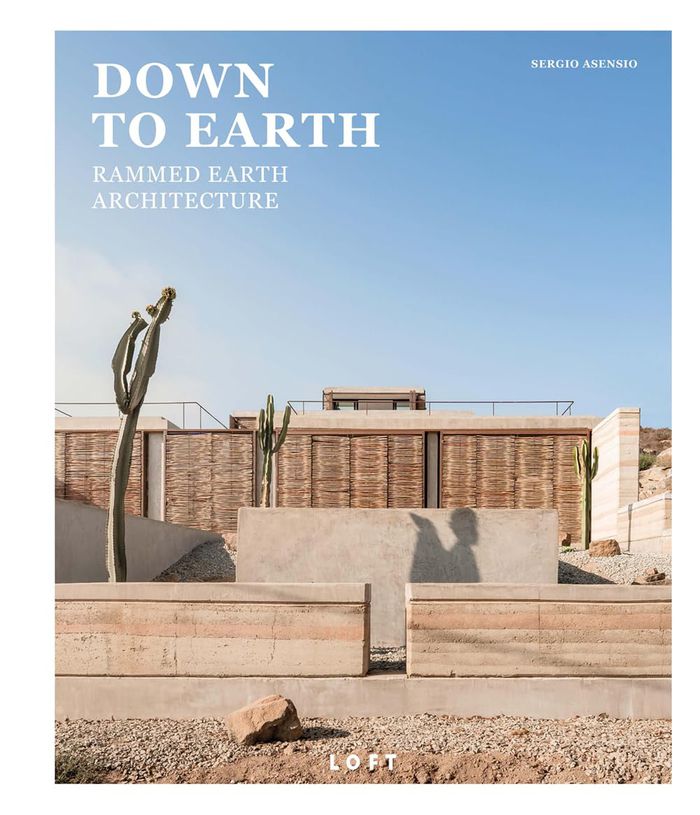
Down to earth: Rammed earth architecture
Actions:
Prix:
$68.95
(disponible sur commande)
Résumé:
An ancient building method that has experienced a renaissance in recent years as people seek greener and more sustainable building materials and construction methods, rammed earth is a wall building technique that uses earth, chalk, lime and gravel as raw materials. Naturally insulating, non-combustible, and durable, they can be labor intensive to construct without machinery and are susceptible to water damage if not properly protected or maintained. Nevertheless, rammed earth buildings are found on almost every continent, in a range of environments from the humid, to the semi-arid and temperate – from simple single-family dwellings to large and complex multistory buildings. Alongside green building considerations, the availability of the natural components and a design suited to local climatic conditions are key factors which favor their use. "Down to earth" is a compilation of some of the most interesting recent examples of this interesting and unusual building technique.
Down to earth: Rammed earth architecture
Actions:
Prix:
$68.95
(disponible sur commande)
Résumé:
An ancient building method that has experienced a renaissance in recent years as people seek greener and more sustainable building materials and construction methods, rammed earth is a wall building technique that uses earth, chalk, lime and gravel as raw materials. Naturally insulating, non-combustible, and durable, they can be labor intensive to construct without machinery and are susceptible to water damage if not properly protected or maintained. Nevertheless, rammed earth buildings are found on almost every continent, in a range of environments from the humid, to the semi-arid and temperate – from simple single-family dwellings to large and complex multistory buildings. Alongside green building considerations, the availability of the natural components and a design suited to local climatic conditions are key factors which favor their use. "Down to earth" is a compilation of some of the most interesting recent examples of this interesting and unusual building technique.
Classification:
livres
livres
Publication:
octobre 2023
octobre 2023
Sujet:
Architecture écologique
Architecture écologique
Classification:
livres
livres
Actions:
Prix:
$21.95
(disponible sur commande)
Résumé:
Air conditioning aspires to be unnoticed. Yet, by manipulating the air around us, it quietly conditions the baseline conditions of our physical, mental, and emotional experience. From offices and libraries to contemporary art museums and shopping malls, climate control systems shore up the fantasy of a comfortable, self-contained body that does not have to reckon with(...)
$21.95
(disponible sur commande)
Résumé:
Air conditioning aspires to be unnoticed. Yet, by manipulating the air around us, it quietly conditions the baseline conditions of our physical, mental, and emotional experience. From offices and libraries to contemporary art museums and shopping malls, climate control systems shore up the fantasy of a comfortable, self-contained body that does not have to reckon with(...)
Titre:
Air-conditioning: Object lessons
Actions:
Prix:
$21.95
(disponible sur commande)
Résumé:
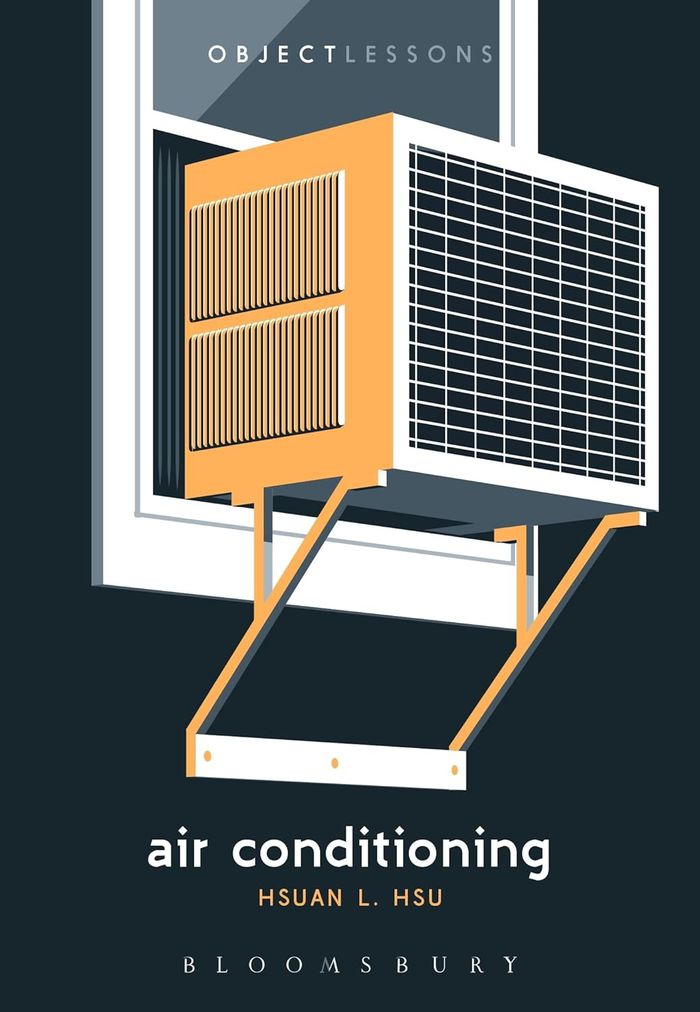
Air conditioning aspires to be unnoticed. Yet, by manipulating the air around us, it quietly conditions the baseline conditions of our physical, mental, and emotional experience. From offices and libraries to contemporary art museums and shopping malls, climate control systems shore up the fantasy of a comfortable, self-contained body that does not have to reckon with temperature. At the same time that air conditioning makes temperature a non-issue in (some) people's daily lives, thermoception-or the sensory perception of temperature-is being carefully studied and exploited as a tool of marketing, social control, and labor management. Yet air conditioning isn't for everybody: its reliance on carbon fuels divides the world into habitable, climate-controlled bubbles and increasingly uninhabitable environments where AC is unavailable. Hsuan Hsu's "Air conditioning" explores questions about culture, ethics, ecology, and social justice raised by the history and uneven distribution of climate controlling technologies.
Air-conditioning: Object lessons
Actions:
Prix:
$21.95
(disponible sur commande)
Résumé:
Air conditioning aspires to be unnoticed. Yet, by manipulating the air around us, it quietly conditions the baseline conditions of our physical, mental, and emotional experience. From offices and libraries to contemporary art museums and shopping malls, climate control systems shore up the fantasy of a comfortable, self-contained body that does not have to reckon with temperature. At the same time that air conditioning makes temperature a non-issue in (some) people's daily lives, thermoception-or the sensory perception of temperature-is being carefully studied and exploited as a tool of marketing, social control, and labor management. Yet air conditioning isn't for everybody: its reliance on carbon fuels divides the world into habitable, climate-controlled bubbles and increasingly uninhabitable environments where AC is unavailable. Hsuan Hsu's "Air conditioning" explores questions about culture, ethics, ecology, and social justice raised by the history and uneven distribution of climate controlling technologies.
Classification:
livres
livres
Publication:
février 2024
février 2024
Classification:
livres
livres
Titre:
Image ecology
Image ecology
Actions:
Prix:
$65.00
(disponible en magasin)
Résumé:
A survey of contemporary image-making, "Image ecology" marks the beginning of a long-term consideration of nature and ecology in current fine art photography through shows at C/O Berlin. In an attempt to document the systemic causes of the climate crisis, the works included in this volume explore their own material and social conditions. The 12 contemporary artists(...)
$65.00
(disponible en magasin)
Résumé:
A survey of contemporary image-making, "Image ecology" marks the beginning of a long-term consideration of nature and ecology in current fine art photography through shows at C/O Berlin. In an attempt to document the systemic causes of the climate crisis, the works included in this volume explore their own material and social conditions. The 12 contemporary artists(...)
Titre:
Image ecology
Actions:
Prix:
$65.00
(disponible en magasin)
Résumé:
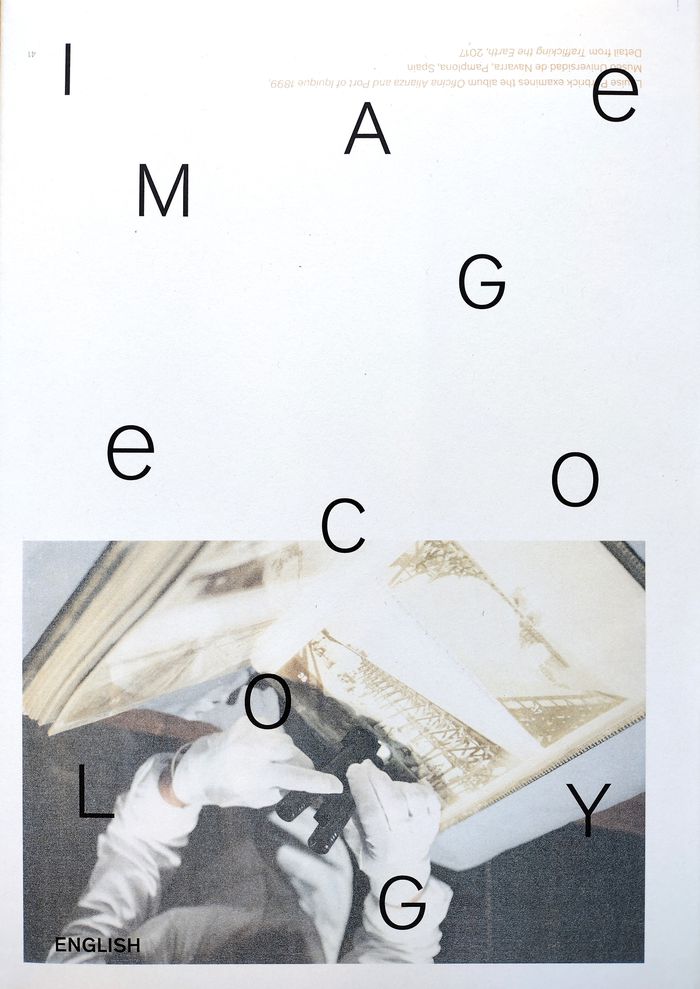
A survey of contemporary image-making, "Image ecology" marks the beginning of a long-term consideration of nature and ecology in current fine art photography through shows at C/O Berlin. In an attempt to document the systemic causes of the climate crisis, the works included in this volume explore their own material and social conditions. The 12 contemporary artists featured employ experimental and traditional historical processes as well as new technologies. "Image ecology" dissects photography as an ecological practice, a medium that is defined as much by the nexus of material, labor, energy and waste that its production and circulation require as by what it represents. Featuring an extensive essay by environmental historian Jason W. Moore, and contributions by over a dozen international writers, the book even unpacks its own production process: from material supply chains and working conditions to wrapping and postage.
Image ecology
Actions:
Prix:
$65.00
(disponible en magasin)
Résumé:
A survey of contemporary image-making, "Image ecology" marks the beginning of a long-term consideration of nature and ecology in current fine art photography through shows at C/O Berlin. In an attempt to document the systemic causes of the climate crisis, the works included in this volume explore their own material and social conditions. The 12 contemporary artists featured employ experimental and traditional historical processes as well as new technologies. "Image ecology" dissects photography as an ecological practice, a medium that is defined as much by the nexus of material, labor, energy and waste that its production and circulation require as by what it represents. Featuring an extensive essay by environmental historian Jason W. Moore, and contributions by over a dozen international writers, the book even unpacks its own production process: from material supply chains and working conditions to wrapping and postage.
Classification:
livres
livres
Publication:
mai 2024
mai 2024
Sujet:
Photographie- collections
Photographie- collections
Classification:
livres
livres

Actions:
Prix:
$72.95
(disponible sur commande)
Résumé:
In "Manufacturing Montreal" Robert Lewis provides a detailed historical geographic account of a major North American city's industrial landscape from the beginnings of industrialization to the Great Depression. Challenging the traditional view that urban expansion due to industrial decentralization is a twentieth-century phenomenon, Lewis demonstrates that the process of(...)
$72.95
(disponible sur commande)
Résumé:
In "Manufacturing Montreal" Robert Lewis provides a detailed historical geographic account of a major North American city's industrial landscape from the beginnings of industrialization to the Great Depression. Challenging the traditional view that urban expansion due to industrial decentralization is a twentieth-century phenomenon, Lewis demonstrates that the process of(...)
Titre:
Manufacturing Montreal : the making of an industrial landscape, 1850 to 1930
Actions:
Prix:
$72.95
(disponible sur commande)
Résumé:
In "Manufacturing Montreal" Robert Lewis provides a detailed historical geographic account of a major North American city's industrial landscape from the beginnings of industrialization to the Great Depression. Challenging the traditional view that urban expansion due to industrial decentralization is a twentieth-century phenomenon, Lewis demonstrates that the process of industrial decentralization has been ongoing since the 1850s. Lewis's overall thesis is that the economic and social imperatives underlying industrial capitalism periodically reshaped the manufacturing geography of Montreal, as it did in many other North American cities. Time and again, the move of factories to the urban fringe shaped the social geography of the city by creating working-class residential neighborhoods. A particular strength of the book is its detailed examination of the role that utilities, transportation, technological change, investment, political control of land use, and labor markets had in the manufacturing of Montreal's factory districts.
Manufacturing Montreal : the making of an industrial landscape, 1850 to 1930
Actions:
Prix:
$72.95
(disponible sur commande)
Résumé:
In "Manufacturing Montreal" Robert Lewis provides a detailed historical geographic account of a major North American city's industrial landscape from the beginnings of industrialization to the Great Depression. Challenging the traditional view that urban expansion due to industrial decentralization is a twentieth-century phenomenon, Lewis demonstrates that the process of industrial decentralization has been ongoing since the 1850s. Lewis's overall thesis is that the economic and social imperatives underlying industrial capitalism periodically reshaped the manufacturing geography of Montreal, as it did in many other North American cities. Time and again, the move of factories to the urban fringe shaped the social geography of the city by creating working-class residential neighborhoods. A particular strength of the book is its detailed examination of the role that utilities, transportation, technological change, investment, political control of land use, and labor markets had in the manufacturing of Montreal's factory districts.
Classification:
livres
livres
Publication:
janvier 1900, Baltimore
janvier 1900, Baltimore
Sujet:
Architecture de Montréal
Architecture de Montréal
Classification:
livres
livres
Actions:
Prix:
$84.90
(disponible sur commande)
Résumé:
Photographers Edward Weston, Tina Modotti, Paul Strand, and Helen Levitt were among the U.S. artists who traveled to Mexico during the interwar period seeking a community more receptive to the radical premises of modern art. Looking closely at the work produced by these four artists in Mexico, this book examines the vital role of exchanges between the expatriates and(...)
$84.90
(disponible sur commande)
Résumé:
Photographers Edward Weston, Tina Modotti, Paul Strand, and Helen Levitt were among the U.S. artists who traveled to Mexico during the interwar period seeking a community more receptive to the radical premises of modern art. Looking closely at the work produced by these four artists in Mexico, this book examines the vital role of exchanges between the expatriates and(...)
Titre:
Greater American camera: Making Modernism in Mexico
Actions:
Prix:
$84.90
(disponible sur commande)
Résumé:
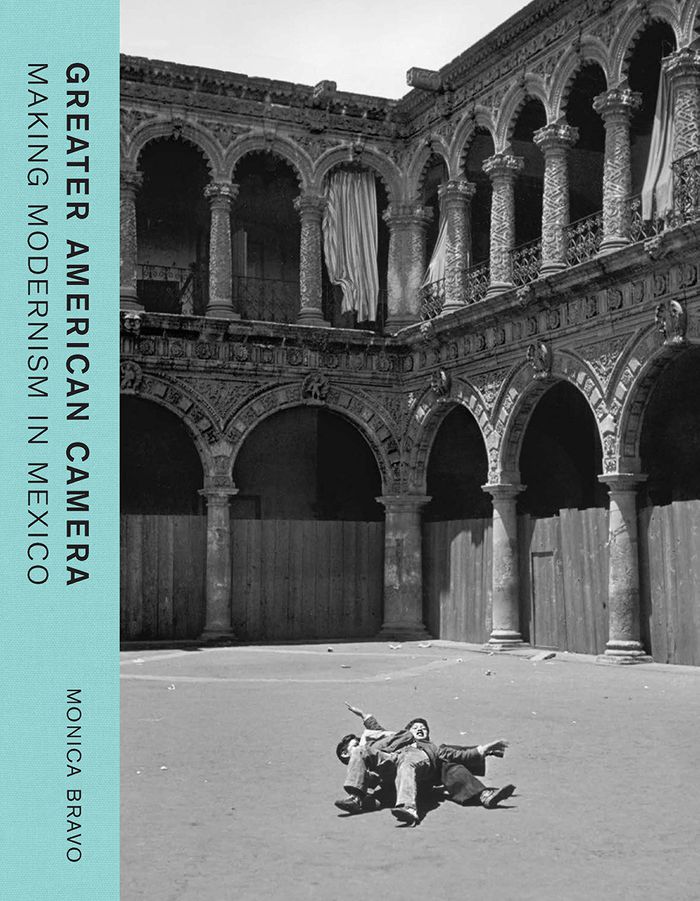
Photographers Edward Weston, Tina Modotti, Paul Strand, and Helen Levitt were among the U.S. artists who traveled to Mexico during the interwar period seeking a community more receptive to the radical premises of modern art. Looking closely at the work produced by these four artists in Mexico, this book examines the vital role of exchanges between the expatriates and their Mexican contemporaries in forging a new photographic style. Monica Bravo offers fresh insights concerning Weston’s friendship with Diego Rivera; Modotti’s images of labor, which she published alongside the writings of the Stridentists; Strand’s engagement with folk themes and the work of composer Carlos Chávez; and the influence of Manuel Álvarez Bravo on Levitt’s contributions to a New World surrealism. Exploring how these dialogues resulted in a distinct kind of modernism characterized by inter-American interests, the book reveals the ways in which cross-border collaboration shaped a new "greater American" aesthetic.
Greater American camera: Making Modernism in Mexico
Actions:
Prix:
$84.90
(disponible sur commande)
Résumé:
Photographers Edward Weston, Tina Modotti, Paul Strand, and Helen Levitt were among the U.S. artists who traveled to Mexico during the interwar period seeking a community more receptive to the radical premises of modern art. Looking closely at the work produced by these four artists in Mexico, this book examines the vital role of exchanges between the expatriates and their Mexican contemporaries in forging a new photographic style. Monica Bravo offers fresh insights concerning Weston’s friendship with Diego Rivera; Modotti’s images of labor, which she published alongside the writings of the Stridentists; Strand’s engagement with folk themes and the work of composer Carlos Chávez; and the influence of Manuel Álvarez Bravo on Levitt’s contributions to a New World surrealism. Exploring how these dialogues resulted in a distinct kind of modernism characterized by inter-American interests, the book reveals the ways in which cross-border collaboration shaped a new "greater American" aesthetic.
Classification:
livres
livres
Publication:
juin 2021
juin 2021
Sujet:
Photographie- collections
Photographie- collections
Classification:
livres
livres

Prix:
$35.95
(disponible sur commande)
Résumé:
From the beet fields of North Dakota to the National Forest campgrounds of California to Amazon's CamperForce program in Texas, employers have discovered a new, low-cost labor pool, made up largely of transient older Americans. Finding that social security comes up short, often underwater on mortgages, these invisible casualties of the Great Recession have taken to the(...)
$35.95
(disponible sur commande)
Résumé:
From the beet fields of North Dakota to the National Forest campgrounds of California to Amazon's CamperForce program in Texas, employers have discovered a new, low-cost labor pool, made up largely of transient older Americans. Finding that social security comes up short, often underwater on mortgages, these invisible casualties of the Great Recession have taken to the(...)
Titre:
Nomadland: surviving America in the twenty-first century
Actions:
Prix:
$35.95
(disponible sur commande)
Résumé:
From the beet fields of North Dakota to the National Forest campgrounds of California to Amazon's CamperForce program in Texas, employers have discovered a new, low-cost labor pool, made up largely of transient older Americans. Finding that social security comes up short, often underwater on mortgages, these invisible casualties of the Great Recession have taken to the road by the tens of thousands in late-model RVs, travel trailers, and vans, forming a growing community of nomads: migrant laborers who call themselves ''workampers.'' On frequently traveled routes between seasonal jobs, Jessica Bruder meets people from all walks of life: accompanying them from campground toilet cleaning to warehouse product scanning to desert reunions, then moving on to the dangerous work of beet harvesting, Bruder tells an eye-opening tale of the dark underbelly of the American economy- one that foreshadows the precarious future that may await many more of us.
Nomadland: surviving America in the twenty-first century
Actions:
Prix:
$35.95
(disponible sur commande)
Résumé:
From the beet fields of North Dakota to the National Forest campgrounds of California to Amazon's CamperForce program in Texas, employers have discovered a new, low-cost labor pool, made up largely of transient older Americans. Finding that social security comes up short, often underwater on mortgages, these invisible casualties of the Great Recession have taken to the road by the tens of thousands in late-model RVs, travel trailers, and vans, forming a growing community of nomads: migrant laborers who call themselves ''workampers.'' On frequently traveled routes between seasonal jobs, Jessica Bruder meets people from all walks of life: accompanying them from campground toilet cleaning to warehouse product scanning to desert reunions, then moving on to the dangerous work of beet harvesting, Bruder tells an eye-opening tale of the dark underbelly of the American economy- one that foreshadows the precarious future that may await many more of us.
Classification:
livres
livres
Publication:
septembre 2017
septembre 2017
Sujet:
Expositions en cours
Expositions en cours


