


1067 Résultats
Classification:
livres
livres
Actions:
Prix:
$52.00
(disponible en magasin)
Résumé:
The cradle-to-cradle principle envisions buildings returning to the natural cycle after use. In practice, however, most are only partially composed of natural or compostable materials. One notable exception is Florian Nagler’s Garden House, winner of the Detail Award, which closely follows this principle. Another route is the reuse or refurbishment of components from(...)
$52.00
(disponible en magasin)
Résumé:
The cradle-to-cradle principle envisions buildings returning to the natural cycle after use. In practice, however, most are only partially composed of natural or compostable materials. One notable exception is Florian Nagler’s Garden House, winner of the Detail Award, which closely follows this principle. Another route is the reuse or refurbishment of components from(...)
Titre:
Detail 6 2025 : Circular construction
Actions:
Prix:
$52.00
(disponible en magasin)
Résumé:
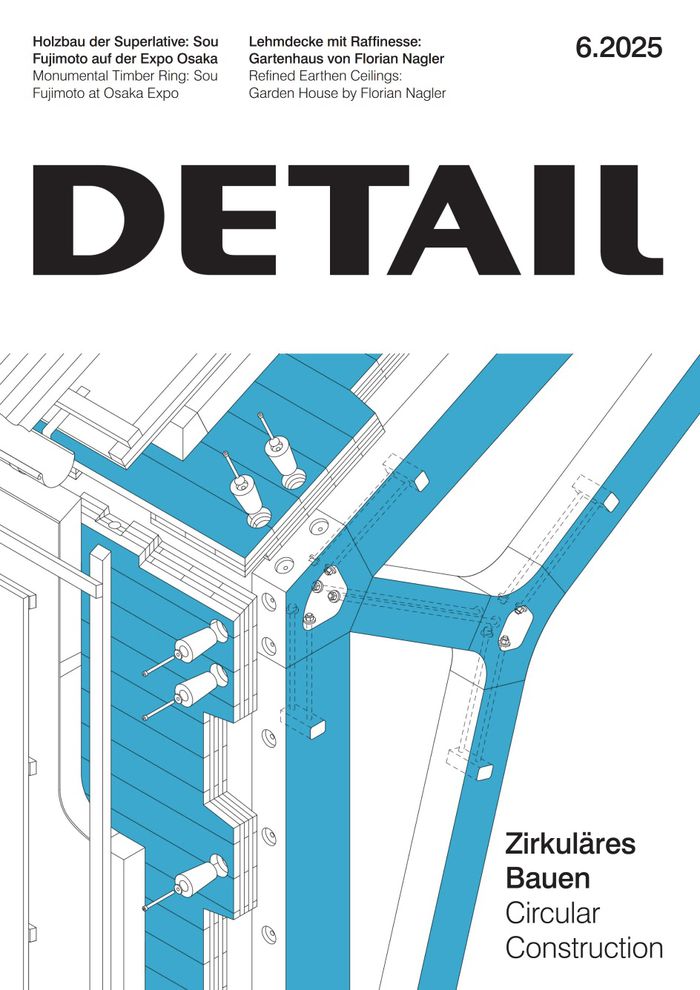
The cradle-to-cradle principle envisions buildings returning to the natural cycle after use. In practice, however, most are only partially composed of natural or compostable materials. One notable exception is Florian Nagler’s Garden House, winner of the Detail Award, which closely follows this principle. Another route is the reuse or refurbishment of components from demolished buildings. But this, too, is complex – components are often scarce and costly to extract and and make fit for new applications. To facilitate recycling, some structures are being designed for disassembly. Yet even timber joints fixed with screws can prove difficult to undo after years in place. A research group in Arles sees itself as a recycler of remnants, developing new materials from construction debris and agricultural waste: sunflower stalks become acoustic panels, while rice straw from cultivation is turned into insulation. The team also experiments with local resources: in nearby salt pans, salt crystallises on metal racks to form tiles, while algae are used to make lamps, vases, and wall finishes. Architecture made from rubble, clad in salt, rice, and seaweed – a compelling vision of the future. Perhaps the most promising path lies in combining these diverse strategies.
Detail 6 2025 : Circular construction
Actions:
Prix:
$52.00
(disponible en magasin)
Résumé:
The cradle-to-cradle principle envisions buildings returning to the natural cycle after use. In practice, however, most are only partially composed of natural or compostable materials. One notable exception is Florian Nagler’s Garden House, winner of the Detail Award, which closely follows this principle. Another route is the reuse or refurbishment of components from demolished buildings. But this, too, is complex – components are often scarce and costly to extract and and make fit for new applications. To facilitate recycling, some structures are being designed for disassembly. Yet even timber joints fixed with screws can prove difficult to undo after years in place. A research group in Arles sees itself as a recycler of remnants, developing new materials from construction debris and agricultural waste: sunflower stalks become acoustic panels, while rice straw from cultivation is turned into insulation. The team also experiments with local resources: in nearby salt pans, salt crystallises on metal racks to form tiles, while algae are used to make lamps, vases, and wall finishes. Architecture made from rubble, clad in salt, rice, and seaweed – a compelling vision of the future. Perhaps the most promising path lies in combining these diverse strategies.
Classification:
livres
livres
Publication:
juin 2025
juin 2025
Sujet:
Revues
Revues
Classification:
livres
livres

Actions:
Prix:
$65.00
(disponible en magasin)
Résumé:
In ''Tbilisi Interiors'', photographer Anna Tsitsishvili returns to the subject that defined her acclaimed debut, Tbilisi, with a renewed and intimate focus. This follow-up photobook shifts the lens inward—literally—inviting us beyond the façades of the Georgian capital to explore the layered and often surprising worlds within. Where her first book captured the(...)
$65.00
(disponible en magasin)
Résumé:
In ''Tbilisi Interiors'', photographer Anna Tsitsishvili returns to the subject that defined her acclaimed debut, Tbilisi, with a renewed and intimate focus. This follow-up photobook shifts the lens inward—literally—inviting us beyond the façades of the Georgian capital to explore the layered and often surprising worlds within. Where her first book captured the(...)
Titre:
Anna Tsitsishvili: Tbilisi interiors
Actions:
Prix:
$65.00
(disponible en magasin)
Résumé:
In ''Tbilisi Interiors'', photographer Anna Tsitsishvili returns to the subject that defined her acclaimed debut, Tbilisi, with a renewed and intimate focus. This follow-up photobook shifts the lens inward—literally—inviting us beyond the façades of the Georgian capital to explore the layered and often surprising worlds within. Where her first book captured the textured urban landscapes of Tbilisi’s streets and architecture, ''Tbilisi Interiors'' reveals the hidden lives behind closed doors: eclectic rooms filled with faded grandeur, modest apartments shaped by decades of personal history, and spaces that quietly tell stories of resilience, creativity, and cultural continuity. Through Tsitsishvili’s eye, interiors become portraits—of individuals, families, and the city itself. This collection is not merely about design or decor; it is an emotional and aesthetic mapping of Tbilisi’s soul. With sensitivity and an artist’s sense of composition, Tsitsishvili documents spaces both curated and chaotic, refined and improvised, capturing the poetry of everyday life in Georgia’s capital.Tbilisi Interiors is a love letter to a city in transition, seen from within.With sensitivity and an artist’s sense of composition, Tsitsishvili documents spaces both curated and chaotic, refined and improvised, capturing the poetry of everyday life in Georgia’s capital.
Anna Tsitsishvili: Tbilisi interiors
Actions:
Prix:
$65.00
(disponible en magasin)
Résumé:
In ''Tbilisi Interiors'', photographer Anna Tsitsishvili returns to the subject that defined her acclaimed debut, Tbilisi, with a renewed and intimate focus. This follow-up photobook shifts the lens inward—literally—inviting us beyond the façades of the Georgian capital to explore the layered and often surprising worlds within. Where her first book captured the textured urban landscapes of Tbilisi’s streets and architecture, ''Tbilisi Interiors'' reveals the hidden lives behind closed doors: eclectic rooms filled with faded grandeur, modest apartments shaped by decades of personal history, and spaces that quietly tell stories of resilience, creativity, and cultural continuity. Through Tsitsishvili’s eye, interiors become portraits—of individuals, families, and the city itself. This collection is not merely about design or decor; it is an emotional and aesthetic mapping of Tbilisi’s soul. With sensitivity and an artist’s sense of composition, Tsitsishvili documents spaces both curated and chaotic, refined and improvised, capturing the poetry of everyday life in Georgia’s capital.Tbilisi Interiors is a love letter to a city in transition, seen from within.With sensitivity and an artist’s sense of composition, Tsitsishvili documents spaces both curated and chaotic, refined and improvised, capturing the poetry of everyday life in Georgia’s capital.
Classification:
livres
livres
Publication:
janvier 2026
janvier 2026
Sujet:
Monographies photo
Monographies photo
Classification:
livres
livres
Actions:
Prix:
$67.50
(disponible en magasin)
Résumé:
This publication examines the various figures and interests involved in the design and construction of the Canada Pavilion and explores how it was used over the past sixty years to exhibit the work of Canadian artists and architects. This publication intends not only to underline the pavilion's importance in the broader context of modern architecture, but also to(...)
$67.50
(disponible en magasin)
Résumé:
This publication examines the various figures and interests involved in the design and construction of the Canada Pavilion and explores how it was used over the past sixty years to exhibit the work of Canadian artists and architects. This publication intends not only to underline the pavilion's importance in the broader context of modern architecture, but also to(...)
Titre:
The Canada Pavilion at the Venice Biennale
Actions:
Prix:
$67.50
(disponible en magasin)
Résumé:
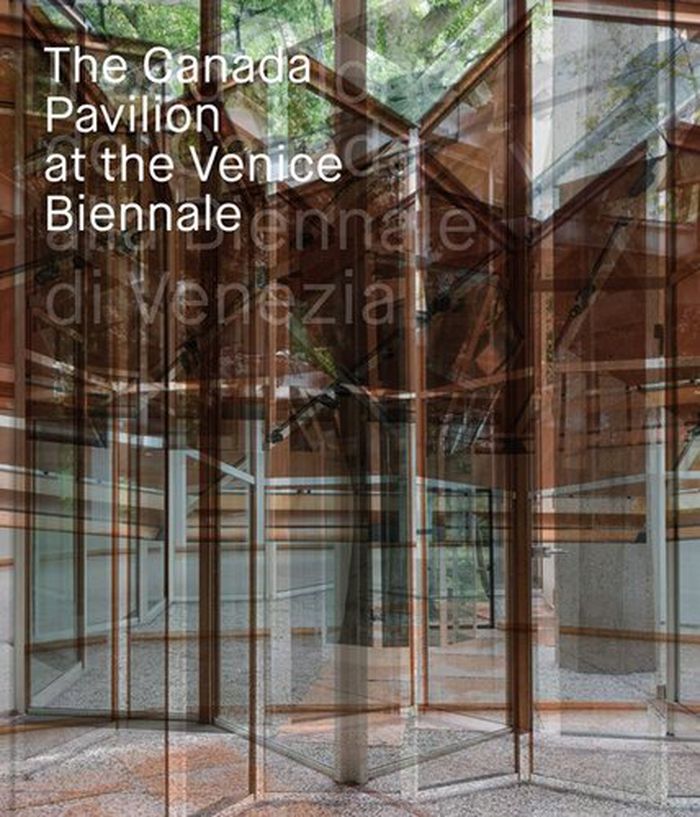
This publication examines the various figures and interests involved in the design and construction of the Canada Pavilion and explores how it was used over the past sixty years to exhibit the work of Canadian artists and architects. This publication intends not only to underline the pavilion's importance in the broader context of modern architecture, but also to highlight its role as an early example of cultural diplomacy. The book is fully endowed with archive material, such as photographs, drawings, and maps, along with a portfolio created by contemporary photographers (Francesco Barasciutti and Andrea Pertoldeo), showing the building before, during, and after the restoration. The essays of the various contributors to the book analyze the cultural and political context in which the Canada Pavilion committee worked (Cammie McAtee); the concept and construction of the building and the links with the architect Enrico Peressutti and the BBPR partnership (Réjean Legault); the pavilion's role in the postwar Italian cultural context (Serena Maffioletti) and its fortunes from its inauguration in 1958 to the restoration in 2018 (Josée Drouin-Brisebois); the restoration project itself (Susanna Caccia Gherardine), and, lastly, the relationship between the Canada Pavilion and the Biennale Gardens (Franco Panzini).
The Canada Pavilion at the Venice Biennale
Actions:
Prix:
$67.50
(disponible en magasin)
Résumé:
This publication examines the various figures and interests involved in the design and construction of the Canada Pavilion and explores how it was used over the past sixty years to exhibit the work of Canadian artists and architects. This publication intends not only to underline the pavilion's importance in the broader context of modern architecture, but also to highlight its role as an early example of cultural diplomacy. The book is fully endowed with archive material, such as photographs, drawings, and maps, along with a portfolio created by contemporary photographers (Francesco Barasciutti and Andrea Pertoldeo), showing the building before, during, and after the restoration. The essays of the various contributors to the book analyze the cultural and political context in which the Canada Pavilion committee worked (Cammie McAtee); the concept and construction of the building and the links with the architect Enrico Peressutti and the BBPR partnership (Réjean Legault); the pavilion's role in the postwar Italian cultural context (Serena Maffioletti) and its fortunes from its inauguration in 1958 to the restoration in 2018 (Josée Drouin-Brisebois); the restoration project itself (Susanna Caccia Gherardine), and, lastly, the relationship between the Canada Pavilion and the Biennale Gardens (Franco Panzini).
Classification:
livres
livres
Publication:
septembre 2019
septembre 2019
Sujet:
Biennale
Biennale
Classification:
livres
livres
Actions:
Prix:
$34.99
(disponible sur commande)
Résumé:
The last explosive change in art education came nearly a century ago, when the German Bauhaus was formed. Today, dramatic changes in the art world—its increasing professionalization, the pervasive power of the art market, and fundamental shifts in art-making itself in our post-Duchampian era—combined with a revolution in information technology, raise fundamental questions(...)
$34.99
(disponible sur commande)
Résumé:
The last explosive change in art education came nearly a century ago, when the German Bauhaus was formed. Today, dramatic changes in the art world—its increasing professionalization, the pervasive power of the art market, and fundamental shifts in art-making itself in our post-Duchampian era—combined with a revolution in information technology, raise fundamental questions(...)
Titre:
Art school (propositions for the 21st century)
Actions:
Prix:
$34.99
(disponible sur commande)
Résumé:
The last explosive change in art education came nearly a century ago, when the German Bauhaus was formed. Today, dramatic changes in the art world—its increasing professionalization, the pervasive power of the art market, and fundamental shifts in art-making itself in our post-Duchampian era—combined with a revolution in information technology, raise fundamental questions about the education of today's artists. This book brings together more than thirty leading international artists and art educators to reconsider the practices of art education in academic, practical, ethical, and philosophical terms. The essays in the book range over continents, histories, traditions, experiments, and fantasies of education. Accompanying the essays are conversations with such prominent artist/educators as John Baldessari, Michael Craig-Martin, Hans Haacke, and Marina Abramovi, as well as questionnaire responses from a dozen important artists—among them Mike Kelley, Ann Hamilton, Guillermo Kuitca, and Shirin Neshat—about their own experiences as students. A fascinating analysis of the architecture of major historical art schools throughout the world looks at the relationship of the principles of their designs to the principles of the pedagogy practiced within their halls.
Art school (propositions for the 21st century)
Actions:
Prix:
$34.99
(disponible sur commande)
Résumé:
The last explosive change in art education came nearly a century ago, when the German Bauhaus was formed. Today, dramatic changes in the art world—its increasing professionalization, the pervasive power of the art market, and fundamental shifts in art-making itself in our post-Duchampian era—combined with a revolution in information technology, raise fundamental questions about the education of today's artists. This book brings together more than thirty leading international artists and art educators to reconsider the practices of art education in academic, practical, ethical, and philosophical terms. The essays in the book range over continents, histories, traditions, experiments, and fantasies of education. Accompanying the essays are conversations with such prominent artist/educators as John Baldessari, Michael Craig-Martin, Hans Haacke, and Marina Abramovi, as well as questionnaire responses from a dozen important artists—among them Mike Kelley, Ann Hamilton, Guillermo Kuitca, and Shirin Neshat—about their own experiences as students. A fascinating analysis of the architecture of major historical art schools throughout the world looks at the relationship of the principles of their designs to the principles of the pedagogy practiced within their halls.
Classification:
livres
livres
Publication:
octobre 2009
octobre 2009
Sujet:
Théorie de l’art
Théorie de l’art
Classification:
livres
livres
Titre:
Mapping England
Mapping England
Actions:
Prix:
$59.95
(disponible sur commande)
Résumé:
England has been continuously mapped from Medieval times to the present; politically, administratively and functionally as well as creatively and imaginatively. Maps have helped to define ideas of what England is and could be. They have developed and maintained its identity amongst other nations and explored its essential character and limits. The maps included show a(...)
$59.95
(disponible sur commande)
Résumé:
England has been continuously mapped from Medieval times to the present; politically, administratively and functionally as well as creatively and imaginatively. Maps have helped to define ideas of what England is and could be. They have developed and maintained its identity amongst other nations and explored its essential character and limits. The maps included show a(...)
Titre:
Mapping England
Actions:
Prix:
$59.95
(disponible sur commande)
Résumé:
England has been continuously mapped from Medieval times to the present; politically, administratively and functionally as well as creatively and imaginatively. Maps have helped to define ideas of what England is and could be. They have developed and maintained its identity amongst other nations and explored its essential character and limits. The maps included show a country at times confident but also unsure of itself. Often drawn for purely practical purposes they frequently and unconsciously reveal the true state of the nation, and the hopes and fears of its inhabitants. England has been the crucible for many of the most significant developments in cartography and Mapping England tells the story of how its position in the world has evolved and, in so doing, entails new ways of seeing and expressing such findings in graphic form.
Mapping England
Actions:
Prix:
$59.95
(disponible sur commande)
Résumé:
England has been continuously mapped from Medieval times to the present; politically, administratively and functionally as well as creatively and imaginatively. Maps have helped to define ideas of what England is and could be. They have developed and maintained its identity amongst other nations and explored its essential character and limits. The maps included show a country at times confident but also unsure of itself. Often drawn for purely practical purposes they frequently and unconsciously reveal the true state of the nation, and the hopes and fears of its inhabitants. England has been the crucible for many of the most significant developments in cartography and Mapping England tells the story of how its position in the world has evolved and, in so doing, entails new ways of seeing and expressing such findings in graphic form.
Classification:
livres
livres
Publication:
octobre 2008
octobre 2008
Classification:
livres
livres
Actions:
Prix:
$27.95
(disponible sur commande)
Résumé:
"Filth" is concerned with what waste reveals about the culture that creates it. From floating barges of urban refuse to dung-encrusted works of art, from toxic landfills to dirty movies, filth has become a major presence and a point of volatile contention in modern life. This book explores the question of what filth has to do with culture: what critical role the lost,(...)
$27.95
(disponible sur commande)
Résumé:
"Filth" is concerned with what waste reveals about the culture that creates it. From floating barges of urban refuse to dung-encrusted works of art, from toxic landfills to dirty movies, filth has become a major presence and a point of volatile contention in modern life. This book explores the question of what filth has to do with culture: what critical role the lost,(...)
Sujet:
Théorie de l’architecture
Théorie de l’architecture
Publication:
janvier 2005, Minneapolis
janvier 2005, Minneapolis
Titre:
Filth : dirt, disgust, and modern life
Actions:
Prix:
$27.95
(disponible sur commande)
Résumé:
"Filth" is concerned with what waste reveals about the culture that creates it. From floating barges of urban refuse to dung-encrusted works of art, from toxic landfills to dirty movies, filth has become a major presence and a point of volatile contention in modern life. This book explores the question of what filth has to do with culture: what critical role the lost, the rejected, the abject, and the dirty play in social management and identity formation. It suggests the ongoing power of culturally mandated categories of exclusion and repression. Focusing on filth in literary and cultural materials from London, Paris, and their colonial outposts in the nineteenth and early twentieth centuries, the essays in "Filth" - all but one previously unpublished - range over topics as diverse as the building of sewers in nineteenth-century European metropolises, the link between interior design and bourgeois sanitary phobias, the fictional representation of labouring women and foreigners as polluting, and relations among disease, disorder, and sexual-racial disharmony. "Filth" provides the first sustained consideration, both theoretical and historical, of a subject whose power to horrify, fascinate, and repel is as old as civilization itself. Contributors: David S. Barnes, Neil Blackadder, Joseph Bristow, Joseph W. Childers, Eileen Cleere, Natalka Freeland, Pamela K. Gilbert, Christopher Hamlin, William Kupinse, Benjamin Lazier, David L. Pike, David Trotter.
Filth : dirt, disgust, and modern life
Actions:
Prix:
$27.95
(disponible sur commande)
Résumé:
"Filth" is concerned with what waste reveals about the culture that creates it. From floating barges of urban refuse to dung-encrusted works of art, from toxic landfills to dirty movies, filth has become a major presence and a point of volatile contention in modern life. This book explores the question of what filth has to do with culture: what critical role the lost, the rejected, the abject, and the dirty play in social management and identity formation. It suggests the ongoing power of culturally mandated categories of exclusion and repression. Focusing on filth in literary and cultural materials from London, Paris, and their colonial outposts in the nineteenth and early twentieth centuries, the essays in "Filth" - all but one previously unpublished - range over topics as diverse as the building of sewers in nineteenth-century European metropolises, the link between interior design and bourgeois sanitary phobias, the fictional representation of labouring women and foreigners as polluting, and relations among disease, disorder, and sexual-racial disharmony. "Filth" provides the first sustained consideration, both theoretical and historical, of a subject whose power to horrify, fascinate, and repel is as old as civilization itself. Contributors: David S. Barnes, Neil Blackadder, Joseph Bristow, Joseph W. Childers, Eileen Cleere, Natalka Freeland, Pamela K. Gilbert, Christopher Hamlin, William Kupinse, Benjamin Lazier, David L. Pike, David Trotter.
Classification:
livres
livres
Publication:
janvier 2005, Minneapolis
janvier 2005, Minneapolis
Sujet:
Théorie de l’architecture
Théorie de l’architecture
Classification:
livres
livres
Actions:
Prix:
$131.00
(disponible en magasin)
Résumé:
Upon its publication by the MIT Press in 1972, "Learning from Las Vegas" was immediately influential and controversial. The authors made an argument that was revolutionary for its time—that the billboards and casinos of Las Vegas were worthy of architectural attention—and offered a challenge for contemporary architects obsessed with the heroic and monumental. The physical(...)
$131.00
(disponible en magasin)
Résumé:
Upon its publication by the MIT Press in 1972, "Learning from Las Vegas" was immediately influential and controversial. The authors made an argument that was revolutionary for its time—that the billboards and casinos of Las Vegas were worthy of architectural attention—and offered a challenge for contemporary architects obsessed with the heroic and monumental. The physical(...)
Sujet:
Théorie de l’architecture
Théorie de l’architecture
Publication:
septembre 2017
septembre 2017
Titre:
Learning from Las Vegas, facsimile edition
Actions:
Prix:
$131.00
(disponible en magasin)
Résumé:
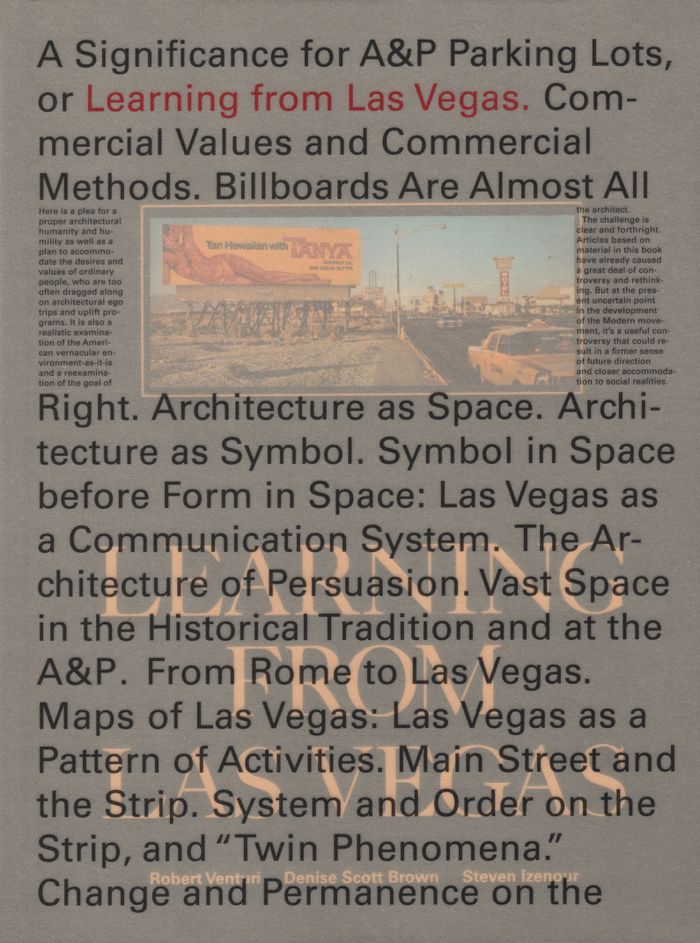
Upon its publication by the MIT Press in 1972, "Learning from Las Vegas" was immediately influential and controversial. The authors made an argument that was revolutionary for its time—that the billboards and casinos of Las Vegas were worthy of architectural attention—and offered a challenge for contemporary architects obsessed with the heroic and monumental. The physical book itself, designed by MIT’s iconic designer Muriel Cooper, was hailed as a masterpiece of modernist design, but the book’s design struck the authors as too monumental for a text that praised the ugly and ordinary over the heroic and monumental. The MIT Press published a revised version in 1977—a modest paperback that the authors felt was more in keeping with the argument of the book—and the original Cooper-designed book fell out of print and became a highly sought-after collectors’ item; it now sells for thousands of dollars in the rare book market, while the author-redesigned paperback has remained continuously in print at a price affordable to students. Now, decades after the original hardcover edition sold out, the MIT Press is publishing a facsimile edition of the original large-format Cooper-designed edition of Learning from Las Vegas, complete with translucent glassine wrap. This edition also features a spirited preface by Denise Scott Brown, looking back on the creation of the book and explaining her and Robert Venturi’s reservations about the original design.
Learning from Las Vegas, facsimile edition
Actions:
Prix:
$131.00
(disponible en magasin)
Résumé:
Upon its publication by the MIT Press in 1972, "Learning from Las Vegas" was immediately influential and controversial. The authors made an argument that was revolutionary for its time—that the billboards and casinos of Las Vegas were worthy of architectural attention—and offered a challenge for contemporary architects obsessed with the heroic and monumental. The physical book itself, designed by MIT’s iconic designer Muriel Cooper, was hailed as a masterpiece of modernist design, but the book’s design struck the authors as too monumental for a text that praised the ugly and ordinary over the heroic and monumental. The MIT Press published a revised version in 1977—a modest paperback that the authors felt was more in keeping with the argument of the book—and the original Cooper-designed book fell out of print and became a highly sought-after collectors’ item; it now sells for thousands of dollars in the rare book market, while the author-redesigned paperback has remained continuously in print at a price affordable to students. Now, decades after the original hardcover edition sold out, the MIT Press is publishing a facsimile edition of the original large-format Cooper-designed edition of Learning from Las Vegas, complete with translucent glassine wrap. This edition also features a spirited preface by Denise Scott Brown, looking back on the creation of the book and explaining her and Robert Venturi’s reservations about the original design.
Classification:
livres
livres
Publication:
septembre 2017
septembre 2017
Sujet:
Théorie de l’architecture
Théorie de l’architecture
Classification:
livres
livres
Actions:
Prix:
$24.95
(disponible sur commande)
Résumé:
In this new book, Salvatore Settis traces the ways in which we have related to our "classical" past, starting with post-modern American skyscrapers and working his way back through our cultural history to the attitudes of the Greeks and Romans themselves. Settis argues that this obsession with cultural decay, ruins and a "classical" past is specifically European and the(...)
$24.95
(disponible sur commande)
Résumé:
In this new book, Salvatore Settis traces the ways in which we have related to our "classical" past, starting with post-modern American skyscrapers and working his way back through our cultural history to the attitudes of the Greeks and Romans themselves. Settis argues that this obsession with cultural decay, ruins and a "classical" past is specifically European and the(...)
Sujet:
Théorie de l’architecture
Théorie de l’architecture
Publication:
août 2006, Cambridge, Malden (MA)
août 2006, Cambridge, Malden (MA)
Titre:
The future of the 'Classical'
Actions:
Prix:
$24.95
(disponible sur commande)
Résumé:
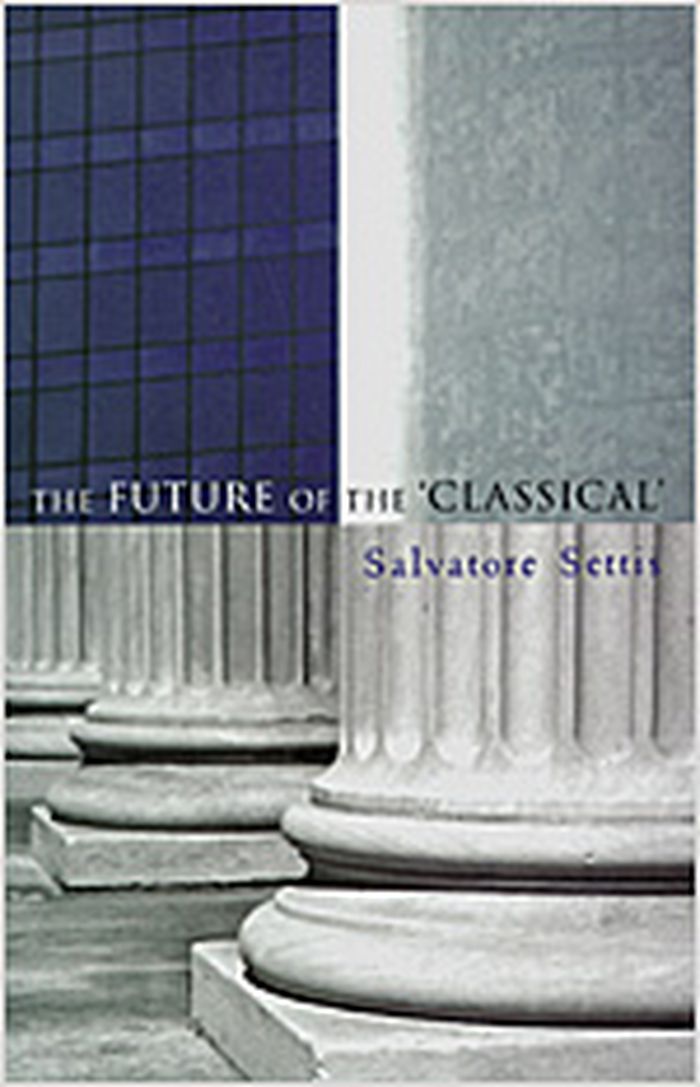
In this new book, Salvatore Settis traces the ways in which we have related to our "classical" past, starting with post-modern American skyscrapers and working his way back through our cultural history to the attitudes of the Greeks and Romans themselves. Settis argues that this obsession with cultural decay, ruins and a "classical" past is specifically European and the product of a collective cultural trauma following the collapse of the Roman Empire. He demonstrates how the idea of the "classical" has changed over the centuries through an unrelenting decay of "classicism" and its equally unrelenting rebirth in an altered form. In the Modern Era this emulation of the "ancients" by the "moderns" was accompanied by new trends: the increasing belief that the former had now been surpassed by the latter, and an increasing preference for the Greek over the Roman. These conflicting interpretations were as much about the future as they were about the past. No civilization can invent itself if it does not have other societies in other times and other places to act as benchmarks. Settis argues that we will be better equipped to mould new generations for the future once we understand that the "classical" is not a dead culture we inherited and for which we can take no credit, but something startling that has to be re-created every day and is a powerful spur to understanding the "other".
The future of the 'Classical'
Actions:
Prix:
$24.95
(disponible sur commande)
Résumé:
In this new book, Salvatore Settis traces the ways in which we have related to our "classical" past, starting with post-modern American skyscrapers and working his way back through our cultural history to the attitudes of the Greeks and Romans themselves. Settis argues that this obsession with cultural decay, ruins and a "classical" past is specifically European and the product of a collective cultural trauma following the collapse of the Roman Empire. He demonstrates how the idea of the "classical" has changed over the centuries through an unrelenting decay of "classicism" and its equally unrelenting rebirth in an altered form. In the Modern Era this emulation of the "ancients" by the "moderns" was accompanied by new trends: the increasing belief that the former had now been surpassed by the latter, and an increasing preference for the Greek over the Roman. These conflicting interpretations were as much about the future as they were about the past. No civilization can invent itself if it does not have other societies in other times and other places to act as benchmarks. Settis argues that we will be better equipped to mould new generations for the future once we understand that the "classical" is not a dead culture we inherited and for which we can take no credit, but something startling that has to be re-created every day and is a powerful spur to understanding the "other".
Classification:
livres
livres
Publication:
août 2006, Cambridge, Malden (MA)
août 2006, Cambridge, Malden (MA)
Sujet:
Théorie de l’architecture
Théorie de l’architecture
Classification:
livres
livres

Actions:
Prix:
$64.95
(disponible sur commande)
Résumé:
In this book, Karen O'Rourke explores a series of walking/mapping projects by contemporary artists. Some chart "emotional GPS"; some use GPS for creating "datascapes" while others use their legs to do "speculative mapping." Many work with scientists, designers, and engineers. O'Rourke offers close readings of these works -- many of which she was able to experience(...)
$64.95
(disponible sur commande)
Résumé:
In this book, Karen O'Rourke explores a series of walking/mapping projects by contemporary artists. Some chart "emotional GPS"; some use GPS for creating "datascapes" while others use their legs to do "speculative mapping." Many work with scientists, designers, and engineers. O'Rourke offers close readings of these works -- many of which she was able to experience(...)
Publication:
mars 2013
mars 2013
Titre:
Walking and mapping: artists as cartographers
Actions:
Prix:
$64.95
(disponible sur commande)
Résumé:
In this book, Karen O'Rourke explores a series of walking/mapping projects by contemporary artists. Some chart "emotional GPS"; some use GPS for creating "datascapes" while others use their legs to do "speculative mapping." Many work with scientists, designers, and engineers. O'Rourke offers close readings of these works -- many of which she was able to experience firsthand -- and situates them in relation to landmark works from the past half-century. She shows that the infinitesimal details of each of these projects take on more significance in conjunction with others. Together, they form a new entity, a dynamic whole greater than the sum of its parts. By alternating close study of selected projects with a broader view of their place in a bigger picture, Walking and Mapping itself maps a complex phenomena.
Walking and mapping: artists as cartographers
Actions:
Prix:
$64.95
(disponible sur commande)
Résumé:
In this book, Karen O'Rourke explores a series of walking/mapping projects by contemporary artists. Some chart "emotional GPS"; some use GPS for creating "datascapes" while others use their legs to do "speculative mapping." Many work with scientists, designers, and engineers. O'Rourke offers close readings of these works -- many of which she was able to experience firsthand -- and situates them in relation to landmark works from the past half-century. She shows that the infinitesimal details of each of these projects take on more significance in conjunction with others. Together, they form a new entity, a dynamic whole greater than the sum of its parts. By alternating close study of selected projects with a broader view of their place in a bigger picture, Walking and Mapping itself maps a complex phenomena.
Classification:
livres
livres
Publication:
mars 2013
mars 2013
Classification:
livres
livres
Actions:
Prix:
$39.95
(disponible en magasin)
Résumé:
In "The Zone," Justinien Tribillon takes the reader on a tour of an eponymous Parisian hinterland. The site of dreams and nightmares, from Van Gogh’s paintings to the cinematic violence of La Haine, the Zone, so often misunderstood, is the key to understanding today’s Paris, and even France itself. Originally the site of defensive walls, alongside which mushroomed(...)
$39.95
(disponible en magasin)
Résumé:
In "The Zone," Justinien Tribillon takes the reader on a tour of an eponymous Parisian hinterland. The site of dreams and nightmares, from Van Gogh’s paintings to the cinematic violence of La Haine, the Zone, so often misunderstood, is the key to understanding today’s Paris, and even France itself. Originally the site of defensive walls, alongside which mushroomed(...)
Titre:
The zone: An alternative history of Paris
Actions:
Prix:
$39.95
(disponible en magasin)
Résumé:
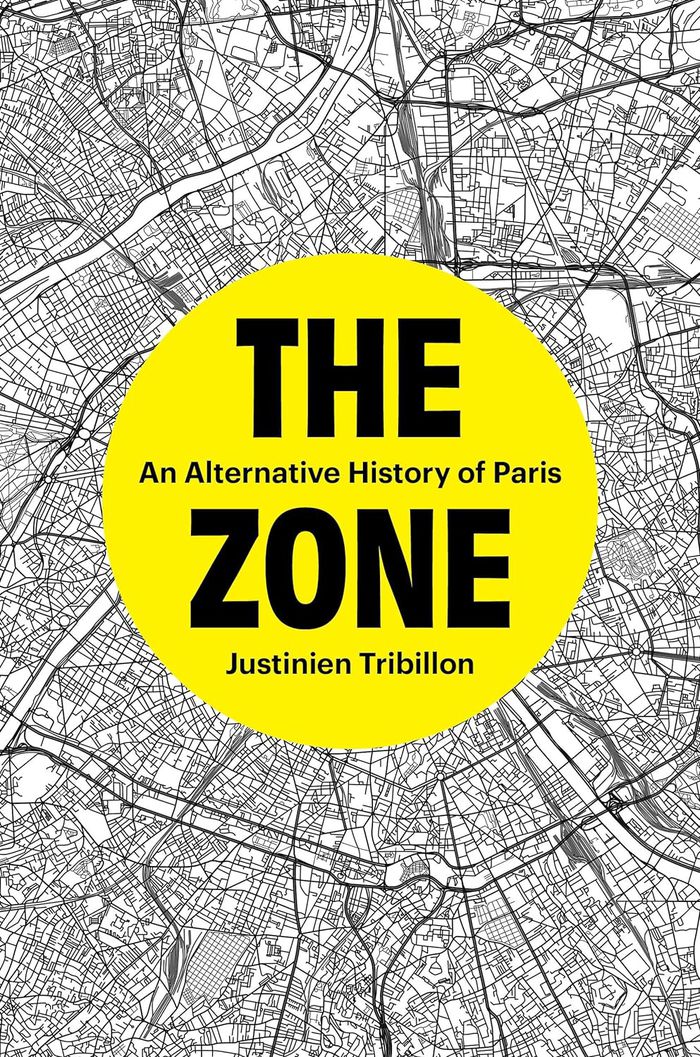
In "The Zone," Justinien Tribillon takes the reader on a tour of an eponymous Parisian hinterland. The site of dreams and nightmares, from Van Gogh’s paintings to the cinematic violence of La Haine, the Zone, so often misunderstood, is the key to understanding today’s Paris, and even France itself. Originally the site of defensive walls, alongside which mushroomed makeshift housing, allotments, and dancehalls in the nineteenth century, the Zone has performed many functions and been a place of contention for two centuries. Dismantled in the 1920s, the fortifications were first replaced with gardens, stadia and homes. After the war came the Boulevard Périphérique, a ring road promising seamless travel in a futuristic car-centric Paris. With the ring road came new dreams of modernity in reinvented suburbs: new towns, high-rise architecture and social housing built at record speed. Yesterday’s Paris made way for tomorrow’s banlieue. But the metropolitan dream was never realised. The Zone became a symbol of division: between inner and outer cities; between the bourgeois centre and the working-class immigrant outskirts; between ‘us’ and ‘them’. The Zone, both a physical space and a powerful myth, came to crystallise the social, spatial and ethno-racial differences between Paris and the banlieue.
The zone: An alternative history of Paris
Actions:
Prix:
$39.95
(disponible en magasin)
Résumé:
In "The Zone," Justinien Tribillon takes the reader on a tour of an eponymous Parisian hinterland. The site of dreams and nightmares, from Van Gogh’s paintings to the cinematic violence of La Haine, the Zone, so often misunderstood, is the key to understanding today’s Paris, and even France itself. Originally the site of defensive walls, alongside which mushroomed makeshift housing, allotments, and dancehalls in the nineteenth century, the Zone has performed many functions and been a place of contention for two centuries. Dismantled in the 1920s, the fortifications were first replaced with gardens, stadia and homes. After the war came the Boulevard Périphérique, a ring road promising seamless travel in a futuristic car-centric Paris. With the ring road came new dreams of modernity in reinvented suburbs: new towns, high-rise architecture and social housing built at record speed. Yesterday’s Paris made way for tomorrow’s banlieue. But the metropolitan dream was never realised. The Zone became a symbol of division: between inner and outer cities; between the bourgeois centre and the working-class immigrant outskirts; between ‘us’ and ‘them’. The Zone, both a physical space and a powerful myth, came to crystallise the social, spatial and ethno-racial differences between Paris and the banlieue.
Classification:
livres
livres
Publication:
juillet 2024
juillet 2024
Sujet:
Théorie de l’urbanisme
Théorie de l’urbanisme


