


1091 Résultats
Classification:
livres
livres
Prix:
$38.00
(disponible sur commande)
Résumé:
In 1924 two architects, William Van Alen and Craig Severance (former friends and successful partners, but now bitter adversaries), set out to imprint their individual marks on the rapidly evolving skyline of New York City. Each man desired to build the city’s tallest building, or ‘skyscraper.’ Van Alen was a creative genius who envisioned a bold, contemporary building(...)
$38.00
(disponible sur commande)
Résumé:
In 1924 two architects, William Van Alen and Craig Severance (former friends and successful partners, but now bitter adversaries), set out to imprint their individual marks on the rapidly evolving skyline of New York City. Each man desired to build the city’s tallest building, or ‘skyscraper.’ Van Alen was a creative genius who envisioned a bold, contemporary building(...)
Titre:
Higher : a historic race to the sky and the making of a city
Actions:
Prix:
$38.00
(disponible sur commande)
Résumé:
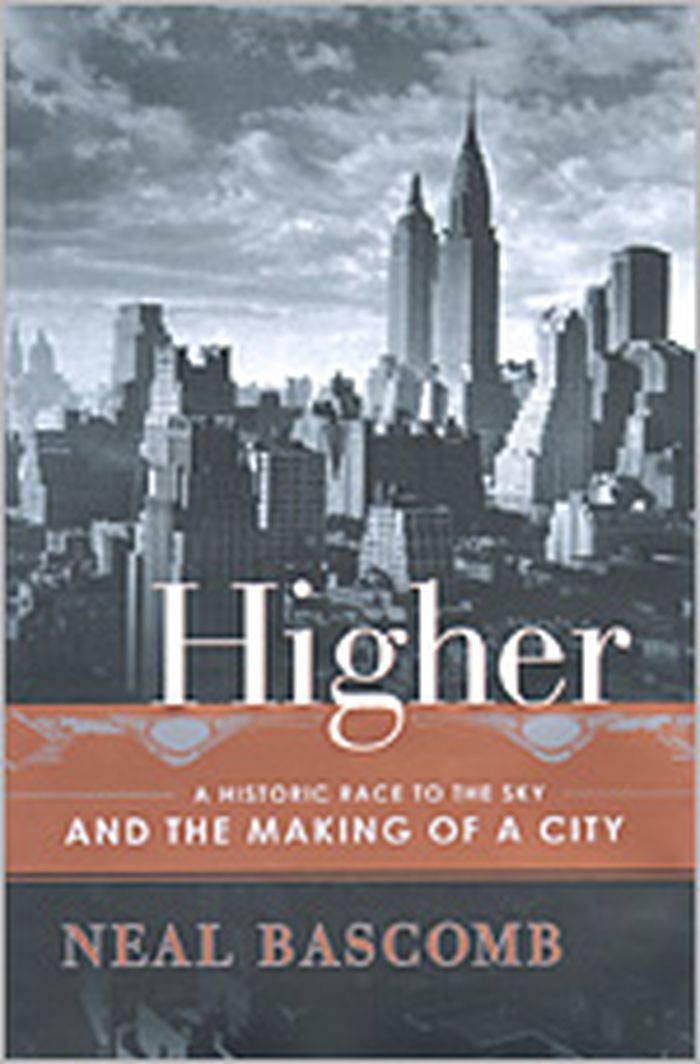
In 1924 two architects, William Van Alen and Craig Severance (former friends and successful partners, but now bitter adversaries), set out to imprint their individual marks on the rapidly evolving skyline of New York City. Each man desired to build the city’s tallest building, or ‘skyscraper.’ Van Alen was a creative genius who envisioned a bold, contemporary building that would move beyond the tired architecture of the previous century. By a stroke of good fortune he found a larger-than-life patron in automobile magnate Walter Chrysler, and they set out to build the legendary Chrysler building. Severance, by comparison, was a brilliant businessman, and he tapped his circle of downtown, old-money investors to begin construction on the Manhattan Company Building at 40 Wall Street. From ground-breaking to bricklaying, Van Alen and Severance fought a duel of wills. Each man was forced to revamp his architectural design in an attempt to push higher, to overcome his rival in mid-construction, as the structures rose, floor by floor, in record time. Yet just as the battle was underway, a third party entered the arena and announced plans to build an even larger building. This project would be overseen by one of Chrysler’s principal rivals--a representative of the General Motors group--and the building ultimately became known as The Empire State Building.
Higher : a historic race to the sky and the making of a city
Actions:
Prix:
$38.00
(disponible sur commande)
Résumé:
In 1924 two architects, William Van Alen and Craig Severance (former friends and successful partners, but now bitter adversaries), set out to imprint their individual marks on the rapidly evolving skyline of New York City. Each man desired to build the city’s tallest building, or ‘skyscraper.’ Van Alen was a creative genius who envisioned a bold, contemporary building that would move beyond the tired architecture of the previous century. By a stroke of good fortune he found a larger-than-life patron in automobile magnate Walter Chrysler, and they set out to build the legendary Chrysler building. Severance, by comparison, was a brilliant businessman, and he tapped his circle of downtown, old-money investors to begin construction on the Manhattan Company Building at 40 Wall Street. From ground-breaking to bricklaying, Van Alen and Severance fought a duel of wills. Each man was forced to revamp his architectural design in an attempt to push higher, to overcome his rival in mid-construction, as the structures rose, floor by floor, in record time. Yet just as the battle was underway, a third party entered the arena and announced plans to build an even larger building. This project would be overseen by one of Chrysler’s principal rivals--a representative of the General Motors group--and the building ultimately became known as The Empire State Building.
Classification:
livres
livres
Publication:
septembre 2003, New York
septembre 2003, New York
Sujet:
Gratte-ciels
Gratte-ciels
Classification:
livres
livres
Actions:
Prix:
$99.00
(disponible sur commande)
Résumé:
This book presents an unprecedented visual survey of the living and working spaces of the artist Donald Judd in New York and Texas. Filled with newly commissioned and previously unpublished archival photographs alongside five essays by the artist, this book provides an opportunity to explore Judd’s personal spaces, which are a crucial part of this revered artist’s(...)
$99.00
(disponible sur commande)
Résumé:
This book presents an unprecedented visual survey of the living and working spaces of the artist Donald Judd in New York and Texas. Filled with newly commissioned and previously unpublished archival photographs alongside five essays by the artist, this book provides an opportunity to explore Judd’s personal spaces, which are a crucial part of this revered artist’s(...)
Publication:
mars 2020
mars 2020
Titre:
Donald Judd spaces: Judd Foundation New York & Texas
Actions:
Prix:
$99.00
(disponible sur commande)
Résumé:
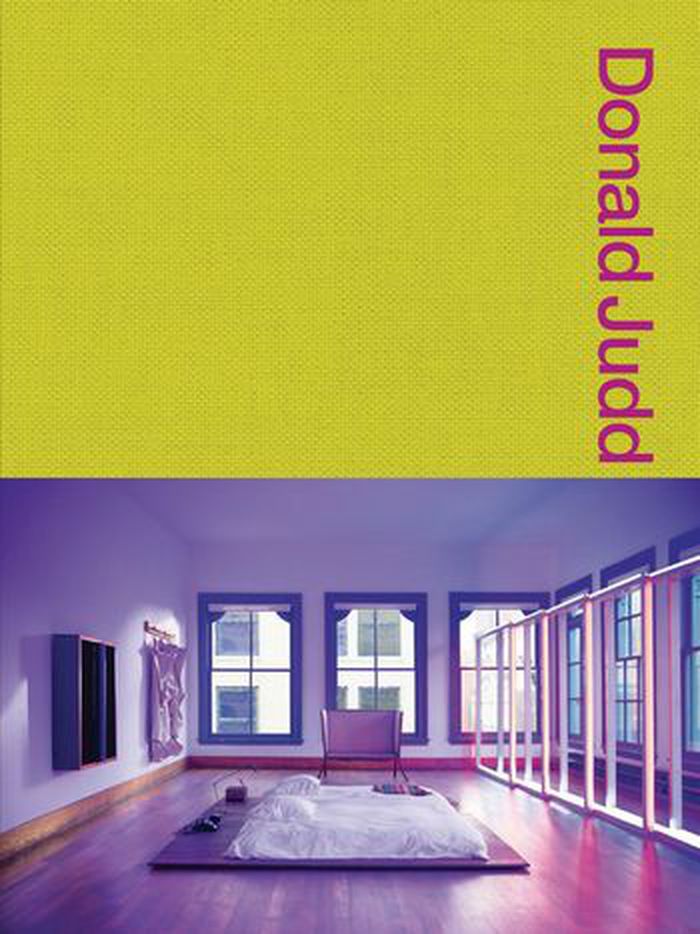
This book presents an unprecedented visual survey of the living and working spaces of the artist Donald Judd in New York and Texas. Filled with newly commissioned and previously unpublished archival photographs alongside five essays by the artist, this book provides an opportunity to explore Judd’s personal spaces, which are a crucial part of this revered artist’s oeuvre. From a 19th-century cast-iron building in Manhattan to an extensive ranch in the mountains of western Texas, this book details the interiors, exteriors, and lands surrounding the buildings that comprise Judd’s extant living and working spaces. Readers will discover how Judd developed the concept of permanent installation at Spring Street in New York City, with artworks, furniture, and decorative objects striking a balance between the building’s historic qualities and his own architectural innovations. His buildings in Marfa, Texas, demonstrate how Judd reiterated his concept of integrative living on a larger scale, extending to the reaches of the Chinati Mountains at Ayala de Chinati, his 33,000-acre ranch south of the town. Each of the spaces was thoroughly considered by Judd with resolute attention to function and design. From furniture to utilitarian structures that Judd designed himself, these residences reflect Judd’s consistent aesthetic. His spaces underscore his deep interest in the preservation of buildings and his deliberate interventions within existing architecture.
Donald Judd spaces: Judd Foundation New York & Texas
Actions:
Prix:
$99.00
(disponible sur commande)
Résumé:
This book presents an unprecedented visual survey of the living and working spaces of the artist Donald Judd in New York and Texas. Filled with newly commissioned and previously unpublished archival photographs alongside five essays by the artist, this book provides an opportunity to explore Judd’s personal spaces, which are a crucial part of this revered artist’s oeuvre. From a 19th-century cast-iron building in Manhattan to an extensive ranch in the mountains of western Texas, this book details the interiors, exteriors, and lands surrounding the buildings that comprise Judd’s extant living and working spaces. Readers will discover how Judd developed the concept of permanent installation at Spring Street in New York City, with artworks, furniture, and decorative objects striking a balance between the building’s historic qualities and his own architectural innovations. His buildings in Marfa, Texas, demonstrate how Judd reiterated his concept of integrative living on a larger scale, extending to the reaches of the Chinati Mountains at Ayala de Chinati, his 33,000-acre ranch south of the town. Each of the spaces was thoroughly considered by Judd with resolute attention to function and design. From furniture to utilitarian structures that Judd designed himself, these residences reflect Judd’s consistent aesthetic. His spaces underscore his deep interest in the preservation of buildings and his deliberate interventions within existing architecture.
Classification:
livres
livres
Publication:
mars 2020
mars 2020
Classification:
livres
livres

Actions:
Prix:
$22.00
(disponible sur commande)
Résumé:
Cities participate in the production of meaning by providing places populated with objects for words to refer to. Inscriptions on these objects (labels, billboards, newspapers, graffiti) provide another layer of meaning. And today, the flow of digital information - from one device to another in the urban scene - creates a digital network that also exists in physical(...)
$22.00
(disponible sur commande)
Résumé:
Cities participate in the production of meaning by providing places populated with objects for words to refer to. Inscriptions on these objects (labels, billboards, newspapers, graffiti) provide another layer of meaning. And today, the flow of digital information - from one device to another in the urban scene - creates a digital network that also exists in physical(...)
Sujet:
Théorie de l’architecture
Théorie de l’architecture
Publication:
janvier 1900, Cambridge, Mass.
janvier 1900, Cambridge, Mass.
Titre:
Placing words : symbols, space and the city
Actions:
Prix:
$22.00
(disponible sur commande)
Résumé:
Cities participate in the production of meaning by providing places populated with objects for words to refer to. Inscriptions on these objects (labels, billboards, newspapers, graffiti) provide another layer of meaning. And today, the flow of digital information - from one device to another in the urban scene - creates a digital network that also exists in physical space. "Placing Words" examines this emerging system of spaces, flows, and practices in a series of short essays - snapshots of the city in the twenty-first century. Mitchell questions the necessity of flashy downtown office towers in an age of corporate web sites. He casts the shocked-and-awed Baghdad as a contemporary Guernica. He describes architectural makeovers throughout history, listing Le Corbusier's Fab Five Points of difference between new and old architecture, and he discusses the architecture of Manolo Blahniks. He pens an open letter to the Secretary of Defense recommending architectural features to include in torture chambers. He compares Baudelaire, the Parisian flaneur, to Spiderman, the Manhattan traceur. He describes the iPod-like galleries of the renovated MoMA and he recognizes the camera phone as the latest step in a process of image mobilization that began when artists stopped painting on walls and began making pictures on small pieces of wood, canvas, or paper. The endless flow of information, he makes clear, is not only more pervasive and efficient than ever, it is also generating new cultural complexities.
Placing words : symbols, space and the city
Actions:
Prix:
$22.00
(disponible sur commande)
Résumé:
Cities participate in the production of meaning by providing places populated with objects for words to refer to. Inscriptions on these objects (labels, billboards, newspapers, graffiti) provide another layer of meaning. And today, the flow of digital information - from one device to another in the urban scene - creates a digital network that also exists in physical space. "Placing Words" examines this emerging system of spaces, flows, and practices in a series of short essays - snapshots of the city in the twenty-first century. Mitchell questions the necessity of flashy downtown office towers in an age of corporate web sites. He casts the shocked-and-awed Baghdad as a contemporary Guernica. He describes architectural makeovers throughout history, listing Le Corbusier's Fab Five Points of difference between new and old architecture, and he discusses the architecture of Manolo Blahniks. He pens an open letter to the Secretary of Defense recommending architectural features to include in torture chambers. He compares Baudelaire, the Parisian flaneur, to Spiderman, the Manhattan traceur. He describes the iPod-like galleries of the renovated MoMA and he recognizes the camera phone as the latest step in a process of image mobilization that began when artists stopped painting on walls and began making pictures on small pieces of wood, canvas, or paper. The endless flow of information, he makes clear, is not only more pervasive and efficient than ever, it is also generating new cultural complexities.
Classification:
livres
livres
Publication:
janvier 1900, Cambridge, Mass.
janvier 1900, Cambridge, Mass.
Sujet:
Théorie de l’architecture
Théorie de l’architecture
Classification:
livres
livres
Actions:
Prix:
$46.95
(disponible sur commande)
Résumé:
Hans Haacke’s art articulates the interdependence of multiple elements. An artwork is not merely an object but is also its context—the economic, social, and political conditions of the art world and the world at large. Among his best-known works are MoMA-Poll (1970), which polled museumgoers on their opinions about Nelson Rockefeller and the Nixon administration’s(...)
$46.95
(disponible sur commande)
Résumé:
Hans Haacke’s art articulates the interdependence of multiple elements. An artwork is not merely an object but is also its context—the economic, social, and political conditions of the art world and the world at large. Among his best-known works are MoMA-Poll (1970), which polled museumgoers on their opinions about Nelson Rockefeller and the Nixon administration’s(...)
Titre:
Working conditions: the writings of Hans Haacke
Actions:
Prix:
$46.95
(disponible sur commande)
Résumé:
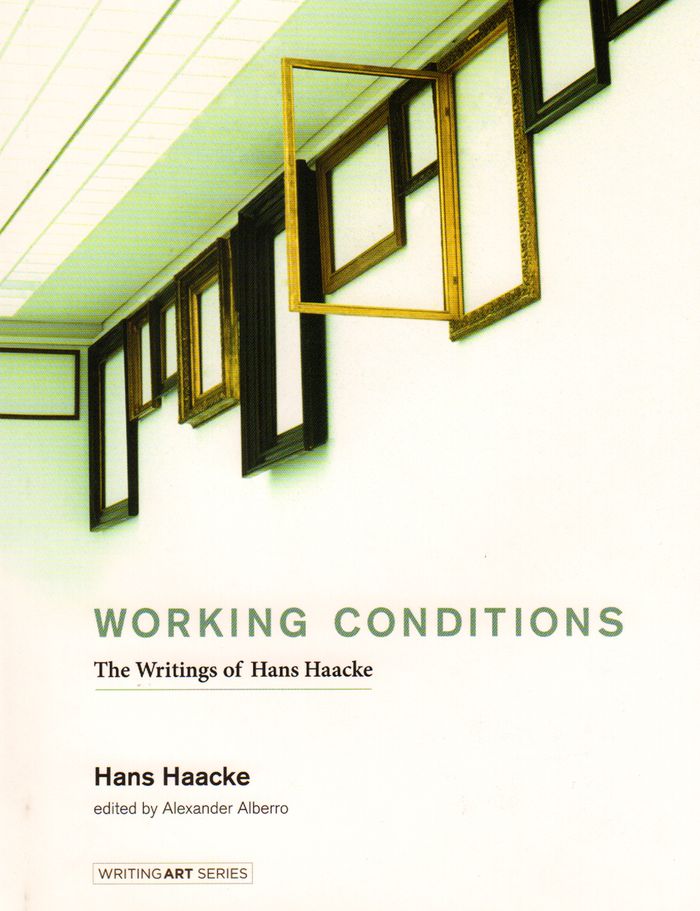
Hans Haacke’s art articulates the interdependence of multiple elements. An artwork is not merely an object but is also its context—the economic, social, and political conditions of the art world and the world at large. Among his best-known works are MoMA-Poll (1970), which polled museumgoers on their opinions about Nelson Rockefeller and the Nixon administration’s Indochina policy; Gallery-Goers’ Birthplace and Residence Profile (1969), which canvassed visitors to the Howard Wise Gallery in Manhattan; and the famously canceled 1971 solo exhibition at the Guggenheim Museum, which was meant to display, among other things, works on two New York real estate empires. This volume collects writings by Haacke that explain and document his practice. The texts, some of which have never before been published, run from straightforward descriptions to wide-ranging reflections and full-throated polemics. They include correspondence with MoMA and the Guggenheim and a letter refusing to represent the United States at the 1969 São Paulo Biennial; the title piece, “Working Conditions,” which discusses corporate influence on the art world; Haacke’s thinking about “real-time social systems”; and texts written for museum catalogs on various artworks, including GERMANIA, in the German Pavilion of the 1993 Venice Biennial; DER BEVÖLKERUNG (To the Population) of 2000 at the Berlin Reichstag; Mixed Messages, an exhibition of objects from the Victoria and Albert Museum (2001); and Gift Horse, unveiled on the fourth plinth in Trafalgar Square in 2015.
Working conditions: the writings of Hans Haacke
Actions:
Prix:
$46.95
(disponible sur commande)
Résumé:
Hans Haacke’s art articulates the interdependence of multiple elements. An artwork is not merely an object but is also its context—the economic, social, and political conditions of the art world and the world at large. Among his best-known works are MoMA-Poll (1970), which polled museumgoers on their opinions about Nelson Rockefeller and the Nixon administration’s Indochina policy; Gallery-Goers’ Birthplace and Residence Profile (1969), which canvassed visitors to the Howard Wise Gallery in Manhattan; and the famously canceled 1971 solo exhibition at the Guggenheim Museum, which was meant to display, among other things, works on two New York real estate empires. This volume collects writings by Haacke that explain and document his practice. The texts, some of which have never before been published, run from straightforward descriptions to wide-ranging reflections and full-throated polemics. They include correspondence with MoMA and the Guggenheim and a letter refusing to represent the United States at the 1969 São Paulo Biennial; the title piece, “Working Conditions,” which discusses corporate influence on the art world; Haacke’s thinking about “real-time social systems”; and texts written for museum catalogs on various artworks, including GERMANIA, in the German Pavilion of the 1993 Venice Biennial; DER BEVÖLKERUNG (To the Population) of 2000 at the Berlin Reichstag; Mixed Messages, an exhibition of objects from the Victoria and Albert Museum (2001); and Gift Horse, unveiled on the fourth plinth in Trafalgar Square in 2015.
Classification:
livres
livres
Publication:
octobre 2016
octobre 2016
Sujet:
Théorie de l’art
Théorie de l’art
Classification:
livres
livres
Actions:
Prix:
$15.95
(disponible en magasin)
Résumé:
This volume contains work, both built and unbuilt, both large-scale and small, designed in the 1990s by the firm of Philip Johnson/Alan Ritchie Architects. Alan Ritchie has worked with Johnson since 1969; the firm was established in 1994. The projects shown may be divided into two groups. Johnson’s interest in the past decade in sculptural form - or the way in which(...)
$15.95
(disponible en magasin)
Résumé:
This volume contains work, both built and unbuilt, both large-scale and small, designed in the 1990s by the firm of Philip Johnson/Alan Ritchie Architects. Alan Ritchie has worked with Johnson since 1969; the firm was established in 1994. The projects shown may be divided into two groups. Johnson’s interest in the past decade in sculptural form - or the way in which(...)
Sujet:
Architecture, monographies
Architecture, monographies
Publication:
janvier 2003, New York
janvier 2003, New York
Titre:
Philip Johnson / Alan Ritchie architects
Actions:
Prix:
$15.95
(disponible en magasin)
Résumé:
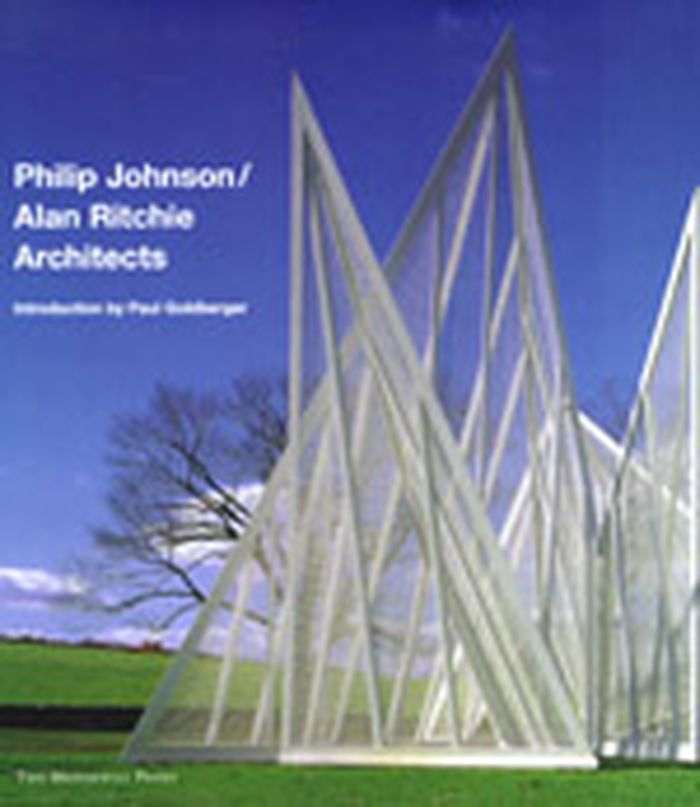
This volume contains work, both built and unbuilt, both large-scale and small, designed in the 1990s by the firm of Philip Johnson/Alan Ritchie Architects. Alan Ritchie has worked with Johnson since 1969; the firm was established in 1994. The projects shown may be divided into two groups. Johnson’s interest in the past decade in sculptural form - or the way in which sculptural form translates into architectural presence - has led to designs that involve both new kinds of shapes and new ways of using classic architectural form to make entirely new works of architecture. Such sculptural works, for the most part small in scale, include Da Monsta, the new visitors pavilion at Johnson’s famed Glass House in New Canaan, Connecticut, and a spectacular folly consisting of four pyramids made of chain-link fencing at an estate in New York State. Simultaneously, the firm has continued its ongoing work with larger projects, such as a 27-story apartment tower for Tribeca, in lower Manhattan; the Cathedral of Hope in Dallas; an addition to the Amon Carter Museum, originally designed by Johnson in 1961, in Forth Worth, Texas; and a proposal for the architecture school at Texas A University in College Station. Also included are a pair of proposals for La Défense in Paris; three large houses; a new china design for the Four Seasons restaurant in New York; and a new public clock, sponsored by Movado, for Lincoln Center. Introduction by Paul Goldberger.
Philip Johnson / Alan Ritchie architects
Actions:
Prix:
$15.95
(disponible en magasin)
Résumé:
This volume contains work, both built and unbuilt, both large-scale and small, designed in the 1990s by the firm of Philip Johnson/Alan Ritchie Architects. Alan Ritchie has worked with Johnson since 1969; the firm was established in 1994. The projects shown may be divided into two groups. Johnson’s interest in the past decade in sculptural form - or the way in which sculptural form translates into architectural presence - has led to designs that involve both new kinds of shapes and new ways of using classic architectural form to make entirely new works of architecture. Such sculptural works, for the most part small in scale, include Da Monsta, the new visitors pavilion at Johnson’s famed Glass House in New Canaan, Connecticut, and a spectacular folly consisting of four pyramids made of chain-link fencing at an estate in New York State. Simultaneously, the firm has continued its ongoing work with larger projects, such as a 27-story apartment tower for Tribeca, in lower Manhattan; the Cathedral of Hope in Dallas; an addition to the Amon Carter Museum, originally designed by Johnson in 1961, in Forth Worth, Texas; and a proposal for the architecture school at Texas A University in College Station. Also included are a pair of proposals for La Défense in Paris; three large houses; a new china design for the Four Seasons restaurant in New York; and a new public clock, sponsored by Movado, for Lincoln Center. Introduction by Paul Goldberger.
Classification:
livres
livres
Publication:
janvier 2003, New York
janvier 2003, New York
Sujet:
Architecture, monographies
Architecture, monographies
Classification:
livres
livres
Actions:
Prix:
$32.95
(disponible sur commande)
Résumé:
Bay by the turn of the century. But in 1912, backed by some of the country’s leading financiers and industrialists, MIT officials purchased an undeveloped tract of land in Cambridge, launching a long and complex review of proposals for a new quadrangle. Based largely on the recommendation of John D. Rockefeller Jr., the commission was awarded to MIT and the École des(...)
$32.95
(disponible sur commande)
Résumé:
Bay by the turn of the century. But in 1912, backed by some of the country’s leading financiers and industrialists, MIT officials purchased an undeveloped tract of land in Cambridge, launching a long and complex review of proposals for a new quadrangle. Based largely on the recommendation of John D. Rockefeller Jr., the commission was awarded to MIT and the École des(...)
Titre:
Designing MIT: Bosworth's new tech
Actions:
Prix:
$32.95
(disponible sur commande)
Résumé:
Bay by the turn of the century. But in 1912, backed by some of the country’s leading financiers and industrialists, MIT officials purchased an undeveloped tract of land in Cambridge, launching a long and complex review of proposals for a new quadrangle. Based largely on the recommendation of John D. Rockefeller Jr., the commission was awarded to MIT and the École des Beaux-Arts-trained architect William Welles Bosworth, known for his AT Building in Manhattan, and Kykuit, the Rockefeller mansion in Tarrytown, New York. Designing MIT is the first book to detail Bosworth’s challenges in the planning and construction of the Institute’s unique Cambridge campus. Beginning with an examination of the competing project proposals—from Steven Child, an emerging landscape designer and student of Frederick Law Olmstead; Desiré Despradelle, Chairman of the Department of Architecture at MIT and a leading Beaux-Arts stylist; Ralph Adams Cram, noted for his gothic West Point campus; and John Freeman, one of the country’s leading civil engineers—Mark M. Jarzombek provides a captivating cross-section of the architectural debates of the time. Though Bosworth’s considerable social and political finesse enabled him to land the commission and balance varied competing interests, he found his classically oriented vision challenged by engineer John Freeman, proponent of Frederick W. Taylor’s new principle of Scientific Management. However strained, the conflict ultimately resulted in a far more innovative design than either individual approach, employing new European concepts of industrialism, efficiency, and aesthetics in academic structures.
Designing MIT: Bosworth's new tech
Actions:
Prix:
$32.95
(disponible sur commande)
Résumé:
Bay by the turn of the century. But in 1912, backed by some of the country’s leading financiers and industrialists, MIT officials purchased an undeveloped tract of land in Cambridge, launching a long and complex review of proposals for a new quadrangle. Based largely on the recommendation of John D. Rockefeller Jr., the commission was awarded to MIT and the École des Beaux-Arts-trained architect William Welles Bosworth, known for his AT Building in Manhattan, and Kykuit, the Rockefeller mansion in Tarrytown, New York. Designing MIT is the first book to detail Bosworth’s challenges in the planning and construction of the Institute’s unique Cambridge campus. Beginning with an examination of the competing project proposals—from Steven Child, an emerging landscape designer and student of Frederick Law Olmstead; Desiré Despradelle, Chairman of the Department of Architecture at MIT and a leading Beaux-Arts stylist; Ralph Adams Cram, noted for his gothic West Point campus; and John Freeman, one of the country’s leading civil engineers—Mark M. Jarzombek provides a captivating cross-section of the architectural debates of the time. Though Bosworth’s considerable social and political finesse enabled him to land the commission and balance varied competing interests, he found his classically oriented vision challenged by engineer John Freeman, proponent of Frederick W. Taylor’s new principle of Scientific Management. However strained, the conflict ultimately resulted in a far more innovative design than either individual approach, employing new European concepts of industrialism, efficiency, and aesthetics in academic structures.
Classification:
livres
livres
Publication:
novembre 2004
novembre 2004
Classification:
livres
livres
Actions:
Exemplaires:
Description:
279 pages : illustrations ; 24 cm
Description:
279 pages : illustrations ; 24 cm
Auteur:
Sujet:
Publication:
New York : Princeton Architectural Press, ©1998.
New York : Princeton Architectural Press, ©1998.
Titre:
Sidewalk critic : Lewis Mumford's writings on New York / edited by Robert Wojtowicz.
Actions:
Exemplaires:
Description:
279 pages : illustrations ; 24 cm
Sidewalk critic : Lewis Mumford's writings on New York / edited by Robert Wojtowicz.
Actions:
Exemplaires:
Description:
279 pages : illustrations ; 24 cm
Classification:
livres
livres
Publication:
New York : Princeton Architectural Press, ©1998.
New York : Princeton Architectural Press, ©1998.
Auteur:
Sujet:
Classification:
livres
livres
Actions:
Prix:
$48.95
(disponible sur commande)
Résumé:
112 Greene Street, The Kitchen, Artists Space, The Clocktower, P.S.1, Franklin Furnace, ou Fashion Moda : ces lieux nés durant la décennie 1970, et parfois toujours en activité, ont laissé une empreinte durable sur la scène artistique new-yorkaise. « Espaces alternatifs », d'abord installés dans ces quartiers industriels du sud de Manhattan qui deviendront SoHo et(...)
$48.95
(disponible sur commande)
Résumé:
112 Greene Street, The Kitchen, Artists Space, The Clocktower, P.S.1, Franklin Furnace, ou Fashion Moda : ces lieux nés durant la décennie 1970, et parfois toujours en activité, ont laissé une empreinte durable sur la scène artistique new-yorkaise. « Espaces alternatifs », d'abord installés dans ces quartiers industriels du sud de Manhattan qui deviendront SoHo et(...)
Titre:
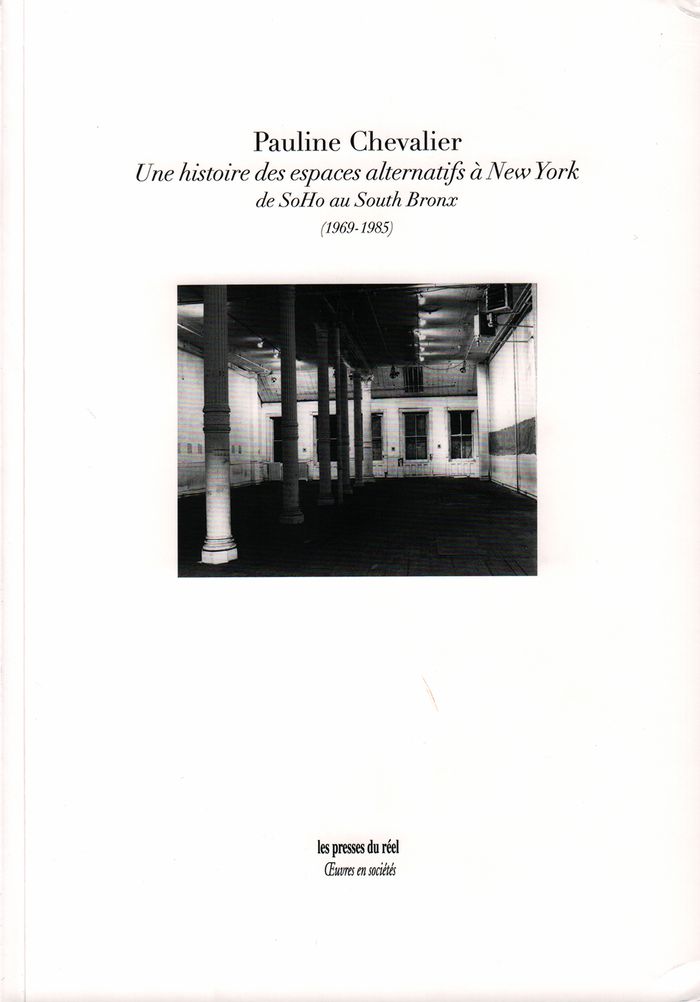
Une histoire des espaces alternatifs à New York: de SoHo au South Bronx,1969-1985
Actions:
Prix:
$48.95
(disponible sur commande)
Résumé:
112 Greene Street, The Kitchen, Artists Space, The Clocktower, P.S.1, Franklin Furnace, ou Fashion Moda : ces lieux nés durant la décennie 1970, et parfois toujours en activité, ont laissé une empreinte durable sur la scène artistique new-yorkaise. « Espaces alternatifs », d'abord installés dans ces quartiers industriels du sud de Manhattan qui deviendront SoHo et TriBeCa, puis dans l'East Village, le Queens, Brooklyn, ou encore le sud du Bronx, ces lieux d'exposition, de création et de sociabilité établis en marge des institutions muséales et des galeries commerciales ont favorisé l'épanouissement de nouvelles pratiques : art processuel, danse postmoderne, art vidéo, performance. C'est une enquête historique et un parcours géographique que propose l'ouvrage, mettant en lumière l'articulation entre ces pratiques et les phénomènes institutionnels, sociaux, économiques et urbains dont elles ne peuvent être dissociées. Si les installations dans les espaces bruts du 112 Greene Street ou l'exposition inaugurale de P.S.1 révèlent un engouement pour le matériau urbain, c'est aussi la place des artistes dans la ville de New York qui est alors constamment interrogée, depuis la légalisation des premiers lofts jusqu'aux critiques virulentes de la gentrification qui émanent de la communauté artistique elle-même. Alors qu'au début des années 1970 ces lieux alternatifs profitent d'un contexte économique favorable et du soutien d'une nouvelle politique culturelle fédérale et locale, le milieu des années 1980 sonne le glas d'un mouvement. « The Fun is gone » arbore la Fun Gallery à sa fermeture dans l'East Village en 1985. La scène alternative s'essouffle sous la présidence Reagan, non sans avoir nourri sa propre histoire et contribué à la constitution d'une mythologie et d'un héritage dont l'ambivalence persiste aujourd'hui.
Une histoire des espaces alternatifs à New York: de SoHo au South Bronx,1969-1985
Actions:
Prix:
$48.95
(disponible sur commande)
Résumé:
112 Greene Street, The Kitchen, Artists Space, The Clocktower, P.S.1, Franklin Furnace, ou Fashion Moda : ces lieux nés durant la décennie 1970, et parfois toujours en activité, ont laissé une empreinte durable sur la scène artistique new-yorkaise. « Espaces alternatifs », d'abord installés dans ces quartiers industriels du sud de Manhattan qui deviendront SoHo et TriBeCa, puis dans l'East Village, le Queens, Brooklyn, ou encore le sud du Bronx, ces lieux d'exposition, de création et de sociabilité établis en marge des institutions muséales et des galeries commerciales ont favorisé l'épanouissement de nouvelles pratiques : art processuel, danse postmoderne, art vidéo, performance. C'est une enquête historique et un parcours géographique que propose l'ouvrage, mettant en lumière l'articulation entre ces pratiques et les phénomènes institutionnels, sociaux, économiques et urbains dont elles ne peuvent être dissociées. Si les installations dans les espaces bruts du 112 Greene Street ou l'exposition inaugurale de P.S.1 révèlent un engouement pour le matériau urbain, c'est aussi la place des artistes dans la ville de New York qui est alors constamment interrogée, depuis la légalisation des premiers lofts jusqu'aux critiques virulentes de la gentrification qui émanent de la communauté artistique elle-même. Alors qu'au début des années 1970 ces lieux alternatifs profitent d'un contexte économique favorable et du soutien d'une nouvelle politique culturelle fédérale et locale, le milieu des années 1980 sonne le glas d'un mouvement. « The Fun is gone » arbore la Fun Gallery à sa fermeture dans l'East Village en 1985. La scène alternative s'essouffle sous la présidence Reagan, non sans avoir nourri sa propre histoire et contribué à la constitution d'une mythologie et d'un héritage dont l'ambivalence persiste aujourd'hui.
Classification:
livres
livres
Publication:
juillet 2017
juillet 2017
Sujet:
Théorie de l’art
Théorie de l’art
Classification:
livres
livres
Titre:
AIA guide to New York City
AIA guide to New York City
Actions:
Prix:
$43.95
(disponible sur commande)
Résumé:
The AIA Guide to New York City, Fourth Edition New York Chapter, American Institute of Architects Norval White and Elliot Willensky Architecture | Times Books | Trade Paperback | June 2000 | $35.00 | 0-8129-3107-6 (...)
$43.95
(disponible sur commande)
Résumé:
The AIA Guide to New York City, Fourth Edition New York Chapter, American Institute of Architects Norval White and Elliot Willensky Architecture | Times Books | Trade Paperback | June 2000 | $35.00 | 0-8129-3107-6 (...)
Titre:
AIA guide to New York City
Actions:
Prix:
$43.95
(disponible sur commande)
Résumé:
The AIA Guide to New York City, Fourth Edition New York Chapter, American Institute of Architects Norval White and Elliot Willensky Architecture | Times Books | Trade Paperback | June 2000 | $35.00 | 0-8129-3107-6 Since the "AIA Guide to New York City" was first published in 1967, it has been recognized as the ultimate guide to the metropolis's buildings, in all five boroughs -- Manhattan, Brooklyn, Queens, the Bronx, and Staten Island -- from nineteenth-century brownstones and tenements to modern high-rise apartments and museums. The latest edition of this urban classic takes a fresh look at the architectural treasures that define New York -- from its most characteristic landmarks to its less famous local favorites. To prepare this edition -- the first revision since 1987 -- Norval White has visited and revisited more than 5,000 buildings, making this by far the most complete guide of its kind. This generously illustrated handbook presents the structures of the New York City--from the magnificent to the obscure -- in over 3,000 new photographs, more than 130 new maps, and hundreds of revised and new entries. Beyond the skyscrapers and historical buildings, the guide also leads the way to the city's bridges, parks, and public monuments. From the tip of the Empire State Building to the brownstones in Brooklyn, the AIA Guide to New York City reveals how the city's spirit, fortitude, and character are captured and expressed in its architecture. Thoughtful and humorous descriptions include bits of local information that bring the city's history to life, telling the stories behind the bricks and mortar. Together, the maps, photographs, and critiques invite you to tour of the city at your own pace.
AIA guide to New York City
Actions:
Prix:
$43.95
(disponible sur commande)
Résumé:
The AIA Guide to New York City, Fourth Edition New York Chapter, American Institute of Architects Norval White and Elliot Willensky Architecture | Times Books | Trade Paperback | June 2000 | $35.00 | 0-8129-3107-6 Since the "AIA Guide to New York City" was first published in 1967, it has been recognized as the ultimate guide to the metropolis's buildings, in all five boroughs -- Manhattan, Brooklyn, Queens, the Bronx, and Staten Island -- from nineteenth-century brownstones and tenements to modern high-rise apartments and museums. The latest edition of this urban classic takes a fresh look at the architectural treasures that define New York -- from its most characteristic landmarks to its less famous local favorites. To prepare this edition -- the first revision since 1987 -- Norval White has visited and revisited more than 5,000 buildings, making this by far the most complete guide of its kind. This generously illustrated handbook presents the structures of the New York City--from the magnificent to the obscure -- in over 3,000 new photographs, more than 130 new maps, and hundreds of revised and new entries. Beyond the skyscrapers and historical buildings, the guide also leads the way to the city's bridges, parks, and public monuments. From the tip of the Empire State Building to the brownstones in Brooklyn, the AIA Guide to New York City reveals how the city's spirit, fortitude, and character are captured and expressed in its architecture. Thoughtful and humorous descriptions include bits of local information that bring the city's history to life, telling the stories behind the bricks and mortar. Together, the maps, photographs, and critiques invite you to tour of the city at your own pace.
Classification:
livres
livres
Publication:
avril 2000, New York
avril 2000, New York
Sujet:
Guides des villes
Guides des villes
Classification:
livres
livres
Titre:
OMA NY: Search term
OMA NY: Search term
Actions:
Prix:
$170.00
(disponible en magasin)
Résumé:
Well into its fourth decade, the Office for Metropolitan Architecture (OMA), founded by Rem Koolhaas in 1975, remains one of the most influential and successful practices of its kind. OMA describes itself as ''a firm operating within the traditional boundaries of architecture and urbanism that applies architectural thinking to domains beyond.'' OMA New York, has grown(...)
$170.00
(disponible en magasin)
Résumé:
Well into its fourth decade, the Office for Metropolitan Architecture (OMA), founded by Rem Koolhaas in 1975, remains one of the most influential and successful practices of its kind. OMA describes itself as ''a firm operating within the traditional boundaries of architecture and urbanism that applies architectural thinking to domains beyond.'' OMA New York, has grown(...)
Titre:
OMA NY: Search term
Actions:
Prix:
$170.00
(disponible en magasin)
Résumé:
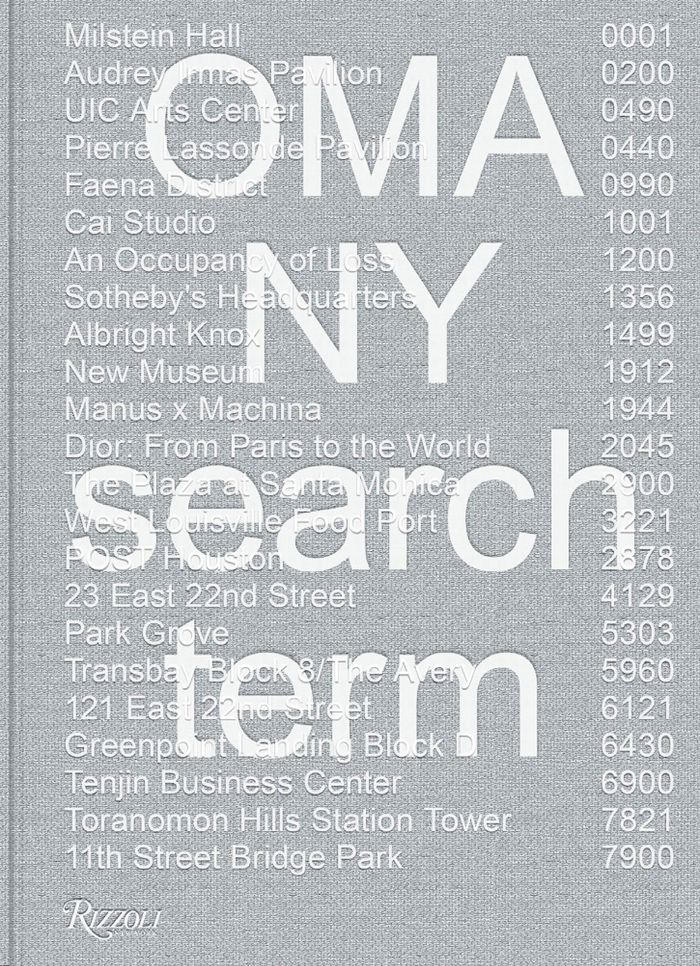
Well into its fourth decade, the Office for Metropolitan Architecture (OMA), founded by Rem Koolhaas in 1975, remains one of the most influential and successful practices of its kind. OMA describes itself as ''a firm operating within the traditional boundaries of architecture and urbanism that applies architectural thinking to domains beyond.'' OMA New York, has grown from an American outpost to a full-fledged operation with its own attitudes, contributing to the evolution of the globally acclaimed office. Through a diversity of projects, the firm has transformed our understanding of the city and our evolving relationship with art, fashion, food, sustainability, and other quintessentially twenty-first-century preoccupations. The works presented here elaborate on OMA’s philosophy even as they expand its portfolio geographically. Featured projects include residential skyscrapers in New York, Miami, and San Francisco, mixed-use developments in cities from Tokyo to Houston, and projects like 11th Street Bridge Park in the public realm, alongside more intimate spaces such as the studio for renowned Chinese artist Cai Guo-Qiang. Permanent structures, such as Milstein Hall at Cornell University, the new galleries of Quebec’s Musée National des Beaux-Arts, a cultural forum and neighborhood for Faena in Miami, and the expansion of museums such as the Albright-Knox Art Gallery in Buffalo and the New Museum in Manhattan, contrast vividly with temporary interventions such as the Manus x Machina exhibition at the Met Costume Institute and the sculptural installation of soaring concrete columns for An Occupation of Loss. In between projects are dialogues with leading policy makers, museum directors, artists, fashion designers, musicians, chefs, and curators—Christopher Hawthorne, Lisa Phillips and Massimiliano Gioni, Taryn Simon, Iris van Herpen, Virgil Abloh, David Byrne, Alice Waters, and Cecilia Alemani—who provide insight onto areas of the firm’s interests and preoccupations beyond the realm of architecture.
OMA NY: Search term
Actions:
Prix:
$170.00
(disponible en magasin)
Résumé:
Well into its fourth decade, the Office for Metropolitan Architecture (OMA), founded by Rem Koolhaas in 1975, remains one of the most influential and successful practices of its kind. OMA describes itself as ''a firm operating within the traditional boundaries of architecture and urbanism that applies architectural thinking to domains beyond.'' OMA New York, has grown from an American outpost to a full-fledged operation with its own attitudes, contributing to the evolution of the globally acclaimed office. Through a diversity of projects, the firm has transformed our understanding of the city and our evolving relationship with art, fashion, food, sustainability, and other quintessentially twenty-first-century preoccupations. The works presented here elaborate on OMA’s philosophy even as they expand its portfolio geographically. Featured projects include residential skyscrapers in New York, Miami, and San Francisco, mixed-use developments in cities from Tokyo to Houston, and projects like 11th Street Bridge Park in the public realm, alongside more intimate spaces such as the studio for renowned Chinese artist Cai Guo-Qiang. Permanent structures, such as Milstein Hall at Cornell University, the new galleries of Quebec’s Musée National des Beaux-Arts, a cultural forum and neighborhood for Faena in Miami, and the expansion of museums such as the Albright-Knox Art Gallery in Buffalo and the New Museum in Manhattan, contrast vividly with temporary interventions such as the Manus x Machina exhibition at the Met Costume Institute and the sculptural installation of soaring concrete columns for An Occupation of Loss. In between projects are dialogues with leading policy makers, museum directors, artists, fashion designers, musicians, chefs, and curators—Christopher Hawthorne, Lisa Phillips and Massimiliano Gioni, Taryn Simon, Iris van Herpen, Virgil Abloh, David Byrne, Alice Waters, and Cecilia Alemani—who provide insight onto areas of the firm’s interests and preoccupations beyond the realm of architecture.
Classification:
livres
livres
Publication:
novembre 2021
novembre 2021
Sujet:
Architecture, monographies
Architecture, monographies


