


1152 Résultats
Classification:
livres
livres
Actions:
Exemplaires:
Description:
515 pages : illustrations (some color) ; 31 cm
Description:
515 pages : illustrations (some color) ; 31 cm
Auteur:
Sujet:
Publication:
London : Academy Editions, 1994.
London : Academy Editions, 1994.
Titre:
The invisible in architecture / editors, Ole Bouman and Roemer van Toorn.
Actions:
Exemplaires:
Description:
515 pages : illustrations (some color) ; 31 cm
The invisible in architecture / editors, Ole Bouman and Roemer van Toorn.
Actions:
Exemplaires:
Description:
515 pages : illustrations (some color) ; 31 cm
Classification:
livres
livres
Publication:
London : Academy Editions, 1994.
London : Academy Editions, 1994.
Auteur:
Sujet:
Classification:
livres
livres
Actions:
Exemplaires:
Description:
154 pages : illustrations ; 23 x 27 cm.
Description:
154 pages : illustrations ; 23 x 27 cm.
Auteur:
Sujet:
Publication:
New York : Harper & Row, ©1984.
New York : Harper & Row, ©1984.
Titre:
A view from the Campidoglio : selected essays, 1953-1984 / Robert Venturi and Denise Scott Brown ; edited by Peter Arnell, Ted Bickford, Catherine Bergart.
Actions:
Exemplaires:
Description:
154 pages : illustrations ; 23 x 27 cm.
A view from the Campidoglio : selected essays, 1953-1984 / Robert Venturi and Denise Scott Brown ; edited by Peter Arnell, Ted Bickford, Catherine Bergart.
Actions:
Exemplaires:
Description:
154 pages : illustrations ; 23 x 27 cm.
Classification:
livres
livres
Publication:
New York : Harper & Row, ©1984.
New York : Harper & Row, ©1984.
Auteur:
Sujet:
Classification:
livres
livres
Titre:
Architecture and authorship
Architecture and authorship
Actions:
Prix:
$48.00
(disponible sur commande)
Résumé:
Architecture and Authorship comprises 17 essays, encompassing a variety of contemporary and historical case studies, which explore issues of authorship, ownership and "copyright" in architecture. The book documents how, from the fifteenth century onwards, individual architects and movements have endeavoured to maintain their status by defending what they see as their own(...)
$48.00
(disponible sur commande)
Résumé:
Architecture and Authorship comprises 17 essays, encompassing a variety of contemporary and historical case studies, which explore issues of authorship, ownership and "copyright" in architecture. The book documents how, from the fifteenth century onwards, individual architects and movements have endeavoured to maintain their status by defending what they see as their own(...)
Sujet:
Théorie de l’architecture
Théorie de l’architecture
Publication:
juin 2007, London
juin 2007, London
Titre:
Architecture and authorship
Actions:
Prix:
$48.00
(disponible sur commande)
Résumé:
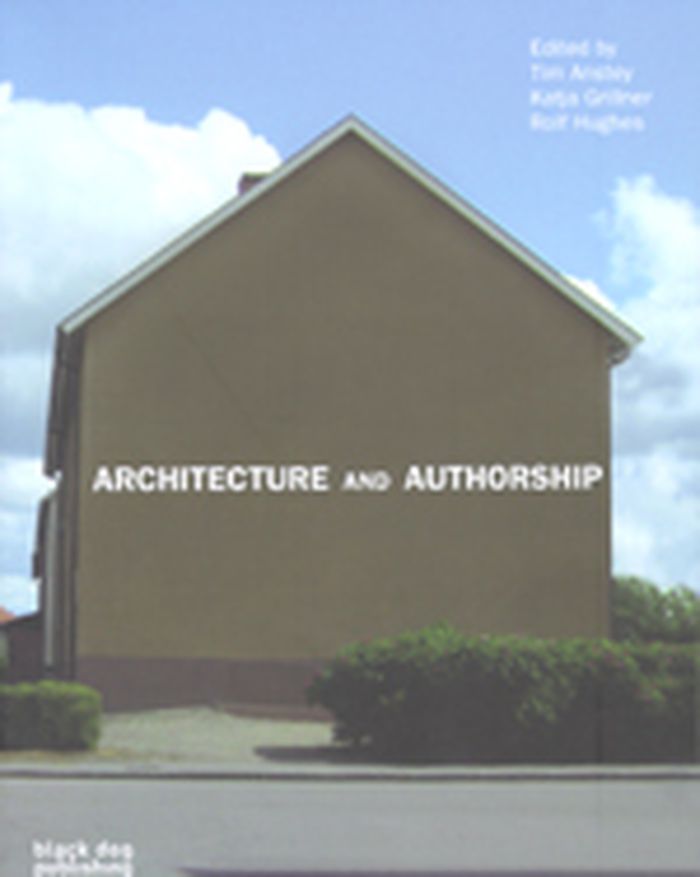
Architecture and Authorship comprises 17 essays, encompassing a variety of contemporary and historical case studies, which explore issues of authorship, ownership and "copyright" in architecture. The book documents how, from the fifteenth century onwards, individual architects and movements have endeavoured to maintain their status by defending what they see as their own unique territory -- the origins and intentions of their work, and their signature style. Written contributions from international experts in architecture and art history cover a variety of fascinating topics, including domestic space; eighteenth century landscape gardens; the Berlin of the late nineteenth and early twentieth century; and postmodernism and the "Death of the Author;" as well as exploring the work of luminaries from Ernst Neufert and Cedric Price to Rem Koolhaas. Architecture and Authorship is a lavishly illustrated alternative look at the history and culture of architecture, and the thought processes and ideas behind a variety of architectural "practices."
Architecture and authorship
Actions:
Prix:
$48.00
(disponible sur commande)
Résumé:
Architecture and Authorship comprises 17 essays, encompassing a variety of contemporary and historical case studies, which explore issues of authorship, ownership and "copyright" in architecture. The book documents how, from the fifteenth century onwards, individual architects and movements have endeavoured to maintain their status by defending what they see as their own unique territory -- the origins and intentions of their work, and their signature style. Written contributions from international experts in architecture and art history cover a variety of fascinating topics, including domestic space; eighteenth century landscape gardens; the Berlin of the late nineteenth and early twentieth century; and postmodernism and the "Death of the Author;" as well as exploring the work of luminaries from Ernst Neufert and Cedric Price to Rem Koolhaas. Architecture and Authorship is a lavishly illustrated alternative look at the history and culture of architecture, and the thought processes and ideas behind a variety of architectural "practices."
Classification:
livres
livres
Publication:
juin 2007, London
juin 2007, London
Sujet:
Théorie de l’architecture
Théorie de l’architecture
Classification:
livres
livres

Actions:
Prix:
$56.00
(disponible sur commande)
Résumé:
Since the end of World War II, Jewish architects have risen to unprecedented international prominence. Whether as modernists, postmodernists, or deconstructivists, architects such as Peter Eisenman, Frank Gehry, Louis I. Kahn, Daniel Libeskind, Richard Meier, Moshe Safdie, Robert A.M. Stern, and Stanley Tigerman have made pivotal contributions to postwar architecture.(...)
$56.00
(disponible sur commande)
Résumé:
Since the end of World War II, Jewish architects have risen to unprecedented international prominence. Whether as modernists, postmodernists, or deconstructivists, architects such as Peter Eisenman, Frank Gehry, Louis I. Kahn, Daniel Libeskind, Richard Meier, Moshe Safdie, Robert A.M. Stern, and Stanley Tigerman have made pivotal contributions to postwar architecture.(...)
Titre:
Building after Auschwitz: Jewish architecture and the memory of the Holocaust
Actions:
Prix:
$56.00
(disponible sur commande)
Résumé:
Since the end of World War II, Jewish architects have risen to unprecedented international prominence. Whether as modernists, postmodernists, or deconstructivists, architects such as Peter Eisenman, Frank Gehry, Louis I. Kahn, Daniel Libeskind, Richard Meier, Moshe Safdie, Robert A.M. Stern, and Stanley Tigerman have made pivotal contributions to postwar architecture. They have also decisively shaped Jewish architectural history, as many of their designs are influenced by Jewish themes, ideas, and imagery. Building After Auschwitz is the first major study to examine the origins of this new Jewish architecture. Historian Gavriel D. Rosenfeld describes this cultural development as the result of important shifts in Jewish memory and identity since the Holocaust, and cites the rise of postmodernism, multiculturalism, and Holocaust consciousness as a catalyst. In showing how Jewish architects responded to the Nazi genocide in their work, Rosenfeld's study sheds new light on the evolution of Holocaust memory.
Building after Auschwitz: Jewish architecture and the memory of the Holocaust
Actions:
Prix:
$56.00
(disponible sur commande)
Résumé:
Since the end of World War II, Jewish architects have risen to unprecedented international prominence. Whether as modernists, postmodernists, or deconstructivists, architects such as Peter Eisenman, Frank Gehry, Louis I. Kahn, Daniel Libeskind, Richard Meier, Moshe Safdie, Robert A.M. Stern, and Stanley Tigerman have made pivotal contributions to postwar architecture. They have also decisively shaped Jewish architectural history, as many of their designs are influenced by Jewish themes, ideas, and imagery. Building After Auschwitz is the first major study to examine the origins of this new Jewish architecture. Historian Gavriel D. Rosenfeld describes this cultural development as the result of important shifts in Jewish memory and identity since the Holocaust, and cites the rise of postmodernism, multiculturalism, and Holocaust consciousness as a catalyst. In showing how Jewish architects responded to the Nazi genocide in their work, Rosenfeld's study sheds new light on the evolution of Holocaust memory.
Classification:
livres
livres
Publication:
octobre 2011
octobre 2011
Sujet:
Théorie de l’architecture
Théorie de l’architecture
Classification:
livres
livres
Actions:
Prix:
$34.95
(disponible sur commande)
Résumé:
What is truth in the postmodern age? The artistic generation of the twentieth century has grown up immersed in the delirious imagination of postmodern thought, which insists upon the ultimate uncertainty of meaning and that there is no self-evident truth. In Praise of Nonsense explores the possibilities and parameters of a postmodern imagination freed from the(...)
$34.95
(disponible sur commande)
Résumé:
What is truth in the postmodern age? The artistic generation of the twentieth century has grown up immersed in the delirious imagination of postmodern thought, which insists upon the ultimate uncertainty of meaning and that there is no self-evident truth. In Praise of Nonsense explores the possibilities and parameters of a postmodern imagination freed from the(...)
Titre:
In praise of nonesense : aesthetics, uncertainty, and postmodern identity
Actions:
Prix:
$34.95
(disponible sur commande)
Résumé:
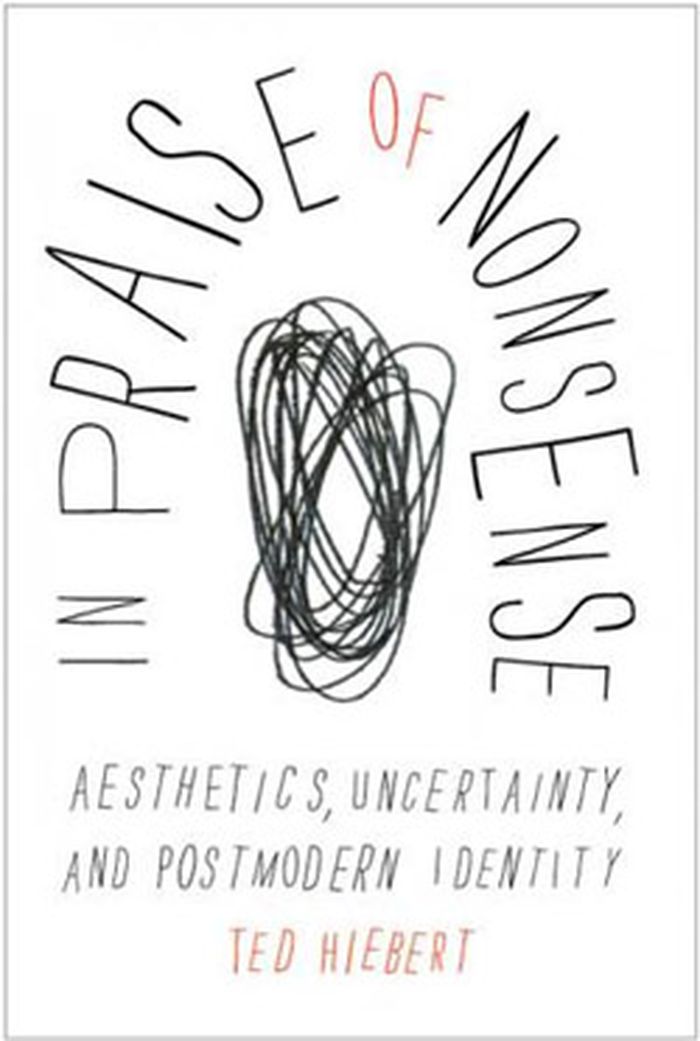
What is truth in the postmodern age? The artistic generation of the twentieth century has grown up immersed in the delirious imagination of postmodern thought, which insists upon the ultimate uncertainty of meaning and that there is no self-evident truth. In Praise of Nonsense explores the possibilities and parameters of a postmodern imagination freed from the philosophical responsibilities of fiction, fact, and replication of lived experience. Mobilizing scholars and contemporary artists, this study examines postmodern thinking through the lenses of identity and visual culture. It focuses on theories of disappearance, irony, and nonsense, where the pleasures of the imaginary give rise to artistic inspiration. When truth is unhinged, so is falsity, and all artistic thinking is called into question. Ted Hiebert takes on the ambitious project of holding postmodernism accountable for its own conclusions while also considering how those conclusions might still be given philosophical and artistic form.
In praise of nonesense : aesthetics, uncertainty, and postmodern identity
Actions:
Prix:
$34.95
(disponible sur commande)
Résumé:
What is truth in the postmodern age? The artistic generation of the twentieth century has grown up immersed in the delirious imagination of postmodern thought, which insists upon the ultimate uncertainty of meaning and that there is no self-evident truth. In Praise of Nonsense explores the possibilities and parameters of a postmodern imagination freed from the philosophical responsibilities of fiction, fact, and replication of lived experience. Mobilizing scholars and contemporary artists, this study examines postmodern thinking through the lenses of identity and visual culture. It focuses on theories of disappearance, irony, and nonsense, where the pleasures of the imaginary give rise to artistic inspiration. When truth is unhinged, so is falsity, and all artistic thinking is called into question. Ted Hiebert takes on the ambitious project of holding postmodernism accountable for its own conclusions while also considering how those conclusions might still be given philosophical and artistic form.
Classification:
livres
livres
Publication:
avril 2012
avril 2012
Sujet:
Théorie/ philosophie
Théorie/ philosophie
Classification:
livres
livres
Actions:
Prix:
$64.95
(disponible sur commande)
Résumé:
The art of networked thinking consists in making complexity easier to handle and creating scope for new ideas. The approach, which is now applied in all spheres of knowledge, is one which also defines artistic practice. The subject of this book is some two dozen atlases, charts, and diagrams of Russian history and the history of art from antiquity to postmodernism that(...)
$64.95
(disponible sur commande)
Résumé:
The art of networked thinking consists in making complexity easier to handle and creating scope for new ideas. The approach, which is now applied in all spheres of knowledge, is one which also defines artistic practice. The subject of this book is some two dozen atlases, charts, and diagrams of Russian history and the history of art from antiquity to postmodernism that(...)
Titre:
Maciunas' learning machines: from art history to a chronology of Fluxus, second revised and enlarged edition
Actions:
Prix:
$64.95
(disponible sur commande)
Résumé:
The art of networked thinking consists in making complexity easier to handle and creating scope for new ideas. The approach, which is now applied in all spheres of knowledge, is one which also defines artistic practice. The subject of this book is some two dozen atlases, charts, and diagrams of Russian history and the history of art from antiquity to postmodernism that were designed between 1953 and 1973 by Fluxus initiator George Maciunas. Without such visualization of the past, so Maciunas believed, there could be no real understanding of how art and politics have evolved. His maps, charts, and diagrams, more than half of which are published for the first time here in this second edition, attempt in various ways to draw a picture of history made up of dates and facts, and lines and arrows. The result is fascinating, for both science and art.
Maciunas' learning machines: from art history to a chronology of Fluxus, second revised and enlarged edition
Actions:
Prix:
$64.95
(disponible sur commande)
Résumé:
The art of networked thinking consists in making complexity easier to handle and creating scope for new ideas. The approach, which is now applied in all spheres of knowledge, is one which also defines artistic practice. The subject of this book is some two dozen atlases, charts, and diagrams of Russian history and the history of art from antiquity to postmodernism that were designed between 1953 and 1973 by Fluxus initiator George Maciunas. Without such visualization of the past, so Maciunas believed, there could be no real understanding of how art and politics have evolved. His maps, charts, and diagrams, more than half of which are published for the first time here in this second edition, attempt in various ways to draw a picture of history made up of dates and facts, and lines and arrows. The result is fascinating, for both science and art.
Classification:
livres
livres
Publication:
novembre 2005
novembre 2005
Classification:
livres
livres
Titre:
Aldo Rossi: The urban fact
Aldo Rossi: The urban fact
Actions:
Prix:
$88.00
(disponible sur commande)
Résumé:
The great Italian architect, designer, theorist and printmaker Aldo Rossi (1931–97) galvanized the postmodernist architectural movement in the middle of the 20th century with his unique synthesis of influences such as Adolf Loos, Giorgio de Chirico and Soviet architecture. From his publication Architecture of the City (1966) to his 1976 exhibition Analogous City, Rossi(...)
$88.00
(disponible sur commande)
Résumé:
The great Italian architect, designer, theorist and printmaker Aldo Rossi (1931–97) galvanized the postmodernist architectural movement in the middle of the 20th century with his unique synthesis of influences such as Adolf Loos, Giorgio de Chirico and Soviet architecture. From his publication Architecture of the City (1966) to his 1976 exhibition Analogous City, Rossi(...)
Sujet:
Architecture, monographies
Architecture, monographies
Publication:
novembre 2021
novembre 2021
Titre:
Aldo Rossi: The urban fact
Actions:
Prix:
$88.00
(disponible sur commande)
Résumé:
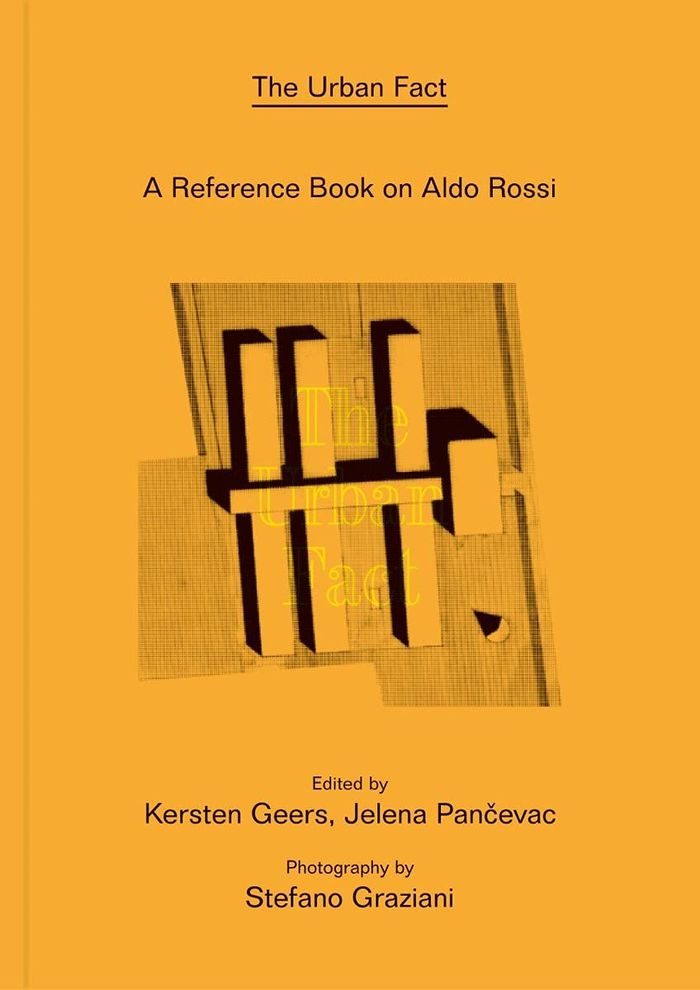
The great Italian architect, designer, theorist and printmaker Aldo Rossi (1931–97) galvanized the postmodernist architectural movement in the middle of the 20th century with his unique synthesis of influences such as Adolf Loos, Giorgio de Chirico and Soviet architecture. From his publication Architecture of the City (1966) to his 1976 exhibition Analogous City, Rossi spent a decade developing a theory of urban design that focused on the “collective memory” of a city as an essential element of its urban planning and gave consideration to how buildings and urban areas age over time. Here, Rossi’s theory is applied to his own works from that period, both built and unbuilt, in a careful selection of 23 projects that express this memory-based paradigm of civic existence and construction. Aldo Rossi: The Urban Fact thus unifies Rossi’s theory and practice, demonstrating the visionary dimension driving his singular brand of postmodernism.
Aldo Rossi: The urban fact
Actions:
Prix:
$88.00
(disponible sur commande)
Résumé:
The great Italian architect, designer, theorist and printmaker Aldo Rossi (1931–97) galvanized the postmodernist architectural movement in the middle of the 20th century with his unique synthesis of influences such as Adolf Loos, Giorgio de Chirico and Soviet architecture. From his publication Architecture of the City (1966) to his 1976 exhibition Analogous City, Rossi spent a decade developing a theory of urban design that focused on the “collective memory” of a city as an essential element of its urban planning and gave consideration to how buildings and urban areas age over time. Here, Rossi’s theory is applied to his own works from that period, both built and unbuilt, in a careful selection of 23 projects that express this memory-based paradigm of civic existence and construction. Aldo Rossi: The Urban Fact thus unifies Rossi’s theory and practice, demonstrating the visionary dimension driving his singular brand of postmodernism.
Classification:
livres
livres
Publication:
novembre 2021
novembre 2021
Sujet:
Architecture, monographies
Architecture, monographies
Classification:
livres
livres
Actions:
Exemplaires:
Description:
xi, 316 pages : illustrations (some color) ; 27 cm
Description:
xi, 316 pages : illustrations (some color) ; 27 cm
Auteur:
Sujet:
Publication:
Montreal & Kingston ; London ; Chicago : McGill-Queen's University Press, [2016], ©2016
Montreal & Kingston ; London ; Chicago : McGill-Queen's University Press, [2016], ©2016
Titre:
Architecture on ice : a history of the hockey arena / Howard Shubert.
Actions:
Exemplaires:
Description:
xi, 316 pages : illustrations (some color) ; 27 cm
Architecture on ice : a history of the hockey arena / Howard Shubert.
Actions:
Exemplaires:
Description:
xi, 316 pages : illustrations (some color) ; 27 cm
Classification:
livres
livres
Publication:
Montreal & Kingston ; London ; Chicago : McGill-Queen's University Press, [2016], ©2016
Montreal & Kingston ; London ; Chicago : McGill-Queen's University Press, [2016], ©2016
Auteur:
Sujet:
Classification:
livres
livres
Titre:
The 70's house
The 70's house
Actions:
Prix:
$85.99
(disponible sur commande)
Résumé:
Often associated in the public's imagination with the excesses of Punk and Glam, the 70s was, in fact, an important watershed for interior domestic design. It marked an essential transition from the Modernist-dominated design culture of the 60s to an era in which style and the individualistic ethos of fashion design became the guiding principles. It can perhaps best be(...)
$85.99
(disponible sur commande)
Résumé:
Often associated in the public's imagination with the excesses of Punk and Glam, the 70s was, in fact, an important watershed for interior domestic design. It marked an essential transition from the Modernist-dominated design culture of the 60s to an era in which style and the individualistic ethos of fashion design became the guiding principles. It can perhaps best be(...)
Titre:
The 70's house
Actions:
Prix:
$85.99
(disponible sur commande)
Résumé:
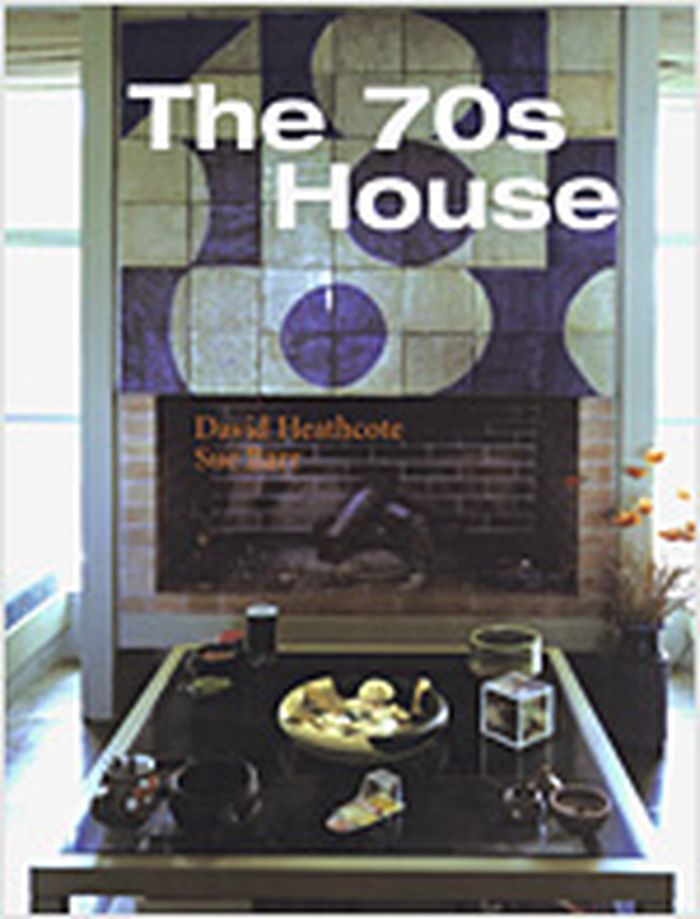
Often associated in the public's imagination with the excesses of Punk and Glam, the 70s was, in fact, an important watershed for interior domestic design. It marked an essential transition from the Modernist-dominated design culture of the 60s to an era in which style and the individualistic ethos of fashion design became the guiding principles. It can perhaps best be characterised by the idiosyncratic and inventive designs of Vernon Panton and Ettore Sottsass. In his book, David Heathcote provides a new and fundamentally positive interpretation of the period. He explains how the decade brought forward a plethora of highly diverse styles- Brutalism, Ad Hocism, Eco/Craft Design, Revivalism/Reclaimism and Postmodernism. With the interest in all things futuristic being as much a part of the period as the Victorian Revival and the self-sufficiency/craft craze. Organised by individual style, this book, with its combination of newly commissioned photography and archive images, will be an essential text and visual resource for anyone interested in the 70s.
The 70's house
Actions:
Prix:
$85.99
(disponible sur commande)
Résumé:
Often associated in the public's imagination with the excesses of Punk and Glam, the 70s was, in fact, an important watershed for interior domestic design. It marked an essential transition from the Modernist-dominated design culture of the 60s to an era in which style and the individualistic ethos of fashion design became the guiding principles. It can perhaps best be characterised by the idiosyncratic and inventive designs of Vernon Panton and Ettore Sottsass. In his book, David Heathcote provides a new and fundamentally positive interpretation of the period. He explains how the decade brought forward a plethora of highly diverse styles- Brutalism, Ad Hocism, Eco/Craft Design, Revivalism/Reclaimism and Postmodernism. With the interest in all things futuristic being as much a part of the period as the Victorian Revival and the self-sufficiency/craft craze. Organised by individual style, this book, with its combination of newly commissioned photography and archive images, will be an essential text and visual resource for anyone interested in the 70s.
Classification:
livres
livres
Publication:
janvier 2006, Chichester
janvier 2006, Chichester
Sujet:
Design d’intérieur
Design d’intérieur
Classification:
livres
livres
Actions:
Prix:
$45.00
(disponible sur commande)
Résumé:
Architect Paul Rudolph (1918–1997) was known for his iconic modern houses and exemplary Brutalist buildings in exposed concrete. Rudolph’s popularity peaked during the 1950s and 1960s, when he served as the chair of Yale University’s Department of Architecture, but his work fell from favor with the advent of postmodernism in the 1970s. This compact volume provides an(...)
$45.00
(disponible sur commande)
Résumé:
Architect Paul Rudolph (1918–1997) was known for his iconic modern houses and exemplary Brutalist buildings in exposed concrete. Rudolph’s popularity peaked during the 1950s and 1960s, when he served as the chair of Yale University’s Department of Architecture, but his work fell from favor with the advent of postmodernism in the 1970s. This compact volume provides an(...)
Titre:
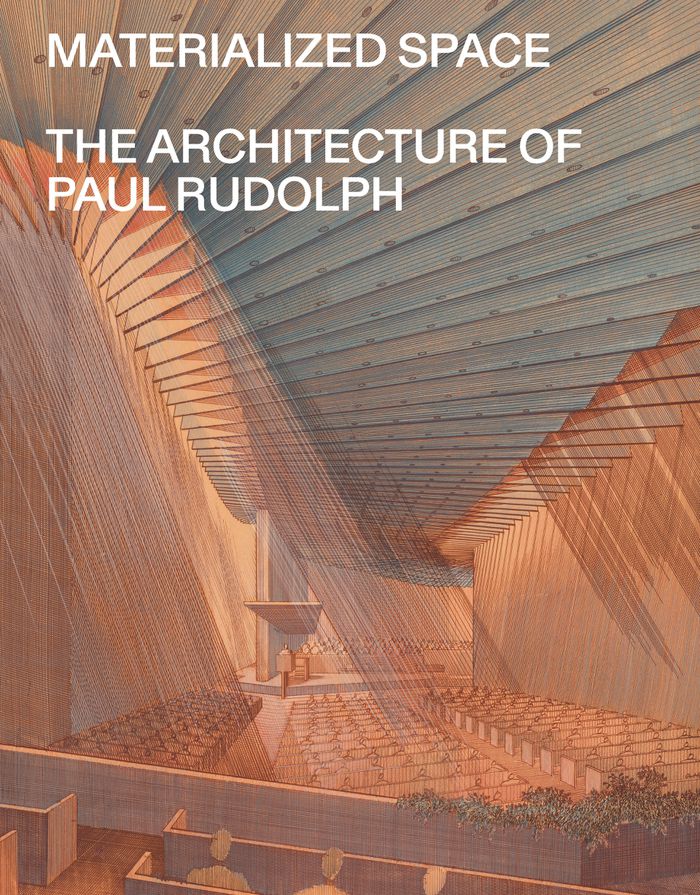
Materialized space: The architecture of Paul Rudolph
Actions:
Prix:
$45.00
(disponible sur commande)
Résumé:
Architect Paul Rudolph (1918–1997) was known for his iconic modern houses and exemplary Brutalist buildings in exposed concrete. Rudolph’s popularity peaked during the 1950s and 1960s, when he served as the chair of Yale University’s Department of Architecture, but his work fell from favor with the advent of postmodernism in the 1970s. This compact volume provides an introduction to and long-overdue reassessment of the architect’s trailblazing career, from his modernist Florida houses to his public and institutional buildings, unrealized megastructures, experimental interiors, and later mixed use developments in Asia. Abraham Thomas examines how Rudolph explored concepts such as functionalism, urbanism, and modular construction across decades and continents. Richly illustrated with photographs of the structures and Rudolph’s own drawings as well as models, furniture, and period press clippings, this book sheds light on the architect’s process and takes up themes as important in his time as in our own, such as civic design, housing development, and experimental materials and methods.
Materialized space: The architecture of Paul Rudolph
Actions:
Prix:
$45.00
(disponible sur commande)
Résumé:
Architect Paul Rudolph (1918–1997) was known for his iconic modern houses and exemplary Brutalist buildings in exposed concrete. Rudolph’s popularity peaked during the 1950s and 1960s, when he served as the chair of Yale University’s Department of Architecture, but his work fell from favor with the advent of postmodernism in the 1970s. This compact volume provides an introduction to and long-overdue reassessment of the architect’s trailblazing career, from his modernist Florida houses to his public and institutional buildings, unrealized megastructures, experimental interiors, and later mixed use developments in Asia. Abraham Thomas examines how Rudolph explored concepts such as functionalism, urbanism, and modular construction across decades and continents. Richly illustrated with photographs of the structures and Rudolph’s own drawings as well as models, furniture, and period press clippings, this book sheds light on the architect’s process and takes up themes as important in his time as in our own, such as civic design, housing development, and experimental materials and methods.
Classification:
livres
livres
Publication:
octobre 2024
octobre 2024
Sujet:
Architecture, monographies
Architecture, monographies


