


7509 Résultats
Classification:
archives
Niveau de description archivistique:
Fonds
archives
Niveau de description archivistique:
Fonds
Titre:
Fonds Ábalos & Herreros
Fonds Ábalos & Herreros
Numéro de référence:
AP164
Résumé:
The Ábalos&Herreros fonds documents the activities of the architectural firm Ábalos&Herreros, founded by architects Iñaki Ábalos and Juan Herreros. The archive primarily consists of drawings, photographic materials and textual documentation, and covers the existance of the firm from 1985 to 2008. The concentration of the firm's work was produced in the city of Madrid and the Community of Madrid where the firm maintained its head office. However, the archive also documents projects for other Spanish autonomous communities as well as for other countries such as Portugal, Germany, the United States, and Brazil.
AP164
Résumé:
The Ábalos&Herreros fonds documents the activities of the architectural firm Ábalos&Herreros, founded by architects Iñaki Ábalos and Juan Herreros. The archive primarily consists of drawings, photographic materials and textual documentation, and covers the existance of the firm from 1985 to 2008. The concentration of the firm's work was produced in the city of Madrid and the Community of Madrid where the firm maintained its head office. However, the archive also documents projects for other Spanish autonomous communities as well as for other countries such as Portugal, Germany, the United States, and Brazil.
Personnes et institutions:
Date:
1920-2009
1920-2009
Titre:
Fonds Ábalos & Herreros
Actions:
AP164
Résumé:
The Ábalos&Herreros fonds documents the activities of the architectural firm Ábalos&Herreros, founded by architects Iñaki Ábalos and Juan Herreros. The archive primarily consists of drawings, photographic materials and textual documentation, and covers the existance of the firm from 1985 to 2008. The concentration of the firm's work was produced in the city of Madrid and the Community of Madrid where the firm maintained its head office. However, the archive also documents projects for other Spanish autonomous communities as well as for other countries such as Portugal, Germany, the United States, and Brazil.
Fonds Ábalos & Herreros
Actions:
AP164
Résumé:
The Ábalos&Herreros fonds documents the activities of the architectural firm Ábalos&Herreros, founded by architects Iñaki Ábalos and Juan Herreros. The archive primarily consists of drawings, photographic materials and textual documentation, and covers the existance of the firm from 1985 to 2008. The concentration of the firm's work was produced in the city of Madrid and the Community of Madrid where the firm maintained its head office. However, the archive also documents projects for other Spanish autonomous communities as well as for other countries such as Portugal, Germany, the United States, and Brazil.
Classification:
archives
Niveau de description archivistique:
Fonds
archives
Niveau de description archivistique:
Fonds
Date:
1920-2009
1920-2009
Personnes et institutions:
Classification:
événements
événements

Description:
À la suite de la révolution du 25 avril 1974 au Portugal, larchitecte Alexandre Alves Costa est devenu membre du comité de coordination du SAAL pour le secteur nord, responsable de la planification et du soutien de projet. Avec José António Bandeirinha, architecte et professeur agrégé titulaire à lUniversité de Coimbra, il abordera lors de cette conférence le rôle nouveau(...)
À la suite de la révolution du 25 avril 1974 au Portugal, larchitecte Alexandre Alves Costa est devenu membre du comité de coordination du SAAL pour le secteur nord, responsable de la planification et du soutien de projet. Avec José António Bandeirinha, architecte et professeur agrégé titulaire à lUniversité de Coimbra, il abordera lors de cette conférence le rôle nouveau(...)
Localisation:
Théâtre Paul-Desmarais
Théâtre Paul-Desmarais
Date:
17 septembre 2015, 18h
17 septembre 2015, 18h
Titre:
SAAL 1974 : l'architecture portugaise s'ouvre au monde
Actions:
Description:
À la suite de la révolution du 25 avril 1974 au Portugal, larchitecte Alexandre Alves Costa est devenu membre du comité de coordination du SAAL pour le secteur nord, responsable de la planification et du soutien de projet. Avec José António Bandeirinha, architecte et professeur agrégé titulaire à lUniversité de Coimbra, il abordera lors de cette conférence le rôle nouveau(...)
SAAL 1974 : l'architecture portugaise s'ouvre au monde
Actions:
Description:
À la suite de la révolution du 25 avril 1974 au Portugal, larchitecte Alexandre Alves Costa est devenu membre du comité de coordination du SAAL pour le secteur nord, responsable de la planification et du soutien de projet. Avec José António Bandeirinha, architecte et professeur agrégé titulaire à lUniversité de Coimbra, il abordera lors de cette conférence le rôle nouveau(...)
Classification:
événements
événements
Date:
17 septembre 2015
18h
17 septembre 2015
18h
Localisation:
Théâtre Paul-Desmarais
Théâtre Paul-Desmarais
Classification:
photographies
photographies
Numéro de référence:
AP140.S2.SS7.D1.P23
Description:
views of James Stirling and James Gowan at Leicester University Engineering Building in the early 1960s; views of various participants at the 2nd Iran International Congress of Architecture conference held in 1974 in Persepolis, Iran, including Félix Candela, Buckminster Fuller, Hans Hollein, José Luis Sert, James Stirling, O.M. Ungers and Bruno Zevi; views of interior of office; views of James Stirling with Queen Mother; of exhibition opening of 'I musei di James Stirling, Michael Wilford and Associates' at the Galleria Comunale d'Arte Moderna in Bologna, dated 1990; various portraits of James Stirling and of MIchael Wilford; views of James Stirling and Michael Wilford's visit to Cornell University
AP140.S2.SS7.D1.P23
Description:
views of James Stirling and James Gowan at Leicester University Engineering Building in the early 1960s; views of various participants at the 2nd Iran International Congress of Architecture conference held in 1974 in Persepolis, Iran, including Félix Candela, Buckminster Fuller, Hans Hollein, José Luis Sert, James Stirling, O.M. Ungers and Bruno Zevi; views of interior of office; views of James Stirling with Queen Mother; of exhibition opening of 'I musei di James Stirling, Michael Wilford and Associates' at the Galleria Comunale d'Arte Moderna in Bologna, dated 1990; various portraits of James Stirling and of MIchael Wilford; views of James Stirling and Michael Wilford's visit to Cornell University
Personnes et institutions:
Date:
circa 1950-1992
circa 1950-1992
Titre:
Various portraits and views of James Stirling
Actions:
AP140.S2.SS7.D1.P23
Description:
views of James Stirling and James Gowan at Leicester University Engineering Building in the early 1960s; views of various participants at the 2nd Iran International Congress of Architecture conference held in 1974 in Persepolis, Iran, including Félix Candela, Buckminster Fuller, Hans Hollein, José Luis Sert, James Stirling, O.M. Ungers and Bruno Zevi; views of interior of office; views of James Stirling with Queen Mother; of exhibition opening of 'I musei di James Stirling, Michael Wilford and Associates' at the Galleria Comunale d'Arte Moderna in Bologna, dated 1990; various portraits of James Stirling and of MIchael Wilford; views of James Stirling and Michael Wilford's visit to Cornell University
Various portraits and views of James Stirling
Actions:
AP140.S2.SS7.D1.P23
Description:
views of James Stirling and James Gowan at Leicester University Engineering Building in the early 1960s; views of various participants at the 2nd Iran International Congress of Architecture conference held in 1974 in Persepolis, Iran, including Félix Candela, Buckminster Fuller, Hans Hollein, José Luis Sert, James Stirling, O.M. Ungers and Bruno Zevi; views of interior of office; views of James Stirling with Queen Mother; of exhibition opening of 'I musei di James Stirling, Michael Wilford and Associates' at the Galleria Comunale d'Arte Moderna in Bologna, dated 1990; various portraits of James Stirling and of MIchael Wilford; views of James Stirling and Michael Wilford's visit to Cornell University
Classification:
photographies
photographies
Date:
circa 1950-1992
circa 1950-1992
Personnes et institutions:
Classification:
photographies
photographies
Numéro de référence:
AP140.S2.SS7.D1.P6
Description:
views of James Stirling and James Gowan at Leicester University Engineering Building in the early 1960s; views of various participants at the 2nd Iran International Congress of Architecture conference held in 1974 in Persepolis, Iran, including Félix Candela, Buckminster Fuller, Hans Hollein, José Luis Sert, James Stirling, O.M. Ungers and Bruno Zevi; views of interior of office; views of James Stirling with Queen Mother; of exhibition opening of 'I musei di James Stirling, Michael Wilford and Associates' at the Galleria Comunale d'Arte Moderna in Bologna, dated 1990; various portraits of James Stirling and of MIchael Wilford; views of James Stirling and Michael Wilford's visit to Cornell University
AP140.S2.SS7.D1.P6
Description:
views of James Stirling and James Gowan at Leicester University Engineering Building in the early 1960s; views of various participants at the 2nd Iran International Congress of Architecture conference held in 1974 in Persepolis, Iran, including Félix Candela, Buckminster Fuller, Hans Hollein, José Luis Sert, James Stirling, O.M. Ungers and Bruno Zevi; views of interior of office; views of James Stirling with Queen Mother; of exhibition opening of 'I musei di James Stirling, Michael Wilford and Associates' at the Galleria Comunale d'Arte Moderna in Bologna, dated 1990; various portraits of James Stirling and of MIchael Wilford; views of James Stirling and Michael Wilford's visit to Cornell University
Personnes et institutions:
Date:
circa 1950-1992
circa 1950-1992
Titre:
Various portraits and views of James Stirling
Actions:
AP140.S2.SS7.D1.P6
Description:
views of James Stirling and James Gowan at Leicester University Engineering Building in the early 1960s; views of various participants at the 2nd Iran International Congress of Architecture conference held in 1974 in Persepolis, Iran, including Félix Candela, Buckminster Fuller, Hans Hollein, José Luis Sert, James Stirling, O.M. Ungers and Bruno Zevi; views of interior of office; views of James Stirling with Queen Mother; of exhibition opening of 'I musei di James Stirling, Michael Wilford and Associates' at the Galleria Comunale d'Arte Moderna in Bologna, dated 1990; various portraits of James Stirling and of MIchael Wilford; views of James Stirling and Michael Wilford's visit to Cornell University
Various portraits and views of James Stirling
Actions:
AP140.S2.SS7.D1.P6
Description:
views of James Stirling and James Gowan at Leicester University Engineering Building in the early 1960s; views of various participants at the 2nd Iran International Congress of Architecture conference held in 1974 in Persepolis, Iran, including Félix Candela, Buckminster Fuller, Hans Hollein, José Luis Sert, James Stirling, O.M. Ungers and Bruno Zevi; views of interior of office; views of James Stirling with Queen Mother; of exhibition opening of 'I musei di James Stirling, Michael Wilford and Associates' at the Galleria Comunale d'Arte Moderna in Bologna, dated 1990; various portraits of James Stirling and of MIchael Wilford; views of James Stirling and Michael Wilford's visit to Cornell University
Classification:
photographies
photographies
Date:
circa 1950-1992
circa 1950-1992
Personnes et institutions:
Classification:
événements
événements

Localisation:
Théâtre Paul-Desmarais
Théâtre Paul-Desmarais
Date:
25 janvier 2024, 18h
25 janvier 2024, 18h
Classification:
événements
événements
Date:
25 janvier 2024
18h
25 janvier 2024
18h
Localisation:
Théâtre Paul-Desmarais
Théâtre Paul-Desmarais
Classification:
événements
événements
Actions:
Description:
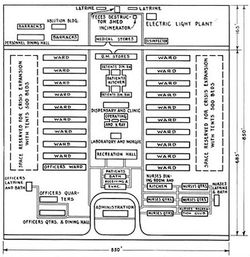
Geoff Manaugh se penche sur le design urbain dans le contexte d’études épidémiologiques, de pandémies et de quarantaines, à la lumière des mesures prises par les centres de contrôle et de prévention des maladies (CDC) mis en place par le gouvernement des États-Unis. Geoff Manaugh est l’auteur de BLDGBLOG et de The BLDGBLOG Book et il collabore régulièrement à titre(...)
Geoff Manaugh se penche sur le design urbain dans le contexte d’études épidémiologiques, de pandémies et de quarantaines, à la lumière des mesures prises par les centres de contrôle et de prévention des maladies (CDC) mis en place par le gouvernement des États-Unis. Geoff Manaugh est l’auteur de BLDGBLOG et de The BLDGBLOG Book et il collabore régulièrement à titre(...)
Localisation:
Théâtre Paul-Desmarais
Théâtre Paul-Desmarais
Date:
22 octobre 2009 , 19h
22 octobre 2009 , 19h
Titre:
Geoff Manaugh : Cities of the CDC
Actions:
Description:
Geoff Manaugh se penche sur le design urbain dans le contexte d’études épidémiologiques, de pandémies et de quarantaines, à la lumière des mesures prises par les centres de contrôle et de prévention des maladies (CDC) mis en place par le gouvernement des États-Unis. Geoff Manaugh est l’auteur de BLDGBLOG et de The BLDGBLOG Book et il collabore régulièrement à titre(...)
Geoff Manaugh : Cities of the CDC
Actions:
Description:
Geoff Manaugh se penche sur le design urbain dans le contexte d’études épidémiologiques, de pandémies et de quarantaines, à la lumière des mesures prises par les centres de contrôle et de prévention des maladies (CDC) mis en place par le gouvernement des États-Unis. Geoff Manaugh est l’auteur de BLDGBLOG et de The BLDGBLOG Book et il collabore régulièrement à titre(...)
Classification:
événements
événements
Date:
22 octobre 2009
19h
22 octobre 2009
19h
Localisation:
Théâtre Paul-Desmarais
Théâtre Paul-Desmarais
Niveau de description archivistique:
Série(s)
Série(s)
Titre:
Professional papers
Professional papers
Numéro de référence:
AP206.S3
Description:
The Professional papers series, circa 1950-2008, records the professional activities of Aditya Prakash throughout his career up until his death in 2008. His work in architecture, art, photography, academia and theatre are documented through textual records, drawings, photographic materials, ephemera, books, serials and sound recordings. The earliest materials in this series show Prakash’s interest in architectural photography early in his career through photographs, slides, and negatives taken by him. These materials, dating from before 1970, show most prominently his projects, people, villages and cityscapes. Materials dating from after 1968 show Prakash’s move into academia and his solo architectural career. During this time, the records document Prakash’s research interests on subjects such as urbanization, Chandigarh, the Modular and the environment, through drawings, newspaper articles, government and committee reports, correspondence and presentation materials. Likewise, his teaching is recorded through overhead transparencies, drawings and notes. The series also shows Prakash’s involvement in the professional community, including event photographs, correspondence and records documenting conferences, events and his discussion group Our Get Togethers. Correspondence with architect Charles Correa and frequent letters between Prakash and writer Mulk Raj Anand are of note here. Apart from his architectural career, Prakash’s work as a modern artist is well recorded through drawings, sketchbooks, and photographic reproductions of his art, mostly dating from after 1980. His interest in art as well as his community involvement are documented through exhibition ephemera, correspondence, and exhibition reviews and writings on his artwork. His role as the president of the Lalit Kala Akademi is also documented through publications, event photographs and correspondence. Finally, Prakash’s involvement in theatre, specifically with his amateur theatre troop Abhinet, is captured through scripts, photographs of performances and play reviews.
AP206.S3
Description:
The Professional papers series, circa 1950-2008, records the professional activities of Aditya Prakash throughout his career up until his death in 2008. His work in architecture, art, photography, academia and theatre are documented through textual records, drawings, photographic materials, ephemera, books, serials and sound recordings. The earliest materials in this series show Prakash’s interest in architectural photography early in his career through photographs, slides, and negatives taken by him. These materials, dating from before 1970, show most prominently his projects, people, villages and cityscapes. Materials dating from after 1968 show Prakash’s move into academia and his solo architectural career. During this time, the records document Prakash’s research interests on subjects such as urbanization, Chandigarh, the Modular and the environment, through drawings, newspaper articles, government and committee reports, correspondence and presentation materials. Likewise, his teaching is recorded through overhead transparencies, drawings and notes. The series also shows Prakash’s involvement in the professional community, including event photographs, correspondence and records documenting conferences, events and his discussion group Our Get Togethers. Correspondence with architect Charles Correa and frequent letters between Prakash and writer Mulk Raj Anand are of note here. Apart from his architectural career, Prakash’s work as a modern artist is well recorded through drawings, sketchbooks, and photographic reproductions of his art, mostly dating from after 1980. His interest in art as well as his community involvement are documented through exhibition ephemera, correspondence, and exhibition reviews and writings on his artwork. His role as the president of the Lalit Kala Akademi is also documented through publications, event photographs and correspondence. Finally, Prakash’s involvement in theatre, specifically with his amateur theatre troop Abhinet, is captured through scripts, photographs of performances and play reviews.
Personnes et institutions:
Date:
circa 1950-2008
circa 1950-2008
Titre:
Professional papers
Actions:
AP206.S3
Description:
The Professional papers series, circa 1950-2008, records the professional activities of Aditya Prakash throughout his career up until his death in 2008. His work in architecture, art, photography, academia and theatre are documented through textual records, drawings, photographic materials, ephemera, books, serials and sound recordings. The earliest materials in this series show Prakash’s interest in architectural photography early in his career through photographs, slides, and negatives taken by him. These materials, dating from before 1970, show most prominently his projects, people, villages and cityscapes. Materials dating from after 1968 show Prakash’s move into academia and his solo architectural career. During this time, the records document Prakash’s research interests on subjects such as urbanization, Chandigarh, the Modular and the environment, through drawings, newspaper articles, government and committee reports, correspondence and presentation materials. Likewise, his teaching is recorded through overhead transparencies, drawings and notes. The series also shows Prakash’s involvement in the professional community, including event photographs, correspondence and records documenting conferences, events and his discussion group Our Get Togethers. Correspondence with architect Charles Correa and frequent letters between Prakash and writer Mulk Raj Anand are of note here. Apart from his architectural career, Prakash’s work as a modern artist is well recorded through drawings, sketchbooks, and photographic reproductions of his art, mostly dating from after 1980. His interest in art as well as his community involvement are documented through exhibition ephemera, correspondence, and exhibition reviews and writings on his artwork. His role as the president of the Lalit Kala Akademi is also documented through publications, event photographs and correspondence. Finally, Prakash’s involvement in theatre, specifically with his amateur theatre troop Abhinet, is captured through scripts, photographs of performances and play reviews.
Professional papers
Actions:
AP206.S3
Description:
The Professional papers series, circa 1950-2008, records the professional activities of Aditya Prakash throughout his career up until his death in 2008. His work in architecture, art, photography, academia and theatre are documented through textual records, drawings, photographic materials, ephemera, books, serials and sound recordings. The earliest materials in this series show Prakash’s interest in architectural photography early in his career through photographs, slides, and negatives taken by him. These materials, dating from before 1970, show most prominently his projects, people, villages and cityscapes. Materials dating from after 1968 show Prakash’s move into academia and his solo architectural career. During this time, the records document Prakash’s research interests on subjects such as urbanization, Chandigarh, the Modular and the environment, through drawings, newspaper articles, government and committee reports, correspondence and presentation materials. Likewise, his teaching is recorded through overhead transparencies, drawings and notes. The series also shows Prakash’s involvement in the professional community, including event photographs, correspondence and records documenting conferences, events and his discussion group Our Get Togethers. Correspondence with architect Charles Correa and frequent letters between Prakash and writer Mulk Raj Anand are of note here. Apart from his architectural career, Prakash’s work as a modern artist is well recorded through drawings, sketchbooks, and photographic reproductions of his art, mostly dating from after 1980. His interest in art as well as his community involvement are documented through exhibition ephemera, correspondence, and exhibition reviews and writings on his artwork. His role as the president of the Lalit Kala Akademi is also documented through publications, event photographs and correspondence. Finally, Prakash’s involvement in theatre, specifically with his amateur theatre troop Abhinet, is captured through scripts, photographs of performances and play reviews.
Niveau de description archivistique:
Series
Series
Date:
circa 1950-2008
circa 1950-2008
Personnes et institutions:
Niveau de description archivistique:
Projet
Projet
Titre:
University Art Museum
University Art Museum
Numéro de référence:
AP143.S4.D65
Description:
File documents the unexecuted project for the University Art Museum, Long Beach, California. Material in this file was produced between 1986 and 1988. California State University, Long Beach (CSULB), commissioned Eisenman/Robertson Architects to design an art museum adjacent to the main campus entrance. The 67,500-square-foot building was to comprise four galleries, a black-box theater, an auditorium, a cafe, conference rooms, a library, offices, preparation spaces, and storage vaults. The project, sited on a 23-acre arboretum, included landscaping; terraced sculpture courtyards, botanical gardens, and a two-acre pond. Eisenman linked the northern and southern parts of the arboretum by an elevated public walkway through the museum. Sets of drawings were presented on 8 and 30 April, 2 June, and 5 Aug. In the first design phase Eisenman explores the cartographic figures which form the basis of his artificial excavation when superposed: a series of sketches establishes the analogical relationships which fix the relative scales of the plans and produce the superpositions; another series contextualizes the superposed figures by placing them within the museum site (DR1987:0859:087-090). The second phase concerns the building; the working model shows the building carved out of a square pit, from which spring an oil derrick and a reconstruction of a recreational pier (Rainbow Pier, 1920s) used here as circulatory bridge (DR1987:0859:160). In the third phase the architect systematizes his archeological procedure by using five significant cartographic dates - 1849, 1889, 1949, 1989, 2049 - each corresponding to a specific superposition (see DR1987:0859:274-277). In the fourth phase, Eisenman simplifies the superposition of 2049 to a few iconic colour-coded forms: ranch (green), ranch house (blue), campus site (red), and water forms (river and pond) (gold). Material for the fourth phase includes three relief models, four presentation drawings, and a model (property of the CSULB) (relief models: DR1987:0859:001-003; drawings: DR1987:0859:004-008). Eisenman "inhabits" his artifical archeology by detailed planning of interior spaces, and gives substance to the cartographic traces in a series of sketch sections, perspectives, and working models. Working models reveal how the central "canal" area gradually became the museum's access point (DR1987:0859:484-490); the museum, galleries, offices, and preparation areas are on one side of this deep cut, while the cafeteria and black-box theater are on the other. The upper level was to house offices, meeting rooms, and the library. File contains audiovisual material, conceptual drawings, design development drawings, presentation drawings, reference drawings, working drawings, photographic materials, and textual records.
AP143.S4.D65
Description:
File documents the unexecuted project for the University Art Museum, Long Beach, California. Material in this file was produced between 1986 and 1988. California State University, Long Beach (CSULB), commissioned Eisenman/Robertson Architects to design an art museum adjacent to the main campus entrance. The 67,500-square-foot building was to comprise four galleries, a black-box theater, an auditorium, a cafe, conference rooms, a library, offices, preparation spaces, and storage vaults. The project, sited on a 23-acre arboretum, included landscaping; terraced sculpture courtyards, botanical gardens, and a two-acre pond. Eisenman linked the northern and southern parts of the arboretum by an elevated public walkway through the museum. Sets of drawings were presented on 8 and 30 April, 2 June, and 5 Aug. In the first design phase Eisenman explores the cartographic figures which form the basis of his artificial excavation when superposed: a series of sketches establishes the analogical relationships which fix the relative scales of the plans and produce the superpositions; another series contextualizes the superposed figures by placing them within the museum site (DR1987:0859:087-090). The second phase concerns the building; the working model shows the building carved out of a square pit, from which spring an oil derrick and a reconstruction of a recreational pier (Rainbow Pier, 1920s) used here as circulatory bridge (DR1987:0859:160). In the third phase the architect systematizes his archeological procedure by using five significant cartographic dates - 1849, 1889, 1949, 1989, 2049 - each corresponding to a specific superposition (see DR1987:0859:274-277). In the fourth phase, Eisenman simplifies the superposition of 2049 to a few iconic colour-coded forms: ranch (green), ranch house (blue), campus site (red), and water forms (river and pond) (gold). Material for the fourth phase includes three relief models, four presentation drawings, and a model (property of the CSULB) (relief models: DR1987:0859:001-003; drawings: DR1987:0859:004-008). Eisenman "inhabits" his artifical archeology by detailed planning of interior spaces, and gives substance to the cartographic traces in a series of sketch sections, perspectives, and working models. Working models reveal how the central "canal" area gradually became the museum's access point (DR1987:0859:484-490); the museum, galleries, offices, and preparation areas are on one side of this deep cut, while the cafeteria and black-box theater are on the other. The upper level was to house offices, meeting rooms, and the library. File contains audiovisual material, conceptual drawings, design development drawings, presentation drawings, reference drawings, working drawings, photographic materials, and textual records.
Personnes et institutions:
Date:
1986-1988
1986-1988
Titre:
University Art Museum
Actions:
AP143.S4.D65
Description:
File documents the unexecuted project for the University Art Museum, Long Beach, California. Material in this file was produced between 1986 and 1988. California State University, Long Beach (CSULB), commissioned Eisenman/Robertson Architects to design an art museum adjacent to the main campus entrance. The 67,500-square-foot building was to comprise four galleries, a black-box theater, an auditorium, a cafe, conference rooms, a library, offices, preparation spaces, and storage vaults. The project, sited on a 23-acre arboretum, included landscaping; terraced sculpture courtyards, botanical gardens, and a two-acre pond. Eisenman linked the northern and southern parts of the arboretum by an elevated public walkway through the museum. Sets of drawings were presented on 8 and 30 April, 2 June, and 5 Aug. In the first design phase Eisenman explores the cartographic figures which form the basis of his artificial excavation when superposed: a series of sketches establishes the analogical relationships which fix the relative scales of the plans and produce the superpositions; another series contextualizes the superposed figures by placing them within the museum site (DR1987:0859:087-090). The second phase concerns the building; the working model shows the building carved out of a square pit, from which spring an oil derrick and a reconstruction of a recreational pier (Rainbow Pier, 1920s) used here as circulatory bridge (DR1987:0859:160). In the third phase the architect systematizes his archeological procedure by using five significant cartographic dates - 1849, 1889, 1949, 1989, 2049 - each corresponding to a specific superposition (see DR1987:0859:274-277). In the fourth phase, Eisenman simplifies the superposition of 2049 to a few iconic colour-coded forms: ranch (green), ranch house (blue), campus site (red), and water forms (river and pond) (gold). Material for the fourth phase includes three relief models, four presentation drawings, and a model (property of the CSULB) (relief models: DR1987:0859:001-003; drawings: DR1987:0859:004-008). Eisenman "inhabits" his artifical archeology by detailed planning of interior spaces, and gives substance to the cartographic traces in a series of sketch sections, perspectives, and working models. Working models reveal how the central "canal" area gradually became the museum's access point (DR1987:0859:484-490); the museum, galleries, offices, and preparation areas are on one side of this deep cut, while the cafeteria and black-box theater are on the other. The upper level was to house offices, meeting rooms, and the library. File contains audiovisual material, conceptual drawings, design development drawings, presentation drawings, reference drawings, working drawings, photographic materials, and textual records.
University Art Museum
Actions:
AP143.S4.D65
Description:
File documents the unexecuted project for the University Art Museum, Long Beach, California. Material in this file was produced between 1986 and 1988. California State University, Long Beach (CSULB), commissioned Eisenman/Robertson Architects to design an art museum adjacent to the main campus entrance. The 67,500-square-foot building was to comprise four galleries, a black-box theater, an auditorium, a cafe, conference rooms, a library, offices, preparation spaces, and storage vaults. The project, sited on a 23-acre arboretum, included landscaping; terraced sculpture courtyards, botanical gardens, and a two-acre pond. Eisenman linked the northern and southern parts of the arboretum by an elevated public walkway through the museum. Sets of drawings were presented on 8 and 30 April, 2 June, and 5 Aug. In the first design phase Eisenman explores the cartographic figures which form the basis of his artificial excavation when superposed: a series of sketches establishes the analogical relationships which fix the relative scales of the plans and produce the superpositions; another series contextualizes the superposed figures by placing them within the museum site (DR1987:0859:087-090). The second phase concerns the building; the working model shows the building carved out of a square pit, from which spring an oil derrick and a reconstruction of a recreational pier (Rainbow Pier, 1920s) used here as circulatory bridge (DR1987:0859:160). In the third phase the architect systematizes his archeological procedure by using five significant cartographic dates - 1849, 1889, 1949, 1989, 2049 - each corresponding to a specific superposition (see DR1987:0859:274-277). In the fourth phase, Eisenman simplifies the superposition of 2049 to a few iconic colour-coded forms: ranch (green), ranch house (blue), campus site (red), and water forms (river and pond) (gold). Material for the fourth phase includes three relief models, four presentation drawings, and a model (property of the CSULB) (relief models: DR1987:0859:001-003; drawings: DR1987:0859:004-008). Eisenman "inhabits" his artifical archeology by detailed planning of interior spaces, and gives substance to the cartographic traces in a series of sketch sections, perspectives, and working models. Working models reveal how the central "canal" area gradually became the museum's access point (DR1987:0859:484-490); the museum, galleries, offices, and preparation areas are on one side of this deep cut, while the cafeteria and black-box theater are on the other. The upper level was to house offices, meeting rooms, and the library. File contains audiovisual material, conceptual drawings, design development drawings, presentation drawings, reference drawings, working drawings, photographic materials, and textual records.
Niveau de description archivistique:
File 65
File 65
Date:
1986-1988
1986-1988
Personnes et institutions:
Classification:
événements
événements
Titre:
Isola et Norzi : Conshelf II
Isola et Norzi : Conshelf II
Actions:
Description:
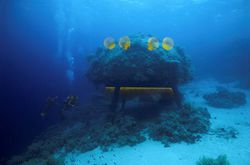
Les artistes Hilario Isola et Matteo Norzi parlent de la base sous-marine Précontinent II de Jacques Cousteau et de leur propre projet Liquid Door qui propose de réanimer le rêve d’une vie sous-marine en rendant la maison « Étoile de mer » de Cousteau habitable. Basés à New York, les Italiens Hilario Isola et Matteo Norzi collaborent depuis 2003, mettant en commun leurs(...)
Les artistes Hilario Isola et Matteo Norzi parlent de la base sous-marine Précontinent II de Jacques Cousteau et de leur propre projet Liquid Door qui propose de réanimer le rêve d’une vie sous-marine en rendant la maison « Étoile de mer » de Cousteau habitable. Basés à New York, les Italiens Hilario Isola et Matteo Norzi collaborent depuis 2003, mettant en commun leurs(...)
Localisation:
Théâtre Paul-Desmarais
Théâtre Paul-Desmarais
Date:
13 mai 2010 , 19h
13 mai 2010 , 19h
Titre:
Isola et Norzi : Conshelf II
Actions:
Description:
Les artistes Hilario Isola et Matteo Norzi parlent de la base sous-marine Précontinent II de Jacques Cousteau et de leur propre projet Liquid Door qui propose de réanimer le rêve d’une vie sous-marine en rendant la maison « Étoile de mer » de Cousteau habitable. Basés à New York, les Italiens Hilario Isola et Matteo Norzi collaborent depuis 2003, mettant en commun leurs(...)
Isola et Norzi : Conshelf II
Actions:
Description:
Les artistes Hilario Isola et Matteo Norzi parlent de la base sous-marine Précontinent II de Jacques Cousteau et de leur propre projet Liquid Door qui propose de réanimer le rêve d’une vie sous-marine en rendant la maison « Étoile de mer » de Cousteau habitable. Basés à New York, les Italiens Hilario Isola et Matteo Norzi collaborent depuis 2003, mettant en commun leurs(...)
Classification:
événements
événements
Date:
13 mai 2010
19h
13 mai 2010
19h
Localisation:
Théâtre Paul-Desmarais
Théâtre Paul-Desmarais
Classification:
événements
événements
Actions:
Description:
La veille du jour de l’An 1987, 4000 tonnes de cendres toxiques sont livrées aux habitants des Gonaïves, une ville portuaire démunie sur la côte occidentale d’Haïti. Dans un contexte politique instable, des fonctionnaires haïtiens ont autorisé l’importation de déchets toxiques des États-Unis, catégorisés comme des «fertilisants». Dans ce cas, la cendre provient de(...)
La veille du jour de l’An 1987, 4000 tonnes de cendres toxiques sont livrées aux habitants des Gonaïves, une ville portuaire démunie sur la côte occidentale d’Haïti. Dans un contexte politique instable, des fonctionnaires haïtiens ont autorisé l’importation de déchets toxiques des États-Unis, catégorisés comme des «fertilisants». Dans ce cas, la cendre provient de(...)
Date:
16 mars 2017
16 mars 2017
Titre:
C’est toxique ici, mais pas là-bas
Actions:
Description:
La veille du jour de l’An 1987, 4000 tonnes de cendres toxiques sont livrées aux habitants des Gonaïves, une ville portuaire démunie sur la côte occidentale d’Haïti. Dans un contexte politique instable, des fonctionnaires haïtiens ont autorisé l’importation de déchets toxiques des États-Unis, catégorisés comme des «fertilisants». Dans ce cas, la cendre provient de(...)
C’est toxique ici, mais pas là-bas
Actions:
Description:
La veille du jour de l’An 1987, 4000 tonnes de cendres toxiques sont livrées aux habitants des Gonaïves, une ville portuaire démunie sur la côte occidentale d’Haïti. Dans un contexte politique instable, des fonctionnaires haïtiens ont autorisé l’importation de déchets toxiques des États-Unis, catégorisés comme des «fertilisants». Dans ce cas, la cendre provient de(...)
Classification:
événements
événements
Date:
16 mars 2017
16 mars 2017


