


1222 Résultats
Classification:
livres
livres
Actions:
Prix:
$49.95
(disponible sur commande)
Résumé:
“How are we to live in a way that is healthy and economical?” One answer to this question was provided by Ernst Jahn’s film of the same name Wie wohnen wir gesund und wirtschaftlich? (1926–28), which showed the kitchen in the Gropius House complete with all the latest domestic appliances it was equipped with. The Dessau Masters’ Houses were not only showcases of “new(...)
$49.95
(disponible sur commande)
Résumé:
“How are we to live in a way that is healthy and economical?” One answer to this question was provided by Ernst Jahn’s film of the same name Wie wohnen wir gesund und wirtschaftlich? (1926–28), which showed the kitchen in the Gropius House complete with all the latest domestic appliances it was equipped with. The Dessau Masters’ Houses were not only showcases of “new(...)
Titre:
In reserve: the household. Historic models and contemporary positions from the Bauhaus
Actions:
Prix:
$49.95
(disponible sur commande)
Résumé:
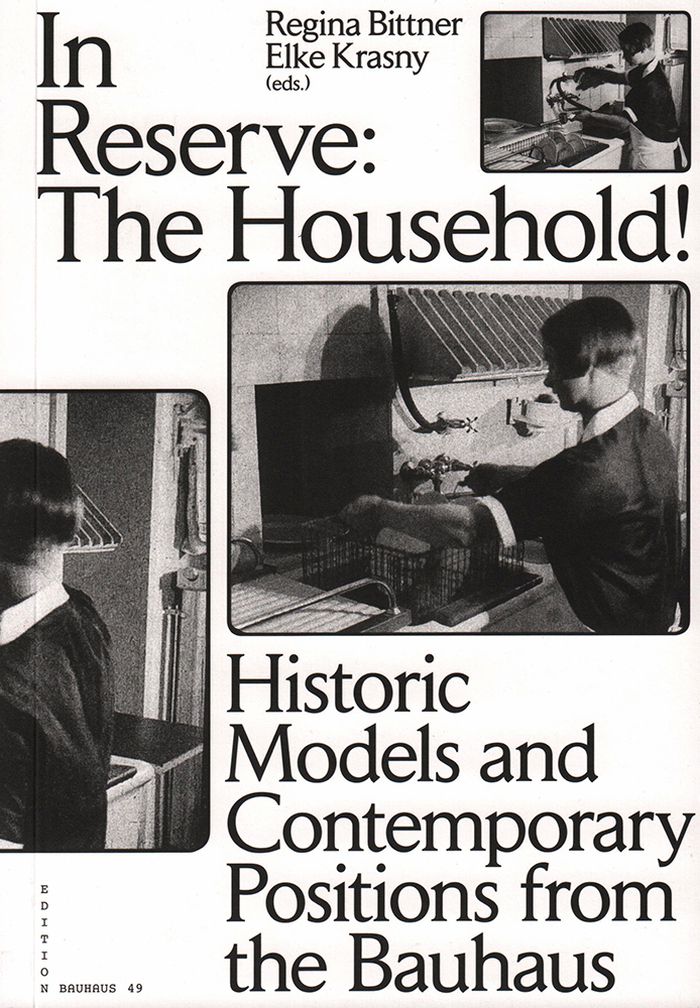
“How are we to live in a way that is healthy and economical?” One answer to this question was provided by Ernst Jahn’s film of the same name Wie wohnen wir gesund und wirtschaftlich? (1926–28), which showed the kitchen in the Gropius House complete with all the latest domestic appliances it was equipped with. The Dessau Masters’ Houses were not only showcases of “new living” (Neues Wohnen) but also places where modern methods of housekeeping could be demonstrated. The topical relevance of this question was discussed at the 2015 Haushaltsmesse, an international trade fair on the art of housekeeping and budgeting. The publication Housekeeping in the Modern Age, which takes a documentary approach to this subject, now brings together these different viewpoints eyeing the question through the prism of the problems we face today. In the face of climate change and dwindling resources, the externalized costs of running a modern household are back on the (kitchen) table. The book is a compilation of essays by anthropologists, economists, artists, architects, historians, and cultural studies experts and also contains historical documents and photographs.
In reserve: the household. Historic models and contemporary positions from the Bauhaus
Actions:
Prix:
$49.95
(disponible sur commande)
Résumé:
“How are we to live in a way that is healthy and economical?” One answer to this question was provided by Ernst Jahn’s film of the same name Wie wohnen wir gesund und wirtschaftlich? (1926–28), which showed the kitchen in the Gropius House complete with all the latest domestic appliances it was equipped with. The Dessau Masters’ Houses were not only showcases of “new living” (Neues Wohnen) but also places where modern methods of housekeeping could be demonstrated. The topical relevance of this question was discussed at the 2015 Haushaltsmesse, an international trade fair on the art of housekeeping and budgeting. The publication Housekeeping in the Modern Age, which takes a documentary approach to this subject, now brings together these different viewpoints eyeing the question through the prism of the problems we face today. In the face of climate change and dwindling resources, the externalized costs of running a modern household are back on the (kitchen) table. The book is a compilation of essays by anthropologists, economists, artists, architects, historians, and cultural studies experts and also contains historical documents and photographs.
Classification:
livres
livres
Publication:
mai 2017
mai 2017
Sujet:
Modernisme
Modernisme
Classification:
livres
livres
Prix:
$32.00
(disponible sur commande)
Résumé:
Over the past two decades China has grown to become the largest construction market in the world, attracting many architects and urban planners from the West. As a result of this migration, it often happens that cultural and linguistic barriers between onsite experts from Western backgrounds and those from local environs create misunderstandings and stall the pace of(...)
$32.00
(disponible sur commande)
Résumé:
Over the past two decades China has grown to become the largest construction market in the world, attracting many architects and urban planners from the West. As a result of this migration, it often happens that cultural and linguistic barriers between onsite experts from Western backgrounds and those from local environs create misunderstandings and stall the pace of(...)
Titre:
China, China ... western architects and city planners in China
Actions:
Prix:
$32.00
(disponible sur commande)
Résumé:
Over the past two decades China has grown to become the largest construction market in the world, attracting many architects and urban planners from the West. As a result of this migration, it often happens that cultural and linguistic barriers between onsite experts from Western backgrounds and those from local environs create misunderstandings and stall the pace of execution. The Chinese architect Xin Lu has dealt with such issues firsthand and is especially well positioned to address them: he studied in China and Germany, and is currently working on a Chinese construction project for a German architectural office. Xin Lu has created this handbook from interviews and conversations he has conducted with architects, urban planners and academics from Europe and China, as well as with Chinese clients. Written to address issues of cultural disparity in the most practical terms, this volume elucidates differences between East and West in communications protocol and conceptual and working methods employed in the process of creating designs or in business. This volume is full of valuable advice, and will assist the process of intercultural cooperation.
China, China ... western architects and city planners in China
Actions:
Prix:
$32.00
(disponible sur commande)
Résumé:
Over the past two decades China has grown to become the largest construction market in the world, attracting many architects and urban planners from the West. As a result of this migration, it often happens that cultural and linguistic barriers between onsite experts from Western backgrounds and those from local environs create misunderstandings and stall the pace of execution. The Chinese architect Xin Lu has dealt with such issues firsthand and is especially well positioned to address them: he studied in China and Germany, and is currently working on a Chinese construction project for a German architectural office. Xin Lu has created this handbook from interviews and conversations he has conducted with architects, urban planners and academics from Europe and China, as well as with Chinese clients. Written to address issues of cultural disparity in the most practical terms, this volume elucidates differences between East and West in communications protocol and conceptual and working methods employed in the process of creating designs or in business. This volume is full of valuable advice, and will assist the process of intercultural cooperation.
Classification:
livres
livres
Publication:
juillet 2008, Ostfildern
juillet 2008, Ostfildern
Classification:
livres
livres

Prix:
$55.95
(disponible sur commande)
Résumé:
Bridges, the least known and understood of China's many wonders, are one of its most striking and resilient feats of architectural prowess. Chinese Bridges brings together a thorough look at these marvels from one of the world's leading experts on Chinese culture and historical geography, Ronald G. Knapp. While many consider bridges to be merely utilitarian, the bridges(...)
$55.95
(disponible sur commande)
Résumé:
Bridges, the least known and understood of China's many wonders, are one of its most striking and resilient feats of architectural prowess. Chinese Bridges brings together a thorough look at these marvels from one of the world's leading experts on Chinese culture and historical geography, Ronald G. Knapp. While many consider bridges to be merely utilitarian, the bridges(...)
Sujet:
Histoire jusqu'à 1900, Asie
Histoire jusqu'à 1900, Asie
Publication:
mai 2008, Tokyo, Rutland, Singapore
mai 2008, Tokyo, Rutland, Singapore
Titre:
Chinese bridges: living architecture from China's past
Actions:
Prix:
$55.95
(disponible sur commande)
Résumé:
Bridges, the least known and understood of China's many wonders, are one of its most striking and resilient feats of architectural prowess. Chinese Bridges brings together a thorough look at these marvels from one of the world's leading experts on Chinese culture and historical geography, Ronald G. Knapp. While many consider bridges to be merely utilitarian, the bridges of China move beyond that stereotype, as many are undeniably dramatic, even majestic and daring. Chinese Bridges illustrates in detail 20 well-preserved ancient bridges, along with descriptions and essays on the distinctive architectural elements shared by the various designs. For the first time in an English-language book, Chinese Bridges records scores of newly discovered bridges across China's vast landscape, illustrated with over 400 color photographs, as well as woodblock prints, historic images, paintings and line drawings. Ronald G. Knapp has been carrying out research on cultural and historical geography in China's countryside since 1965. Currently SUNY Distinguished Professor Emeritus at the State University of New York, New Paltz, he is the author or contributing editor of more than a dozen books.
Chinese bridges: living architecture from China's past
Actions:
Prix:
$55.95
(disponible sur commande)
Résumé:
Bridges, the least known and understood of China's many wonders, are one of its most striking and resilient feats of architectural prowess. Chinese Bridges brings together a thorough look at these marvels from one of the world's leading experts on Chinese culture and historical geography, Ronald G. Knapp. While many consider bridges to be merely utilitarian, the bridges of China move beyond that stereotype, as many are undeniably dramatic, even majestic and daring. Chinese Bridges illustrates in detail 20 well-preserved ancient bridges, along with descriptions and essays on the distinctive architectural elements shared by the various designs. For the first time in an English-language book, Chinese Bridges records scores of newly discovered bridges across China's vast landscape, illustrated with over 400 color photographs, as well as woodblock prints, historic images, paintings and line drawings. Ronald G. Knapp has been carrying out research on cultural and historical geography in China's countryside since 1965. Currently SUNY Distinguished Professor Emeritus at the State University of New York, New Paltz, he is the author or contributing editor of more than a dozen books.
Classification:
livres
livres
Publication:
mai 2008, Tokyo, Rutland, Singapore
mai 2008, Tokyo, Rutland, Singapore
Sujet:
Histoire jusqu'à 1900, Asie
Histoire jusqu'à 1900, Asie
Classification:
périodiques
périodiques
Titre:
Les cahiers de la recherche architecturale et urbaine inter-disciplinarités no.12 / janvier 2003
Les cahiers de la recherche architecturale et urbaine inter-disciplinarités no.12 / janvier 2003
Actions:
Prix:
$29.95
(disponible sur commande)
Résumé:
Alors que vient d'être lancé le programme pluriannuel 2002-2005 de la recherche architecturale et urbaine, soutenu par le ministère de la Culture et de la Communication, un état des lieux des productions scientifiques dans les écoles d'architecture paraissait opportun. Plutôt que de confier à des experts la rédaction de contributions sur les grandes thématiques(...)
$29.95
(disponible sur commande)
Résumé:
Alors que vient d'être lancé le programme pluriannuel 2002-2005 de la recherche architecturale et urbaine, soutenu par le ministère de la Culture et de la Communication, un état des lieux des productions scientifiques dans les écoles d'architecture paraissait opportun. Plutôt que de confier à des experts la rédaction de contributions sur les grandes thématiques(...)
Titre:
Les cahiers de la recherche architecturale et urbaine inter-disciplinarités no.12 / janvier 2003
Actions:
Prix:
$29.95
(disponible sur commande)
Résumé:
Alors que vient d'être lancé le programme pluriannuel 2002-2005 de la recherche architecturale et urbaine, soutenu par le ministère de la Culture et de la Communication, un état des lieux des productions scientifiques dans les écoles d'architecture paraissait opportun. Plutôt que de confier à des experts la rédaction de contributions sur les grandes thématiques concernées -conception, histoire, usages, technique, etc.-, il a été demandé aux équipes et laboratoires habilités par le bureau de la recherche architecturale et urbaine (Brau) de fournir un texte sur leur position, tant scientifique que pratique, par rapport à un thème fédérateur et d'actualité : l'interdisciplinarité. La parole ainsi donnée aux chercheurs et enseignants-chercheurs reflète la diversité des objets, des approches, des méthodes et des terrains d'investigation, tout en constituant une manière d'autoprésentation. L'unicité de la question posée autorise également des lectures comparatives. Le présent numéro est constitué, outre de ces contributions spécifiques, d'une préface de Jean-Jacques Aillagon, ministre de la Culture et de la Communication, et d'un article généraliste sur l'interdisciplinarité par un chantre de celle-ci, Edgar Morin.
Les cahiers de la recherche architecturale et urbaine inter-disciplinarités no.12 / janvier 2003
Actions:
Prix:
$29.95
(disponible sur commande)
Résumé:
Alors que vient d'être lancé le programme pluriannuel 2002-2005 de la recherche architecturale et urbaine, soutenu par le ministère de la Culture et de la Communication, un état des lieux des productions scientifiques dans les écoles d'architecture paraissait opportun. Plutôt que de confier à des experts la rédaction de contributions sur les grandes thématiques concernées -conception, histoire, usages, technique, etc.-, il a été demandé aux équipes et laboratoires habilités par le bureau de la recherche architecturale et urbaine (Brau) de fournir un texte sur leur position, tant scientifique que pratique, par rapport à un thème fédérateur et d'actualité : l'interdisciplinarité. La parole ainsi donnée aux chercheurs et enseignants-chercheurs reflète la diversité des objets, des approches, des méthodes et des terrains d'investigation, tout en constituant une manière d'autoprésentation. L'unicité de la question posée autorise également des lectures comparatives. Le présent numéro est constitué, outre de ces contributions spécifiques, d'une préface de Jean-Jacques Aillagon, ministre de la Culture et de la Communication, et d'un article généraliste sur l'interdisciplinarité par un chantre de celle-ci, Edgar Morin.
Classification:
périodiques
périodiques
Publication:
janvier 2003, Paris
janvier 2003, Paris
Sujet:
Revues
Revues
Classification:
livres
livres
Actions:
Prix:
$115.50
(disponible sur commande)
Résumé:
For the first time, the development of interiors and furniture in Switzerland from the end of the nineteenth century to the present day have been surveyed and documented. Following introductory essays by Lucius Burckhardt and Stanislaus von Moos, both experts in design research, there are seven main chapters each focussing on a period of 15 years; these are complemented(...)
$115.50
(disponible sur commande)
Résumé:
For the first time, the development of interiors and furniture in Switzerland from the end of the nineteenth century to the present day have been surveyed and documented. Following introductory essays by Lucius Burckhardt and Stanislaus von Moos, both experts in design research, there are seven main chapters each focussing on a period of 15 years; these are complemented(...)
Titre:
Swiss furniture and interiors in the 20th century
Actions:
Prix:
$115.50
(disponible sur commande)
Résumé:
For the first time, the development of interiors and furniture in Switzerland from the end of the nineteenth century to the present day have been surveyed and documented. Following introductory essays by Lucius Burckhardt and Stanislaus von Moos, both experts in design research, there are seven main chapters each focussing on a period of 15 years; these are complemented by detailed information on those masterpieces which can be considered to define the epoch. Some 20 representative interiors reveal the significant changes which have taken place in living space in the 20th century. A fully illustrated catalogue of over 300 objects from furniture to ceramics and household objects and around 150 biographies conclude the publication. Much of the information was previously inaccessible and this volume contains invaluable details regarding the origins and the production of the objects. The book is a fascinating compendium of the great classics in Swiss design, with rare early works as well as new pieces. A large part of the material has been photographed especially for this publication and the model furnished interiors have been drawn to the same scale.
Swiss furniture and interiors in the 20th century
Actions:
Prix:
$115.50
(disponible sur commande)
Résumé:
For the first time, the development of interiors and furniture in Switzerland from the end of the nineteenth century to the present day have been surveyed and documented. Following introductory essays by Lucius Burckhardt and Stanislaus von Moos, both experts in design research, there are seven main chapters each focussing on a period of 15 years; these are complemented by detailed information on those masterpieces which can be considered to define the epoch. Some 20 representative interiors reveal the significant changes which have taken place in living space in the 20th century. A fully illustrated catalogue of over 300 objects from furniture to ceramics and household objects and around 150 biographies conclude the publication. Much of the information was previously inaccessible and this volume contains invaluable details regarding the origins and the production of the objects. The book is a fascinating compendium of the great classics in Swiss design, with rare early works as well as new pieces. A large part of the material has been photographed especially for this publication and the model furnished interiors have been drawn to the same scale.
Classification:
livres
livres
Publication:
juillet 2002, Basel
juillet 2002, Basel
Sujet:
Design d’intérieur
Design d’intérieur
Classification:
livres
livres
Actions:
Prix:
$62.00
(disponible sur commande)
Résumé:
Barcelona offers a prime example of the co-housing model as an asset prized for its use value as opposed to investment. This book is a compilation of cooperative housing projects in Barcelona, both complete and under construction. It explains how the co-housing process is managed in terms of architecture, urban planning, financing, legality, and taxation, and delves into(...)
$62.00
(disponible sur commande)
Résumé:
Barcelona offers a prime example of the co-housing model as an asset prized for its use value as opposed to investment. This book is a compilation of cooperative housing projects in Barcelona, both complete and under construction. It explains how the co-housing process is managed in terms of architecture, urban planning, financing, legality, and taxation, and delves into(...)
Sujet:
Logements collectifs
Logements collectifs
Publication:
septembre 2023
septembre 2023
Titre:
Cohousing in Barcelona: Designing, building and living for cooperative models
Actions:
Prix:
$62.00
(disponible sur commande)
Résumé:
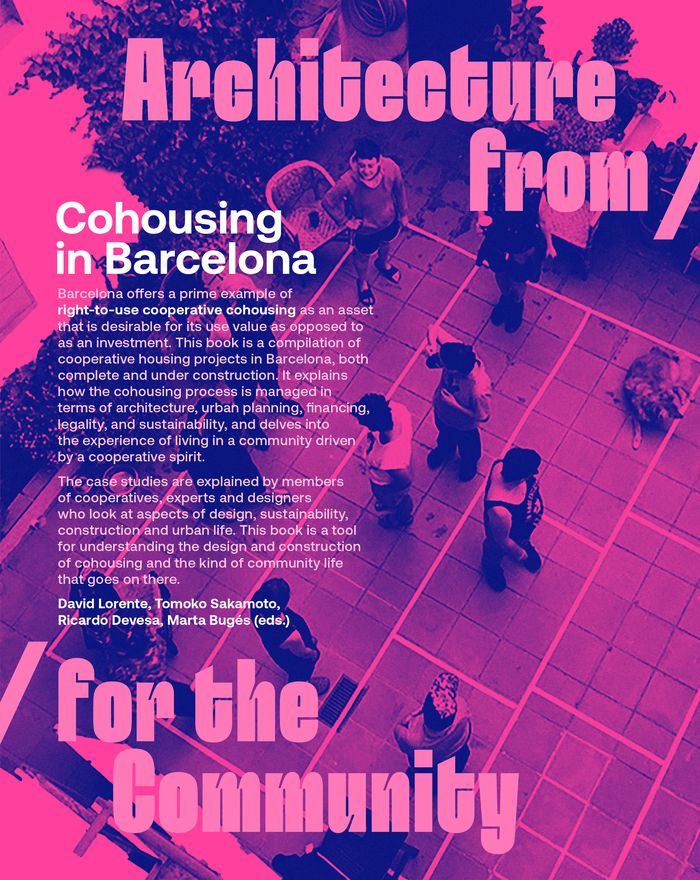
Barcelona offers a prime example of the co-housing model as an asset prized for its use value as opposed to investment. This book is a compilation of cooperative housing projects in Barcelona, both complete and under construction. It explains how the co-housing process is managed in terms of architecture, urban planning, financing, legality, and taxation, and delves into the experience of living in a community fueled by a cooperative spirit. The content of the book presents designs for cooperative housing, accompanied by a critical vision of the model’s implications in terms of the transfer of use or co-living. Finished and inhabited projects are compiled along with ongoing projects, to offer a general view of this way of living in Barcelona. The case studies are explained by members of cooperatives, experts and designers who look at aspects of design, sustainability, construction and urban life. This book is a tool for understanding the design and construction of co-housing and the community life that goes on there.
Cohousing in Barcelona: Designing, building and living for cooperative models
Actions:
Prix:
$62.00
(disponible sur commande)
Résumé:
Barcelona offers a prime example of the co-housing model as an asset prized for its use value as opposed to investment. This book is a compilation of cooperative housing projects in Barcelona, both complete and under construction. It explains how the co-housing process is managed in terms of architecture, urban planning, financing, legality, and taxation, and delves into the experience of living in a community fueled by a cooperative spirit. The content of the book presents designs for cooperative housing, accompanied by a critical vision of the model’s implications in terms of the transfer of use or co-living. Finished and inhabited projects are compiled along with ongoing projects, to offer a general view of this way of living in Barcelona. The case studies are explained by members of cooperatives, experts and designers who look at aspects of design, sustainability, construction and urban life. This book is a tool for understanding the design and construction of co-housing and the community life that goes on there.
Classification:
livres
livres
Publication:
septembre 2023
septembre 2023
Sujet:
Logements collectifs
Logements collectifs
Classification:
livres
livres
Actions:
Prix:
$63.95
(disponible sur commande)
Résumé:
Is less really more? At long last, designers, artists, and architects have rediscovered the evocative effect of patterns and are paying homage to décors once rejected as superfluous, by covering lamps, chairs, rooms or entire façades with stripes, polka dots and camouflage designs. Indispensable for anyone interested in contemporary trends in design, art and(...)
$63.95
(disponible sur commande)
Résumé:
Is less really more? At long last, designers, artists, and architects have rediscovered the evocative effect of patterns and are paying homage to décors once rejected as superfluous, by covering lamps, chairs, rooms or entire façades with stripes, polka dots and camouflage designs. Indispensable for anyone interested in contemporary trends in design, art and(...)
Sujet:
Ornementation
Ornementation
Publication:
mai 2007, Basel - Boston - Berlin
mai 2007, Basel - Boston - Berlin
Titre:
Patterns in design, art and architecture
Actions:
Prix:
$63.95
(disponible sur commande)
Résumé:
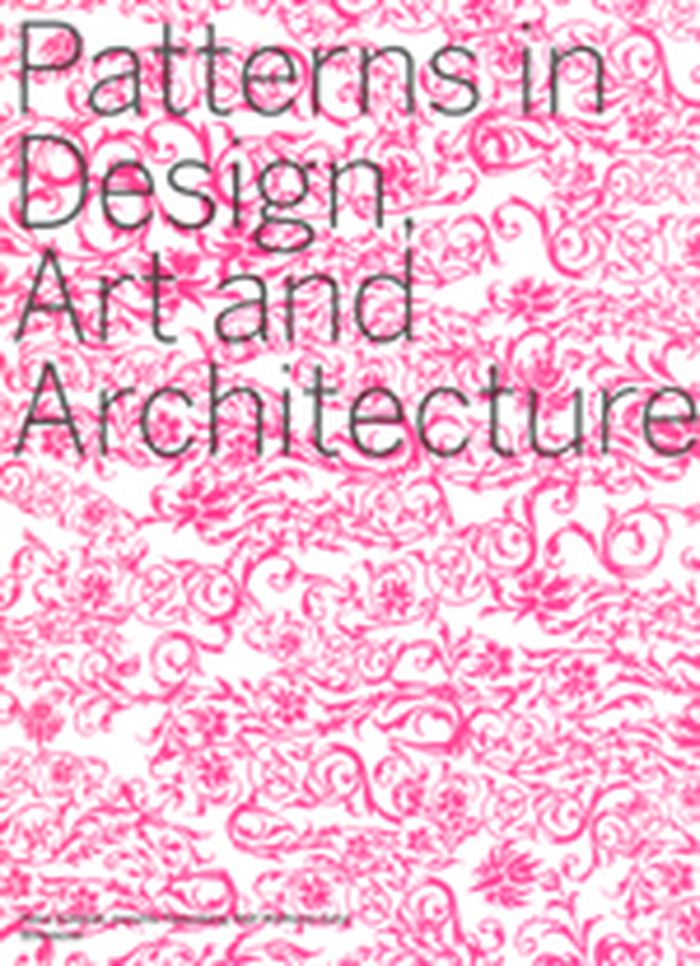
Is less really more? At long last, designers, artists, and architects have rediscovered the evocative effect of patterns and are paying homage to décors once rejected as superfluous, by covering lamps, chairs, rooms or entire façades with stripes, polka dots and camouflage designs. Indispensable for anyone interested in contemporary trends in design, art and architecture, this softcover edition of a classic is quite simply opulent and dazzling – a lavishly illustrated overview composed by experts. This book presents the various multidisciplinary approaches to patterns, showing the many functions and fields of application. Using examples of contemporary work by internationally renowned designers such as Fabio Novembre, Claesson Koivisto Rune and Karim Rashid, by architects such as Herzog & de Meuron, Steven Holl and Sauerbruch Hutton, and artists such as Bridget Riley and Gerhard Richter, a kaleidoscope of colours and forms are laid out before the reader. New interpretations of traditional motifs are illustrated, as well as the impact and influence of technical innovations such as laser engraving and digital milling on the creation and realization of patterns today.
Patterns in design, art and architecture
Actions:
Prix:
$63.95
(disponible sur commande)
Résumé:
Is less really more? At long last, designers, artists, and architects have rediscovered the evocative effect of patterns and are paying homage to décors once rejected as superfluous, by covering lamps, chairs, rooms or entire façades with stripes, polka dots and camouflage designs. Indispensable for anyone interested in contemporary trends in design, art and architecture, this softcover edition of a classic is quite simply opulent and dazzling – a lavishly illustrated overview composed by experts. This book presents the various multidisciplinary approaches to patterns, showing the many functions and fields of application. Using examples of contemporary work by internationally renowned designers such as Fabio Novembre, Claesson Koivisto Rune and Karim Rashid, by architects such as Herzog & de Meuron, Steven Holl and Sauerbruch Hutton, and artists such as Bridget Riley and Gerhard Richter, a kaleidoscope of colours and forms are laid out before the reader. New interpretations of traditional motifs are illustrated, as well as the impact and influence of technical innovations such as laser engraving and digital milling on the creation and realization of patterns today.
Classification:
livres
livres
Publication:
mai 2007, Basel - Boston - Berlin
mai 2007, Basel - Boston - Berlin
Sujet:
Ornementation
Ornementation
Classification:
livres
livres
Actions:
Prix:
$24.95
(disponible en magasin)
Résumé:
Il n’est pas question ici d’épidémiologie, ni de virologie, ni de quelque « logie » que ce soit car c’est de philosophie qu’il s’agit. Du reste, Donatella Di Cesare enseigne cette discipline dans la plus ancienne institution universitaire d’Europe, La Sapienza à Rome. Que penser d’une démocratie immunitaire où les experts ont acquis des places de gouvernants et où l’état(...)
$24.95
(disponible en magasin)
Résumé:
Il n’est pas question ici d’épidémiologie, ni de virologie, ni de quelque « logie » que ce soit car c’est de philosophie qu’il s’agit. Du reste, Donatella Di Cesare enseigne cette discipline dans la plus ancienne institution universitaire d’Europe, La Sapienza à Rome. Que penser d’une démocratie immunitaire où les experts ont acquis des places de gouvernants et où l’état(...)
Titre:
Un virus souverain : l'asphyxie capitaliste
Actions:
Prix:
$24.95
(disponible en magasin)
Résumé:
Il n’est pas question ici d’épidémiologie, ni de virologie, ni de quelque « logie » que ce soit car c’est de philosophie qu’il s’agit. Du reste, Donatella Di Cesare enseigne cette discipline dans la plus ancienne institution universitaire d’Europe, La Sapienza à Rome. Que penser d’une démocratie immunitaire où les experts ont acquis des places de gouvernants et où l’état d’exception est permanent? Que dire de la « distanciation sociale » sinon qu’elle est l’élargissement du fossé entre les riches et ceux qui n’ont rien? Comment qualifier un virus capable d’annuler l’idée même de frontière? Comment qualifier les relations où chacun vit caché derrière son masque et où personne n’ose se toucher? Le virus a rendu manifeste la brutalité du capitalisme qui nous emporte dans sa spirale dévastatrice. « Ce qui se passe n’est pas une crise mais bien une catastrophe au ralenti. Le virus a bloqué le dispositif. Ce que l’on voit, c’est une convulsion planétaire, le spasme produit par la violence fébrile, l’accélération sans fin autre qu’elle-même qui a inexorablement atteint son point d’inertie. C’est une tétanisation du monde. » Est-ce un dernier signal d’alarme?
Un virus souverain : l'asphyxie capitaliste
Actions:
Prix:
$24.95
(disponible en magasin)
Résumé:
Il n’est pas question ici d’épidémiologie, ni de virologie, ni de quelque « logie » que ce soit car c’est de philosophie qu’il s’agit. Du reste, Donatella Di Cesare enseigne cette discipline dans la plus ancienne institution universitaire d’Europe, La Sapienza à Rome. Que penser d’une démocratie immunitaire où les experts ont acquis des places de gouvernants et où l’état d’exception est permanent? Que dire de la « distanciation sociale » sinon qu’elle est l’élargissement du fossé entre les riches et ceux qui n’ont rien? Comment qualifier un virus capable d’annuler l’idée même de frontière? Comment qualifier les relations où chacun vit caché derrière son masque et où personne n’ose se toucher? Le virus a rendu manifeste la brutalité du capitalisme qui nous emporte dans sa spirale dévastatrice. « Ce qui se passe n’est pas une crise mais bien une catastrophe au ralenti. Le virus a bloqué le dispositif. Ce que l’on voit, c’est une convulsion planétaire, le spasme produit par la violence fébrile, l’accélération sans fin autre qu’elle-même qui a inexorablement atteint son point d’inertie. C’est une tétanisation du monde. » Est-ce un dernier signal d’alarme?
Classification:
livres
livres
Publication:
novembre 2020
novembre 2020
Sujet:
Théorie/ philosophie
Théorie/ philosophie
Classification:
livres
livres
Actions:
Prix:
$49.95
(disponible sur commande)
Résumé:
Celebrated artist Keith Haring (1958–1990) has been embraced by popular culture for his signature bold graphic line drawings of figures and forms. Like other graffiti artists in the 1980s, Haring found an empty canvas in the advertising panels scattered throughout New York City’s subway system, where he communicated his socially conscious, often humorous messages on(...)
$49.95
(disponible sur commande)
Résumé:
Celebrated artist Keith Haring (1958–1990) has been embraced by popular culture for his signature bold graphic line drawings of figures and forms. Like other graffiti artists in the 1980s, Haring found an empty canvas in the advertising panels scattered throughout New York City’s subway system, where he communicated his socially conscious, often humorous messages on(...)
Publication:
décembre 2021
décembre 2021
Titre:
Keith Haring: 31 subway drawings
Actions:
Prix:
$49.95
(disponible sur commande)
Résumé:
Celebrated artist Keith Haring (1958–1990) has been embraced by popular culture for his signature bold graphic line drawings of figures and forms. Like other graffiti artists in the 1980s, Haring found an empty canvas in the advertising panels scattered throughout New York City’s subway system, where he communicated his socially conscious, often humorous messages on platforms and train cars. Over a five-year period, in an epic conquest of civic space, Haring produced a massive body of subway artwork that remains daunting in its scale and its impact on the public consciousness. Dedicated to the individuals who might encounter them and to the moments of their creation, Haring’s drawings now exist solely in the form of documentary photographs and legend. Because they were not meant to be permanent—only briefly inhabiting blacked-out advertising boards before being covered up by ads or torn down by authorities or admirers—what little remains of this project is uniquely fugitive. ''Keith Haring: 31 subway drawings'' reproduces archival materials relating to this magnificent project alongside essays by leading Haring experts.
Keith Haring: 31 subway drawings
Actions:
Prix:
$49.95
(disponible sur commande)
Résumé:
Celebrated artist Keith Haring (1958–1990) has been embraced by popular culture for his signature bold graphic line drawings of figures and forms. Like other graffiti artists in the 1980s, Haring found an empty canvas in the advertising panels scattered throughout New York City’s subway system, where he communicated his socially conscious, often humorous messages on platforms and train cars. Over a five-year period, in an epic conquest of civic space, Haring produced a massive body of subway artwork that remains daunting in its scale and its impact on the public consciousness. Dedicated to the individuals who might encounter them and to the moments of their creation, Haring’s drawings now exist solely in the form of documentary photographs and legend. Because they were not meant to be permanent—only briefly inhabiting blacked-out advertising boards before being covered up by ads or torn down by authorities or admirers—what little remains of this project is uniquely fugitive. ''Keith Haring: 31 subway drawings'' reproduces archival materials relating to this magnificent project alongside essays by leading Haring experts.
Classification:
livres
livres
Publication:
décembre 2021
décembre 2021
Classification:
livres
livres
Titre:
Pressing Matters 10
Pressing Matters 10
Actions:
Prix:
$54.00
(disponible sur commande)
Résumé:
Already number TEN, ''Pressing Matters X'' is a special issue reflecting a year of reflection and change, after several waves of the pandemic, Black Lives Matter protests and newly developed hybrid teaching methods. It follows last year’s ''Pressing Matters 9'' that was completely rethought with the aim to present an Open Source publication that shares the Department of(...)
$54.00
(disponible sur commande)
Résumé:
Already number TEN, ''Pressing Matters X'' is a special issue reflecting a year of reflection and change, after several waves of the pandemic, Black Lives Matter protests and newly developed hybrid teaching methods. It follows last year’s ''Pressing Matters 9'' that was completely rethought with the aim to present an Open Source publication that shares the Department of(...)
Publication:
juin 2022
juin 2022
Titre:
Pressing Matters 10
Actions:
Prix:
$54.00
(disponible sur commande)
Résumé:
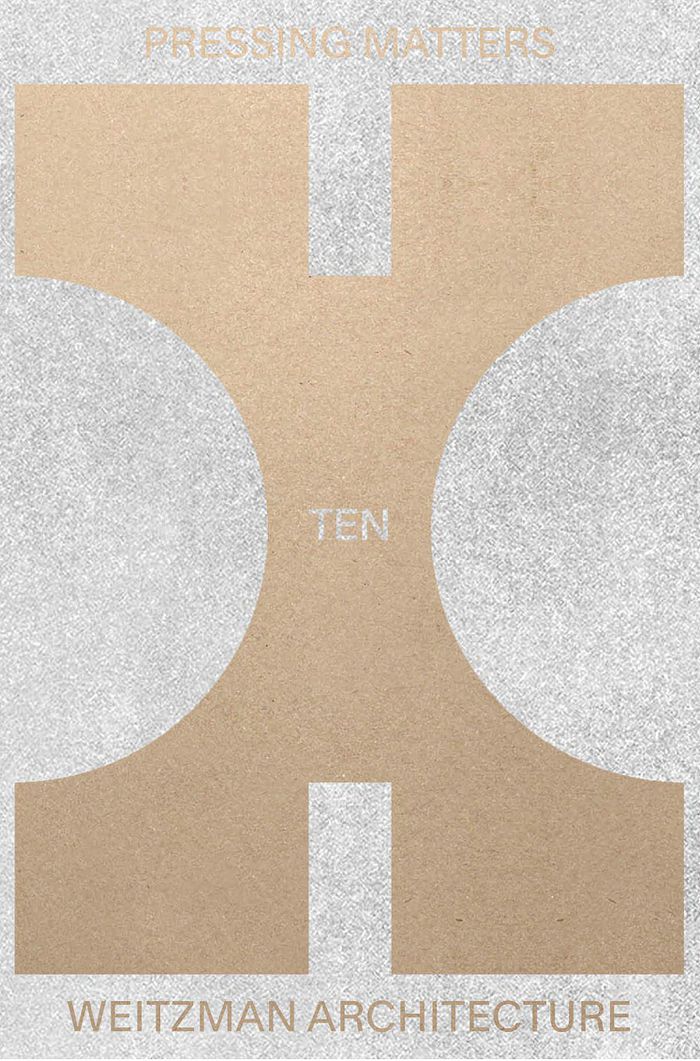
Already number TEN, ''Pressing Matters X'' is a special issue reflecting a year of reflection and change, after several waves of the pandemic, Black Lives Matter protests and newly developed hybrid teaching methods. It follows last year’s ''Pressing Matters 9'' that was completely rethought with the aim to present an Open Source publication that shares the Department of Architecture’s concept of design-research, an integral approach of critical thinking, rigorous research, and design, representing a deep understanding of the complex layers of architecture. Together with Jonathan Jackson & team of WSDIA, a more integral design was developed, allowing input from research [ARI labs], students, faculty and Penn’s special events. This anniversary of ''Pressing Matters'' is celebrated by adding the ''decade'' color of silver to the usual recycled cardboard cover of Weitzman’s architecture publication. It also represents a year of new opportunities brought by a complete rethinking of education through the introduction of remote learning, zoom lectures and meetings. A much larger international group of diverse jurors, experts, and critics could be invited as travel was of no hindrance for attendance.
Pressing Matters 10
Actions:
Prix:
$54.00
(disponible sur commande)
Résumé:
Already number TEN, ''Pressing Matters X'' is a special issue reflecting a year of reflection and change, after several waves of the pandemic, Black Lives Matter protests and newly developed hybrid teaching methods. It follows last year’s ''Pressing Matters 9'' that was completely rethought with the aim to present an Open Source publication that shares the Department of Architecture’s concept of design-research, an integral approach of critical thinking, rigorous research, and design, representing a deep understanding of the complex layers of architecture. Together with Jonathan Jackson & team of WSDIA, a more integral design was developed, allowing input from research [ARI labs], students, faculty and Penn’s special events. This anniversary of ''Pressing Matters'' is celebrated by adding the ''decade'' color of silver to the usual recycled cardboard cover of Weitzman’s architecture publication. It also represents a year of new opportunities brought by a complete rethinking of education through the introduction of remote learning, zoom lectures and meetings. A much larger international group of diverse jurors, experts, and critics could be invited as travel was of no hindrance for attendance.
Classification:
livres
livres
Publication:
juin 2022
juin 2022


