


1215 Résultats
Classification:
livres
livres
Actions:
Prix:
$96.00
(disponible en magasin)
Résumé:
In the late nineteenth and early twentieth centuries, the notion of englishness was widely debated in English art and cultural circles. Might there be a specifically English landscape and an English way of representing it? Was the history of the nation unique, and might there be a particular and resilient national character? This original volume is the first to examine(...)
$96.00
(disponible en magasin)
Résumé:
In the late nineteenth and early twentieth centuries, the notion of englishness was widely debated in English art and cultural circles. Might there be a specifically English landscape and an English way of representing it? Was the history of the nation unique, and might there be a particular and resilient national character? This original volume is the first to examine(...)
Sujet:
Jardins
Jardins
Publication:
janvier 2002, New Haven and London
janvier 2002, New Haven and London
Titre:
The geographies of Englishness : landscape and the national past, 1880-1940
Actions:
Prix:
$96.00
(disponible en magasin)
Résumé:
In the late nineteenth and early twentieth centuries, the notion of englishness was widely debated in English art and cultural circles. Might there be a specifically English landscape and an English way of representing it? Was the history of the nation unique, and might there be a particular and resilient national character? This original volume is the first to examine the intersection of national identity, modernization, and landscape in English art during the period from 1880 to 1940. Individual chapters consider how changing ideals and debates were at work in English art during these decades of social and cultural change. The contributors address topics ranging from the assimilation of French styles in English art before the First World War to themes of national identity and modernization in the years leading to the Second World War. From various fresh perspectives, this book offers new insight into the invention of nation and its consequences for English art during this critical era. David Peters Corbett is reader in history of art, University of York. Ysanne Holt is senior lecturer in history of art, University of Northumbria. Fiona Russell is general editor of the Henry Moore Series in Study of Sculpture, Ashgate Press.
The geographies of Englishness : landscape and the national past, 1880-1940
Actions:
Prix:
$96.00
(disponible en magasin)
Résumé:
In the late nineteenth and early twentieth centuries, the notion of englishness was widely debated in English art and cultural circles. Might there be a specifically English landscape and an English way of representing it? Was the history of the nation unique, and might there be a particular and resilient national character? This original volume is the first to examine the intersection of national identity, modernization, and landscape in English art during the period from 1880 to 1940. Individual chapters consider how changing ideals and debates were at work in English art during these decades of social and cultural change. The contributors address topics ranging from the assimilation of French styles in English art before the First World War to themes of national identity and modernization in the years leading to the Second World War. From various fresh perspectives, this book offers new insight into the invention of nation and its consequences for English art during this critical era. David Peters Corbett is reader in history of art, University of York. Ysanne Holt is senior lecturer in history of art, University of Northumbria. Fiona Russell is general editor of the Henry Moore Series in Study of Sculpture, Ashgate Press.
Classification:
livres
livres
Publication:
janvier 2002, New Haven and London
janvier 2002, New Haven and London
Sujet:
Jardins
Jardins
Classification:
livres
livres

Actions:
Prix:
$25.95
(disponible sur commande)
Résumé:
Text in English and Danish.
$25.95
(disponible sur commande)
Résumé:
Text in English and Danish.
Sujet:
Jardins
Jardins
Publication:
septembre 2002, Copenhagen
septembre 2002, Copenhagen
Titre:
Who comes - who leaves - who stays?
Actions:
Prix:
$25.95
(disponible sur commande)
Résumé:
Text in English and Danish.
Who comes - who leaves - who stays?
Actions:
Prix:
$25.95
(disponible sur commande)
Résumé:
Text in English and Danish.
Classification:
livres
livres
Publication:
septembre 2002, Copenhagen
septembre 2002, Copenhagen
Sujet:
Jardins
Jardins
Classification:
livres
livres
Actions:
Exemplaires:
Description:
vi, 334 pages : illustrations (chiefly color), facsimiles, portraits (some color); 25 cm
Description:
vi, 334 pages : illustrations (chiefly color), facsimiles, portraits (some color); 25 cm
Auteur:
Sujet:
Publication:
Bristol, UK ; Chicago, USA : Intellect, 2020., ©2020
Bristol, UK ; Chicago, USA : Intellect, 2020., ©2020
Titre:
Cosmopolitics of the camera : Albert Kahn's archives of the planet / edited by Trond Erik Bjorli and Kjetil Ansgar Jakobsen.
Actions:
Exemplaires:
Description:
vi, 334 pages : illustrations (chiefly color), facsimiles, portraits (some color); 25 cm
Cosmopolitics of the camera : Albert Kahn's archives of the planet / edited by Trond Erik Bjorli and Kjetil Ansgar Jakobsen.
Actions:
Exemplaires:
Description:
vi, 334 pages : illustrations (chiefly color), facsimiles, portraits (some color); 25 cm
Classification:
livres
livres
Publication:
Bristol, UK ; Chicago, USA : Intellect, 2020., ©2020
Bristol, UK ; Chicago, USA : Intellect, 2020., ©2020
Auteur:
Sujet:
Classification:
livres
livres
Titre:
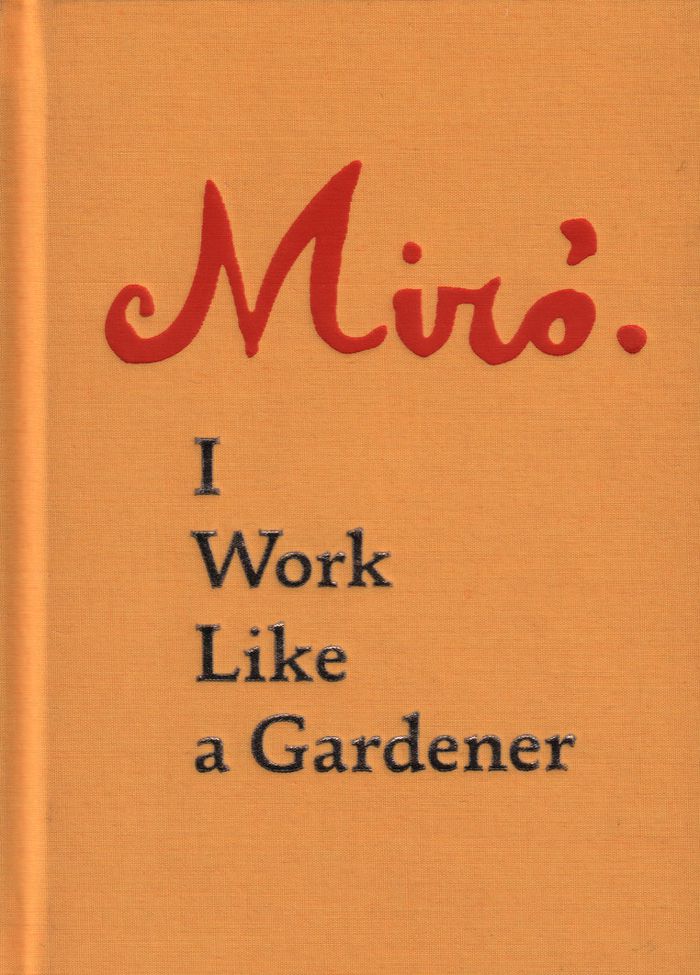
Miró: I work like a gardener
Miró: I work like a gardener
Actions:
Prix:
$27.95
(disponible sur commande)
Résumé:
In 1958, artist Joan Miro and critic Yvon Taillandier sat down for an in-depth discussion on Miro's life and work. First published as a limited edition and long out of print, this bilingual "treasure," in the words of Maria Popova, "remains the most direct and comprehensive record of Miró's ideas on art." This volume presents an updated English translation, with a preface(...)
$27.95
(disponible sur commande)
Résumé:
In 1958, artist Joan Miro and critic Yvon Taillandier sat down for an in-depth discussion on Miro's life and work. First published as a limited edition and long out of print, this bilingual "treasure," in the words of Maria Popova, "remains the most direct and comprehensive record of Miró's ideas on art." This volume presents an updated English translation, with a preface(...)
Titre:
Miró: I work like a gardener
Actions:
Prix:
$27.95
(disponible sur commande)
Résumé:
In 1958, artist Joan Miro and critic Yvon Taillandier sat down for an in-depth discussion on Miro's life and work. First published as a limited edition and long out of print, this bilingual "treasure," in the words of Maria Popova, "remains the most direct and comprehensive record of Miró's ideas on art." This volume presents an updated English translation, with a preface by Miró scholar Robert Lubar, and appendix in the original French text.
Miró: I work like a gardener
Actions:
Prix:
$27.95
(disponible sur commande)
Résumé:
In 1958, artist Joan Miro and critic Yvon Taillandier sat down for an in-depth discussion on Miro's life and work. First published as a limited edition and long out of print, this bilingual "treasure," in the words of Maria Popova, "remains the most direct and comprehensive record of Miró's ideas on art." This volume presents an updated English translation, with a preface by Miró scholar Robert Lubar, and appendix in the original French text.
Classification:
livres
livres
Publication:
octobre 2017
octobre 2017
Classification:
livres
livres
Titre:
In the wake of war : the reconstruction of German cities after World War II / Jeffry M. Diefendorf.
In the wake of war : the reconstruction of German cities after World War II / Jeffry M. Diefendorf.
Actions:
Exemplaires:
Description:
xx, 403 pages : illustrations ; 25 cm
Description:
xx, 403 pages : illustrations ; 25 cm
Auteur:
Sujet:
Publication:
New York : Oxford University Press, 1993.
New York : Oxford University Press, 1993.
Titre:
In the wake of war : the reconstruction of German cities after World War II / Jeffry M. Diefendorf.
Actions:
Exemplaires:
Description:
xx, 403 pages : illustrations ; 25 cm
In the wake of war : the reconstruction of German cities after World War II / Jeffry M. Diefendorf.
Actions:
Exemplaires:
Description:
xx, 403 pages : illustrations ; 25 cm
Classification:
livres
livres
Publication:
New York : Oxford University Press, 1993.
New York : Oxford University Press, 1993.
Auteur:
Sujet:
Classification:
audio
audio
Titre:
Metahaven on Turnarounds.
Metahaven on Turnarounds.
Actions:
Description:
1 online resource.
Auteur:
Sujet:
Publication:
[Place of publication not identified] : e-flux, 2019.
[Place of publication not identified] : e-flux, 2019.
Classification:
audio
audio
Publication:
[Place of publication not identified] : e-flux, 2019.
[Place of publication not identified] : e-flux, 2019.
Auteur:
Sujet:
Classification:
livres
livres

Titre:
Citix60: Tokyo
Citix60: Tokyo
Actions:
Prix:
$14.95
(disponible sur commande)
Résumé:
Creatives who call Tokyo home share their favorite local spots in Victionarys CITIX60-Tokyo. The best of the city includes the nagare-zukuri style shrine to Emperor Meiji, SCAI THE BATHHOUSE, a contemporary art gallery known for showcasing Japans avant-garde artists, Higashiya Ginza, a tea room with Japanese and English menu options, Tokyo Shiba Tofuya-Ukai, a(...)
$14.95
(disponible sur commande)
Résumé:
Creatives who call Tokyo home share their favorite local spots in Victionarys CITIX60-Tokyo. The best of the city includes the nagare-zukuri style shrine to Emperor Meiji, SCAI THE BATHHOUSE, a contemporary art gallery known for showcasing Japans avant-garde artists, Higashiya Ginza, a tea room with Japanese and English menu options, Tokyo Shiba Tofuya-Ukai, a(...)
Titre:
Citix60: Tokyo
Actions:
Prix:
$14.95
(disponible sur commande)
Résumé:
Creatives who call Tokyo home share their favorite local spots in Victionarys CITIX60-Tokyo. The best of the city includes the nagare-zukuri style shrine to Emperor Meiji, SCAI THE BATHHOUSE, a contemporary art gallery known for showcasing Japans avant-garde artists, Higashiya Ginza, a tea room with Japanese and English menu options, Tokyo Shiba Tofuya-Ukai, a restaurant that offers a view of a 71,000 sqft Japanese garden, and TWO ROOMS, an upscale restaurant that features a cellar containing 1,800 bottles. Folding map cover.
Citix60: Tokyo
Actions:
Prix:
$14.95
(disponible sur commande)
Résumé:
Creatives who call Tokyo home share their favorite local spots in Victionarys CITIX60-Tokyo. The best of the city includes the nagare-zukuri style shrine to Emperor Meiji, SCAI THE BATHHOUSE, a contemporary art gallery known for showcasing Japans avant-garde artists, Higashiya Ginza, a tea room with Japanese and English menu options, Tokyo Shiba Tofuya-Ukai, a restaurant that offers a view of a 71,000 sqft Japanese garden, and TWO ROOMS, an upscale restaurant that features a cellar containing 1,800 bottles. Folding map cover.
Classification:
livres
livres
Publication:
décembre 2014
décembre 2014
Sujet:
Guides des villes
Guides des villes
Classification:
livres
livres
Actions:
Exemplaires:
Description:
x, 297 pages : illustrations, maps ; 24 cm.
Description:
x, 297 pages : illustrations, maps ; 24 cm.
Auteur:
Sujet:
Publication:
Montréal : McGill-Queen's University Press, 1998.
Montréal : McGill-Queen's University Press, 1998.
Titre:
Habitants et marchands, vingt ans après : lectures de l'histoire des XVIIe et XVIIIe siècles canadiens / sous la direction de Sylvie Dépatie [and others] = Habitants et marchands, twenty years later : reading the history of seventeenth- and eighteenth-century Canada / edited by Sylvie Dépatie [and others].
Actions:
Exemplaires:
Description:
x, 297 pages : illustrations, maps ; 24 cm.
Habitants et marchands, vingt ans après : lectures de l'histoire des XVIIe et XVIIIe siècles canadiens / sous la direction de Sylvie Dépatie [and others] = Habitants et marchands, twenty years later : reading the history of seventeenth- and eighteenth-century Canada / edited by Sylvie Dépatie [and others].
Actions:
Exemplaires:
Description:
x, 297 pages : illustrations, maps ; 24 cm.
Classification:
livres
livres
Publication:
Montréal : McGill-Queen's University Press, 1998.
Montréal : McGill-Queen's University Press, 1998.
Auteur:
Sujet:
Classification:
livres
livres
Prix:
$63.95
(disponible sur commande)
Résumé:
A world-famous eighteenth-century British figure, Lancelot “Capability” Brown (1716-1783) is today considered the father of landscape architecture. Moving Heaven and Earth reveals the driven polymath behind the famous nickname, exploring both Brown’s artistic legacy and his pioneering work with water in the landscape. The book evaluates the rise of the English landscape(...)
$63.95
(disponible sur commande)
Résumé:
A world-famous eighteenth-century British figure, Lancelot “Capability” Brown (1716-1783) is today considered the father of landscape architecture. Moving Heaven and Earth reveals the driven polymath behind the famous nickname, exploring both Brown’s artistic legacy and his pioneering work with water in the landscape. The book evaluates the rise of the English landscape(...)
Titre:
Moving heaven and earth: Capability Brown's gift of landscape
Actions:
Prix:
$63.95
(disponible sur commande)
Résumé:
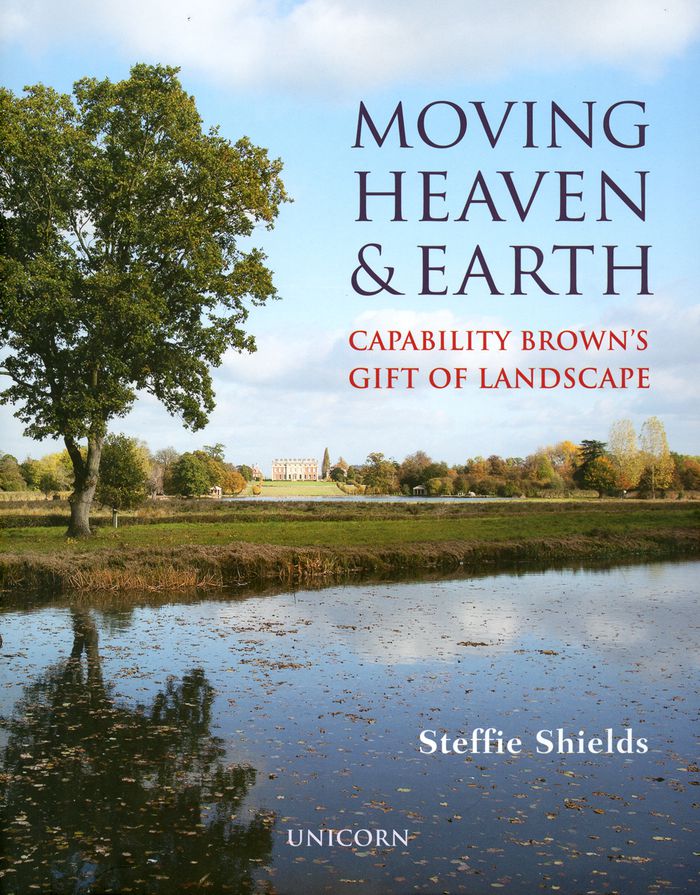
A world-famous eighteenth-century British figure, Lancelot “Capability” Brown (1716-1783) is today considered the father of landscape architecture. Moving Heaven and Earth reveals the driven polymath behind the famous nickname, exploring both Brown’s artistic legacy and his pioneering work with water in the landscape. The book evaluates the rise of the English landscape garden in the context of his designs. It also provides a comprehensive guide for travelers, with an overview of the 250 sites throughout England and Wales attributed to or connected with Brown. Over 350 color photographs pin-point Brown’s enduring views and surprisingly vibrant planting palette, showcasing his enduring significance.
Moving heaven and earth: Capability Brown's gift of landscape
Actions:
Prix:
$63.95
(disponible sur commande)
Résumé:
A world-famous eighteenth-century British figure, Lancelot “Capability” Brown (1716-1783) is today considered the father of landscape architecture. Moving Heaven and Earth reveals the driven polymath behind the famous nickname, exploring both Brown’s artistic legacy and his pioneering work with water in the landscape. The book evaluates the rise of the English landscape garden in the context of his designs. It also provides a comprehensive guide for travelers, with an overview of the 250 sites throughout England and Wales attributed to or connected with Brown. Over 350 color photographs pin-point Brown’s enduring views and surprisingly vibrant planting palette, showcasing his enduring significance.
Classification:
livres
livres
Publication:
août 2016
août 2016
Classification:
livres
livres
Titre:
Picture Book
Picture Book
Actions:
Prix:
$49.95
(disponible sur commande)
Résumé:
Hannah Höch’s Bilderbuch [Picture Book] from 1945 is now finally available in English. The Picture Book presents the fantastic adventures of Runfast, Dumblet, Snifty and Meyer 1, mythical creatures which seem like a dream in a zoological garden, surrounded by fairy tale flowers and plants. It was designed through the Dadaistic principle of photomontage which Höch(...)
$49.95
(disponible sur commande)
Résumé:
Hannah Höch’s Bilderbuch [Picture Book] from 1945 is now finally available in English. The Picture Book presents the fantastic adventures of Runfast, Dumblet, Snifty and Meyer 1, mythical creatures which seem like a dream in a zoological garden, surrounded by fairy tale flowers and plants. It was designed through the Dadaistic principle of photomontage which Höch(...)
Titre:
Picture Book
Actions:
Prix:
$49.95
(disponible sur commande)
Résumé:
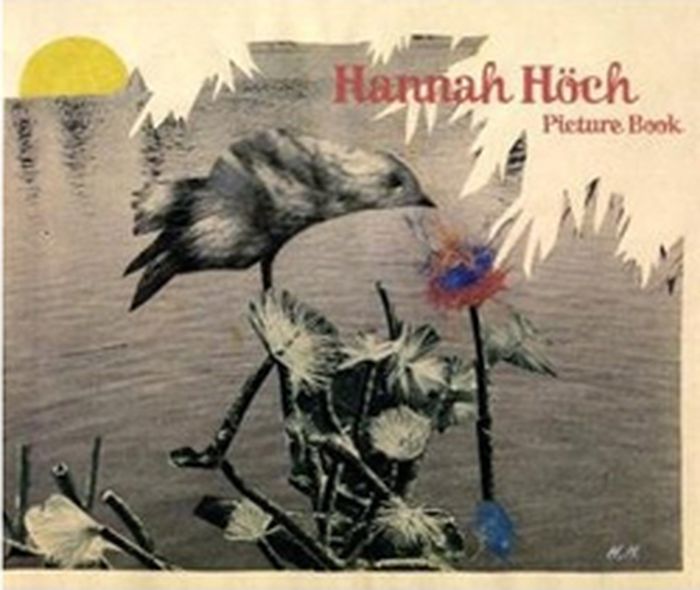
Hannah Höch’s Bilderbuch [Picture Book] from 1945 is now finally available in English. The Picture Book presents the fantastic adventures of Runfast, Dumblet, Snifty and Meyer 1, mythical creatures which seem like a dream in a zoological garden, surrounded by fairy tale flowers and plants. It was designed through the Dadaistic principle of photomontage which Höch developed, together with Raoul Hausmann, in the early years of the 20th century. Although Höch always spoke of her 'picture book', the texts are an essential part of the work. For each of the collages, the artist thought up brief, delicate rhymes that sketch out miniature stories and are reminiscent of the verses of Joachim Ringelnatz or Christian Morgenstern. The book also contains the original German verses.
Picture Book
Actions:
Prix:
$49.95
(disponible sur commande)
Résumé:
Hannah Höch’s Bilderbuch [Picture Book] from 1945 is now finally available in English. The Picture Book presents the fantastic adventures of Runfast, Dumblet, Snifty and Meyer 1, mythical creatures which seem like a dream in a zoological garden, surrounded by fairy tale flowers and plants. It was designed through the Dadaistic principle of photomontage which Höch developed, together with Raoul Hausmann, in the early years of the 20th century. Although Höch always spoke of her 'picture book', the texts are an essential part of the work. For each of the collages, the artist thought up brief, delicate rhymes that sketch out miniature stories and are reminiscent of the verses of Joachim Ringelnatz or Christian Morgenstern. The book also contains the original German verses.
Classification:
livres
livres
Publication:
décembre 2010
décembre 2010
Sujet:
Littérature jeunesse
Littérature jeunesse


