


1222 Résultats
Classification:
livres
livres
Titre:
Vacant Spaces NY
Vacant Spaces NY
Actions:
Prix:
$80.00
(disponible sur commande)
Résumé:
This project began by walking around our neighborhood noticing empty storefronts. Once we saw them, they were everywhere. They followed us, appearing quietly throughout New York City. Many with no signage, no “for rent,” no “coming soon.” Usually empty, sometimes dusty, sometimes with brown paper covering the glass. Now, vacancy has only increased. In the densest city in(...)
$80.00
(disponible sur commande)
Résumé:
This project began by walking around our neighborhood noticing empty storefronts. Once we saw them, they were everywhere. They followed us, appearing quietly throughout New York City. Many with no signage, no “for rent,” no “coming soon.” Usually empty, sometimes dusty, sometimes with brown paper covering the glass. Now, vacancy has only increased. In the densest city in(...)
Sujet:
Architecture, monographies
Architecture, monographies
Publication:
octobre 2021
octobre 2021
Titre:
Vacant Spaces NY
Actions:
Prix:
$80.00
(disponible sur commande)
Résumé:
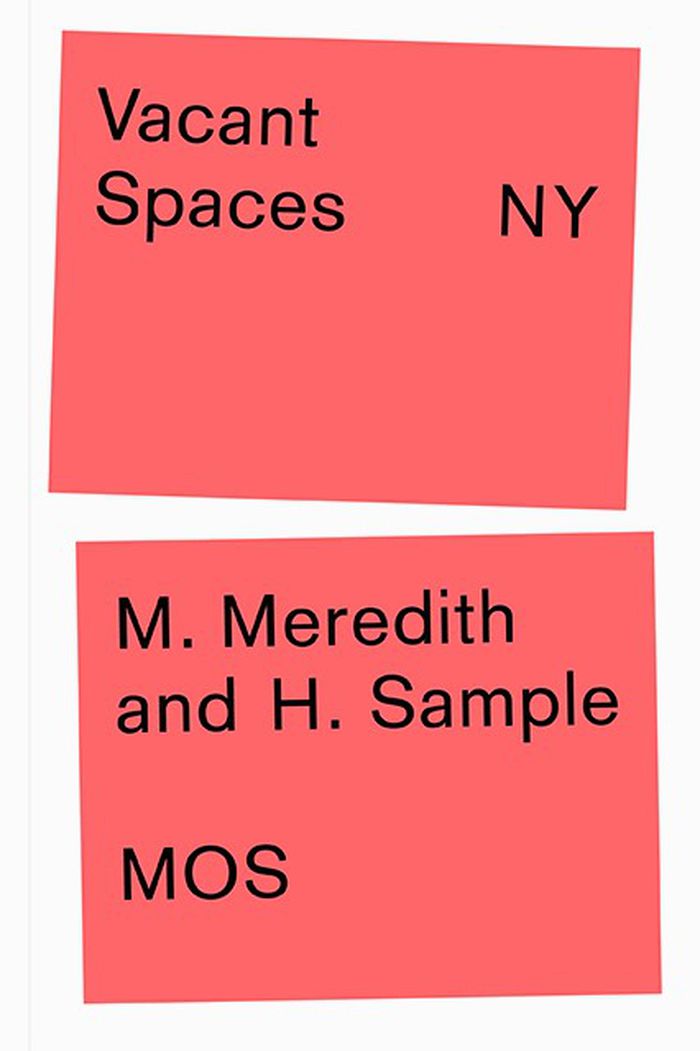
This project began by walking around our neighborhood noticing empty storefronts. Once we saw them, they were everywhere. They followed us, appearing quietly throughout New York City. Many with no signage, no “for rent,” no “coming soon.” Usually empty, sometimes dusty, sometimes with brown paper covering the glass. Now, vacancy has only increased. In the densest city in the United States. During a housing crisis. Throughout a pandemic. The quantity of vacant spaces is anyone’s best guess. It’s only partially documented. They hide in plain sight. This volume is organized from large to small, general to specific. It begins by looking at vacancy within the United States and continues down to each Manhattan neighborhood, where we zoom into specific vacant spaces, where we have provided as case studies that imagine some possibilities for transforming current vacant spaces into housing or social services. There is also a section on Covid 19, which infiltrated New York during our research. As a whole, this document is not meant to provide specific solutions. The data is incomplete. Case studies are limited. We are not policy experts or data analysts or urban planners. Instead, it is simply meant to show something we have taken for granted, vacant spaces, taking part in a collective process of imagining a better city.
Vacant Spaces NY
Actions:
Prix:
$80.00
(disponible sur commande)
Résumé:
This project began by walking around our neighborhood noticing empty storefronts. Once we saw them, they were everywhere. They followed us, appearing quietly throughout New York City. Many with no signage, no “for rent,” no “coming soon.” Usually empty, sometimes dusty, sometimes with brown paper covering the glass. Now, vacancy has only increased. In the densest city in the United States. During a housing crisis. Throughout a pandemic. The quantity of vacant spaces is anyone’s best guess. It’s only partially documented. They hide in plain sight. This volume is organized from large to small, general to specific. It begins by looking at vacancy within the United States and continues down to each Manhattan neighborhood, where we zoom into specific vacant spaces, where we have provided as case studies that imagine some possibilities for transforming current vacant spaces into housing or social services. There is also a section on Covid 19, which infiltrated New York during our research. As a whole, this document is not meant to provide specific solutions. The data is incomplete. Case studies are limited. We are not policy experts or data analysts or urban planners. Instead, it is simply meant to show something we have taken for granted, vacant spaces, taking part in a collective process of imagining a better city.
Classification:
livres
livres
Publication:
octobre 2021
octobre 2021
Sujet:
Architecture, monographies
Architecture, monographies
Classification:
livres
livres
Actions:
Prix:
$125.00
(disponible sur commande)
Résumé:
Jean Prouvé's Ferembal House was built in Nancy, France, in 1948, as the office for a can factory. Composed of five axial frames clad with wooden panels, set on a tall masonry base and occupying less than 600 square feet in a single raised story, this prefabricated structure was a classic example of Prouvé's advocacy of mobile architecture. Thirty years later, however,(...)
$125.00
(disponible sur commande)
Résumé:
Jean Prouvé's Ferembal House was built in Nancy, France, in 1948, as the office for a can factory. Composed of five axial frames clad with wooden panels, set on a tall masonry base and occupying less than 600 square feet in a single raised story, this prefabricated structure was a classic example of Prouvé's advocacy of mobile architecture. Thirty years later, however,(...)
Sujet:
Architecture, monographies
Architecture, monographies
Publication:
juillet 2011
juillet 2011
Titre:
Prouvé / Nouvel : Ferembal house
Actions:
Prix:
$125.00
(disponible sur commande)
Résumé:
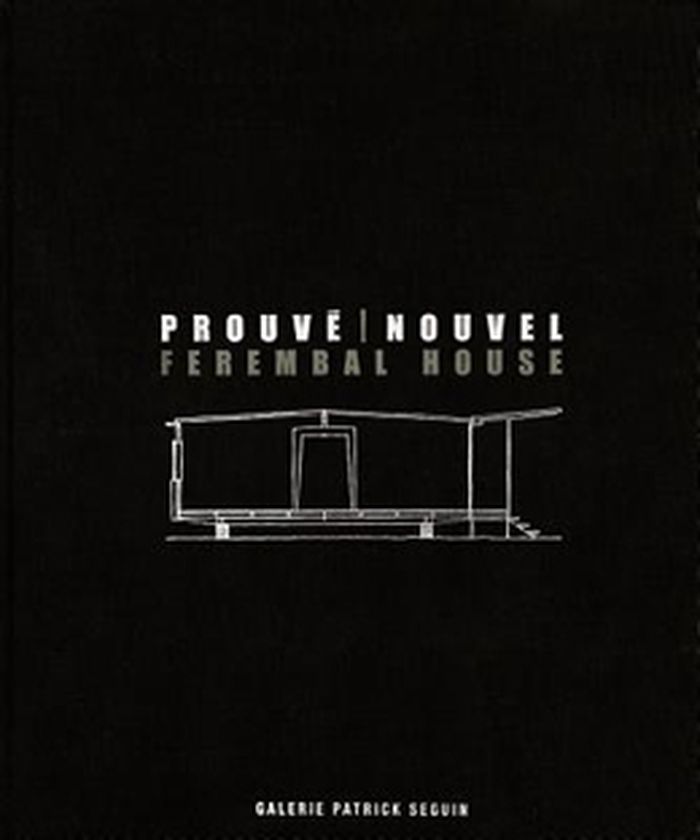
Jean Prouvé's Ferembal House was built in Nancy, France, in 1948, as the office for a can factory. Composed of five axial frames clad with wooden panels, set on a tall masonry base and occupying less than 600 square feet in a single raised story, this prefabricated structure was a classic example of Prouvé's advocacy of mobile architecture. Thirty years later, however, the company went out of business and the factory was demolished. Fortunately a Nancy resident had the wherewithal to dismantle and preserve Prouvé's innovative building, putting it into storage. In 1991, the well-known Parisian design gallerist Patrick Seguin traveled to Nancy to locate the Ferembal House. Seguin spent the next ten years raising the funds to renovate it, working in tandem with Prouvé experts, and in 2007 invited his longstanding friend, the architect Jean Nouvel, to undertake a creative adaptation of the House. Drawing on contemporary technical resources, Nouvel brilliantly extended and systematized its fundamental modularity with stackable Ductal blocks and a floor of removable slabs. The results were exhibited in the Tuileries Gardens in Paris, in 2010. This comprehensive account of Prouvé's posthumous collaboration with Nouvel recounts the tale of the Ferembal House with archival photographs and plans of the original structure and a detailed account of Nouvel's inspired interventions.
Prouvé / Nouvel : Ferembal house
Actions:
Prix:
$125.00
(disponible sur commande)
Résumé:
Jean Prouvé's Ferembal House was built in Nancy, France, in 1948, as the office for a can factory. Composed of five axial frames clad with wooden panels, set on a tall masonry base and occupying less than 600 square feet in a single raised story, this prefabricated structure was a classic example of Prouvé's advocacy of mobile architecture. Thirty years later, however, the company went out of business and the factory was demolished. Fortunately a Nancy resident had the wherewithal to dismantle and preserve Prouvé's innovative building, putting it into storage. In 1991, the well-known Parisian design gallerist Patrick Seguin traveled to Nancy to locate the Ferembal House. Seguin spent the next ten years raising the funds to renovate it, working in tandem with Prouvé experts, and in 2007 invited his longstanding friend, the architect Jean Nouvel, to undertake a creative adaptation of the House. Drawing on contemporary technical resources, Nouvel brilliantly extended and systematized its fundamental modularity with stackable Ductal blocks and a floor of removable slabs. The results were exhibited in the Tuileries Gardens in Paris, in 2010. This comprehensive account of Prouvé's posthumous collaboration with Nouvel recounts the tale of the Ferembal House with archival photographs and plans of the original structure and a detailed account of Nouvel's inspired interventions.
Classification:
livres
livres
Publication:
juillet 2011
juillet 2011
Sujet:
Architecture, monographies
Architecture, monographies
Classification:
livres
livres
Prix:
$47.50
(disponible sur commande)
Résumé:
In times where global matters such as the climate, currencies and places of residence become increasingly volatile, the urban public space we live in is an area where power, identity and belonging are negotiated. Cities have always been melting pots of history, society, art and politics, which is why the way a city is shaped tells us a lot about the people who live in it.(...)
$47.50
(disponible sur commande)
Résumé:
In times where global matters such as the climate, currencies and places of residence become increasingly volatile, the urban public space we live in is an area where power, identity and belonging are negotiated. Cities have always been melting pots of history, society, art and politics, which is why the way a city is shaped tells us a lot about the people who live in it.(...)
Titre:
Ethics of the urban: the city and the spaces of the political
Actions:
Prix:
$47.50
(disponible sur commande)
Résumé:
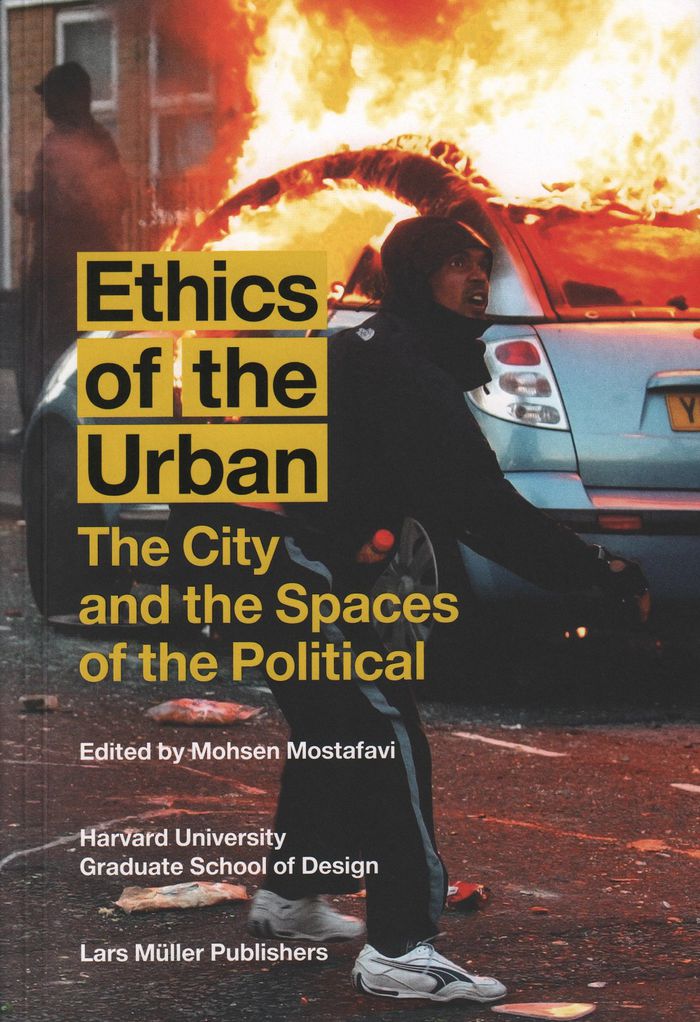
In times where global matters such as the climate, currencies and places of residence become increasingly volatile, the urban public space we live in is an area where power, identity and belonging are negotiated. Cities have always been melting pots of history, society, art and politics, which is why the way a city is shaped tells us a lot about the people who live in it. With contributors from a variety of fields, Ethics of the Urban discusses these urban spaces of the political. "How do we move about the city?", "How does memory of the past inspire the future of cities?" and "What makes a city a home?" are only some of the many questions that Ethics of the Urban addresses. The publication gathers experts from history, sociology, art, political theory, planning, law and design to emphasize the complexity of the meaning that urban space has today. Urban spaces are on one hand political spaces, since buildings, streets and people moving around all mirror political decisions in one way or another. On the other hand, the urban space is also a designed space, conceptualized, planned and sometimes gentrified. Complimented by stunning photography, Ethics of the Urban is a vibrant intellectual journey straight into the bone marrow of every contemporary city around the globe.
Ethics of the urban: the city and the spaces of the political
Actions:
Prix:
$47.50
(disponible sur commande)
Résumé:
In times where global matters such as the climate, currencies and places of residence become increasingly volatile, the urban public space we live in is an area where power, identity and belonging are negotiated. Cities have always been melting pots of history, society, art and politics, which is why the way a city is shaped tells us a lot about the people who live in it. With contributors from a variety of fields, Ethics of the Urban discusses these urban spaces of the political. "How do we move about the city?", "How does memory of the past inspire the future of cities?" and "What makes a city a home?" are only some of the many questions that Ethics of the Urban addresses. The publication gathers experts from history, sociology, art, political theory, planning, law and design to emphasize the complexity of the meaning that urban space has today. Urban spaces are on one hand political spaces, since buildings, streets and people moving around all mirror political decisions in one way or another. On the other hand, the urban space is also a designed space, conceptualized, planned and sometimes gentrified. Complimented by stunning photography, Ethics of the Urban is a vibrant intellectual journey straight into the bone marrow of every contemporary city around the globe.
Classification:
livres
livres
Publication:
mars 2017
mars 2017
Sujet:
Théorie de l’urbanisme
Théorie de l’urbanisme
Classification:
livres
livres
Actions:
Prix:
$55.00
(disponible sur commande)
Résumé:
In this collection of idiosyncratic lessons, architect and teacher Pier Paolo Tamburelli engages with the very foundations of architecture, proposing a series of new and open-ended perspectives on how we build the world. Developed for the ''Grundkurs'', or ''basic course'', at Vienna Technical University, Tamburelli’s lessons are presented through the annotated sketches(...)
$55.00
(disponible sur commande)
Résumé:
In this collection of idiosyncratic lessons, architect and teacher Pier Paolo Tamburelli engages with the very foundations of architecture, proposing a series of new and open-ended perspectives on how we build the world. Developed for the ''Grundkurs'', or ''basic course'', at Vienna Technical University, Tamburelli’s lessons are presented through the annotated sketches(...)
Titre:
Grundkurs: What is architecture about?
Actions:
Prix:
$55.00
(disponible sur commande)
Résumé:
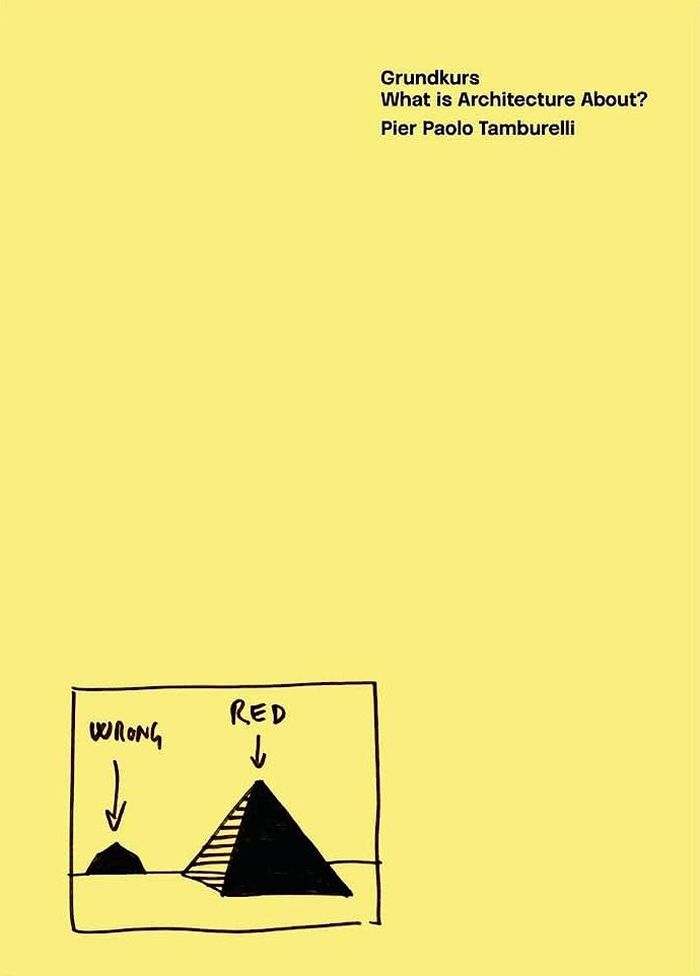
In this collection of idiosyncratic lessons, architect and teacher Pier Paolo Tamburelli engages with the very foundations of architecture, proposing a series of new and open-ended perspectives on how we build the world. Developed for the ''Grundkurs'', or ''basic course'', at Vienna Technical University, Tamburelli’s lessons are presented through the annotated sketches that form the basis of his lectures – variously rough and precise, sarcastic and sincere, and always uniquely expressive. This volume is a rich visual sourcebook of architectural ideas that form an accessible and discursive introduction to the discipline – one which pauses on the road to grand theories to learn from the intuitive processes of notetaking, drawing, and association. Tamburelli’s lessons are based around a series of dialectic couples, including Roof/Wall, Shelter/Memory, and Language/Action. The pairs are experimental and often provocative, offering a framework to be used to climb in the direction of architecture. Tamburelli trusts in the capacity of images to suspend the restraints of more rigorous theoretical approaches, embraces the flexible wisdom of the note, and relishes the intrigue of the cryptic messages we leave for ourselves. Reproduced here in their entirety, these eight lessons offer countless routes towards, through, and around architecture, providing newcomers and experts alike with an intimate and refreshing encounter with a millennia-old discipline.
Grundkurs: What is architecture about?
Actions:
Prix:
$55.00
(disponible sur commande)
Résumé:
In this collection of idiosyncratic lessons, architect and teacher Pier Paolo Tamburelli engages with the very foundations of architecture, proposing a series of new and open-ended perspectives on how we build the world. Developed for the ''Grundkurs'', or ''basic course'', at Vienna Technical University, Tamburelli’s lessons are presented through the annotated sketches that form the basis of his lectures – variously rough and precise, sarcastic and sincere, and always uniquely expressive. This volume is a rich visual sourcebook of architectural ideas that form an accessible and discursive introduction to the discipline – one which pauses on the road to grand theories to learn from the intuitive processes of notetaking, drawing, and association. Tamburelli’s lessons are based around a series of dialectic couples, including Roof/Wall, Shelter/Memory, and Language/Action. The pairs are experimental and often provocative, offering a framework to be used to climb in the direction of architecture. Tamburelli trusts in the capacity of images to suspend the restraints of more rigorous theoretical approaches, embraces the flexible wisdom of the note, and relishes the intrigue of the cryptic messages we leave for ourselves. Reproduced here in their entirety, these eight lessons offer countless routes towards, through, and around architecture, providing newcomers and experts alike with an intimate and refreshing encounter with a millennia-old discipline.
Classification:
livres
livres
Publication:
mars 2023
mars 2023
Sujet:
Théorie de l’architecture
Théorie de l’architecture
Classification:
livres
livres
Actions:
Prix:
$79.00
(disponible sur commande)
Résumé:
The art of producing color in movies is a fascinating process with a long history. Many people don’t realize that, as early as the 1890s, much of silent cinema was in color. They also may not know that women were the main workforce behind the techniques that first produced these effects, a tradition that continued as the practice evolved. Breakthroughs in color technology(...)
$79.00
(disponible sur commande)
Résumé:
The art of producing color in movies is a fascinating process with a long history. Many people don’t realize that, as early as the 1890s, much of silent cinema was in color. They also may not know that women were the main workforce behind the techniques that first produced these effects, a tradition that continued as the practice evolved. Breakthroughs in color technology(...)
Publication:
octobre 2024
octobre 2024
Titre:
Color in motion: Chromatic explorations of cinema
Actions:
Prix:
$79.00
(disponible sur commande)
Résumé:
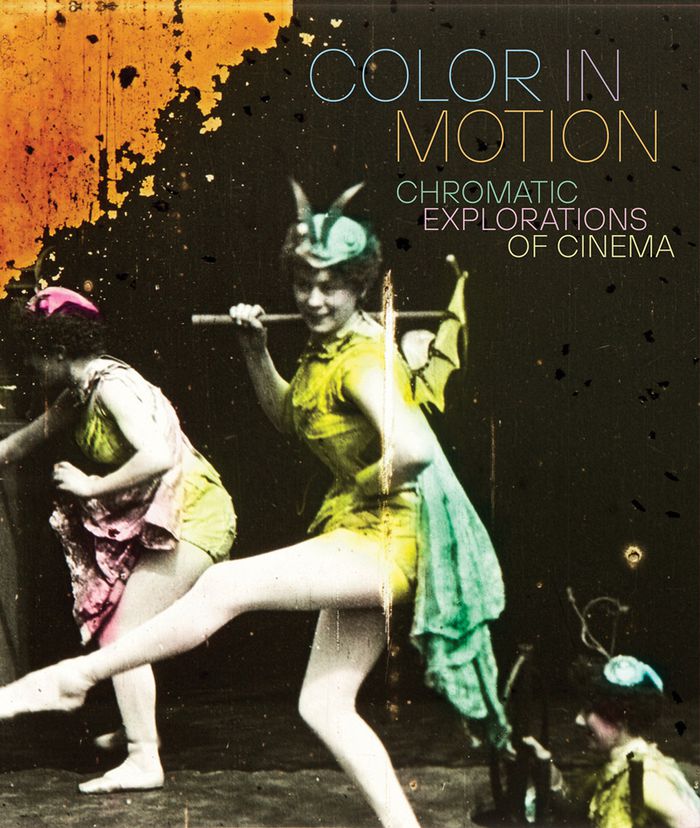
The art of producing color in movies is a fascinating process with a long history. Many people don’t realize that, as early as the 1890s, much of silent cinema was in color. They also may not know that women were the main workforce behind the techniques that first produced these effects, a tradition that continued as the practice evolved. Breakthroughs in color technology have created ongoing opportunities for filmmakers to experiment with new forms of narrative and emotional storytelling. Spectacular, psychological and sensory, color has become an integral part of the cinematic experience. From the earliest hand-painted films to Technicolor and today’s digital cinema, Color in Motion takes readers on a journey through the evolution and significance of color in film. Presenting insightful analysis, engaging case studies and inspiring conversations with scholars and experts in the field, with topics ranging from animation to the intersections of color and race in cinema, it traces the historical development of color technologies and their impact onscreen. Incorporating vivid images of color films throughout history—Serpentine Dance, The Cabinet of Dr. Caligari, Fantasia, The Red Shoes, Vertigo, West Side Story, 2001: A Space Odyssey, Moonlight and more, as well as new multispectral scans of rare silent-era film prints—this essential volume celebrates color’s enduring influence on the medium of film.
Color in motion: Chromatic explorations of cinema
Actions:
Prix:
$79.00
(disponible sur commande)
Résumé:
The art of producing color in movies is a fascinating process with a long history. Many people don’t realize that, as early as the 1890s, much of silent cinema was in color. They also may not know that women were the main workforce behind the techniques that first produced these effects, a tradition that continued as the practice evolved. Breakthroughs in color technology have created ongoing opportunities for filmmakers to experiment with new forms of narrative and emotional storytelling. Spectacular, psychological and sensory, color has become an integral part of the cinematic experience. From the earliest hand-painted films to Technicolor and today’s digital cinema, Color in Motion takes readers on a journey through the evolution and significance of color in film. Presenting insightful analysis, engaging case studies and inspiring conversations with scholars and experts in the field, with topics ranging from animation to the intersections of color and race in cinema, it traces the historical development of color technologies and their impact onscreen. Incorporating vivid images of color films throughout history—Serpentine Dance, The Cabinet of Dr. Caligari, Fantasia, The Red Shoes, Vertigo, West Side Story, 2001: A Space Odyssey, Moonlight and more, as well as new multispectral scans of rare silent-era film prints—this essential volume celebrates color’s enduring influence on the medium of film.
Classification:
livres
livres
Publication:
octobre 2024
octobre 2024
Classification:
livres
livres
Prix:
$64.99
(disponible sur commande)
Résumé:
This publication combines traditional natural materials and modern construction methods. From adobe to straw bales, traditional building materials are being adapted to meet code-required standards for health and safety in contemporary buildings around the world. Not only are they cost effective and environmentally friendly, but, when used correctly, these natural(...)
$64.99
(disponible sur commande)
Résumé:
This publication combines traditional natural materials and modern construction methods. From adobe to straw bales, traditional building materials are being adapted to meet code-required standards for health and safety in contemporary buildings around the world. Not only are they cost effective and environmentally friendly, but, when used correctly, these natural(...)
Sujet:
Architecture écologique
Architecture écologique
Publication:
avril 2005, Chichester
avril 2005, Chichester
Titre:
Alternative construction : contemporary natural building methods
Actions:
Prix:
$64.99
(disponible sur commande)
Résumé:
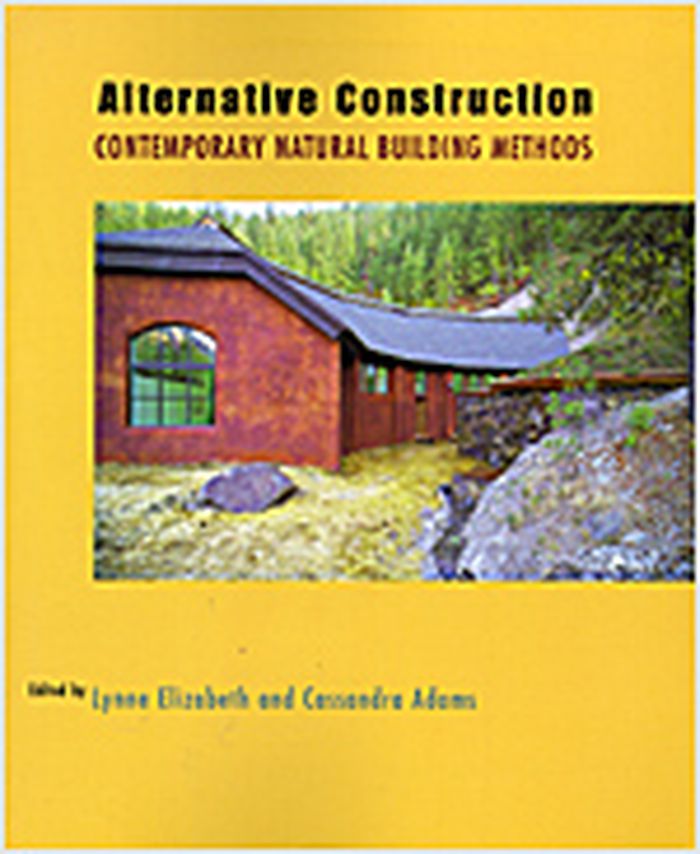
This publication combines traditional natural materials and modern construction methods. From adobe to straw bales, traditional building materials are being adapted to meet code-required standards for health and safety in contemporary buildings around the world. Not only are they cost effective and environmentally friendly, but, when used correctly, these natural alternatives match the strength and durability of many mainstream construction materials. This book examines a broad range of traditional and modern natural construction methods, including straw-bale, light-clay, cob, adobe, rammed earth and pisé, earthbag, earth-sheltered, bamboo, and hybrid systems. It also covers key ecological design principles, as well as current engineering and building code requirements. Experts on each building system have contributed core chapters that explore the history, development, climatic appropriateness, environmental benefits, performance characteristics, construction techniques, and structural design principles for each method. More than 200 visuals depict both construction processes and completed structures. An extensive resource guide shows where to go for further information, training, and research. In an increasingly resource-conscious era, alternative construction is truly an idea whose time has come. Whether you're an architect, designer, student, or homeowner, this book will help you to combine indigenous building materials with modern construction systems and design standards to create low-impact, high-quality buildings that meet the highest levels of comfort, health, and safety.
Alternative construction : contemporary natural building methods
Actions:
Prix:
$64.99
(disponible sur commande)
Résumé:
This publication combines traditional natural materials and modern construction methods. From adobe to straw bales, traditional building materials are being adapted to meet code-required standards for health and safety in contemporary buildings around the world. Not only are they cost effective and environmentally friendly, but, when used correctly, these natural alternatives match the strength and durability of many mainstream construction materials. This book examines a broad range of traditional and modern natural construction methods, including straw-bale, light-clay, cob, adobe, rammed earth and pisé, earthbag, earth-sheltered, bamboo, and hybrid systems. It also covers key ecological design principles, as well as current engineering and building code requirements. Experts on each building system have contributed core chapters that explore the history, development, climatic appropriateness, environmental benefits, performance characteristics, construction techniques, and structural design principles for each method. More than 200 visuals depict both construction processes and completed structures. An extensive resource guide shows where to go for further information, training, and research. In an increasingly resource-conscious era, alternative construction is truly an idea whose time has come. Whether you're an architect, designer, student, or homeowner, this book will help you to combine indigenous building materials with modern construction systems and design standards to create low-impact, high-quality buildings that meet the highest levels of comfort, health, and safety.
Classification:
livres
livres
Publication:
avril 2005, Chichester
avril 2005, Chichester
Sujet:
Architecture écologique
Architecture écologique
Classification:
livres
livres
Actions:
Prix:
$65.00
(disponible sur commande)
Résumé:
The volume, realized in co-operation with the Vitra Design Museum is both the catalogue of an internationally travelling exhibition and one of the first monographical studies entirely devoted to the subject of children’s games and furniture. Furniture and games for children, irrespective of culture or period, can be perceived as vehicles for communicating society’s(...)
$65.00
(disponible sur commande)
Résumé:
The volume, realized in co-operation with the Vitra Design Museum is both the catalogue of an internationally travelling exhibition and one of the first monographical studies entirely devoted to the subject of children’s games and furniture. Furniture and games for children, irrespective of culture or period, can be perceived as vehicles for communicating society’s(...)
Sujet:
Zines
Zines
Publication:
décembre 1998, Milano
décembre 1998, Milano
Titre:
Kid size : the material world of childhood
Actions:
Prix:
$65.00
(disponible sur commande)
Résumé:
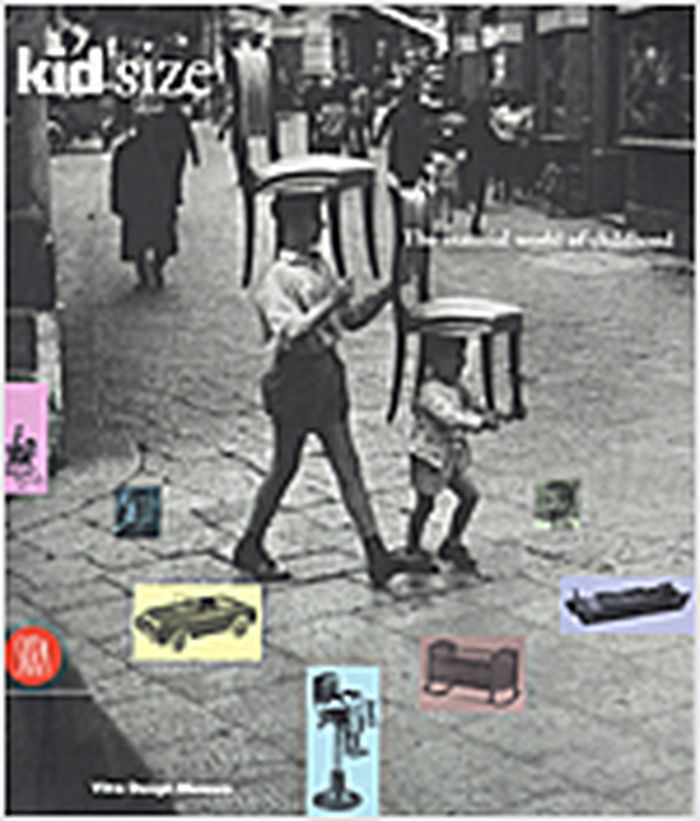
The volume, realized in co-operation with the Vitra Design Museum is both the catalogue of an internationally travelling exhibition and one of the first monographical studies entirely devoted to the subject of children’s games and furniture. Furniture and games for children, irrespective of culture or period, can be perceived as vehicles for communicating society’s attitudes towards learning, the child’s physical and phychological development, safety, order in the family, territory, the place of play and patterns of social behaviour; although the child, by contrast, regards them as largely interchangeable objects in the serious work of play, the organization of modern society tends to give them always more importance, changing them into real products of design. The volume aims to explore the world of childhood throughout the different types of furniture artefacts and games from various periods and cultures in the world which illuminate the changing relationship between children and adults, the growing attention to child-centred provision and educational values and the fundamental role of playing in the history of childhood of different countries. The catalogue essays are written by chilhood specialists, social historians, ethnologists, educationalists, industrials designers (specialist in playground and play equipment) and experts on children living in the various cultures of the world: Lucy Bullivant, Mike Scaife, Linda Pollock, Eileen Adams, Günter Beltzig, Ingeborg Weber-Kellermann, Gerhard Kubik, Tina Wodiung and Sally Kevill-Davies.
Kid size : the material world of childhood
Actions:
Prix:
$65.00
(disponible sur commande)
Résumé:
The volume, realized in co-operation with the Vitra Design Museum is both the catalogue of an internationally travelling exhibition and one of the first monographical studies entirely devoted to the subject of children’s games and furniture. Furniture and games for children, irrespective of culture or period, can be perceived as vehicles for communicating society’s attitudes towards learning, the child’s physical and phychological development, safety, order in the family, territory, the place of play and patterns of social behaviour; although the child, by contrast, regards them as largely interchangeable objects in the serious work of play, the organization of modern society tends to give them always more importance, changing them into real products of design. The volume aims to explore the world of childhood throughout the different types of furniture artefacts and games from various periods and cultures in the world which illuminate the changing relationship between children and adults, the growing attention to child-centred provision and educational values and the fundamental role of playing in the history of childhood of different countries. The catalogue essays are written by chilhood specialists, social historians, ethnologists, educationalists, industrials designers (specialist in playground and play equipment) and experts on children living in the various cultures of the world: Lucy Bullivant, Mike Scaife, Linda Pollock, Eileen Adams, Günter Beltzig, Ingeborg Weber-Kellermann, Gerhard Kubik, Tina Wodiung and Sally Kevill-Davies.
Classification:
livres
livres
Publication:
décembre 1998, Milano
décembre 1998, Milano
Sujet:
Zines
Zines
Classification:
livres
livres
Titre:
La condition postmoderne
La condition postmoderne
Actions:
Prix:
$19.95
(disponible sur commande)
Résumé:
Contribution à la discussion internationale sur la question de la légitimité : qu'est-ce qui permet aujourd'hui de dire qu'une loi est juste, un énoncé vrai ? Il y a eu les grands récits, l'émancipation du citoyen, la réalisation de l'Esprit, la société sans classes. L'âge moderne y recourait pour légitimer ou critiquer ses savoirs et ses actes. L'homme postmoderne n'y(...)
$19.95
(disponible sur commande)
Résumé:
Contribution à la discussion internationale sur la question de la légitimité : qu'est-ce qui permet aujourd'hui de dire qu'une loi est juste, un énoncé vrai ? Il y a eu les grands récits, l'émancipation du citoyen, la réalisation de l'Esprit, la société sans classes. L'âge moderne y recourait pour légitimer ou critiquer ses savoirs et ses actes. L'homme postmoderne n'y(...)
Titre:
La condition postmoderne
Actions:
Prix:
$19.95
(disponible sur commande)
Résumé:
Contribution à la discussion internationale sur la question de la légitimité : qu'est-ce qui permet aujourd'hui de dire qu'une loi est juste, un énoncé vrai ? Il y a eu les grands récits, l'émancipation du citoyen, la réalisation de l'Esprit, la société sans classes. L'âge moderne y recourait pour légitimer ou critiquer ses savoirs et ses actes. L'homme postmoderne n'y croit plus. Les décideurs lui offrent pour perspective l'accroissement de la puissance et la pacification par la transparence communicationnelle. Mais il sait que le savoir quand à devient marchandise informationnelle est une source de profits et un moyen de décider et de contrôler. Où réside la légitimité, après les récits ? Dans la meilleure opérativité du système ? C'est un critère technologique, il ne permet pas de juger du vrai et du juste. Dans le consensus ? Mais l'invention se fait dans le dissentiment. Pourquoi pas dans ce dernier ? La société qui vient relève moins d'une anthropologie newtonienne (comme le structuralisme ou la théorie des systèmes) et plus d'une pragmatique des particules langagières. Le savoir postmoderne n'est pas seulement l'instrument des pouvoirs : il raffine notre sensibilité aux différences et renforce notre capacité de supporter l'incommensurable. Lui-même ne trouve pas sa raison dans l'homologie des experts, mais dans la paralogie des inventeurs. Et maintenant : une légitimation du lien social, une société juste, est-elle praticable selon un paradoxe analogue ? En quoi consiste celui-ci ?
La condition postmoderne
Actions:
Prix:
$19.95
(disponible sur commande)
Résumé:
Contribution à la discussion internationale sur la question de la légitimité : qu'est-ce qui permet aujourd'hui de dire qu'une loi est juste, un énoncé vrai ? Il y a eu les grands récits, l'émancipation du citoyen, la réalisation de l'Esprit, la société sans classes. L'âge moderne y recourait pour légitimer ou critiquer ses savoirs et ses actes. L'homme postmoderne n'y croit plus. Les décideurs lui offrent pour perspective l'accroissement de la puissance et la pacification par la transparence communicationnelle. Mais il sait que le savoir quand à devient marchandise informationnelle est une source de profits et un moyen de décider et de contrôler. Où réside la légitimité, après les récits ? Dans la meilleure opérativité du système ? C'est un critère technologique, il ne permet pas de juger du vrai et du juste. Dans le consensus ? Mais l'invention se fait dans le dissentiment. Pourquoi pas dans ce dernier ? La société qui vient relève moins d'une anthropologie newtonienne (comme le structuralisme ou la théorie des systèmes) et plus d'une pragmatique des particules langagières. Le savoir postmoderne n'est pas seulement l'instrument des pouvoirs : il raffine notre sensibilité aux différences et renforce notre capacité de supporter l'incommensurable. Lui-même ne trouve pas sa raison dans l'homologie des experts, mais dans la paralogie des inventeurs. Et maintenant : une légitimation du lien social, une société juste, est-elle praticable selon un paradoxe analogue ? En quoi consiste celui-ci ?
Classification:
livres
livres
Publication:
janvier 1900, Paris
janvier 1900, Paris
Sujet:
Théorie/ philosophie
Théorie/ philosophie
Classification:
périodiques
périodiques

Actions:
Prix:
$40.00
(disponible sur commande)
Résumé:
New Geographies 11: Extraterrestrial explores the historical and contemporary consequence of our planetary relationship with space. It interprets this duality through the conceptual lens of “extraterrestrial,” which engages an entangled zone of expanding practices in geography, landscape, and architecture, stretching Earth to space, and conversely, space to Earth. This(...)
$40.00
(disponible sur commande)
Résumé:
New Geographies 11: Extraterrestrial explores the historical and contemporary consequence of our planetary relationship with space. It interprets this duality through the conceptual lens of “extraterrestrial,” which engages an entangled zone of expanding practices in geography, landscape, and architecture, stretching Earth to space, and conversely, space to Earth. This(...)
Titre:
New Geographies 11: Extraterrestrial
Actions:
Prix:
$40.00
(disponible sur commande)
Résumé:
New Geographies 11: Extraterrestrial explores the historical and contemporary consequence of our planetary relationship with space. It interprets this duality through the conceptual lens of “extraterrestrial,” which engages an entangled zone of expanding practices in geography, landscape, and architecture, stretching Earth to space, and conversely, space to Earth. This issue questions the means through which space is forged as a condition extra to our own terra. Complicit within this imagination resides a deep political and economic logic that serves to territorialize outer space as an exception to, and extension of, Earth. These critical processes are revealed as not extra at all, but rather distinctly of terra. Through a series of written, photographic, and representational investigations, this edition of New Geographies builds on earlier studies of outer space from science, technology and society, as well as from the design disciplines, history, and critical geography. It reinforces the need for humanity’s changing relationship with outer space to be recorded, critiqued, and theorized from a breadth of academic traditions and projected within design discourse. This issue brings together experts contributing to the social, political, and cultural imaginary implicit in extraterrestrial. Three primary thematic territorial devices structure these explorations: a technologically constructed space between, a material culture constructed and discharged, and a space politically and economically reflective, all revealed through historical and contemporary society.
New Geographies 11: Extraterrestrial
Actions:
Prix:
$40.00
(disponible sur commande)
Résumé:
New Geographies 11: Extraterrestrial explores the historical and contemporary consequence of our planetary relationship with space. It interprets this duality through the conceptual lens of “extraterrestrial,” which engages an entangled zone of expanding practices in geography, landscape, and architecture, stretching Earth to space, and conversely, space to Earth. This issue questions the means through which space is forged as a condition extra to our own terra. Complicit within this imagination resides a deep political and economic logic that serves to territorialize outer space as an exception to, and extension of, Earth. These critical processes are revealed as not extra at all, but rather distinctly of terra. Through a series of written, photographic, and representational investigations, this edition of New Geographies builds on earlier studies of outer space from science, technology and society, as well as from the design disciplines, history, and critical geography. It reinforces the need for humanity’s changing relationship with outer space to be recorded, critiqued, and theorized from a breadth of academic traditions and projected within design discourse. This issue brings together experts contributing to the social, political, and cultural imaginary implicit in extraterrestrial. Three primary thematic territorial devices structure these explorations: a technologically constructed space between, a material culture constructed and discharged, and a space politically and economically reflective, all revealed through historical and contemporary society.
Classification:
périodiques
périodiques
Publication:
juin 2020
juin 2020
Sujet:
Revues
Revues
Classification:
livres
livres

Actions:
Prix:
$119.00
(disponible sur commande)
Résumé:
''The importance of a drawing is immense, because it’s the architect’s language,'' said the architect Louis Kahn to his masterclass in 1967. While most studies of Kahn focus on his built works or theory and use drawings mainly to illustrate these, this publication chooses to focus on Kahn's drawings as primary sources of insight into his architectural intelligence and(...)
$119.00
(disponible sur commande)
Résumé:
''The importance of a drawing is immense, because it’s the architect’s language,'' said the architect Louis Kahn to his masterclass in 1967. While most studies of Kahn focus on his built works or theory and use drawings mainly to illustrate these, this publication chooses to focus on Kahn's drawings as primary sources of insight into his architectural intelligence and(...)
Publication:
octobre 2020
octobre 2020
Titre:
Louis Kahn: The importance of a drawing
Actions:
Prix:
$119.00
(disponible sur commande)
Résumé:
''The importance of a drawing is immense, because it’s the architect’s language,'' said the architect Louis Kahn to his masterclass in 1967. While most studies of Kahn focus on his built works or theory and use drawings mainly to illustrate these, this publication chooses to focus on Kahn's drawings as primary sources of insight into his architectural intelligence and imagination. Lavishly illustrated with over 900 high-quality reproductions of work by Kahn and his associates, incisively presented by a group of acclaimed architectural experts, ''The importance of a drawing'' is a deep immersion into Kahn’s work and his design process. A testament to Kahn’s masterly craft, this volume also makes a provocative primer on architectural representation by posing timely questions on how architects use drawings to see, learn, conjecture and reveal. Destined to become a standard reference on Kahn, this book is an essential addition to the libraries of established designers as well as students of architecture. The result of years of extensive research, ''The importance of a drawing'' contains original contributions and historical texts from Michael Merrill, Michael Benedikt, Michael B. Cadwell, Louis I. Kahn, Nathaniel Kahn, Sue Ann Kahn, David Leatherbarrow, Michael J. Lewis, Robert McCarter, Marshall D. Meyers, Jane Murphy, Harriet Pattison, Gina Pollara, Colin Rowe, David Van Zanten, Richard Wesley and William Whitaker.
Louis Kahn: The importance of a drawing
Actions:
Prix:
$119.00
(disponible sur commande)
Résumé:
''The importance of a drawing is immense, because it’s the architect’s language,'' said the architect Louis Kahn to his masterclass in 1967. While most studies of Kahn focus on his built works or theory and use drawings mainly to illustrate these, this publication chooses to focus on Kahn's drawings as primary sources of insight into his architectural intelligence and imagination. Lavishly illustrated with over 900 high-quality reproductions of work by Kahn and his associates, incisively presented by a group of acclaimed architectural experts, ''The importance of a drawing'' is a deep immersion into Kahn’s work and his design process. A testament to Kahn’s masterly craft, this volume also makes a provocative primer on architectural representation by posing timely questions on how architects use drawings to see, learn, conjecture and reveal. Destined to become a standard reference on Kahn, this book is an essential addition to the libraries of established designers as well as students of architecture. The result of years of extensive research, ''The importance of a drawing'' contains original contributions and historical texts from Michael Merrill, Michael Benedikt, Michael B. Cadwell, Louis I. Kahn, Nathaniel Kahn, Sue Ann Kahn, David Leatherbarrow, Michael J. Lewis, Robert McCarter, Marshall D. Meyers, Jane Murphy, Harriet Pattison, Gina Pollara, Colin Rowe, David Van Zanten, Richard Wesley and William Whitaker.
Classification:
livres
livres
Publication:
octobre 2020
octobre 2020


