


135 Résultats
Classification:
livres
livres
Actions:
Exemplaires:
Description:
271 pages : color illustrations ; 28 cm.
Description:
271 pages : color illustrations ; 28 cm.
Auteur:
Sujet:
Publication:
New York : Princeton Architectural Press, 2014.
New York : Princeton Architectural Press, 2014.
Titre:
Permanent change : plastics in architecture and engineering / Michael Bell and Craig Buckley, editors.
Actions:
Exemplaires:
Description:
271 pages : color illustrations ; 28 cm.
Permanent change : plastics in architecture and engineering / Michael Bell and Craig Buckley, editors.
Actions:
Exemplaires:
Description:
271 pages : color illustrations ; 28 cm.
Classification:
livres
livres
Publication:
New York : Princeton Architectural Press, 2014.
New York : Princeton Architectural Press, 2014.
Auteur:
Sujet:
Classification:
livres
livres
Actions:
Exemplaires:
Description:
xix, 246 pages : illustrations ; 27 cm
Description:
xix, 246 pages : illustrations ; 27 cm
Auteur:
Sujet:
Publication:
Minneapolis : University of Minnesota Press, ©2006.
Minneapolis : University of Minnesota Press, ©2006.
Titre:
Bauhaus culture : from Weimar to the Cold War / Kathleen James-Chakraborty, editor.
Actions:
Exemplaires:
Description:
xix, 246 pages : illustrations ; 27 cm
Bauhaus culture : from Weimar to the Cold War / Kathleen James-Chakraborty, editor.
Actions:
Exemplaires:
Description:
xix, 246 pages : illustrations ; 27 cm
Classification:
livres
livres
Publication:
Minneapolis : University of Minnesota Press, ©2006.
Minneapolis : University of Minnesota Press, ©2006.
Auteur:
Sujet:
Classification:
livres
livres
Actions:
Exemplaires:
Description:
[24] pages, XXX, XXI [51] leaves of plates : illustrations, plans, portrait (1) ; 40 cm
Description:
[24] pages, XXX, XXI [51] leaves of plates : illustrations, plans, portrait (1) ; 40 cm
Auteur:
Sujet:
Publication:
In Lione : per Giovan di Tournes, M. D. LI. [1551]
In Lione : per Giovan di Tournes, M. D. LI. [1551]
Titre:
Extraordinario libro di architettura di Sebastiano Serlio ... : nel quale si dimostrano trenta porte di opera rustica mista con diuersi ordini : et venti di opera dilicata di diuerse specie con la scrittura dauanti, che narra il tutto.
Actions:
Exemplaires:
Description:
[24] pages, XXX, XXI [51] leaves of plates : illustrations, plans, portrait (1) ; 40 cm
Extraordinario libro di architettura di Sebastiano Serlio ... : nel quale si dimostrano trenta porte di opera rustica mista con diuersi ordini : et venti di opera dilicata di diuerse specie con la scrittura dauanti, che narra il tutto.
Actions:
Exemplaires:
Description:
[24] pages, XXX, XXI [51] leaves of plates : illustrations, plans, portrait (1) ; 40 cm
Classification:
livres
livres
Publication:
In Lione : per Giovan di Tournes, M. D. LI. [1551]
In Lione : per Giovan di Tournes, M. D. LI. [1551]
Auteur:
Sujet:
Classification:
livres
livres
Prix:
$43.00
(disponible sur commande)
Résumé:
The architecture of the Soviet Union in the 1920s and 1930s was integral to shaping 20th-century modernism. Russian architect Konstantin Melnikov (1890–1974) was a key figure of this movement, with many of his realized projects, such as his cylindrical residential house completed in 1929, becoming modernist icons. Because he refused to conform to architectural standards(...)
$43.00
(disponible sur commande)
Résumé:
The architecture of the Soviet Union in the 1920s and 1930s was integral to shaping 20th-century modernism. Russian architect Konstantin Melnikov (1890–1974) was a key figure of this movement, with many of his realized projects, such as his cylindrical residential house completed in 1929, becoming modernist icons. Because he refused to conform to architectural standards(...)
Titre:
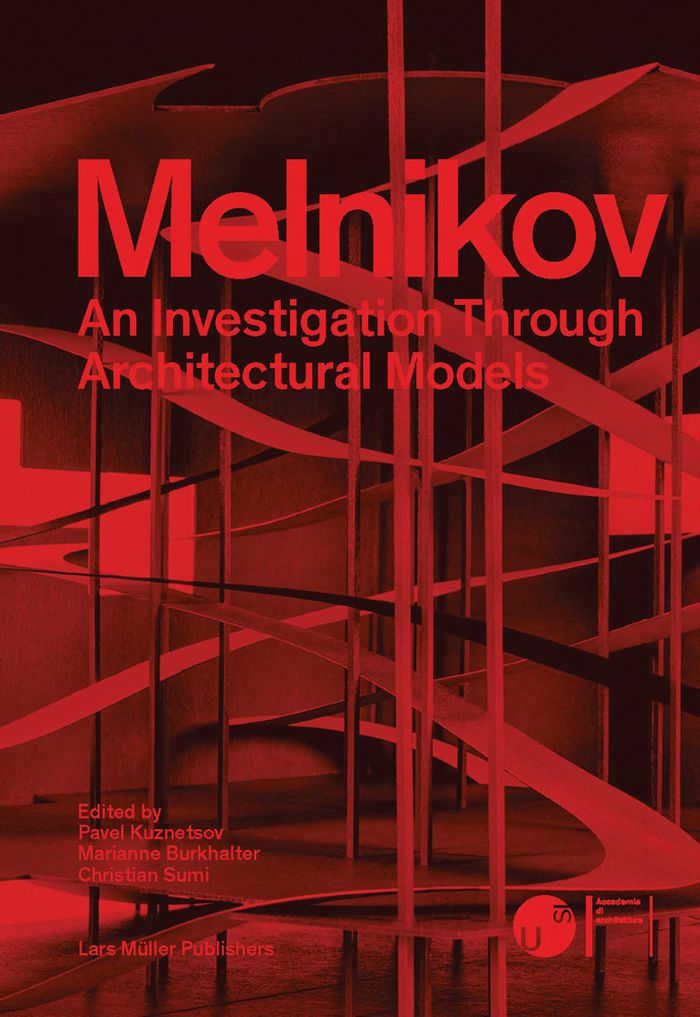
Konstantin Melnikov: The master of the architectural form
Actions:
Prix:
$43.00
(disponible sur commande)
Résumé:
The architecture of the Soviet Union in the 1920s and 1930s was integral to shaping 20th-century modernism. Russian architect Konstantin Melnikov (1890–1974) was a key figure of this movement, with many of his realized projects, such as his cylindrical residential house completed in 1929, becoming modernist icons. Because he refused to conform to architectural standards after Stalin's cultural turn in 1932, his works were largely forgotten for several decades. He was rehabilitated and received public recognition for his imaginative constructions only a few years prior to his death in 1974. This publication presents models of Melnikov's built and unbuilt works, created under the direction of scholar Pavel Kuznetsov by the students of the Accademia di Architettura in Mendrisio. The models are accompanied by photographs, sketches and project descriptions expanding on Melnikov's work. An essay by Kuznetsov situates the architect in his historical context, shedding light on an underappreciated figure of architectural history.
Konstantin Melnikov: The master of the architectural form
Actions:
Prix:
$43.00
(disponible sur commande)
Résumé:
The architecture of the Soviet Union in the 1920s and 1930s was integral to shaping 20th-century modernism. Russian architect Konstantin Melnikov (1890–1974) was a key figure of this movement, with many of his realized projects, such as his cylindrical residential house completed in 1929, becoming modernist icons. Because he refused to conform to architectural standards after Stalin's cultural turn in 1932, his works were largely forgotten for several decades. He was rehabilitated and received public recognition for his imaginative constructions only a few years prior to his death in 1974. This publication presents models of Melnikov's built and unbuilt works, created under the direction of scholar Pavel Kuznetsov by the students of the Accademia di Architettura in Mendrisio. The models are accompanied by photographs, sketches and project descriptions expanding on Melnikov's work. An essay by Kuznetsov situates the architect in his historical context, shedding light on an underappreciated figure of architectural history.
Classification:
livres
livres
Publication:
janvier 2026
janvier 2026
Sujet:
Architecture, monographies
Architecture, monographies
Classification:
livres
livres
Prix:
$63.95
(disponible sur commande)
Résumé:
An intimate glimpse into the professional and romantic relationship between Harriet Pattison and the renowned architect Louis Kahn. On a winter day in 1953, a mysterious man in a sheepskin coat stood out to Harriet Pattison, then a theater student at Yale. She would later learn he was the architect Louis Kahn (1901–1974). This chance encounter served as preamble to a(...)
$63.95
(disponible sur commande)
Résumé:
An intimate glimpse into the professional and romantic relationship between Harriet Pattison and the renowned architect Louis Kahn. On a winter day in 1953, a mysterious man in a sheepskin coat stood out to Harriet Pattison, then a theater student at Yale. She would later learn he was the architect Louis Kahn (1901–1974). This chance encounter served as preamble to a(...)
Titre:
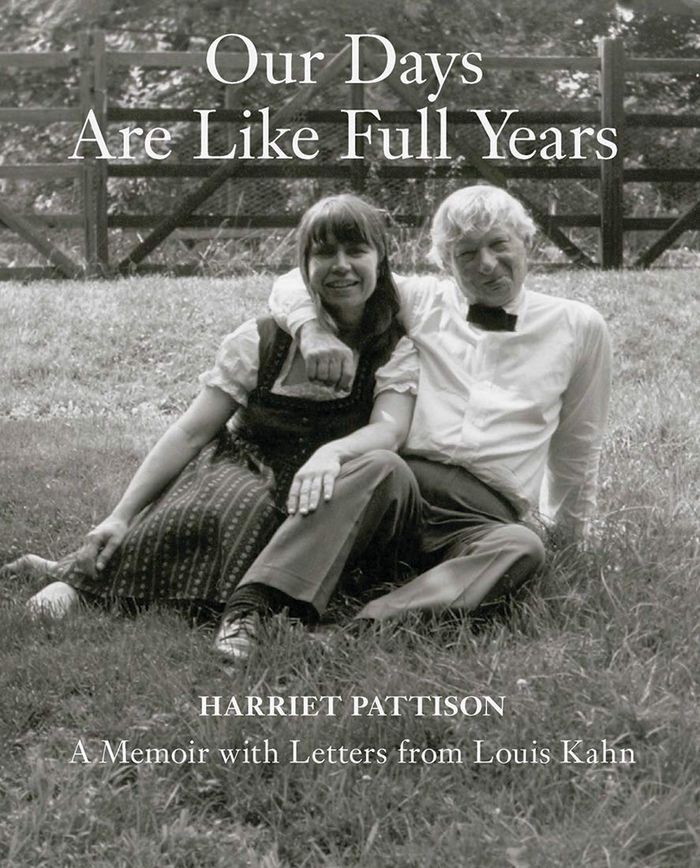
Our days are like full years: letters from Louis Kahn
Actions:
Prix:
$63.95
(disponible sur commande)
Résumé:
An intimate glimpse into the professional and romantic relationship between Harriet Pattison and the renowned architect Louis Kahn. On a winter day in 1953, a mysterious man in a sheepskin coat stood out to Harriet Pattison, then a theater student at Yale. She would later learn he was the architect Louis Kahn (1901–1974). This chance encounter served as preamble to a fifteen-year romance, with Pattison becoming the architect’s closest confidante, his intellectual partner, and the mother of his only son.Married and twenty-seven years her senior, Kahn sent her scores of letters—many from far-flung places—until his untimely death. This book weaves together Pattison’s own story with letters, postcards, telegrams, drawings, and photographs that reveal Kahn’s inner life and his architectural thought process, including new insight into some of his greatest works, both built and unbuilt.
Our days are like full years: letters from Louis Kahn
Actions:
Prix:
$63.95
(disponible sur commande)
Résumé:
An intimate glimpse into the professional and romantic relationship between Harriet Pattison and the renowned architect Louis Kahn. On a winter day in 1953, a mysterious man in a sheepskin coat stood out to Harriet Pattison, then a theater student at Yale. She would later learn he was the architect Louis Kahn (1901–1974). This chance encounter served as preamble to a fifteen-year romance, with Pattison becoming the architect’s closest confidante, his intellectual partner, and the mother of his only son.Married and twenty-seven years her senior, Kahn sent her scores of letters—many from far-flung places—until his untimely death. This book weaves together Pattison’s own story with letters, postcards, telegrams, drawings, and photographs that reveal Kahn’s inner life and his architectural thought process, including new insight into some of his greatest works, both built and unbuilt.
Classification:
livres
livres
Publication:
octobre 2020
octobre 2020
Sujet:
Architecture, monographies
Architecture, monographies
Classification:
livres
livres
Titre:
Chronomanifestes 1950-2010
Chronomanifestes 1950-2010
Actions:
Prix:
$35.95
(disponible en magasin)
Résumé:
This small volume accompanies the exhibition of the same name celebrating the 30th anniversary of the establishment of the Regional Funds for Contemporary Art at the FRAC Centre in Orléans. Conceived by architect Bernard Tschumi as a series of manifestoes on the city and the most radical post-war, contemporary architecture, it gathers together notable and lesser-known(...)
$35.95
(disponible en magasin)
Résumé:
This small volume accompanies the exhibition of the same name celebrating the 30th anniversary of the establishment of the Regional Funds for Contemporary Art at the FRAC Centre in Orléans. Conceived by architect Bernard Tschumi as a series of manifestoes on the city and the most radical post-war, contemporary architecture, it gathers together notable and lesser-known(...)
Titre:
Chronomanifestes 1950-2010
Actions:
Prix:
$35.95
(disponible en magasin)
Résumé:
This small volume accompanies the exhibition of the same name celebrating the 30th anniversary of the establishment of the Regional Funds for Contemporary Art at the FRAC Centre in Orléans. Conceived by architect Bernard Tschumi as a series of manifestoes on the city and the most radical post-war, contemporary architecture, it gathers together notable and lesser-known artists and architects who at some point have made a proclamation – a vision of the city and of architecture – in an attempt to illustrate the process of this new and experimental discourse. In this way, the book narrates the logical assertion that architecture, before becoming forms, is about ideas.
Chronomanifestes 1950-2010
Actions:
Prix:
$35.95
(disponible en magasin)
Résumé:
This small volume accompanies the exhibition of the same name celebrating the 30th anniversary of the establishment of the Regional Funds for Contemporary Art at the FRAC Centre in Orléans. Conceived by architect Bernard Tschumi as a series of manifestoes on the city and the most radical post-war, contemporary architecture, it gathers together notable and lesser-known artists and architects who at some point have made a proclamation – a vision of the city and of architecture – in an attempt to illustrate the process of this new and experimental discourse. In this way, the book narrates the logical assertion that architecture, before becoming forms, is about ideas.
Classification:
livres
livres
Publication:
mars 2014
mars 2014
Sujet:
Architecture expérimentale
Architecture expérimentale
Classification:
livres
livres
Actions:
Prix:
$19.00
(disponible sur commande)
Résumé:
A collaboration between artist Sophie Warren, architect Jonathan Mosley and writer Robin Wilson, Beyond Utopia looks at the practicalities of utopian thinking in urban planning and administrative culture. Submitting a utopian architectural proposal for a real site in London to city officials, the trio enacted a form of playful provocation as a basis for exploring the(...)
$19.00
(disponible sur commande)
Résumé:
A collaboration between artist Sophie Warren, architect Jonathan Mosley and writer Robin Wilson, Beyond Utopia looks at the practicalities of utopian thinking in urban planning and administrative culture. Submitting a utopian architectural proposal for a real site in London to city officials, the trio enacted a form of playful provocation as a basis for exploring the(...)
Sujet:
Théorie de l’art
Théorie de l’art
Publication:
octobre 2011
octobre 2011
Titre:
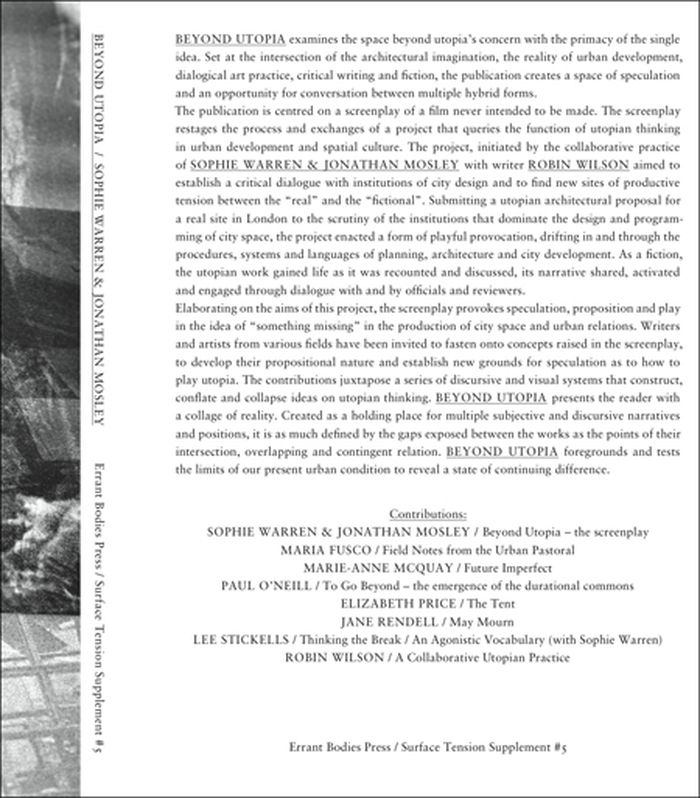
Surface tension supplement no.5 : Beyond utopia
Actions:
Prix:
$19.00
(disponible sur commande)
Résumé:
A collaboration between artist Sophie Warren, architect Jonathan Mosley and writer Robin Wilson, Beyond Utopia looks at the practicalities of utopian thinking in urban planning and administrative culture. Submitting a utopian architectural proposal for a real site in London to city officials, the trio enacted a form of playful provocation as a basis for exploring the systems and languages of planning, architecture and city development. Though fictive, the utopian proposal gained credence as it was discussed and shared among planning officials and reviewers, ultimately becoming a springboard for dialogue about possibilities and even actualities in the sphere of public space. Centered on a screenplay for an unrealized film, which restages the process and exchanges of the original proposal, Surface Tension Supplement No. 5 also includes texts and projects by leading theorists, artists and academics who debate the roles of spatial practice and politics today.
Surface tension supplement no.5 : Beyond utopia
Actions:
Prix:
$19.00
(disponible sur commande)
Résumé:
A collaboration between artist Sophie Warren, architect Jonathan Mosley and writer Robin Wilson, Beyond Utopia looks at the practicalities of utopian thinking in urban planning and administrative culture. Submitting a utopian architectural proposal for a real site in London to city officials, the trio enacted a form of playful provocation as a basis for exploring the systems and languages of planning, architecture and city development. Though fictive, the utopian proposal gained credence as it was discussed and shared among planning officials and reviewers, ultimately becoming a springboard for dialogue about possibilities and even actualities in the sphere of public space. Centered on a screenplay for an unrealized film, which restages the process and exchanges of the original proposal, Surface Tension Supplement No. 5 also includes texts and projects by leading theorists, artists and academics who debate the roles of spatial practice and politics today.
Classification:
livres
livres
Publication:
octobre 2011
octobre 2011
Sujet:
Théorie de l’art
Théorie de l’art
Classification:
livres
livres
Actions:
Prix:
$85.00
(disponible sur commande)
Résumé:
In 1950, Indian prime minister Jawaharlal Nehru invited legendary French-Swiss architect Le Corbusier to embark on one of the greatest experiments in urban planning history: to build a new capital Chandigarh, a city whose monumental modernism promised to free India from the fetters of colonial tradition. 'six decades after its founding and on the eve of its becoming a(...)
$85.00
(disponible sur commande)
Résumé:
In 1950, Indian prime minister Jawaharlal Nehru invited legendary French-Swiss architect Le Corbusier to embark on one of the greatest experiments in urban planning history: to build a new capital Chandigarh, a city whose monumental modernism promised to free India from the fetters of colonial tradition. 'six decades after its founding and on the eve of its becoming a(...)
Titre:
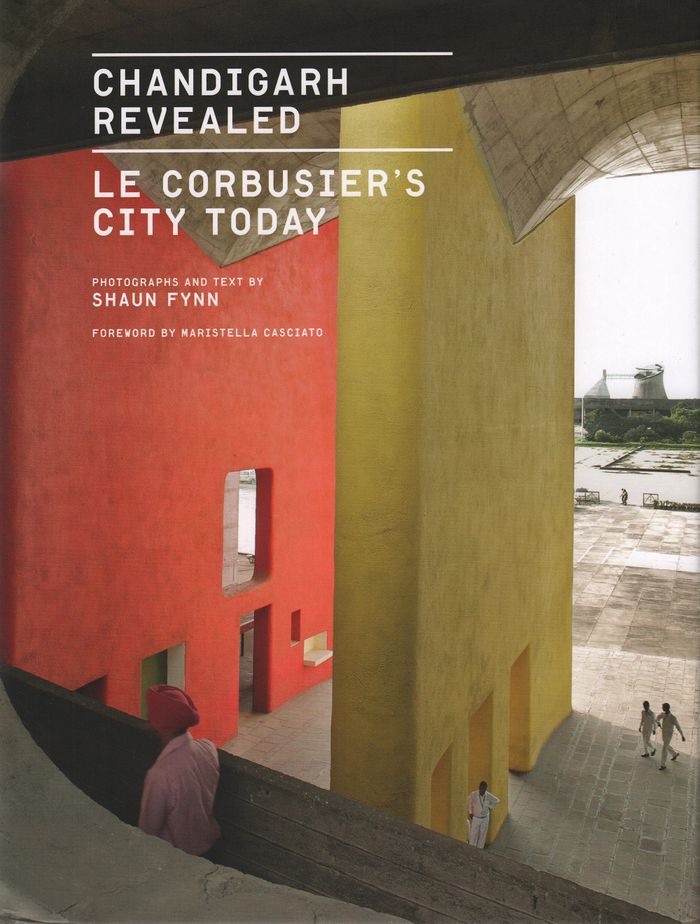
Chandigarh revealed: Le Corbusier's city today
Actions:
Prix:
$85.00
(disponible sur commande)
Résumé:
In 1950, Indian prime minister Jawaharlal Nehru invited legendary French-Swiss architect Le Corbusier to embark on one of the greatest experiments in urban planning history: to build a new capital Chandigarh, a city whose monumental modernism promised to free India from the fetters of colonial tradition. 'six decades after its founding and on the eve of its becoming a UNESCO World Heritage Site in 2016, photographer and Chandigarh resident Shaun Fynn was granted unprecedented access to turn his lens on Le Corbusier's city and capture what is rarely seen: the living metropolis behind the master plan. Fynn's captivating images of the city and its inhabitants reveal how the poetry of the architect's compositions has been shaped by the tumult of everyday life. Alongside descriptions of the city's architectural highlights, Chandigarh Revealed features a foreword by Le Corbusier authority Maristella Casciato, an essay by architectural historian Vikram ditya Prak sh, an interview with M. N. Sharma one of two surviving members of Le Corbusier's team and custom-designed maps to orient readers.
Chandigarh revealed: Le Corbusier's city today
Actions:
Prix:
$85.00
(disponible sur commande)
Résumé:
In 1950, Indian prime minister Jawaharlal Nehru invited legendary French-Swiss architect Le Corbusier to embark on one of the greatest experiments in urban planning history: to build a new capital Chandigarh, a city whose monumental modernism promised to free India from the fetters of colonial tradition. 'six decades after its founding and on the eve of its becoming a UNESCO World Heritage Site in 2016, photographer and Chandigarh resident Shaun Fynn was granted unprecedented access to turn his lens on Le Corbusier's city and capture what is rarely seen: the living metropolis behind the master plan. Fynn's captivating images of the city and its inhabitants reveal how the poetry of the architect's compositions has been shaped by the tumult of everyday life. Alongside descriptions of the city's architectural highlights, Chandigarh Revealed features a foreword by Le Corbusier authority Maristella Casciato, an essay by architectural historian Vikram ditya Prak sh, an interview with M. N. Sharma one of two surviving members of Le Corbusier's team and custom-designed maps to orient readers.
Classification:
livres
livres
Publication:
avril 2017
avril 2017
Sujet:
Architecture, monographies
Architecture, monographies
Classification:
livres
livres
Actions:
Prix:
$50.00
(disponible sur commande)
Résumé:
In the early 1950s, many in the architectural profession turned their gaze towards India, where an ideal modern city seemed to be becoming a reality. When Le Corbusier and his team started work in February 1951 in Chandigarh, American planner Albert Mayer and his young principal architect Matthew Nowicki had already completed a land development plan for the site. The(...)
$50.00
(disponible sur commande)
Résumé:
In the early 1950s, many in the architectural profession turned their gaze towards India, where an ideal modern city seemed to be becoming a reality. When Le Corbusier and his team started work in February 1951 in Chandigarh, American planner Albert Mayer and his young principal architect Matthew Nowicki had already completed a land development plan for the site. The(...)
Titre:
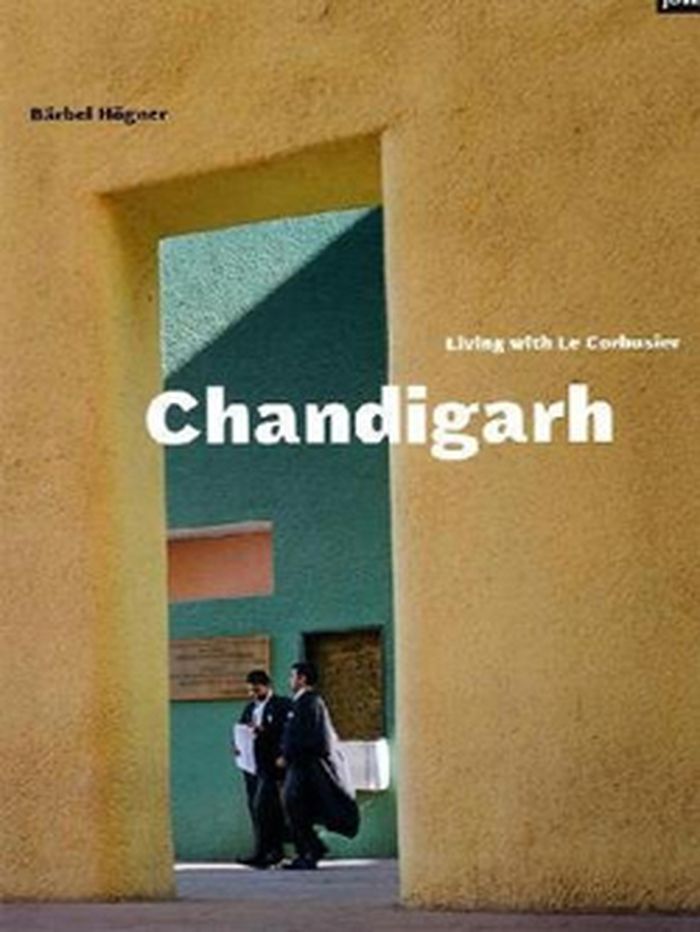
Chandigarh: Living with Le Corbusier
Actions:
Prix:
$50.00
(disponible sur commande)
Résumé:
In the early 1950s, many in the architectural profession turned their gaze towards India, where an ideal modern city seemed to be becoming a reality. When Le Corbusier and his team started work in February 1951 in Chandigarh, American planner Albert Mayer and his young principal architect Matthew Nowicki had already completed a land development plan for the site. The challenge Le Corbusier then faced was to demonstrate how a city designed from the drawing board could feel humane, functional and viable once built. Once the home of public officials, Chandigarh has become a vibrant garden city and a magnet for the booming Indian software industry. Attracted to the idea of a possible dialogue and contradiction between European architecture and Indian lifestyle, German ethnographer Bärbel Högner began photographing the city. Chandigarh: Living with Le Corbusier surveys Le Courbusier's contribution to India's first planned city, while simultaneously revealing Högner's passionate interest and impeccable eye for architectural detail.
Chandigarh: Living with Le Corbusier
Actions:
Prix:
$50.00
(disponible sur commande)
Résumé:
In the early 1950s, many in the architectural profession turned their gaze towards India, where an ideal modern city seemed to be becoming a reality. When Le Corbusier and his team started work in February 1951 in Chandigarh, American planner Albert Mayer and his young principal architect Matthew Nowicki had already completed a land development plan for the site. The challenge Le Corbusier then faced was to demonstrate how a city designed from the drawing board could feel humane, functional and viable once built. Once the home of public officials, Chandigarh has become a vibrant garden city and a magnet for the booming Indian software industry. Attracted to the idea of a possible dialogue and contradiction between European architecture and Indian lifestyle, German ethnographer Bärbel Högner began photographing the city. Chandigarh: Living with Le Corbusier surveys Le Courbusier's contribution to India's first planned city, while simultaneously revealing Högner's passionate interest and impeccable eye for architectural detail.
Classification:
livres
livres
Publication:
mai 2011
mai 2011
Sujet:
Architecture, monographies
Architecture, monographies
Classification:
livres
livres
Actions:
Prix:
$22.95
(disponible sur commande)
Résumé:
The newest volume in the Conversations series features Japanese architect Tadao Ando. One of the most celebrated living architects, Ando is best known for crafting serenely austere structures that fuse Japanese building traditions with Western modernism. His minimalist masterworks, geometric forms clad in silky-smooth exposed concrete, are suffused with natural light and(...)
$22.95
(disponible sur commande)
Résumé:
The newest volume in the Conversations series features Japanese architect Tadao Ando. One of the most celebrated living architects, Ando is best known for crafting serenely austere structures that fuse Japanese building traditions with Western modernism. His minimalist masterworks, geometric forms clad in silky-smooth exposed concrete, are suffused with natural light and(...)
Titre:
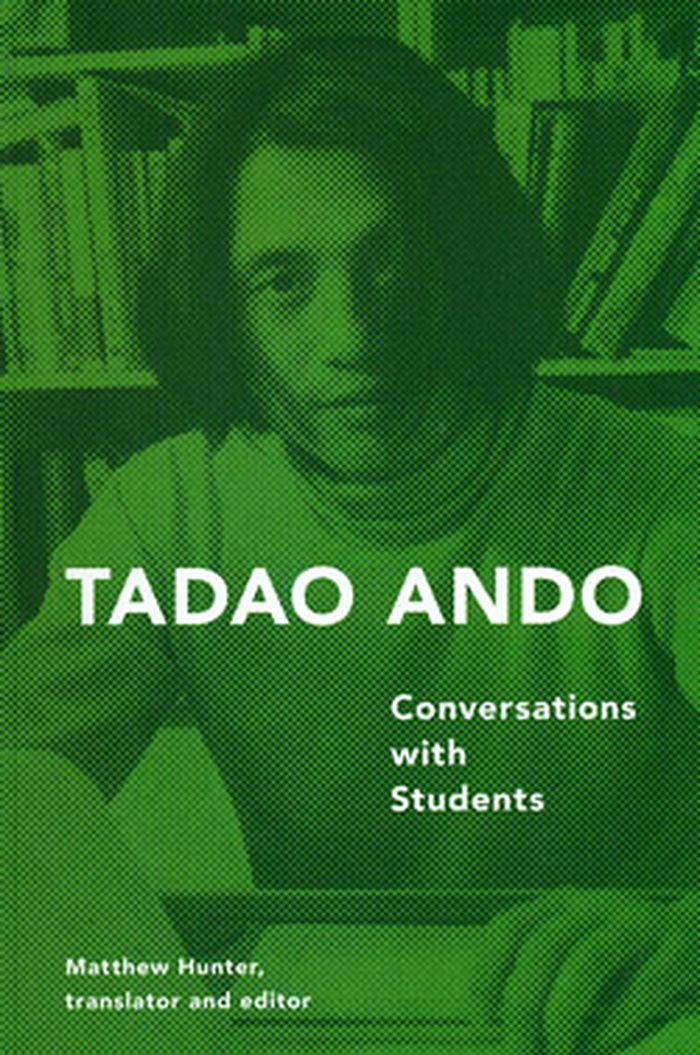
Tadao Ando : conversations with students
Actions:
Prix:
$22.95
(disponible sur commande)
Résumé:
The newest volume in the Conversations series features Japanese architect Tadao Ando. One of the most celebrated living architects, Ando is best known for crafting serenely austere structures that fuse Japanese building traditions with Western modernism. His minimalist masterworks, geometric forms clad in silky-smooth exposed concrete, are suffused with natural light and set in perfect harmony with the landscape. In these highlights from lectures delivered at the University of Tokyos Graduate School of Architecture, Ando candidly describes his experiences as a largely self-taught practitioner, tracing his development from an early interest in the traditional building craft of his native Japan through his political awakening in the turbulent 1960s to his current stature as one of the worlds foremost architects. In addition to exploring his aesthetic influences and working process, Ando offers students a road map not only for maintaining professional integrity, but also for becoming effective agents of change in the world
Tadao Ando : conversations with students
Actions:
Prix:
$22.95
(disponible sur commande)
Résumé:
The newest volume in the Conversations series features Japanese architect Tadao Ando. One of the most celebrated living architects, Ando is best known for crafting serenely austere structures that fuse Japanese building traditions with Western modernism. His minimalist masterworks, geometric forms clad in silky-smooth exposed concrete, are suffused with natural light and set in perfect harmony with the landscape. In these highlights from lectures delivered at the University of Tokyos Graduate School of Architecture, Ando candidly describes his experiences as a largely self-taught practitioner, tracing his development from an early interest in the traditional building craft of his native Japan through his political awakening in the turbulent 1960s to his current stature as one of the worlds foremost architects. In addition to exploring his aesthetic influences and working process, Ando offers students a road map not only for maintaining professional integrity, but also for becoming effective agents of change in the world
Classification:
livres
livres
Publication:
novembre 2012
novembre 2012
Sujet:
Architecture, monographies
Architecture, monographies


