


124 Résultats
Classification:
livres
livres
Actions:
Prix:
$38.50
(disponible en magasin)
Résumé:
In ''The Aesthetics of Ambiguity: Understanding and Addressing Monoculture'' Pascal Gielen and Nav Haq argue that multiculturalism is paradoxically based on monocultural thinking. The publication explores this paradox by exploring monoculture in a variety of contemporary contexts. The book sets out to analyse monoculture using a multifaceted approach, by bringing together(...)
$38.50
(disponible en magasin)
Résumé:
In ''The Aesthetics of Ambiguity: Understanding and Addressing Monoculture'' Pascal Gielen and Nav Haq argue that multiculturalism is paradoxically based on monocultural thinking. The publication explores this paradox by exploring monoculture in a variety of contemporary contexts. The book sets out to analyse monoculture using a multifaceted approach, by bringing together(...)
Titre:
The aesthetics of ambiguity: Understanding and adressing monoculture
Actions:
Prix:
$38.50
(disponible en magasin)
Résumé:
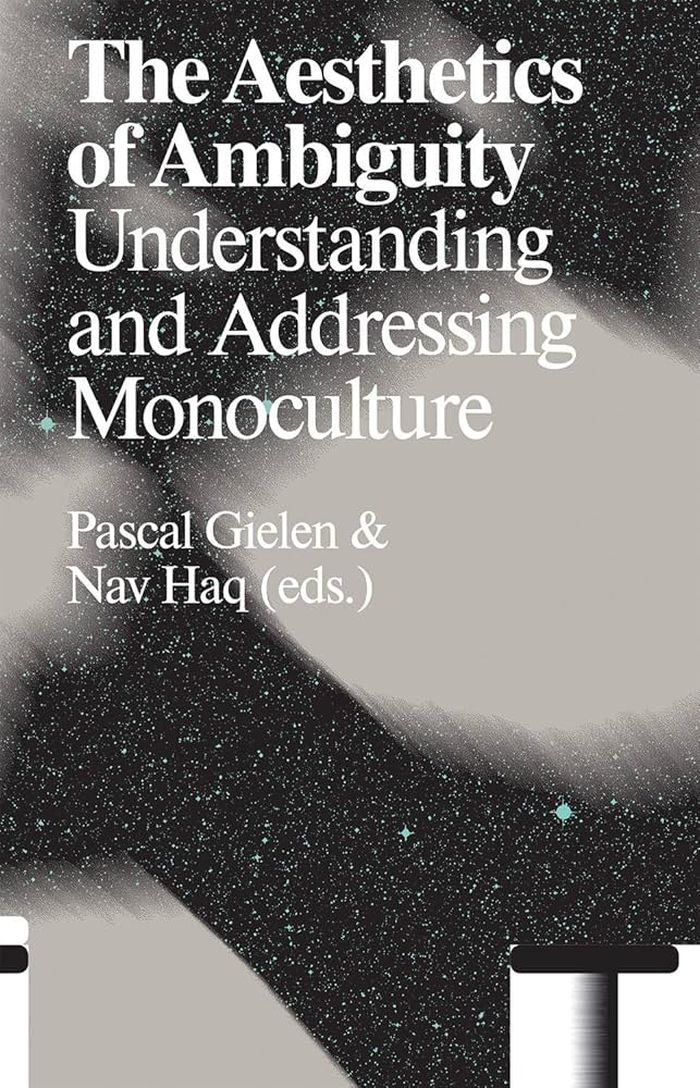
In ''The Aesthetics of Ambiguity: Understanding and Addressing Monoculture'' Pascal Gielen and Nav Haq argue that multiculturalism is paradoxically based on monocultural thinking. The publication explores this paradox by exploring monoculture in a variety of contemporary contexts. The book sets out to analyse monoculture using a multifaceted approach, by bringing together historical, social, cultural and ideological perspectives, using the dual role of art as tool for reconciliation and division in societies. ''The Aesthetics of Ambiguity'' gives stage to artists, thinkers and institutional practices who dare to play with the rules of a broader society and thus generate ambiguity ‘at large’. The book represents a quest for (more) ambiguity in order to avoid rigid borders or black-and-white polarities between cultures, as well as between practices of art and scientific thinking. By doing so, the artists, activists and researchers featured in this book plea for a politics and aesthetics of ambiguity to deal with the complexity of our living together on Earth.
The aesthetics of ambiguity: Understanding and adressing monoculture
Actions:
Prix:
$38.50
(disponible en magasin)
Résumé:
In ''The Aesthetics of Ambiguity: Understanding and Addressing Monoculture'' Pascal Gielen and Nav Haq argue that multiculturalism is paradoxically based on monocultural thinking. The publication explores this paradox by exploring monoculture in a variety of contemporary contexts. The book sets out to analyse monoculture using a multifaceted approach, by bringing together historical, social, cultural and ideological perspectives, using the dual role of art as tool for reconciliation and division in societies. ''The Aesthetics of Ambiguity'' gives stage to artists, thinkers and institutional practices who dare to play with the rules of a broader society and thus generate ambiguity ‘at large’. The book represents a quest for (more) ambiguity in order to avoid rigid borders or black-and-white polarities between cultures, as well as between practices of art and scientific thinking. By doing so, the artists, activists and researchers featured in this book plea for a politics and aesthetics of ambiguity to deal with the complexity of our living together on Earth.
Classification:
livres
livres
Publication:
décembre 2024
décembre 2024
Sujet:
Théorie de l’art
Théorie de l’art
Classification:
livres
livres
Titre:
Wen-You Cai: Minnan Exit
Wen-You Cai: Minnan Exit
Actions:
Prix:
$65.95
(disponible en magasin)
Résumé:
Since 2015, Wen-You Cai has returned on multiple occasions to her parents' hometown of Quanzhou, Fujian, to attend the funerals of her deceased relatives. The ceremonies in the Minnan region unfold like grand dramas in which she is both an observer and a participant. Throughout the ceremony, Wen-You is enveloped in the unknown; everything seems meticulously arranged.(...)
$65.95
(disponible en magasin)
Résumé:
Since 2015, Wen-You Cai has returned on multiple occasions to her parents' hometown of Quanzhou, Fujian, to attend the funerals of her deceased relatives. The ceremonies in the Minnan region unfold like grand dramas in which she is both an observer and a participant. Throughout the ceremony, Wen-You is enveloped in the unknown; everything seems meticulously arranged.(...)
Titre:
Wen-You Cai: Minnan Exit
Actions:
Prix:
$65.95
(disponible en magasin)
Résumé:
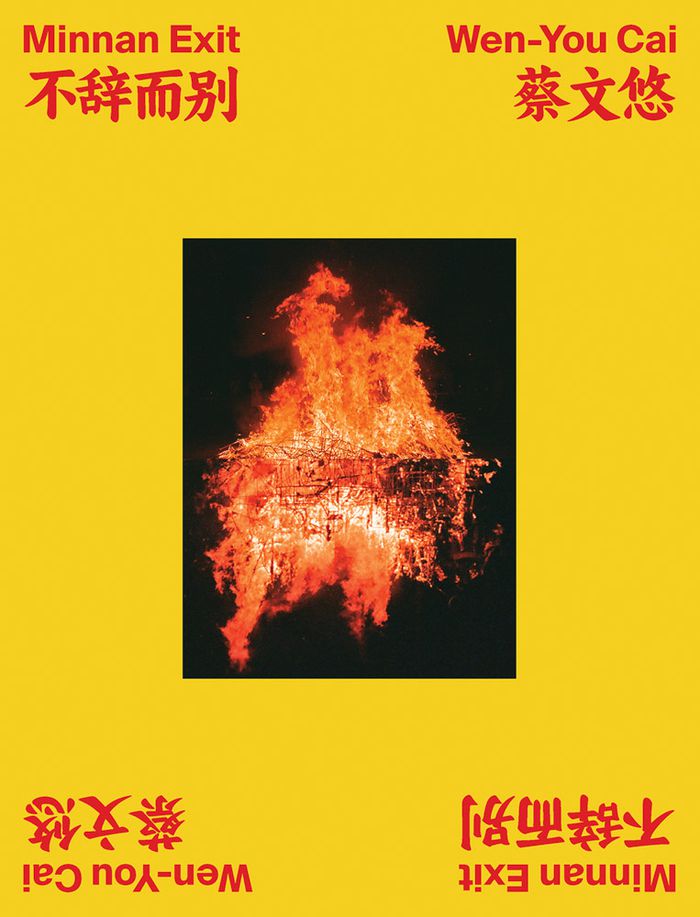
Since 2015, Wen-You Cai has returned on multiple occasions to her parents' hometown of Quanzhou, Fujian, to attend the funerals of her deceased relatives. The ceremonies in the Minnan region unfold like grand dramas in which she is both an observer and a participant. Throughout the ceremony, Wen-You is enveloped in the unknown; everything seems meticulously arranged. Amidst the overwhelming grief of losing loved ones, there exists a feeling of confusion, and taking photographs was one of the ways for her to engage in the funeral process. For this photo series, Wen-You was initially confronted by her own fear of death, intertwined with her bewilderment and curiosity about the complex funeral rituals and its uniqueness inherent to Minnan culture. To demystify these subjects, Wen-You, joined by te editions, interviewed a funeral director who provides comprehensive “one-stop services,” a monk who hosts Buddhist ceremonies, and a folklorist of Minnan rituals. Minnan Exit can be interpreted as many things–a family album, a curated collection of photographs, an unfinished journey of discovery, as well as the process of Wen-You's reconciliation with her mortality.
Wen-You Cai: Minnan Exit
Actions:
Prix:
$65.95
(disponible en magasin)
Résumé:
Since 2015, Wen-You Cai has returned on multiple occasions to her parents' hometown of Quanzhou, Fujian, to attend the funerals of her deceased relatives. The ceremonies in the Minnan region unfold like grand dramas in which she is both an observer and a participant. Throughout the ceremony, Wen-You is enveloped in the unknown; everything seems meticulously arranged. Amidst the overwhelming grief of losing loved ones, there exists a feeling of confusion, and taking photographs was one of the ways for her to engage in the funeral process. For this photo series, Wen-You was initially confronted by her own fear of death, intertwined with her bewilderment and curiosity about the complex funeral rituals and its uniqueness inherent to Minnan culture. To demystify these subjects, Wen-You, joined by te editions, interviewed a funeral director who provides comprehensive “one-stop services,” a monk who hosts Buddhist ceremonies, and a folklorist of Minnan rituals. Minnan Exit can be interpreted as many things–a family album, a curated collection of photographs, an unfinished journey of discovery, as well as the process of Wen-You's reconciliation with her mortality.
Classification:
livres
livres
Publication:
mai 2025
mai 2025
Sujet:
Monographies photo
Monographies photo
Classification:
livres
livres
Actions:
Prix:
$32.95
(disponible sur commande)
Résumé:
In 2015, writer and journalist Paul Seesequasis found himself grappling with the devastating findings of Canada's Truth and Reconciliation Commission report on the residential school system. He sought understanding and inspiration in the stories of his mother, herself a residential school survivor. Gradually, Paul realized that another, mostly untold history existed(...)
$32.95
(disponible sur commande)
Résumé:
In 2015, writer and journalist Paul Seesequasis found himself grappling with the devastating findings of Canada's Truth and Reconciliation Commission report on the residential school system. He sought understanding and inspiration in the stories of his mother, herself a residential school survivor. Gradually, Paul realized that another, mostly untold history existed(...)
Titre:
Blanket toss under midnight sun
Actions:
Prix:
$32.95
(disponible sur commande)
Résumé:
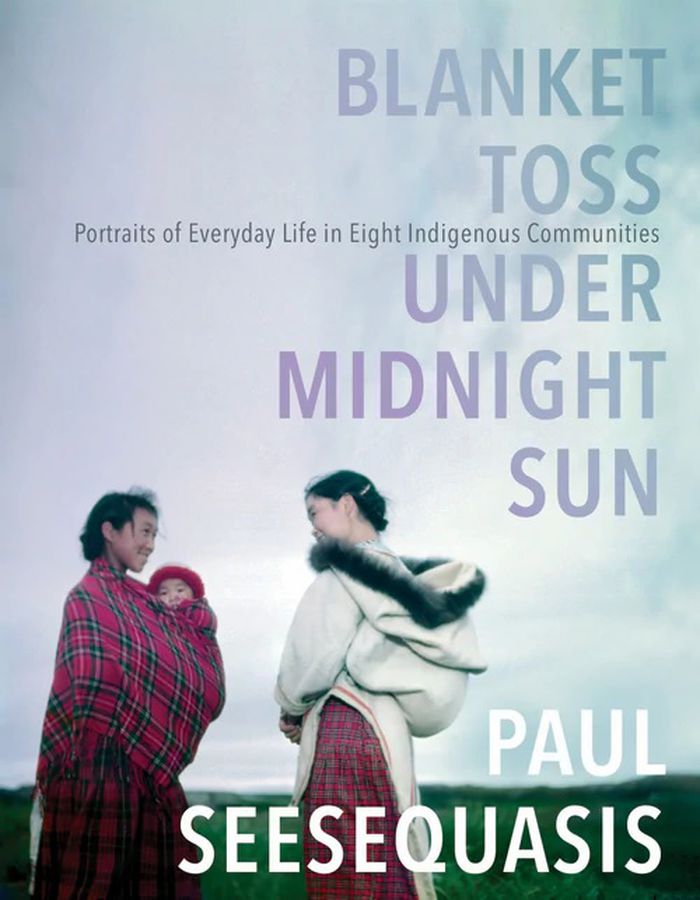
In 2015, writer and journalist Paul Seesequasis found himself grappling with the devastating findings of Canada's Truth and Reconciliation Commission report on the residential school system. He sought understanding and inspiration in the stories of his mother, herself a residential school survivor. Gradually, Paul realized that another, mostly untold history existed alongside the official one: that of how Indigenous peoples and communities had held together during even the most difficult times. He embarked on a social media project to collect archival photos capturing everyday life in First Nations, Metis and Inuit communities from the 1920s through the 1970s. As he scoured archives and libraries, Paul uncovered a trove of candid images and began to post these on social media, where they sparked an extraordinary reaction. Friends and relatives of the individuals in the photographs commented online, and through this dialogue, rich histories came to light for the first time. ''Blanket toss under midnight sun'' collects some of the most arresting images and stories from Paul's project. While many of the photographs live in public archives, most have never been shown to the people in the communities they represent. As such, ''Blanket Toss'' is not only an invaluable historical record, it is a meaningful act of reclamation, showing the ongoing resilience of Indigenous communities, past, present--and future.
Blanket toss under midnight sun
Actions:
Prix:
$32.95
(disponible sur commande)
Résumé:
In 2015, writer and journalist Paul Seesequasis found himself grappling with the devastating findings of Canada's Truth and Reconciliation Commission report on the residential school system. He sought understanding and inspiration in the stories of his mother, herself a residential school survivor. Gradually, Paul realized that another, mostly untold history existed alongside the official one: that of how Indigenous peoples and communities had held together during even the most difficult times. He embarked on a social media project to collect archival photos capturing everyday life in First Nations, Metis and Inuit communities from the 1920s through the 1970s. As he scoured archives and libraries, Paul uncovered a trove of candid images and began to post these on social media, where they sparked an extraordinary reaction. Friends and relatives of the individuals in the photographs commented online, and through this dialogue, rich histories came to light for the first time. ''Blanket toss under midnight sun'' collects some of the most arresting images and stories from Paul's project. While many of the photographs live in public archives, most have never been shown to the people in the communities they represent. As such, ''Blanket Toss'' is not only an invaluable historical record, it is a meaningful act of reclamation, showing the ongoing resilience of Indigenous communities, past, present--and future.
Classification:
livres
livres
Publication:
octobre 2019
octobre 2019
Sujet:
Autochtone
Autochtone
Classification:
livres
livres
Prix:
$25.95
(disponible sur commande)
Résumé:
We surround ourselves with material things that are invested with memories but can only stand for what we have lost. Physical objects—such as one’s own body—situate and define us; yet at the same time they are fundamentally indifferent to us. The melancholy of this rift is a rich source of inspiration for artists. Peter Schwenger deftly weaves together philosophical(...)
$25.95
(disponible sur commande)
Résumé:
We surround ourselves with material things that are invested with memories but can only stand for what we have lost. Physical objects—such as one’s own body—situate and define us; yet at the same time they are fundamentally indifferent to us. The melancholy of this rift is a rich source of inspiration for artists. Peter Schwenger deftly weaves together philosophical(...)
Titre:
The tears of things : Melancholy and physical objects
Actions:
Prix:
$25.95
(disponible sur commande)
Résumé:
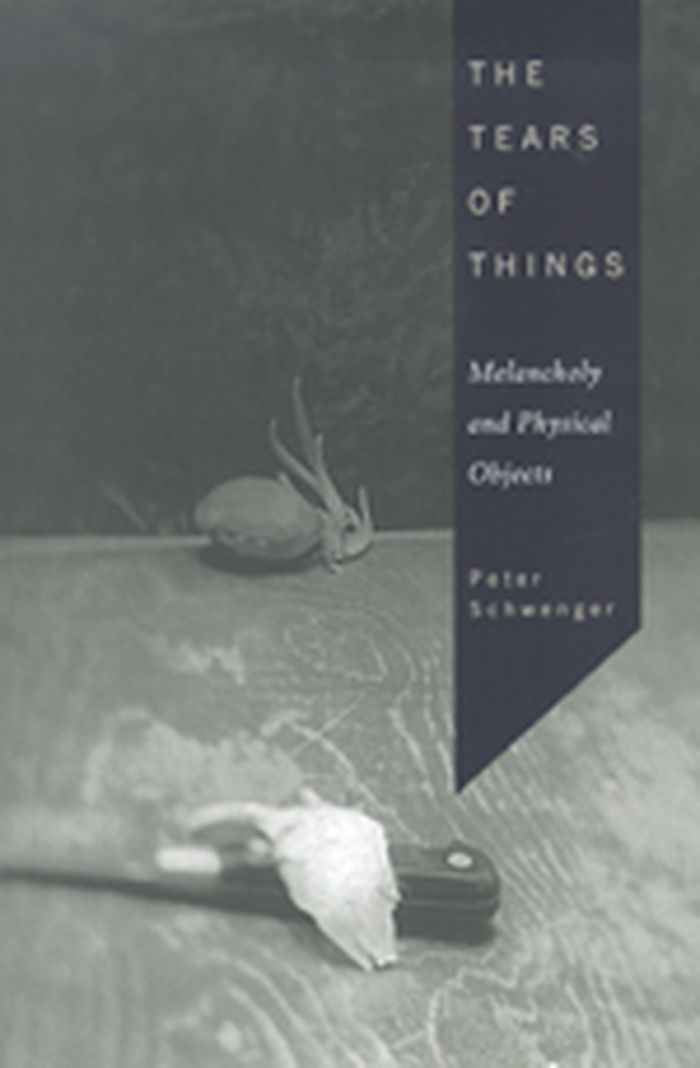
We surround ourselves with material things that are invested with memories but can only stand for what we have lost. Physical objects—such as one’s own body—situate and define us; yet at the same time they are fundamentally indifferent to us. The melancholy of this rift is a rich source of inspiration for artists. Peter Schwenger deftly weaves together philosophical and psychoanalytical theory with artistic practice. Concerned in part with the act of collecting, The Tears of Things is itself a collection of exemplary art objects—literary and cultural attempts to control and possess things—including paintings by Georgia O’Keeffe and René Magritte; sculpture by Louise Bourgeois and Marcel Duchamp; Joseph Cornell’s boxes; Edward Gorey’s graphic art; fiction by Virginia Woolf, Georges Perec, and Louise Erdrich; the hallucinatory encyclopedias of Jorge Luis Borges and Luigi Serafini; and the corpse photographs of Joel Peter Witkin. However, these representations of objects perpetually fall short of our aspirations. Schwenger examines what is left over—debris and waste—and asks what art can make of these. What emerges is not an art that reassembles but one that questions what it means to assemble in the first place. Contained in this catalog of waste is that ultimate still life, the cadaver, where the subject-object dichotomy receives its final ironic reconciliation. Peter Schwenger is professor of English at Mount St. Vincent University in Halifax, Nova Scotia. He is the author of Fantasm and Fiction: On Textual Envisioning, Letter Bomb: Nuclear Holocaust and the Exploding Word, and Phallic Critiques: Masculinity and Twentieth-Century Literature.
The tears of things : Melancholy and physical objects
Actions:
Prix:
$25.95
(disponible sur commande)
Résumé:
We surround ourselves with material things that are invested with memories but can only stand for what we have lost. Physical objects—such as one’s own body—situate and define us; yet at the same time they are fundamentally indifferent to us. The melancholy of this rift is a rich source of inspiration for artists. Peter Schwenger deftly weaves together philosophical and psychoanalytical theory with artistic practice. Concerned in part with the act of collecting, The Tears of Things is itself a collection of exemplary art objects—literary and cultural attempts to control and possess things—including paintings by Georgia O’Keeffe and René Magritte; sculpture by Louise Bourgeois and Marcel Duchamp; Joseph Cornell’s boxes; Edward Gorey’s graphic art; fiction by Virginia Woolf, Georges Perec, and Louise Erdrich; the hallucinatory encyclopedias of Jorge Luis Borges and Luigi Serafini; and the corpse photographs of Joel Peter Witkin. However, these representations of objects perpetually fall short of our aspirations. Schwenger examines what is left over—debris and waste—and asks what art can make of these. What emerges is not an art that reassembles but one that questions what it means to assemble in the first place. Contained in this catalog of waste is that ultimate still life, the cadaver, where the subject-object dichotomy receives its final ironic reconciliation. Peter Schwenger is professor of English at Mount St. Vincent University in Halifax, Nova Scotia. He is the author of Fantasm and Fiction: On Textual Envisioning, Letter Bomb: Nuclear Holocaust and the Exploding Word, and Phallic Critiques: Masculinity and Twentieth-Century Literature.
Classification:
livres
livres
Publication:
mai 2006, Minnesota
mai 2006, Minnesota
Sujet:
Théorie de l’architecture
Théorie de l’architecture


