


1246 Résultats
Classification:
livres
livres
Titre:
Mountain: nature and culture
Mountain: nature and culture
Actions:
Prix:
$35.50
(disponible sur commande)
Résumé:
Majestic and inspiring, there is nothing like the sight of a mountain on the horizon. Throughout all of human history mountains have been linked to the eternal, attracting us to their dizzying heights, stunning us with their natural beauty, and often threatening us with their dangers. Through a compelling journey to both real and imaginary peaks, this book explores how(...)
$35.50
(disponible sur commande)
Résumé:
Majestic and inspiring, there is nothing like the sight of a mountain on the horizon. Throughout all of human history mountains have been linked to the eternal, attracting us to their dizzying heights, stunning us with their natural beauty, and often threatening us with their dangers. Through a compelling journey to both real and imaginary peaks, this book explores how(...)
Titre:
Mountain: nature and culture
Actions:
Prix:
$35.50
(disponible sur commande)
Résumé:
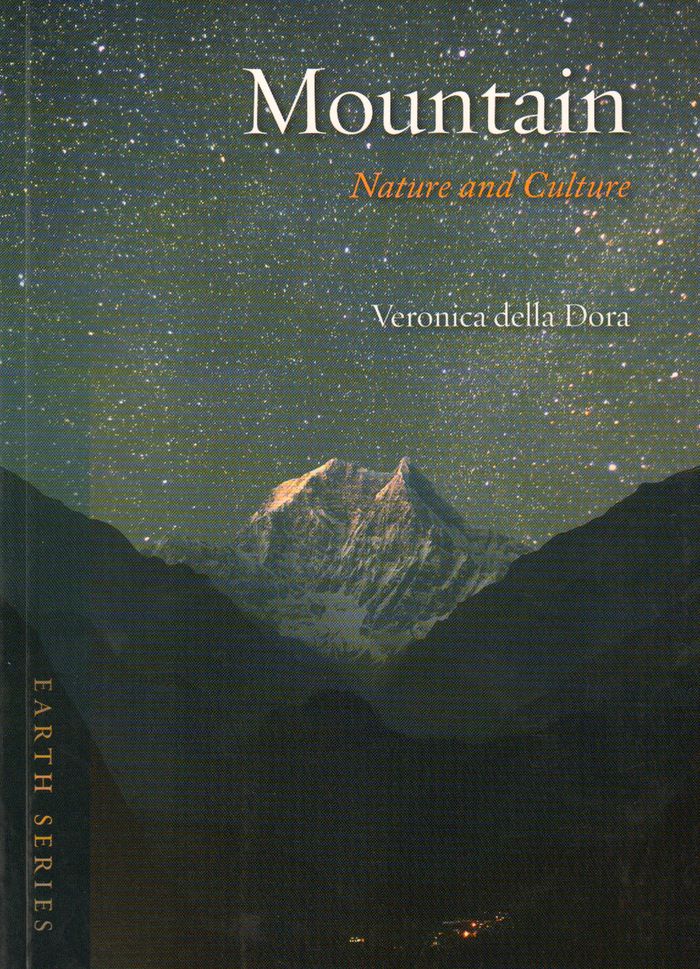
Majestic and inspiring, there is nothing like the sight of a mountain on the horizon. Throughout all of human history mountains have been linked to the eternal, attracting us to their dizzying heights, stunning us with their natural beauty, and often threatening us with their dangers. Through a compelling journey to both real and imaginary peaks, this book explores how the mountain has figured in our history, culture, and maginations. Veronica della Dora explores the ways mountains have functioned spiritually as a boundary between life and death, a bridge between the earth and the heavens. Interlacing science, culture, and religion, she sketches the mountain as a geological phenomenon that has profoundly influenced and been influenced by the human imagination, shaping our environmental consciousness and helping us understand our—quite small indeed—place in the world. She also explores their significance as objects of human feats, as prizes of adventure and sport, and as places of serene beauty for vacationers. Magnificently illustrated and showcasing famous peaks from all around the world, Mountain offers a fascinating dual portrait of these giants in nature and culture.
Mountain: nature and culture
Actions:
Prix:
$35.50
(disponible sur commande)
Résumé:
Majestic and inspiring, there is nothing like the sight of a mountain on the horizon. Throughout all of human history mountains have been linked to the eternal, attracting us to their dizzying heights, stunning us with their natural beauty, and often threatening us with their dangers. Through a compelling journey to both real and imaginary peaks, this book explores how the mountain has figured in our history, culture, and maginations. Veronica della Dora explores the ways mountains have functioned spiritually as a boundary between life and death, a bridge between the earth and the heavens. Interlacing science, culture, and religion, she sketches the mountain as a geological phenomenon that has profoundly influenced and been influenced by the human imagination, shaping our environmental consciousness and helping us understand our—quite small indeed—place in the world. She also explores their significance as objects of human feats, as prizes of adventure and sport, and as places of serene beauty for vacationers. Magnificently illustrated and showcasing famous peaks from all around the world, Mountain offers a fascinating dual portrait of these giants in nature and culture.
Classification:
livres
livres
Publication:
septembre 2016
septembre 2016
Sujet:
Théorie du paysage
Théorie du paysage
Classification:
livres
livres

Actions:
Prix:
$64.95
(disponible sur commande)
Résumé:
The museum is constantly a target for criticism, whether it comes from artists, thinkers, curators, or even the public. From the avant-gardes of the twentieth century up until our contemporary era, the museum s suspect position has generated countless gestures, iconoclastic actions, scathing attacks, utopias, and alternative exhibition spaces. For the first time, this(...)
$64.95
(disponible sur commande)
Résumé:
The museum is constantly a target for criticism, whether it comes from artists, thinkers, curators, or even the public. From the avant-gardes of the twentieth century up until our contemporary era, the museum s suspect position has generated countless gestures, iconoclastic actions, scathing attacks, utopias, and alternative exhibition spaces. For the first time, this(...)
Titre:
The anti-museum - an anthology
Actions:
Prix:
$64.95
(disponible sur commande)
Résumé:
The museum is constantly a target for criticism, whether it comes from artists, thinkers, curators, or even the public. From the avant-gardes of the twentieth century up until our contemporary era, the museum s suspect position has generated countless gestures, iconoclastic actions, scathing attacks, utopias, and alternative exhibition spaces. For the first time, this anthology is devoted to the anti-museum, through anti-art, the anti-artist, anti-exhibition, as well as anti-architecture, anti-philosophy, anti-religion, anti-cinema and anti-music. This notion - unpatented but regularly reappropriated - traces the erratic, fractured, and sometimes paradoxical counter-history of the contestation of artistic institutions. From the first anti-exhibition to the first catalog retracing the history of "Closed Exhibitions" from Dada to Noise music, from "Everything is Art" to NO!art, the Japanese avant-gardes to Lettrist cinema, and not forgetting such major protest figures as Gustav Metzger, Henry Flynt, Graciela Carnevale, and Lydia Lunch, "The anti-museum" sketches a polyphonic panorama where negation is accompanied by a powerful breath of life.
The anti-museum - an anthology
Actions:
Prix:
$64.95
(disponible sur commande)
Résumé:
The museum is constantly a target for criticism, whether it comes from artists, thinkers, curators, or even the public. From the avant-gardes of the twentieth century up until our contemporary era, the museum s suspect position has generated countless gestures, iconoclastic actions, scathing attacks, utopias, and alternative exhibition spaces. For the first time, this anthology is devoted to the anti-museum, through anti-art, the anti-artist, anti-exhibition, as well as anti-architecture, anti-philosophy, anti-religion, anti-cinema and anti-music. This notion - unpatented but regularly reappropriated - traces the erratic, fractured, and sometimes paradoxical counter-history of the contestation of artistic institutions. From the first anti-exhibition to the first catalog retracing the history of "Closed Exhibitions" from Dada to Noise music, from "Everything is Art" to NO!art, the Japanese avant-gardes to Lettrist cinema, and not forgetting such major protest figures as Gustav Metzger, Henry Flynt, Graciela Carnevale, and Lydia Lunch, "The anti-museum" sketches a polyphonic panorama where negation is accompanied by a powerful breath of life.
Classification:
livres
livres
Publication:
juin 2017
juin 2017
Sujet:
Muséologie
Muséologie
Classification:
livres
livres

Actions:
Prix:
$58.50
(disponible sur commande)
Résumé:
From its title to its formal arrangement of language, Brad Feuerhelm's Dein Kampf suggests a commentary on our cyclical anxieties about ideology. Anxiety is implicit in his photographs and Berlin is their natural backdrop, being a city in which several ideologies collided in the twentieth century. The city exemplifies the quagmire of possibilities in which the tensions of(...)
$58.50
(disponible sur commande)
Résumé:
From its title to its formal arrangement of language, Brad Feuerhelm's Dein Kampf suggests a commentary on our cyclical anxieties about ideology. Anxiety is implicit in his photographs and Berlin is their natural backdrop, being a city in which several ideologies collided in the twentieth century. The city exemplifies the quagmire of possibilities in which the tensions of(...)
Titre:
Käthe Kollwitz: prints, process, politics
Actions:
Prix:
$58.50
(disponible sur commande)
Résumé:
From its title to its formal arrangement of language, Brad Feuerhelm's Dein Kampf suggests a commentary on our cyclical anxieties about ideology. Anxiety is implicit in his photographs and Berlin is their natural backdrop, being a city in which several ideologies collided in the twentieth century. The city exemplifies the quagmire of possibilities in which the tensions of historical narrative and contemporary political and ideological doubt are played out in visual motifs throughout the landscape. Fragments of the past and symbols of capitalist modernity underpin the work-banks, insurance companies and people as effigies of citizens appear as a cloaking miasma, the spectre of past, present and no future. The schema of the glitch and the appropriation methods in Feuerhelm's work are subtle enquiries into the contemporary conditions of fear and confusion. Loose associations about changing futures under technology, religion, immigration and the future of the photographic image also loom large. Dein Kampf is Feuerhelm's proposition about how we activate image and ideology in the book form. Includes text by Ulrich Baer.
Käthe Kollwitz: prints, process, politics
Actions:
Prix:
$58.50
(disponible sur commande)
Résumé:
From its title to its formal arrangement of language, Brad Feuerhelm's Dein Kampf suggests a commentary on our cyclical anxieties about ideology. Anxiety is implicit in his photographs and Berlin is their natural backdrop, being a city in which several ideologies collided in the twentieth century. The city exemplifies the quagmire of possibilities in which the tensions of historical narrative and contemporary political and ideological doubt are played out in visual motifs throughout the landscape. Fragments of the past and symbols of capitalist modernity underpin the work-banks, insurance companies and people as effigies of citizens appear as a cloaking miasma, the spectre of past, present and no future. The schema of the glitch and the appropriation methods in Feuerhelm's work are subtle enquiries into the contemporary conditions of fear and confusion. Loose associations about changing futures under technology, religion, immigration and the future of the photographic image also loom large. Dein Kampf is Feuerhelm's proposition about how we activate image and ideology in the book form. Includes text by Ulrich Baer.
Classification:
livres
livres
Publication:
janvier 2020
janvier 2020
Classification:
livres
livres
Actions:
Prix:
$58.95
(disponible en magasin)
Résumé:
This book brings the history of the geosciences and world cosmologies together, exploring many traditions, including Chinese, Pacific, Islamic, South and Southeast Asian conceptions of the earth’s origin and makeup. Together the chapters ask: How have different ideas about the sacred, animate, and earthly changed modern environmental sciences? How have different world(...)
$58.95
(disponible en magasin)
Résumé:
This book brings the history of the geosciences and world cosmologies together, exploring many traditions, including Chinese, Pacific, Islamic, South and Southeast Asian conceptions of the earth’s origin and makeup. Together the chapters ask: How have different ideas about the sacred, animate, and earthly changed modern environmental sciences? How have different world(...)
Publication:
novembre 2023
novembre 2023
Titre:
New earth histories: Geo-cosmologies and the making of the modern world
Actions:
Prix:
$58.95
(disponible en magasin)
Résumé:
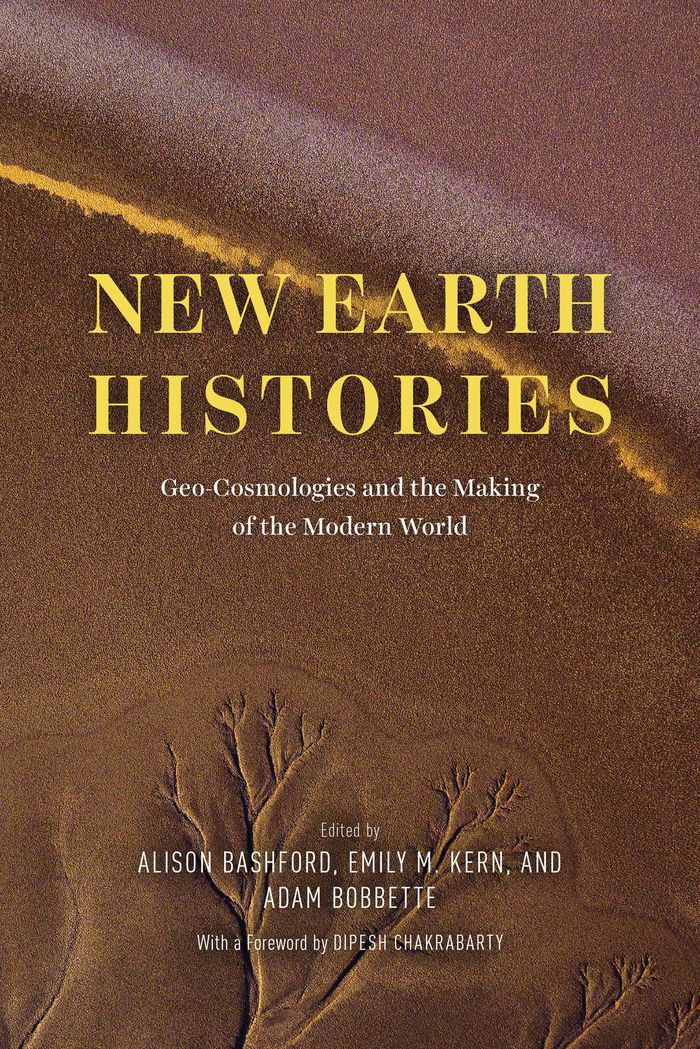
This book brings the history of the geosciences and world cosmologies together, exploring many traditions, including Chinese, Pacific, Islamic, South and Southeast Asian conceptions of the earth’s origin and makeup. Together the chapters ask: How have different ideas about the sacred, animate, and earthly changed modern environmental sciences? How have different world traditions understood human and geological origins? How does the inclusion of multiple cosmologies change the meaning of the Anthropocene and the global climate crisis? By carefully examining these questions, ''New earth histories'' sets an ambitious agenda for how we think about the earth. The chapters consider debates about the age and structure of the earth, how humans and earth systems interact, and how empire has been conceived in multiple traditions. The methods the authors deploy are diverse—from cultural history and visual and material studies to ethnography, geography, and Indigenous studies—and the effect is to highlight how earth knowledge emerged from historically specific situations. ''New earth histories'' provides both a framework for studying science at a global scale and fascinating examples to educate as well as inspire future work. Essential reading for students and scholars of earth science history, environmental humanities, history of science and religion, and science and empire.
New earth histories: Geo-cosmologies and the making of the modern world
Actions:
Prix:
$58.95
(disponible en magasin)
Résumé:
This book brings the history of the geosciences and world cosmologies together, exploring many traditions, including Chinese, Pacific, Islamic, South and Southeast Asian conceptions of the earth’s origin and makeup. Together the chapters ask: How have different ideas about the sacred, animate, and earthly changed modern environmental sciences? How have different world traditions understood human and geological origins? How does the inclusion of multiple cosmologies change the meaning of the Anthropocene and the global climate crisis? By carefully examining these questions, ''New earth histories'' sets an ambitious agenda for how we think about the earth. The chapters consider debates about the age and structure of the earth, how humans and earth systems interact, and how empire has been conceived in multiple traditions. The methods the authors deploy are diverse—from cultural history and visual and material studies to ethnography, geography, and Indigenous studies—and the effect is to highlight how earth knowledge emerged from historically specific situations. ''New earth histories'' provides both a framework for studying science at a global scale and fascinating examples to educate as well as inspire future work. Essential reading for students and scholars of earth science history, environmental humanities, history of science and religion, and science and empire.
Classification:
livres
livres
Publication:
novembre 2023
novembre 2023
Classification:
livres
livres
Titre:
The Klee universe
The Klee universe
Actions:
Prix:
$72.00
(disponible sur commande)
Résumé:
There are artists whose métier is the observation or documentation of the world, and artists who set the world aside altogether to build their own visionary cosmology, designing its constituent parts from scratch as a personal mythology relayed in motifs. Paul Klee (1879-1940) was such an artist, as his aphorism “Art does not reproduce the visible, rather it makes(...)
$72.00
(disponible sur commande)
Résumé:
There are artists whose métier is the observation or documentation of the world, and artists who set the world aside altogether to build their own visionary cosmology, designing its constituent parts from scratch as a personal mythology relayed in motifs. Paul Klee (1879-1940) was such an artist, as his aphorism “Art does not reproduce the visible, rather it makes(...)
Titre:
The Klee universe
Actions:
Prix:
$72.00
(disponible sur commande)
Résumé:
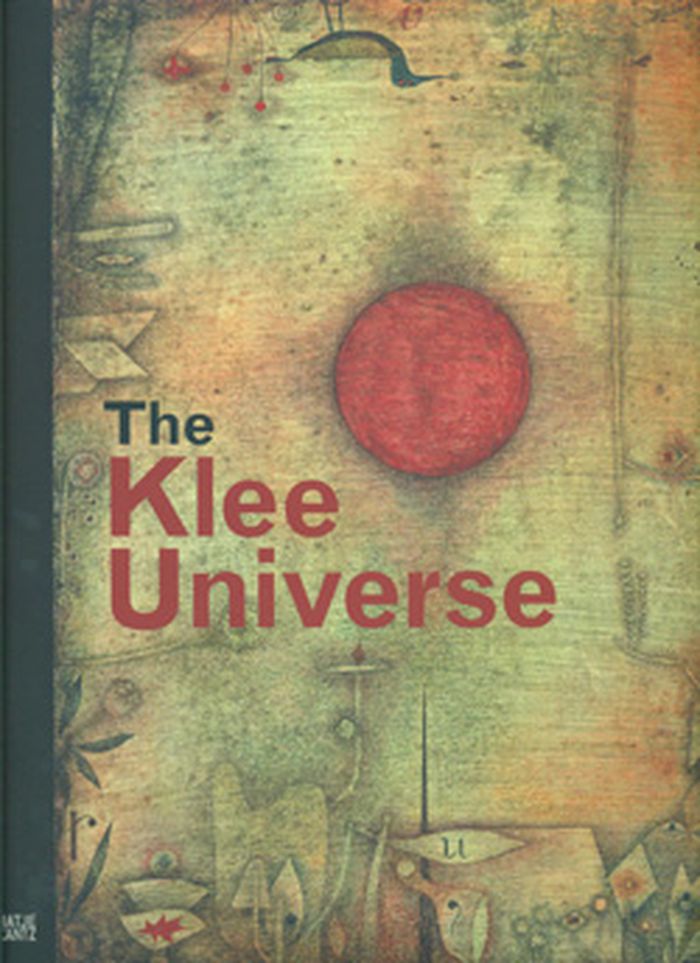
There are artists whose métier is the observation or documentation of the world, and artists who set the world aside altogether to build their own visionary cosmology, designing its constituent parts from scratch as a personal mythology relayed in motifs. Paul Klee (1879-1940) was such an artist, as his aphorism “Art does not reproduce the visible, rather it makes visible” testifies, and The Klee Universe addresses his work from this perspective. In 1906, Klee noted in his diary, "All will be Klee," and in 1911, as the encyclopedist of his cosmos, he began to meticulously chronicle his works in a catalogue that, by the time he died, was to contain more than 9,000 items. Here, in the fashion of an Orbis Pictus or a Renaissance emblem book, Klee's oeuvre is made legible as a cogent entirety, in thematic units address: the human life cycle, from birth and childhood to sexual desire, parenthood and death; music, architecture, theater and religion; plants, animals and landscapes; and, finally, darker, destructive forces in the shape of war, fear and death. The Klee Universe reimagines the artist as a Renaissance man, an artist of great learning whose cosmos proves to be a coherent system of ideas and images.
The Klee universe
Actions:
Prix:
$72.00
(disponible sur commande)
Résumé:
There are artists whose métier is the observation or documentation of the world, and artists who set the world aside altogether to build their own visionary cosmology, designing its constituent parts from scratch as a personal mythology relayed in motifs. Paul Klee (1879-1940) was such an artist, as his aphorism “Art does not reproduce the visible, rather it makes visible” testifies, and The Klee Universe addresses his work from this perspective. In 1906, Klee noted in his diary, "All will be Klee," and in 1911, as the encyclopedist of his cosmos, he began to meticulously chronicle his works in a catalogue that, by the time he died, was to contain more than 9,000 items. Here, in the fashion of an Orbis Pictus or a Renaissance emblem book, Klee's oeuvre is made legible as a cogent entirety, in thematic units address: the human life cycle, from birth and childhood to sexual desire, parenthood and death; music, architecture, theater and religion; plants, animals and landscapes; and, finally, darker, destructive forces in the shape of war, fear and death. The Klee Universe reimagines the artist as a Renaissance man, an artist of great learning whose cosmos proves to be a coherent system of ideas and images.
Classification:
livres
livres
Publication:
janvier 2009, Berlin
janvier 2009, Berlin
Classification:
livres
livres
Actions:
Prix:
$49.95
(disponible en magasin)
Résumé:
Spectacular, scientific, and educational cultural practices were used to establish and define public identities in the British colonies of nineteenth-century Canada. In Visibly Canadian, Karen Stanworth argues that visual representations were the era's primary mode of expressing identity, and shows how the citizenry of Quebec and Ontario was - or was not - represented in(...)
$49.95
(disponible en magasin)
Résumé:
Spectacular, scientific, and educational cultural practices were used to establish and define public identities in the British colonies of nineteenth-century Canada. In Visibly Canadian, Karen Stanworth argues that visual representations were the era's primary mode of expressing identity, and shows how the citizenry of Quebec and Ontario was - or was not - represented in(...)
Titre:
Visibly Canadian: imaging collective identities in the Canadas, 1820-1910
Actions:
Prix:
$49.95
(disponible en magasin)
Résumé:
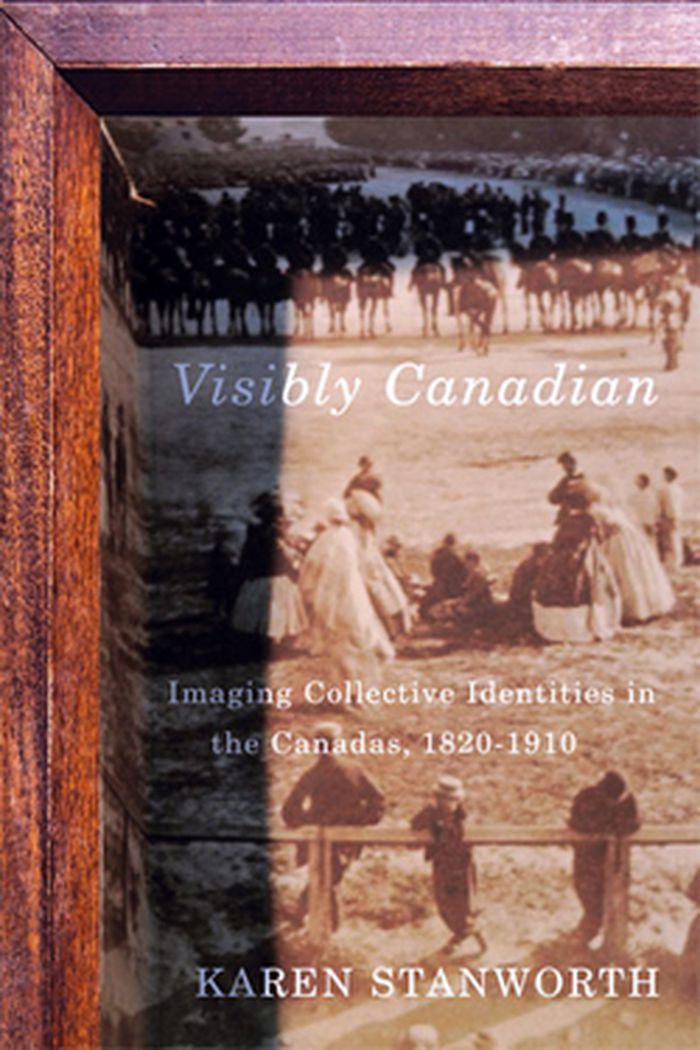
Spectacular, scientific, and educational cultural practices were used to establish and define public identities in the British colonies of nineteenth-century Canada. In Visibly Canadian, Karen Stanworth argues that visual representations were the era's primary mode of expressing identity, and shows how the citizenry of Quebec and Ontario was - or was not - represented in the visual culture of the time.Through nine case studies, each representing key moments of identity formation and contestation, Stanworth investigates how a broad range of cultural phenomena, from fine arts to institutional histories to public spectacles, were used to order, resist, and articulate identities within specific social and economic contexts. The negotiation and planning underpinning civic culture are evident in rare moments of compromise such as the surprising proposal from the Saint-Jean-Baptiste Society to merge their annual parade with the celebration of Queen Victoria's Diamond Jubilee in 1897. Equally astounding is the scale of nineteenth-century public spectacles; reenactments of Victorian scenes of war often attracted crowds of upwards of 10,000 people. Illustrated with over fifty images, many unseen for over a century, Visibly Canadian establishes the significance of artwork and public spectacles in cutting across language, religion, and class to tell stories of nationhood, belonging, and difference.
Visibly Canadian: imaging collective identities in the Canadas, 1820-1910
Actions:
Prix:
$49.95
(disponible en magasin)
Résumé:
Spectacular, scientific, and educational cultural practices were used to establish and define public identities in the British colonies of nineteenth-century Canada. In Visibly Canadian, Karen Stanworth argues that visual representations were the era's primary mode of expressing identity, and shows how the citizenry of Quebec and Ontario was - or was not - represented in the visual culture of the time.Through nine case studies, each representing key moments of identity formation and contestation, Stanworth investigates how a broad range of cultural phenomena, from fine arts to institutional histories to public spectacles, were used to order, resist, and articulate identities within specific social and economic contexts. The negotiation and planning underpinning civic culture are evident in rare moments of compromise such as the surprising proposal from the Saint-Jean-Baptiste Society to merge their annual parade with the celebration of Queen Victoria's Diamond Jubilee in 1897. Equally astounding is the scale of nineteenth-century public spectacles; reenactments of Victorian scenes of war often attracted crowds of upwards of 10,000 people. Illustrated with over fifty images, many unseen for over a century, Visibly Canadian establishes the significance of artwork and public spectacles in cutting across language, religion, and class to tell stories of nationhood, belonging, and difference.
Classification:
livres
livres
Publication:
novembre 2014
novembre 2014
Sujet:
Architecture du Canada
Architecture du Canada
Classification:
livres
livres
Actions:
Prix:
$56.95
(disponible sur commande)
Résumé:
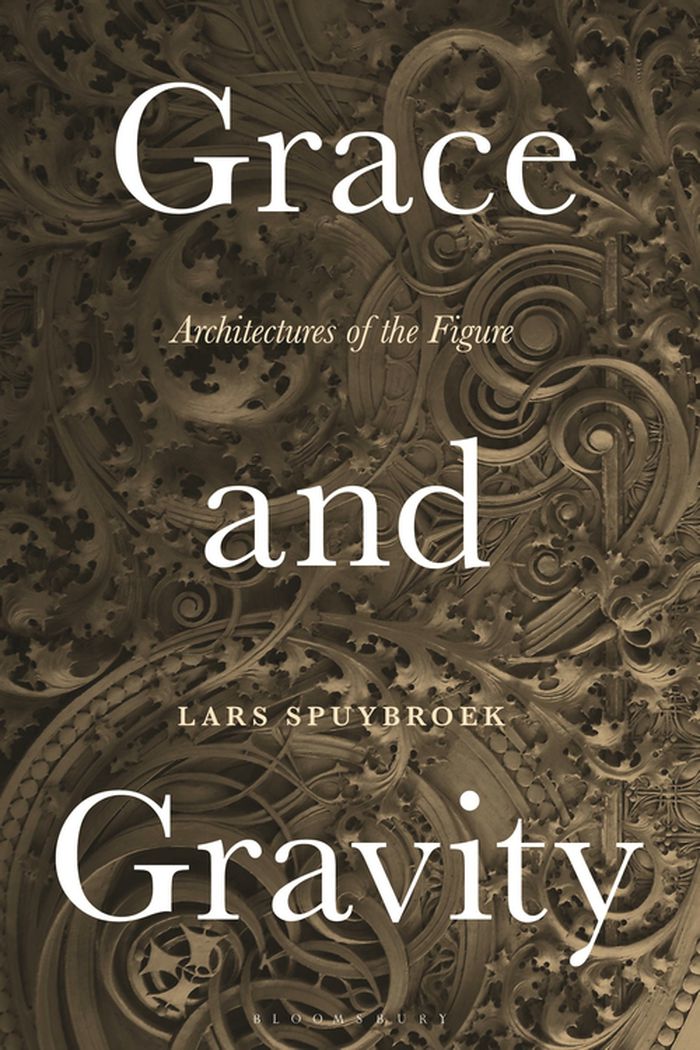
How do we live well? The first sentence of ''Grace and gravity'' raises the fundamental question that constantly occupies our minds-and of all those who lived before us. Paradoxically, the impossibility of answering this question opens up the very room needed to find ways of living well. It is the gap where all disciplines fall short, where architecture does not fit its(...)
$56.95
(disponible sur commande)
Résumé:
How do we live well? The first sentence of ''Grace and gravity'' raises the fundamental question that constantly occupies our minds-and of all those who lived before us. Paradoxically, the impossibility of answering this question opens up the very room needed to find ways of living well. It is the gap where all disciplines fall short, where architecture does not fit its(...)
Titre:
Grace and gravity: Architectures of the figure
Actions:
Prix:
$56.95
(disponible sur commande)
Résumé:
How do we live well? The first sentence of ''Grace and gravity'' raises the fundamental question that constantly occupies our minds-and of all those who lived before us. Paradoxically, the impossibility of answering this question opens up the very room needed to find ways of living well. It is the gap where all disciplines fall short, where architecture does not fit its inhabitants, where economy is not based on shortage, where religion cannot be explained by its followers, and where technology works far beyond its own principles. According to Lars Spuybroek, the prize-winning former architect, this marks the point where the “paradoxical machine” of grace reveals its powers, a point where we “cannot say if we are moving or being moved”. Following the trail of grace leads him to a new form of analysis that transcends the age-old opposition between appearances and technology. Linking up a dazzling and often delightful variety of sources-monkeys, paintings, lamp posts, octopuses, tattoos, bleeding fingers, rose windows, robots, smart phones, spirits, saints, and fossils-with profound meditations on living, death, consciousness, and existence, ''Grace and gravity'' offers an eye-opening provocation to a wide range of art historians, architects, theologians, anthropologists, artists, media theorists and philosophers.
Grace and gravity: Architectures of the figure
Actions:
Prix:
$56.95
(disponible sur commande)
Résumé:
How do we live well? The first sentence of ''Grace and gravity'' raises the fundamental question that constantly occupies our minds-and of all those who lived before us. Paradoxically, the impossibility of answering this question opens up the very room needed to find ways of living well. It is the gap where all disciplines fall short, where architecture does not fit its inhabitants, where economy is not based on shortage, where religion cannot be explained by its followers, and where technology works far beyond its own principles. According to Lars Spuybroek, the prize-winning former architect, this marks the point where the “paradoxical machine” of grace reveals its powers, a point where we “cannot say if we are moving or being moved”. Following the trail of grace leads him to a new form of analysis that transcends the age-old opposition between appearances and technology. Linking up a dazzling and often delightful variety of sources-monkeys, paintings, lamp posts, octopuses, tattoos, bleeding fingers, rose windows, robots, smart phones, spirits, saints, and fossils-with profound meditations on living, death, consciousness, and existence, ''Grace and gravity'' offers an eye-opening provocation to a wide range of art historians, architects, theologians, anthropologists, artists, media theorists and philosophers.
Classification:
livres
livres
Publication:
novembre 2020
novembre 2020
Sujet:
Théorie de l’architecture
Théorie de l’architecture
Classification:
livres
livres
Titre:
Hawksmoor's London churches
Hawksmoor's London churches
Actions:
Prix:
$59.95
(disponible sur commande)
Résumé:
Six remarkable churches built by Nicholas Hawksmoor from 1712 to 1731 still tower over London. Their striking limestone steeples and luminous interiors were designed by him for a parliamentary commission intent on affirming the majesty of the Anglican Church. In Hawksmoor's London(...)
$59.95
(disponible sur commande)
Résumé:
Six remarkable churches built by Nicholas Hawksmoor from 1712 to 1731 still tower over London. Their striking limestone steeples and luminous interiors were designed by him for a parliamentary commission intent on affirming the majesty of the Anglican Church. In Hawksmoor's London(...)
Sujet:
Architecture, monographies
Architecture, monographies
Publication:
juin 2000, Chicago
juin 2000, Chicago
Titre:
Hawksmoor's London churches
Actions:
Prix:
$59.95
(disponible sur commande)
Résumé:
Six remarkable churches built by Nicholas Hawksmoor from 1712 to 1731 still tower over London. Their striking limestone steeples and luminous interiors were designed by him for a parliamentary commission intent on affirming the majesty of the Anglican Church. In Hawksmoor's London Churches, architectural historian Pierre de la Ruffinière du Prey argues that though each church is unique, they can be viewed as an integrated whole--a single masterpiece that reflects the architect's design principles and his client's wish to return to the purity of early Christian times. Du Prey constructs his book in three stages like an intricate Hawksmoor steeple. He begins with Hawksmoor's education under Christopher Wren, from whom Hawksmoor learned to appreciate Classical and Judeo-Christian antiquities. He then reveals how the writings on early church liturgy that inspired the commission, meshed with Wren's and Hawksmoor's theories of architectural evolution. He concludes by analyzing the churches themselves, focusing closely on the architect's preparatory drawings for the towers. Individually they reveal his ability to translate theological ideas into distinctive landmarks of stone. Cumulatively they explain how his vision of the history of architecture from antiquity to primitive Christianity to the Middle Ages inspired an imaginative personal style. Hawksmoor's churches have become increasingly beloved by architects, critics, historians, and tourists. This timely and beautifully illustrated book will appeal to anyone interested in Hawksmoor, architectural history, religion, or London's many-spired skyline.
Hawksmoor's London churches
Actions:
Prix:
$59.95
(disponible sur commande)
Résumé:
Six remarkable churches built by Nicholas Hawksmoor from 1712 to 1731 still tower over London. Their striking limestone steeples and luminous interiors were designed by him for a parliamentary commission intent on affirming the majesty of the Anglican Church. In Hawksmoor's London Churches, architectural historian Pierre de la Ruffinière du Prey argues that though each church is unique, they can be viewed as an integrated whole--a single masterpiece that reflects the architect's design principles and his client's wish to return to the purity of early Christian times. Du Prey constructs his book in three stages like an intricate Hawksmoor steeple. He begins with Hawksmoor's education under Christopher Wren, from whom Hawksmoor learned to appreciate Classical and Judeo-Christian antiquities. He then reveals how the writings on early church liturgy that inspired the commission, meshed with Wren's and Hawksmoor's theories of architectural evolution. He concludes by analyzing the churches themselves, focusing closely on the architect's preparatory drawings for the towers. Individually they reveal his ability to translate theological ideas into distinctive landmarks of stone. Cumulatively they explain how his vision of the history of architecture from antiquity to primitive Christianity to the Middle Ages inspired an imaginative personal style. Hawksmoor's churches have become increasingly beloved by architects, critics, historians, and tourists. This timely and beautifully illustrated book will appeal to anyone interested in Hawksmoor, architectural history, religion, or London's many-spired skyline.
Classification:
livres
livres
Publication:
juin 2000, Chicago
juin 2000, Chicago
Sujet:
Architecture, monographies
Architecture, monographies
Classification:
livres
livres

Titre:
Debt: The first 5,000 years
Debt: The first 5,000 years
Actions:
Prix:
$29.99
(disponible sur commande)
Résumé:
Before there was money, there was debt. Every economics textbook says the same thing: Money was invented to replace onerous and complicated barter systems—to relieve ancient people from having to haul their goods to market. The problem with this version of history? There’s not a shred of evidence to support it. Here anthropologist David Graeber presents a stunning(...)
$29.99
(disponible sur commande)
Résumé:
Before there was money, there was debt. Every economics textbook says the same thing: Money was invented to replace onerous and complicated barter systems—to relieve ancient people from having to haul their goods to market. The problem with this version of history? There’s not a shred of evidence to support it. Here anthropologist David Graeber presents a stunning(...)
Titre:
Debt: The first 5,000 years
Actions:
Prix:
$29.99
(disponible sur commande)
Résumé:
Before there was money, there was debt. Every economics textbook says the same thing: Money was invented to replace onerous and complicated barter systems—to relieve ancient people from having to haul their goods to market. The problem with this version of history? There’s not a shred of evidence to support it. Here anthropologist David Graeber presents a stunning reversal of conventional wisdom. He shows that for more than 5,000 years, since the beginnings of the first agrarian empires, humans have used elaborate credit systems to buy and sell goods—that is, long before the invention of coins or cash. It is in this era, Graeber argues, that we also first encounter a society divided into debtors and creditors. Graeber shows that arguments about debt and debt forgiveness have been at the center of political debates from Italy to China, as well as sparking innumerable insurrections. He also brilliantly demonstrates that the language of the ancient works of law and religion (words like ''guilt,'' ''sin,'' and ''redemption'') derive in large part from ancient debates about debt, and shape even our most basic ideas of right and wrong. We are still fighting these battles today without knowing it. ''Debt: The first 5,000 years'' is a fascinating chronicle of this little known history—as well as how it has defined human history. It shows how debt has defined our human past, and what that means for our economic future.
Debt: The first 5,000 years
Actions:
Prix:
$29.99
(disponible sur commande)
Résumé:
Before there was money, there was debt. Every economics textbook says the same thing: Money was invented to replace onerous and complicated barter systems—to relieve ancient people from having to haul their goods to market. The problem with this version of history? There’s not a shred of evidence to support it. Here anthropologist David Graeber presents a stunning reversal of conventional wisdom. He shows that for more than 5,000 years, since the beginnings of the first agrarian empires, humans have used elaborate credit systems to buy and sell goods—that is, long before the invention of coins or cash. It is in this era, Graeber argues, that we also first encounter a society divided into debtors and creditors. Graeber shows that arguments about debt and debt forgiveness have been at the center of political debates from Italy to China, as well as sparking innumerable insurrections. He also brilliantly demonstrates that the language of the ancient works of law and religion (words like ''guilt,'' ''sin,'' and ''redemption'') derive in large part from ancient debates about debt, and shape even our most basic ideas of right and wrong. We are still fighting these battles today without knowing it. ''Debt: The first 5,000 years'' is a fascinating chronicle of this little known history—as well as how it has defined human history. It shows how debt has defined our human past, and what that means for our economic future.
Classification:
livres
livres
Publication:
octobre 2014
octobre 2014
Sujet:
Théorie/ philosophie
Théorie/ philosophie
Classification:
livres
livres

Actions:
Prix:
$41.00
(disponible sur commande)
Résumé:
Before there was money, there was debt. Every economics textbook says the same thing: Money was invented to replace onerous and complicated barter systems—to relieve ancient people from having to haul their goods to market. The problem with this version of history? There’s not a shred of evidence to support it. Here anthropologist David Graeber presents a stunning(...)
$41.00
(disponible sur commande)
Résumé:
Before there was money, there was debt. Every economics textbook says the same thing: Money was invented to replace onerous and complicated barter systems—to relieve ancient people from having to haul their goods to market. The problem with this version of history? There’s not a shred of evidence to support it. Here anthropologist David Graeber presents a stunning(...)
Titre:
Debt: The first 5,000 years, updated and expanded
Actions:
Prix:
$41.00
(disponible sur commande)
Résumé:
Before there was money, there was debt. Every economics textbook says the same thing: Money was invented to replace onerous and complicated barter systems—to relieve ancient people from having to haul their goods to market. The problem with this version of history? There’s not a shred of evidence to support it. Here anthropologist David Graeber presents a stunning reversal of conventional wisdom. He shows that for more than 5,000 years, since the beginnings of the first agrarian empires, humans have used elaborate credit systems to buy and sell goods—that is, long before the invention of coins or cash. It is in this era, Graeber argues, that we also first encounter a society divided into debtors and creditors. Graeber shows that arguments about debt and debt forgiveness have been at the center of political debates from Italy to China, as well as sparking innumerable insurrections. He also brilliantly demonstrates that the language of the ancient works of law and religion (words like ''guilt,'' ''sin,'' and ''redemption'') derive in large part from ancient debates about debt, and shape even our most basic ideas of right and wrong. We are still fighting these battles today without knowing it. ''Debt: The first 5,000 years'' is a fascinating chronicle of this little known history—as well as how it has defined human history. It shows how debt has defined our human past, and what that means for our economic future.
Debt: The first 5,000 years, updated and expanded
Actions:
Prix:
$41.00
(disponible sur commande)
Résumé:
Before there was money, there was debt. Every economics textbook says the same thing: Money was invented to replace onerous and complicated barter systems—to relieve ancient people from having to haul their goods to market. The problem with this version of history? There’s not a shred of evidence to support it. Here anthropologist David Graeber presents a stunning reversal of conventional wisdom. He shows that for more than 5,000 years, since the beginnings of the first agrarian empires, humans have used elaborate credit systems to buy and sell goods—that is, long before the invention of coins or cash. It is in this era, Graeber argues, that we also first encounter a society divided into debtors and creditors. Graeber shows that arguments about debt and debt forgiveness have been at the center of political debates from Italy to China, as well as sparking innumerable insurrections. He also brilliantly demonstrates that the language of the ancient works of law and religion (words like ''guilt,'' ''sin,'' and ''redemption'') derive in large part from ancient debates about debt, and shape even our most basic ideas of right and wrong. We are still fighting these battles today without knowing it. ''Debt: The first 5,000 years'' is a fascinating chronicle of this little known history—as well as how it has defined human history. It shows how debt has defined our human past, and what that means for our economic future.
Classification:
livres
livres
Publication:
juin 2021
juin 2021
Sujet:
Théorie/ philosophie
Théorie/ philosophie


